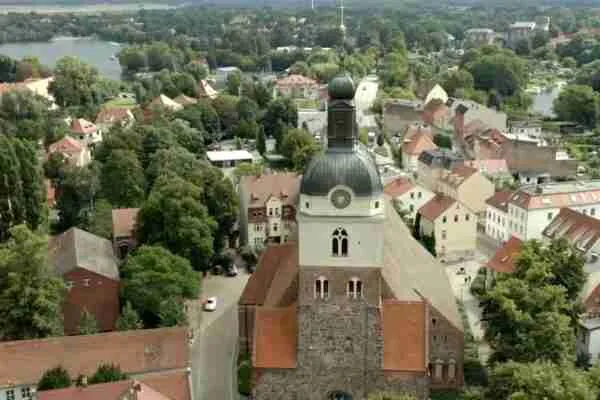
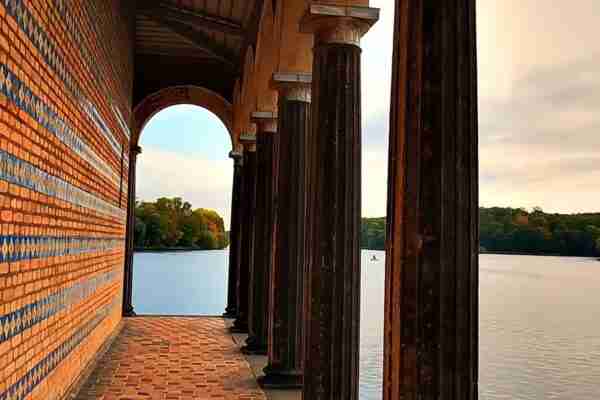
Anglo-Saxon Stone Iconography: The Pre-Conquest Carvings of Breedon on the Hill near Leicester

Anglo-Saxon Stone Iconography: The Pre-Conquest Carvings of Breedon on the Hill near Leicester Perched on an outcrop of carboniferous limestone above the Leicestershire plain, the Church of St Mary and St Hardulph at Breedon on the Hill holds what is generally regarded as the largest surviving collection of Anglian carved […]

Read More

Metamorphic Topography: How Pre-Cambrian Quarrying Shaped the Anthropic Settlement of Bradgate Park near Leicester

Metamorphic Topography: How Pre-Cambrian Quarrying Shaped the Anthropic Settlement of Bradgate Park near Leicester Bradgate Park in Charnwood Forest, Leicestershire, occupies one of England’s most ancient exposed geological surfaces: Precambrian volcaniclastic rock older than 560 million years, whose quarrying for diorite and slate left enduring marks on the topography, field […]

Read More

Brickwork and Water Defenses: The Unfinished Brick Engineering of Kirby Muxloe Castle near Leicester

Brickwork and Water Defenses: The Unfinished Brick Engineering of Kirby Muxloe Castle near Leicester Begun in 1480 and abandoned three years later at its patron’s sudden execution, Kirby Muxloe Castle in Leicestershire stands as one of the most revealing fragments in English architectural history. What was left unfinished is, paradoxically, […]

Read More

The Pre-Cambrian Sanctuary: Geometrical Alignment and Monastic Isolation at Ulverscroft Priory near Leicester

The Pre-Cambrian Sanctuary: Geometrical Alignment and Monastic Isolation at Ulverscroft Priory near Leicester Rising from one of England’s most ancient rock formations, Ulverscroft Priory in Charnwood Forest occupies a geological landscape older than almost any other exposed surface in the British Isles. Founded as an Augustinian hermitage before 1153 and […]

Read More

Visiting Coventry: Ultimate Planning Resource & Travel Guide 2026

Visiting Coventry: Ultimate Planning Resource & Travel Guide 2026 Coventry is one of England’s most compelling travel destinations — a city that transformed wartime catastrophe into a globally recognized symbol of resilience and reconciliation. Its twin cathedrals, world-class transport museum, and direct rail connections to London and Birmingham give it […]

Read More

The Geometry of Solitude: Spatial Ascetism at St Anne’s Carthusian Charterhouse in Coventry

The Geometry of Solitude: Spatial Ascetism at St Anne’s Carthusian Charterhouse in Coventry On the southern edge of medieval Coventry, beside the River Sherbourne, a community of Carthusian monks organized their entire existence around a single architectural proposition: that physical enclosure, precisely calibrated, could produce the conditions for spiritual transformation. […]

Read More

Turf, Timber, and Imperial Borders: Re-Evaluating the Defensive Engineering of Lunt Roman Fort near Coventry

Turf, Timber, and Imperial Borders: Re-Evaluating the Defensive Engineering of Lunt Roman Fort near Coventry Lunt Roman Fort at Baginton, near Coventry, stands apart from every other documented Roman military installation in Britain through a single anomaly: its circular equine training enclosure — the gyrus — for which no parallel […]

Read More

Road Trip Guide 2026: Exploring Warwickshire’s Secret Medieval Engineering Beyond the Crowds from Coventry

Road Trip Guide 2026: Exploring Warwickshire’s Secret Medieval Engineering Beyond the Crowds from Coventry Warwickshire holds a cluster of medieval engineering monuments most visitors drive past en route to Stratford or Warwick Castle — a reconstructed Roman fort whose turf ramparts crown a ridge above the River Sowe, England’s rarest […]

Read More

The First Cast-Iron Span: Structural Metallurgy and Engineering of the Iron Bridge near Birmingham

The First Cast-Iron Span: Structural Metallurgy and Engineering of the Iron Bridge near Birmingham Completed in 1779 across the River Severn at Coalbrookdale, the Iron Bridge became the first large-scale structure in history built primarily of cast iron, translating a material long confined to furnace hardware into a load-bearing arch […]

Read More

Ironbridge Gorge and Monastic Shropshire Driving Route 2026: Day Excursion from Birmingham

Ironbridge Gorge and Monastic Shropshire Driving Route 2026: Day Excursion from Birmingham The Ironbridge Gorge, Shropshire’s UNESCO World Heritage Site and the birthplace of the Industrial Revolution, sits 37 miles from Birmingham — close enough for a genuinely rewarding day excursion that combines world-class industrial heritage with a free Medieval […]

Read More

Gothic Verticality and Spires: Structural Mechanics of Lichfield Cathedral near Birmingham

Gothic Verticality and Spires: Structural Mechanics of Lichfield Cathedral near Birmingham Rising above Lichfield in Staffordshire, three sandstone spires define a skyline found nowhere else in medieval English architecture. Built in stages from around 1195 to the 1330s, the Cathedral Church of Saint Mary and Saint Chad traces the arc […]

Read More

Timber-Framed Devotion: Geometric Proportions and Medieval Carpentry at Selly Manor near Birmingham

Timber-Framed Devotion: Geometric Proportions and Medieval Carpentry at Selly Manor near Birmingham Selly Manor stands in Bournville, Birmingham, as one of the West Midlands’ most legible late medieval timber-frame buildings — three gabled bays of different dates whose oak joints and jettied upper storey encode six centuries of vernacular carpentry […]

Read More

Moated Earthworks of the West Midlands: Subsurface Hydraulics at Weoley Castle near Birmingham

Moated Earthworks of the West Midlands: Subsurface Hydraulics at Weoley Castle near Birmingham Standing in red sandstone ruin four miles southwest of Birmingham city centre, Weoley Castle preserves one of the English Midlands’ most instructive examples of a 13th-century moated manor. The earthworks here — a wide moat cut through […]

Read More

Off-the-Beaten-Track Birmingham Road Trip Guide 2026: Exploring Medieval Moats and Tudor Manor Houses

Off-the-Beaten-Track Birmingham Road Trip Guide 2026: Exploring Medieval Moats and Tudor Manor Houses Birmingham stands at the centre of one of England’s richest heritage corridors: a city whose restored industrial canals feed directly into a Warwickshire landscape studded with moated medieval manors and timber-framed Tudor halls. This guide covers a […]

Read More

Birmingham Best Tours & Walking Routes 2026: Secret Spots & Lesser-Known Treasures

Birmingham Best Tours & Walking Routes 2026: Secret Spots & Lesser-Known Treasures Birmingham rewards the curious walker with layers of industrial heritage, canal-side revelations, and creative energy that most visitors miss entirely. With more miles of canal than Venice, a Jewellery Quarter shaped by craftspeople since the eighteenth century, and […]

Read More

Insular Fortification and Bridgehead Engineering: The Medieval Defense Grid of Brandenburg’s Dominsel near Potsdam

Insular Fortification and Bridgehead Engineering: The Medieval Defense Grid of Brandenburg’s Dominsel near Potsdam Positioned between Lake Beetzsee and the Havel River, the Cathedral Island (Dominsel) of Brandenburg an der Havel has anchored the city’s defensive and ecclesiastical geography since the mid-tenth century. Its isolation by water, its founding as […]

Read More

Cistercian Hydraulic Precision: Romanesque-to-Gothic Brickwork Transitions at Kloster Lehnin near Potsdam

Cistercian Hydraulic Precision: Romanesque-to-Gothic Brickwork Transitions at Kloster Lehnin near Potsdam Kloster Lehnin, founded in 1180 in the sandy Zauche plateau southwest of Potsdam, is the oldest Cistercian monastery in the Mark Brandenburg. Its eight-decade construction sequence — from the Romanesque eastwork begun around 1185 to the Gothic nave completed […]

Read More
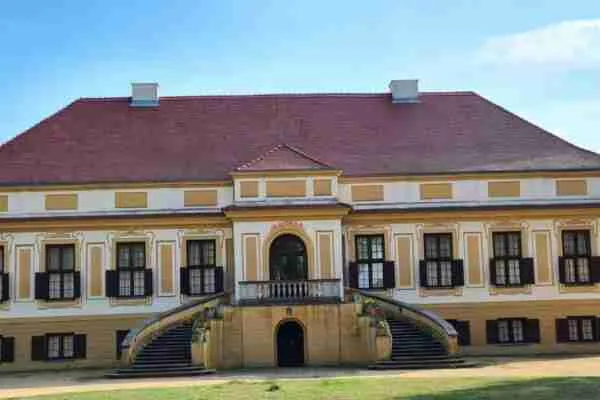
Stave Timber Meets Early Christian Basilica: Architectural Hybridity at Sacrow’s Heilandskirche near Potsdam

Stave Timber Meets Early Christian Basilica: Architectural Hybridity at Sacrow’s Heilandskirche near Potsdam On still mornings, the campanile of the Heilandskirche doubles itself in Jungfernsee, the calm bay at Sacrow’s southern tip, so that water and masonry seem locked in a single, symmetrical composition. Consecrated on 21 July 1844, the […]

Read More

Beyond the Reichstag: Road Trip Guide 2026 to the Medieval Water Fortresses of Western Berlin

Beyond the Reichstag: Road Trip Guide 2026 to the Medieval Water Fortresses of Western Berlin Tucked where the Havel and Spree rivers converge in Berlin’s westernmost borough, Spandau’s fortified island has guarded this strategic river crossing since the thirteenth century. Today the S3 and S9 deliver visitors from Berlin Hauptbahnhof […]

Read More

Symmetrical Bastions on Swamp Ground: Italianate Renaissance Fortification Mechanics at Zitadelle Spandau in Berlin

Symmetrical Bastions on Swamp Ground: Italianate Renaissance Fortification Mechanics at Zitadelle Spandau in Berlin Spandau Citadel (Zitadelle Spandau) rises from a river island at the confluence of the Havel and Spree on the western edge of Berlin — a quadrilateral of earthen ramparts and arrow-shaped bastions that has stood largely […]

Read More
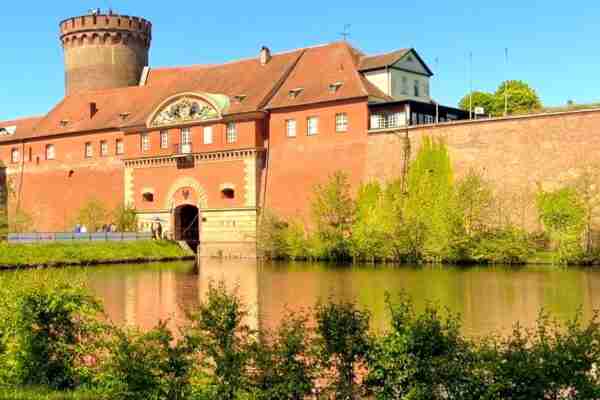
The Red Brick Basilica: Backsteingotik Geometry and Vernacular Piety in Medieval St. Nikolai of Spandau in Berlin

The Red Brick Basilica: Backsteingotik Geometry and Vernacular Piety in Medieval St. Nikolai of Spandau in Berlin Standing on Reformation Square in Spandau’s Old Town, the red brick towers of St. Nikolai Church announce Berlin’s sole surviving medieval church — raised without a single quarried stone in the mid-fourteenth century. […]

Read More