
Northern Mercia Self-Drive Itinerary 2026: Roman Ruins to Gothic Spires from Birmingham
Sixteen miles north of Birmingham, two of England’s most compelling historic sites sit within two miles of each other on one of the oldest roads in Britain. Wall Roman Site preserves the foundations of a Roman staging post on Watling Street, and Lichfield Cathedral — Britain’s only medieval three-spired cathedral — rises from the city just beyond. This guide maps the complete Northern Mercia driving route for 2026: distances, parking hubs, entry logistics, photography windows, and all the costs you need to plan a day trip or overnight stay.
Key Takeaways
- Both flagship sites are free to enter: Wall Roman Site (Letocetum) is free year-round, and Lichfield Cathedral operates on a voluntary donation basis (£5 suggested per person).
- The total round-trip drive from central Birmingham is approximately 34 miles, following the A38 north — the same corridor as the Roman Ryknild Street.
- Budget travelers spending two sharing a car can complete the day trip for as little as £15-25 ($20-30) per person, inclusive of fuel, parking, and food.
- Lichfield City Station sits 10 minutes’ walk from the Cathedral and is served by the West Midlands Railway Cross-City line direct from Birmingham New Street (from £7 single).
- Wall Roman Site museum opens on selected weekends from April to October 2026; the outdoor ruins (bathhouse and mansio foundations) are accessible every day during daylight hours.
- The Northern Mercia Heritage Trail pairs well with an overnight stay in Lichfield, allowing same-day visits to the Samuel Johnson Birthplace Museum, Beacon Park, and the National Memorial Arboretum eight miles east.
People Also Ask About the Northern Mercia Self-Drive Itinerary 2026
How far is it from Birmingham to Wall Roman Site and Lichfield Cathedral by car in 2026?
Wall Roman Site (Letocetum) in the village of Wall, Staffordshire, is approximately 14 to 15 miles from central Birmingham via the A38 northbound — roughly 25 to 35 minutes in normal traffic. Lichfield Cathedral sits a further 2 miles east of Wall, making the total outbound journey from Birmingham around 16 to 17 miles and 30 to 40 minutes. The full round trip is approximately 34 miles. Both sites lie conveniently along the same road corridor, so drivers heading for Lichfield pass within a mile of the Roman site. Wall is signposted from the A38 close to its junction with the old Watling Street (A5). The Cathedral is signposted throughout Lichfield city centre once you cross the A38 bypass.
How much does the Northern Mercia self-drive day trip cost in 2026?
Entry to both main sites is free, which makes the Northern Mercia route unusually affordable. Budget travelers sharing a car can expect to spend £15-25 ($20-30) per person for the full day, covering fuel, city-centre parking in Lichfield, and a simple café lunch or pub meal. Mid-range travelers who add a sit-down restaurant lunch, the suggested Cathedral donation of £5, and an afternoon coffee will typically spend £30-40 ($40-50) per person. These ranges assume two people sharing a car; solo drivers should add the full fuel cost. Parking at Wall Roman Site is free, and Lichfield District Council car parks charge up to £4 ($5) per car for an all-day stay.
Can I do the Northern Mercia heritage route without a car in 2026?
Yes, though the route works differently. Lichfield Cathedral is fully accessible by train: West Midlands Railway runs up to 41 services a day on the Cross-City line between Birmingham New Street and Lichfield City Station, with journey times of 24 to 38 minutes and anytime fares from £7 ($9) single or £10.70 ($14) return. Lichfield City Station is a 10-minute walk from the Cathedral. Wall Roman Site, however, is around 2 miles from the nearest train station and has no bus connection from Lichfield city centre, so visiting it on the same day without a car requires a taxi or bicycle. Cyclists riding the full Birmingham to Lichfield stretch along the A38 corridor can reach both sites, though the A38 itself is not a cycle-dedicated route. Car remains the most practical transport for combining both sites in a single day trip.
What are the opening hours of Wall Roman Site and Lichfield Cathedral in 2026?
Wall Roman Site’s outdoor ruins — the bathhouse foundations and the mansio (travellers’ inn) remains — are open every day during reasonable daylight hours, with no entry charge. The on-site museum, managed by the volunteer Friends of Letocetum group, opens from 11am to 4pm on selected dates between April and October 2026; the English Heritage website lists the full schedule, and the site recommends checking before travelling. Free volunteer-led guided tours of the Roman site take place at 11:30am on specific dates in 2026: 9 May, 13 June, 11 July, 8 August, and 10 October. Lichfield Cathedral opens for sightseeing from 10:00am to 5:00pm Monday to Saturday; Sunday hours vary and are listed on the Cathedral calendar. Free guided tours run Monday to Saturday at 11:00am and 2:00pm; these are walk-up tours with a maximum of 12 places and cannot be reserved in advance.
Extended multi-day tours – 5+ days
Featured Birmingham Multi-Day Tour Packages
3 days
Birmingham 3-Day Discovery Tour
- ✓ Comprehensive Birmingham experience
- ✓ Expert local guides included
- ✓ All accommodation included
- ✓ Transportation provided
5 days
Birmingham 5-Day Highlights Experience
- ✓ Comprehensive Birmingham experience
- ✓ Expert local guides included
- ✓ All accommodation included
- ✓ Transportation provided
7 days
Birmingham 7-Day Cultural Journey
- ✓ Comprehensive Birmingham experience
- ✓ Expert local guides included
- ✓ All accommodation included
- ✓ Transportation provided
10 days
Birmingham 10-Day Complete Adventure
- ✓ Comprehensive Birmingham experience
- ✓ Expert local guides included
- ✓ All accommodation included
- ✓ Transportation provided
Multi-day tour packages powered by TourRadar. Prices and availability subject to change.
What Is the Northern Mercia Heritage Route 2026?
The term “Northern Mercia” denotes the northern reaches of the old Anglo-Saxon kingdom of Mercia, a power that dominated the English Midlands for several centuries before the Norman Conquest of 1066. The modern county of Staffordshire occupies much of that same territory, and the corridor between Birmingham and Lichfield compresses almost two thousand years of English history into a single landscape. Roman legionaries traveled this road. Saxon bishops founded a cathedral city here. And the same broad A38 trunk route that carries twenty-first-century commuters follows, with remarkable faithfulness, the line of the Roman Ryknild Street that once linked the Roman settlement of Letocetum — today’s Wall — northward through the military grid of Roman Britain.
The driving itinerary outlined in this guide takes the Northern Mercia Heritage Trail label to mean a self-contained, logistically straightforward day trip from Birmingham that visits two sites separated by two thousand years and two miles: Wall Roman Site, which preserves England’s best-surviving example of a Roman roadside posting station, and Lichfield Cathedral, which stands as Britain’s only medieval building with three full-height spires. Together they anchor a route that is genuinely unusual among UK day trips: free to enter at both sites, within commuting distance of a major city, and carrying a depth of verifiable history that far exceeds the modest effort required to reach either one.
The trail also has a broader logic for curious travelers. The Roman road network on which Letocetum depended was itself built over older prehistoric trackways, and the medieval city of Lichfield grew in part from the Christian veneration of St Chad, the seventh-century bishop whose burial shrine made Lichfield a place of pilgrimage long before the present Cathedral took shape. Add to this the literary connections — Samuel Johnson, author of the first major English dictionary, was born in Lichfield in 1709, and Erasmus Darwin, grandfather of Charles Darwin, made the city his home — and Northern Mercia repays anyone willing to spend a single day exploring it with a layered, richly documented past.
Northern Mercia Route Overview 2026: Distances, Timing, and Key Stops
The recommended driving order runs Birmingham → Wall Roman Site → Lichfield Cathedral → Lichfield city centre → Birmingham return. This sequence follows the A38 in a logical north-then-return arc, avoids backtracking, and ensures you visit the more physically demanding outdoor site (Wall) while energy levels are fresh. An alternative — visiting Lichfield Cathedral first and Wall on the return — works equally well logistically but means you arrive at the outdoor Roman site in the afternoon, which can compromise low-angle photography light in winter months.
Total distances for the recommended order are as follows. Birmingham city centre (New Street area) to Wall Roman Site on Watling Street is approximately 14 to 15 miles, primarily via the A38 northbound. Wall Roman Site to Lichfield city centre is approximately 2 to 3 miles via the B4154 and city-centre approach roads. Lichfield Cathedral to the return point on Birmingham via A38 is approximately 17 to 18 miles. Full round trip: approximately 34 miles.
Time allocations for 2026 planning: allow at least 90 minutes at Wall Roman Site to explore the outdoor ruins, read the interpretation boards, and walk the perimeter; add an extra 45 minutes if you arrive during a volunteer-guided tour slot or if the museum is open that day. Lichfield Cathedral rewards a minimum of two hours for independent exploration and considerably more — three to four hours — if you join a free guided tour, explore the Chapter House and Lady Chapel, and pause at the treasury items including the Lichfield Gospels (dating from around 730 AD) and the Lichfield Angel (carved around 700 AD). Add an hour for lunch in Lichfield city centre and a stroll around the Cathedral Close and Minster Pool. Total recommended day-trip duration from Birmingham: six to eight hours. Departing Birmingham at 9:00am gives comfortable time at both sites and returns you to the city by late afternoon or early evening.
Optional extension stops on the same route include Sutton Park, a medieval Royal Forest and National Nature Reserve in Sutton Coldfield that lies just north of Birmingham on the A38 corridor; Tamworth Castle, a Norman motte-and-bailey castle 8 miles east of Lichfield with a visible riverside setting; and the National Memorial Arboretum at Alrewas, 8 miles northeast of Lichfield, which carries a separate and significant character as a working place of remembrance and reflection.
Stop One — Wall Roman Site 2026: The Roman Settlement of Letocetum
Wall Roman Site, known by its Roman name Letocetum, stands in the small Staffordshire village of Wall, just off the A5 at its junction with the old A38 corridor. The site is managed by English Heritage and owned by the National Trust; entry to the outdoor ruins is free at all times, and the on-site museum is staffed by the Friends of Letocetum volunteer group on selected dates between April and October.
What survives at Letocetum represents an unusually intact snapshot of Roman roadside life. The site was not a military fort — though excavations have identified evidence of a temporary camp from the early phases of Roman occupation in Britain around AD 50 — but rather a mansio and public bathhouse serving travelers on Watling Street, one of the most strategically important roads in Roman Britain. Watling Street ran from the southeast coast through Londinium (London) and on toward Viroconium (Wroxeter) and North Wales, and a staging post here at the junction with Ryknild Street (the A38 corridor) served the steady traffic of imperial messengers, military units, and merchants that the Roman administrative machine required.
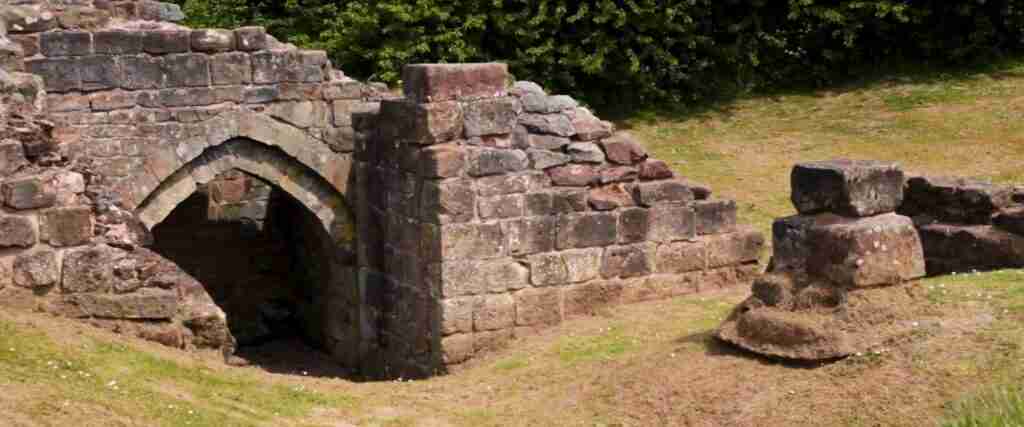
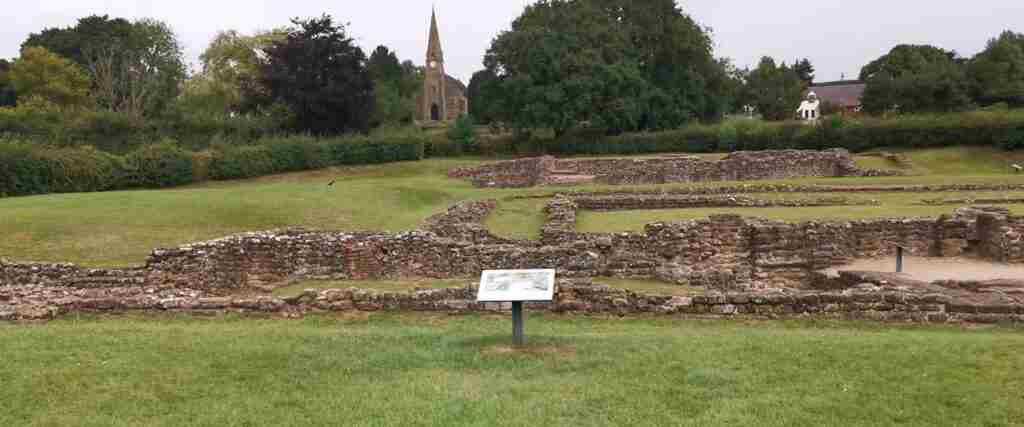
The mansio — essentially an official guesthouse for Roman government travelers — survives as a set of stone and mortar foundation walls that are among the best-preserved examples of the building type in England. Detailed excavations between 1912 and 1914, carried out by the North Staffordshire Field Club, brought the main structural outlines of the mansio and bathhouse to light for the first time, and many of the finds from those excavations remain on display in the site museum. The bathhouse preserves the sequential room pattern typical of Roman bathing culture: the changing room (apodyterium), cold room (frigidarium), warm room (tepidarium), and hot room (caldarium) can all be traced in the surviving stonework, along with the hypocaust — the underfloor heating system — in the hot section.
At ground level today, the site has an open-meadow character: low foundation walls of pale stone sit in a grass setting, with clear interpretation boards explaining the function and original form of each structure. The experience differs from a roofed museum: it asks visitors to reconstruct the building from a plan rather than walk through reconstructed rooms, which rewards slower looking and benefits from the kind of contextualizing commentary offered during the free guided tour days. Visitors arriving outside those tour dates find the boards detailed enough to orient themselves, though the volunteer museum — when open — adds significantly to understanding through its display of excavated finds including tiles, pottery, personal items, and fragments of the hypocaust tile system.
Practical logistics at Wall for 2026 are notably uncomplicated. Free parking is available 50 meters from the site entrance on Watling Street. The open-air site has no entry fee and no booking requirement. The museum, when open, is free; the Friends of Letocetum website lists the 2026 museum opening dates and confirms that free guided tours run on specific Saturdays at 11:30am. Toilets are available during museum opening hours only. Dogs on leads are welcome on the open-air site. There is no café or food outlet at Wall, so arrive with water and any snacks needed; the nearest options are in Lichfield city centre, 2 miles east.
One access note worth planning around: there is no wheelchair access to the Roman site itself, and one step leads up into the museum building. The open-air ruins are on uneven grass with no paved paths. Visitors with limited mobility may find the interpretation harder to access in wet or soft ground conditions.
The Friends of Letocetum also maintain a Virtual Museum section on their website, which allows those unable to visit on museum-open days to view photographs of the key excavated objects and read detailed notes on the site’s archaeology. For 2026, the museum is confirmed open at certain weekends through to the end of October; the English Heritage listing page at english-heritage.org.uk and the Friends of Letocetum site at wallromansitefriendsofletocetum.co.uk both carry current dates.
Step-by-Step Transit Map 2026: Connecting Wall Roman Site and Lichfield Cathedral
The connecting drive from Wall Roman Site to Lichfield Cathedral covers approximately 2 to 3 miles and takes around 8 to 12 minutes depending on city-centre traffic. The route is straightforward but worth knowing in advance, since Lichfield’s compact historic core and restricted Cathedral Close area require a specific parking approach.
Departing Wall Roman Site. Leave the free car park on Watling Street (A5) and turn left (east) onto the A5 toward Lichfield. After approximately 1 mile, follow the A5 as it merges into the approach roads toward Lichfield city centre. Signs for “Lichfield City Centre” will appear within half a mile. At the city boundary, follow signs for the City Centre car parks rather than attempting to drive directly to the Cathedral Close.
Cathedral Close parking warning. The Cathedral Close — the walled enclosure immediately surrounding Lichfield Cathedral — is restricted to permit holders only and is actively patrolled. Cars without a valid Cathedral permit receive parking tickets. No visitor parking is available inside the Close. All day visitors park in Lichfield’s public car parks and walk to the Cathedral.
Recommended parking hubs for Lichfield 2026. Lichfield District Council operates six city-centre car parks with live availability displayed on digital signs at key entry points. The most convenient for Cathedral visitors are the following:
- Friary Car Park — the closest to the Cathedral, a short walk along the pedestrian approach. All-day charge: £4 ($5) per car. The Premier Inn Lichfield uses this car park, so it can fill early on summer weekends.
- M Three Spires Car Park — slightly further from the Cathedral but typically larger capacity; all-day charge £4 ($5). Good choice if Friary is full.
- Birmingham Road Car Park (WS13 6HX) — closest to Lichfield City Station; 10-minute walk to the Cathedral. Useful for those combining the drive with a return train journey.
Council tariffs for 2026 as published by Lichfield District Council: up to 4 hours £1.50 ($2), up to 6 hours £2.50 ($3), all day £4 ($5). Check the Lichfield District Council website for current schedules before travelling, as tariffs are subject to review. Pre-booking private parking through platforms such as JustPark is available from £0.90/hour if you want a guaranteed space on a busy date.
Entry logistics at Lichfield Cathedral. The Cathedral has a main entrance on the west front; step-free access is available at this entrance. A small number of Blue Badge parking spaces are available within the Cathedral Close for visitors with limited mobility — a specific arrangement that requires contacting the Cathedral in advance. The general visitor entry is through the west door during sightseeing hours. Photography is permitted throughout most of the building; certain chapels or exhibitions may have restrictions signposted on-site. Drones are not permitted. Visitors arriving for the free guided tour at 11:00am or 2:00pm should enter and let Cathedral staff know on arrival; tours are walk-up, first-come, and capped at 12 people, so arriving at least 10 minutes early is advisable on busy days.
Audio guide accessibility at both sites. Neither Wall Roman Site nor Lichfield Cathedral currently offers rented audio guide devices in the style of larger heritage attractions. At Wall, the free volunteer-guided tours on specific dates (9 May, 13 June, 11 July, 8 August, 10 October at 11:30am) provide the equivalent of a guided commentary; arriving on a non-tour day means relying on the excellent on-site interpretation boards and, when the museum is open, the volunteer staff who are usually willing to answer questions. At Lichfield Cathedral, the free guided tours running Monday to Saturday at 11:00am and 2:00pm are the primary audio-format option; these are staffed by knowledgeable volunteer guides and typically cover the main historical and architectural highlights in around 45 to 60 minutes. For visitors preferring to self-guide, the Cathedral’s own printed visitor guide is available inside the building, and downloadable self-guided tour resources are accessible via its website. Beacon Park in Lichfield — a short walk from the Cathedral — offers a downloadable self-guided audio tour covering the park’s historical monuments, available free from the Lichfield Historic Parks website.
Best Times to Visit and Practical Tips for Archeological Photography
Seasonal light at Wall Roman Site. Wall Roman Site’s outdoor ruins are low-profile stone foundations in an open field, which means the quality of archaeological photography depends almost entirely on the angle and softness of available light. The site faces a broadly open sky, so flat midday summer light produces the least photographic interest — the shallow foundations lose relief and texture under high overhead sun. The most rewarding conditions for showing the depth and plan of the bathhouse and mansio arrive in the lower-sun seasons: late autumn through early spring, when the sun tracks a lower arc across the sky and creates raking side-light that catches the courses of Roman stonework and throws the individual rooms of the bathhouse plan into shadow-and-highlight relief. Early morning or late afternoon visits in any season achieve a comparable effect; a 9:00am arrival in summer produces directional light before the sun climbs too high, while a 4:00pm arrival in autumn catches long shadows across the hypocaust chambers.
Practical tips for Wall. The foundations stand at roughly knee height, so wide-angle shooting from ground level or near-ground level using a smartphone or camera tilted downward exaggerates the texture of the Roman stonework and places the surrounding Staffordshire farmland in the background. A lens-cleaning cloth is essential in dewy morning conditions or after rain — the open site accumulates moisture. Bring a printed site plan or consult the interpretation boards before shooting: knowing which room you are photographing allows you to compose deliberately (the frigidarium from the southeast, for instance, provides the widest continuous run of standing stonework). Overcast light in spring and autumn actually flatters aerial-style views of the entire bathhouse plan, reducing harsh shadows on the room divisions while preserving stone texture.
Seasonal light at Lichfield Cathedral. The Cathedral’s exterior west front — dominated by three spires and a richly carved screen of niches containing stone statues — photographs most dramatically in the two hours after sunrise and the hour before sunset, when the warm low light catches the red-tinged Hollington sandstone used in the primary fabric of the building. Full summer midday light can bleach out the pale stone and flatten the carved details; the best exterior shots in peak summer are either early morning (before 8:00am) or late afternoon (from 5:00pm onward). The south elevation, facing the Cathedral Close lawns, receives good afternoon light from spring through autumn and is usually less crowded than the west front.
Inside the Cathedral. Interior photography is best in the hour before and after midday during the spring equinox to midsummer period, when the Herkenrode stained glass in the Lady Chapel — sixteenth-century Flemish glass brought to Lichfield from the former Cistercian abbey of Herkenrode in what is now Belgium in the early nineteenth century — receives direct eastern light that illuminates the colours most fully. The west window and nave are at their best in late afternoon light. A tripod or image stabilization is essentially required for interior shots given the low ambient light; flash photography is restricted to personal use and should avoid disturbing other visitors or services. The Cathedral’s photography policy is published on its website and is worth confirming before a dedicated photography visit.
Crowd patterns and best visit days. Both sites are quietest on weekday mornings from Tuesday through Thursday. Wall Roman Site sees minimal visitor numbers outside guided-tour days; the open-air site is rarely busy enough to cause any crowding issue. Lichfield Cathedral is busiest on Saturdays during school holidays, during the Lichfield Festival (typically held in July), and at Christmas and Easter. Mid-week spring visits — April and May outside school half-term — offer the best combination of reasonable daylight length, cooler temperatures for outdoor photography at Wall, and manageable visitor numbers at the Cathedral.
Stop Two — Lichfield Cathedral 2026: Britain’s Only Three-Spired Medieval Cathedral
Lichfield Cathedral occupies the eastern edge of a small city that has been organized around the veneration of its patron saint since at least the seventh century. The bishop’s seat here traces its origins to St Chad, who was appointed Bishop of the Mercians in 669 AD and died in 672 AD; his burial became a pilgrimage destination, and successive building campaigns on the site created the foundation for the cathedral complex visible today. The present building took shape primarily between the late twelfth and early fourteenth centuries, replacing earlier structures in a transition from Romanesque to Gothic that the building itself documents in the changing character of its stonework and vaulting from west to east. Significant damage during the English Civil War in the seventeenth century, when the Cathedral was used as a garrison and suffered major structural harm, was followed by extensive post-Restoration repair and restoration work.
What distinguishes Lichfield Cathedral from every other medieval cathedral in Britain is its three spires. Most English cathedrals were built with two western towers or a single central tower; Lichfield alone retains all three spires — two flanking the west front and a third rising from the crossing — in their medieval configuration. This triple-spire silhouette is the defining visual element of the city and remains a landmark from several miles’ distance on the A38 approach from the south. The spires were rebuilt and repaired following Civil War damage and have been the subject of ongoing conservation attention; the current stone is a mix of medieval fabric and later restoration.
The interior rewards a methodical visit. The nave is a late-twelfth and early-thirteenth century Gothic space of considerable vertical presence, with pointed arches, clustered piers, and a triforium gallery above the main arcade. The east end, including the choir, the Lady Chapel, and the Chapter House, represents fourteenth-century work and contains the Cathedral’s most celebrated objects. The Lichfield Angel — a carved sandstone panel depicting an angel, now dated by scholars to around the year 700 AD and associated with the early Mercian church on this site — is displayed in the Cathedral and represents one of the finest survivals of pre-Viking Anglian sculpture in England. The Lichfield Gospels, an illuminated gospel manuscript created around 730 AD (and thus among the oldest illuminated manuscripts to survive from the British Isles), is held in the Cathedral collection; it is displayed for public viewing in a dedicated exhibition space.
The Lady Chapel contains the Herkenrode stained glass, a set of sixteenth-century Flemish windows brought from Belgium in the early nineteenth century and now considered among the finest continental Renaissance glass in any English building. The windows depict a Passion cycle and portrait saints in richly saturated colour; the quality of light through them varies dramatically by season and time of day as noted in the photography section above. Separate from the historic glass, the Cathedral also houses a medieval wall painting in the south choir aisle that is rare evidence of the pre-Reformation decorative programme of English cathedral interiors.
For visitors, the Cathedral is entirely free to enter, with a suggested donation of £5 ($6) per person requested at the west door. This donation is the Cathedral’s primary means of covering operational costs; as a self-financing charity receiving no regular government funding, it relies on visitor contributions to maintain the fabric and staffing. There is no mandatory ticket, and no visitor is turned away for not donating. Free guided tours run Monday to Saturday at 11:00am and 2:00pm, with a maximum of 12 participants per tour; tours are walk-up, not pre-bookable, and typically last 45 to 60 minutes. In 2026, the Cathedral also offers a new Library Tour allowing visitors to climb the spiral staircase to the Cathedral’s library and examine selected items from its 6,000-volume collection, including a sixteenth-century copy of the heraldic crests of the Knights of the Garter; check the Cathedral’s events calendar for current booking and pricing details on this specialist tour.
The Cathedral is open for sightseeing Monday to Saturday 10:00am to 5:00pm; Sunday hours vary and are listed on the Cathedral’s online calendar, which also notes any East End closures when the Lady Chapel or Quire is inaccessible during services. Photography is permitted throughout most of the building. Dogs on leads are welcome during regular visitor hours. The west entrance is step-free; full accessibility information including Blue Badge parking arrangements is available from the Cathedral welcome desk.
Lichfield City 2026: Additional Heritage Stops on the Northern Mercia Trail
Lichfield city centre compresses a remarkable concentration of free or low-cost heritage attractions into a walkable area surrounding the Cathedral Close. Visitors with an afternoon to spare after the Cathedral can extend the Northern Mercia day with any of the following.
Samuel Johnson Birthplace Museum. The Georgian townhouse at the corner of Market Square and Breadmarket Street where Samuel Johnson was born in 1709 is now a free-admission museum dedicated to the life and work of the man who produced the first major English dictionary in 1755. The house is Grade I listed, and the museum interior — organized across three floors — traces Johnson’s Lichfield childhood, his literary career, and the impact of the Dictionary. A bookshop on the ground floor (the same space where Johnson’s father Michael ran his bookselling business) is a useful stop for those wanting to take away a print or a reprint edition. Open daily; admission free.
Erasmus Darwin House. A short walk from the Cathedral, this Georgian house was the home of the physician, botanist, and poet Erasmus Darwin (1731–1802), grandfather of Charles Darwin and a founding member of the Lunar Society — the Birmingham-based intellectual network that included James Watt and Joseph Priestley. The house has been restored as a museum to Darwin’s life and work and includes a re-created study and demonstration of his inventions and botanical interests. An admission fee applies; check the Erasmus Darwin House website for current prices and opening hours before visiting.
Beacon Park. The public park adjacent to the Cathedral Close offers a large lake, gardens, and a series of civic monuments including a statue of Captain John Smith (the Staffordshire-born explorer associated with the early English settlement of Virginia) and memorials to Darwin and to the Lichfield Martyrs — the Protestant martyrs burned at the stake in the city during the Marian persecutions of the 1550s. Beacon Park is free to enter and is open year-round. The Lichfield Historic Parks website offers a free downloadable self-guided audio tour of the park’s monuments, narrated by a Visit Lichfield guide.
Minster Pool and Stowe Pool. Two shallow medieval fishponds border the Cathedral Close to the south and east, framing the Cathedral spires in reflective water. Both pools are accessible free of charge on footpaths around their perimeters; the Cathedral spire reflection in Minster Pool is one of the most frequently photographed views in Lichfield and works best in calm morning conditions when there is minimal wind ripple on the water surface.
Lichfield Heritage Centre. Housed in the former St Mary’s church in the Market Place, the Heritage Centre provides a broad overview of Lichfield’s history from Roman times to the present, with displays on the Civil War siege, the city’s literary connections, and its industrial past. Modest admission fee; check locally for 2026 hours.
Lunch in Lichfield. The city centre offers a wide range of options along and around the Market Place and Bird Street. Independent cafés, pub restaurants, and a covered market operate in the city centre most days of the week. Budget café lunches — sandwiches, soup, and a drink — run £8-12 ($10-15) per person. A sit-down pub lunch with a main course and a soft drink runs £14-20 ($18-25) per person. The Lichfield city-centre dining scene is not a regional gastronomy destination in the way of larger English cities, but it is reliably comfortable and well-suited to a heritage day-trip lunch stop.
Getting There in 2026: Driving Directions, Parking Hubs, and Entry Logistics
The Northern Mercia route from Birmingham follows the A38 trunk road for the majority of its length, a corridor that runs north from Birmingham through the West Midlands and into Staffordshire. The A38 is the modern successor to the Roman Ryknild Street and has carried north-south traffic through this landscape for centuries. It is a fast dual carriageway for most of the Birmingham-to-Lichfield stretch, with no toll charges.
From central Birmingham (M42 approach). The most direct motorway approach from Birmingham and the south uses the M42, leaving at Junction 9 and following the A446 north, then joining the A38 toward Lichfield. This avoids Birmingham city-centre traffic entirely. From Junction 9 of the M42 to Lichfield is approximately 13 miles.
From central Birmingham (city-centre route). Drivers starting from Birmingham New Street or Broad Street area follow signs for the A38 (Lichfield/Sutton Coldfield) northbound. The road passes through Aston and Erdington before reaching the dual-carriageway section that runs north toward Lichfield. Allow 40 to 55 minutes from central Birmingham during peak traffic periods (8:00-9:30am and 4:30-6:30pm); off-peak the journey runs to 25-35 minutes.
Turning off for Wall Roman Site. From the A38 northbound, watch for the exit toward Wall and the A5 (Watling Street). The site is on Watling Street, Wall, WS14 0AW. Satellite navigation using this postcode takes you directly to the free car park. The entrance is signed on the approach road.
Wall to Lichfield. From the Wall Roman Site car park, turn right (east) on Watling Street and follow it toward the A38 interchange. Cross the A38 and follow city-centre signs; the B4154 and local roads bring you into Lichfield in 2 to 3 miles. Digital car park information signs at key city-entry points indicate live availability across the six council car parks.
Sat-nav advice. For Friary Car Park (closest to the Cathedral): use WS13 6QZ. For Birmingham Road car park (for rail users or those wanting to walk to both the station and Cathedral): use WS13 6HX. Do not attempt to navigate to the Cathedral Close directly — the no-entry and permit-only restrictions there will generate a confusing route and potential penalties.
Rail Alternative 2026: Using Lichfield City Station Without a Car
Lichfield City Station is served by West Midlands Railway’s Cross-City line, which runs directly from Birmingham New Street without any change of train. Services run approximately every 20 minutes through the day; the total journey time from Birmingham New Street is 24 to 38 minutes depending on service. Up to 41 trains per day serve this route as of 2026 schedules.
Ticket prices for 2026: an anytime single from Birmingham New Street to Lichfield City costs £7 ($9); an anytime return costs £10.70 ($14). Advance fares may be available at lower prices when booking ahead through the West Midlands Railway app or Trainline; check on the day of travel for the best available fare. Railcard holders (16-25, Senior, Family/Friends, Two Together, and Network Railcards) receive a one-third discount on most off-peak fares. Contactless payment is accepted at Lichfield City Station ticket barriers; Advance tickets require a printed ticket or phone screen.
From Lichfield City Station, Lichfield Cathedral is a 10-minute walk along a straightforward pedestrian route through the city centre and across the Market Place. The two other main Lichfield stations — Lichfield Trent Valley, served by London Northwestern Railway trains from London Euston — is a 30-minute walk from the Cathedral and less convenient for day-trippers from Birmingham. The Cross-City line to Lichfield City is the correct service for Birmingham-to-Cathedral day trips.
The key limitation of the train option for the full Northern Mercia Heritage Trail is Wall Roman Site, which is approximately 2 miles southwest of Lichfield city centre and has no direct public transport connection. Visitors using the train can reach the Cathedral, the Samuel Johnson Birthplace Museum, Beacon Park, and the other city-centre attractions easily; combining a same-day visit to Wall Roman Site requires either a taxi from Lichfield (available from local firms and ride-hailing apps; approximately £6-8 ($8-10) each way) or accepting that Wall is a second-day or car-day addition to the itinerary.
Budget Breakdown 2026: Costs for the Northern Mercia Day Trip from Birmingham
Both flagship sites on the Northern Mercia Heritage Trail are free to enter, which makes cost management unusually straightforward. The principal expenditure categories for a self-drive day trip are fuel, parking, food, and — for those who choose to contribute — the Cathedral’s suggested donation.
Budget day trip (per person, two sharing car, no overnight). Fuel for the full 34-mile round trip runs approximately £6-7 ($8-9) per car at 2026 petrol prices, or £3-4 ($4-5) per person in a two-person car. Lichfield all-day car park: £4 ($5) per car, or £2 per person. Wall parking: free. Food (café sandwich lunch and one coffee): £10-18 per person. Cathedral entry: free (no donation this tier). Total: fuel £3-4, parking £2, food £10-18. Total budget day trip approximately £15-25 ($20-30) per person.
Mid-range day trip (per person, two sharing car, no overnight). Fuel: £3-4 per person. Parking: £2-3 per person. Cathedral donation: £5 ($6). Pub restaurant lunch with main course, a soft drink, and dessert: £18-28 per person. Total: approximately £30-40 ($40-50) per person. Adding an afternoon tea or ice cream in Beacon Park adds £4-6 to the high end.
Train alternative day trip (per person, no car). Anytime return ticket Birmingham New Street to Lichfield City: £10.70 ($14). Taxi to/from Wall Roman Site: £12-16 ($15-20) return (if required). Food: same as above. Total by train, visiting Cathedral and city only (no Wall): approximately £25-45 per person mid-range. Adding Wall by taxi: £37-61 mid-range. The train option is most cost-effective for solo travelers who would otherwise bear the full car fuel cost alone.
Overnight stay in Lichfield (per person per night, two sharing hotel room). Budget accommodation (Premier Inn or similar) at £50-90 per room, shared between two people, comes to £25-45 per person. Meals (dinner, breakfast if not included, lunch): £22-35 per person. Transport and parking: £2-3 per person per day. Entry and donations: £0-5 per person. Total budget overnight: approximately £50-90 ($65-115) per person per night, two sharing. For the first mention of specific hotel pricing, Premier Inn Lichfield City Centre charges from approximately £55 per room mid-week; check the Premier Inn website for current rates, as prices vary significantly by date. Mid-range overnight (two sharing at The George or Cathedral Hotel, both within 5 minutes of the Cathedral): approximately £80-140 ($100-180) per person per night.
Two-day overnight trip total (per person, mid-range). Two nights accommodation, both sites plus city-centre attractions, meals, and transport: accommodation at £35-70 per person per night across two nights runs to £70-140 per person; meals and extras £55-90 for two days; transport and parking £6-8 for the full trip. Total two-night Northern Mercia visit approximately £130-240 ($165-305) per person, two sharing mid-range accommodation. This includes everything except souvenirs, specialist tours, and alcohol.
Overnight Extension 2026: Making More of Northern Mercia
A single full day is sufficient to visit Wall Roman Site and Lichfield Cathedral with quality time at each. Staying overnight in Lichfield unlocks a richer itinerary that adds the city’s literary heritage and the National Memorial Arboretum without feeling rushed.
Suggested two-day itinerary for overnight visitors.
Day 1: Depart Birmingham at 9:00am. Drive A38 north to Wall Roman Site; arrive approximately 9:35-9:50am. Spend 90 minutes at the Roman ruins (joining the guided tour if available). Drive 2 miles east to Lichfield; arrive approximately 11:30am. Join the free Cathedral guided tour at 11:00am (arrive at Cathedral no later than 10:50am to secure a place) or explore independently. Lunch in Lichfield city centre (noon to 1:30pm). Afternoon: Samuel Johnson Birthplace Museum (free), Beacon Park, and Minster Pool circuit. Check in to hotel (3:00-4:00pm). Evening: dinner in Lichfield city centre. Estimated Day 1 cost per person (two sharing mid-range hotel, dinner included): £80-130 ($100-165), including accommodation.
Day 2: Cathedral Library Tour (check 2026 calendar for availability and booking). Visit Erasmus Darwin House (admission fee applies; check website for current price). Stroll around the Close and the south elevation of the Cathedral for morning photography. Drive or taxi to the National Memorial Arboretum at Alrewas (8 miles northeast; free entry, parking charges apply — check the Arboretum website for current parking tariffs). Return to Birmingham via A38 southbound. Estimated Day 2 cost per person (excluding accommodation): £25-45 ($32-57), including Arboretum parking, lunch at the Arboretum café, and Erasmus Darwin House admission.
National Memorial Arboretum note. The National Memorial Arboretum at Alrewas carries a character quite different from the historical heritage focus of Wall and the Cathedral. It is a working place of annual remembrance and reflection, containing over 330 memorials to military and civilian services. Entry to the grounds is free; the visitor centre, exhibitions, and café operate regular hours. Check the official Arboretum website for current parking charges and any scheduled remembrance events before planning a visit, particularly around key dates such as Armistice Day, Armed Forces Day, and the August bank holiday weekend.
Tamworth Castle extension. Tamworth Castle, approximately 8 miles east of Lichfield via the A51 and A513, is a Norman motte-and-bailey castle in a riverside setting with exhibition rooms in the tower. An admission fee applies (check Tamworth Borough Council website for current adult prices and opening hours for 2026). Combining Tamworth with the Northern Mercia route adds approximately 16 miles and an hour of extra driving, making it best suited to a two-day visit with a car rather than a single day trip.
Seasonal Guide 2026: Best Months for the Northern Mercia Drive
The Northern Mercia self-drive route runs year-round — both main sites are accessible in all seasons — but the quality of the experience varies meaningfully by month.
Spring (March–May). The most recommended season for a first visit. Daylight extends to 8:00pm by late April, allowing a relaxed pace that doesn’t require rushing either site. Cathedral visitor numbers are significantly lower than summer, making it easier to join the free guided tour without competition for places. The Wall Roman Site grounds are usually firm and dry after February, improving the conditions for outdoor exploration. May is the start of the Friends of Letocetum guided tour season (first tour: 9 May).
Summer (June–August). Peak season. Lichfield Cathedral is busiest in July during the Lichfield Festival, an annual programme of concerts, talks, and events held in and around the Cathedral. If the Festival coincides with your visit, check the Cathedral events calendar, as some areas may be in use or have restricted access. August bank holiday weekend is the busiest weekend of the year for Lichfield city centre. The outdoor Roman site is pleasant in summer for families, but midday light is poor for photography. The Friends of Letocetum run guided tours on 11 July and 8 August.
Autumn (September–October). An excellent season for photography at both sites, with lower light angles and autumn colour in Beacon Park and the Cathedral Close. Visitor numbers drop significantly after the school return in early September. The final Friends of Letocetum guided tour of 2026 runs on 10 October. The National Memorial Arboretum is particularly atmospheric in autumn.
Winter (November–February). The Cathedral is beautiful in winter, particularly around the Christmas Tree Festival period when the nave is decorated with dozens of themed trees and illuminated for evening visiting. The Wall Roman Site outdoor ruins are accessible but the wet Staffordshire clay can make the grass area muddy; waterproof footwear is advisable from November onward. The museum is closed in winter. Daylight is limited to roughly 8:30am–4:00pm in December and January.
Money-Saving Strategies 2026: Getting More from Your Northern Mercia Visit
The Northern Mercia Heritage Trail is already one of the most affordable major heritage day trips accessible from Birmingham, largely because both flagship sites are free. The following additional strategies reduce costs further.
English Heritage membership. English Heritage members enter Wall Roman Site free as members — the site already has free general entry, so membership adds no specific financial advantage here. However, if the Northern Mercia day trip is combined with other English Heritage properties (Kenilworth Castle, nearby Boscobel House and the Royal Oak, or Stonehenge on a broader trip), an annual membership at £59 for a standard adult pays for itself quickly. English Heritage membership also provides free parking at English Heritage–maintained car parks; Wall Roman Site’s parking is free regardless.
Midweek travel. Lichfield car park prices are the same on weekdays as weekends, but accommodation prices are typically lower Sunday through Thursday. The Premier Inn Lichfield City Centre and the other city-centre hotels post their lowest rates on mid-week nights; a Tuesday or Wednesday night stay often costs 25-40% less than Friday or Saturday for the same room type. Booking well in advance via the Premier Inn or Whitbread website secures the best “Flex” rates.
Travel Together railcard. For couples traveling by train, the Two Together Railcard (£30 for 12 months, valid on most off-peak services) reduces two anytime return fares on the Birmingham New Street to Lichfield City route by one-third, bringing the combined return cost from £21.40 to approximately £14.30. This pays for itself on three return journeys.
Pack lunch at Wall. There is no café at Wall Roman Site; the nearest food is in Lichfield city centre. Packing sandwiches, fruit, and a flask — particularly useful for families — allows a longer, unrushed visit to the site without needing to rush to Lichfield for lunch. Eating in the car park at Wall before driving the 2 miles to Lichfield also front-loads the food cost and frees up time in the afternoon for a cathedral tour rather than a lunch queue.
Use the free Cathedral tours. The free daily guided tours at Lichfield Cathedral (Mon-Sat 11:00am and 2:00pm) cover the same material as paid specialist tours at comparable visitor attractions. The tours are funded through Cathedral donations and are genuinely free; a visitor who contributes the suggested £5 donation to the Cathedral and attends the free guided tour has effectively received a high-quality guided heritage experience for £5 per person. The Cathedral does not have a mandatory entrance ticket, and no visitor is refused entry for not donating.
Visit Samuel Johnson Museum on the same day. The Samuel Johnson Birthplace Museum charges no admission, meaning the Cathedral, Wall Roman Site, the museum, and Beacon Park — together representing the core of the Northern Mercia Heritage Trail — are all free to enter. The day’s principal expenditure is food and transport; keeping both under control keeps the whole day comfortably within budget.
Frequently Asked Questions About the Northern Mercia Self-Drive Itinerary 2026
Is Wall Roman Site worth visiting on its own, or only as part of the Lichfield day trip in 2026?
Wall Roman Site rewards a dedicated visit in its own right, particularly for those interested in Roman archaeology, the engineering of Roman bathing culture, or the logistics of the Roman road network. The site is modest in scale compared to Hadrian’s Wall or Wroxeter Roman City, but its intimacy and the quality of preservation of the bathhouse hypocaust system make it an unusually detailed Roman encounter in a peaceful rural setting. As a standalone visit from Birmingham, allow 60 to 90 minutes; the free admission and free parking make it a very low-cost destination. For most day-trippers, combining it with Lichfield Cathedral and the city is more satisfying than visiting Wall alone, since the two miles between them adds minimal travel time and Lichfield provides food, facilities, and a very different second experience.
How long should I allow for Lichfield Cathedral in 2026?
Allow a minimum of 90 minutes for a self-guided visit to the Cathedral’s main spaces — nave, choir, Lady Chapel, Chapter House, and treasury areas. Two hours is more comfortable and allows you to sit and take in the building’s atmosphere rather than moving briskly through. Joining the free guided tour (11:00am or 2:00pm, Mon-Sat) adds 45-60 minutes but significantly deepens the visit, as the guides cover the building’s construction history, Civil War damage, the Herkenrode glass, and the Cathedral’s key objects in accessible, expert-led commentary. Half a day spent at the Cathedral — morning tour followed by independent exploration and a return to the Lady Chapel in better afternoon light — is not an excessive allocation.
Is Lichfield a good base for exploring Northern Mercia in 2026?
Yes. Lichfield city centre has a comfortable selection of accommodation options within short walking distance of the Cathedral. Premier Inn Lichfield City Centre is eight minutes’ walk from the west front; The Cathedral Hotel and Best Western The George Hotel are both within five minutes. These cover budget to mid-range price points. Staying in Lichfield rather than Birmingham gives direct access to the Cathedral Close at opening time (before coach tours arrive), evening access to the city for dinner, and a morning start for the National Memorial Arboretum, Tamworth Castle, or a second pass at Wall Roman Site. Lichfield is also within comfortable day-trip reach of Cannock Chase (an Area of Outstanding Natural Beauty, approximately 10 miles west), Shugborough Estate (National Trust, approximately 8 miles north), and Stoke-on-Trent (25 miles north), extending the potential multi-day itinerary significantly.
What are the accessibility arrangements at Wall Roman Site and Lichfield Cathedral in 2026?
Wall Roman Site has no wheelchair access to the Roman site itself — the open-air ruins are on uneven grass ground with no paved paths — and the museum building has one step up at its entrance. Visitors who use a wheelchair or have limited mobility are restricted to viewing the site from the perimeter path and the roadside approach; the on-site interpretation boards are visible from accessible positions, and the volunteer staff on museum-open days are helpful in providing information to visitors who cannot access the ruins directly. Lichfield Cathedral provides step-free access at its main west entrance. A small number of Blue Badge parking spaces are available within the Cathedral Close; for these, contact the Cathedral in advance. The Cathedral welcome desk can provide additional accessibility information and assistance on arrival. Large-print guides and induction loops for the hard of hearing are available inside the building.
Can I bring a dog on the Northern Mercia Heritage Trail in 2026?
Dogs on leads are explicitly welcome at Wall Roman Site. Lichfield Cathedral also welcomes well-behaved dogs on short leads during regular visitor opening hours; owners should ensure dogs do not disturb other visitors or services. The Cathedral requests that dogs are not brought into temporary exhibitions such as the Christmas Tree Festival. Beacon Park and the paths around Minster Pool and Stowe Pool all permit dogs on leads. The Samuel Johnson Birthplace Museum does not accommodate dogs inside the building. Overall, the Northern Mercia Heritage Trail is one of the more dog-friendly heritage routes accessible from Birmingham, with a manageable combination of indoor and outdoor stops.
What is the best car park for Lichfield Cathedral in 2026?
For most day visitors, Friary Car Park is the closest and most convenient choice. It is a short walk from the Cathedral’s west front and is served by the Lichfield District Council all-day tariff of £4 ($5) per car. On busy summer Saturdays, Friary fills earlier in the day; arriving before 10:00am secures a space reliably. The M Three Spires Car Park is a slightly longer walk but typically has greater capacity. The Birmingham Road Car Park (WS13 6HX) is slightly further from the Cathedral but very close to Lichfield City Station — ideal for visitors combining a drive and a return train journey, or for those who want to park once and then walk to the station for an onward journey. Pre-booking via JustPark (from around £0.90/hour for selected private spaces) is an option if you want a guaranteed space on a high-demand date; the Council car parks are pay-on-arrival only.
Does the Northern Mercia route work as a solo driving trip in 2026?
Yes, though the per-person cost is higher than for two sharing a car. A solo driver bears the full fuel cost of approximately £6-7 ($8-9) rather than splitting it. Parking remains the same. Entry fees are unchanged — both flagship sites are free regardless of group size. The practical experience of the route is unchanged for a solo visitor; the guided tours at both sites run for anyone who arrives during the relevant hours, and the Cathedral tour is equally informative for a single visitor. Solo travelers returning to Birmingham by train save the fuel cost of the return leg by driving to Lichfield, parking all day at the Birmingham Road car park (£4 all day), visiting both sites, and buying a one-way train return. This hybrid drive-one-way/train-back approach costs marginally more in transport but saves the return driving time and eliminates the need to retrace the A38.
Are there child-friendly aspects to the Northern Mercia Heritage Trail in 2026?
Wall Roman Site is well suited to children who enjoy outdoor exploration and have an interest in history or detective-style investigation — the bathhouse rooms are clearly laid out, and the different functions of the chambers (the hypocaust heating, the cold plunge pool, the changing room) translate well into accessible explanation. The site has open grass space for younger children to run in, which helps families who cannot keep a toddler focused on interpretation boards for extended periods. Dogs are welcome. Lichfield Cathedral offers an active engagement programme; the children’s trail inside the Cathedral is available from the welcome desk and encourages young visitors to explore the building by completing observation tasks. The Cathedral is not interactive in the style of a purpose-built children’s museum, but a well-prepared visit with the children’s trail sheet is manageable for ages 6 and above. Beacon Park directly adjacent to the Cathedral has a children’s play area, a lake, and open green space that provides excellent post-Cathedral energy release.
What should I do if the Lichfield Cathedral guided tour is full when I arrive in 2026?
The free guided tours are capped at 12 participants and run on a walk-up basis; on busy summer Saturdays, the 11:00am tour may reach capacity before 11:00am. In this case, the 2:00pm tour is the next opportunity; alternatively, the Cathedral’s self-guided visit with the printed guide available inside covers the same major spaces at your own pace. Some visitors prefer the independent approach in any case, particularly photographers who want to spend extended time in the Lady Chapel or at specific architectural details. The Cathedral’s informational panels throughout the building are detailed and well-written; the guides supplement rather than replace them. For groups of 10 or more wanting a guaranteed guided tour, advance booking of a private group tour through the Cathedral’s group visits coordinator is available; contact the Cathedral by email or phone before travelling.
How does Wall Roman Site compare to other Roman sites accessible from the Midlands in 2026?
Wall Roman Site occupies a specific niche among Roman sites reachable from the Midlands: it is the best-surviving example of a Roman mansio and bathhouse combination in England, which is its primary distinction. Wroxeter Roman City (Viroconium), accessible via Watling Street approximately 25 miles northwest of Wall, represents the grander scale of Roman urbanism — it was the fourth-largest city in Roman Britain and preserves a substantial section of standing masonry known as the Old Work — but Wroxeter covers a much larger area and requires a longer visit to do justice. Hadrian’s Wall, a UNESCO World Heritage Site and the most visited Roman monument in northern England, lies approximately 175 miles north and is a multi-day destination in its own right. For a Birmingham-accessible day trip, Wall is the most logistically efficient Roman site: free, close, easy to navigate, and carrying a well-documented archaeological narrative that connects directly to the A38 road corridor visitors drive to reach it.