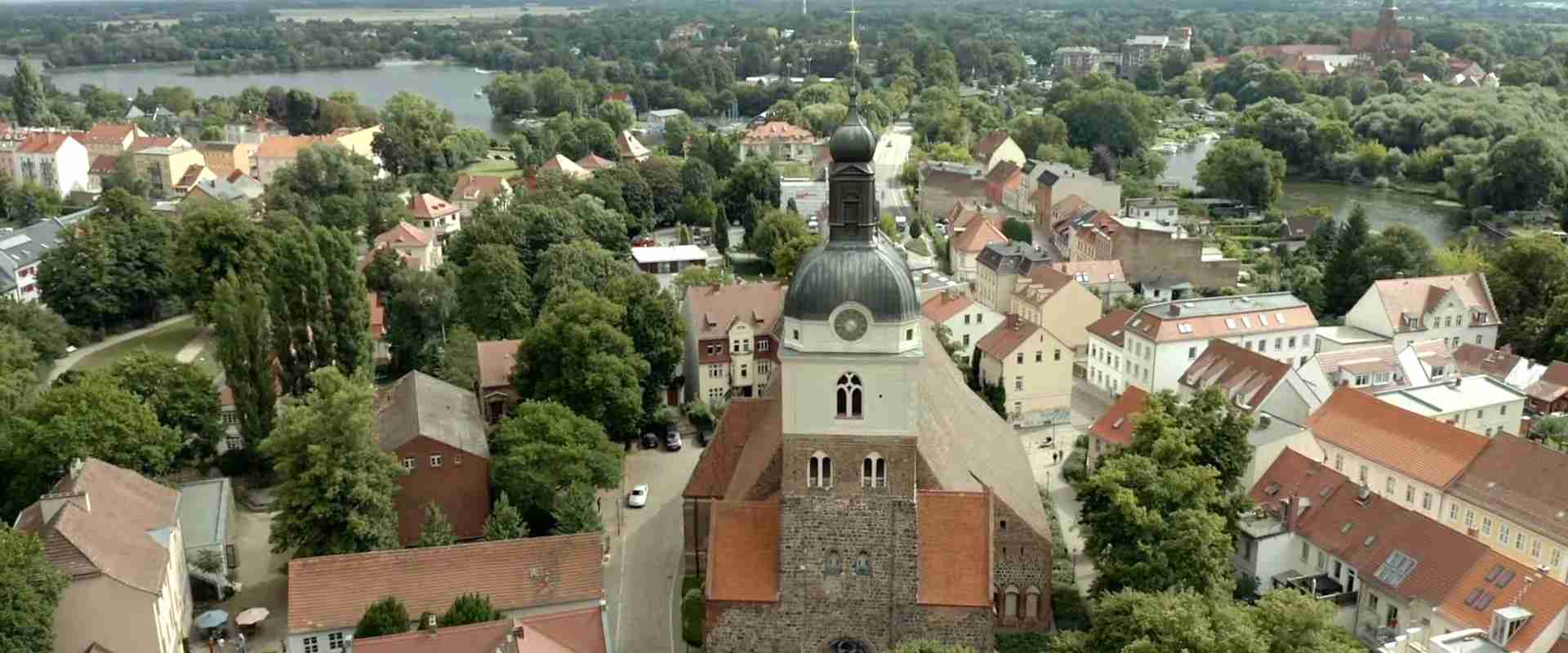
The Cradle of the Mark: Road Trip Guide 2026 to Brandenburg an der Havel and Kloster Lehnin near Berlin
Seventy kilometers west of Berlin, two medieval landmarks anchor one of eastern Germany’s most rewarding heritage day trips in 2026: Brandenburg Cathedral (Dom St. Peter und Paul), the brick basilica whose founding diocese gave an entire state its name, and Lehnin Abbey, the oldest Cistercian monastery in the March of Brandenburg. Whether you board the hourly RE1 regional express from Berlin Hauptbahnhof or follow the A2 Autobahn west in a rental car, this guide gives you the verified logistics, current costs, and combined itinerary options you need to plan the full circuit.
Key Takeaways
- The RE1 regional express departs Berlin Hauptbahnhof and Zoologischer Garten roughly every hour, reaching Brandenburg an der Havel Hauptbahnhof in approximately 45 minutes; the same line stops at Groß Kreutz station, the rail gateway for onward buses to Lehnin Abbey.
- Entry to Brandenburg Cathedral is free; the adjacent Cathedral Museum charges €5 for adults and is open April through October Monday to Saturday 10:00–17:00, Sunday 12:00–17:00, with shorter winter hours from November through March.
- Lehnin Abbey Church (St. Mary) opens Tuesday through Friday 13:00–16:00 and Saturday to Sunday 14:00–17:00; the museum is accessible only via guided tours (€3 per person) and requires advance booking for groups.
- Two people sharing a Brandenburg-Berlin-Ticket (€36.50 flat per ticket, valid for up to five people all day across the entire VBB network) pay approximately €18 each for all transit; holders of the Deutschlandticket (€63/month in 2026) travel the RE1 at no additional cost.
- A comfortable mid-range day trip — transit, Cathedral Museum, Lehnin Abbey Museum, lunch, and coffee — runs approximately €55–70 per person using public transport; by rental car shared between two people, budget €75–105 per person.
- Lehnin Abbey Church is closed on Mondays, and its afternoon-only opening hours (from 13:00 or 14:00) make itinerary sequencing critical: visit Brandenburg Cathedral first in the morning, then travel to Lehnin for the afternoon.
People Also Ask About Brandenburg an der Havel 2026
How do I get from Berlin to Brandenburg an der Havel by train in 2026?
The RE1 regional express operated by ODEG departs Berlin Hauptbahnhof and Berlin Zoologischer Garten roughly every hour throughout the day, serving Brandenburg an der Havel Hauptbahnhof in approximately 45 minutes. The line runs west from Berlin through Potsdam — note that Brandenburg an der Havel is a station beyond Potsdam, so make sure you board a train in the direction of Magdeburg. In 2026, the Deutschlandticket (€63/month) covers all regional train and local transit travel across Germany including the RE1. Solo travelers without a monthly pass who want a single-day option should consider the Brandenburg-Berlin-Ticket (€36.50 for up to five people, all day in the VBB network), which is competitive for pairs and small groups. For current single-trip regional fares between Berlin and Brandenburg an der Havel, check vbb.de directly before your trip, as the VBB adjusted fares by an average of 6 percent from January 2026.
How much does a day trip from Berlin to Brandenburg an der Havel cost in 2026?
A mid-range day trip from Berlin to Brandenburg an der Havel and Lehnin Abbey runs approximately €55–70 per person when using public transit and sharing a Brandenburg-Berlin-Ticket between two people. That estimate includes the ticket itself (€18/person), Cathedral Museum admission (€5), Lehnin Abbey Museum access via guided tour (€3), a sit-down lunch in Brandenburg an der Havel (€24–35), and coffee at a waterfront café (€5–8). Entry to both the cathedral and the abbey church is free, keeping costs well below comparable heritage day trips in western Germany. Travelers driving and sharing a rental car between two people should budget €75–105 per person, accounting for the car hire, fuel for approximately 180 km, and parking at Cathedral Island (€1.50/hour, max €7.50 daily at the Grillendamm car park).
What are the must-see sights at Brandenburg Cathedral Island in 2026?
Cathedral Island (Dominsel) rewards visitors with at least two to three hours of exploration in 2026. The cathedral itself — free to enter — delivers a powerful progression from its Romanesque choir, whose arcaded colonettes survive from the original 12th-century build, through the Gothic nave completed around the mid-15th century. The Cathedral Museum inside the former collegiate cloister houses the Brandenburg Hunger Cloth, an embroidered liturgical hanging from around 1290 regarded as one of the finest surviving medieval textile works in the region. The crypt preserves a late Romanesque triumphal cross from around 1250. Beyond the cathedral, the ensemble of cloister walks, the Curia building, and the island’s tree-lined paths alongside the Beetzsee and the Havel offer one of the most atmospheric medieval urban landscapes in the state of Brandenburg. In summer, the Domstift hosts concerts and guided tours of the restoration workshops, so check the event calendar at dom-brandon.de for 2026 programming.
Is Lehnin Abbey worth visiting as a day trip from Berlin in 2026?
Lehnin Abbey is worth the detour if the itinerary logic works for you: the abbey church opens from 13:00 on weekdays and from 14:00 on weekends, so it fits naturally as an afternoon destination after a morning at Brandenburg Cathedral. The complex is the oldest surviving Cistercian monastery site in the March of Brandenburg, and the church — a late-Romanesque and early-Gothic brick structure substantially reconstructed in the 1870s — gives a strong sense of the monastic architecture the Ascanians used to consolidate Christian settlement across their new margraviate. The museum requires joining a guided tour (€3), but the tour itself provides historical context unavailable from free self-guided access. Visitors who reach Lehnin without a car face a genuine planning challenge: the nearest rail stop is Groß Kreutz on the RE1 line, from which local bus services connect to Lehnin, but intervals can be infrequent. For visitors not combining both sites, Brandenburg Cathedral Island alone is a half-day destination fully worth the RE1 journey from Berlin in 2026.
Extended multi-day tours – 5+ days
Featured Berlin Multi-Day Tour Packages
3 days
Berlin 3-Day Discovery Tour
- ✓ Comprehensive Berlin experience
- ✓ Expert local guides included
- ✓ All accommodation included
- ✓ Transportation provided
5 days
Berlin 5-Day Highlights Experience
- ✓ Comprehensive Berlin experience
- ✓ Expert local guides included
- ✓ All accommodation included
- ✓ Transportation provided
7 days
Berlin 7-Day Cultural Journey
- ✓ Comprehensive Berlin experience
- ✓ Expert local guides included
- ✓ All accommodation included
- ✓ Transportation provided
10 days
Berlin 10-Day Complete Adventure
- ✓ Comprehensive Berlin experience
- ✓ Expert local guides included
- ✓ All accommodation included
- ✓ Transportation provided
Multi-day tour packages powered by TourRadar. Prices and availability subject to change.
Brandenburg an der Havel and Lehnin: Germany’s Most Overlooked Heritage Day Trip
The state of Brandenburg forms the ring of forest, lake, and former market town that surrounds Berlin on every side, but most visitors who use the capital as a base confine their day trips to Potsdam, whose palaces and UNESCO World Heritage landscape are undeniably magnificent. Brandenburg an der Havel, forty-five minutes farther west on the same RE1 train line, quietly surpasses Potsdam on one metric that matters to heritage travelers: medieval depth. Where Potsdam is largely a monument to Baroque royal ambition, Brandenburg an der Havel traces its documentary history to 948, when the Ottonian emperor Otto I founded a diocese here on a river island to serve as the base for the Christian mission to the Slavic peoples east of the Elbe. The city not only gave the modern German state its name — it was here, as the official cathedral website notes, that the margraviate was consolidated under Ascanian rule and the foundations of a territorial polity that would eventually become Prussia were laid brick by brick.
That medieval depth is most legible on Cathedral Island (Dominsel), the river island between the Beetzsee lake and the Havel where the brick cathedral of St. Peter and Paul has dominated the skyline since construction began in 1165. The building is commonly designated “the cradle of the Mark Brandenburg” — a phrase that appears on the official Domstift website and in multiple heritage publications — because no other structure so physically embodies the transition from contested Wendish territory to Christian margraviate. The cathedral evolved over three centuries, accumulating layers from Romanesque to Brick Gothic, and its free-entry policy means that the full interior, including the late-Romanesque crypt and the medieval textile collection in the Cathedral Museum, is accessible to any visitor prepared to cross the short bridge onto the island.
Twenty-five kilometers to the east — a logical second stop by car, or a bus-and-train combination by public transit — stands Lehnin Abbey (Kloster Lehnin), the first Cistercian monastery established in the Margraviate of Brandenburg. Founded in 1180 by Margrave Otto I, son of Albert the Bear who had established the margraviate itself in 1157, Lehnin served as the Ascanian dynasty’s house monastery and burial church for more than three centuries. Its dissolution in 1542 during the Protestant Reformation, followed by the near-destruction of much of the complex during the Thirty Years’ War and a 19th-century reconstruction campaign that rebuilt the abbey church, gives Lehnin a layered biography typical of the region’s monastic heritage: a genuine medieval foundation, a turbulent post-Reformation story, and a Victorian-era restoration whose ambitions were extensive. Today the complex houses a Lutheran diaconal community that has been in residence since 1911 and which maintains the site as a functioning religious and cultural institution.
Together, Brandenburg Cathedral and Lehnin Abbey form what might be called the Ascanian heritage corridor: two sites directly shaped by the same ruling dynasty and the same medieval impulse to stamp Christian institutional authority on a newly conquered frontier territory. Their architectural typologies — Brick Gothic basilica and Cistercian brick monastery — are closely related, both part of the North German brick-building tradition that stretches from Lübeck and Stralsund in the north to Chorin Abbey (itself a daughter house of Lehnin, founded in 1260) further east in Brandenburg. For travelers interested in Brick Gothic architecture, early medieval ecclesiastical history, or the social dynamics of the Ostsiedlung, the eastward German expansion of the 12th and 13th centuries, the two sites together constitute a remarkably coherent and geographically compact heritage program within easy reach of Berlin.
Rail & Drive Optimization: RE1 Regional Train Connections vs. Car Routes from Central Berlin
The RE1 regional express is the central transport axis of this day trip. Operated by ODEG (Ostdeutsche Eisenbahn), the RE1 runs the full length of the Berlin–Magdeburg corridor: Cottbus–Frankfurt (Oder)–Berlin Hauptbahnhof–Berlin Zoologischer Garten–Potsdam Hauptbahnhof–Brandenburg an der Havel Hauptbahnhof–Magdeburg Hauptbahnhof. Trains depart Berlin Hauptbahnhof roughly once per hour throughout the day, every day of the week. The journey time from Berlin Hauptbahnhof to Brandenburg an der Havel Hauptbahnhof is approximately 45 minutes, making it one of the fastest regional connections in the VBB (Verkehrsverbund Berlin-Brandenburg) network west of the capital.
From Brandenburg an der Havel Hauptbahnhof, Cathedral Island (Dominsel) is reachable on foot in approximately 20–25 minutes along a flat, well-signed path through the Neustadt district and across the island bridge, or by local bus (line run by the Verkehrsbetriebe Brandenburg an der Havel, VBBr) in approximately 10 minutes. The RE1 also stops at Groß Kreutz station, between Brandenburg an der Havel and Potsdam, which serves as the rail access point for Lehnin Abbey via connecting bus services — a route described in detail in the low-carbon itinerary section below.
For the 2026 trip, the main transit ticket options are as follows. The Deutschlandticket, priced at €63 per month from January 2026, is valid on all local and regional public transport nationwide, including the RE1. For visitors who already hold a monthly Deutschlandticket subscription, the entire day trip — RE1 to Brandenburg, bus to Cathedral Island, RE1 to Groß Kreutz, connecting bus to Lehnin, return journey — is covered without any additional fare. For visitors buying tickets specifically for this trip, the Brandenburg-Berlin-Ticket at €36.50 covers the full VBB network for one day and for up to five people on the same ticket. Two people sharing one Brandenburg-Berlin-Ticket pay €18.25 each; three people pay €12.17 each; five people pay €7.30 each. The ticket is valid Monday through Friday from 09:00, and all day on Saturdays, Sundays, and public holidays. It can be purchased at VBB ticket machines at any Berlin S-Bahn or regional rail station. For current single-trip regional fares (Regionaltarif) specific to the Berlin–Brandenburg route, check the VBB tariff calculator at vbb.de before your trip, as the VBB implemented its 2026 fare schedule from January 1.
The car route from central Berlin to Brandenburg an der Havel follows the A2 Autobahn westward. From the Berliner Ring (A10), take the A2 toward Magdeburg and exit at Brandenburg an der Havel, junction number 78. From that exit, the B102 federal road leads approximately 9 kilometers to the city center. Total driving distance from central Berlin is approximately 90 kilometers, with typical journey times of about 65–75 minutes, depending on traffic, particularly around the A10/A2 interchange near Potsdam. To reach Cathedral Island, follow signs for Dom or Dominsel within the city; a fee-paying car park at Grillendamm, just across the bridge from the island, charges €1.50 per hour with a daily maximum of €7.50. From Cathedral Island, Lehnin Abbey is approximately 25 kilometers by road: retrace the B102 toward the A2, take junction 22 (Groß Kreutz), then follow local roads south and east to Kloster Lehnin. GPS routing to the address Klosterkirchplatz 4, 14797 Kloster Lehnin is reliable. Return to Berlin from Lehnin via the A2 eastbound and the A10 to your Berlin entry point — the total circuit from central Berlin covers approximately 180 kilometers.
Combining Cathedral Island and Cistercian Ruins in a Single Low-Impact Itinerary
The logical low-carbon sequence pairs the RE1’s Brandenburg an der Havel stop with a connecting journey to Lehnin Abbey via rail and bus. A note on terminology before the logistics: while this heading — preserved verbatim from the article’s structural brief — uses the word “ruins,” the abbey church at Lehnin today is a substantially reconstructed building. The complex fell into severe disrepair following its dissolution in 1542 and suffered further damage in the Thirty Years’ War; the abbey church was in a ruinous condition by the 19th century. The reconstruction campaign of the 1870s rebuilt the church substantially, preserving surviving medieval fabric where possible while completing the roofline, arches, and tower in a historicist interpretation of the original. What visitors see today is therefore best described as a restored and partially reconstructed medieval structure, not a romanticized ruin open to the sky — an important practical distinction, since the church interior is fully accessible and includes the rebuilt choir and nave.
The low-carbon itinerary works as follows. Depart Berlin Hauptbahnhof on the RE1 toward Magdeburg, arriving at Brandenburg an der Havel Hauptbahnhof approximately 45 minutes later. Walk or take a local bus to Cathedral Island (Dominsel), arriving between 10:00 and 10:30 if you take the first convenient morning departure. Allow 2.5 to 3 hours for Cathedral Island: the cathedral itself warrants at least 45 minutes, the Cathedral Museum another 45–60 minutes, and the island’s cloister walks and Beetzsee waterfront another half hour. Lunch in the Altstadt or on the island (several café options exist on and near the Dominsel) takes another 45–60 minutes. By 13:30–14:00, return to Brandenburg an der Havel Hauptbahnhof and board the RE1 eastbound — in the direction of Berlin/Cottbus — to Groß Kreutz station, a journey of approximately 10 minutes. At Groß Kreutz, bus services run toward Kloster Lehnin; bus line 554 is the connection most commonly cited in routing tools for this leg. Confirm current timetables at vbb.de or the VBB trip planner before your visit, as rural bus frequencies in Brandenburg can be hourly or less frequent on weekdays. The bus journey from Groß Kreutz to Lehnin takes approximately 20–25 minutes. Arrive at Lehnin Abbey Church by 14:30–15:00 to allow adequate time before the 16:00 weekday closing (17:00 on weekends). Allow 60–90 minutes at the abbey, then catch the return bus to Groß Kreutz and the RE1 back to Berlin, arriving at Berlin Hauptbahnhof by approximately 17:30–18:30.
The key scheduling constraint on this itinerary is the abbey church’s afternoon-only opening: on weekdays the church opens at 13:00 (not before), and on weekends at 14:00. Anyone who arrives at Lehnin before those times will find the church locked. The Brandenburg-Berlin-Ticket or a Deutschlandticket subscription covers all legs of this journey — RE1 Berlin to Brandenburg, local bus on the island, RE1 Brandenburg to Groß Kreutz, bus 554 to Lehnin, and the full return — without any supplementary fares.
The Car Driver’s Circuit: Berlin to Brandenburg an der Havel, Lehnin, and the Scenic Return via B1
Drivers have the advantage of flexible sequencing and no dependency on rural bus timetables. The recommended circuit leaves central Berlin via the A100 and A10 (Berliner Ring) westbound, then takes the A2 toward Magdeburg. Exit at junction 22 (Groß Kreutz) rather than the Brandenburg-specific exit, and follow local roads south approximately 20 kilometers to Kloster Lehnin. Visiting Lehnin first in the mid-morning allows arrival well before the crowds that may form on weekends, and respects the fact that the church only opens at 13:00 on weekdays — so a morning car arrival is only useful on weekend days when the 14:00 opening applies, or for walkers exploring the exterior courtyards and outbuildings before the church opens.
From Lehnin, drive north on local roads through the Havelland landscape — flat arable fields, mixed woodland, and the occasional reed-fringed lake — to Brandenburg an der Havel, approximately 25 kilometers. The Grillendamm car park (max €7.50 daily) gives direct access to Cathedral Island via the Albrecht-Schönherr-Brücke footbridge. Allow 2.5–3 hours at Cathedral Island. For the scenic return journey, the B1 federal road provides an alternative to the Autobahn: it runs east from Brandenburg an der Havel along the southern shore of the Beetzsee lake, through the villages of Golzow and Lehnin-area communities, connecting eventually to the A2 via Groß Kreutz or continuing east through Werder an der Havel toward Potsdam and Berlin. The B1 route adds 20–30 minutes over the Autobahn but passes through the characteristic Havelland riparian landscape and allows stops at Werder an der Havel, a small island town on the Havel known for its fruit orchards and wine-producing tradition. Total circuit distance on this variant is approximately 180–200 kilometers.
Brandenburg Cathedral Island 2026: What to See, When to Go, and How Long to Stay
Cathedral Island (Dominsel) is the oldest urban nucleus of Brandenburg an der Havel and the place where the Ottonian imperial church mission to the Slavic east physically began in the mid-10th century. When Otto I founded the Diocese of Brandenburg here in 948 on the site of an earlier Slavic fortress, the island’s strategic position — surrounded by the Beetzsee lake to the north and the Havel river to the south, connected to the mainland by narrow bridges — combined natural defensibility with the symbolic weight of occupying a pre-Christian sacred site. The first cathedral built after 948 was burned and destroyed during the Slavic uprising of 983, which temporarily reversed the Ottonian expansion east of the Elbe. The bishopric was not permanently re-established until 1161, under Ascanian patronage, and the cornerstone of the present building was laid in 1165 — making the current structure one of the earliest brick buildings east of the Elbe river and one of the most continuously significant religious sites in the history of the Brandenburg March.
The building known today as Brandenburg Cathedral (Dom St. Peter und Paul) shows clearly how three centuries of construction shaped a single structure. The earliest surviving fabric belongs to the Romanesque phase begun in 1165: the building was planned as a single-nave, cross-shaped Saalkirche (hall church) in brick, reflecting the building traditions of the nascent Premonstratensian canons who initially served the cathedral chapter. By the 13th century, the plan had been expanded to a three-aisled basilica with an elevated choir and two west towers — a scale reflecting the cathedral’s growing institutional importance as the center of a diocese that covered an enormous area of northeastern Germany. Further Gothic rebuilding in the 14th and 15th centuries gradually transformed the nave, transept, and west end into the Brick Gothic forms visible today. The northern tower, the last major structural addition, was completed in 1672. The 1161 re-foundation charter of the cathedral chapter and the 948 foundation charter of the Diocese of Brandenburg Magdeburg, both held by the Domstift, establish the documentary history of the site beyond reasonable dispute.
Brandenburg Cathedral: Architecture, Interior, and Free Entry in 2026
Entry to the cathedral church itself is free in 2026 — donations are warmly requested and directly support the building’s maintenance, since the Domstift (Cathedral Foundation) funds approximately 97 percent of its operating budget from visitor income and private donations rather than state subsidy. The cathedral opens Monday through Saturday 10:00–17:00 (April–October) or 11:00–16:00 (November–March), and Sunday 12:00–17:00 (April–October) or 12:00–16:00 (November–March). Note that on Sundays the cathedral opens at noon, after the morning service. Services and special events can result in temporary restrictions to public access; check the calendar at dom-brandon.de before visiting.
The interior rewards close attention to three distinct phases of construction. In the high choir — the oldest surviving section — the arcaded colonettes along the choir walls and the compressed spatial rhythm of the Romanesque apse represent what remains of the original 12th-century conception. The Cathedral of St. Peter and Paul website notes that construction of the choir, crossing, and transept was substantially complete by 1173, just eight years after the foundation stone was laid — a pace that reflects the political urgency of establishing a visible Christian landmark on the contested Havel frontier. The late-Romanesque triumphal cross in the crypt dates from approximately 1250, a generation after the original Romanesque phase; it presents Christ in a stylized yet emotionally intense idiom that prefigures the increasing naturalism of Gothic devotional sculpture.
The Gothic choir fittings accumulated over the 14th and 15th centuries include a decorated Gothic tabernacle, carved choir stalls, and a large 15th-century crucifixion group positioned above the choir crossing. The nave itself, with its three aisles and the characteristic Brick Gothic alternation of clustered piers and pointed arches, was substantially completed by the mid-15th century and gives the interior its imposing length. The building became Lutheran in 1539 and has served as the center of the Evangelical Church of the Brandenburg region ever since, which means that the medieval furnishings survived the Reformation — an outcome far from guaranteed in many German Protestant churches, where Calvinist influences led to systematic stripping of imagery. Brandenburg Cathedral’s medieval interior fabric is therefore largely intact, making it one of the richer medieval church interiors in the eastern German states.
An important note for 2026 visitors: the Cathedral Foundation (Domstift) has been undertaking ongoing conservation and structural work at the complex. Check the current status of any areas under active restoration at dom-brandon.de before your visit, as access to particular sections may be temporarily restricted. Parking for drivers: the Grillendamm car park on the mainland side of the island is the designated visitor parking point, at €1.50 per hour, maximum €7.50 per day.
The Cathedral Museum 2026: Admission, Hours, and the Hunger Cloth
The Cathedral Museum (Dommuseum), housed in the former collegiate cloister (Domklausur) adjacent to the main church, charges €5 for adults and €3 for reduced-rate visitors (students, seniors) in 2026. A family ticket covering two adults and up to four children aged 10 and over costs €15. Children below 10 enter free. On the first Sunday of each month, museum admission is free for all visitors. The museum shares the same seasonal hours as the cathedral: April–October 10:00–17:00 Monday–Saturday, 12:00–17:00 Sunday; November–March 11:00–16:00 Monday–Saturday, 12:00–16:00 Sunday.
The Cathedral Museum’s collections are primarily medieval liturgical textiles and sacred objects ranging from the 12th to the 15th centuries. The single most compelling object in the collection is the Brandenburg Hunger Cloth (Brandenburger Fastentuch), dating from around 1290. Hung across the choir during the penitential season of Lent to conceal the altar from the congregation — a practice common in medieval German-speaking churches — the cloth is embroidered in white thread on linen with an extensive programme of biblical scenes. Its survival in readable condition after more than seven centuries of use, storage, and the upheavals of the Reformation and subsequent centuries is remarkable. The Domstift describes the museum’s collection of medieval liturgical textiles as among the most significant of its kind in the region, and the Hunger Cloth is the centerpiece of this reputation.
The cloister walks through which visitors access the museum have themselves been the subject of ongoing conservation: a refurbishment of the northern enclosure completed in 2009 uncovered Gothic mural paintings on the upper floor, a discovery that extended the documented pictorial programme of the complex. The panel paintings, medieval altar retables, and devotional sculptures distributed through the museum rooms collectively represent a cross-section of the artistic production of a major medieval diocese over approximately three centuries. Allow at least 45 minutes for a thorough visit to the museum; an hour is more comfortable if you engage with the textile rooms in detail.
Lehnin Abbey in 2026: Opening Hours, Admission, and Getting There
Lehnin Abbey (Kloster Lehnin) — to use the locked title term — stands in the small municipality of Kloster Lehnin, in the Potsdam-Mittelmark district of Brandenburg state, roughly halfway between Brandenburg an der Havel and Potsdam. The abbey complex today is an active Lutheran diaconal foundation (Evangelisches Diakonissenhaus Berlin Teltow Lehnin), which means that the grounds include working buildings, residences, a hospital, and educational facilities alongside the historic medieval structures. Visitors should treat the site with corresponding respect for a functioning religious community.
The abbey was founded in 1180 by Margrave Otto I of Brandenburg, son of Albert the Bear, who had established the Margraviate of Brandenburg twenty-three years earlier. Otto I founded Lehnin as a daughter house of Sittichenbach Abbey near Eisleben in Saxony-Anhalt, and the first community of twelve monks and lay brothers under the first abbot, Sibold, took up residence in 1183 — or so it is recorded in the sources, though the early years of the community were turbulent, and accounts suggest Sibold may have met a violent death around 1185–1190 amid frontier conflicts with Slavic communities contesting Cistercian land use. The founding of Lehnin was formally confirmed by the Cistercian General Chapter at Cîteaux in 1192, twelve years after the foundation, and the imperial foundation was approved at the Reichstag in Gelnhausen in 1180 itself. These documented dates and events are well attested in the scholarly literature on the Brandenburg Ascanians and the Cistercian Order.
Within two generations, Lehnin had outgrown its initial identity as a family monastery and burial site. It founded four daughter houses: Paradiz Abbey (1236), Mariensee Abbey (1258), Chorin Abbey (1260), and Himmelpfort Abbey (1299). The foundation of Chorin, in particular, meant that Lehnin’s architectural and monastic traditions propagated across the March of Brandenburg and were eventually expressed in one of the finest surviving examples of North German Brick Gothic monastic architecture — Chorin Abbey, today itself a popular day-trip destination from Berlin. By the 15th century, Lehnin had re-established itself as a center of learning with a monastic school and a well-stocked library, following economic difficulties in the 14th century. The dissolution in 1542 by the Elector of Brandenburg ended the Cistercian community; the complex was subsequently converted into an electoral estate and, following the Thirty Years’ War (1618–1648) which brought looting and arson to the buildings, into a hunting lodge. By the 19th century, the abbey church was in an advanced state of dereliction. The extensive reconstruction campaign of the 1870s was undertaken with state support and rebuilt the church to a functional condition, preserving surviving medieval fabric — primarily in the lower masonry courses and the choir structure — while completing the upper walls, roofline, and tower with considerable interpretive freedom.
The founding legend of Lehnin, preserved in later medieval sources, relates that Margrave Otto I, while hunting at the site, fell asleep beneath a giant oak tree. In a dream, a white deer appeared and attacked him furiously; Otto could ward it off only by invoking the Saviour. The dream was interpreted as a divine instruction to found a monastery on the spot. The legend is presented as a founding narrative of the pious-ruler type common across medieval European monasticism; it carries the standard caveats of legendary rather than historical evidence, and is best read as a retrospective legitimizing story rather than a reliable account of actual events.
The Abbey Church of St. Mary: Architecture and Restricted Hours in 2026
The abbey church (Klosterkirche St. Marien) is the most architecturally significant surviving element of the medieval complex. Its construction spanned approximately 80 years, from around 1180 to the completion of the building circa 1260, and the phased construction is visible in the building’s fabric: the eastern section — the chancel, choir, and easternmost nave bay — reflects the Romanesque traditions of the 1180s, with rounded arches, compact proportions, and thick masonry; the western section, built in later decades, transitions to the taller pointed arches and larger windows of early North German Gothic. This Romanesque-to-Gothic seam within a single building is one of the most instructive examples of the stylistic transition in the region, comparable in instructive value to similar transitions visible at Chorin and at the Cathedral of St. Peter and Paul in Brandenburg itself. The use of brick throughout — reflecting the absence of local building stone and the North German Backsteinbau tradition — links Lehnin firmly to the broader Brick Gothic heritage corridor of the southern Baltic.
In 2026, the abbey church opens Tuesday through Friday from 13:00 to 16:00 and Saturday and Sunday from 14:00 to 17:00. The church is closed on Mondays. These restricted hours are a consequence of the site’s status as an active religious institution rather than a fully public heritage museum; the hours may also be adjusted for services and community events, so confirming current access via the Diakonissenhaus website at diakonissenhaus.de before your visit is advisable. The Gate Chapel (Torkapelle) maintains separate hours: Monday through Friday 09:00–13:00.
One significant ongoing development for 2026 visitors to know: the Wegscheider organ, a major historic instrument, was disassembled in early 2025 for restoration and was scheduled for reinstallation in the church in time for a major international music event planned for July 2026. Whether the organ restoration was completed on schedule, and what its current state is, should be verified directly with the abbey before planning a visit specifically around organ music. The abbey hosts a regular program of concerts in the church, the cloister, and the assembly hall — the Lehniner Sommermusiken series — and collaborates with Kloster Zinna on the Musica Mediaevalis medieval music festival.
The museum within the abbey complex presents the history of the Cistercian community and the post-Reformation transformation of the site. It is accessible only via guided tours (minimum 15 persons required for a dedicated tour; individuals join scheduled public tours). Museum admission is €3 for adults, €2 reduced, €7.50 for a family ticket. Children below 6 enter free. Tour bookings: +49 (0)178 61 871 38 or +49 (0)3382 768 842. Individual visitors without a pre-booked tour may not be able to access the museum; call ahead to confirm whether public tours are running on your intended visit day.
Reaching Lehnin Abbey Without a Car in 2026
Lehnin Abbey has no direct train service. The nearest railway station is Groß Kreutz, on the RE1 line between Brandenburg an der Havel and Potsdam. From Berlin Hauptbahnhof, Groß Kreutz is approximately 40–45 minutes by RE1 (toward Magdeburg; Groß Kreutz is the stop after Brandenburg an der Havel going eastward toward Potsdam). From Groß Kreutz station, local bus services run to Kloster Lehnin; bus line 554 is the connection identified in VBB routing tools, with a journey time of approximately 20–25 minutes. The bus stop at the abbey end is listed as Lehnin, Busbahnhof.
An alternative route runs from Potsdam Hauptbahnhof via bus line 580 (operated by regiobus PM) to Lehnin Busbahnhof, taking approximately 35 minutes. This route is useful if you are combining Lehnin with Potsdam rather than with Brandenburg an der Havel, or if you reach Lehnin first and return to Berlin via Potsdam on the RE1 or S7.
The key planning challenge for the low-carbon visitor is bus frequency: VBBr and regiobus PM services in rural Potsdam-Mittelmark run on relatively sparse timetables on weekdays. Use the VBB trip planner (vbb.de) to check current departures before your trip, and plan a return bus that leaves Lehnin by 15:15 on weekdays (to catch a bus before the church closes at 16:00) or by 16:15 on weekends (church closes 17:00). Missing the last convenient bus from Lehnin in the afternoon may mean a longer wait or a taxi back to Groß Kreutz; the taxi option should be budgeted at approximately €20–30 for the 20-kilometer transfer.
Day Trip Cost Breakdown 2026: How Much to Budget for Berlin to Brandenburg an der Havel and Lehnin
All costs below are per person, per day, and expressed as ranges to reflect genuine variation in choices. Hotel costs are not included in the day-trip budget because this itinerary assumes you sleep in Berlin and make both stops as a single-day excursion. Costs are in euros; Germany uses the euro as its currency.
Transit Budget: Public Transport Costs per Person in 2026
The most cost-efficient transit option for most visitors is the Brandenburg-Berlin-Ticket, priced at €36.50 per ticket in 2026, valid for the entire VBB network all day and for up to five people travelling together. Two people sharing one ticket each pay €18.25; round to €18 per person for budgeting. The ticket covers all legs of the day trip: RE1 from Berlin to Brandenburg, local VBBr buses in Brandenburg an der Havel, RE1 from Brandenburg to Groß Kreutz, and bus 554 from Groß Kreutz to Lehnin and return. Visitors with an active Deutschlandticket subscription (€63 per month in 2026, covering all regional and local transit across Germany) pay nothing extra for this trip.
Below is the full cost breakdown for a mid-range transit day trip, calculated for two people sharing a Brandenburg-Berlin-Ticket:
- Brandenburg-Berlin-Ticket: €36.50 ÷ 2 = €18 per person
- Brandenburg Cathedral Museum admission: €5
- Lehnin Abbey Museum (guided tour): €3
- Lunch in Brandenburg an der Havel: €22–35
- Coffee and snacks: €5–8
Low-end total (budget lunch, skip Lehnin Museum): approximately €40–45 per person. Mid-range total (sit-down lunch, both museums): approximately €55–70 per person. Travelers on the strictest budget who pack their own lunch and visit only the (free) cathedral interior and (free) abbey church exterior will spend approximately €18–23 per person for the entire day trip, covering only the transit ticket and a coffee.
Note for solo travelers: the Brandenburg-Berlin-Ticket at €36.50 is designed for groups; a solo traveler buying it for personal use pays the full €36.50. In that case, the Deutschlandticket subscription (€63/month) is more economical if the traveler plans any other transit use during the month. For a solo day trip with no monthly subscription, budget approximately €40–55 total (transit plus museums plus coffee, no sit-down lunch) or €55–75 including a mid-range lunch.
Car Route Budget: Fuel, Parking, and Rental Costs in 2026
The car option gives complete scheduling flexibility but adds meaningful cost. Rental car prices in Berlin vary significantly by season, booking lead time, and vehicle class; the figures below are indicative and should be confirmed with rental providers for your specific travel dates. Check rental platforms directly for 2026 pricing, as supply, fuel surcharges, and insurance requirements shift continuously.
For a compact car rental in Berlin (a practical choice for two passengers and day luggage), indicative 2026 rates run approximately €45–70 for a full day including basic insurance, based on standard market pricing for the Berlin rental market. Two people sharing that car pay €22–35 each. Fuel for the approximately 180-kilometer circuit (Berlin–Brandenburg–Lehnin–Berlin) costs approximately €11 per person for two people sharing, assuming fuel consumption of around 6.5–7 liters per 100 km and 2026 German fuel prices in the range of €1.65–€1.85 per liter for petrol. Parking at Cathedral Island (Grillendamm, max €7.50 daily) adds €4 per person for two sharing.
Full mid-range car option breakdown for two people sharing:
- Car rental (compact, 1 day): €45–70 ÷ 2 = €22–35 per person
- Fuel (~180 km circuit): approx. €20–22 ÷ 2 = €10–11 per person
- Cathedral Island parking: €7.50 ÷ 2 = €4 per person
- Brandenburg Cathedral Museum: €5
- Lehnin Abbey Museum guided tour: €3
- Lunch: €22–35
- Coffee and snacks: €6–10
Low-end total (cheapest rental, budget lunch): approximately €72–75 per person. High-end total (standard rental, mid-range lunch): approximately €103–105 per person. In both cases, round to the nearest €5 for planning: the car option runs €75–105 per person daily for two people sharing. Solo drivers — paying the full rental cost alone — should budget €100–135 per person.
Suggested Itineraries for 2026: One Day, Two Stops
Both stops can be comfortably combined in a single day from Berlin, but the itinerary must respect Lehnin Abbey’s afternoon-only opening hours. The following two suggested sequences cover the same ground by different means.
The Low-Carbon Morning: Cathedral Island First, Lehnin in the Afternoon
This transit-based itinerary suits visitors with a Deutschlandticket or who plan to share a Brandenburg-Berlin-Ticket between two or more people.
- 08:30–09:00: Depart Berlin Hauptbahnhof or Zoologischer Garten on the RE1 toward Magdeburg. Confirm the departure time using the VBB trip planner the evening before; RE1 services run approximately every hour.
- 09:15–09:45: Arrive Brandenburg an der Havel Hauptbahnhof. Walk or take local bus to Cathedral Island (approximately 20–25 minutes on foot, 10 minutes by bus).
- 10:00–12:30: Explore Cathedral Island. Visit the cathedral interior (free, allow 45 minutes), then the Cathedral Museum (€5, allow 60 minutes including the Hunger Cloth textile rooms and the cloister). Walk the island perimeter paths for views of the Beetzsee and Havel.
- 12:30–13:30: Lunch at one of the cafés or restaurants in the Altstadt (Old Town) near the Hauptstraße or on the island itself. A casual meal with drinks runs €15–25 per person; expect to pay €25–35 for a full restaurant lunch.
- 13:30: Return to Brandenburg an der Havel Hauptbahnhof and board the RE1 eastbound toward Potsdam/Berlin. Alight at Groß Kreutz station (approximately 10 minutes).
- 13:45–14:00: At Groß Kreutz, board the bus to Kloster Lehnin (line 554, journey approximately 20–25 minutes). Check the timetable in advance; if there is a gap before the next bus, the station area has limited facilities — bring a snack and a book.
- 14:30–16:00: Explore Lehnin Abbey. Visit the abbey church exterior and available interior (free, open from 13:00 Tue–Fri, 14:00 Sat–Sun). Join a guided museum tour if booked in advance (€3, approximately 60 minutes).
- 16:00–17:30: Return bus to Groß Kreutz, then RE1 eastbound to Berlin Hauptbahnhof. Arrive approximately 17:30–18:30.
Total transit time: approximately 3.5–4 hours. Total time at the two sites: approximately 3.5–4.5 hours. The itinerary is comfortably achievable on weekday Tuesday through Friday (when the abbey church opens at 13:00) and on weekends (when it opens at 14:00, requiring a slightly later arrival at Lehnin).
The Car-First Circuit: Brandenburg an der Havel, Lehnin, Scenic Return via B1
This driving sequence visits Lehnin first on weekend mornings when the church opens at 14:00 — meaning an early morning departure from Berlin allows a Lehnin arrival timed for the church opening, followed by Brandenburg Cathedral in the afternoon.
- 08:00: Depart Berlin in rental car, heading west on A100 toward A10 (Berliner Ring), then A2 toward Magdeburg.
- 09:00–10:00: Arrive Lehnin. Park in the abbey courtyard area (free or minimal charge). If the church is not yet open (weekday: opens 13:00; weekend: opens 14:00), explore the outer abbey complex, the Gate Chapel (open Mon–Fri 09:00–13:00), and the grounds. The Falconers’ House (Falkonierhaus) and the medieval Elisabethhaus can be viewed from the exterior.
- 14:00–15:30 (weekends): Abbey church opens; visit the interior. Join a guided museum tour if booked. Allow 60–90 minutes.
- 15:45: Depart Lehnin, drive north approximately 25 km to Brandenburg an der Havel. Follow the B1 or local roads north; the drive takes approximately 30 minutes.
- 16:15: Arrive Cathedral Island. The cathedral is open until 17:00 (April–October), leaving 45 minutes for the interior. The Cathedral Museum closes at 17:00 as well; a rushed visit is possible but a morning session at the cathedral (see below) is far better.
Better weekend variation for car travelers: Reverse the sequence — visit Brandenburg Cathedral in the morning (arrives 09:30, leaving by 12:30), lunch in the Altstadt, then drive to Lehnin to arrive for the 14:00 weekend opening. This gives comfortable time at both sites without rushing.
- Return to Berlin: From Brandenburg an der Havel, take the B1 east through Werder an der Havel to the A2/A10, arriving in central Berlin approximately 60–75 minutes later.
Seasonal Planning for 2026: Best Times to Visit Brandenburg an der Havel and Lehnin
The calendar imposes two practical constraints on this day trip. First, the Cathedral Museum and the extended hours of the Brandenburg Cathedral follow a seasonal schedule: the longer hours (10:00–17:00 Monday–Saturday; 12:00–17:00 Sunday) apply only from April through October. From November through March, hours shorten to 11:00–16:00 Monday–Saturday and 12:00–16:00 Sunday. Winter visits are perfectly viable but allow less time within the buildings before closing. Second, Lehnin Abbey Church does not appear to maintain an extended summer season: the hours (Tuesday–Friday 13:00–16:00, Saturday–Sunday 14:00–17:00) are the same year-round, though the Diakonissenhaus website should be consulted for any 2026 updates.
Spring (April–May) is arguably the most rewarding season. Cathedral Island has its full summer hours from April, and the chestnut trees along the Havel and the reed beds on the Beetzsee begin to fill out after winter. Weekday visitor numbers at both sites are modest in the pre-summer period. The Havelland landscape between the two sites — flat, interspersed with small lakes and alder forests — shows particular freshness in spring, and the low angle of morning light on the brick facade of the cathedral makes for exceptional photography from the island’s southern shore.
Summer (June–August) brings the longest days and the highest visitor numbers. Brandenburg an der Havel is notably popular with Berlin day-trippers and cycling tourists in July and August, and the Cathedral Museum can be busy. Summer also brings the Domstift’s concert season and special guided tour programme, which can be a significant added value: architectural workshops, textile-restoration tours, and evening candlelit concerts in the cathedral all appear in the summer calendar. Check dom-brandon.de for 2026 programming. At Lehnin, the Lehniner Sommermusiken concert series runs through the summer, with performances in the church, the cloister (Kreuzgang), and the Stiftssaal.
Autumn (September–October) offers the clearest light and comfortable temperatures for the walking sections of the itinerary. The Havelland’s mixed forests take on autumn color in October, and both sites are significantly less crowded than in high summer. October marks the last full month of extended cathedral hours; plan accordingly.
Winter (November–March) is the quietest season at both sites. The cathedral maintains winter hours, and the interior — lit by the low winter sun through the nave windows — has a moody atmosphere well suited to contemplative visits. Note that the Cathedral Museum is winter-closed (it closes its season typically around the end of October), so winter visitors to Brandenburg Cathedral access only the free church interior. Lehnin Abbey Church remains accessible year-round within its standard hours, though the atmosphere of the grounds in winter — bare trees, wind off the Havelland plain, an active diaconal community going about its work — carries its own austere character.
Where to Eat in Brandenburg an der Havel and Lehnin in 2026
Brandenburg an der Havel has a genuine local dining scene built around its waterfront position and the river fish traditions of the Havelland. The Havel is a pike-perch river — Zander (pike-perch) is the regional specialty, typically served pan-fried or grilled, and appears on most menus that describe themselves as serving regional German cuisine. The city’s tourism authority, Erlebnis Brandenburg an der Havel, notes that the historic Altstadt and Cathedral Island offer restaurants in historic buildings with direct views of the Havel — a category that includes informal café-style establishments, traditional Gasthaus dining, and a small number of more ambitious kitchens.
Dining on or near Cathedral Island is possible and convenient for visitors who want to minimize walking time. The island’s compact scale means most food options are within a few minutes of the cathedral; verify current openings before you visit, as availability at individual establishments changes seasonally and operationally. Expect to pay €12–20 for a main course at a mid-range waterfront restaurant, or €7–12 at a café for soup, a sandwich, and coffee. Note that waterfront cafés directly on the Beetzsee and Havel promenade can be busy in summer; arriving for lunch before 12:30 or after 13:30 avoids the peak queue at popular spots.
In the Neustadt (New Town) along Hauptstraße and the streets between the station and Cathedral Island, a wider range of options includes bakeries, Turkish-style lunch spots, and casual German Gaststätten. This area is more practical for a quick, inexpensive lunch between the cathedral visit and the RE1 departure to Groß Kreutz. A Bäckerei lunch — soup, a filled roll, and coffee — typically costs €7–12 and can be eaten quickly or taken to go for a Havel-side picnic.
At Lehnin Abbey, food options within the complex itself are limited and may be available only during organized events. The municipality of Kloster Lehnin is a small town and dining options are modest: a Gasthof or café at the village level, with basic regional cooking. Visitors planning an afternoon-only visit to Lehnin should either eat lunch before arriving (budget the time in Brandenburg an der Havel) or verify current café availability at the abbey complex before their trip. Bringing packed food from Berlin or Brandenburg remains a practical and cost-effective option for budget-conscious visitors.
For travelers making the car circuit and returning via Werder an der Havel, the small island town on the Havel between Lehnin and Berlin offers several seasonal options focused on the region’s fruit-growing tradition. Werder is Brandenburg’s wine and fruit town, and its waterfront restaurants and market stalls (particularly active in spring during the Baumblüte blossom festival) provide a pleasant last stop before the A10 return to Berlin.
Practical Tips 2026: Tickets, Parking, and Visiting Essentials
Train tickets and apps. The Brandenburg-Berlin-Ticket can be purchased at any VBB ticket machine at Berlin S-Bahn or regional rail stations, via the BVG app, or via the VBB app. Purchase in advance if you are traveling on a high-demand day (weekends in summer); tickets sell out on popular dates. The Deutschlandticket is available as a monthly subscription from any VBB member carrier and cancellable by the 10th of the preceding month. Do not purchase a Deutschlandticket from unofficial third-party sites; only buy from official carriers (BVG, DB, or VBB-affiliated apps).
Booking the Lehnin Abbey Museum tour. Individual visitors who want to access the museum — which is not self-guided — should contact the abbey in advance to ask whether a public guided tour is scheduled for their intended visit day. The tour telephone numbers are +49 (0)178 61 871 38 and +49 (0)3382 768 842. Arriving without advance contact and expecting to join a tour is risky, particularly on weekdays outside peak season when tour minimums (15 persons) may not be met by walk-in visitors alone. Groups of 15 or more should book with ample notice.
Walking shoes. Cathedral Island (Dominsel) is entirely accessible on foot via its bridge connections; no vehicle access is permitted on most of the island itself. The paved paths are well maintained but uneven in places, and the cloister walks involve some uneven stone thresholds. Comfortable walking shoes are recommended. At Lehnin, the abbey grounds involve similar surfaces; the area between buildings can be muddy after rain.
Photography. Photography is permitted in both the Brandenburg Cathedral and the Lehnin Abbey Church, subject to the standard no-flash and no-tripod rules during services. The exterior of both buildings offers outstanding photographic conditions in morning and late-afternoon light. For Cathedral Island, position yourself on the south bank of the Havel for the classic facade view; for Lehnin, the south-facing apsis of the abbey church seen from the courtyard is a well-known compositional subject.
Mobile connectivity. Brandenburg an der Havel city center has good 4G/5G coverage from all major German carriers. Rural sections of the bus route between Groß Kreutz and Lehnin may have intermittent coverage — download your return bus timetable and any navigation files before boarding the bus to Lehnin.
Accessibility. Brandenburg Cathedral has partial accessibility for wheelchair users; confirm current lift and ramp availability at dom-brandon.de before planning an accessible visit, as ongoing conservation works can affect access. The Cathedral Museum cloister involves level changes that may be challenging for some visitors. Lehnin Abbey complex is partially accessible; contact the abbey for current accessibility status before planning a visit.
Cycling variant. The Havelradweg (Havel Cycle Route) passes through Brandenburg an der Havel and connects to trails that reach the Lehnin area. Cyclists with e-bikes or good fitness can ride the Brandenburg–Lehnin distance of approximately 25 kilometers through the Havelland landscape, returning to Brandenburg or continuing to Werder and Potsdam for the RE1 back to Berlin. The flat terrain and well-maintained cycle paths make this a genuinely attractive low-carbon variant, particularly in spring and autumn.
Tour options. Brandenburg an der Havel offers guided walking tours of the city and Cathedral Island, typically departing from the tourist information office at Neustädtischer Markt 3. Guided tours of the Cathedral Museum are also available on request and add context to the collection that is difficult to extract from the display captions alone. The Domstift’s guided tours of the restoration workshops — periodic events scheduled in the summer programme — are among the most distinctive experiences available at the site and are typically free or charged at minimal cost.
Frequently Asked Questions
How long does the RE1 take from Berlin Hauptbahnhof to Brandenburg an der Havel in 2026?
The RE1 regional express covers the distance from Berlin Hauptbahnhof to Brandenburg an der Havel Hauptbahnhof in approximately 45 minutes. The train runs roughly every hour throughout the day. Trains depart from Berlin Hauptbahnhof and also stop at Berlin Zoologischer Garten shortly after departure; both stations are useful origin points depending on where you are staying in Berlin. The route goes through Potsdam Hauptbahnhof before reaching Brandenburg an der Havel, so board a service heading in the direction of Magdeburg, not eastward. Check the VBB trip planner or the RE1 timetable at vbb.de to confirm specific 2026 departure times, as the RE1 schedule received structural revisions from the December 2025 timetable change onward.
Is entry to Brandenburg Cathedral free in 2026?
Entry to the cathedral church is free in 2026; a voluntary donation toward maintenance and operations is warmly encouraged. The Cathedral Museum, housed in the former collegiate cloister and containing the Brandenburg Hunger Cloth and the medieval textile collection, charges a separate admission: €5 for adults, €3 for students and seniors, €15 for a family ticket (two adults plus up to four children aged 10 and over), and free for children under 10. The museum is also free on the first Sunday of each month. Museum hours in the summer season (April–October): Monday–Saturday 10:00–17:00, Sunday 12:00–17:00. Winter hours (November–March): Monday–Saturday 11:00–16:00, Sunday 12:00–16:00.
Can I visit Lehnin Abbey and Brandenburg an der Havel in a single day in 2026?
Yes, a single-day combination of both sites from Berlin is entirely feasible in 2026, but requires careful scheduling around Lehnin Abbey Church’s afternoon-only opening hours (Tuesday–Friday 13:00–16:00; Saturday–Sunday 14:00–17:00). The recommended sequence is to visit Brandenburg Cathedral Island in the morning — arriving by 10:00–10:30 via the RE1 — spend 2.5–3 hours there, eat lunch in the Altstadt, then travel onward to Lehnin by RE1 to Groß Kreutz and connecting bus 554. Car drivers have more scheduling flexibility. On Mondays, Lehnin Abbey Church is closed, making a single-day combination impossible unless you are satisfied with only the exterior and grounds at Lehnin; in that case, Monday visits are workable if you accept not entering the church.
Does the Deutschlandticket cover the RE1 to Brandenburg an der Havel in 2026?
Yes. The Deutschlandticket (€63 per month from January 2026) is valid on all regional and local public transport across Germany, including the RE1 operated by ODEG. Holders of a current Deutschlandticket subscription can board the RE1 at any Berlin station and travel to Brandenburg an der Havel at no additional cost. The ticket also covers local VBBr buses in Brandenburg an der Havel, the RE1 to Groß Kreutz, and the VBB-area bus connections to Lehnin. The Deutschlandticket does not cover intercity trains (ICE, IC, EC) or special-service surcharges, but no intercity trains are involved on this route.
What are the opening hours of Lehnin Abbey Church in 2026?
The Abbey Church of St. Mary (Klosterkirche St. Marien) at Lehnin is open Tuesday through Friday from 13:00 to 16:00 and Saturday and Sunday from 14:00 to 17:00. The church is closed on Mondays. These hours reflect the site’s status as a functioning religious institution (the Evangelisches Diakonissenhaus Berlin Teltow Lehnin) rather than a fully public heritage museum. Hours may be further restricted during services, community events, or periods of building maintenance; verify current access at diakonissenhaus.de before your visit. The Gate Chapel (Torkapelle) has separate hours of Monday–Friday 09:00–13:00.
What is the best time of year to visit Brandenburg an der Havel in 2026?
Spring and early autumn offer the most comfortable conditions for this day trip in 2026. April and May bring the full cathedral opening hours from the start of the summer season, moderate visitor numbers before the Berlin summer day-trip rush, and fresh Havelland scenery. September and October offer the clearest autumn light and significantly reduced crowds. Summer (June–August) is the most culturally active season: the Domstift concert programme, special tours of the restoration workshop, and the Lehniner Sommermusiken at the abbey all run during these months. Winter is the quietest period; the Cathedral Museum closes for the winter season, so winter visitors access only the free cathedral interior at that site.
How do I get from Brandenburg an der Havel to Lehnin Abbey without a car in 2026?
The low-carbon connection from Brandenburg an der Havel to Lehnin Abbey involves boarding the RE1 from Brandenburg an der Havel Hauptbahnhof eastbound toward Berlin, alighting at Groß Kreutz station (approximately 10 minutes), and then taking bus line 554 from Groß Kreutz to Lehnin Busbahnhof (approximately 20–25 minutes). The complete journey from Brandenburg an der Havel Hauptbahnhof to Lehnin takes approximately 35–45 minutes including the bus transfer. An alternative approaches Lehnin from Potsdam via bus line 580 from Potsdam Hauptbahnhof (approximately 35 minutes), which may be more convenient for visitors returning to Berlin via Potsdam. Bus frequencies on rural VBB routes in Potsdam-Mittelmark are limited; always verify departure times at vbb.de before relying on this connection.
Is there parking near Brandenburg Cathedral in 2026?
The designated visitor car park for Cathedral Island is on the mainland at Grillendamm, accessed by crossing the Albrecht-Schönherr-Brücke footbridge onto the island. The car park charges €1.50 per hour with a daily maximum of €7.50. This maximum is useful for visitors spending a full morning or afternoon on the island. Street parking in the surrounding Neustadt area is also available but limited. Avoid blocking the narrow approach roads to the island bridges, which are used by local residents and service vehicles. Lehnin Abbey has courtyard parking available; free or at minimal charge, but confirm current parking arrangements at the abbey’s website before arriving by car.
What is the Brandenburg-Berlin-Ticket and how does it compare to the Deutschlandticket in 2026?
The Brandenburg-Berlin-Ticket (€36.50 in 2026) is a day ticket for the entire VBB network, valid for up to five people traveling together. It is ideal for groups of two to five making a single-day excursion into Brandenburg state from Berlin, offering the best per-person value when shared. It is valid Monday–Friday from 09:00, and all day on weekends and public holidays. The Deutschlandticket (€63/month in 2026) is a monthly subscription valid on all regional and local transport across Germany, not just the VBB network. For a solo traveler or couple making multiple trips across Germany in a given month, the Deutschlandticket is the better-value choice — it costs more than the Brandenburg-Berlin-Ticket for a single trip, but covers unlimited travel nationwide for 30 days. For a one-off day trip for two people, the Brandenburg-Berlin-Ticket at €18.25 per person is more economical than two individual monthly Deutschlandticket subscriptions at €63 each.
What should I not miss at Brandenburg Cathedral Island in 2026?
The three non-negotiable stops on Cathedral Island in 2026 are: (1) the Romanesque choir and crypt inside the cathedral, where the late-Romanesque triumphal cross of approximately 1250 and the surviving 12th-century arcaded colonettes give the most direct encounter with the original building; (2) the Brandenburg Hunger Cloth (around 1290) in the Cathedral Museum — a large embroidered liturgical textile whose survival is exceptional and whose iconographic programme rewards close attention; and (3) the cloister walks of the Domklausur, which frame the relationship between the church and the collegiate buildings that served the cathedral chapter for centuries. Beyond these anchors, the open-air views from the island’s southern shore across the Havel toward the Neustadt skyline, with the brick towers of the cathedral rising behind, constitute one of the most photographically satisfying medieval urban views in the eastern German states — and they are free, accessible at any time, and require no ticket at all.