Coventry Museums, Galleries & Photography Guide 2026
Coventry’s cultural scene in 2026 rewards far more than a brief day trip. From the dramatic contrast of bombed medieval ruins and Basil Spence’s modernist masterpiece at the Cathedral, to Britain’s largest publicly owned vehicle collection and the city’s singular 2-Tone music legacy, Coventry has remade itself into a genuinely rich circuit for museum-goers and photographers alike. This guide covers every major venue, its 2026 tickets and hours, the finest photography spots, and how to plan a visit that does the city full justice.
Key Takeaways
- Coventry Transport Museum now charges admission — adults pay £15.50 when booking in advance online — with all tickets valid for 365 days and unlimited return visits within one year, making it among the best-value museum annual passes in the Midlands.
- Coventry Cathedral, both the haunting open-air ruins of the medieval church bombed in November 1940 and Basil Spence’s celebrated 1962 New Cathedral beside it, remains free to enter, with a voluntary donation of around £5 warmly encouraged to help meet daily operating costs.
- The Herbert Art Gallery & Museum introduced a small admission fee from April 2025 — £4.50 per adult (day pass) for non-Coventry residents — while children under fifteen and Go CV+ cardholders continue to enter free.
- British Art Show 10, the UK’s most significant touring survey of contemporary British art, opens its first iteration in Coventry in September 2026 across the Mead Gallery at Warwick Arts Centre, the Herbert Art Gallery & Museum, and Coventry University — making 2026 an unusually strong year for contemporary art in the city.
- Coventry’s Cathedral Quarter clusters the Cathedral ruins, St Mary’s Guildhall, Holy Trinity Church, and the Herbert within a compact ten-minute walk, offering some of the richest architectural photography in the English Midlands without a single entrance gate separating the outdoor public spaces.
- Fargo Village on Far Gosford Street and the Coventry Music Museum together provide Coventry’s most distinctive independent cultural experiences — one a colourful creative quarter of artists’ studios and makers’ markets, the other a deep dive into the 2-Tone ska movement and the city’s broader musical identity.
People Also Ask About Coventry Museums, Galleries & Photography 2026
What are the best museums to visit in Coventry in 2026?
Coventry’s flagship museum is the Coventry Transport Museum on Millennium Place, home to the world’s largest publicly owned collection of British-made road transport — including ThrustSSC and Thrust 2, the two fastest cars in history. For art and local history, the Herbert Art Gallery & Museum on Jordan Well combines permanent galleries spanning fine art, social history, and natural history with a strong rotating exhibitions programme. Coventry Cathedral is technically a working church rather than a museum, but its Blitz Museum, Graham Sutherland tapestry, John Piper-designed baptistry window, and Jacob Epstein bronze are as compelling as many dedicated art museums in England. St Mary’s Guildhall on Bayley Lane — a medieval guildhall that survived both the English Civil War and the Second World War — rounds out the Cathedral Quarter. For a niche visit, the Coventry Music Museum on Walsgrave Road dedicates itself to the city’s outsized contribution to British music, from the 2-Tone ska movement to electronic music pioneer Delia Derbyshire. The Mead Gallery at Warwick Arts Centre, roughly 25 minutes from the city centre, shows internationally significant contemporary art for free and in 2026 is the anchor venue for British Art Show 10.
How much do Coventry museums cost in 2026?
Admission costs vary considerably. The Coventry Transport Museum charges adults £15.50 in advance online (£17.00 on the day at the box office), with concessions at £12.00 in advance and juniors aged 5 to 16 at £8.50 in advance; all tickets are valid for a full year with unlimited return visits. The Herbert Art Gallery & Museum charges adults £4.50 for a day pass (concessions £3.00), with children under fifteen entering free. Coventry Cathedral — both the ruins and the New Cathedral — is entirely free, with voluntary donations of around £5 encouraged. St Mary’s Guildhall charges for daytime entry; visitor information sources indicate adult tickets are approximately £7 (verify current rates at stmarysguildhall.co.uk). The Mead Gallery at Warwick Arts Centre is always free. A full day across all four main paid venues costs a non-Coventry-resident adult approximately £27 in admissions. Budget visitors spending one night in Coventry while covering all four venues typically spend £75–£100 per person daily (two sharing a budget hotel), while mid-range visitors typically spend £105–£155 per person daily, with the low admission costs at the Cathedral and Herbert helping keep overall expenses moderate.
What are the best photography spots in Coventry in 2026?
The Cathedral ruins provide the single most photographically compelling location in Coventry: the sandstone shell of the medieval St Michael’s Cathedral, open to the sky and freely accessible, frames Basil Spence’s modernist tower and engraved glass west screen in a juxtaposition that is remarkable at virtually any time of day. The New Cathedral interior offers the abstract coloured light of John Piper’s baptistry window and the vast scale of Graham Sutherland’s tapestry. Beyond the Cathedral Quarter, Spon Street preserves one of England’s most intact collections of relocated timber-framed medieval buildings along a single pedestrian street. The Coventry Canal Basin, roughly fifteen minutes’ walk from the centre, offers narrowboat reflections and Victorian warehouse architecture. Fargo Village’s repurposed shipping containers and rotating street murals provide Coventry’s most vivid colour photography. Photographers visiting between May and June 2026 will find the Mead Gallery presenting Daiga Grantina’s immersive installation LILACS, while the arrival of British Art Show 10 in September 2026 brings significant contemporary art installations to three city venues simultaneously.
Is Coventry worth visiting for art and culture in 2026?
Coventry makes a strong case for a cultural day trip or short break in 2026, particularly given the arrival of British Art Show 10 — the UK’s most prestigious touring contemporary art survey — for its Coventry opening in September. The city is home to a free contemporary gallery at Warwick Arts Centre that regularly shows internationally recognised artists, two accessible major museums with recently introduced but modest admission fees, and a Cathedral that ranks among the most architecturally significant examples of post-war design in Europe. The compact Cathedral Quarter means that much of the most historically and photographically interesting ground can be covered on foot in an afternoon. Coventry is well connected by train from Birmingham (approximately 20 to 30 minutes) and from London Euston (approximately 55 to 65 minutes), making it a realistic addition to a wider Midlands itinerary or a standalone day trip from a significant part of England.
Extended multi-day tours – 5+ days
Featured Coventry Multi-Day Tour Packages

3 days
Coventry 3-Day Discovery Tour
- ✓ Comprehensive Coventry experience
- ✓ Expert local guides included
- ✓ All accommodation included
- ✓ Transportation provided

5 days
Coventry 5-Day Highlights Experience
- ✓ Comprehensive Coventry experience
- ✓ Expert local guides included
- ✓ All accommodation included
- ✓ Transportation provided

7 days
Coventry 7-Day Cultural Journey
- ✓ Comprehensive Coventry experience
- ✓ Expert local guides included
- ✓ All accommodation included
- ✓ Transportation provided
10 days
Coventry 10-Day Complete Adventure
- ✓ Comprehensive Coventry experience
- ✓ Expert local guides included
- ✓ All accommodation included
- ✓ Transportation provided
Multi-day tour packages powered by TourRadar. Prices and availability subject to change.
Why Coventry Is a Cultural Destination Worth Your 2026 Diary
For many visitors, the name Coventry still calls to mind the 1940 Blitz and the image of a ruined medieval city. That is only part of the story. The destruction of the old city centre — the result of one of the heaviest aerial raids on a British city in the Second World War — produced, in the decade that followed, one of Europe’s most ambitious programmes of post-war civic reconstruction. Basil Spence’s New Cathedral, consecrated in 1962 alongside the ruins it was deliberately built never to demolish, became a global symbol of reconciliation over retribution. The spirit that shaped the reconstruction gave Coventry’s built environment a coherence and ambition that, more than half a century later, has come to be recognised as architecturally and historically significant in its own right.
The city’s cultural institutions have similarly been reconsidered upwards. The Coventry Transport Museum’s move to an admission charge marks a significant operational shift, but the 365-day ticket structure means the museum now functions effectively as a membership model, encouraging repeat visits and local champions rather than purely tourist footfall. The Herbert Art Gallery & Museum’s introduction of a modest entry fee from April 2025 was an acknowledgement of the financial realities facing regional institutions across England, and its permanent collections — spanning Graham Sutherland, Barbara Hepworth, Stanley Spencer, and the expressionist Coventry artist George Shaw — justify the £4.50 without difficulty. The Herbert is also the anchor Herbert-side venue for British Art Show 10 in September 2026, which gives Coventry’s gallery scene an unusual moment of national visibility that is worth planning around.
The independent cultural sector provides the other end of the spectrum. Fargo Village on Far Gosford Street, established in 2014 in a repurposed industrial site, has matured into a genuinely functioning creative quarter with artists’ studios, independent retailers, and a lively events calendar. The Coventry Music Museum in the 2-Tone Village on Walsgrave Road maintains a passionate small-museum energy: founded by music historian Pete Chambers MBE and kept alive largely by volunteers, it preserves the city’s claim to having been the epicentre of British ska and much more besides. Together, these institutions give Coventry a cultural range that substantially exceeds what its broader reputation might lead a first-time visitor to expect.
The photography case for Coventry is equally underrated. The Cathedral ruins — open-air, free to enter, and accessible for exterior photography at any hour — are among the most dramatically photogenic historical settings in the English Midlands. Spon Street’s cluster of relocated medieval timber-framed buildings represents one of England’s rare surviving examples of this type of preserved streetscape. The Canal Basin offers reflective water and Victorian warehouse architecture. Fargo Village’s painted containers and street murals provide colour and contemporary energy. This guide covers all of it in detail, so that visitors can plan their time efficiently and arrive home with photographs that convey the full range of what Coventry in 2026 genuinely has to offer.
Coventry Transport Museum in 2026: Tickets, Collections, and Photography
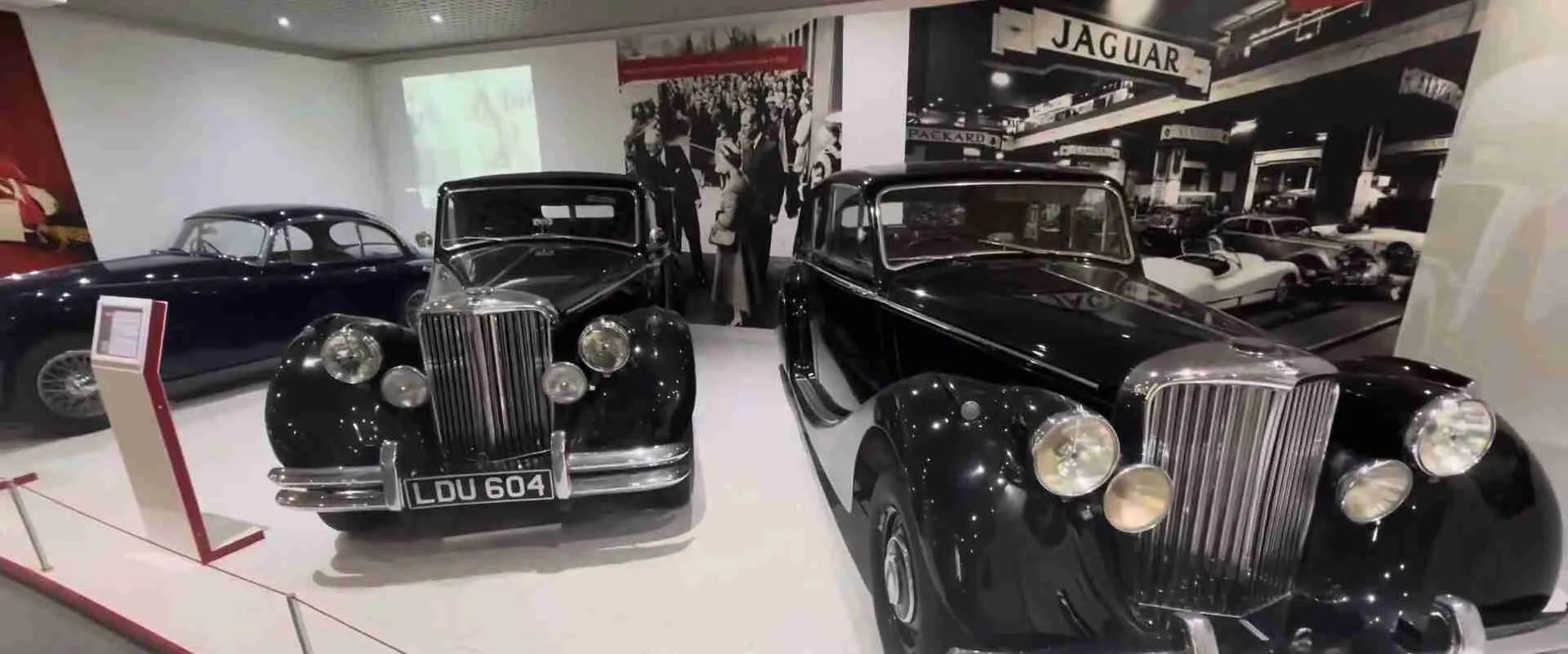
The Coventry Transport Museum on Millennium Place occupies a significant position in British museum culture: it is home to the largest publicly owned collection of British-made road transport vehicles in the world, with 14 fully accessible interactive galleries housing around 300 cycles, 120 motorcycles, and approximately 250 cars and commercial vehicles, alongside over a million items in the wider collection archive. That scale alone makes it one of the Midlands’ most important cultural institutions, quite apart from the narrative it tells about Coventry’s own history as the engine room of British automotive manufacturing for most of the twentieth century. The city that produced Jaguar, Triumph, Standard, Rover, and Daimler before those marques dispersed or were absorbed into conglomerates is now, with some irony, the place most committed to preserving the material evidence of their making.
The museum’s headline attraction is its land speed record gallery, which places ThrustSSC — the first vehicle to break the sound barrier on land, achieving 763 mph in the Nevada desert in October 1997 — alongside its predecessor, Thrust 2, in an immersive exhibition that conveys both the engineering ambition and the controlled risk involved in record-breaking. Getting within touching distance of ThrustSSC, a machine powered by two Rolls-Royce Spey jet engines and wider than many family cars, is a genuinely startling experience for visitors who encounter it at floor level rather than behind barriers. The exhibition surrounding the cars contextualises the achievement against the wider history of British land speed record attempts, with interpretive material that rewards attention from both engineering enthusiasts and general visitors.
Beyond the land speed exhibition, the museum’s galleries trace Coventry’s automotive identity from the pioneering bicycle manufacturers of the late nineteenth century — among them Rover, Singer, and Triumph, all of which began as cycle manufacturers before turning to motorcycles and automobiles — through the inter-war golden age of British car design and into the post-war decades when the city’s factories represented a significant share of global automotive production. The depth of the collection means that almost every decade of British motoring is represented by vehicles of genuine significance rather than token curios. Interactive elements throughout the galleries are well-designed for family visits, and the 4D simulator — which requires a separate booking but is included in the admission fee — provides an immersive experience of speed record conditions. The on-site café, Baxter Baristas, operates in a community hub style and provides a reasonable mid-morning stop before the galleries fill up towards midday.
2026 tickets and hours. The museum is open Tuesday through Sunday, 10:00am to 5:00pm, with last admission at 4:30pm. It is closed on Mondays, though it opens on Bank Holiday Mondays. Tickets booked in advance online at transport-museum.com cost £15.50 for adults, £12.00 for concessions (seniors aged 60 and over, or students with a valid TOTUM card), and £8.50 for juniors aged 5 to 16. Children aged 4 and under enter free, as do essential carers. A family ticket covering a minimum of one adult and one child costs £38.50 in advance. On-the-day prices at the box office are slightly higher — adults pay £17.00. All tickets are valid for 365 days from the date of purchase, with unlimited return visits within that year; this makes the advance price competitive against motor museums elsewhere in England that charge comparable or higher rates for a single-day visit. Coventry residents with a Go CV or Go CV+ card benefit from significantly reduced rates and should book in person at the museum for those discounts. Check transport-museum.com for current rates before visiting, as seasonal adjustments may apply.
Photography at the Coventry Transport Museum. The museum’s open-plan ground floor galleries offer wide-angle opportunities that most automotive collections — with their cramped, roped-off arrangements — simply do not. The land speed gallery is deliberately theatrical in its lighting design, with dramatic directional spotlighting on ThrustSSC and Thrust 2 that rewards a tripod and a moderate exposure rather than flash, which tends to flatten the vehicles’ profiles and create unwanted reflections on their bodywork. The classic car galleries on the upper levels are best visited in the mid-morning, when visitor numbers are lowest and the gallery illumination is at its most consistent. Detail photography — bonnet mascots, instrument panels, tyre tread sections, dashboard gauges on the older vehicles — is encouraged and typically unobstructed by barriers. The museum’s staff are generally welcoming to enthusiasts who want to take their time with individual exhibits. Personal photography throughout the museum is permitted; check with staff for any restrictions on specific temporary exhibition elements.
Herbert Art Gallery & Museum 2026: Collections and Current Exhibitions
The Herbert Art Gallery & Museum on Jordan Well is Coventry’s most encyclopaedic cultural institution: its permanent galleries range across fine art, social and industrial history, archaeology, natural history, and an extensive costume collection spanning from the early nineteenth century to the present day. The building’s principal entrance moved to Bayley Lane following recent renovation works, placing the Herbert immediately adjacent to the Cathedral ruins in a pedestrianised zone that is easy to navigate on foot and positioned directly on the route between the Cathedral and St Mary’s Guildhall. For first-time visitors arriving from the railway station or the Transport Museum, the Bayley Lane entrance is the natural point of approach to the Cathedral Quarter.
The fine art collection is the Herbert’s strongest claim to wider significance. Works by Barbara Hepworth and Stanley Spencer sit alongside an important and growing body of work by the Coventry-born artist George Shaw, whose hyper-realist paintings of Tile Hill — the suburban Coventry estate where he grew up — have given him a distinctive and widely discussed place in British painting over the past two decades. Shaw’s work was shortlisted for the Turner Prize in 2011, and the Herbert holds a substantial collection of his output. The social and industrial history galleries provide an authoritative account of Coventry’s rise and transformation as a manufacturing city, with particular depth on the ribbon and watch-making trades that defined the city before the automotive era gave it its twentieth-century identity. The natural history galleries currently include Dippy, a full-size replica of a Diplodocus carnegii skeleton on an extended loan from the Natural History Museum in London — a 26-metre-long installation that has proved a consistent draw for family visitors and provides an unexpected dramatic spectacle within what is otherwise a characteristically regional gallery building.
The Herbert is also the Coventry host for a significant strand of British Art Show 10 when the exhibition opens in September 2026. As one of three venues — alongside the Mead Gallery at Warwick Arts Centre and Coventry University — the Herbert’s galleries will present work by a selection of the artists curated by Ekow Eshun for a show that represents the most high-profile contemporary art event Coventry has hosted in many years. Visitors planning a trip around the British Art Show should check the Hayward Gallery Touring website for the precise opening date in September 2026 and the list of participating artists, which was not finalised at the time of writing this guide.
2026 admission and hours. From 1 April 2025, the Herbert introduced admission fees. A day pass costs £4.50 for adults who do not hold a Go CV card, and £3.00 for Go CV cardholders, concessions, and Museums Association members. Children under fifteen enter free, as do Go CV+ cardholders. Annual passes are available at £9.00 for non-cardholders and £5.00 for Go CV cardholders. The museum is open Tuesday through Saturday, 10:00am to 4:00pm, and Sunday from 12:00pm to 4:00pm; it is closed on Mondays except Bank Holidays. The Coventry Archives, which reside at the Herbert and hold documents, photographs, and maps relating to the city’s history, operate on a separate appointments-only basis — contact [email protected] in advance if access to the archive is the primary purpose of a visit. Verify current exhibitions and any temporary admission supplements at theherbert.org before travelling.
Photography at the Herbert. Personal, non-commercial photography is generally permitted across the permanent collection galleries; always check with gallery staff for restrictions on specific temporary exhibitions, which may include loaned works subject to copyright or artist-imposed conditions. The natural history galleries’ generous ceiling heights and diffuse overhead lighting suit wide-angle and moderate telephoto work. The social history galleries, with their period reconstructions and display cases, respond well to available light if flash is restricted. The main atrium near the Bayley Lane entrance provides an architectural interior composition — open above and lit from above — that is easy to overlook but worth seeking out before moving into the collection galleries.
Coventry Cathedral: Ruins, Basil Spence’s Vision, and Photography in 2026
Coventry Cathedral is simultaneously two buildings — and the deliberate, productive tension between them is what makes it one of the most photographically and architecturally powerful places in England. The medieval Church of St Michael, raised to cathedral status in 1918 when the Diocese of Coventry was established, was devastated during the Luftwaffe raid of 14–15 November 1940, one of the most concentrated aerial attacks on a British city during the Second World War. Rather than clearing the ruins, the decision taken in the months that followed was to preserve the shell of the old building exactly as it stood after the bombing, and to build the new cathedral not in the footprint of the destroyed church but directly adjacent to it — with the ruins functioning as a roofless outdoor nave leading visitors to the entrance of the new building. The effect, standing in the ruined shell and looking through John Hutton’s engraved glass west screen into Basil Spence’s interior beyond, is unique in European ecclesiastical architecture of the twentieth century.
Basil Spence won the open design competition for the New Cathedral in 1951, and the building was consecrated on 25 May 1962. Its interior contains several works that rank among the most significant examples of mid-twentieth-century British art in any public setting. Graham Sutherland’s tapestry of Christ in Glory in the Tetramorph — at approximately 23 metres high and 12 metres wide, among the largest tapestries produced in the twentieth century — dominates the east wall, woven by the Pinton workshop in France. The baptistry window on the south side of the nave, designed by John Piper in collaboration with Patrick Reyntiens, is realised in approximately 195 panes of coloured glass arranged in an abstract composition that floods the font area with rich, rotating colour on bright days. John Hutton engraved the figures of angels and saints on the west-facing glass screen — the translucent wall through which the old ruins are visible from inside the new building — a work of extraordinary delicacy carried out directly on the glass surface. On the exterior of the New Cathedral’s west wall, Jacob Epstein’s large bronze of St Michael’s Victory over the Devil, cast from the sculptor’s model, anchors the entrance sequence and is among the most widely reproduced images associated with the cathedral.
The Blitz Museum, accessible within the Cathedral precinct on the same free admission, reconstructs a series of wartime domestic and civic interiors to convey daily life during the 1940 bombing campaign and its aftermath; it is a compact but affecting installation that provides valuable historical context for the ruins that visitors have just walked through. The Cathedral also houses a permanent collection of international crosses of nails — objects made from nails salvaged from the burned roof of the old cathedral and sent to communities around the world as symbols of reconciliation — which situates the building within a continuing global peace network rather than merely as a historical monument.
2026 admission and hours. Admission to both the Cathedral Ruins and the New Cathedral is free, with donations of approximately £5 warmly encouraged; the cathedral’s daily operating costs are around £3,000, making visitor contributions genuinely material to its operation as an independent charity. The Cathedral is generally open Monday to Saturday from 10:00am to 4:00pm and Sunday from 12:00pm to 3:30pm, though as a working church with an active programme of services, events, and concerts it occasionally adjusts these hours; always check coventrycathedral.org.uk before travelling. A Tower Climb is available and carries an additional charge; confirm current pricing at the official site. Visitors arriving specifically for the daily experience of the baptistry window light — at its most intense on sunny mornings — should aim to be inside the New Cathedral by 10:30am.
Photography at Coventry Cathedral. The ruins are accessible for exterior photography at all hours — there are no closing gates on the outdoor precinct — and are at their most atmospherically distinctive in the blue hour before sunrise and in the hour after sunset, when the surviving sandstone walls take on a deeper tone and the lit interior of the New Cathedral beyond throws the gothic tracery into dramatic silhouette. For daytime photography, the south-facing ruins receive direct light in the morning during warmer months. The most distinctive single composition at the Cathedral is the view from inside the ruins looking south-east through a surviving gothic arch toward the glass west screen of the New Cathedral, with Spence’s canopy and the Hutton engraving beyond; a 24mm or wider lens at ground level captures the height of the arch and the depth of the view simultaneously. For the baptistry window interior, shoot in available light — flash is not permitted inside the Cathedral — with a tripod or image-stabilised system to manage the lower light levels. The Graham Sutherland tapestry rewards a moderate telephoto from the midpoint of the nave rather than a wide-angle from the rear, which distorts the proportions of the figure relative to the architectural surround. The Hutton glass screen is best photographed from inside looking outward during the day, with the ruins visible through the engraved angels in a layered composition that is unique to this building.
St Mary’s Guildhall 2026: Medieval Power and Hidden Photography
St Mary’s Guildhall on Bayley Lane is among the finest surviving medieval guildhalls in England, and for most visitors it remains genuinely unexpected: the building navigated both the English Civil War and the Second World War largely intact, a fact that gives it a rarity value within Coventry’s predominantly reconstructed city centre. Its Great Hall, with a distinctive timber roof and stained glass windows, was a centre of civic and royal power across the medieval and early modern periods. The Guildhall is said by tradition to have held Mary, Queen of Scots as a prisoner during her years of captivity in England, though the precise circumstances of any confinement here are not fully recoverable from surviving primary records. George Eliot, who grew up in the Coventry area, is among the more recent literary figures associated with the building, which served a range of civic functions across successive centuries.
The Guildhall’s most celebrated object is the Coventry Tapestry, a fifteenth-century work that has remained in the Great Hall since it was made — one of very few medieval tapestries in England to have survived in its original location across five centuries. The tapestry depicts the Trinity surrounded by saints and civic figures, and the combination of age, provenance, and continuous location makes it among the most significant textile objects in the Midlands. The building’s renovated interior also incorporates interactive digital tours and gaming kiosks aimed at younger visitors, alongside the option to try on reproduction period costumes in the Great Hall — an interpretive approach that has proved popular with families. The Tales of Tea restaurant, located in the vaulted medieval undercroft, serves brunch, lunch, and afternoon tea and is open to non-admission visitors who wish to dine without touring the Guildhall itself.
2026 tickets and hours. St Mary’s Guildhall is open Thursday to Sunday, 11:00am to 4:00pm, with last entry at 3:00pm. Tickets are required for standard daytime entry and can be purchased in advance online at stmarysguildhall.co.uk or on the day at the desk, subject to availability. Visitor information sources indicate adult day admission of approximately £7, with reduced rates for children and for Coventry residents holding a Go CV card; confirm current pricing at the official website before visiting. The Guildhall occasionally closes for private events, weddings, and corporate hire, and checking the online booking calendar for availability on a specific date is strongly advised before travelling. The ticket includes access to the Great Hall, the undercroft, and the upper gallery, as well as the digital interactive tours and the costume activities.
Photography at St Mary’s Guildhall. The Great Hall’s timber roof and stained glass provide the most architecturally distinctive interior photography in Coventry’s civic heritage. Available-light photography here requires either a tripod or a camera capable of clean high-ISO performance, since the interior has relatively low ambient illumination and the windows, while beautiful, do not flood the space with the same brightness as a cathedral interior. The Coventry Tapestry benefits from an eye-level composition taken from across the hall rather than a close crop on a single figure; the full tapestry with its architectural surround and the hall’s timber framing conveys the object’s relationship to its historic context better than an isolated detail. The undercroft, where the restaurant operates, has low vaulted ceilings and a candlelit atmosphere that responds well to close-up and detail work with minimal supplementary light.
Mead Gallery and the 2026 British Art Show: Coventry’s Contemporary Art Scene
The Mead Gallery at Warwick Arts Centre on the University of Warwick campus is one of the most consistently significant contemporary art galleries in the English Midlands, and among the least known outside a specialist audience. Since opening in 1986, it has built an international exhibitions programme that has presented work by artists including Hurvin Anderson, Phyllida Barlow, and Lubaina Himid, and has hosted major survey exhibitions alongside a sustained commitment to emerging and mid-career British talent. Admission to the Mead Gallery is always free, and the gallery’s location on the Warwick University campus — accessible by bus from Coventry city centre in approximately 20 to 25 minutes — means it is frequently overlooked by visitors focused on the city centre circuit.
In 2026, the Mead Gallery is the single most compelling reason for art-focused visitors to make the campus journey. The exhibition Daiga Grantina: LILACS runs from 2 May to 28 June 2026, presenting the Latvian-French artist’s materially inventive large-scale installations. More significantly, British Art Show 10 launches its opening iteration in Coventry in September 2026, with the Mead Gallery serving as the anchor venue alongside the Herbert Art Gallery & Museum and Coventry University. British Art Show, held every five years and produced by Hayward Gallery Touring, is the UK’s most important survey of contemporary British art; past editions have introduced major figures to wider audiences and have historically shaped the critical conversation around British practice. The 2026 curator is Ekow Eshun, whose previous exhibitions include In the Black Fantastic at the Hayward Gallery and The Time is Always Now at the National Portrait Gallery. The Coventry opening positions the city as the national launch point for a show that subsequently tours to Swansea, Bristol, Sheffield, and Newcastle Gateshead.
For visitors planning a 2026 trip centred on British Art Show 10, the Mead Gallery and the Herbert together form the core of the Coventry presentation, with additional work sited at Coventry University. Given that all three venues carry work by the same curated artist selection, building a connected walk across them in a single day is feasible: the Herbert is in the city centre, Coventry University is a ten-minute walk, and the Mead Gallery requires a bus trip from the centre. Check warwickartscentre.co.uk and the Hayward Gallery Touring website for the precise opening date and the full list of participating artists once the programme is confirmed; as of mid-2026 the full artist list had not been published. Photography is generally permitted in the Mead Gallery’s own exhibitions unless individual works carry artist-imposed restrictions indicated by signage at the gallery entrance.
Fargo Village and Coventry’s Independent Creative Quarter
Fargo Village on Far Gosford Street opened in September 2014 in a repurposed industrial site, developed at a cost of approximately £5 million, and has since established itself as Coventry’s most distinctive independent cultural destination. The site mixes boutique retail spaces housed in repurposed shipping containers with a large Market Hall — home to the Indie Mart, a curated emporium of independent traders selling handmade gifts, ceramics, jewellery, prints, and collectables — alongside artists’ studios, a music performance venue, craft workshops, and a rotating line-up of independent food and drink vendors. The site is free to enter, with individual businesses setting their own charges.
Fargo Village is located approximately fifteen minutes’ walk east of the city centre, or a short taxi ride from Coventry railway station. The creative tenancy includes painters, potters, textile artists, vinyl record dealers, vintage sellers, and a barber whose fitout has attracted attention beyond the city. The Indie Mart in the Market Hall gives a practical sense of what Coventry’s independent makers and designers are producing in 2026, and the breadth of the offer — from ceramics and dried flowers to prints and handcrafted jewellery — reflects a genuine maker community rather than a curated retail concept. The events calendar spans regular makers’ markets (both larger seasonal editions and a monthly Little Makers Market typically featuring 12 to 20 traders), themed festivals, live music, and community events, meaning the Village’s atmosphere changes substantially depending on when visitors arrive.
Sgt. Bilko’s Vintage Emporium, housed within Fargo Village, is a small museum of film, television, and music memorabilia with an emphasis on cult classics — toys, trading cards, autographs, magazines, and stage and screen objects. It is a worthwhile 30-minute detour for enthusiasts and adds a further layer of interest beyond the retail and food offer. Far Gosford Street itself has a wider cultural history as part of Coventry’s creative fringe, and the regenerated area around Fargo includes independent studios and workshops that have grown up in proximity to the Village since its opening.
Photography at Fargo Village. The repurposed shipping containers, painted in bright murals and geometric compositions, are the most immediately photogenic subjects at Fargo Village — and the most variable, since murals are periodically updated or replaced by new artists, meaning no two visits produce exactly the same compositions. Wide-angle work suits the container architecture and the courtyard geometry. Market days, when traders set up across the open-air space, add human interest, the texture of hand-made objects, and the social animation of browsing; a moderate telephoto allows candid shots of makers and visitors without intruding. The Indie Mart’s interior, with its density of colourful independent products, rewards close-up detail work and benefits from the venue’s warm overhead lighting.
Coventry Music Museum: The 2-Tone Legacy and Broader Heritage
The Coventry Music Museum operates from the 2-Tone Village at 74–80 Walsgrave Road, approximately ten minutes east of the city centre by car or taxi. Founded by local music historian Pete Chambers MBE — who runs it largely on a volunteer basis alongside his wife Julie — it is a small but exceptionally focused museum dedicated to the musical history of Coventry and the surrounding region. It is best known internationally for its coverage of the 2-Tone movement: the ska revival genre that emerged from Coventry in the late 1970s and produced internationally significant bands including The Specials, The Selecter, and (through the associated 2 Tone Records label) Madness and The Beat. But the museum’s scope is deliberately broader, reaching back to earlier musical traditions and forward to contemporary Coventry artists.
The museum’s most celebrated installation is the Ghost Town Car: the actual vehicle that appeared in the video for The Specials’ 1981 number one single “Ghost Town,” which visitors can sit in. The song — recorded against the backdrop of Coventry’s industrial decline, rising unemployment, and urban unrest — is one of the most directly political UK number one singles of the post-war era, and the physical presence of the car gives a piece of music history an unexpected tangibility. Elsewhere in the collection, displays cover the Coventry-born electronic music pioneer Delia Derbyshire, whose BBC Radiophonic Workshop recordings from the 1960s anticipated developments in electronic music by decades; The Enemy, The Primitives, Hazel O’Connor, and King are among the other artists whose Coventry connections are documented. The museum also records the visit of John Lennon and Yoko Ono to Coventry Cathedral in the 1960s — cited in the museum’s own displays as an occasion on which the pair planted acorns in the Cathedral grounds as a symbol of peace — and places it within a wider account of Coventry’s association with reconciliation as a civic value.
An on-site studio allows visitors to try their hand at composing and music-making, and the museum organises occasional small events including exhibition launches, question-and-answer sessions with musicians, and short acoustic performances. The atmosphere throughout is that of a community institution run by people who care deeply about the subject rather than a professionally designed heritage attraction, which gives it a character distinct from the larger venues in the city centre.
2026 hours and admission. The Coventry Music Museum is open Thursday through Saturday, 10:00am to 4:00pm (last entry 3:30pm), and Sunday from 10:00am to 3:00pm (last entry 2:30pm). It is closed Monday through Wednesday. Admission is charged; verify current prices at the museum directly or at the door before visiting, as the voluntary-run structure means pricing is not consistently published online through third-party sources. Allow one to two hours for the visit. The museum’s location in the 2-Tone Village makes it most practical as a standalone visit or combined with the Transport Museum and Fargo Village for a full east-of-centre programme.
The Cathedral Quarter Photography Walk in 2026
Coventry’s Cathedral Quarter is the most concentrated area of historical and photographic interest in the city, and it can be navigated entirely on foot in an afternoon. The quarter encompasses the Cathedral ruins, the New Cathedral, St Mary’s Guildhall, Holy Trinity Church, and the Herbert Art Gallery & Museum within a pedestrianised zone off Bayley Lane and Priory Street. The following sequence covers the principal photography stops and the practical considerations for each, in a logical walking order from the Herbert towards the Cathedral and south.
Lady Herbert’s Garden. The garden, immediately east of the Cathedral Quarter and adjacent to surviving sections of Coventry’s medieval city wall, contains some of the most photogenic stonework in the city outside the Cathedral itself. The wall sections — dressed stone with medieval coursing — provide a foreground for compositions that include the Cathedral tower behind. In spring and early summer, the planting adds colour contrast against the grey stonework. The garden is publicly accessible and free to enter at all times, making it a useful opening or closing point for the Cathedral Quarter walk.
Holy Trinity Church. Holy Trinity on Priory Row is one of Coventry’s oldest surviving churches and is easily overlooked given the Cathedral’s dominance of the quarter. Its interior contains stained glass and a medieval Doomsday wall painting above the chancel arch — a remarkably well-preserved example of medieval religious art rediscovered in the Victorian era. The painting is positioned high on the wall and benefits from a medium telephoto lens and a stable support for a sharp image; it is lit by a combination of available window light and supplementary fixtures that can vary in colour temperature. Holy Trinity is generally open to visitors during daytime hours.
St Mary’s Guildhall exterior. The exterior of the Guildhall, with its late medieval stonework and oriel windows facing Bayley Lane, photographs well in the diffuse light of an overcast morning, which prevents the harsh contrast that direct summer sunlight creates on pale limestone facades. The gatehouse arch on the lane side offers a framing device for compositions that include the Cathedral ruins visible to the north. The cobbled surface of Bayley Lane itself provides a period foreground texture for wider shots of the Cathedral Quarter.
Cathedral Ruins exterior. The full west facade of the ruins — with the surviving tower and the open sandstone nave walls — is most effectively framed from the garden to the south, which provides sufficient distance for a wide composition without requiring the distortion of an ultra-wide lens. A standard wide-angle at 24mm captures the full height of the ruined walls while including the lower garden foreground. In the late afternoon in spring and summer, raking westerly light illuminates the west facade and emphasises the textural damage and repair to the stonework. The blue hour before sunrise and the hour after sunset, when the ruins are still lit by ambient and artificial light while the sky transitions through darker tones, produce the most atmospherically distinctive images of the site.
The junction of old and new. The most distinctive single composition in Coventry is the view from inside the Cathedral Ruins looking south-east through a surviving gothic arch toward the glass west screen of the New Cathedral, with the Hutton-engraved angels in the foreground plane and the tapestry and altar beyond. This is best photographed in mid-morning to late morning, when the interior of the New Cathedral is illuminated without creating a severe backlighting problem through the arch. A tripod, exposure bracketing, and careful blending of two exposures — one for the shadowed arch, one for the bright screen — produces the most effective result without HDR processing artefacts. This composition is the defining image of post-war Coventry and rewards the extra technical care.
Spon Street, the Canal Basin, and Hidden Photography Gems
Beyond the Cathedral Quarter, Coventry has a number of photography locations that are less visited but genuinely worthwhile for visitors with time to explore the city’s wider streetscape.
Spon Street. Spon Street, west of the ring road, is a concentrated cluster of timber-framed medieval and early modern buildings relocated to the street during the post-war redevelopment, preserving structures that would otherwise have been demolished. Some of the buildings date to the fourteenth and fifteenth centuries. The street creates the impression of a medieval Coventry streetscape that no longer exists organically anywhere else in the city — a preservation strategy that saved the buildings at the cost of removing them from their original contexts. That historical complexity is worth holding in mind, but visually the street is one of the few places in the English Midlands where timber-framing and overhanging jetties create an enclosed pedestrian environment reminiscent of York’s Shambles or Shrewsbury’s medieval core. Morning light on the south-facing facades brings out the grain of the timber and the texture of the infill panels; the street is at its quietest on weekday mornings.
Coventry Canal Basin. The Canal Basin, accessible from St Nicholas Street approximately fifteen minutes’ walk north of the city centre, is a historic terminus of the Coventry Canal and serves as the junction point with the wider inland waterway network. The basin is edged by nineteenth-century warehouses, several of which have been converted to residential and commercial use while retaining much of their industrial character and massing. Narrowboats moored at the basin provide reflective surfaces and human-scale subjects that contrast with the warehouse elevations above. Overcast conditions reduce the contrast problems caused by direct water reflections and produce the most even light across the buildings. The basin is particularly atmospheric in early morning before the towpaths fill with walkers and cyclists.
Ford’s Hospital and the city fringe. Ford’s Hospital on Greyfriars Lane, a Grade I listed timber-framed almshouse built in 1509, is one of the most remarkable surviving pre-Reformation buildings in Coventry. Its elaborate jettied construction and decorative timber work are largely intact and provide detailed architectural photography on a domestic rather than civic or ecclesiastical scale. The building is typically visible from the lane exterior; interior access is limited and should be confirmed in advance. Nearby, the Belgrade Theatre on Corporation Street — widely cited as among the first civic theatres built in Britain after the Second World War, opening in 1958 — provides a mid-century public architecture exterior that contrasts with the medieval framing of the surrounding streets.
Planning Your Coventry Museums Visit in 2026: Hours, Costs, and Getting There
Getting to Coventry. Coventry railway station is served by Avanti West Coast services from London Euston in approximately 55 to 65 minutes, and by CrossCountry and West Midlands Railway services from Birmingham New Street in approximately 20 to 30 minutes. Direct services also connect to Oxford, Bristol, and other Midlands cities. The station is roughly a 15-minute walk from the Cathedral Quarter and the Herbert Art Gallery & Museum, and approximately 12 to 15 minutes from the Coventry Transport Museum on Millennium Place. By road, Coventry sits at the junction of the M6 and M69 motorways; the Salt Lane and Cox Street car parks in the city centre are the nearest to the Cathedral Quarter, with pay-and-display charges applying. Cycling access is available via National Cycle Network routes.
Planning a full day. A one-day visit focused on the city centre can realistically cover the Coventry Transport Museum, Herbert Art Gallery & Museum, Coventry Cathedral, and St Mary’s Guildhall, though not all at leisure. A practical itinerary opens at the Transport Museum when it admits visitors at 10:00am (allow two to three hours), takes lunch at the museum’s on-site café or at independent restaurants on the High Street, and continues to the Cathedral Quarter for the Cathedral and Guildhall in the early afternoon, finishing at the Herbert — which is open until 4:00pm Tuesday through Saturday. Note that St Mary’s Guildhall opens at 11:00am, so arriving there before the Transport Museum is not productive for early risers. The Coventry Music Museum and Fargo Village are best saved for a second half-day or a separate visit, given their locations east of the city centre and their later closing times on Sundays.
Day visit admission costs for a non-Coventry-resident adult. Coventry Transport Museum (advance booking): £15.50. Herbert Art Gallery & Museum (day pass): £4.50. Coventry Cathedral: free (donation ~£5 suggested). St Mary’s Guildhall: approximately £7 (verify current rate at the official website). Total admissions across all four venues: approximately £27 per person. Visitors focusing on the Cathedral Quarter and the Herbert only — skipping the Transport Museum — reduce admissions to approximately £11.50 per adult, making the Cathedral Quarter circuit among the most affordable comprehensive heritage visits in the Midlands.
Overnight stays. Budget hotels in Coventry city centre, including major chains such as ibis and Premier Inn, are available from approximately £55 to £75 per room per night — around £28 to £38 per person for two sharing. Mid-range options including the Telegraph Hotel and Hotel Indigo typically run £80 to £130 per room per night, around £40 to £65 per person for two sharing. For a more atmospheric stay, Historic Coventry Trust operates a small number of refurbished medieval properties in the Cathedral Quarter area; details and availability are at historiccoventrytrust.org.uk. Verify all current hotel rates on booking platforms, as Coventry prices fluctuate around events and Bank Holidays.
Budget visitors spending one night and covering all four main venues typically spend in the range of £75–£100 per person daily (two sharing a budget hotel, including admissions of approximately £27, budget meals, and local transport); this figure uses pre-verified figures with hotel room cost halved before summation. Mid-range visitors, with a restaurant dinner and a mid-range hotel, typically spend approximately £105–£155 per person daily for the same programme. The low or zero admission costs at the Cathedral and Herbert help keep Coventry’s per-day spend well below comparable heritage cities in the Midlands and North.
Accessibility. All of Coventry’s major museums have lift access or step-free alternatives on their principal visitor routes. The Cathedral ruins are surfaced with a combination of stone paths and compacted gravel; visitors using powered wheelchairs should contact the Cathedral in advance to discuss access arrangements. The Coventry Transport Museum is fully step-free across all 14 galleries. St Mary’s Guildhall has a lift to the first floor and a rising platform to the Muniment Room, with 360-degree digital panoramas available for the spaces where physical access remains restricted. The Mead Gallery at Warwick Arts Centre is step-free on its principal gallery level. All venues operate cashless payment systems.
Frequently Asked Questions About Coventry Museums & Photography 2026
When is the best time of year to visit Coventry’s museums in 2026?
For museum visitors, the period from September through early November 2026 is particularly strong: British Art Show 10 opens in Coventry in September, giving the city a concentration of high-profile contemporary art across three venues simultaneously. Summer — June through August — is consistently busy at the Transport Museum and the Cathedral, particularly during school holiday weeks, and advance booking for the Transport Museum is especially advisable in this period to secure the lower online price and avoid box-office queues. For photography, the spring and autumn months offer the best combination of lower crowd levels and the raking light at golden hour that brings out the texture of Coventry’s sandstone architecture. Winter visits are quieter and the Cathedral ruins are at their most atmospheric in frost, mist, or light snow, though shorter daylight hours compress the useful photography window considerably. The Mead Gallery operates a year-round programme with brief inter-exhibition gaps; check warwickartscentre.co.uk for the current schedule before making a gallery-focused trip.
Do I need to book Coventry Transport Museum tickets in advance in 2026?
Advance booking online is not strictly required — tickets can be purchased on the day at the box office — but it is recommended for two practical reasons. First, the advance price is lower: adults pay £15.50 online versus £17.00 on the day, a saving of £1.50 per person that adds up for family groups. Second, during school holidays and weekend peak periods, the 4D simulator and some timed experiences can reach capacity, and walk-in availability at the box office can become constrained during busy events. Given that all tickets are valid for 365 days from the date of purchase regardless of when they are bought, purchasing in advance also builds in flexibility: if plans change, the ticket remains usable on any future date rather than being wasted. The online booking portal is at transport-museum.com. Concessions require a valid TOTUM card (students) or evidence of age 60 or over (seniors) at the box office.
Is the Herbert Art Gallery & Museum’s admission fee new in 2026?
The Herbert’s admission fee was introduced from 1 April 2025, so it is relatively recent but is not a change that happened in 2026. Before that date, the museum had been free to enter throughout its existence. The introduction of charges was driven by rising operating costs, a reality facing many regional arts institutions across the UK, and was described by the museum’s management as essential to its long-term sustainability. The current structure charges adults £4.50 for a day pass (£3.00 for concessions and Go CV cardholders), with children under fifteen, Go CV+ cardholders, and annual pass holders continuing to enter free. An annual pass costs £9.00 for non-cardholders and £5.00 for Go CV cardholders, offering significant savings for those planning more than two visits in a year. Despite the change, the Herbert remains among the more affordable full-service regional art and history museums in the Midlands given the quality of its permanent collection and the significance of its 2026 exhibition programme. Verify the current admission structure at theherbert.org.
What is British Art Show 10 and how does it affect a Coventry visit in 2026?
British Art Show is the UK’s most important touring survey of contemporary British art, produced by Hayward Gallery Touring and held every five years. Each edition selects a new curator who assembles a major presentation of work by a curated group of artists, typically including both established and emerging figures. Past editions have included David Hockney, Tracey Emin, Anish Kapoor, and Sonia Boyce. The tenth edition, curated by Ekow Eshun, opens in Coventry in September 2026 before touring to Swansea, Bristol, Sheffield, and Newcastle Gateshead. In Coventry, the exhibition spans the Mead Gallery at Warwick Arts Centre as the anchor venue, plus the Herbert Art Gallery & Museum and spaces at Coventry University. For visitors interested in contemporary art, the Coventry opening is the opportunity to see the exhibition at its most freshly installed before it tours. All three Coventry venues are free to enter (the Herbert charges its standard £4.50 day pass admission). Check the Hayward Gallery Touring website and warwickartscentre.co.uk for the precise opening date and the full list of participating artists once the programme is published.
How do I reach the Mead Gallery at Warwick Arts Centre from Coventry city centre?
The Mead Gallery is located on the University of Warwick campus at Gibbet Hill Road, Coventry CV4 7AL, approximately 4 kilometres from the city centre. Several bus routes connect the city centre with the campus; the U1 and U2 university services are the most direct, with journey times of around 20 to 25 minutes depending on traffic and time of day. The campus is also accessible by car from the A45, with charged parking available on-site. Visitors planning to combine a city centre morning at the Herbert, Cathedral, and Transport Museum with an afternoon visit to the Mead Gallery should allow the travel time, build in the Mead Gallery’s opening hours (which generally align with standard gallery hours during term time but may differ during university vacation periods), and check warwickartscentre.co.uk for the current schedule. Admission to the Mead Gallery is always free. The Warwick Arts Centre also contains cinemas and a café, making the campus visit a viable half-day in its own right during the British Art Show 10 presentation in autumn 2026.
What should I not miss in Coventry’s Cathedral Quarter?
Three elements are essential in the Cathedral Quarter. First, the view from inside the Cathedral Ruins looking through a surviving gothic arch toward the glass west screen of the New Cathedral — the juxtaposition of medieval sandstone and Basil Spence’s modernist architecture is the defining image of Coventry’s post-war identity and genuinely unlike anything else in European ecclesiastical architecture. Second, John Piper’s baptistry window inside the New Cathedral, with its approximately 195 panes of abstract coloured glass, is among the finest mid-century British stained glass in any public building, and the quality of its light on a bright morning is extraordinary. Third, the Coventry Tapestry in St Mary’s Guildhall — a fifteenth-century textile that has remained in the same Great Hall for over 500 years — is one of the most significant medieval objects in the Midlands and is easily overlooked by visitors who do not venture beyond the Cathedral itself. Holy Trinity Church, immediately north of the Cathedral, is also worth a brief visit for its medieval Doomsday wall painting, which is well-preserved but often missed.
Is Fargo Village worth visiting for non-shoppers in 2026?
Yes, particularly for photographers and those interested in Coventry’s independent creative community. Fargo Village is free to enter, and beyond the retail and food offer it provides the most visually dynamic collection of street murals and container architecture in the city — a deliberate colour and energy contrast to the sandstone and post-war concrete that characterise the city centre. The murals change periodically as artists update or replace them, so the photographic subjects are never fixed between visits. The Indie Mart in the Market Hall gives a realistic sense of what Coventry’s independent makers and designers are producing in 2026, and the events programme — spanning makers’ markets, vintage fairs, live music, and themed festivals — means the Village’s character shifts significantly depending on when you visit. A weekend afternoon when the market traders are active gives the fullest impression of the site’s community energy. Sgt. Bilko’s Vintage Emporium, the memorabilia museum on-site, is worth 30 minutes for fans of film, television, and music cult classics. The Food and drink offer, from coffee and craft beer to street food, supports a half-day visit without any retail spend.
What is the Coventry Music Museum and is it worth visiting in 2026?
The Coventry Music Museum on Walsgrave Road is a small, volunteer-run museum dedicated to the musical history of Coventry and the wider region, founded and operated by music historian Pete Chambers MBE and his wife Julie. Its primary focus is the 2-Tone ska movement of the late 1970s and early 1980s — the genre born in Coventry that produced The Specials, The Selecter, and the broader network of bands associated with 2 Tone Records — but its scope extends to Delia Derbyshire’s pioneering BBC Radiophonic Workshop recordings, The Enemy, The Primitives, Hazel O’Connor, and the John Lennon and Yoko Ono acorn-planting at Coventry Cathedral. The Ghost Town Car — the actual vehicle from The Specials’ 1981 number one single — is the headline exhibit and can be sat in by visitors. The museum is open Thursday through Sunday and charges a modest admission fee; allow one to two hours. It is most worth visiting for those with a genuine interest in British popular music history; it is less suited to visitors seeking a polished heritage experience, and its location east of the city centre makes it less practical to fold into a Cathedral Quarter itinerary. It works best combined with the Transport Museum or Fargo Village as part of a focused east-of-centre programme.
Are there photography restrictions at Coventry’s museums in 2026?
Photography policies vary by venue and may change between visits, so confirming with staff on arrival is always advisable. As of 2026, the Coventry Transport Museum permits personal photography throughout its galleries; the open-plan layout and deliberate lighting design make it one of the more photography-welcoming automotive collections in England. The Herbert Art Gallery & Museum permits personal photography in its permanent galleries; temporary exhibition spaces may carry restrictions on individual loaned works, which are indicated by signage at the gallery entrance. Coventry Cathedral permits photography throughout both the ruins and the New Cathedral interior, but flash is not permitted inside the building; tripods are generally tolerated in the ruins and in the Cathedral during non-service hours. St Mary’s Guildhall generally permits personal photography; check with staff regarding the Coventry Tapestry specifically. The Mead Gallery at Warwick Arts Centre permits personal photography unless otherwise indicated for individual works by signage. In all venues, commercial photography and video production require prior arrangement with the institution.
Can I visit multiple Coventry museums in a single day in 2026?
Yes, with realistic planning. The most efficient single-day itinerary for a visitor arriving by train combines the Coventry Transport Museum from its 10:00am opening (allow two to three hours) with the Cathedral Quarter venues — Herbert Art Gallery & Museum, Coventry Cathedral, and St Mary’s Guildhall — in the early afternoon. All four are within comfortable walking distance of one another once in the city centre. A full and unhurried visit to the Transport Museum alone takes two to three hours; the Herbert merits one to two hours; the Cathedral and Guildhall together can be covered in one to two hours at a steady pace. That totals five to seven hours of museum time, which fits a 10:00am to 5:00pm window if transitions are managed efficiently and lunch is taken on the move or at the Transport Museum café. Note that the Guildhall does not open until 11:00am, so the Transport Museum is the natural morning anchor. The Coventry Music Museum and Fargo Village are better allocated to a second visit given their east-of-centre locations and — in the Music Museum’s case — the limited Thursday-to-Sunday opening hours. Advance booking for the Transport Museum is recommended to save money and avoid box-office time.