Getting to Iguazu Falls 2026: Complete Transportation Guide
This comprehensive transportation guide covers all aspects of getting to and around Iguazu Falls including detailed information about both airports and flight options, long-distance bus connections, local transportation systems, border crossing procedures, car rental considerations, and navigation within the parks. Understanding these options enables you to select the most appropriate transportation for your trip style, budget, and preferences while avoiding confusion and unnecessary expenses.
Key Takeaways
- Two international airports serve Iguazu: Cataratas del Iguazu (IGR) in Argentina 20km from Puerto Iguazu, and Foz do Iguaçu (IGU) in Brazil 13km from city center
- Flights from Buenos Aires cost $160-300 round-trip, taking 2 hours—the fastest and most practical access for international visitors
- Local buses connect towns to parks for $2-4 per ride, departing every 20-30 minutes and providing economical access
- Border crossing between Argentina and Brazil takes 10-20 minutes at the international bridge with passport control each direction
- Rental cars provide flexibility for regional exploration at $40-90 daily but require cross-border permissions adding $20-40 extra
- The ecological train inside Argentine National Park transports visitors from main entrance to Devil’s Throat trailhead, included with park entry
Introduction: Navigating Iguazu Falls Transportation
Reaching and navigating Iguazu Falls involves multiple transportation layers: international flights or buses to the region, airport transfers to town, local transport between accommodations and parks, border crossings between Argentina and Brazil, and movement within the parks themselves. The dual-country configuration creates unique logistics as you’ll cross an international border multiple times during a comprehensive visit. Understanding the complete transportation system enables efficient, economical movement while avoiding common pitfalls that waste time and money.
The Iguazu region offers transportation options spanning ultra-budget local buses to premium private transfers and rental cars. Your choice depends on budget constraints, schedule flexibility, comfort preferences, and whether you’re exploring only the falls or combining your visit with broader regional travel. Most international visitors fly to one of the two airports from major South American cities, though overland options exist for travelers with flexible schedules or those already in the region. The local transportation network functions reliably once you arrive, with frequent buses, available taxis, and ride-share services connecting key points.
People Also Ask About Iguazu Falls Transportation
Which airport is better for visiting Iguazu Falls?
Cataratas del Iguazu Airport (IGR) in Argentina serves the falls better for most visitors, sitting closer to Puerto Iguazu (20km versus 13km), offering more direct access to the Argentine park where you’ll spend most time (15-20 minutes from Puerto Iguazu versus 45-60 minutes from Foz including border crossing), and providing slightly better flight frequency from Buenos Aires. Flight prices remain comparable between the two airports. Both airports operate modern facilities with car rentals, taxis, and shuttles. Choose IGR if you’re basing in Puerto Iguazu, which saves 15-25% on accommodation compared to Foz do Iguaçu while providing superior park access. Choose IGU only if you’re arriving from or continuing to Brazilian destinations, staying in Foz specifically for the larger city’s amenities, or finding significantly better flight prices (unusual). The Argentine airport delivers more logical logistics for the typical Iguazu Falls visit focused on the more extensive Argentine side of the falls.
How do I get from the airport to my hotel?
Taxis from either airport to town centers cost $20-30 and take 20-30 minutes, providing door-to-door convenience. Official taxi stands operate outside arrivals with fixed or metered rates. Ride-share services including Uber operate at similar pricing. Shared shuttle services cost $8-12 per person but require waiting for other passengers and making multiple hotel stops, extending travel time to 40-60 minutes. Some mid-range and upscale hotels provide free airport transfers if you arrange ahead—confirm when booking. Budget option: local buses serve both airports irregularly ($2-4) but timing doesn’t always align with flight arrivals, and managing luggage on buses proves challenging. For first arrivals with baggage, pay for taxis or prearranged hotel transfers to avoid stress. For departures when time is critical, taxis provide reliable timing. Solo budget travelers can consider shuttles to save costs, while groups of 2-3+ find taxis cost-effective when splitting fares.
Can I get between Argentina and Brazil sides without a car?
Yes, local buses cross the international border regularly, costing $5-8 and taking 45-60 minutes from Puerto Iguazu to Foz do Iguaçu including border stops. Buses depart the Puerto Iguazu terminal every 30-60 minutes during daytime hours. The driver announces immigration stops where passengers must disembark, present passports, receive entry/exit stamps, and reboard (sometimes different bus). The process takes 10-20 minutes at each border post. Taxis cost $20-30 for the same route with similar timing since they also must stop for immigration. No walking or cycling across the bridge is permitted for tourists. The bus option works well for budget travelers comfortable with local transport, while taxis suit those preferring convenience or traveling in groups who can split costs. Tour packages often include cross-border transport as part of day tours visiting both sides. Using local buses for border crossing saves $15-25 versus taxis but requires more time and attention navigating the system.
Do I need a car at Iguazu Falls?
Most visitors don’t need rental cars as local buses connect all essential points reliably and economically. Buses run from Puerto Iguazu to the Argentine park every 20-30 minutes ($2-3), from Foz to the Brazilian park similarly frequently, and between the two countries hourly. Taxis and ride-shares provide alternative transport when buses don’t suit your schedule. Rental cars add costs ($40-90 daily plus $15-25 insurance, $20-40 cross-border fees) without delivering proportionate value for typical 2-4 day falls-focused visits. However, cars make sense for certain scenarios: visiting for a week+ with plans for day trips to Itaipu Dam, San Ignacio Missions, or other regional attractions; traveling as a group of 3-4 where shared car costs compete with multiple bus/taxi fares; strongly preferring independence and avoiding bus schedules; or combining Iguazu with a broader driving trip through the region. For the typical visitor spending 2-3 days focused on both parks, skip the rental car and use the reliable, inexpensive local transport.
Extended multi-day tours – 5+ days
Featured Iguazu Falls Multi-Day Tour Packages

3 days
Iguazu Falls 3-Day Discovery Tour
- ✓ Comprehensive Iguazu Falls experience
- ✓ Expert local guides included
- ✓ All accommodation included
- ✓ Transportation provided

5 days
Iguazu Falls 5-Day Highlights Experience
- ✓ Comprehensive Iguazu Falls experience
- ✓ Expert local guides included
- ✓ All accommodation included
- ✓ Transportation provided

7 days
Iguazu Falls 7-Day Cultural Journey
- ✓ Comprehensive Iguazu Falls experience
- ✓ Expert local guides included
- ✓ All accommodation included
- ✓ Transportation provided
10 days
Iguazu Falls 10-Day Complete Adventure
- ✓ Comprehensive Iguazu Falls experience
- ✓ Expert local guides included
- ✓ All accommodation included
- ✓ Transportation provided
Multi-day tour packages powered by TourRadar. Prices and availability subject to change.
Air Travel to Iguazu Falls
Buenos Aires to Iguazu Flights
Buenos Aires serves as the primary gateway for international visitors, with two airports offering connections to Iguazu. Aeroparque Jorge Newbery (AEP) in central Buenos Aires operates most domestic flights including Iguazu routes. Ezeiza International Airport (EZE) 35km south of downtown handles international arrivals and some domestic flights. Multiple airlines fly the Buenos Aires-Iguazu route daily including Aerolineas Argentinas (national carrier), LATAM (regional major), and budget airlines Flybondi and JetSmart.
Flight duration runs 1 hour 50 minutes to 2 hours 10 minutes depending on aircraft and winds. Airlines operate 8-12 daily flights spread throughout the day, with early morning (6-8 AM), midday (11 AM-1 PM), and late afternoon (4-6 PM) departures most common. One-way fares range $80-180 depending on booking timing, season, airline, and flexibility. Budget airlines offer lowest base fares ($80-120) but charge extra for checked bags, seat selection, and other services. Full-service airlines (Aerolineas Argentinas, LATAM) cost more ($100-180) but include baggage, snacks, and more flexible change policies.
Book flights 6-8 weeks ahead for best pricing, with earlier booking beneficial during peak seasons (December-February). Last-minute fares (within 2 weeks of travel) often cost 50-100% more. Midweek flights (Tuesday-Thursday) sometimes price lower than weekend departures. Morning flights enable full first-day use at the falls while evening returns allow maximum park time on departure day. Return flights require arriving at Iguazu airport 1.5 hours before departure for check-in and security.
São Paulo and Other Brazilian Cities
São Paulo-Guarulhos International Airport (GRU) provides the main Brazilian gateway to Iguazu Falls via Foz do Iguaçu Airport (IGU). Airlines including GOL, LATAM, and Azul operate multiple daily flights with 1.5-hour duration. One-way fares range $70-150 depending on booking timing and carrier. Rio de Janeiro (GIG) offers fewer direct flights with 2-hour duration and similar pricing. Other Brazilian cities including Curitiba, Brasília, and Belo Horizonte connect to Foz with 1-3 daily flights.
International connections through São Paulo provide access from North America, Europe, and other continents, though most international travelers find Buenos Aires the more logical gateway given the Argentine side hosts 80% of the falls and superior accommodation value. Brazilian domestic flight market remains competitive with generally good pricing, making access from Brazilian cities economical. Book 6-8 weeks ahead for best fares. Foz do Iguaçu airport operates modern facilities comparable to Argentine airport.
Other Regional Connections
Asunción, Paraguay connects to both Iguazu airports via occasional direct flights and more frequently through Buenos Aires or São Paulo, with overland bus options (6-8 hours) providing alternative access. Montevideo, Uruguay links through Buenos Aires with no direct Iguazu flights. Chilean cities including Santiago connect via Buenos Aires or São Paulo. For travelers exploring multiple South American destinations, Iguazu Falls fits logically into broader Argentina-Brazil-Paraguay itineraries, accessible via regional flight networks or overland buses.
Long-Distance Bus Travel
Buenos Aires to Puerto Iguazu
Multiple bus companies operate overnight services covering the 1,050km route in 16-18 hours. Departures concentrate in evening hours (6-10 PM) from Buenos Aires Retiro bus terminal, arriving Puerto Iguazu the following morning (10 AM-2 PM). Companies including Via Bariloche, Crucero del Norte, and Expreso Singer offer different service classes. “Semi-cama” seats recline partially with 140-150 degree angle, costing $60-80 one-way. “Cama ejecutiva” seats recline nearly flat like business class airline seats, costing $80-110 with meals included. Suite class offers fully enclosed private compartments at $120-150.
Overnight buses save accommodation costs while moving between destinations, making them economical for budget travelers. However, 17-hour journeys prove exhausting and consume a full day, making flights more practical for travelers with limited time or those over 50 who find overnight bus travel uncomfortable. The bus route traverses varying landscapes from Buenos Aires province through Mesopotamia region, offering scenic interest for travelers valuing overland journeys. Modern buses provide comfortable seats, air conditioning, bathrooms, WiFi (inconsistent), meals, and entertainment systems. Book 1-2 weeks ahead for specific seat preferences, though generally good availability exists except holiday periods.
São Paulo to Foz do Iguaçu
Brazilian bus companies including Pluma, Kaissara, and others operate the 1,000km route in 14-16 hours overnight. Departures leave São Paulo Tietê terminal 7-10 PM, arriving Foz do Iguaçu 9 AM-1 PM. “Leito” (bed) class offers fully reclining seats in 2-1 configuration costing $70-100 one-way with meals included. “Convencional” seats cost $50-75 with less recline. Brazilian long-distance buses maintain high comfort standards rivaling or exceeding Argentine equivalents. The route crosses agricultural interior regions including coffee and soy growing areas, providing landscape interest. Book 1-2 weeks ahead for seat selection.
Regional Bus Connections
Posadas, Argentina (300km, 5-6 hours, $30-45) connects to Puerto Iguazu multiple times daily, useful for travelers visiting San Ignacio Jesuit Missions. Asunción, Paraguay (350km, 6-8 hours, $25-40) links via scenic route along the Paraná River. Curitiba, Brazil (640km, 10-12 hours, $45-70) provides access from southern Brazilian cities. These regional connections enable overland travel through the Triple Frontier region for travelers preferring ground transport or building multi-destination itineraries.
Local Transportation Systems
Puerto Iguazu Local Transport
Local buses operated by Rio Uruguay connect Puerto Iguazu town with Argentine National Park entrance every 20-30 minutes from 7 AM-7 PM. Buses depart from the terminal on Avenida Córdoba in town center, following Ruta 12 to the park entrance 18km away. Journey time runs 20-25 minutes. One-way fare costs 350-450 pesos (approximately $2-3), paid in cash to the driver or using rechargeable card purchased at the terminal. Buses display “Cataratas” or “Parque Nacional” destination signs. Return buses depart the park entrance every 20-30 minutes on the same schedule.
Within Puerto Iguazu town, walking suffices for most destinations as the compact center spans about 10 blocks between the terminal and main hotel area. Taxis cost $3-6 for in-town trips, useful for reaching accommodations outside the walking zone or traveling with luggage. Town to airport costs $20-25 by taxi, 25-30 minutes. The compact town layout makes navigation simple even for first-time visitors.
Foz do Iguaçu Local Transport
Parque Nacional buses connect Foz do Iguaçu city center with Brazilian park entrance, departing every 30-40 minutes from the urban terminal on Avenida Juscelino Kubitschek. The 25km route takes 35-45 minutes, costing 5-7 reais (approximately $2-3). “Aeroporto” buses serve the airport for similar fares. Foz’s larger size means neighborhoods spread across greater distances than Puerto Iguazu, making taxis or ride-shares necessary for reaching hotels outside central areas. Uber and 99 (Brazilian ride-share app) operate widely with competitive pricing.
Taxis and Ride-Shares
Taxis operate from ranks at bus terminals, airports, and major hotels in both towns, with street hailing possible in central areas. Argentine taxis use meters or charge fixed rates for standard routes (airport, parks). Brazilian taxis similarly combine meters and negotiated fares. Typical costs: town to park $12-15 one-way, airport to town $20-30, cross-border $20-30. Uber operates in both cities at comparable or slightly lower rates than taxis. Sharing rides among travelers splits costs effectively—four people splitting a $25 border crossing taxi pay $6.25 each versus $8 per person for bus.
Taxis provide advantages including door-to-door service, no schedule constraints, climate control, luggage ease, and time savings. Disadvantages include higher costs and potential overcharging of tourists if you don’t verify fair prices beforehand. Ride-share apps provide price transparency and cashless payment, reducing overcharge concerns. For solo budget travelers, buses deliver clear savings. For groups or travelers with flexible budgets, taxis prove worthwhile for convenience.
Border Crossing Procedures
International Bridge and Immigration
The Tancredo Neves Bridge spans the Iguazu River, connecting Puerto Iguazu with Foz do Iguaçu. The 489-meter bridge handles all road traffic between the countries with immigration posts at each end. Argentine immigration sits on the Argentine side, Brazilian immigration on the Brazilian side. All travelers must process through both posts when crossing, presenting passports and receiving entry/exit stamps. The bridge operates 24 hours for vehicles, with immigration offices staffed 6 AM-11 PM for most crossings, 24 hours for commercial traffic.
Crossing procedure: When leaving Argentina toward Brazil, your bus or taxi stops at Argentine immigration where you disembark, enter the office, present passport, receive exit stamp, and return to vehicle. The vehicle proceeds across the bridge to Brazilian immigration where you repeat the process for Brazilian entry stamp. Total time runs 10-20 minutes during normal hours, potentially 30-45 minutes during peak periods (weekends, holidays). Return journey repeats the process in reverse. Keep your passport accessible as you’ll need it at both stops.
Visa Requirements and Documentation
US, Canadian, EU, UK, Australian, and most developed-country citizens enter both Argentina and Brazil visa-free for tourism stays up to 90 days. Your passport needs 6 months remaining validity beyond your travel dates. Some nationalities require advance e-visas for Brazil obtained online 2-4 weeks before travel at costs of $40-80. Verify current requirements through official government websites or embassies 2-3 months before travel as policies change occasionally.
Proof of onward travel may be requested at immigration though rarely enforced for tourists with confirmed hotel reservations. Having hotel confirmations accessible on your phone provides backup if questioned. Yellow fever vaccination isn’t mandatory for Iguazu region entry though recommended and may be required if continuing to certain other areas. Immigration officers are professional and courteous, processing tourists efficiently. Occasionally officers ask basic questions about travel purposes and duration—answer honestly and briefly.
Common Issues and Solutions
The most common issue involves not receiving proper entry stamps. Some visitors assume they don’t need stamps for day trips between countries and skip the immigration process. This creates serious problems when attempting to leave the country later as you lack legal entry documentation. Always process through immigration both directions regardless of trip duration. Ensure you actually receive ink stamps in your passport—don’t just walk through without verification.
Second issue involves nationality confusion at Brazilian immigration. US, Canadian, and Australian citizens received visa-free access to Brazil relatively recently (2019 for US and Canada, 2022 for Australia). Some travelers arrive expecting to need visas and create confusion, or encounter officers unfamiliar with newer visa waiver policies. If questioned, politely state your nationality’s visa-free status and request clarification from supervisor if needed. Official government websites confirm current policies.
Car Rental Considerations
Rental Companies and Costs
Major international companies including Hertz, Avis, Budget, and Localiza operate at both airports alongside Argentine and Brazilian national companies. Economy cars cost $40-60 daily, compact SUVs $60-90. Rental agreements require drivers to be 21-25+ years old (varies by company) with valid license held for 1+ years. International Driving Permits are recommended though not strictly required for short stays. Liability insurance comes included, with optional CDW/collision damage waiver adding $15-25 daily. GPS rental costs $8-12 daily though phone mapping apps work adequately in the region.
Credit card holds for security deposits range $300-800 depending on vehicle class. Return vehicles with full fuel tanks to avoid expensive refueling charges ($2-3 per liter versus $1-1.50 at pumps). Inspect vehicles thoroughly before accepting, photographing any existing damage to avoid liability. Most companies provide 24-hour roadside assistance as part of rental agreements.
Cross-Border Rental Requirements
Taking rental cars between Argentina and Brazil requires specific cross-border permissions that not all rental companies offer. Companies permitting cross-border use charge additional fees of $20-40 per day plus insurance supplements. The rental agreement must specifically authorize international travel with appropriate documentation kept in the vehicle for border crossing. Without proper authorization, insurance becomes void if accidents occur in the other country, and some border officials may refuse vehicle entry.
When booking, explicitly request cross-border permission and verify all associated costs and requirements. One-way rentals (picking up in one country, dropping in another) incur substantial fees of $200-400, making round-trip rentals more economical. Some travelers rent separately in each country to avoid cross-border complications, though this creates logistical challenges and rarely saves money after considering the hassle.
Driving Conditions and Parking
Road conditions on major routes remain excellent with well-maintained paved highways connecting key points. Route 12 from Puerto Iguazu to the park features good pavement and clear signage. Brazilian roads similarly maintain high quality. Traffic remains light except during peak hours in Foz do Iguaçu. Both Argentine and Brazilian drivers can be aggressive—maintain defensive driving practices.
Parking at both national parks is free and adequate outside peak periods. Summer holidays (December-February) see lots fill mid-morning through afternoon. GPS and mapping apps work reliably throughout the region. Gas stations operate regularly along main routes, accepting cash and cards. Fuel costs approximately $1.20-1.60 per liter. Speed limits are 60-80 km/h in towns, 100-120 km/h on highways, enforced by radar and police checkpoints.
Transportation Within National Parks
Argentine Park Ecological Train
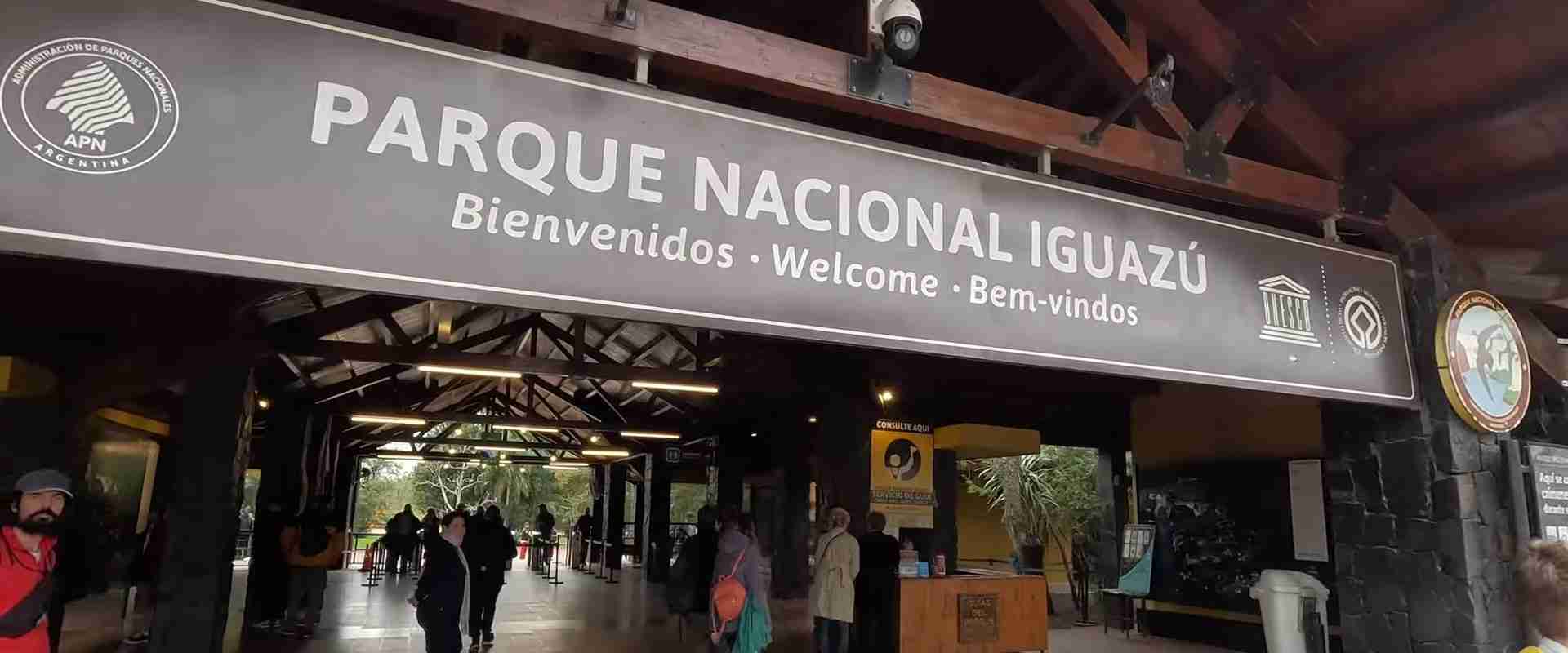
The Tren Ecologico de la Selva (Rainforest Ecological Train) operates two routes within Argentine National Park, included with park entry fees at no additional charge. The system uses gas-powered trains running on narrow-gauge tracks designed to minimize environmental impact. Estación Central (near park entrance) to Estación Cataratas route covers 1,050 meters serving upper and lower circuit access points. Estación Cataratas to Estación Garganta del Diablo extends 900 meters to the Devil’s Throat trailhead.
Trains run every 20-30 minutes from 8:30 AM-5:30 PM (hours vary by season). Journey time runs 8-10 minutes per segment. Open-sided cars provide rainforest views during rides. The trains accommodate wheelchairs and limited-mobility visitors. Using the train saves substantial walking—the distance from park entrance to Devil’s Throat exceeds 2 kilometers each way. During peak periods, waits for trains can extend 20-30 minutes as capacity limits prevent immediate boarding. Early morning arrivals encounter minimal waits.
Walking Distances and Trail Systems
Argentine park features approximately 6 kilometers of marked walkways including upper circuit (800 meters), lower circuit (1,700 meters), and Devil’s Throat boardwalk (1,100 meters from train station). These distances represent one-way measurements—complete exploration involves walking substantially more with return routes and connecting paths. Fit visitors can walk the entire system though most use the train for Devil’s Throat access to save energy. Walking times: upper circuit 45-60 minutes, lower circuit 1.5-2 hours, Devil’s Throat boardwalk 20-25 minutes each way from train.
Brazilian park trail runs approximately 1,200 meters from visitor center to final viewing platform, descending 60 vertical meters via stairs and walkways. Most visitors walk the entire trail in 45-75 minutes at moderate pace with photo stops. The descent requires climbing stairs on return uphill—those with knee issues or limited mobility may struggle. Electric carts occasionally shuttle mobility-limited visitors though availability is inconsistent.
Frequently Asked Questions
Can I walk between Puerto Iguazu and the Argentine park?
The 18km distance between Puerto Iguazu town and the park entrance makes walking impractical, requiring 3-4 hours each way along a road shoulder without sidewalks. The route follows busy Route 12 where high-speed traffic creates safety concerns. Hitchhiking is possible though not recommended for safety and reliability reasons. The local bus service operates frequently ($2-3, 20-25 minutes) and provides safe, economical access. Walking makes no practical sense given the distance, time required, safety issues, and low bus costs. Save your energy for walking within the park where 6+ kilometers of trails await exploration.
Do rideshare apps work for the border crossing?
Uber operates in both Puerto Iguazu and Foz do Iguaçu but service across the international border proves inconsistent. Some drivers accept cross-border requests while others decline due to insurance concerns, licensing requirements in both countries, and return trip logistics. When cross-border rides are accepted, pricing ($20-30) runs comparable to taxis. The apps provide price transparency and cashless payment advantages. However, reliability issues make dedicated border-crossing buses ($5-8) or regular taxis more dependable options. Use ride-shares for in-town transport where they function well, but plan on buses or taxis for cross-border movement unless you confirm driver willingness for international trips before requesting.
Is it worth renting a car just for visiting the falls?
For typical 2-3 day visits focused exclusively on both parks, rental cars don’t justify their cost ($40-90 daily, plus $15-25 insurance, plus $20-40 cross-border fees, plus fuel) when buses connect all necessary points for $2-4 per ride. A 3-day rental costs $180-345 total versus $40-60 for all needed bus trips. The $140-285 premium buys convenience but not essential functionality—buses run frequently enough to match most schedules. Cars make sense for week+ visits including day trips to Itaipu Dam, San Ignacio Missions, or Saltos del Moconá; groups of 4 who split costs competitively with public transport; or travelers highly valuing independence. The math rarely favors rental cars for short falls-focused visits.
What happens if I miss my return flight?
Airlines enforce strict check-in cutoff times (45-60 minutes before departure for domestic flights). Missing cutoff means forfeiting your ticket on most fare types without refunds or compensation. Budget airlines show zero flexibility, while full-service carriers sometimes rebook on later flights with fees ($50-150 depending on fare class) or may show leniency for extenuating circumstances. To avoid missing flights: allow 2+ hours from park to airport for closing-day visits, accounting for park egress, transport to Puerto Iguazu, transfer to airport, and check-in; book evening flights (5 PM or later) providing buffer time; or overnight near the airport before early morning departures. Travel insurance occasionally covers missed connections from verified emergencies but not simple poor planning. The 90+ minute security margin prevents 99% of issues.
Can I take local buses with large luggage?
Local buses accommodate luggage though space proves limited during crowded periods. Standard-size rolling suitcases fit in overhead racks or beside seats. Large backpacks similarly work though you’ll store them in aisles or seat areas, potentially blocking passage. During peak morning and late afternoon commute hours, crowded buses make luggage management difficult and you may receive complaints from other passengers. Early morning or midday buses run less full, providing easier luggage accommodation. For airport transfers with luggage, taxis or shuttle services ($20-30) deliver worthwhile convenience versus struggling with bags on buses ($2-4). For moving between hotels with luggage, buses work adequately if you time travel for off-peak hours. Generally workable but not ideal—taxis prove worth the premium when moving with substantial baggage.
How reliable are bus schedules?
Local buses operate on published timetables showing departures every 20-30 minutes during daytime hours (7 AM-7 PM), with good reliability outside major holidays and special events. Expect buses within 5-10 minutes of scheduled times during normal conditions. Peak periods see buses running slightly ahead of schedule as drivers maintain intervals rather than strict times. Service disruptions from breakdowns or road issues occur occasionally but rarely. The frequency means even if one bus runs significantly late, the next arrives within 30 minutes maximum. Long-distance overnight buses maintain strong reliability, departing and arriving within 30-60 minutes of scheduled times absent unusual circumstances. Argentine and Brazilian bus services both operate professionally with better reliability than stereotypes about Latin American transport suggest. Plan on buses performing as scheduled, but build 15-20 minute buffers into critical connections.
Do I need to book long-distance buses in advance?
Advance booking (1-2 weeks ahead) ensures preferred seat selection and guarantees spaces during peak periods (December-February, July). Outside peaks, walk-up availability exists for most departures though you may not get ideal seats. Booking online through company websites or platforms like Plataforma 10 (Argentina) and ClickBus (Brazil) provides convenience and seat selection. Window seats in semi-cama or cama classes enable better sleep on overnight journeys—these sell out earliest. Booking guarantees your preferred departure time since multiple companies operate the route with different schedules. The effort of advance booking proves worthwhile for overnight journeys where seat comfort dramatically affects rest quality. For day buses on regional routes, walk-up purchases work adequately.
Can I visit both parks in one day using public transport?
Visiting both parks thoroughly in one day using public transport proves extremely challenging and not recommended. The logistics alone consume 3+ hours: Argentine park visit (6-8 hours needed for adequate exploration), border crossing by bus (45-60 minutes), Brazilian park visit (3-4 hours), return border crossing (45-60 minutes). This demands 11-14 hours total with absolutely no margin for delays, crowds, or extended viewing time at favorite locations. Public transport adds complications through bus schedules requiring coordination and buffer time. The rushed pace eliminates the peaceful nature experience that makes Iguazu special. Instead, dedicate full days to each park: Day 1 Brazilian side (3-4 hours actual park time plus transport), Day 2 Argentine side (6-8+ hours). This provides adequate time to appreciate both perspectives without exhausting yourself racing between locations. Tours sometimes offer “both sides in one day” packages using private transport and strict schedules—these work for visitors with extreme time constraints but sacrifice quality for coverage.
What transportation apps should I download?
Google Maps provides essential navigation and real-time bus schedules for both towns and route guidance for all transportation modes. Download offline maps for the region before arrival in case of spotty data connectivity. Uber operates in both Puerto Iguazu and Foz do Iguaçu for reliable ride-sharing with price transparency. 99 (Brazilian ride-share app) sometimes offers better availability or pricing than Uber in Foz—download both and compare. WhatsApp proves essential for communicating with hotels, tour operators, and taxi services. Rome2Rio helps plan multi-modal journeys combining flights, buses, and local transport with schedules and pricing estimates. Moovit provides detailed bus route information including real-time tracking in some areas. These five apps (Google Maps, Uber, 99, WhatsApp, Rome2Rio) cover all essential transportation needs. Download before departing home to avoid issues with app store access in foreign countries.
Are there any transportation options I should avoid?
Unlicensed taxis and informal ride offers from individuals at airports or bus stations should be avoided as they may overcharge severely, lack proper insurance, or in rare cases target tourists for theft. Use only official taxi ranks with identified companies or ride-share apps. Hitchhiking along Route 12 between Puerto Iguazu and the park or along the border road carries safety risks and unreliability—buses cost only $2-4, making hitchhiking an unnecessary risk. Bicycle rental sounds appealing but the 18km distance to parks along shoulderless roads with high-speed traffic creates danger. Motorcycles and scooters available for rent in both towns similarly expose riders to risks from unfamiliar roads, aggressive drivers, and potential accidents where foreign insurance coverage proves inadequate. For safe, economical transport, stick with official buses, regular taxis, ride-share apps, and licensed rental cars. The region’s reliable public transport system eliminates any need for risky alternatives.