
Birmingham Best Tours & Walking Routes 2026: Secret Spots & Lesser-Known Treasures
Birmingham rewards the curious walker with layers of industrial heritage, canal-side revelations, and creative energy that most visitors miss entirely. With more miles of canal than Venice, a Jewellery Quarter shaped by craftspeople since the eighteenth century, and neighborhoods where J.R.R. Tolkien absorbed the landscapes that would become Middle-earth, the city offers some of Britain’s most varied walking routes. This 2026 guide covers every major route, guided tour, and hidden gem worth your time, from self-guided towpath circuits to the specialist experiences that unlock Birmingham’s best-kept secrets.
Key Takeaways
- Birmingham’s walking routes span five distinct zones — the Jewellery Quarter, the Canal Network, Digbeth, the historic city centre, and the southern suburbs — each requiring half a day to explore fully, with the vast majority costing nothing in admission.
- Budget travelers spend approximately £45–80 ($60–110) per person daily (two sharing a budget hotel or guesthouse); mid-range visitors can expect £100–185 ($135–250) per person daily, including one guided tour and one paid attraction.
- Many of Birmingham’s finest experiences are free, including Birmingham Museum and Art Gallery, Ikon Gallery, the Library of Birmingham’s rooftop terrace, and all canal towpaths; paid highlights in 2026 include Back to Backs National Trust property (£10–11 per adult), the Coffin Works (from £6 per adult, self-guided), and Cadbury World (up to £28 per adult, advance booking essential).
- The self-guided Jewellery Quarter Circuit — approximately 2.5 miles around St Paul’s Square, Vyse Street, and Warstone Lane — is Birmingham’s single best-value walking route, taking two to three hours and encompassing an unbroken Victorian industrial streetscape still actively used by craftspeople today.
- Birmingham’s canal towpath network covers approximately 35 miles within the city — more than Venice — with Gas Street Basin as the starting point for the most scenic urban canal walks in the British Midlands, all free and open year-round.
- Most routes require only comfortable shoes; all city-centre and canal towpath walks are on flat, paved or surfaced ground, with accessible sections for wheelchair users and pushchairs near Gas Street Basin and through the Jewellery Quarter’s main streets.
People Also Ask About Birmingham Tours 2026
What are the best walking routes to explore in Birmingham in 2026?
The five most rewarding walking routes in Birmingham in 2026 are the Jewellery Quarter Circuit (approximately 2.5 miles, free to walk), the Gas Street Basin Canal Towpath (expandable from 1 to 10+ miles, entirely free), the Digbeth Street Art Trail (approximately 1.5 miles, free), the Colmore Row City Centre Heritage Walk (approximately 2 miles, free), and the Bournville Heritage Walk (approximately 3 miles, partly free with optional paid entry to Cadbury World). Each route is self-contained, navigable by smartphone, and requires two to four hours at a comfortable pace. First-time visitors most often combine the Jewellery Quarter Circuit with the adjacent canal towpath for a full-day walk that covers Birmingham’s most distinctive heritage character with minimal overlap between the two routes.
How much do guided tours in Birmingham cost in 2026?
Guided tour prices in Birmingham in 2026 range from free (tip-based city centre walking tours, with recommended contributions of approximately £5–15 per person) to approximately £15–25 ($20–35) for specialist themed walks of the Jewellery Quarter, canal network, or Digbeth street art scene. Evening ghost tours typically cost £10–16 ($13–22) per person. Private guided tours for small groups (two to six people) run from approximately £80–150 ($110–205) for a two-to-three-hour city walk. Canal boat sightseeing trips from Gas Street Basin cost approximately £8–15 ($11–20) per person for a one-to-two-hour narrated cruise. The most cost-effective strategy for independent travelers is a free morning walking tour for city-centre orientation, followed by self-guided exploration of the Jewellery Quarter in the afternoon.
What are Birmingham’s best-kept secret spots and hidden gems in 2026?
Birmingham’s most compelling lesser-known attractions in 2026 include the Coffin Works on Fleet Street in the Jewellery Quarter (a preserved Victorian coffin-furniture factory, open Thursday to Sunday, admission from £6 adult for self-guided entry), the Back to Backs on Hurst Street (a National Trust court of Victorian back-to-back houses, £10–11 per adult, pre-booking essential), Moseley Bog Nature Reserve in the southern suburbs (the childhood landscape associated by local tradition with J.R.R. Tolkien’s Old Forest, free to enter), Perrott’s Folly and the Edgbaston Waterworks Tower in Edgbaston (the twin towers widely linked to Tolkien’s “Two Towers” imagery, free to view from the street), and the Electric Cinema on Station Street (among the oldest continuously operating cinemas in the United Kingdom, tickets from approximately £9). These sites draw far fewer visitors than the city’s commercial attractions and reward those who venture beyond the city centre.
What transport options make Birmingham’s walking routes easier to navigate in 2026?
Birmingham’s walking routes are compact enough that many visitors complete the city-centre zones entirely on foot. For outlying routes — Bournville, Moseley Bog, or Sutton Park — the West Midlands bus and rail network is reliable and affordable. The nBus Day Ticket costs £5.50 and covers unlimited travel on all bus operators within the West Midlands throughout the day. Birmingham New Street station connects directly to Bournville via the Cross-City line (approximately 12 minutes, return fare approximately £3–5 depending on booking method) and to Sutton Coldfield for Sutton Park access (approximately 25 minutes). For the Jewellery Quarter, the dedicated Jewellery Quarter railway station on the Snow Hill line sits a short walk from the Museum of the Jewellery Quarter and the circuit’s main streets. Canal towpaths require no ticket, no booking, and have no opening hours.
Extended multi-day tours – 5+ days
Featured Birmingham Multi-Day Tour Packages

6 days
England in a Week (Classic)
- ✓ Comprehensive Birmingham tour
- ✓ Expert local guides included
- ✓ All accommodation arranged
- ✓ Transportation provided
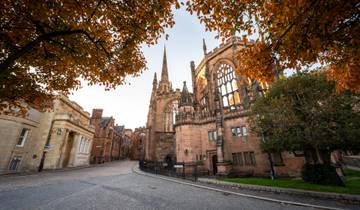
7 days
Touring Southern England with London (14 destinations)
- ✓ Comprehensive Birmingham tour
- ✓ Expert local guides included
- ✓ All accommodation arranged
- ✓ Transportation provided

4 days
Touring Southern England (14 destinations)
- ✓ Comprehensive Birmingham tour
- ✓ Expert local guides included
- ✓ All accommodation arranged
- ✓ Transportation provided
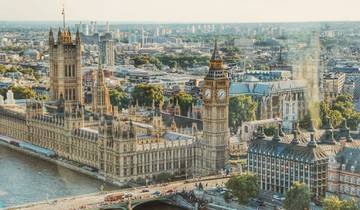
4 days
Journey Through Historic England's Heart – 4 days
- ✓ Comprehensive Birmingham tour
- ✓ Expert local guides included
- ✓ All accommodation arranged
- ✓ Transportation provided
Multi-day tour packages powered by TourRadar. Prices and availability subject to change.
Birmingham as a Walking City: An Introduction to the Routes and Layers
There is a persistent underestimation of Birmingham as a destination, one that evaporates quickly on foot. The city that built the industrial world — producing more metal goods, tools, weapons, and steam engines per square mile than anywhere else during the height of the Industrial Revolution — has left a landscape of extraordinary complexity across its streets, waterways, and suburbs. Walking it reveals layers that no bus tour reaches: the dense Victorian workshop streets of the Jewellery Quarter, where craftspeople still work behind unmarked doors; the towpaths of a canal network wider than Venice’s that threads through converted warehouses and opens unexpectedly onto the countryside; the spray-painted walls of Digbeth, where one of Britain’s most significant street art scenes has been building since the early 2000s; and the southern suburbs where the childhood landscapes that shaped J.R.R. Tolkien’s imagination survive in managed nature reserves and preserved mill buildings.
Birmingham’s walkability is underappreciated partly because the city’s centre was substantially reorganised in the postwar decades around the car, and the legacy of 1960s urban redevelopment left some pedestrian routes fragmented. That has changed meaningfully since the 2000s. The Jewellery Quarter has been designated a Conservation Area and is the subject of ongoing public and private investment in streetscape and interpretation. The canal towpaths have been progressively improved and extended. Digbeth has been recast as a creative hub, with regeneration underway around the new HS2 Curzon Street station that will continue to reshape the area significantly over the coming years. The result is a city in transition: Victorian heritage and twenty-first-century reinvention sit within comfortable walking distance of each other, and the most rewarding exploration is done slowly, on foot, with enough time to turn down an unmarked alley.
This guide organises Birmingham’s walking landscape by route zone rather than by attraction type. Each section covers the geography of the route, the key stopping points, approximate walking distances and times, and the practical details needed to plan an independent visit in 2026. The final sections address guided tour options, costs, and practical logistics including transport, weather, and accessibility. For visitors with limited time, the Jewellery Quarter Circuit combined with the Gas Street Basin canal walk constitutes the best single-day introduction to Birmingham’s distinctive heritage character. For those with two days or more, the Bournville walk and the Moseley-Tolkien route extend the exploration into the city’s greener and equally remarkable southern neighborhoods. Sutton Park, described in its own section, offers a day of countryside walking entirely within the city boundary for those who want a complete contrast to the urban core.
The Jewellery Quarter Walking Route 2026: History Hammered in Gold and Silver
The Jewellery Quarter occupies approximately one square mile of Victorian streetscape northwest of Birmingham city centre and remains one of the most intact examples of a specialist industrial district anywhere in Britain. The area has been producing jewellery, silverware, medals, and metal goods since at least the eighteenth century, and by the late Victorian period it housed the highest concentration of jewellery manufacture in the world. At its peak, the Quarter employed tens of thousands of craftspeople working in small workshops and factories crammed into streets that have changed little in their footprint since. Today the Quarter is a Conservation Area containing over 200 listed buildings, and working workshops — though fewer in number than at their Victorian peak — continue operating behind front elevations that have barely changed since the reign of Queen Victoria.
The best starting point for the walking route in 2026 is St Paul’s Square, accessible directly from Jewellery Quarter railway station (Snow Hill line, one stop from Birmingham Snow Hill, a short journey from Birmingham New Street via Snow Hill) or on foot from the city centre in approximately fifteen minutes. St Paul’s Square is the Quarter’s finest set piece: a Georgian church consecrated in 1779 surrounded by a leafy churchyard, flanked by tall brick townhouses and former workshop buildings, and quiet enough on weekday mornings to give a sense of the area’s pre-industrial character. The church is generally accessible to visitors during daylight hours and is worth entering if open for the original galleries and the churchyard’s historic burial monuments.
From St Paul’s Square, the route heads south along St Paul’s Street and then turns left onto Vyse Street, the commercial spine of the modern jewellery trade. The storefronts here sell everything from engagement rings to antique silverware, and the density of jewellers on a single street remains unmatched anywhere in the United Kingdom. Continuing down Vyse Street to Hylton Street and then right along Warstone Lane brings walkers past the Warstone Lane Cemetery, a Victorian burial ground of unusual character. The cemetery’s catacombs — tiered vaulted chambers set into a sandstone cutting — are visible from the public path and represent one of the Quarter’s most atmospheric lesser-visited features. The cemetery is open to visitors and free to enter.
The Museum of the Jewellery Quarter on Vyse Street is the centrepiece of any visit to the Quarter. The museum occupies the former Smith and Pepper gold jewellery factory, a family-run business that produced jewellery from this building for over 80 years until the elderly owners retired in 1981, locking the door and leaving everything behind — tools on benches, overalls on coat hooks, cups still on the workroom surfaces. When the museum opened in 1992, the factory floor was preserved exactly as the last working day had left it, creating one of Britain’s most evocative industrial time capsules. The museum has undergone recent repairs and has reopened to visitors; it is open Thursday to Sunday, 10:30am to 4pm, with admission by timed guided tour (tours run at regular intervals, check birminghammuseums.org.uk for current 2026 pricing and booking, as pre-booking is strongly advised). Reviews from 2025 visitors note admission in the region of £8–9 per adult for the guided tour. The tour guides, who are knowledgeable on both the industrial history and the social history of the families who worked in the Quarter, are consistently cited in visitor reviews as a highlight of the experience.
The Coffin Works on Fleet Street, a short detour from the main Jewellery Quarter circuit, merits separate attention as one of Birmingham’s most atmospheric and unusual hidden attractions. Newman Brothers, the company that occupied this Grade II* listed factory, manufactured coffin furniture — the ornamental handles, nameplates, and fittings that dignified Victorian and Edwardian coffins — from 1894 until their closure in 1998. Among their documented clients were royal undertakers: Newman Brothers’ fittings adorned the coffins of multiple members of the British royal family and prominent statesmen. When the factory closed in 1998, its contents were left largely undisturbed, and the building was subsequently preserved through a campaign by Birmingham Conservation Trust, reopening as a museum in 2014. Admission for self-guided entry starts from £6 per adult (check coffinworks.org for current pricing and tour schedule, as guided tours are available at specific times and days and booking is recommended for weekends). The Coffin Works is open Thursday to Sunday from 10:45am.
Completing the Jewellery Quarter Circuit takes approximately two to three hours at a gentle pace, covering roughly 2.5 miles in total. The route back toward the city centre along Regent Street and Great Charles Street Queensway passes the Snow Hill area, from which Gas Street Basin is a five-minute walk, making it straightforward to extend the walk into the canal network section. Several independent cafes operate on Vyse Street and the surrounding streets, suitable for a mid-route break. The Quarter is quietest on weekday mornings, when even the busiest junctions feel unhurried and the working character of the area — delivery vehicles, workshop sounds, craftspeople at open workshop doors — is most evident.
Birmingham’s Canal Network Walking Routes 2026: Towpaths, Basins, and Waterside Discoveries
Birmingham sits at the apex of the English canal network, a position it reached because the canal builders of the late eighteenth century needed a hub for the trade routes connecting the Midlands to the major ports. The result is that Birmingham has approximately 35 miles of navigable canal within the city — more than Venice, a comparison that has become something of a local motto but that captures the genuine scale of the network. These canals are not merely historical curiosity: they carry narrowboat traffic throughout the year, their towpaths have been progressively opened for walking and cycling, and they offer a pedestrian route through the city that is entirely separated from road traffic, largely flat, and consistently surprising in the variety of industrial heritage it passes.
The natural starting point for canal walking in Birmingham is Gas Street Basin, located at the heart of the city centre a short walk from New Street station. The Basin is where several of the principal canals converge, and its restored warehouses and moored narrowboats provide an immediate visual argument for the canal network’s character. The surrounding Brindleyplace development — Birmingham’s first major waterside regeneration project from the 1990s — contains the Ikon Gallery (one of the UK’s leading contemporary art spaces, with free entry to its exhibitions), the National Sea Life Centre (tickets typically around £18–22 per adult, with significant discounts for online advance booking), and a range of canal-side restaurants and bars. Gas Street Basin is also the departure point for canal boat sightseeing tours; narrated trips lasting one to two hours typically cost approximately £8–15 ($11–20) per person and offer a view of the urban canal landscape from below street level that cannot be replicated on foot.
The main towpath route heading east from Gas Street Basin along the Birmingham and Fazeley Canal leads to the Farmer’s Bridge Locks — a flight of thirteen locks descending from the city centre toward the Aston industrial corridor. Walking the Farmer’s Bridge flight takes approximately thirty minutes and passes through a tight landscape of Victorian brick walls, iron split bridges, and lock keeper’s cottages before opening into the broader urban canal network beyond. The locks are operational throughout the year, and watching a narrowboat work through the lock chambers provides a direct illustration of the engineering that kept the network functioning at a time when it carried the bulk of the Midlands’ industrial freight.
Extending westward from Gas Street Basin along the Main Line Canal brings walkers through the Smethwick Cutting, one of the most significant surviving features of the early canal network. The cutting was originally designed by James Brindley and subsequently modified by Thomas Telford to improve the gradient, and the contrast between Brindley’s original higher line and Telford’s deeper cut is visible in the parallel embankments as the towpath approaches Smethwick. The Roundhouse complex in Smethwick — a restored group of late eighteenth- and early nineteenth-century canal infrastructure buildings that serves as the Canal and River Trust’s Midlands headquarters — is visible from the towpath and worth approaching for the quality of its brick construction, which represents some of the finest surviving canal infrastructure in Britain. This westward extension adds approximately four miles to the basic Gas Street Basin circuit and takes roughly two additional hours.
For a shorter canal circuit that stays within the city centre, the route from Gas Street Basin to the Mailbox development and back along the opposite bank of the Worcester and Birmingham Canal covers approximately 1.5 miles and takes under an hour. The Mailbox — a converted former Royal Mail sorting office now containing shops, restaurants, and a canal-side terrace — provides a mid-route stopping point before continuing back to the Basin. This short circuit suits visitors combining the canal walk with the Jewellery Quarter route in a single day.
Canal walking in Birmingham requires no booking, no ticket, and no specific footwear beyond comfortable shoes. The towpaths are managed by the Canal and River Trust and are publicly accessible throughout the year, including weekends and bank holidays. The sections nearest Gas Street Basin are fully paved and accessible to wheelchairs and pushchairs. Towpaths farther from the city centre may become rougher or muddy after prolonged rain. Dogs are welcome on all towpaths. Cyclists share the towpath with pedestrians on most sections and are asked to give way and reduce speed when passing walkers.
Digbeth Creative Quarter and Street Art Tour 2026: The City’s Urban Renaissance
Digbeth lies approximately half a mile southeast of Birmingham city centre and has been the city’s Irish quarter since the Victorian era, when it provided the first neighborhood for successive waves of Irish immigrants arriving to work in the city’s factories and workshops. The warehouses and brick factory buildings that accumulated through the nineteenth and early twentieth centuries are now the substrate for one of Britain’s most active street art and creative industry scenes. Walking through Digbeth in 2026 is an experience that rewards attention at every scale, from the building-height murals to the stencil work applied to individual bricks at eye level.
The anchor of the Digbeth arts scene is the Custard Factory, a former Bird’s Custard powder works that has been converted since the 1990s into studios, independent shops, bars, and event spaces. The Custard Factory complex covers several acres and contains a constantly shifting roster of creative tenants from graphic design studios to vintage clothing retailers and food vendors. Entry to the complex is free, and it operates as a general public space throughout the week, with markets and events concentrated on weekends. The adjacent Gibb Street and Floodgate Street carry the highest concentration of large-format street murals in Birmingham, with works by both local and internationally recognised artists applied to the gable ends of Victorian warehouse buildings. Several murals have been specifically commissioned for the Digbeth context, and the Digbeth Is Good website maintains a map of the current works for self-guided exploration.
The self-guided Digbeth Street Art Trail covers approximately 1.5 miles and is best walked at a slow pace that allows time to examine individual pieces in detail. The trail typically begins at the Custard Factory and continues along Floodgate Street, Heath Mill Lane, and the surrounding streets. Because Digbeth remains an active creative and light-industrial area rather than a sanitised tourist attraction, some sections can feel rough or unfinished, particularly on weekday mornings when delivery vehicles use the narrow streets. Weekend afternoons tend to produce the most vibrant atmosphere, with bars and cafes in converted warehouse buildings drawing a mixed local, student, and visitor crowd.
The Digbeth area is also where Birmingham’s major infrastructure project — the HS2 Curzon Street terminus — will be built, and the streetscape is visibly in transition in 2026, with sections in active development or demolition. The street art scene has responded to this transformation by intensifying in certain areas as a form of creative documentation and cultural resistance to change, and some of the most recent and interesting murals directly reference the neighborhood’s history and uncertain future. Walking Digbeth in 2026 is therefore also an act of witnessing a neighborhood at a specific and unrepeatable moment of transformation, and the art is all the more compelling for that context.
Several guided Digbeth street art tours operate in 2026, typically departing on weekend afternoons from the Custard Factory. These tours, led by guides with direct knowledge of the artists and the commissioning context, typically run for approximately two hours and cost around £12–18 ($16–24) per person. They provide background that significantly enriches the self-guided experience, particularly for visitors unfamiliar with the history of the specific artists whose work appears in the area. Advance booking is advisable for weekend departures, as group sizes are capped to allow proper discussion of each piece.
Historic City Centre Heritage Walk 2026: Colmore Row, Victoria Square, and the Cathedral Quarter
Birmingham’s Victorian civic architecture is among the most ambitious in Britain outside London, and the city centre heritage walk reveals it in a sequence that moves from the grandest formal statements of municipal confidence to the intimate residential and ecclesiastical scale of the Cathedral Quarter. The walk covers approximately two miles and takes roughly two hours, depending on time spent inside the buildings along the route.
The walk begins at Victoria Square, the principal civic space of the city centre. The square is anchored by the Council House (built 1874–1879, designed by Yeoville Thomason in an Italianate style) and Birmingham Town Hall. The Town Hall’s design — attributed to Joseph Hansom and Edward Welch, who won the architectural competition; the building opened in 1834 — was modelled on a Roman Corinthian temple, with the Temple of Castor and Pollux in the Roman Forum cited as a primary reference in the competition documentation. The building is among the finest examples of civic Neo-classical architecture in England. Its documented performance history includes the premiere of Felix Mendelssohn’s oratorio Elijah in 1846, and the Town Hall was used by Charles Dickens for public readings. The square also contains the 1993 sculpture River by Dhruva Mistry, informally known to Brummies as “The Floozie in the Jacuzzi,” and a statue of Queen Victoria.
From Victoria Square, the route proceeds along Colmore Row, one of the most architecturally consistent Victorian streets in Birmingham. The street’s buildings range from the 1860s through the Edwardian era and include a range of speculative office developments in terracotta, stone, and red brick whose upper facades — above the modern retail signage of the ground floors — constitute a remarkably complete Victorian commercial set piece. Walking slowly along Colmore Row and looking above the shop fronts reveals cornicing, pilasters, carved stone panels, and roofline details that are rare survivors in a British high street context.
The Cathedral Church of St Philip, accessed from Colmore Row through a churchyard garden, is one of Birmingham’s most important buildings. The cathedral was built between 1709 and 1715 to a design attributed to Thomas Archer, working in the English Baroque idiom. The building was elevated to cathedral status in 1905 on the creation of the Diocese of Birmingham. Its particular distinction lies in the stained glass: four windows designed by Edward Burne-Jones, the Birmingham-born Pre-Raphaelite artist, and manufactured by William Morris and Company. The Last Judgement window at the west end and the three narrative windows in the apse represent some of the finest Pre-Raphaelite glass in existence. The cathedral is open to visitors free of charge during daylight hours; a voluntary donation is welcomed at the entrance.
Birmingham Museum and Art Gallery, accessible from the cathedral area via Chamberlain Square — check current access arrangements on the Birmingham Museums website as the square has seen ongoing works — houses one of the most significant Pre-Raphaelite painting collections in the world. Admission to the permanent collection is free. The holdings include major works by Dante Gabriel Rossetti, John Everett Millais, Ford Madox Brown, and Edward Burne-Jones, and together with the cathedral’s Burne-Jones windows they make Birmingham the single most concentrated location for Pre-Raphaelite art globally. The museum’s collections also include Egyptian antiquities, natural history displays, decorative arts, and a significant ceramics collection, making a comprehensive visit a half-day undertaking.
The Library of Birmingham, visible from Centenary Square and accessible from the city centre heritage walk route, houses the city’s public library in a building completed in 2013. Its rooftop terrace — free to access during opening hours — provides one of the best elevated views of the city centre and of the Town Hall and Council House from above, and is rarely crowded. The Shakespeare Memorial Room, relocated from the original Victorian library and now housed within the new building, contains one of the most significant Shakespeare collections outside Stratford-upon-Avon and is also accessible free of charge.
Secret Spots and Hidden Gems on Birmingham’s Walking Routes
Birmingham’s lesser-known attractions are distinguished by a particular quality: they are rarely mentioned in generic city guides, require deliberate navigation to reach, and reward the visitor with experiences that are genuinely unusual rather than well-executed versions of familiar heritage formats. The sites listed in this section form a secondary network that can be woven into the main routes or visited as dedicated half-day excursions.
The Coffin Works, Fleet Street. Newman Brothers, founded in 1882 and operating from their Fleet Street factory from 1894 until closure in 1998, manufactured coffin furniture — the ornamental fittings that dignified Victorian and Edwardian coffins — and their documented clients included royal undertakers responsible for the funerals of multiple members of the British royal family. When the factory closed in 1998, its shelves, workbenches, machinery, pattern books, and stock were left largely undisturbed. The building reopened as a museum in 2014 after a fifteen-year conservation campaign by Birmingham Conservation Trust. It now offers both self-guided entry (from £6 per adult) and guided tours at scheduled times. The overall effect — a Grade II* listed factory with its working contents preserved across three floors, augmented by knowledgeable volunteer guides in most rooms — is one of the most atmospheric and genuinely moving industrial museums in Britain. Open Thursday to Sunday; booking recommended for guided tours at coffinworks.org.
Back to Backs, Hurst Street. The National Trust’s only property in Birmingham consists of a court of back-to-back terraced houses surrounding a shared courtyard — the standard working-class housing type that dominated Birmingham and most British industrial cities from the early nineteenth century through the mid-twentieth. The Hurst Street properties have been restored to show four distinct historical periods — the 1840s, 1870s, 1930s, and 1970s — in a sequential guided tour that traces the social history of Birmingham’s working-class neighborhoods through the material evidence of domestic objects, wallpaper, furniture, and daily life. Admission is £10 per adult (standard) or £11 with Gift Aid, and the visit is by guided tour only with no self-guided option. Advance booking through the National Trust is strongly recommended, as tours fill quickly on weekends; book at nationaltrust.org.uk. The site is in the Southside area, within walking distance of Digbeth.
The Electric Cinema, Station Street. The Electric opened in 1909 and remains one of the oldest continuously operating cinemas in the United Kingdom. Its programming mixes classic films with current releases, and the interior — leather sofas, table service, and a visible bar — represents a very different approach to cinema-going from the modern multiplex. Tickets start from approximately £9 ($12) for standard screenings. The Electric is a functioning cultural institution with significant heritage age rather than a conventional heritage attraction, and visiting it is one of the most enjoyable ways of spending an evening in Birmingham’s city centre. The building is on Station Street near the New Street shopping area.
Perrott’s Folly and the Edgbaston Waterworks Tower, Edgbaston. These two towers in the Edgbaston district — Perrott’s Folly (a tall hexagonal structure of 1758, purpose uncertain at the time of construction) and the Edgbaston Waterworks Tower (a Victorian pumping station tower of 1870) — are widely cited in Birmingham’s Tolkien heritage narrative as the visual inspiration for the Two Towers of J.R.R. Tolkien’s writing. Tolkien grew up at various addresses in Birmingham and Edgbaston and would have known both towers from childhood. This association is not formally documented in Tolkien’s letters or papers and should be understood as local tradition rather than confirmed authorial statement, but it has become a well-established part of Birmingham’s cultural heritage narrative. Both towers are visible from Waterworks Road and the surrounding streets without requiring any admission. Perrott’s Folly is occasionally open for public events. The walk from Edgbaston high street to the towers takes approximately fifteen minutes.
Moseley Bog Nature Reserve, Moseley. This small urban nature reserve in Moseley preserves a remnant of the wet woodland that covered much of this area before Birmingham’s expansion. The site’s principal cultural significance is its association with J.R.R. Tolkien, who spent part of his childhood in Moseley. The enclosed, moss-covered, boggy character of the reserve — ancient willows, damp woodland floor, a sense of wildness in the middle of a suburb — is associated by local tradition with the imagery of the Old Forest in Tolkien’s writing, though this is interpretive inference rather than documented statement from Tolkien himself. The reserve is free to enter, managed by Birmingham City Council, and can be combined with a visit to the adjacent Sarehole Mill. Sarehole Mill is an eighteenth-century water mill on the River Cole that Tolkien knew as a child and recalled in later correspondence; admission typically costs approximately £4–5 ($5–7) per adult, and the mill is managed as a heritage attraction by Birmingham Museums Trust. Moseley Bog and Sarehole Mill are approximately four miles from the city centre, accessible by bus from the city centre along the Alcester Road corridor or by train to Hall Green station.
Soho House, Handsworth. The Georgian house in Handsworth where the industrialist Matthew Boulton lived from 1766 until his death in 1809 is one of the most historically significant addresses in the history of science and industry. Boulton was the partner of James Watt in the development of the steam engine, and Soho House served as a regular meeting place of the Lunar Society of Birmingham — the informal intellectual club whose members included Erasmus Darwin, Joseph Priestley, Josiah Wedgwood, and William Withering, and whose conversations are now understood as one of the key intellectual engines of the Enlightenment and the Industrial Revolution. The house has been restored and is operated by Birmingham Museums Trust. Admission charges apply for the interior; gardens, grounds, and visitor facilities are free to all. Note: opening days and hours vary by season and are subject to review; verify current status and admission pricing at birminghammuseums.org.uk before visiting, as the house keeps limited hours and closures may occur between seasons.
Bournville Heritage Walk and the Cadbury Legacy 2026
Bournville is among the best-preserved examples of a philanthropist’s model village in Britain, and walking through it delivers an experience that reads simultaneously as social history, urban planning history, and an unusually pleasant suburban afternoon. The village was planned and built from 1895 onward by George Cadbury as a residential community for workers at the adjacent Cadbury chocolate factory, incorporating principles of early garden city planning: generous green space, a minimum of fruit trees per garden, no public houses within the estate boundary. The model village’s documented influence on twentieth-century British housing policy and the early garden city movement gives Bournville an importance in planning history that exceeds its local character.
The walk begins at Bournville railway station (Cross-City line from Birmingham New Street, approximately 12 minutes, return fare approximately £3–5 depending on booking method), which places visitors within a short walk of the village green. The green is the formal centrepiece of the Bournville layout, surrounded by the Carillon tower (a 1925 war memorial housing a peal of bells), the Ruskin Hall community building, and the Rest House pavilion. The architectural idiom throughout Bournville is largely Arts and Crafts and Old English Revival, with consistently high-quality detailing in brick, tile, and timber that gives the estate a coherence rarely achieved in social housing developments of any era.
The route continues from the green down Linden Road, one of the estate’s most representative streets, lined with mature trees and the generous front gardens that distinguish Bournville housing from standard Victorian working-class provision. The Friends’ Meeting House on Linden Road, built in 1905 for the Cadbury family’s Quaker practice, is a building of considerable architectural quality in a simplified Arts and Crafts style, and it remains an active place of worship. Bournville Park, accessible from the route, provides green space for a mid-walk break and connects northward toward the Birmingham Nature Centre (a collection of British and European wildlife that typically charges admission for non-members; check current pricing at birminghamnaturecentre.co.uk).
Cadbury World, located adjacent to the Cadbury factory on Linden Road, is the principal paid attraction in the area and draws several hundred thousand visitors annually. The visitor experience covers the history of the Cadbury company from its origins in Victorian Birmingham, the manufacturing process for chocolate, and an entertainment element appropriate to a confectionery brand with genuine Victorian heritage. Admission is up to approximately £28 per adult for peak periods, and tickets should be booked well in advance through cadburyworld.co.uk, as popular weekend and school holiday dates sell out several weeks ahead; online prices may be lower than walk-up rates. The full Cadbury World experience takes approximately three to four hours. For visitors whose primary interest is the Bournville heritage rather than the entertainment elements, the model village walk stands fully on its own merits without requiring Cadbury World admission.
The return journey from Bournville can be varied by walking a longer circular route through Stirchley — a neighborhood that has experienced significant urban regeneration since the mid-2010s, with a growing number of independent food businesses and craft producers — and back toward Kings Heath, adding approximately an hour and passing through a social landscape that complements the planned quality of the Bournville estate. Alternatively, a short bus journey from Bournville to Moseley (via the Pershore Road corridor) connects the Bournville Heritage Walk directly to the Tolkien sites described in the following section, making a full-day itinerary that covers two of Birmingham’s most distinctive heritage neighborhoods without returning to the city centre in between.
Moseley, Kings Heath, and Tolkien Country Walking Routes 2026
The southern neighborhoods between Moseley, Kings Heath, and Sarehole constitute a quieter, greener alternative to the city-centre walking routes, and they reward visitors willing to take a bus or train south from the centre. The area’s cultural draw is its association with J.R.R. Tolkien, who lived at various addresses in Birmingham as a child and young man. The connection between specific Birmingham landscapes and the geography of Middle-earth is a matter of well-informed local tradition and biographical inference rather than documented authorial statement, and it should be understood as such. What is not in dispute is that Tolkien spent formative years in this part of Birmingham, and the preserved mill, the bog, and the village character of the area make for a rewarding half-day walk in their own right.
The walk from Moseley village begins at the junction of Alcester Road South and Wake Green Road, a short bus ride from the city centre along the Alcester Road corridor (buses run regularly from Birmingham city centre). Moseley village is an urban neighborhood retaining a Victorian commercial core with independent shops, cafes, and restaurants concentrated on the main street. Moseley Park — a privately managed but publicly accessible Victorian park with a lake — charges a small admission fee for non-members and provides a quiet first stop.
The route south from Moseley toward Sarehole follows the River Cole valley through linked public footpaths and local nature reserves. Moseley Bog, described in the hidden gems section above, is approximately fifteen minutes’ walk from the centre of Moseley along Wake Green Road. Beyond the Bog, the path continues to Sarehole Mill — a distance of approximately one mile — through Joy’s Wood and the Cole Valley. The complete walk from Moseley village to Sarehole Mill covers approximately 2.5 miles and takes around ninety minutes at a comfortable pace that allows proper time to explore the Bog. Sarehole Mill, the eighteenth-century water mill that Tolkien knew as a child, is operated by Birmingham Museums Trust; admission typically costs approximately £4–5 ($5–7) per adult.
Kings Heath, adjacent to Moseley and accessible from the same Alcester Road bus corridor, has developed a strong independent food and arts culture since the mid-2010s and provides the most satisfying lunch or dinner options in this part of the city. Kings Heath Park — a Victorian municipal park with substantial grounds — includes a restored walled kitchen garden operated as a community horticultural project. The park is free to enter and connects southward toward Brandwood End Cemetery, a Victorian burial ground with a chapel designed by J.A. Chatwin, a Birmingham architect best known for his work on Birmingham Cathedral. The full Moseley-Tolkien-Kings Heath circuit, including travel from the city centre by bus, makes a rewarding half-day to full-day excursion that provides a very different sense of Birmingham’s residential and natural character from the industrial and civic heritage of the city-centre routes.
Sutton Park and Nature Walks on Birmingham’s Green Edges 2026
Sutton Park is among the largest urban nature reserves in Europe, covering approximately 2,400 acres of heath, woodland, wetland, and pool in Sutton Coldfield, approximately six miles north of Birmingham city centre. It is a Site of Special Scientific Interest, managed by Birmingham City Council, and has been maintained as public open land since it was granted to the town of Sutton Coldfield by royal charter in 1528, through the efforts of Bishop Vesey. Entry on foot is free throughout the year. The park is accessible by train on the Cross-City line from Birmingham New Street to Sutton Coldfield station (approximately 25–30 minutes, return fare approximately £3–5 depending on booking) or Four Oaks station; from Sutton Coldfield station, a ten-to-fifteen-minute walk through the town centre reaches the park’s Wyndley Pool entrance.
The park contains seven pools (locally called pools rather than lakes) and a network of marked walking trails ranging from the short Wyndley Pool circuit (approximately 1.5 miles, 30–40 minutes) to the full perimeter walk (approximately 7 miles, three to four hours). The terrain varies from boardwalk sections over boggy ground to well-drained sandy heathland paths, providing a walking environment qualitatively different from anything available in the urban core — genuinely wild-feeling in places, with heather heath, ancient oak woodland, and populations of deer, breeding birds, and invertebrates documented as nationally significant by Natural England.
Sutton Park also contains a section of Ryknild Street, a Roman road that connected the Midlands to the north. The agger — the raised embankment that characterised Roman road construction — is visible as a linear mound crossing the heathland, and represents one of the most accessible and clearly visible sections of a Roman road in the West Midlands. The Roman road crosses the heathland in the Streetly area of the park and is marked on Ordnance Survey maps.
Refreshments are available seasonally from a café at Blackroot Pool within the park, and from the restaurants and cafes of Sutton Coldfield town centre, which lies a short walk from the Wyndley Pool entrance. Sutton Coldfield town centre also has a small number of independent shops and provides the amenities of a substantial suburban town. The combination of free entry, direct rail access, and the quality of the heathland landscape makes Sutton Park one of the best-value half-day or full-day excursions accessible from Birmingham in 2026, and it is particularly rewarding in late summer when the heather is in flower.
Guided and Specialist Tours Worth Booking in Birmingham 2026
Birmingham’s guided tour market has expanded significantly since the 2022 Commonwealth Games drew international attention to the city, and there are now well-established operators covering every major theme from the industrial heritage of the canals to the contemporary street art of Digbeth. The following survey covers the principal types of guided experience available in 2026 and gives verified or carefully estimated cost ranges for planning purposes.
Free Walking Tours. Several operators run tip-based walking tours of Birmingham city centre departing from Victoria Square. These tours cover a two-hour circuit of the main civic architecture, St Philip’s Cathedral, the Jewellery Quarter fringe, and the canal basin, and are delivered by local guides with substantial knowledge of the city’s history and contemporary character. The suggested tip is approximately £5–15 per person depending on satisfaction and group size. Free walking tours typically depart at fixed times (commonly 11am and 2pm on most days, though schedules vary by operator and season); check with Sandeman’s New Europe Tours and Free Tours by Foot for current 2026 schedules and departure points. No advance booking is required for most free walking tour departures.
Jewellery Quarter Specialist Tours. Several companies offer guided tours specifically of the Jewellery Quarter, including access to working workshops not otherwise open to the public and demonstrations by practising goldsmiths and silversmiths. These specialist tours run for two to three hours and cost approximately £15–25 ($20–35) per person. The Jewellery Quarter Development Trust and the jewelleryquarter.net website maintain a list of current tour operators and events, including the annual Jewellery Quarter Festival in summer which typically includes open studio access. These tours provide context that self-guided walking cannot replicate, particularly around the technical processes of the trade and the social history of the craftspeople who have worked in the Quarter across generations.
Canal Boat Tours. Narrowboat sightseeing trips from Gas Street Basin operate year-round, with summer the most popular season. Operators including Sherborne Wharf offer a variety of trip formats from one-hour sightseeing cruises to longer journeys into the surrounding canal network. A one-to-two-hour sightseeing trip typically costs approximately £8–15 ($11–20) per person. Canal boat trips provide a perspective on the urban canal landscape that cannot be achieved on the towpath: the view from the water, below street level, reveals the industrial geography of the city in a way that productively reframes the walking routes described above.
Ghost and Dark History Tours. Birmingham has a substantial stock of Victorian institutional architecture, underground infrastructure, and documented criminal history that supports several ghost walk operators. Evening ghost tours typically depart from Birmingham city centre at dusk and cover approximately two miles of historical streets, churchyards, and back alleys over two hours. Prices are generally £10–16 ($13–22) per person. The Coffin Works site on Fleet Street also runs occasional evening tours that use the factory’s unusual subject matter in ways that place the Birmingham Victorian experience in a broader cultural framework; check the Coffin Works events calendar for the 2026 schedule.
Food, Beer, and Balti Tours. Birmingham’s food scene has developed significantly since the early 2010s, most distinctively in the form of the Balti curry, which the city claims to have developed in its current British-South-Asian form during the 1970s and 1980s, primarily in the restaurants of Sparkbrook and Balsall Heath. Food tours covering the Balti Triangle, the craft beer scene in Digbeth and Stirchley, and the broader cultural-culinary heritage of Birmingham’s diverse communities typically run for three to four hours, include four to six eating stops, and cost approximately £45–65 ($60–90) per person, inclusive of food and drink. Advance booking is essential for all food tour operators. These tours are particularly valuable for visitors wishing to understand Birmingham’s South Asian heritage and the specific contribution it has made to British food culture.
Tour Costs and Budget Planning for Birmingham Walks and Tours 2026
Birmingham is among the more affordable major British cities for tourism. The combination of free admission at the city’s principal museums, no-charge canal towpaths, and a competitive hotel market gives budget-conscious travelers significant flexibility. All daily cost figures below are per person, per day, assuming two people sharing accommodation, with hotel rates divided by two before inclusion in per-person totals. Exchange rate used: approximately £1 = $1.35 (August 2026).
Budget travelers staying in guesthouses or budget hotels pay approximately £25–40 per person for accommodation (two sharing a room costing £50–80 per night). Add meals of £15–25 per day, transport of approximately £5–6 per day (nBus Day Ticket at £5.50 covering unlimited buses within the West Midlands), and attraction costs of £0–10 per day (the majority of Birmingham’s heritage sites are free; the upper end of this range reflects an optional visit to the Coffin Works or Sarehole Mill). Hotel £25–40 per person, meals £15–25, transport £5–6, attractions £0–10. Total for budget travelers: approximately £45–80 ($60–110) per person daily. A three-day visit costs approximately £135–240 ($180–330) per person, covering the Jewellery Quarter circuit, canal network, Digbeth, and city centre heritage walk, with rail fares to Bournville included.
Mid-range travelers staying in three-star hotels with en-suite rooms pay approximately £50–80 per person (two sharing a room costing £100–160 per night). Meals combining casual restaurants with one nicer dinner cost approximately £30–55 per day. Transport covering bus day passes and an occasional taxi or Uber adds approximately £6–15 per day. Paid attractions and guided tour elements — one free walking tour, one specialist guided experience, and one paid admission such as Back to Backs or the Coffin Works — cost approximately £15–35 per day. Hotel per person £50–80, meals £30–55, transport £6–15, attractions/tours £15–35. Total for mid-range travelers: approximately £100–185 ($135–250) per person daily. A three-day mid-range visit costs approximately £300–555 ($405–750) per person.
Luxury travelers staying in four- to five-star hotels pay approximately £90–150 per person (two sharing a room costing £180–300 per night). Fine dining and premium bar experiences add approximately £60–100 per day. Private car hire or taxi use for outlying sites adds approximately £20–35 per day. Private guided tours, Cadbury World, Back to Backs, and a canal boat charter rather than a shared trip cost approximately £40–80 per day. Hotel per person £90–150, meals £60–100, transport £20–35, tours/attractions £40–80. Total for luxury travelers: approximately £210–365 ($285–495) per person daily.
Specific paid attraction costs verified for 2026 planning: Cadbury World up to approximately £28 per adult at peak periods (book through cadburyworld.co.uk well in advance, as online prices are typically lower and popular dates sell out weeks ahead); Back to Backs National Trust guided tour £10 per adult standard, £11 with Gift Aid (pre-booking essential at nationaltrust.org.uk); Coffin Works self-guided entry from approximately £6 per adult (check coffinworks.org for current pricing and guided tour schedule); Museum of the Jewellery Quarter admission charges apply, approximately £8–9 per adult based on recent visitor reviews (pre-booking advised at birminghammuseums.org.uk); Sarehole Mill approximately £4–5 per adult; National Sea Life Centre approximately £18–22 per adult, with significant savings for advance online booking. Birmingham Museum and Art Gallery, Ikon Gallery, the Library of Birmingham, St Philip’s Cathedral, all canal towpaths, and Sutton Park are all free to enter.
Practical Tips for Walking Tours in Birmingham 2026
Best time to visit. Birmingham’s canal walks and Jewellery Quarter route are rewarding in any season. The period from late April through September offers the most reliable weather for extended outdoor walking, and summer brings the most lively atmosphere to the canal basin area as narrowboat traffic and terrace dining peak. The Bournville Heritage Walk and the Moseley-Tolkien route are particularly pleasant in autumn, when tree canopy along the Cole Valley and in Moseley Bog turns and visitor pressure on Cadbury World eases. Digbeth is quieter during weekdays and more atmospherically active Thursday through Sunday evenings when bars and music venues draw their core audience. The Jewellery Quarter is best experienced on weekday mornings, when the working character of the area — deliveries, workshop sounds, craftspeople at open doors — is most in evidence.
Getting to Birmingham. Birmingham New Street is the city’s principal rail hub, served by direct trains from London Euston (approximately 1 hour 20 minutes on the fastest services), Manchester Piccadilly (approximately 1 hour 30 minutes), Bristol Temple Meads (approximately 1 hour 15 minutes), and all major British cities. The Cross-City line running through New Street connects to Jewellery Quarter (via Snow Hill), Bournville, and Sutton Coldfield, covering the majority of the walking route zones described in this guide. West Midlands Network bus routes extend coverage to Moseley, Kings Heath, and Sarehole.
Transport within Birmingham. The nBus Day Ticket at £5.50 covers unlimited bus travel within the West Midlands county throughout the day and can be purchased on the bus by contactless payment or through the National Express West Midlands app. For rail connections to Bournville and Sutton Coldfield within the day, a separate train ticket is required (approximately £3–5 return for each destination). The Network West Midlands app and website provide current fares and timetables. Most of the walking routes in this guide are navigable entirely on foot from the city centre, with only the outlying sites requiring buses or trains.
Footwear and physical preparation. All routes described in this guide are suitable for comfortable urban shoes or light trainers. Hiking boots are not necessary for any of the routes, including the Sutton Park perimeter walk. Canal towpaths can become muddy or wet after prolonged rain; waterproof footwear is useful for extended towpath walking after wet weather but is not essential for the short city-centre sections. None of the routes involve significant elevation gain; Birmingham’s city centre and Jewellery Quarter are essentially flat, and the southern suburb routes have only gentle gradients.
Advance booking requirements for paid attractions. Cadbury World frequently sells out popular dates weeks in advance; book at cadburyworld.co.uk. Back to Backs National Trust guided tours have limited capacity and require advance booking through nationaltrust.org.uk. The Coffin Works runs guided tours at fixed times; check coffinworks.org for the current schedule and availability. Soho House in Handsworth has limited opening days that vary by season; verify current status at birminghammuseums.org.uk before planning a visit. The Museum of the Jewellery Quarter operates Thursday to Sunday only with timed guided tours; pre-booking is advised at birminghammuseums.org.uk, particularly for weekends and school holidays.
Accessibility. Gas Street Basin and the canal towpath toward Brindleyplace are fully accessible to wheelchair users and pushchairs on the paved sections nearest the Basin. The Jewellery Quarter main circuit is largely accessible, though some historic streets have uneven paving on secondary routes. Birmingham Museum and Art Gallery and the Library of Birmingham have full lift access. The Bournville estate and its parks are accessible. Back to Backs guided tours involve narrow Victorian stairs that are not accessible to wheelchair users; the National Trust offers an alternative ground-floor tour (Ground Floor Tour admission £8 standard) — contact them in advance. Sutton Park has accessible boardwalk routes in the wetter sections, but the heathland paths may be challenging for mobility-impaired visitors; contact Birmingham City Council for current accessibility information.
Frequently Asked Questions About Birmingham Tours 2026
Is Birmingham worth visiting for walking routes and tours in 2026?
Birmingham is one of Britain’s most underrated cities for walking tourism in 2026, primarily because its heritage is genuinely distinctive — the canal network, the Jewellery Quarter workshops, the Cadbury model village, and the Pre-Raphaelite art collections are experiences without close equivalents elsewhere in Britain — and because the ratio of quality to cost is exceptionally favourable. The majority of the city’s major attractions are free, the transport network is efficient and affordable, and the hotel market is far more competitive than London or Edinburgh. Visitors who approach Birmingham with the same curiosity applied to those cities consistently find a depth of heritage and urban character that their pre-visit expectations had not led them to anticipate. The city is particularly rewarding for walkers interested in the social and industrial history of the nineteenth century: Birmingham built much of the material world that the Victorian era exported globally, and the physical evidence of that production remains legible on the street in ways it does not in most comparable British cities.
How long do I need to see Birmingham’s best walking routes in 2026?
Two full days allows a visitor to cover the Jewellery Quarter circuit, the Gas Street Basin canal walk, the Digbeth street art trail, the city centre heritage walk, and either the Bournville Heritage Walk or the Moseley-Tolkien route — effectively all of the principal city zones described in this guide. Three days extends coverage to include both the Bournville walk and the Tolkien route, allows time for guided tours (the Jewellery Quarter workshop tour and the Back to Backs, both of which require advance booking), and permits a half-day at Sutton Park. A four-day visit accommodates all zones at a comfortable pace without time pressure and allows for meals at Birmingham’s better independent restaurants and the full Balti Triangle or food tour experience. Day visitors arriving by fast train from London can realistically complete the Jewellery Quarter circuit and canal walk in a well-organised single day, returning in the early evening with a clear sense of the city’s character.
What is the best free walking route in Birmingham in 2026?
The Jewellery Quarter Circuit is the single best free walking route in Birmingham in 2026. It combines the most intact Victorian industrial streetscape in the city, the Warstone Lane Cemetery catacombs, St Paul’s Square’s Georgian architecture, and a working craft tradition that remains genuinely active — all without any admission cost. The route covers approximately 2.5 miles and takes two to three hours. The canal towpath walk from Gas Street Basin to the Farmer’s Bridge Locks and back is an equally strong free option, covering different industrial and engineering themes. For visitors with only one free morning, combining the southern section of the Jewellery Quarter circuit with the adjacent Gas Street Basin canal walk produces a two-to-three-hour route that introduces both the craft-industrial and waterway heritage of Birmingham at no cost beyond transport to the city.
What is Cadbury World in Birmingham and is it worth visiting in 2026?
Cadbury World is the visitor attraction adjacent to the Cadbury chocolate factory in Bournville, covering the history of the Cadbury company from its Victorian origins and offering an immersive entertainment experience with chocolate sampling, rides, and interactive exhibits. Admission is up to approximately £28 per adult at peak periods; tickets should be booked well in advance through cadburyworld.co.uk, as popular dates sell out weeks ahead and online prices may be lower than walk-up rates. Whether it is worth visiting depends significantly on the visitor’s interests: families with children typically find it an enjoyable half-day to full-day experience, and the surrounding Bournville model village provides a heritage walking complement that adds real depth. Visitors primarily interested in heritage rather than entertainment will find the Bournville village walk rewarding without requiring Cadbury World admission. The two work well in combination — Cadbury World in the morning, the village heritage walk in the afternoon — with the Cross-City line providing easy access from Birmingham New Street in approximately 12 minutes.
Are Birmingham’s canal walks suitable for families with children in 2026?
The canal towpath walks from Gas Street Basin are broadly suitable for family walking in 2026, with one important caveat: the towpath runs immediately alongside open water for most of its length without guard rails, which requires close supervision of young children throughout. The path is flat, largely accessible to pushchairs, and interesting to children of most ages due to the regular passage of narrowboats, the working lock mechanisms visible at the Farmer’s Bridge flight, and the variety of canal wildlife including ducks, herons, and occasional kingfishers. The one-to-two-hour canal boat sightseeing trip from Gas Street Basin provides an alternative way to experience the canal network without the safety concerns of canal-edge walking with very young children; narrated trips are designed for a general audience and suitable for children from approximately four years upward. The National Sea Life Centre at Brindleyplace is a popular family addition to a canal day, offering a fully enclosed indoor attraction with good facilities.
Can I do a self-guided walking tour of Birmingham without a guide in 2026?
Every route described in this guide is fully suitable for self-guided exploration in 2026. The Jewellery Quarter is comprehensively documented by the Jewellery Quarter Development Trust (jewelleryquarter.net), which provides downloadable walking trail maps and building-by-building descriptions. The canal towpaths are clearly waymarked with Canal and River Trust signage. The Digbeth Street Art trail is documented on the Digbeth Is Good website with maps and artist information. The city centre heritage walk requires no formal guidance; the key buildings are individually identified by Birmingham City Council heritage plaques and are well documented by Birmingham Museums Trust interpretation materials. Google Maps provides accurate real-time navigation for all routes. The only contexts where a guide adds significant value over self-guidance are the Jewellery Quarter specialist workshop tours (which access working premises not otherwise open to the public) and the Coffin Works and Back to Backs (where guided interpretation is included in the admission and is integral to the experience rather than optional).
What are the best tours for a first-time visitor to Birmingham in 2026?
First-time visitors are best served by beginning with a free walking tour of the city centre (departing Victoria Square, approximately two hours, tip-based) for orientation, followed on the same day by the self-guided Jewellery Quarter circuit and the Gas Street Basin canal walk. On a second day, a specialist guided tour of the Jewellery Quarter workshops (approximately £15–25 per person) combined with a visit to the Coffin Works (from £6 per adult, self-guided, or at additional cost for a guided tour) provides industrial heritage with authoritative contextual depth. A third day for Bournville and either the Tolkien route or Sutton Park completes a well-rounded first visit. This sequence moves from broad orientation to specific heritage depth in a logical order that builds understanding progressively: the free city tour establishes the geographical framework; the specialist workshop tour and Coffin Works add social and industrial detail; the outlying routes extend the visit into the residential and natural character of the wider city.
Is Birmingham’s Jewellery Quarter walking route accessible on public transport in 2026?
The Jewellery Quarter is among the most conveniently served walking routes by public transport in 2026. The dedicated Jewellery Quarter railway station on the Snow Hill line provides direct access from Birmingham city centre (one stop from Snow Hill, itself a few minutes from New Street via the Snow Hill tunnel walkway; alternatively walk directly from Snow Hill station in approximately five minutes). The station is located within a short walk of the Museum of the Jewellery Quarter on Vyse Street and the main retail and workshop streets. The route is also accessible on foot from Birmingham city centre in approximately fifteen minutes via Livery Street and Great Charles Street Queensway. Bus services from the city centre serve the surrounding streets; check the National Express West Midlands route planner for current routes. No bus services penetrate the interior of the historic Quarter, but the pedestrian network within it is easily navigable without transport.
What walking routes connect Birmingham’s main attractions into a single day in 2026?
The most efficient single-day circuit in Birmingham in 2026 begins at Jewellery Quarter railway station, follows the Jewellery Quarter circuit south to St Paul’s Square and through the Quarter toward the canal basin approach at Broad Street, then turns east along the canal towpath to Gas Street Basin and Brindleyplace — pausing at the Ikon Gallery for a brief free visit if timed appropriately — then continues on foot to the city centre via Centenary Square. At Centenary Square, the Library of Birmingham’s rooftop terrace (free, with elevated views of the civic architecture) is a ten-minute detour. The walk continues to Chamberlain Square, Birmingham Museum and Art Gallery (free, allow at least ninety minutes for the Pre-Raphaelite collection), Victoria Square, Town Hall, and St Philip’s Cathedral, concluding in Digbeth for early evening food and drinks in the Custard Factory area. Total walking distance: approximately six miles. Total time: eight hours including all visits and a lunch break. All components are free except the Museum of the Jewellery Quarter (optional, approximately £8–9 per adult).
What should I know about Birmingham’s street art scene before visiting in 2026?
Birmingham’s street art scene in 2026 is concentrated in Digbeth, with secondary mural activity in some Jewellery Quarter back streets and the regenerating corridors of Stirchley and Moseley Road to the south. The Digbeth works range from temporary stencils and paste-ups to commissioned building-height pieces, and the stock changes continuously as buildings are demolished, renovated, or new commissions placed. Specific murals referenced in pre-trip research may not be present by the time of a visit; the Digbeth trail is best approached as an exploration of a living creative environment rather than a checklist of fixed works. The Custard Factory arts complex provides a stable anchor point that remains consistently active throughout the year regardless of changes to the surrounding street art landscape. Guided street art tours remain the most reliable way to encounter the current state of the scene with genuine contextual knowledge of what is recent, what is historically significant, and what the ongoing development pressures on specific sites mean for the murals presently visible. Walk-up self-guided exploration using the Digbeth Is Good map is free and rewarding, though it necessarily lacks the contextual depth that a knowledgeable guide provides.