Hydraulic Engineering and Renaissance Fortifications: The Bastioned System of Camaiore and the Palazzo Mediceo di Seravezza in Tuscany

Hydraulic Engineering and Renaissance Fortifications: The Bastioned System of Camaiore and the Palazzo Mediceo di Seravezza At the confluence of the Serra and Vezza rivers in the Apuan foothills, the Medici dukes of Florence constructed two interlocking engineering systems in the 1560s: a hydraulic complex for marble processing fed by […]

Read More

The Romanesque Inscriptions of Pieve di San Martino a Greppolungo: Spatial Geometry and Pilgrim Crypts in Tuscany

The Romanesque Inscriptions of Pieve di San Martino a Greppolungo: Spatial Geometry and Pilgrim Crypts in Camaiore Perched on the hillside terraces above Camaiore in the Lucchese Apennines, the Pieve di San Martino a Greppolungo survives as one of the region’s most evocative ruined monuments along the Via Francigena corridor. […]

Read More

Vieste Budget Guide 2026: Ultimate Travel Cost Breakdown

Vieste Budget Guide 2026: Ultimate Travel Cost Breakdown Vieste perches at the tip of the Gargano peninsula in Puglia, a whitewashed citadel above an Adriatic coastline of towering sea caves, golden beaches, and the famous Pizzomunno sea stack. For 2026 travelers it delivers some of southern Italy’s most dramatic coastal […]

Read More

Vieste Coastal & High-Plateau Gargano Circuit: The Alternative Road Trip Guide 2026

Gargano Coastal & High-Plateau Circuit: The Alternative Road Trip Guide 2026 The Gargano Promontory compresses a remarkable variety of driving terrain into a single self-contained loop: 170 kilometres of Adriatic cliff corniche, beech-forest plateau, medieval watchtower headlands, and UNESCO pilgrimage roads that climb from sea level to 800 metres in […]

Read More

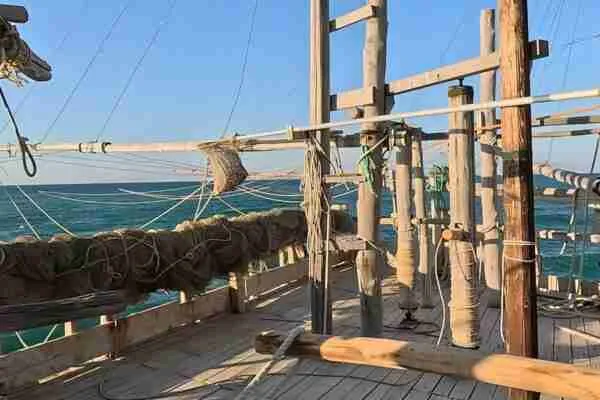
Wooden Cantilevers over the Adriatic: Structural Kinematics and Timber Engineering of the Vieste Trabucchi

Wooden Cantilevers over the Adriatic: Structural Kinematics and Timber Engineering of the Gargano Trabucchi On the rocky promontories of the Gargano peninsula, where the limestone cliffs of Puglia drop vertically into the Adriatic, a category of fishing machine evolved that belongs as much to structural engineering as to maritime tradition. […]

Read More

The Solitary Basilian Spire: Architectural Geometry and Light Dynamics at the Abbey of Santa Maria di Pulsano near Vieste

The Solitary Basilian Spire: Architectural Geometry and Light Dynamics at the Abbey of Santa Maria di Pulsano Perched on a calcarenite ledge eight kilometres from Monte Sant’Angelo, the Abbey of Santa Maria di Pulsano is a twelfth-century hermit community whose twenty-four rock-cut cells grow from the Gargano cliff face rather […]

Read More

Beyond the Engine Roar: A 2026 Slow-Travel Road Trip Through the Medieval Foothills of Maranello

Beyond the Engine Roar: A 2026 Slow-Travel Road Trip Through the Medieval Foothills of Maranello Maranello’s reputation for engine thunder has long eclipsed the landscape behind it: a chain of medieval towers, hilltop fortresses, and water-managed valleys threaded across the Apennine foothills directly above the factory. This 2026 guide routes […]

Read More

Towers of the Witch and the Watch: The 13th-Century Canossan Defensive Network of Fogliano and Torre Maina near Modena

Towers of the Witch and the Watch: The 13th-Century Canossan Defensive Network of Fogliano and Torre Maina On the hill-crests above Maranello, where the Modena piedmont meets the first Apennine ridges, two medieval tower structures mark defensive corridors that predate both buildings. The Torre della Strega at Fogliano and the […]

Read More

The Snail-Shell and the Cross: Romanesque Geometries and Pigment Secrets at the Parish of San Biagio near Modena

The Snail-Shell and the Cross: Romanesque Geometries and Pigment Secrets at the Parish of San Biagio Tucked into the forested ridges of the Modenese Apennines, the Parish of San Biagio preserves a layered fabric of Romanesque stone, Apennine brick, and mineral-ground pigment spanning more than five centuries of construction, destruction, […]

Read More

La Maddalena Archipelago Responsible Tourism Guide: Sustainable Travel Practices & Eco-Friendly Experiences

La Maddalena Archipelago Responsible Tourism Guide: Sustainable Travel Practices & Eco-Friendly Experiences Off the northern tip of Sardinia, where the Strait of Bonifacio separates Italy from Corsica, the La Maddalena Archipelago National Park protects one of the Mediterranean’s most exceptional marine ecosystems across seven principal islands, fifty islets, and roughly […]

Read More

Visiting La Maddalena Archipelago National Park: Ultimate Planning Resource & Travel Guide 2026

Visiting La Maddalena Archipelago National Park: Ultimate Planning Resource & Travel Guide 2026 La Maddalena Archipelago National Park stretches across more than 60 granite islands and islets in the Strait of Bonifacio, suspended between Sardinia and Corsica in some of the Mediterranean’s clearest water. For visitors arriving by ferry from […]

Read More
Sailing the Invisible Outposts: A 2026 Nautical Road Trip Guide to the Defenses of the La Maddalena Archipelago

Sailing the Invisible Outposts: A 2026 Nautical Road Trip Guide to the Defenses of the Maddalena Archipelago Northeast of Sardinia, where the Strait of Bonifacio pinches the sea lane between the Italian peninsula and Corsica, more than sixty islands and islets form one of the Mediterranean’s most layered military seascapes. […]

Read More

The Iron Ring of the Tyrrhenian: Nineteenth-Century Stone Fortresses and Naval Ballistics on Caprera and Spargi in La Maddalena

The Iron Ring of the Tyrrhenian: Nineteenth-Century Stone Fortresses and Naval Ballistics on Caprera and Spargi Where the Strait of Bonifacio narrows between northern Sardinia and southern Corsica, a chain of granite islands controls one of the Mediterranean’s most strategically consequential waterways. Beginning in 1886, the young Kingdom of Italy […]

Read More

The Hermitage of the Granite Monks: Romanesque Monastic Solitude on Santo Stefano Island in La Maddalena Archipelago

The Hermitage of the Granite Monks: Romanesque Monastic Solitude on Isola di Santo Stefano In the Strait of Bonifacio, where Sardinia and Corsica exchange tides across twelve kilometres of open water, Santo Stefano Island (Isola di Santo Stefano) rises as a three-square-kilometre mass of pink-white granite. Medieval monks built sanctuaries […]

Read More

Valdinievole & Svizzera Pesciatina Scenic Drive Guide 2026: A Crowd-Free Tuscany Road Trip

Valdinievole & Svizzera Pesciatina Scenic Drive Guide 2026: A Crowd-Free Tuscany Road Trip Tucked between Florence’s tourist corridors and the Ligurian coast, the Valdinievole valley and its highland crown — the Svizzera Pesciatina — offer one of Tuscany’s least-crowded road trips: ancient spa towns, ghost-village hilltops, single-lane stone bridges, and […]

Read More

Double-Fortress Bastions: Castruccio Castracani’s Medieval Border Engineering near Montecatini Terme

Double-Fortress Bastions: Castruccio Castracani’s Medieval Border Engineering in Serravalle Pistoiese Where the Montalbano hills constrict the corridor between the Ombrone valley and the Valdinievole, the fortified settlement of Serravalle Pistoiese occupied one of the most strategically contested border positions in early fourteenth-century Tuscany. Its paired fortress complexes — one at […]

Read More

Romanesque Geometries in Valdinievole: The Hidden Astronomical Blueprint of Monsummano Alto near Montecatini Terme

Romanesque Geometries in Valdinievole: The Hidden Astronomical Blueprint of Monsummano Alto Perched 340 metres above the Valdinievole lowlands, the hilltop village of Monsummano Alto preserves one of the least-studied Romanesque churches in Pistoiese Tuscany. The Church of San Nicolao, documented in ecclesiastical records from 1260 and attributable in its earliest […]

Read More

Gallura Outback & Archaeological Road Trip Guide 2026 from Olbia: Avoiding the Costa Smeralda Crowds

Gallura Outback & Archaeological Road Trip Guide 2026: Avoiding the Costa Smeralda Crowds While the Costa Smeralda saturates with summer visitors and superyacht overflow, the Gallura interior — granite mountains, cork forests, and Bronze Age monument fields — operates at a different pace entirely. This 2026 road trip guide routes […]

Read More

Olbia Budget Guide 2026: Ultimate Travel Cost Breakdown

Olbia Budget Guide 2026: Ultimate Travel Cost Breakdown Olbia anchors the northeastern corner of Sardinia, functioning as the island’s busiest arrival hub and a rewarding destination in its own right. Its position places the Costa Smeralda beaches and the La Maddalena Archipelago within easy reach, while the historic center — […]

Read More

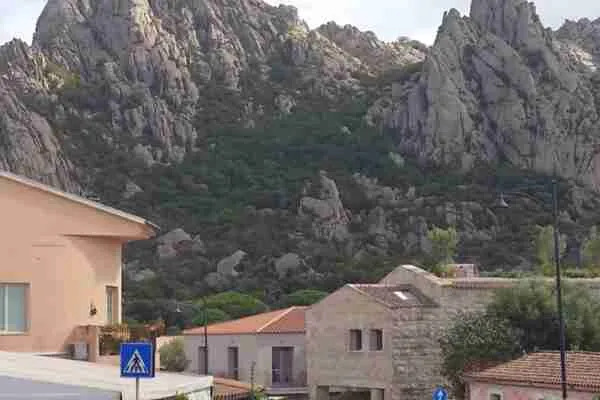
The Granite Monoliths of San Pantaleo: Tectonic Morphology and Anthropised Cork-Oak Forests near Olbia

The Granite Monoliths of San Pantaleo: Tectonic Morphology and Anthropised Cork-Oak Forests San Pantaleo rises from the Gallura hinterland of northeastern Sardinia amid a surreal geometry of rounded granite monoliths, their forms shaped by hundreds of millions of years of deep weathering and exhumation from a Variscan plutonic basement. This […]

Read More

The Sentinel of Gallura: Defensive Dry-Stone Engineering and Strategic Vantage at Castello di Pedres in Olbia

The Sentinel of Gallura: Defensive Dry-Stone Engineering and Strategic Vantage at Castello di Pedres Perched on a granite inselberg above the Gallura plain, Castello di Pedres was a primary military strongpoint of the Giudicato of Gallura — one of Sardinia’s four autonomous medieval kingdoms, which emerged as Byzantine imperial administration […]

Read More

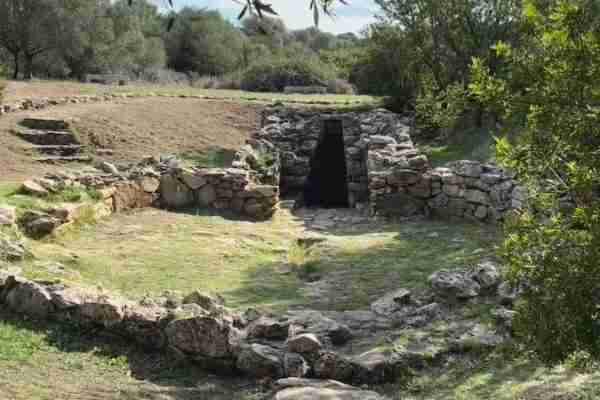
The Subterranean Waters of Sa Testa: Astronomical Alignment and Bronze Age Sacred Geometries in Gallura Sardinia

The Subterranean Waters of Sa Testa: Astronomical Alignment and Bronze Age Sacred Geometries in Gallura The granite uplands of Gallura, northeastern Sardinia, conceal one of the best-preserved Nuragic Bronze Age monuments: a sacred well whose keyhole-shaped plan descends through worked stone to a perennially charged spring chamber. Built in the […]

Read More

Necropolis Urbanism: The Rock-Cut Architecture and Structural Voids of Tuvixeddu Cagliari

Necropolis Urbanism: The Rock-Cut Architecture and Structural Voids of Tuvixeddu On a limestone hill within Cagliari, the Tuvixeddu Necropolis contains the largest surviving Punic burial ground in the Mediterranean. More than a thousand vertical shafts descend through calcarenite to lateral burial chambers whose ceilings have held for two millennia. This […]

Read More