
Visiting La Maddalena Archipelago National Park: Ultimate Planning Resource & Travel Guide 2026
La Maddalena Archipelago National Park stretches across more than 60 granite islands and islets in the Strait of Bonifacio, suspended between Sardinia and Corsica in some of the Mediterranean’s clearest water. For visitors arriving by ferry from Palau in 2026, this Italian national park delivers turquoise coves, pristine beaches, wildlife-rich marine habitats, and the remarkable legacy of Giuseppe Garibaldi, all within a single protected area that rewards both day-trippers and those who stay for several nights.
Key Takeaways
- La Maddalena Archipelago National Park, established by law in January 1994 as Sardinia’s first national park, encompasses more than 60 islands and islets across 20,000 hectares of land and sea; the seven main islands are La Maddalena, Caprera, Spargi, Budelli, Razzoli, Santa Maria, and Santo Stefano.
- The only access point from the Sardinian mainland is the 15-to-20-minute ferry from Palau; foot-passenger fares run approximately €8–11 one way in 2026, with frequent daily sailings increasing to up to 20 or more departures in peak summer.
- Full-day shared boat tours of the archipelago—the essential way to reach the outer islands of Spargi, Budelli, Razzoli, and Santa Maria—cost approximately €59–120 per person in 2026 depending on vessel type; book well in advance for July and August departures.
- Pink Beach (Spiaggia Rosa) on Budelli Island has been closed to landing since the 1990s; boat tours pass by for photography but cannot enter the restricted zone, and the beach itself remains off-limits indefinitely to protect its fragile coral-fragment coloration.
- Mid-range visitors budget approximately €140–280 per person daily depending on season (two sharing a mid-range hotel), with shoulder season (May–June and September) consistently offering the full archipelago experience at the lower end of that range.
- The Garibaldi Compendium on Caprera—the preserved home and burial site of Giuseppe Garibaldi, the central figure of Italian unification, accessible by bridge from La Maddalena—is the most visited museum in Sardinia, with adult admission approximately €6–8.
People Also Ask About La Maddalena Archipelago National Park 2026
How much does a trip to La Maddalena Archipelago cost in 2026?
Costs vary significantly by season and travel style, with July and August representing the most expensive window and May–June or September offering the same islands at substantially lower prices. Budget travelers staying in guesthouses or self-catering apartments spend approximately €75–110 per person daily in shoulder season and €95–140 in peak season, assuming two sharing accommodation. Mid-range visitors—two sharing a three-star hotel, eating at restaurants, and taking at least one guided boat tour—spend approximately €140–220 per person daily in shoulder season and €180–280 in peak season. Luxury visitors at boutique properties with private boat charters invest approximately €245–430 per person daily in shoulder season and €335–580 in peak season. For a 5-day mid-range trip including the Palau ferry, accommodation, all meals, and one full-day archipelago boat tour, budget approximately €790–1,120 per person in shoulder season and €980–1,410 in peak season.
How do you get to La Maddalena Archipelago National Park in 2026?
La Maddalena is accessible only by sea. The ferry from Palau—a small port town on the northeastern tip of Sardinia—takes 15–20 minutes and operates year-round, with frequency increasing to up to 20 or more daily sailings in June through September. Foot-passenger tickets cost approximately €8–11 one way; car transport is significantly more expensive. To reach Palau from Olbia (the nearest airport, approximately 65 kilometres south), take the SS125 north toward Arzachena and then Palau—around 1 hour 15 minutes by car. ARST bus line 601 connects Olbia to Palau by public transport. Caprera is connected to La Maddalena island by road across the Moneta Bridge. The outer islands of Spargi, Budelli, Razzoli, Santa Maria, and Santo Stefano are accessible only by boat.
When is the best time to visit La Maddalena Archipelago in 2026?
Late May through mid-June and all of September offer the strongest overall combination: sea temperatures warm enough for comfortable swimming (typically 22–26°C), boat tours running at good frequency with smaller groups, and accommodation prices 30–50% below the July–August ceiling. July and August deliver the calmest sea conditions and warmest water—often reaching 27–28°C—but also the highest prices, the most crowded boat tours, and accommodation that requires booking many months in advance. September in particular stands out for many experienced visitors: sea temperatures remain near their annual peak, crowds drop sharply after the Italian August holiday, and the quality of light for photography is notably warmer and more directional than the bleached overhead light of midsummer. For visitors whose holiday windows are fixed by school schedules, July and August work well provided planning is done well in advance.
Can you visit Pink Beach (Spiaggia Rosa) at La Maddalena in 2026?
Landing on Pink Beach (Spiaggia Rosa) on Budelli Island remains strictly prohibited in 2026. The beach has been closed since the 1990s to protect its distinctive coloration, which derives from accumulated skeletal fragments of a microscopic reef-forming foraminifer (Miniacina miniacea); foot traffic was shown to compress and destroy these fragile fragments, gradually erasing the pink tone. Enforcement by the national park and coast guard is active, and boats cannot legally approach within 10 metres of the shore. All standard boat tours include a slow pass in front of the beach for photography. The national park authority occasionally organises guided terrestrial visits to Budelli island departing from Cavaliere Beach on the island’s eastern side, but these are subject to availability and seasonal scheduling; check the park authority’s website for current programmes before your visit.
Extended multi-day tours – 5+ days
Featured Sardinia Multi-Day Tour Packages
8 days
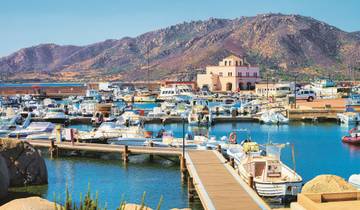
Best of Sardinia, Self-Drive
- ✓ Comprehensive Sardinia tour
- ✓ Expert local guides included
- ✓ All accommodation arranged
- ✓ Transportation provided
7 days
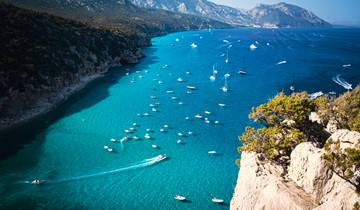
Active Sardinia: Coast & Coves
- ✓ Comprehensive Sardinia tour
- ✓ Expert local guides included
- ✓ All accommodation arranged
- ✓ Transportation provided
7 days
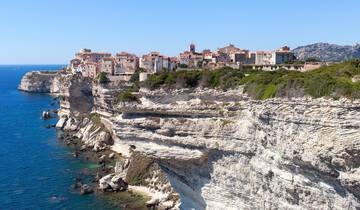
7 Days Gran Tour of Sardinia and Corsica from Olbia
- ✓ Comprehensive Sardinia tour
- ✓ Expert local guides included
- ✓ All accommodation arranged
- ✓ Transportation provided
7 days
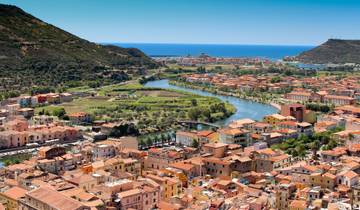
Best Journey of Sardinia – 7 Days
- ✓ Comprehensive Sardinia tour
- ✓ Expert local guides included
- ✓ All accommodation arranged
- ✓ Transportation provided
Multi-day tour packages powered by TourRadar. Prices and availability subject to change.
Italy’s Protected Constellation: Understanding La Maddalena Archipelago National Park
Situated in the Strait of Bonifacio—the narrow, wind-driven channel separating Sardinia from Corsica at the western Mediterranean’s neck—La Maddalena Archipelago National Park was formally established by Law No. 10 of 4 January 1994, becoming Sardinia’s first national park. The legislation encompassed all islands, islets, and rocks within the municipal territory of La Maddalena together with a surrounding marine zone extending approximately one nautical mile from the coasts, creating a total protected area of more than 20,000 hectares: roughly 5,100 hectares of land and 15,000 hectares of sea spread across 180 kilometres of coastline.
The archipelago contains more than 60 islands, islets, and exposed rocks, of which seven constitute the principal landmasses: La Maddalena, Caprera, Spargi, Budelli, Razzoli, Santa Maria, and Santo Stefano. These main islands wrap around a coastline whose true complexity—every granite headland concealing another layered cove, every submerged shelf supporting a distinct ecological community—exceeds what the 180-kilometre figure alone conveys. The geological foundation is predominantly ancient intrusive granite, shaped over millions of years by the Mistral and the currents of the Strait into smooth domes, tafoni (the honeycomb erosion chambers characteristic of Sardinian granite), and balanced boulder formations that give certain hilltops an almost deliberately architectural quality.
La Maddalena National Park is unique among Italian national parks in two respects. It is the only one comprising exclusively the territory of a single municipality, and it is one of only two Italian national parks—alongside the Tuscan Archipelago National Park—to include both a formally designated terrestrial surface area and a marine protected zone within its constituting legislation. The park forms part of a proposed cross-border Bonifacio Strait International Marine Park developed jointly with France, whose Réserve naturelle des Bouches de Bonifacio on the Corsican side already coordinates on monitoring and patrol. As of 2026 this broader international designation remains in proposal rather than in force, but the bilateral coordination functions in practice.
The marine environment is the park’s ecological heart. Posidonia oceanica seagrass meadows cover large areas of the shallow seabed, providing nursery habitat for commercially important fish, feeding grounds for loggerhead sea turtles, and one of the Mediterranean’s most productive oxygen-generating benthic ecosystems. Their protection from anchoring damage is a primary driver of the park’s zoning rules. The waters support documented populations of bottlenose dolphin, loggerhead sea turtle, and—in rare but recorded sightings—Mediterranean monk seal, one of the world’s most critically endangered marine mammals. The Strait of Bonifacio, one of the windiest and most navigated passages in the western Mediterranean, concentrates marine productivity in ways that reflect directly in the exceptional clarity of the inshore waters and the diversity of what lives beneath them.
The archipelago’s human history adds further depth to any visit. The village of La Maddalena was founded in 1770 under the House of Savoy, whose recognition of the archipelago’s strategic position in the western Mediterranean converted a lightly inhabited fishing outpost into a fortified naval station of European significance. In 1793 Napoleon Bonaparte led an expedition against the island as part of the Sardinian campaign, repulsed by local defenders and logistical failures. Admiral Horatio Nelson used La Maddalena as the anchorage for his Mediterranean Fleet in 1804, making it his base of operations during the extended pursuit phase that preceded the Battle of Trafalgar. The island’s most enduring historical connection, however, is with Giuseppe Garibaldi, the Risorgimento’s pre-eminent military figure, who established his home on Caprera in the mid-1850s and remained there until his death in 1882.
Planning Your 2026 Visit to La Maddalena: Essential Decisions
The most consequential decision for any visitor to La Maddalena in 2026 is how long to stay. A day trip from the Sardinian mainland is technically feasible—the ferry crossing takes only 15–20 minutes—but a single day limits you to La Maddalena town and one boat tour at most, with no time for Caprera. Three to five nights on La Maddalena island allows a full-day boat excursion to the outer archipelago, a day of independent exploration of Caprera including the Garibaldi Compendium, and time to relax on quieter beaches without everything feeling compressed. For visitors wanting a genuinely comprehensive experience of both the natural and cultural dimensions, five nights is the comfortable minimum.
The second decision is whether to bring a car. A vehicle offers flexibility for reaching Caprera’s beaches and the more remote coves of the main island, but adds significant cost to the Palau ferry crossing and creates real practical difficulties on the islands: parking on Caprera is restricted by the park authority, and the main town of La Maddalena is entirely walkable. Many visitors leave their car in Palau’s port-area parking facilities and cross as foot passengers, then use the local bus network, hire a bicycle or scooter, and walk for everything else. This approach costs less, particularly when the ferry vehicle surcharge is avoided, and in peak season often involves less frustration than navigating Caprera’s limited road-edge parking.
The third decision is which boat tour format to choose. Options in 2026 range from large motor vessels carrying 80–300 passengers—the most economical format—to medium-sized shared boats of 15–30 people, to small private charters with a skipper that give full control of the itinerary. The type of boat determines which beaches you can reach, how much time you spend swimming versus motoring between stops, and the character of the overall experience. If the boat tour is a priority—and for most visitors it is—book in advance, particularly for July and August when popular operators sell out days or weeks ahead.
In terms of departure base, Palau offers the widest range of operators and the most natural gateway if you are arriving by road. La Maddalena town hosts several operators with morning departures, which suits those who have already settled on the island. Baja Sardinia and Santa Teresa Gallura also run archipelago tours covering broadly similar territory, mostly serving visitors based on the Costa Smeralda corridor.
Getting to La Maddalena Archipelago in 2026
The sole regular passenger route to La Maddalena is the ferry from Palau on Sardinia’s northeastern coast. The crossing takes 15–20 minutes and runs year-round, operated by Maddalena Lines. In peak summer—primarily June through September—the service can run up to 20 or more daily sailings with departures approximately every 30 minutes or more frequently during the busiest hours, with the earliest departures around 7:45–8:15 AM and the last sailing around 8–8:30 PM (schedules are adjusted seasonally; verify current timetables directly with the operator before travelling). In off-peak months the schedule reduces to around 8–10 daily crossings, and in winter the tramontana and Mistral winds can cause intermittent cancellations.
Foot-passenger fares run approximately €8–11 one way in 2026, with the higher end applying in peak season. Tickets are purchased at the port or online in advance; for foot passengers, same-day purchasing at the terminal is usually possible outside peak months, but booking ahead is advisable in July and August. Taking a car or motorcycle on the ferry costs substantially more: vehicle tariffs run approximately €40–60 one way for a standard car, making a round trip with a vehicle approximately €80–120, which represents a significant additional cost over a multi-night stay. For most visitors whose base is La Maddalena town, leaving the vehicle in Palau and travelling as a foot passenger is both cheaper and less logistically complicated.
To reach Palau from Olbia—the nearest airport, receiving seasonal direct flights from most major northern and central European cities as well as year-round connections from Rome and Milan—take the SS125 north toward Arzachena and then Palau; the drive takes approximately 1 hour to 1 hour 15 minutes in normal traffic, longer in peak summer when northern Sardinia’s roads become congested. ARST bus line 601 operates between Olbia bus station and Palau, with a journey time of roughly 1 hour 15 to 1 hour 30 minutes depending on the schedule; this is the practical option for car-free travellers. Palau also has road connections from Sassari (approximately 1 hour 45 minutes), Nuoro, and Santa Teresa Gallura.
An alternative entry point for visitors combining La Maddalena with Corsica is the port of Santa Teresa Gallura, approximately 25 kilometres west of Palau, which receives car ferries from Bonifacio in Corsica. Arriving through Santa Teresa and driving east to Palau is a natural circuit for those doing a combined Sardinia-Corsica itinerary.
Once on La Maddalena island, Caprera is accessible by road across the Moneta Bridge, a causeway spanning the shallow reed-fringed channel between the two islands, navigable by car, bicycle, and on foot. Local bus services connect the ferry terminal, the town centre, and Caprera, including a stop near the Garibaldi Compendium; current schedules are available from the local operator Turmotravel. Bicycle and scooter rental outlets operate near the town centre in season: bicycles from approximately €20–30 per day, scooters €30–40, electric bicycles also available for those who prefer assistance on Caprera’s hillier interior roads.
Exploring the Archipelago by Boat in 2026: Tours, Charters, and Self-Navigation
The outer islands—Spargi, Budelli, Razzoli, Santa Maria, and Santo Stefano—are reachable exclusively by sea, and even the waters immediately around La Maddalena and Caprera are best appreciated from the water. The 2026 boat tour market from Palau and La Maddalena divides into three broadly distinct formats.
Large shared motor vessels are the most economical and widely available option. These boats carry 80–300 passengers, provide shade, have on-board toilets and typically a bar selling snacks and drinks, and run structured itineraries covering four or five island stops. A standard programme includes a slow pass in front of Pink Beach (Spiaggia Rosa) on Budelli for photography, a swimming stop at Corsara Cove on Spargi, time at the Natural Pools between Budelli and Santa Maria and Razzoli, and a stop at Santa Maria island. An on-board lunch is included with most full-day tours. These tours run approximately 7–9 hours and cost €59–80 per adult in 2026; some operators charge an additional landing fee of around €5 per person payable on board to cover national park facilities. Large vessel tours are appropriate for families, for visitors for whom the boat trip is one element of a broader Sardinian itinerary, and for those on tighter budgets who still want to see the outer archipelago.
Medium shared sailboats and smaller motor yachts (typically 10–30 passengers) offer a more relaxed experience with longer swimming stops, more flexibility in the precise route, and more interaction with the crew. These tours cost approximately €80–120 per person for a full day in 2026 and suit travellers for whom the quality of the boat experience itself—snorkelling time, unhurried cove exploration, a quieter atmosphere—is a primary goal. Shared sailing catamaran tours, which use wind when conditions allow, fall in a similar price bracket.
Private charters place full control of the itinerary, timing, and group in the hands of the visitor. A private day charter on a motor yacht or sailing boat for up to 6 passengers typically costs €800–1,500 per day for the whole vessel depending on boat size and fuel, which across a group of four divides to €200–375 per person for the day—comparable to premium shared tours once the full-day experience is factored in. Private charters allow anchoring in uncrowded coves, remaining at a particular beach longer, and detours to spots that standard routes bypass.
All tour formats pass in front of Pink Beach (Spiaggia Rosa) for photography but cannot enter the restricted zone; most itineraries include the Natural Pools as the standout swimming stop, and one or two beaches on Spargi or Santa Maria for additional swimming time. The precise sequence varies by operator and weather conditions.
For visitors holding a valid boating licence or hiring a skipper separately, self-drive rubber dinghies and small motorboats are available to hire from La Maddalena’s waterfront from approximately €150–250 per vessel per day plus fuel. Navigation within the national park requires compliance with speed limits, zone restrictions (certain areas require prior park authorization), and anchoring rules designed to protect Posidonia meadows. The park authority publishes current zone maps and authorization requirements on its website at parks.it/parco.nazionale.arcip.maddalena/.
For July and August departures, advance booking is essential: popular operators sell out days or weeks ahead, and last-minute places are difficult to find. Shoulder-season tours are far more available on short notice, often bookable the day before or on the morning of departure from operators along Palau’s waterfront.
La Maddalena Town and the Main Island in 2026
La Maddalena town is the archipelago’s only significant urban centre, a compact port of roughly 11,000 permanent residents that swells dramatically each summer. The waterfront displays the characteristic northern Sardinian vernacular: pale granite buildings, painted shutters, narrow streets climbing steeply back from the port. The promenade, the shops, and the restaurants are all within easy walking distance of the ferry terminal. Umberto I Square is the natural social focus, particularly in the evening passeggiata hours when the cafes fill and the harbour lights come on across the water toward Caprera.
The main island itself offers more than a transport hub. Its northern and western coasts, accessible by bicycle or scooter from the town, hold a sequence of coves and beaches with the shallow granite-bottomed clarity that defines this part of Sardinia. Spalmatore Cove on the western shore is one of the most easily reached bathing spots from town—a sheltered inlet with lower crowds even in August compared to the most famous Caprera beaches. The eastern shoreline provides views across the narrow channel to Santo Stefano and, beyond it, the Corsican mountains on clear days.
The town’s Naval Archaeological Museum documents the archipelago’s extraordinary strategic role from the Roman era through the nineteenth century. The Roman period is particularly well represented: the Strait of Bonifacio was one of the western Mediterranean’s most heavily used shipping lanes for centuries, and the waters around the islands have yielded Roman-era anchors and ship components that give the collection a specificity unusual for maritime archaeology in this region. The museum is worth an hour for those interested in the long history of the strait as a contested naval and commercial thoroughfare.
The main island’s road network, while limited, opens up several panoramic viewpoints that require no boat. The elevated roads on the island’s northern half provide sweeping views of the outer islands, Corsica, and the Strait of Bonifacio—perspectives that are useful for orientation and visually spectacular at sunrise and sunset, making them a natural first stop before the main sightseeing days begin.
Pink Beach (Spiaggia Rosa) and Budelli Island: What to Expect in 2026
No feature of the national park generates more visitor curiosity than Pink Beach (Spiaggia Rosa) on Budelli island. The beach’s distinctive coloration—pale pink sand tinted with deeper rose tones in certain light—results from the accumulation of shell and skeletal fragments of Miniacina miniacea, a microscopic reef-forming foraminifer whose calcium carbonate remains wash ashore over thousands of years. The pink tone is subtle rather than vivid; it reads most clearly when the sand is slightly damp and in the low-angle light of early morning or late afternoon rather than in the flat overhead illumination of noon.
Landing on the beach has been prohibited since the 1990s. The closure responded to measurable degradation: foot traffic was physically compressing and destroying the fragile skeletal fragments, gradually diluting the pink coloration with ordinary silicate sand. The beach remains off-limits indefinitely. Enforcement by the national park authority and coast guard is active in 2026; boats cannot legally approach within the boundary marked by buoys, and violations carry fines. Managing expectations before departure makes the boat-tour experience more satisfying rather than disappointing: the slow pass in front of the beach, with the guide explaining the geology and the shore lying still and inaccessible, produces a quality of encounter that actively used beaches cannot offer.
The broader island of Budelli is a protected landscape of Posidonia shallows and granite interior with essentially no visitor infrastructure. The park authority organises occasional guided walks on Budelli departing from Cavaliere Beach on the island’s eastern side; these allow carefully managed terrestrial access without impacting the protected beach. These programmes are limited in frequency and numbers, and advance booking through the park website is required when offered—check before your visit rather than assuming they will be available on arrival.
Immediately adjacent to Budelli, the waters enclosed between Budelli, Razzoli, and Santa Maria form the Natural Pools, a shallow lagoon of exceptional clarity and stillness even when the open Strait beyond is choppy. Water depth in sections is shallow enough for standing in what appears to be open sea; the colour sequence from white-sand floor through pale aquamarine to vivid cobalt in the deeper channels is one of the most photographed sights in all of Sardinia. Every standard boat tour schedules a swimming stop here, and the snorkelling across the surrounding Posidonia-fringed shallows is exceptional. By most visitor accounts, this is the single most memorable experience the outer archipelago provides.
Caprera Island: Garibaldi’s Legacy and Natural Wonders
Caprera is the archipelago’s second main inhabited island, connected to La Maddalena by the Moneta Bridge, a low causeway spanning the shallow channel between the two. Roughly 16 square kilometres of granite hillside, macchia scrub, maritime pine, and sheltered coast, it carries two distinct identities: a nature destination with some of the best beaches accessible without a boat anywhere in the national park, and the preserved home of one of modern Italy’s founding figures.
The Garibaldi Compendium is the preserved farm estate where Giuseppe Garibaldi lived from the mid-1850s until his death on 2 June 1882, and is officially the most visited museum in Sardinia. The complex occupies an inland clearing of considerable natural beauty among Caprera’s pines and encompasses an entire small farm settlement: the main residential building, Garibaldi’s White House (Casa Bianca), built in 1856–57 and comprising seven communicating rooms including the study, bedrooms, dining room, kitchen, and the final chamber—later called the death room—where Garibaldi received family and close associates in his last years; a wooden outbuilding; an iron house preserving the general’s library; the stable; the oil press and millstone; and the forge. The grounds include the family cemetery, where Garibaldi’s granite tomb rests alongside those of his third wife, Francesca Armosino, and several of their children. Personal effects, original furnishings, military memorabilia, photographs, correspondence, and documents fill the rooms, conveying the deliberately plain domestic life of a man who, in the intervals between campaigns that transformed Italian political geography, occupied himself with farming olive trees and tending his orange grove.
The Garibaldi Compendium opens Tuesday through Sunday from 9 AM to 8 PM. Adult admission is approximately €6–8 (verify current pricing at the official website or at garibaldicaprera.beniculturali.it before visiting, as admission fees are subject to periodic revision); entry is free for visitors under 18. A combined ticket covering both the Garibaldi Compendium and the separate Giuseppe Garibaldi Memorial is available at approximately €12. Timed entry slots are standard, and in peak season booking in advance is strongly recommended to avoid waiting for an allocated slot.
The Garibaldi Compendium is reachable by local bus from La Maddalena town—the service drops visitors within a short walk of the entrance—by bicycle from the Moneta Bridge (approximately 4–5 kilometres on a road traversing Caprera’s pine forest), or by car, though vehicle access is restricted on Caprera and the nearest parking is approximately one kilometre from the entrance to limit traffic impact on the island’s interior.
Caprera’s beaches are among the finest in the entire archipelago. Two Seas Beach (Spiaggia dei due mari), at the island’s southeastern extremity, sits on a narrow tombolo—a sand spit connecting two granite outcrops—with clear turquoise water on both sides; it is among the most photographed beaches in northern Sardinia, though it becomes heavily crowded on peak-season afternoons and requires an early start to enjoy without crowds. Coticcio Cove (Cala Coticcio), nicknamed “Little Tahiti” by Italian visitors, lies on Caprera’s southeastern coast at the end of a 30-minute walk from the road terminus near Garibaldi Cove (Cala Garibaldi): a deeply enclosed inlet of brilliant white sand flanked by dramatic granite walls, with water colour ranging from pale aquamarine at the shallows to vivid cobalt in the central channel. Access is on foot from the road-end car park over a path that requires some confidence on granite slopes; the reward is a cove of outstanding beauty that remains somewhat less visited than Two Seas Beach due to the walk in.
The island’s interior supports hiking trails through pine forest and macchia leading to several panoramic summits. Monte Tejalone, Caprera’s highest point at approximately 212 metres, provides the most comprehensive overview of the archipelago—La Maddalena, the outer islands, the Strait of Bonifacio, and on clear days the Corsican mountains. The ascent from the main road takes around 45–60 minutes on marked paths. Birdwatching on Caprera in spring migration and early summer is rewarding: osprey hunt the coastal waters year-round, Eleonora’s falcon breeds on several cliff sites, and peregrine falcon is a resident species. The three raptors can sometimes be seen simultaneously from elevated vantage points, making Caprera one of the more productive Italian sites for aerial predator watching.
Island-by-Island Guide to the Outer Archipelago in 2026
Spargi is the westernmost of the park’s main islands and a stop on virtually all boat tours. Its signature beach, Corsara Cove (Cala Corsara), is a wide arc of white sand backed by eroded granite boulders of unusual organic shapes that have made it one of the most photographed beaches in northern Sardinia. The cove faces east-northeast, catching morning light well and sheltered from the afternoon tramontana. A smaller anchorage on the island’s southern side, Soraya Cove, is popular with private yachts for its protective granite headlands. Spargi is entirely uninhabited with no permanent infrastructure; all waste must leave with you, and the park’s no-camping rules apply.
Santa Maria is the northernmost of the seven main islands, positioned closest to Corsica. Its long beaches of pale sand and shallow turquoise water are among the most consistently praised in the archipelago; a small occupied settlement with seasonal visitor facilities makes it the only outer island with any infrastructure. The snorkelling along Santa Maria’s western rocky margins is productive, with good fish populations and occasional sea turtle encounters in the Posidonia-rich shallows. Santa Maria also forms the eastern boundary of the Natural Pools, making the swim stop there inseparable from the broader experience of the channel between Budelli, Razzoli, and Santa Maria.
Razzoli forms the northern terminus of the archipelago, a high granite island whose dark cliffs face open sea. It is less frequently landed on during standard tours—the terrain is steep and sandy beaches are absent—but circumnavigation of Razzoli’s northern cape on a boat tour is consistently memorable for the drama of its cliff scenery and the concentration of seabirds on its ledges. The channel between Razzoli and Santa Maria, converging with the Natural Pools from the north, produces some of the most vivid water colour in the park: a combination of depth gradient and sand reflectance that creates colour sequences visible nowhere else in Italian waters.
Santo Stefano is the closest outer island to La Maddalena, separated from the main island by a narrow and easily visible channel. The island hosted a NATO naval installation—operational from the 1970s until its decommissioning in 2008, when it was returned to Italian national jurisdiction—whose former buildings remain on the site. As of 2026 the former naval infrastructure is not open to general visitor access, but the coves and waters around Santo Stefano lie within standard navigational zones for private boats and are included in some tour itineraries. The island’s future use in the context of the national park remains subject to ongoing planning discussion.
Wildlife and Marine Life in La Maddalena National Park
The Strait of Bonifacio functions as one of the primary feeding grounds for common bottlenose dolphins (Tursiops truncatus) in the western Mediterranean. Dolphins are among the most reliably encountered large wildlife at La Maddalena: they are frequently spotted from the Palau–La Maddalena ferry, from the deck of any boat tour transiting between islands, and from the elevated headlands of Caprera and Razzoli. Bow-riding and wake-surfing are common behaviours—a group of dolphins approaching a moving vessel and riding its pressure wave for several minutes is a characteristic encounter in this part of the Strait. Sightings of 5–20 minutes are not unusual on open-water transits between islands.
Loggerhead sea turtles (Caretta caretta) are present in the park’s waters, feeding on jellyfish and marine invertebrates in the Posidonia meadows. Sightings from boats are occasional rather than routine—typically a head breaking the surface to breathe before a smooth dive—and most likely during slow passes over shallow sandy seabeds between islands or in the calmer waters of the Natural Pools channel. The park’s Posidonia oceanica meadows, which the anchoring zone regulations are specifically designed to protect, provide the foundation of the coastal food web: slow-growing at approximately 1–3 centimetres per year and thus essentially irreplaceable on any human timescale, these seagrass beds are among the most ecologically significant habitats in the entire western Mediterranean.
Mediterranean monk seals (Monachus monachus), one of the world’s most critically endangered marine mammals, are occasionally reported in the Strait of Bonifacio, which forms part of the species’ last viable Mediterranean range. Sightings remain rare and unexpected rather than something visitors can plan around, but the species’ documented presence here reflects the quality of the marine environment and is one reason the proposed Bonifacio Strait International Marine Park centres partly on this corridor. The joint Italian-French coordination already in place provides some de facto protection even without the formal international designation.
The terrestrial bird life of the national park rewards visitors with patience and binoculars. The Sardinian warbler is ubiquitous in the macchia—its scratchy song is the constant soundtrack of any walk through Caprera’s interior—and yellow-legged gulls nest on exposed granite outcrops throughout the archipelago. The larger raptors are the distinguishing feature: osprey hunt the coastal waters year-round, their plunge-dives visible from most elevated lookout points; Eleonora’s falcon, a long-winged migrant breeder, occupies cliff sites from spring through to its departure in autumn; and peregrine falcon is a resident presence. Spring migration in April and May brings a wider diversity, with the islands acting as landfall points for trans-Saharan migrants crossing the Mediterranean—a combination of timing, geographic exposure, and ecological diversity that makes the archipelago one of southern Sardinia’s better spring birdwatching sites despite its small land area.
Underwater, the dive sites around the archipelago—including the shallow rocky reefs of Spargiotello and the Washington Bank—support good populations of grouper, sea bream, moray eel, and octopus. The park issues authorizations for scuba diving and snorkelling within designated zones; dive operators based in La Maddalena town and Palau offer guided dives and equipment hire in season.
Best Time to Visit La Maddalena in 2026: Seasonal Planning
May and early June represent the strongest value window for most visitors. Water temperatures climb toward 22–24°C through May—warm enough for comfortable swimming for the majority of visitors—while boat tours run frequent schedules, accommodation is 30–50% below the July–August ceiling, and the island operates at a pace that allows genuine exploration without the sense of competing for space. The tramontana wind can still bring cool days and brief choppy periods in May, but these are shorter-lived than the winter pattern. The macchia is in flower, the bird migration at its most active, and the light for photography is exceptional: clear and warm without the bleaching overhead intensity of midsummer.
Mid-June through June’s end sees temperatures and sea temperatures rising steadily (water approaching 25–26°C) and visitor numbers increasing markedly, but it remains a very practical window. Most services run at high capacity, advance booking for boat tours is advisable rather than strictly necessary, and prices are still meaningfully below the peak-season level. The evenings in La Maddalena town acquire the animated character of full summer without the extreme congestion of July.
July and August are when La Maddalena operates at maximum intensity. The ferry runs at its highest frequency, boat tours sell out days or weeks in advance, every accommodation option requires advance booking, and popular beaches like Two Seas Beach become crowded by mid-morning. The practical upside is the calmest sea conditions of the year and the warmest water—sea temperatures regularly reach 27–28°C, and the tramontana is at its least frequent in August. If school holidays determine your travel window, this is when to come; plan everything far in advance and arrive at beaches and the Garibaldi Compendium early in the day.
September makes the strongest case as the single best month for most visitors with flexible schedules. Sea temperatures remain near their annual peak (typically 26–28°C through mid-September, cooling gradually through the month’s end), visitor numbers drop sharply after the Italian ferragosto holiday period, prices return to closer to shoulder-season levels, and the quality of the light—warm, directional, rich in the late afternoon—is markedly better for photography than midsummer. September boat tours have available places; September restaurants take reservations rather than turning people away. For visitors who can choose, September is the clear recommendation.
October is transitional: hiking and photography are excellent, sea temperatures are still workable for determined swimmers (typically 22–24°C in early October), but some boat tour operators reduce or end their daily schedules by mid-month, and accommodation choice narrows. The risk of Mistral disruptions to ferry service increases through October’s second half.
Winter (November through March) sees the fewest visitors, the lowest prices, and the most dramatic atmospheric conditions. The Mistral can reach gale force through the Strait, making ferry service periodically unreliable and open-sea boat navigation uncomfortable or impossible for days at a time. La Maddalena town maintains a quiet off-season life, and for visitors drawn to the landscape’s stripped-back character—the granite without the tourist infrastructure, the macchia without the crowds—the winter archipelago has a particular austere beauty. Expect limited boat tour availability and check ferry conditions before finalising travel dates.
Where to Stay in La Maddalena in 2026
Accommodation on La Maddalena island ranges from simple B&Bs and self-catering apartments in and around the town to mid-range hotels and small boutique properties. The island itself has no large luxury resort hotel; the most upscale properties in the broader area—those with full spa facilities, multiple restaurants, and private beaches—are concentrated further west around Porto Cervo and Baja Sardinia on the Costa Smeralda, accessible by car for day trips and operating their own boat excursion programmes to the national park. For a trip centred on the archipelago, basing yourself on La Maddalena island is strongly recommended over the Costa Smeralda hotels, which add driving time and lose the experience of the island in the evening when the day-trippers have left.
Budget accommodation in 2026 on La Maddalena—B&Bs, affittacamere (rooms for rent), and self-catering apartments—starts from approximately €55–85 per room per night in shoulder season and rises to €80–120 or more in July and August. Self-catering apartments are particularly practical for groups of two to four, as the addition of a kitchen reduces daily food expenditure considerably and makes it possible to prepare breakfast, beach lunches, and occasional simple suppers from the local supermarket. The town centre and the streets immediately behind the waterfront concentrate most of the budget-to-mid range options; these locations are walkable to the ferry terminal and the main boat tour departure points.
Mid-range hotels (three-star category, with air conditioning, private bathrooms, and in several cases a pool or sea-view terrace) run approximately €110–165 per room per night in shoulder season and €160–250 in peak season. Several established hotels occupy positions with harbour views or proximity to the better beaches on the main island’s outskirts. Residence-style properties—apartments within a hotel complex, with access to shared facilities—bridge the gap between self-catering flexibility and hotel service, and tend to offer good value for stays of four nights or longer.
Upper-mid and boutique hotels on La Maddalena and its immediate surroundings run from €200 per room per night in shoulder season to €300–500 or more in peak season. At this level, pool access, restaurant on-site, and proximity to quieter coves are standard features. Beyond the island proper, the Costa Smeralda corridor has properties in the full international luxury tier at nightly rates well above these figures, but their relevance to an archipelago-focused trip is limited.
Booking far in advance is essential for any accommodation in July and August—the island has a finite bed supply and summer demand consistently exceeds it. Shoulder-season stays can often be arranged 4–8 weeks in advance without difficulty. Arriving without a reservation in July is not advisable.
Dining in La Maddalena in 2026: Seafood, Costs, and Local Specialties
La Maddalena’s food culture is rooted in Gallura Sardinian tradition filtered through the island’s maritime character. Seafood dominates: bottarga (the dried, pressed mullet roe that is Sardinia’s most distinctive preserved product, served grated over pasta or sliced thinly with oil, lemon, and capers), fresh sea bass and bream, clams, sea urchin served on bruschetta or over linguine, local lobster, and the mixed seafood of daily catch. Pasta dishes follow the Gallura tradition—maccheroni al ferretto, malloreddus with local sauces—and pane carasau, the paper-thin crisp flatbread of Sardinian pastoralism, appears on most tables as a default. The local cannonau and vermentino wines pair naturally with the seafood menu.
Dining costs in 2026 reflect La Maddalena’s status as a premium summer destination. A full dinner with a starter, main course, dessert, and a carafe of house wine at a mid-range restaurant runs approximately €40–60 per person. At the simpler end—a pasta main and a local beer at a trattoria or beach kiosk—expect to pay €20–30 per person. Upscale restaurants serving creative seafood, local lobster, and wine pairings push comfortably above €60 per person. Lunch is typically cheaper: many visitors eat a simple meal of pizza al taglio, focaccia, or sandwiches from a bar or tavola calda for €10–15, and this approach is entirely satisfying given the quality of the local ingredients even at the basic end.
Boat tour lunches—included with most full-day excursions—consist typically of pasta with a seafood sauce, salad, fruit, water, and a small amount of wine; the quality is generally adequate to good, and the setting of eating on the water between islands makes them one of the more memorable meals of a Sardinian trip regardless of culinary ambition. On boat tour days the on-board lunch reduces the need for any separate midday expenditure.
The main town’s waterfront and the streets immediately behind it concentrate the highest density of restaurants and cafes. For peak-season dinners at any restaurant with a reputation, making a reservation is advisable; popular places are often fully booked by mid-afternoon.
La Maddalena Budget Guide 2026: Complete Cost Breakdown
All figures below are in euros, per person per day, assuming two people sharing accommodation unless otherwise stated. Hotel and rental room rates are divided by two before being added to individual expenses.
Accommodation in 2026 by tier:
- Budget (B&B, guesthouse, self-catering apartment): €55–85 per room per night in shoulder season, €80–120 per room per night in peak season.
- Mid-range (three-star hotel or quality residence): €110–165 per room per night in shoulder season, €160–250 per room per night in peak season.
- Boutique and upper-mid: €200–350 per room per night in shoulder season, €300–500 per room per night in peak season.
Dining in 2026 by approach:
- Budget (self-catering breakfasts and lunches, simple trattoria dinners): €32–48 per person daily.
- Mid-range (café breakfast, light lunch or snack, sit-down dinner with wine): €65–98 per person daily.
- Upscale (restaurant every meal, quality wine, fresh seafood): €90–150 per person daily.
Transport and activities in 2026:
- Palau–La Maddalena ferry round trip (foot passenger): approximately €16–22.
- Palau–La Maddalena ferry round trip (standard car): approximately €80–120.
- Shared full-day boat tour: €59–80 per person (large motor vessel), €80–120 per person (smaller shared vessel or sailing catamaran).
- Private boat charter: approximately €800–1,500 per vessel per day for up to 6 passengers.
- Self-drive dinghy or small motorboat: approximately €150–250 per vessel per day plus fuel.
- Garibaldi Compendium admission: approximately €6–8 per adult; free under 18; combined ticket with Giuseppe Garibaldi Memorial approximately €12.
- Local bus (per trip): €1–2.
- Bicycle rental: €20–30 per day. Scooter rental: €30–40 per day.
Daily total costs by tier and season:
In shoulder season (May–June, September), budget travelers—two sharing a guesthouse at €55–85 per room, preparing their own breakfast and lunch, eating a simple dinner out, and amortising the ferry and a shared boat tour across a 5-night stay—spend approximately €75–110 per person daily. Mid-range visitors—two sharing a three-star hotel at €110–165 per room, with café breakfast, a restaurant lunch or light meal, and a sit-down dinner with wine—spend approximately €140–220 per person daily. Visitors staying at boutique properties with private boat charters and upscale dining spend approximately €245–430 per person daily.
In peak season (July–August), accommodation costs are the primary driver of the increase. Budget travelers spend approximately €95–140 per person daily; mid-range visitors spend approximately €180–280; and boutique visitors spend approximately €335–580. Dining and tour prices rise modestly rather than dramatically between shoulder and peak seasons; the step-change is overwhelmingly in accommodation rates.
Sample itemised 5-day trip totals per person:
- Budget, shoulder season: 5 nights’ accommodation (two sharing, €55–85 per room) €140–215 per person; meals over 5 days €160–240; ferry round trip €20; one shared boat tour €60–80; bicycle rental (2 days) €40; Garibaldi Compendium €8. Total approximately €425–600 per person.
- Mid-range, shoulder season: 5 nights’ accommodation (two sharing, €110–165 per room) €275–415 per person; meals over 5 days €325–490; ferry round trip €20; one shared boat tour €90–120; scooter rental €60; admissions €20. Total approximately €790–1,120 per person.
- Mid-range, peak season: 5 nights’ accommodation (two sharing, €160–250 per room) €400–625 per person; meals over 5 days €350–525; ferry €22; one shared boat tour €90–120; scooter €100; admissions €20. Total approximately €980–1,410 per person.
- Boutique, peak season: 5 nights’ accommodation (two sharing, €300–500 per room) €750–1,250 per person; meals over 5 days €450–750; one day’s private boat charter divided among four people €200–375; transport and ferry €100; admissions €30. Total approximately €1,530–2,505 per person.
Solo traveler note: Solo visitors bear the full room cost rather than dividing it, which significantly raises the accommodation component. A solo traveler at the mid-range level in peak season—full room at €160–250 per night, meals, and activities—spends approximately €265–400 per person daily rather than the €180–280 figure for two sharing.
Money-Saving Strategies for La Maddalena in 2026
Choose shoulder season. The single highest-impact saving is timing. Visiting in late May, June, or September rather than July–August reduces accommodation costs by 30–50%, delivers very similar sea and weather conditions (and in September, genuinely superior light and quieter beaches), and removes the requirement for booking months in advance. The outer islands look identical in September to August; the boat tours have smaller groups; and the evenings in town are pleasant without being overwhelming.
Cross as a foot passenger. Leaving a car in Palau’s port-area parking and crossing as a foot passenger at approximately €8–11 one way rather than bringing a vehicle at €40–60 one way saves €60–100 per round trip. Over a 5-night stay, this saving alone can offset the cost of a scooter rental and the boat tour. The local bus to the Garibaldi Compendium, bicycle hire for the main island, and walking for everything in town covers the same territory a car would reach.
Book a self-catering apartment. The gap between budget self-catering meals (€32–48 per person daily) and mid-range restaurant dining (€65–98) is €33–50 per person per day—approximately €165–250 over a 5-night stay per person. A well-equipped apartment in a good location can be found for comparable or only slightly higher prices than a hotel room in the same category, while delivering this daily food saving.
Choose a large shared boat tour. The standard large motor vessel tour at €59–80 per person covers the same itinerary as a private charter at many times the cost: Corsara Cove on Spargi, the Pink Beach (Spiaggia Rosa) pass, the Natural Pools, Santa Maria. Unless you are travelling as a group of six and can approach or beat the per-person cost of a private charter, or unless the boat experience itself—rather than the destinations reached—is the primary goal, the shared tour delivers equivalent sightseeing at a fraction of the price.
Use the combined ticket at the Garibaldi Compendium. The combined ticket covering both the Garibaldi Compendium and the Giuseppe Garibaldi Memorial at approximately €12 is better value than buying the two individually if you plan to visit both, which most visitors interested in the Garibaldi story will. The Memorial occupies a separate site on Caprera and is complementary to the Compendium visit rather than redundant.
Bring provisions for boat tour days. Snacks and drinks purchased aboard boat tours carry a meaningful mark-up. Bringing a large water bottle and snacks from the town supermarket reduces on-board expenditure to near zero for most of the day; the included lunch covers midday. This simple preparation saves €10–20 per person per boat tour day without reducing the experience in any way.
Practical Information for Visiting La Maddalena in 2026
National park regulations. La Maddalena National Park’s rules govern the entire marine and terrestrial protected area. At sea, these include variable speed limits by zone, mandatory authorisation for anchoring in certain areas to protect Posidonia meadows, and fully prohibited zones. On land, camping outside designated areas, lighting fires, and collecting any plant, animal, or geological material (including rocks, shells, and sand) are all prohibited. Drone use within the park requires prior authorisation from the park authority; unauthorized drone flights are subject to fines. The park authority publishes zone maps and current regulations at parks.it/parco.nazionale.arcip.maddalena/; self-navigators and private charter skippers should review these before departure.
Plastic and waste. The municipality of La Maddalena and the park authority have introduced progressive measures to reduce single-use plastic; in some areas restrictions apply. Bringing a reusable water bottle is recommended, and tap water on La Maddalena is safe to drink. Waste management on uninhabited islands is the visitor’s own responsibility: carry out everything you carry in, and leave no trace.
Connectivity and money. Mobile coverage on La Maddalena and Caprera is generally good with Italian SIM cards from major providers. ATMs are available in La Maddalena town; card payment is accepted at most hotels, restaurants, and larger shops. Cash is useful for small purchases, kiosks, some ferry ticket offices, and certain boat operators. Arriving with euros is advisable.
Health and marine safety. The nearest hospital with emergency capabilities is in Olbia; La Maddalena has a local medical clinic (guardia medica) for non-emergency care. The waters around the archipelago occasionally host pelagic jellyfish, particularly the mauve stinger (Pelagia noctiluca), in late summer and early autumn when current conditions bring them inshore; awareness and basic treatment supplies (antihistamine cream) are worth carrying on boat trips in September. Strong afternoon winds in the Strait of Bonifacio—the tramontana in particular—can develop quickly; always check conditions with your boat tour operator before departure.
Language. Italian is the first language. In La Maddalena town, English is spoken at most hotels, tour operators, and restaurants serving international visitors. In local establishments and on the bus, Italian is useful. Sardinian Gallurese (the local Romance dialect) may be heard in informal contexts but does not affect practical visitor communication.
Accessibility. The Garibaldi Compendium maintains dedicated parking for visitors with disabilities within the restricted Caprera road zone. The main island’s town centre is broadly walkable on relatively flat terrain near the port. Several beaches have limited accessibility for visitors with mobility limitations; beach wheelchair rental is available from some seasonal operators—enquire in advance with accommodation providers or the local tourist office (pro loco) in La Maddalena town.
Frequently Asked Questions About Visiting La Maddalena in 2026
Do you need a boat tour to visit the outer islands of La Maddalena Archipelago in 2026?
Yes. All of the outer islands—Spargi, Budelli, Razzoli, Santa Maria, and Santo Stefano—are accessible only by sea, and there is no scheduled ferry service to any of them from La Maddalena town. Your options are a shared group boat tour (€59–120 per person depending on vessel type and tour length), a private charter (€800–1,500 per vessel per day for up to 6 passengers), or hiring a self-drive dinghy or small motorboat. La Maddalena island and Caprera are accessible without a boat—Caprera by road across the Moneta Bridge—and offer excellent beaches and the Garibaldi Compendium, but the outer islands are categorically unreachable without independent sea transport. Book in advance for July and August; shoulder-season tours have considerably more walk-up availability.
Is the Palau to La Maddalena ferry reliable in 2026?
The service is reliable year-round under normal conditions. Between June and September it runs at high frequency—up to 20 or more daily sailings—and weather cancellations are uncommon. From October to May, particularly in winter, the Mistral and tramontana winds that characterise the Strait of Bonifacio can cause intermittent cancellations or delays; visitors with fixed onward travel connections should build in a buffer day if visiting during this period. Foot-passenger tickets run approximately €8–11 one way; vehicle transport costs €40–60 one way. Online booking is available through Maddalena Lines and third-party comparison platforms; walk-up tickets are generally available outside peak months.
Can you visit La Maddalena as a day trip from Olbia or the Costa Smeralda in 2026?
A day trip is feasible and many visitors do it. Allow approximately 1 hour 15 minutes of driving from Olbia to Palau, then 15–20 minutes on the ferry. A day tripper can take a morning boat tour departing around 9–9:30 AM, returning around 5–6 PM, then catch a late ferry back to Palau and drive south. The limitation is that you see essentially nothing of La Maddalena town or Caprera in this format; the day is consumed entirely by the boat tour. A minimum of two nights on the island allows both the outer-archipelago boat tour and a half or full day on Caprera. Three to five nights enables a complete experience. Day trips work best for visitors based on the Costa Smeralda for whom the archipelago is one activity among several rather than the centrepiece of the trip.
What is the Garibaldi Compendium on Caprera, and is it worth visiting in 2026?
The Garibaldi Compendium is the preserved farm estate where Giuseppe Garibaldi—the central military figure of Italian unification—lived from the mid-1850s until his death on 2 June 1882. The complex includes his main residence, the seven-room White House (Casa Bianca) built in 1856–57, several outbuildings, and the family cemetery with Garibaldi’s granite tomb. It is officially the most visited museum in Sardinia and is one of the more emotionally resonant heritage sites in Italy: the deliberately modest rooms, the preserved personal effects, and the simple grave all convey something of the character of a figure who repeatedly altered the course of Italian history. Adult admission is approximately €6–8 (free under 18); a combined ticket with the Giuseppe Garibaldi Memorial costs approximately €12. It is open Tuesday through Sunday from 9 AM to 8 PM. It is absolutely worth visiting for anyone with any interest in modern Italian history.
What are the best beaches at La Maddalena Archipelago for 2026?
Different beaches suit different purposes. For enclosed drama and extraordinary water colour, Coticcio Cove (“Little Tahiti”) on Caprera’s southeastern coast is unmatched—brilliant white sand enclosed by granite walls, reached by a 30-minute walk. For the iconic split-water image, Two Seas Beach at Caprera’s southern tip is the most photographed beach in northern Sardinia, though it crowds heavily in peak season by mid-morning. For the best open-sea swimming and snorkelling from a boat tour, the Natural Pools between Budelli, Razzoli, and Santa Maria offer shallow, impossibly clear, calm water accessible to all abilities. For sandy arc beaches with good walking around them, Corsara Cove on Spargi and Santa Maria’s western beaches are the boat-tour highlights. Choosing depends on whether you are arriving independently (land-accessible beaches on La Maddalena and Caprera) or on a boat tour (the outer island highlights).
When do boat tours to La Maddalena Archipelago run in 2026?
Most operators run daily departures from approximately April or May through September or October, with maximum frequency and the most operator options in July and August. Departures are typically around 9–9:30 AM from Palau or La Maddalena town, with returns in the late afternoon around 5–6:30 PM depending on the operator and itinerary. July and August tours frequently sell out days in advance; September tours are generally bookable on shorter notice. Outside the main season, some operators run reduced schedules in spring and autumn—typically weekend departures or tours by arrangement—and winter boat tours are available but rare, weather-dependent, and best arranged directly with individual operators. Always verify the current season’s schedule with the operator directly, as start and end dates vary by year.
Are there hiking trails at La Maddalena National Park in 2026?
Yes, with Caprera providing the archipelago’s most developed walking network. Trails traverse the pine forest and macchia of Caprera’s interior, ranging from short paths of 20–30 minutes to half-day circuits. The ascent to Monte Tejalone, Caprera’s highest point at approximately 212 metres, takes around 45–60 minutes from the main road and provides the most comprehensive panoramic overview of the whole archipelago. The path from the road near Garibaldi Cove to Coticcio Cove is a popular 30-minute walk over granite terrain and is the most-walked route after the summit path. The main island of La Maddalena also has coastal paths and cliff-top routes but is more developed and less wild than Caprera. The outer islands are essentially without maintained trail networks. Good shoes with grip on smooth granite are essential; sandals are unsuitable for any hillside path.
How crowded is La Maddalena in peak summer 2026?
La Maddalena in July and August is genuinely crowded. The permanent population of approximately 11,000 receives a summer influx that transforms the town’s pace: the waterfront fills through the evening, restaurants operate at capacity nightly, and the ferry from Palau runs at maximum frequency with queues during busy crossing hours. Boat tours operate with full passenger loads and are booked out in advance. Popular beaches like Two Seas Beach are very crowded by mid-morning. Practical strategies: arrive at Two Seas Beach before 8:30 AM; book boat tours weeks rather than days ahead; and make restaurant reservations. For those with flexibility, the objective improvement offered by visiting in September is significant enough that the month-earlier adjustment is the single most impactful planning decision available.
Is La Maddalena suitable for families with children in 2026?
La Maddalena is a strong family destination. The ferry crossing is short and inherently appealing to children; the town centre is compact and walkable; and many of the best beaches have shallow, calm water suitable for children of all ages—the Natural Pools and the calmer coves of Caprera and La Maddalena are ideal for confident non-swimmers. Large motor vessel boat tours accommodate families well, with shade, toilets, included lunch, and swim stops in sheltered water. The Garibaldi Compendium is engaging for older children with an interest in history; the timed entry format and manageable size suit families with shorter attention spans better than large general museums. The main practical considerations are the July–August heat (regularly exceeding 30°C), the need to start popular beaches early, and the physical requirements of Caprera’s granite paths, which require sure-footedness that very young children may need assistance with.
What is the best way to get around La Maddalena and Caprera without a car in 2026?
The combination of the local bus, bicycle or scooter hire, and walking covers the territory most visitors need on both islands. The local bus operated by Turmotravel connects La Maddalena town’s ferry terminal with the town centre and runs to Caprera, including a stop near the Garibaldi Compendium—at approximately €1–2 per trip this is the economical option for the Caprera excursion. Bicycles rent for approximately €20–30 per day; scooters for €30–40; and electric bicycles are available for those who want assistance on Caprera’s hillier interior roads. Walking covers all of La Maddalena town easily, and the ferry terminal is central enough that most immediate amenities are within 5–10 minutes on foot. The outer islands require a boat regardless of how you get around the two main ones, so the absence of a car is not a significant limitation for the archipelago experience overall.