
Beyond the Engine Roar: A 2026 Slow-Travel Road Trip Through the Medieval Foothills of Maranello
Maranello’s reputation for engine thunder has long eclipsed the landscape behind it: a chain of medieval towers, hilltop fortresses, and water-managed valleys threaded across the Apennine foothills directly above the factory. This 2026 guide routes slow travelers along the fortification corridor connecting Maranello Castle, the Fogliano ridgeline, and the Witch’s Tower—equipped with dedicated astronomical observation platforms installed by the Modena Planetarium—before descending through the Tiepido valley to the frescoed halls of Spezzano Castle, without once entering a motor museum.
Key Takeaways
- The medieval foothills circuit spans roughly 20 km of driving between Maranello Castle and Spezzano Castle across two stages, with optional foot extensions along the Tiepido Stream nature trail and to the Salse di Nirano Nature Reserve.
- Budget travelers complete the two-day circuit for approximately €75–125 per person per day (two sharing an agriturismo at €60–90 per room); mid-range travelers spend €130–200; boutique agriturismo guests at the luxury end spend €205–340.
- Spezzano Castle opens Saturday and Sunday from March to November (historically free admission) and holds the Room of Views—56 to 57 Renaissance frescoes by Cesare Baglione mapping the exact territory this route crosses—plus a traditional balsamic vinegar works in its pentagonal tower; verify hours before visiting in 2026.
- The Witch’s Tower on the Fogliano ridge is equipped with two circular astronomical observation platforms; the annual Streghe e Stelle (Witches and Stars) event—featuring guided telescope sessions open to all—is confirmed for July 18, 2026, with further summer dates expected.
- The unpaved ridge approach to Fogliano is most accessible April–October; EV drivers should charge at Maranello (Via Carlo Stradi) or Fiorano Modenese before the ascent, as no charging infrastructure exists on the hilltop.
- The Tiepido Stream nature trail (8 km, foot and bicycle, access at Rio Podo, Gorzano, and Pozza) runs parallel to the Stage 2 road and offers a zero-carbon afternoon for travelers who want to leave the car parked in the valley.
People Also Ask About the Maranello Medieval Road Trip 2026
What medieval sites can I visit near Maranello on a slow-travel route in 2026?
Four documented medieval sites form the core circuit within a 20 km radius. Maranello Castle, built by the noble Marano family around the year 1000 AD and still standing at the historic center of the town, is the natural starting point. The Montina Tower—a 13th–14th century fortified settlement now integrated into a hillside agriturismo resort complex—marks the descent from ridge to valley. The Witch’s Tower, a quadrangular watchtower built between the 13th and 15th centuries on the Fogliano summit, survives as a 7-metre ruin beside two permanent astronomical observation platforms. Spezzano Castle, first documented in 1228, closes the circuit with its Renaissance frescoed Room of Views and communal vinegar works. Optional extensions add Formigine Castle—a 9th-century fortification 8 km from Maranello that passed through Canossa hands—and the Salse di Nirano Nature Reserve reachable on foot from Spezzano Castle.
How much does a two-day Maranello medieval road trip cost per person in 2026?
A two-day circuit costs approximately €150–250 per person for budget travelers (two sharing an agriturismo at €60–90 per room per night, with shared hire car and trattoria meals). Mid-range travelers choosing sit-down restaurants and a standard hire car spend around €260–400 per person for two days. Boutique agriturismo guests and those opting for premium hire cars pay approximately €410–680 per person for the two days. Site admissions are minimal across the route: Spezzano Castle has historically been free, and the Witch’s Tower site is open access. Fuel for the 20 km circuit adds approximately €15–25 per person in a conventional car, considerably less in a hybrid or EV.
Can I do the Maranello medieval foothills route by low-carbon transport in 2026?
A largely car-free circuit is practical for active travelers and e-cyclists. The Tiepido Stream trail (8 km, foot and bicycle between Torre Maina and the valley) covers Stage 2’s most evocative section without a vehicle. The Fogliano ridgeline and Witch’s Tower are reachable on foot via marked trails from Maranello, though the elevation gain of approximately 150 metres suits experienced walkers or e-bike riders rather than casual strollers. Public buses (SETA lines) connect Modena to Maranello and Fiorano Modenese on weekday schedules; no bus serves the Fogliano summit. Most visitors combine an EV or hybrid hire car for the ridge ascent with the Tiepido trail on foot, keeping car use to the sections where gradient or distance make it necessary. EV charging points are confirmed at Via Carlo Stradi in Maranello and at multiple Enel X stations in Fiorano Modenese.
When is the best time to drive the Canossan foothills circuit near Maranello in 2026?
Late April through June and September through October offer the strongest combination of road access, site availability, and landscape appeal. Spring brings wildflowers including documented orchids along the Tiepido trail, clear ridge views, and comfortable temperatures (15–24°C). Autumn adds harvest color, begins balsamic vinegar season at Spezzano Castle, and delivers the clearest long-distance views from Fogliano. Summer (July–August) is the time for the Streghe e Stelle astronomical events at the Witch’s Tower—the most distinctive offering of the warm months—but midday heat on the exposed ridge can reach 32–35°C; start Stage 1 before 9 AM or after 4 PM. Spezzano Castle’s weekend season runs March to November; winter closes the formal visit schedule and turns unpaved ridge tracks to mud, though a dry winter day produces views to the Alps.
Extended multi-day tours – 5+ days
Featured Modena Multi-Day Tour Packages
3 days
Modena 3-Day Discovery Tour
- ✓ Comprehensive Modena experience
- ✓ Expert local guides included
- ✓ All accommodation included
- ✓ Transportation provided

5 days
Modena 5-Day Highlights Experience
- ✓ Comprehensive Modena experience
- ✓ Expert local guides included
- ✓ All accommodation included
- ✓ Transportation provided
7 days
Modena 7-Day Cultural Journey
- ✓ Comprehensive Modena experience
- ✓ Expert local guides included
- ✓ All accommodation included
- ✓ Transportation provided
10 days
Modena 10-Day Complete Adventure
- ✓ Comprehensive Modena experience
- ✓ Expert local guides included
- ✓ All accommodation included
- ✓ Transportation provided
Multi-day tour packages powered by TourRadar. Prices and availability subject to change.
Why the Maranello Foothills Deserve Your 2026 Slow-Travel Attention
There is a quality of deliberate anonymity to the Maranello foothills that the travel market has never quite corrected. Visitors arriving in their millions to photograph the prancing horse at the Ferrari Museum routinely fail to notice that the ridge directly south of the factory carries a documented chain of medieval defensive positions, that the stream winding through the valley floor once fed Roman thermal baths before being channelled through a medieval waterway network, and that a ruined watchtower on the Fogliano summit has been formally identified by the Modena Planetarium as the optimal astronomical observation post for the entire district. The engine roar is literal as much as metaphorical: it drowns out a landscape of considerable human depth.
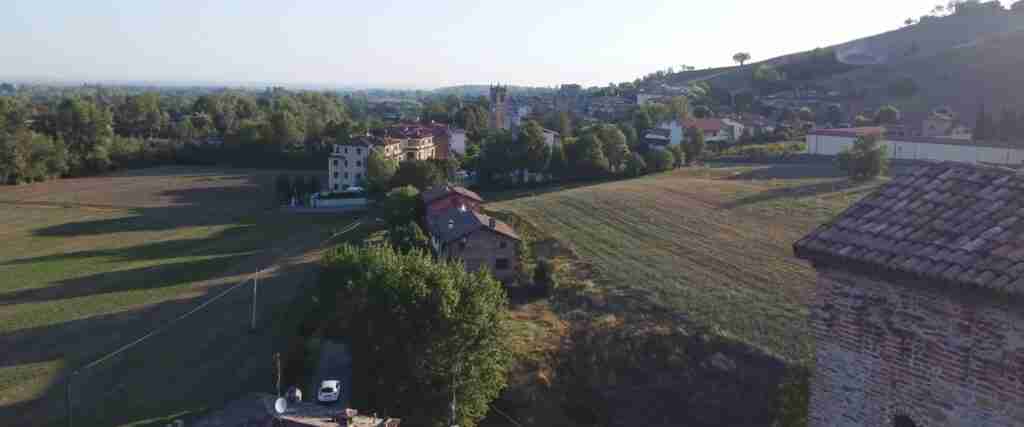
Maranello sits 16 kilometres south of Modena, at the precise threshold between the Po plain and the Tuscan-Emilian Apennine foothills. The town’s origins trace, according to the VisitModena official portal, to the noble Marano family who settled around the year 1000 and built a castle that still stands. Archaeological excavations have pushed evidence of habitation back to the Bronze Age (1800–1000 BCE), placing continuous human settlement across three millennia. This is not countryside waiting to be discovered—it is countryside overlooked by a tourism economy organized entirely around a single brand.
The organizing historical concept for this route is what we call the Canossan Line: the chain of medieval defensive positions associated with the era and geography of Canossa territorial organization across the Emilian foothills, before the Este family consolidated control of the Modena region in the late medieval period. The designation is a travel editorial framing rather than an established historical term. Formigine Castle, 8 km north-west of Maranello, is explicitly documented as having passed from the Canossa family to the Pio di Carpi dynasty, which confirms that Canossa-era control extended through this corridor. Whether the Maranello castle itself was directly Canossa-administered, or operated under a sub-vassalage arrangement common in the period, is not confirmed in the documentation consulted for this guide; what can be said is that the entire fortification corridor through which this route travels reflects the defensive geography that Canossa-era territorial organization established, and that later dynasties—Este, Pio, Farnese—adapted rather than reinvented.
The underlying medieval infrastructure is real and documented. Italian municipal and heritage sources confirm the Maranello, Spezzano, and Montegibbio positions as a sistema di fortificazione—a coherent defensive system built between the 13th and 15th centuries to control the valleys connecting the foothills to the plain. The Fogliano ridge site is specifically listed in the territorial fortification network of Spezzano Castle, alongside Rocca S. Maria, Fiorano, Nirano, and Torre delle Oche. The Witch’s Tower on the Fogliano summit controlled, according to multiple documented sources, the valley connecting Maranello territory with Fiorano—the terrain that battles between the Farnese of Parma and the Este of Modena regularly contested in the 16th century.
What makes this corridor particularly rewarding for 2026 slow travelers is the layering of its appeal over time. The same ridge that gave medieval lords surveillance across the Po plain now gives astronomers a dark-sky observation point above the industrial valley’s light dome. The same water courses that powered medieval mills shape the Tiepido Stream nature trail today. The balsamic vinegar tradition still active in the pentagonal tower of Spezzano Castle uses acetaia barrels aging Traditional Balsamic Vinegar of Modena PDO in a structure whose prison function preceded the Ferrari company by several centuries. The landscape has continued to accumulate layers rather than fossilizing at any single historical moment—which is the defining characteristic of a route worth slow travel.
For 2026 visitors, the practical circumstances are favorable. Accommodation ranges from budget B&Bs in Maranello town to the Maranello Resort Borgo Torre della Montina, a boutique property that integrates the actual 13th–14th century Montina Tower into its historic village complex. Spezzano Castle has maintained free admission across recent seasons. The Witch’s Tower site is open access year-round, with organized astronomical observation events in summer. Rental cars—including EVs—are available from Modena airport or station. The provincial EV charging network in Modena continued expanding through 2025–2026, with over 560 stations documented across the province as of early 2026.
The route covers two stages manageable within a single long day for energetic travelers, or, more rewardingly, spread across two days with an overnight on the ridge or in the valley. Stage 1 follows the Canossan Line upward from Maranello Castle through Fogliano to the Witch’s Tower. Stage 2 descends the Tiepido valley, passes the Montina Tower, and arrives at Spezzano Castle and its documented hydraulic legacy. Together they constitute a coherent landscape narrative: one that begins in the shadow of Ferrari and ends in a tower whose vinegar barrels have been aging for decades longer than the factory has existed.
Planning Your 2026 Route: Essential Logistics Before You Drive
The core circuit covers approximately 20 km of road between Maranello Castle and Spezzano Castle in Fiorano Modenese. Driving time alone is under 45 minutes without stops; meaningful travel time, accounting for site visits and ridge walks, runs between four hours for a compressed single-day outing and two relaxed days for the version this guide is primarily designed around.
Starting point and road classification. Maranello town center is reachable from Modena via the SS12 (Via Giardini) in approximately 20 minutes. From Bologna, allow 40–50 minutes. No direct rail link serves Maranello; travelers arriving by train disembark at Modena Stazione and use a hire car or the SETA bus line covering the Maranello–Fiorano–Sassuolo corridor. The circuit mixes paved SP (provincial) roads with narrow local lanes and intermittent strade bianche—unpaved gravel tracks—on the approach to the Fogliano ridge. A standard hire car navigates all sections in dry conditions. In wet conditions between October and March, the final unpaved approach to the Fogliano summit benefits from higher ground clearance.
Grade profile. Maranello town center sits at approximately 137 metres above sea level. The Fogliano summit reaches approximately 290 metres—a gain of around 150 metres over 4–5 km of climbing road. The gradient is moderate rather than severe, sufficient to affect EV range on the ascent and to reward downhill braking caution on narrow descents. Stage 2 descends from the ridge into the Tiepido valley before a gentler climb to Spezzano at approximately 200 metres. The overall circuit is undulating rather than mountainous, manageable for nearly all vehicle types and—on the Tiepido trail section—for cyclists on standard or electric bikes.
EV planning. Charging points are confirmed in Maranello at Via Carlo Stradi, near the municipality and Piazza Libertà, by the Maranello municipality’s own transport guidance. Multiple Enel X and ENI Plenitude stations operate in Fiorano Modenese. No charging infrastructure exists on the Fogliano ridge or at the Witch’s Tower site. EV drivers should charge to at least 70% before Stage 1; the circuit’s modest total distance means a morning charge at Maranello covers the full circuit comfortably for any EV with a 200 km or greater stated range. Recharging at Fiorano Modenese during Stage 2 restores range for the return to Modena.
Key contacts and verification. Spezzano Castle is managed by the Fiorano Modenese municipality (tel. +39 335 1878970 or +39 335 440372; email [email protected]). The Streghe e Stelle events at the Witch’s Tower are organized by the Municipality of Maranello (tel. +39 0536 240011; comune.maranello.mo.it). The IAT Terra di Motori tourist office in Maranello (Via Dino Ferrari, 43; tel. +39 0536 073036) holds English-language materials covering both stages. Verify all hours and access conditions directly before visiting, as seasonal policies can change.
Single-day versus two-day format. A single-day circuit leaving Maranello by 9 AM reaches the Fogliano ridge by 10:30 AM, descends to the Tiepido valley for a walk by noon, takes lunch in Fiorano Modenese, and completes the Spezzano Castle visit by 4 PM—achievable but compressed. The two-day format uses an overnight on the ridge or at the Montina Tower resort to allow a Streghe e Stelle evening at the Witch’s Tower (where dates align), a morning walk along the Tiepido before heat builds, and a leisurely Spezzano Castle afternoon including the vinegar works tasting. The two-day format is the one this guide is primarily written for.
Stage 1 (2026 Logistics): Tracking the Canossan Line from Maranello Castle to the Fogliano High Outposts
Stage 1 rises from Maranello town through the first scarp of the Apennine foothills to the Fogliano ridgeline, where the surviving evidence of the medieval fortification network reaches its most dramatic form. The driving distance is approximately 5 km; total time with two stops is one and a half to two hours.
Maranello Castle. Begin in the center of Maranello. The castle that the Marano family built around the year 1000 AD still stands at the historic nucleus of the town. It functions primarily as a piece of urban fabric rather than a curated museum complex—there is no ticketed visitor center or formal reception—and its main value for the slow traveler is as a legible marker of the pre-automotive town: the settlement that gave Maranello its name and its first architectural identity, predating the Ferrari factory by nearly a millennium. Walk the historic center, read the surviving medieval structure against its surroundings, and note that the 18th-century Via Giardini—the spine of the modern town—was already threading through a landscape whose defensive logic the Canossa era established. The Archaeological Museum of the district and the local municipal heritage trails offer more formal orientation if required before the ridge ascent.
From a historical perspective, the Canossa connection to the immediate Maranello position is probable rather than definitively documented. The Canossas were the dominant territorial power across much of Emilia-Romagna and northern Tuscany in the 10th–12th centuries. Formigine Castle, 8 km to the north-west, is explicitly recorded as having passed from the Canossa family to the Pio di Carpi dynasty. Whether the Maranello position operated as a direct Canossa possession or under sub-vassalage is not confirmed in available documentation. The fortification corridor this route follows reflects the defensive geography that Canossa-era territorial organization established across the Emilian foothills, and which the Este, Pio, and Farnese subsequently adapted through the late medieval and Renaissance period.
From Maranello Castle, take local roads signposted toward Fogliano di Maranello. This frazione—a hilltop hamlet belonging to the Maranello municipality—sits on the ridge above the town. The approach road climbs steadily, offering progressively expanding views back across the Maranello plain toward Modena and the Po valley. In clear conditions, most reliable from September through November, the plain is legible as far north as the visible horizon, with the Modena Romanesque Cathedral tower—a UNESCO World Heritage Site—identifiable in the distance. The strategic value of the Fogliano position for medieval observers becomes self-evident on this drive.
The road surface transitions from a paved provincial road to a narrower local lane and, in the final approach to the Fogliano summit, may include a short unpaved section depending on which access track is used. A standard hire car navigates this without difficulty in dry conditions; exercise caution with a low-clearance vehicle after rain.
The Fogliano high outposts. Fogliano di Maranello occupies the crest of the first significant ridge south of Maranello town. Medieval defensive strategy in the Emilian foothills consistently exploited positions of this type: elevated enough to see the plain below and the higher valleys above, accessible from established settlements without requiring mountain infrastructure, and close enough to the main population centers to function as first-alert posts in a coordinated warning system. The Italian heritage portal Mondimedievali.net documents Fogliano explicitly as one of the territorial fortification points in the Spezzano Castle network, alongside Rocca S. Maria, Fiorano, Nirano, and Torre delle Oche—confirming that the ridge was formally integrated into the medieval defensive system of the district.
The hamlet itself is small and agricultural in character. Park near the Fogliano village center—spaces are limited, so early arrival on summer weekends is recommended—and walk the short path to the tower site at the summit. The views from this position rank among the most expansive available from the Maranello foothills without ascending to the higher Apennine band. To the north lies the entire Po plain. To the east, the Tiepido valley descends toward the Panaro river. To the south, the first Apennine ridges rise toward Serramazzoni and the Frignano highlands. To the west, the valleys of the Sassuolo and Fiorano ceramic district spread across the foothills. On clear days in autumn, the Dolomite summits are occasionally visible on the northern horizon—a phenomenon specific to post-frontal atmospheric conditions in this season.
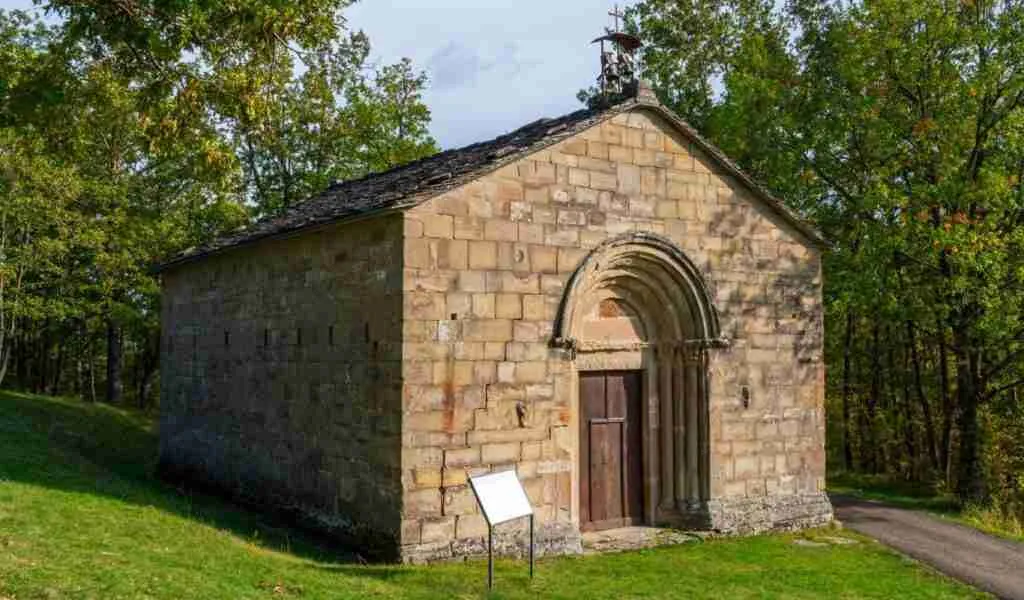
The Witch’s Tower. The Witch’s Tower (Torre della Strega in Italian) is the physical summit of Stage 1. It is the remains of an ancient quadrangular tower measuring approximately six metres per side, currently standing to a height of approximately seven metres—a remnant of what was almost certainly a taller structure. Built between the 13th and 15th centuries, it served as a watchtower and refuge forming part of the coordinated fortification system that included the castles of Maranello, Spezzano, and Montegibbio. Multiple Italian sources confirm its strategic position as optimal for controlling the valley connecting Maranello territory with Fiorano—the terrain that became the contested ground of Este-Farnese territorial conflicts in the 16th century.
The name Witch’s Tower appears in local tradition. No written medieval source identified in the research for this guide explains the name’s origin directly; it likely relates to the tower’s isolated summit position, its silhouette against the open sky, or the folk associations between lonely towers and supernatural presence that appear widely in Emilian rural culture. What is documented is the tower’s later astronomical adoption: the Modena Planetarium identified this ridge site as the optimal observation point for the district and installed two circular platforms adjacent to the ruin for the positioning of optical instruments. The medieval surveillance platform and the modern astronomical platform share the same topographic logic—unobstructed elevation above a light-producing valley below.
Allow 45 minutes to an hour at the Fogliano site: 20 minutes to walk from the parking area to the tower and back, 20 minutes at the tower for views and examination of the surviving masonry, and 15 minutes to explore the hamlet itself. Do not climb on the surviving walls; the medieval masonry is in a state of picturesque but fragile decay. For the Streghe e Stelle evening events, note the assembly point near the tower and the 20:30 start time; the parking and observation logistics are covered in detail in the dedicated section within Stage 2.
Stage 2 (2026 Logistics): Navigating the Tiepido Stream: From the Montina Tower to the Spezzano Hydraulic Networks
Stage 2 descends from the Fogliano ridgeline into the Tiepido valley, pauses at the Montina Tower, follows the stream corridor through the nature trail, and arrives at Spezzano Castle and the documented waterway legacy of the Fiorano Modenese district. The driving distance from Fogliano to Spezzano is approximately 8 km; the stage occupies two to three hours with all stops, more with the full Tiepido trail walk included.
The Tiepido Stream: from Roman thermal legacy to medieval waterway network. The Tiepido—Italian for lukewarm—takes its name from the thermal character of its headwaters. The Maranello tourism portal records that its waters once fed Roman thermal baths at Torre Maina, a locality within Maranello municipality. This detail indexes the valley’s long-term productive importance: streams warm enough to attract Roman investment in thermal infrastructure become, in the medieval period, the same streams whose reliable flow justifies mill construction, canal diversion, and the kind of agricultural intensification that supports a castle economy.
The official planning documentation of the Maranello municipality confirms the dense hydrographic network of the Maranello-Fiorano-Sassuolo district. The primary watercourses include the Tiepido itself, the Fossa di Spezzano—a managed canal distinct from the natural stream—the Grizzaga, the Rio Chianca, the Taglio canal, and the Modena canal. The Tiepido originates in Serramazzoni and traverses much of Modena province before joining the Panaro river near Fossalta. The northern plain in which Maranello and the ceramic district subsequently developed was geologically formed by the alluvial deposits the Tiepido carried down from the foothills across millennia—the physical landscape of the modern Motor Valley is, at its foundation, a product of the water coursing through Stage 2.
Medieval feudal lords across the Emilian foothills managed water not merely for drinking but for powering mills, irrigating agricultural holdings, and maintaining the productive estate economy that financed their castles. Spezzano Castle—the destination of Stage 2—sat at the center of a waterway-organized territory in which the Fossa di Spezzano served as the primary artificial watercourse. The surviving traditional balsamic vinegar works in the castle’s pentagonal tower, still producing Traditional Balsamic Vinegar of Modena PDO in multiple batteries of graduated barrels, is the most legible surviving artifact of that hydraulic economy in the district.
The 8-kilometre Tiepido nature trail near Maranello—documented with access points at Rio Podo, Gorzano, and Pozza—is open to walkers and cyclists. The Maranello tourism portal records orchids, white willows, poplars, and wild cherries alongside the trail corridor, with wildlife including squirrels, hedgehogs, foxes, badgers, and kingfishers. The trail is equipped with picnic tables, barbecue areas, and play spaces—a fully serviced green corridor running directly through Stage 2’s geographic range. Park at one of the three access points on the descent from Fogliano and walk a section of the trail before rejoining the car for the drive to Spezzano; the trail cannot be driven.
The Montina Tower. As you descend from Fogliano and approach the lower valley roads near Torre Maina, follow signs toward the Maranello Resort Borgo Torre della Montina. The resort’s own documentation states that “the Borgo della Montina, home to the ancient Tower, stands as a significant historical testament to a fortified settlement from the 13th–14th century.” This places the Montina Tower in the same construction era as the Witch’s Tower on the Fogliano ridge above—both are 13th–14th century fortified positions on the ridgelines of the Tiepido valley, now integrated into entirely different contemporary uses. Whether the Montina Tower was formally linked to the documented Maranello-Spezzano-Montegibbio fortification system cannot be confirmed from available sources; its position on the lower ridge between town and summit is consistent with the pattern of intermediate defensive posts documented in the broader district.
The resort welcomes non-resident visitors for dining and wine experiences with advance booking; the historic borgo complex and tower exterior are the architectural attraction. For travelers following this guide as a sightseeing route rather than an accommodation itinerary, the Montina Tower is best appreciated by booking a table at the resort restaurant—which places you within the historic village and gives access to the tower’s exterior—or by viewing the complex from the public road approach. Verify booking requirements and opening days directly with the resort before arriving.
From the Montina Tower, continue south on local roads toward Spezzano di Fiorano Modenese. The transition from the valley floor to the lower slopes of the first hill brings you to the castle complex at Via del Castello, 12.
Spezzano Castle and the hydraulic legacy. Spezzano Castle is first documented in 1228 under the name Castro Spezani in the Statutes of the Municipality of Modena, though the Emilia-Romagna castle heritage portal notes that a fortified structure probably existed from at least the 11th century. The castle formed part of the fortified system of the first Apennine hill, and Fogliano—the ridge traversed in Stage 1—is listed in Italian heritage sources as one of the territorial fortification positions in the same network alongside Spezzano and the Rocca S. Maria, Fiorano, Nirano, and Torre delle Oche positions. The two stages of this route are therefore not merely geographically consecutive but historically connected: Fogliano ridge and Spezzano valley castle functioned as components of the same defensive and administrative system.
The medieval fortification was substantially transformed when the Pio di Savoia family acquired it and began converting it into a noble country residence from 1529. The central portion of what visitors see today is a Renaissance porticoed courtyard—the elegant architectural language of the Pio family’s reception ambitions overlaid onto medieval defensive fabric. From the 17th century the castle passed to the Marchesi Coccapani Imperiali, then served as the summer residence of the Conti Pignatti Morano, before the Municipality of Fiorano Modenese acquired it in 1982–1983 and undertook its restoration as a public heritage and museum site.
The Room of Views (Sala delle Vedute) is the castle’s central artistic and documentary achievement. It was frescoed around 1596 by Cesare Baglione—court painter to the Farnese lords of Parma—on commission from Marco III Pio di Savoia, the last lord of the autonomous State of Sassuolo. The fresco cycle depicts 56 to 57 landscape views of the territories under Marco III Pio’s control, covering castles, towers, and villages from the plain to the mountains across five jurisdictions: Sassuolo, Spezzano, Formigine, Brandola, and Soliera. Its documentary value is exceptional: travelers who walk the Fogliano ridge in Stage 1 and then stand in the Room of Views in Stage 2 are seeing the same landscape from both a modern ridge vantage and a 16th-century painted record of it. The towers visible in Stage 1 are among those frescoed in Stage 2.
The Gallery of Battles (Galleria delle Battaglie) on the piano nobile depicts 16th-century military engagements involving Alfonso I d’Este—the “artilleryman duke” of Modena—and the military commanders of the Pio family. This cycle connects the castle directly to the Este-Farnese territorial conflicts whose contested ground included the valley overlooked by the Witch’s Tower. The castle’s frescoes and the ridge’s tower are, from a certain historical angle, both artifacts of the same prolonged dynastic competition.
The pentagonal tower that once housed the castle prison now contains the municipal vinegar works (acetaia comunale). Multiple batteries of traditional barrels age Traditional Balsamic Vinegar of Modena PDO in a production cycle that spans decades. Guided tours of the acetaia with tastings of the product are available by advance booking (tel. +39 335440372 or [email protected]). The juxtaposition—incarceration chamber to aging cellar—is characteristic of how the Emilian castle economy repurposed its infrastructure across centuries rather than abandoning it.
The castle grounds include a romantic 19th-century park with documented picnic tables and barbecue areas. A cycle and foot path leads from the castle grounds to the Salse di Nirano Nature Reserve—a protected geological site containing cold mud volcanoes (salse), one of the rarest geological phenomena in Emilia-Romagna. This extension adds approximately 3–4 km walking each way. The castle ceramics museum, housed in the castle’s ground floor and basement, documents ceramic production from prehistory to contemporary industrial tile manufacture—a reminder that the district’s economic identity has three components: motors, ceramics, and food.
Opening hours have historically run Saturday and Sunday from 3 PM to 7 PM, March to October, and 3 PM to 6 PM in November. Admission has been free. These terms were the confirmed operational standard in recent seasons; verify directly with the castle ([email protected] or +39 335440372) before visiting in 2026. Guided tours on the last Sunday of each month have historically required no booking and began at 5 PM from March to October. Specialist tours—including the vinegar works—require advance booking in all cases.
Strategic Parking and Telescope Observation Protocols at Torre della Strega for 2026 Travelers
The Witch’s Tower at Fogliano di Maranello requires specific logistics for both daytime visits and the evening astronomical events. This section addresses parking, site access, and observation protocols in detail for 2026 visitors.
Parking at Fogliano. Fogliano di Maranello is a small hilltop community with no dedicated tourist car park. Informal roadside parking exists near the village center; the approach road is narrow and lined with hedgerows, making passing difficult when two vehicles meet on the final ascent. For daytime visits, arrive before 10 AM on summer weekends to secure a spot without difficulty. For the Streghe e Stelle evening events, which begin at 20:30, plan arrival by 20:00 to allow time to park and walk to the tower. The municipality advises participants to bring a blanket and a torch (flashlight). Heeled footwear is unsuitable for the uneven ground around the ruin. Events are canceled in bad weather; verify on the day via the Maranello municipality website (comune.maranello.mo.it) or its social media channels.
Walking to the tower. From the parking area near the Fogliano village center, a short path leads to the tower summit—under 500 metres, unpaved, crossing rough grass near the ruin. In summer, long trousers help with vegetation. The site is not fenced or gated; access is open. The surviving medieval masonry is in a state of fragile and picturesque decay. Do not climb on the walls.
The astronomical observation platforms. The Modena Planetarium identified the Fogliano summit as an optimal observation site due to its elevation above the light-pollution dome of the Maranello-Fiorano industrial zone and its unobstructed horizon toward the dark Apennine ridges to the south and the relatively dark Po plain to the north and east. Two circular platforms, documented in multiple Italian news sources covering the Streghe e Stelle events, have been installed adjacent to the tower for positioning portable optical instruments. These platforms are not permanently equipped with fixed telescopes; they are used during organized events by guides bringing portable instruments, and are available to independent observers outside scheduled events.
The site’s sky quality benefits from the elevation differential between the Fogliano ridge and the industrial valley below. A medium-aperture portable reflector (150–200 mm) resolves lunar relief, Saturn’s ring structure, and primary nebulae under summer skies here. Larger instruments benefit from the stable, flat platform surface. Independent observers wishing to use the site outside organized events may do so freely, as access is open. Arriving after astronomical twilight (approximately 22:30 in July at this latitude) and allowing 20 minutes for dark adaptation before observing is standard practice.
The 2026 Streghe e Stelle events. The July 18, 2026 event—confirmed by the municipality and reported by multiple regional outlets as of mid-July 2026—follows the established program: animated storytelling for children aged 3–8 from 20:30 (theme: “Il ritorno degli dèi,” a journey through mythological constellations); snack offered by the Maranello Alpine Club; guided sky orientation and summer constellation mapping from 22:00; guided telescope observation of lunar relief and deep-sky objects from 22:30. The event is free and requires no registration. Additional summer 2026 dates are likely; consult the Maranello municipality events calendar for confirmation. The event is canceled in adverse weather—verify on the day before making the hill ascent.
Independent night-sky planning. Travelers visiting outside organized events should confirm informal parking etiquette with local residents before late-night arrivals. The main competing light sources on the Fogliano ridge are the glow from Sassuolo to the west and Modena to the north; the southern and eastern horizons are considerably cleaner. Summer Milky Way structure is visible to the unaided eye on moonless nights from this site. Moonrise and moonset times for the circuit dates, plus current weather forecasts, are the two variables to check before planning an independent astronomical visit.
Budget Planning for the 2026 Maranello Medieval Road Trip
All daily costs below are per person, per day, for two people sharing accommodation. Accommodation rates are divided by two before being added to individual expenses. All figures are in euros.
Budget tier (agriturismo or B&B, shared car, trattoria dining). Budget accommodation in the Maranello-Fiorano corridor—B&Bs and agriturismi—runs €60–90 per room per night, translating to €30–45 per person when two are sharing. Meals across lunch and dinner at local bakeries and modest trattatorie cost €18–30 per person (breakfast is often included in agriturismo rates). A shared economy hire car split between two adds approximately €23–33 per person per day for the vehicle, plus €4–6 each in fuel for the circuit’s modest distance; total car cost per person approximately €25–40. Site admissions across the circuit are effectively zero—Spezzano Castle has historically been free, the Witch’s Tower site is open access—with €0–8 per person covering optional guided tastings. Low total: €30 + €18 + €25 + €0 = €73, rounded to €75. High total: €45 + €30 + €40 + €8 = €123, rounded to €125. Budget travelers: approximately €75–125 per person per day (two sharing budget accommodation at €60–90 per room).
Mid-range tier (three-star hotel or quality agriturismo, mid-size hire car, sit-down restaurants). Mid-range accommodation in the area runs €100–150 per room, translating to €50–75 per person when sharing. Sit-down trattoria meals with local wine run €35–55 per person. A mid-size hire car with more comfortable seating for ridge roads costs €55–75 per day including the vehicle; fuel and tolls split between two add €12–18; total per person approximately €35–50. Activities such as a guided vinegar tasting at Spezzano or a local food experience add €10–20 per person. Low total: €50 + €35 + €35 + €10 = €130. High total: €75 + €55 + €50 + €20 = €200. Mid-range travelers: approximately €130–200 per person per day (two sharing at €100–150 per room).
Luxury tier (boutique agriturismo resort, premium hire car, restaurant dining). Boutique agriturismo resorts in the Maranello area—including the Montina Tower resort category—run €160–250 per room, translating to €80–125 per person when sharing. Restaurant dining at premium Modenese establishments costs €55–90 per person. A premium or SUV hire car costs €75–120 per day split between two people, with fuel adding €15–25 total; per person approximately €45–75. Private specialist experiences—a private astronomical session at the Witch’s Tower, a private vinegar tour at Spezzano—add €25–50 per person. Low total: €80 + €55 + €45 + €25 = €205. High total: €125 + €90 + €75 + €50 = €340. Luxury travelers: approximately €205–340 per person per day (two sharing at €160–250 per room).
Two-day trip totals per person. Accommodation for two nights, car for two days, meals for two days, and admission costs across tiers: budget travelers approximately €150–250; mid-range travelers approximately €260–400; luxury travelers approximately €410–680.
Money-saving strategies. Spezzano Castle admission has been free in recent seasons; verify before assuming this continues in 2026. The Streghe e Stelle events at the Witch’s Tower are free. Picnic supplies from Maranello’s supermarkets or the Fiorano Modenese market and the Tiepido trail picnic tables reduce meal costs substantially. Modena-based travelers can run the entire circuit as a day trip without accommodation, keeping per-person cost to car hire, fuel, and meals—approximately €40–80 per person for a self-catered day. Driving into Maranello in the off-season (October–April, avoiding Ferrari Museum event weekends) reduces accommodation prices and eliminates the summer competition for ridge parking.
Where to Stay in 2026: Accommodation Along the Medieval Foothills Route
Accommodation distributes across three geographic zones: Maranello town for proximity to Stage 1; the ridge and Torre Maina area for those prioritizing the Witch’s Tower evening events; and Fiorano Modenese or Spezzano for those anchoring on Spezzano Castle.
In and around Maranello. Maranello’s accommodation offer reflects its dual identity as a Ferrari tourism destination and a small Emilian town. The established hotel options include Villa Maranello, Maranello Palace, and Planet Hotel, with B&Bs including Le Bolle and a range of smaller properties. Room prices in the town start from around €80 per room per night, reflecting Motor Valley demand that keeps rates somewhat above the purely rural base, and summer weekends on Ferrari Museum event dates sell out weeks in advance. Travelers combining this route with the July 18 Streghe e Stelle event should book Maranello accommodation at least four to six weeks ahead.
The agriturismo offer near Maranello is well developed. Multiple properties in the Maranello-Fiorano corridor provide the farm-stay experience that pairs naturally with slow travel: Emilian home cooking (tortellini in brodo, gnocco fritto, tigelle), regional wines, and direct access to the foothills tracks. Many include breakfast in the room rate, which reduces the effective daily food cost. The agriturismo.it platform lists properties starting from €80 per room in the immediate Maranello area.
The Montina Tower resort. The Maranello Resort Borgo Torre della Montina, centred on the 13th–14th century Montina Tower and historic village complex, is the accommodation option that most directly integrates the slow-travel itinerary’s theme. Staying here positions you at the valley-ridge transition between Stage 1 and Stage 2, with the ancient tower as your architectural context. The resort offers food experiences, local producer visits, and the historic borgo to explore; for travelers whose primary interest is medieval landscape rather than automotive heritage, the tower is the reason to stay. Prices are at the upper end of the area range; check the resort website directly for 2026 availability, room configurations, and seasonal rates.
In Fiorano Modenese and Spezzano. Fiorano Modenese has several three-star hotels within a 10-minute drive of Spezzano Castle, including Hotel Touring and Hotel Alexander. The Agriturismo Prà Rosso in the Fiorano Modenese area is listed on regional agriturismo networks and offers proximity to both Spezzano Castle and the Salse di Nirano Nature Reserve. B&B Smile in Fiorano Modenese, located 5 km from the Ferrari Museum and 18 km from Modena, reports strong guest ratings on major booking platforms and provides a practical mid-point base between Stage 1 and Stage 2 sites.
In Modena (day-trip base). Modena city, 16–20 km from Maranello, offers the widest accommodation range in the area, from budget rooms near the station to luxury five-star properties in the historic center. Travelers who prefer Modena’s UNESCO-listed piazza complex, its Michelin-starred restaurant culture, and its wider museum offering can use the city as a base and drive the medieval foothills circuit as a day excursion, returning to Modena in the evening. The SS12 (Via Giardini) makes the drive direct and easy in under 25 minutes.
Low-Carbon Driving and Topological Grade Tracking for 2026
The Maranello foothills circuit has a manageable carbon footprint by any standard, and several configurations reduce or eliminate car use on specific sections.
EV and hybrid hire cars. EV hire options are available from major hire companies at Modena Stazione and Modena Airport. The provincial charging network in Modena continued expanding through 2025–2026, with over 560 stations documented across the province as of March 2026. EV charging in Maranello is confirmed at Via Carlo Stradi near the municipality; multiple Enel X stations operate in Fiorano Modenese. The circuit’s 20 km total driving distance is well within the single-charge range of any current EV with 200 km or greater stated range, provided it begins Stage 1 with adequate charge.
Grade profile and range planning. The Stage 1 ascent from Maranello town (approximately 137 m elevation) to the Fogliano summit (approximately 290 m) involves approximately 7–9% gradients on sections of the ridge approach. On a typical EV, climbing 150 metres over 4–5 km at 30 km/h consumes roughly 1–1.5 kWh above flat-road equivalent—not materially significant for most EVs but relevant if the vehicle begins the ascent with low remaining range. Regenerative braking on the descent partially restores this energy. The topographical profile of Stage 2—a moderate descent from 290 m to the valley at around 100 m, then a gentle climb to Spezzano at approximately 200 m—is favorable for regenerative recovery. Overall, the circuit favors EVs in its topographic profile more than most Apennine routes.
Strade bianche access conditions and grade consequences. The unpaved strade bianche on the Fogliano ridge approach present specific conditions that affect all vehicle types. Dry summer gravel is loose on the surface and can cause oversteer at speed; reduce speed to 15–20 km/h on unpaved sections. Winter mud (November–March) can challenge standard vehicles with low clearance. The gradient on some unpaved sections is steeper than the paved approach; engine braking on descent is preferable to heavy application of brakes, particularly in a loaded vehicle. EV drivers should note that regenerative braking is effective on these sections and reduces the pad wear associated with conventional braking on rough downhill surfaces.
Alternative low-carbon modes. The Tiepido Stream cycle and walking trail eliminates the car entirely for Stage 2’s most rewarding 8 km. E-bike rental in Maranello allows the Fogliano ridge ascent without a car; the 150-metre elevation gain is challenging but achievable on a modern e-bike in eco mode. SETA buses connect Modena to Maranello and Fiorano Modenese on weekday schedules; weekend services are reduced and do not serve the Fogliano ridge. A minimal-carbon day circuit is feasible: bus from Modena to Maranello, walk or e-bike to Fogliano, walk the Tiepido trail, bus back from Fiorano Modenese. This requires an early start and a full long summer day but represents the lowest-impact option for the complete circuit.
Seasonal Considerations for the 2026 Maranello Medieval Road Trip
Spring (April–June). The optimal season for the Tiepido nature trail: wildflowers including documented orchids line the stream corridor from April onward. Temperatures are comfortable (15–24°C), light is clear, and the hills are at their greenest. Spezzano Castle’s weekend schedule resumes in March and is fully operational by April. The ridge approach is accessible in standard shoes. Late May and June extend daylight into the evening, meaning the Fogliano viewpoint can be experienced in golden evening light before returning to the valley for dinner. Accommodation in the area is available at lower rates than summer peak, and the roads are free of the Motor Valley tourist traffic that builds in July and August.
Summer (July–August). The Streghe e Stelle astronomical events at the Witch’s Tower run in summer—the defining unique offering of the season on this route. The confirmed July 18, 2026 event is followed by at least one further date expected in August; check the municipality’s calendar. Daytime temperatures on the exposed Fogliano ridge reach 32–35°C in August; begin Stage 1 before 9 AM or after 4 PM. The Tiepido trail is shaded in sections and remains walkable in early morning hours. Ferrari Museum event weekends in Maranello drive accommodation occupancy to near-capacity; book four to six weeks ahead for July and August stays.
Autumn (September–October). The most rewarding season for an unhurried circuit. Temperatures drop to 16–24°C, harvest activity begins in the vineyards and on farms surrounding the route, and the balsamic vinegar acetaia at Spezzano Castle is most evocative in the season when new batches enter the aging barrels. The Fogliano ridge views are at their clearest in October, with the late-season atmospheric quality producing the longest sight lines across the Po plain. The Tiepido trail retains its wildlife character through October; autumn color enters the first-hill vineyards and hedgerows. Spezzano Castle’s Saturday-Sunday visits continue through November.
Winter (November–March). Spezzano Castle reduces its schedule through December–February; check directly before visiting. The Fogliano ridge approach may be impassable in mud after rain, and the Witch’s Tower site is exposed to cold Apennine wind. However, winter offers something the other seasons do not: completely uncrowded roads, empty hamlets, and the clearest atmospheric conditions of the year on the ridge. A dry, post-frontal winter day in January or February produces views from Fogliano across the plain to the Alps—a panorama not available through the summer haze. Independent night-sky observation at the Witch’s Tower benefits from early astronomical twilight and long dark hours. The Tiepido trail is walkable year-round but muddy after rain. Winter is best suited to experienced travelers who verify road and site conditions before departing.
Practical Tips for 2026 Road Trippers in the Maranello Foothills
Navigation. Standard navigation apps (Google Maps, HERE) cover all paved roads on the circuit. Enter “Fogliano di Maranello” as the destination for Stage 1’s hilltop hamlet rather than attempting to navigate directly to the Witch’s Tower, which may not appear reliably in all apps. Once in the hamlet, the tower is visible from the upper road. For Stage 2, “Spezzano, Fiorano Modenese” or the castle address (Via del Castello, 12) navigates correctly in all major apps.
Language. Fogliano di Maranello has no tourist infrastructure, no café, and no English-language signage. Spezzano Castle staff speak Italian; limited English is available at the tourist information office. The IAT Terra di Motori office in Maranello (Via Dino Ferrari, 43; tel. +39 0536 073036; [email protected]) provides English-language circuit materials and is the primary resource for English-speaking visitors.
Photography. The Fogliano ridge produces best light in the late afternoon, when the Po plain below enters shadow and the ridge itself remains lit. For the Witch’s Tower, blue-hour images taken immediately after sunset show the ruin against a fading sky with the city-glow of Maranello and Fiorano in the background. Spezzano Castle’s Room of Views requires available-light technique—a tripod and ISO adjustment—as flash photography is prohibited in the fresco rooms. The ochre tones of the Cesare Baglione frescoes are richest in late afternoon light through the south-facing windows. The Tiepido trail offers wildlife photography opportunities along the stream corridor in early morning, before the heat builds and bird activity reduces.
Food and drink on the circuit. There are no restaurants or bars in Fogliano di Maranello. Pack picnic supplies from Maranello or Fiorano Modenese before the ridge ascent. Picnic tables are documented at both the Tiepido trail and the Spezzano Castle park. Fiorano Modenese town center has bars, pasticcerias, and trattatorie within five minutes of the castle. The regional table in the Maranello-Fiorano area is Emilian in character: tortellini in brodo, tigelle with cured meats and squacquerone cheese, gnocco fritto, Lambrusco, and the local balsamic vinegar in its aged form as a finishing condiment rather than a salad dressing.
What not to expect. This circuit provides no formal museum interpretation of medieval Maranello foothills history at the tower sites; both the Witch’s Tower and the Montina Tower are experienced as landscape elements rather than explained as curated exhibits. Travelers who need interpretive signage and audio guides to engage with historic sites should add Formigine Castle—8 km from Maranello, with a tourist information office, organized visits, a wine bar, and a restaurant—as a complementary stop where formal visitor infrastructure is established.
Combining with broader regional itineraries. The Terre di Castelli network connects 17 fortified complexes in Modena province and naturally extends this circuit. Castelvetro di Modena (wine tourism, Lambrusco Grasparossa), Vignola (Rocca di Vignola, cherries), and Spilamberto (castle, balsamic) are all within 20 km of Spezzano Castle. Modena’s UNESCO World Heritage complex—Cathedral, Ghirlandina Tower, and Piazza Grande—is 20 minutes north. The Salse di Nirano Nature Reserve is reachable on foot from the castle grounds. This is a landscape with enough genuine content to sustain three or four days without exhausting it.
Frequently Asked Questions
Is the Witch’s Tower open to visitors year-round in 2026?
The Witch’s Tower site on the Fogliano di Maranello ridge is open access year-round—no gate, no ticket, and no staffed entrance. Visitors walk to the ruin at any time of day or night. The organized Streghe e Stelle (Witches and Stars) astronomical events run in summer only, typically Saturday evenings in July and August; the 2026 edition on July 18 is confirmed by the Municipality of Maranello, with further summer dates expected. Independent visitors may use the two astronomical observation platforms adjacent to the tower outside scheduled events, bringing their own equipment. Winter visits are possible but require warm clothing for exposed ridge conditions and appropriate footwear for potentially muddy paths.
Do I need to book Spezzano Castle visits in advance in 2026?
Standard weekend visits—Saturday and Sunday, 3 PM to 7 PM from March to October—have historically operated on an entry-shift basis of up to 15 visitors per slot without advance booking. The free guided tour on the last Sunday of each month (5 PM, March to October) also requires no reservation. However, specialist tours including the traditional balsamic vinegar works in the pentagonal tower require advance booking in all cases: tel. +39 335440372 or email [email protected]. Group visits outside the standard schedule always require booking. Given the 15-visitor-per-shift capacity, arriving at or shortly after 3 PM on busy summer weekends is advisable. Verify current hours and booking requirements directly with the castle before your 2026 visit, as policies may be updated.
What is the best route for EV drivers doing the Fogliano ridge approach in 2026?
Charge to at least 70% at one of the Maranello charging stations (Via Carlo Stradi, near the municipality) or in Fiorano Modenese before beginning Stage 1. The Fogliano ascent adds approximately 150 metres of elevation over 4–5 km; this consumes roughly 1–1.5 kWh above flat-road equivalent in a typical EV. Regenerative braking on the descent partially recovers this energy. The full two-stage circuit is approximately 20 km of driving—well within single-charge range for any EV with a 200 km or greater stated range when started from a morning charge. No charging is available on the Fogliano ridge or at the Witch’s Tower site. Top up at Fiorano Modenese or Sassuolo after Stage 2 for a comfortable return to Modena.
Can I walk from Spezzano Castle to the Salse di Nirano Nature Reserve in 2026?
Yes. A dedicated pedestrian and cycle path documented in municipal tourism materials leads from the Spezzano Castle grounds to the Salse di Nirano Nature Reserve, approximately 3–4 km each way across relatively flat to gently undulating terrain. The salse—cold mud volcanoes and one of the rarest geological phenomena in Emilia-Romagna—are free to visit and the reserve is open year-round. Allow 1.5–2 hours for the round trip on foot, more if you explore the reserve itself. The path can be muddy between November and March; check conditions before departing in winter months. The cycle path from the castle grounds also connects to broader cycling infrastructure in the Fiorano Modenese district.
What is the Room of Views at Spezzano Castle, and why visit it in 2026?
The Room of Views (Sala delle Vedute) is the artistic and cartographic centrepiece of Spezzano Castle. Frescoed around 1596 by Cesare Baglione—court painter to the Farnese lords of Parma—on commission from Marco III Pio di Savoia, it presents 56 to 57 landscape views of the territories under Marco III Pio’s control: castles, towers, villages, and hills from the Po plain to the Apennine range across five historic jurisdictions. Its documentary value for travelers following this route is direct: the medieval fortification positions crossed in Stage 1—the Fogliano ridge, the Maranello castle zone—are among the territories depicted in Baglione’s fresco cycle. Standing in the Room of Views after driving the circuit amounts to seeing the same landscape as both physical experience and 16th-century painted inventory simultaneously. The frescoes require available-light photography (tripod recommended; flash prohibited) to capture their ochre and terra-cotta palette fully.
When is the Streghe e Stelle astronomical event at the Witch’s Tower in 2026?
The first confirmed 2026 Streghe e Stelle (Witches and Stars) event at the Witch’s Tower on the Fogliano di Maranello ridge takes place on Saturday, July 18, 2026, organized by the Municipality of Maranello. The program begins at 20:30 with animated storytelling for children aged 3–8 (2026 theme: a journey through mythological constellations), followed by a snack provided by the Maranello Alpine Club. Guided sky orientation and summer constellation mapping run from 22:00. Guided telescope observation of lunar relief, Saturn, and deep-sky objects follows from 22:30. The event is free; no booking is required. Additional summer 2026 dates are likely in July or August; consult the events calendar at comune.maranello.mo.it. The event is canceled in adverse weather—verify on the day before making the ridge ascent.
How does the Montina Tower connect to the wider 2026 road trip circuit?
The Montina Tower—the 13th–14th century fortified structure at the Maranello Resort Borgo Torre della Montina—occupies the topographic position between Maranello town and the Fogliano ridgeline that Stage 1 of this circuit crosses. Its chronological range (13th–14th century) aligns it with the Witch’s Tower on the ridge above (13th–15th century), placing both within the same era of intensive foothill fortification building documented across the Maranello-Spezzano-Montegibbio corridor. Whether the Montina Tower was formally part of the same defensive network as the other three castle sites in this circuit cannot be confirmed from available sources; its position as an intermediate fortified post between valley floor and ridge summit is consistent with the general defensive logic of the district. For 2026 travelers, the Montina Tower is most practically experienced by booking accommodation or a dining experience at the resort, which provides access to the historic borgo complex and the tower exterior.
Is there a connection between Maranello Castle and the Canossa dynasty for 2026 visitors to understand?
A direct, documented link between Maranello Castle specifically and the Canossa dynasty has not been established in the sources consulted for this guide. What is confirmed is that the Canossas were the dominant territorial power across much of this region during the 10th–12th centuries, and that Formigine Castle—8 km from Maranello—is explicitly recorded as having passed from Canossa control to the Pio di Carpi family. The Marano noble family who built Maranello Castle around 1000 AD operated within the broader Canossa territorial framework of the period; whether as direct vassals or under looser overlordship arrangements is not confirmed by current documentation. The “Canossan Line” framing in this guide is a travel editorial concept describing the chain of foothill fortifications associated with the era and geography of Canossa territorial organization, not a claim that all sites were directly administered by Canossa lords.
Should I plan one day or two days for this medieval road trip circuit in 2026?
Two days is the recommended format for the experience this guide is designed around. A one-day circuit—leaving Maranello by 9 AM, ridge by 10:30 AM, valley walk at noon, Spezzano Castle by 2 PM, return by 5 PM—is achievable but gives each site approximately one hour and leaves no time for the vinegar works tasting, a full Tiepido trail walk, or an unhurried lunch. The two-day version uses an overnight on the ridge or in the valley to allow a Streghe e Stelle evening at the Witch’s Tower (where dates align with July 18 or subsequent summer events), a dawn walk along the Tiepido trail before the heat builds, and a full Spezzano Castle afternoon including the Room of Views, Gallery of Battles, and vinegar works. The two-day format is also financially efficient: mid-range accommodation for one night adds approximately €50–75 per person to the total cost, while the experience it enables—a dark-sky evening at a medieval tower—is otherwise unavailable on the single-day schedule.
Are there family-friendly elements on this route in 2026?
Several elements of the circuit are well suited to families with children. The Streghe e Stelle events at the Witch’s Tower explicitly target children aged 3–8 in the storytelling session (20:30), with the telescope observation following for older children and adults from 22:30—making the July 18, 2026 event one of the best free family astronomy experiences in the Modena area this summer. The Tiepido Stream nature trail works well for families with children aged 5 and above, with picnic tables, barbecue areas, wildlife spotting opportunities, and a documented trail surface appropriate for older children in robust shoes. Spezzano Castle’s park provides a family-friendly outdoor environment around the castle complex, and the ceramics museum inside the castle can engage children interested in materials and craft processes. Formigine Castle, 8 km from Maranello, has more formal family programming and is an established children’s cultural venue. The unpaved path to the Witch’s Tower itself is not pram-accessible; families with very young children should plan the ridge visit as a walking excursion for mobile children only.