
Cagliari Best Tours & Walking Routes 2026: Secret Spots & Lesser-Known Treasures
Cagliari rewards walkers in a way few Mediterranean capitals can match. Spread across seven hills above the Gulf of Angels, Sardinia’s capital packs four distinct historic quarters — Castello, Marina, Stampace, and Villanova — into a compact, largely pedestrian-friendly core where every alley turns a corner onto something unexpected. This guide covers every walking route and tour option available in 2026, from free tip-based tours to boat excursions and day trips to UNESCO-listed nuragic ruins, with verified prices throughout so you can plan with confidence.
Key Takeaways
- Free English-language walking tours of the historic centre depart from Yenne Square (Piazza Yenne) on Wednesdays, Fridays, and Sundays at 10:00am on a tip-based model; advance booking is mandatory via freetourscagliari.com.
- Small-group guided walking tours run €20–35 per person for a two-to-three-hour circuit; food tours with the Do Eat Better operator cost approximately €70 per person and cover multiple tasting stops across three hours.
- San Benedetto Market has been closed for a major renovation since March 2025 and will not reopen at its historic address until approximately July 2027. The temporary replacement market operates at nearby Nazzari Square (Piazza Nazzari) and is open Monday to Saturday, 7:00am to 2:00pm (Saturday until 3:00pm).
- The National Archaeological Museum of Cagliari (Museo Archeologico Nazionale) charges €10 for a full ticket covering both the museum and the Pinacoteca; entry is free on the first Sunday of every month. The Roman Amphitheatre charges €3 (full) or €2 (reduced), and a combined weekly ticket covers several Cagliari monuments at once.
- Budget self-guided walking days cost €50–90 per person daily (two sharing budget accommodation); mid-range days that include a guided group tour run €115–165 per person daily; premium days combining a private walk and food tour reach €240–310 per person daily — all assumptions include accommodation per Section 7.1 standards.
- Boat tours to the Devil’s Saddle (Sella del Diavolo) leave from Cagliari’s marina throughout the spring-to-autumn season at €55–60 per person for a three-hour shared excursion; guided day trips to the UNESCO-listed Su Nuraxi nuragic complex at Barumini cost approximately €105–115 per person and include transport from Cagliari.
People Also Ask About Cagliari Tours 2026
What are the best walking tours in Cagliari in 2026?
The free walking tour departing from Yenne Square on Wednesdays, Fridays, and Sundays at 10:00am is consistently rated the strongest introduction to the city — it covers the Castello quarter, the Bastion of Saint Remy, and the Cathedral, with a local guide sharing stories about Cagliari’s Pisan, Aragonese, and Piedmontese past. For something more tailored, private custom walking tours start from around €50 per person for a two-hour circuit and allow you to specify which neighbourhoods or themes — photography, street food, archaeology — you want to prioritise. If you want the city’s hidden underground layer, dedicated archaeology tours combine the Roman Amphitheatre, the Crypt of Santa Restituta, and the Sant’Eulalia underground area in a single walk.
How much do guided tours of Cagliari cost in 2026?
Guided tour costs in 2026 range from tip-based (free-tour model) up to around €115 per person for a premium small-group food-and-wine excursion to a winery in the Parteolla wine region. The most popular options sit in the middle: small-group walking tours of the historic centre run €20–35 per person for two to three hours; city tours combining a minivan and on-foot walking run €80–90 per person for three to four hours; the Do Eat Better food tour in the Marina and Stampace quarters costs around €70 per person and includes a full sequence of tastings. Boat tours to the Devil’s Saddle run €55–60 per person for a three-hour shared excursion with snorkelling gear provided. Check booking platforms such as Viator or GetYourGuide for current rates, as prices adjust seasonally. Budget self-guided days without a guide cost €50–90 per person daily (two sharing accommodation); mid-range days with a group tour run €115–165 per person daily.
What hidden spots can I discover on foot in Cagliari in 2026?
The most rewarding off-circuit discoveries in 2026 are concentrated in three areas. In Stampace, the Crypt of Santa Restituta — an underground cave reused as a wartime air-raid shelter and now an archaeological and religious site — sits almost invisible behind its street entrance. Just west of the Castello, the Tuvixeddu Necropolis, widely considered one of the largest Phoenician-Punic burial grounds remaining in the Mediterranean, is free to enter and sees a fraction of the visitor numbers of the main hilltop. On the heights above Poetto Beach, the ruins of Saint Ignatius Fort offer arguably the finest sunset panorama in the city, with almost no crowds. In Villanova, the artisan quarter and the Basilica of San Saturnino — reputedly among the oldest early Christian churches in Sardinia — are easily missed by anyone following the standard Castello circuit.
How many days do you need to explore Cagliari’s walking routes in 2026?
Two full days cover the Castello, Marina, Stampace, and Villanova quarters on foot, with time for the Bastion of Saint Remy, the National Archaeological Museum, and a coastal walk to the Molentargius-Saline Regional Park flamingo area. A third day opens up boat tours to the Devil’s Saddle or the Tuvixeddu hidden circuit. Anyone wanting a day trip to Su Nuraxi at Barumini or to the Nora archaeological site needs a fourth day. For walkers who want to explore all four historic quarters in genuine depth — including the underground crypt circuit, the botanical garden, and a food tour — a five-day Cagliari stay delivers the most satisfying pace.
Extended multi-day tours – 5+ days
Featured Sardinia Multi-Day Tour Packages
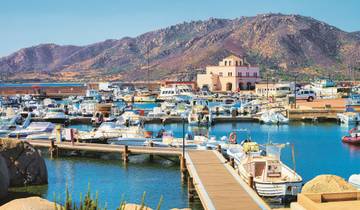
8 days
Best of Sardinia, Self-Drive
- ✓ Comprehensive Sardinia tour
- ✓ Expert local guides included
- ✓ All accommodation arranged
- ✓ Transportation provided
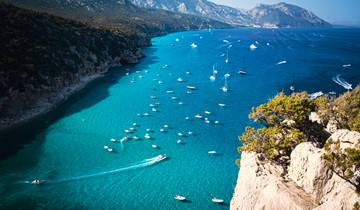
7 days
Active Sardinia: Coast & Coves
- ✓ Comprehensive Sardinia tour
- ✓ Expert local guides included
- ✓ All accommodation arranged
- ✓ Transportation provided
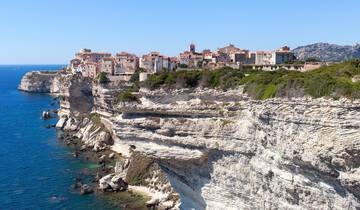
7 days
7 Days Gran Tour of Sardinia and Corsica from Olbia
- ✓ Comprehensive Sardinia tour
- ✓ Expert local guides included
- ✓ All accommodation arranged
- ✓ Transportation provided
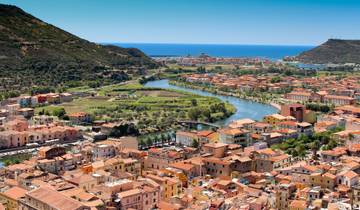
7 days
Best Journey of Sardinia – 7 Days
- ✓ Comprehensive Sardinia tour
- ✓ Expert local guides included
- ✓ All accommodation arranged
- ✓ Transportation provided
Multi-day tour packages powered by TourRadar. Prices and availability subject to change.
Discovering Cagliari on Foot in 2026: The City Made for Walking
Cagliari is, at its core, a vertical city. The Castello quarter sits on a limestone plateau some 90 metres above sea level, ringed by medieval walls and looked down from by two Aragonese watchtowers. From that hilltop, the city drops through four historic layers — Castello, then Stampace and Villanova on the slopes, then La Marina along the port — before flattening out into the broad sweep of Poetto Beach. Each layer has a distinct character, a different pace, and a different set of discoveries for walkers who leave the main tourist circuit.
The practical conditions for walking in 2026 are excellent. The historic core is compact: walking from Yenne Square to the far end of Villanova takes under thirty minutes at a gentle pace, and the hills, while real, are served by lifts (ascensors) at several points on the Castello perimeter for anyone who prefers to save their legs for exploring rather than climbing. The city’s urban tram and CTM bus network covers the wider city quickly and cheaply, making it easy to reach the Botanical Garden, the Tuvixeddu Necropolis, or Poetto Beach from the centre without needing a taxi.
One important 2026 planning note upfront: the San Benedetto Market, long the centrepiece of any food-focused walk in the city, is closed for a €30 million-plus renovation until approximately July 2027. Its operators have relocated to a temporary covered structure at Nazzari Square, near the Teatro Lirico, open Monday to Saturday from 7:00am. This is covered in full in the food tours section below, but knowing it early prevents the disappointment of walking to the old address and finding a construction hoarding.
The walking routes described in this guide fall into four practical categories: the historic quarter circuits (primarily free), the guided tour options (tip-based to around €90 per person), the hidden gems and archaeological routes (mostly free or low-cost), and the coastal and day-trip excursions (€50–115 per person depending on format). Each section below is self-contained so you can plan individual days without reading the whole guide.
Castello District Walking Routes 2026
The Castello quarter is the heart of any Cagliari itinerary, and rightly so. Built on the limestone plateau that dominates the city, this medieval hilltop citadel preserves a dense concentration of palaces, towers, churches, and bastions that developed under successive Pisan, Aragonese, and Piedmontese rulers from the 13th century onward. Most visitors arrive via the monumental ramp that leads up from Constitution Square (Piazza Costituzione) to the Bastion of Saint Remy — and that grand entrance sets expectations the quarter consistently exceeds.
The Classic Castello Circuit: Towers, Terraces, and Medieval Lanes
The standard circuit takes between ninety minutes and three hours depending on how many stops you make. From Constitution Square, the double-arched ramp leads up to the Bastion of Saint Remy, a neoclassical terrace built between 1896 and 1902 over the old city walls. The terrace is free to access and delivers panoramic views across the port and the Gulf of Angels — this is the correct starting point for any Castello walk because it also serves as orientation, placing the Marina district directly below you and Villanova immediately to your left.
From the bastion, narrow lanes lead into the quarter’s interior. The Cathedral of Santa Maria, a complex medieval structure that has accumulated Pisan, Aragonese, Baroque, and twentieth-century interventions across several centuries, sits at the highest point of the plateau. Its interior houses what is described in local guides as the Martyrs’ Crypt beneath the main nave — a space worth seeking out if you enter the cathedral itself. Entrance to the cathedral is free; verify any scheduled access changes at the tourist office before planning your visit, as restoration works can occasionally affect specific areas.
Continuing west, Palazzo Square (Piazza Palazzo) is home to the Viceroy Palace, a 14th-century structure that served as the official residence of the Aragonese and, later, Piedmontese viceroys. The building underwent significant work in the 18th century, when the monumental staircase leading to the noble apartments was constructed. Today it houses provincial offices but is open to visitors during certain hours — check cagliariturismo.comune.cagliari.it for current schedules.
Secret Corners of Castello Beyond the Cathedral
Most visitors reach the Cathedral and the two towers, then descend. Staying longer in the interior of Castello reveals a quieter, more lived-in side of the quarter. Via Stretta — the narrowest street in the district — has been partially adorned by residents with potted plants, giving it a charm entirely at odds with its medieval origins. Further into the grid, the Arsenal square at the top of the plateau houses the complex of the National Museums (Cittadella dei Musei), and from the Arsenal courtyard, clear views open toward the Campidano plain inland.
The smaller churches that dot Castello’s lanes are often unlocked in the morning and hold decorative programs — carved stone portals, gilded altarpieces — that see almost no visitors. The wander between them is free and gives a sense of the quarter’s layered history that a single guided stop at the Cathedral cannot reproduce. Particularly worth the five-minute detour: the loggia at the top of the Sperone Rampart, accessible from the city walls circuit, which delivers a view northward that the standard bastion terrace does not cover.
The Elephant Tower and Saint Pancrazio Tower
The two towers that punctuate Castello’s walls were built at the beginning of the 14th century under Aragonese rule and were designed as defensive gateways controlling access to the citadel. The Elephant Tower takes its name from a small carved elephant on its northern face — this is a detail easy to miss from street level but visible if you know to look for it. The Saint Pancrazio Tower, at the northern edge of the plateau, tends to draw far fewer visitors than the Elephant Tower despite offering equally striking views from its upper platform.
Both towers are included in the combined municipal monuments ticket, which also covers the Roman Amphitheatre, the Crypt of Santa Restituta, the Viper’s Cave, and other Cagliari heritage sites, valid for seven days. Check current pricing at monumenticagliari.it and the official tourism portal cagliariturismo.comune.cagliari.it, as individual and combined ticket rates may be updated. As of mid-2026, the Elephant Tower’s individual entry fee forms part of this combined ticket structure.
Marina, Stampace, and Villanova: Three Quarter Walking Experiences in 2026
The three quarters at the foot of Castello occupy a loose triangle between the harbour to the south, the Castello hill to the north, and the modern city centre to the west. They are entirely walkable from one another but each delivers a distinct atmosphere — Marina is cosmopolitan and lively; Stampace is working-class and slightly underground in character; Villanova is artisan and, in recent years, distinctly fashionable among young Cagliaritans.
La Marina District: Port Alleys and Seafront Terraces
La Marina stretches along the harbour behind the wide colonnade of Via Roma, which runs parallel to the port. Behind Via Roma’s arcaded facade, a tight grid of alleys — largely 19th-century fabric overlaid on much older street patterns — holds the city’s densest concentration of small restaurants, wine bars, and food shops. The morning walk along Via Sardegna and the cross streets parallel to the port captures the quarter at its most local: grocers arranging their produce, baristas pulling espresso at marble counters, residents moving between shops with no particular urgency.
The Sant’Eulalia Archaeological Area, accessible from the church of the same name near Via Manno, offers something entirely unexpected: Roman Cagliari revealed beneath the floor of a medieval church. Discovered casually during construction works in the 1990s, the underground area preserves a Roman street, the remains of a small temple, and residential structures. Admission is charged separately; verify current hours and pricing at the church entrance, as opening times are limited and may require prior arrangement. This is one of the more unusual discoveries available in the Marina quarter and rarely appears on standard tour itineraries.
Stampace: Hidden Courtyards and Underground Cagliari
Stampace occupies the hillside immediately west of Castello and is, in many respects, the most historically layered of the four quarters — and the least polished for visitors, which is a large part of its appeal. Walking along Via Azuni or through the alleys off Via San Michele, you encounter Baroque church facades in various states of preservation, small votive shrines set into building walls, and the stone troughs of old wash houses that serve as a reminder of the quarter’s working-class origins.
The quarter’s most extraordinary discovery for walkers is entirely underground: the Crypt of Santa Restituta, a natural cave that functioned as a place of early Christian worship and was later repurposed as an air-raid shelter during the Second World War. Its reuse history — sacred space to civilian refuge — is documented on its walls, and the combination of archaeological and modern history makes it one of Cagliari’s most resonant hidden sites. A small admission fee applies; it is also included in the combined municipal ticket for Cagliari monuments. Confirm current opening hours with the monuments office before visiting, as sessions can be limited.
Just beyond Stampace’s northern edge, the Roman Amphitheatre sits at the foot of the Buon Cammino hill — covered in detail in the archaeological routes section below. The Capuchin woods (Bosco dei Cappuccini), a small green belt between Stampace and the amphitheatre, offers a pleasant connecting walk with benches and shaded tables that locals use for picnics.
Villanova: Cagliari’s Least-Touristy Historic Quarter
Villanova has changed considerably in character over the past decade. Once primarily residential, it now houses some of Cagliari’s most interesting bars, small restaurants, and artisan workshops — and it remains notably less visited than Castello or Marina. The quarter’s street grid is low-rise and relatively flat, making it one of the easiest areas to walk in the city, and its squares — particularly San Domenico Square (Piazza San Domenico) and San Giacomo Square — have a neighbourhood-level intimacy that larger open spaces elsewhere in the city cannot replicate.
The Basilica of San Saturnino, at the eastern edge of Villanova, is reputedly one of the oldest early Christian churches in Sardinia. Its early Byzantine structure — a domed central plan with attached arms — survives largely intact and is strikingly different from the Baroque overlay that characterises most of Cagliari’s other historic churches. Hours are limited, but the exterior alone is worth the walk. Via San Saturnino, which runs alongside the basilica, has become known locally for its street art installations — smaller-scale than the famous murals of other Sardinian towns, but consistently interesting.
The Public Gardens (Giardini Pubblici), between the Castello’s eastern edge and the Villanova quarter, date from the 19th century and provide a comfortable connection point between the two areas. Inside the gardens is the Municipal Art Gallery (Galleria Comunale d’Arte), Cagliari’s principal civic art collection. Check cagliariturismo.comune.cagliari.it for current opening hours and admission charges.
Guided Walking Tour Options for Cagliari in 2026
Cagliari’s guided walking tour market has matured significantly over the past few years and now covers everything from tip-based free tours aimed at backpackers to premium private circuits with a licensed heritage guide. The sections below lay out each tier with verified pricing.
Free and Low-Cost Walking Tours
The city’s original free walking tour — operated by Free Tours Cagliari and running since before the pandemic — covers the Castello quarter from Yenne Square to the Bastion of Saint Remy, including the Cathedral and the main viewpoints, over approximately two hours. English-language departures run on Wednesdays, Fridays, and Sundays at 10:00am. The meeting point is the obelisk in Yenne Square; guides wear distinctive pink for visibility. Booking is mandatory: reserve via freetourscagliari.com. The tour operates on a pay-what-you-like model, with your payment made directly to the guide at the end of the walk. Reviews consistently describe guides as knowledgeable, conversational, and generous with insider restaurant recommendations beyond the official circuit.
For independent self-guided exploration, Viator and GetYourGuide offer digital audio and written guide packages for Cagliari starting from approximately €8 per person. These cover ten or more monuments at your own pace over a two-to-three-hour window and are a practical option if you are arriving outside free-tour hours or prefer to move without a group. A gamified scavenger-hunt walking guide is also available on the same platforms for approximately €9 per person and introduces puzzles at each monument to make the circuit more engaging for families or couples.
Small-Group Walking Tours: Prices and What to Expect in 2026
The most popular paid format is the small-group guided walking tour, typically capped at eight to twelve participants, covering the Castello quarter over two to three hours. Prices on the main booking platforms run approximately €20–35 per person for group tours; check current rates on Viator (viator.com) and GetYourGuide (getyourguide.com), as these can fluctuate seasonally and individual operators set their own pricing. Tours typically depart from either Yenne Square or from the base of the Castello ramp at Constitution Square.
A distinct and popular variation is the Cagliari Vintage Tour, which conducts the same historic circuit inside a restored 1964 Fiat 1100D — a model small enough to navigate Castello’s narrowest medieval lanes. This tour runs approximately two hours and costs around €75 per person (check booking platforms for current EUR pricing, as the rate quoted in USD on platforms converts approximately at 2026 exchange rates). Reviews describe it as particularly good for visitors who find steep walking difficult, and its novelty makes it a standout experience in a market of walking-only alternatives.
City tours combining a minivan for the hillier or more distant sections with on-foot walking for the old town typically run three to four hours and cost €80–90 per person. These cover a broader geographical spread — often including a stop at Mount Urpinu park for panoramic views, the Roman Amphitheatre, and the Molentargius-Saline Regional Park alongside the Castello circuit — making them a strong option for visitors spending only a day in Cagliari who want to cover both the historic centre and the outer attractions in one outing.
Private Custom Walking Tours
Private tours offer the most flexibility and start from approximately €50 per person for a two-hour walk assuming a party of two (total tour cost approximately €100 for the session, divided between participants). The price rises with duration and group size; an eight-hour bespoke programme for a small group costs considerably more. The advantage is complete itinerary control: a guide briefed in advance can focus entirely on, say, Cagliari’s Aragonese military architecture, or on its Byzantine religious heritage, or on contemporary street art in the Sant’Avendrace neighbourhood — something impossible in a fixed group format. Book private tours through Viator or directly with licensed guides advertising on the platform; verify that guides hold a valid regional tourist guide licence (licenza di guida turistica), which ensures they are authorised to give professional commentary at ticketed heritage sites.
Food Tours and Market Walks in Cagliari 2026
Sardinian cuisine is profoundly regional and, in Cagliari specifically, strongly influenced by the port — fresh fish, bottarga (salted and dried mullet or tuna roe), raw sea urchin in season, and the kind of deep-fried pastry that survives only in cities with a genuine street-food tradition. A food walk through Cagliari covers all of this, but the 2026 visitor needs to know upfront about one significant change to the food map.
San Benedetto Market in 2026: Where to Find It Now
San Benedetto Market — long described as the largest covered market in Italy by floor area and one of the most authentic food destinations in Sardinia — closed on 1 March 2025 for a major renovation project funded in part by Italy’s National Recovery and Resilience Plan (PNRR). The renovation, valued at over €30 million, involves a complete internal reconfiguration including replacement of the floors, structural works, and the addition of a new accessible rooftop terrace. The market is not expected to reopen at its historic address on Via Francesco d’Assisi until approximately July 2027 — timed to coincide with its seventieth anniversary.
In the meantime, approximately 170 market operators relocated to a purpose-built temporary structure at Nazzari Square, in via Santa Alenixedda beside the Teatro Lirico, which opened on 18 March 2025. This temporary market is open Monday to Friday from 7:00am to 2:00pm and Saturday from 7:00am to 3:00pm. It has four entrances — on Via Sant’Alenixedda, Via Cao di San Marco, Parco della Musica, and Via Bacaredda — and is served by CTM bus shuttle services from the San Benedetto neighbourhood. The same vendors who operated at the historic market work at the temporary location, with the same product range of Sardinian fish, produce, cheese, and charcuterie. If a food walk in Cagliari is part of your plan, head to Nazzari Square rather than the original address until at least mid-2027.
Organised Food Tours: What’s Included and What to Pay in 2026
The Do Eat Better Experience food tour is the most consistently reviewed guided culinary walk in the city. It runs three hours, covers the Marina and Stampace quarters on foot, and includes multiple tasting stops at family-owned bakeries, charcuterie shops, traditional restaurants, and historic cafés. Stops have included Sardinian pastries (ricotta-filled desserts, amaretto biscuits), culurgiones (stuffed handmade pasta), fregola (a toasted semolina pasta specific to Sardinia), pecorino sardo, local wines including Cannonau and Vermentino, and a closing espresso at a historic café. The tour operates in English and Italian with other languages available on request; groups are kept small to maintain a personal atmosphere. Pricing runs approximately €70 per person (check current EUR rates at doeatbetterexperience.com or via booking platforms, as the rate is listed in USD on international platforms with a current approximate conversion). The meeting point is confirmed with participants upon booking; note the operational meeting point should be verified directly with the operator as it may have updated since the market relocation.
A separate small-group food and wine tour departing from Cagliari into the Parteolla wine region (the villages of Serdiana, Donori, and Dolianova) covers olive oil mills, cheese dairies, and a winery over three to four hours. This excursion costs approximately €105–110 per person (check current rates on booking platforms) and involves a departure from Cagliari rather than an in-city walk. It is the strongest option for visitors whose primary interest is Sardinian wine and artisanal production rather than urban street food.
Self-Guided Culinary Walks Through the Marina and Stampace
A self-guided food walk through the Marina and Stampace quarters costs next to nothing beyond what you eat and drink. Start at the Yenne Square end of Via Garibaldi in the late morning, when the small grocery shops, pasticcerie, and salumerie open their shutters, and walk east through the Marina grid toward the port. The narrow alleys off Via Sardegna concentrate a greater density of local food shops per block than almost anywhere else in the city. At the port end, the arcades of Via Roma have a number of traditional bars serving the locally beloved pizzetta sfoglia — a flaky pastry topped with tomato and melted cheese that functions as Cagliari’s definitive street snack.
From Via Roma, backtrack into Stampace via Via Azuni to reach the hidden shops and traditional bakeries that the tourist circuit almost entirely bypasses. Stampace’s food culture runs to simpler, older preparations: handmade bread, lamb-based slow-cooked dishes, and the kind of no-menu trattoria that fills at 13:00 with office workers and empties by 14:30. This is not the gastronomic showpiece end of Sardinian cuisine; it is the everyday version, and it is far more interesting for that.
Secret Spots and Lesser-Known Routes Beyond the Historic Core
The concentration of visitors in Cagliari’s Castello quarter — and to a lesser extent the Marina district — leaves large portions of the city almost entirely to its residents. The routes below cover the most rewarding off-circuit discoveries, all of which are accessible on foot from the historic centre within twenty to forty minutes.
Tuvixeddu Necropolis: A Free Walk Through Phoenician History
Tuvixeddu sits on a hillside to the west of Castello, roughly a twenty-minute walk from the historic centre. The site is widely considered one of the largest Phoenician-Punic necropolises surviving in the Mediterranean, covering an original area of some 80 hectares. The name derives from the Sardinian word for “small hole” — a reference to the characteristic pozzetto tomb type, in which the Carthaginian inhabitants of the city dug narrow vertical shafts into the limestone, sometimes three to eleven metres deep, before cutting lateral burial chambers at the base. When Rome took control of Sardinia in the 3rd century BC, the same burial ground continued in use under Roman funerary customs, which is why the site contains strata from two distinct civilisations.
Tuvixeddu is free to enter and open daily from early morning until late evening. Wildflowers and cacti colonise the hillside around the tombs, making it genuinely beautiful in spring. The near-total absence of other tourists gives it a quality of contemplative silence unusual for an archaeological site of this scale. Guided group tours of Tuvixeddu lasting approximately ninety minutes are occasionally available via local operators — search tour platforms for the site by name before your visit. A self-guided circuit through the accessible section takes thirty to forty-five minutes without a guide.
Saint Ignatius Fort Ruins: Hidden Views at Sunset
Perched above the Poetto Beach area on one of Cagliari’s most prominent hills, the ruins of what is called locally the Saint Ignatius Fort (Fortino di Sant’Ignazio) occupy a site with one of the city’s finest sunset panoramas. Construction of the fortification began in the late 18th century, reportedly as part of coastal defence measures during a period of heightened military tension, but the structure was never completed. It later served as a quarantine facility for infectious diseases and was used again for military purposes during the Second World War; what survives today are the partially standing walls and vaulted spaces of this unfinished structure, set on the hilltop above Cagliari’s southern coast. The ruins are free to access and attract mostly local residents rather than tourists. The walk up from the Poetto Beach end is steep but manageable and takes approximately twenty-five minutes from the beach road.
Botanical Garden of Cagliari: Ancient Layers in a Green Setting
The Botanical Garden of Cagliari (Orto Botanico), managed by the University of Cagliari, was first opened in the 19th century and hosts a collection of thousands of plant species, with particular strength in succulents, palms, and Mediterranean coastal flora. What makes it distinctive for walkers interested in more than plants is its archaeological layer: the garden incorporates the remains of a Punic cistern and a Roman quarry that cut into the same hillside centuries later, creating a palimpsest of human use visible alongside the botanical collections. A nominal admission fee applies; verify the current price and opening hours at the University of Cagliari’s botanical garden website (ortobotanico.unica.it) before visiting, as seasonal hours vary and the garden may have restricted access during university exam periods.
Crypt of Santa Restituta: Underground Cagliari in Stampace
Of all Cagliari’s underground discoveries, the Crypt of Santa Restituta in the Stampace quarter is the most emotionally layered. The natural cave has accumulated uses across many centuries — early Christian place of worship, later archaeological site, and, most poignantly, an air-raid shelter during the Allied bombing campaigns of the Second World War. Markings from that wartime period remain visible on the cave walls. The site is open on a limited schedule and may require advance arrangement; it is included in the combined municipal monuments ticket alongside the Roman Amphitheatre, Viper’s Cave, and Elephant Tower. Check current access schedules at monumenticagliari.it.
Archaeological Walking Routes in Cagliari 2026
Cagliari preserves a remarkable density of Roman and pre-Roman archaeology within its urban fabric — not in a dedicated museum park, but woven into the living city. The walk below connects the principal archaeological sites in the order most practical on foot from the Castello side.
The Roman Amphitheatre: Access, Tickets, and Hours in 2026
The Roman Amphitheatre (Anfiteatro Romano) is the most substantial public Roman monument surviving in Sardinia. It sits at the base of the Buon Cammino hill, directly accessible from the Stampace quarter, and is extraordinary in its construction method: rather than free-standing masonry, the structure is largely carved directly into the sloping limestone hillside, with the builders cutting the seating tiers into the rock and using the excavated material to form the arena floor. The amphitheatre probably dates from between the 1st and 2nd century AD, though sources differ on the precise construction period, and in its full capacity it could accommodate approximately 10,000 spectators.
Tickets cost €3 for adults and €2 for reduced-price categories (students under 26, seniors over 65, and groups of at least 15). The combined weekly ticket covering the Roman Amphitheatre alongside the Crypt of Santa Restituta, the Viper’s Cave, the Elephant Tower, the Covered Walkway, and the Sperone Gallery is available at the ticket office and represents good value for visitors planning to cover multiple civic sites over several days. Opening hours: October 1 to April 27, daily 10:00am to 5:00pm; April 28 to September 30, daily 10:00am to 1:00pm and 3:00pm to 7:00pm (ticket office closes 30 minutes before closing time in each session). Note that access to the arena floor is currently restricted due to ongoing restoration works; visitors follow a walkway circuit above the seating tiers. Check cagliariturismo.comune.cagliari.it for updates on access progress and any special evening opening events, as the Municipality has secured funding for broader restoration works.
National Archaeological Museum of Cagliari: Prices and Highlights
The National Archaeological Museum of Cagliari (Museo Archeologico Nazionale di Cagliari), housed in the modern Cittadella dei Musei complex built within the recovered 16th-century Arsenal at the top of Castello, holds a collection of over 4,000 objects spanning approximately 7,000 years of Sardinian history — from Neolithic goddess figurines and nuragic bronze statuettes (bronzetti), through Phoenician and Punic jewellery and ceramics, to Roman sculpture and Byzantine liturgical objects. The combined ticket for the Archaeological Museum and the Pinacoteca (the art gallery in the same complex) costs €10 for the full price and €5 for the reduced rate; EU citizens aged 18–25 pay €2. Entry is free on the first Sunday of every month. The ticket office closes at 18:45; the museum is open Monday to Sunday, 8:30am to 7:30pm. Tickets are also available through the Musei Italiani app and the portale.museiitaliani.it portal.
The collection’s most striking objects are the nuragic bronzes — small figurative sculptures depicting warriors, archers, animals, and ships — and the Giants of Mont’e Prama, fragments of monumental limestone warrior statues recovered from a nuragic burial context in western Sardinia and described by specialists as among the earliest large-scale human sculptures produced in the Mediterranean. These are the museum’s most distinctive holdings and reward close attention; the scale of their hands and faces, apparent only in person, makes photographs misleading about the actual size of the original sculptures.
Villa of Tigellio and the Sant’Eulalia Underground Area
Two further Roman archaeological sites in the city proper extend the walking circuit without requiring a bus or additional transport. The Villa of Tigellio, near the Roman Amphitheatre in Stampace, preserves the ground-floor remains — including several columns still standing above the modern pavement level — of a Roman urban dwelling complex. Sources traditionally associate this structure with Tigellius, a Sardinian musician and poet mentioned by Horace and Cicero in passing references as a figure known in the social circles of the late Roman Republic, though this attribution is conventional rather than epigraphically confirmed. The site is visible at street level without an admission charge.
The Sant’Eulalia Archaeological Area in the Marina quarter, entered through the church of the same name, was discovered accidentally during renovation works in the 1990s and preserves a Roman street, a small temple platform, and residential remains beneath the medieval floor level. This is one of those rare sites where you can walk, in effect, through the successive layers of a city’s occupation without leaving its central district. Admission is charged; opening times are limited and subject to change. Confirm access via the monuments office before planning your visit, as the archaeological area may not be open every day of the week.
Coastal Walks, Devil’s Saddle Trail, and Boat Tours in Cagliari 2026
Cagliari’s southern coast is defined by the Devil’s Saddle (Sella del Diavolo), a dramatic limestone promontory that closes the western end of Poetto Beach. The headland takes its name from its silhouette — a peaked saddle shape visible from almost anywhere in the city. It can be reached by land or sea, with the two routes delivering entirely different experiences.
Devil’s Saddle Overland Trail: The Free Coastal Hike
The overland trail to the top of the Devil’s Saddle headland is free, takes approximately one hour from the western end of Poetto Beach (near the Calamosca area), and rewards walkers with panoramic views back across the gulf, over the flamingo habitat of the Molentargius wetlands, and toward the open sea to the south. The path is rocky and requires appropriate footwear; it is not suitable for sandals. Sections of the trail pass through the Sella del Diavolo protected area, managed by the Cagliari municipality, and the coastline below the cliffs is accessible only by sea — which explains why this section of the coast remains so visually pristine compared with more developed stretches further north. Bring water; there is no shade on the exposed upper sections of the headland.
Poetto Beach Walk and Molentargius-Saline Regional Park
Poetto Beach stretches approximately eight kilometres from the marina area southeast to the base of the Devil’s Saddle. The flat, broad beach promenade is open year-round and is the city’s principal outdoor social space — visited by locals for morning running routes, evening cycling along the seafront path, and beach seasons that run from May to October. The western end of Poetto connects directly to the Molentargius-Saline Regional Park, a wetland reserve that sits between the beach and the urban fabric of Cagliari proper and is home to a resident colony of greater flamingos throughout the year.
The flamingo walk inside the Molentargius-Saline Regional Park is entirely free and follows the perimeter paths of the lagoon system. Flamingos are visible at remarkably close range — the birds are habituated to human presence along the park’s walking and cycling routes — and their numbers vary by season, with larger concentrations typically present in spring and autumn. The park is also a significant migratory stopover for other bird species, making it of interest to birders visiting outside the core summer season. Entry to the park is free; guided ornithology walks are bookable through the park authority for small groups at separately quoted rates.
Boat Tours to Devil’s Saddle: Costs and Operators in 2026
For the coves and sea-level caves that the overland trail cannot reach, boat tours from Cagliari’s marina are the only option. Multiple operators run shared three-hour excursions to the Devil’s Saddle coastline, stopping at coves including Cala Bernat, Cala Fighera, Calamosca, and Cala Paradiso — the last accessible only by water and consistently described in reviews as among the most striking swimming locations on Sardinia’s southern coast. Snorkelling equipment is included in most tours, as is a light aperitivo on board (typically prosecco or beer, local charcuterie, and bread).
Pricing follows a seasonal structure: approximately €50 per person for departures in April and May or October; approximately €55 per person from mid-May to early July and September to mid-October; and approximately €60 per person at peak season from mid-July to mid-September. Check current rates at booking time via sunbonoo.com or the major tour platforms. Boats depart from Su Siccu marina or the tourist port of Marina di Sant’Elmo, both easily reachable from the city centre on foot or by bus. Maximum group sizes are typically ten to twelve passengers, giving these tours a genuinely small-group feel. Booking in advance is advisable from June onward as peak-season tours sell out. Cancellation is possible up to 24 hours before departure for a full refund if weather conditions are unsuitable.
A higher-price private dinghy or sailboat option (approximately €150–250 per couple for a three-to-four-hour private excursion) is available for those who want the same coastal circuit without sharing the boat; check GetYourGuide for current private charter listings.
Day Trips and Excursions from Cagliari in 2026
The countryside within a ninety-minute radius of Cagliari holds some of the most significant archaeological and landscape destinations in the Mediterranean. None of these is reachable by public transport in a practical day-trip format, making organised guided excursions the most efficient option for visitors who are not renting a car.
Su Nuraxi at Barumini: Sardinia’s UNESCO Nuragic Complex
Su Nuraxi, near the village of Barumini in the Marmilla region approximately 65 kilometres north of Cagliari, is the most extensive and best-preserved nuragic complex on the island and has been inscribed as a UNESCO World Heritage Site since 1997. The nuraghe itself — a Bronze Age tower-fortress built using dry-stone technique without mortar, with five large towers arranged around a central keep — dates in its main phases to the Middle Bronze Age (generally placed around the 17th to 14th centuries BC by current archaeological consensus, though the precise chronology remains subject to ongoing research). The surrounding village of circular stone huts, which developed around the nuraghe over subsequent centuries, is among the most complete nuragic village plans surviving anywhere in Sardinia.
Guided day tours from Cagliari to Su Nuraxi cost approximately €105–115 per person and include transport, a guided visit to the UNESCO site, and usually a stop at a local winery in the Marmilla or Barumini area. The total excursion typically runs four to seven hours depending on the operator’s itinerary. For a representative option, the Barumini UNESCO Site and Giara of Gesturi tour adds a visit to the Giara di Gesturi plateau, a basalt highland famous for its colony of small semi-wild horses (cavallini della Giara), making for a richly varied day. Book well in advance from June through September; this is one of the most popular day trips from Cagliari and available slots fill quickly.
Nora Archaeological Site: Ancient City on the Coast
The Nora archaeological site, on a promontory on the southern coast roughly 35 kilometres from Cagliari near the town of Pula, is one of the oldest and best-positioned ancient urban sites in Sardinia. The settlement’s origins are Phoenician — it is associated with some of the earliest Phoenician inscriptions found in Sardinia — and it developed successively under Punic and Roman occupation, leaving visible remains that span several centuries of Mediterranean urban history. What makes Nora distinctive is its setting: the Roman-period remains, including a theatre, thermal baths, and mosaic-floored residential structures, are arranged on a low promontory where the sea has partially reclaimed the outer edges of the ancient city, creating a landscape that is both archaeologically rich and visually dramatic.
Guided day trips from Cagliari to Nora typically cost in the range of €50–70 per person for shared-group formats; pricing varies by operator and whether the tour includes additional coastal stops. Verify current rates and departure times on the major booking platforms. Entry to the archaeological site itself is charged separately at the gate; confirm the current price with your tour operator in advance.
Southern Coast Day Trips: Chia and Costa del Sud
The Costa del Sud, south of Cagliari toward the headland of Capo Teulada, and the beach complex at Chia with its Phoenician tower and dune landscape, represent the strongest half-day or full-day beach and landscape excursion from the city. Organised tours by 4×4 vehicle into the Chia hinterland — covering mountain terrain, coastal viewpoints, and swimming stops — run approximately €90 per person for an eight-hour outing (verify current EUR pricing on booking platforms). These trips combine flamingo-viewing in the coastal lagoons near Chia with hikes along the dune ridges and swimming in coves that are only easily accessible with a vehicle that can handle rough tracks. A dedicated walking tour following a surviving section of Roman road between Santa Margherita di Pula and Chia is also available for groups interested specifically in the ancient road network; check specialist operators on Viator for availability and pricing.
Planning Your Cagliari Tour Costs in 2026
The figures below represent pre-calculated ranges for a full day in Cagliari by experience tier, all expressed per person assuming two people sharing accommodation. Hotel costs are halved to per-person share before summing. All individual attraction charges are as verified in 2026 from official sources; check current official rates before visiting as prices may change.
Budget self-guided walking day: budget accommodation per person (two sharing) €30–45; audio guide app or equivalent €0–8; museum entry (Roman Amphitheatre only) €3, or National Archaeological Museum €10; lunch at local trattoria €12–18; coffee and snacks €4–6; public transport (CTM bus or tram) €1–3. Total approximately €50–90 per person daily (two sharing budget accommodation), including all admissions and meals.
Mid-range guided tour day: mid-range accommodation per person (two sharing) €60–80; small-group guided walking tour of Castello €20–35; National Archaeological Museum full ticket €10; lunch at a Marina or Villanova restaurant €18–28; coffee and snacks €5–8; public transport €2–4. Total approximately €115–165 per person daily (two sharing mid-range hotel).
Premium private tour plus food tour day: upscale accommodation per person (two sharing) €100–140; private custom walking tour, two hours, per person based on two sharing €55–80; Do Eat Better food tour (includes multiple course tastings and wine) €70; drinks and extras €8–12; transport €5–10. Total approximately €240–310 per person daily (two sharing upscale accommodation). Note: the food tour effectively replaces lunch in this scenario, making €70 represent strong value relative to a standalone restaurant meal at a comparable quality level.
Boat tour day: mid-range accommodation per person (two sharing) €60–80; shared boat tour to Devil’s Saddle (3 hours, snorkelling and aperitivo included) €55–60; lunch after the tour €15–25; coffee €4–6; transport €2–4. Total approximately €135–175 per person daily (two sharing mid-range hotel). This is an excellent value-for-experience option for the warmer months.
Su Nuraxi day trip day: mid-range accommodation per person (two sharing) €60–80; guided day trip from Cagliari including transport and guide at the UNESCO site €105–115; additional food and drinks €10–20; coffee €3–5. Total approximately €180–220 per person daily (two sharing mid-range hotel). Most operators include a light lunch or winery tasting in the excursion fee, so the supplemental food cost is modest.
Across all tiers, the first Sunday of the month — when the National Archaeological Museum offers free entry — cuts the mid-range day cost by €10 per person. The combined municipal ticket for multiple Cagliari monuments stretches further value over multi-day visits by covering several sites at once for seven days. Always confirm the ticket price at the on-site box office, as the combined ticket is managed by the municipal monuments authority separately from the national museums.
Seasonal Guide for Cagliari Tours and Walks in 2026
Cagliari’s mild Mediterranean climate makes it one of the longest-season walking destinations in Italy, but the experience varies considerably by month.
April and May are widely considered the most rewarding months for walking. Daytime temperatures are comfortably warm (typically 18–24°C), wildflowers cover the hillsides at Tuvixeddu and around the Devil’s Saddle trail, and the city is not yet under summer visitor pressure. Boat tours to the Devil’s Saddle begin their season in April at the lower price tier (approximately €50 per person). This is also the period of the Sant’Efisio festival, held on May 1st, when the statues of the saint are processed through Stampace to Nora in traditional costume — one of the most significant ethnographic spectacles in Sardinia and extraordinary to encounter on a walking day through the quarter.
June to mid-July is peak condition for coastal walks and boat tours — the sea temperature reaches swimming level, morning heat is manageable, and long evenings allow walking at the most pleasant hours. Boat tour prices move to the mid-season rate (approximately €55 per person). The Castello quarter and guided tours are busy but not overwhelmed; book walking tours two to three days in advance from June.
Mid-July and August bring the hottest conditions and highest visitor numbers. Daytime temperatures regularly exceed 35°C, and walking the hilltop Castello circuit or the overland Devil’s Saddle trail between 11:00am and 4:00pm in August is genuinely uncomfortable. The practical solution is to walk early (before 9:30am) or in the evening (from 6:00pm onward), when the city is at its most social and light conditions are superb. Boat tours are at peak season pricing (approximately €60 per person) and sell out quickly; book these two to three weeks ahead in August.
September and October return excellent walking conditions with lower visitor numbers and sea temperatures still warm enough for coastal swimming through most of September. This is particularly strong timing for the Molentargius-Saline Regional Park, where flamingo numbers typically build through autumn. The food tour and market walk options are fully operational. October marks the end of the boat tour season, with the last departures running to approximately late October depending on weather.
November to March brings Cagliari’s wet season, but the rain comes in intervals rather than prolonged grey periods, and a week in November or February is frequently entirely walkable. Museum visits, the underground crypt circuit, and the archaeological sites are at their least crowded, and the city itself — stripped of summer visitors — operates at a slower, more authentically local pace that many walkers prefer.
Practical Tips for Tours and Walking Routes in Cagliari 2026
Booking and advance planning: Free walking tours require advance booking via freetourscagliari.com regardless of how casual the format appears. Boat tours sell out in peak season; book at least 48 hours ahead from June to September and two to three weeks ahead in July and August. Guided day trips to Su Nuraxi and Nora can be booked on shorter notice outside peak season but should be secured before arrival to avoid disappointment.
Getting around: The CTM urban transport network covers the city with trams and buses. A single ticket (purchased at tabacchi shops or from drivers) gives 90 minutes of unlimited travel for a very low flat fare; multi-day passes are available. The Castello quarter is most easily reached on foot from the Marina district (via the Constitution Square ramp) or by taking CTM bus lines that stop at the lower walls. Taxis are readily available at the port, at Yenne Square, and outside the main hotels; ride-hailing apps are operational in Cagliari, though coverage is less comprehensive than in larger Italian cities.
Walking comfort: Comfortable shoes with some grip are essential for the Castello quarter’s cobbled lanes, the Tuvixeddu hillside, and the Devil’s Saddle overland trail. The Bastion of Saint Remy ramp is accessible in urban footwear; the archaeological and hillside sites are not. Lifts (ascensors) between the Marina district and Castello operate at the Elmas lift near the Elephant Tower entrance; confirm operational hours locally as schedules change seasonally.
Carrying cash: While card payments are accepted at most restaurants and shops in the tourist areas, many traditional food vendors at the temporary Nazzari Square market and some of the smaller Stampace food shops operate on a cash-only basis. The free walking tour guide accepts only cash tip payments at the end of the tour. Withdrawing cash at an ATM before heading to these areas avoids inconvenience.
Language: English is widely spoken in the tourism-facing businesses of the Marina district, the Castello tour operators, and the main museums. Stampace and Villanova operate more entirely in Italian, and the temporary Nazzari Square market is conducted almost entirely in Italian and Sardinian. A few basic Italian phrases (ordering food, asking for directions) go a long way in the less-visited quarters and will be received with genuine warmth by local residents.
Photography and permissions: Photography for personal use is freely permitted throughout the historic quarter exteriors and at the free outdoor sites (Tuvixeddu, Devil’s Saddle trail, Poetto Beach, Molentargius-Saline Regional Park). Interior photography policies vary between museums and churches; confirm at each site. The National Archaeological Museum permits photography without flash in most galleries.
Frequently Asked Questions
Is Cagliari easy to explore on foot in 2026?
Yes, with one qualification. The four historic quarters — Castello, Marina, Stampace, and Villanova — form a compact cluster that most visitors cover comfortably without any transport at all. The main challenge is the Castello quarter’s elevation: reaching it from the Marina involves either a steep climb via the ramp at Constitution Square or a lift (ascensor) at one of the access points on the lower walls. Once inside Castello the ground is largely level. The wider city — Poetto Beach, the Botanical Garden, Tuvixeddu, the Molentargius-Saline Regional Park — requires a CTM bus or a short taxi ride to reach comfortably, but distances are manageable and the bus network covers all these areas.
What is the best starting point for a self-guided walk in Cagliari in 2026?
Yenne Square functions as the practical hub of the city’s walking network. It sits at the junction between the Marina district, the Stampace quarter, and the lower approaches to Castello, making it easy to branch in any direction from a single starting point. The square itself has several pavement cafés ideal for a first coffee, and the obelisk at its centre is the meeting point for the free walking tour. From Yenne Square, it is a five-minute walk to the Constitution Square ramp up into Castello, ten minutes to the port along Via Roma, and fifteen minutes to the Stampace district via Via Azuni.
How much does the free walking tour of Cagliari cost in 2026?
The English-language free walking tour operated by Free Tours Cagliari runs on a pay-what-you-like basis: you pay whatever you consider fair directly to the guide at the end of the two-hour walk. There is no fixed minimum, but a tip in the range of €5–15 per person is conventional for a quality two-hour guided experience. Booking is mandatory via freetourscagliari.com — turn up without a booking and you will not be able to join. Tours in English depart Wednesdays, Fridays, and Sundays at 10:00am from the obelisk in Yenne Square.
What happened to San Benedetto Market and where can visitors go in 2026?
San Benedetto Market closed on 1 March 2025 for a comprehensive renovation — a €30 million-plus project funded partly by Italy’s PNRR recovery funds — and is scheduled to reopen at its original address on Via Francesco d’Assisi around July 2027. During the renovation period, all approximately 170 market operators have relocated to a temporary covered market structure at Nazzari Square in via Santa Alenixedda, beside the Teatro Lirico. The temporary market is open Monday to Friday 7:00am–2:00pm and Saturday 7:00am–3:00pm. The same vendors, the same fresh Sardinian fish, produce, and cheese, and the same atmosphere are present — just at a different address. Do not go to the original Via Francesco d’Assisi building in 2026; it is a construction site.
What is the best food tour in Cagliari in 2026?
The Do Eat Better Experience food tour is the most consistently and highly reviewed culinary walking option in Cagliari in 2026, with thousands of reviews on multiple platforms and an almost uniformly positive response from participants. It costs approximately €70 per person for three hours and covers the Marina and Stampace quarters with stops at a local bakery, charcuterie shop, traditional restaurant (for a pasta course), and historic café. Food is included in the price at every stop and guides are local residents who share personal stories alongside the food explanations. Small group sizes — generally under ten participants — maintain an intimate feel. Book via doeatbetterexperience.com or through major booking platforms; confirm the current meeting point when booking, as logistics may have adjusted following the San Benedetto Market closure.
How do I get to the Devil’s Saddle from central Cagliari in 2026?
For the overland trail, take CTM bus line PF (Poetto bus) from the city centre to the western end of Poetto Beach near Calamosca; from the Calamosca stop, the trail head to the Devil’s Saddle summit is signed and takes approximately one hour on foot (wear grippy shoes; bring water). For the boat tour, boats depart from Su Siccu marina or the Marina di Sant’Elmo tourist port — both accessible on foot from the Marina district in about fifteen to twenty minutes or by bus. The boat option is operationally the more straightforward for first-time visitors; the overland trail is better for those who want a longer, physically engaging walk and clear weather.
What is the combined ticket for Cagliari monuments and what does it cover in 2026?
The combined municipal ticket covers the Roman Amphitheatre, the Crypt of Santa Restituta, the Viper’s Cave (Grotta della Vipera), the Elephant Tower, the Covered Walkway, and the Sperone Gallery — all managed by the Cagliari municipality under the Monumenti di Cagliari authority — and is valid for seven days from first use. This is separate from the national museum system ticket (which covers the National Archaeological Museum and Pinacoteca). Current pricing for the combined ticket is available at monumenticagliari.it and at the ticket office of any participating site; verify before purchase as rates are set by the municipality and may be updated. The combined ticket represents significantly better value than purchasing individual entry to each site and is especially useful for visitors spending three or more days in the city.
Is Su Nuraxi at Barumini worth a day trip from Cagliari in 2026?
Yes, unambiguously — it is one of the most significant prehistoric monuments in the Mediterranean and the combination of the UNESCO-listed nuraghe complex, the surrounding village of circular stone huts, and the landscape of the Marmilla region makes it a full and richly rewarding day. Guided day trips from Cagliari cost approximately €105–115 per person including transport and a guide at the site. Pairing the visit with the Giara di Gesturi plateau — a basalt highland with a colony of small semi-wild horses — adds a natural history dimension that broadens the appeal considerably. The drive from Cagliari takes approximately 45–60 minutes depending on traffic, and most operators include a wine tasting or lunch stop in the Barumini area before returning.
What are the best walking routes for history lovers in Cagliari in 2026?
History-focused walkers should build their itinerary around three linked circuits. The first covers the Castello quarter from Constitution Square to the Viceroy Palace, the Cathedral of Santa Maria, the Elephant Tower, and the National Archaeological Museum — approximately a half day including time inside the museum. The second covers Stampace’s hidden layers: the Crypt of Santa Restituta, the Roman Amphitheatre, the Villa of Tigellio, and the Capuchin woods connecting them — roughly three hours. The third covers the Villanova quarter, focusing on the Basilica of San Saturnino and the Public Gardens, then crossing into the Marina for the Sant’Eulalia underground archaeological area. Together these three circuits give a walk from Phoenician cemetery to Roman amphitheatre to early Byzantine basilica to medieval citadel — all within a single compact city.
When is the best time for walking and outdoor tours in Cagliari in 2026?
April, May, September, and October deliver the optimal balance of temperature, crowd levels, and operational coverage. Spring (April–May) is outstanding for wildflowers at Tuvixeddu and the Devil’s Saddle trail, the Molentargius-Saline Regional Park is active with flamingos, and daytime temperatures (typically 18–24°C) are ideal for extended walking. Boat tours are already running at spring prices (from approximately €50 per person). Autumn (September–October) brings similarly comfortable walking temperatures, post-peak visitor numbers, and the sea still warm enough for boat tour swimming stops through September. Summer (mid-July to August) is best avoided for full-day outdoor walking unless you commit to early-morning and evening schedules — temperatures regularly exceed 35°C mid-afternoon, making daytime walking on exposed routes genuinely taxing.