
Olbia Budget Guide 2026: Ultimate Travel Cost Breakdown
Olbia anchors the northeastern corner of Sardinia, functioning as the island’s busiest arrival hub and a rewarding destination in its own right. Its position places the Costa Smeralda beaches and the La Maddalena Archipelago within easy reach, while the historic center — granite lanes, Roman ruins, and a superbly preserved Romanesque basilica — keeps daily costs firmly lower than its famous neighbors. This guide breaks down every 2026 spending category, from the cheapest ASPO city bus ride to full weekly itinerary totals, so you can plan your budget with confidence before you arrive.
Key Takeaways
- Budget travelers spend €75–105 per person daily in 2026 (two sharing a B&B or guesthouse, shoulder season); mid-range visitors spend €140–205; luxury travelers invest €310–565.
- Prices surge 50–80% in July and August across all accommodation categories; visiting in May–June or September delivers the same experiences for significantly less.
- City transport is remarkably affordable: ASPO city buses cost €1 per ticket and connect Olbia Airport to the city center in roughly 10–15 minutes, running about every 20 minutes.
- Most of Olbia’s core historic attractions — the Basilica of San Simplicio, the National Archaeological Museum of Olbia, the Roman pavement on Corso Umberto I, and the ancient Punic walls — are free or cost only a few euros.
- Day trips to the La Maddalena Archipelago represent the single largest optional expense: organized boat tours from Olbia run approximately €130 per person; independent travelers reach La Maddalena via the Palau ferry from €9–11 one way.
- Car rental (from approximately €35–55 per day in shoulder season, booked in advance) transforms access to Olbia’s beaches and the Gallura interior, but is not necessary for a city-based stay combined with organized day excursions.
People Also Ask About Olbia Budget 2026
How much does a day in Olbia cost in 2026?
A day in Olbia in 2026 costs approximately €75–105 per person for budget travelers (two sharing budget accommodation, shoulder season), €140–205 for mid-range visitors, and €310–565 for those choosing luxury hotels and fine dining. These ranges cover accommodation divided between two guests, three meals, local transport, and a modest daily attraction spend. Costs rise 50–80% in July and August, particularly for accommodation — budget daily spending climbs to €105–165 at peak, and mid-range to €210–310. Visitors spending only on food and activities during an already-booked stay typically manage €30–50 per person daily at the budget level, or €60–110 at mid-range, on purely out-of-pocket expenses. See the Daily Budget Breakdowns section below for full component-by-component calculations.
What is the cheapest way to get to Olbia in 2026?
The most affordable approach depends on your origin. From mainland Italy, the Civitavecchia–Olbia ferry starts from around €22–25 per foot passenger in low season (November–March), rising to €45–55 in July–August; booking two to three months ahead secures the best fares. Budget airlines including Ryanair, easyJet, and Wizz Air frequently offer very low-cost flights to Olbia Costa Smeralda Airport (OLB) from several European cities, sometimes significantly undercutting ferry prices in shoulder season. Once in Olbia, the ASPO city bus from the airport costs €1, making the city center easily reachable without a taxi.
Is Olbia expensive compared to other Sardinian destinations in 2026?
Olbia occupies the middle ground of Sardinian pricing in 2026. The city is considerably more affordable than the Costa Smeralda resorts — Porto Cervo, Baja Sardinia, and Porto Rotondo — where restaurant meals and beach clubs command prices comparable to the French Riviera. Olbia is broadly in line with Alghero and slightly more expensive than Nuoro or inland Cagliari. Restaurant prices in Olbia run on average 10–20% lower than in northern Italian cities, and food at non-tourist trattorias represents genuine value. The price gap with the Costa Smeralda widens dramatically in peak summer: Olbia’s mid-range hotels remain manageable while top-tier Costa Smeralda resorts can exceed €1,000 per room per night.
How much should I budget for food in Olbia in 2026?
Food costs in Olbia in 2026 run €25–36 per person daily at the budget level — a standing espresso and pastry breakfast, a pizzeria or set-lunch menu for midday, and a trattoria dinner with house wine. At mid-range — café breakfast, restaurant lunch, full dinner with a bottle of Vermentino di Gallura — expect €48–70 per person daily. Fine dining and premium restaurants push well beyond €100 per person for a full meal with wine pairings. A standing espresso at an Olbia bar costs €1–2, a wood-fired pizza runs €8–12, and a two-course trattoria dinner with house wine typically comes to €25–35 per person. Eating near the harbor or on the main tourist strip adds a 20–30% premium over the same meal a few streets inland.
Extended multi-day tours – 5+ days
Featured Sardinia Multi-Day Tour Packages
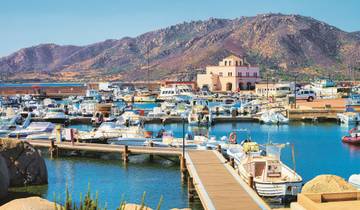
8 days
Best of Sardinia, Self-Drive
- ✓ Comprehensive Sardinia tour
- ✓ Expert local guides included
- ✓ All accommodation arranged
- ✓ Transportation provided
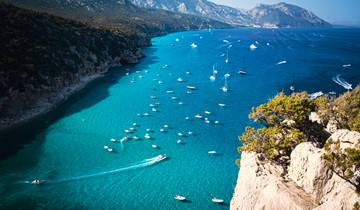
7 days
Active Sardinia: Coast & Coves
- ✓ Comprehensive Sardinia tour
- ✓ Expert local guides included
- ✓ All accommodation arranged
- ✓ Transportation provided
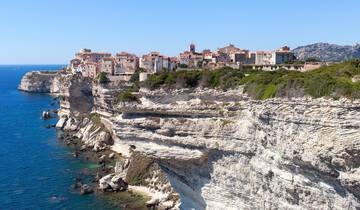
7 days
7 Days Gran Tour of Sardinia and Corsica from Olbia
- ✓ Comprehensive Sardinia tour
- ✓ Expert local guides included
- ✓ All accommodation arranged
- ✓ Transportation provided
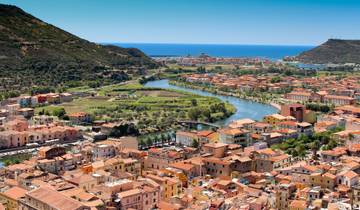
7 days
Best Journey of Sardinia – 7 Days
- ✓ Comprehensive Sardinia tour
- ✓ Expert local guides included
- ✓ All accommodation arranged
- ✓ Transportation provided
Multi-day tour packages powered by TourRadar. Prices and availability subject to change.
Understanding Olbia Travel Costs in 2026
Olbia — a name the ancient Greeks chose to mean “happy” or “prosperous,” a reference to the city’s extraordinary natural harbor — sits on a protected gulf on Sardinia’s northeastern coast, approximately 25 kilometers south of the Costa Smeralda. For most international visitors it functions primarily as an arrival point: Olbia Costa Smeralda Airport (OLB) and the busy ferry terminal on Isola Bianca together handle millions of passengers each year. But the city rewards those who slow down rather than rush through. The National Archaeological Museum of Olbia, housed in a striking ship-shaped building on the small Peddone Island in the old port, preserves the charred hulls of Roman merchant ships destroyed in a Vandal attack on the harbor around 450 CE — a collection of wrecks with no equivalent in Italy for scale and preservation. The medieval fabric of the city overlaid on a Roman grid centers on the Basilica of San Simplicio, one of Sardinia’s finest surviving Romanesque churches, built in the late 11th and early 12th centuries in local granite.
For the 2026 traveler, Olbia’s cost profile has several distinctive features. Accommodation is substantially more affordable than the nearby Costa Smeralda luxury enclave, but the city is not cheap by Italian standards: its role as a major tourist gateway means hotels near the port price for international summer visitors rather than domestic weekenders. The cost of getting around the city is, by contrast, extraordinarily low, and most heritage attractions charge little or nothing. The real spending variable for most visitors is how many organized excursions, car rental days, and beach afternoons they add to a base-city stay. This guide separates city costs from optional extras so you can calibrate your budget precisely to your actual plans.
All prices in this guide are expressed in euros, Italy’s local currency. Prices are verified for 2026 planning from current sources; always check official sites and booking platforms for confirmed current rates before finalizing your budget, as accommodation and transport respond to seasonal demand and booking lead time. Public transport fares, where confirmed from official operator sources, are stated confidently without further disclaimer.
Accommodation Costs in Olbia 2026
Accommodation is the single largest variable in any Olbia budget and the category most subject to seasonal fluctuation. The city and its immediate surroundings offer a full spectrum from simple B&Bs to boutique hotels and coastal resorts, with prices shifting dramatically between quiet winter months and the July–August peak. The figures below represent per-room per-night rates in shoulder season (May–June and September–October); the Seasonal Price Variations section covers peak-season uplift in full.
Budget Accommodation in Olbia 2026
Olbia’s budget category includes B&Bs, small guesthouses, and apartment rentals in the historic center or near the airport. Room rates in this tier range from approximately €70 to €100 per room per night in shoulder season. Simple B&Bs around the train station and in the residential streets east of Corso Umberto I offer clean double rooms with private bathrooms at the lower end of this range; the central location puts most historic sites within walking distance and the main dining street just minutes away. For two people sharing, this translates to €35–50 per person per night — the per-person accommodation figure used throughout this guide’s budget-tier calculations.
Hostels are limited in Olbia compared to larger Sardinian cities, but affordable guesthouses and apartment rentals through online platforms fill this gap. A private room in a well-reviewed apartment near the center typically runs €70–90 per night in shoulder season. Note that many of Olbia’s most affordable options require minimum two-night stays in summer and may charge cleaning fees on short stays, substantially altering the effective nightly rate when comparing across platforms. Budget travelers arriving at the port or airport and departing the same evening will find the guesthouses along the SS 125 corridor near the airport road priced slightly below city-center equivalents. In low season (November–March), budget room rates drop to €50–70 per room — a further reduction of 25–35% below shoulder-season prices.
Mid-Range Hotels in Olbia 2026
The mid-range category covers three- and four-star hotels, boutique properties, and well-appointed apartment complexes within a short bus or taxi ride of the center. Room rates run from approximately €130 to €180 per room per night in shoulder season. Several well-regarded hotels cluster along the Via Gabriele D’Annunzio corridor and around the marina, offering sea-view rooms, small pools, and breakfast included in the rate. Two people sharing a mid-range room spend €65–90 per person per night on accommodation.
Four-star hotels in Olbia city proper — not to be confused with Costa Smeralda resorts — represent notably good value in May and October: the sea is warm enough for comfortable swimming, beaches are uncrowded, and room rates are at their most competitive. Several mid-range properties offer half-board supplements (dinner included) for €15–25 per person extra, which can be economical for travelers who plan to eat mainly at the hotel. The Jazz Hotel near the city center, the Mercure Olbia Hotel e Spa, and the Delta Hotels Olbia Sardinia are established names in this mid-range band in shoulder season. Check booking platforms for current 2026 rates as pricing varies with demand and advance booking lead time.
Luxury Hotels and Resorts near Olbia in 2026
Olbia’s true luxury accommodation concentrates in the hills and coastal stretches to the north and east of the city rather than in the urban center. Properties including Petra Segreta Resort, Vretreats Cala Cuncheddi, and the various Delphina Hotels resorts in the area charge €280–500+ per room per night in shoulder season, with July–August rates often exceeding these figures substantially. For two sharing, this means €140–250+ per person per night. Costa Smeralda properties — Hotel Cala di Volpe, Hotel Pitrizza, Cervo Hotel, Romazzino by Belmond — operate in an entirely different price universe, with peak-season rates that can reach several thousand euros per room; those properties appear in this guide as regional benchmarks rather than mainstream recommendations.
A useful middle tier exists between mid-range city hotels and ultra-luxury Costa Smeralda resorts: boutique rural properties in the Gallura granite hills outside Olbia, some operating as upscale agriturismo (farm-stay accommodations with a serious kitchen) and others as intimate design hotels. These typically charge €200–350 per room in shoulder season and offer a distinctly Sardinian experience — stone architecture, local wine lists, fixed-price dinners featuring regional products — that city hotels cannot replicate.
Alternative Accommodation: Apartments and Agriturismi
Self-catering apartments near the beach areas of Pittulongu, Murta Maria, and Bados — all within 10–15 minutes of Olbia by local bus or car — represent a cost-effective option for stays of a week or more, particularly for small groups or families. Weekly rental prices for a well-equipped two-bedroom apartment sleeping four start from approximately €700–900 in shoulder season, equivalent to €175–225 per week per person for a couple using both bedrooms — considerably less than hotel prices over the same period. In July–August, the same apartments routinely list at €1,400–2,500 per week, and availability at any price point requires booking months in advance.
Agriturismi (licensed farm-stay accommodations) in the Gallura interior offer double rooms including full board — typically featuring cured meats, local pecorino, hand-made pasta including malloreddus (a ridged Sardinian pasta similar to small gnocchi), and roast porceddu (spit-roasted suckling pig) — for €80–130 per room all-inclusive in shoulder season. They require a car to access and suit travelers who want to combine coastal visits with the experience of Sardinia’s granite interior landscape.
Dining and Food Costs in Olbia 2026
Olbia’s food scene reflects northeastern Sardinia’s remarkable pantry: seafood from the gulf, Gallura sheep cheeses and cured meats, and a pasta tradition centered on malloreddus with sausage ragù, fregola (toasted semolina pasta, often cooked with clams or bottarga), zuppa gallurese (a layered bread-and-cheese soup baked in lamb broth), and seadas (fried pastry filled with cheese and drizzled with honey). Costs vary substantially with the setting: a meal in the residential streets back from the main tourist strip consistently costs 20–30% less than the equivalent at a harbor-front restaurant.
Budget Eating in Olbia 2026
The most economical approach to eating in Olbia is to follow the city’s working population. A standing espresso costs €1–2 at a bar; a cornetto or pastry adds €1–2 for a full breakfast under €4. Tavole calde — hot-food counters serving pre-prepared dishes by weight or as set plates — offer pasta, grilled vegetables, roast meats, and fried snacks for €5–10 per person for a generous lunch. The streets around the train station and the blocks near the municipal market area host several of these, along with small alimentari (deli-grocers) selling prepared sandwiches and focaccia for €3–5.
Budget dinner in Olbia centers on the city’s pizzerias, concentrated on and around Corso Umberto I and the side streets of the old town. A wood-fired pizza runs €8–12; a carafe of house wine costs €5–8; a bottle of water €2–3, making a satisfying pizza dinner for one person €18–24. A trattoria dinner of two courses — a pasta primo and a meat or fish secondo — runs €20–28 per person including house wine and water. Pane carasau, the traditional Sardinian crispy flatbread, is ubiquitous and typically complimentary with meals at trattorias. The most cost-efficient option of all is supermarket self-catering: quality local cheeses, charcuterie, bread, and a bottle of Vermentino di Gallura from any Conad or MD store in the city, assembled as a picnic or apartment dinner, costs €8–12 per person versus €25–35 at a sit-down restaurant for similar produce.
Mid-Range Dining Costs in Olbia 2026
A full mid-range restaurant dinner in Olbia in 2026 — antipasto, primo, secondo, dessert, and a bottle of Vermentino di Gallura DOC — runs €30–45 per person. Vermentino di Gallura, Sardinia’s white wine denomination produced largely in the granite hills around Olbia, is competitively priced in local restaurants at €15–25 per bottle, compared to the same wines priced 50–100% higher in Costa Smeralda establishments. Restaurant lunch at the same establishments is typically 20–35% cheaper than dinner for similar food and represents an effective strategy for eating well without overspending.
The harbor and marina restaurants along Viale Isola Bianca and near the ferry terminal are more tourist-facing and trend toward the higher end of mid-range pricing. Trattorias in the residential grid between the train station and Via Roma, and around Piazza Regina Margherita, serve the same Sardinian dishes to a predominantly local clientele at the lower end of mid-range pricing. For fresh fish, the price depends heavily on the catch: locally caught fish priced by the etto (100 grams) can push a mid-range dinner substantially higher; set-price fish menus at €28–35 per person offer more predictable budgeting. An aperitivo — a pre-dinner drink often served with complimentary snacks — costs €5–10 per person and is a pleasant and economical way to bridge the gap between a beach afternoon and a late Italian dinner.
Fine Dining and Premium Restaurants
Olbia’s premium restaurant scene is modest in scale compared to the Costa Smeralda, but several addresses offer Sardinian cuisine of genuine distinction. A full tasting menu at the area’s better restaurants runs €60–90 per person excluding wine; wine pairings add €30–50. These establishments operate in a very different price universe from Porto Cervo’s top-tier addresses, where a tasting menu can exceed €200 per person without wine. This price gap makes Olbia an effective base for experiencing the region’s finest cooking without paying resort-level accommodation rates for the privilege. For the day-tripper venturing into Porto Cervo, lunch at a harbor café averages €20–40 per person for a light meal; a full dinner at a well-regarded Porto Cervo restaurant runs €80–150+ per person.
Transport Costs in Olbia 2026
Getting to, around, and out of Olbia involves a wider range of transport options than most Sardinian towns, reflecting its dual role as a major ferry port and the island’s busiest regional airport. City-level transport costs are exceptionally low; the main spending decisions come on arrival routes from the mainland and on excursions requiring private transport.
Getting to Olbia in 2026: Ferry and Air
By sea, the Civitavecchia–Olbia route is the principal ferry connection from Rome and central Italy, operated by Grimaldi Lines, Tirrenia, and Moby Lines with departures several times daily throughout the year. A foot passenger ticket starts from approximately €22–25 in low season (November–March) and rises to €45–55 in July–August. An overnight cabin adds €35–90 to the base fare depending on category and operator. The crossing takes 6.5–8 hours depending on the company. The Genoa–Olbia and Livorno–Olbia routes offer comparable per-person pricing for foot passengers. Book two to three months ahead for summer travel to secure the best fares and preferred departure times. Check Grimaldi Lines, Tirrenia, and Moby Lines websites directly for current 2026 timetables and pricing, as rates vary significantly with demand and booking timing. (Check official operator sites for current rates as pricing may vary seasonally.)
By air, Olbia Costa Smeralda Airport (OLB) receives flights from dozens of European cities. Ryanair, easyJet, and Wizz Air provide the most budget-oriented options from their hub cities. Booking three to six months ahead and traveling on weekday morning flights routinely produces fares that substantially undercut the combined cost of a ferry ticket plus transport to and from a mainland port, particularly from northern European cities. Once airside, Olbia’s terminal is compact and efficient.
Getting Around Olbia: ASPO Buses and Taxis
Within Olbia city and its immediate surroundings, the ASPO network provides practical, affordable public transport. A single ASPO ticket costs €1 and is valid for 90 minutes, allowing transfers between lines within that window. Tickets can be purchased from the self-service machine in the airport arrivals hall, from tabaccherie (tobacco shops) throughout the city, via the ASPO app, or via SMS. Tickets purchased from the driver cost €1.50. Lines 2 and 10 run between Olbia Airport and the city center about every 20 minutes; the journey takes approximately 10–15 minutes. The bus stop is located just outside the airport arrivals exit, about 50 meters away, marked clearly at bay number 3. Line 4 and related services reach the Pittulongu beach area. Consult the ASPO website (aspo.it) for current 2026 route maps, timetables, and any service changes.
Official white taxis have a minimum starting fare of approximately €3.50, charging around €2.60 per kilometer for the first five kilometers and €2.40 per kilometer thereafter. A taxi from the airport to the city center runs €15–20 depending on destination and time of day; nighttime and luggage surcharges may apply. Olbia’s historic center is compact and very walkable: most sites, restaurants, and the harbor are within a 15-minute walk of each other once you are in the city. Bicycles and e-scooters are available for daily rental from several points in the center for those who prefer wheels over walking.
Regional bus connections to towns beyond ASPO’s urban network are operated by ARST Sardegna. ARST buses run from Olbia’s central bus stop on Corso Vittorio Veneto to Palau (departure point for the La Maddalena ferry), Santa Teresa Gallura, San Teodoro, and Arzachena. Fares for these intercity routes are modest. Check the ARST website (arst.sardegna.it) for current 2026 schedules and pricing before planning day trips relying on regional bus connections.
Car Rental Costs for Olbia 2026
Renting a car at Olbia Airport transforms access to Sardinia’s beaches, nuragic archaeological sites, and interior landscapes. Economy and compact cars from major companies (Avis, Hertz, Sixt) and local operators start from approximately €35–55 per day when booked well in advance in shoulder season. Rates rise sharply as summer approaches: July–August daily rates for economy cars can reach €80–120 per day from airport operators, though online comparison platforms and booking two to three months ahead can produce better rates. Fuel at Sardinian petrol stations runs at standard Italian pump prices; a day’s driving around the Gallura area typically adds €10–20 in fuel to the rental cost.
Olbia’s historic center has a ZTL (Zona a Traffico Limitato — restricted traffic zone) during daytime hours; entering without a permit generates an automatic fine. Park outside the ZTL boundary and walk in. Most popular beaches near Olbia operate paid parking in May–October at €1.50–5 per hour, with some sites offering daily caps; budget €5–10 per car for a beach day. One-way car rentals returning at a different Sardinian airport or port are possible with some operators but typically carry a surcharge; check policies when booking.
Attraction and Activity Costs in Olbia 2026
One of Olbia’s best qualities for cost-conscious visitors is the affordability of its core heritage attractions. The city’s most significant historical sites charge either nothing or a very modest fee, concentrating optional spending on water-based activities and organized excursions rather than entry tickets.
Free Attractions and Historic Sites in Olbia 2026
The Basilica of San Simplicio admits visitors free of charge. Built between the late 11th and early 12th centuries in granite-block Pisan Romanesque style, it is recognized as one of Sardinia’s most important surviving medieval monuments. Its austere three-nave interior preserves two 13th-century apse frescos — one believed to depict the titular saint Simplicio, the other San Vittore — along with ancient columns and the crypt housing the relics of the city’s patron saint. The basilica opens daily with a midday closure; hours shift seasonally, so a quick check before visiting is sensible.
The National Archaeological Museum of Olbia, on Peddone Island, admits visitors free of charge per the sardegnacultura.it official listing, though booking in advance by telephone is recommended for groups. Audio guides are available at no additional cost. The museum opens Tuesday through Saturday in two daily sessions; confirm current hours at the museum’s official page (helloolbia.com/museo-archeologico-olbia) before visiting, as hours have shifted seasonally and the museum underwent a brief floor renovation closure in early 2025.
Corso Umberto I, Olbia’s main historic street, exposes sections of ancient Roman pavement through glass panels set into the modern street surface — freely visible at any hour. The remnants of the ancient Punic defensive walls, the Roman-era forum area, and the harbor waterfront around Peddone Island are accessible without charge as open-air urban heritage. A leisurely walk linking the basilica, the museum, the Roman pavement, and the harbor takes roughly two to three hours and costs nothing beyond coffee and a pastry.
All of Olbia’s public beaches — Pittulongu, Cala Greca, Porto Istana, Bados, and the long sandy stretch at Murta Maria — are free to access under Italian Maritime Navigation Code Article 822, which establishes the entire Italian coastline as state-owned public domain. You pay only if you choose to rent sunbeds and umbrellas from a private beach club; the shoreline itself is always free.
Paid Museum and Heritage Site Costs in Olbia 2026
The San Simplicio Necropolis, an archaeological site adjacent to the Basilica of San Simplicio and situated beneath the modern street level, preserves approximately 450 graves spanning Phoenician through Roman occupation into medieval layers — a stratigraphic record of Olbia’s first two thousand years. Tickets cost €5 per adult. The site uses a smartphone-based audio guide accessed via an on-site Wi-Fi network; visitors should bring a charged phone. A combined morning visit to the necropolis and the museum on Peddone Island gives a comprehensive picture of ancient Olbia at a total cost of €5 per person (museum free, necropolis €5).
The Museum Civitatense, housed within the Basilica of San Simplicio complex and covering the basilica’s archaeological and architectural history in depth, charges €3 per adult. Sunday visits are by appointment only per the sardegnacultura.it listing. The Nuraghe Cabu Abbas, a Bronze Age nuragic tower complex on a granite ridge above Olbia with views over the gulf and Tavolara Island, is reachable on foot from the city’s outskirts; verify current access conditions locally before visiting.
Beach club sunbed and umbrella rental at Olbia’s organized stabilimenti balneari near Pittulongu, Murta Maria, and Porto Istana costs approximately €15–30 per pair per day in shoulder season and €25–55 in peak summer. Beach clubs along the Costa Smeralda charge €60–150+ for comparable service. Two beaches further afield have regulated access fees that apply regardless of whether you use the beach services: La Pelosa near Stintino charges €3.50 per person (with a daily visitor cap), and Cala Goloritzé in the Baunei area charges €6 per person. Both are significant drives from Olbia and are typically visited via organized excursion.
Water Activities and Boat Tours in Olbia 2026
Organized boat tours represent the main discretionary expense for most Olbia visitors. The full-day La Maddalena Archipelago boat tour from Olbia, operated by companies including Smeralda360, runs approximately €130 per person and includes a minibus transfer from Olbia to the port of Cannigione (approximately 30–40 minutes), a nine-hour boat excursion visiting the islands of La Maddalena, Spargi, and Santa Maria with swimming stops, and a pasta lunch on board. A boarding fee of €5 per person is collected in cash at embarkation. Check the operator’s current 2026 rates directly before booking, as seasonal pricing applies and the boarding fee should be confirmed at that time. (Check official operator sites for current rates as pricing may vary.)
Independent access to La Maddalena is considerably cheaper and more flexible: take the ARST bus from Olbia’s central bus stop to Palau (check current fares and timetables at arst.sardegna.it), then cross on the Maddalena Lines or Delcomar ferry from Palau. Ferry tickets for foot passengers start from approximately €9–11 one way in shoulder season; the crossing takes 15–20 minutes and runs roughly every 30 minutes to hourly depending on season. From La Maddalena town you can rent a bicycle (approximately €10–20 per day) to explore the main island or join a local boat excursion to the outer islands from the waterfront.
Dolphin-watching boat tours operate from Olbia’s Molo Brin area, typically lasting two to three hours and costing approximately €35–55 per person. Guided kayak tours of the Olbia Gulf, visiting sea caves and rocky coves inaccessible to larger vessels, are offered by several local operators for approximately €40–65 per person for a half-day. Tavolara Island boat tours — Tavolara being the dramatic limestone table-mountain visible from Olbia’s beaches — run approximately €40–65 per person for a full day excursion including snorkeling stops in the island’s marine protected area.
Day Trip Costs from Olbia in 2026
Olbia’s geographical position in northeastern Sardinia makes it an excellent base for day trips. The costs below assume a traveler based in Olbia city traveling out for the day.
La Maddalena Archipelago Day Trip Cost 2026
An independent day trip to La Maddalena town from Olbia costs approximately €35–55 per person in total: the ARST bus to Palau (check current fares at arst.sardegna.it), plus the Maddalena Lines or Delcomar ferry return (approximately €18–22 round trip), plus €15–25 for lunch and drinks on the island. This option gives access to La Maddalena town and the main island; the outer uninhabited islands of Spargi, Santa Maria, and Budelli with their extraordinary beaches require either an island-based boat tour or an organized full-day excursion from Olbia.
The organized boat tour from Olbia (approximately €130–135 per person including the bus transfer, boat tour, and lunch, plus a €5 cash boarding fee) reaches all three outer archipelago islands with swimming stops and is the most comprehensive way to experience the park in a single day. Booking several days ahead in peak season is essential; the tours fill quickly. For travelers who most want the outer beaches and archipelago waters rather than time in La Maddalena town, the organized option delivers considerably more than the independent ferry crossing.
Costa Smeralda and Porto Cervo Day Trip 2026
The Costa Smeralda is 20–35 minutes from Olbia by car depending on destination, or reachable by ARST bus to Arzachena with local connections. Porto Cervo, the defining village of the Costa Smeralda, has no sandy beach in the immediate town center but the harbor promenade and the designer shopping arcades are freely walkable. Lunch at a harbor café in Porto Cervo averages €20–40 per person for a light meal; a full restaurant dinner runs €80–150+ per person. A beach-club day at a Costa Smeralda lido — Capriccioli, Liscia Ruja, Pevero — costs €60–150 per sunbed-and-umbrella pair plus food and drinks from the beach club bar.
The most cost-efficient Costa Smeralda experience from Olbia is to drive to a public beach access point (Spiaggia del Principe and Capriccioli both have public access zones adjacent to the private lido areas) with a packed lunch, pay for parking, and use the free shoreline. The same turquoise water, white granite sand, and Mediterranean panorama are accessible on either side of the beach club boundary rope, at a fraction of the cost.
Palau, Santa Teresa Gallura, and the Gallura Interior 2026
Palau, approximately 40 kilometers north of Olbia, is the departure point for La Maddalena ferries and a pleasant town in its own right, with views of the archipelago from the seafront. Santa Teresa Gallura, on Sardinia’s northernmost point, is under an hour from Olbia by bus or car and offers good beaches, a Genoese watchtower above the town, and a 50-minute ferry crossing to Bonifacio in southern Corsica — a worthwhile excursion with crossing tickets starting around €20–35 per person (check Moby Lines and La Nave for current 2026 schedules and fares). A day that combines both towns, including a fish lunch at a local restaurant in Palau (€20–35 per person), makes excellent use of a day without requiring expensive organized excursions.
The Gallura interior — the granite and cork-oak landscape of Arzachena and the Arzachena Valley — holds several important prehistoric monuments requiring a car: the Coddu Ecchju Giants’ Tomb and the Li Muri stone circle alignment. Entry to these sites runs €3–5 per site. Tempio Pausania, the main market town of the Gallura highlands at around 570 meters altitude, is refreshingly cool in August and makes a worthwhile half-day from Olbia combined with lunch of robust Gallura hill cuisine at a local osteria (€20–30 per person).
Daily Budget Breakdowns for Olbia 2026
The following breakdowns represent all-in daily costs per person for two people sharing accommodation during shoulder season (May–June and September–October). All calculations follow the same per-person convention throughout: hotel room costs are divided by two before summing with individual expenses. Costs for July and August are covered in the Seasonal Price Variations section.
Budget Traveler Daily Costs in Olbia 2026
Budget travelers — those staying in a B&B or simple guesthouse, eating at pizzerias and tavole calde, using ASPO buses, and focusing on free attractions — spend approximately €75–105 per person daily in shoulder season, two sharing accommodation. The breakdown: accommodation at the budget level at €35–50 per person (two sharing a room at €70–100 per night), a bar breakfast at €3–4, a tavola calda or pizza lunch at €10–12, a trattoria dinner at €18–24, drinks and snacks at €4–6, city transport at €2–4, and a modest daily attraction spend at €3–6.
The ASPO city bus makes most movement around Olbia essentially free at €1 per journey, and a full day exploring the Basilica of San Simplicio, the National Archaeological Museum of Olbia (free), the Roman pavement on Corso Umberto I, and the Peddone Island waterfront costs nothing beyond the bus fare. A budget week in Olbia in shoulder season costs approximately €525–735 per person including accommodation. Adding one organized La Maddalena Archipelago boat tour (approximately €130 per person) to a budget week raises the total to approximately €655–865 per person for the week.
Mid-Range Traveler Daily Costs in Olbia 2026
Mid-range visitors — those in a three- or four-star hotel, dining at restaurants rather than pizzerias, renting a car for some days, and joining organized excursions — spend approximately €140–205 per person daily in shoulder season, two sharing accommodation. The breakdown: a mid-range hotel at €65–90 per person (two sharing a room at €130–180 per night), a café breakfast at €5–8, a restaurant lunch at €15–22, a full restaurant dinner with local wine at €28–40, drinks and snacks at €8–12, a mix of bus and taxi or car transport at €8–15, and attraction spending including some paid activities at €12–20.
A mid-range week in Olbia in shoulder season costs approximately €980–1,435 per person including accommodation. A five-day trip at this level — including accommodation for four nights, meals, the La Maddalena full-day boat tour, a car rental for two days with fuel, airport transport, and a mix of other activities — comes to approximately €800–1,140 per person, making it a realistic and well-managed visit with the region’s main highlights covered.
Luxury Traveler Daily Costs in Olbia 2026
Luxury travelers — staying in a four- or five-star resort or boutique property, dining at the area’s finest restaurants, using private transfers and rental cars, and enjoying premium water activities — spend approximately €310–565 per person daily in shoulder season, two sharing accommodation. The breakdown: premium hotel accommodation at €140–250 per person (two sharing a room at €280–500 per night), hotel or high-quality café breakfast at €15–25, high-end lunch at €30–50, dinner at a fine restaurant at €60–100, drinks and snacks at €15–30, private or rental-car transport at €25–50, and high-end activities at €25–60. A luxury week in Olbia in shoulder season costs approximately €2,170–3,955 per person. July and August rates for luxury properties near the Costa Smeralda raise this figure substantially; some five-star resorts double their room rates between May and August.
Sample Multi-Day Itineraries with Cost Breakdown 2026
The itineraries below show how the component costs combine in practice. Both assume shoulder season and two people sharing accommodation, with costs stated per person.
Budget 5-Day Olbia Itinerary 2026
- Accommodation: 4 nights in a B&B, two sharing at €70–100 per room — approximately €140–200 per person
- Meals at the budget level for 5 days — approximately €155–200 per person total
- Airport transport both ways: ASPO bus at €1 per journey — approximately €2
- City and beach transport: ASPO buses — approximately €10 per person for 5 days
- Regional transport for a La Maddalena day trip independently (ARST bus to Palau + ferry return): approximately €20–35
- Attractions over 5 days (San Simplicio Necropolis €5, museum free, casual extras): approximately €10–18
- Drinks and snacks over 5 days: approximately €20–30 per person
Accommodation €140–200, meals €155–200, transport approximately €27–45, attractions €10–18, drinks and snacks €20–30. Total: approximately €350–505 per person for 5 days. This is the realistic range for a budget-focused visit that still includes the city’s cultural highlights and an independent day trip to La Maddalena.
Mid-Range 5-Day Olbia Itinerary 2026
- Accommodation: 4 nights in a 3-star hotel, two sharing at €130–180 per room — approximately €260–360 per person
- Meals at the mid-range level for 5 days — approximately €240–350 per person total
- Airport transport both ways: ASPO bus or taxi — approximately €2–20
- La Maddalena Archipelago full-day organized boat tour including the €5 boarding fee — approximately €135–140 per person
- Car rental for 2 days including fuel: approximately €85–130
- Attractions and activities over 5 days: approximately €36–60
- Drinks and snacks over 5 days: approximately €40–60 per person
Accommodation €260–360, meals €240–350, boat tour €135–140, car rental €85–130, airport €2–20, attractions €36–60, drinks and snacks €40–60. Total: approximately €800–1,140 per person for 5 days. This itinerary covers the region’s main highlight (the La Maddalena Archipelago), allows two car-based beach or interior days, and maintains comfortable mid-range eating and sleeping throughout.
Seasonal Price Variations in Olbia 2026
Olbia’s price calendar has four distinct phases, and choosing your travel dates is the single most impactful budget decision you can make. Understanding the seasonal pattern before booking is essential: a mid-range hotel room costing €130–150 per night in early May may exceed €280 per night in August.
Low season (November–March): The cheapest period by a wide margin. Accommodation rates fall 60–70% below August peaks; a good mid-range hotel room that costs €250–300 in August may run €70–90 in February. The weather is mild by northern European standards — daytime temperatures of 12–16°C — but unsuitable for beach swimming. The city is quiet, restaurants operate at local rather than tourist pricing, and heritage sites are uncrowded. Ferry prices from Civitavecchia start from approximately €22–25 per foot passenger. The main limitation is reduced ferry frequency and the closure of many seasonal beach businesses.
Shoulder season (April–June and September–October): The optimal window for most visitors. Sea temperatures exceed 20°C from mid-June onwards and remain warm through late October; September finds the sea at its warmest after a summer of heat absorption. Accommodation sits 40–50% below August peaks; a mid-range hotel room runs €130–180 per night. Restaurants are operating at full capacity, organized excursions are running, and the Costa Smeralda is pleasant without extreme summer crowds. Ferry prices are moderate but book up quickly for high-traffic June dates; May and October are the most predictable months for ferry capacity. This is when the price-to-experience ratio is at its highest for every traveler tier.
Pre-peak season (late June): A transition period. Prices rise noticeably in the last two weeks of June as Italian and European school holidays begin. Hotels that were €150–180 per night in early June can reach €220–270 by the final week of the month. Transport remains manageable, but booking ahead becomes important. The long summer evenings make Olbia’s outdoor dining scene particularly attractive at this point in the season.
Peak season (July–August): The most expensive and crowded period. Mid-range hotel rooms in Olbia city regularly reach €250–350 per night; four- and five-star coastal properties reach €400–800+. Ferry crossings from Civitavecchia cost €45–55 per foot passenger and book out months in advance. Restaurants often apply a high-season supplement of €3–5 per cover. The ASPO bus to the airport remains €1 regardless of season, and city beaches are still free to access, but they reach their highest congestion. Budget travelers who must visit in July–August should book accommodation four to six months ahead, consider self-catering apartment rentals (often cheaper than hotels when split between multiple people), and plan beach days on weekdays to avoid the worst weekend crowds. A mid-range week that costs approximately €980–1,435 per person in shoulder season may cost €1,470–2,170 or more in August depending on accommodation choices.
Money-Saving Strategies for Olbia 2026
Olbia offers more opportunities to manage costs than its reputation as a gateway to one of Europe’s most expensive coastal resort regions might suggest. These strategies, applied selectively, can meaningfully reduce spending without sacrificing the core experience.
Time your visit strategically. As the Seasonal Price Variations section documents, May, early June, and September deliver 40–50% lower accommodation costs than August, sea temperatures above 20°C from June onwards, and a more relaxed city atmosphere. The water in the La Maddalena Archipelago is equally spectacular in September as in August, with substantially fewer boats and lower costs across every spending category.
Use ASPO buses rather than taxis. At €1 per ticket valid for 90 minutes, Olbia’s city bus network is one of the best-value aspects of the city. The airport-to-center connection on lines 2 and 10 makes the €15–20 taxi entirely unnecessary for most arrivals. Beach access at Pittulongu, the harbor, and the historic center are all on the ASPO network at the same €1 fare.
Eat inland from the harbor. Restaurant prices in the residential streets behind the main tourist zones are consistently 20–30% lower for equivalent food. The trattorias around Piazza Regina Margherita and the blocks between Via Mameli and Via Cavour serve the same Sardinian dishes to a predominantly local clientele at prices that reflect what locals actually pay. A simple rule of walking two or more streets back from any obviously tourist-facing location before choosing a restaurant saves meaningfully over a full week.
Combine supermarket purchases with restaurant meals. Sardinia’s supermarkets stock high-quality local produce at genuinely low prices: a bottle of Gallura Vermentino runs €4–7 (versus €15–25 in a restaurant), local pecorino and salumi are excellent, and fresh fruit and vegetables from Sardinia’s interior are outstanding. Buying wine, water, breakfast items, and picnic lunches from a supermarket and reserving restaurant spending for dinners cuts daily food costs without sacrificing the experience of eating local food.
Visit La Maddalena independently for the town experience. The organized boat tour from Olbia (approximately €130–135 plus boarding fee) is the right choice for the outer islands’ beaches. But visiting La Maddalena town itself and the main island — cycling the granite coast and eating at the harbourside restaurants — is very worthwhile at a fraction of the price. The ARST bus to Palau plus the ferry return costs approximately €20–35 per person, and bicycle rental on the island costs €10–15 per day.
Book car rental three to four months ahead. Olbia car rental prices follow a steep demand curve. Booking three months ahead produces rates 40–60% below the walk-up airport counter price. Economy cars booked four months ahead in shoulder season can be found for €35–45 per day; the same car rented two weeks before arrival in peak season may exceed €100 per day from the same counter.
Use public beach access. All of Sardinia’s beaches are public domain under Italian law; the sunbeds and umbrellas at a stabilimento balneare are optional extras, not entry fees. A beach towel and a bag with lunch and water give exactly the same access to the water as a beach club. The sand, the sea, and the Sardinian light are the same on either side of the sunbed row.
Take advantage of the free cultural offer. The Basilica of San Simplicio, the National Archaeological Museum of Olbia (free entry), the Roman pavement sections on Corso Umberto I, the Punic walls, and the harbor walk around Peddone Island together constitute a compelling half-day of heritage at zero cost beyond coffee and a pastry. A free tourist map from the Olbia Tourist Information Office at Piazza Matteotti connects these sites with walking routes.
Hidden Costs and Fees in Olbia 2026
Several categories of cost catch first-time visitors to Olbia off guard. Awareness of them in advance prevents unwelcome budget surprises.
Ferry costs beyond the headline fare. When booking mainland ferry tickets, the base price is typically a “deck passage” without a seat assignment. Seat reservations, cabin upgrades, and vehicle transport are priced separately and can substantially change the total cost. An overnight cabin on the Civitavecchia–Olbia crossing adds €35–90 to the foot-passenger fare. Vehicle transport starts at approximately €75–100 in low season and can exceed €150–200 in August. Budget for the total ferry cost — passenger ticket plus any desired cabin plus vehicle if applicable — rather than the headline foot-passenger fare alone.
City tourist tax (imposta di soggiorno). Olbia levies a nightly tourist tax on accommodation. Rates vary by property category: budget B&Bs charge approximately €1–2 per person per night; three- and four-star hotels charge €2–3 per person per night; five-star properties charge higher rates. This tax is not included in most published hotel prices and is typically collected in cash at check-out. Verify the current Olbia tourist tax rate with your accommodation before arrival, as municipal rates are periodically revised.
Beach parking charges. At popular beaches near Olbia including Pittulongu, Murta Maria, Bados, and Porto Istana, paid parking operates May–October at €1.50–5 per hour, with daily cap rates at some locations. Budget approximately €5–10 per car for a beach day if arriving by rental car. Arriving before 9 AM often means parking in an unpaid zone before the attendants activate the meters.
Restaurant cover charge (pane e coperto). Most sit-down restaurants charge a cover fee of €1–3 per person for bread and table service, listed as “coperto” on the menu. This applies per person per sitting and should be factored into per-meal estimates. Pizzerias and tavole calde typically do not charge coperto.
Cash requirements. While major restaurants, hotels, and shops accept cards, some smaller beach clubs, some taxi drivers, and most market vendors operate cash-only. The ASPO ticket machine in the airport arrivals hall accepts cards; many tabaccherie do not. Carrying approximately €50–100 in cash on arrival covers the most common cash-only situations, including the €5 boarding fee for La Maddalena boat tours. ATMs are plentiful throughout Olbia city center.
Mobile data roaming. EU regulations mean travelers on EU/EEA mobile plans use data and calls in Italy at domestic rates without roaming surcharges. Non-EU travelers (UK, US, Australian, Canadian, and others) should check their operator’s Italy roaming package before departure or purchase an Italian SIM card on arrival. TIM, Vodafone Italy, and Iliad Italy all provide strong coverage across Sardinia including the Gallura coastal area. Free Wi-Fi is available at many hotels and some cafés; the airport offers free Wi-Fi in the terminal.
Car rental excess liability. Italian rental car companies at Olbia Airport routinely promote comprehensive insurance upgrades at the counter. The standard Collision Damage Waiver (CDW) is typically included in advance-booking rates, but the excess — the amount you pay before insurance responds in case of damage — can be €1,000–2,500 on economy cars. Third-party excess insurance, purchasable through comparison sites before travel at approximately €4–8 per day, reduces this to zero and is considerably cheaper than the counter upgrade. Factor insurance costs into your rental car daily budget.
La Maddalena Archipelago boat tour boarding fee. The organized boat tours from Olbia include a €5 cash boarding fee collected at embarkation that is in addition to the ticket price. Carry small-denomination cash specifically for this.
Budget Planning by Traveler Type in 2026
Olbia suits a wide range of travel styles and group configurations, but the cost profile shifts meaningfully with group size and composition.
Solo Traveler Costs in Olbia 2026
Solo travelers face the standard single-occupancy premium common across Italian accommodation: hotel single rooms are rarely significantly discounted below the double rate, so solo accommodation effectively costs the full room price rather than half of it. This raises solo daily spending to approximately €110–155 per person at the budget level and €195–275 at mid-range in shoulder season — notably more than the two-sharing figures used as the standard in this guide. The most effective strategies for solo visitors are: choosing guesthouses with dedicated single rooms priced below double rates (available but not abundant), booking apartment studios that genuinely undercut hotel singles, and using organized tours — where per-person pricing applies equally to solo participants — rather than private car hire. The La Maddalena boat tour (€130–135 per person) delivers the same experience and cost for a solo traveler as for anyone in a group, making it proportionally better value than a car rental split only by one person.
Couples
Two people sharing accommodation and transport represent the baseline on which this guide’s standard budget-tier calculations are built. For couples, the most impactful budget decision is accommodation tier: a €130–180 mid-range hotel room divided equally costs €65–90 per person per night. Car rental at €35–55 per day splits to €17–28 per person — making a rental car genuinely accessible for two in a way that it is not for a solo traveler. Couples who agree on a travel style and can share a car have probably the most efficient cost-to-experience profile of any group configuration for Olbia. Couples should also consider whether the self-catering apartment option — which saves on restaurant spending for breakfasts and occasional lunches — is worthwhile over a stay of five days or more.
Families with Children
Families with children have several cost advantages and one significant driver: accommodation. A family of four requiring two hotel rooms rather than one effectively doubles the per-room accommodation spend; self-catering apartments address this directly by offering a two-bedroom unit sleeping four for a rate typically 40–70% less than two separate hotel rooms over the same period. Weekly apartment rentals near Pittulongu beach start from approximately €700–900 for a two-bedroom unit sleeping four in shoulder season — equivalent to €175–225 per week per person for a couple using the whole unit.
Food costs for families are well-managed in Olbia: children’s portions at trattorias are accommodated informally without a formal kids’ menu, pizza is universally available and affordable, and supermarket picnics work particularly well for families with variable mealtimes. Organized boat excursions including the La Maddalena and Tavolara tours welcome children (verify operator age policies); dolphin-watching excursions are also excellent for families. Children under four travel free on the Palau–La Maddalena ferry; those under eleven receive discounted fares. All public beaches are free for all ages.
Groups
Groups of four or more traveling together can reduce per-person costs in several categories. Car hire becomes efficient when split between four passengers: a mid-size car at €60–80 per day splits to €15–20 per person, less than the cost of a single taxi ride. For groups of six or more, villa rental in the Gallura hills with a private pool and full kitchen opens a very different experience at per-person costs that can undercut hotel pricing. Private boat tours of the La Maddalena Archipelago or Tavolara, priced by vessel rather than per person, become cost-effective for groups of four or more compared to per-person organized tour rates; Olbia’s waterfront boat operators at Molo Brin offer private vessel hire at rates that split attractively across a small group. Groups should also investigate apartment complexes near the beaches that offer multiple connected units or larger accommodations at negotiated weekly rates.
Where to Stay in Olbia 2026: Neighborhoods and Price Zones
Olbia’s accommodation geography divides into four distinct zones, each with its own cost profile and character. Understanding them before booking prevents the common mistake of prioritizing harbor-proximity without considering the bus routes that make every part of the city easily accessible.
Olbia city center (historic district): The zone within walking distance of Corso Umberto I, Piazza Regina Margherita, and the Basilica of San Simplicio. Hotels and B&Bs here range from budget guesthouses to three-star hotels, with shoulder-season prices of €70–180 per room depending on category and harbor proximity. This zone offers the best access to restaurants, bars, cultural sites, and the harbor walk; it is slightly less convenient for beach access but well-served by ASPO buses. Best for travelers prioritizing culture, nightlife, and walking exploration over direct beach proximity.
Pittulongu and Murta Maria (beach suburbs, 8–12 minutes from center): The closest beach districts to Olbia, served by ASPO bus lines and reaching the sandy coast directly. Hotels and B&Bs here tend to be slightly less expensive than city-center equivalents in low and shoulder seasons while offering direct beach access. Shoulder-season prices run €80–200 per room. Apartment rentals are more common here than in the urban core. One reviewer noted the bus into Olbia center runs regularly at €1.50 per journey (on-board purchase), making the center easily accessible without a car. The tradeoff is a more limited restaurant and bar scene; beach access more than compensates for most visitors.
Porto Rotondo and the northern bays (20–30 minutes from Olbia): The upscale marina village of Porto Rotondo, along with smaller coastal bays to the north toward the Costa Smeralda, represents a step up in accommodation prices and coastal exclusivity. Mid-range and upper-mid hotels in this zone charge €150–280+ per room in shoulder season. This location makes sense for travelers who want Costa Smeralda proximity without paying the full Costa Smeralda resort premium, and who are comfortable with a car for daily movement.
Gallura hills (rural, 15–30 minutes from Olbia): Boutique agriturismo farm stays and small rural hotels in the granite hills of the Gallura interior offer the most distinctly Sardinian accommodation experience. Prices range from €80–200 per room including dinner in shoulder season. Facilities typically include a restaurant specializing in local cuisine, and the surrounding landscape of granite outcrops, cork-oak woodland, and maquis scrub is unlike anything in the coastal areas. A car is essential for this zone.
Frequently Asked Questions
What is the cheapest month to visit Olbia in 2026?
November through March offers Olbia’s lowest prices across every category. Accommodation rates drop 60–70% below August peaks; ferry crossings from Civitavecchia start from approximately €22–25 per foot passenger; and restaurants and attractions are at their quietest. February and March are the least expensive months for accommodation specifically. Daytime temperatures of 12–18°C make winter visits suitable for city exploration, cycling, and hiking, but the sea is too cold for comfortable swimming. For the best weather-to-price compromise, May and September deliver sea temperatures above 20°C with 40–50% lower costs than August and full operating of beach services and excursions.
How much does it cost to get from Olbia Airport to the city center in 2026?
The ASPO city bus (lines 2 and 10) connects Olbia Airport to the city center in approximately 10–15 minutes, running about every 20 minutes throughout the day. A single ticket costs €1 from the self-service machine in the airport arrivals hall, via the ASPO app, or via SMS; tickets purchased from the driver cost €1.50. The same ticket is valid for 90 minutes, allowing transfers within that window. The bus stop is just outside the arrivals exit at bay number 3. A taxi from the airport costs approximately €15–20 for the journey to the city center. Most mid-range and luxury hotels offer their own shuttle services — confirm availability and cost when booking.
Can I visit Sardinia’s Costa Smeralda on a budget from Olbia in 2026?
Yes, with selective planning. Staying in Olbia rather than at a Costa Smeralda resort saves €100–500+ per room per night on accommodation. The Costa Smeralda’s beaches and villages are 20–35 minutes away by car or reachable by ARST bus to Arzachena with local connections. The beaches themselves — Capriccioli, Spiaggia del Principe, Liscia Ruja — are free public access under Italian law; you pay only if you choose a beach club’s sunbed and umbrella service. Driving to one of these beaches with a packed lunch, using the free shoreline, and returning to Olbia for a mid-range dinner delivers a full Costa Smeralda beach experience at a small fraction of resort-based daily costs.
Are there free things to do in Olbia in 2026?
Many. The Basilica of San Simplicio admits visitors free of charge. The National Archaeological Museum of Olbia on Peddone Island is free to enter, with free audio guides available at reception. The Roman pavement sections on Corso Umberto I, the ancient Punic walls, and the harbor area around Peddone Island are all freely accessible open-air heritage. Every public beach — Pittulongu, Bados, Murta Maria, Porto Istana, Cala Greca — is free to use. The city-center stroll along Corso Umberto I and around Piazza Regina Margherita costs nothing. A full cultural day — museum, basilica, Roman ruins, harbor walk, lunch at a tavola calda — can be managed for €15–20 per person total, spending only on food.
How much does the La Maddalena Archipelago boat tour from Olbia cost in 2026?
The standard organized full-day boat tour from Olbia runs approximately €130–135 per person and includes a minibus transfer from Olbia to the port of Cannigione, a nine-hour boat excursion visiting the islands of La Maddalena, Spargi, and Santa Maria with swimming stops, and a pasta lunch on board. A cash boarding fee of €5 per person is collected at embarkation. Check current 2026 rates directly with operators before booking, as seasonal pricing applies. (Check official operator sites for current rates as pricing may vary.) Independent travelers can reach La Maddalena town via the ARST bus to Palau and the Maddalena Lines or Delcomar ferry; return ferry tickets start from approximately €18–22 per person plus bus fare, without the outer island access that the organized tour provides.
Is a car necessary to visit Olbia in 2026?
A car is not necessary for a stay centered on Olbia city itself with organized day excursions. The ASPO bus reaches the airport, beaches at Pittulongu and Murta Maria, and the city’s main sites. Organized tours to La Maddalena, Tavolara, and day trips toward the Costa Smeralda can be booked with transport included. However, a car — from approximately €35–55 per day booked in advance in shoulder season — transforms access to the wider Gallura landscape: lesser-known beaches with no bus service, the prehistoric monuments around Arzachena, the hilltop village of Aggius, and the cork-oak forests of the Gallura interior. For a stay of five days or more, renting a car for two or three of those days and using public transport for the rest is often the most cost-effective and satisfying approach.
What is the tipping culture in Olbia and what should I budget for it in 2026?
Tipping in Italy, including Olbia and Sardinia, is appreciated but not obligatory. Service is included in menu prices; the coperto of €1–3 per person covers bread and table service. Rounding up a bill or leaving €2–5 on the table after a satisfying restaurant meal is a common gesture. Taxi drivers appreciate rounding to the nearest euro. No tip is expected at bars for a standing coffee. Tour guides and boat crews who have been exceptional appreciate €5–10 per person for a full-day tour — this is discretionary, not standard. Budget travelers need not factor significant tipping costs into their daily totals; even mid-range visitors rarely spend more than €3–5 per day on tips in practice.
How much does the Civitavecchia–Olbia ferry cost in 2026?
A foot passenger ticket on the Civitavecchia–Olbia ferry route starts from approximately €22–25 per person in low season (November–March) and rises to €45–55 per person in July–August, with mid-season fares (April–June, September–October) typically in the €30–45 range. An overnight cabin adds €35–90 depending on category and operator. Adding a car raises costs by €75–100 in low season and can exceed €200 in August. Booking two to three months ahead in summer is strongly recommended and typically secures lower fares than close-to-departure booking. Ferry operators for this route include Grimaldi Lines, Tirrenia, and Moby Lines; check each operator’s website for current 2026 timetables and pricing. (Check official operator sites for current rates as pricing may vary.)
What does a sunbed and umbrella cost on Olbia’s beaches in 2026?
Standard beach clubs near Pittulongu, Murta Maria, and Bados charge approximately €15–30 per pair (one umbrella plus two sunbeds) per day in shoulder season and €25–55 in peak summer. All Italian beaches are free public access under the Maritime Navigation Code; sunbed and umbrella rental is optional, not a condition of beach entry. Costa Smeralda beach clubs charge €60–150+ for the same service, with VIP areas at some properties reaching €200–350 per day. Two beaches further from Olbia have regulated access fees regardless of beach-club use: La Pelosa near Stintino charges €3.50 per person entry with a daily visitor cap, and Cala Goloritzé in the Baunei coast area charges €6 per person. Both require a significant drive or organized excursion from Olbia.
What are the best money-saving tips for first-time visitors to Olbia in 2026?
The five most impactful steps: first, time your trip for May or September to capture full beach and excursion conditions at 40–50% below August prices across every spending category. Second, take the ASPO city bus rather than taxis — the €1 ticket covers airport connections, beach access, and all city movement. Third, eat lunch at local trattorias offering a two-course menu del giorno at €12–15 per person and save restaurant spending for one or two evening dinners rather than every meal. Fourth, book car rental at least three months ahead if you need one; advance shoulder-season bookings run €35–55 per day versus last-minute peak rates of €80–120+. Fifth, use the free public beach access and Olbia’s substantial free heritage offering — the museum, the basilica, the Roman ruins, the harbor walk — before adding paid excursions to your budget. Applying these five adjustments together can bring a mid-range trip to the upper end of budget-tier daily spending while losing nothing of the core Sardinian experience.