Cistercian Water Management and Monastic Masonry at Buckland Abbey in Devon valley The narrow Devon valley in which the Cistercian community of Buckland Abbey settled in 1278 encapsulates, in miniature, the hydraulic ambition that distinguished Cistercian monasticism from virtually every other strand of medieval religious life. Across two and a […]
Read MorePost Tagged with: "cistercian hydraulics"
Monastic Masonry and Cistercian Hydraulics: The Ruined Architecture of the Ribble Basin near Blackpool
Monastic Masonry and Cistercian Hydraulics: The Ruined Architecture of the Ribble Basin Two Cistercian abbeys—Sawley, founded 1147, and Whalley, established 1296 after migrating from flood-prone Stanlaw in Cheshire—occupied the Ribble Basin within nine miles of each other, their proximity the source of prolonged legal dispute over grain and fishing rights. […]
Read MoreCistercian Hydraulic Precision: Romanesque-to-Gothic Brickwork Transitions at Kloster Lehnin near Potsdam
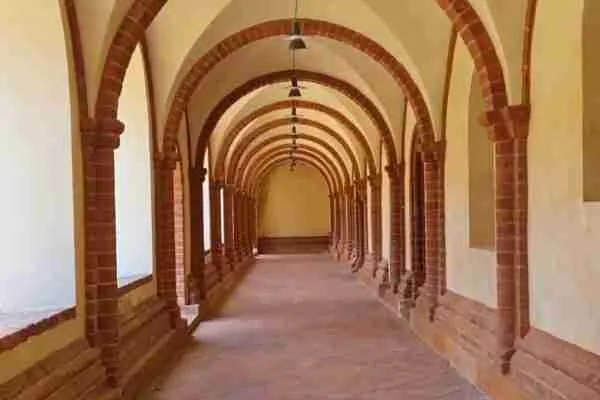
Cistercian Hydraulic Precision: Romanesque-to-Gothic Brickwork Transitions at Kloster Lehnin near Potsdam Kloster Lehnin, founded in 1180 in the sandy Zauche plateau southwest of Potsdam, is the oldest Cistercian monastery in the Mark Brandenburg. Its eight-decade construction sequence — from the Romanesque eastwork begun around 1185 to the Gothic nave completed […]
Read MoreSolitude in the Valley: Cistercian Engineering and Sandstone Sacred Architecture at Vaux-de-Cernay near Paris
Solitude in the Valley: Cistercian Engineering and Sandstone Sacred Architecture at Vaux-de-Cernay near Paris Nested in a fold of the Chevreuse Valley some forty-five kilometres southwest of Paris, Vaux-de-Cernay Abbey (Abbaye des Vaux-de-Cernay) occupies a forest-cut hollow that its twelfth-century founders recognised as an ideal monastic landscape: a year-round stream, […]
Read More