Visiting La Scala: Milan’s Legendary Opera House Guide
Teatro alla Scala stands as the world’s most prestigious opera house, where architectural genius meets legendary performances in a neoclassical masterpiece that has defined operatic excellence for nearly 250 years. From Verdi’s triumphs to Maria Callas’s incomparable artistry, La Scala represents the pinnacle of lyric theater tradition while maintaining its position as living cultural institution where contemporary audiences experience the same acoustical perfection and dramatic intensity that made this Milanese landmark the arbiter of operatic success. This guide reveals the history, architecture, performance traditions, and practical visiting information that transform a visit to La Scala from tourist attraction into profound cultural encounter.
Key Takeaways: Essential La Scala Insights
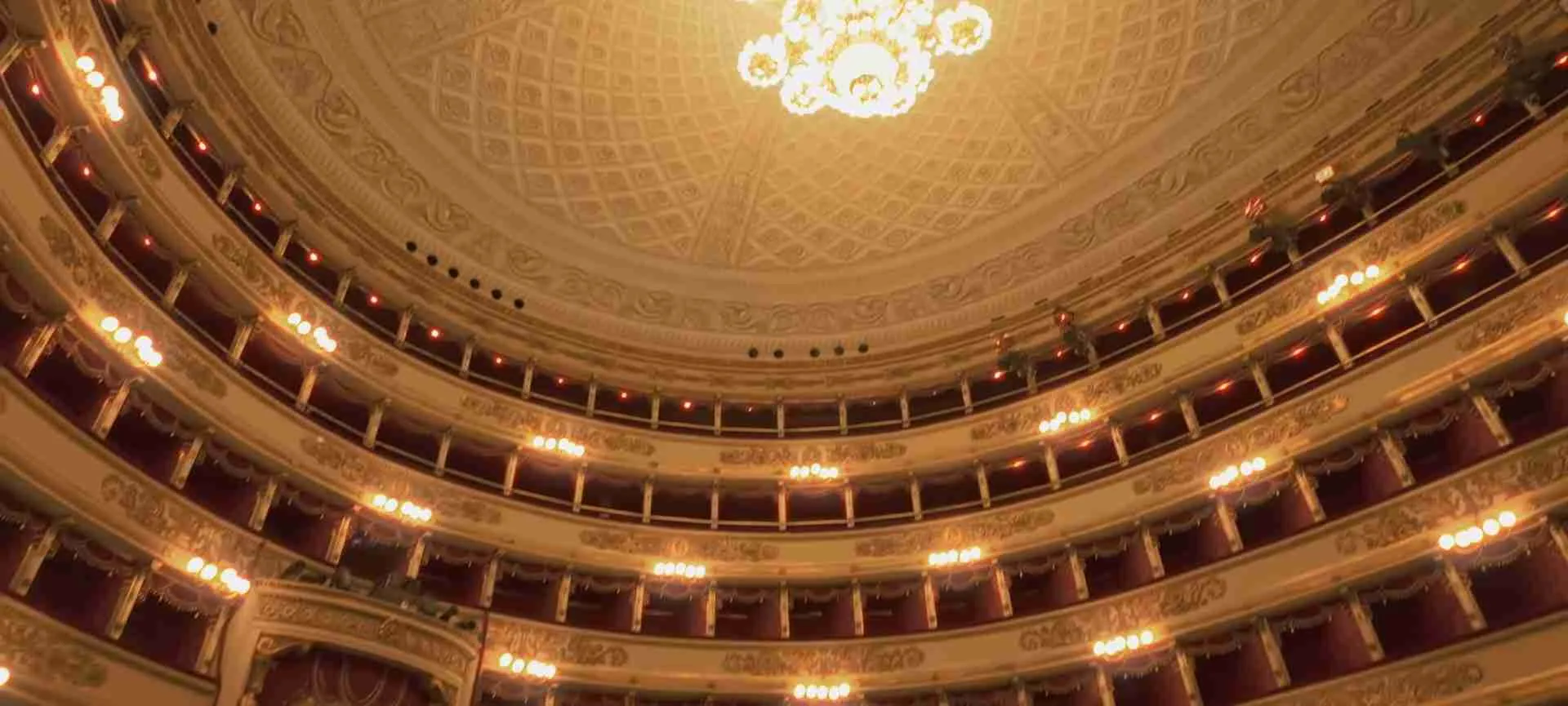
- Acoustical Engineering Marvel: The horseshoe-shaped auditorium designed by Giuseppe Piermarini in 1778 creates acoustics still considered among the world’s finest, achieved through wood resonators, precise geometric proportions, and velvet-draped box tiers that naturally diffuse sound without modern amplification
- Born from Fire: La Scala rose from the ashes of the Teatro Regio Ducale which burned in 1776, constructed in just two years on the site of the demolished Church of Santa Maria alla Scala, from which it takes its name
- The Loggionisti Tradition: The gallery audience known as loggionisti represents opera’s most knowledgeable and feared critics, capable of destroying careers with merciless booing or establishing reputations through ecstatic approval, maintaining standards that make La Scala performances uniquely demanding
- Verdi’s Sacred Ground: Giuseppe Verdi premiered more masterworks at La Scala than any other composer, including the career-making Nabucco and his final operas Otello and Falstaff, establishing the theater as essential pilgrimage site for understanding Italian opera’s greatest genius
- December 7 Opening Night: Each season inaugurates on Sant’Ambrogio feast day, Milan’s patron saint celebration, creating Italy’s most prestigious cultural event where political figures, international celebrities, and opera devotees gather for performances broadcast globally
- Museum Access to Glory: The Teatro alla Scala Museum provides the only guaranteed interior access for visitors who cannot attend performances, offering views of the legendary auditorium from third-level boxes alongside collections documenting 250 years of operatic history through costumes, instruments, portraits, and manuscripts
People Also Ask About La Scala Opera House
Why Is La Scala Considered the World’s Most Important Opera House?
La Scala earned its supreme reputation through the convergence of exceptional acoustics, historic artistic significance, and uncompromising performance standards that established it as the ultimate proving ground for operatic talent. The theater’s legendary acoustics, achieved through Giuseppe Piermarini’s architectural genius employing horseshoe geometry and wood resonators, create sound clarity and warmth that even modern engineering struggles to replicate. This acoustical perfection attracted history’s greatest composers who chose La Scala for premieres of their most important works — Rossini, Bellini, Donizetti, Verdi, and Puccini all entrusted their masterpieces to this stage, knowing the theater’s acoustic revelation would expose every musical detail to educated audiences. The loggionisti gallery critics, opera’s most knowledgeable devotees, maintain standards so exacting that artists consider La Scala approval the profession’s highest validation. Success here guarantees international careers while failure can end them, creating performance intensity impossible to achieve where audiences display unearned generosity. The theater’s continuous operation since 1778, survival through Austrian occupation, Italian unification, world wars, and social transformations, demonstrates institutional resilience that preserved traditions while adapting to contemporary artistic needs, maintaining relevance across nearly three centuries.
What Makes La Scala’s Acoustics So Special?
La Scala’s acoustics result from Piermarini’s synthesis of geometric precision, material science, and empirical understanding of sound behavior that preceded formal acoustical engineering by more than a century. The horseshoe-shaped auditorium naturally distributes sound waves throughout the space without creating dead zones or excessive reverberation, reflecting voices and instruments toward audiences while preventing harsh echoes. The extensive use of wood in ceiling construction and box tier structures creates natural resonance that enriches vocal tone and instrumental timbre, producing the warm, full sound quality that defines the La Scala acoustic signature. The six tiers of boxes, each draped in red velvet with plush furnishings, function as sound-absorbing surfaces that prevent excessive reflective echo while the box openings create cavity resonators that enhance bass frequencies. The theater’s relatively compact 2,000-seat capacity maintains intimate acoustic scale where the most delicate pianissimo reaches the furthest gallery seats without amplification. Modern acoustic measurements reveal remarkably even sound distribution across all seating areas, with reverberation time optimal for Italian opera that balances clarity of text with richness of orchestral tone. These combined factors create acoustic environment where singers experience natural voice projection without forcing, allowing subtle phrasing and dynamic nuance impossible in less acoustically sophisticated venues.
How Did La Scala Influence World Opera?
La Scala established architectural, artistic, and institutional models that opera houses worldwide adopted as standards for excellence, fundamentally shaping how lyric theater developed across Europe and the Americas. Piermarini’s horseshoe auditorium design became the template copied by opera house architects from Naples to Vienna to New York, recognizing that this specific geometry optimized both acoustics and sightlines while creating the social hierarchy of box tiers that defined 19th-century theater culture. The theater’s relationship with composers, particularly Verdi, demonstrated how institutional support could nurture artistic development — Verdi composed specifically for La Scala’s acoustics and company strengths, creating works that exploited the theater’s capabilities while the management provided resources, rehearsal time, and casting quality that allowed experimental artistic choices. This composer-theater partnership model influenced how major opera houses approached new commissions and premieres. La Scala’s conducting tradition, particularly under Arturo Toscanini who served as music director from 1898-1903 and 1921-1929, established standards for orchestral precision, dramatic pacing, and respect for composers’ intentions that transformed conducting from time-beating to interpretive artistry. Toscanini’s La Scala performances created the modern expectation that opera should achieve symphonic orchestral standards while maintaining dramatic coherence, influencing conducting pedagogy and performance practice globally. The theater’s star system, where legendary singers from Pasta to Callas achieved fame through La Scala success, created the international opera circuit where artists moved between major houses carrying repertoire and performance traditions that standardized operatic practice across national boundaries.
Can You Visit La Scala Without Attending a Performance?
Yes, the Museo Teatrale alla Scala provides comprehensive access to the theater’s history, architecture, and artistic legacy through museum galleries and viewing opportunities into the legendary auditorium itself. The museum occupies the Casino Ricordi building adjacent to the theater, housing one of the world’s finest collections of opera memorabilia including costume designs, musical instruments, composer manuscripts, conductor batons, and portraits of legendary artists who graced La Scala’s stage. The museum ticket includes access to third-level box viewing positions that allow visitors to see the auditorium’s horseshoe shape, gilded box tiers, and painted ceiling, though the stage itself often remains hidden behind curtains during rehearsal periods. This viewing opportunity depends on the performance schedule — when rehearsals, performances, or special events occupy the theater, the auditorium remains closed to museum visitors, so viewing access varies daily. The museum displays rotate seasonally, featuring special exhibitions that explore specific composers, performers, or historical periods alongside permanent collections documenting La Scala’s 250-year history. Audio guides in multiple languages provide context for the displays while touchscreen installations offer virtual tours of normally restricted areas including backstage facilities, costume workshops, and rehearsal rooms. Museum visits typically require 45-60 minutes for thorough exploration, though opera enthusiasts often spend considerably longer examining the detailed historical documentation and artistic treasures. This museum access represents the only way to experience La Scala’s interior for visitors who cannot secure performance tickets or whose Milan visit doesn’t coincide with the opera season.
Extended multi-day tours – 5+ days
Featured Milan Multi-Day Tour Packages
7 days
Two Cities & Two Lakes: From Como to Verona
- ✓ Comprehensive Milan tour
- ✓ Expert local guides included
- ✓ All accommodation arranged
- ✓ Transportation provided

5 days
5 Day Italy Tour Package with Bernina Express – Verona, Sirmione, Bellagio & Como
- ✓ Comprehensive Milan tour
- ✓ Expert local guides included
- ✓ All accommodation arranged
- ✓ Transportation provided
6 days
Lugano for All Ages: Adventures in the Alps
- ✓ Booking needs min. 2 travelers
7 days
Discover Italy end Milan
- ✓ Comprehensive Milan tour
- ✓ Expert local guides included
- ✓ All accommodation arranged
- ✓ Transportation provided
Multi-day tour packages powered by TourRadar. Prices and availability subject to change.
Introduction: Understanding La Scala’s Significance
Teatro alla Scala occupies unique position in cultural history as the institution that defined operatic excellence and established standards by which all other opera houses measure themselves. Unlike theaters that achieved prominence through royal patronage or civic pride, La Scala earned supremacy through uncompromising artistic standards, acoustical perfection, and the fortunate convergence of architectural genius with the golden age of Italian opera composition. The theater opened in 1778 as Milan navigated Austrian imperial control, Italian cultural nationalism, and Enlightenment ideas about public culture, creating an institution that served simultaneously as aristocratic social club, middle-class cultural aspiration, and nationalist symbol.
The building itself represents neoclassical architecture at its most functionally elegant, where Giuseppe Piermarini subordinated exterior ostentation to interior acoustical and social engineering. While the facade presents modest columned portico appropriate to a crowded urban street, the auditorium creates theatrical space of extraordinary sophistication through horseshoe geometry, tiered boxes establishing social hierarchy, and material choices that produce legendary sound quality. This architectural achievement made possible the artistic triumphs that followed — composers wrote specifically for La Scala’s acoustics, singers shaped interpretations to exploit the theater’s intimate scale, and audiences developed critical sophistication that elevated performance standards across the art form.
La Scala’s influence extended beyond performances to shape opera as institution and profession. The theater pioneered long-term music director appointments that allowed artistic vision to develop across seasons rather than single productions. It established the premiere system where new works received extensive rehearsal time and production resources that treated opera as serious artistic endeavor rather than mere entertainment. The La Scala chorus, orchestra, and ballet achieved independent artistic excellence that influenced ensemble standards internationally. The theater’s archive and museum, among opera’s most comprehensive, demonstrated commitment to preserving institutional memory and making operatic heritage accessible to scholars and public alike.
For contemporary visitors, La Scala presents dual identity as living performance venue and historical monument. The theater continues producing full seasons of opera, ballet, and concerts featuring international stars and emerging artists, maintaining traditions while commissioning contemporary works that extend the repertoire. Simultaneously, it functions as museum and educational institution where the public engages with opera’s history through guided tours, exhibitions, and archival access. This balance between preservation and innovation, respect for tradition and openness to change, defines La Scala’s ongoing relevance as cultural institution that refuses relegation to historical relic status.
Architectural Genesis: Piermarini’s Neoclassical Masterpiece
Giuseppe Piermarini received the La Scala commission in 1776 following the devastating fire that destroyed the Teatro Regio Ducale on February 25 during Carnival celebrations. Empress Maria Theresa of Austria, who controlled Milan through the Hapsburg empire, authorized construction of a replacement theater to be funded by aristocrats who owned boxes in the destroyed building. These box owners, ninety wealthy Milanese families, essentially purchased construction financing in exchange for perpetual box ownership rights that they could furnish according to personal taste and pass to heirs as valuable property.
Piermarini, already established as Milan’s leading architect through his design of the Palazzo Reale and other civic structures, approached the opera house commission with neoclassical principles emphasizing geometric clarity, proportional harmony, and functional efficiency. The site selected was the Church of Santa Maria alla Scala, a 14th-century structure named for its patron Beatrice della Scala of Verona, wife of Bernabò Visconti. The church was deconsecrated and demolished to provide the necessary urban space, though its name survived in the theater’s title — Teatro alla Scala, or Theater at the Scala.
Construction proceeded with remarkable speed, completing in just two years what normally required half a decade for comparable structures. This efficiency resulted from Piermarini’s systematic planning, prefabrication of architectural elements, and the financial pressure from box owners eager to reclaim their social venue. The theater opened August 3, 1778, with Antonio Salieri’s opera “L’Europa riconosciuta,” specially commissioned for the inauguration and featuring spectacular scenic effects designed to showcase the stage’s mechanical capabilities.
The exterior facade presents understated elegance appropriate to its urban context on the narrow Via dei Filodrammatici. Piermarini avoided baroque exuberance in favor of classical restraint, employing a portico of arches at ground level supporting upper floors articulated with pilasters and rectangular windows. This relative modesty reflected both neoclassical aesthetic principles and practical urban planning — the theater was never intended as freestanding monument but as sophisticated building integrated into Milan’s dense urban fabric. The facade’s cream-colored surface and geometric regularity create dignified presence without overwhelming neighboring structures.
The interior auditorium reveals Piermarini’s true genius through the revolutionary horseshoe shape that became the model for opera houses worldwide. This geometry, departing from earlier rectangular or oval theater forms, optimizes acoustic reflection patterns while providing excellent sightlines from all seating areas. The auditorium accommodates approximately 2,000 spectators distributed between the parterre (main floor seating) and six tiers of boxes rising in graduated horseshoe curves toward the gallery at the top. Each tier contains boxes of varying sizes that wealthy families owned, furnished, and used as semi-private spaces for entertaining guests between and even during performances.
The stage opening measures 16 meters wide by 12 meters high, with stage depth extending 28 meters to accommodate elaborate scenery and complex mechanical effects. Piermarini designed sophisticated understage machinery for trap doors, scene changes, and special effects that remained cutting-edge technology into the 19th century. The orchestra pit, visible to audiences in the original configuration, later received modifications that could lower it partially or completely depending on repertoire requirements and conductor preferences.
The ceiling, painted by Alessandro Sanquirico in 1830 replacing an earlier decorative scheme, features allegorical figures and trompe-l’oeil architectural elements that create illusionistic height. Modern restoration revealed that this decorative program serves acoustical purposes as well as aesthetic ones — the painted surface treatments affect sound reflection patterns in ways Piermarini understood empirically if not scientifically. The central chandelier, a massive crystal creation weighing over 1,000 kilograms, originally held oil lamps, later gas lights, and finally electric bulbs when the theater converted to electrical illumination in 1883.
The boxes themselves represent architectural and social innovation. Each box forms a small room approximately 2-3 meters deep with seating for 4-8 occupants depending on tier and position. Owners furnished their boxes with personal taste, creating miniature salons decorated with silk wall coverings, gilt mirrors, comfortable seating, and sometimes refreshment facilities. This box system transformed opera attendance into complex social ritual where seeing and being seen rivaled the stage performance for aristocratic attention. The boxes facilitated conversation, gambling, dining, and business transactions, making La Scala as much social club as theater.
Historical Evolution: From Austrian Rule to International Icon
La Scala opened during Austrian imperial control of Lombardy, serving initially as entertainment venue for Habsburg administrators and Milan’s aristocratic collaborators. The early repertoire favored opere serie (serious operas) on mythological or historical subjects that reinforced hierarchical social values and avoided politically sensitive contemporary themes. However, the theater quickly became site of subtle Italian nationalism where audiences claimed cultural space distinct from Austrian political dominance.
The arrival of Gioachino Rossini in 1812 with “La pietra del paragone” inaugurated La Scala’s golden age. Rossini’s comic brilliance and melodic inventiveness captivated Milanese audiences while his technically demanding vocal writing established the theater as showcase for virtuoso singing. Between 1812 and 1828, Rossini premiered several major works at La Scala, though his relationship with the theater remained complicated by competing loyalties to Naples and other cities.
Vincenzo Bellini achieved early triumph at La Scala with “Il pirata” in 1827 and “Norma” in 1831, the latter becoming one of bel canto’s supreme masterpieces. “Norma” received mixed initial reception, with critics finding fault with the vocal demands and dramatic pacing. However, the opera’s combination of melodic beauty and dramatic intensity eventually established it as repertoire cornerstone and supreme test of soprano artistry. La Scala’s association with “Norma” began a tradition where specific operas became identified with the theater through premiere or particularly important productions.
Giuseppe Verdi’s relationship with La Scala defines the composer’s career trajectory and the theater’s historical importance. His first opera, “Oberto, Conte di San Bonifacio,” premiered at La Scala in 1839, launching the career of Italy’s greatest operatic genius. After the failure of his comic opera “Un giorno di regno” in 1840, Verdi achieved his first major triumph with “Nabucco” in 1842. The opera’s patriotic Hebrew slave chorus became unofficial Italian unification anthem, transforming Verdi into national symbol and La Scala into site of nationalist sentiment.
Verdi’s subsequent relationship with La Scala fluctuated between triumph and conflict. He objected strenuously when the theater altered his scores or cast singers he considered inadequate, leading to periods where he refused to allow La Scala performances. However, the theater remained essential to his career — he premiered “Otello” there in 1887 and “Falstaff” in 1893, his final two operas that represented the culmination of Italian operatic achievement. Verdi conducted his Requiem at La Scala in 1874, demonstrating that the theater transcended opera to serve as Milan’s primary cultural venue for all musical forms.
The late 19th century brought gradual democratization as middle-class audiences gained access previously restricted to aristocrats. Gallery seating accommodated students, workers, and opera enthusiasts who could not afford expensive box seats but who developed the critical sophistication that made the loggionisti famous as opera’s most knowledgeable and demanding audience. These gallery critics memorized scores, compared performances across decades, and imposed standards that established or destroyed artistic reputations.
Arturo Toscanini’s appointment as music director in 1898 revolutionized La Scala’s artistic standards and institutional practices. Toscanini demanded unprecedented rehearsal time, insisted on performing complete operas without traditional cuts, and enforced discipline that transformed the orchestra from competent ensemble into world-class symphonic instrument. He championed Wagner’s operas, previously performed inadequately or not at all at La Scala, establishing the German repertoire alongside Italian works. Toscanini’s commitment to composers’ intentions, rejection of star vanity, and insistence on ensemble excellence created the modern opera house model that influenced institutions worldwide.
World War II brought devastation when Allied bombing severely damaged La Scala on August 15-16, 1943. The auditorium roof was destroyed, the stage area burned, and water from firefighting efforts ruined decorative elements. The bombing targeted Milan’s industrial capacity, but La Scala’s proximity to military-related facilities made it collateral victim. Remarkably, reconstruction began even before the war ended, reflecting the theater’s importance to Milanese identity. The restored La Scala reopened May 11, 1946, with a concert conducted by Toscanini, who had left Italy during Mussolini’s fascist regime but returned to lead this symbolic cultural renewal.
The postwar period established La Scala as truly international institution. Maria Callas’s association with the theater from 1951-1962 created legendary performances of bel canto repertoire and dramatic operas that redefined possibilities for soprano interpretation. Her collaborations with conductor Victor De Sabata and director Luchino Visconti produced operatic theater of unprecedented psychological depth and musical intensity. Callas’s tempestuous relationship with La Scala audiences and management, including her dramatic walkout from a 1958 “Norma” performance, reinforced the theater’s reputation as venue where artistic excellence and personal drama intertwined.
Major renovation from 2002-2004 modernized backstage facilities, expanded rehearsal space, and updated technical systems while preserving Piermarini’s auditorium largely intact. Architect Mario Botta directed this sensitive intervention that balanced historical preservation with contemporary operational needs. The renovated theater reopened December 7, 2004, with Salieri’s “L’Europa riconosciuta,” the same opera that inaugurated the building in 1778, conducted by Riccardo Muti as gesture of historical continuity.
The Museo Teatrale alla Scala: Opera’s Greatest Museum
The Museo Teatrale alla Scala occupies the Casino Ricordi building adjacent to the theater, housing collections that document nearly 250 years of operatic history through artifacts, artworks, and memorabilia spanning from the 18th century to contemporary productions. The museum originated in 1913 when antique dealer Giulio Sambon donated his extensive collection of theatrical materials to the city of Milan, establishing the foundation for what became one of the world’s most comprehensive opera museums.
The museum’s galleries display costume designs, stage models, musical instruments, conductor batons, singer portraits, and composer manuscripts that illustrate how operas were conceived, produced, and performed across different historical periods. Original costume sketches for Verdi premieres demonstrate how 19th-century designers interpreted historical periods and dramatic situations. Musical instruments including harpsichords, fortepianos, and early string instruments show the evolution of orchestral sound that influenced compositional choices. The museum’s collection of conductor batons includes instruments used by Toscanini, De Sabata, and other legendary maestros, each reflecting different conducting philosophies and techniques.
Portrait galleries feature paintings, sculptures, and photographs of artists who shaped La Scala’s history. Giuseppe Verdi appears in multiple representations from youthful composer through venerable national monument, each image documenting different career phases and historical contexts. Maria Callas occupies special place in the collection, with photographs capturing her dramatic transformation from heavy young soprano to glamorous diva whose charisma extended beyond musical ability to redefine opera’s cultural presence. The gallery of conductors, singers, and dancers creates visual chronicle of operatic interpretation across nearly three centuries.
The museum’s manuscript collection preserves autograph scores, librettos, and correspondence documenting the creative process behind operatic masterpieces. Verdi’s correspondence with librettists, publishers, and theater administrators reveals the practical and artistic challenges of opera production. Early printed librettos show how opera texts circulated independently of scores, functioning as literature that audiences studied before and after performances. Production records document casting decisions, rehearsal schedules, and financial arrangements that illuminate the business side of operatic culture.
Museum admission includes access to third-level box viewing positions that allow visitors to see into the legendary auditorium when rehearsals or performances do not occupy the space. These viewing opportunities remain subject to daily scheduling variations — morning visits generally encounter rehearsals that close the auditorium, while afternoon periods between rehearsal and evening performance often permit viewing. The experience of seeing the auditorium from the boxes provides visceral understanding of the theater’s horseshoe geometry, the intimacy of its 2,000-seat scale, and the visual grandeur of the gilded box tiers rising in golden curves toward the painted ceiling.
Special exhibitions rotate seasonally, exploring specific themes, composers, or historical periods through focused presentations that complement the permanent collections. Recent exhibitions have examined Verdi’s relationship with La Scala, the evolution of ballet at the theater, and the technical innovations in stage machinery and lighting that transformed production possibilities. These thematic exhibitions draw on La Scala’s extensive archives, private collections, and loans from other institutions to create scholarly presentations accessible to general audiences.
The museum operates audio guide programs in Italian, English, French, German, Spanish, and Japanese, providing detailed commentary on major exhibits and historical context for understanding La Scala’s cultural significance. These guides include special children’s versions that transform museum visits into educational adventures appropriate for younger visitors. Interactive touchscreen displays supplement the audio guides with video content showing historic performances, interviews with artists, and virtual reconstructions of past productions that bring static exhibits to dynamic life.
The museum shop offers specialized publications on opera history, La Scala recordings, and reproductions of theatrical artwork that extend the museum experience beyond the visit itself. The shop stocks scholarly monographs, popular opera biographies, and librettos in multiple languages, serving both specialist researchers and general enthusiasts. Recording collections include historic La Scala performances documenting legendary artists and productions that shaped 20th-century operatic interpretation.
The museum opens daily from 9:30 AM to 5:30 PM, with last admission at 5:00 PM. It closes on December 7, 25, and 26; January 1; Easter; May 1; and August 15. On December 24 and 31, the museum operates reduced hours from 9:30 AM to 3:00 PM with last admission at 2:30 PM. These closures reflect major Italian holidays and La Scala’s opening night on December 7 when the entire complex focuses on the season-inaugurating performance.
Performance Traditions: The Loggionisti and Opening Night
La Scala’s performance culture distinguishes itself through traditions that create unique theatrical atmosphere blending reverence for operatic heritage with uncompromising critical standards. The loggionisti, occupying the gallery seats at the auditorium’s top tier, represent opera’s most knowledgeable and feared audience faction. These devotees, predominantly middle-class and working-class enthusiasts, attend performances armed with detailed score knowledge, comparative memory of past interpretations, and willingness to express approval or disapproval with thunderous applause or devastating boos.
The loggionisti tradition emerged in the 19th century when gallery seats offered affordable access to opera for audiences excluded from expensive boxes. These gallery occupants developed encyclopedic knowledge of repertoire, memorizing scores and comparing current performances against historical standards maintained through oral tradition and critical consensus. Their approval could establish careers while their disapproval could destroy reputations, creating performance pressure unique to La Scala where even established stars faced potential humiliation if they failed to meet exacting expectations.
Famous incidents illustrate the loggionisti’s power. In 2006, tenor Roberto Alagna fled mid-performance from “Aida” after gallery boos greeted his entrance aria, forcing understudy Antonello Palombi to replace him without costume change or preparation. This dramatic walkout demonstrated that no artist, regardless of international reputation, escapes loggionisti judgment. Conversely, their ecstatic approval creates legendary evenings when standing ovations, flower throwing, and sustained applause acknowledge exceptional artistry. Maria Callas experienced both extremes — triumphant receptions that confirmed her genius and hostile demonstrations including her 1958 “Norma” walkout that triggered international scandal.
Gallery tickets, limited to 140 per performance, can be purchased through special procedures managed by the musical association L’Accordo that preserves gallery access for genuine opera enthusiasts rather than casual tourists. These tickets, priced at €10 for obstructed-view gallery positions, maintain the tradition of affordable access while the waiting list system prevents speculation and ensures that seats reach dedicated opera lovers willing to arrive hours before curtain to secure positions.
Opening Night on December 7, feast of Sant’Ambrogio, Milan’s patron saint, represents Italian culture’s most prestigious annual event. The season-inaugurating performance attracts political leaders, international celebrities, fashion designers, industrial magnates, and opera devotees in formal evening dress, creating spectacle that extends beyond the stage to the auditorium itself. Television broadcasts reach millions of viewers across Italy and internationally, making the opening performance showcase for Italian artistic achievement and La Scala’s continued cultural relevance.
Opening Night ticket allocation follows complex protocols balancing tradition, patronage, and public access. Season subscribers receive priority for their customary seats, corporate sponsors and government officials occupy designated boxes, while remaining tickets sell through public channels months in advance. The €50 gallery tickets for Opening Night become available through waiting list procedures that favor L’Accordo members, maintaining the principle that Milan’s working-class opera enthusiasts deserve representation at the season’s most important event.
The Opening Night opera selection signals La Scala’s artistic priorities for the season ahead. Recent choices have ranged from Verdi and Puccini staples to Wagner cycles and contemporary commissions, each selection sparking months of anticipation and critical speculation. The production standards for Opening Night exceed normal performance levels — extended rehearsal periods, international star casting, and production budgets that create theatrical events impossible to replicate throughout the season. Success on Opening Night establishes momentum for the season while perceived failures create artistic and administrative controversies that roil Milan’s cultural politics for months.
The Opening Night tradition includes elaborate social rituals beyond the performance itself. Fashionable Milanese display designer gowns and jewels that make the auditorium showcase for Italian style alongside musical artistry. Post-performance dinners at exclusive restaurants continue the social theater into early morning hours. Media coverage analyzes not only artistic achievement but also who attended, what they wore, and political implications of seating assignments and government presence. This fusion of art, fashion, politics, and society creates cultural event unique to La Scala’s position in Italian life.
Attending a Performance: Tickets, Dress Code, and Etiquette
Securing performance tickets requires advance planning as La Scala sells subscriptions and individual tickets through carefully structured schedules designed to balance season subscriber rights, patronage obligations, and public access. Subscriptions for each season go on sale the preceding May, with “Prime” subscriptions offering all opening nights and premium productions at substantial prices that appeal to serious opera devotees and corporate entertainment budgets. These subscription categories include Opera Prime, Ballet Prime, and various Mini and Weekend options that allow customized season attendance while guaranteeing seats for high-demand productions.
Individual performance tickets become available on dates specified in La Scala’s sales calendar, typically opening two to four months before each production’s premiere. The official online ticket platform represents the only authorized sales channel — La Scala explicitly warns against unauthorized resellers who charge premium prices for tickets that may be counterfeit or invalidated upon presentation. Tickets register to the purchaser’s name and cannot be cancelled, replaced, or transferred, requiring buyers to verify date and performance details at purchase to avoid expensive mistakes.
Ticket prices vary dramatically by production type, seat location, and performance date. Gallery seats at €10 offer the most affordable access, though their obstructed sightlines and demanding loggionisti neighbors create challenging conditions for inexperienced operagoers. Box seats and orchestra level positions range from €100-300 for standard productions, escalating to €400-600 for opening nights and special galas. A 20% online processing fee applies to all tickets purchased through the official platform, representing the premium paid for guaranteed authenticity and convenient advance purchase.
The La Scala box office at Largo Ghiringhelli operates Monday through Saturday from 1:00 PM to 6:00 PM, extending hours on performance days to open two hours before curtain until performance start. In-person purchase allows seat selection visualization through seating charts and eliminates online processing fees, though the box office closes during major holidays and the August summer break when performances do not occur. Telephone purchases through the dedicated line +39 02 72003744 accommodate buyers who prefer personal service while avoiding physical travel to Milan.
Dress code expectations reflect La Scala’s status as formal cultural institution where audiences dress “in keeping with the decorum of the Theatre,” as official policy states. Men typically wear dark suits or tuxedos for opening nights and premieres, while women favor evening gowns or cocktail dresses. Standard performances allow somewhat relaxed formality, though shorts, sleeveless shirts, and casual sportswear face explicit prohibition with refused admission and no refund for inappropriately dressed patrons. This dress code maintains the sense of occasion that distinguishes opera attendance from casual entertainment while respecting the theater’s historical traditions and contemporary patrons’ expectations.
Performance start times vary by production type and day of week, with most evening performances beginning at 8:00 PM. Sunday matinees and special performances may start at 3:00 PM or 6:00 PM, requiring careful attention to ticket specifications. La Scala enforces punctual starts, closing auditorium doors at curtain time and seating latecomers only during designated intervals or scene changes. Arriving at least twenty minutes before performance time allows relaxed navigation of security screening, coat check, and seat location while providing time to absorb the auditorium’s atmosphere before the house lights dim.
Mobile phone use during performances faces absolute prohibition, with ushers intervening to silence devices that ring or illuminate. Photography remains forbidden in the auditorium during performances, though the museum allows photography without flash. These restrictions maintain the concentration necessary for operatic performance while respecting artists’ rights and other patrons’ experience. Violators risk removal from the theater without refund, enforcing standards that protect the artistic integrity La Scala considers essential to its mission.
The theater’s bars in the Parterre, Boxes, and Galleries foyers serve refreshments during intervals, allowing patrons to socialize while discussing the performance’s artistic merits. Pre-ordering refreshments through the online system eliminates interval queuing, providing guaranteed service for those who prefer efficient interval use. Special interval dinner menus available by advance reservation transform refreshment into elegant dining experience, particularly popular for opening nights and special occasions when extended interval socializing enhances the theatrical event.
Children under age 3 face admission prohibition except for special family programming designed for young audiences. Children aged 3-17 may attend regular performances though parents bear responsibility for ensuring young attendees’ behavior does not disturb other patrons. The theater offers special productions created for children that introduce opera and ballet through age-appropriate programs with reduced ticket prices and relaxed behavioral expectations, providing family-friendly introduction to La Scala’s artistic mission.
The Academy: Training Opera’s Future
The Accademia Teatro alla Scala, founded in 1813, represents one of the world’s most prestigious institutions for professional training in opera, ballet, and theatrical crafts. The academy operates as autonomous entity affiliated with La Scala, providing specialized education that prepares students for careers in professional opera companies, ballet companies, and theater production worldwide. The academy’s location adjacent to the theater allows students to observe professional rehearsals, attend performances, and occasionally participate in La Scala productions, creating educational environment where training occurs in direct contact with professional practice.
The vocal department trains opera singers through rigorous curriculum combining technical voice building, musical coaching, dramatic interpretation, and language study. Students receive individual lessons with established voice teachers while participating in ensemble classes that develop musicianship, sight-reading, and collaboration skills essential for professional opera work. The program emphasizes bel canto technique as foundation for all vocal styles while exposing students to contemporary compositional approaches and expanded vocal techniques required in modern opera. Masterclasses with internationally recognized singers provide exposure to diverse interpretive traditions and career guidance from artists who navigate the professional opera circuit.
The ballet school maintains similarly exacting standards, accepting students as young as age 10 for intensive training that develops classical technique through the Italian ballet tradition distinguished by precision, clarity, and dramatic expression. The curriculum progresses through increasingly demanding technical requirements while introducing students to contemporary choreographic styles that prepare them for modern ballet company repertoires. Students advance through eight levels over approximately eight years, culminating in final-year performances that serve as professional auditions for ballet companies seeking young dancers. The school’s placement rate in major companies demonstrates its effectiveness — graduates regularly join La Scala’s own company, Paris Opera Ballet, Royal Ballet, American Ballet Theatre, and other leading international companies.
The stage management and technical training programs address the specialized skills required for professional theater production. Students learn lighting design, scenic construction, costume technology, and stage mechanics through hands-on experience with La Scala productions. This practical training, supervised by the theater’s professional technical staff, provides competency in both traditional theatrical crafts and contemporary digital technologies that have transformed stage production. Graduates pursue careers as stage managers, technical directors, lighting designers, and production supervisors in opera houses, theaters, and entertainment venues worldwide.
The academy admits students through competitive auditions held annually, attracting applicants from across Italy and internationally. Acceptance rates remain extremely selective, typically admitting fewer than 10% of vocal auditions and similar percentages for ballet and technical programs. This selectivity maintains quality standards while ensuring that admitted students possess sufficient talent and commitment to benefit from intensive professional training. Tuition remains relatively modest by international conservatory standards, reflecting Italian public support for arts education, though living expenses in Milan create financial challenges for students from modest economic backgrounds.
La Scala Museum: Practical Visiting Information
The Museo Teatrale alla Scala provides the most accessible way to experience La Scala for visitors who cannot attend performances or whose Milan visit occurs outside the opera season. The museum occupies the Casino Ricordi building at Largo Ghiringhelli, adjacent to the theater’s stage entrance, with museum entrance easily identified by signage and visitor queues during peak tourist periods.
Museum hours operate daily from 9:30 AM to 5:30 PM, with final admission at 5:00 PM allowing the standard 45-60 minute visit before closing. The museum closes on major Italian holidays including December 7 (opening night when the entire complex focuses on the season premiere), December 25-26 (Christmas), January 1 (New Year), Easter Sunday, May 1 (Labor Day), and August 15 (Assumption). On December 24 and 31, abbreviated hours operate from 9:30 AM to 3:00 PM with last admission at 2:30 PM, accommodating reduced staff during holiday periods.
Admission prices structure access across visitor categories. The “Open Ticket” at €15 provides flexible-date admission with fast-track entry bypassing standard ticket lines, ideal for visitors with uncertain schedules or those visiting during peak tourist seasons when standard entry queues extend beyond comfortable waiting times. Fixed-date tickets cost €12, requiring visitors to select specific visit dates at purchase but offering modest savings for those with confirmed travel plans. Students and visitors over age 65 receive reduced admission at €8 upon presenting valid identification demonstrating age or student status.
Children under age 6 enter free, as do disabled visitors, ICOM members, soldiers in uniform, La Scala season ticket holders, and holders of Lombardy museum passes or YesMilano city passes. Tour groups of 15 or more participants receive €8 per-person pricing, though groups must reserve in advance through telephone (+39 02 9990 1919) or email to coordinate visit timing and ensure adequate museum capacity. School groups accompanied by teachers pay €4 per student with complimentary admission for one teacher per ten students, supporting educational access to opera history.
Audio guides are included in all admission tickets through the museum’s smartphone application available for free download from Google Play and Apple App Store. The application provides detailed commentary in Italian, English, French, German, Spanish, and Japanese, with special children’s versions that transform museum exploration into interactive educational experience. The museum’s WiFi network allows on-site application download for visitors who did not prepare in advance, though downloading before arrival streamlines the visit by avoiding connection delays.
The museum ticket includes potential access to view the theater auditorium from third-level boxes, though this viewing opportunity depends entirely on the daily rehearsal and performance schedule. When the theater remains free from rehearsals, technical work, or public events, museum staff open designated boxes allowing visitors to see the legendary horseshoe auditorium, gilded box tiers, painted ceiling, and stage area (usually concealed behind the curtain). The museum’s website provides daily updates indicating when theater viewing will be available, allowing visitors to time their museum visit for maximum access. Morning visits generally encounter rehearsals that close the auditorium, while mid-afternoon periods between rehearsal and evening preparation often permit viewing.
Security screening at museum entry prohibits backpacks, large bags, suitcases, and oversized camera equipment. Free cloakroom service provides secure storage for prohibited items, though visitors should allow extra time for screening and storage procedures. The museum’s compact galleries and staircases make large bags impractical even without prohibition, so traveling light enhances the visit experience. Standard cameras and smartphones for personal photography receive permission in museum galleries, though flash photography faces prohibition to protect light-sensitive historical materials and artworks.
The museum’s location in Piazza della Scala places it at the geographic and cultural heart of Milan. The Duomo cathedral stands 5 minutes’ walk through the magnificent Galleria Vittorio Emanuele II shopping arcade. The Brera Art Gallery, Castello Sforzesco, and other major cultural sites lie within comfortable walking distance, making the La Scala Museum natural component of comprehensive Milan cultural itineraries. The Duomo and Cordusio metro stations both provide convenient access via Milan’s efficient subway system.
Beyond the Museum: Exploring La Scala’s Neighborhood
Piazza della Scala, the square fronting the theater, creates urban space of remarkable historical and aesthetic coherence where La Scala faces Palazzo Marino (Milan’s city hall) across the plaza while Leonardo da Vinci’s monument occupies the square’s center. This spatial arrangement expresses Milan’s identity as city where culture and civic governance operate as complementary forces, with the opera house and municipal palace defining the square’s boundaries. The Leonardo monument, erected in 1872, celebrates Milan’s greatest adopted genius while the piazza’s elegant paving and limited vehicular traffic create pedestrian-friendly environment for approaching the theater.
The Galleria Vittorio Emanuele II connects Piazza della Scala to the Duomo square through one of Europe’s most beautiful 19th-century shopping arcades. This glass-vaulted passage, designed by Giuseppe Mengoni and completed in 1877, houses luxury shops, historic cafes, and restaurants that make it both commercial destination and architectural landmark. The galleria’s cruciform plan creates four arms meeting beneath an octagonal glass dome, with elaborate mosaic floors depicting emblems of Italian cities. Walking through the galleria from the Duomo to La Scala replicates the historic route that opera audiences followed when attending performances, experiencing Milan’s urban grandeur en route to theatrical splendor.
Historic cafes surrounding Piazza della Scala maintain traditions of pre- and post-performance refreshment that extend the opera experience beyond the theater itself. These establishments, including Biffi and Savini, have served La Scala audiences since the 19th century, providing settings where opera discussions continue over Milanese cuisine and fine wines. Booking reservations for post-performance dinners requires advance planning during the opera season when tables near La Scala command premium demand from opera enthusiasts who consider leisurely post-performance analysis essential component of the evening’s cultural experience.
The adjacent Casa Ricordi building, now housing the museum, represents another layer of Milan’s operatic heritage. The Ricordi family publishing house dominated Italian music publishing from the early 19th century through the 20th century, controlling rights to Rossini, Bellini, Donizetti, Verdi, and Puccini operas while shaping repertoire development through their near-monopoly on Italian operatic publishing. The Ricordi archive, one of opera’s most important manuscript collections, preserves autograph scores and correspondence that document the creative processes behind operatic masterworks. The archive’s location adjacent to La Scala reinforces the institutional relationships that sustained Italian opera as commercial, artistic, and cultural enterprise.
The Brera district, extending north from Piazza della Scala, offers contrast to the formal monumentality of the theater neighborhood through its narrow streets, artist studios, antique shops, and bohemian atmosphere. The Pinacoteca di Brera art gallery houses one of Italy’s finest painting collections, including masterworks by Mantegna, Raphael, Caravaggio, and other Renaissance and Baroque masters. Exploring Brera before or after La Scala visits provides deeper understanding of the visual arts traditions that influenced operatic scenic design and the broader cultural context in which opera developed as synthesis of music, drama, and visual spectacle.
Frequently Asked Questions
How far in advance should I purchase La Scala performance tickets?
Purchase tickets as soon as they become available through the official sales calendar, typically two to four months before premiere performances. High-demand productions including opening nights, popular operas with star casts, and special events sell out within hours of sales opening, requiring immediate action when sales begin. Standard weeknight performances of less popular repertoire may remain available for weeks, allowing more flexible planning. The official website posts the sales opening calendar well in advance, enabling prospective attendees to mark calendar dates and prepare for immediate purchase when sales commence. Subscribing to La Scala’s email newsletter provides advance notification of sales openings and special ticket opportunities.
What is the difference between parterre, box, and gallery seating?
Parterre seats occupy the main orchestra level floor providing direct frontal views of the stage without elevation, offering excellent proximity to the action though sightline quality varies by row with rear parterre seats experiencing some obstruction from the conductor and orchestra pit. Box seats, arranged in six tiers rising in horseshoe curves, provide elevated side and frontal perspectives that reveal stage depth and ensemble positioning while creating intimate viewing environment within the small box spaces that historically served as semi-private social areas. Gallery seats at the auditorium’s top tier offer distant but unobstructed frontal views at minimal cost, attracting the knowledgeable loggionisti audience whose critical standards and vocal participation create unique performance atmosphere. Acoustic quality remains excellent throughout the theater due to Piermarini’s geometrical genius, though visual intimacy with performers varies dramatically between close parterre seats and distant gallery positions.
Can I take a guided tour of La Scala’s backstage areas?
Yes, guided tours provide access to areas normally restricted to museum visitors, including stage areas, rehearsal rooms, and production facilities. These specialized tours operate during limited time periods when rehearsal and performance schedules permit, typically offering Italian, English, and French language options at scheduled times throughout the day. Tours must be reserved in advance through the museum’s booking system or at the museum ticket desk when immediate availability exists, with group sizes limited to approximately 15-20 participants to maintain manageable conditions in working theater spaces. The tours cost approximately €25-30 beyond the standard museum admission, providing 60-90 minute experiences that reveal the technical complexities and artistic processes supporting La Scala performances. Availability fluctuates based on production schedules, so confirming current tour offerings through the official website before planning your visit avoids disappointment.
What is the typical running time for a La Scala opera performance?
Opera performances typically last 2.5-4 hours including one or two intermissions depending on the specific opera’s length and traditional performance practice. Wagner operas represent the longest commitments, with complete “Ring Cycle” operas extending to 5-6 hours including multiple intermissions that allow audience respite from the intense musical and dramatic demands. Standard Italian repertoire from Rossini, Verdi, and Puccini generally occupies 2.5-3 hours with one 20-30 minute intermission dividing the performance into two acts or at the midpoint of three-act structures. Concert performances without staged action typically last approximately 2 hours without intermission or with single brief intermission. Each production’s specific timing appears in the season listings and on individual tickets, allowing attendees to plan transportation and post-performance dining arrangements appropriately.
Does La Scala offer student or last-minute discount tickets?
Students under age 26 receive reduced ticket prices (typically 20-30% discount) for most performances excluding opening nights and special galas, though availability depends on remaining inventory at time of purchase. The “Under 30” and “Under 35” programs offer special subscription packages and performance passes designed for younger audiences, providing access to multiple performances at substantially reduced per-show costs that make regular attendance financially accessible. Last-minute tickets become available at the box office when previously sold seats go unclaimed, typically releasing two hours before performance time at reduced prices, though availability remains unpredictable and selection limited. The 140 gallery tickets allocated per performance represent the most reliable affordable access, selling for €10 through procedures favoring L’Accordo association members who queue in advance according to established protocols that reward dedication over financial resources.
Is photography permitted inside the La Scala auditorium?
Photography remains strictly prohibited in the auditorium during performances, with ushers enforcing this rule through verbal warnings and potential removal of violators who disrupt performances or infringe on artists’ rights. The museum permits photography in gallery spaces without flash, allowing visitors to document exhibits and their La Scala experience through personal images. The third-level box viewing positions also permit photography of the empty auditorium when this viewing opportunity operates, providing souvenir images of the legendary horseshoe interior though stage areas typically remain concealed behind the curtain. These photography restrictions balance public interest in documenting visits against artists’ concentration needs and rights protections while preserving the focused attention that live performance demands from both performers and audiences.
What is the best time of year to visit La Scala?
The opera season runs from December through July, with opening night December 7 inaugurating each season and performances continuing through summer before the August break when theaters close and companies vacation. December through February offers the season’s most prestigious productions with opening night and subsequent major operas featuring top international casts and elaborate new stagings, though ticket competition reaches maximum intensity during these months. Spring performances from March through May provide excellent repertoire with somewhat reduced ticket pressure as tourist seasons shift toward summer travel. The season concludes in June-July with final productions before summer closure, often featuring interesting repertoire at reduced attendance as Milanese residents depart for vacation. The museum operates year-round except holidays, allowing La Scala interior access even during August and early September when performances do not occur.
How does La Scala compare to other major opera houses?
La Scala maintains preeminent position among world opera houses through the combination of acoustical excellence, historical significance, performance traditions, and institutional standards that establish it as the supreme proving ground for operatic achievement. The Vienna State Opera rivals La Scala in repertoire breadth and performance frequency while excelling in Austro-German repertoire where La Scala claims supremacy in Italian opera. The Metropolitan Opera in New York surpasses all European houses in budget scale and technical resources while lacking La Scala’s intimate acoustics and centuries of performance tradition. Covent Garden in London competes successfully in casting international stars and production quality while the Paris Opera maintains historical importance and architectural grandeur. Ultimately, La Scala’s combination of Piermarini’s acoustic perfection, Verdi’s heritage, the loggionisti critical tradition, and nearly 250 years of continuous operation create unique institutional identity that no competitor fully matches despite their various strengths.
Can I attend La Scala in casual clothing?
La Scala enforces dress code standards that prohibit shorts and sleeveless shirts, requiring “decorum” appropriate to the theater’s formal cultural status though full evening dress remains optional for most performances. Men typically wear dark suits, dress shirts, and ties for standard performances, escalating to tuxedos for opening nights and premieres. Women favor elegant dresses or tailored separates, with evening gowns reserved for opening night and special occasions. Smart business casual satisfies minimum requirements for weeknight performances, though observing fellow audience members’ formality reveals that most patrons dress substantially above minimum standards. Visitors concerned about dress appropriateness should err toward formality — feeling overdressed proves preferable to facing admission refusal at the door with non-refundable tickets. The dress code reflects opera’s traditional status as formal cultural ritual and demonstrates respect for both the institution and fellow patrons who maintain these time-honored practices.
Are there English subtitles for non-Italian opera performances?
Electronic subtitle displays mounted on seat backs or above the stage provide simultaneous translations in Italian and English (and sometimes additional languages) for all performances regardless of the opera’s original language, allowing audiences to follow the text while experiencing the music. This technology, standard at major opera houses worldwide, transforms opera from exclusive art form requiring language expertise into accessible entertainment where dramatic content remains clear despite linguistic barriers. The subtitle quality varies by production, with some displays offering literal translations while others provide poetic interpretations that capture dramatic essence rather than word-for-word accuracy. Attendees may disable individual seat-back displays if they prefer experiencing the opera without textual distraction, though most audiences appreciate the subtitles’ ability to clarify complex plots and poetic language that proves challenging even for native speakers of the opera’s language.