The Karst Landscapes of Garraf and the Neolithic Mining Complex of Can Tintorer near Barcelona The Garraf Massif rises southwest of Barcelona as one of Catalonia’s most distinctive karst terrains — an arid limestone landscape that conceals, at its northeastern foot, one of the most remarkable archaeological complexes in prehistoric […]
Read MorePost Tagged with: "dry-stone masonry"
Citadel of Stone: Dry-Masonry Terrace Engineering and Defensive Urbanism in Pre-Roman Valpolicella
Citadel of Stone: Dry-Masonry Terrace Engineering and Defensive Urbanism in Pre-Roman Valpolicella In the vine-covered hills rising above the Adige River west of Verona, millennia of human ingenuity are inscribed in stone. The pre-Roman population documented in ancient epigraphy as the Arusnati shaped this landscape through two inseparable practices: engineering […]
Read MoreThe Proto-Ziggurat of the Mediterranean: Ramped Terraced Altars and Celestial Alignment at Monte d’Accoddi in Sardinia
The Proto-Ziggurat of the Mediterranean: Ramped Terraced Altars and Celestial Alignment at Monte d’Accoddi On the limestone plain of the Nurra in northern Sardinia, eleven kilometres from Sassari, a truncated pyramidal mound rises above the surrounding farmland in a form that has astonished archaeologists since systematic excavations began in 1952. […]
Read MoreThe Subterranean Waters of Sa Testa: Astronomical Alignment and Bronze Age Sacred Geometries in Gallura Sardinia
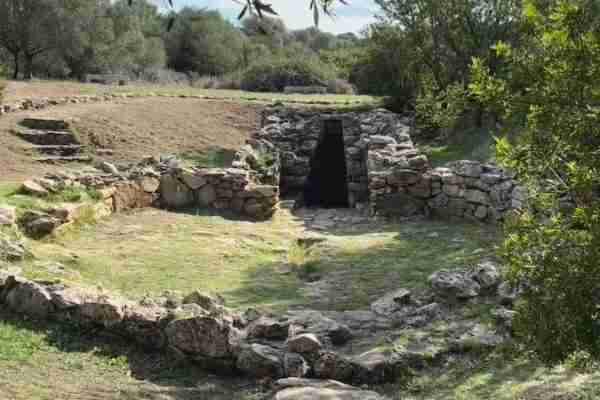
The Subterranean Waters of Sa Testa: Astronomical Alignment and Bronze Age Sacred Geometries in Gallura The granite uplands of Gallura, northeastern Sardinia, conceal one of the best-preserved Nuragic Bronze Age monuments: a sacred well whose keyhole-shaped plan descends through worked stone to a perennially charged spring chamber. Built in the […]
Read More