Machu Picchu sits high in the Andes Mountains of Peru. It’s an ancient Inca settlement that has amazed both travelers and historians. Known as the “Lost City of the Incas,” it was built in the 15th century. It’s seen as one of the world’s most important archaeological wonders.
It stands at 2,430 meters (7,970 feet) above sea level. From here, you can see the stunning views of the mountains, valleys, and rivers below. These make up the beautiful Peruvian highlands.

Key Takeaways
- Machu Picchu is an ancient Inca settlement located in the Andes Mountains of Peru, about 130 kilometers from the city of Cusco.
- The site was built in the 15th century and is considered one of the most significant archaeological sites in South America.
- Machu Picchu was designated as a UNESCO World Heritage Site in 1983 and was also chosen as one of the New 7 Wonders of the World in 2007.
- The site covers an area of 38,160.87 hectares and was home to an estimated 750 people during its peak use as an estate.
- Machu Picchu is a popular trekking destination, accessible via the Inca Trail and other hiking routes, offering visitors a chance to immerse themselves in the Inca’s rich cultural heritage.
- Contact us for a comfortable and personalized itinerary (Free Service)
Introduction: Uncovering the Mysteries of Machu Picchu
Machu Picchu sits high in the Andes Mountains, a gem of the Inca civilization. Found in 1911 by Hiram Bingham, this “lost city of the Incas” still sparks wonder. People argue about why it was built and why it was left.
It’s set in the stunning Peruvian heritage landscape. Machu Picchu shows off the Inca Empire’s advanced culture. The site has amazing stone buildings, farmland, temples, and homes. These show the Incas’ skills in engineering, astronomy, and their spiritual bond with the sacred mountain.
Visiting Machu Picchu is like solving a mystery. It’s full of amazing architecture and stories of the Incas. Every step reveals more about the lost city and the Inca civilization.
“Machu Picchu stands in the mist, lost to the world for centuries, the great ruined city of the Inca emperors, with its mountains and tropical forest all around it.”
– Hiram Bingham, the American explorer who rediscovered Machu Picchu in 1911.


The Inca Empire and the Construction of Machu Picchu
Machu Picchu is a famous Inca citadel in the Andes Mountains. It shows the engineering skills and architectural wonders of the Inca Empire. Built in the 15th century under Pachacuti, it highlights the Incas’ advanced building methods and their respect for nature.
Architectural Marvels and Engineering Feats
The Incas were experts in stone carving and masonry. At Machu Picchu, you can see this in the well-fitted stone blocks. These huge blocks, some as heavy as 15 tons, were moved and placed with amazing precision. This shows the Incas’ deep knowledge of engineering and building.
The site also has a complex water system with aqueducts and canals. This shows their advanced hydrology skills and how they adapted to the mountain terrain.
The Sacred Valley: Cradle of Incan Civilization
Machu Picchu is in the Sacred Valley of the Incas, a special place. This valley, between the Andes, was the heart of the Inca Empire and the birthplace of their advanced Incan civilization. It had everything the Incas needed, like water, land for farming, and paths for travel.
The Incas’ skills in building and their love for nature have made Machu Picchu a wonder of Peruvian history. Today, it’s a UNESCO World Heritage site that amazes people from all over the world. It shows the amazing work of the Inca Empire.
Journey to the Lost City: Trekking the Inca Trail
For many adventurers, the Inca Trail is the start of their journey to Machu Picchu. This trek takes you through the Peruvian highlands along ancient paths once used by the Inca Empire. It’s a challenging hike that rewards you with stunning views of the Peruvian highlands and the sacred valley leading to Machu Picchu.
The Inca Trail is 33.7 miles long and takes about 4 days and 3 nights to finish. It takes you from the lush Sacred Valley up to the Andes, reaching the highest point at Dead Woman’s Pass. Along the way, you’ll see snow-capped peaks, Inca ruins, and the Inca Trail itself.
| Day | Destination | Distance | Elevation | Duration |
|---|---|---|---|---|
| 1 | Piscacucho (KM 82) to Wayllabamba | 5-7 hours | 3,100m/10,171ft | 5-7 hours |
| 2 | Wayllabamba to Pacaymayu | – | 4,215m/13,829ft | – |
| 3 | Pacaymayu to Wiñay Wayna | – | 4,215m/13,829ft | – |
| 4 | Wiñay Wayna to Machu Picchu | – | 2,745m/9,006ft | – |
Arriving at the Sun Gate is a moment of pure joy for those who complete the Inca Trail. It’s not just a hike; it’s a spiritual and cultural journey. You get to experience the history and traditions of the Inca civilization.
“The Inca Trail is not just a hike, it’s a journey through time, a chance to walk in the footsteps of the Inca and connect with the spirit of this ancient land.” – Machu Picchu Hiking Guide
Exploring Machu Picchu: A Guided Tour
Visiting Peru’s famous Inca ruins isn’t complete without a guided tour of Machu Picchu. These tours have an average of 10 people, offering a deep dive into the site’s history and culture. You’ll see the sun temple, the Intihuatana stone, the royal sector, and the ceremonial grounds. A guide will reveal the secrets of this ancient Inca city.
The Sun Temple and the Intihuatana Stone
A Machu Picchu guided tour highlights the Sun Temple. This sacred spot is aligned with the sun’s path. You’ll also see the Intihuatana stone, used by the Incas to track solstices and equinoxes. Your guide will tell you about the spiritual importance of these ruins.
The Royal Sector and Ceremonial Grounds
See the royal sector of Machu Picchu, where the Inca elite lived. Your guide will show you the grand palaces and plazas. Then, visit the ceremonial grounds, where the Incas held their most important rituals. This will help you understand the spiritual heart of the site.
| Tour Option | Duration | Cost per Person |
|---|---|---|
| One-day Machu Picchu Tour | 1 day | $320 |
| Machu Picchu Tour by Train | 2 days | $400 |
| 2-Day Excursion to Machu Picchu | 2 days | $350 |
Choose from a one-day or multi-day tour for an unforgettable look at Machu Picchu. These tours reveal the site’s rich history and cultural importance.

mountain in peru machu picchu: An Andean Marvel
In the Andes Mountains of Peru, Machu Picchu shows off the Incas’ amazing skills and their bond with nature. This Andean marvel sits high on a steep ridge. It’s surrounded by huge peaks, deep valleys, and green cloud forests. This makes it a place that has amazed people from all over the world.
The Machu Picchu Mountain is the tallest spot in the area, at 3,061 meters (10,042 feet). Climbing it is a challenge that offers amazing views of the old city and the land around it. The weather is nice, with temperatures usually around 68°F (20°C), sometimes going from 50°F to 86°F (10°C to 30°C).
Going up Machu Picchu Mountain is a dream for many. It takes about 3 hours to get to the top. People should plan to spend at least 5 hours to really enjoy this Andean marvel. You’ll see the Machu Picchu city, the Salkantay Mountain, the Santa Teresa Valley, and more. But, only 100 tickets are given out each day, so you need to book ahead.
| Feature | Statistic |
|---|---|
| Machu Picchu Mountain Elevation | 3,061 meters (10,042 feet) |
| Average Daytime Temperature | 68°F (20°C), with variations between 50°F to 86°F (10°C to 30°C) |
| Hike Duration | Approximately 3 hours to reach the summit, with an additional 1 to 1.5 hours for the return journey |
| Daily Visitor Capacity | 100 tickets per shift |
The hike up Machu Picchu Mountain lets you see the Peruvian Highlands‘s rich nature. You might see rare orchids, colorful birds, the Andean condor, or the spectacled bear. This Andean marvel touches the hearts of all who go there, leaving a strong impression.
Machu Picchu and Its Designation as a UNESCO World Heritage Site
Machu Picchu is known for its cultural and natural importance. It was named a UNESCO World Heritage Site in 1983. This title shows its great value and the need to keep it safe for the future.
Conservation Efforts and Sustainable Tourism
After getting the UNESCO title, saving Machu Picchu became a main goal. Steps were taken to control the number of visitors. This helps keep the place safe and true to its Inca roots.
- Machu Picchu covers an area of 32,592 hectares, with about 200 structures for different uses.
- The buildings sit on a steep ridge, with stone terraces. This shows the Incas’ amazing building skills.
- The UNESCO world heritage site status has helped with conservation. It led to the creation of a special management unit in 1999.
These efforts try to let visitors see Machu Picchu’s beauty. At the same time, they protect its ecosystem and true nature for the future.
“Machu Picchu is an important part of Peru’s protected areas, with clear boundaries and a buffer zone for safety.”
As a UNESCO world heritage site, Machu Picchu draws people from all over. It lets us see the Inca civilization and the stunning Andean landscape. This has amazed people for centuries.
The New 7 Wonders of the World: Machu Picchu’s Global Recognition
On July 7, 2007, Machu Picchu was named one of the New 7 Wonders of the World. This honor came after over 100 million people voted worldwide. It highlighted Machu Picchu’s importance in culture and history, making it a top spot for travelers.
The election was shown in Lisbon, Portugal, to over 170 countries. It reached about 1.6 billion people, or one out of every four people on Earth. This recognition boosted global tourism to Machu Picchu, with 1.4 million visitors each year.
In 2008, Machu Picchu was the top tourist spot in the world. By 2014, it was among the most photographed places on Earth. Being named a new 7 wonder of the world made Machu Picchu a symbol of global tourism. It attracts millions who want to see its amazing architecture and engineering.
“Machu Picchu shared the title of a New Wonder of the World alongside the Great Wall of China, Petra (Jordan), Christ the Redeemer in Rio de Janeiro (Brazil), Chichen Itza (Mexico), the Colosseum in Rome (Italy), and the Taj Mahal (India).”
Machu Picchu’s new title has made it even more famous and sparked efforts to protect it. Its history, stunning nature, and cultural importance draw travelers worldwide. It remains a true wonder of our time.
Cusco: Gateway to the Inca Realm
Cusco was the historic capital of the Inca Empire. It’s the gateway to the Machu Picchu area and the Inca realm. This city mixes Inca and colonial styles, showing off Peruvian culture and history. Visitors can see landmarks like the Sacsayhuamán fortress and visit the Sacred Valley to see more Inca ruins and meet traditional Andean communities.
Exploring the Imperial City and Its Surroundings
Cusco sits high in the Andes, at 11,150 feet (3,400 meters). It was the center of the Inca Empire. Back then, it was home to tens of thousands, maybe up to 200,000 people. Now, visitors can see the amazing Inca buildings, like the Sacsayhuamán fortress, which towers over the city.
The Inti Punku, or Sun Gate, was the main entrance to Machu Picchu. It’s where the Inca Trail ends. The Sun Gate lines up with the sunrise on the winter solstice, giving a stunning view of Machu Picchu. Tours at Machu Picchu tell you about its history and importance.
Outside Cusco, the Sacred Valley invites visitors to see more Inca ruins and traditional Andean life. This area was where the Inca civilization began. It shows off the Peruvian culture and the Inca Empire’s legacy.
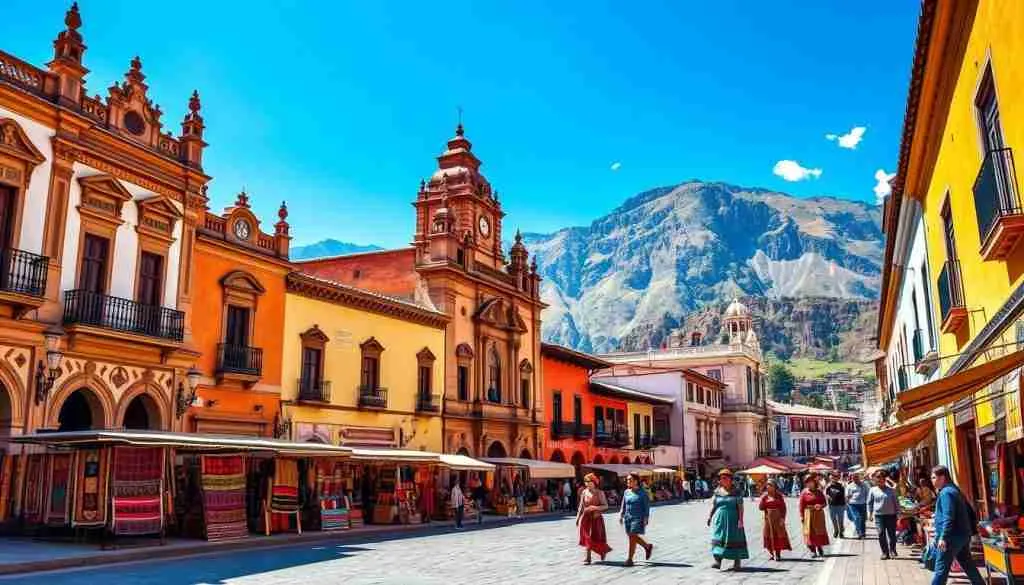
“Cusco, the ancient capital of the Inca Empire, stands as a testament to the ingenuity and grandeur of this remarkable civilization.”
| Landmark | Significance |
|---|---|
| Sacsayhuamán Fortress | Overlooking Cusco, this impressive Inca fortification was supposedly constructed over 80 years with an average labor force of about 20,000 workers. |
| Inti Punku (Sun Gate) | The principal entrance to Machu Picchu, the Sun Gate was strategically positioned to align with the sunrise during the winter solstice. |
| Sacred Valley | The cradle of the Inca civilization, the Sacred Valley offers a unique glimpse into the enduring Peruvian culture and the legacy of the Inca Empire. |
Practical Tips for Visiting Machu Picchu
Planning a trip to Machu Picchu in Peru means thinking about a few key things. You’ll want to know the best time to go, where to stay, and how to get there. These tips will help make your visit smooth and unforgettable.
Best Time to Visit and Weather Considerations
The dry season, from May to October, is the best time to see Machu Picchu. The weather is sunny and dry, perfect for trekking. But remember, the site is high up, so you might need time to get used to the altitude.
Visiting from November to April can be great too, with fewer people around. But, be ready for possible weather changes and plan your trip carefully.
Accommodation Options and Travel Logistics
In Aguas Calientes, near Machu Picchu, you’ll find many places to stay. There are hostels for those on a budget and luxury hotels for a special treat. Getting to and from the site is easy with local tours or train and bus services.
Remember, tickets and entry times are limited to protect Machu Picchu. Booking ahead is a good idea to get the experience you want.
Keep these tips in mind for a great visit to Machu Picchu. They’ll help you enjoy the ancient Incan site and the beautiful Peruvian landscape to the fullest.
Conclusion: Machu Picchu’s Enduring Legacy
Machu Picchu is a symbol of the Inca civilization’s greatness and Peru’s deep culture. It’s an ancient wonder high in the Andes Mountains. It draws visitors from all over with its stunning architecture, spiritual importance, and mysteries.
This site is a UNESCO World Heritage Site and one of the New 7 Wonders of the World. It’s a top spot for those wanting to feel connected to history. Machu Picchu lets travelers experience the amazing legacy of the Incas.
In 1911, American historian Hiram Bingham found Machu Picchu, sparking a new interest in the Inca civilization. Being named a UNESCO World Heritage Site and a New 7 Wonders of the World made it even more famous. Despite issues like too many tourists, damage to the environment, and natural disasters, efforts to save it continue.
People keep coming to Machu Picchu for its history, stunning views, and to feel the Peruvian heritage. It shows how smart and strong ancient civilizations were. Machu Picchu’s impact on the world’s imagination means it will keep inspiring people for years to come.