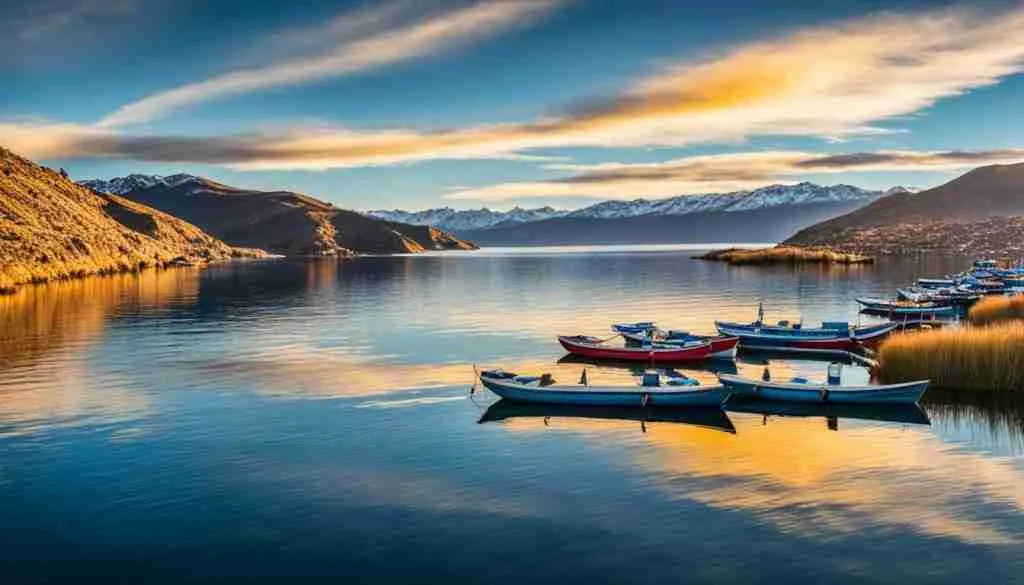
Lake Titicaca is the highest navigable lake in the world, sitting in the Andes Mountains of South America. Its deep blue waters blend with the sky, making it a perfect spot for cultural and natural exploration. Travelers often start their journey in Puno, Peru, to take a boat tour.
This tour lets you see the lake’s islands, ancient ruins, and the traditions of local communities. It’s a journey filled with beauty and culture.

Key Takeaways
- Explore the world’s highest navigable lake, Lake Titicaca, on a captivating boat tour
- Discover the rich Andean culture and ancient Inca heritage of the region
- Visit the floating reed islands of Uros and the UNESCO-recognized textile artistry of Taquile Island
- Immerse yourself in authentic Quechua traditions and hospitality on Amantani Island
- Enjoy a range of tour options, from leisurely sightseeing to adventurous expeditions
- Contact us for a comfortable and personalized itinerary (Free Service)
Embark on a Breathtaking Journey
Get ready to be amazed by Lake Titicaca, the highest lake you can sail on. It’s over 12,500 feet high in the Andes, right on the line between Peru and Bolivia. This lake gives you a close look at breathtaking Andean culture experiences.
Discover the Majesty of Lake Titicaca
Inca legends say Lake Titicaca was where the Inca civilization began. The story tells us that the god Viracocha came out of the lake to make the sun, moon, stars, and people. Now, visitors can see the ancient sites and ruins on Lake Titicaca’s islands. They get to dive deep into the rich cultural heritage of the region.


Explore the Birthplace of Inca Civilization
The Floating Islands tour, Taquile Island, and Amantani Island are just a few places that show off the Inca civilization and Andean culture. You’ll be amazed by the Uros floating islands and the Taquile Islanders’ traditional textiles. A Lake Titicaca boat tour is a journey you won’t forget.
“The Uros islands are an absolute must-see. The guides were fantastic, and we learned so much about the history and culture of the indigenous people. It was a truly unique and humbling experience.” – Sarah, Recent Traveler
Uros Islands: A Fascinating Floating World
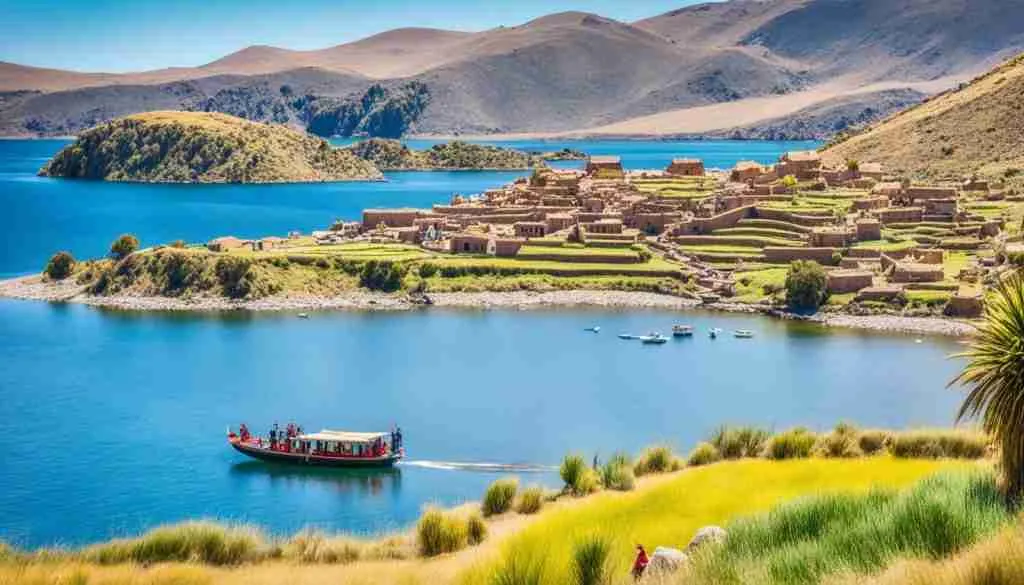
The Uros Islands sit on the calm waters of Lake Titicaca. They show us the special life of the Aymara people. These islands are made of totora reeds and have been the Uros’ home for centuries. They chose to live here to escape the mainland and build a life on the lake.
Building one Uros island takes about a week for 8 men. The islands sit on thick reeds, up to 12 feet thick. But, they need constant upkeep because the reeds break down quickly, needing to be replaced often.
The Uros have made a thriving life on their floating islands. They do many jobs, like cooking, teaching, and making crafts. They live by the peaceful Lake Titicaca, the highest lake you can sail on.
When you visit the Uros Islands, you get to see how they make their homes and boats from reeds. The Uros people welcome you warmly, sharing their traditions and life with you.
Now, the Uros Islands are a hit with tourists. The Peruvian government even gave them a big solar panel for power. But, there’s a problem. Young Uros are leaving for school and jobs in cities like Puno and Lima. This could threaten their unique culture.
Still, visiting the Uros Islands is an amazing experience. You get to see how the Aymara people live on the water. They show great skill and grace in their floating world.
Taquile Island: UNESCO-Recognized Textile Artistry
Taquile Island sits in the heart of Peru’s Lake Titicaca. It’s known for its vibrant Quechua culture and textile artistry recognized by UNESCO. This island is home to about 3,000 people. They offer a chance to dive into ancient traditions and see the amazing weaving skills of the locals.
Immerse Yourself in Ancient Quechua Traditions
Taquile Island shows the lasting Quechua culture. Visitors can join in daily activities and feel the locals’ warm welcome. You can help with chores or learn about traditional dances for a real cultural experience.
Witness the Vibrant Weaving Culture
The island’s people are famous for their textile work, honored by UNESCO. Kids start learning to weave at four, and by age ten, they’re experts. Men make clothes like vests and sweaters, while women weave girdles, blankets, and bags.
The “cara de urdimbre” technique is a key part of their craft. It shows their skill in preparing fabric. Seeing the island’s textile traditions is an unforgettable experience.
“Taquile Island’s textile art has been recognized by UNESCO as ‘Masterpieces of the Oral and Intangible Heritage of Humanity.'”
Looking to dive into ancient traditions or see UNESCO-recognized textile art? A trip to Taquile Island is a must on any Lake Titicaca trip.
Amantani Island: The Island of Love
Amantani Island sits in the calm waters of Lake Titicaca, in the Andes. It’s the biggest island in the lake and is known as the “Island of Love”. The island is famous for its beautiful fields, tall eucalyptus trees, and colorful flowers.
Experience Authentic Andean Hospitality
Visitors to Amantani Island can dive deep into Andean culture. They can stay with local families, learning about their traditional life. It’s similar to Taquile Island, offering a chance to connect with the community and nature.
Guests will enjoy tasty local food like quinoa soup and potatoes with cheese and veggies. These meals are made by their hosts. The money from these stays helps pay for the education of the island’s young girls.
The islanders are very welcoming. They ask visitors to bring gifts like rice, vegetables, and school items. This sharing helps everyone understand and value the island’s culture more.
“The hosts on Amantani Island open their homes to visitors to fund their daughter’s education in tourism in Puno.”
Even though Lake Titicaca is high up, Amantani Island’s friendly people and real experiences make it a memorable place. It’s perfect for those wanting to explore Authentic Andean experiences through Amantani Island and community-based tourism.
Lake Titicaca Boat Tours: Highlights and Insights
Exploring Lake Titicaca by boat is an amazing experience. It shows off the area’s stunning beauty and rich culture. You’ll see the floating Uros Islands and Taquile Island, known for its textile art. These Lake Titicaca boat tours take you deep into the Andean heart.
Visiting the Uros Islands is a key part of the Puno excursions. These islands are made of totora reeds and are home to an indigenous community. You can take a ride on a Titicaca reed boat and learn about their traditions and life on the lake.
On the Peru lake cruises, don’t miss Taquile Island. It’s a UNESCO World Heritage Site famous for its textiles. You can see weavers at work and learn about the island’s culture. The views of Lake Titicaca from the top of the island are stunning.
For a unique experience, consider visiting Amantani Island. Known as the “Island of Love,” it’s a place of true Andean hospitality. You’ll get to see local traditions and join in on celebrations.
These boat tours also share the lake’s history and myths. Lake Titicaca is where the Inca civilization began. The guides tell stories that take you back in time.
The Lake Titicaca boat tours are perfect for those wanting culture, nature, or adventure. They offer a memorable way to see the beauty and traditions of this special place.
| Highlights of Lake Titicaca Boat Tours | Key Facts |
|---|---|
|
|
“Exploring Lake Titicaca by boat is like stepping into a different world, where time seems to stand still and the beauty of the Andes takes your breath away.”
Planning Your Unforgettable Lake Titicaca Adventure
Going to Lake Titicaca is an amazing journey. To make your trip unforgettable, plan well. Think about the best time to go and how to get there easily.
Best Time to Visit and Weather Considerations
The best time to visit Lake Titicaca is from June to August. The weather is sunny and nice, perfect for exploring. April to May and September to November are also good, with fewer people and a calm vibe.
Be ready for cool weather at Lake Titicaca, since it’s high up. It’s about 3,812 meters above sea level. Temperatures are usually between 10 to 14 degrees Celsius. So, wear warm clothes.
Getting to Lake Titicaca and Puno
Getting to Lake Titicaca and Puno is easy. Fly into the Juliaca Airport, then take a bus, taxi, or private car. Or, take a bus or train from Cusco or Arequipa for beautiful Andean views.
Plan well to have an amazing time at the highest lake you can sail on, Lake Titicaca.
Practical Tips for Your Lake Titicaca Boat Tour
Going on a boat tour of Lake Titicaca is an experience you won’t forget. It’s key to be well-prepared. Packing the right gear and knowing the weather are crucial. These tips will help you enjoy your Andean adventure to the fullest.
What to Pack for Your Andean Journey
For the high-altitude Lake Titicaca, packing right is a must. Here’s what you should bring for your boat tour:
- Sturdy, comfortable walking shoes or boots
- Warm layers like sweaters, jackets, and hats
- Sun protection: sunglasses, sun hat, and high-SPF sunscreen
- Reusable water bottle to stay hydrated
- Camera or smartphone to capture the stunning landscapes
- Lightweight, quick-drying clothing
- Some cash for tips, local purchases, or emergencies
With the right gear, you’re set to explore the islands, hike trails, and dive into the rich culture of Lake Titicaca.
The high altitude of Lake Titicaca means the weather can change fast. Always dress in layers and be ready for anything.
Lake Titicaca: A UNESCO World Heritage Site
In the Andes, Lake Titicaca is a UNESCO World Heritage Site. It’s known for its stunning beauty and the culture of the indigenous people. The site aims to protect the ecosystem and the traditions of the Andean people for centuries.
The lake is where the Inca civilization began. It has ruins like the Sillustani site that show its history. The Taquile islanders keep traditions alive, making textiles and farming on hillsides.
Visiting Lake Titicaca helps protect its culture and nature. Places like the floating Uros islands and Isla del Sol let you experience Andean traditions. It’s a chance to see the beauty and traditions of the Andes up close.