Taquile Island is a hidden gem in Lake Titicaca, Peru. It’s known for its rich history, vibrant culture, and stunning views. The island is famous for its cultural traditions, recognized by UNESCO as Intangible Cultural Heritage of Humanity.
Its remote spot has helped the local Taquileños keep their traditions alive for centuries. This makes Taquile Island a special place to see ancient Andean culture.

Key Takeaways
- Taquile Island is a UNESCO World Heritage Site known for its rich cultural traditions and vibrant textiles.
- The island’s remote location has allowed the Quechua-speaking Taquileños to preserve their ancient customs for generations.
- Taquile Island offers a unique opportunity to immerse in the Andean heritage, from traditional weaving techniques to sustainable farming practices.
- The island’s textiles are recognized globally for their intricate patterns and craftsmanship, reflecting the local community’s identity and status.
- Taquile Island’s community-based tourism model ensures that the local residents directly benefit from the island’s growing popularity.
- Contact us for a comfortable and personalized itinerary (Free Service)
Introduction to Taquile Island’s Captivating Heritage
Taquile Island sits in the stunning Lake Titicaca, the world’s highest navigable lake. It’s a gem of Peruvian geography and Inca history. At 3,950 meters high, the island has kept its culture alive for centuries. This has made it a UNESCO World Heritage site.
Geographical Location and Significance
The island covers about 5.5 square kilometers. It’s a mix of hills and valleys that have drawn many to its shores. Only boats can reach this untouched place, keeping its culture and lifestyle pure.


Historical Overview: From Inca Sacred Site to UNESCO World Heritage
The island’s past is linked to the Inca Empire. Taquile was sacred to the Incas, with ancient ruins still around. When Spain colonized Peru, the Taquileños fought hard to keep their freedom and traditions.
Today, the island’s heritage and customs are recognized by UNESCO. This shows the strength and creativity of its people.
“Taquile Island’s unique culture and traditions have captivated visitors from around the world, offering a glimpse into a way of life that has remained largely untouched for centuries.”
Taquile Island’s Vibrant Cultural Traditions
Taquile Island sits in the calm waters of Lake Titicaca. It’s known for its strong cultural traditions. These traditions are built on community, cooperation, and helping each other out. The people of Taquile, the Taquileños, live in a way that shows the strength of working together and looking out for each other.
The Principles of Community, Cooperation, and Mutual Support
At the core of Taquile’s culture is a strong focus on living together. The Taquileños share resources like land, crops, and work. They make decisions together, making sure everyone’s needs are considered.
This teamwork is seen in everyday tasks, like farming the land and keeping the paths clear. The Taquileños follow the Inca values of “do not steal, do not lie, do not be lazy.” This builds trust and responsibility in their community.
Traditional Clothing: Weaving a Tapestry of Identity
The traditional clothes of Taquile stand out as a key part of their culture. The Taquileños are famous for their detailed, hand-woven textiles. These clothes, from their colorful hats to their embroidered ponchos, share stories of their history and way of life.
Creating these textiles is a labor of love, done by both women and men. They use old techniques and natural dyes. The patterns and symbols in the textiles tell of Taquile’s heritage and traditions. These clothes are not just for wearing; they show the Taquileños’ dedication to keeping their culture alive.
“The textiles of Taquile Island are not just pieces of cloth, but embodiments of the island’s soul, woven with the threads of history, community, and cultural pride.”
The Art of Weaving on Taquile Island
Taquile Island sits in the beautiful Lake Titicaca. It’s a place where weaving is a big part of the culture. This craft has been around for a long time, thanks to the Taquileños.
The textiles from Taquile Island are known for their high quality and detailed work. Men on the island weave most of the items. They use traditional methods and a pedal loom to make things like chullo hats and chumpi belts. Women spin the wool for these items.
Every textile from Taquile Island tells a story. It shows the wearer’s status, social position, and political views. The designs often include symbols like rivers, stars, birds, and alpacas. Each symbol has its own special meaning in Andean culture.
“The weaving of a fine chumpi can require months to complete on Taquile Island, demonstrating the dedication and skill of the island’s artisans.”
The “cara de urdimbre” technique is a big project for the whole community. It shows how everyone works together on textiles. Crochet is another way they make beautiful items, adding to Taquile’s cultural heritage.
Visitors to Taquile Island can see how these traditional weaving skills are kept alive. It’s a place where old and new meet, keeping Andean craftsmanship alive for the future.
Taquile Island Culture: Unique Social Structure and Governance
Taquile Island is in the heart of Lake Titicaca. It has a special way of living that makes it stand out. The island is about 5.5 square kilometers big and has kept its old ways for a long time. This has made a strong and close community.
The System of Ayllus and Traditional Authorities
The island is split into smaller groups called ayllus. Each has its leader and shares tasks. This communal governance is all about sharing work and resources. The island is led by traditional authorities like the Pachamama and the Curaca.
Collective Decision-Making and Community Participation
Everyone on Taquile Island helps make decisions. This collaborative approach makes sure everyone’s needs are considered. It builds a strong sense of unity and shared responsibility. The people of Taquile are proud of their way of life and how it keeps their culture alive.
| Key Facts about Taquile Island’s Social Structure and Governance |
|---|
|
“The Taquileños have preserved their traditions and customs for centuries, creating a vibrant and tightly-knit community that serves as a model for sustainable development and cultural preservation.”
Exploring the Gastronomy of Taquile Island
A trip to Taquile Island in Lake Titicaca isn’t complete without trying its unique food. The island’s dishes reflect its natural gifts and the creativity of its people, the Taquileños. Ingredients like quinoa, potatoes, and fish from the lake are key to their meals. They show off the island’s sustainable farming and rich resources.
Local Delicacies and Traditional Dishes
Don’t miss trying the “trout a la Taquileña” on the island. It’s fresh trout cooked with local herbs, served with quinoa and potatoes. The island is also famous for soups like “chuño colado,” a creamy potato soup, and “sopa de quinua,” a quinoa broth that’s both filling and comforting.
Celebrating the Island’s Bountiful Resources
Every meal here celebrates the island’s rich resources and the cooking skills of its people. The Taquileños turn simple ingredients into tasty dishes that show their deep bond with the land and lake. Each dish, from the trout to the quinoa and potatoes, tells a story of the island’s sustainable lifestyle.
“The gastronomy of Taquile Island is a symphony of flavors, a harmonious blend of the island’s natural abundance and the ingenuity of its people.”
Taquile Island Culture: Must-Visit Landmarks and Attractions
Taquile Island sits in the stunning Lake Titicaca. It’s full of natural and cultural wonders. You’ll find ancient sites, beautiful views, and landscapes that will amaze you.
The “Pachamama” and “Curaca” center is a key spot. Here, the Quechua people hold rituals and celebrations. It shows their deep cultural roots.
For those who love nature, climbing to “Cerro de la Cruz” is a must. From the top, you’ll see Lake Titicaca and the Andes. The island also has beautiful beaches like Playa Chiquini, great for relaxing and enjoying the lake’s calm.
| Landmark | Description |
|---|---|
| Pachamama and Curaca Ceremonial Center | The heart of the island’s cultural traditions, where rituals and festivities take place. |
| Cerro de la Cruz | The island’s highest peak, offering stunning panoramic views of Lake Titicaca and the Andes. |
| Playa Chiquini | A picturesque beach perfect for relaxation and enjoying the serene beauty of Lake Titicaca. |
Taquile Island has something for everyone. Whether you’re into culture, nature, or history, you’ll find it here. It’s an experience that will deepen your understanding and appreciation of its unique culture.
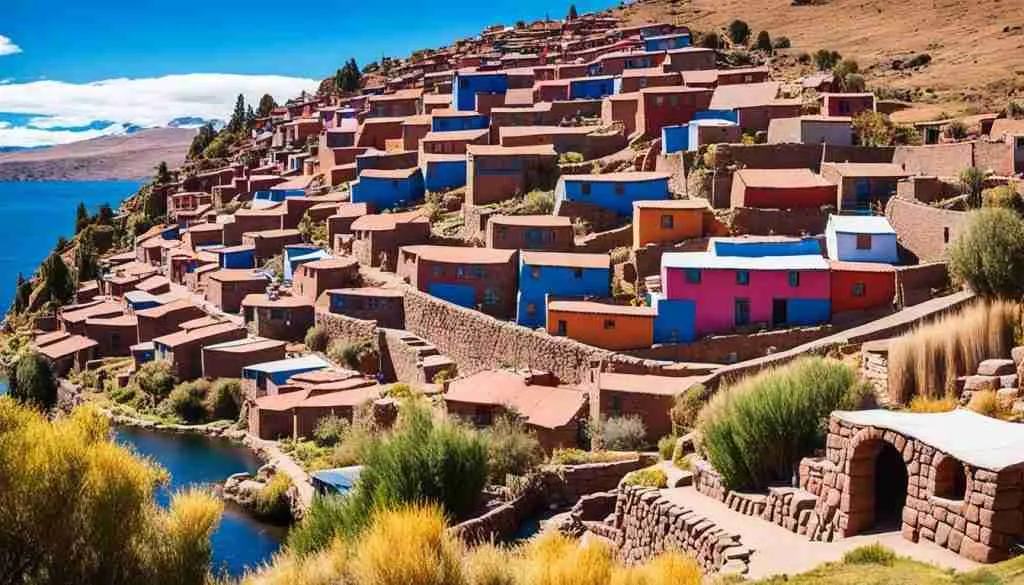
Sustainable Tourism Initiatives on Taquile Island
Taquile Island uses a community-based approach to sustainable tourism. This approach helps keep its rich culture and nature safe. The Taquileños, the island’s native people, have started new projects. These projects help manage the number of visitors and support the local community.
Community-Based Tourism and Responsible Practices
The island’s tourism is all about community and sharing benefits. Visitors get to meet the Taquileños and learn about their life, weaving, and how they make decisions together. This helps the islanders earn money and keeps their traditions alive.
To lessen the impact of tourism, the Taquileños use sustainable farming. They focus on organic farming and protecting the island’s plants and animals. They also limit the number of visitors and teach them to respect the island’s nature.
Preserving Natural and Cultural Heritage
The island works hard to keep its nature and culture safe. Its beautiful views, like its coast and lagoons, are well protected. This helps keep the island’s ecosystem safe for the future.
The Taquileños also protect their old textile weaving tradition. They offer classes and support local weavers. This keeps their cultural identity alive.
| Sustainable Tourism Initiatives | Key Facts |
|---|---|
| Community-Based Tourism |
|
| Preserving Natural and Cultural Heritage |
|
Taquile Island shows how community efforts can balance tourism, culture, and nature. The Taquileños work hard to keep the island’s unique charm and real experiences for visitors. Their commitment to responsible tourism makes the island a great example for others.
How to Reach Taquile Island and Travel Tips
Taquile Island is a special place in Lake Titicaca’s heart. It offers a unique cultural experience. To get there, you can take a boat from Puno, the main city near Lake Titicaca. This boat ride is about three hours long and shows off the lake’s beautiful blue waters and the land around it.
Getting to the Island and Best Time to Visit
For a cheaper option, the local collective boat costs about 60 soles one way. Or, you can take the tourist boat for 1.5 hours at a cost of 40 USD per person, including entry fees. The best time to visit is from May to October, when the weather is nice and the sun isn’t too strong.
Respecting Local Customs and Traditions
It’s important to respect the local ways when you visit Taquile Island. The people there, the Taquileños, are very friendly and follow the rules of ama suwa, ama llulla, ama qilla (no stealing, no lying, no being idle). Say hello with a handshake and a smile, and remember to bring cash since there’s no ATM on the island.
UNESCO has named Taquile Island a World Heritage site for its unique culture. Visitors are asked to support the island’s true spirit and its green tourism efforts.

The Enduring Legacy of Taquile Island’s Culture
Taquile Island shows the lasting impact of culture, where old Inca traditions still live on. It’s a special place for those who want to dive into sustainable living, community values, and real experiences. These elements leave a deep mark on everyone who visits.
Lessons in Sustainability, Community, and Craftsmanship
When you arrive on Taquile Island, you notice how the people and nature live together in perfect harmony. The islanders use sustainable ways to manage their land and resources. This shows how to live with the earth in mind.
Their beautiful textiles, made by hand, show their deep bond with the earth. These pieces are a sign of their skill and heritage.
The island values community, teamwork, and looking out for each other. This is different from today’s focus on individualism. Visitors see how the islanders make decisions for the good of all, making us think about our own values.
Embracing the Island’s Authentic Experiences
Taquile Island gives you a real taste of culture that’s not found in usual tourist spots. You can join in on meals made the old way, see ancient ruins, and learn about the island’s history. Every moment here connects you with the Inca legacy.
The way the island runs tourism means you really get to know the locals and their traditions. This makes you appreciate the special culture of Taquile Island even more.
Leaving Taquile, you take with you lessons on living sustainably, valuing community, and the importance of preserving culture. Taquile Island reminds us that true authenticity and connection are still possible in our world today.
“Taquile Island is a place where time stands still, allowing visitors to glimpse the enduring spirit of the Inca civilization and the timeless wisdom of its people.”
Conclusion
As we say goodbye to Taquile Island, we see it’s a gem in Lake Titicaca’s heart. It’s full of cultural treasures. The island shows off vibrant traditions and a strong commitment to being green and supporting the community.
The Taquileños’ lasting legacy shows the strength of keeping culture alive. They’ve found a way to blend new ways with old traditions. This includes their unique way of life, their government, and green tourism.
Visiting Taquile Island teaches us about keeping our world’s natural and cultural treasures safe. It’s a prime example of how tourism can help communities. It lets them improve their lives while keeping their traditions alive. Leaving Taquile, we appreciate Andean culture more and learn valuable lessons for a better future.