The Temple of the Sun at Machu Picchu is a sacred place built to honor the sun. It was a key part of the Inca civilization. This site is famous for its stunning architecture and its alignment with the stars.
Key Takeaways
- Machu Picchu’s Temple of the Sun is a UNESCO World Heritage Site, highlighting its global cultural and historical significance.
- The temple showcases the Inca’s advanced astronomical knowledge and engineering precision, particularly in its solar alignment.
- Visitors can experience a deep spiritual connection when visiting the temple, which played a vital role in Inca religious practices.
- The temple’s architectural elements, such as precisely carved stone walls and trapezoidal niches, reflect the Inca’s mastery of stone masonry.
- The Intihuatana stone near the temple serves as a significant ritual stone tied to the Inca’s astronomical observations.
- Contact us for a comfortable and personalized itinerary (Free Service)
Introduction to the Machu Picchu Temple of the Sun
In the heart of Machu Picchu lies the Temple of the Sun. It was built to honor the sun, the Incas’ most sacred deity. Only Inca priests and the elite could enter, making it a sacred place.
What is the Temple of the Sun?
The Temple of the Sun is a circular building made of perfectly fitted stones. Its design shows the Incas’ advanced skills and knowledge of the universe. It was used for religious rituals and to track the sun and stars.
Historical Significance of the Temple of the Sun
The Temple of the Sun was key to the Incas’ sun worship. The sun was their most important god. Its design and location show its importance in Inca culture. It was used to celebrate solar events, like the June solstice, which was vital for farming.
“The Temple of the Sun is a testament to the Incas’ reverence for the sun and their sophisticated understanding of the cosmos.”


Location and Layout
The Temple of the Sun at Machu Picchu is in the Andes Mountains of Peru. It’s in the “Hanan” neighborhood, a key religious area. Visitors can see it from a viewpoint at the top, but can’t enter due to preservation.
The temple’s design is impressive, with fine granite and special windows. It shows the Inca’s advanced knowledge of astronomy. They built it to honor the sun god, Inti.
Visitors have set times to explore Machu Picchu, from 6 AM to 2 PM. They have 4 hours to see the whole site, including the Temple of the Sun. The temple is open every day, from 6 AM to 5 PM.
Where is the Temple of the Sun Located?
The Temple of the Sun is in Machu Picchu’s “Hanan” neighborhood. It’s a key religious area. Visitors can see it from a viewpoint at the top, but can’t enter.
Now, visitors can only see the temple from a viewpoint. This is because entry is restricted for preservation. Tickets like “Machu Picchu Only” or “Circuit 1” let visitors see the temple from above.
| Site | Location | Accessibility |
|---|---|---|
| Temple of the Sun, Machu Picchu | In the “Hanan” neighborhood, in the religious sector of the Inca city | Visitors can view the temple from a viewpoint at the top of the archaeological site, but entry is restricted for preservation |
| Temple of the Sun, Ollantaytambo | Located in the upper part of the Ollantaytambo archaeological site | Visitors can access and explore the temple up close |
The Temple of the Sun at Machu Picchu shows the Inca’s skill and their love for the sun. Its location and design reflect their deep understanding of the universe.
Architectural Marvel
The Temple of the Sun at Machu Picchu is a true marvel. It shows the Inca civilization’s advanced building skills and their deep connection with the universe. This semi-circular sanctuary, about 50 square meters, is over 600 years old. It stands as a testament to the Incas’ amazing stonework and engineering.
Located at about 2,430 meters above sea level, the Temple of the Sun is in the ‘Hanan’ neighborhood of Machu Picchu. Its design, with precisely cut granite blocks and trapezoidal windows, shows the Incas’ mastery of Inca stonework. It also had an astronomical purpose.
Construction and Design of the Temple
The Temple of the Sun’s semi-circular shape and windows were designed to catch sunlight during key celestial events. For example, the central window aligns with the winter solstice sunrise. It casts a light beam on the central altar. Another window aligns with the Ursa Major constellation’s tail at the same time.
This Machu Picchu architecture and Temple of the Sun design show the Inca civilization’s deep connection with nature and the cosmos. The temple’s alignments with the sun and stars guided their agriculture and spiritual practices. They honored their sun god, Inti, through these practices.
The temple’s exceptional craftsmanship, like its mortarless construction, shows the Incas’ engineering skills. Even with earthquakes, their structures remain stable. The Temple of the Sun still amazes visitors with its architecture and celestial connections. It offers a timeless link between earth and sky.
Celestial Observatory
Machu Picchu’s Temple of the Sun was more than a sacred place. It was a celestial observatory with advanced features. Its trapezoidal windows were set to catch the light of solar events, like the winter solstice.
When the sun hit the windows, it lit up a special stone. This was very important for the Inca people and their farming schedule.
Alignment with Solar Events
The Temple of the Sun and other Machu Picchu buildings show clear astronomical alignments. They were built to face the sunrise on the June Solstice. This was a key event for the Inca people.
The Mirador de Inkaraqay had special tubes for watching the Pleiades and Venus. It was built to track these stars over many years.
The Intimachay cave was used to study the Sun and Moon. But the Room of the Mortars had a less clear purpose in astronomy.
Research has shown that Mirador de Inkaraqay was a precise Inca observatory. Many studies have explored Machu Picchu’s role in astronomy. This work was funded by different groups.
Machu Picchu Temple of the Sun
The Temple of the Sun is a key part of Machu Picchu. It was a sacred place for the Incas to worship the sun. Only priests and the elite could enter this special space.
The Temple of the Sun was built to honor the sun, a major deity for the Incas. It’s a circular structure made of granite, decorated with gold and silver. It’s in the ‘Hanan’ neighborhood, the religious area of Machu Picchu.
Visitors can’t go inside the Temple of the Sun. They can only see it from certain spots in Machu Picchu. Anyone with a ticket to the Machu Picchu citadel can see it, especially with the ‘Machu Picchu Only’ ticket.
The temple shows signs of fire damage, possibly from Spanish invaders. Yet, the stone structure still stands strong. It shows the Incas’ advanced skills in architecture and their deep respect for the sun.
Machu Picchu has many Inca sacred sites. There’s the Temple of the Moon, the Temple of the Condor, and more. Each site shows the Incas’ connection to nature and their knowledge of astronomy and architecture.
The Temple of the Sun is the highest point in Machu Picchu. It was used for important events like astrology and rituals. Underneath the temple is a small underground space, possibly a crypt for Inca aristocracy.
The Temple of the Sun is a fascinating structure. It gives us a peek into the Incas’ spiritual and astronomical practices. Its location, design, and history make it a must-see in Machu Picchu and the Inca sacred sites.
Royal Tomb and Mysteries
Under the Inca’s Temple of the Sun lies a cave that fascinates many. Some think it was a royal tomb for the Inca Emperor Pachacuti. But, new studies suggest it might have honored Pachamama, the Inca Mother Earth.
The Royal Tomb Beneath the Temple
Researchers are intrigued by the Temple of the Sun and its possible royal tomb. They believe the temple’s design, with its sun-catching features, might be connected to the tomb. This connection could reveal much about Inca burial practices and Machu Picchu’s mysteries.
Some say the tomb held Pachacuti’s mummified body. But, the tomb was looted and now visitors can’t see it. This leaves many questions about its true purpose and what it held.

Even with doubts about the royal tomb, the Temple of the Sun is still a wonder. It shows the Inca’s spiritual and astronomical knowledge. Tour guides help visitors understand its importance while exploring Machu Picchu.
Visiting the Temple of the Sun
Machu Picchu is a top spot for travelers. You’ll get to see the famous Temple of the Sun on your tour. It’s a key site with deep history and culture, loved by many.
Best Times to Visit
The dry season, from May to September, is the best time to see the Temple of the Sun. The weather is clearer, making it easier to explore. But, it’s also the busiest time, so book your Machu Picchu tickets early.
Ticket Information
Tickets to Machu Picchu include the Temple of the Sun. You can pick from several entry times, from 6 AM to 2 PM. To avoid missing out, book your Machu Picchu tickets early, especially in peak season.
| Circuit | Tickets per Day | Description |
|---|---|---|
| Circuit 1 (Panoramic) | 1,100 | Designated for visitors |
| Circuit 2 (Classic Machu Picchu) | 3,050 | Offers a complete tour experience |
| Circuit 3 (Royal Circuit) | 1,450 | Explore the Royal zone and the Temple of the Sun |
With good planning and the right Machu Picchu visit planning, you’ll enjoy the Temple of the Sun. Discover its history and stunning architecture.
Tips for Visiting
To get the most out of your visit to the Temple of the Sun at Machu Picchu, follow these tips. A local, vetted Machu Picchu tour guide can share deep insights into the temple’s history and culture. Arriving early in the morning, before the crowds, lets you see the temple in a peaceful setting.
Recommended Viewpoints for Photography
For top Machu Picchu photography tips, go to the Religious Sector for a wide view of the Temple of the Sun. The Upper Terrace gives you a closer look at the temple’s detailed stonework and architecture. Make sure to check out the Temple of the Sun viewing spots for the best photo angles and lighting.
- Visit the Religious Sector for a sweeping view of the Temple of the Sun
- Climb to the Upper Terrace for a closer look at the temple’s stonework
- Experiment with different viewpoints to capture the best Machu Picchu photography
By following these tips, you can get the most out of your visit to the Temple of the Sun. You’ll leave with amazing photos and memories of this incredible Inca wonder.
Spiritual Significance
The Temple of the Sun at Machu Picchu was a sacred place for the Inca people. They saw the sun as a key deity. This temple was the heart of their religious life, with only priests and the elite allowed inside.
The temple’s design shows the Incas’ deep bond with the Machu Picchu sacred spaces and the natural world. The Intihuatana stone was a sundial and key to their spiritual rituals. It was used during solstices, showing their belief in the connection between heaven and earth.
The Incas saw nature, stars, and gods as closely linked. Machu Picchu shows their advanced understanding of astronomy in its design. Today, visitors can meditate and connect with the site’s ancient rituals.
“In 1983, actress Shirley MacLaine published ‘Out on a Limb,’ where she recounts her New Age experiences in Peru and claims to be an Inca princess in a past life, leading to the book becoming a Best Seller.”
The Temple of the Sun at Machu Picchu shows the Incas’ deep respect for nature. They believed in a connection between the earthly and divine realms. This sacred space still inspires visitors, offering a peek into the Incas’ spiritual traditions.
Preservation Efforts
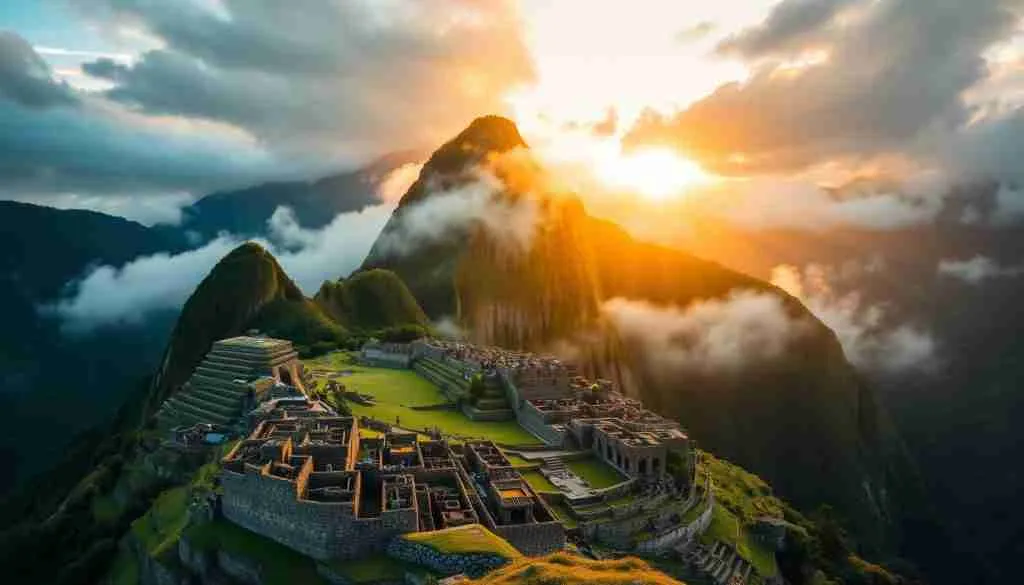
The Temple of the Sun in Machu Picchu is a key focus of Machu Picchu conservation efforts. Steps are being taken to protect its stonework and architecture. This ensures that future visitors can still marvel at this Inca architectural preservation.
Machu Picchu is at 2,430 meters above sea level. It spans 32,592 hectares of mountains and valleys. The site has about 200 structures, including religious and ceremonial centers.
The Temple of the Sun restoration is part of a bigger plan to save Machu Picchu. This includes roads, irrigation canals, and terraces. It shows a beautiful blend of human culture and nature.
Machu Picchu is a key part of Peru’s protected areas. By protecting the Temple of the Sun, we ensure it remains a wonder for all to see.
“Machu Picchu is a unique testimony of the Inca Civilization with a well-planned distribution of functions within space and territorial control.”
Connecting with the Incas
Visiting the Inca architectural heritage at the Temple of the Sun in Machu Picchu is special. It lets you connect with the Inca civilization legacy. Every stone and carving tells a story of a people who knew the universe well and loved nature.
By exploring the temple’s Machu Picchu cultural significance, you learn about the Inca’s smartness, spirituality, and rich culture. It’s a chance to see their world through their eyes.
The Temple of the Sun was built in the 15th century. It shows the Inca’s skill in building and understanding the stars. Its design matches the sun’s path on solstices, showing their keen eye for the sky.
Other Inca sites, like Choquequirao, also have similar designs. This shows they shared a common purpose and cultural value.
The temple’s shape looks like a half-circle, symbolizing the sky. Inside, a stone altar lines up with the solstice sun. This highlights the Inca’s spiritual bond with the stars.
Carved niches in the temple might have held sacred objects or offerings. This shows the Inca’s focus on both the sky and their beliefs.
The Inca’s knowledge of the universe is seen in their buildings, like the Temple of the Sun. These structures helped them keep track of time for their rituals and farming. They watched the weather, stars, and constellations to improve farming and travel.
Visiting the Temple of the Sun lets you feel the Inca’s lasting impact. You get to see their wisdom, faith, and building skills. It’s a journey back in time, showing their deep bond with nature and the universe.
Conclusion
The Temple of the Sun at Machu Picchu is a testament to the Inca Empire’s genius. It shows their deep connection to the sky. This semi-circular sanctuary, with its finely cut stones, draws visitors from all over.
Exploring the Machu Picchu Temple of the Sun reveals the Inca’s lasting legacy. It also shows the beauty of Machu Picchu.
The Inca architectural wonders in the Temple of the Sun show their advanced skills. The solar alignments and carvings reflect their deep respect for the sun. It’s a UNESCO World Heritage Site, attracting visitors worldwide.
Through preservation and research, the Temple of the Sun keeps sharing its secrets. It offers a glimpse into the Inca’s spiritual and cultural practices. Visitors are taken back in time, feeling the Inca’s connection to nature.
The Temple of the Sun is a symbol of the Inca’s resilience and creativity. It inspires visitors to connect with history and appreciate this remarkable site.
