The ancient Incan citadel of Machu Picchu sits high in the Andes Mountains of Peru. It’s a true wonder of the world. At its heart is the Temple of the Three Windows, a key structure in the complex.
This temple is famous for its three large, trapezoidal windows. It has fascinated visitors and researchers. It gives a peek into the Inca civilization’s history and spiritual beliefs.
Key Takeaways
- The Temple of the Three Windows is a renowned structure within the Machu Picchu citadel, known for its unique architectural features.
- The temple is believed to have been an important site for Incan religious ceremonies and astronomical observations.
- The three windows represent the three worlds of the Incan cosmology: the underworld (Uku-Pacha), the human world (Kay-Pacha), and the heavenly world (Hanan-Pacha).
- The temple’s location at the top level of Machu Picchu and its alignment with the sun suggest its profound significance to the Inca people.
- Exploring the Temple of the Three Windows offers visitors a deeper understanding of the Incan culture and the architectural marvels they created.
- Contact us for a comfortable and personalized itinerary (Free Service)
Unveiling the Mysterious Temple of the Three Windows
Location and Significance
The Temple of the Three Windows sits high in the Andean peaks. It’s part of the famous Machu Picchu Inca citadel. Located in the “Hanan” or “uptown” section, it was very important to the Inca people.
The temple’s spot on the northern side of Machu Picchu shows its key role. It overlooks the main sacred plaza. This suggests it played a big part in Inca rituals and beliefs.
Architectural Marvels
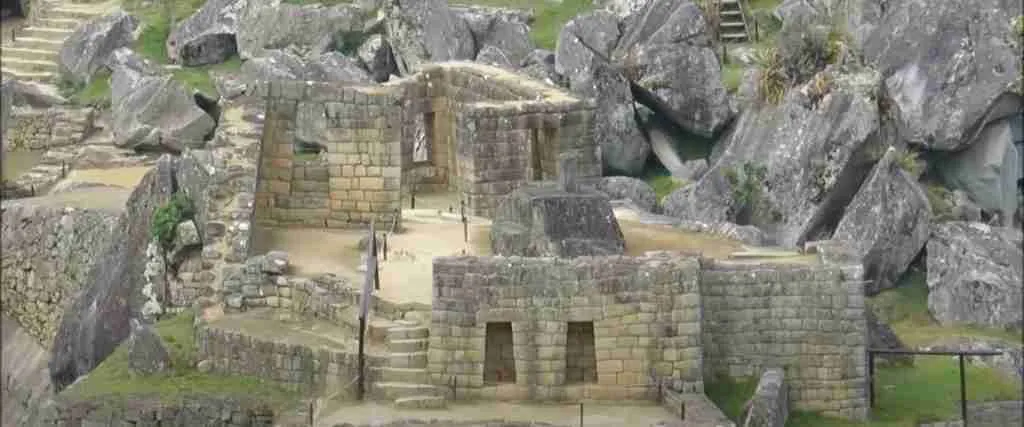
The Temple of the Three Windows showcases the Inca’s engineering and stone construction skills. It has three huge, cut-to-perfection trapezoidal windows on its eastern wall. These windows let natural light inside.
The design of the windows, at different angles, hints at their possible use. It could have been for astronomical or ceremonial reasons.
The Inca’s skill in Inca architecture is clear in the temple’s build. They used granite blocks, each weighing tons, without mortar. This shows their amazing stone construction abilities.
The trapezoidal shape, wider at the base, also shows their knowledge of seismic resistance.
“The Temple of the Three Windows is a remarkable example of Inca architectural ingenuity, showcasing their advanced construction techniques and engineering prowess.”
| Architectural Features | Significance |
|---|---|
| Three trapezoidal windows | Represent the three realms of Inca cosmology: Hanan Pacha (celestial), Kay Pacha (earthly), and Uku Pacha (underworld) |
| Granite block construction without mortar | Demonstrate the Inca’s mastery of stone construction and engineering |
| Trapezoidal design | Showcase the Inca’s understanding of seismic resistance |
The Machu Picchu Temple of the Three Windows
In the Andes Mountains of Peru, the Machu Picchu Temple of the Three Windows is a marvel. It shows the skill and history of the Inca people. The temple has three walls and a main wall with three windows, making it famous.
When found over a century ago, the temple was hidden under 12 inches of plants. This shows how well it was preserved. Explorers also found jars, vases, and fountains, showing its role in Inca rituals.
| Architectural Details | Measurements |
|---|---|
| Length of the main wall with the three windows | 10 meters |
| Width of the main wall | 8 meters |
| Overall dimensions of the temple | 10 meters long, 4 meters wide |
The Temple of the Three Windows is made of white granite with detailed carvings. It’s in the “Hanan” sector, known for its religious sites.
“The precise orientation of the temple towards the east allowed Inca astronomers to observe the sunrise accurately for monitoring significant solar events.”
The three windows symbolize the Inca’s view of the world. They represent the sky, earth, and underworld. Two more windows on the sides were for sacred objects.
The Temple of the Three Windows is a key spot for those interested in Inca history. Its design, meaning, and location offer a peek into the Inca world.


Symbolic Representation of the Incan Worldview
The Temple of the Three Windows at Machu Picchu is a remarkable structure. It shows the Inca’s deep understanding of their world. They believed in three worlds: Uku-Pacha, the underworld; Hanan-Pacha, heaven; and Kay-Pacha, the human world.
The Three Windows and Their Meaning
This structure is key to understanding the Inca’s worldview. The Temple of the Three Windows was aligned with the sun. It was used for important rituals and astronomical observations.
Astronomical Alignments and Rituals
The Inca built the temple with great precision. It shows their advanced knowledge of astronomy. The Temple of the Three Windows connected the physical, spiritual, and celestial realms.
“The Temple of the Three Windows aligns with celestial phenomena, with the rising sun casting its first rays directly through the central window during the June solstice, highlighting the Inca’s deep reverence for the sun and its celestial cycles.”
The Temple of the Three Windows still fascinates visitors today. It offers a glimpse into the Inca’s sophisticated worldview. This architectural marvel shows the Inca’s engineering skills and their deep connection to nature.
Architectural Ingenuity of the Incas
The Temple of the Three Windows at Machu Picchu shows the Inca civilization’s skill in building. The three trapezoidal windows fit together perfectly, showing the Incas’ talent in stonework. Their buildings were not just beautiful but also served important purposes.
The temple’s design and its alignment with the stars show the Incas’ knowledge of the universe. They mixed astronomy with engineering in their buildings. This is seen in how the temple’s parts match the sun and stars’ movements.
- Machu Picchu, a 15th-century citadel in the Peruvian Andes, was designated as a UNESCO World Heritage Site in 1982 and voted as one of the New 7 Wonders of the World in 2007.
- At its peak, around 750 people lived at Machu Picchu, which was in use for less than 100 years before the Incas abandoned the site due to a lack of oversight and its distance from the Sacred Valley.
- The Incas employed a perfect stairs system within Machu Picchu, and the drainage system underneath the city is still functional today, showcasing their advanced engineering capabilities.
The Inca’s trapezoidal design, like the windows in the Temple of the Three Windows, is both beautiful and practical. It helps the structure stay stable and strong against earthquakes. This focus on both looks and function makes the Temple of the Three Windows a true marvel.
“The Incas’ mastery of stonework and their ability to create structures that were both visually striking and functionally significant is truly remarkable.”
The Temple of the Three Windows is just one example of the Incas’ architectural genius. This is seen all over Machu Picchu and the Inca Empire. Their impressive stone work and strategic building placement still amaze and inspire visitors today.
Exploring the Interior
Visitors to Machu Picchu can discover the secrets of the Temple of the Three Windows. This sacred place shows the Incas’ skill in building. It gives a peek into the rituals and ceremonies of the past.
At the temple’s center is a stone altar or ceremonial platform. Experts think it was used for Inca rituals. The interior may not be as stunning as the outside, but it reveals much about the Inca’s spiritual life.
“The Temple of the Three Windows continues to inspire awe and curiosity in visitors, contributing to ongoing research into its history and purpose.”
When you enter the temple, think of the Inca rituals that happened there. The exact time it was built and why is still a mystery. This mystery makes it even more fascinating.
Visiting the temple interior lets you dive into the Inca Empire’s history and culture. From the stone altar to the ceremonial platform, every part of the Temple of the Three Windows is full of secrets. It’s a chance to learn more about this famous Inca site.
Connecting with History and Culture
The Inca history and cultural significance of the Temple of the Three Windows at Machu Picchu are truly awe-inspiring. As visitors embark on a Machu Picchu tour, this iconic structure serves as a profound connection to the rich heritage of the Inca civilization.
Constructed during the reign of the Inca Pachacutec (1438–1471), the Temple of the Three Windows is a testament to the Incas’ advanced architectural and astronomical knowledge. The three windows, strategically aligned with celestial events, were believed to hold deep sacred site significance, serving as a physical representation of the Inca’s worldview and religious practices.
“The Temple of the Three Windows is not just a masterpiece of Inca engineering, but a window into the very soul of their ancient civilization.”
As visitors explore the site, they have the opportunity to immerse themselves in the Inca’s rich cultural significance. They gain a deeper understanding of their astronomical observations, religious rituals, and connection to the natural world. The temple’s precise alignments with the sun, moon, and stars serve as a testament to the Incas’ advanced knowledge and their profound reverence for the cosmos.
By connecting with the history and culture embodied in the Temple of the Three Windows, visitors to Machu Picchu can truly appreciate the enduring legacy of the Inca civilization. This iconic structure serves as a tangible link to the past, inviting travelers to step back in time and experience the wonder and mystique of this ancient sacred site.
Machu Picchu Temple of the Three Windows: A Legendary Site
The Temple of the Three Windows is a famous spot in Machu Picchu. It’s known for its unique design and deep meaning. Visitors from all over come to see this UNESCO World Heritage Site.
Found over a hundred years ago, the temple was hidden under plants. It had only three windows, not five as thought. This has made it a topic of interest for many, showing the Inca’s view of the world.
Objects found near the temple show it was important for rituals. These items include jars, vases, and fountains. They hint at the temple’s role in Incan ceremonies and beliefs.
Now, the Temple of the Three Windows shows the Inca’s skill and culture. It’s a legendary spot that draws visitors to Machu Picchu.
“The three windows of the temple represent distinct realms: Uku-Pacha (underground), Hanan-Pacha (heaven), and Kay-Pacha (human world).”
| Realm | Representation | Associated Animal |
|---|---|---|
| Uku-Pacha | Underground | Serpent |
| Hanan-Pacha | Heaven | Andean Condor |
| Kay-Pacha | Human World | Puma |
Surrounding Attractions and Sights
The Temple of the Three Windows is a must-see at Machu Picchu. But, there’s more to explore. The Royal Tomb and Botanical Garden offer a deep dive into Inca culture and nature.
Royal Tomb and Botanical Garden
The Royal Tomb gives us a peek into the Inca’s burial and beliefs. The Botanical Garden shows off the area’s plants. It helps us see how the Inca used plants for health and rituals.
Main Square and Temples
The Machu Picchu Main Square and temples like the Main Temple and Temple of the Condor are key. They were central to Inca ceremonies. Exploring them lets us understand the Inca’s culture and beliefs better.
“Machu Picchu is a masterpiece of engineering that seems to hover in the mist of the Andes, in perfect harmony with its surrounding nature.”
| Attraction | Significance |
|---|---|
| Royal Tomb | Provides insights into the burial practices and religious beliefs of the Inca |
| Botanical Garden | Showcases the diverse flora of the region and the Inca’s relationship with the natural world |
| Main Square | The focal point of Inca ceremonies and rituals, offering a deeper understanding of their worldview |
| Main Temple | A stunning example of Inca stonework and architectural prowess |
| Temple of the Condor | A remarkable shrine featuring a giant carving of a condor head, a sacred animal to the Inca |
Planning Your Visit
Visiting Machu Picchu is a dream for many, and the Temple of the Three Windows is a highlight. When you plan your Machu Picchu visit, look at the tour options to get the most out of your trip. This ancient Inca citadel is full of wonders.
Remember, access to Machu Picchu and its attractions is limited. Only 2,500 visitors can enter each day. So, book your tickets early, especially from June to September when it’s busiest.
Start your journey from Cusco, the base for most Machu Picchu tours. The trip to Machu Picchu takes about 2-3 hours. At the site, a licensed guide will show you around, sharing the history and culture of the ruins.
There’s more to see than just Machu Picchu. Consider Huayna Picchu, Machu Picchu Mountain, and the Inca Trail. These spots vary in difficulty and time needed, so plan your trip carefully. Make sure to think about any accessibility needs.
With good planning, your Machu Picchu visit will be unforgettable. Choose the right tour options, follow planning tips, and consider accessibility. You’ll enjoy the Temple of the Three Windows and the whole Inca citadel.
Conclusion
The Temple of the Three Windows at Machu Picchu is a true marvel. It shows the genius of the Inca civilization. This place is full of history and beauty, drawing visitors from everywhere.
It’s a key spot in the Machu Picchu area. Here, you can dive into the Inca’s world. It’s a chance to see their history and beliefs up close.
Peru For Less offers tours that reveal the site’s secrets. You’ll learn about its design, how it aligns with the stars, and its spiritual importance. Exploring this temple helps us understand the Andes’ rich culture.
If you love history, culture, or amazing buildings, you’ll love this. The Temple of the Three Windows will make your Machu Picchu trip unforgettable. It’s a journey that will leave you with stories and memories to cherish.
