Zion National Park Day Trip from Las Vegas 2026: Travel Planning Guide
Zion National Park stands 160 miles northeast of Las Vegas, placing one of America’s most spectacular canyon landscapes within reach of a well-planned day trip. This guide provides verified 2026 logistics including entrance fees, shuttle schedules, optimal timing strategies, and realistic itinerary frameworks for maximizing a single-day visit from the Las Vegas area.
Key Takeaways About Zion Day Trips from Las Vegas 2026
- Distance and Drive Time 2026: Zion lies 160 miles from Las Vegas via I-15 North, requiring 2.5-3 hours driving time each direction plus a one-hour time zone change from Pacific to Mountain Time. Total travel commitment of 6-7 hours leaves approximately 5-7 hours for park activities on a standard day trip.
- Park Entry Costs 2026: Vehicle entrance fees remain $35 for seven consecutive days (covers up to 15 passengers). U.S. residents pay standard rates with valid photo ID. Non-U.S. residents aged 16 and older pay an additional $100 per person surcharge unless holding the $250 Non-Resident Annual Pass. Children under 16 enter free regardless of residency.
- Free Shuttle System 2026: Zion Canyon Shuttle operates March 7 through November 28 (plus December 26-January 2) with service beginning 7:00 AM. Private vehicles cannot access Zion Canyon Scenic Drive during shuttle season. No tickets or reservations required for shuttle boarding, but parking fills by 8-9 AM requiring early arrival or Springdale parking alternatives.
- Optimal Departure Timing 2026: Leave Las Vegas between 5:00-5:30 AM Pacific Time to arrive at Zion Visitor Center by 8:30-9:00 AM Mountain Time (accounting for the 2.5-3 hour drive plus one-hour time zone change), securing parking before capacity fills and maximizing daylight hours. Summer weekends require earlier departure (4:00-4:30 AM PT) for 7:30-8:00 AM MT arrival. Late afternoon departures (4:00-5:00 PM from Zion) return to Las Vegas by 7:00-8:00 PM Pacific Time.
- Day Trip Cost Planning 2026: Budget $75-120 per person for U.S. residents including park entrance ($18 per person in a two-person vehicle), fuel ($20-25 per person split), meals in Springdale ($25-45), and incidentals. International visitors budget $175-215 per person due to the $100 non-resident surcharge increasing total entrance costs to $118 per person when two share a vehicle.
- Trail Priorities 2026: Focus on shuttle-accessible trails requiring minimal permits. The Riverside Walk to Narrows entrance (2 miles round trip, paved, 45 minutes), Emerald Pools Lower Trail (1.2 miles round trip, moderate, 1 hour), and Canyon Junction overlooks deliver maximum scenic impact within tight time constraints. Angels Landing requires advance permit lottery participation and consumes 4-5 hours.
People Also Ask About Zion Day Trips from Las Vegas 2026
Can You Visit Zion National Park as a Day Trip from Las Vegas in 2026?
Yes, Zion functions effectively as a day trip from Las Vegas in 2026 despite the 160-mile distance and 6-7 hours of total travel time. Departing Las Vegas by 6:00 AM provides arrival at Zion Visitor Center around 8:30 AM Mountain Time (accounting for the one-hour time zone change), allowing 6-7 hours of park exploration before a 4:00-5:00 PM departure ensures return to Las Vegas by early evening. The shuttle system operates from 7:00 AM making early arrival strategically advantageous for parking access and crowd avoidance. Day trippers should prioritize 2-3 major viewpoints or short-to-moderate trails rather than attempting comprehensive park coverage, as the canyon’s full scope requires multiple days. Weather permitting, this timeline delivers satisfying exposure to Zion’s signature red rock formations, canyon vistas, and accessible hiking trails while maintaining realistic travel margins.
How Much Does a Zion Day Trip from Las Vegas Cost in 2026?
A Zion day trip from Las Vegas costs $75-120 per person in 2026 for U.S. residents, varying by vehicle occupancy and meal choices. The $35 vehicle entrance fee divides to $18 per person for two travelers sharing one car. Round-trip fuel averages $40-50 for a standard sedan covering 320 miles at current gas prices. Meals in Springdale range $25-45 per person for breakfast and lunch at casual restaurants. Non-U.S. residents face significantly higher costs due to the $100 per person surcharge (ages 16+) added to standard entrance fees, bringing total day trip expenses to $175-220 per person before considering the $250 Non-Resident Annual Pass alternative for multiple park visits. Parking in Zion is free when available, though Springdale private lots charge $10-20 daily if park lots reach capacity.
What Is the Best Time to Leave Las Vegas for a Zion Day Trip in 2026?
The optimal departure window from Las Vegas for Zion day trips in 2026 is 5:00-5:30 AM Pacific Time, delivering arrival at Zion Visitor Center by 8:30-9:00 AM Mountain Time after the 2.5-3 hour drive accounting for the one-hour time zone change. This timing accomplishes three strategic objectives: securing parking before the 8:30-9:30 AM capacity threshold when lots fill during peak season, accessing shuttle service from its 7:00 AM start with minimal boarding wait times, and maximizing usable daylight hours for trail exploration. Summer weekend visitors should depart earlier (4:00-4:30 AM PT) to arrive by 7:30-8:00 AM MT when parking fills fastest. Departures after 6:00 AM PT risk parking elimination and extended shuttle queue times that consume valuable park hours. Return departures from Zion between 4:00-5:00 PM allow sunset viewing opportunities while ensuring Las Vegas arrival before 8:00 PM Pacific Time.
Do You Need to Book Zion Shuttle Reservations for Day Trips in 2026?
No, Zion Canyon Shuttle operates on a first-come, first-served basis in 2026 with no tickets, reservations, or advance bookings required for boarding. The free shuttle system runs continuously March 7 through November 28 (plus December 26-January 2) with buses departing every 5-10 minutes during peak midday hours and every 10-15 minutes during early morning and late afternoon periods. Day trippers simply arrive at designated shuttle stops (Visitor Center, Springdale pedestrian entrance, or any of nine canyon stops) and board the next available bus. Wait times vary seasonally from 5-10 minutes on weekday mornings to 20-45 minutes during summer weekend midday peaks. The absence of a reservation system means shuttle access remains available throughout operating hours, though early arrival (before 8:00 AM) minimizes queue time and maximizes park exploration windows. Certain individual trails like Angels Landing require separate permit lottery applications but shuttle boarding itself needs no advance planning beyond understanding the schedule.
Extended multi-day tours – 5+ days
Featured Las Vegas Multi-Day Tour Packages

3 days
Las Vegas 3-Day Discovery Tour
- ✓ Comprehensive Las Vegas experience
- ✓ Expert local guides included
- ✓ All accommodation included
- ✓ Transportation provided

5 days
Las Vegas 5-Day Highlights Experience
- ✓ Comprehensive Las Vegas experience
- ✓ Expert local guides included
- ✓ All accommodation included
- ✓ Transportation provided
7 days
Las Vegas 7-Day Cultural Journey
- ✓ Comprehensive Las Vegas experience
- ✓ Expert local guides included
- ✓ All accommodation included
- ✓ Transportation provided
10 days
Las Vegas 10-Day Complete Adventure
- ✓ Comprehensive Las Vegas experience
- ✓ Expert local guides included
- ✓ All accommodation included
- ✓ Transportation provided
Multi-day tour packages powered by TourRadar. Prices and availability subject to change.
Introduction: Planning Your Zion Day Trip from Las Vegas 2026
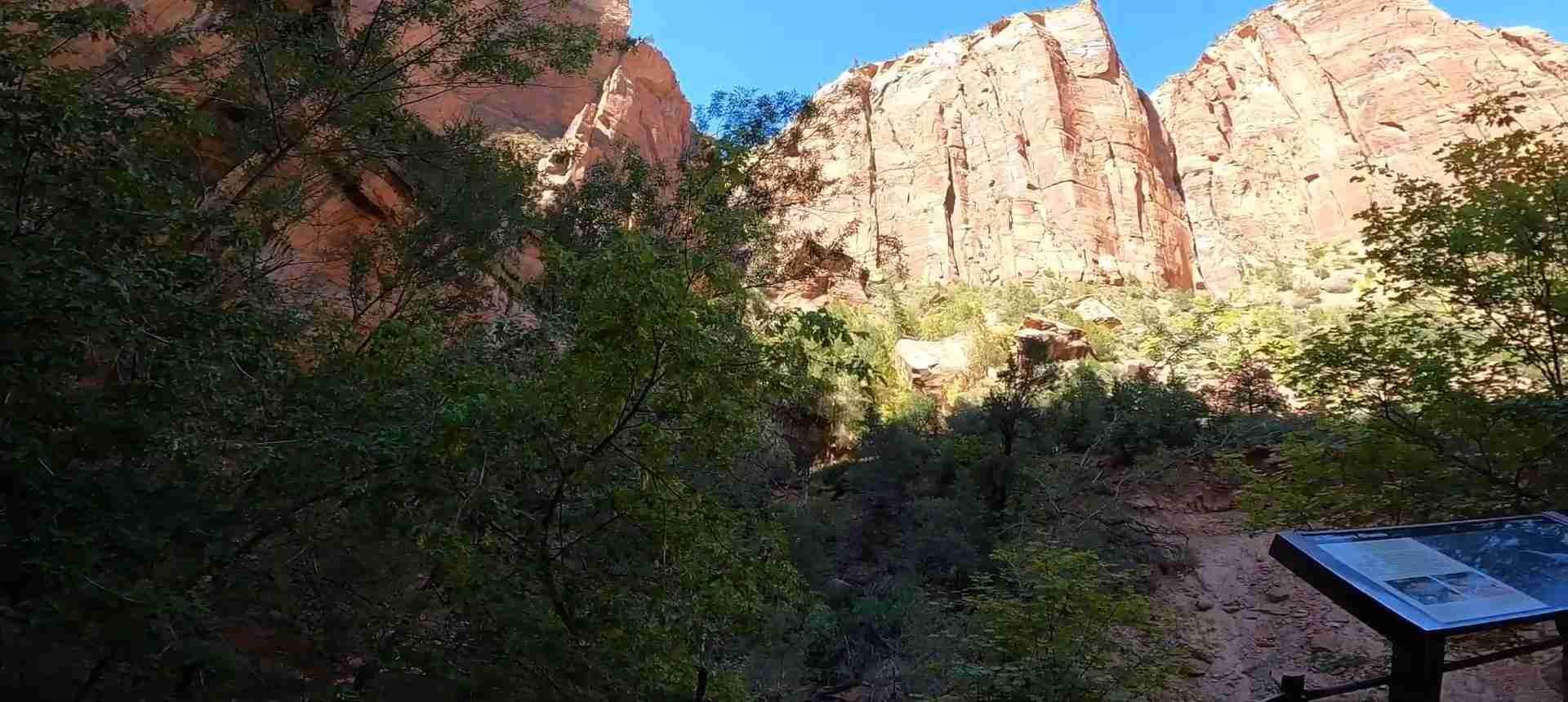
Zion National Park anchors southwestern Utah’s canyon country with 15-mile Zion Canyon carved 2,000 feet deep through Navajo Sandstone by the Virgin River’s erosive persistence across 13 million years. The canyon walls rise in vertical faces of cream, pink, and rust-red stone culminating in formations like the Great White Throne and Angel’s Landing that define the American Southwest’s visual vocabulary. For Las Vegas visitors, Zion’s proximity at 160 miles makes the park uniquely accessible as a day trip destination, though the logistics of successful single-day visits demand careful planning around shuttle schedules, parking constraints, and realistic time allocation across driving and exploration activities.
The 2026 operating environment at Zion introduces several planning variables that differentiate current visits from previous years. The National Park Service’s new non-resident fee structure adds $100 per person surcharges for international visitors aged 16 and older at Zion and ten other high-demand parks, significantly impacting cost calculations for overseas travelers. The park’s mandatory shuttle system continues operating March through November with private vehicle restrictions on Zion Canyon Scenic Drive, while the June 2026 elimination of oversized vehicle tunnel escorts permanently bans RVs and large trucks from the Zion-Mt. Carmel Highway. Parking capacity remains limited with lots filling by 8:30-9:30 AM during peak periods, and the Angels Landing permit lottery system continues requiring advance applications for the park’s signature trail.
These operational realities create a planning framework where timing, route selection, and activity prioritization become critical success factors. Day trippers face a mathematical constraint: 6-7 hours of driving and time zone adjustments leave approximately 5-7 hours for actual park activities during standard Las Vegas departure and return windows. This available time window must accommodate shuttle wait times (averaging 10-30 minutes depending on season and time of day), trail hiking durations (ranging from 45 minutes for the Riverside Walk to 4-5 hours for Angels Landing), and meal breaks. The shuttle’s 45-minute one-way transit time between Visitor Center and Temple of Sinawava further compresses exploration windows, as each trailhead access requires dedicated shuttle boarding and transit periods.
Success in a Zion day trip from Las Vegas depends on three planning principles: aggressive departure timing (5:00-5:30 AM Pacific Time) that ensures arrival before parking fills, strategic trail selection focused on high-impact short-to-moderate routes accessible via shuttle, and realistic activity scoping that accepts Zion’s comprehensive experience requires multiple visits while a single day delivers meaningful exposure to the canyon’s essential character. This guide provides verified 2026 logistics, cost breakdowns, itinerary frameworks, and decision-support information enabling day trippers to maximize their limited time window while maintaining safety margins and realistic expectations. Whether arriving in Zion for the first time or returning for targeted objectives, understanding the current operational environment and time management strategies transforms the day trip from a rushed highway marathon into a focused canyon immersion that justifies the drive commitment.
Las Vegas to Zion: Distance and Route Overview 2026
Las Vegas to Zion National Park via I-15 North covers 160 miles of interstate and state highway across three distinct geographic zones. The route begins in the Las Vegas valley at elevations around 2,000 feet, climbs northeastward through the Mojave Desert transition zone, crosses the Virgin River Gorge in Arizona’s northwestern corner, then ascends into Utah’s Colorado Plateau region where Springdale sits at 3,900 feet elevation adjacent to Zion’s south entrance. The entire journey requires 2.5-3 hours under normal traffic conditions, though this represents driving time only and excludes the critical one-hour time zone change from Pacific (Las Vegas) to Mountain Time (Zion) that advances the clock forward.
The primary route follows I-15 North from Las Vegas through Mesquite, Nevada (82 miles), then enters Arizona for the 15-mile Virgin River Gorge segment where the interstate winds through dramatic limestone canyon walls. At milepost 18, the route crosses into Utah and continues through St. George (130 miles from Las Vegas), then exits at UT-9 toward Hurricane and Springdale. Utah State Route 9 runs east 30 miles from the I-15 exit through the towns of LaVerkin, Virgin, and Rockville before reaching Springdale where the highway terminates at Zion’s south entrance. This final 30-mile segment transitions from high desert sage country into the red rock formations announcing proximity to the canyon system.
Traffic patterns along this route concentrate in three areas. Las Vegas metropolitan traffic densifies I-15 for the first 20-30 miles northbound, particularly during weekday commute hours (7:00-9:00 AM) when casino workers and residents congest the corridor. St. George represents Utah’s fastest-growing metropolitan area with local traffic concentrations around I-15 exits, though congestion rarely extends beyond 10-minute delays. The UT-9 approach to Springdale sees heaviest traffic Saturday and Sunday mornings March through October when weekend visitors converge on Zion, with backup occurring occasionally at the park entrance station during peak entry periods. Weekday mornings generally maintain free-flowing conditions throughout the entire route.
Alternative route options exist but offer minimal advantage for standard day trips. The scenic detour through Valley of Fire State Park adds 90 minutes to total travel time by routing through Nevada’s red rock landscape 55 miles northeast of Las Vegas, then rejoining I-15 near Moapa. This extension makes sense for overnight trips or travelers prioritizing the drive experience over park time, but day trippers sacrifice valuable Zion hours for the detour. No viable southern routes exist that improve upon the I-15/UT-9 corridor’s efficiency, as alternatives through Arizona add 100+ miles and multiple additional hours.
Weather and seasonal road conditions affect the route year-round. Summer temperatures in the Mojave Desert segment routinely exceed 110°F, creating vehicle overheating risks for underprepared cars though the interstate itself remains passable. Winter storms occasionally close I-15 through the Virgin River Gorge when snow or ice accumulates, with Arizona Department of Transportation implementing temporary closures during severe weather. The UT-9 segment into Springdale sees snow and ice December through February at higher elevations near Rockville, though main road plowing maintains generally reliable access. Spring flash flood potential exists along the Virgin River corridor during intense rainfall events, with water occasionally crossing roadways though closures prove rare and brief.
Cell phone coverage proves reliable throughout most of the route. Las Vegas to Mesquite maintains strong signal from all major carriers. The Virgin River Gorge segment (mileposts 8-23 in Arizona) drops to zero coverage for approximately 15 miles as the interstate descends into the canyon with no cell towers penetrating the gorge walls. Service resumes approaching the Utah border and continues reliably through St. George. Coverage becomes spotty along portions of UT-9 between Hurricane and Springdale, particularly in the Virgin River canyon sections, then strengthens again in Springdale where proximity to Zion drives infrastructure investment. Day trippers should download offline maps and critical information before departure rather than depending on in-route connectivity.
Time Zone Considerations for 2026 Day Trips
The Pacific to Mountain Time zone boundary intersects the Las Vegas to Zion corridor near the Nevada-Arizona border, creating a one-hour time advancement that affects all trip timing calculations. Las Vegas operates on Pacific Time year-round (UTC-8 during standard time, UTC-7 during daylight saving time). Zion National Park operates on Mountain Time year-round (UTC-7 during standard time, UTC-6 during daylight saving time). This consistent one-hour difference means a 6:00 AM departure from Las Vegas arrives at Zion at 8:30-9:00 AM local time after accounting for the 2.5-3 hour drive, not 8:30-9:00 AM Pacific Time.
Day trippers must mentally adjust to the time zone change for schedule planning. A Las Vegas departure at 6:00 AM Pacific equals 7:00 AM Mountain Time at the moment of departure. After a 2.5-hour drive, the arrival clock reads 9:30 AM Mountain Time in Zion, though only 2.5 hours have elapsed. This creates the appearance of losing an hour of available park time. The practical implication: to arrive in Zion by 8:30 AM Mountain Time (ideal for securing parking before capacity fills), Las Vegas departures must occur by 5:00-5:30 AM Pacific Time. A 5:00 AM PT departure with 2.5-hour drive arrives at 7:30 AM PT which displays as 8:30 AM MT. A 5:30 AM PT departure arrives at 9:00 AM MT, still within acceptable parking windows for most days.
Return trips reverse the time gain. Departing Zion at 5:00 PM Mountain Time and driving 2.5 hours westbound delivers arrival in Las Vegas at 5:30 PM Pacific Time, appearing to complete a 2.5-hour drive in just 30 minutes. The time zone change effectively returns the hour “lost” on the morning drive. Day trippers planning dinner reservations or evening activities in Las Vegas should calculate return timing using Pacific Time endpoints while accounting for Mountain Time departure moments from Zion to avoid scheduling confusion.
Smartphone automatic time zone adjustment handles this transition seamlessly for digital devices, but analog watches and vehicle clocks require manual advancement when crossing into Utah or retardation when returning to Nevada. The zone boundary location varies by route but generally occurs between mileposts 0-10 on I-15 in Arizona where Nevada transitions to Arizona. Some devices adjust precisely at the state line while others delay until detecting Mountain Time cell towers in Utah, creating brief periods of time display uncertainty. Day trippers should verify their arrival time against Zion’s official shuttle schedule (which posts in Mountain Time) rather than trusting device displays during the border crossing period.
Park Entry Costs and Requirements 2026
Zion National Park entrance fees in 2026 maintain the structure established in 2018 for base pricing while adding the new non-resident surcharge implemented January 1, 2026. The standard vehicle entrance pass costs $35 and covers all occupants in a single private vehicle (up to 15 passengers) for seven consecutive days from first entry. This represents the default option for most day trippers arriving in personal cars, rental vehicles, or rideshare arrangements. Motorcycles pay $30 for the same seven-day window (covering up to four riders on two bikes), while pedestrians and bicyclists pay $20 per person for individual entry.
U.S. residents pay only the base entrance fee with no additional surcharges in 2026. Residency verification occurs at entrance stations where rangers check valid photo identification for all vehicle occupants aged 16 and older. Acceptable ID includes U.S. driver’s licenses, state identification cards, military IDs, or permanent resident cards (green cards). Children under 16 do not require ID verification and enter free as part of a family vehicle pass. Rangers confirm residency to determine fee category but do not record personal information beyond the verification step. Peak season entrance lines extend when rangers verify each passenger’s residency status, adding 10-15 minutes to entry processing during busy periods.
Non-U.S. residents face significantly higher costs beginning January 1, 2026. International visitors aged 16 and older must pay a $100 per person surcharge in addition to the standard $35 vehicle fee. A vehicle carrying two international adults therefore pays $235 total ($35 vehicle fee plus $100 per person for two adults), while a family of two adults and two children under 16 pays the same $235 (children under 16 enter free regardless of residency). This surcharge applies at 11 high-demand national parks including Zion, Grand Canyon, Yellowstone, and Yosemite. Rangers verify non-resident status through passport presentation or lack of U.S. identification, then collect the surcharge either at entrance stations or through pre-purchased passes on Recreation.gov.
The $250 Non-Resident Annual Pass provides cost-effective alternative for international visitors planning multiple park visits in 2026. This pass covers the non-resident surcharge for the passholder plus all passengers in a private vehicle at the 11 surcharge parks, effectively functioning as an America the Beautiful Pass for international users. Two international visitors planning trips to Zion and Grand Canyon break even on the pass versus paying individual surcharges ($200 in surcharges versus $250 pass cost). Three or more parks deliver clear savings. The pass activates upon first use and remains valid for 12 months, available for purchase online at Recreation.gov or in person at park entrance stations. Processing times at entrance stations increase when rangers explain surcharge options and calculate total fees, creating longer entry delays during peak hours.
The America the Beautiful Annual Pass costs $80 for U.S. residents in 2026, covering entrance fees at all federal recreation sites for 12 months from purchase date. Day trippers planning visits to only Zion find minimal advantage in this pass ($80 versus $35 per visit requires three visits to break even), though travelers combining Zion with other parks on the same trip (Grand Canyon, Bryce Canyon, Capitol Reef) see immediate value. The pass covers the passholder plus all passengers in a private vehicle, or the passholder plus three additional adults at per-person fee areas. Senior passes ($20 annual, $80 lifetime) remain available for U.S. citizens and permanent residents aged 62 and older, delivering exceptional value for eligible visitors. Military personnel and their dependents, fourth-grade students through the Every Kid Outdoors program, and visitors with permanent disabilities qualify for free or discounted passes through separate programs.
Fee-free days in 2026 apply only to U.S. residents following policy changes that previously offered universal free entry dates. The calendar includes free entry days on Presidents Day (February 16), Memorial Day (May 25), Flag Day (June 14), Independence Day weekend (July 4-6), National Park Service Birthday (August 25), Constitution Day (September 17), Theodore Roosevelt’s Birthday (October 27), and Veterans Day (November 11). Non-U.S. residents must pay standard entrance fees plus surcharges even on these designated free days. Rangers verify residency for all vehicle occupants aged 16 and older on fee-free days, creating longer entrance processing times than typical paid entry days. Day trippers targeting fee-free dates should expect extended entrance delays and arrive with extra time margin.
Payment methods at entrance stations include credit cards, debit cards, Apple Pay, Google Pay, and cash. Rangers provide receipts serving as seven-day park entry passes, which should be retained for re-entry if leaving and returning during the valid period. Receipts display QR codes enabling mobile storage, though physical receipt retention remains advisable as backup. Online pass purchases through Recreation.gov arrive as digital passes stored in the Recreation.gov mobile app, functioning as valid entry credentials when displayed to rangers. The app reduces entrance station processing time by eliminating payment transactions, particularly valuable during peak entry periods. Day trippers should purchase passes online the evening before departure to streamline morning entry procedures.
Navigating Zion’s Shuttle System 2026
Zion Canyon Shuttle operates as mandatory transportation on Zion Canyon Scenic Drive from March 7 through November 28, 2026, plus a holiday service window December 26 through January 2. During these periods, private vehicles cannot access the Scenic Drive between Canyon Junction (Stop 3) and Temple of Sinawava (Stop 9), the seven-mile corridor containing Zion’s most famous viewpoints and trailheads including The Grotto (Angels Landing access), Weeping Rock, and The Narrows entrance. The shuttle system runs free of charge with no tickets, reservations, or advance booking requirements, operating on continuous circuits with buses departing approximately every 5-10 minutes during peak midday hours and every 10-15 minutes during early morning and late afternoon periods.
The 2026 shuttle schedule varies by season to match daylight hours and visitor patterns. March 7 through May 16, first buses depart Zion Visitor Center at 7:00 AM with final departures from Temple of Sinawava at 7:15 PM. May 17 through September 30, extended summer hours begin service at 6:00 AM and conclude with last buses at 9:00 PM from canyon terminus points. October 1 through November 28, service returns to 7:00 AM starts with 7:15 PM final departures. Holiday service (December 26-January 2) mirrors the March-May schedule. These times reference Mountain Time Zone, critical for Las Vegas day trippers adjusting from Pacific Time. Schedules remain subject to modification based on operational needs, with current information maintained at go.nps.gov/ZionShuttle.
The shuttle route operates as a one-way loop beginning at Zion Canyon Visitor Center (Stop 1) just outside the park entrance, then proceeding northbound through nine designated stops before returning to the Visitor Center. Key stops for day trippers include Zion Human History Museum (Stop 2, Pa’rus Trail access), Canyon Junction (Stop 3, park road intersection), Court of the Patriarchs (Stop 4, viewpoint), Zion Lodge (Stop 5, Emerald Pools access, food service, restrooms), The Grotto (Stop 6, Angels Landing/West Rim Trail), Weeping Rock (Stop 7, Weeping Rock Trail, observation point access), Big Bend (Stop 8, viewpoint), and Temple of Sinawava (Stop 9, Riverside Walk and Narrows entrance). Complete transit from Visitor Center to Temple of Sinawava requires approximately 45 minutes accounting for stops, with return trips consuming equivalent time.
Boarding procedures follow simple first-come, first-served protocol. Day trippers arrive at any shuttle stop, join the designated queue (marked with signage and typically organized by rangers or volunteers during busy periods), then board the next available bus with capacity. Buses accommodate approximately 60 passengers with priority seating for elderly visitors, families with small children, and individuals with mobility limitations. During peak periods (summer weekends, holiday weeks), queues at Visitor Center (Stop 1) extend to 30-45 minute waits between 9:00 AM and 2:00 PM. Boarding at alternative stops often reduces wait times significantly — the Human History Museum (Stop 2, accessible via 0.4-mile Pa’rus Trail walk from Visitor Center) typically maintains 10-15 minute queues when Stop 1 experiences 30+ minute waits.
Strategic boarding timing affects day trip efficiency substantially. Arriving at the Visitor Center by 7:00-7:30 AM (shuttle season start) ensures minimal boarding waits and uncrowded buses, allowing immediate transit to desired trailheads before crowds accumulate. The 7:00-9:00 AM window represents optimal shuttle access for day trippers, as boardings remain swift and parking still available. The 9:00 AM-2:00 PM midday period generates longest wait times with queues routinely reaching 30-45 minutes at main boarding points. Post-3:00 PM periods see declining waits as day visitors begin exiting the canyon, though late afternoon crowds returning from hikes create reverse capacity pressures on southbound shuttles. Day trippers should plan major hikes during morning hours and reserve afternoon periods for shorter walks or viewpoint visits requiring minimal shuttle dependencies.
Southbound return trips toward the Visitor Center operate on the same first-come, first-served basis but with important timing considerations. Between 9:00 AM and 1:30 PM, buses traveling southbound only pick up passengers at Temple of Sinawava (Stop 9) and Visitor Center (Stop 1), bypassing intermediate stops to prioritize upcanyon transport. Day trippers completing hikes at mid-canyon points during this window must walk to Stop 9 or wait until 1:30 PM for intermediate stop service to resume. This directional priority system optimizes morning trailhead access but complicates midday return logistics. After 1:30 PM, normal bidirectional service resumes with all stops active. Final southbound shuttles depart Temple of Sinawava at scheduled closure times (7:15 PM or 9:00 PM depending on season), carrying all remaining visitors to the Visitor Center. Missing final shuttles requires walking the Scenic Drive (up to eight miles from furthest points) or arranging private vehicle pickup if authorized.
Bicycles receive accommodation on shuttle buses through front-mounted racks holding two bikes per bus. Cyclists must load and unload their own bicycles, with rangers or drivers providing guidance but not physical assistance. Rack availability functions first-come, first-served — if racks are full, cyclists must wait for the next bus. Strollers are permitted on shuttles and can be loaded into front racks when folded, or brought aboard in unfolded state during lower-capacity periods at driver discretion. Service animals are welcome aboard shuttles without restrictions, while pets must remain in carriers small enough to fit on owner laps. These policies reflect accessibility requirements while managing capacity on high-ridership routes.
The Springdale Shuttle operates as a complementary free service connecting the town of Springdale (located immediately south of the park entrance) with Zion’s pedestrian entrance and Visitor Center. This shuttle runs nine stops along Zion Park Boulevard through Springdale at 10-15 minute intervals, beginning service at 8:00 AM (one hour after Zion Canyon Shuttle starts). Day trippers parking in Springdale due to full Visitor Center lots can board the Springdale Shuttle at any stop, ride to the Zion Canyon Village stop at the pedestrian entrance, cross the footbridge into the park, then walk 0.2 miles to the Visitor Center to catch the Zion Canyon Shuttle into the main canyon. This connection adds 20-30 minutes to canyon access time but provides reliable parking alternative when arriving after 8:30-9:00 AM when Visitor Center lots typically reach capacity.
Parking and Arrival Strategies 2026
Parking capacity at Zion Canyon Visitor Center totals approximately 450 spaces distributed across multiple lots adjacent to the main entrance complex. This capacity serves annual visitation exceeding 4.5 million visitors, creating predictable capacity constraints during peak periods. Lot fill times vary dramatically by season and day of week. Summer weekends (June through August) see lots reach total capacity by 7:30-8:00 AM, with no available spaces until afternoon departures create turnover around 2:00-3:00 PM. Spring and fall weekends fill by 8:00-9:00 AM, while summer weekdays fill by 8:30-9:30 AM. Winter periods (December through February excluding holidays) maintain open capacity most days with occasional full lots during sunny weekends.
Day trippers targeting Visitor Center parking must arrive during pre-fill windows to guarantee spaces. Summer weekend trips require 7:00-7:30 AM arrivals for reliable parking access, while weekday mornings extend the window to 8:00-8:30 AM. Spring (March-May) and fall (September-November) visitors should target 7:30-8:30 AM arrivals on weekends and 8:00-9:00 AM on weekdays. These recommendations assume shuttle season operations when private vehicles cannot drive Scenic Drive — during winter off-season periods (early December through early March), private vehicle access reduces parking pressures substantially as visitors drive directly to trailheads rather than concentrating at the Visitor Center.
Overflow parking alternatives activate when Visitor Center lots fill. Rangers station staff at entrance stations to redirect arriving vehicles to Springdale parking once capacity exhausts, preventing vehicles from circulating through full lots searching for nonexistent spaces. Springdale offers multiple parking options including free town shuttle stops with adjacent street parking (limited spaces, two-hour maximums in some areas), private pay lots charging $10-20 for all-day parking, and hotel/restaurant lots designated for patron use only. The Zion Canyon Visitor Center maintains an overflow lot on the south side of SR-9 approximately 0.3 miles from the main entrance, though this lot also fills rapidly after main lot closure and requires a walk or shuttle connection to the entrance.
The Virgin Park & Ride facility opened March 1, 2026, as an additional parking alternative located 17 miles west of Springdale in the town of Virgin. This facility offers 32 free parking spaces with shuttle connection into Springdale for $5 per one-way trip ($10 round trip), operating Monday through Saturday with approximately 12 daily departures. The shuttle service targets visitors driving oversized vehicles (RVs, large trucks) unable to access Zion’s main entrance after June 7, 2026 tunnel restrictions, though any visitor can utilize the service to bypass Springdale parking constraints. Total travel time from Virgin to Zion Visitor Center via the paid shuttle plus Springdale free shuttle adds approximately 45-60 minutes compared to direct Visitor Center parking, making this option most practical for late arrivals who missed main parking windows or RV travelers with no alternative access.
Parking strategies for day trippers prioritize three approaches in order of effectiveness. The primary strategy targets early arrival at Zion Visitor Center before capacity exhausts: summer weekends require 7:00-7:30 AM MT arrival (necessitating 3:30-4:30 AM PT Las Vegas departure), weekdays allow 8:00-8:30 AM MT arrival (requiring 4:30-5:30 AM PT departure), and spring/fall shoulder seasons extend to 8:00-9:00 AM MT arrival windows (5:00-6:00 AM PT departure). This approach provides immediate shuttle access and minimizes entry logistics. The secondary strategy utilizes Springdale parking with acceptance of the 20-30 minute time penalty for shuttle connections, viable when departure delays prevent early Visitor Center arrival. The tertiary strategy involves midday arrival after 2:00 PM MT when afternoon exodus creates parking turnover at the Visitor Center, though this compresses available park time substantially for day trippers already managing tight schedules from Las Vegas drive commitments.
Springdale parking logistics require understanding town layout and shuttle stop locations. The main Springdale business district along Zion Park Boulevard (SR-9) extends approximately 3 miles from the park entrance south through town, with shuttle stops numbered 1-9 providing access along this corridor. Parking nearest the park entrance (Stops 8-9) offers shortest connection times but fills earliest, while southern stops (1-4) near hotels and restaurants maintain better availability through midday. Private pay lots cluster near the central business district (Stops 4-6) providing reliable all-day parking with clear pricing. Street parking follows posted time limits ranging from 30 minutes to 2 hours depending on location, enforced by town parking authorities — day trippers should not rely on street parking for extended visits due to time restrictions and limited space availability.
The pedestrian entrance at Zion Canyon Village (Springdale Shuttle Stop 8) serves as the primary park access point for Springdale parkers. This entrance connects via footbridge across the Virgin River directly to the park boundary, then follows a paved 0.2-mile path to Zion Canyon Visitor Center. The route operates 24 hours daily, requiring no entrance fee payment at this point (entrance fees are collected only at vehicle entrance stations or via pre-purchased passes). Pedestrian entrance users proceed directly to the Visitor Center to board Zion Canyon Shuttles, effectively bypassing vehicle entrance queues but adding the 0.2-mile walk plus Springdale shuttle time to their overall access duration.
RV and oversized vehicle restrictions implemented June 7, 2026 eliminate the previous tunnel escort option for accessing Zion-Mt. Carmel Highway from the east. Vehicles exceeding 11 feet 4 inches height, 7 feet 10 inches width (including mirrors and bike racks), 35 feet 9 inches length, or 50,000 pounds gross weight cannot access the east entrance or Zion-Mt. Carmel Highway after this date. This affects large motorhomes, travel trailers, trucks with dual rear wheels, and vehicles with rooftop carriers or bike racks extending beyond width limits. Day trippers renting RVs or driving oversized vehicles must verify dimensions before route planning, utilizing Virgin Park & Ride if measurements exceed thresholds or selecting alternative national park destinations. The south entrance via Springdale maintains access for all vehicle sizes meeting basic road safety standards, though parking lot layouts limit spaces for vehicles exceeding 25-30 feet length.
Best Day Trip Hikes and Activities 2026
Day trip time constraints demand strategic trail selection prioritizing high visual impact per time invested, shuttle accessibility, and minimal permit requirements. Zion Canyon’s trail network ranges from paved riverside walks to technical canyoneering routes, with the following options delivering optimal experience-to-effort ratios for visitors managing 5-7 hour park windows after accounting for Las Vegas travel logistics.
The Riverside Walk to Narrows Entrance (1 hour, all abilities)
The Riverside Walk begins at Temple of Sinawava (Shuttle Stop 9, canyon terminus) and follows a paved, wheelchair-accessible trail 2.2 miles round trip along the Virgin River’s north fork. This trail represents Zion’s most accessible major pathway with negligible elevation gain and smooth pavement throughout, requiring 45-60 minutes for casual walking with photography stops. The route passes hanging gardens, seeps supporting lush vegetation in desert context, and towering canyon walls narrowing progressively toward The Narrows entrance. Day trippers can walk the paved section, reach the official Narrows gateway where pavement ends and river wading begins, then return via the same route without specialized equipment or permits.
This walk succeeds for all fitness levels, families with young children or strollers, visitors in standard footwear, and anyone seeking maximum scenic exposure with minimum physical demand. The paved surface eliminates trail condition concerns, while the Virgin River presence creates microclimates 10-15°F cooler than exposed canyon areas — valuable during summer visits. Shuttle access is direct (one stop from Visitor Center to terminus) though queues at Temple of Sinawava can extend 10-15 minutes during peak periods as this stop serves both Riverside Walk hikers and Narrows adventurers. Day trippers should allocate 90 minutes total including shuttle transit, walk, and photography time.
Extending into The Narrows from the Riverside Walk endpoint requires river wading, with no permits needed for the first 0.5 miles of bottom-up hiking. This section allows day trippers to experience slot canyon environments where walls narrow to 20-30 feet separation while rising 2,000 feet overhead, creating the cathedral-like spaces defining Zion’s character. Water depths vary by season from ankle-deep during late summer low flow to knee-deep during spring runoff, with flash flood closures implemented when Virgin River exceeds 150 cubic feet per second discharge. Day trippers should check Narrows status at Visitor Center, wear shoes suitable for submersion, carry trekking poles for stability, and understand current conditions before entering. The bottom-up route requires no permits for day hiking unless proceeding beyond the 0.5-mile point, where wilderness permits activate.
Emerald Pools Trail System (1-3 hours, easy to moderate)
The Emerald Pools trails access three pool destinations via interconnected paths beginning at Zion Lodge (Shuttle Stop 5). Lower Emerald Pool requires 1.2 miles round trip with 69 feet elevation gain, delivering a paved approach suitable for most visitors requiring 45-60 minutes. Middle Pool adds 0.6 miles and 150 feet climb via steeper, rougher trail extending another 30-40 minutes. Upper Pool demands the full 3-mile round trip with 350 feet gain totaling 2-3 hours including pools visits and return hiking. Day trippers can customize effort level by selecting pool targets matching their available time and fitness, with each pool offering distinct character.
Lower Emerald Pool trail follows the lodge access road briefly then transitions to paved pathway winding through box elder and Gambel oak forest. The trail reaches the pool beneath a cliff-base alcove where seasonal waterfalls (peak flow April-May) cascade from weeping walls above. The pool itself spans perhaps 20-30 feet when full, reflecting canyon walls overhead — more accurately described as a large puddle during late summer low-flow periods than the azure swimming hole the name might suggest. The paved access makes this segment family-friendly and appropriate for limited-mobility visitors, though the return climb from pool to lodge gains 69 feet via moderate grade requiring rest stops for some hikers.
Middle and Upper Pools demand rougher trail navigation with sections of uneven rock, steeper grades, and exposure along cliff-edge paths requiring attention. Middle Pool sits in a hanging canyon alcove reached via switchbacks climbing above Lower Pool’s elevation, offering increased solitude and more dramatic positioning. Upper Pool occupies the head of Heaps Canyon beneath vertical walls, accessed via continued climbing through pinyon-juniper woodland. These upper destinations reward effort with decreased crowds and enhanced canyon immersion but consume 2-3 hours total when hiked as complete circuit. Day trippers should assess available time and weather conditions before committing to upper pools, as afternoon thunderstorms during monsoon season (July-September) create dangerous conditions on exposed sections.
The pools system allows flexible itineraries — visitors can hike to Lower Pool only (1 hour), add Middle Pool (1.5 hours), or complete the full Upper Pool circuit (2-3 hours) based on day trip time availability. Signage at trail junctions provides distance and time estimates supporting real-time decision-making. Water availability varies dramatically by season, with spring snowmelt producing robust flows and waterfalls while late summer-fall periods reduce pools to muddy depressions. Day trippers should adjust expectations seasonally and verify current conditions at Visitor Center before hiking, as winter ice and summer heat create distinct experience parameters.
Canyon Overlook Trail (1 hour, moderate)
Canyon Overlook Trail delivers exceptional viewpoint rewards for minimal distance investment via a 1-mile round trip requiring 45-60 minutes. The trail begins at a small pullout on Zion-Mt. Carmel Highway just east of the long tunnel (not accessible via shuttle), making it unsuitable for day trippers relying exclusively on shuttle transport. Visitors must drive personal vehicles during off-shuttle season (December-February) or arrive via the east entrance to access this trailhead. The route climbs 163 feet through sandy path, stone steps, and exposed sections with cable handrails, reaching a promontory overlooking Pine Creek Canyon, Bridge Mountain, and the Great Arch formation.
This trail functions optimally for day trippers visiting during winter months when private vehicle access to Scenic Drive remains open, allowing combination of shuttle-based canyon floor hikes with drive-accessible overlook trails. The minimal time commitment (under one hour including parking and hiking) enables easy incorporation into itineraries, while the dramatic canyon vistas rival longer trail destinations for photographic impact. The trail’s eastern exposure captures excellent morning light April through September, with afternoon shadows enhancing depth perception September through March. No permits required, no water sources exist along the trail, and moderate exposure near the overlook viewpoint makes this inappropriate for small children without close supervision.
Angels Landing (4-5 hours, strenuous, permit required)
Angels Landing represents Zion’s signature trail challenge with 5.4 miles round trip and 1,488 feet elevation gain requiring 4-5 hours for most hikers. The route begins at The Grotto (Shuttle Stop 6) and climbs via Walter’s Wiggles switchbacks to Scout Lookout (2.4 miles, 1,100 feet gain), then traverses the final 0.5-mile knife-edge ridge to the summit where chains bolted into rock provide handhold security along 1,000-foot vertical drop exposures. The trail demands good physical conditioning, absence of height sensitivity, and comfort with exposure on narrow paths where missteps prove fatal.
Day trippers attempting Angels Landing face two critical constraints beyond the physical demands. First, the trail now operates under a permit lottery system requiring advance reservation through Recreation.gov. Day-before lottery entries open at 12:01 AM Mountain Time for next-day permits ($6 lottery entry fee, $3 per person permit if selected), with selection notifications arriving via email by 5:00 PM. Success rates vary by season and day of week, with summer weekend lotteries experiencing 10-20% success rates and weekday spring/fall lotteries reaching 40-50% success rates. Seasonal lotteries open three months in advance for extended planning, though these fill rapidly for peak season dates. Day trippers cannot simply arrive and hike Angels Landing without securing permits through this system.
Second, the 4-5 hour time requirement consumes most of a day trip’s available park time. A 7:30 AM shuttle boarding from Visitor Center reaches The Grotto around 8:00 AM, with trailhead departure by 8:15 AM enabling summit arrival around 10:30-11:00 AM. Summit time allocation of 30-45 minutes plus 2.5-hour descent completes the hike by 1:30-2:00 PM, leaving minimal time for additional trails or activities before Las Vegas return departure windows. Day trippers must weigh whether dedicating an entire park visit to a single trail aligns with their Zion exposure goals, particularly on first visits where broader canyon sampling might provide more satisfying introduction.
For day trippers who secure permits and commit the time, Angels Landing rewards with unmatched canyon perspectives from the 5,790-foot summit platform. The 360-degree viewpoint encompasses Zion Canyon’s full length, the Virgin River 1,500 feet below, and rock formations defining the park’s skyline. The chains section generates intense psychological challenge even for experienced hikers, with exposure creating genuine danger during wet conditions, high winds, or crowded periods when passing other hikers on narrow sections amplifies risk. The National Park Service reports 17 deaths on Angels Landing since 2000, with most fatalities occurring during falls from the chains section or summit vicinity. Day trippers should honestly assess their capabilities, weather conditions, and risk tolerance before attempting this trail, with no shame in turning around at Scout Lookout if the final section exceeds comfort levels.
Court of the Patriarchs Viewpoint (15 minutes, easy)
Court of the Patriarchs (Shuttle Stop 4) requires only 100 yards of paved walking from the shuttle stop to a developed viewpoint overlooking three massive sandstone peaks: Abraham Peak (6,990 feet), Isaac Peak (6,825 feet), and Jacob Peak (6,923 feet). This stop functions as a shuttle break point rather than a destination hike, valuable for day trippers seeking impressive canyon views without time investment. The 15-minute stop includes shuttle transit, short walk, photography, and return shuttle boarding, making it ideal for filling time slots between major hikes or serving as introductory canyon exposure during early morning arrivals while trails remain quiet.
The viewpoint parking area contains interpretive panels explaining the formations’ naming history and geological composition, though most visitors prioritize photography over educational content. Morning light (8:00-10:00 AM March-September) provides optimal illumination on the peaks’ east faces, while afternoon light works better October-February when sun angles shift. This stop generates minimal crowding except during midday peaks (11:00 AM-1:00 PM) when tour groups concentrate shuttle boarding. Day trippers can efficiently incorporate this viewpoint into shuttle transit between trailheads, stepping off for quick views then catching the next bus 5-10 minutes later rather than dedicating specific itinerary time.
Dining Options for Day Trippers 2026
Food service within Zion National Park limits to two locations, neither providing quick-service dining conducive to time-constrained day trips. Zion Lodge operates a full-service restaurant (Castle Dome Café) requiring 45-60 minute meal durations including ordering, service, and eating, plus a snack bar with limited grab-and-go options. The Visitor Center area offers vending machines and small snack selection but no substantial meal service. Day trippers planning efficient time management should prioritize Springdale dining options before entering the park or pack lunches for consumption at designated picnic areas.
Springdale’s dining corridor along Zion Park Boulevard contains 15+ restaurants ranging from quick breakfast cafes to full-service dinner establishments. For day trippers arriving from Las Vegas, breakfast stops before park entry make strategic sense. Cafe Soleil (Stop 5 on Springdale Shuttle) opens 7:00 AM serving breakfast burritos, bagels, coffee, and pastries in a quick-service format requiring 10-15 minutes. Deep Creek Coffee (Stop 6) opens 6:30 AM offering espresso drinks, breakfast sandwiches, and baked goods with similar service speed. Oscar’s Cafe (Stop 5) operates full breakfast service 7:00 AM-3:00 PM with larger plates requiring 30-40 minute dining durations. Day trippers should calibrate breakfast timing against parking windows — stopping for sit-down breakfast risks missing Visitor Center parking, while quick-service options enable 10-15 minute fuel stops without compromising arrival goals.
Lunch presents different logistics. Day trippers can exit the park midday to eat in Springdale, though this consumes 45-60 minutes including shuttle to Visitor Center, walk to Springdale restaurants, meal service, and return shuttle to canyon. This makes sense when combined with vehicle moves or weather delays but represents pure time loss during optimal hiking hours. Packing lunch from Springdale breakfast stops or Las Vegas hotel preparation enables in-park consumption at designated picnic areas including Zion Lodge lawn (shaded tables, restrooms, water), Temple of Sinawava riverbank (limited seating, no facilities), and Visitor Center lawn (busy, minimal shade). Springdale grocery options include Sol Foods (Stop 6) for sandwich assembly and trail snacks, operating 8:00 AM-8:00 PM daily.
Day trippers should budget $10-18 per person for quick breakfast (coffee, breakfast sandwich or burrito), $15-25 for casual sit-down breakfast (eggs, pancakes, full plates), and $12-20 for pack lunch components (sandwich, chips, fruit, drinks). Springdale restaurant prices reflect captive tourist market dynamics with costs running 20-30% higher than equivalent offerings in St. George or Las Vegas. Water refill stations exist at Visitor Center, Zion Lodge, and Temple of Sinawava, eliminating need to pack excessive water bottles if carrying refillable containers. Summer temperatures demand 1-2 liters water consumption per person for moderate hiking activity, with higher requirements for strenuous trails like Angels Landing.
Afternoon or early evening dining before Las Vegas return drives follows similar options. Day trippers departing Zion around 4:00-5:00 PM can stop in Springdale for early dinner, adding 45-75 minutes to return timing but providing meal service before hunger intensifies during the drive. Zion Pizza & Noodle Co. (Stop 5) operates 4:00-9:00 PM serving pizza, pasta, salads in casual atmosphere with 30-45 minute service times. Bit & Spur Restaurant & Saloon (Stop 4) offers Southwestern cuisine in full-service format requiring 60-90 minutes total. Alternatively, stopping in St. George (30 miles west on I-15) provides chain restaurant access with faster service and lower prices, though this adds minimal time to overall return drive since St. George sits directly on the homeward route.
Sample Day Trip Itinerary 2026
This itinerary demonstrates realistic timing for a March-November shuttle season day trip targeting multiple trail experiences within available time constraints. Adjustments apply for winter off-season periods when private vehicle canyon access modifies logistics substantially.
5:00 AM – Las Vegas Departure (Pacific Time)
Leave hotel or residence with coffee and light snacks for vehicle consumption during drive. Verify smartphones auto-adjust to Mountain Time or manually advance watches upon crossing into Utah. Fuel tank should be full from previous evening to avoid morning stops.
8:30 AM – Zion Visitor Center Arrival (Mountain Time)
After 2.5-hour drive and one-hour time zone change (arriving at 7:30 AM Pacific = 8:30 AM Mountain), arrive at Visitor Center parking area. Secure parking space before lot fills. Use restrooms, fill water bottles at refill station, verify shuttle schedule on posted boards. Purchase entrance pass if not completed online previous evening.
8:45 AM – First Shuttle Boarding
Board Zion Canyon Shuttle at Visitor Center (Stop 1) heading upcanyon. Early morning timing ensures minimal queue and available seating. Ride to Temple of Sinawava (Stop 9), approximately 45 minutes transit time with intermediate stops.
9:30-10:45 AM – Riverside Walk and Narrows Entrance
Complete 2.2-mile round trip paved Riverside Walk, extending into Narrows gateway for 0.25-0.5 miles of river wading if conditions permit. Return to Temple of Sinawava shuttle stop by 10:45 AM. Total activity time: 75 minutes.
10:45-11:00 AM – Shuttle Transit
Board southbound shuttle at Temple of Sinawava, ride to Zion Lodge (Stop 5). Midday shuttle queues beginning to form but moving efficiently during late morning period. Transit time approximately 15 minutes.
11:00 AM-1:00 PM – Emerald Pools Trail
Hike Lower and Middle Emerald Pools circuit (2 miles round trip, 200 feet elevation gain). Pack lunch consumption at Middle Pool or lodge lawn upon return. Trail completion by 1:00 PM including lunch break. Total activity time: 2 hours.
1:00-1:30 PM – Zion Lodge Break
Use lodge restrooms, refill water bottles, rest on lawn seating. Purchase snacks from snack bar if needed. Afternoon heat peak during summer months makes shaded rest period valuable. Optional: eliminate this break on cooler season visits to maximize trail time.
1:30-2:00 PM – Shuttle to Court of the Patriarchs
Board shuttle southbound toward Visitor Center, exit at Court of the Patriarchs (Stop 4). Brief viewpoint visit (15 minutes) capturing afternoon light on peaks. Re-board shuttle continuing to Visitor Center.
2:15 PM – Visitor Center Return
Arrive Visitor Center, locate vehicle in parking lot. Final restroom use, water bottle refills, gift shop browsing if desired.
2:30-3:00 PM – Springdale Dining or Direct Departure
Option A: Drive to Springdale for early dinner at casual restaurant (adds 60-75 minutes), departing Zion area around 3:30-4:00 PM MT.
Option B: Begin Las Vegas return drive immediately at 2:30 PM MT with snack consumption during drive.
Las Vegas Return Arrival (Pacific Time)
Option A (with dining): 5:00-5:45 PM PT arrival after 3:30-4:00 PM MT departure plus 2.5-hour drive.
Option B (direct): 4:00-4:30 PM PT arrival after 2:30-3:00 PM MT departure plus 2.5-hour drive.
Total trip duration: 11-12.5 hours including 5 hours driving, 5.5-6.5 hours park time, dining/margins.
This itinerary prioritizes two major trail experiences (Riverside Walk, Emerald Pools) plus viewpoint stops while maintaining realistic activity durations and shuttle dependencies. Modifications for different priorities: replacing Emerald Pools with Angels Landing permit attempt adds 2 hours and eliminates viewpoint stops; winter visits substitute Canyon Overlook Trail (requires personal vehicle access) for shuttle-dependent trails; afternoon arrival scenarios compress trail selection to single major destination plus viewpoint visits.
Day Trip Cost Breakdown 2026
Complete day trip expenses for U.S. residents traveling from Las Vegas to Zion in 2026 total $75-120 per person depending on vehicle occupancy, fuel efficiency, and meal choices. This calculation assumes two travelers sharing a single vehicle and dividing associated costs, representing the most common day trip configuration.
Park entrance fees contribute $18 per person when two travelers share a vehicle paying the $35 seven-day pass ($35 divided by two occupants). Solo travelers absorb the full $35 entrance fee representing higher per-person cost, while groups of four divide the $35 across more passengers reducing individual contribution to $9 per person. The America the Beautiful Annual Pass ($80) becomes cost-effective for U.S. residents visiting three or more fee-charging parks annually, though single Zion day trips find minimal value in the pass versus standard entrance fee.
Fuel costs for the 320-mile round trip vary by vehicle efficiency. A sedan averaging 28 miles per gallon consumes approximately 11.4 gallons at 2026 Las Vegas area prices averaging $3.50-4.00 per gallon, totaling $40-46 for the complete round trip. This divides to $20-23 per person when two travelers share the vehicle. Less efficient vehicles (trucks, SUVs averaging 20 mpg) consume 16 gallons costing $56-64 total or $28-32 per person split. Electric vehicle charging costs depend on home versus commercial charging rates but typically run $15-25 for equivalent range, though charging infrastructure limitations along the I-15/UT-9 corridor make electric vehicles less practical for time-constrained day trips requiring guaranteed charging access.
Meal expenses range based on dining choices. Budget option packs breakfast and lunch from Las Vegas hotel or grocery, consuming only coffee or minimal grab-and-go items in Springdale totaling $8-12 per person. Mid-range option includes Springdale quick-service breakfast ($10-15) plus packed lunch totaling $18-25 per person. Higher-end option incorporates Springdale sit-down breakfast ($20-30) and early dinner before return ($25-35) totaling $45-65 per person. Most day trippers fall into the mid-range category balancing convenience against cost control.
Incidental costs add $10-20 per person for parking alternatives if Visitor Center lots are full (Springdale private lots), bottled water or snacks if not packed from Las Vegas, and gift shop purchases. Shuttle service within Zion and Springdale remains free eliminating that cost category. Angels Landing permits cost $3 per person plus $6 lottery fee if pursuing that specific trail.
Combining these categories yields the $75-120 per person range for standard day trips: entrance $18, fuel $20-30, meals $25-45, incidentals $10-20. Budget-conscious travelers minimizing meal costs and driving efficient vehicles achieve the lower range ($75-85), while comfort-oriented visitors choosing sit-down dining and driving larger vehicles reach the upper range ($110-120).
Non-U.S. residents face substantially different economics. The $100 per person surcharge for international visitors aged 16+ fundamentally alters cost calculations. Two international adults sharing a vehicle pay $235 total park entrance ($35 base vehicle fee plus $100 surcharge per person for two adults), dividing to $118 per person for entrance costs instead of the $18 U.S. residents pay when sharing. This brings total day trip expenses to $175-215 per person for international visitors: entrance $118, fuel $20-30, meals $25-45, incidentals $10-20. This represents approximately 2× cost increase versus U.S. resident pricing ($75-120). The $250 Non-Resident Annual Pass becomes immediately cost-effective for any international visitor planning 2-3 park visits in 2026, as the pass covers entrance fees and surcharges at all 11 designated parks for one year.
Group dynamics affect per-person costs significantly. Four travelers sharing a vehicle reduce entrance to $9 per person and fuel to $10-15 per person, bringing total day trip costs to $55-90 per person for budget-to-moderate approaches. Solo travelers absorb full entrance ($35) and fuel ($40-46 for efficient sedan, $56-64 for SUV) costs bringing totals to $110-145 per person: entrance $35, fuel $40-46, meals $25-45, incidentals $10-20. Day trippers should optimize group sizes when possible to leverage cost-sharing advantages, particularly for international visitors managing the surcharge structure.
Weather and Seasonal Considerations 2026
Zion’s weather patterns vary dramatically by season, creating distinct experience parameters that affect day trip planning, trail accessibility, and comfort levels. The park spans elevations from 3,666 feet at the south entrance to 8,726 feet at Horse Ranch Mountain summit, generating temperature differentials of 15-20°F between canyon floor and rim trails. Day trippers focusing on shuttle-accessible canyon floor trails primarily encounter the 3,900-4,500 foot elevation range where Springdale and Zion Canyon operate.
Summer (June-August) brings extreme heat to canyon floor areas with daytime temperatures routinely reaching 95-105°F and occasional peaks exceeding 110°F during July heat waves. The canyon’s narrow profile and vertical walls trap heat while limiting air circulation, making afternoon hiking particularly strenuous. Morning temperatures (7:00-10:00 AM) provide the only comfortable hiking window during summer peaks, with readings in the 70-85°F range before rapid warming begins. Thunderstorms develop frequently during monsoon season (mid-July through September) typically forming mid-afternoon with lightning, heavy rain, flash flood potential, and rapid temperature drops. Day trippers should complete exposed trail sections before noon and monitor weather forecasts for thunderstorm timing, as afternoon monsoons create dangerous conditions on wet sandstone and in narrow canyons susceptible to flash flooding.
Spring (March-May) delivers ideal hiking temperatures with daytime highs ranging 65-85°F and morning lows 40-60°F. This season sees peak wildflower blooms (April-May), maximum waterfall flows from snowmelt runoff, and generally stable weather patterns with occasional spring storms bringing rain and wind. Crowds increase progressively through spring as weather improves, with Memorial Day weekend marking the transition into heavy summer visitation. Day trippers targeting optimal conditions should prioritize April and early May when temperatures remain moderate, water features run full, and crowds haven’t reached summer peaks. Spring conditions require layered clothing as morning temperatures in the 40s warm rapidly to afternoon 70s-80s, creating 30-40°F daily temperature swings.
Fall (September-November) provides secondary optimal conditions with temperatures declining from summer peaks into the 70-85°F range (September) then cooling to 50-70°F (October-November). Autumn foliage transforms cottonwoods and maples along the Virgin River into golden displays peaking late October through early November, while reducing crowds after Labor Day create quieter trail experiences. Weather stability increases compared to summer monsoon patterns, though occasional early-season snowstorms can impact higher elevation areas by late November. Day trippers find September particularly attractive for combination of summer access hours, declining heat, and thinning crowds, while October offers peak foliage and comfortable hiking temperatures throughout the day.
Winter (December-February) delivers cold temperatures with canyon floor highs 45-55°F and overnight lows frequently dropping below freezing. Snow accumulation occurs periodically though canyon floor areas typically see 3-5 snow events per winter with accumulation melting within days. Ice presents greater concern on shaded trail sections where meltwater refreezes overnight, creating slippery conditions on stone paths through mid-morning. The shuttle cessation during winter (December 3-March 6 for the 2026 season) allows private vehicle access to Scenic Drive, enabling drive-up access to trailheads and eliminating shuttle boarding logistics. Winter crowds thin substantially making this season attractive for visitors prioritizing solitude over optimal temperatures. Day trippers require substantial cold-weather layering with temperatures starting near freezing at morning departures then warming to 50s by afternoon, necessitating packable insulation and wind protection.
Specific seasonal trail impacts affect day trip planning. The Narrows remains partially or fully closed during spring runoff (typically March-May) when Virgin River discharge exceeds safe wading levels, with full closure implemented above 150 cubic feet per second flow rates. Angels Landing chains become treacherously slippery during rain, snow, or ice conditions, warranting avoidance during and immediately after winter storms or summer thunderstorms. Emerald Pools trails experience ice hazards on north-facing sections during winter months, requiring traction devices (microspikes) for safe navigation. Riverside Walk remains accessible year-round as the paved surface enables easy snow clearing, making it reliable in all seasons though less dramatic without flowing water features during winter dry periods.
Day trippers should consult current conditions before departure through the park’s website (nps.gov/zion) or recorded phone line (435-772-3256) where rangers provide updates on trail closures, weather warnings, and operational status. Weather forecasts specific to Springdale and Zion Canyon are available through standard weather services using the 84767 ZIP code, though microclimate effects within the canyon can create localized conditions varying from regional forecasts. The National Weather Service issues flash flood warnings for the Virgin River drainage when storm systems approach, triggering Narrows closures and heightened awareness for all canyon trails.
Essential Items and Preparation 2026
Day trip success depends on appropriate gear and preparation matching seasonal conditions and planned activities. The following items represent core necessities for standard day trips focusing on shuttle-accessible trails during March-November operating periods.
Footwear requirements vary by trail selection. The Riverside Walk’s paved surface accommodates casual athletic shoes or walking sandals with secure heel straps. Emerald Pools trails demand closed-toe hiking shoes with aggressive tread for uneven rock surfaces and moderate elevation gain. Angels Landing requires serious hiking boots with ankle support given the technical terrain and exposure sections. Narrows wading (even limited gateway exploration) benefits from purpose-designed water shoes or neoprene socks protecting feet against cold water (year-round 40-55°F) and rocky riverbed, though many visitors wade successfully in old athletic shoes designated for submersion. Day trippers should avoid cotton socks on all trails due to blister formation when wet, preferring synthetic or wool moisture-wicking materials.
Water capacity needs scale with temperature and trail intensity. Spring and fall day trips require 1-2 liters per person for moderate trails like Emerald Pools, while summer heat demands 2-3 liters for equivalent activity. Strenuous trails like Angels Landing consume 2-3 liters even during moderate seasons. Refill stations at Visitor Center, Zion Lodge, and Temple of Sinawava enable mid-hike replenishment, reducing need to carry full-day supplies from Las Vegas. Day trippers should start each trail segment with full water capacity, understanding that dehydration symptoms emerge rapidly in dry desert air where perspiration evaporates before creating wetness awareness. Bladder-style hydration systems (CamelBak type) encourage more frequent small-volume drinking compared to bottle systems requiring conscious drinking actions.
Sun protection operates as critical safety equipment rather than optional comfort enhancement. Zion’s 37-degree latitude combined with 4,000-foot elevation and minimal atmospheric pollution creates intense ultraviolet exposure year-round. Sunscreen rated SPF 30+ applied to all exposed skin prevents burns during summer months when UV index routinely reaches 9-10 (very high to extreme). Wide-brim hats provide superior facial protection compared to baseball caps, while lightweight long-sleeve shirts offer arm coverage without excessive heat retention. Sunglasses rated UV400 protect eyes from canyon wall glare particularly severe during midday hours. Day trippers often underestimate sun intensity during spring and fall when comfortable air temperatures mask high UV levels, resulting in severe burns affecting post-trip comfort.
Layered clothing addresses Zion’s temperature variability across elevation changes, time of day, and seasonal patterns. Spring and fall require base layer (synthetic or wool shirt), mid-layer (fleece or light puffy jacket), and shell layer (wind/rain jacket) to accommodate morning temperatures in the 40-50°F range warming to afternoon 70-80°F readings. Summer visits reduce to single lightweight layer though morning starts may warrant light jacket. Winter demands substantial insulation with base layers, insulating mid-layers, and weatherproof shell given morning freezing temperatures and afternoon highs barely reaching 50°F. The key principle: wearing too many layers generates overheating during uphill sections, while insufficient layering creates discomfort during rest stops or shaded segments. Day trippers should pack layers in daypacks rather than wearing everything simultaneously, adjusting throughout the day as conditions evolve.
Food and snacks sustain energy across multi-hour trail activities. High-calorie, lightweight options include trail mix, energy bars, dried fruit, jerky, and nut butter packets providing 200-300 calories per serving. Day trippers completing 4-6 hours of hiking should pack 600-1,000 calories minimum beyond main meals, consumed in small portions throughout activity rather than single large servings. Simple carbohydrates (fruit, energy chews) deliver quick energy during steep climbing sections, while protein and fats (nuts, cheese, jerky) provide sustained fueling for endurance activities. Perishable items require careful handling given Zion’s heat — lunch meats and cheese soften rapidly in summer temperatures, potentially spoiling if packed for full-day carry. Cooler bags with ice packs maintain food safety for items requiring refrigeration.
First aid and emergency items should include basic medical supplies: adhesive bandages for blister treatment (extremely common on steep descents), pain relievers (ibuprofen or acetaminophen for trail aches), antihistamine (bee sting or allergic reaction response), and personal medications. A compact first aid kit weighing 4-6 ounces covers typical trail incidents without excessive weight penalty. Emergency items include headlamp or flashlight (for unexpected delays extending past daylight), whistle (three blasts signals distress), emergency blanket (hypothermia prevention if injured), and fully charged mobile phone in airplane mode (conserves battery while maintaining emergency call capability). Cell coverage exists at Visitor Center and Springdale but drops significantly in canyon interior areas, making phones unreliable for real-time communication though emergency 911 calls receive priority on available towers.
Navigation tools prove less critical on Zion’s well-marked shuttle-accessible trails compared to backcountry environments, though trail maps remain valuable for understanding junction options and distance remaining. Free park maps distributed at entrance stations show major trails with distance and elevation data, sufficient for standard day trip planning. Smartphone GPS apps (AllTrails, Gaia GPS) provide detailed trail routing and real-time position tracking, though battery consumption requires phones starting at full charge or carrying backup power banks. Paper maps eliminate battery dependency while weighing negligible amounts — day trippers should carry park map as backup regardless of smartphone navigation plans.
Camera and binocular equipment enhance but don’t define the experience. Smartphones capture adequate photographs for memory documentation and social sharing, though dedicated cameras with telephoto lenses better capture distant canyon features and wildlife. Binoculars enable California condor observation (these critically endangered birds frequent Zion Canyon areas) and distant canyon wall detail examination, adding educational dimension to viewpoint stops. The weight penalty of DSLR cameras and quality binoculars (2-4 pounds combined) requires conscious decision whether photographic priorities justify carrying this equipment across multiple trail miles.
Alternative Transportation Options 2026
Guided tour services provide turnkey day trip solutions eliminating driving responsibilities while adding structure and interpretation. Multiple Las Vegas-based operators run Zion day trips departing early morning from Las Vegas hotels, providing transportation in passenger vans or small buses, park entrance fees, guide services, and return evening delivery. Tours typically cost $200-300 per person including all transportation and entrance fees but excluding meals, operating year-round with daily or near-daily departures.
The standard tour format follows this pattern: 5:00-6:00 AM hotel pickup, 2.5-3 hour drive to Zion with rest stop in Mesquite or St. George, 4-5 hours in park following guide-selected itinerary (typically Riverside Walk, Emerald Pools, viewpoint stops), lunch break in Springdale or at Zion Lodge, afternoon departure around 2:00-3:00 PM, return to Las Vegas by 6:00-7:00 PM. Group sizes range from 6-14 passengers per vehicle depending on operator, with smaller groups commanding premium pricing but enabling flexible pacing and personalized attention.
Tour advantages include eliminating 5+ hours of personal driving fatigue, professional guide interpretation providing geological and ecological context, guaranteed parking access (tour vehicles drop passengers at Visitor Center regardless of lot status), and potential for enhanced wildlife spotting as guides track current animal activity patterns. Disadvantages include fixed itineraries limiting personal trail selection, group pacing constraints preventing faster hikers from extending routes, structured departure times eliminating flexibility for extended activities, and substantial cost premium over self-drive economics ($200-300 tour cost versus $75-120 self-drive cost per person).
Private tour operators offer customizable experiences for 2-6 person groups at $600-1,200 total depending on group size and itinerary complexity. These services provide dedicated guide and vehicle, flexible pacing matching group capabilities, personalized trail selection reflecting participant interests, and enhanced interpretation depth compared to larger group tours. The economics work favorably for groups of 4+ where per-person costs ($150-300) approach standard tour pricing while delivering private group benefits, but prove expensive for couples or solo travelers absorbing full costs across fewer participants.
Commercial shuttle services run limited routes between Las Vegas and regional destinations but rarely serve Zion directly. The St. George Express operates Monday-Saturday service from Las Vegas to St. George ($49 one-way, 12 daily departures) enabling connection to St. George-based tour operators or rental car pickup for final approach to Zion. This option appeals to travelers without personal vehicles seeking alternatives to full-day tours, though the logistics complexity (coordinating shuttle timing with rental car availability and return deadlines) and minimal cost savings ($98 round trip shuttle plus $50 rental car versus $40 self-drive fuel) limit practical applications.
Rental car options from Las Vegas airports and hotels provide standard self-drive capability for visitors arriving via air travel without personal vehicles. Major rental agencies (Enterprise, Hertz, Budget, National) operate locations throughout Las Vegas with daily rates ranging $40-80 for economy and midsize vehicles during off-peak periods, escalating to $80-150 during peak seasons and weekends. Day trippers should verify rental agreements permit out-of-state travel to Utah (most do without restriction) and understand mileage allowances (typically unlimited for daily rentals but should be confirmed). Adding a second authorized driver costs $10-15 daily but enables driving responsibility sharing on the 5+ hour round trip commitment.
Extending the Day Trip: Overnight Alternatives 2026
Converting a day trip into overnight or multi-day visit fundamentally improves the Zion experience by eliminating Las Vegas driving pressures, enabling sunset and sunrise access, and providing time for comprehensive trail exploration. Springdale offers 20+ accommodation options ranging from campgrounds ($25-35 per night) to luxury hotels ($250-450 per night), with most properties within walking distance of park entrance and Springdale shuttle stops.
Budget overnight options include Zion Canyon Campground and South Campground operated by National Park Service within park boundaries, offering tent sites $25 per night and RV sites $30-35 with basic amenities (picnic tables, fire rings, restrooms, no hookups). These campgrounds provide immediate park access and authentic outdoor experience but require advance reservations through Recreation.gov during peak season (March-November) when sites sell out weeks to months ahead. Springdale private campgrounds (Zion River Resort, Zion Canyon Campground) offer additional capacity at $40-50 per night with improved amenities including showers, laundry, and camp stores.
Mid-range hotels cluster along Zion Park Boulevard in Springdale with properties like Hampton Inn ($180-280 per night), Best Western Plus ($160-250), and Holiday Inn Express ($170-290) providing standard chain amenities, complimentary breakfast, pools, and shuttle stop access. Independent properties including Driftwood Lodge ($140-220), Bumbleberry Inn ($130-200), and Novel House ($160-240) offer character alternatives to chain consistency at similar price points. Overnight stays enable two-day park visits with 12-16 hours of available hiking time versus 5-7 hours on day trips, allowing Angels Landing permit attempts, comprehensive trail sampling, and exploration beyond shuttle-accessible areas.
Luxury accommodations reach into $300-500 per night range at properties like Cable Mountain Lodge ($280-420), Cliffrose Springdale ($300-480), and Desert Pearl Inn ($280-450), featuring upscale rooms, riverside locations, premium amenities, and concierge services assisting with park planning and permit applications. These properties appeal to visitors prioritizing comfort and service over budget efficiency, providing resort-style experiences complementing rather than competing with park activities.
Overnight economics shift cost calculations substantially. The $180-280 hotel cost (averaging $230) divided between two travelers adds $115 per person to trip expenses, bringing total costs to $230-270 per person for overnight conversion: entrance $18, fuel $20-30, meals $60-80 for multiple Springdale dining events, hotel $115, incidentals $15-25. This represents 2-3× the day trip cost ($75-120) while providing 2-3× the available park time and eliminating driving fatigue, yielding favorable cost-per-hour park access ratios. Groups of four sharing hotel rooms reduce per-person accommodation costs to $60 improving overnight economics further.
Combination trips incorporating additional parks leverage the overnight infrastructure efficiently. Zion to Bryce Canyon National Park covers 72 miles (1.5 hours driving) enabling two-park itineraries from Springdale base. The day trip to Bryce adds Hoodoo formations and amphitheater vistas complementing Zion’s canyon character, with return to Springdale accommodation eliminating second hotel booking. Similarly, North Rim Grand Canyon lies 122 miles (2.5 hours) from Springdale, though seasonal access (mid-May through mid-October) limits this option to summer visitors. Multi-park overnight strategies maximize regional exposure while maintaining single accommodation base, particularly valuable for visitors traveling from distant locations where return trip frequency proves limited.
Safety Considerations and Emergency Protocols 2026
Day trip safety depends on realistic self-assessment, environmental awareness, and preparation for common incident types occurring in Zion’s desert canyon environment. The National Park Service documents hundreds of search and rescue operations annually, with most incidents involving dehydration, heat illness, falls on steep terrain, and navigation errors, all preventable through appropriate planning and decision-making.
Heat-related illness represents the primary safety concern during summer months when canyon floor temperatures exceed 100°F. Heat exhaustion symptoms include excessive sweating, weakness, dizziness, nausea, and headache, progressing to heat stroke (medical emergency) if core temperature rises above 104°F accompanied by confusion, loss of consciousness, or cessation of sweating. Prevention requires aggressive hydration (drinking before thirst sensation develops), frequent rest in shade, light-colored loose clothing maximizing evaporative cooling, and avoiding strenuous activity during peak heat hours (11:00 AM-4:00 PM June-August). Day trippers experiencing heat illness symptoms should move to shade, consume water or electrolyte drinks, wet clothing to enhance evaporative cooling, and seek ranger assistance at Visitor Center or Zion Lodge if symptoms persist or worsen.
Falls occur frequently on steep trail sections, uneven rock surfaces, and exposure areas like Angels Landing chains section. Preventive measures include wearing appropriate footwear with aggressive tread, maintaining three points of contact when scrambling on rock, avoiding trail edges near drop-offs, and recognizing personal limits regarding exposure tolerance. The Angels Landing summit route has claimed 17 lives since 2000 with most fatalities resulting from falls during wet conditions, high winds, or crowded chains sections where passing other hikers increases risk. Day trippers should turn around without hesitation when conditions (weather, crowding, personal fatigue) create uncomfortable risk levels, understanding that reaching any particular destination matters less than safe return.
Flash floods threaten narrow canyon environments during and after rainstorms, with particular danger in The Narrows where walls narrow to 20-30 feet separation and escape routes don’t exist. The Virgin River can rise from ankle depth to 10+ feet in minutes when upstream thunderstorms release runoff into the watershed, creating powerful currents capable of sweeping hikers downstream. The National Park Service closes The Narrows when Virgin River discharge exceeds 150 cubic feet per second, posting closure notices at Temple of Sinawava and Visitor Center. Day trippers should check Narrows status before hiking, monitor weather forecasts for afternoon thunderstorm development (common July-September), and exit immediately if water levels begin rising or if thunder is audible even from distant storms. Flash flood danger extends beyond The Narrows to any slot canyon or drainage area — day trippers should avoid entering narrow washes during or immediately after rainfall.
Wildlife encounters in Zion rarely present danger but require appropriate distance maintenance. Mule deer frequent developed areas and trails, habituated to human presence but capable of aggression during fawning season (May-June) when protecting young. Maintain 50-yard distance from all deer, never attempting to touch or feed wildlife. California condors (critically endangered birds) soar canyon thermals and occasionally land near trails, identifiable by 9-foot wingspan and distinctive white wing patches. These birds are federally protected requiring 300-foot minimum distance, with rangers issuing citations for harassment including close approaches for photography. Rattlesnakes inhabit rocky areas and sunny trail edges April-October, typically retreating when detecting footstep vibrations but capable of defensive strikes if surprised or cornered. Day trippers should watch foot placement when stepping over rocks or logs, avoid reaching into crevices or under overhangs, and give encountered snakes wide berth for retreat.
Emergency communication within Zion faces limitations due to sparse cell coverage. The Visitor Center area maintains reliable signal from major carriers, while canyon interior areas (particularly north of Zion Lodge) experience spotty to zero coverage depending on specific location and carrier. Emergency calls (911) receive priority routing on available towers, sometimes connecting when standard calls fail. Day trippers should inform someone outside the park of their planned itinerary and expected return time, establishing check-in protocol for confirming safe completion. Emergency call boxes do not exist along trails, though rangers patrol shuttle stops and major trails during operating hours.
Ranger assistance is available at Visitor Center information desk, roving ranger patrols on popular trails, and entrance stations. Serious medical emergencies (cardiac events, severe trauma, heat stroke) trigger helicopter evacuation from canyon floor to St. George Regional Hospital (trauma center, 45 miles). Less severe incidents requiring ambulance transport use ground transportation to Hurricane Valley Fire District or St. George facilities. Day trippers should carry adequate health insurance including emergency evacuation coverage, as rescue operations and helicopter transport generate bills exceeding $10,000-25,000 not covered by National Park Service.
Frequently Asked Questions About Zion Day Trips from Las Vegas 2026
How early should you leave Las Vegas for a Zion day trip in 2026?
Day trippers should depart Las Vegas between 5:30-6:00 AM Pacific Time to arrive at Zion Visitor Center by 8:00-8:30 AM Mountain Time (accounting for 2.5-3 hour drive plus one-hour time zone change). This timing secures parking before the 8:00-9:00 AM capacity threshold when lots fill during peak season, enables access to shuttle service from its 7:00 AM start with minimal boarding waits, and maximizes daylight hours for trail exploration. Earlier departures (4:30-5:00 AM) provide additional margin during summer weekends when parking fills fastest, while departures after 6:30 AM risk parking elimination and extended shuttle queues consuming valuable park time. The aggressive early timing feels burdensome but proves essential for successful day trip execution given the limited parking infrastructure and time-compressed single-day visit framework.
Is one day enough time to see Zion National Park from Las Vegas in 2026?
One day provides meaningful exposure to Zion’s essential character though far from comprehensive park coverage. Day trippers typically accomplish 2-3 major trails (Riverside Walk, Emerald Pools, viewpoint stops) plus shuttle transit and meal breaks within the 5-7 hour park window remaining after 6-7 hours of round-trip driving and time zone adjustments. This delivers satisfying first-visit introduction capturing signature canyon vistas, river corridor ecosystems, and moderate hiking experiences while establishing context for potential future multi-day returns. Single-day visits cannot accommodate Angels Landing (4-5 hours), The Narrows full wade (6-8 hours round trip to turnaround points), Observation Point (6-8 hours via East Mesa Trail), or exploration of Kolob Canyons, Kolob Terrace, or backcountry areas. Day trips work effectively for Las Vegas visitors lacking time for overnight stays and prioritizing some Zion exposure over no visit at all, while recognizing the park’s comprehensive experience requires multiple days.
Can you drive your own car through Zion Canyon on a day trip from Las Vegas in 2026?
Private vehicle access to Zion Canyon Scenic Drive depends on shuttle operating season. March 7 through November 28 (plus December 26-January 2), the mandatory shuttle system prohibits private vehicles on the Scenic Drive between Canyon Junction and Temple of Sinawava, requiring day trippers to park at Visitor Center or Springdale and board free shuttles for trailhead access. During winter off-season (early December through early March excluding holiday period), the shuttle ceases operation and private vehicles can drive the full Scenic Drive to all viewpoints and trailheads, providing direct access without shuttle dependencies. The June 7, 2026 implementation of oversized vehicle restrictions permanently bans RVs, large trucks, and vehicles exceeding dimension limits (11’4″ height, 7’10” width, 35’9″ length, 50,000 lbs weight) from Zion-Mt. Carmel Highway and tunnel regardless of season, limiting east entrance access to appropriately sized vehicles year-round.
What is the best month to visit Zion National Park from Las Vegas in 2026?
April and October represent optimal months for Zion day trips balancing favorable weather, moderate crowds, and full park access. April delivers spring temperatures (65-85°F daytime), peak wildflower blooms, maximum waterfall flows from snowmelt, and increasing but not overwhelming crowds as summer peak season hasn’t arrived. October offers autumn temperatures (60-75°F), spectacular fall foliage along the Virgin River corridor (peaking late October), declining summer crowds after Labor Day, and stable weather patterns with reduced thunderstorm frequency compared to summer monsoon season. May and September function as secondary optimal months with slightly warmer temperatures and heavier crowds than April/October but superior to summer heat or winter cold. Summer months (June-August) bring extreme heat (95-110°F) limiting comfortable hiking to early morning hours, while winter (December-February) delivers cold temperatures, potential snow/ice on trails, and shortened daylight but offers solitude and off-season shuttle-free vehicle access.
Do you need reservations for Zion shuttle from Las Vegas day trips in 2026?
No, Zion Canyon Shuttle operates first-come, first-served with no tickets, reservations, or advance bookings required for shuttle boarding in 2026. Day trippers simply arrive at designated shuttle stops and board the next available bus during operating hours (7:00 AM first departure during most of shuttle season). Wait times vary from 5-10 minutes on weekday mornings to 20-45 minutes during summer weekend midday peaks, but shuttle access remains available without reservation systems. The Angels Landing trail requires separate permit reservations obtained through day-before lottery (applications accepted until 3:00 PM Mountain Time for next-day permits) or seasonal lottery (three months advance), though this permit requirement applies to the trail itself not shuttle boarding. Park entrance passes can be purchased online in advance through Recreation.gov to streamline entrance station processing, but this represents optional convenience rather than mandatory reservation.
How much does it cost to visit Zion National Park from Las Vegas in 2026?
Complete day trip costs from Las Vegas to Zion range $75-120 per person for U.S. residents, including park entrance ($18 per person when two share a vehicle paying the $35 seven-day pass), round-trip fuel ($20-30 per person split), meals ($25-45 for Springdale breakfast and lunch), and incidentals ($10-20 for parking alternatives if needed, snacks, etc.). Non-U.S. residents face substantially higher expenses due to the $100 per person surcharge for international visitors aged 16+ added to standard entrance fees, bringing total day trip costs to $175-220 per person. The $250 Non-Resident Annual Pass becomes cost-effective for international visitors planning 2-3 park visits in 2026. Guided tour options cost $200-300 per person including transportation and entrance but excluding meals, approximately double the self-drive cost while eliminating driving responsibilities and providing professional interpretation.
What are the best trails for a Zion day trip from Las Vegas in 2026?
The Riverside Walk (2.2 miles round trip, paved, 45-60 minutes) and Emerald Pools trail system (1.2-3 miles round trip depending on pool destinations, 1-3 hours) provide optimal combinations of scenic impact, accessibility, and time efficiency for day trippers managing 5-7 hour park windows. The Riverside Walk delivers immediate Virgin River corridor immersion with minimal physical demand, extending to Narrows gateway for slot canyon exposure without technical requirements. Emerald Pools offers flexible distance options with Lower Pool (1 hour) suitable for limited time/fitness, Middle Pool (1.5 hours) adding moderate challenge, and Upper Pool (2-3 hours) completing the circuit for ambitious hikers. Both trails access via shuttle stops (Temple of Sinawava and Zion Lodge respectively) eliminating driving logistics. Angels Landing (5.4 miles round trip, 4-5 hours) represents Zion’s signature challenge but consumes most available day trip time, requires advance permit lottery participation, and demands significant physical conditioning — recommended primarily for repeat visitors targeting this specific objective rather than first-time day trippers seeking broader park exposure.
Can you visit Bryce Canyon and Zion in one day from Las Vegas in 2026?
Attempting both Zion and Bryce Canyon in a single day from Las Vegas proves technically possible but delivers rushed, unsatisfying experiences at both parks. Las Vegas to Zion requires 2.5-3 hours (160 miles), Zion to Bryce Canyon adds 1.5 hours (72 miles), with Bryce Canyon return to Las Vegas requiring 4 hours (270 miles), totaling 8 hours driving. This leaves perhaps 3-4 hours split between two major national parks after accounting for meal stops, restroom breaks, and entry station processing. Each park independently justifies full-day visits, with combined single-day attempts forcing selection of one quick trail per park plus viewpoint stops while sacrificing the immersive experience both destinations deserve. Overnight stays in Springdale or Bryce Canyon area enable proper two-day itineraries dedicating full days to each park, or alternatively, day trippers should select one park for comprehensive single-day exploration rather than fragmenting time across both.
Is the drive from Las Vegas to Zion National Park difficult in 2026?
The Las Vegas to Zion drive via I-15 North and UT-9 presents straightforward interstate and state highway driving suitable for confident drivers with no technical challenges under normal conditions. The route follows divided interstate for 130 miles through Mesquite and St. George with minimal elevation changes and modern road engineering, then transitions to two-lane UT-9 for the final 30 miles through scenic but well-maintained canyon approach. The only significant technical element involves the Zion-Mt. Carmel Highway’s 1.1-mile tunnel requiring headlight use and single-lane sections for large vehicles (though day trippers in standard cars/SUVs experience normal two-lane tunnel passage). Winter snow and ice can affect I-15 through Virgin River Gorge and UT-9 approaching Springdale December-February, occasionally requiring chains or creating temporary closures during severe storms. Summer heat exceeding 110°F in Mojave Desert sections presents vehicle overheating risks for poorly maintained cars, while aggressive early morning departure timing (5:30-6:00 AM) means driving in darkness for the first 1-2 hours requiring headlight use and deer awareness.
What should you pack for a Zion day trip from Las Vegas in 2026?
Essential day trip items include hiking footwear with aggressive tread (closed-toe shoes minimum, hiking boots preferred for Emerald Pools or Angels Landing), 2-3 liters water capacity per person with refillable bottles, sun protection (SPF 30+ sunscreen, wide-brim hat, UV-rated sunglasses), layered clothing matching seasonal conditions (light jacket for spring/fall mornings, minimal layers for summer, substantial insulation for winter), high-calorie snacks (trail mix, energy bars, dried fruit totaling 600-1,000 calories), basic first aid supplies (adhesive bandages, pain relievers, personal medications), and navigation aids (park map, charged smartphone with downloaded offline maps). Optional but valuable items include trekking poles for steep descents, camera equipment beyond smartphone, binoculars for condor observation and distant canyon features, headlamp for unexpected delays, and emergency supplies (whistle, emergency blanket, backup phone battery). Day trippers should pack items in daypacks or small backpacks rather than relying on handheld carrying, as even moderate trails like Emerald Pools benefit from hands-free load distribution.