
Yosemite National Park Complete History Guide
From the Ahwahneechee people who first called the valley home to the modern visitors who traverse its trails, each generation has left its mark on this extraordinary landscape while simultaneously working to preserve its primeval character.
Key Takeaways
- Yosemite Valley served as home to the Ahwahneechee people for over 4,000 years before European contact transformed the landscape
- The Mariposa Battalion’s 1851 expedition marked the first documented entry by non-indigenous people, triggering rapid changes in valley occupancy
- Abraham Lincoln signed the Yosemite Grant in 1864, creating the first protected wilderness area in United States history
- John Muir’s conservation advocacy directly influenced Congress to establish Yosemite as America’s third national park in 1890
- Glacial activity over millions of years carved the valley’s iconic granite formations including El Capitan and Half Dome
- The park’s expansion through land acquisitions grew from 1,200 square miles to over 1,200 square miles of protected wilderness
Introduction
Yosemite National Park stands as one of America’s most treasured natural landmarks, embodying the nation’s commitment to wilderness preservation and environmental stewardship. This comprehensive historical guide explores the deep roots of human presence in Yosemite Valley, from ancient indigenous civilizations through the conservation movement that established the modern national park system. Understanding Yosemite’s history reveals not just the story of a remarkable landscape, but the evolution of American environmental consciousness and the complex relationship between humans and wilderness.
The granite cliffs, thundering waterfalls, and giant sequoia groves of Yosemite represent millions of years of geological processes, yet the human story spans mere millennia. The intersection of natural and cultural history in Yosemite created a unique laboratory for American conservation philosophy, influencing wilderness protection policies worldwide.
People Also Ask About Yosemite National Park History
Who Were the Original Inhabitants of Yosemite Valley?
The Ahwahneechee people, a subgroup of the Southern Sierra Miwok, inhabited Yosemite Valley for approximately 4,000 years before European contact. Archaeological evidence throughout the valley reveals sophisticated seasonal settlements, with the Ahwahneechee establishing permanent villages on the valley floor during summer months and migrating to lower elevations during winter. The indigenous name “Ahwahnee” translates to “place of the gaping mouth,” referencing the valley’s distinctive shape and the sensation of awe it inspired even among those who called it home.
The Ahwahneechee developed intricate knowledge of the valley’s resources, practicing controlled burning to maintain oak groves and meadows for acorn harvesting and game management. Their villages featured conical cedar bark houses called “u-ma-chas,” with populations fluctuating seasonally between 200-400 individuals. The tribe’s sophisticated understanding of the ecosystem enabled sustainable living practices that maintained the valley’s ecological balance for millennia. Trade networks extended throughout the Sierra Nevada and into the Central Valley, with Ahwahneechee craftspeople renowned for their basket weaving and obsidian tool manufacturing.
What Led to Yosemite Becoming a Protected Area?
The path to Yosemite’s protection began with growing awareness of the valley’s unique beauty following the 1851 Mariposa Battalion expedition. Early visitors like artist Thomas Ayres and photographer Carleton Watkins created images that captivated eastern audiences, demonstrating the valley’s exceptional character. By the early 1860s, concerns about commercial exploitation and homesteading threats prompted conservationists to lobby for federal protection. Israel Ward Raymond, California’s representative for the Central American Steamship Transit Company, wrote directly to Senator John Conness advocating for the valley’s preservation.
President Abraham Lincoln signed the Yosemite Grant on June 30, 1864, during the height of the Civil War, transferring Yosemite Valley and the Mariposa Grove to California for public use and preservation. This unprecedented act marked the first time the federal government set aside scenic wilderness for preservation and public enjoyment, establishing the philosophical foundation for the national park concept. The California State Legislature accepted management responsibility, appointing commissioners including Frederick Law Olmsted, who authored an influential report emphasizing the democratic principle that natural wonders should remain accessible to all citizens rather than becoming private domain.
How Did John Muir Influence Yosemite’s History?
John Muir’s arrival in Yosemite Valley in 1868 initiated a lifelong relationship that fundamentally shaped American conservation. Working initially as a shepherd and later as a sawmill operator, Muir spent countless hours exploring the high country, developing revolutionary theories about glacial formation of the valley. His writings in publications like the Overland Monthly and Century Magazine brought Yosemite’s wonders to national attention, combining scientific observation with poetic prose that captured the spiritual dimension of wilderness experience.
Muir’s advocacy proved instrumental in expanding protection beyond the original grant. His 1889 Century Magazine articles outlined the threats facing the watershed surrounding Yosemite Valley, including logging, grazing, and hydraulic mining. These publications directly influenced congressional action, and on October 1, 1890, President Benjamin Harrison signed legislation creating Yosemite National Park, protecting over 1,500 square miles of Sierra Nevada wilderness surrounding the valley. Muir’s founding of the Sierra Club in 1892 provided an organizational vehicle for continued advocacy, establishing patterns of citizen engagement in environmental protection that persist today.
What Major Events Shaped Modern Yosemite?
The transfer of Yosemite Valley and Mariposa Grove from California state control back to federal management in 1906 unified park administration, resolving conflicts between state and federal jurisdictions. This consolidation enabled coherent management policies and ended commercial concessions that had proliferated under state control. The establishment of the National Park Service in 1916 provided professional management, with Yosemite serving as a testing ground for policies balancing preservation and public access.
The construction of infrastructure through the 1920s and 1930s transformed visitor experience while raising questions about development in wilderness areas. The All-Year Highway (later renamed the Wawona Road) opened year-round access, while the Ahwahnee Hotel exemplified rustic architecture designed to complement rather than dominate the landscape. The 1970s brought renewed emphasis on environmental protection, with the removal of unnecessary development and restoration of natural conditions. The 1984 UNESCO World Heritage designation recognized Yosemite’s universal value, placing it among the world’s most significant protected areas and reinforcing international commitment to its preservation.
Extended multi-day tours – 5+ days
Featured Park Yosemite National Park Multi-Day Tour Packages
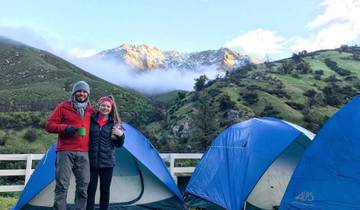
3 days
Yosemite Escape Camping – 3 Days
- ✓ Comprehensive Park Yosemite National Park tour
- ✓ Expert local guides included
- ✓ All accommodation arranged
- ✓ Transportation provided
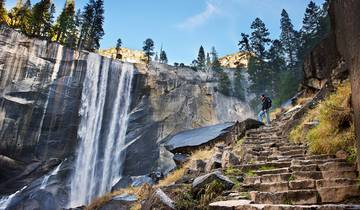
6 days
Hiking in Yosemite National Park
- ✓ Comprehensive Park Yosemite National Park tour
- ✓ Expert local guides included
- ✓ All accommodation arranged
- ✓ Transportation provided
3 days
Yosemite Escape Lodging – 3 Days
- ✓ Comprehensive Park Yosemite National Park tour
- ✓ Expert local guides included
- ✓ All accommodation arranged
- ✓ Transportation provided
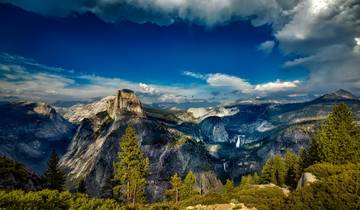
8 days
Hiking Sequoia, Kings Canyon, and Yosemite
- ✓ Comprehensive Park Yosemite National Park tour
- ✓ Expert local guides included
- ✓ All accommodation arranged
- ✓ Transportation provided
Multi-day tour packages powered by TourRadar. Prices and availability subject to change.
Indigenous Heritage and Early Human Presence
Archaeological investigations throughout Yosemite reveal human presence dating back at least 8,000-10,000 years, with the most intensive occupation occurring during the last 4,000 years. The Ahwahneechee people established Yosemite Valley as their primary summer residence, taking advantage of abundant resources including acorns from black oak groves, fish from the Merced River, and game attracted to meadow edges. Seasonal patterns dictated a sophisticated migration strategy, with families moving to lower elevations around 3,000 feet during winter months to escape heavy snow while maintaining access to stored foods and protected campsites.
The Ahwahneechee social structure centered on family units occupying distinct territories within the broader valley, with leadership passing through hereditary lines while maintaining democratic decision-making for community matters. Religious beliefs emphasized harmony with natural forces, with shamans serving as spiritual leaders and healers. Ceremonial practices included elaborate dances and songs celebrating seasonal changes, successful hunts, and significant life events. The tribe maintained extensive knowledge of medicinal plants, with treatments for common ailments passed down through generations.
Material culture reflected the Ahwahneechee’s intimate relationship with their environment. Women wove baskets of exceptional quality using willow, bracken fern, and redbud, creating intricate geometric patterns that served both functional and aesthetic purposes. These baskets functioned as cooking vessels when filled with water and heated stones, storage containers for acorns and other foods, and even as baby carriers. Men crafted bows from mountain mahogany and arrows from straight shoots, developing hunting techniques specific to valley conditions. Obsidian tools, obtained through trade with eastern Sierra groups, provided sharp cutting edges for butchering game and processing plant materials.
The arrival of Spanish explorers in California’s Central Valley during the late 18th century initiated indirect impacts on Yosemite’s indigenous population. Mission system expansion introduced diseases that devastated native communities, though the Ahwahneechee’s mountain isolation provided some protection. However, the Gold Rush of 1849 brought unprecedented pressure, with miners and settlers pushing into the Sierra foothills. Conflicts between native groups and newcomers escalated, leading to the formation of the Mariposa Battalion in 1851, specifically tasked with relocating indigenous people from the mountains to reservations in the Central Valley.
European Discovery and the Mariposa Battalion
The Mariposa Battalion’s entry into Yosemite Valley on March 27, 1851, marked a watershed moment in the region’s history. Led by Major James Savage, a trader who operated posts in the foothills, the battalion comprised approximately 200 men tasked with removing the Ahwahneechee following conflicts related to mining activities. Battalion member Lafayette Bunnell provided the first written descriptions of the valley, and while his accounts reveal the expedition’s problematic mission, they also document the profound impact the landscape had on its first non-indigenous visitors.
Bunnell proposed the name “Yosemite” for the valley, apparently derived from a Miwok term he understood to mean “grizzly bear.” However, linguistic research suggests the term actually referred to the Ahwahneechee people themselves or their designation as “killers” by neighboring tribes. The name stuck despite its questionable origin, and the battalion’s descriptions sparked interest among California settlers. Chief Tenaya, leader of the Ahwahneechee, initially resisted relocation, but the battalion’s military force proved overwhelming. The Ahwahneechee were marched to a reservation near Fresno, though many eventually returned to their homeland.
Following the battalion’s expedition, word of Yosemite’s extraordinary scenery spread throughout California. James Hutchings organized the first tourist party in 1855, bringing artist Thomas Ayres, whose sketches appeared in California newspapers and eastern publications. Hutchings himself became a prolific promoter of Yosemite, publishing “Hutchings’ California Magazine” featuring extensive coverage of the valley. His 1859 publication “Scenes of Wonder and Curiosity in California” reached wide audiences, establishing Yosemite as a must-see destination for adventurous travelers.
Early tourism remained challenging due to difficult access. Visitors traveled by stagecoach to the foothills, then continued on horseback or foot along rough trails. Despite hardships, annual visitation increased steadily, with entrepreneurs establishing primitive accommodations. The first hotel, Lower Hotel (later Hutchings House), opened in 1859, providing basic shelter for visitors willing to endure rustic conditions. These early tourism operations functioned without regulation, leading to concerns about landscape degradation and commercial exploitation that would eventually motivate preservation efforts.
The Yosemite Grant and Birth of Conservation
The 1864 Yosemite Grant represented a revolutionary concept in public land management. Israel Ward Raymond’s letter to Senator Conness outlined concerns that private interests would claim the valley’s most scenic areas, restricting public access and potentially damaging natural features. The proposal asked Congress to grant Yosemite Valley and the Mariposa Grove of giant sequoias to California, with the stipulation that these areas be “held for public use, resort and recreation” and remain “inalienable for all time.” This language established principles that would guide future conservation efforts.
Frederick Law Olmsted, already renowned for designing Central Park in New York, chaired the Yosemite Commission established to manage the grant. His 1865 report to the California Legislature articulated a democratic philosophy of conservation, arguing that natural wonders constituted a form of wealth that should benefit all citizens rather than private individuals. Olmsted emphasized the psychological and spiritual benefits of contact with sublime scenery, making the case that preservation served public health and social welfare. Though the legislature suppressed his report, apparently due to its implications for management costs, Olmsted’s ideas influenced conservation thought for generations.
Early management under the California commission faced numerous challenges. Limited funding restricted the commission’s ability to regulate commercial activities or maintain trails and facilities. Homesteaders claimed land within the grant boundaries, creating conflicts over property rights. Concessionaires operated with minimal oversight, leading to proliferating structures and environmental impacts. Meanwhile, the lands surrounding the valley remained unprotected, subject to logging, grazing, and mining that threatened watersheds feeding Yosemite’s famous waterfalls.
The 1870s and 1880s saw growing recognition that the original grant provided insufficient protection. Loggers cut giant sequoias in groves outside the protected area, while sheep grazing degraded high country meadows. John Muir emerged as the most vocal critic of this destruction, using his writings to build public support for expanded protection. His descriptions of “hoofed locusts” devastating mountain meadows created powerful imagery that resonated with readers. The contrast between the protected valley and the damaged surrounding wilderness provided compelling evidence for the need to expand preservation boundaries.
John Muir and the National Park Movement
John Muir’s transformation from nature enthusiast to conservation leader occurred gradually during his years in Yosemite. After arriving in 1868, he worked various jobs while pursuing his passion for exploration and natural history. His observations of glacial features led him to challenge prevailing theories about the valley’s formation, proposing glacial erosion as the primary force. Though trained geologists initially dismissed his ideas, subsequent research confirmed Muir’s essential correctness, establishing his credibility as a naturalist.
Muir’s writing style combined scientific precision with emotional resonance, making complex geological processes accessible to general readers while conveying the spiritual significance he found in wilderness. His 1871 article “Yosemite Glaciers” in the New York Tribune brought him to national attention, beginning a prolific writing career. He contributed regularly to prominent magazines including Harper’s, Scribner’s, and Century, reaching audiences far beyond California. His descriptions emphasized not just scenic beauty but the interconnected ecological relationships that made Yosemite a living system worthy of protection.
The campaign for Yosemite National Park intensified in 1889 when Robert Underwood Johnson, editor of Century Magazine, visited Yosemite with Muir. Witnessing the damage from grazing and logging, Johnson proposed that Muir write articles advocating for federal protection while Johnson lobbied Congress. Muir’s two articles, “The Treasures of the Yosemite” and “Features of the Proposed Yosemite National Park,” appeared in August and September 1890, making a compelling case for preserving the Sierra Nevada wilderness surrounding the state-managed valley and grove.
Congressional action followed swiftly. The bill creating Yosemite National Park passed on September 30, 1890, as part of broader legislation also establishing Sequoia and General Grant (later Kings Canyon) National Parks. President Harrison signed the bill the following day, protecting 1,512 square miles of Sierra Nevada wilderness. The legislation excluded Yosemite Valley and Mariposa Grove, which remained under California state management, creating an administrative oddity that would persist until 1906. The new park included high country watersheds, giant sequoia groves outside the original grant, and pristine wilderness areas threatened by commercial exploitation.
Development of Park Infrastructure
The early years of national park status saw minimal federal presence in Yosemite. Without dedicated funding or management structure, the park relied on U.S. Army cavalry to patrol boundaries and enforce regulations. The cavalry established headquarters near Wawona and conducted regular patrols to prevent poaching, illegal logging, and grazing. These military managers developed many practices that would later become standard in the National Park Service, including trail construction, fire management, and visitor education.
Transportation improvements gradually made Yosemite more accessible. The Coulterville Road, completed in 1874, provided the first wagon route into the valley, though the journey remained arduous and expensive. The Southern Pacific Railroad reached the San Joaquin Valley in the 1870s, shortening travel time from San Francisco. By 1907, the Yosemite Valley Railroad connected Merced to El Portal, just outside the park, enabling tourists to reach the valley in relative comfort. These transportation developments increased visitation while raising questions about the park’s capacity to absorb growing numbers without environmental damage.
The campaign to reunify park management achieved success in 1906 when California receded Yosemite Valley and Mariposa Grove back to federal control. This consolidation resolved jurisdictional conflicts and enabled comprehensive management planning. John Muir had advocated strongly for recession, arguing that federal management would provide better protection than the state commission, which had proven susceptible to commercial interests. The transfer took effect on June 11, 1906, unifying approximately 1,200 square miles under federal jurisdiction.
The establishment of the National Park Service in 1916 provided professional management for Yosemite and other national parks. The Organic Act charged the new agency with preserving parks “unimpaired for the enjoyment of future generations,” establishing the dual mandate that continues to guide park management. Stephen Mather, the first director, championed increased tourism as a strategy for building political support for parks, encouraging infrastructure development to accommodate visitors. This philosophy led to extensive construction during the 1920s and 1930s, transforming the visitor experience but also raising concerns about over-development.
The Hetch Hetchy Controversy
The battle over Hetch Hetchy Valley, located in Yosemite’s northern section, represented a watershed moment in American conservation history. San Francisco city officials proposed damming the Tuolumne River in Hetch Hetchy Valley to create a reservoir, arguing that the remote valley served little purpose for recreation while San Francisco desperately needed reliable water supplies. The city’s request for rights to dam the valley, first submitted in 1901, launched a decade-long controversy that divided the conservation movement and captured national attention.
John Muir led opposition to the dam, arguing that Hetch Hetchy rivaled Yosemite Valley in scenic beauty and that flooding it would violate the park’s protected status. He framed the debate as a moral question about humanity’s relationship with nature, asking whether Americans would preserve their natural heritage or sacrifice it for utilitarian purposes. The Sierra Club rallied public opinion against the dam, conducting what became one of America’s first national environmental campaigns. Thousands of citizens wrote Congress opposing the project, demonstrating emerging environmental consciousness.
Dam proponents countered with practical arguments about water supply, earthquake resilience, and economic development. Gifford Pinchot, the nation’s chief forester and a leading conservationist, broke with Muir and supported the dam, arguing that conservation meant wise use of resources for the greatest public good. This split between preservationists who sought to protect nature for its own sake and conservationists who advocated sustainable resource use reflected fundamental differences in environmental philosophy that persist in contemporary debates.
Congress authorized the dam in 1913, passing the Raker Act that permitted San Francisco to proceed with construction. President Woodrow Wilson signed the legislation on December 19, 1913, and John Muir died the following year, reportedly heartbroken over the defeat. Dam construction began in 1919 and concluded in 1923, with the reservoir ultimately flooding eight miles of valley and submerging meadows, waterfalls, and granite formations. While the Hetch Hetchy controversy ended in defeat for preservationists, it established patterns of public engagement in environmental decisions and demonstrated that citizens cared deeply about protecting natural areas.
Geological Formation and Natural History
Yosemite’s geological story spans approximately 500 million years, though the distinctive features visible today formed primarily over the last 10 million years. The bedrock consists mainly of granite, formed as molten rock cooled slowly beneath ancient volcanoes. As overlying rock eroded away over millions of years, this granite became exposed at the surface. The distinctive light-colored granite cliffs that define Yosemite Valley formed from numerous separate plutons, each with slightly different mineral compositions and textures.
Glacial action carved Yosemite’s most dramatic features. During the last Ice Age, which peaked about 20,000 years ago, glaciers filled Yosemite Valley to depths exceeding 4,000 feet. These massive rivers of ice moved slowly downslope, plucking rock from cliff faces and grinding bedrock beneath. The glacier’s enormous weight and abrasive power transformed a narrow river canyon into the broad U-shaped valley visible today. When the ice retreated, it left behind the sheer granite walls of El Capitan and Half Dome, the hanging valleys that create Yosemite’s famous waterfalls, and polished rock surfaces that reflect the glacier’s passage.
Half Dome’s distinctive shape resulted from several geological processes working together. The granite forming Half Dome contains relatively few fractures compared to surrounding rock, allowing it to resist erosion more effectively. Glaciers carved away the northwestern face, but contrary to popular belief, the dome never formed a complete sphere. Exfoliation, a process where outer layers of granite peel away like onion layers due to expansion and contraction, continues to shape the dome’s surface. Rockfalls and weathering gradually modify the formation, though these changes occur over timescales measured in thousands of years.
Yosemite Falls, North America’s tallest waterfall with a total drop of 2,425 feet, exemplifies the hanging valley phenomenon created by glacial erosion. The creek feeding the falls flowed in a tributary canyon during pre-glacial times, meeting the main valley at comparable elevation. Glaciers filled both canyons, but the larger glacier in the main valley cut deeper than the smaller tributary glacier, leaving the tributary canyon “hanging” high above the valley floor. When glaciers retreated, the creek plunged over this newly created cliff, forming the spectacular cascade visible today.
Modern Era and Conservation Challenges
The post-World War II era brought unprecedented visitation to Yosemite, creating pressures that threatened the park’s resources. Annual visitors exceeded one million in the 1950s and reached four million by the 1990s. The concentration of visitors in Yosemite Valley, which comprises less than 1% of the park’s area, resulted in traffic congestion, noise pollution, and wear on fragile meadows. The National Park Service struggled to balance its dual mandate of preservation and public enjoyment, with critics arguing that the park’s popularity was undermining its conservation mission.
The 1970s marked a shift toward emphasizing preservation over development. Director George Hartzog initiated policies limiting additional development and removing unnecessary structures. The 1980 General Management Plan called for reducing vehicle traffic, restoring natural conditions, and redirecting visitors to less crowded areas. Implementation proved politically challenging due to resistance from concessionaires and local communities economically dependent on tourism. Nevertheless, progress occurred incrementally, with some parking areas removed and meadows restored.
Fire management evolved significantly as understanding of fire’s ecological role improved. For decades, park policy suppressed all fires, leading to accumulation of vegetation that increased risk of catastrophic blazes. Beginning in the 1970s, managers implemented prescribed burning programs to reduce fuel loads and restore natural fire regimes. This shift recognized that indigenous peoples and natural lightning strikes historically maintained open forests and meadows through regular low-intensity fires. Contemporary fire management balances ecological restoration with protection of developed areas and concern about air quality impacts.
Climate change presents emerging challenges for Yosemite’s ecosystems. Reduced snowpack affects water availability, with implications for waterfalls, streams, and aquatic habitats. Warmer temperatures enable bark beetles to survive winter at higher elevations, killing forests of lodgepole and whitebark pine. Glaciers and permanent snowfields continue retreating, with some small glaciers disappearing entirely. Park scientists monitor these changes while working to help ecosystems adapt to new conditions, though the pace and magnitude of climate change create uncertainties about the future landscape.
UNESCO World Heritage Recognition
The United Nations Educational, Scientific and Cultural Organization (UNESCO) designated Yosemite National Park a World Heritage site in 1984, recognizing its universal value to humanity. The designation acknowledges Yosemite’s exceptional natural beauty, geological significance, and ecological importance. World Heritage status places Yosemite among the world’s most significant protected areas, creating international recognition of its importance and establishing additional commitments to preservation.
The UNESCO designation cites several criteria for Yosemite’s recognition. The park represents a superlative natural phenomenon, with its combination of waterfalls, granite cliffs, giant sequoias, and glacially carved landscape creating one of the world’s most spectacular mountain regions. The site demonstrates major stages of Earth’s geological history, providing evidence of glacial processes and granitic rock formation. The park supports significant natural habitats for biodiversity, including threatened species like the Sierra Nevada bighorn sheep and the California spotted owl.
World Heritage status brings both benefits and responsibilities. The designation increases international awareness, supporting tourism and educational programs. However, it also creates expectations for stewardship, with UNESCO monitoring sites to ensure preservation standards are maintained. The World Heritage Committee can place sites on the “in danger” list if threats emerge, creating reputational pressure to address conservation challenges. For Yosemite, World Heritage status reinforces the park’s significance beyond American borders, emphasizing its importance to global natural heritage.
The park’s management continues evolving to address contemporary challenges while honoring historical commitments to preservation. Collaboration with indigenous peoples has improved, recognizing the Ahwahneechee’s continuing connection to their ancestral homeland. Research programs investigate everything from black bear behavior to air quality impacts from California’s Central Valley. Public education initiatives help visitors understand their role in preserving Yosemite for future generations, continuing the conservation tradition established over a century ago.
Legacy and Continuing Significance
Yosemite’s history transcends the boundaries of a single national park, influencing environmental policy and conservation philosophy worldwide. The 1864 Yosemite Grant established precedent for public preservation of natural wonders, inspiring the national park concept that spread across America and internationally. Countries around the globe modeled protected area systems on American national parks, with Yosemite serving as an iconic example of wilderness preservation balancing public access with environmental protection.
The park continues serving as a laboratory for conservation science and management innovation. Research programs investigate complex ecological questions, from the impact of recreation on wildlife to the effectiveness of restoration techniques. Management experiments in Yosemite often inform policies adopted by other protected areas, with lessons learned from successes and failures helping advance conservation practice. The park’s long history of scientific study provides valuable baseline data for understanding environmental change, including climate impacts.
Yosemite’s cultural significance extends beyond its natural features. The park inspired artistic movements, from Albert Bierstadt’s romantic landscape paintings to Ansel Adams’ iconic black-and-white photographs. Writers from John Muir to contemporary nature authors have drawn inspiration from Yosemite’s landscape, producing literature that shapes how Americans understand wilderness. The park embodies values central to American identity, including democratic access to natural beauty, scientific inquiry, and environmental stewardship.
Looking forward, Yosemite faces challenges that reflect broader environmental concerns. Climate change, invasive species, air pollution, and the ongoing tension between visitation and preservation require adaptive management strategies. Yet the park’s history demonstrates resilience and the power of committed conservation. The same qualities that inspired the Ahwahneechee, captivated John Muir, and motivated creation of the national park system continue drawing millions of visitors who leave transformed by their experience. Yosemite’s story reminds us that preservation requires constant vigilance, that each generation must recommit to protecting natural wonders, and that the relationship between humans and wild nature remains essential to human wellbeing.
Frequently Asked Questions
When was Yosemite Valley first protected?
President Abraham Lincoln signed the Yosemite Grant on June 30, 1864, transferring Yosemite Valley and the Mariposa Grove to California for public preservation. This marked the first time any government set aside scenic wilderness specifically for public enjoyment and preservation, establishing the philosophical foundation for national parks. The land was managed by California until 1906, when it was receded to federal control and incorporated into Yosemite National Park.
What happened to the Ahwahneechee people after European contact?
The Mariposa Battalion forcibly relocated the Ahwahneechee to a reservation near Fresno in 1851, disrupting their traditional way of life. Many returned to Yosemite within years, living in small communities and working for early tourism operations. Disease, cultural disruption, and land dispossession devastated the population. Today, descendants of the Ahwahneechee and other indigenous groups maintain cultural connections to Yosemite, with some working as park employees and cultural educators.
Why did John Muir lose the Hetch Hetchy battle?
Muir and preservationists faced powerful opposition from San Francisco’s government and business interests, combined with public sympathy for earthquake-devastated San Francisco’s need for reliable water. The split within the conservation movement, with influential figures like Gifford Pinchot supporting the dam, weakened opposition. Congress ultimately prioritized utilitarian arguments about water supply and economic development over preservation values, reflecting the era’s prevailing attitudes about natural resource use.
How did glaciers create Yosemite’s distinctive features?
Glaciers up to 4,000 feet thick filled Yosemite Valley multiple times during the Ice Age, with the most recent major glaciation peaking about 20,000 years ago. The massive weight and abrasive power of moving ice carved the narrow river canyon into a broad U-shaped valley, while differential erosion created features like Half Dome and El Capitan. Tributary glaciers carved less deeply than the main valley glacier, leaving hanging valleys that created Yosemite’s famous waterfalls when the ice retreated.
What role did photography play in Yosemite’s early history?
Carleton Watkins’ 1861 photographs of Yosemite brought the valley’s grandeur to audiences who would never visit in person. His large-format images influenced Congress’s decision to pass the Yosemite Grant, with some historians suggesting members viewed Watkins’ photographs during deliberations. Later photographers like Eadweard Muybridge and Ansel Adams continued documenting Yosemite, using the medium to advocate for conservation while creating iconic images that shaped public perception of wilderness.
How did the National Park Service change Yosemite management?
The National Park Service’s 1916 establishment provided professional management and consistent policies replacing military administration. The agency developed standardized approaches to visitor services, resource protection, and interpretation. Director Stephen Mather’s emphasis on tourism led to significant infrastructure development in the 1920s and 1930s, including hotels, roads, and visitor facilities. Later decades brought shifts toward prioritizing preservation, with removal of unnecessary development and restoration of natural conditions.
What makes Yosemite a World Heritage site?
UNESCO recognized Yosemite in 1984 for exceptional natural beauty, geological significance, and ecological importance. The designation acknowledges the park’s superlative combination of waterfalls, granite cliffs, giant sequoias, and glacially carved features. World Heritage status emphasizes Yosemite’s universal value to humanity beyond its importance to the United States, creating international recognition of its significance and establishing commitments to preservation that extend beyond national boundaries.
How has fire management evolved in Yosemite?
Early park policy suppressed all fires, but this created fuel buildup that increased catastrophic fire risk. Recognition of fire’s ecological importance led to prescribed burning programs beginning in the 1970s. Park managers now use controlled fires to reduce fuel loads, restore natural fire cycles, and maintain healthy forests and meadows. This approach acknowledges that indigenous peoples and lightning historically created landscapes adapted to frequent low-intensity fires.
What conservation challenges does Yosemite face today?
Climate change affects snowpack, glaciers, forests, and wildlife habitats, requiring adaptive management strategies. Heavy visitor use concentrates in Yosemite Valley, causing traffic congestion and meadow damage. Air pollution from California’s Central Valley impacts visibility and vegetation health. Invasive species threaten native ecosystems. These challenges require balancing preservation with public access while addressing impacts that originate beyond park boundaries.
How did Yosemite influence the national park movement?
The 1864 Yosemite Grant established precedent for government preservation of scenic areas, directly influencing the creation of Yellowstone National Park in 1872. John Muir’s advocacy for Yosemite demonstrated how public pressure could protect wilderness, establishing patterns of citizen engagement in conservation. The park served as a model for balancing preservation and public access, with management innovations developed in Yosemite influencing park policy nationwide and internationally.