
Yellowstone Photography Guide
Yellowstone National Park presents photographers with subjects unmatched anywhere on Earth: explosive geysers launching water hundreds of feet skyward, colorful hot springs displaying rainbow spectrums, wildlife ranging from massive bison to elusive wolves, and landscapes spanning intimate forest details to vast mountain vistas. Successfully photographing this extraordinary diversity requires understanding technical fundamentals, recognizing optimal lighting conditions, selecting appropriate locations, and developing compositional skills that transform documentary captures into compelling artistic expressions.
Key Takeaways
- Golden hour light at sunrise and sunset creates optimal conditions for capturing Yellowstone’s thermal features with dramatic steam and vibrant colors
- Lamar Valley and Hayden Valley offer premier wildlife photography opportunities with large mammals visible at dawn and dusk
- Geothermal features require fast shutter speeds (1/500s or faster) to freeze geyser eruptions and capture steam detail effectively
- Wide-angle lenses (16-35mm) excel for expansive landscapes while telephoto lenses (100-400mm) capture wildlife from safe distances
- Winter photography showcases Yellowstone’s dramatic contrasts between snow, steam, and ice with fewer crowds but challenging conditions
- Composition techniques including foreground elements, leading lines, and rule of thirds enhance impact of Yellowstone’s extraordinary subjects
Introduction: Photographing America’s Visual Masterpiece
The park’s geothermal features create unique photographic challenges and opportunities. Steam rising from hot springs interacts with light in complex ways, creating atmospheric effects impossible to predict. Geyser eruptions occur on timescales from seconds to hours, requiring patience and timing to capture peak action. The colors of thermal features—brilliant blues, oranges, yellows, and greens—test cameras’ ability to accurately represent extreme saturation. Understanding these subjects’ behavior and characteristics enables photographers to anticipate decisive moments and optimize technical settings.
Wildlife photography in Yellowstone ranges from accessible to extremely challenging depending on species, season, and luck. Bison and elk often approach roads, allowing photography from vehicles with moderate telephoto lenses. Wolves, bears, and other charismatic predators require substantial telephoto reach and considerable patience. Understanding animal behavior, recognizing productive locations, and respecting safety guidelines ensure successful wildlife photography while minimizing disturbance. The park’s wildlife presents constant opportunities for photographers willing to invest time observing and anticipating behavior.
People Also Ask About Yellowstone Photography
What are the best locations for photography in Yellowstone?
Grand Prismatic Spring in Midway Geyser Basin ranks among Yellowstone’s most photographed locations, offering extraordinary colors and dramatic scale. The elevated boardwalk provides excellent vantage points showing the spring’s rainbow-colored microbial mats radiating outward from the deep blue center. Morning light creates particularly dramatic conditions as steam rises into cooler air, while late afternoon sun illuminates the spring’s colors brilliantly. The overlook trail above the spring provides aerial perspective revealing the spring’s full circular form and color gradients.
Old Faithful and the Upper Geyser Basin concentrate remarkable photographic opportunities in compact area. Old Faithful’s predictable eruptions allow planning around optimal light conditions, with morning and evening providing most dramatic lighting. The basin contains over 150 geysers plus numerous hot springs, each offering distinctive visual characteristics. Castle Geyser’s massive cone, Morning Glory Pool’s funnel shape and colors, and Grotto Geyser’s bizarre formations provide diverse subjects within walking distance. The developed boardwalk system allows safe access to features while protecting fragile thermal formations.
Lamar Valley in Yellowstone’s northeast corner delivers premier wildlife photography opportunities. Often called “America’s Serengeti,” the valley’s open grasslands allow visibility across long distances, making wildlife spotting relatively easy. Bison herds numbering hundreds graze the valley floor. Pronghorn, elk, and occasionally wolves appear in the open landscape. Dawn and dusk provide optimal lighting and heightened animal activity. The valley’s scenic beauty—with Lamar River meandering through grasslands backed by mountains—creates compelling compositions even without wildlife present.
When is the best time of day to photograph Yellowstone?
Golden hour—the period shortly after sunrise and before sunset—creates optimal lighting for most Yellowstone photography. During these times, low-angle sunlight produces warm color temperatures that enhance landscapes’ natural hues while creating long shadows that reveal topographic texture and three-dimensional form. The soft, directional light flatters subjects without the harsh contrast characteristic of midday conditions. Golden hour light interacts dramatically with thermal feature steam, creating atmospheric glowing effects impossible at other times.
Sunrise offers particular advantages for Yellowstone photography. Morning air temperatures create maximum temperature differential with hot springs and geysers, producing voluminous steam that adds drama to thermal feature photographs. Wildlife activity peaks at dawn as animals feed actively before daytime heat. Morning light often features cleaner air with less atmospheric haze than afternoon. Crowds remain minimal until mid-morning, allowing unobstructed access to popular locations. The combination of optimal light, atmospheric conditions, wildlife activity, and crowd avoidance makes sunrise the single best time for Yellowstone photography.
Blue hour—the twilight period before sunrise and after sunset—creates opportunities for long-exposure photography capturing stars above thermal features or lightning during thunderstorms. The residual atmospheric light provides subtle illumination preventing pure black skies while allowing stars to appear. Long exposures smooth water movement in rivers and waterfalls while accumulating thermal feature steam into ethereal clouds. Blue hour requires tripods and careful exposure calculation but rewards photographers with unique images impossible during bright daylight.
What camera settings work best for geyser photography?
Fast shutter speeds—1/500 second or faster—freeze geyser eruptions and capture individual water droplets rather than motion-blurred streams. During peak eruption, water travels at high velocity requiring exceptionally brief exposures to render sharp detail. Shutter priority mode allows photographers to set desired shutter speed while the camera selects appropriate aperture. Continuous high-speed drive mode captures multiple frames per second, ensuring photographers don’t miss peak action during brief eruption windows. These settings prove essential for capturing geysers’ explosive power and dynamic movement.
Aperture selection balances depth of field requirements with shutter speed needs. Moderate apertures (f/8 to f/11) provide sufficient depth of field to render both erupting water and surrounding landscape elements acceptably sharp while allowing faster shutter speeds than smaller apertures (f/16 or f/22). In bright light, these apertures combine easily with fast shutter speeds. In lower light conditions, photographers must balance competing needs for fast shutter speed and adequate depth of field, sometimes accepting shallower focus or higher ISO settings.
ISO settings should remain as low as possible while maintaining desired shutter speed and aperture combination. Modern cameras produce acceptable image quality at ISO 800-1600, allowing higher sensitivity when light levels require it. In bright midday conditions, base ISO (100-200) provides optimal image quality. During golden hour or cloudy conditions, ISO 400-800 balances image quality with ability to maintain fast shutter speeds. Auto ISO mode allows the camera to adjust sensitivity automatically, preventing underexposure when light levels drop while keeping ISO minimal when conditions allow.
What lenses should I bring to Yellowstone?
Wide-angle zooms covering 16-35mm or 24-70mm focal lengths handle most Yellowstone landscape photography. Wide angles capture expansive vistas including entire geyser basins, canyon walls, or mountain ranges within single frames. The exaggerated perspective emphasizes foreground elements, creating depth and leading viewers’ eyes through compositions. These lenses excel for thermal features where proximity to subjects allows wide fields of view capturing entire formations plus surrounding context. A moderate wide-angle zoom serves as workhorse lens for general park photography.
Telephoto zooms from 70-200mm or 100-400mm prove essential for wildlife photography. Even relatively approachable species like bison require safe distances—minimum 25 yards—that telephoto lenses bridge. Wolves, bears, and distant elk demand longer reach, with 400mm representing minimum practical focal length for serious wildlife work. Image stabilization helps counteract camera shake at long focal lengths, enabling handheld shooting when tripods prove impractical. These lenses also compress perspective, creating intimate landscape compositions isolating specific features from busy surroundings.
Super-telephoto lenses (500mm, 600mm, or 800mm focal lengths) allow serious wildlife photographers to capture frame-filling images of distant or skittish animals. These specialized lenses require substantial investment and create handling challenges due to size and weight. However, they provide reach impossible with shorter lenses, enabling photographs of bears feeding in distant meadows, wolves hunting across valleys, or raptors perched on faraway snags. Serious wildlife photographers consider super-telephotos essential tools despite their bulk and expense.
Extended multi-day tours – 5+ days
Featured Park Yellowstone National Park Multi-Day Tour Packages
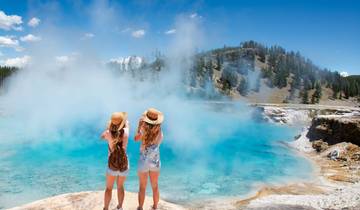
4 days
Yellowstone & Grand Teton 4 Day / 3 Night Wildlife Adventure
- ✓ Comprehensive Park Yellowstone National Park tour
- ✓ Expert local guides included
- ✓ All accommodation arranged
- ✓ Transportation provided
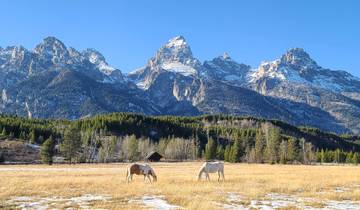
5 days
5 Day- Yellowstone and Grand Teton National Park in Depth- Hotel Based
- ✓ Comprehensive Park Yellowstone National Park tour
- ✓ Expert local guides included
- ✓ All accommodation arranged
- ✓ Transportation provided
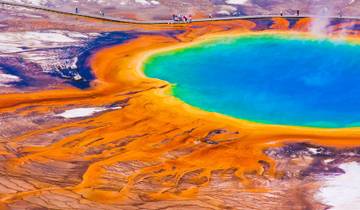
4 days
4 day Yellowstone and Tetons in depth tour from Salt Lake City Small Groups Tour
- ✓ Comprehensive Park Yellowstone National Park tour
- ✓ Expert local guides included
- ✓ All accommodation arranged
- ✓ Transportation provided
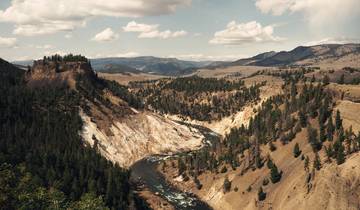
6 days
Yellowstone Camping Explorer
- ✓ Comprehensive Park Yellowstone National Park tour
- ✓ Expert local guides included
- ✓ All accommodation arranged
- ✓ Transportation provided
Multi-day tour packages powered by TourRadar. Prices and availability subject to change.
Essential Gear for Yellowstone Photography
A sturdy tripod ranks among the most important accessories for Yellowstone photography, enabling techniques impossible with handheld shooting. Tripods eliminate camera shake during long exposures, allowing photography in low light without excessive ISO. They enable precise composition refinement, particularly valuable when arranging complex landscape elements. Tripods facilitate focus stacking, panorama creation, and HDR bracketing by maintaining exact framing across multiple exposures. In wildlife photography, tripods stabilize long telephoto lenses, reducing fatigue during extended observation sessions while improving sharpness.
Selecting appropriate tripods involves balancing stability, weight, and packability. Heavier tripods provide superior stability, particularly with long lenses in windy conditions. However, excessive weight discourages carrying tripods on extended hikes. Carbon fiber construction reduces weight compared to aluminum while maintaining rigidity but costs significantly more. Ball heads offer quick positioning for diverse subjects while pan-tilt heads provide precise control for architectural or landscape work. The ideal tripod depends on intended use, with landscape photographers prioritizing different features than wildlife specialists.
Lens filters serve multiple purposes in Yellowstone photography. Circular polarizing filters reduce reflections on water surfaces, deepen blue skies, and enhance color saturation. These effects prove particularly valuable for thermal feature photography where surface reflections can obscure colors and patterns. Neutral density filters reduce light entering the lens, enabling long exposures in bright conditions for creative effects like motion-blurred water. Graduated neutral density filters balance exposure between bright skies and darker foregrounds in high-contrast scenes. While digital post-processing can replicate some filter effects, physical filters provide advantages that software cannot fully match.
Camera bags must protect expensive equipment while remaining comfortable during extended carrying. Backpack-style camera bags distribute weight across both shoulders, reducing fatigue during long hikes to remote locations. Bags should accommodate camera bodies, multiple lenses, accessories, and personal items including water, food, and layers. Weather-resistant construction protects equipment from Yellowstone’s unpredictable conditions including sudden rain, snow, or dust from thermal features. Quick access to gear proves crucial for spontaneous wildlife encounters, favoring designs allowing bag removal and equipment retrieval within seconds.
Additional accessories enhance photographic capabilities and protect equipment. Lens hoods block stray light reducing flare while providing physical protection. Spare batteries ensure cameras remain operational throughout long days, particularly important in cold conditions draining battery life rapidly. Memory cards with adequate capacity and fast write speeds prevent missing shots while cameras write previous images. Lens cleaning supplies remove dust and water droplets accumulating on front elements. A headlamp enables pre-dawn setup and post-sunset pack-up while preserving night vision better than white flashlights.
Geothermal Features: Capturing Steam, Color, and Motion
Grand Prismatic Spring presents Yellowstone’s most visually spectacular thermal feature, challenging photographers to capture its extraordinary colors and massive scale effectively. The spring measures approximately 370 feet in diameter, making it impossible to show its full extent from ground-level boardwalks. The elevated overlook trail provides aerial perspective revealing the spring’s complete circular form and radiating color bands. Midday sun penetrates the water deeply, illuminating the intense blue center, while morning or late afternoon light enhances the outer rings’ oranges, yellows, and greens created by thermophilic microorganisms.
Steam management proves crucial for Grand Prismatic Spring photography. Cool morning air creates voluminous steam obscuring the spring’s colors, while warmer afternoon temperatures reduce steam production revealing the spring clearly. Windy conditions blow steam aside intermittently, creating brief windows of clarity. Patient photographers wait for favorable steam conditions rather than accepting obscured views. The steam itself becomes photographic subject when backlit by low-angle sun, creating dramatic atmospheric effects contrasting with the spring’s vivid colors visible through gaps in the clouds.
Old Faithful’s predictable eruptions allow photographers to plan around optimal lighting and prepare technical settings before action begins. Arriving 30-45 minutes before predicted eruption time secures favorable positions along the boardwalk. Eruptions last 1.5 to 5 minutes, providing extended opportunities for photography compared to many geysers’ brief displays. The eruption progresses through distinct phases—initial bursts, peak height, and declining activity—each offering different visual characteristics. Photographers capture multiple images throughout the eruption, ensuring varied perspectives and decisive moments.
Morning Glory Pool exemplifies Yellowstone’s colorful hot springs, displaying deep blue center water surrounded by yellow, orange, and green runoff channels. The pool’s funnel shape creates distinctive radial symmetry enhanced by careful composition. Photographing directly down into the pool from the boardwalk emphasizes its circular form and color gradients. Including boardwalk edges or surrounding landscape provides scale and context. The pool’s colors vary with lighting conditions and viewing angle, with overhead sun producing most saturated blues while oblique angles reveal surface details and steam interactions.
Mammoth Hot Springs’ travertine terraces present different photographic challenges than silica-based thermal features. The terraces’ three-dimensional sculptural forms benefit from side lighting revealing texture and relief. The white and cream travertine provides neutral background emphasizing the orange, yellow, and brown mineral stains and algae growing in flowing water. Active terraces with cascading hot water create opportunities for motion-blur effects using slow shutter speeds, smoothing water flow while maintaining sharpness in static formations. Dormant terraces’ weathered textures photograph effectively under varied lighting conditions.
Wildlife Photography: Patience, Ethics, and Technique
Lamar Valley ranks as Yellowstone’s premier wildlife photography destination, offering unparalleled opportunities to photograph diverse species in spectacular settings. The valley’s open terrain provides visibility across square miles, allowing wildlife spotting from roads and pullouts. Bison herds often number in the hundreds, creating compositions showing the species’ gregarious nature against sweeping landscapes. Smaller groups and individual animals offer opportunities for behavioral photography and portraiture. The Lamar River and Soda Butte Creek meander through the valley, creating compositional elements that enhance wildlife images.
Dawn and dusk provide optimal timing for Lamar Valley wildlife photography. Animals feed actively during these cooler periods while middle-of-the-day hours see reduced activity as animals rest and ruminate. Morning and evening golden hour light flatters subjects with warm color temperatures and soft directional illumination. Atmospheric conditions at these times—including mist, frost, or dramatic clouds—add environmental interest. The combination of heightened activity, favorable light, and dramatic conditions makes sunrise and sunset essential for serious wildlife photography.
Wolves represent Yellowstone’s most sought-after photographic subject, combining rarity, charisma, and association with the park’s successful restoration efforts. Wolf photography requires exceptional patience, substantial telephoto reach, and considerable luck. Wolves range across vast territories, requiring extensive searching or reliable intelligence about current locations. The Lamar Valley wolf packs provide most consistent viewing opportunities, though wolves’ movements remain unpredictable. Spotting scopes help locate wolves at distances requiring super-telephoto lenses (500mm or longer) for satisfactory images. Many wildlife photographers spend weeks accumulating usable wolf photographs.
Bears demand utmost respect for safety while offering compelling photographic opportunities. Grizzly bears and black bears inhabit Yellowstone, with grizzlies more commonly visible in the northern ranges and Hayden Valley. Spring brings bears to valleys seeking winter-killed ungulates and emerging vegetation, creating peak viewing opportunities. Sows with cubs provide especially engaging subjects showing family behaviors and interactions. All bear photography occurs from significant distances—minimum 100 yards required by regulations—making long telephoto lenses essential. Photographers never approach bears deliberately, instead photographing animals that appear naturally near roads or trails.
Bison and elk provide more accessible wildlife photography opportunities, often approaching roads where photography from vehicles requires only moderate telephoto lenses. These subjects allow behavioral photography showing rutting bulls, nursing calves, or sparring males during breeding seasons. The animals’ size creates frame-filling compositions even with shorter lenses. However, their approachability creates dangerous complacency, with many visitors forgetting these unpredictable wild animals have injured or killed people. Responsible photographers maintain safe distances regardless of animals’ apparent tolerance, using longer lenses rather than approaching closer.
Landscape Photography: Composition and Perspective
The Grand Canyon of the Yellowstone presents classic landscape photography subjects with iconic viewpoints offering compositions balancing foreground, middle ground, and background elements. Artist Point provides the definitive canyon view, incorporating the Lower Falls, colorful canyon walls, and downstream canyon stretching toward the horizon. Morning light illuminates the canyon’s eastern wall while leaving the west in shadow, creating dramatic contrast and revealing the wall’s texture and coloration. The viewpoint’s elevation above the canyon floor provides perspective emphasizing the chasm’s depth and scale.
Foreground elements strengthen Grand Canyon compositions by adding depth and leading viewers’ eyes into the frame. Trees, rocks, or wildflowers at the canyon rim provide nearby subjects creating three-dimensional space through size relationships and focus gradation. Wide-angle lenses exaggerate these depth cues, making foreground elements appear larger relative to background features. The technique transforms potentially flat scenes into layered compositions with strong spatial progression from front to back.
Yellowstone Lake creates opportunities for minimalist landscape photography emphasizing simplicity, negative space, and subtle tonal relationships. The lake’s enormous size—20 miles long and 14 miles wide—creates compositions where water dominates the frame with sky and distant mountains occupying minor portions. Dawn and dusk provide dramatic lighting with colorful skies reflecting in calm water. Long exposures smooth wind ripples creating mirror-like reflections or ethereal misty water surfaces. The lake’s scale and simplicity challenge photographers to find compelling compositions from potentially monotonous subjects.
Forest photography requires different approaches than open landscape work, emphasizing intimate details rather than grand vistas. Lodgepole pine forests covering much of Yellowstone create patterns of vertical trunks, filtered light, and forest floor details. Backlighting creates glowing translucent leaves and defined tree silhouettes. Side lighting reveals bark texture and three-dimensional form. Fog softens depth and creates atmospheric layering. These conditions transform common subjects into compelling images through light quality and compositional selection rather than inherently dramatic subjects.
Seasonal Photography: Year-Round Opportunities
Winter photography showcases Yellowstone’s dramatic contrasts between snow, steam, and ice with far fewer visitors than summer months. Thermal features create especially compelling subjects as frigid air temperature maximizes steam production, with geysers and hot springs shrouded in billowing clouds. Frost and ice accumulate on trees near thermal features, creating ghostly formations. Bison congregate near thermal areas where snow melts, providing access to vegetation and creating juxtapositions of massive animals surrounded by steam. The winter landscape’s limited color palette—white snow, dark forests, blue skies—emphasizes form and texture.
Winter photography presents significant practical challenges alongside its aesthetic rewards. Most park roads close to vehicles, limiting access to the northern route between Mammoth and Cooke City. Reaching interior park areas requires snowmobiles or snow coaches, adding significant expense and logistical complexity. Extreme cold drains camera batteries rapidly, requiring spare batteries kept warm in inner pockets. Condensation forms on equipment when moving between frigid outdoor conditions and warm vehicles or buildings, potentially damaging electronics. Snow and ice accumulation on cameras and lenses requires constant cleaning. These challenges demand preparation and specialized gear but reward persistent photographers with unique imagery.
Spring brings Yellowstone to life with emerging wildlife, flowing water, and gradually greening landscapes. Newborn bison calves, elk calves, and bear cubs provide engaging subjects showing young animals’ awkward proportions and playful behaviors. Snowmelt swells waterfalls and rivers to peak flows, creating dramatic water features. Wildflowers begin blooming at lower elevations while higher country remains snow-covered, creating opportunities for flower photography with mountain backdrops. Variable weather conditions produce dramatic skies with dynamic clouds and intermittent precipitation creating challenging but rewarding photography conditions.
Summer delivers peak visitation alongside optimal weather and full park accessibility. All roads open, allowing access to every park region. Wildflowers bloom at high elevations, creating colorful alpine meadows. Long daylight hours provide extended photography windows with sunrise before 6 AM and sunset after 9 PM. Wildlife remains active though some species move to higher elevations avoiding valley heat. The tradeoff for optimal conditions involves substantial crowds at popular locations, with parking challenges and boardwalks packed with visitors. Successful summer photography often requires photographing less popular locations or timing visits for early morning before crowds arrive.
Fall brings Yellowstone’s briefest season, with dramatic foliage colors lasting only 2-3 weeks in late September and early October. Aspen and cottonwood trees turn brilliant yellow and gold, creating vivid accents against evergreen forests and dark volcanic rock. Elk bugling during rut provides wildlife photography opportunities with vocal displays and male sparring. Reduced visitation compared to summer allows easier access to popular locations. The season’s brevity and unpredictable timing—early snowfall can eliminate fall colors almost overnight—adds urgency and excitement to autumn photography.
Technical Challenges: Weather, Steam, and Sulfur
Yellowstone’s thermal features create unique technical challenges through steam, sulfur compounds, and acidic water droplets that can damage camera equipment. Steam condensing on cold lens surfaces obscures images and potentially infiltrates camera bodies through seals. Photographers working near active geysers or hot springs must protect equipment from water droplets carried by steam or wind. Lens cloths and blowers remove condensation frequently. Rain covers protect cameras when steam becomes especially heavy. Some photographers avoid very close approaches to the most aggressive features, accepting slightly more distant perspectives rather than risking equipment damage.
Sulfur compounds emitted by thermal features corrode metal components including camera bodies, lenses, and tripods. The corrosion develops slowly through extended exposure rather than immediate damage, with serious impacts appearing after prolonged periods near aggressive thermal areas. Regular equipment cleaning using appropriate solutions removes sulfur deposits before corrosion progresses. Photographers working extensively in thermal areas sometimes dedicate older equipment bodies and lenses to this work, preserving newer gear from cumulative damage. The corrosion risk represents real but manageable threat through awareness and appropriate protective measures.
Rapidly changing weather conditions challenge photographers with dramatic light variations, precipitation, and wind requiring constant technical adjustments. Mountain weather systems develop quickly, transforming clear skies into thunderstorms within hours. Photographers must adjust exposure settings continuously as light levels fluctuate. Sudden rain or snow requires protecting equipment while capturing fleeting dramatic conditions. Wind creates camera shake requiring faster shutter speeds or steadier tripod positions. These dynamic conditions demand technical flexibility and quick responses but reward photographers with dramatic imagery impossible during stable weather.
Extreme temperature ranges from below 0°F in winter to above 90°F in summer affect equipment performance and require different protective measures. Cold temperatures drain batteries rapidly, requiring warm spares rotated as active batteries deplete. Cameras may become sluggish or unresponsive in extreme cold. Condensation forms when bringing cold equipment into warm environments. Heat creates opposite challenges with equipment overheating during extended summer use. Photographers must understand their equipment’s temperature tolerances and employ appropriate protective strategies for prevailing conditions.
Post-Processing: Enhancing Without Distorting
Digital post-processing enables photographers to optimize images, correcting technical limitations while enhancing visual impact. Basic adjustments including exposure correction, white balance refinement, and contrast enhancement recover shadow and highlight detail lost in challenging lighting conditions. These foundational edits restore images closer to what the photographer witnessed rather than creating artificial effects. Modern raw file formats preserve extensive tonal information allowing substantial adjustment without quality degradation, making raw capture and processing essential for serious photography.
Color correction proves particularly important for thermal feature photography where extreme hues challenge accurate representation. Camera sensors and image processing may shift colors away from their actual appearance, with blues becoming cyan or oranges turning red. Careful color correction using selective adjustments restores accurate hues while maintaining natural color relationships. Saturation adjustments enhance color intensity without crossing into unrealistic over-saturation that makes images appear artificial. The goal remains representing the subject’s actual appearance rather than creating exaggerated false colors.
Sharpening and noise reduction balance competing goals of detail clarity and smooth tonality. Sharpening enhances apparent detail and crispness, particularly important for images displayed large or viewed close-up. However, excessive sharpening creates visible halos and artifacts. Noise reduction smooths grain in images shot at high ISOs, creating cleaner tonality. However, aggressive noise reduction eliminates fine detail and creates plastic-looking textures. Optimal processing finds balance preserving important details while managing technical defects to acceptable levels.
Dodging and burning—selectively lightening and darkening image areas—direct viewers’ attention and enhance three-dimensional form. Lightening subjects draws eyes toward them while darkening backgrounds reduces distractions. Enhancing edge contrast reveals form and separation between overlapping elements. These subtle adjustments, derived from traditional darkroom techniques, enhance images’ visual structure and impact without creating obvious artificial effects. Skillful dodging and burning remains invisible to viewers while substantially improving images’ effectiveness.
Ethical Photography: Respect and Responsibility
Wildlife photography ethics require prioritizing animal welfare over image acquisition, maintaining safe distances, and never altering animal behavior for photographic purposes. Park regulations establish minimum approach distances—25 yards for most wildlife, 100 yards for bears and wolves—that photographers must respect regardless of photographic desires. Approaching closer stresses animals, disrupts natural behaviors, and creates dangerous situations. Long telephoto lenses allow satisfying images from appropriate distances, eliminating temptation to approach improperly.
Never feeding, calling, or otherwise attracting wildlife creates ethical imperative that some photographers violate. Baiting animals with food habituates them to humans, creating dangerous situations and often leading to animals’ eventual destruction. Playing predator calls or prey distress sounds disrupts natural behaviors and wastes animals’ energy responding to false signals. Ethical photographers allow animals to behave naturally, accepting that some desired images prove impossible without inappropriate intervention. The wildlife’s welfare always takes precedence over photographic goals.
Thermal feature photography requires staying on designated boardwalks and trails protecting both fragile formations and visitor safety. Leaving trails damages delicate geyserite and sinter formations that took centuries to develop. Walking on thermal crusts risks breaking through into superheated water causing severe injuries or death. These restrictions occasionally limit desired photographic perspectives, but safety and preservation considerations outweigh photographic wishes. Ethical photographers work within established restrictions rather than pursuing images at cost of resource damage or personal risk.
Respecting other visitors involves sharing access to popular viewpoints, minimizing tripod obstruction on boardwalks, and avoiding behavior disrupting others’ experiences. Popular locations attract many photographers, creating competition for optimal positions. Courteous photographers share space rather than monopolizing best viewpoints. On narrow boardwalks, tripods obstruct passage; photographers should set up where others can pass or be prepared to move equipment quickly. Maintaining reasonable noise levels and avoiding intrusive behavior allows everyone to enjoy the park. These courtesies ensure photography remains compatible with broader visitor experiences.
Frequently Asked Questions
Do I need a photography permit for Yellowstone?
Commercial photography and filming requiring extensive equipment, exclusive location use, or hired models requires permits from the National Park Service. Casual photography and amateur work needs no permits regardless of camera equipment. Professional photographers shooting stock imagery, personal portfolios, or general commercial work without disrupting other visitors or using special equipment require no permits. The permit requirement focuses on activities impacting park resources or other visitors rather than photography’s commercial intent.
Can I use drones for aerial photography in Yellowstone?
Drone use is prohibited throughout Yellowstone National Park. The prohibition protects wildlife from disturbance, ensures visitor safety, and preserves natural soundscapes. Violations result in fines and potential criminal charges. Photographers seeking aerial perspectives must use aircraft with proper permits or access elevated viewpoints including the Grand Prismatic Spring overlook trail. The drone prohibition applies to all unmanned aircraft regardless of size or purpose.
What camera settings should I use for wildlife photography?
Shutter priority mode with fast shutter speeds (1/500s to 1/2000s) freezes animal movement ensuring sharp images. Aperture around f/5.6 to f/8 balances depth of field with fast shutter capability. Continuous autofocus tracks moving subjects maintaining focus as animals move. High-speed continuous drive mode captures multiple frames per second catching peak action. Auto ISO allows camera to maintain proper exposure as light changes. These settings provide foundation adaptable to specific situations and creative intentions.
When is the best season for Yellowstone photography?
Each season offers distinctive opportunities. Summer provides optimal weather, full access, and long daylight hours but brings maximum crowds. Fall delivers brilliant foliage colors and elk rutting behavior during brief 2-3 week window. Winter showcases dramatic snow and steam contrasts with minimal visitors but limited access and extreme conditions. Spring brings newborn wildlife and flowing water with variable weather. The best season depends on desired subjects and tolerance for crowds versus challenging conditions.
What focal length lens do I need for Yellowstone wildlife?
Telephoto lenses from 100-400mm handle most wildlife photography opportunities, providing sufficient reach for common species while remaining manageable for handheld use. Super-telephoto lenses (500mm, 600mm, or longer) allow serious wolf and bear photography from required safe distances, producing frame-filling images of distant subjects. A 100-400mm zoom serves as practical compromise balancing reach, versatility, and portability for general wildlife work supplemented by wider lenses for landscapes and thermal features.
How do I photograph geysers successfully?
Arrive early to secure favorable position along boardwalks. Use fast shutter speeds (1/500s or faster) to freeze eruption action. Shoot continuously during eruptions capturing varied phases and decisive moments. Include surrounding landscape for context and scale. Backlit steam creates dramatic effects during golden hour. For Old Faithful, predicted eruption times allow planning around optimal lighting conditions. Patience and multiple visits increase success photographing geysers’ brief, dynamic displays.
Is a tripod necessary for Yellowstone photography?
Tripods prove valuable but not absolutely necessary for all Yellowstone photography. Landscape work benefits substantially from tripods enabling precise composition, long exposures, and HDR bracketing. Wildlife photography uses tripods primarily for stabilizing heavy telephoto lenses during extended observation. However, many successful images occur handheld, particularly when pursuing spontaneous opportunities or working in crowded areas where tripods obstruct traffic. Serious photographers typically bring tripods but remain flexible about when to deploy them.
How do I protect my camera equipment near thermal features?
Protect equipment from steam condensation using lens cloths to wipe surfaces frequently. Rain covers shield cameras during heavy steam conditions. Clean equipment regularly to remove sulfur compounds before corrosion develops. Avoid very close approaches to aggressive features when possible. Seal cameras in bags when moving between extreme temperature differences preventing condensation inside bodies. These precautions minimize damage risk while allowing photography near thermal features creating Yellowstone’s most distinctive images.
Can I photograph sunrise at thermal features?
Dawn provides optimal conditions for thermal feature photography with maximum steam production, golden hour lighting, and minimal crowds. Cold morning air creates dramatic steam clouds backlit beautifully by rising sun. Popular locations including Grand Prismatic Spring, Old Faithful, and Mammoth Hot Springs all offer exceptional sunrise opportunities. Arrive well before sunrise securing position and preparing equipment. The combination of atmospheric conditions and lighting makes dawn the single best time for thermal feature photography.
What are the most photogenic locations in Yellowstone?
Grand Prismatic Spring, Old Faithful, Grand Canyon of the Yellowstone, Lamar Valley, and Mammoth Hot Springs rank as most photographed locations offering iconic subjects. However, less famous locations including Norris Geyser Basin, Yellowstone Lake, Hayden Valley, and numerous smaller thermal features provide excellent opportunities with fewer crowds. The entire park offers photographic potential with careful observation revealing compelling subjects even in heavily photographed areas. Exploring beyond most popular locations often yields more original imagery.