Whistler Travel Guide 2026: Ultimate Planning Resource
Whistler stands as North America’s premier mountain resort destination, offering world-class skiing across two mountains connected by the iconic Peak 2 Peak Gondola, alongside year-round outdoor adventures just two hours north of Vancouver. This comprehensive guide provides everything visitors need to plan a successful Whistler experience in 2026, from lift ticket pricing and accommodation options to dining recommendations and seasonal timing strategies.
Key Takeaways: Essential Whistler Planning for 2026
- Advance Booking Savings 2026: Purchase lift tickets at least four weeks ahead to save up to $100 per day, with advance tickets starting at $205 CAD ($150 USD) compared to window rates reaching $351 CAD ($255 USD) on peak dates
- Budget Planning 2026: Expect $270-395 CAD ($195-285 USD) per person daily for mid-range comfort, assuming two sharing hotel accommodation, including lodging, meals, local transport, and activities
- Peak Season Timing 2026: Winter ski season runs late November through mid-April with highest crowds December 26-31 and mid-February, while spring (April-June) and fall (September-November) offer 30-40% lower accommodation rates with excellent weather
- Transportation Strategy 2026: Direct shuttle buses from Vancouver Airport or downtown cost $32-42 CAD ($24-30 USD) one-way with multiple daily departures, eliminating rental car expenses for village-based stays
- Accommodation Location 2026: Whistler Village provides ski-in access, walkable dining and shopping, and free local transit, while Creekside offers 15-20% lower rates with quieter atmosphere and free shuttle connections to the main village
- Multi-Day Pass Value 2026: The Whistler Blackcomb Day Pass (purchased pre-season) saves up to 65% versus daily lift tickets when skiing three or more days, with flexible non-consecutive use throughout the season
People Also Ask About Whistler 2026
How much does a trip to Whistler cost in 2026?
A week-long Whistler trip in 2026 costs $1,455-2,700 CAD ($1,060-1,970 USD) per person for mid-range travel, assuming two sharing accommodation. This includes accommodation $630-1,110 CAD (six nights at $105-185 per person), meals $490-630 CAD (seven days at $70-90 daily), lift tickets or activity passes $300-900 CAD, and local transportation $35-60 CAD. Budget travelers reducing accommodation quality and dining expenses can complete the same week for $980-1,400 CAD ($715-1,020 USD), while luxury travelers investing in premium properties and fine dining typically spend $2,450-3,850+ CAD ($1,785-2,805+ USD) per person.
What is the best time to visit Whistler in 2026?
Late January through early March 2026 delivers optimal skiing conditions with reliable snowpack, moderate crowds outside holiday weekends, and daylight extending past 5 PM for après-ski activities. Summer visitors find July and August ideal for hiking, mountain biking, and lake activities with consistent warm weather averaging 22-25°C (72-77°F). Value-focused travelers benefit most from visiting April-May or September-November when accommodation costs drop 30-40% below peak rates while weather remains pleasant for outdoor activities, with September particularly attractive for combining warm days, fall colors, and nearly empty trails.
Is Whistler expensive compared to other ski resorts in 2026?
Whistler ranks among North America’s premium-priced ski destinations, with daily costs 25-35% higher than mid-tier Colorado resorts like Breckenridge or Keystone. However, strategic booking significantly reduces expenses: purchasing lift tickets four weeks ahead saves $100 CAD daily, staying in Creekside rather than Whistler Village reduces accommodation 15-20%, and visiting outside December 26-January 5 or February 14-21 lowers hotel rates 35-45%. Canadian visitors from British Columbia and Washington State access additional value through EDGE Cards offering steep discounts on lift tickets and year-round perks.
How many days do you need in Whistler in 2026?
Four to five days provides ideal Whistler immersion, allowing three full days on the mountain plus arrival and departure days for exploring Whistler Village, visiting Scandinave Spa, or taking a day trip to nearby Joffre Lakes or Shannon Falls. Weekend visitors maximize value with three-day itineraries covering Whistler Mountain one day, Blackcomb Mountain the next, and village activities or a scenic gondola ride on day three. Week-long stays suit advanced skiers and riders wanting to explore all 8,171 skiable acres, families with young children needing a more relaxed pace, or summer visitors combining multiple activities like hiking, biking, and zip-lining across seven days.
Extended multi-day tours – 5+ days
Featured Whistler Multi-Day Tour Packages
2 days
2 Days Whistler & Squamish Tour from Vancouver
- ✓ Booking needs min. 2 travelers
7 days
Signature British Columbia: Vancouver, Victoria & Whistler
- ✓ Comprehensive Whistler tour
- ✓ Expert local guides included
- ✓ All accommodation arranged
- ✓ Transportation provided
3 days
Vancouver, Whistler and Victoria 3 Day Budget Tour
- ✓ Booking needs min. 2 travelers
3 days
Vancouver 3 Days Super saver Tour With Victoria & Whistler
- ✓ Booking needs min. 2 travelers
Multi-day tour packages powered by TourRadar. Prices and availability subject to change.
Introduction to Whistler: Planning Your 2026 Mountain Adventure
Whistler Blackcomb represents the culmination of mountain resort engineering, combining two massive ski mountains with over 8,000 acres of terrain connected by the world-record Peak 2 Peak Gondola spanning 2.7 miles of unsupported cable. Located 125 kilometers north of Vancouver along British Columbia’s spectacular Sea-to-Sky Highway, this purpose-built resort village transforms from winter ski paradise to summer adventure playground without losing its mountain town character.
The 2010 Winter Olympics cemented Whistler’s reputation as a world-class destination, leaving behind state-of-the-art facilities like the Whistler Sliding Centre bobsled track and an enhanced village infrastructure serving three million annual visitors. Today’s Whistler balances international resort sophistication with genuine mountain culture, evident in everything from the pedestrian-only Village Stroll lined with 200+ shops and restaurants to the quieter residential neighborhoods where seasonal workers and locals create Whistler’s distinctive after-hours character.
Whistler’s geography defines its appeal and complexity. Whistler Mountain (elevation 2,182 meters) and Blackcomb Mountain (elevation 2,284 meters) rise dramatically from the valley floor at 675 meters, creating North America’s greatest vertical drop at 1,609 meters. This elevation range produces exceptional snow reliability (average annual snowfall exceeding 11 meters) while maintaining village temperatures mild enough for comfortable walking between venues.
The resort operates year-round with distinct seasonal personalities. Winter (late November to mid-April) focuses on skiing and snowboarding across terrain ranging from beginner greens to expert double-black chutes, complemented by snowshoeing, cross-country skiing, and evening village activities. Summer (June to September) transforms the mountains into hiking and mountain biking terrain served by gondola and chairlift access, while the valley hosts golf courses, lake activities, and the Whistler Mountain Bike Park’s world-renowned jump trails.
Planning Whistler effectively requires understanding the destination’s premium pricing structure and implementing strategic booking approaches. Advance lift ticket purchases, shoulder season timing, and accommodation location choices dramatically impact total trip costs. The free village transit system and pedestrian-friendly layout minimize transportation needs once arrived, while the concentration of restaurants, bars, and shops within Whistler Village keeps evening entertainment walkable regardless of weather.
This guide provides comprehensive 2026 planning information organized by decision priority: when to visit for optimal conditions and value, how to reach Whistler efficiently, where to stay based on budget and activity preferences, what skiing and summer activities justify the investment, and how to budget accurately for the full experience. All pricing reflects 2026 rates verified through official sources, with costs stated in Canadian dollars first and USD conversions following in parentheses.
Understanding Whistler Geography and Layout 2026
Whistler’s physical organization spreads across several interconnected areas, each serving different visitor needs and budget levels. The compact pedestrian village forms the resort core, while surrounding neighborhoods provide alternative accommodation options connected by free transit.
Whistler Village: The Resort Center
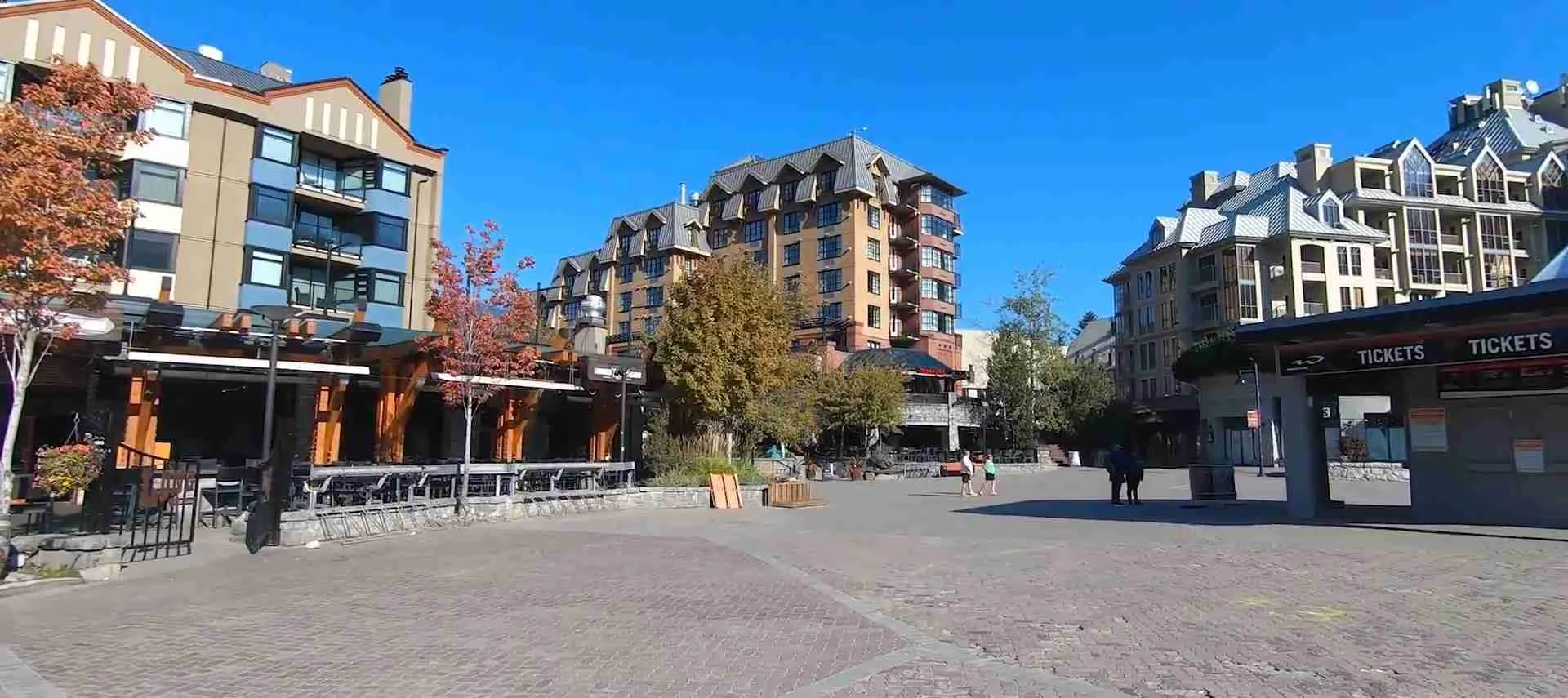
Whistler Village occupies the valley floor at the base of Whistler Mountain, functioning as the resort’s primary commercial and accommodation hub. The Village Stroll pedestrian walkway runs through the center, lined with shops, restaurants, bars, hotels, and condominiums creating a European alpine village atmosphere without vehicular traffic. Whistler Village Gondola and Blackcomb Gondola provide direct mountain access from village center locations, while the Gateway Transit Hub serves as the village’s primary bus stop for regional and local service.
Village Square sits at the heart of Whistler Village, hosting seasonal events like outdoor concerts, the weekly farmers market (summer months), and the Olympic Plaza fountain area popular with families. This central location places visitors within five-minute walks of both gondola bases, 50+ restaurants, and major hotel properties like the Fairmont Chateau Whistler, Four Seasons Resort, and Pan Pacific Whistler.
Upper Village: Blackcomb Base Area
The Upper Village clusters around Blackcomb Mountain’s base, connected to Whistler Village by a five-minute walk along a covered pathway. This quieter area hosts primarily condominium hotels and the Fairmont Chateau Whistler, offering direct ski-in/ski-out access to Blackcomb Mountain lifts. Upper Village accommodations typically cost 10-15% less than comparable Whistler Village properties while maintaining the same walkability to restaurants and shops via the covered link.
Village North: Budget-Friendly Alternative
Village North extends northeast from Whistler Village proper, offering primarily condominium properties at 20-30% below village center rates. This residential area maintains easy access to the village core via a ten-minute walk or two-minute free bus ride, making it attractive for budget-conscious groups willing to sacrifice immediate ski-in convenience for significant cost savings. Village North properties often include full kitchen facilities, reducing dining expenses for families and longer stays.
Creekside: The Original Whistler Base
Creekside sits five kilometers south of Whistler Village at the base of Whistler Mountain’s original gondola, predating the current village development. This quieter community offers accommodation 15-20% below Whistler Village rates while providing direct gondola access to Whistler Mountain terrain. The small village center includes a grocery store, several restaurants and bars, ski rental shops, and the Creekside Gondola base. Free shuttle buses connect Creekside to Whistler Village every 10-15 minutes during winter and summer peak seasons.
Creekside appeals to visitors prioritizing authentic mountain community character over village nightlife proximity. The area attracts families and couples seeking quieter evenings, longer-term stays benefiting from lower accommodation costs, and intermediate skiers preferring Creekside’s less crowded lift access compared to Whistler Village morning lineups.
Function Junction and Cheakamus Crossing: Off-Mountain Options
Function Junction (two kilometers south of village) and Cheakamus Crossing (five kilometers north) serve primarily as residential neighborhoods housing Whistler’s workforce. Limited visitor accommodation exists in these areas at the lowest available rates, though locations require personal vehicles or transit dependence for all mountain and village access. These neighborhoods offer grocery stores, budget restaurants, and industrial services but lack the resort atmosphere defining other Whistler areas.
When to Visit Whistler: Seasonal Guide 2026
Whistler operates year-round with dramatically different seasonal experiences, pricing structures, and crowd levels. Understanding seasonal patterns enables strategic timing decisions balancing weather preferences, activity interests, and budget constraints.
Winter Ski Season 2026: Late November to Mid-April
Whistler Blackcomb’s winter season typically opens late November (weather dependent) and continues through mid-April, with terrain park features and glacier skiing sometimes extending into early May. The 2025-26 winter season spans November 27, 2025 through April 19, 2026 for regular operations.
Early Season (Late November to Mid-December 2025): Limited terrain access with primarily upper mountain runs open, lower crowds, and accommodation rates 30-40% below peak winter pricing. Early season snow quality depends heavily on November weather patterns, with some seasons offering excellent conditions while others struggle until late December.
Peak Holiday Period (December 26, 2025 to January 5, 2026): Maximum crowds, highest accommodation rates (often 2-3 times shoulder season prices), and lift line waits extending 20-45 minutes at peak morning hours. Snow conditions generally excellent with full terrain open, though new snowfall attracts additional crowds to powder stashes. Lift tickets classified as “holiday” pricing require advance booking to avoid $351 CAD ($255 USD) window rates.
Optimal Ski Season (Mid-January to Early March 2026): Best balance of reliable snow, moderate crowds outside President’s Day weekend (February 14-17, 2026), and reasonable accommodation availability. Snowpack reaches seasonal maximum depth late January through February, while daylight hours begin extending into evening by late February. Mid-week visits during this period offer near-ideal conditions with minimal lift waits and powder lasting into afternoons after snowfall.
Spring Skiing (Mid-March to Mid-April 2026): Variable conditions with warm afternoon temperatures creating heavy snow at lower elevations while maintaining good coverage on upper mountain terrain. Accommodation rates drop 25-35% from peak winter pricing, crowds thin noticeably, and longer daylight hours (sunset after 7 PM by early April) enable extended mountain time. Spring skiing favors morning sessions (7:30 AM to 1 PM) before snow softens, followed by village patio time enjoying warm sunshine.
Spring Shoulder Season 2026: Late April to Early June
Whistler’s spring transition period (roughly April 20 to June 15) offers the resort’s best value proposition for non-skiing visitors. Accommodation rates remain 35-45% below summer peak pricing, restaurants and attractions operate with minimal waits, and weather patterns stabilize into reliable sunshine with occasional light rain showers.
Late April through May 2026 provides excellent valley floor hiking conditions with snow cleared from low-elevation trails, though higher alpine routes remain snow-covered until late June. The Whistler Valley Trail (40+ kilometers of paved paths) becomes ideal for cycling and walking, while golf courses open for the season with green fees at early-season promotional rates. The village atmosphere remains quiet with primarily local residents and savvy value travelers.
Late spring (late May to mid-June 2026) bridges into summer season with mountain biking trails opening progressively as snow melts. Temperatures climb into the pleasant 18-22°C (64-72°F) range with minimal rainfall, creating ideal conditions for hiking, road cycling, and lake activities without summer crowd levels. This window represents Whistler’s best-kept secret for outdoor enthusiasts prioritizing trail solitude over resort buzz.
Summer Peak Season 2026: Late June to Early September
Summer transforms Whistler into an outdoor adventure center focusing on hiking, mountain biking, golf, lake activities, and sightseeing via gondola access to alpine terrain. The Whistler Mountain Bike Park (largest in North America) operates late May through mid-October with 80+ trails accessed via lift service.
July and August 2026 deliver Whistler’s most reliable warm weather with daily highs averaging 23-25°C (73-77°F) and minimal rainfall. These months attract maximum summer visitation with accommodation rates approaching winter peak pricing and popular hiking trails experiencing significant traffic, particularly on weekends. Morning starts (before 9 AM) become essential for accessing alpine trails before crowds and afternoon heat.
The Peak 2 Peak Gondola operates daily throughout summer, providing sightseeing access to 2,200-meter alpine elevations without hiking. Combined gondola tickets (Whistler Village to Peak 2 Peak traverse to Creekside descent) cost $84 CAD ($61 USD) for adults, offering spectacular mountain and glacier views accessible to all fitness levels.
Summer evening entertainment includes free outdoor concerts at Olympic Plaza (Thursday evenings), the Whistler Village Beer Festival (early September), and the Whistler Children’s Festival (mid-July). The village maintains active nightlife with numerous bars and restaurants offering patio seating for long summer evenings with daylight extending past 9:30 PM through late July.
Fall Shoulder Season 2026: September to Late November
September through early October 2026 extends summer weather patterns while eliminating peak-season crowds and pricing. This period ranks among Whistler’s most attractive for hiking, with stable weather, brilliant fall foliage colors emerging late September, and accommodation rates dropping 40-50% from summer peaks. Alpine meadows reach maximum wildflower bloom in early September before transitioning to golden autumn colors mid-month.
The Whistler Mountain Bike Park remains fully operational through mid-October with significantly reduced crowds compared to summer months. Cornucopia Food and Wine Festival (mid-November) attracts culinary enthusiasts with wine tastings, chef dinners, and special restaurant menus, coinciding with lowest pre-winter accommodation rates.
Late October through late November represents Whistler’s quietest period with many restaurants and shops reducing hours or closing temporarily before winter season. Accommodation bargains reach yearly lows, though limited snow on high alpine terrain restricts hiking to valley and mid-mountain trails. This window suits visitors prioritizing budget over full service availability, particularly for spa-focused trips or relaxed village experiences.
Getting to Whistler 2026: Transportation Options
Whistler sits 125 kilometers north of Vancouver, accessible via the scenic Sea-to-Sky Highway (Highway 99). Multiple transportation options serve the route with varying costs, convenience, and flexibility.
Vancouver Airport (YVR) Direct Shuttle Service 2026
Regular shuttle buses connect Vancouver International Airport directly to Whistler Village throughout the day, providing the most economical and convenient public transportation option for visitors without rental cars. Three major operators serve this route: YVR Skylynx, Epic Rides, and Whistler Shuttle.
YVR Skylynx operates express service from Vancouver Airport to Whistler Village with journey times averaging 2.5 hours. One-way fares cost $32 CAD ($24 USD) with advance online booking, while round-trip tickets cost $42 CAD ($30 USD) representing 34% savings over separate one-way purchases. Check the official website for current rates, as pricing may vary by season. The service operates modern coaches with onboard washrooms, WiFi, charging ports, and luggage space accommodating ski equipment at no additional charge. Multiple daily departures provide scheduling flexibility, with services departing YVR Airport every 2-4 hours during winter peak season.
Epic Rides provides direct non-stop service from both Vancouver Airport and downtown Vancouver (Burrard Station) to Whistler Village Gateway Loop. Fares range $24-40 CAD ($17-29 USD) depending on departure timing and advance booking, with the fastest journey times averaging 1 hour 45 minutes from downtown Vancouver. The company emphasizes punctuality and operates newer luxury shuttles with similar amenities to competitors.
Whistler Shuttle serves all major hotels and condominium properties throughout Whistler, offering door-to-door service from YVR Airport. Base fares start at similar levels to competitors, with surcharges applying for properties outside the main village area. This service suits groups staying in specific condominiums or hotels outside easy walking distance from Gateway Loop.
All three shuttle services accept online advance bookings recommended to guarantee space during high-demand periods (weekends, holidays, school vacation weeks). Standard tickets are generally non-refundable, while flexible ticket options cost 15-25% more but allow changes up to 24 hours before departure. Children aged 6-12 receive 50% discounts on adult fares, while children under six typically ride free.
Downtown Vancouver to Whistler 2026
Visitors spending time in Vancouver before heading to Whistler can board shuttles from downtown Vancouver locations (typically Burrard SkyTrain Station). This routing reduces journey time by 30-40 minutes compared to airport departures while costing $30 CAD ($22 USD) round-trip with YVR Skylynx or similar rates with Epic Rides.
The downtown boarding option suits travelers arriving on international flights who want to spend a day or two exploring Vancouver before proceeding to Whistler, or those departing Whistler a day or more before their outbound flights. The Sea-to-Sky Highway route passes spectacular coastal and mountain scenery including Shannon Falls and the Sea-to-Sky Gondola in Squamish, making the journey itself a scenic attraction.
Rental Car Considerations 2026
Rental cars from Vancouver Airport provide maximum flexibility for exploring the Sea-to-Sky corridor (Squamish, Brackendale, Britannia Beach) and taking day trips from Whistler to locations like Pemberton, Joffre Lakes, or Duffy Lake Road. The 125-kilometer drive requires 1.5-2 hours depending on traffic and weather, with winter conditions often requiring snow tires (mandatory in British Columbia November 1 through March 31).
Whistler Village’s pedestrian layout and free local transit system eliminate in-resort driving needs, making rental cars unnecessary for visitors planning village-based stays. Parking in Whistler Village costs $20-40 CAD ($15-29 USD) daily at hotel properties, while day parking lots charge $5-8 CAD ($4-6 USD) for non-overnight visitors. Free parking exists in Day Lot 4 (requiring 15-20 minute walk to village) and some upper village locations.
Rental car economics favor groups of 3-4 adults splitting vehicle and fuel costs, or families requiring car seats and extra luggage space shuttle services cannot accommodate. Solo travelers and couples find shuttle services more economical, while rental cars add flexibility for exploring beyond Whistler proper.
Private Transfer Services 2026
Private transfer companies provide luxury vehicle service from Vancouver Airport or downtown hotels directly to Whistler accommodations, with costs ranging $300-500 CAD ($220-365 USD) each way for sedan service accommodating up to three passengers. Larger vehicles (SUVs, vans) cost $400-650 CAD ($290-475 USD) depending on passenger count and luggage requirements.
Private transfers suit groups of 5-8 adults where per-person costs become competitive with shuttle services while providing door-to-door convenience, flexible departure timing, and the ability to stop for photos or meals en route. Luxury travelers and families with young children appreciate the service’s convenience over shared shuttle bus timing and multiple hotel stops.
Accommodation Guide: Where to Stay in Whistler 2026
Whistler offers diverse accommodation types spanning budget hostels to luxury five-star resorts, with location, amenities, and seasonal timing dramatically impacting nightly rates. Understanding property types, neighborhood characteristics, and booking strategies enables informed decisions balancing budget and experience preferences.
Budget Accommodation Options in Whistler 2026
Hostel dormitories provide Whistler’s most affordable accommodation, with bunk beds in shared rooms costing $45-75 CAD ($33-55 USD) per person nightly during winter season. HI Whistler operates Whistler’s largest hostel facility with 180+ beds in various dormitory configurations, plus limited private rooms at $130-180 CAD ($95-130 USD) per night. The property includes communal kitchen facilities, social common areas, and organized activities helping solo travelers connect with other guests.
Pangea Pod Hotel introduces a modern hostel concept with individual sleeping pods featuring privacy curtains, personal lighting, charging stations, and secure storage in shared dormitory-style rooms. Pod rates range $65-95 CAD ($47-69 USD) per person during winter peak season, representing a middle ground between traditional hostel bunks and private rooms.
Budget hotels and motels in Creekside and Village North neighborhoods provide private rooms at $130-200 CAD ($95-145 USD) per night during winter season (two sharing), dropping to $85-130 CAD ($62-95 USD) in shoulder seasons. These properties typically feature basic amenities (beds, bathroom, WiFi, parking) without luxury touches like hot tubs, pools, or ski valets, but offer clean comfortable accommodation at significant savings over village center properties.
Mid-Range Hotels and Condominiums in Whistler 2026
Three-star hotels in Whistler Village and Upper Village charge $210-370 CAD ($155-270 USD) per night for standard rooms during winter peak season. Properties like Summit Lodge Boutique Hotel, Crystal Lodge Hotel, and Pinnacle Hotel Whistler Village include outdoor heated pools, hot tubs, ski storage, and in-village locations within walking distance of gondola bases. These hotels provide hotel-style room service while maintaining more affordable rates than luxury resort properties.
Condominium hotels dominate Whistler’s mid-range accommodation sector, offering one-bedroom to three-bedroom suites with full kitchens, living areas, in-suite laundry, and mountain or village views. Nightly rates range $260-480 CAD ($190-350 USD) for one-bedroom units during winter peak, with two-bedroom units costing $380-650 CAD ($275-475 USD). Condominium properties like First Tracks Lodge, Legends Whistler, and Pan Pacific Whistler Mountainside combine hotel amenities (front desk, pools, hot tubs) with apartment-style space and cooking facilities reducing dining costs.
Kitchen facilities in condominium units enable significant food cost savings for families and groups preparing breakfast and lunches in-unit while dining out for dinner only. A week of breakfast and lunch groceries costs approximately $150-200 CAD ($110-145 USD) per person compared to $420-560 CAD ($305-410 USD) for restaurant meals, creating net savings of $220-410 CAD ($160-300 USD) per person weekly despite higher accommodation costs.
Luxury Hotels and Resorts in Whistler 2026
Whistler’s flagship luxury properties deliver five-star service, full-service spas, fine dining restaurants, ski valets, and premium locations. Winter peak season rates range $550-950+ CAD ($400-690+ USD) per night for standard rooms, with suites and peak holiday dates reaching $1,200-2,000+ CAD ($875-1,460+ USD).
Four Seasons Resort Whistler provides 273 rooms and suites with contemporary mountain luxury, full-service spa, heated outdoor pool and hot tubs, and immediate Upper Village location. The property caters to luxury travelers and families seeking personalized service, with kids’ programs, in-room dining, and concierge services coordinating private ski lessons, heli-skiing, and off-mountain activities.
Fairmont Chateau Whistler anchors the Upper Village with 550 rooms featuring classic alpine resort architecture, ski-in/ski-out access to Blackcomb Mountain, 18-hole golf course (summer), and multiple restaurants including the acclaimed Wildflower restaurant. The property appeals to travelers valuing traditional mountain resort character and extensive on-site amenities.
Nita Lake Lodge sits lakeside in Creekside offering 77 rooms and suites with rustic-luxury aesthetic, small full-service spa, and exceptional restaurant focusing on Pacific Northwest cuisine. The property attracts couples and mature travelers seeking quieter luxury experience outside the village center buzz, with slightly lower rates than comparable village properties ($450-750 CAD or $330-545 USD winter peak).
Vacation Rental Properties in Whistler 2026
Private homes and condominiums bookable through platforms like Airbnb and VRBO offer alternatives to hotels, particularly for groups of 6+ adults or families requiring multiple bedrooms and full living spaces. Pricing varies dramatically based on location, size, and property quality, with three-bedroom units ranging $350-800 CAD ($255-585 USD) nightly during winter peak.
Vacation rentals work best for week-long stays where nightly rate savings compound, kitchen facilities reduce dining costs significantly, and extra bedrooms accommodate larger groups impossible to house affordably in hotel rooms. Properties in residential neighborhoods (Blueberry Hill, Nordic, Alpine Meadows) cost 25-35% less than village-center condominiums while requiring short drives or bus rides to reach gondola bases.
Booking vacation rentals requires careful attention to cleaning fees ($150-300 CAD or $110-220 USD per stay), minimum night requirements (often 3-7 nights during peak periods), and cancellation policies typically stricter than hotel bookings. Reading recent guest reviews carefully identifies properties accurately representing their listings versus those with maintenance issues or misleading descriptions.
Whistler Blackcomb Skiing and Snowboarding 2026
Whistler Blackcomb operates as an integrated resort offering combined access to 8,171 acres of skiable terrain across two mountains, 41 lifts, and North America’s greatest vertical drop of 1,609 meters. Understanding terrain distribution, lift ticket options, and strategic skiing approaches maximizes mountain experience value.
Understanding Whistler Blackcomb Terrain 2026
Whistler Mountain provides 4,757 acres across three distinct zones. Whistler Village base (675 meters elevation) accesses lower mountain terrain via Whistler Village Gondola or Creekside Gondola, leading to mid-mountain at approximately 1,800 meters. The Emerald Express, Garbanzo Express, and Peak Express chairs service varied terrain including groomed blue runs, gladed tree skiing, and expert bowls. Peak Chair accesses Whistler’s summit at 2,182 meters, where alpine bowls and glacier terrain challenge advanced and expert skiers.
Blackcomb Mountain spans 3,414 acres with similar vertical range accessed from Upper Village via Blackcomb Gondola or Excalibur Gondola. Blackcomb’s terrain includes extensive groomed intermediate runs on lower mountain, notable mogul fields on mid-mountain, and the Blackcomb Glacier providing summer skiing into May some seasons. The Showcase T-Bar accesses double-black diamond Couloir Extreme terrain reserved for expert skiers only.
The Peak 2 Peak Gondola connects both mountains at approximately 1,800 meters elevation, enabling skiers to traverse between mountains in 11 minutes without descending to base areas. This connection allows sampling both mountains’ distinct character in single days and accessing the opposite mountain’s terrain when weather, snow conditions, or crowds favor one side.
Terrain distribution breaks down approximately 20% beginner (green), 55% intermediate (blue), and 25% advanced/expert (black and double-black), with variation between mountains. Whistler Mountain offers more consistent intermediate terrain across broader mountain faces, while Blackcomb concentrates intermediate runs on specific zones with expert terrain more prominently featured. Beginner skiers find gentler learning terrain on Blackcomb’s Magic Chair area and Whistler’s Olympic Chair zone.
Lift Ticket Pricing and Options 2026
Whistler Blackcomb implements dynamic pricing rewarding advance purchase with substantial discounts. Understanding ticket categories and booking windows significantly impacts daily lift access costs.
Single-day lift tickets purchased at ticket windows cost $305 CAD ($222 USD) for off-peak days, $329 CAD ($240 USD) for peak days, and $351 CAD ($255 USD) for holiday dates including December 26-31, January 17, and February 14-15. Check the official Whistler Blackcomb website for current rates as pricing may vary. These window rates represent worst-case pricing and should be avoided through advance online booking.
Advance purchase lift tickets (booked at least four weeks before ski date) cost $205 CAD ($150 USD) for off-peak days, $239 CAD ($174 USD) for peak days, and $255 CAD ($186 USD) for holiday dates. This advance booking discount saves $100 CAD ($73 USD) per ticket on off-peak days, representing 33% savings that compounds significantly across multi-day trips.
The Whistler Blackcomb Day Pass (pre-season purchase only, typically available March-December for upcoming winter) offers 1-10 flexible ski days usable anytime during the season at savings up to 65% versus window ticket prices. Two versions exist: Restricted passes (blocking peak dates) and Unrestricted passes (valid all days). A five-day Unrestricted pass costs approximately $600 CAD ($435 USD), averaging $120 CAD ($87 USD) daily compared to $205-255 CAD ($150-186 USD) advance purchase single tickets. Day Pass days need not be consecutive, allowing weekend visits spread across multiple trips.
Epic Pass products provide unlimited skiing at Whistler Blackcomb plus 40+ other Vail Resorts properties throughout North America. The full Epic Pass costs $979 USD and includes unlimited Whistler days, making it economical for anyone skiing Whistler five or more days plus additional days at other Epic resorts. The Epic Local Pass ($709 USD) includes 10 days at Whistler, sufficient for travelers combining Whistler with ski trips to Colorado or Utah resorts in the Epic network.
Equipment Rentals and Lessons 2026
Ski and snowboard rental shops cluster throughout Whistler Village, Upper Village, and Creekside, with pricing tiers reflecting equipment quality levels. Budget packages (recreational equipment for casual skiers) cost $55-70 CAD ($40-51 USD) daily for skis or snowboard with boots and poles/bindings. Performance packages (higher-end equipment for advanced skiers) cost $75-95 CAD ($55-69 USD) daily, while premium demo equipment (current-season high-performance gear) costs $95-125 CAD ($69-91 USD) daily.
Multi-day rental packages reduce daily costs by 15-25%, with weekly rentals (six days) averaging $60-75 CAD ($44-55 USD) daily for budget packages and $75-95 CAD ($55-69 USD) for performance equipment. Booking rentals online in advance saves an additional 10-15% compared to walk-in rates while guaranteeing equipment availability during peak periods.
Group and private ski lessons operate through Whistler Blackcomb Snow School with various programs serving different age groups and ability levels. Adult group lessons (4-5 participants) cost $169 CAD ($123 USD) for full-day programs including lunch, providing economical instruction for beginners and intermediates. Private lessons cost $599 CAD ($436 USD) for two-hour sessions with one instructor (up to five participants can share the instructor), making private instruction economical for families or friend groups splitting costs.
Summer Activities in Whistler 2026
Whistler transforms into an outdoor adventure center when winter snow melts, offering mountain biking, hiking, golf, lake activities, and sightseeing experiences accessible June through September.
Whistler Mountain Bike Park 2026
The Whistler Mountain Bike Park ranks as the world’s largest lift-served mountain biking facility, operating late May through mid-October with 80+ trails spanning 1,500 meters of vertical descent. Trails range from beginner-friendly flow trails with smooth berms and gentle features to expert jump lines and technical rock gardens challenging advanced riders.
Bike Park access requires lift tickets purchased separately from ski season products. Single-day bike park tickets cost $85 CAD ($62 USD) for adults, with multi-day packages reducing per-day costs to $75-80 CAD ($55-58 USD). Season passes ($799 CAD or $582 USD) become economical for riders visiting 10 or more days across the summer season.
Bike rentals cost $110-170 CAD ($80-124 USD) daily depending on bike quality, with full-suspension downhill bikes representing the standard. Protective gear (full-face helmet, body armor) adds $35-45 CAD ($25-33 USD) daily but proves essential for safety on Bike Park terrain. Package deals combining lift ticket and bike rental cost $175-225 CAD ($127-164 USD) daily, saving approximately 15% versus separate purchases.
Hiking Trails and Alpine Adventures 2026
Whistler offers 50+ hiking trails accessing alpine meadows, glacier viewpoints, and mountain lakes within the resort area, plus numerous trails in nearby provincial parks. The Whistler Village Gondola provides sightseeing access to mid-mountain elevation (1,850 meters) without hiking effort, connecting to trails at Roundhouse Lodge.
Popular hiking trails include the Rainbow Falls hike (7 kilometers round-trip with 100 meters elevation gain, suitable for families), Cheakamus Lake (6 kilometers round-trip, easy forest trail to turquoise glacial lake), and the High Note Trail (11 kilometers one-way from Whistler Peak to Blackcomb via alpine meadows). More challenging options like Wedgemount Lake (14 kilometers round-trip, 1,200 meters elevation gain) reward experienced hikers with spectacular glacier-fed lake views.
Gondola sightseeing tickets (ride up, explore, ride down) cost $84 CAD ($61 USD) for adults, providing access to Roundhouse Lodge, mountain viewpoints, and beginning sections of alpine trails without requiring full hiking fitness. The Peak 2 Peak Gondola operates during summer, enabling summit-to-summit traverses between Whistler and Blackcomb mountains for comprehensive mountain viewing.
Golf Courses in Whistler 2026
Four championship golf courses operate in Whistler and nearby Pemberton, offering mountain golf with dramatic elevation changes, forest settings, and peak views. The Whistler Golf Club (Arnold Palmer and Jack Nicklaus-designed courses) charges $169-209 CAD ($123-152 USD) for 18 holes during summer peak, while Fairmont Chateau Whistler Golf Club (attached to the hotel) costs $189-229 CAD ($138-167 USD). Shoulder season rates (late April to mid-June, September to October) drop 30-40% below peak pricing.
Twilight golf rates (starting after 3 PM) reduce green fees 40-50% while still allowing full 18-hole rounds during long summer days. The combination of twilight pricing and shoulder season timing enables green fees as low as $79-99 CAD ($57-72 USD) for championship course play in conditions often superior to crowded summer peak days.
Lake Activities and Water Sports 2026
Several lakes near Whistler Village provide swimming, stand-up paddleboarding, canoeing, and fishing during summer months. Lost Lake (three kilometers from village) offers swimming docks, beach areas, and paved walking trails circling the lake. Alta Lake (Valley Trail access) provides larger swimming beaches and wind-surfing opportunities.
Stand-up paddleboard and kayak rentals cost $30-45 CAD ($22-33 USD) hourly or $80-120 CAD ($58-87 USD) for full-day rentals, with various shops along the Valley Trail providing equipment and launching access. Green Lake and Alta Lake suit calm-water paddling exploring shorelines and small islands.
Dining in Whistler: Restaurant Guide and Food Costs 2026
Whistler’s dining scene spans 200+ restaurants, cafes, and bars serving diverse cuisines from casual mountain fare to fine dining establishments. Understanding dining costs, strategic meal timing, and neighborhood restaurant differences helps manage food budgets while experiencing Whistler’s culinary variety.
Restaurant Price Ranges in Whistler 2026
Casual dining restaurants (pizza shops, burger joints, Asian noodle houses) charge $15-22 CAD ($11-16 USD) per person for meals excluding drinks. Representative options include Mongolie Grill for build-your-own stir-fry bowls ($19-23 CAD or $14-17 USD), Peaked Pies for Australian-style meat pies ($10-14 CAD or $7-10 USD), and Splitz Grill for creative burgers and craft beers ($16-20 CAD or $12-15 USD plus drinks).
Mid-range restaurants serving pub-style menus, Italian cuisine, sushi, and contemporary mountain fare charge $30-45 CAD ($22-33 USD) per person for entrees, with appetizers adding $12-18 CAD ($9-13 USD) and drinks $8-14 CAD ($6-10 USD) each. Popular mid-range spots include Dubh Linn Gate Irish Pub ($28-38 CAD or $20-28 USD entrees), Caramba! Restaurante for Mediterranean-influenced pasta and small plates ($26-42 CAD or $19-31 USD entrees), and Sushi Village for Japanese cuisine ($32-48 CAD or $23-35 USD per person with sushi and rolls).
Upscale dining establishments charge $45-75+ CAD ($33-55+ USD) for entrees, with full dinners including appetizers, wine, and dessert reaching $85-135 CAD ($62-98 USD) per person. Whistler’s top fine dining venues include Bearfoot Bistro (tasting menus $110-175 CAD or $80-127 USD), Araxi Restaurant + Oyster Bar (West Coast seafood and local ingredients, entrees $48-72 CAD or $35-52 USD), and Rimrock Cafe (intimate 80-seat restaurant specializing in seafood, entrees $44-68 CAD or $32-50 USD).
Money-Saving Dining Strategies 2026
Daily dining costs average $72 CAD ($52 USD) per person when dining out for all meals, based on the spending patterns of previous travelers. Budget-conscious visitors reduce food expenses through several strategic approaches without sacrificing meal quality or Whistler dining experiences.
Breakfast proves the easiest meal to economize. Coffee shops and bakeries offer pastries, breakfast sandwiches, and coffee for $10-15 CAD ($7-11 USD) compared to $18-28 CAD ($13-20 USD) for restaurant breakfast plates. Purebread bakery (two Whistler Village locations) serves exceptional pastries ($5-8 CAD or $4-6 USD) and coffee ($4-6 CAD or $3-4 USD) that satisfy morning needs for under $12 CAD ($9 USD) per person. Condominium units with kitchens enable simple breakfast preparation (cereal, fruit, yogurt, coffee) costing $6-9 CAD ($4-7 USD) per person from grocery store ingredients.
Lunch strategies balance convenience and cost. Village grocery stores (Nesters Market, IGA Marketplace) sell prepared sandwiches, salads, and snacks for $10-16 CAD ($7-12 USD), suitable for taking to the mountain or eating at accommodation. The Whistler Public Market offers diverse food stalls serving lunch portions at $14-19 CAD ($10-14 USD), providing variety between pizza slices, rice bowls, tacos, and sandwiches.
Dinner represents the primary restaurant expense, where strategic choices significantly impact budgets. Happy hour specials (typically 3-6 PM) offer food menus at 30-50% discounts plus reduced drink prices. Many restaurants feature happy hour menus with smaller portions at $8-15 CAD ($6-11 USD) allowing sampling multiple items to create full meals for under $30 CAD ($22 USD) per person with drinks.
Grocery shopping for several meals per week creates substantial savings. A week of groceries preparing four breakfasts, four lunches, and two dinners in condominium kitchens costs approximately $180-250 CAD ($130-180 USD) per person compared to $385-560 CAD ($280-410 USD) for equivalent restaurant meals, creating net savings of $135-380 CAD ($100-275 USD) per person weekly.
Recommended Restaurant Categories 2026
Breakfast and Coffee: Purebread (artisan bakery), Cranked Espresso Bar (specialty coffee and breakfast sandwiches), Peaked Pies (savory breakfast pies), and Gone Bakery (gluten-free options).
Casual Lunch: Whistler Public Market (diverse vendors), Splitz Grill (creative burgers), Hunter Gather (sandwiches and salads), and Mongolie Grill (build-your-own stir-fry).
Mid-Range Dinner: 21 Steps Kitchen + Bar (contemporary Canadian), Caramba! Restaurante (Italian and Mediterranean), Crepe Montagne (French savory and sweet crepes), and Stonesedge Kitchen (comfort food and craft beer).
Upscale Occasions: Araxi Restaurant + Oyster Bar (West Coast fine dining), Rimrock Cafe (intimate seafood focus), Il Caminetto (Italian fine dining), and Alta Bistro (seasonal Pacific Northwest cuisine).
Après-Ski and Nightlife: Garibaldi Lift Co. Bar + Grill (base area large patio), Longhorn Saloon (Blackcomb base area), and Dubh Linn Gate (Irish pub atmosphere with live music).
Whistler Village Attractions and Activities 2026
Whistler Village functions as the resort’s social and cultural center beyond its role as ski base, offering museums, spas, shopping, evening entertainment, and family activities accessible year-round.
Scandinave Spa Whistler 2026
Scandinave Spa provides a Nordic-inspired hydrotherapy experience set in a private forest location eight kilometers north of Whistler Village. The adult-only (19+) facility features outdoor hot baths, cold plunge pools, eucalyptus steam rooms, Finnish saunas, and relaxation areas following the traditional hot-cold-relax cycle for rejuvenation.
Admission costs $110 CAD ($80 USD) for full-day access with no time limit, allowing multiple hydrotherapy cycles and extended relaxation in quiet lounges. The spa enforces a silence policy throughout the facility, creating a tranquil atmosphere distinct from the social energy of village hot tubs and pools. Reservations book weeks or months in advance for peak season dates (winter weekends, summer peak), requiring early planning to secure preferred times.
Massage treatments ($140-280 CAD or $102-204 USD for 60-110 minute sessions) can be added to spa admission, though many visitors find the included hydrotherapy circuit sufficient for relaxation without additional services. The spa includes complementary robes, sandals, and lockers, with only swimwear required from visitors.
Squamish Lil’wat Cultural Centre 2026
The Squamish Lil’wat Cultural Centre presents the history, culture, and traditions of the Squamish and Lil’wat Nations whose traditional territories include the Whistler area. The facility features galleries displaying indigenous art, artifacts, and cultural exhibitions, plus guided tours led by cultural ambassadors sharing stories and demonstrating traditional crafts.
Admission costs $22 CAD ($16 USD) for adults with guided tours included in the entry price. The Center operates daily year-round with programs including traditional bread-making demonstrations, weaving exhibitions, and seasonal storytelling programs. The Great Hall hosts indigenous art exhibitions changing quarterly, while the gift shop sells authentic indigenous-crafted jewelry, carvings, and textiles directly supporting indigenous artists.
Whistler Museum and Archives 2026
The Whistler Museum documents the resort’s evolution from remote logging community through 1960s ski development to 2010 Olympic host, using photographs, artifacts, and video presentations. The small museum occupies a heritage building in Whistler Village, featuring exhibits on early ski culture, Olympic history, and the environmental and social changes accompanying Whistler’s growth.
Admission costs $7 CAD ($5 USD) for adults, with free entry for children under 12. The museum operates daily during summer and winter peak seasons, with reduced hours during spring and fall. Guided walking tours of heritage sites around Whistler Village depart from the museum during summer months ($20 CAD or $15 USD, 90 minutes), providing local history context while exploring village architecture and early ski area locations.
Shopping in Whistler Village 2026
Whistler Village concentrates 100+ retail shops along the Village Stroll pedestrian walkway, selling everything from high-end outdoor gear to souvenir clothing and local art. Major outdoor equipment retailers (Arc’teryx, Patagonia, North Face) maintain flagship stores offering current-season technical apparel and equipment, while numerous smaller boutiques specialize in Canadian-made products, indigenous art, and resort fashion.
Ski and snowboard equipment shops dominate during winter with rental services, equipment sales, and goggle/accessories selections. These shops transition to bike gear and summer outdoor equipment May through September, with significant end-of-season sales in April (winter gear) and September (summer equipment) offering 30-60% discounts on previous-season inventory.
The Village Artisan Market (outdoor market near Olympic Plaza, summer weekends) features local artisan vendors selling handmade jewelry, art prints, woodwork, and specialty foods. Prices reflect Whistler’s premium positioning, with basic souvenirs (t-shirts, hats) starting at $30-40 CAD ($22-29 USD) compared to $20-25 CAD ($15-18 USD) in Vancouver or other BC cities.
Daily Budget Breakdown: What Whistler Costs in 2026
Understanding actual daily costs across budget tiers enables realistic trip planning and prevents financial surprises. These budgets reflect per-person expenses for two sharing hotel accommodation, including lodging, meals, local transportation, and activity costs.
Budget Traveler Costs in Whistler 2026
Budget accommodation $45-100 per person (hostel dormitory $45-75 or two sharing budget hotel room $65-100), breakfast $8 (bakery or self-prepared), lunch $14 (grocery store sandwich or casual eatery), dinner $22 (casual restaurant), local transport $3 (free village transit with occasional bus), lift ticket or activities $70-120 (off-peak advance lift ticket or hiking/swimming, free summer trails). Total: approximately $160-265 per person daily.
Budget travel requires specific compromises: hostel dormitories or basic hotel rooms in Creekside or Village North, cooking several meals weekly in shared hostel kitchens, skiing only on advance-purchase off-peak days or substituting free hiking for paid activities, and limiting evening bar and restaurant visits. This level remains achievable for disciplined travelers prioritizing outdoor activities over dining and nightlife experiences.
Mid-Range Traveler Costs in Whistler 2026
Hotel accommodation $105-185 per person (two sharing mid-range hotel or condominium), breakfast $14 (café or hotel), lunch $18 (casual restaurant or prepared food), dinner $38 (mid-range restaurant), local transport included (free village transit), lift ticket or activities $95-140 (advance lift ticket, gondola ride, or golf). Total: approximately $270-395 per person daily.
Mid-range travelers book three-star hotels or condominium properties, dine at mix of casual and mid-range restaurants with some meals prepared in-unit, purchase lift tickets in advance but ski any preferred days, and include modest evening entertainment (one or two drinks at bars). This budget level provides comfortable Whistler experience without luxury touches, representing the most common spending pattern for couples and small families.
Luxury Traveler Costs in Whistler 2026
Luxury hotel accommodation $275-475 per person (two sharing five-star resort), breakfast $28 (hotel restaurant), lunch $35 (mid-range restaurant), dinner $75 (upscale restaurant), spa or premium activities $100-200, lift ticket or activities with guides $140-300 (unrestricted lift access, private lessons, or guided experiences). Total: approximately $650-1,115+ per person daily.
Luxury budgets enable stays at Four Seasons, Fairmont, or Nita Lake Lodge properties, meals at Whistler’s acclaimed restaurants, private ski instruction or guided mountain tours, spa treatments, and evening entertainment without price concern. This tier suits celebration trips, honeymoons, or travelers accustomed to premium resort experiences worldwide.
Sample Whistler Itineraries 2026
Strategic itinerary planning maximizes limited vacation days while balancing mountain time, village exploration, and relaxation. These sample itineraries provide frameworks adaptable to personal interests and fitness levels.
Three-Day Winter Ski Weekend 2026
Day One: Arrive Whistler mid-morning via shuttle from Vancouver Airport, check into accommodation, collect rental ski equipment from village shop. Afternoon half-day skiing on Whistler Mountain (Emerald Express and Garbanzo lifts) to acclimate to elevation and assess conditions. Evening casual dinner at Splitz Grill or Caramba!, early rest preparing for full ski days ahead.
Day Two: Full ski day exploring Whistler Mountain peak-to-base runs, focusing on alpine bowls if weather clear or tree runs if conditions cloudy. Lunch at Roundhouse Lodge (mid-mountain, bring packed lunch or purchase $18-25 CAD meals at cafeteria). Late afternoon Peak 2 Peak crossing to sample Blackcomb terrain before final Whistler runs. Evening après-ski at Garibaldi Lift Co. patio, dinner at mid-range restaurant, village stroll exploring shops.
Day Three: Full ski day on Blackcomb Mountain, starting with groomed runs on Jersey Cream Chair before progressing to Couloir Extreme or 7th Heaven terrain if conditions and ability permit. Lunch at Rendezvous Lodge (mid-mountain). Afternoon return to Whistler Mountain via Peak 2 Peak for sunset skiing (March-April) or final powder hunting. Evening departure shuttle to Vancouver Airport, or overnight final night for relaxed morning departure.
Five-Day Summer Adventure Trip 2026
Day One: Arrive Whistler, settle into accommodation. Afternoon Valley Trail cycling or Lost Lake swimming introducing Whistler’s summer character. Evening village exploration and dinner at Whistler Public Market sampling various vendors.
Day Two: Full-day mountain hiking starting with Whistler Village Gondola to mid-mountain (8:30 AM departure avoiding summer crowds). High Note Trail traverse to Blackcomb or Round House to Peak Express for summit hiking. Picnic lunch at alpine viewpoints. Afternoon gondola descent, village downtime. Evening dinner at 21 Steps or Stonesedge Kitchen.
Day Three: Whistler Mountain Bike Park day for intermediate-advanced cyclists (or alternative hiking for non-cyclists). Morning Bike Park session (9 AM-1 PM), lunch break in village. Afternoon bike park return or Valley Trail easy cycling. Evening casual dinner and village entertainment exploring summer concerts at Olympic Plaza.
Day Four: Day trip to Joffre Lakes Provincial Park (45-minute drive north, stunning turquoise glacial lakes) or Sea-to-Sky Gondola in Squamish (southern route, 40 minutes drive). Full-day excursion with packed lunch. Evening return to Whistler, dinner at Crepe Montagne or Il Caminetto for elevated dining experience.
Day Five: Morning relaxation, Scandinave Spa visit (book weeks ahead), or final village activity. Afternoon departure shuttle to Vancouver or leisurely village shopping before evening departure.
Week-Long Family Vacation 2026
Day One: Arrival, grocery shopping at Nesters Market stocking condominium kitchen, light village exploration adjusting to mountain elevation.
Day Two-Three: Two full ski days with children’s ski school (morning programs) while parents ski independently or take family runs together. Pack lunches to control food costs. Evening family-friendly dining at casual restaurants, hot tub time at accommodation property.
Day Four: Rest day from skiing. Morning village activities (Whistler Museum, shopping), afternoon swimming at Meadow Park Sports Centre public pool ($8 CAD or $6 USD per person) or Lost Lake beach. Evening pizza dinner and early rest.
Day Five-Six: Two additional ski days, children progressing with lessons or parents taking turns enjoying advanced terrain solo while partner supervises children. Evening family game time in condominium unit, simple pasta dinners prepared in-suite.
Day Seven: Final morning ski session or Peak 2 Peak sightseeing gondola ride if children ski-fatigued. Afternoon pack and relax, family dinner at favorite restaurant from week. Evening shuttle departure or final overnight before morning departure.
Money-Saving Strategies for Whistler 2026
Whistler’s premium pricing need not prevent budget-conscious travelers from enjoying quality mountain experiences. Strategic planning across accommodation, dining, activities, and timing creates significant savings without sacrificing trip satisfaction.
Accommodation Cost Reduction Strategies 2026
Location flexibility produces immediate savings. Creekside properties cost 15-20% less than Whistler Village equivalents while maintaining direct gondola access and free shuttle connections. Village North condominiums reduce costs 25-30% compared to village center with 10-minute walks or two-minute free bus rides. Visitors with rental cars find even larger savings in Cheakamus Crossing or Function Junction (30-40% below village rates) though these locations lack resort atmosphere.
Midweek stays reduce accommodation costs 20-30% compared to Friday-Saturday nights during winter season. Sunday-Thursday visit patterns maximize savings while avoiding weekend crowds on mountain and in restaurants. Booking accommodation packages combining multiple nights unlocks additional discounts, with seven-night stays typically reducing nightly rates 15-20% versus single-night bookings.
Shoulder season timing dramatically impacts accommodation budgets. April-May and September-November rates run 35-50% below winter peak pricing, with April spring skiing and September summer activities providing excellent weather and snow/trail conditions despite lower rates. Late November pre-season rates reach yearly lows, though limited snow and services make this period suitable only for travelers prioritizing budget over convenience.
Lift Ticket and Activity Savings 2026
Advance booking represents the single most important lift ticket savings strategy. Four-week advance purchase reduces daily lift costs by $100 CAD ($73 USD), saving $300-500 CAD ($220-365 USD) for typical three-to-five-day ski trips. This savings alone often exceeds the cost difference between budget and mid-range accommodation, making advance ticket planning the highest-return time investment in trip preparation.
Multi-day passes compound per-day savings. The Whistler Blackcomb Day Pass (pre-season purchase) reduces daily costs to $80-120 CAD ($58-87 USD) for visitors skiing five or more days, compared to $205-255 CAD ($150-186 USD) advance single-day tickets. The Epic Pass ($979 USD) becomes economical at five or more Whistler days, particularly for travelers also skiing other Epic resorts during the season.
Free and low-cost activities substitute for expensive lift tickets and tours. The Valley Trail network (40 kilometers paved paths) provides free cycling and walking year-round, while summer hiking trails accessed from valley floor require no gondola fees. Free village events include Thursday evening summer concerts, seasonal festivals, and Olympic Plaza activities engaging families without admission charges.
Food and Dining Cost Management 2026
Grocery shopping for breakfast and lunch ingredients transforms food budgets. A week of breakfast supplies (cereal, milk, yogurt, fruit, coffee) costs $40-55 CAD ($29-40 USD) per person compared to $100-140 CAD ($73-102 USD) for seven cafe breakfasts. Lunch components (bread, deli meats, cheese, snacks) cost $35-50 CAD ($25-36 USD) weekly versus $120-170 CAD ($87-124 USD) dining out daily, creating combined breakfast and lunch savings of $115-235 CAD ($85-170 USD) per person weekly.
Happy hour programs deliver restaurant-quality dining at reduced prices. Many Whistler Village restaurants offer happy hour (3-6 PM) menus featuring small plates at $8-14 CAD ($6-10 USD), craft beers at $6-8 CAD ($4-6 USD), and wine by glass at $7-10 CAD ($5-7 USD). Building dinner from multiple happy hour items creates satisfying meals at 40-50% savings versus regular dinner menus.
Reusable water bottles and snacks brought from accommodation reduce on-mountain purchases. Village grocery stores sell granola bars, trail mix, and fruit at 50-60% below mountain cafeteria prices, while bringing lunch to the mountain saves $15-20 CAD ($11-15 USD) daily compared to mid-mountain food service.
Getting Around Whistler: Local Transportation 2026
Whistler’s free public transit system and compact pedestrian village eliminate most local transportation costs for visitors staying within the resort area. Understanding transit routes and walking distances helps maximize the free transportation network.
Free Whistler Transit System 2026
Whistler Transit operates free bus service throughout Whistler Village, Upper Village, Village North, Creekside, and outlying neighborhoods year-round. Routes run approximately every 10-15 minutes during peak winter and summer seasons (December-March, July-August) and every 20-30 minutes during shoulder seasons.
Route 1 (Upper Village/Village North) connects Blackcomb base area through Whistler Village to Village North residential area, serving most accommodation properties in these zones. Route 2 (Creekside) links Whistler Village with Creekside village and gondola base via a ten-minute journey, enabling visitors staying in either location to access both base areas easily. Route 3 (Alpine) serves Nordic residential area and Alta Lake neighborhoods.
Routes 4, 5, and 8 operate as free frequent service during peak seasons, while other numbered routes charge $3 CAD ($2 USD) per ride for service extending to Pemberton or Squamish (Regional Transit routes). Whistler Transit buses accommodate ski equipment and bicycles using exterior racks, enabling mountain access from any neighborhood without vehicle needs.
Walking Distances in Whistler 2026
Whistler Village’s compact design keeps most locations within 5-15 minute walks. Whistler Village Gondola to Blackcomb Gondola (via Village Stroll) requires approximately five minutes, while Whistler Village to Upper Village walks take 5-7 minutes via the covered pedestrian pathway. Village North properties sit 10-15 minutes from village center on foot, though free transit reduces this to two-minute bus rides.
Creekside to Whistler Village requires 20-25 minutes walking via Valley Trail paved path or three kilometers by road, making the free shuttle bus the practical choice for this connection. Lost Lake Park sits three kilometers from village center, requiring transit or cycling via Valley Trail rather than walking.
Bicycle Rentals and Valley Trail 2026
The Valley Trail paved path system connects all Whistler neighborhoods, lakes, and parks with 40+ kilometers of car-free cycling and walking routes. This network provides pleasant transportation between village, Creekside, Lost Lake, and Green Lake while also serving as recreational cycling route showcasing Whistler’s forest and lakeside settings.
Bike rentals cost $40-65 CAD ($29-47 USD) daily for comfort hybrid bikes suitable for Valley Trail riding, with multi-day rentals reducing per-day costs by 20-30%. Many condominium properties include complimentary bike access for guests, eliminating rental costs entirely for visitors staying at these properties. Electric-assist bikes ($75-95 CAD or $55-69 USD daily) help riders manage valley elevation changes and headwinds more comfortably.
Frequently Asked Questions About Whistler 2026
Do you need a car in Whistler?
Cars prove unnecessary for visitors staying within Whistler Village, Upper Village, Village North, or Creekside due to the comprehensive free transit system connecting all neighborhoods with gondola bases, shopping, and dining. The pedestrian village layout, free shuttles, and compact resort area eliminate driving needs for typical ski vacations or summer village-based stays. Cars become valuable for visitors planning day trips to Joffre Lakes, Pemberton, Duffy Lake Road, or other regional attractions beyond Whistler’s transit network, or families requiring maximum flexibility for moving children and equipment between activities. Rental car costs ($65-95 CAD or $47-69 USD daily plus $20-35 CAD or $15-25 USD parking fees at most village hotels) typically exceed the value delivered for village-based itineraries, making shuttle bus arrival from Vancouver Airport the most economical choice for most visitors.
What should I pack for Whistler in winter 2026?
Winter Whistler requires layered clothing systems for variable mountain weather. Essential items include waterproof ski jacket and pants (rentable if not owned), insulating mid-layers (fleece or synthetic insulation), moisture-wicking base layers, warm gloves or mittens with waterproof shells, neck gaiter or balaclava for cold days, ski goggles (essential for visibility in snowfall), and helmet (required for many terrain parks, recommended for all skiing). Off-mountain clothing needs include warm casual jacket for village walking (evening temperatures drop to -5 to -10°C or 23-14°F December-February), comfortable walking shoes with good traction for icy village sidewalks, and casual restaurant attire for dining out. Whistler’s village maintains heated covered walkways between major buildings, reducing extreme weather exposure compared to outdoor ski towns. Visitors can rent all ski-specific clothing and equipment locally if traveling without personal gear, with complete ski outfits (jacket, pants, gloves, goggles, helmet) renting for $55-75 CAD ($40-55 USD) daily.
Is Whistler good for beginner skiers in 2026?
Whistler Blackcomb provides excellent beginner terrain and learning infrastructure despite its reputation as an advanced skiing destination. Dedicated beginner zones on Blackcomb Mountain (Magic Chair area) and Whistler Mountain (Olympic Chair zone) offer gentle green runs isolated from faster intermediate traffic, creating safe learning environments. The Whistler Blackcomb Snow School operates comprehensive lesson programs starting with first-time skiers, with group lessons ($169 CAD or $123 USD full-day including lunch) providing economical instruction for adults and children. Beginner-specific lift tickets (Olympic Zone Only tickets) cost less than full-mountain access, reducing daily expenses while learning fundamentals. The resort’s size proves advantageous for beginners by spreading crowds across terrain, preventing the overcrowded beginner slopes common at smaller resorts. However, Whistler’s premium pricing means beginners invest significantly in learning days that might cost less at smaller local hills closer to home. Beginners planning Whistler visits benefit from taking first lessons at hometown hills before arrival, maximizing productive Whistler mountain time while reducing total lesson costs.
What is the weather like in Whistler during different seasons 2026?
Winter weather (December-March) brings temperatures ranging from -5°C to +2°C (23°F to 36°F) at village level with colder alpine temperatures. Snowfall occurs frequently throughout winter, averaging 11+ meters annually at alpine elevations creating excellent snow coverage. January and February represent the coldest months with occasional cold snaps dropping village temperatures to -15°C (5°F), while March transitions toward spring with warming afternoon temperatures and increased sunshine. Spring (April-May) sees village temperatures climbing to 8-15°C (46-59°F) with alpine snow persisting through April. Summer (June-September) delivers pleasant temperatures averaging 18-25°C (64-77°F) with July and August warmest and driest. Summer weather patterns feature morning sunshine, possible afternoon clouds or light rain showers, and comfortable evenings averaging 12-15°C (54-59°F). September maintains summer warmth early in the month before cooling to 10-16°C (50-61°F) mid-month as fall arrives. Fall (October-November) transitions toward winter with temperatures dropping to 5-12°C (41-54°F) in October and approaching freezing by late November. Rain becomes more frequent during fall though extended clear periods occur regularly between storm systems.
How do I get from Vancouver Airport to Whistler in 2026?
Regular shuttle bus service provides the most economical and convenient transportation from Vancouver Airport (YVR) to Whistler Village for visitors without rental cars. YVR Skylynx, Epic Rides, and Whistler Shuttle operate multiple daily departures with journey times averaging 2-2.5 hours. One-way fares cost $32 CAD ($24 USD) with advance booking, while round-trip tickets cost $42 CAD ($30 USD) representing significant savings. Check official shuttle websites for current rates as pricing may vary. Shuttles depart Vancouver Airport from domestic terminal ground transportation area multiple times daily (every 2-4 hours during winter peak, less frequent during shoulder seasons), with online booking recommended to guarantee space during busy periods. Rental cars provide flexibility for exploring the Sea-to-Sky corridor and taking day trips from Whistler, with the 125-kilometer drive requiring 1.5-2 hours depending on traffic and weather. Winter driving conditions necessitate snow tires (mandatory British Columbia requirement November 1-March 31) and careful speed management on Highway 99’s winding mountain sections. Private transfer services ($300-500 CAD or $220-365 USD each way for sedan) suit groups of 3-4 adults splitting costs or luxury travelers prioritizing door-to-door convenience, though shuttle buses deliver most visitors comfortably at a fraction of private transfer costs.
Are there free things to do in Whistler in 2026?
Whistler offers numerous no-cost activities reducing total trip expenses while providing authentic mountain experiences. The Valley Trail network (40+ kilometers paved paths) enables free walking, running, and cycling throughout the year, connecting village areas with Lost Lake, Alta Lake, and Green Lake while passing through forest and meadow settings. Summer hiking trails accessed from valley floor (Whistler Interpretive Forest, Cheakamus Lake Trail, Rainbow Falls Trail) provide mountain wilderness experiences without gondola fees. Lost Lake Park offers free beach swimming, picnic areas, and lakeside walking during summer months. Whistler Village’s pedestrian stroll, Olympic Plaza, and village parks provide people-watching and ambiance enjoyment at no cost, with seasonal events including Thursday evening summer concerts (free), Whistler Farmers Market (free admission, mid-May to early October), and various cultural festivals throughout the year. Winter visitors find free entertainment in village ice skating at Olympic Plaza (skate rentals $10 CAD or $7 USD), Christmas and New Year light displays, and après-ski people-watching at village plazas and outdoor fire pits. The Whistler Museum offers suggested-donation admission during certain hours, making cultural education accessible regardless of budget. These free activities complement paid mountain access, allowing visitors to balance costly lift tickets or activity passes with no-cost days exploring Whistler beyond the ski resort proper.
What is the altitude in Whistler and will I experience altitude sickness in 2026?
Whistler Village sits at 675 meters (2,214 feet) elevation, while mountain summits reach 2,182 meters (7,160 feet) at Whistler Peak and 2,284 meters (7,494 feet) at Blackcomb Peak. These moderate elevations rarely cause altitude sickness in healthy visitors, as significant symptoms typically begin affecting most people above 2,400-2,750 meters (8,000-9,000 feet). Visitors arriving from sea level may notice slightly easier breathing fatigue during strenuous activities for the first day or two, but serious altitude symptoms (headache, nausea, dizziness) prove extremely uncommon at Whistler’s elevations. Individuals with known altitude sensitivities from previous mountain experiences or underlying heart and lung conditions should consult physicians before travel, though most visitors require no special preparation beyond normal fitness levels for their planned activities. Staying well-hydrated, limiting alcohol consumption on arrival day, and starting with easier terrain before progressing to expert runs helps bodies adjust to elevation while reducing risk of any altitude-related discomfort. Whistler’s elevation proves significantly lower than major Colorado ski resorts (Breckenridge village 2,926 meters or 9,600 feet, Vail village 2,500 meters or 8,150 feet) where altitude effects manifest more commonly, making Whistler an excellent choice for altitude-sensitive skiers avoiding higher mountain destinations.
Can you visit Whistler in summer and is it worth it in 2026?
Summer Whistler delivers exceptional mountain experiences completely distinct from winter skiing, with the Whistler Mountain Bike Park, alpine hiking, golf, and lake activities creating compelling warm-weather destination appeal. The village maintains full resort operations June-September with all restaurants, shops, and accommodations open, unlike some ski resorts that close substantially during off-season. Summer weather averages 20-25°C (68-77°F) with low rainfall July-August, creating ideal conditions for outdoor activities without winter’s cold and snow management challenges. The Peak 2 Peak Gondola and Whistler Village Gondola operate throughout summer, providing sightseeing access to alpine elevations and trail networks for hikers of all abilities. Mountain biking enthusiasts find Whistler’s summer offerings potentially exceeding winter skiing appeal, with the world’s largest lift-served bike park attracting riders globally. Summer accommodation rates approach winter pricing during July-August peak but drop significantly in June and September, creating value opportunities in shoulder periods. Families with young children often prefer summer visits over winter, as hiking, swimming, and village activities prove more accessible than skiing for children under age six. Summer Whistler suits active travelers seeking mountain adventure without winter sports focus, couples wanting romantic alpine escapes during warmer weather, and anyone curious about Whistler beyond its skiing reputation. The summer experience justifies dedicated visits rather than serving merely as alternative timing for winter-focused travelers.
What are Whistler’s COVID-19 protocols and requirements for 2026?
As of 2026, Whistler Blackcomb and most Whistler businesses operate without COVID-19 restrictions or requirements, following British Columbia’s transition to endemic management of the virus. Visitors no longer face vaccine requirements, mask mandates, or capacity limits at lifts, gondolas, restaurants, or accommodations. Some venues may maintain hand sanitizer stations and enhanced cleaning protocols as standard practice, but formal restrictions have been lifted system-wide. International visitors should verify Canadian federal entry requirements (separate from provincial regulations) as these occasionally change based on global health conditions, though Canada eliminated most COVID-19 entry requirements in 2022 and has not reinstated them subsequently. Travelers concerned about current health protocols should check the official Whistler Blackcomb website and Government of Canada travel website before departure for any reinstated measures, though significant restriction changes remain unlikely absent major new pandemic developments. Travel insurance policies now commonly exclude standard COVID-19 coverage, so travelers seeking pandemic-related trip protection should review policy details carefully or purchase specialized coverage if desired. The practical effect for 2026 visitors is that Whistler operates at full capacity with pre-pandemic service standards restored, eliminating the booking complications, masked indoor experiences, and capacity limitations that characterized 2020-2022 visits.
How far in advance should I book Whistler accommodation for 2026?
Booking timelines for Whistler accommodation depend heavily on travel dates, with peak holiday periods requiring maximum advance planning while shoulder seasons allow shorter booking windows. Christmas-New Year period (December 26-January 5) and President’s Day weekend (February 14-17, 2026) represent highest demand periods where booking 6-12 months ahead proves advisable to secure preferred properties and reasonable rates. Village center hotels and popular condominium buildings sell out entirely for these dates, with remaining availability limited to premium properties at inflated rates or distant neighborhoods requiring transit dependence. Regular winter weekends (January-March excluding holidays) benefit from 2-4 months advance booking, balancing property selection with rate management. Last-minute weekend bookings (within two weeks) face 30-50% higher rates than advance purchases while accepting limited property choice. Midweek winter visits (Sunday-Thursday) permit shorter 4-8 weeks advance booking while maintaining good property availability, as business travelers and locals generate less demand than weekend leisure visitors. Summer accommodation follows similar patterns with July-August weekends requiring 3-6 months advance booking for optimal selection and rates. Shoulder seasons (April-May, September-November) allow 2-6 weeks advance booking without significant rate penalties or availability constraints, making these periods ideal for spontaneous trip planning. Early booking benefits extend beyond property availability to include package deals combining accommodation with lift tickets, spa services, or dining credits at 15-25% savings versus separate purchases. Cancellation policies vary by property and rate type, with refundable rates costing 10-20% more than non-refundable options but providing flexibility for changing plans.