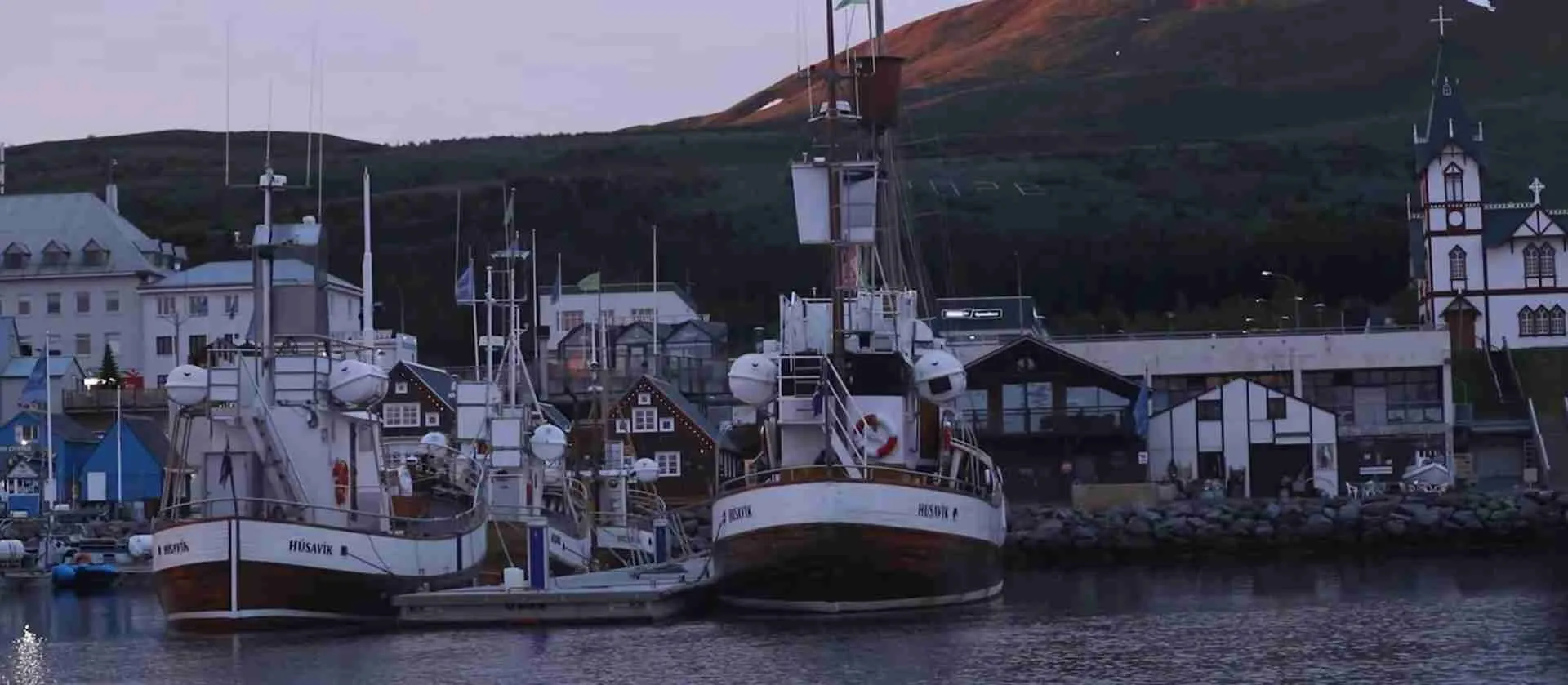
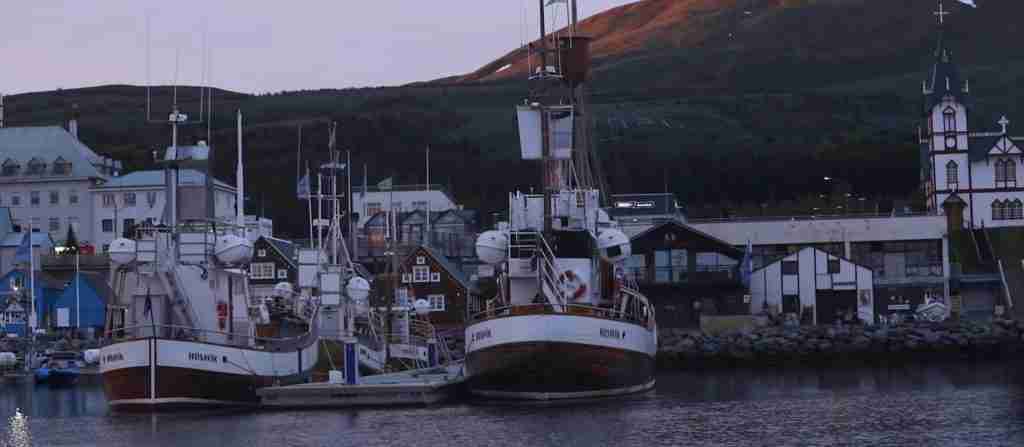
Whale Watching in Húsavík 2026: Complete Guide & Planning
Húsavík stands as the undisputed whale watching capital of Iceland, offering 97% average success rates for whale sightings across three decades of operation in the rich waters of Skjálfandi Bay. This small fishing town of 2,500 inhabitants on Iceland’s northern coast combines professional tour operators with spectacular marine biodiversity, making whale encounters nearly guaranteed from April through November 2026.
Key Takeaways for Húsavík Whale Watching 2026
- Exceptional Success Rates 2026: Húsavík maintains 97% overall whale sighting success across 30 years of documented tours, with peak season (May-September) approaching 98-99% reliability for encountering humpback whales, minke whales, and white-beaked dolphins in Skjálfandi Bay.
- Peak Season Timing: June through August 2026 offers optimal conditions with warmest weather, calmest seas, longest daylight hours for multiple daily departures, and highest whale concentrations including blue whales in June and puffins through mid-August.
- Tour Pricing 2026: Traditional 3-hour oak boat tours cost ISK 11,990-12,490 ($80-85) for adults and ISK 5,995-6,490 ($40-45) for children ages 7-15, while 2-hour RIB speedboat tours run $100-110 per adult with closer whale approaches and higher speeds covering more search area.
- Humpback Whale Dominance: Humpback whales have become Skjálfandi Bay’s star species over the past decade, regularly displaying acrobatic behaviors including breaching, tail slapping, and flipper slapping that make them the most spectacular whales to encounter on tours.
- Accessibility from Major Destinations: Húsavík sits 90 kilometers (1-1.5 hours) from Akureyri and 480 kilometers (5-6 hours) from Reykjavík via the Ring Road, positioning perfectly for Diamond Circle itineraries combining Lake Mývatn, Ásbyrgi Canyon, and Dettifoss waterfall.
- Complete Day Budget 2026: Budget $135-175 per person for a full whale watching day including tour ($80-110), lunch ($25-30), museum entry ($15), and local transport ($15-20), excluding accommodation which ranges $100-180 nightly for mid-range hotels.
People Also Ask About Húsavík Whale Watching 2026
What is the best month for whale watching in Húsavík in 2026?
June and July 2026 offer the best whale watching conditions in Húsavík, combining peak humpback whale activity with the highest probability of spotting blue whales (the world’s largest animals) during their June feeding period in Skjálfandi Bay. These months deliver calm seas, mild temperatures averaging 50-55°F (10-13°C), and Iceland’s famous midnight sun providing exceptional photography lighting during evening tours departing as late as 10:30 PM. August extends the prime season with continued high whale concentrations plus puffin colonies active through mid-month, though blue whale sightings decrease after July. May and September represent excellent shoulder season alternatives with 95%+ success rates, fewer tourists, and lower accommodation costs while maintaining daily tour departures and active whale feeding grounds.
How much does whale watching cost in Húsavík in 2026?
Whale watching in Húsavík costs ISK 11,990-12,490 ($80-85) for adults and ISK 5,995-6,490 ($40-45) for children ages 7-15 on traditional 3-hour oak boat tours, with children under 7 joining free on most operators in 2026. Check official tour operator websites for current rates as seasonal pricing may vary. RIB speedboat tours command premium pricing at $100-110 per adult for 2-hour excursions offering faster whale approaches, closer encounters, and ability to cover greater distances in Skjálfandi Bay. Tour prices include warm safety overalls, rain gear, expert marine biologist guides, and complimentary hot chocolate with cinnamon cookies on traditional boats. Combination packages bundling whale watching with puffin island visits, horseback riding, or fishing tours provide 10-15% savings versus booking activities separately, with family discounts available for groups of four or more passengers.
What whales can you see in Húsavík during 2026?
Húsavík’s Skjálfandi Bay hosts up to 24 cetacean species with humpback whales appearing on the vast majority of tours in 2026 as the bay’s dominant species, known for spectacular breaching, tail slapping, and flipper displays. Minke whales, the smaller baleen whales measuring 23-26 feet, swim frequently near boats providing excellent close-up viewing opportunities throughout the April-November season. White-beaked dolphins travel in pods of 5-100 individuals and remain year-round residents displaying playful bow-riding behavior. Blue whales, Earth’s largest animals reaching 100 feet and 200 tons, visit primarily during June feeding on krill concentrations, offering rare opportunities to witness these giants. Occasional sightings include orcas (killer whales), fin whales (second-largest whale species), pilot whales, and harbor porpoises, with each tour delivering unpredictable wildlife encounters that make every departure unique despite high overall success rates.
Is whale watching guaranteed in Húsavík in 2026?
While no wildlife tour can guarantee 100% sightings, Húsavík achieves 97% average success rates across three decades (1995-2025) of documented whale watching operations in Skjálfandi Bay, with peak season months (June-August 2026) approaching 98-99% probability of encountering whales during 3-hour tours. This exceptional reliability stems from Skjálfandi Bay’s thriving ecosystem where warm Atlantic currents meet cold Arctic waters, creating plankton and krill concentrations that attract consistent whale populations for summer feeding. Most major operators including North Sailing and Gentle Giants offer free rebooking vouchers valid for any future tour if no whales or dolphins appear during your excursion, though this situation occurs on fewer than 3% of departures based on historical data. Tours operate in wild nature where whale behavior remains unpredictable, but Húsavík’s professional guides with 25-30 years experience know whale feeding patterns and use real-time communication between boats to locate active areas, maximizing encounter probability throughout your tour.
Extended multi-day tours – 5+ days
Featured Iceland Multi-Day Tour Packages
3 days
Iceland 3-Day Discovery Tour
- ✓ Comprehensive Iceland experience
- ✓ Expert local guides included
- ✓ All accommodation included
- ✓ Transportation provided

5 days
Iceland 5-Day Highlights Experience
- ✓ Comprehensive Iceland experience
- ✓ Expert local guides included
- ✓ All accommodation included
- ✓ Transportation provided
7 days
Iceland 7-Day Cultural Journey
- ✓ Comprehensive Iceland experience
- ✓ Expert local guides included
- ✓ All accommodation included
- ✓ Transportation provided

10 days
Iceland 10-Day Complete Adventure
- ✓ Comprehensive Iceland experience
- ✓ Expert local guides included
- ✓ All accommodation included
- ✓ Transportation provided
Multi-day tour packages powered by TourRadar. Prices and availability subject to change.
Introduction to Húsavík Whale Watching in 2026
Húsavík has earned its reputation as the whale watching capital of Iceland and arguably all of Europe through three decades of reliable whale encounters in the remarkably biodiverse waters of Skjálfandi Bay. This small fishing town of approximately 2,500 inhabitants sits on Iceland’s northern coast just below the Arctic Circle at 66°N, where the geographic confluence of warm Gulf Stream currents and cold Arctic waters creates one of the planet’s richest marine feeding grounds. The resulting abundance of plankton and krill attracts up to 24 species of whales and dolphins to these coastal waters, with humpback whales, minke whales, and white-beaked dolphins appearing with extraordinary regularity on tours operating from April through November.
The town’s whale watching industry began modestly in 1994-1995 when pioneering operators including North Sailing and the captain of Moby Dick launched Iceland’s first dedicated marine wildlife tours from Húsavík harbor. What started as a small-scale enterprise has evolved into one of Iceland’s premier wildlife experiences, with four major tour companies now offering multiple daily departures throughout the season using everything from beautifully restored traditional Icelandic oak fishing boats to modern RIB speedboats capable of covering vast search areas at high speed. The industry’s growth reflects not just commercial success but genuine scientific value – Húsavík’s Whale Museum collaborates with University of Iceland researchers, and tour guides include marine biologists who contribute to ongoing cetacean research while educating passengers about whale behavior, ecology, and conservation.
Skjálfandi Bay’s 97% average success rate for whale sightings represents more than simple statistics; it reflects the bay’s exceptional marine ecosystem where nutrient upwellings support massive zooplankton populations that form the foundation of the marine food web. Humpback whales, which have become the bay’s dominant species over the past decade, arrive specifically to exploit these rich feeding grounds, often remaining in the area for weeks or months while building energy reserves through intensive feeding on small fish and krill. These whales display the acrobatic behaviors that make Húsavík tours so spectacular – powerful breaches launching 40-ton bodies completely out of the water, thunderous tail slaps sending spray dozens of feet into the air, and the graceful arching dives that culminate in the iconic fluke display as whales descend to feed at depth.
Planning your 2026 whale watching experience in Húsavík requires understanding seasonal patterns, tour types, and practical logistics that maximize your chances of memorable encounters. The peak season from May through September offers the most reliable sightings, calmest weather, and greatest tour departure frequency, with June standing out as the single best month for combining humpback whale activity with potential blue whale sightings – the world’s largest animals measuring up to 100 feet and weighing 200 tons. Tour operators run 3-hour traditional boat excursions providing comfort, stability, and educational commentary, plus 2-hour RIB speedboat tours delivering adrenaline, proximity, and expanded search radius for passengers willing to sacrifice comfort for closer whale approaches.
The town itself enhances the whale watching experience with complementary attractions including the Húsavík Whale Museum housing 11 complete whale skeletons, the GeoSea geothermal sea baths offering ocean-edge soaking with potential whale views from the pools, and charming colorful architecture along the harbor where the iconic wooden church overlooks departure points. Húsavík serves as the gateway to Iceland’s Diamond Circle route, positioning whale watching as one component of broader northern Iceland exploration encompassing Lake Mývatn’s volcanic landscapes, the horseshoe-shaped Ásbyrgi Canyon, and Dettifoss – Europe’s most powerful waterfall. This guide provides comprehensive planning information for 2026 including tour costs, seasonal timing, species identification, operator selection, what to pack, and budget planning to ensure your Húsavík whale watching adventure delivers the spectacular marine wildlife encounters this remarkable location promises.
Understanding Skjálfandi Bay’s Marine Ecosystem
Skjálfandi Bay’s reputation as Iceland’s premier whale watching destination stems from unique oceanographic conditions that create exceptional marine productivity throughout the ice-free months. The bay sits at the convergence point where warm Atlantic waters carried northward by the Gulf Stream meet cold Arctic currents flowing south, generating nutrient-rich upwellings that bring deep ocean minerals to the sunlit surface layers where photosynthesis occurs. This mixing process supports massive phytoplankton blooms during spring and summer, which in turn feed enormous zooplankton populations including the tiny crustaceans called krill that constitute the primary food source for baleen whales.
The bay’s geography amplifies these productive conditions through its semi-enclosed shape that retains nutrient concentrations while allowing sufficient water exchange to prevent stagnation. Underwater ridges and varying depth zones from 50 to 200 meters create diverse habitats where different fish species aggregate, attracting both baleen whales feeding on small schooling fish and toothed whales hunting larger prey. The sheltered nature of the bay relative to open ocean conditions provides calmer waters that make boat tours more comfortable while giving whales protected feeding grounds where they can remain for extended periods rather than constantly moving in search of food.
This rich ecosystem supports a documented 24 cetacean species, though most tours encounter a core group of five to seven species with high regularity. Humpback whales have emerged as the bay’s signature species over the past decade, displacing minke whales that formerly dominated sightings through the 1990s and early 2000s. Scientists attribute this shift to changing ocean conditions and prey distributions, with humpbacks apparently finding Skjálfandi Bay’s current food concentrations particularly favorable for their feeding strategy of gulping enormous mouthfuls of krill-laden water and filtering it through baleen plates.
The seasonal whale presence follows predictable patterns driven by food availability and migration routes. Humpback whales, minke whales, and blue whales are summer visitors that arrive as Arctic ice retreats and primary productivity peaks, typically appearing in significant numbers from late April through early November before migrating to warmer waters for winter breeding. White-beaked dolphins and harbor porpoises maintain year-round residence in Icelandic waters including Skjálfandi Bay, though tour encounters increase during summer when calm weather allows boats to operate daily and dolphins aggregate around the same food sources attracting larger whales.
Understanding these ecosystem dynamics helps explain why Húsavík achieves such remarkable success rates compared to whale watching destinations worldwide. The combination of predictable oceanographic processes, semi-enclosed bay geography, and seasonal whale migration patterns creates conditions where marine mammals concentrate reliably in accessible waters close to shore, allowing tour boats to reach prime whale feeding areas within 15-30 minutes of departing the harbor rather than spending hours searching open ocean.
Whale Species in Skjálfandi Bay
Skjálfandi Bay hosts remarkable cetacean diversity with 24 documented species, though whale watching tours typically encounter five to seven species with high frequency based on season and ocean conditions. Understanding which whales you’re likely to see and how to identify them enhances appreciation of these encounters beyond simply spotting any whale.
Humpback Whales: The Acrobatic Stars
Humpback whales have become Skjálfandi Bay’s dominant and most reliably sighted species, appearing on the vast majority of tours from May through October. These magnificent baleen whales measure 40-50 feet long and weigh 25-40 tons, easily identified by their distinctive body shape featuring a prominent rounded hump before the dorsal fin, extremely long white-patterned flippers extending up to one-third of body length, and the characteristic knobby protuberances called tubercles covering their heads and jaws.
What makes humpbacks the crowd favorite is their spectacular surface behavior. They regularly breach – launching their entire massive bodies out of the water in displays of raw power that send enormous splashes skyward. Tail slapping (also called lob-tailing) involves lifting the broad tail flukes high above the surface and crashing them down repeatedly, creating thunderous slaps audible from considerable distance. Flipper slapping shows whales lying on their sides repeatedly striking the water surface with those long pectoral fins. Scientists debate whether these behaviors serve communication purposes, parasite removal, playfulness, or simply expressions of energy and wellbeing.
Humpbacks feed intensively in Skjálfandi Bay using several techniques including bubble-net feeding where whales blow curtains of bubbles in circular or spiral patterns that corral small fish and krill, then surge upward through the concentrated prey with mouths agape. This cooperative feeding behavior sometimes involves multiple whales working together, creating spectacular surface displays as several animals break the surface simultaneously within the bubble ring. Their distinctive blow or spout reaches 10-15 feet high and appears bushy rather than straight, helping identify humpbacks even before the body surfaces.
Individual humpbacks can be identified through unique black and white patterns on the underside of their tail flukes, which they typically display when beginning deep dives. Researchers photograph these flukes and catalog individuals, with some whales returning to Skjálfandi Bay year after year showing remarkable site fidelity to productive feeding grounds.
Minke Whales: Curious Approach Artists
Minke whales represent the smallest baleen whale species at 23-26 feet long and 6-8 tons, characterized by sleek streamlined bodies, pointed rostrums (heads), and distinctive white bands across their pectoral fins visible when they surface close to boats. They dominated Húsavík whale sightings through the 1990s and early 2000s before humpback populations increased, and remain frequent encounters throughout the April-November season.
Minkes display curious behavior often approaching boats closely, sometimes surfacing just meters away to apparently investigate the vessel and passengers. This inquisitiveness provides excellent viewing opportunities and dramatic close-up photography. Their surfacing pattern differs from humpbacks – minkes rarely show their flukes when diving and tend to roll smoothly at the surface rather than displaying acrobatic behaviors. The dorsal fin appears relatively tall and curved, breaking the surface shortly after the blowholes in a characteristic rolling motion.
These whales feed primarily on small schooling fish including sand eels, capelin, and herring, plus krill when available. They hunt individually rather than cooperatively like humpbacks, using speed and agility to pursue prey through the water column. Minkes can accelerate rapidly and change direction quickly, behaviors occasionally visible when hunting fish near the surface.
Blue Whales: Earth’s Giants Visit in June
Blue whales, the largest animals ever to exist on Earth at up to 100 feet long and 200 tons, visit Skjálfandi Bay primarily during June when krill concentrations peak in northern Icelandic waters. Sighting a blue whale represents a once-in-a-lifetime experience for most visitors – these animals remain rare globally despite population recovery from 20th-century whaling, and their appearance in accessible coastal waters provides extraordinary encounters.
Blue whales dwarf even humpbacks, with enormous mottled blue-gray bodies, tiny dorsal fins set far back on the body, and massive flat heads that comprise one-quarter of total body length. Their blow shoots 30 feet high in a straight vertical column, often the first indication of a blue whale’s presence before the enormous body surfaces. They typically surface in a three-phase roll showing first the blowhole area, then the long expanse of back, finally the small dorsal fin before a shallow dive. Deep feeding dives may keep blues submerged for 10-20 minutes.
These giants feed exclusively on krill, consuming up to 4 tons daily during intensive feeding periods. They lunge-feed by accelerating into krill swarms with mouths open, engulfing enormous volumes of water that they then filter through baleen plates to trap the tiny crustaceans. While blue whales don’t breach or display the acrobatic behaviors of humpbacks, simply witnessing an animal this enormous gracefully moving through the ocean provides profound perspective on nature’s scale.
White-Beaked Dolphins: Playful Year-Round Residents
White-beaked dolphins maintain year-round presence in Icelandic waters including Skjálfandi Bay, appearing frequently on whale watching tours either independently or in association with larger whales. These robust dolphins measure 8-10 feet long and travel in pods ranging from just a few individuals to groups exceeding 100 animals, creating dynamic encounters as entire pods swim, leap, and bow-ride alongside tour boats.
They’re characterized by stocky bodies, prominent curved dorsal fins, distinctive white or light gray beaks (though not all individuals show prominent white coloring), and dark gray or black backs contrasting with lighter flanks. White-beaked dolphins display energetic behavior including leaping clear of the water, bow-riding where they surf the pressure wave in front of moving boats, and wake-riding behind vessels. Pods often spread across considerable areas with subgroups engaging in different activities simultaneously.
These dolphins feed opportunistically on fish including cod, herring, and capelin, plus squid and crustaceans. They hunt cooperatively, sometimes working together to herd fish schools into concentrated balls before individuals take turns feeding. Summer months bring increased sightings as dolphins aggregate around the same productive waters attracting baleen whales, though winter tours encounter them regularly as well.
Occasional Species: Orcas, Fin Whales, and Harbor Porpoises
Orcas (killer whales) appear irregularly in Skjálfandi Bay, creating excitement when encountered due to their distinctive black and white coloring, tall dorsal fins (especially on adult males), and complex social behaviors. These apex predators hunt fish, seals, and even other whale species, traveling in tight family groups called pods. Sightings increase during periods when herring schools move into the area.
Fin whales, the second-largest whale species at 60-80 feet, visit occasionally during summer feeding season. They’re identified by sleek streamlined bodies, tall blows, and asymmetrical coloring with the right lower jaw white and left side dark gray. Fin whales typically move quickly through areas rather than lingering like humpbacks, making encounters briefer though equally impressive due to their enormous size.
Harbor porpoises, the smallest cetaceans at 4-6 feet long, appear frequently though their small size and shy behavior make them easy to overlook. They surface briefly with small triangular dorsal fins, rarely leaping or approaching boats. Long-finned pilot whales and northern bottlenose whales round out occasional sightings, with each tour offering unpredictable possibilities beyond the core group of regular species.
Best Time for Whale Watching in Húsavík 2026
Whale watching season in Húsavík extends from April through November 2026, with peak conditions and highest whale concentrations occurring May through September when warm weather, calm seas, and intensive whale feeding activity combine to create optimal tour experiences.
Peak Season June-August 2026
June, July, and August represent the absolute prime months for Húsavík whale watching, delivering near-guaranteed whale sightings approaching 98-99% success rates across all tours. These summer months bring the warmest air temperatures averaging 50-55°F (10-13°C), calmest sea conditions with minimal wind and waves, and extended daylight hours approaching 24 hours of continuous light during the June solstice period. Multiple tour departures run throughout the day from early morning through late evening, with some operators offering 10:30 PM departures that allow whale watching under Iceland’s spectacular midnight sun.
Humpback whales reach peak abundance during these months as feeding activity intensifies, with 10-20 individual whales sometimes visible during single tours displaying breaching, tail slapping, and cooperative bubble-net feeding behaviors. Minke whales maintain consistent presence, and white-beaked dolphin pods appear frequently, often bow-riding and leaping alongside boats. June specifically offers the highest probability for blue whale encounters as these giants arrive to feed on peak krill concentrations, creating opportunities to see Earth’s largest animal in the same waters as humpbacks and minkes.
Puffin viewing adds another dimension to summer whale watching, with Atlantic puffins nesting on Lundey Island and surrounding cliffs from mid-April through mid-August. Many combination tours include stops near puffin colonies, allowing close observation of these charismatic seabirds alongside whale encounters. Photography conditions excel during summer with long daylight hours providing excellent natural lighting even during evening tours, though fog can occasionally reduce visibility during July and August.
The primary summer consideration involves crowd levels and accommodation availability. Peak season brings maximum tourist numbers to Húsavík, requiring advance booking for both whale watching tours and hotels. Tours can fill weeks ahead, particularly on weekends and during July when international visitors peak. Accommodation prices reach their highest points, and the town’s limited hotel capacity means securing lodging requires booking months in advance for July and August visits.
Shoulder Season May and September 2026
May and September offer excellent alternatives to peak summer months, maintaining 95%+ whale sighting success rates while delivering fewer crowds, lower costs, and unique seasonal characteristics. May marks spring migration as whales return to Skjálfandi Bay’s productive feeding grounds, with humpback and minke whales arriving in increasing numbers through the month. Weather remains variable with potential for wind, rain, and cooler temperatures averaging 45-50°F (7-10°C), but sea conditions generally allow daily tour operations with only occasional cancellations.
September brings autumn conditions with departing whales beginning southward migration toward winter breeding grounds, though substantial populations remain active through the month exploiting late-season food resources. Northern lights begin appearing during September evenings as darkness returns to northern Iceland after the midnight sun period, creating potential for aurora viewing combined with whale watching during late afternoon and evening tours. Puffins depart by late August, so September tours focus exclusively on cetaceans without seabird components.
Both shoulder months deliver significant practical advantages including 20-40% lower accommodation costs compared to July-August peaks, greater tour availability with easier booking even just days ahead, less crowded boats allowing better viewing positions, and quieter town atmosphere that feels more authentic to Húsavík’s small fishing village character. The trade-offs involve less predictable weather requiring flexibility, fewer daily tour departures than peak summer, and slightly lower whale abundance though still maintaining excellent sighting probabilities.
Early and Late Season April and October-November 2026
April through early May and October through November represent whale watching at the seasonal edges, with tour availability, whale presence, and weather all becoming less reliable than peak months. April sees whale watching operations beginning as winter ice clears and earliest migrant whales arrive, with success rates typically 80-90% and tour schedules limited to one or two daily departures. Weather remains highly variable with winter conditions including snow, strong winds, and rough seas causing frequent cancellations.
October maintains reasonable whale sightings as late-season feeders exploit remaining food resources before migration, though success rates decline toward 85-90% and species diversity decreases as blue whales and some humpback populations depart. November marks the season’s end for most operators, with only limited tours available and success rates dropping further as whale populations thin. Both months deliver advantages including minimal tourist presence, very low accommodation costs, potential northern lights viewing, and authentic off-season atmosphere, but require flexible schedules to accommodate weather cancellations and acceptance of lower whale encounter probability.
Winter whale watching December through March occurs only on limited basis from Húsavík, with most operators suspending tours due to darkness, harsh weather, and minimal whale presence. White-beaked dolphins and occasional harbor porpoises remain in winter waters, and rare orca sightings occur when herring schools draw killer whales into fjords, but winter tours represent specialized expeditions rather than reliable whale watching experiences. Visitors seeking winter whale watching find better conditions in Reykjavík where year-round operations maintain reasonable success rates for minkes, humpbacks, and dolphins even during cold months.
Optimal 2026 Planning Strategy
The single best month for Húsavík whale watching in 2026 remains June, combining peak whale diversity including blue whale possibilities with extended daylight, active puffin colonies, pleasant weather, and pre-peak tourist levels that keep accommodation costs below July-August highs while maintaining good availability. Visitors seeking the ultimate whale watching experience should target June 15-30 specifically when blue whale probabilities peak and midnight sun viewing reaches its height.
Budget-conscious travelers should consider late May or early September when 95%+ success rates continue but accommodation costs drop 30-40% and tour availability improves dramatically. These periods deliver authentic Húsavík experiences without peak-season crowds while maintaining excellent whale encounters. July and August suit visitors with inflexible summer vacation schedules or families traveling with school-age children, offering maximum tour frequency, warmest weather, and most reliable calm seas despite higher costs and crowds.
Tour Types and Boat Options in Húsavík 2026
Húsavík operators offer two distinct boat categories delivering different whale watching experiences, with passengers choosing between traditional oak boats emphasizing comfort, stability, and education versus RIB speedboats prioritizing speed, proximity, and adventure.
Traditional Oak Boat Tours 2026
Traditional tours use beautifully restored Icelandic oak fishing vessels converted into passenger whale watching boats, typically carrying 50-100 passengers on 3-hour excursions departing multiple times daily during peak season. These historic boats feature enclosed cabin spaces with seating, heating, and protection from weather, plus open viewing decks allowing passengers to move around and select optimal vantage points as whales appear. The stable platform provided by larger traditional boats makes them ideal for passengers prone to seasickness, families with young children, elderly visitors, and anyone prioritizing comfort over adventure.
The traditional tour experience emphasizes education alongside whale sighting, with expert marine biologist guides providing live commentary throughout the 3-hour journey explaining whale behaviors, identification features, ecosystem ecology, and conservation issues. Guides point out wildlife sightings, help passengers spot distant blows and surface activity, and answer questions about everything from whale migration patterns to Icelandic maritime history. Some boats include hydrophones allowing passengers to hear whale vocalizations underwater, adding auditory dimension to visual encounters.
Traditional boats move at slower speeds than RIBs, typically cruising at 8-12 knots, which some passengers find more relaxing and others feel limits ability to reach distant whale sightings quickly. However, the larger platform provides superior stability in rough conditions, better indoor shelter during rain or wind, toilet facilities for 3-hour trips, and easier accessibility for passengers with mobility limitations who struggle boarding or exiting small speedboats.
North Sailing’s oak boats include the historic schooner Hildur and the recently-introduced electric-powered Opal offering carbon-neutral silent whale watching using battery propulsion that eliminates engine noise and diesel emissions. Gentle Giants operates the oak vessel Sylvía with eco-friendly engines consuming 75% less fuel and producing 50% less noise than traditional marine diesels. Friends of Moby Dick runs the traditional Moby Dick built in 1976 and converted from fishing vessel to passenger ship, providing authentic Icelandic maritime atmosphere.
Complimentary features on traditional boats typically include warm safety overalls worn over personal clothing, rain jackets if weather turns wet, and hot chocolate served with cinnamon cookies during the return voyage. The combination of comfort, education, stability, and amenities makes traditional boats the preferred choice for 60-70% of Húsavík whale watchers, particularly first-time visitors, families, and those valuing comprehensive experience over pure adventure.
RIB Speedboat Tours 2026
RIB (Rigid Inflatable Boat) tours deliver high-speed whale watching experiences using powerful speedboats carrying maximum 12 passengers on 2-hour excursions that cover significantly more ocean area than traditional boats. These agile vessels reach speeds of 30-40 knots, allowing guides to rapidly respond to whale sightings reported by other boats and reach distant feeding areas inaccessible during typical 3-hour traditional tours. The small passenger capacity ensures everyone gets unobstructed viewing positions without crowds blocking optimal angles.
RIB boats sit very low to the water compared to traditional vessels, placing passengers just meters above sea level when whales surface nearby. This proximity creates dramatically more intimate encounters – when humpbacks breach, spray from the impact literally reaches the boat, and curious minke whales sometimes approach within arm’s reach before diving underneath the hull. The visceral connection with the ocean environment and direct exposure to whale behaviors makes RIB tours unforgettable for adventure-seeking passengers.
However, RIBs come with significant trade-offs requiring careful consideration. These boats have zero shelter from weather – passengers sit fully exposed on side-mounted tubes throughout the 2-hour trip experiencing full impact of wind, spray, and any precipitation. Rough sea conditions that traditional boats handle comfortably become challenging on RIBs, with passengers bouncing and crashing across wave tops in ways that range from thrilling to terrifying depending on individual tolerance for motion. Tour operators provide full-body flotation suits that are mandatory wear regardless of temperature, plus life vests, but the experience remains physically demanding.
RIB tours prohibit passengers with back problems, heart conditions, or pregnancies due to intense motion and jarring impacts during high-speed travel. Children require minimum ages typically set at 8-10 years depending on operator. There are no toilets on RIBs, and the 2-hour duration without breaks requires bladder planning. Engine noise at full speed prevents conversation and guide commentary, with most education occurring during brief stops when engines idle near whale sightings.
The weather-dependent nature of RIB operations means higher cancellation rates than traditional boats – days when traditional tours run successfully may see RIB tours cancelled due to wind or wave conditions exceeding safe operating limits. Passengers booking RIBs should maintain schedule flexibility allowing rebooking if conditions force cancellation.
Húsavík Adventures specializes in RIB whale watching with small fast boats operated by experienced captains who know Skjálfandi Bay’s prime whale areas. Gentle Giants offers RIB tours as the “GG2 Big Whale Safari & Puffins” combining whale encounters with puffin island visits during April 15-August 15 when birds are present. These operators emphasize that RIB tours provide higher probability of finding whales due to speed and range advantages, though traditional boat success rates of 97% leave little room for meaningful improvement in encounter likelihood.
Combination and Specialty Tours 2026
Several operators offer combination packages bundling whale watching with other activities, providing convenient multi-experience options and typically delivering 10-15% cost savings versus booking separately. Popular combinations include:
Whales and Horses pairs traditional 3-hour whale watching with 1-2 hour Icelandic horse riding tours at nearby Saltvík equestrian center, creating half-day or full-day experiences combining marine and terrestrial wildlife. Icelandic horses represent a unique breed known for five gaits including the distinctive tölt, and the combination allows sampling two quintessential Icelandic activities in single booking.
Whales and Puffins tours on RIB speedboats include dedicated stops at Lundey puffin island during April 15-August 15 breeding season, allowing close observation of thousands of nesting Atlantic puffins along cliff faces before continuing whale searches. Traditional boats sometimes incorporate puffin viewing as supplemental activity when whale sightings occur near puffin colonies.
Midnight Sun whale watching runs during June-July when Iceland’s northern latitude produces 24-hour daylight, with late evening departures around 8:00-10:30 PM cruising under spectacular low-angle golden light that creates ethereal photography conditions. The midnight sun experience combined with potential whale encounters delivers unique atmosphere impossible during standard daylight hours.
Silent whale watching on electric-powered boats eliminates engine noise and diesel fumes, creating peaceful encounters where only wind and waves accompany whale sightings. North Sailing’s electric schooner Opal represents the premier carbon-neutral whale watching option, appealing to environmentally-conscious visitors.
Fishing combination tours allow whale watching followed by sea fishing for cod, haddock, or other species using traditional methods, with catches often cooked onboard or taken ashore for preparation. These packages appeal to visitors seeking active participation beyond passive observation.
Choosing the Right Tour Type for Your Needs 2026
Traditional oak boat tours suit first-time whale watchers, families with children under 10, elderly passengers or those with mobility limitations, anyone prone to seasickness, passengers prioritizing comfort and education over adventure, and visitors who want comprehensive 3-hour experiences with amenities. The 97% success rate matches RIB performance while providing superior comfort and accessibility.
RIB speedboat tours appeal to adventure seekers comfortable with intense motion and exposure, physically fit passengers without back or heart issues, experienced whale watchers seeking closer encounters after previous traditional tours, photographers wanting water-level perspectives, and visitors with limited time who can accept 2-hour condensed experiences. The dramatic proximity and speed create visceral thrills that traditional boats can’t match despite identical success rates for finding whales.
Budget considerations factor significantly – RIB tours typically cost 20-30% more than traditional boats ($100-110 versus $80-85 for adults), though the 2-hour duration versus 3-hour traditional trips somewhat narrows the per-hour cost difference. Families with multiple children find traditional boats more economical with lower per-child costs and free admission for under-7s on most operators.
Weather sensitivity heavily influences the choice – visitors with inflexible schedules or limited Húsavík time should book traditional boats that operate in wider weather windows and face lower cancellation risk. Flexible travelers who can adjust plans if RIB tours cancel may attempt speedboats first with traditional tour backup if conditions deteriorate.
Major Tour Operators in Húsavík 2026
Four primary companies dominate Húsavík whale watching, each offering distinct approaches, boat types, and philosophies while maintaining comparable success rates for whale encounters.
North Sailing
North Sailing pioneered whale watching in Iceland beginning operations in 1995, making them Húsavík’s longest-running operator with over 30 years experience and reputation for environmental leadership. They operate the largest fleet including traditional oak schooners (Knörrinn, Bjössi Sör, Náttfari, Garðar), the historic sailing schooner Hildur, and the innovative electric-powered Opal offering carbon-neutral silent whale watching.
North Sailing emphasizes sustainability through their carbon-neutral electric boat, eco-friendly engines on traditional vessels consuming 75% less fuel than standard marine diesels, and World Cetacean Alliance certification recognizing responsible whale watching practices. Marine biologist guides provide extensive education about whale behavior, ecosystem ecology, and conservation alongside tour commentary. The company maintains detailed whale sighting logbooks dating to 1995 providing three decades of documented data used by University of Iceland researchers studying cetacean populations.
Tours depart from Húsavík harbor multiple times daily during peak season with various options including classic 3-hour traditional whale watching, 3-hour midnight sun tours, silent electric whale watching on Opal, and combination packages with horseback riding or puffin viewing. They also operate specialty expeditions including Greenland sailing voyages and special solar eclipse cruises for 2026.
Gentle Giants
Gentle Giants operates as a true local family business celebrating 25 years of whale watching operations in 2026, with deep roots in Húsavík and Skjálfandi Bay spanning over 160 years of family maritime history. The company owns traditional oak boat Sylvía fitted with advanced eco-friendly engines plus RIB speedboats for their “Big Whale Safari & Puffins” tours, offering both boat styles under single operator.
The company emphasizes authentic local experience with captains and guides drawn from Húsavík families who’ve fished these waters for generations, bringing intimate knowledge of seasonal patterns, whale behaviors, and local history. Traditional boat tours run approximately 3 hours with warm safety overalls, specialized wildlife guides, and hot refreshments. RIB tours last approximately 2 hours combining whale searching with puffin island visits during April 15-August 15 breeding season.
Gentle Giants offers passenger guarantees that no whales or dolphins sighted results in free voucher for future GG1 traditional whale watching tour, valid indefinitely. Group discounts apply for parties of 10 or more passengers. Season runs April 1-November 30 for traditional boats and April 1-October 31 for RIB speedboats, with daily departures during peak summer months.
Húsavík Adventures
Húsavík Adventures specializes in RIB speedboat whale watching, operating small fast boats carrying maximum 12 passengers on 2-hour high-speed excursions emphasizing close encounters and ability to cover extensive search areas rapidly. Their focus on RIB operations makes them the premier choice for visitors specifically seeking speedboat experiences over traditional vessels.
The company operates modern RIB boats with powerful engines allowing speeds up to 35-40 knots, dramatically faster than traditional boats cruising at 8-12 knots. This speed advantage allows captains to respond quickly to whale sighting reports from other vessels and reach distant feeding areas that traditional boats cannot access within typical tour durations. Small passenger capacity ensures everyone gets optimal viewing positions without crowds.
Crews operate according to IceWhale’s Code of Conduct for responsible whale watching ensuring respectful distances, no chasing or harassing whales, and minimal disturbance to natural behaviors. Full-body flotation suits are mandatory equipment for safety and warmth, with rain jackets available if conditions turn wet. The company emphasizes that two daily departures per guide during peak season means experienced captains who know Skjálfandi Bay whale patterns intimately.
Friends of Moby Dick
Friends of Moby Dick represents Húsavík’s original whale watching operation with the first captain sailing whale tours from Húsavík harbor in 1994, making them technically the town’s pioneer operator predating even North Sailing’s 1995 start. The company operates the traditional oak boat Moby Dick built in 1976 as fishing vessel before 2023 conversion to passenger whale watching ship, plus the modern boat Vinur.
This small family-run operation emphasizes personal experience and intimate atmosphere with focus on making every tour memorable through individual attention impossible on larger commercial operations. The captain’s family also owns a guesthouse in central Húsavík, allowing integrated booking of accommodation and whale watching under single family business.
Tours run April through October (some sources indicate through December) with daily departures during peak season. Adult tickets cost ISK 11,990 ($80) with children 7-15 at ISK 5,995 ($40) and children 0-6 free. Group discounts of 15% apply for parties of 10 or more passengers, with tour leader joining free and agency collaboration contracts available for travel operators. The company uniquely markets access to complete whale sighting history in Skjálfandi Bay dating to original 1994 operations.
Selecting Your Operator for 2026
All four major operators maintain comparable 95-97% success rates for whale sightings, similar tour durations, and equivalent safety standards meeting Icelandic maritime regulations. Differences center on boat types, company philosophy, and specific features rather than fundamental whale encounter quality.
North Sailing suits environmentally-conscious visitors valuing carbon-neutral electric options, passengers wanting extensive educational commentary from marine biologist guides, and those interested in company with longest operating history and documented whale research contributions. Gentle Giants appeals to visitors seeking authentic local family business supporting multigenerational Húsavík families, passengers wanting choice between traditional and RIB boats from single operator, and those valuing passenger guarantees for rebooking if no whales appear.
Húsavík Adventures targets adventure seekers specifically requesting RIB speedboat experiences, visitors prioritizing close encounters and willingness to sacrifice comfort for proximity, and passengers comfortable with exposed high-speed ocean travel. Friends of Moby Dick attracts visitors valuing small family operations over commercial tour companies, passengers interested in Húsavík’s original whale watching pioneers, and those seeking integrated accommodation-tour packages through family guesthouse.
Practical booking considerations include online reservation systems (North Sailing and Gentle Giants offer comprehensive booking platforms, smaller operators may require email contact), advance booking requirements (all operators recommend reservations days to weeks ahead during peak season), cancellation policies (most offer 24-hour cancellation windows), and payment options (most accept credit cards, some allow pay-upon-arrival for advance reservations).
Tour Costs and Booking for Húsavík Whale Watching 2026
Húsavík whale watching tours in 2026 range from ISK 11,990-12,490 ($80-110) for adults depending on boat type and tour duration, with various discounts, combination packages, and booking strategies affecting final costs.
Traditional Oak Boat Tour Pricing 2026
Standard 3-hour traditional oak boat whale watching tours cost ISK 12,490 ($85) for adults at Gentle Giants and slightly less at ISK 11,990 ($80) from Friends of Moby Dick in 2026. Check official operator websites for current rates as seasonal pricing may vary. Children ages 7-15 cost ISK 6,490 ($45) at Gentle Giants and ISK 5,995 ($40) at Friends of Moby Dick, representing approximately 50% discounts from adult prices. Children ages 0-6 join free on most operators, making traditional tours economical for families with young children.
These prices include warm safety overalls worn over personal clothing, waterproof rain jackets if weather turns wet, expert guide commentary throughout the 3-hour tour, and complimentary hot chocolate served with traditional Icelandic cinnamon cookies during return voyage. Some operators include onboard restrooms as standard boat features. North Sailing’s prices align similarly with ISK 12,000-13,000 ($82-88) range for adults on traditional boats, with their premium silent electric whale watching on Opal commanding slight surcharges for carbon-neutral operations.
Group discounts apply for parties of 10 or more passengers, typically delivering 10-15% reductions from standard rates. Friends of Moby Dick specifically advertises 15% group discounts with tour leader joining free when groups book in advance, plus willingness to establish agency collaboration contracts for travel companies. Families of 4-6 should inquire about family package rates that some operators offer during shoulder seasons.
RIB Speedboat Tour Pricing 2026
RIB speedboat whale watching tours cost $100-110 per adult for 2-hour high-speed excursions, representing 20-30% premium over traditional boat rates though the condensed duration somewhat narrows per-hour cost differences. Húsavík Adventures and Gentle Giants’ “GG2 Big Whale Safari & Puffins” represent primary RIB options, with exact pricing varying by season and booking timing.
RIB tours typically include mandatory full-body flotation suits for safety and warmth, waterproof rain gear, life vests, and specialized guide commentary during brief stops near whale sightings. The puffin island component during April 15-August 15 on Gentle Giants RIB tours adds value by combining two wildlife experiences in single 2-hour excursion. Children pay reduced rates though minimum ages of 8-10 years apply due to intense motion and physical demands.
RIB tours generally lack family discounts or child-free provisions since minimum age requirements exclude very young children. The premium pricing reflects smaller passenger capacity (12 maximum versus 50-100 on traditional boats), higher fuel consumption from powerful engines, specialized equipment requirements, and adventure positioning rather than simple whale encounter probability which matches traditional boats at 97% success rates.
Combination Package Pricing 2026
Combination tours bundling whale watching with additional activities deliver 10-15% savings versus purchasing components separately while providing convenient single-booking arrangements. The Whales and Horses combination from North Sailing pairs 3-hour traditional whale watching with 1-2 hour Icelandic horse riding tour at Saltvík center, typically priced around $140-160 total versus $165-180 if booked independently.
Whales and Puffins RIB tours incorporate puffin island visits during April 15-August 15 at no additional charge beyond standard RIB pricing, effectively adding free puffin viewing to whale watching excursion. Midnight sun whale watching during June-July typically matches standard tour pricing despite special timing and exceptional lighting conditions. Multi-day packages combining whale watching with accommodation, Diamond Circle tours, or other northern Iceland activities offer further bundled savings.
Booking Strategies and Timing for 2026
Advance booking requirements vary dramatically by season and tour demand. Peak summer months July-August require reservations 2-4 weeks ahead for preferred departure times, with weekend slots and late afternoon departures filling first. June experiences moderate demand allowing 1-2 week advance booking. Shoulder seasons May and September permit booking just 3-7 days ahead, while April and October-November often accept same-day or next-day reservations.
Online booking systems from North Sailing and Gentle Giants allow instant confirmation with immediate payment or pay-upon-arrival options selected during reservation process. Email or phone bookings through smaller operators like Friends of Moby Dick may require 24-48 hour confirmation waits though personal service often delivers better answers to specific questions about weather, boat types, or accessibility needs.
Cancellation policies typically allow full refunds up to 24 hours before scheduled departure time, with some operators extending to 48 hours during off-peak seasons. Weather cancellations initiated by operators due to unsafe sea conditions result in full refunds or free rebooking for any future available tour. The “no whales seen” guarantee from Gentle Giants and several other operators provides free vouchers for future traditional whale watching tours if zero whales or dolphins appear during your excursion, though this situation occurs on fewer than 3% of departures historically.
Payment methods include credit cards (Visa, Mastercard, American Express accepted by major operators), debit cards, and sometimes cash though advance online payment is strongly preferred. Tour prices in Icelandic króna convert to US dollars at prevailing exchange rates, with credit card companies or banks handling conversion automatically though foreign transaction fees may apply depending on card issuer.
Value Assessment and Cost Comparison
Húsavík whale watching at $80-110 per adult positions near the global midrange for premium whale watching destinations. Comparable experiences in Norway, Scotland, or Canada typically cost $90-140, while budget destinations in less-developed regions may charge $30-60 though usually with lower success rates and less professional operations. The 97% success rate, multiple whale species including potential blue whale encounters, expert marine biologist guides, and Iceland’s spectacular coastal scenery justify premium positioning.
The 3-hour traditional tour duration exceeds many global competitors offering 2-hour trips, effectively delivering 50% more ocean time for marginally higher prices. When factoring Iceland’s high overall cost structure for all tourist services, whale watching represents relatively good value compared to accommodation ($100-180 nightly for mid-range hotels), dining ($25-35 per restaurant meal), and rental cars ($60-100 daily), each of which costs 30-50% more than comparable European or North American equivalents.
Families achieve best value through traditional boats where children 0-6 join free and 7-15 year-olds pay 50% rates, making family of four with young children cost approximately $165-170 total versus $400-440 on RIB tours where all passengers pay near-adult rates. Solo travelers and couples find RIB tours deliver better value proposition when comparing per-hour costs ($50-55 per hour) versus traditional tours ($27-28 per hour), though this calculation ignores comfort, amenities, and educational value that traditional boats provide.
What to Bring and Wear for Húsavík Whale Watching 2026
Arctic ocean conditions in Skjálfandi Bay require proper preparation even during summer months, with passengers needing layered clothing, waterproof protection, and specific gear for comfort and safety during 2-3 hour tours.
Essential Clothing and Layers
Warm base layers form the foundation for comfortable whale watching in Húsavík’s cool marine climate where ocean temperatures remain 45-50°F (7-10°C) year-round even during summer peaks. Thermal underwear or synthetic base layer tops and bottoms trap body heat while wicking moisture away from skin. Avoid cotton base layers that retain moisture and lose insulating properties when wet – choose merino wool or synthetic materials designed for outdoor activities.
Mid-layers provide primary insulation through fleece jackets, wool sweaters, or synthetic insulated jackets that maintain warmth even if dampened by spray. Two thinner mid-layers offer more versatility than single thick layer, allowing adjustment as conditions change during tours. Legs require warm pants or thermal leggings under regular trousers, particularly during shoulder seasons when air temperatures drop to 40-50°F (4-10°C) and wind chill on open decks reduces effective temperature further.
Waterproof outer layers protect against ocean spray, rain, and wind that can penetrate clothing layers rapidly in marine environments. Tour operators provide waterproof overalls and rain jackets as standard equipment, but these sometimes run large or small making personal waterproof jacket a valuable backup. Waterproof pants complete lower body protection particularly on traditional boats where passengers stand at railings exposed to spray from whale breaches or rougher seas.
Warm accessories include insulated gloves or mittens protecting hands during 2-3 hours of exposure, warm hats covering ears against wind and cold, and neck gaiters or scarves preventing heat loss. Even June-August tours require these items during early morning or evening departures when temperatures drop to 45-50°F combined with ocean winds. RIB speedboat tours demand maximum warmth as high speeds generate intense wind chill regardless of air temperature.
Footwear Requirements
Sturdy waterproof boots with non-slip soles represent ideal footwear for whale watching tours where wet decks, ocean spray, and boat movement create slippery conditions. Rubber boots or waterproof hiking boots protect feet from moisture while providing ankle support and traction. Avoid fashion boots, regular sneakers, or any smooth-soled footwear that becomes dangerously slippery on wet fiberglass or wooden decks.
Warm socks worn under waterproof boots maintain foot comfort during extended exposure to cold and dampness. Wool or synthetic hiking socks work best, with some passengers wearing two pairs for maximum warmth. Avoid cotton socks that lose all insulating properties when wet and contribute to cold feet throughout tours.
Photography Equipment and Protection
Cameras and phones require waterproof protection from ocean spray and rain that can damage electronics within seconds. Waterproof camera bags or dry bags protect equipment between shots, while waterproof camera sleeves or housings allow shooting during wet conditions. Some passengers bring disposable waterproof cameras as backup ensuring photos even if primary equipment gets wet.
Camera straps prevent dropping expensive equipment overboard when boats roll or passengers lean over railings photographing nearby whales. Wrist straps for phones provide similar protection. Extra batteries or portable chargers compensate for cold weather that drains battery life 30-50% faster than room temperature conditions.
Lens cloths or microfiber towels wipe spray droplets from lenses and screens between shots. Ziplock bags provide emergency waterproof storage if weather deteriorates unexpectedly. Passengers serious about photography should research camera settings for moving wildlife including fast shutter speeds (1/1000 second or faster), continuous autofocus modes, and burst shooting to capture breaching whales mid-leap.
Seasickness Prevention
Seasickness medication taken 30-60 minutes before departure prevents motion sickness for susceptible passengers, with options including over-the-counter Dramamine, Bonine, or prescription scopolamine patches. Natural alternatives include ginger tablets, acupressure wristbands, or simply eating light meals avoiding heavy fatty foods before tours. Passengers prone to seasickness should book traditional oak boats that provide greater stability than RIB speedboats, select seats or standing positions near boat centers where motion feels less intense, and fix vision on distant horizons rather than close objects or reading materials that exacerbate nausea.
Additional Recommended Items
Sunglasses and sunscreen protect against surprisingly intense UV exposure from sunlight reflecting off ocean surfaces, with Iceland’s northern latitude creating long low-angle sun during summer that shines directly into eyes for hours. Binoculars enhance distant whale spotting before animals approach boats, with 8×42 or 10×42 magnifications offering good balance between power and stability when hand-holding from moving platforms. Small backpacks or daypacks carry extra layers, snacks, and personal items while keeping hands free during boarding and disembarking.
Reef-safe sunscreen protects both passengers and marine environment from chemical contamination, with mineral-based products avoiding ingredients harmful to ocean ecosystems. Lip balm prevents chapping from wind and salt spray. Hand warmers provide emergency heat for fingers numbed by cold winds. Water bottles maintain hydration during 3-hour traditional tours though most boats prohibit bringing food aboard due to waste concerns.
What NOT to Bring
Valuables including expensive jewelry, watches, or non-waterproof electronics risk loss or damage and serve no purpose on whale watching tours. Umbrellas prove useless and dangerous in ocean winds, with waterproof jackets providing better protection. Excessive luggage or large bags create obstacles on crowded boat decks with limited space. Glass bottles or containers present safety hazards if dropped on decks where barefoot walking sometimes occurs.
Operator-Provided Equipment
All major Húsavík operators provide warm safety overalls worn over personal clothing, waterproof rain jackets, and life vests as standard equipment included in tour prices. These overalls cover full body from shoulders to feet, worn over all personal layers to trap heat and block wind. RIB tour operators provide mandatory full-body flotation suits offering both safety and extreme warmth during high-speed exposure. Traditional boat operators sometimes offer blankets for passengers who become cold during tours, plus indoor heated cabin spaces allowing warming breaks between outdoor whale viewing sessions.
Getting to Húsavík in 2026
Húsavík sits on Iceland’s northern coast 480 kilometers from Reykjavík and 90 kilometers from northern Iceland’s regional hub Akureyri, requiring road travel or domestic flights for visitors arriving at Keflavík International Airport.
Driving from Reykjavík to Húsavík
The primary route from Reykjavík to Húsavík follows Iceland’s Ring Road (Route 1) east and north for approximately 420 kilometers before branching onto Route 85 north for final 60 kilometers into town. Total driving distance measures 480 kilometers requiring 5.5-6.5 hours without stops, though realistic travel times extend to 7-9 hours accounting for photo stops, fuel breaks, meals, and roadside attraction visits that Iceland’s spectacular landscapes inevitably inspire.
The route passes through diverse landscapes including agricultural lowlands around Borgarfjörður, the mountain passes of northern Iceland, and increasingly remote terrain approaching Húsavík. Major intermediate stops include Akureyri (Iceland’s northern capital offering restaurants, fuel, and services), Goðafoss waterfall (spectacular falls visible directly from Route 1), and optionally Lake Mývatn (50 kilometers off-route requiring 1-2 hour detour for volcanic landscapes and geothermal features).
Road conditions on Route 1 remain paved and well-maintained year-round, passable for all vehicle types including small rental cars though winter driving December-March requires winter tires (mandatory in Iceland) and caution regarding ice, snow, and limited daylight. Route 85 from Route 1 to Húsavík maintains similar paved conditions though summer-only visitors encounter no difficulties. Fuel stations appear regularly along Route 1 but become sparse on Route 85, requiring fueling at Akureyri or earlier to avoid running low.
Rental cars from Reykjavík cost $60-100 daily for economy vehicles during summer 2026, with unlimited mileage typically included but gravel insurance, winter tire fees (seasonal), and GPS navigation adding $15-25 daily supplements. Booking 4-6 weeks ahead secures better rates and vehicle availability during peak July-August periods. One-way rentals returning cars in Akureyri instead of Reykjavík eliminate backtracking but incur $150-250 drop-off fees.
Driving from Akureyri to Húsavík
Akureyri to Húsavík covers just 90 kilometers via Route 85, requiring 1 hour 15 minutes to 1 hour 30 minutes driving time. This significantly shorter distance makes Akureyri an attractive base for visitors combining Húsavík whale watching with exploration of northern Iceland’s Diamond Circle attractions including Lake Mývatn (50 kilometers from Húsavík), Ásbyrgi Canyon (65 kilometers from Húsavík), and Dettifoss waterfall (100 kilometers from Húsavík via Route 862).
The Akureyri-Húsavík route passes through rural farming valleys before reaching Húsavík on Skjálfandi Bay’s western shore. No major attractions lie directly on Route 85 though the scenic drive itself provides pleasant countryside views. Visitors can complete round-trip Akureyri-Húsavík-Akureyri whale watching excursions in single day, departing Akureyri early morning for 9:00-10:00 AM Húsavík tour then returning by late afternoon or evening.
Flying to Húsavík
Húsavík maintains a small domestic airport (HZK) receiving scheduled flights from Reykjavík domestic airport (RKV), not the international Keflavík airport used by overseas arrivals. Domestic flights operated by Icelandair or smaller regional carriers take approximately 45 minutes covering the 27-mile straight-line distance, though actual flight schedules and frequencies vary seasonally with most service concentrated in summer months.
Flying eliminates 5-6 hours of driving each direction, appealing to visitors with limited Iceland time who prioritize northern attractions over Ring Road scenic driving. However, domestic flights add $200-350 per person each way to trip costs, rental cars still required in Húsavík for local mobility and Diamond Circle exploration, and schedule limitations mean flights may not align well with preferred whale watching tour times or other itinerary elements.
Most international visitors find driving more practical and economical than flying given rental car requirements regardless of arrival method, flexibility to stop at intermediate attractions, and ability to construct personalized itineraries around Ring Road route. The flight option suits business travelers, luxury tourists prioritizing time over cost, or visitors with specific constraints limiting driving ability or time.
Bus Service to Húsavík
Public bus service connects Húsavík with Reykjavík and Akureyri through Iceland’s Strætó bus network and private coach operators, though schedules limit convenience for most tourist itineraries. Buses from Reykjavík require full-day travel with connections in Akureyri, typically departing early morning and arriving Húsavík by evening. Return journeys follow similar patterns making bus transport viable only for visitors planning multiple-night Húsavík stays rather than day trips.
Akureyri to Húsavík buses run more frequently with 3-4 weekday departures during summer and 1-2 daily during off-season, requiring 75-90 minutes travel time. Fares cost approximately ISK 2,300 ($16) one-way. This service works for visitors based in Akureyri planning whale watching day trips without rental cars, though limited return departure times require careful schedule coordination with tour bookings.
Organized bus tours from Akureyri and Reykjavík bundle transportation with whale watching tours, eliminating scheduling concerns while adding guided commentary and guaranteed seat coordination. These packages cost more than independent travel but deliver convenience for visitors preferring not to drive or deal with bus connections. Full-day tours from Akureyri including transport and whale watching run approximately ISK 7,200 ($115-120).
Arriving in Húsavík
Húsavík’s compact size means everything concentrates within 1-2 kilometer radius of the harbor where whale watching tours depart. Hotels, guesthouses, restaurants, museums, and the whale watching company offices all sit within easy walking distance making car-free exploration practical once arrived. Tour operators provide clear directions to meeting points and boarding locations, typically directly at harbor-side docks where boats moor between departures.
Parking facilities near the harbor accommodate tour passengers, with free street parking available on adjacent roads though summer peak periods may require parking few blocks away and walking to departure points. The tourist information office on Garðarsbraut provides maps, brochures, and assistance for newly arrived visitors unsure about logistics or seeking restaurant recommendations and activity bookings.
Where to Stay in Húsavík 2026
Húsavík offers approximately 30 accommodation properties ranging from budget camping and hostels through mid-range guesthouses to boutique hotels, with advance booking essential during peak summer months when limited capacity fills weeks ahead.
Mid-Range Hotels and Guesthouses 2026
Mid-range accommodation in Húsavík costs $100-180 per night for double rooms during peak summer season, with properties concentrated in or near town center providing walking access to whale watching departure points, restaurants, and attractions. Fosshotel Húsavík represents the town’s largest hotel with modern amenities including restaurant, bar, and spa facilities, offering comfortable if generic accommodation suitable for visitors prioritizing reliability over local character. Guesthouses including Guesthouse Húsavík, Árból Guesthouse, and Cape Hotel deliver more intimate atmosphere with locally-run properties, home-cooked breakfasts, and helpful owners who know whale watching operators and can assist with bookings.
Room rates fluctuate significantly by season, with July-August peak commanding $150-180 nightly while shoulder seasons May-June and September drop to $100-130 and off-season April and October-November fall to $80-110. Most properties include breakfast in quoted rates, private bathrooms in standard rooms, and WiFi as standard amenities. Some offer harbor views providing wake-up sightings of fishing boats and occasionally whales feeding near shore, though rooms facing town cost $20-40 less nightly.
Booking 6-8 weeks ahead secures better room selection and rates during peak summer, with last-minute availability rare during July-August. Properties including Guesthouse Sólgarður and Kaldbaks-kot Cottages offer self-catering options with kitchenettes allowing grocery shopping and meal preparation to reduce overall trip costs beyond accommodation alone.
Budget Accommodation Options 2026
Húsavík Campground sits within 10-minute walk of town center and whale watching harbor, offering tent pitches for $15-25 per person nightly including access to showers, bathrooms, cooking facilities, WiFi, and laundry. The campground operates May through September with varying opening dates based on weather, providing Iceland’s standard camping amenities in convenient location. Camper vans and motorhomes pay slightly higher rates with electrical hookup options available for additional fees.
Hostel accommodations including dormitory beds cost $35-50 per person in shared rooms sleeping 4-8 guests, with properties like Húsavík Hostel and backpacker-oriented guesthouses offering budget-conscious alternatives to hotels. Kitchen access, common areas, and social atmosphere appeal to solo travelers and young visitors willing to sacrifice privacy for cost savings. Some budget guesthouses offer small private rooms for $60-80 nightly, splitting difference between hostel dorms and mid-range hotels.
Accommodation Strategies for 2026
Visitors planning multi-day northern Iceland exploration should consider staying in larger Akureyri (90 kilometers south) where greater accommodation supply delivers lower peak-season rates, more dining options, and evening entertainment while allowing Húsavík day trips for whale watching. This strategy works best for travelers with rental cars and willingness to drive 1-1.5 hours each direction, potentially saving $40-60 nightly on accommodation while accessing Akureyri’s superior restaurant scene and amenities.
Lake Mývatn area hotels and guesthouses (50 kilometers from Húsavík) provide alternative bases with spectacular volcanic landscapes, geothermal bathing at Mývatn Nature Baths, and positioning for Diamond Circle route exploration. However, Mývatn accommodation often matches or exceeds Húsavík prices due to high demand from tour groups, somewhat negating cost advantages.
Single-night Húsavík stays suit travelers on Ring Road itineraries stopping specifically for whale watching before continuing, allowing morning or afternoon tour participation then onward travel same day or following morning. Multi-night stays appeal to visitors wanting relaxed pace to explore Húsavík itself, visit the Whale Museum and GeoSea geothermal baths, and potentially book multiple whale watching tours if first attempt encounters poor weather or less spectacular sightings.
Dining and Restaurants in Húsavík 2026
Húsavík’s small size limits restaurant options compared to Reykjavík or Akureyri, but several quality establishments serve fresh seafood, traditional Icelandic cuisine, and international options at prices reflecting Iceland’s high cost structure.
Seafood and Traditional Icelandic Dining 2026
Gamli Baukur (The Old Bank) occupies a historic building in central Húsavík serving upscale Icelandic cuisine emphasizing fresh local seafood including cod, haddock, Arctic char, and occasionally whale meat for adventurous diners. Main courses cost $28-42 with full dinners including appetizers and desserts reaching $50-70 per person before beverages. The restaurant emphasizes locally-sourced ingredients and traditional preparations with modern presentation.
Salka Restaurant specializes in seafood caught by Húsavík’s fishing fleet, offering simple preparations that highlight ingredient quality rather than elaborate sauces or techniques. Fish and chips using fresh cod or haddock costs $18-24, while grilled fish plates with vegetables run $25-35. The casual atmosphere and harbor-side location appeal to whale watching visitors seeking relaxed post-tour dining.
Naustið provides traditional Icelandic fish dishes in cozy historic building atmosphere, with daily catches dictating menu offerings. Soups including hearty fish stew or traditional Icelandic meat soup cost $12-16 as filling lunch options, while dinner fish plates run $24-35. The restaurant sources ingredients locally and maintains reputation for authentic preparations rather than tourist-oriented interpretations.
Casual Dining and Quick Meals 2026
Hvalbakur Pizza serves New York-style pizzas plus burgers and salads in casual setting suitable for families and budget-conscious visitors. Pizzas feed 2-3 people for $22-32 making them relatively economical by Icelandic standards, with burger meals costing $15-20. The restaurant operates lunch through late evening allowing flexible dining times.
Café Húsavík offers light meals, sandwiches, soups, and pastries alongside coffee service, with lunch options $10-16 and excellent coffee drinks $4-6. The café functions as morning coffee stop, lunch spot, and afternoon gathering place for locals and tourists. Bakeries including Bakari Sandholt provide breakfast pastries, sandwiches, and Icelandic baked goods for $5-12, ideal for picnic supplies before whale watching tours or quick breakfast when hotel options disappoint.
Grocery Stores and Self-Catering 2026
Samkaup Strax supermarket stocks groceries allowing self-catering visitors to prepare meals, with prices reflecting Iceland’s import-dependent food supply. Basic groceries cost 50-100% more than European or North American equivalents, with bread $4-6 per loaf, cheese $8-12 per pound, fresh vegetables $3-5 per pound, and meat $10-18 per pound. Pre-made sandwiches and ready meals offer convenience at $8-14 each. Stocking picnic supplies for whale watching day trips or preparing breakfast before tours saves $15-25 per person daily versus restaurant meals.
Budget Dining Strategy 2026
Minimize Iceland’s notoriously high food costs by combining one restaurant dinner ($35-50) showcasing local specialties with grocery store lunches and breakfasts ($15-20 daily) prepared from supermarket purchases. Bakery breakfast pastries ($5-8) plus coffee ($4-5) provide economical morning starts, while grocery sandwiches ($8-10) or instant soup ($3-5) cover lunches. This approach delivers $25-30 daily food costs versus $70-90 for three restaurant meals, allowing savings for additional tours or activities.
Sample Húsavík Whale Watching Day Budget 2026
Planning daily costs for Húsavík whale watching helps establish realistic trip budgets accounting for tours, meals, accommodation, and additional activities beyond simple tour prices.
Budget Day Plan 2026
Accommodation at Húsavík Campground costs $20 per person for tent camping with facility access. Breakfast purchased from supermarket including bread, cheese, yogurt, and coffee supplies costs $8 per person for substantial morning meal. Whale watching traditional oak boat tour costs $85 per adult including all equipment and guide services. Packed lunch from grocery store with sandwiches, fruit, and snacks costs $12 per person. Afternoon visit to Húsavík Whale Museum costs $15 admission per adult. Dinner at casual restaurant choosing fish and chips or pizza costs $20 per person. Evening coffee and pastry at café costs $8 per person. Total budget day costs: $168 per person excluding transportation.
This budget approach delivers complete whale watching experience with museum education, decent meals, and accommodation while maintaining costs below $170 daily. Camping substitutes for hotel saving $80-160 nightly, grocery meals replace two restaurant services saving $30-40 daily, and traditional boat tour provides economical whale watching versus premium RIB options.
Mid-Range Day Plan 2026
Accommodation at mid-range guesthouse costs $140 for double room ($70 per person) including breakfast. Whale watching traditional oak boat tour costs $85 per adult. Lunch at casual restaurant choosing soup and sandwich costs $18 per person. Afternoon GeoSea geothermal bath admission costs $35 per adult. Dinner at quality seafood restaurant costs $45 per person including appetizer and main course. Total mid-range day costs: $253 per person excluding transportation.
The mid-range budget provides comfortable accommodation, restaurant meals showcasing local cuisine, whale watching tour, museum or geothermal bathing, and relaxed pacing without constant cost-cutting. This represents realistic budget for visitors seeking quality experiences without luxury positioning.
Premium Day Plan 2026
Accommodation at Fosshotel Húsavík costs $180 for superior double room ($90 per person) including breakfast. RIB speedboat whale watching tour costs $110 per adult delivering premium adventure experience. Lunch at upscale restaurant costs $35 per person. Afternoon combination tour adding horseback riding to whale watching costs additional $60 per person. Dinner at fine dining restaurant choosing multi-course tasting menu costs $75 per person. Total premium day costs: $370 per person excluding transportation.
Premium budgeting allows RIB tours, combination activities, best accommodation, and fine dining without cost constraints, delivering luxury northern Iceland experience centered on whale watching excellence.
Multi-Day Cost Projections 2026
Three-day Húsavík visit on budget plan costs approximately $504 per person (3 × $168) plus transportation, allowing whale watching tour, museum visit, exploration of town, and possible second tour attempt if first encounters disappointing weather. Three-day mid-range visit costs approximately $759 per person (3 × $253) providing comfortable accommodation, restaurant meals, whale watching, and leisure to enjoy Húsavík atmosphere without rushing. Three-day premium visit costs approximately $1,110 per person (3 × $370) delivering luxury experience with multiple tours, best dining, and top-tier accommodation.
These projections exclude transportation costs to/from Húsavík which add $60-100 daily for rental cars (prorated across Iceland trip), $150-250 one-way for flights, or $16-32 for bus fares. Visitors should budget additional $50-100 per person for Diamond Circle sightseeing, gift purchases, or contingency expenses beyond core whale watching and accommodation costs.
Additional Húsavík Attractions for 2026
Húsavík offers several attractions complementing whale watching as part of multi-day northern Iceland itineraries, with walking-distance access to cultural sites and geothermal bathing.
Húsavík Whale Museum
The Húsavík Whale Museum houses 11 complete whale skeletons including spectacular 25-meter female blue whale suspended from ceiling, plus comprehensive exhibits on whale biology, ecology, conservation, and Iceland’s whaling history. The museum operates as non-profit educational institution collaborating with University of Iceland researchers, with exhibits covering cetacean species diversity, whale migration patterns, feeding behaviors, communication through song, and ongoing conservation challenges.
Admission costs approximately $15 per adult with reduced rates for children, allowing 1-2 hours of self-guided exploration through galleries displaying skeletons, interactive exhibits, and documentary films. The museum provides excellent pre-tour or post-tour education helping visitors identify whale species encountered during boat trips and understand behaviors observed at sea. Opening hours extend throughout summer with reduced winter schedules, and location within easy walk of harbor departure points allows convenient same-day combination with whale watching tours.
GeoSea Geothermal Sea Baths
GeoSea geothermal baths perch on clifftop overlooking Skjálfandi Bay, offering oceanfront soaking in mineral-rich geothermal seawater heated to 100-102°F (38-39°C). The facility opened in recent years capitalizing on geothermal resources and spectacular ocean views, with infinity-edge pools creating visual merging with the bay beyond. Visitors occasionally spot whales feeding offshore while bathing, combining geothermal relaxation with wildlife viewing.
Admission costs $35-40 per adult including towel rental, locker use, and unlimited bathing time typically 2-3 hours. The modern facility includes changing rooms, showers, and small café serving refreshments. GeoSea provides ideal post-whale-watching relaxation for muscles chilled during hours on ocean winds, with evening visits during summer sunset delivering spectacular lighting and potential northern lights viewing during spring and autumn shoulder seasons.
Húsavík Church
The iconic wooden church overlooking Húsavík harbor dates to 1907 and represents one of Iceland’s most photographed religious buildings, with distinctive red roof and white walls creating striking contrast against harbor and mountain backgrounds. The church gained additional fame through featured appearances in the Netflix film “Eurovision Song Contest: The Story of Fire Saga,” bringing international attention to Húsavík and inspiring tourism increase. Visitors can tour the interior during summer months, viewing traditional Lutheran church design and enjoying harbor vistas from elevated position above town center.
Exploration Museum
The Exploration Museum documents human exploration history from early polar expeditions through space age, with special emphasis on Apollo astronaut training that occurred in Iceland during the 1960s. Northern Iceland’s volcanic landscapes resembled lunar surface conditions, making the region ideal for geology training before moon missions. The museum displays photographs, equipment, and stories from these training exercises alongside broader exploration exhibits, appealing to science and history enthusiasts seeking indoor educational activities beyond whale-focused attractions.
Diamond Circle Route Integration
Húsavík serves as the northern anchor of Iceland’s Diamond Circle, a 250-kilometer scenic route connecting the region’s premier natural attractions including Lake Mývatn’s volcanic landscapes and pseudocraters, Dettifoss waterfall (Europe’s most powerful), Ásbyrgi horseshoe-shaped canyon, and Goðafoss waterfall. Multi-day itineraries combine Húsavík whale watching with Diamond Circle sightseeing, allowing comprehensive northern Iceland exploration. The circuit requires 6-8 hours driving with minimal stops or 2-3 days for thorough exploration including short hikes, museum visits, and photography sessions.
Responsible Whale Watching Practices
Húsavík operators follow strict guidelines ensuring whale watching minimizes disturbance to marine mammals while maintaining safe sustainable tourism practices that can continue long-term without harming whale populations or ecosystem health.
Approach Distance Regulations
Icelandic regulations and voluntary IceWhale Code of Conduct establish minimum approach distances preventing boats from chasing, harassing, or disturbing whales during feeding, resting, or socializing behaviors. Boats must remain at least 50 meters from whales in most situations, increasing to 100 meters for mothers with calves, and entirely avoiding direct approaches that place boats between whales and open ocean escape routes. When whales approach boats voluntarily out of curiosity, captains must maintain position and allow animals to investigate on their own terms rather than pursuing closer encounters.
Responsible operators cut engines or reduce to idle speed when within 200 meters of whales, eliminating boat noise that may interfere with whale communication or feeding. Multiple boats encountering same whale groups coordinate to prevent encirclement or crowding that restricts whale movement. Time limits prevent prolonged observation of single individuals, with boats typically spending 10-15 minutes with whale groups before moving to allow animals privacy and reducing cumulative disturbance from multiple boats throughout the day.
Educational Components
Marine biologist guides on traditional boats provide educational commentary helping passengers understand whale behaviors, species identification, ecosystem relationships, and conservation issues. This education transforms whale watching from simple entertainment into meaningful learning experience that builds appreciation for marine conservation. Guides explain how whale watching tourism provides economic alternatives to whaling, funding research programs, and creating local employment that depends on healthy whale populations, aligning community interests with conservation goals.
Research Contributions
Several Húsavík operators collaborate with University of Iceland researchers, collecting whale sighting data, photographing individuals for identification catalogs, and reporting unusual behaviors or health concerns. The Húsavík Whale Museum maintains comprehensive databases dating to 1995 documenting species presence, population trends, and seasonal patterns that inform broader North Atlantic whale research. Passengers sometimes participate in citizen science programs photographing whale flukes or recording sighting details that contribute to long-term monitoring.
Sustainable Practices
Environmental initiatives including North Sailing’s electric-powered Opal and Gentle Giants’ fuel-efficient engines reduce carbon emissions and ocean noise pollution from whale watching operations. Some operators pursue carbon-neutral certifications offsetting unavoidable emissions through renewable energy investments or conservation programs. World Cetacean Alliance certification recognizes operators meeting high standards for responsible practices, species conservation, and community engagement.
Photography Tips for Whale Watching 2026
Capturing quality whale photographs requires understanding camera settings, wildlife behavior, and marine environment challenges that differ dramatically from terrestrial photography.
Camera Settings and Equipment
Fast shutter speeds of 1/1000 second or faster freeze whale movement including breaches and tail slaps, preventing motion blur that ruins dramatic action shots. Sports or continuous autofocus modes track moving whales maintaining sharp focus as animals surface, dive, and move through frame. Burst shooting at 5-10 frames per second captures sequence of breaching whale from initial launch through peak height to final splash, ensuring at least some frames capture the critical moment perfectly timed.
Telephoto lenses in 200-400mm range provide reach to photograph distant whales before they approach boats, with image stabilization helping compensate for boat motion that creates camera shake. Wide-angle lenses capture environmental context including boat passengers in foreground with whales surfacing in background, telling complete story beyond simple wildlife close-ups. Zoom lenses offering 100-400mm range provide versatility to adjust framing as whale distances change.
Anticipating Whale Behavior
Watch for behavioral cues indicating upcoming surface activity – when whales begin series of shorter shallow dives, they often conclude with deep feeding dive showcasing full fluke display as tail lifts vertically before descending. Humpbacks often breach multiple times in succession, so maintaining camera ready after first leap increases chances of capturing subsequent jumps with better positioning and timing. White-beaked dolphins frequently bow-ride when boats are underway, allowing close photography from forward deck positions.
Lighting and Composition
Morning and evening tours during summer provide golden-hour lighting with warm tones and dramatic shadows that enhance whale photography aesthetics. Midday overhead sun creates harsh lighting and blown highlights on wet whale skin, though abundant light allows faster shutter speeds. Compose shots including environmental elements like mountains, other boats, or dramatic skies rather than tight crops isolating whales from context. Capture both dramatic action like breaches and quieter moments like gentle surfacing or multiple whales feeding cooperatively.
Protecting Equipment
Waterproof camera housings or protective sleeves allow shooting during spray and rain without risking electronics damage. Camera straps prevent dropping equipment overboard during excitement of close encounters. Bring lens cloths for wiping spray droplets that accumulate on lenses and create blur spots in images. Extra batteries compensate for cold weather draining power faster than normal room temperature conditions.
Frequently Asked Questions About Húsavík Whale Watching
Can you see whales from shore in Húsavík without taking a boat tour?
Shore-based whale sightings occur occasionally in Húsavík when whales feed very close to coastline, with GeoSea geothermal baths reporting rare whale sightings from cliff-edge pools and harbor walks sometimes revealing distant blows. However, reliable whale viewing requires boat tours that reach prime feeding areas 15-30 minutes from shore where whale concentrations peak. Passengers hoping for guaranteed encounters should not rely on shore viewing, though maintaining awareness during coastal walks may deliver bonus sightings as unexpected rewards.
What happens if the weather is too rough for whale watching tours?
Tour operators cancel departures when wind, waves, or visibility create unsafe conditions or prevent effective whale searching, typically notifying passengers 2-4 hours before scheduled departure via email or phone. Cancelled tours receive full refunds or free rebooking for any available alternative departure time within tour season. RIB speedboat tours face higher cancellation rates than traditional oak boats due to smaller vessels and exposed passenger positions that become unsafe in rougher seas that traditional boats handle comfortably. Flexible schedules allowing 2-3 days in Húsavík increase probability of finding acceptable weather window during Iceland’s changeable conditions.
Are there age restrictions for whale watching in Húsavík?
Traditional oak boat tours welcome passengers of all ages from infants through elderly, with no formal age restrictions though very young children require parental supervision and may struggle with 3-hour duration. RIB speedboat tours typically restrict passengers to ages 8-10 minimum depending on operator, with pregnant women and anyone with back or heart problems prohibited due to intense motion and impacts during high-speed travel. Maximum ages don’t exist formally though physical demands of RIB tours including boarding difficulties, lack of shelter, and rough ride may exceed capabilities of some elderly passengers who find traditional boats more suitable.
Is whale watching in Húsavík suitable for people with disabilities or mobility limitations?
Traditional oak boats accommodate many passengers with mobility limitations through stable boarding platforms, spacious decks allowing wheelchair positioning in some cases, and indoor cabin areas accessible without stairs. Operators should be contacted directly about specific accessibility needs including wheelchair compatibility, assistance with boarding, and toilet access. RIB speedboats present significant challenges for anyone with mobility limitations due to boarding requiring stepping down into boats from docks, no wheelchair accessibility, and need to maintain balance during rough ride making RIBs unsuitable for most passengers with physical disabilities.
Can you swim with whales during Húsavík tours?
Swimming with whales is illegal in Icelandic waters and never permitted during commercial whale watching tours, as water entry disturbs whales, creates dangerous situations for both humans and animals, and violates responsible wildlife viewing regulations. Iceland does offer snorkeling in Silfra fissure between continental plates for underwater experiences, but whale interactions remain strictly observation-based from boats maintaining appropriate distances that protect both whales and passengers.
What is the best time of day for whale watching in Húsavík?
Whale activity shows no consistent daily pattern based on three decades of Húsavík sighting data, with morning, midday, afternoon, and evening tours delivering equivalent success rates. Afternoon and evening departures typically encounter fewer passengers and less crowded boats, while early morning tours appeal to photographers seeking gentle lighting. Midnight sun tours during June-July provide unique atmosphere and exceptional photography conditions under 24-hour daylight. Passengers should select departure times based on schedule convenience, desired lighting, and crowd tolerance rather than expectation that certain hours produce better whale encounters.
Do you need to book whale watching tours in advance for 2026?
Peak season July-August requires booking 2-4 weeks ahead for preferred departure times and boat types, with weekend slots filling earliest. June experiences moderate demand allowing 1-2 week advance booking. Shoulder seasons May and September permit booking 3-7 days ahead in most cases. Last-minute or same-day bookings become possible during April and October-November when tourist numbers drop dramatically. RIB tours with maximum 12 passengers fill faster than traditional boats carrying 50-100, requiring longer advance booking regardless of season.
Are meals or snacks provided on Húsavík whale watching tours?
Traditional oak boat tours typically include complimentary hot chocolate and cinnamon cookies served during return voyage, with some operators offering additional refreshments. RIB speedboat tours generally provide no food or drinks due to 2-hour duration and lack of facilities on small boats. Passengers should eat meals before departures, with light snacking recommended over heavy meals that may contribute to seasickness. Bringing personal water bottles keeps hydration during 3-hour traditional tours though most boats prohibit outside food to prevent litter and waste issues.
What should you do if you feel seasick during the tour?
Traditional boat passengers feeling seasick should move to central boat positions where motion feels less intense than bow or stern areas, fix vision on distant stable horizons rather than close moving objects or reading materials, get fresh air on open decks rather than remaining in enclosed cabins, and inform crew who can provide assistance and position recommendations. Preventive measures including seasickness medication taken 30-60 minutes before departure work more effectively than treatments attempted after symptoms begin. RIB tours offer limited options for seasick passengers beyond simply enduring the 2-hour duration, as small boats provide no enclosed areas and motion remains intense throughout.
Can you see northern lights from Húsavík whale watching tours?
Northern lights appear in Húsavík skies during dark months September through April when solar activity and clear skies align, with strongest displays typically occurring late evening through early morning hours when whale watching tours don’t operate. Summer whale watching season June-August experiences minimal darkness preventing aurora viewing even during midnight sun tours. Shoulder seasons May and particularly September offer possible northern lights viewing during late evening tours as darkness returns to northern Iceland, creating rare opportunities to combine whale watching with aurora sightings though neither can be guaranteed on specific departures.