
Wallonia Museums & Galleries 2026: Ultimate Cultural Guide
Wallonia’s cultural institutions rank among Europe’s most underrated — a dense constellation of world-class museums, contemporary art spaces, and UNESCO-listed heritage sites spread across five distinct provinces, from the Mosan Romanesque treasures of Liège to the industrial coal-mining heritage of Hainaut. This guide covers every major museum and gallery across Wallonia in 2026, with verified admission prices, opening hours, strategic budget planning tools, and a city-by-city breakdown designed to help you build an itinerary around what genuinely matters rather than what appears most on tourist brochures.
Key Takeaways: Wallonia Museums & Galleries 2026
- Budget travelers spend €75–110 per person daily (two sharing budget accommodation) — thanks to Wallonia’s exceptional free museum culture, including over 160 institutions open free every first Sunday of the month and several permanently free venues including BPS22 and the Musée de la Photographie’s permanent collection.
- Mid-range visitors spend €125–195 per person daily (two sharing a mid-range hotel), accessing the full spectrum of paid institutions including La Boverie (€12), Grand Curtius (€10), and MAC’s Grand-Hornu (€10).
- Luxury travelers budget €240–405 per person daily (two sharing premium accommodation) — a figure that includes fine dining, private guided tours, and premium hotel experiences in Liège and Namur.
- The museumPASSmusées (€64.95 for one year) covers 270+ Belgian museums and breaks even within four days of intensive visiting; over a full week it saves approximately 48% compared to buying individual tickets.
- Wallonia’s five cultural capitals — Liège, Namur, Mons, Charleroi, and Tournai — each offer a coherent museum cluster navigable in one to two days, making multi-city touring by SNCB intercity train the optimal strategy for 2026.
- Weekly costs: budget travellers need approximately €525–770 per person, mid-range visitors €875–1,365, and luxury travellers €1,680–2,835 for a 7-day museum-focused trip across the region.
People Also Ask About Wallonia Museums & Galleries 2026
How much does it cost to visit Wallonia museums per day in 2026?
Daily museum costs in Wallonia in 2026 run €75–110 per person for budget travellers (two sharing a budget hotel), €125–195 for mid-range visitors, and €240–405 for luxury travellers. Museum admissions themselves are low compared to Western Europe — tickets average €5–12 at the major institutions, with substantial free access via first Sunday policies and the €64.95 museumPASSmusées covering 270+ Belgian venues. The biggest cost variable is accommodation, ranging from €50/night for B&Bs to €280/night for premium hotels.
Is the museumPASSmusées worth buying for Wallonia in 2026?
The museumPASSmusées (€64.95) covers 270+ museums across Belgium, including all the major Wallonia institutions: La Boverie, Grand Curtius, Musée de la Vie Wallonne, MAC’s Grand-Hornu, CAP/Musée des Beaux-Arts de Mons, TreM.a, Musée Félicien Rops, and many more. It breaks even after approximately four days of paying admissions and saves around 48% over a 7-day trip versus buying individual tickets. It also unlocks a 40% discount on five SNCB return train journeys, adding significant transport value. For any visitor planning more than four museum days, the pass is worthwhile.
Which Wallonia cities have the best museum clusters in 2026?
Liège offers Wallonia’s richest museum density, with La Boverie, Grand Curtius, Musée de la Vie Wallonne, and Archéoforum walkable from the city centre. Mons delivers the CAP/Musée des Beaux-Arts, Mundaneum, and proximity to MAC’s Grand-Hornu. Namur pairs the TreM.a and Musée Félicien Rops in the medieval old town. Charleroi houses two nationally important specialised institutions: the Musée de la Photographie (largest photography museum in Europe by floor space) and BPS22. Tournai adds Flemish Primitive masterworks at its Fine Arts Museum and UNESCO belfry context.
What are the free museum days in Wallonia in 2026?
Every first Sunday of the month, more than 160 museums across Wallonia and Brussels open free of charge — including La Boverie, Grand Curtius, Musée de la Vie Wallonne, MAC’s Grand-Hornu, and Musée de la Photographie’s permanent collection. BPS22 in Charleroi is free year-round (permanent access). The Musée de la Photographie’s permanent collection is always free, with only temporary exhibitions priced at €4 full / €2.50 reduced. Visitors under 26 enter free at La Boverie, Grand Curtius, and several other Liège city museums.
Extended multi-day tours – 5+ days
Featured Belgium Multi-Day Tour Packages
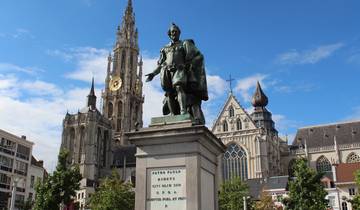
7 days
7 Day Brussels including Antwerp, Battle of the Bulge, Flanders Fields, Ghent, Bruges, Luxemburg & Dinant
- ✓ Comprehensive Belgium tour
- ✓ Expert local guides included
- ✓ All accommodation arranged
- ✓ Transportation provided
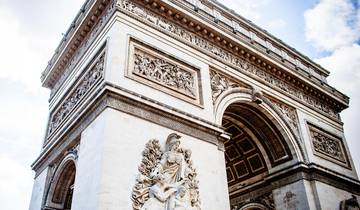
7 days
7 Days Across Paris & Brussels: From Eiffel Tower to Grand Place
- ✓ Comprehensive Belgium tour
- ✓ Expert local guides included
- ✓ All accommodation arranged
- ✓ Transportation provided
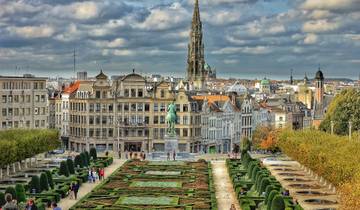
6 days
6 Days of Belgian Charm: Bruges, Ghent, Antwerp, Dinant & Luxembourg
- ✓ Comprehensive Belgium tour
- ✓ Expert local guides included
- ✓ All accommodation arranged
- ✓ Transportation provided

9 days
9 Days in Brussels and Luxembourg by Train: Fairytale Cities, Castles & Culture
- ✓ Comprehensive Belgium tour
- ✓ Expert local guides included
- ✓ All accommodation arranged
- ✓ Transportation provided
Multi-day tour packages powered by TourRadar. Prices and availability subject to change.
Introduction: Wallonia’s Museum Landscape in 2026
Belgium divides its cultural policy between communities, and Wallonia’s French-speaking institutions operate under a coordinated framework that has, over the past two decades, produced an extraordinary density of quality museums per square kilometre. Unlike Brussels or Bruges, which attract visitors through reputation alone, Wallonia rewards those who seek it out with exhibitions of genuine ambition, admission prices well below the European average, and a physical landscape — river valleys, Gothic old towns, UNESCO-listed mining sites, and Baroque palaces — that contextualises every collection.
The five cities anchoring Wallonia’s museum map each offer a distinct cultural personality. Liège, the largest Walloon city at around 200,000 inhabitants, is a university city on the Meuse with a rich industrial and ecclesiastical heritage translated into a half-dozen major institutions. Mons — European Capital of Culture in 2015 — invested heavily in its cultural infrastructure and now offers a concentrated museum mile. Namur, the regional capital, conserves medieval and Renaissance arts in intimate mansions. Charleroi has leveraged its industrial decline into a post-industrial cultural identity, housing Europe’s largest photography museum. Tournai, one of Belgium’s oldest cities, holds Flemish Primitive masterworks that most visitors to Europe never discover.
2026 brings several notable institutional events. La Boverie in Liège mounts a major temporary exhibition from late May that temporarily closes its permanent collection until late August — a scheduling consideration for visitors focused on the permanent Impressionist and Modern holdings. Grand Curtius marks the bicentenary of the Val Saint-Lambert crystal works (1826–2026) with a significant Japonisme and Art Nouveau exhibition running April through September. MAC’s Grand-Hornu reopens in mid-June 2026 following an installation period. These events reward planning in advance, and this guide provides the information needed to sequence visits intelligently.
The museumPASSmusées 2026: Wallonia’s Master Key
No strategic discussion of Wallonia’s museums begins anywhere other than the museumPASSmusées. At €64.95 for one year (€12.95 social tariff from February 2025), it provides unlimited free admission to over 270 museums across Belgium — all three regions — and represents the most cost-effective cultural investment available to any visitor spending more than three or four days exploring the country’s museums seriously.
In Wallonia specifically, the pass covers every institution worth prioritising: La Boverie, Grand Curtius, Musée de la Vie Wallonne, Musée Félicien Rops, TreM.a, CAP/Musée des Beaux-Arts de Mons, MAC’s Grand-Hornu, BPS22, Mundaneum, Musée de la Photographie, Bois du Cazier, and dozens of secondary institutions across the provinces. In Liège alone, a visitor can spend three to four days visiting major institutions and exhaust the pass’s cost in admissions saved.
The pass includes two bonus benefits worth noting. First, it provides five SNCB Discovery Tickets offering a 40% discount on return rail journeys to participating museums — a meaningful reduction when travelling between Liège and Mons (a 90-minute intercity connection) or Namur and Charleroi. Second, many museums allow pass holders to queue-jump or enter through dedicated access points during busy periods.
The break-even arithmetic: two major Liège museums cost approximately €22 combined (La Boverie €12 + Grand Curtius €10). At two museums per day averaging €18 in combined admissions, the pass pays for itself in 3.6 days — meaning any visit lasting four or more days of active museum-going generates net savings. Over a full 7-day trip, the pass saves approximately 48% compared to buying individual tickets at full price.
Wallonia Museum Admission Costs 2026: Complete Price Guide
Individual admission prices across Wallonia’s major institutions in 2026, verified from official sources:
- La Boverie (Liège) — Adults €12, seniors/groups (15+) €8, under 26 free, Art.27 €1.25. First Sunday: buy one get one free.
- Grand Curtius / Musée Grétry combo (Liège) — Adults €10, seniors €6, under 26 free. First Sunday: free.
- Musée de la Vie Wallonne (Liège) — Adults from €7, seniors/students/children (3–18) from €5, under 3 free. First Sunday: free.
- BPS22 (Charleroi) — Permanent access free. Some special exhibitions require a separate ticket.
- Musée de la Photographie (Charleroi) — Permanent collections free. Temporary exhibitions €4 full / €2.50 reduced. First Sunday: temporary exhibitions at reduced rate.
- CAP/Musée des Beaux-Arts de Mons — Permanent €4/€2 reduced. Temporary exhibitions €9/€6 reduced. First Sunday: free.
- MAC’s Grand-Hornu — Adults €10, seniors (60+) €6, children/students (7–18) €2, under 6 free. Admission covers MACS + CID exhibitions + Grand-Hornu heritage site. First Sunday: free.
- TreM.a Namur — Adults €2.50 (standard); €4 during temporary exhibitions. Under 12 free.
- Musée Félicien Rops (Namur) — Free with museumPASS. Individual pricing on request; check official website for current rates.
- museumPASSmusées (annual pass) — €64.95 standard, €12.95 social tariff. Covers 270+ museums across Belgium for one calendar year.
Discount categories applying across multiple institutions: holders of teacher cards, ICOM/ICOMOS passes, press accreditation, and the Art.27 social tariff (€1.25 universal entry for people experiencing social exclusion) receive free or near-free entry at most venues. Under-26 visitors benefit from free admission at the Liège city museum network and several provincial institutions.
First Sunday Free Museum Policy in Wallonia 2026
Wallonia’s first-Sunday policy represents one of Europe’s most generous public museum access programmes. On the first Sunday of every month, more than 160 museums across Wallonia and Brussels open free of charge under a decree from the Wallonia-Brussels Federation originally introduced in 2013. The programme has grown from 50 founding institutions to its current scale, with participation now spanning all five Walloon provinces.
For budget visitors, building an itinerary around first Sundays can save €25–50 in admissions in a single day across a Liège cluster. La Boverie (normally €12 adult), Grand Curtius (€10), and Musée de la Vie Wallonne (€7) — three institutions easily visited in one day — become free simultaneously on the first Sunday, eliminating the day’s museum costs entirely.
Practical notes for 2026: the free-Sunday policy applies to permanent exhibitions at the majority of institutions; some museums also extend the offer to temporary exhibitions. Arrival before 10:30 AM is recommended at La Boverie and Grand Curtius, which can attract queues by midday on free-entry Sundays. BPS22 and the Musée de la Photographie’s permanent collection are free every day regardless of this policy.
Liège Museum Guide 2026
Liège anchors Wallonia’s museum landscape as its most populous city and most varied collection hub. The city’s museum network divides between two geographic poles: the historic centre near the Féronstrée waterfront (Grand Curtius, Musée de la Vie Wallonne, Trésor de la Cathédrale), and the Boverie park island in the south of the city, reachable on foot or by bus from the Guillemins TGV station.
La Boverie: Liège’s Fine Arts Flagship 2026
La Boverie occupies a Beaux-Arts pavilion built in 1905 for the Liège International Exposition, set on an island in the Meuse enclosed by the Boverie park. Its permanent collection was co-organised with the Louvre’s advisory team following a 2016 renovation and spans Lambert Lombard, Gérard de Lairesse, Ingres, Gauguin, Chagall, Picasso, Evenepoel, Delvaux, and Magritte — a sequence running from the Renaissance to the twentieth century that represents Belgium’s most consistently satisfying provincial fine arts collection.
Admission in 2026: adults €12, seniors and groups (15 or more) €8, under 26 free, Art.27 €1.25. Important 2026 scheduling note: the permanent collection closes from 26 May to 27 August while the exhibition Behind the Scenes of a Collection takes over the lower galleries. Visitors whose primary interest is the permanent Impressionist and Modern holdings should plan to arrive before late May or after late August. The museum’s temporary exhibition programme, including a Picasso-era themed event in 2026, runs during this period and includes its own ticketing.
Opening hours: Tuesday to Sunday 10:00–18:00 (ticket desk closes 17:30). Closed Monday, 1 January, 1 May, 25 December. The first Sunday of the month offers a buy-one-get-one-free admission, effectively halving entry costs for couples. The park surrounding the museum — with its sculpture trail, rosarium, and riverside promenade — is free and worth an hour independent of the museum itself.
Travel logistics: La Boverie is a 15-minute walk from Liège-Guillemins TGV station or reachable by city bus. Several bike-share docking stations operate on the Boverie island.
Le Grand Curtius: Seven Millennia in One Building 2026
The Grand Curtius is the institutional centrepiece of Liège’s historic waterfront. Its 16th-century Mosan Renaissance mansion — built for arms dealer Jean Curtius whose munitions funded the Spanish army in the Low Countries — houses five interconnected collections across 5,000 square metres: weaponry (the former armoury collection is one of Europe’s most important), glassware, archaeology, decorative arts, and religious arts. The result is a tour spanning 7,000 years of human history, from Palaeolithic tools through medieval Mosan goldsmithing to 20th-century decorative glass.
Admission: the combined Grand Curtius and Musée Grétry ticket costs €10 adult, €6 senior, free under 26. A surcharge applies for certain temporary exhibitions. In 2026, the centrepiece exhibition runs April–September: Japonisme et Art Nouveau, curated around the bicentenary of the Val Saint-Lambert crystal works (1826–2026), showcasing roughly 150 pieces from Val Saint-Lambert’s golden age of 1880–1914 alongside Japanese influence on European glass arts. This is a once-in-a-generation exhibition for anyone interested in the intersection of Art Nouveau and East Asian aesthetics.
Opening hours: Monday, Wednesday–Sunday 10:00–18:00. Closed Tuesday, 1 January, 1 May, 11 November (1st and 2nd), 25 December. The gardens are free to visit. The permanent glass collection was temporarily closed from October for conservation purposes — check the official site before a specific glass-focused visit.
Musée de la Vie Wallonne: Walloon Identity and Social History 2026
Installed in a former Franciscan friary in the heart of Liège’s historic quarter, the Musée de la Vie Wallonne is one of Belgium’s great ethnographic museums. Its permanent circuit moves through two centuries of Walloon social history: industrial labour, craft traditions, domestic life, popular festivals, religious practice, and regional literature. The Théâtre de marionnettes (puppet theatre) — a tradition rooted in Liège’s working-class 19th century — is among the highlights, with performances and demonstrations at weekends.
Admission: adults from €7, seniors, students, and children aged 3–18 from €5, under 3 free. Guided visits (available in French, Dutch, English, German, Italian, Arabic, and Walloon) cost €8 per adult. The museum’s restaurant Le Cloître is considered one of Liège’s most atmospheric dining spaces, set in the friary’s original cloister. Opening hours: Tuesday to Sunday 9:30–18:00. Closed Monday, and on 1 January, 1 May, 1 November, and 25 December, plus the week following Christmas.
In 2026, the museum mounts Gustave Marissiaux: La Mine en Lumière from 5 June to 3 January 2027, a retrospective exploring the photographer Marissiaux’s documentation of Liège’s coal mining industry — a collection of documentary power directly relevant to Wallonia’s industrial heritage and the parallel UNESCO mining landscapes at Grand-Hornu and Bois du Cazier.
Additional Liège Institutions Worth Noting
The Archéoforum beneath the Place Saint-Lambert constitutes the largest underground archaeological infrastructure in Europe — 3,725 square metres preserving every period in Liège’s history from prehistory to the modern era beneath a glass floor. Admission is modest, and the experience of standing above 2,000 years of urban stratification is genuinely unusual. The Trésor de Liège (Treasure House) in the former monastic outbuildings near Saint-Paul cathedral holds the most significant collection of medieval goldsmithing and sacred art in Wallonia, much of it from the demolished Cathedral of Saint-Lambert. The Aquarium-Muséum de Liège at the University combines natural history and tropical aquaria in a 19th-century building and makes an excellent counterpoint to a day spent in decorative arts collections.
Mons Museum Guide 2026
Mons reinvented itself culturally in the decade following its designation as European Capital of Culture 2015. The centrepiece investment was the CAP (Culture, Art, Patrimoine) complex — a reconfiguration of the former BAM museum — which opened in 2024 and now unites a renewed Musée des Beaux-Arts, a Maison des Collections, and the free-access Jardin du Poirier Beurré on a single site in the historic centre. Mons also offers the Mundaneum, one of the world’s most interesting small museums on information science, and easy access to MAC’s Grand-Hornu 15 kilometres to the west.
CAP/Musée des Beaux-Arts de Mons 2026
The CAP’s Musée des Beaux-Arts holds more than 15,000 works and presents them through a rolling programme of temporary exhibitions — the permanent collection is not displayed in its entirety at any one time, but rather thematically rotated against major loan shows. The gallery’s programme has included Van Gogh (2015), Niki de Saint-Phalle (2018), Roy Lichtenstein (2020), and Fernando Botero (2021), calibrated for genuine international ambition. The Cobra works, Pop art, and contemporary installations in the permanent holdings represent the strongest survey of postwar and contemporary art in Wallonia outside MAC’s Grand-Hornu.
Admission: permanent collection €4 (€2 reduced), temporary exhibitions €9 (€6 reduced), with prices varying by exhibition. Hours: Tuesday to Sunday 10:00–18:00 (last entry 17:00). Closed Monday, 25/26 December, 1/2 January. The Jardin du Poirier Beurré connecting the museum to the Maison des Collections is freely accessible from the Rue Neuve. The museumPASS gives free entry. A combined visit with the Mundaneum is easily accomplished in one full day.
Mundaneum: The Internet Before the Internet 2026
The Mundaneum is one of Belgium’s most conceptually compelling museums. It documents the extraordinary project begun in 1895 by Paul Otlet and Henri La Fontaine to create a universal repository of all human knowledge — a physical World Wide Web built from index cards, classified fiches, and systematic cross-referencing decades before computing existed. At its peak, the Mundaneum held some 12 million documents. Google has explicitly acknowledged it as a conceptual predecessor; an essay by Vint Cerf, one of the internet’s founding architects, describes Otlet as the first true information architect.
The museum occupies the former Labour Exchange building in central Mons, near the Grand-Place. It is compact — a two-hour visit suffices — but intellectually dense and particularly rewarding for visitors with any interest in digital culture, library science, or the history of ideas. Admission is modest and covered by the museumPASS. Hours vary by season; check the official website before visiting.
MAC’s Grand-Hornu: Contemporary Art on a UNESCO Site 2026
The Museum of Contemporary Arts of the Wallonia-Brussels Federation (MAC’s) opened in 2002 within the oval courtyard of the Grand-Hornu, a 19th-century colliery complex 15 kilometres west of Mons built by industrialist Henri De Gorge between 1810 and 1830. The Grand-Hornu was inscribed as a UNESCO World Heritage Site in 2012 as part of the Major Mining Sites of Wallonia — one of four Hainaut coal-mining complexes on the list alongside Bois du Cazier, Bois du Luc, and Blegny-Mine. The conjunction of a neoclassical oval workers’ town and a contemporary art museum of international standing creates a visitor experience found nowhere else in Wallonia.
MAC’s mounts three major exhibitions per year, ranging from monographic shows (Tony Oursler, Anish Kapoor, Christian Boltanski) to thematic group exhibitions. Its permanent collection comprises more than 450 works. The adjacent Centre for Innovation and Design (CID) occupies a different exhibition space within the same heritage site. The single admission ticket (€10 adult, €6 senior 60+, €2 children/students 7–18, free under 6) covers both the MAC’s, the CID, and the Grand-Hornu heritage site itself — exceptional value given that the heritage site walk alone occupies 45 minutes.
Important 2026 note: MAC’s is temporarily closed for installation during early June 2026, with reopening scheduled for 14 June. The CID and Grand-Hornu heritage site remain accessible throughout this closure. Opening hours when open: Tuesday to Sunday 10:00–18:00. Free guided tours run Tuesday to Friday at 14:00 and Sunday at 11:00 and 14:00, available without advance reservation. Free admission on the first Sunday of every month.
Getting there from Mons: no direct bus link exists from central Mons. Options include taxi (approximately €20–25 from Mons station), car, or a combination of bus (lines 7 or 9 from Mons towards Saint-Ghislain) followed by a short walk or local connection. A train to Saint-Ghislain station followed by a 15-minute walk is feasible. Grand-Hornu offers free site entry to visitors presenting a same-day SNCB train ticket to Mons or Saint-Ghislain.
Namur Museum Guide 2026
Namur, Wallonia’s administrative capital, is a compact city of some 110,000 inhabitants at the confluence of the Meuse and Sambre rivers. Its museums concentrate in the pedestrianised historic core within easy walking distance of the railway station. The two main institutions — TreM.a and Musée Félicien Rops — are ten minutes apart on foot and together constitute a coherent half-day programme. The Citadelle of Namur, perched above the city on a limestone promontory and accessible by téléphérique (cable car, €6.50 adult return), adds heritage context and panoramic views.
TreM.a: Treasures of the Middle Ages 2026
The TreM.a — Trésors du Moyen Âge, Musée des Arts anciens du Namurois — occupies an 18th-century patrician mansion on the Rue de Fer, five to ten minutes’ walk from Namur station. Its holdings concentrate on medieval and Renaissance art from the Meuse-Sambre valley: the Trésor d’Oignies (the goldsmithing masterworks of Hugo d’Oignies and his atelier, dated approximately 1225–1250), paintings by the Mosan landscape artist Henri Bles, wood sculptures by the Master of Waha, religious retables, decorative metalwork from Dinant, and pre-Eyckian panel paintings from the old Netherlands.
The Trésor d’Oignies alone — considered one of Belgium’s Seven Wonders — would justify the visit: a group of reliquary crosses, portable altarpieces, book covers, and liturgical vessels worked in silver-gilt with filigree and niello decoration, combining Byzantine influence with high Romanesque formal discipline. No comparable concentration of 13th-century goldsmithing exists anywhere in the region.
Admission: adults €2.50 (standard; €4 during temporary exhibitions), free under 12, reduced for students and seniors. Hours: Tuesday to Sunday 10:00–13:00 and 13:30–18:00 (lunch closure applies). Closed Monday, 24/25/31 December, 1 January, and the third weekend of September. The museum is covered by the museumPASS. Private guided tours in French, Dutch, English, German, Italian, and Spanish are available at €60 per hour for groups of up to 20, booked two weeks in advance.
Musée Félicien Rops: The Provocateur of Namur 2026
Félicien Rops (1833–1898) was Namur’s most internationally prominent artist: a graphic artist, printmaker, painter, and caricaturist who associated with Baudelaire, illustrated symbolist texts, and spent decades in Paris producing work that balanced technical virtuosity with deliberate transgression. The museum dedicated to him — occupying a bourgeois mansion from the early 18th century in the pedestrian heart of old Namur — holds paintings, drawings, lithographs, and correspondence across 700 square metres, tracing his trajectory from satirical journalist to symbolist printmaker.
The 2026 programme includes Japoniaiseries: Fantaisies japonaises au temps de Félicien Rops, exploring the Japonisme craze that permeated fin-de-siècle Paris and its influence on Rops’s graphic language. Opening hours: Tuesday to Sunday 10:00–18:00 (last entry 17:00). Closed 24/25/31 December, 1 January, and the third weekend of September. Free with museumPASS; individual pricing available via the official website. Guided tours: 1 hour at €60 plus entry, 1.5 hours at €75, maximum 20 people, booked in advance.
Charleroi Museum Guide 2026
Charleroi, Wallonia’s second-largest city, endured severe post-industrial decline across the late 20th century but has leveraged its industrial heritage and periphery landscapes into a distinctive cultural identity. Two institutions stand out as genuinely significant on European terms: the Musée de la Photographie and the BPS22. Both are located slightly outside the city centre but accessible by public transit.
Musée de la Photographie: Europe’s Largest Photography Museum 2026
The Musée de la Photographie in Mont-sur-Marchienne — a suburb of Charleroi — is the most extensive photography museum in Europe by floor area: 6,000 square metres across a converted neo-Gothic convent, housing a collection of 100,000 photographs with more than 800 on permanent display and the conservation of 1.5 million negatives spanning photography’s entire history. It functions simultaneously as a contemporary art centre under the Wallonia-Brussels Federation and as a historical archive.
The permanent collection is free of charge — an extraordinary offer given the depth and quality of the holdings. Temporary exhibitions charge €4 (full) or €2.50 (reduced). On the first Sunday of each month, permanent access remains free and temporary exhibitions are available at the reduced rate. The museum is accessible by bus from Charleroi-Central station (multiple lines), though checking current routes before travel is advisable. Opening hours vary; verify on the official website before visiting.
BPS22: Industrial Heritage as Contemporary Art Space 2026
The BPS22 is the art museum of the Province of Hainaut — and possibly Wallonia’s most photogenic contemporary art venue. It occupies an iron-and-glass industrial hall built in 1911 on the Esplanade Solvay in central Charleroi, and its architecture alone makes the visit worthwhile. Permanently free admission (with some special exhibitions carrying a fee), the BPS22 presents a programme focused on contemporary art and social dialogue, drawing from the Province of Hainaut’s own collection as well as international loans.
Access by bus (Metro/Tram lines 2 or 3, Palais stop) is straightforward from Charleroi-Central. Free parking is available on surrounding streets for up to one hour, with paid parking options including the Campus parking directly below the Esplanade Solvay (14 electric vehicle charging points). Since receiving the Bienvenue Vélo label in 2025, the museum also provides e-bike charging and a repair station for cyclists. The combination of BPS22 and the Musée de la Photographie in a single Charleroi day requires a half-day at each, with bus connections between them.
Tournai Museum Guide 2026
Tournai is often overlooked on Wallonia itineraries — a mistake for anyone interested in medieval and early Renaissance Flemish art. The city holds one of Belgium’s oldest belfries (a UNESCO World Heritage Site, part of the Belfries of Belgium and France inscription of 1999), a magnificent Romanesque-Gothic cathedral, and a Fine Arts Museum holding an exceptional collection of Flemish Primitive paintings alongside works by Van der Weyden, Jordaens, Rubens, and a group of Manet and Seurat paintings that arrived via a bequest from Henri van Cutsem in the 19th century.
The Musée des Beaux-Arts de Tournai, designed by Victor Horta in 1928 — his only purpose-built museum — occupies an octagonal plan with naturally lit galleries of unusual spatial quality. Horta’s design at Tournai is understudied relative to his Brussels domestic work and represents a significant argument for the visit. Admission is moderate; check the official website for current pricing. Hours: Wednesday to Monday 10:00–18:00, closed Tuesday. The museum is covered by the museumPASS.
The Trésor de la Cathédrale de Tournai holds the reliquary of Saint Eleutherius and other medieval goldsmithing of exceptional quality in the precincts of the five-towered Romanesque cathedral — the oldest surviving cathedral structure in Belgium. Cathedral admission is separate from treasury admission; both are modest. A day in Tournai combining the cathedral, treasury, Belfry, and Musée des Beaux-Arts is fully programmed from arrival to departure.
The Horta building itself rewards attention beyond the paintings it houses. Victor Horta completed the Tournai design in 1928 — ten years after he had formally abandoned his Art Nouveau style following the aesthetic backlash of the First World War — and what he produced is something more controlled: a classical rationalism organised around natural light entering through a central oculus over the main gallery. The building is modest in scale but exceptionally resolved, and the experience of moving from the compact street entrance into the luminous central hall demonstrates why Horta remains one of the most spatially inventive architects of the 20th century’s first decades. Visitors arriving on the Brussels-Tournai intercity train (approximately one hour, €10–16 second class) should allow a full morning for the cathedral and treasury, lunch near the Grand-Place, and an afternoon in the museum — a programme that fits easily within a single day trip from the capital.
Tournai also operates a network of smaller specialised museums covering tapestry (the Musée de la Tapisserie, occupying a former covered market), folklore (Musée de la Folklore et du Carnaval), and decorative arts. The collective pass for the Tournai municipal museums provides access to this cluster at a reduced combined rate and is worth purchasing at the first institution visited. Most are covered by the museumPASS.
Beyond the Five Cities: Secondary Museums and UNESCO Heritage Sites 2026
Wallonia’s four UNESCO-inscribed major mining sites collectively constitute one of the most significant industrial heritage landscapes in Europe, and each has developed a museum or interpretive infrastructure that goes well beyond conventional industrial tourism. For visitors with a specific interest in labour history, engineering heritage, or the social consequences of 20th-century deindustrialisation, these institutions offer a depth of documentation rare in European heritage sites.
Bois du Cazier (Marchienne-au-Pont, Charleroi area) is the most emotionally significant of the four UNESCO mining sites. On 8 August 1956, a fire in the underground workings killed 262 miners — including 136 Italian migrant workers — in what remains the worst industrial accident in Belgian history. The site now operates as a dual museum: the Mine Museum documents coal extraction and industrial processes in the preserved above-ground structures, while the European Museum of Industry and Labour addresses the broader history of migration, workers’ rights, and European industrial society. Admission prices are modest and covered by the museumPASS. Hours: Tuesday to Sunday, variable by season; check the official website. The site is accessible from Charleroi by bus and is logically combined with a Charleroi day that includes BPS22 and the Musée de la Photographie.
Blegny-Mine (near Liège) offers the only underground mining experience among the four UNESCO sites: guided visits descend 30 metres below ground through the working shafts and galleries of the colliery that operated until 1980. Surface infrastructure includes a narrow-gauge tourist railway through the mining landscape, a visitor centre, and permanent exhibitions on coal extraction and miners’ lives. It is 30 minutes from Liège by bus and train combination. Admission: adults approximately €12, children €8; check the official site for 2026 pricing, as seasonal variations apply.
Bois du Luc (near La Louvière) preserves a uniquely intact 17th-to-19th-century mining company town — including workers’ housing, chapel, school, and administration buildings — in a state of exceptional authenticity. The cité ouvrière at Bois du Luc predates the Grand-Hornu and constitutes the oldest complete mining settlement in Belgium. The interpretive centre addresses the company town model, paternalist industrial capitalism, and the evolution of workers’ housing over three centuries. It is the least-visited of the four UNESCO sites and among the most historically legible for visitors interested in urban planning and social history.
Musée François Duesberg (Mons) is one of Wallonia’s finest small museums and among the most underknown. Occupying the salons of a 19th-century private mansion in central Mons, it holds an outstanding collection of Empire-period decorative arts — clocks, porcelain, bronzes, and furniture from Napoleonic France — assembled by the collector François Duesberg and donated to the city. The collection’s depth and the intimacy of the domestic setting create an experience closer to a private visit than a public institution. Hours: Tuesday to Sunday 10:00–18:00. Admission: check official site; covered by museumPASS.
Musée du Verre de Sars-Poterie, near Maubeuge in the southern Hainaut province, holds one of Europe’s most significant collections of studio glass art accumulated through the annual International Glass Festival that the village has hosted for decades. Over 3,000 objects from artists including Harvey Littleton, Dale Chihuly, and Bertil Vallien document the post-war studio glass movement as comprehensively as any institution outside the United States. For visitors whose Wallonia itinerary includes MAC’s Grand-Hornu, Bois du Cazier, and Grand Curtius’s glass collections, Sars-Poterie provides a logical additional focus in the same province. It is small and easily absorbed in two hours. Admission is modest and covered by the museumPASS.
Archéosite d’Aubechies (near Beloeil, Hainaut province) takes a different approach to heritage interpretation: it is an open-air archaeological park reconstructing a Celtic and Gallo-Roman settlement through full-scale built replicas and guided demonstrations of ancient crafts and technologies. Its approach — archaeology made visceral rather than simply displayed — works particularly well for families with children and for visitors who want to understand the pre-Roman landscape of the Walloon region before encountering its medieval collections at TreM.a or its Roman material in the Archéoforum at Liège. Hours: seasonal; check the official website. Admission: adults approximately €6, covered by the museumPASS in most periods.
Wallonia’s Gallery Scene Beyond Major Museums 2026
The institutional museum circuit in Wallonia is paralleled by a gallery landscape that, while less infrastructurally developed than Brussels or Ghent, produces genuine quality at the contemporary end. Several venues operate between the formal museum model and the commercial gallery, and are worth including in an itinerary for visitors interested in current Belgian and international contemporary practice.
In Liège, the Trinkhall Museum (formerly the Art Brut collection) on the Rue Lord Byron holds one of Europe’s more substantial collections of outsider art — works produced outside institutional artistic training by individuals who developed private visual languages in response to psychological, social, or cultural marginalisation. The collection includes Belgian, French, and international makers and represents a lineage running from Jean Dubuffet’s founding interest in art brut through to contemporary critical reassessments of the category. Admission: modest; check the official site. Hours: Tuesday to Sunday 10:00–18:00.
The Centre Céramique in Maastricht — technically just across the Dutch border from Liège, thirty minutes by train — is worth noting for any visitor combining Liège and the southern Netherlands, as it holds municipal archives and a ceramics collection with direct thematic relevance to the Mosan craft traditions documented at Grand Curtius and TreM.a. Belgian-Dutch border regions developed shared craft traditions, and the Centre Céramique provides useful geographic and cultural context for the Walloon collections.
In Namur, the Pavillon (Centre Wallonie-Bruxelles pour les Arts Numériques) focuses on digital and media arts and offers free or low-cost access to installations, performances, and screenings. It operates more as a cultural programme venue than a conventional gallery, and its schedule repays checking before a Namur visit.
Several Walloon cities also maintain significant collections of public sculpture, most accessible without admission: the Jardin de sculpture at Hornu (within the Grand-Hornu grounds) integrates site-specific works commissioned from MAC’s artists into the UNESCO heritage landscape. The Boverie park in Liège includes outdoor sculptures by Lawrence Weiner and others as a free extension of the museum’s programme. These outdoor collections add value to any museum day without requiring additional admission spending.
Beyond the museumPASSmusées, several more targeted passes apply in specific cities. In Liège, the ArchéoPass bundles the Grand Curtius with the Archéoforum and other archaeological sites for a combined reduced rate. In Mons, the Mons Card offers reduced rates across major museums, specific attractions, and transport within the city. In Namur, the OKV Card applies at several provincial institutions including Musée Félicien Rops.
The strategic recommendations for 2026 visitors are as follows. For a trip of three days or fewer concentrated in a single city, buy individual tickets — the museumPASS cost cannot be recovered. For a trip of four or more days involving museums in two or more cities, the museumPASS is unambiguously the correct choice and the first purchase to make. For visitors under 26, the pass’s most important function shifts to the SNCB discount tickets, since under-26 free admission at most Liège institutions eliminates the primary cost anyway.
Free-admission strategies work particularly well when combined with first-Sunday timing. A Friday–Sunday trip timed to the first Sunday of any month allows three days of museum visiting where Sunday’s costs drop to zero across Liège, Mons, or Namur clusters. The remaining two days can use individual tickets (if under 26 or using the BPS22/Photographie free institutions) or the museumPASS for full access.
Transportation Between Wallonia Museum Cities in 2026
SNCB intercity trains connect Wallonia’s museum cities reliably and at a low cost relative to Western European rail travel. Key journey times and approximate second-class fares in 2026:
- Brussels-Midi to Liège-Guillemins: 1 hour 5 minutes (Thalys/IC), approximately €15–22 standard second class depending on advance purchase.
- Liège-Guillemins to Namur: approximately 45 minutes, €9–14 second class.
- Namur to Mons: 1 hour 10 minutes (with change), approximately €12–18.
- Namur to Charleroi-Central: approximately 45 minutes, €8–12.
- Brussels-Midi to Tournai: approximately 1 hour, €10–16.
The museumPASS’s SNCB discount tickets (40% off five return journeys) reduce these fares meaningfully. Day passes and weekend passes are available from SNCB for visitors planning multiple same-day legs. Charleroi Brussels South Airport (CRL), used by Ryanair and Wizz Air for inbound European budget flights, connects to Charleroi-Central by train and shuttle bus — making Charleroi a viable gateway city for a Wallonia museum trip arriving from abroad.
Within individual cities, public transport is the default option. Liège operates a trolleybus and bus network (TEC); the city centre museums near the Grand Curtius cluster are 15–25 minutes on foot from the main station. Mons is highly walkable within the historic centre. Namur’s museum cluster sits within 10 minutes of the station. MAC’s Grand-Hornu specifically requires a car or taxi from Mons given the absence of a direct bus link — this is the primary logistical exception in an otherwise rail-friendly museum landscape.
Daily Budget Breakdowns for Wallonia Museum Trips 2026
All costs per person per day, assuming two people sharing accommodation. Accommodation costs divided by two before inclusion in totals.
Budget Traveller Daily Costs in Wallonia 2026
Budget accommodation in Wallonia includes B&B Hotels, ibis-chain properties, and occasional hostels at €50–70 per room per night. Per-person accommodation share: €25–35. Budget dining relies on supermarket breakfasts, brasserie lunch menus (€12–18 including drink), and a bistro dinner (€18–25). Admissions concentrate on free institutions (BPS22, Musée de la Photographie permanent, BPS22 + first Sunday institutions) keeping museum costs to €4–8 per day. Transport on city buses and between cities by standard SNCB runs €4–6 daily.
Budget daily breakdown: accommodation €25–35, meals €35–51, transport €4–6, museums €4–8, coffee and incidentals €5–8. Total approximately €75–110 per person daily. Weekly estimate: approximately €525–770 per person for a 7-day budget trip across Wallonia.
Mid-Range Traveller Daily Costs in Wallonia 2026
Mid-range accommodation (Mercure, Van der Valk, Radisson mid-tier, boutique hotels) runs €90–140 per room per night. Per-person accommodation share: €45–70. Dining includes café breakfasts (€8–12), sit-down restaurant lunches (€18–28), and proper evening restaurant dinners (€28–45). Visiting two to three paid museums daily at an average of €9–12 each generates €10–14 in admissions (or zero with the museumPASS, the cost of which should be amortised across the trip). Mixed public transit and occasional taxi: €8–15 daily.
Mid-range daily breakdown: accommodation €45–70, meals €54–85, transport €8–15, museums and galleries €10–14, extras €8–12. Total approximately €125–195 per person daily. Weekly estimate: approximately €875–1,365 per person for a 7-day mid-range trip.
Luxury Traveller Daily Costs in Wallonia 2026
Luxury accommodation in Wallonia (4-star and boutique hotels including Van Der Valk Sélys Liège, Mercure premium category, château hotels in the Namur area, spa properties) runs €160–280 per room per night. Per-person accommodation share: €80–140. Fine dining adds significantly: hotel breakfasts at €18–25, restaurant lunches at €30–45, dinner at a gastronomic restaurant at €55–90 per person. Private guided tours (from €60 at TreM.a, €75 at Musée Félicien Rops) and premium experiences add €15–25 beyond standard admissions. Taxis and car hire: €20–40 daily.
Luxury daily breakdown: accommodation €80–140, meals €103–160, transport €20–40, museums and premium experiences €15–25, extras and shopping €20–40. Total approximately €240–405 per person daily. Weekly estimate: approximately €1,680–2,835 per person for a 7-day luxury cultural immersion.
Sample Wallonia Museum Itineraries 2026
3-Day Budget Itinerary: Liège Museum Cluster 2026
This itinerary maximises free and low-cost access in Liège, timed to a first-Sunday start. Based on a budget hotel in central Liège at €60/room/night (€30 per person per night shared).
Day 1 (First Sunday — free admission day): Grand Curtius free (normally €10), Musée de la Vie Wallonne free (normally €7). Walk the Féronstrée waterfront and the Hors-Château hillside staircase (Montagne de Bueren). Evening in the Carré neighbourhood for dinner. Accommodation €30 pp, meals €40, transport €5, museums €0 (free Sunday), incidentals €8. Day total approximately €83 per person.
Day 2: La Boverie (€12 adult — deduct if using museumPASS). Boverie park walk free. Afternoon: Archéoforum beneath Place Saint-Lambert (€4). Evening: cathedral Saint-Paul visit (free entry to church). Accommodation €30 pp, meals €45, transport €5, museums €16, incidentals €8. Day total approximately €104 per person.
Day 3: Morning: Trésor de la Cathédrale de Liège. Afternoon: day trip to Namur by train (€10 return) for TreM.a (€2.50) and a walk through the citadelle area. Return to Liège. Accommodation €30 pp, meals €40, transport €15, museums €12.50, incidentals €5. Day total approximately €103 per person.
3-day total: approximately €290 per person. Includes two nights accommodation, three days of cultural visits.
5-Day Mid-Range Itinerary: Wallonia Grand Tour 2026
This itinerary covers Liège, Namur, Mons, and Charleroi using SNCB intercity trains and the museumPASS. Based on mid-range hotels at €110/room/night (€55 per person per night shared). The museumPASS (€64.95) is purchased on arrival and amortised across all five days.
Day 1 — Liège: La Boverie, Grand Curtius (both free with pass). Accommodation €55 pp, meals €65, transport €5, pass amortised share €13, incidentals €10. Day total approximately €148 per person.
Day 2 — Liège and Namur: Musée de la Vie Wallonne (free with pass). Afternoon train to Namur (SNCB discount ticket from pass, ~€8 discounted). TreM.a and stroll through Namur old town. Overnight in Namur. Accommodation €55 pp, meals €65, transport €12, museums €0 (pass), incidentals €10. Day total approximately €142 per person.
Day 3 — Namur and Mons: Musée Félicien Rops (free with pass). Train to Mons. CAP/Musée des Beaux-Arts (free with pass). Mundaneum. Overnight in Mons. Accommodation €55 pp, meals €65, transport €15, museums €0 (pass), incidentals €10. Day total approximately €145 per person.
Day 4 — MAC’s Grand-Hornu: Taxi or bus to Grand-Hornu (€20–25 return from Mons). MAC’s exhibitions + CID + heritage site (free with pass). Return to Mons or travel to Charleroi overnight. Accommodation €55 pp, meals €65, transport €25, museums €0 (pass), incidentals €10. Day total approximately €155 per person.
Day 5 — Charleroi: BPS22 (free). Musée de la Photographie, permanent collection free + temporary exhibition €4. Train back to Brussels or base. No overnight needed. Meals €55, transport €20, museums €4, incidentals €10. Day total (no accommodation) approximately €89 per person.
5-day total: approximately €680 per person, including four nights accommodation and museumPASS. A genuinely comprehensive Wallonia cultural circuit at mid-range cost.
Seasonal Considerations for Wallonia Museum Visits 2026
Wallonia’s museum calendar follows broadly predictable seasonal patterns, with a few 2026-specific inflection points worth noting.
Spring (March–May 2026) is the best time to visit. Crowds are manageable, the Boverie park is at its most attractive, and major temporary exhibitions are fresh. Grand Curtius’s Japonisme and Art Nouveau exhibition opens in April. La Boverie’s permanent collection remains accessible through 25 May. Accommodation prices are moderate, running 15–20% below summer peaks.
Summer (June–August 2026) brings complications. La Boverie’s permanent collection closes 26 May–27 August, limiting that venue to temporary exhibitions. MAC’s Grand-Hornu reopens 14 June after an installation period. On the positive side, extended opening hours apply at several institutions, and outdoor events at the Boverie park, Grand-Hornu courtyard, and Namur citadelle add cultural programming. Hotel prices in Liège peak in July and August, adding €15–30 per room per night above spring rates.
Autumn (September–November 2026) is the connoisseur’s choice. Major autumn exhibitions open in September across the circuit. The Meuse valley’s autumn colour through October makes the Boverie park and Namur citadelle landscape particularly attractive. Crowd levels at museums drop sharply after mid-September. La Boverie’s permanent collection fully reopens after late August. This is the most rewarding season for sustained museum visiting with the fewest logistical complications.
Winter (December–February 2026/2027) offers the lowest accommodation prices and near-empty museum galleries, with the trade-off of shorter daylight hours for travel between cities. Liège’s Marché de Noël operates across Place Saint-Lambert through December and is one of Belgium’s better Christmas markets. Several museums close the week between Christmas and New Year; verify specific dates before winter visits.
Hidden Costs and Practical Fees for Wallonia Museums 2026
Several costs catch first-time visitors unprepared. Audio guides at Grand Curtius and La Boverie run €3–5 and represent genuine value at institutions where the English labelling is less comprehensive than the French. Photography is permitted in most permanent collections without flash; temporary exhibitions sometimes restrict photography — staff will indicate restrictions at the door.
Coat and bag storage (consigne) is offered free at most major institutions; La Boverie provides lockers free of charge. Pushchair/stroller access is confirmed accessible at La Boverie, Grand Curtius, BPS22, CAP/Musée des Beaux-Arts de Mons, and MAC’s Grand-Hornu. TreM.a’s historic mansion layout creates some access limitations; contact the museum in advance for specific needs.
Parking fees in Liège and Mons city centres average €2–3 per hour. Namur’s museum cluster is served by the station car park at similar rates. MAC’s Grand-Hornu has onsite parking at no charge. Tipping at museum cafés and restaurants follows Belgian restaurant norms — not obligatory but €1–2 per person is appreciated at sit-down service.
Photography workshops and group bookings at BPS22 and Musée de la Photographie require advance notice and separate pricing; see the official websites for current rates. Special access to the TreM.a’s documentation centre (goldsmithing and medieval art archive) is free but requires appointment booking.
Family Visiting with Children in Wallonia Museums 2026
Wallonia’s major institutions invest meaningfully in educational programming for young visitors. Grand Curtius provides dedicated children’s discovery routes in French, with worksheets calibrated for primary-school age groups. TreM.a offers free activity booklets for children aged 4–6 and 7–12. MAC’s Grand-Hornu runs family workshops on Sundays (check the programme on the official site) and provides paper guide pamphlets designed for children at reception. BPS22 regularly includes interactive elements in its exhibitions and runs school holiday activity days.
In terms of admissions, children receive free or heavily reduced entry across the circuit. Under-6 entry is free at MAC’s Grand-Hornu and the TreM.a; under-12 free at TreM.a; under-14 free at La Boverie; under-26 free at the Liège city network. The family deal at La Boverie (2 adults + up to 3 children under 14, €13) represents the best value family ticket for the permanent collection. A family of two adults and two children visiting La Boverie, Grand Curtius, and Musée de la Vie Wallonne in Liège on a non-first-Sunday day would pay approximately €44 without the museumPASS, versus €0 on first Sunday — a meaningful saving for family travel.
Frequently Asked Questions: Wallonia Museums & Galleries 2026
What is the best single museum in Wallonia for a first visit in 2026?
La Boverie in Liège makes the strongest argument as a first visit for art-focused travellers: a Louvre-advised permanent collection in an extraordinary parkland setting, spanning Lambert Lombard through Magritte, with a Picasso and Impressionist sequence that rewards a full afternoon. For heritage and social history, the Grand Curtius covers a wider chronological and typological range — seven thousand years across five collections — and the 2026 Japonisme and Art Nouveau exhibition makes this an exceptional year to visit. For visitors interested in industrial heritage and contemporary art in combination, MAC’s Grand-Hornu at the UNESCO Grand-Hornu site is irreplaceable.
Is it worth buying the museumPASS for a 3-day Wallonia trip in 2026?
For a 3-day trip, the break-even point is borderline. If all three days involve two paid museums, individual admissions total approximately €48–60 — just below the pass’s €64.95 cost. However, if any days fall on a first Sunday (free) or involve under-26 visitors (free at most Liège institutions), the pass becomes even harder to justify for a 3-day window. For four or more days, or for visitors who will also visit museums in Brussels or Flanders, the pass becomes clearly worthwhile and the SNCB discount tickets add independent value.
Can I visit Wallonia’s main museums by public transport without a car in 2026?
Yes, with one exception. Liège, Namur, Mons, Charleroi, and Tournai are all railway stations with good intercity SNCB connections. Each city’s museum cluster is walkable from the station. The exception is MAC’s Grand-Hornu, which has no direct bus connection from central Mons; a taxi (€20–25 return) or a bus/walk combination from Saint-Ghislain station is required. Grand-Hornu offers free heritage site entry to visitors presenting a same-day SNCB ticket to Mons or Saint-Ghislain, providing a small incentive to travel by train regardless.
What are the opening hours for Wallonia’s major museums in 2026?
Most major institutions follow a Tuesday-to-Sunday schedule, 10:00–18:00 (with ticket desks closing at 17:30), and are closed on Monday. Specific exceptions: Grand Curtius opens Monday and closes Tuesday; Musée de la Vie Wallonne opens from 9:30 and closes Sunday-Monday (check specific days); TreM.a closes for a one-hour lunch break 13:00–13:30. All major institutions close on 25 December and 1 January. Several close for the third weekend of September (Wallonia Heritage Days — when free access to non-normally-open sites partially compensates). Verify exact hours on official websites before travel, as installation periods and temporary closures apply throughout 2026.
How much does a week visiting Wallonia museums cost in 2026?
Weekly costs depend on travel style: budget travellers need approximately €525–770 per person (two sharing budget accommodation), mid-range visitors approximately €875–1,365 per person, and luxury travellers approximately €1,680–2,835 per person for a 7-day museum-focused Wallonia trip. These estimates assume active museum visiting of two or more institutions per day, intercity SNCB rail travel, and all meals. The museumPASS at €64.95 is already included in the mid-range and luxury estimates; budget travellers relying primarily on free institutions may not need it.
Which Wallonia museums are free in 2026?
BPS22 in Charleroi offers permanently free access. The Musée de la Photographie’s permanent collection (100,000 photographs, 800+ on display) is free every day of the year. The Jardin du Poirier Beurré at the CAP complex in Mons is free from the Rue Neuve entrance. Additionally, on the first Sunday of every month, 160+ museums across Wallonia and Brussels are free, including La Boverie, Grand Curtius, Musée de la Vie Wallonne, MAC’s Grand-Hornu, and CAP/Musée des Beaux-Arts de Mons. Visitors under 26 receive free admission at most Liège city network museums year-round.
What temporary exhibitions are running in Wallonia museums in 2026?
Grand Curtius runs Japonisme et Art Nouveau (April–September 2026) marking the Val Saint-Lambert crystal bicentenary (1826–2026). La Boverie presents Behind the Scenes of a Collection (late May–August 2026), temporarily closing its permanent collection. Musée de la Vie Wallonne presents Gustave Marissiaux: La Mine en Lumière (5 June 2026–3 January 2027). Musée Félicien Rops presents Japoniaiseries: Fantaisies japonaises au temps de Félicien Rops. Check each institution’s official website for the latest exhibition schedules, as programming is confirmed on rolling bases.
Are there combined tickets for visiting multiple Wallonia museums in 2026?
The Grand-Hornu single admission ticket (€10 adult) covers MAC’s, CID, and the entire Grand-Hornu heritage site — effectively three venues for one price. In Liège, the combined Grand Curtius and Musée Grétry ticket (€10 adult) covers both permanent collections. The ArchéoPass in Liège bundles archaeological sites. Beyond these local combinations, the museumPASSmusées at €64.95 is the ultimate combined access tool, covering 270+ institutions across Belgium for one year with no per-visit charge.
What is the best time of year to visit Wallonia museums in 2026?
Autumn (late September through November) offers the optimal combination of fresh exhibition openings, reduced crowds, fully available permanent collections at all institutions (La Boverie’s reopens after August), comfortable temperatures for city walking, and slightly lower accommodation prices than peak summer. Spring (March–May) is the second-best window, with major temporary exhibitions freshly installed and La Boverie’s permanent collection fully accessible. Summer brings itinerary complications from La Boverie’s partial closure (late May–late August) and MAC’s Grand-Hornu’s June installation period. Winter is viable for anyone focused on Liège, Namur, or Mons city clusters and comfortable with shorter daylight hours.
How do I get from Brussels to Liège for museum visits in 2026?
From Brussels-Midi, intercity trains reach Liège-Guillemins in approximately one hour and five minutes; standard second-class fares run approximately €15–22. The Guillemins station, designed by Santiago Calatrava and opened in 2009, is itself an architectural attraction. From Guillemins, La Boverie is a 15-minute walk south through the Boverie park. The Grand Curtius is a 25-minute walk north into the historic centre, or reachable by city bus. Day trips from Brussels to Liège are entirely viable; an overnight stay allows a more relaxed two-museum day without rushing.