
Wallonia Best Tours & Walking Routes 2026: Top Excursions & Planning
Wallonia’s touring landscape spans UNESCO-inscribed coal mines, WWII battlefield memorials, medieval citadels perched above cliff-edge rivers, and over 10,000 km of marked walking paths threading the Ardennes forests and peat bogs of the Hautes Fagnes. From free city circuits to guided underground experiences 60 metres below the surface, southern Belgium offers one of Europe’s most varied touring environments per square kilometre. This guide covers every category of tour and walking route available in 2026, with verified admission prices and practical booking strategies for every major site.
Key Takeaways
- Network scale: Wallonia’s touring infrastructure includes over 10,000 km of marked walking paths, 2,100 km of RAVeL traffic-free greenways on former railway lines and canal towpaths, and 14 long-distance GR trails — the overwhelming majority free to access year-round.
- Budget entry point: Budget travelers spend €65-110 per person daily (two sharing budget B&B or gîte), including accommodation, meals, public transport, and one to two paid attractions.
- Mid-range daily costs: Mid-range visitors spend €140-240 per person daily (two sharing mid-range hotel), covering comfortable accommodation, restaurant meals, and guided tours at the major heritage sites.
- Key admission prices 2026: Bastogne War Museum €28 per adult; Namur Citadel Pass (three activities) €22; Han-sur-Lesse PassHan (caves plus wildlife park) €41.50; Blegny-Mine guided underground tour €17; Dinant Citadel €14.
- Book early for peak season: Blegny-Mine, Bastogne War Museum, and Han-sur-Lesse all require advance booking in July and August — peak slots fill 10-14 days ahead. Most hiking routes and city walking circuits require no reservation.
- Car-free access: The OTW (Opérateur du Transport de Wallonie) bus network reaches most major trailheads from Liège, Namur, Mons, and Charleroi; Hautes Fagnes walkers access boardwalk trailheads via TEC buses from Verviers and Eupen without needing a rental car.
People Also Ask About Wallonia Tours 2026
How much do guided tours cost in Wallonia in 2026?
Guided tour costs in Wallonia in 2026 range from free (tip-based city walking tours) to €41.50 per adult for the combined PassHan experience at Han-sur-Lesse. The main paid guided experiences are: Bastogne War Museum €28 per adult (includes Bois Jacques battlefield and War Rooms); Namur Citadel underground galleries €14 per adult, or Citadel Pass for three activities at €22; Blegny-Mine standard guided underground tour €17 per adult; Dinant Citadel self-guided with HistoPad €14 per adult. Private guided tours through Viator and similar platforms run €75-350 per group for two-hour city walks or full-day battlefield tours. Most of Wallonia’s hiking trails and city pedestrian circuits are entirely free, meaning it is straightforward to build a full touring itinerary at very low cost by combining free walks with one or two paid heritage sites per day.
What are the best walking routes in Wallonia for first-time visitors in 2026?
The Ninglinspo gorge circuit near Aywaille (8 km, free) is Wallonia’s most celebrated short walk — a rocky stream trail through a limestone gorge that most visitors complete in three to four hours. In cities, Liège’s Montagne de Bueren staircase and Outremeuse district circuit takes around two hours and requires no booking. Namur’s citadel grounds are freely walkable with exceptional views from the ramparts. For Ardennes wilderness, the boardwalk trails of the Hautes Fagnes around Signal de Botrange introduce walkers to Belgium’s highest plateau (694m) with clear way-marking and wooden walkways across the peat bog. All four routes are free, well-maintained, and accessible by public transport from major Walloon cities.
Do I need to book Wallonia tours in advance for 2026?
Advance booking is essential for three experiences in summer 2026: Bastogne War Museum (book minimum two to three days ahead in peak season, with a timed entry slot), Blegny-Mine underground tours (book via the official site, particularly for July and August departures), and Han-sur-Lesse caves (online reservation strongly recommended in summer). All other walking routes, Namur Citadel (purchase on site), and Dinant Citadel (purchase on site or online from 24 hours ahead in high season) allow walk-in access. Free walking tours in Liège operate without reservation, arriving at the meeting point before the 1:30 pm departure time at Place Saint-Lambert is sufficient. Private guided tours through operators require booking 24-72 hours in advance throughout the year.
What is the best time of year for walking and tours in Wallonia in 2026?
May and September deliver the strongest overall touring conditions for Wallonia in 2026. May brings wildflowers across the Ardennes, comfortable hiking temperatures of 14-18°C, and a fraction of the July-August crowds at paid attractions. September offers exceptional autumn light, deer rut activity in the Hautes Fagnes from late September onwards, forest foliage beginning to turn, and reduced queues at all major sites. July and August see full access at every attraction and the longest daylight hours, but both Han-sur-Lesse and Bastogne sell out peak-season slots weeks in advance. The Hautes Fagnes boardwalk trails are accessible year-round; the high peat bog is at its most dramatic in late autumn and early spring when low mist sits across the plateau.
Extended multi-day tours – 5+ days
Featured Belgium Multi-Day Tour Packages
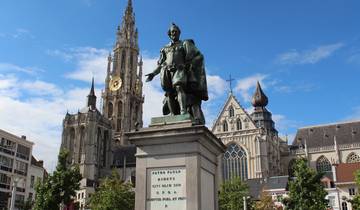
7 days
7 Day Brussels including Antwerp, Battle of the Bulge, Flanders Fields, Ghent, Bruges, Luxemburg & Dinant
- ✓ Comprehensive Belgium tour
- ✓ Expert local guides included
- ✓ All accommodation arranged
- ✓ Transportation provided
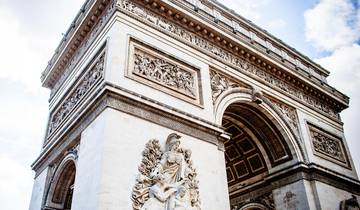
7 days
7 Days Across Paris & Brussels: From Eiffel Tower to Grand Place
- ✓ Comprehensive Belgium tour
- ✓ Expert local guides included
- ✓ All accommodation arranged
- ✓ Transportation provided
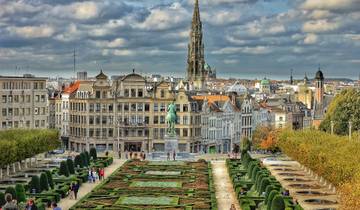
6 days
6 Days of Belgian Charm: Bruges, Ghent, Antwerp, Dinant & Luxembourg
- ✓ Comprehensive Belgium tour
- ✓ Expert local guides included
- ✓ All accommodation arranged
- ✓ Transportation provided

9 days
The Kingdom of Chocolate, Waffles and Beer or a Journey Through Belgium
- ✓ Booking needs min. 2 travelers
Multi-day tour packages powered by TourRadar. Prices and availability subject to change.
Introduction: Wallonia as a Touring Destination
Wallonia occupies the southern half of Belgium — a French-speaking region of five provinces stretching from the industrial Sillon industriel in the north through the wooded hills of the Ardennes to the Luxembourg frontier in the south-east, with the German-speaking Cantons de l’Est in the east. This diverse geography produces an equally diverse touring proposition: within a region smaller than the Netherlands, a visitor encounters Roman amphitheatres, Napoleonic battlefields, Trappist monastery breweries producing some of the world’s most celebrated beers, and a system of coal mines whose industrial architecture earned UNESCO World Heritage status in 2012.
The five provinces — Hainaut, Namur, Liège, Luxembourg, and Brabant Wallon — each offer a distinct character. Hainaut shelters the oldest industrial heritage alongside the medieval walled towns of Mons and Tournai. The province of Namur is defined by its dramatic river confluences and the clifftop citadel above its capital. Liège blends urban energy with access to the dramatic landscapes of its province’s eastern reaches — the Hautes Fagnes nature reserve and the Amblève valley. Luxembourg province (entirely within Wallonia, separate from the Grand Duchy) contains the deepest Ardennes forests, the Semois river, and the concentration of WWII memorial sites around Bastogne. Brabant Wallon, the northernmost province, offers the university city of Louvain-la-Neuve and the Waterloo battlefield — making it a natural starting point for visitors arriving from Brussels.
Three distinct touring modes define most Wallonia itineraries. The first is urban heritage walking — self-guided circuits through the medieval and industrial cores of Liège, Namur, Mons, Tournai, and Dinant, using the well-marked city trails and, where available, free guided tours. The second mode is structured heritage touring at the paid UNESCO and memorial sites — the four coal mines, the neolithic flint mines at Spiennes, the underground galleries beneath the Namur Citadel, and the immersive museum at Bastogne. The third is wilderness walking — from short gorge circuits to multi-day long-distance routes that cross the full breadth of the Ardennes. This guide organises all three modes with verified 2026 pricing, transport logistics, and specific route information.
Wallonia is served internationally by Brussels Airport (Zaventem), Charleroi Brussels South Airport, and Liège Airport. By high-speed rail, Liège-Guillemins reaches Brussels-Midi in 37 minutes and connects to Thalys and Eurostar services across northwestern Europe. Within Wallonia, the OTW bus network and SNCB regional trains cover most touring destinations, making the region more accessible without a car than its rural character suggests. The VISITWallonia.be Pass provides discounts at over 100 partner attractions and is worth purchasing for any visit longer than three days that includes two or more paid heritage sites.
Planning Your Wallonia Tour Experience in 2026
Effective touring in Wallonia in 2026 starts with understanding the five-province geography and the transport corridors that link the major sites. Liège and Namur serve as the primary basing cities for most itineraries: both are reachable by intercity train in under 90 minutes from Brussels and offer excellent connections into the surrounding countryside by OTW bus. Mons is the preferred base for western Hainaut — the four UNESCO mining sites, the neolithic mines at Spiennes, and the medieval core of Tournai. For Ardennes wilderness walking and the WWII memorial circuit, La Roche-en-Ardenne or Durbuy provide central bases with direct access to the main trailheads.
Province-by-Province Touring Zones
Hainaut province concentrates the greatest density of UNESCO sites and is best toured from Mons, which positions visitors within 40 km of Grand-Hornu, Bois-du-Luc, Blegny-Mine’s Hainaut counterparts, and the Spiennes flint mines. The province’s TEC bus network connects all four mining sites from Mons and Charleroi, though service frequency on some routes drops sharply at weekends. The province of Namur is compact enough to tour by bicycle or bus from the eponymous capital: the Citadel, the Meuse valley walking routes, Han-sur-Lesse caves, and the Molignée Valley rail bike experience are all within 50 km. Liège province expands the touring scope considerably — the city’s own walking circuit, Blegny-Mine to the east, the Hautes Fagnes and Amblève valley to the south-east. Luxembourg province demands a car or the limited OTW bus network for most itineraries, with Bastogne, Bouillon, the Semois valley, and the Trappist abbey routes all requiring independent transport or guided day tours from Brussels or Liège.
Getting Around Without a Car
OTW runs an integrated bus and tram network across Wallonia under the TEC brand. Day passes cost €7.50 and cover unlimited travel within a province for one day. The SNCB network connects Liège, Namur, Mons, Charleroi, Tournai, and Dinant (via Namur) with direct intercity services. For the Hautes Fagnes, bus line 394 from Verviers reaches the Baraque Michel plateau and the boardwalk trailheads in 45 minutes. No direct bus serves Bastogne from Liège; the closest rail connection is Libramont station, from which bus line 6 continues to Bastogne in 40 minutes. Car rental provides the greatest flexibility in Luxembourg province and is strongly recommended for any itinerary built around multiple Ardennes valley circuits. Cycling is viable throughout the RAVeL network and across the flat sections of Hainaut; the Ardennes hilly terrain suits experienced touring cyclists.
The VISITWallonia.be Pass
The VISITWallonia.be Pass delivers discounts ranging from 10-20% at over 100 attractions across the five provinces. Valid until 31 December 2026, the pass is available as a digital card through the official Visit Wallonia app. It provides discounts at Blegny-Mine, Han-sur-Lesse, the Namur Citadel, and dozens of smaller museums and activity providers. For any visit of four days or more combining three or more paid attractions, the pass recovers its cost. Collect it digitally before departure from visitwallonia.com — no postal delivery required.
City Walking Tours 2026: Liège, Namur and Dinant
Wallonia’s three principal river cities each offer a self-contained walking circuit that covers the essential heritage, requires no entry fees for the main streetscapes, and can be completed in half a day. All three are accessible by SNCB train from Brussels with no changes. The paid attractions within each city — the Namur Citadel, the Dinant Citadel, Liège’s Grand Curtius museum — are optional additions that deepen the experience but are not necessary for a rewarding street-level tour.
Liège: Following the Meuse River and Medieval Lanes
Liège presents the most complex and rewarding city walking circuit in Wallonia. The classic route begins at Place Saint-Lambert, the great paved square anchored by the Palais des Princes-Évêques — a Romanesque-Gothic palace whose two internal courtyards represent one of the finest examples of medieval civic architecture in the Meuse region. From here, the route descends into the Féronstrée and Hors-Château streets, narrow medieval lanes that wind between sandstone townhouses down to the riverbank. The Ilot Saint-Georges contains the archaeological remnants of the original cathedral that once dominated the square before its revolutionary demolition.
The area’s defining landmark, Montagne de Bueren, is a staircase of 374 steps that climbs from the Outremeuse quarter to the Citadel plateau above the city. Originally built in 1875 to give the garrison rapid access from the river quarter to the fortifications above, the staircase now serves as the signature physical challenge for visiting walkers — the ascent takes 15-20 minutes and rewards with sweeping views across the Meuse valley. The Outremeuse island district below, crossed by narrow bridges and occupied by working-class townhouses and neighbourhood bars, is the most locally atmospheric quarter in the city and worth an hour of independent wandering. The Cathédrale Saint-Paul on Place Saint-Paul houses the Treasury of Hugo d’Oignies, considered the finest collection of Romanesque metalwork in Belgium; the treasury requires a paid ticket (check current rates at the cathedral office), while the cathedral nave itself is freely accessible.
Liège Free Walking Tours operates a tip-based guided circuit departing daily at 1:30 pm from the Palais des Princes-Évêques on Place Saint-Lambert. The two-hour route covers the medieval lanes, the Montagne de Bueren, the Outremeuse district, and the riverside market area. The tour operates on a tips-only basis — the customary tip is €5-10 per person. Check current departure schedules at the Place Saint-Lambert meeting point, as additional weekend departures are added in summer. Private guided tours of Liège through Viator-listed operators begin at €75 per group for a 90-minute introductory walk; comprehensive private heritage tours run €150-300 per group depending on duration and specialisation.
Namur: The Confluence City and Its Formidable Citadel
Namur occupies one of the most strategically dramatic positions in northern Europe — the point where the Sambre flows into the Meuse, with the city’s historic core spreading across the wedge of land between them and the Citadel rising 90 metres above on its dolomite rock promontory. The lower-city walking circuit connects the Baroque Cathedral of Saint-Aubain (free entry to the nave), the Musée Provincial des Arts Anciens — which houses the Trésor of the Prieuré d’Oignies, the companion piece to the Liège collections — and the riverside Grognon quarter where the two rivers meet. The circuit covers approximately 4 km and takes two hours at a leisurely pace.
The Citadel complex above the city is Wallonia’s single most visited heritage site. The grounds and park are freely accessible at all times via the Route Merveilleuse road from the north bank, providing panoramic views over the confluence and the city. The paid experiences within the Citadel complex are substantial: the underground galleries tour (€14 per adult, €12 per child 6-18) explores 495 metres of restored medieval and early-modern defence galleries with a guide; the immersive “Citadel in the Middle Ages” experience (€14 per adult, €10 per child 6-18) adds a second gallery circuit with theatrical historical interpretation; the tourist train (€6 per adult, €5 per child) circuits the park above ground. The Citadel Pass covering three activities costs €22 per adult (€20 for children and seniors), reducing the cost versus purchasing activities separately and covering approximately three hours of guided content. The full four-activity Citadel Pass at €36 per adult adds the “Citadel in the Middle Ages” immersive tour and represents the most comprehensive Namur heritage experience available. Check current official rates at citadelle.namur.be before visiting; advance online booking is recommended for specific time-slot visits and is required the day before at the latest.
Dinant: Rock, River and the Birth of the Saxophone
Dinant’s visual identity is absolute — the collegiate church of Notre-Dame with its distinctive onion-shaped Baroque steeple, pinned between the sheer rock face behind and the Meuse below, framed by the Citadel perched 100 metres above on the same cliff. The lower town walking circuit runs along the river from the Rocher Bayard — a 70-metre free-standing rock pillar that Napoleon ordered cut from the cliff to allow army access — past the church and the Maison Adolphe Sax at Rue Adolphe Sax 37, the birthplace of the saxophone’s inventor in 1814. The circuit takes 45 minutes at walking pace.
The Dinant Citadel (€14 per adult, check current rates at citadellededinant.be) is reached either by the 408-step staircase from the town centre or by cable car, which provides aerial views over the river and the collegiate church roof. The cable car is included in the entry ticket price. The Citadel itself is a Dutch-built fortification from 1818-1821, reconstructed after successive destruction; the self-guided HistoPad augmented-reality tour system (included in the ticket) guides visitors through 14 stations covering the Citadel’s history with particular depth on Dinant’s role in World War One. The tour takes 90 minutes. Combined tickets incorporating the Citadel, cable car, and a Meuse river cruise are available at a modest premium over the standard ticket and are worth considering for a half-day experience in the town.
Leffe Abbey, the Cistercian monastery that has brewed its eponymous beer since the 12th century, sits 2 km south of Dinant centre at the village of Leffe. The abbey church is freely accessible; the brewing heritage is explored through the adjacent Maison Leffe visitor experience (check current admission at the abbey site). The 7 km riverside walk from Dinant to Leffe along the Meuse right bank is one of the region’s most pleasant easy hikes and requires no special equipment or booking.
Ardennes Hiking and Nature Routes 2026
The Ardennes occupy the southern two-thirds of Wallonia — a hilly, heavily forested plateau incised by river valleys that cut deeply through the rock, creating the gorges, rocky outcrops, and dramatic meanders that define the region’s hiking landscape. The terrain is accessible to walkers of all experience levels: well-marked day loops around La Roche-en-Ardenne, Durbuy, and the Ourthe valley suit families and occasional walkers; the Ninglinspo gorge and certain Semois sections demand moderate fitness and stable footwear; the high Ardennes plateau routes are straightforward but require appropriate clothing for exposed, changeable weather.
The Ninglinspo Gorge Circuit
The Ninglinspo trail near Aywaille in Liège province is Belgium’s most celebrated short hike and Wallonia’s benchmark walking experience. The circuit follows a rocky stream — the Ninglinspo, a tributary of the Amblève — through a narrow limestone gorge where the path alternates between stepping stones across the stream and exposed rocky ledges above the water. The standard circuit covers 8 km and 250 metres of ascent, completing in three to four hours. The trail is waymarked in orange and white and is free to access from the parking area at Nonceveux. Walking poles are useful on the rocky sections; trail shoes or sturdy walking boots are required. The trail is open year-round but the water crossings are impassable during high-water periods following heavy rainfall — check conditions locally before setting out, particularly between November and March.
A combined visit to Ninglinspo with the Coo waterfalls — Belgium’s largest at 15 metres, 8 km further along the Amblève valley — makes a natural full-day Liège province itinerary. The Coo falls are freely visible from the road bridge; access to the surrounding adventure park at Coo involves paid entry but is not required for the waterfall itself.
La Roche-en-Ardenne and the Ourthe Valley
La Roche-en-Ardenne sits where the Ourthe river makes a tight horseshoe bend around a sandstone ridge, with the ruined 10th-century château visible from every approach. The town is the most visited Ardennes walking hub, offering six way-marked circuits departing directly from the centre, ranging from the 3.5 km Promenade du Hérou to the 14 km Sentier des Roches. All circuits are free, all are clearly marked on the official tourist office trail map (available at the tourist office at Place du Marché 15), and all return to the town centre. The Ourthe Supérieure kayaking circuit begins and ends at La Roche, making combined walking-kayaking days straightforward. Château de La Roche itself is open seasonally for paid visits (check local tourist office for current rates); the external battlements are freely visible from the river bank circuit.
The 14 km Roche à l’Aigle circuit above La Roche reaches a sandstone outcrop with open views over three Ourthe meanders — the best panoramic viewpoint in the central Ardennes achievable in a single day. The circuit requires four to five hours and 380 metres of ascent; the descent returns through oak and birch woodland. The trail is marked in red and white throughout.
Durbuy and the Famenne Region
Durbuy’s claim to the title of “world’s smallest city” — a medieval charter city of under 500 inhabitants — is a marketing construction, but the town’s cobbled streets and 11th-century château above the Ourthe make it a legitimate touring base. Six marked circuits ranging from 3 to 15 km depart directly from the central square, including the 12 km Tour des Rochers circuit that reaches limestone rock formations above the valley floor with views over the château. The surrounding Famenne region — a geological depression between the Ardennes plateau and the Condroz — produces a gentler, more open landscape than the forested uplands, suitable for family walkers. Biking and horse riding routes operate from Durbuy; equipment rental is available in the village centre at rates established annually by local providers — check with the Durbuy tourist office at Route de Bomal for current 2026 pricing.
Wallonia’s UNESCO Heritage Tours 2026
Wallonia holds components across six UNESCO World Heritage inscriptions — a concentration that positions it among the most heritage-dense touring regions in northern Europe relative to its area. The Major Mining Sites of Wallonia, inscribed in 2012, are the region’s most visited UNESCO attractions and the starting point for any dedicated heritage tour. The remaining inscriptions span pre-history (Spiennes flint mines, 2000), the medieval (Notre-Dame Cathedral Tournai, 2000), the industrial revolution (Canal du Centre hydraulic lifts, 1998), civic architecture (Belfries of Belgium and France, 1999 and 2005), and the modern thermal heritage (Great Spa Towns of Europe, 2021). Each requires a distinct touring approach and admission structure.
The Four Major Mining Sites of Wallonia
The four coal mines collectively inscribed under “Major Mining Sites of Wallonia” are distributed across the width of the Sillon industriel and represent different periods and characters of the Belgian coal industry from its 17th-century origins to the 20th-century peak. Each site offers a distinct experience; visiting all four creates a comprehensive industrial heritage circuit of two to three days.
Blegny-Mine, east of Liège, is the only one of the four where visitors descend into the original workings via the pit shaft cage. The standard family program (€17 per adult, €12 per child 6-12, €15 per senior and youth 13-18 — prices confirmed from the official blegnymine.be site, valid to 30 December 2026) includes the guided underground tour to galleries at 30 and 60 metres depth, the free visit of the above-ground mining museum, and an audio-guided circuit of the slag heap biotope — total duration around three and a half hours. The Super Package adds the road-train excursion through the Basse-Meuse orchard country for €22 per adult (€15 per child 6-12, €19 per senior/youth). Tours depart at fixed times (11:00, 11:30, 14:00, 15:30, and 16:00 with potential additions at peak capacity) and advance online booking is strongly recommended for July and August. The audioguide is available in English and German; the guided underground tour is conducted in French or Dutch. Check blegnymine.be for current 2026 opening days, which expand to daily service from late April to early September.
Grand-Hornu near Mons, built between 1810 and 1830 by industrialist Henri De Gorge to a neoclassical radial plan, is the most architecturally ambitious of the four sites. The colliery complex is now home to the CID (Centre d’Innovation et de Design), which mounts temporary and permanent exhibitions on contemporary design and applied art within the extraordinary oval workers’ courtyard. The architectural heritage is accessible as part of the CID exhibition visit; check mac-s.be for current admission rates and programme.
Bois du Cazier in Charleroi is the site of the worst mine disaster in Belgian history — the explosion of 8 August 1956 that killed 262 miners, including a large proportion of Italian immigrant workers. The site now houses three museums: the Mining Industry Museum occupying the original surface buildings, the Glass Museum (Charleroi was a major glass manufacturing centre), and the Industry and Labour Museum. The concentration of multiple heritage perspectives on a single site makes Bois du Cazier the most informationally rich of the four; admission rates are available at boisducazier.be.
Bois-du-Luc in La Louvière preserves the most complete example of a 19th-century mining paternalist community in existence — the workers’ settlement with its streets of terraced housing, company store, school, and chapel, all constructed between 1838 and 1909 to the company’s specifications and still largely intact. The site offers guided tours of the preserved workers’ village in addition to the surface mining infrastructure; check ecomuseeboisduluc.be for current schedules and rates.
Neolithic Flint Mines at Spiennes
The Neolithic flint mines at Spiennes, 6 km south-east of Mons, constitute the oldest and largest concentration of ancient mines in Europe — shaft mining for high-quality flint began here around 4000 BCE, and the site covers over 100 hectares of underground galleries that remain largely unexcavated. The above-ground surface gives little away; the depth of the site becomes apparent only on the guided underground tour offered by the Mons tourist office (check visitmons.be for current schedule and pricing, as tours operate seasonally). The Silex’s visitor centre at the entrance to the site provides geological and archaeological context and is the mandatory starting point for underground access. The surface walking circuit across the site is freely accessible.
Tournai: Cathedral and Belfries
Notre-Dame Cathedral in Tournai, inscribed in 2000, is the finest example of Romanesque-Gothic transitional architecture in northern Europe and one of the oldest intact medieval buildings in Belgium. The five towers of the Romanesque nave — four round towers flanking a central octagonal tower at the crossing — create a silhouette visible from across the Scheldt plain and represent a form found nowhere else in French Gothic architecture. The cathedral interior is freely accessible; the treasury, containing exceptional medieval goldsmithing and reliquaries, charges a small fee. The adjacent Belfry of Tournai, also UNESCO-inscribed as part of the Belfries of Belgium and France (1999), is one of the oldest belfries in Belgium, with its oldest sections dating from the early 12th century. The climb to the belfry platform (access via guided visit — check local tourist office at Place Paul-Emile Janson for current rates and schedules) delivers a panoramic view over the lower Scheldt plain.
Seven Walloon belfries are included in the UNESCO Belfries inscription: Mons, Tournai, Ath, Binche, Gembloux, Thuin, and the bell tower at Namur (though Namur’s was added as a belfry-function tower rather than a purpose-built belfry in the strict architectural sense). In Mons, the belfry on the Grand-Place is the centrepiece of the city’s walking circuit and a clear visual landmark — the surrounding Grand-Place with its Baroque Hôtel de Ville is freely walkable and architecturally significant.
Canal du Centre and the Great Spa Towns
The four hydraulic boat lifts on the Canal du Centre, between La Louvière and Le Roeulx in Hainaut, are the last surviving examples of 19th-century hydraulic counterbalance lift technology applied to canal navigation. Built between 1888 and 1917 to raise barges 17 metres between the Meuse and Scheldt river basins, the four structures now stand as protected monuments alongside a modern fifth lift that handles active shipping. The visitor centre at Strépy-Bracquegnies offers boat tours through the historic lifts and interpretation of the engineering innovation — check museedeslifts.be for current admission and tour schedule. The canal towpath alongside all four lifts is freely walkable, with the 10 km circuit from La Louvière to Thieu passing all four structures being one of Wallonia’s most unusual industrial walking routes.
Spa, the town that gave its name to every spa in the world, entered the UNESCO list in 2021 as part of the Great Spa Towns of Europe — a transnational inscription recognising 11 European thermal towns whose 18th and 19th-century curist architecture and urban planning represents a distinct cultural type. Spa’s walking circuit connects the Pouhon Pierre-le-Grand spring pavilion (the most celebrated of Spa’s mineral springs), the grand casino, the 19th-century pump rooms, and the Parc de Sept Heures — a formal garden created for the cure promenades of royal and aristocratic visitors. The town circuit takes 90 minutes; the Thermes de Spa (the modern thermal complex above the town, distinct from the heritage structures below) offers day entry to spa facilities at rates around €25-35 per adult — check thermes-de-spa.be for current 2026 pricing. Spa sits at the base of the Ardennes plateau and is one of the best towns in Wallonia for combining a cultural visit with access to nearby hiking trails in the Fagnes de Malchamps and Haute Ardenne above the town.
WWII Battlefield Tours 2026: Bastogne and the Ardennes Offensive
The Ardennes was the site of the German Wehrmacht’s last major offensive on the Western Front — the Battle of the Bulge, launched on 16 December 1944 across a 130 km front through the forests of Luxembourg province. The month-long battle involved over a million combatants, produced 186,000 Allied and 68,000 German casualties, and centred on the encircled town of Bastogne, where American forces held out for nine days against German armour until relief by Patton’s Third Army. The battlefield landscape is largely unchanged; foxholes, tank berms, and military cemeteries mark the ground across the Ardennes plateau. Three categories of memorial experience are available in 2026: the major museum at Bastogne, the American military cemeteries, and specialist guided tours that cover the broader battlefield context.
Bastogne War Museum and the Battle of the Bulge
The Bastogne War Museum (Colline du Mardasson, Bastogne) is the definitive institutional account of the Battle of the Bulge and one of the most technically sophisticated military history museums in Europe. The immersive permanent exhibition uses the personal testimonies of four fictional characters — an American soldier, a German soldier, a Belgian civilian, and a nurse — to narrate the battle’s progression through architectural staging, original artefacts, and cinematic sequences. The exhibition covers approximately 90 minutes; the Generation45 supplementary experience adds a further 30 minutes of theatrical presentation.
The standard ticket at €28 per adult (€24.50 per senior 65+, €15.50 per child 6-18; family pack 2 adults plus 2 children €72 — prices confirmed from the official site bastognewarmuseum.be) includes access to all three components of the Bastogne War Museum experience: the main permanent exhibition with Generation45, the Bois Jacques battlefield (4 km from the museum), and the Bastogne War Rooms in the town centre. The ticket is valid for six months from the time-slot of the main exhibition visit, so the Bois Jacques woodland circuit and War Rooms can be visited on separate days within that window. Parking at the museum costs €7.50 per vehicle. The museum is open daily 9:30-18:00 (until 19:00 in July and August), with the last entry at 4:00 pm in regular season and 5:00 pm in high summer. Online booking with a timed entry slot is the standard booking method — reservations at bastognewarmuseum.be. Peak summer dates fill completely two to three weeks in advance.
The Bois Jacques woodland circuit (accessed from a free parking area 4 km from the museum) is the emotional heart of the Bastogne experience for many visitors. The circuit follows a way-marked path through preserved foxhole positions used by the 506th Parachute Infantry Regiment of the 101st Airborne Division in January 1945 — the “Easy Company” positions made famous by Stephen Ambrose’s Band of Brothers. The 3 km circuit is flat, freely accessible, and takes one hour. Interpretive boards explain each position; the physical landscape of frozen foxholes, now moss-covered depressions in the snow-muffled December forest, is deeply affecting year-round.
American Military Cemeteries in the Ardennes
Three American military cemeteries mark the reach of the 1944-45 fighting in Wallonia. The Henri-Chapelle American Cemetery near Liège (Rue du Mémorial Américain, Aubel) is the largest American military cemetery in Belgium, containing 7,992 graves laid out in a gentle hillside garden above the Vesdre valley. Entry is free; the visitor centre provides context on the individual servicemen buried there. The Ardennes American Cemetery at Neupré near Liège contains 5,329 graves and is the largest American military cemetery in continental Europe to be operated under its original wartime design without modification. Both are freely accessible and maintained by the American Battle Monuments Commission. The Neuville-en-Condroz American Cemetery (Neuville-en-Condroz, Nandrin) contains 1,323 graves and is the smallest of the three; it is particularly moving for its intimate scale and almost-complete silence.
Private Battlefield Tour Options 2026
Several specialist operators run full-day guided battlefield tours of the Ardennes from Liège and Brussels, covering the main sites in a structured narrative that the museum and cemetery visits alone cannot replicate. These tours reach positions away from the main tourist circuit — the St. Vith salient, the Elsenborn Ridge holding action, the Malmedy Massacre site at Baugnez — and provide military-historical context that transforms a landscape of forested hills into a comprehensible battle map. Full-day private tours from Brussels start at approximately €180 per person (minimum group of two) and are listed on GetYourGuide and Viator under “Battle of the Bulge” or “Bastogne private tour.” Half-day tours from Liège focusing on the eastern approach to the battle run €130-180 per person. Both the private tour operators and the Bastogne War Museum itself offer school-specific programmes for group educational visits; contact [email protected] for institutional group pricing and programme details.
Long-Distance Trails and the RAVeL Network
Wallonia’s trail infrastructure for multi-day walking extends far beyond the day-circuit system to encompass a series of long-distance routes that cross the full geographic breadth of the region. The Fédération de Randonnée de Wallonie coordinates the GR (Grande Randonnée) network within the region; the most important long-distance routes — the Transardennaise, the Route des Abbayes Trappistes, and the through-segments of international GR trails — collectively cover several thousand kilometres of waymarked walking available to any walker carrying a 1:25,000 map or a loaded GPS device.
The RAVeL Greenway Network
The RAVeL (Réseau Autonome de Voies Lentes) is Wallonia’s network of traffic-free linear routes developed primarily on former railway lines and canal towpaths. The network exceeds 2,100 km of surfaced or well-maintained track, connecting all five provinces in routes that are legally open to walkers, cyclists, horse-riders, and roller skaters but closed to motorised vehicles. RAVeL routes are particularly valuable for touring walkers because their gentle gradients — railway alignments by definition avoided steep slopes — make long linear stages possible without the accumulated fatigue of Ardennes valley terrain. The four international RAVeL axes (EuroVelo routes through Wallonia) and nine regional routes form the spine of the network; 45-plus local waymarked extensions provide detailed coverage of specific areas. All RAVeL routes are freely accessible; the interactive map and downloadable GPS tracks are available at ravel.wallonie.be. Provincial RAVeL maps are available free of charge at tourist offices throughout Wallonia.
Long-Distance GR Trails
The Transardennaise is Wallonia’s premier long-distance walking route — 290 km from Maasmechelen on the Dutch border south-west to Bouillon on the Semois, divided into 14 stages averaging 20 km each. The route crosses the full character range of the Ardennes: the conifer plateau forests above Liège, the limestone outcrops of the Famenne, the deep river valleys of the Ourthe and Semois, and the forested ridgelines above the Luxembourg border. The route is waymarked in red and white throughout; authorised wild camping is permitted at nine designated sites along the route, making multi-week hut-free journeys feasible. The Transardennaise connects at Nassogne with the Nassogne-La Roche extension, continuing the route for a further three stages to La Roche-en-Ardenne.
The GR 5, one of Europe’s great long-distance trails linking Amsterdam to Nice, passes through Wallonia along its Ardennes section — entering via the Vennbahn (a former German military railway converted to cycling and walking trail) through the Cantons de l’Est and descending through the Ourthe valley. The Wallonia segment of the GR 5 covers approximately 150 km through Luxembourg province, connecting naturally with the Transardennaise at several points. The route is documented in detail by the Fédération de Randonnée de Wallonie (les-grsentiers.org).
Trappist Abbey Routes
Wallonia contains three of Belgium’s six Trappist monasteries — Chimay (Hainaut), Rochefort (Namur province), and Orval (Luxembourg province) — and the Route des Abbayes Trappistes links them on a 290 km walking itinerary through the forests of southern Wallonia. The route passes through the Gaume region and along the Semois valley, combining the abbey destinations with some of the most remote and least-trafficked forest walking in Belgium. All three abbeys are functioning religious communities; visitor access is restricted to the church and, in the case of Chimay and Rochefort, the surrounding grounds and visitor centres. The Chimay Brewery tour (check chimay.com for current guided tour schedule and pricing) is one of the most requested Trappist experiences in Wallonia and operates by advance booking. Rochefort’s brewery is not open for tours. Orval Abbey’s bookshop and visitor access to the abbey ruins (of the medieval monastery destroyed in the French Revolution) is freely accessible during opening hours. The Route des Abbayes Trappistes is waymarked throughout; the trail guide is available from visitwallonia.com.
Hautes Fagnes and Semois: Wallonia’s Premier Wilderness Routes
Two regions represent Wallonia at its most elemental: the Hautes Fagnes (High Fens) in the east and the Semois valley in the south-west. Both are protected natural areas with distinct character and both demand more planning than the Ardennes valley circuits — the Hautes Fagnes for its exposed upland climate, the Semois for its remoteness and limited transport access. Both reward the effort with landscapes unlike anything else in the Benelux region.
Signal de Botrange and the High Fens Boardwalks
The Hautes Fagnes (Hohes Venn in German) is a 4,700-hectare international nature reserve spanning the Belgium-Germany border on the high plateau above the Ardennes. At Signal de Botrange (694 metres), Belgium reaches its highest natural elevation — a modest summit by Alpine standards but a genuine plateau wilderness in northern Europe, cold and exposed year-round, receiving an average of 1,500 mm of precipitation annually and frequently shrouded in mist even when the valleys below are clear. The plateau vegetation is Arctic-grade blanket bog: Sphagnum moss, cotton grass, dwarf birch, and sundew across an expanse of open peat that has accumulated over 9,000 years since the last glaciation.
The trail network within the Hautes Fagnes extends to over 700 km of marked paths. The most characteristic and most visited routes follow the elevated wooden boardwalks that allow walkers to traverse the bog surface without disturbance to the peat. The Grande Fagne circuit (approximately 12 km, four to five hours) is the benchmark high-fens walking experience, passing through the Fagne Wallonne and Fagne de Polleur sections of the bog and returning via the Baraque Michel plateau — historically an important beacon point for travellers crossing the plateau in poor visibility. The circuit is entirely free, way-marked in orange and white, and accessible from the Baraque Michel road junction where parking and a permanently operating café-auberge provide the practical start and end point.
TEC bus line 394 from Verviers station reaches the Baraque Michel junction in 40 minutes; the stop is directly adjacent to the main trailhead. Services operate on a limited timetable — confirm the return schedule at the stop or on the TEC app before setting out, particularly on Sundays and public holidays when frequency reduces. The high plateau climate demands preparedness: temperatures can drop to near-freezing in any month; rain gear is essential, and walking shoes are the minimum footwear requirement — boots are strongly recommended. The official Hautes Fagnes visitor interpretation centre at Botrange is open seasonally; the website naturepark.be provides current trail conditions and access information. Sections of the bog boardwalk close periodically for ecological management; check conditions before visiting in winter.
The Semois Valley Route
The Semois is one of the most serpentine rivers in Europe, cutting successive tight meanders through forested ridges as it descends from the Gaume plateau to the Meuse valley at Monthermé in France. The valley walking route — the Sentier de la Semois — follows the river for approximately 150 km from Arlon in Belgium to Monthermé, passing through the villages of Bouillon, Herbeumont, Membre, and Alle-sur-Semois. The Belgian section of approximately 100 km covers four to six walking stages, making it a natural five-day itinerary for walkers with a base at Bouillon.
Bouillon, dominated by its massive 11th-century castle (paid entry — check current rates at bouillon-initiative.be), sits in a horseshoe meander of the Semois and is the most practical base for the valley section. The Château de Bouillon itself — the original stronghold of Godefroid de Bouillon, who led the First Crusade — is one of the best-preserved medieval military fortifications in Belgium, and the circuit of its battlements provides panoramic views over the Semois meanders both upstream and downstream. The Semois valley above Bouillon is the location of Wallonia’s officially authorised wild camping sites on the Transardennaise route; walkers on multi-day routes can camp legally at the designated bivouac areas without landowner permission. Below Bouillon, the Semois narrows and deepens into the Semois Belge gorge section before entering France.
Specialist and Thematic Tours 2026
Beyond the main walking and heritage touring circuits, Wallonia offers a range of specialist experiences — rail bikes, river kayaking, cave exploration, brewery visits, and urban escape games — that diversify a touring itinerary and provide active alternatives to museum and trail-based days. Most require advance booking and are available across a defined seasonal window from April to October.
Rail Bikes in the Molignée Valley
The draisines (rail bikes) of the Molignée valley between Falaën and Maredsous are among the most popular leisure activities in the Namur province — four-wheeled pedal vehicles adapted to run on the disused metre-gauge railway track between the Meuse valley and the Maredsous Abbey plateau. The 14 km return route (approximately two hours on the rail bike, plus time at either end) passes through the wooded Molignée gorge and delivers riders to the gates of the Norbertine abbey of Maredsous, famous for its cheese and beer production. Departure is from Falaën (accessible by car or by SNCB to Dinant then OTW bus connection); current pricing is approximately €14-18 per adult per session — confirm at draisinemolignee.be before booking. Advance reservation is required and strongly advised for weekends between May and September, as capacity is limited by the number of available rail bikes.
River Kayaking on the Lesse and Ourthe
The Lesse and the Ourthe are Wallonia’s premier kayaking rivers, both navigable by recreational paddlers with no prior experience and both serviced by well-established outfitters running shuttle services from the put-in to the take-out. The Lesse descent from Houyet to Han-sur-Lesse (approximately 21 km, four to five hours) is the most famous river day in Belgium — paddlers pass through the Lesse’s subterranean course inside the Han limestone system and emerge at the Han-sur-Lesse resurgence for the underground caves visit, although the cave visit itself requires a separate ticket and reservation. The half-day section from Gendron to Anseremme (7 km, approximately two hours) is the gentler family alternative. Outfitters at Houyet charge approximately €22-30 per person including equipment and shuttle for the full Lesse descent (check lesseloisirs.be or comparable local operators for current 2026 rates, as prices vary between providers). The Ourthe around La Roche-en-Ardenne offers equivalent paddling quality at similar rates from operators based in the town centre.
Beer Routes and Brewery Visits
Wallonia’s brewing heritage extends well beyond the Trappist monastery system. The region contains more than 50 active breweries, several of which offer visitor access and guided tours. The Chimay Pères Trappistes visitor experience (Scourmont Abbey, Bourlers) provides guided tours of the brewery and abbey grounds by advance booking (chimay.com — check 2026 tour schedule and rates). The Dupont brewery in Tourpes — producer of Saison Dupont, one of the defining Belgian farmhouse ales — receives visits by appointment. In Dinant, the Leffe Abbey visitor centre documents 800 years of brewing history at the Cistercian abbey on the Meuse bank. For visitors without a car, the Liège craft beer circuit covers eight independent bars and two smaller breweries in the Outremeuse district within a 2 km walking radius, with no booking required.
Urban Escape Games and Interactive City Circuits
Digital self-guided exploration games have proliferated across Wallonia’s cities since 2022. The Sherlock Holmes City Game operates in Liège, Dinant, and Namur — a smartphone-guided puzzle trail that takes teams through the city solving clues at heritage landmarks, completing in two to three hours. Pricing is per team rather than per person (€15-20 per team of two to six people — check current rates at the booking platforms). The Qula City Trail operates in Liège (2 hours, covering the main heritage circuit); Urban Escape Games are available in multiple cities. All these experiences are booked online, begin at any time during operating hours, and require no guide — making them ideal for independent travellers who want structured engagement with city heritage without committing to a fixed-departure tour.
Guided Tour Operators and Booking Strategies 2026
Wallonia’s guided tour landscape divides between free and low-cost city walking tours, official municipal heritage tours at the major sites, and private professional guides bookable through international platforms. The combination of a free city walking tour, independent trail walking, and one to two booked heritage site visits per day represents the most cost-effective touring strategy for the majority of visitors in 2026.
Free and Budget-Friendly Walking Tours 2026
Liège Free Walking Tours is the most established free-guided offer in Wallonia. Departing at 1:30 pm daily from the Palais des Princes-Évêques on Place Saint-Lambert (meeting point: the main entrance colonnade), the 2-hour tour covers the essential Liège circuit: the Prince-Bishops’ Palace courtyards, the Féronstrée medieval lanes, the Montagne de Bueren staircase and Outremeuse district, and the riverside market along the Meuse. The tour operates on a tips-only basis; the standard range is €5-10 per person, paid at the end of the tour. Additional weekend departure times are added in July and August — check the current schedule at the meeting point itself or at the Liège tourism office (Place Saint-Lambert 32).
Municipal guided tours at Namur, Mons, Tournai, and Spa are run directly by the respective tourist offices at standardised prices that are lower than private platform options. Namur Citadel underground galleries tour: €14 per adult (independent booking on the citadelle.namur.be platform). Mons heritage walk: offered regularly from the Grand-Place tourist office; check visitmons.be for current schedule and pricing. Tournai city tour: available from the Tournai Tourism office at Enclos Saint-Martin. These institutional tours operate on set schedules and in multiple languages including English, making them a reliable and affordable option for heritage content at the major sites.
Private and Specialist Guided Experiences 2026
Private guided tours of Wallonia’s cities and heritage sites are bookable through Viator, GetYourGuide, and directly with Liège-based operators. A private 90-minute historic walking tour of Liège (covering the Prince-Bishops’ Palace, Féronstrée, Saint-Paul Cathedral, and Montagne de Bueren) is priced at approximately €75-120 per group of up to six people on most platforms. A full private city day tour of Liège (including museum entries) runs €180-300 per group. The Liège province operator network includes English-speaking guides with specialist knowledge in industrial heritage, medieval history, and WWII — request this specialisation when booking through the Liège tourism office.
For WWII battlefield tours, the strongest operators currently listed on GetYourGuide run full-day private tours from Brussels to the Bastogne circuit at €180-350 per person (for solo bookings; per-person cost reduces significantly for groups of four or more). The Battle of the Bulge private day tour from Brussels combines the Bastogne War Museum visit, the Bois Jacques circuit, the Mardasson Memorial, and one or two additional battlefield positions in a structured narrative framework that the museum alone cannot provide. These tours consistently achieve the highest satisfaction ratings of any guided experience in Wallonia on the major booking platforms.
Booking Platforms and Direct Reservation 2026
The choice between booking through an international platform (Viator, GetYourGuide) and booking directly with the operator or site varies by experience type. For major heritage sites — Bastogne War Museum, Blegny-Mine, Han-sur-Lesse — direct booking through the official site is the standard method, at lower cost than through aggregators, and with full confirmation of availability. For private guided tours, both platform and direct booking are viable; direct booking through the Liège or Namur tourism offices secures the official-rate tour, while platform booking provides the consumer-guarantee cancellation policies and payment protections that independent bookings lack.
Booking windows vary sharply by experience and season. In shoulder season (April-June and September-October), Namur Citadel and Dinant Citadel accept walk-in visitors without reservation. Bastogne War Museum requires booking at least one to three days ahead in shoulder season; the online system shows real-time slot availability. In peak summer (July-August), booking windows of 10-14 days are realistic for all major sites — some Blegny-Mine underground tour departures and all Han-sur-Lesse cave sessions fill completely this far in advance during school holidays. Begin booking major site entries as soon as travel dates are confirmed for any July or August itinerary.
Tour Costs and Budget Planning 2026
Daily costs in Wallonia depend primarily on accommodation tier and the number of paid attractions visited per day. The region’s touring proposition is unusually economical for northern Europe because the most extensive activity category — trail walking — is entirely free, and because the free-admission heritage zones (Namur Citadel grounds, Spa’s UNESCO thermal town circuit, Bastogne’s Mardasson Memorial plaza, the canal du Centre towpath) are genuinely rewarding experiences in their own right.
Budget Tier Daily Costs 2026
Budget touring in Wallonia in 2026 delivers excellent value because the core activity — walking — requires only footwear. Budget accommodation in shared rooms at Wallonia’s youth hostels (Les Auberges de Jeunesse, listed at lesaubergesdejeunesse.be) and budget gîtes in the Ardennes provides a bed, breakfast in some cases, and a social environment suited to solo travellers and walkers. Budget travelers spend €65-110 per person daily (two sharing a budget B&B or hostel double room), broken down as: accommodation per person share €25-40, meals €28-42 (café breakfast, packed lunch, brasserie or friture dinner), local transport by OTW bus €5-10, and one paid attraction or tipping €5-17. A full week at budget level costs €455-770 per person (two sharing throughout). The major paid budget attractions — Blegny-Mine at €17, Dinant Citadel at €14 — represent about one to two days of the daily attraction allowance and can be spaced through a week-long itinerary without straining this tier.
Mid-Range Daily Costs 2026
Mid-range visitors spend €140-240 per person daily (two sharing a three-star hotel or high-end B&B), covering: accommodation per person share €50-78, restaurant meals €55-90 (café or hotel breakfast, restaurant lunch or plat du jour, evening restaurant dinner with wine), public transport and occasional rideshare €12-25, and one to two guided tour entries €23-45. A week at this level costs €980-1,680 per person. At this tier, a daily programme combining one major paid heritage site (Namur Citadel Pass at €22, or Bastogne at €28, or Blegny-Mine at €17) with free trail walking or city circuit walking represents genuine value — the per-day touring content is comparable to significantly more expensive heritage destinations elsewhere in Europe.
Attraction Admission Prices Quick Reference 2026
Key verified admission prices for 2026:
- Bastogne War Museum: Adults €28, seniors 65+ €24.50, children 6-18 €15.50 (includes Bois Jacques and War Rooms; booking required at bastognewarmuseum.be)
- Han-sur-Lesse PassHan (caves and wildlife park): Adults €41.50, children 4-11 €31.50; cave only (Grotte de Han) approximately €29 adult (check current rates at grotte-de-han.be)
- Blegny-Mine standard program: Adults €17, children 6-12 €12, seniors/youths 13-18 €15; Super Package adding road train: adults €22 (blegnymine.be)
- Namur Citadel Pass (3 activities): Adults €22, children/students/seniors €20; underground galleries only: adults €14; Citadel Pass (4 activities): adults €36 (citadelle.namur.be)
- Dinant Citadel: Adults €14 (citadellededinant.be)
- Liège Free Walking Tour: Tip-based, €5-10 suggested per person
- Namur Citadel grounds: Free
- Bastogne Mardasson Memorial: Free
- All RAVeL routes and GR hiking trails: Free
- Hautes Fagnes boardwalk trails: Free
Money-Saving Strategies for 2026
Several structural economies are available to visitors willing to plan modestly ahead. The VISITWallonia.be Pass (available via the Visit Wallonia app) provides 10-20% reductions at over 100 partner sites including Blegny-Mine and Han-sur-Lesse — for any itinerary involving three or more paid entries, the pass recovers its cost. The Namur Citadel Pass at €22 saves money versus the combined individual prices of three separate activities (underground galleries €14 plus tourist train €6 plus visitor centre €6 would total €26 if purchased separately). Bastogne’s family pack at €72 for two adults plus two children saves significantly versus four individual tickets (two adults at €28 plus two children at €15.50 would total €87). Shoulder season visits (May-June and September) avoid summer pricing premiums at hotels and reduce competition for booking slots at the three high-demand sites. Combining the free city circuit in a Walloon city with one paid heritage site per day rather than two produces a compelling itinerary at the budget tier with no reduction in overall content quality.
Seasonal Guide: Best Times for Wallonia Tours 2026
Wallonia’s touring season runs year-round for the major heritage sites, but the practical and experiential conditions vary considerably across the calendar. Weather, crowd levels, opening hours, and access to specific routes all shift seasonally in ways that materially affect the touring experience.
Spring Walking Season 2026
April and May provide the ideal combination of mild temperatures (12-18°C in the valleys, 6-14°C on the Hautes Fagnes plateau), flowering woodland floors in the Ardennes, manageable crowds at all sites, and full opening schedules at most attractions. Blegny-Mine opens its expanded family program from mid-February for carnival school holidays and from April for regular weekend access; the full daily summer program runs from late April. The Ninglinspo is at its most visually dramatic in late April when spring water levels are high and the gorge vegetation is emerging. City walking is excellent throughout spring — the absence of summer heat makes longer urban circuits comfortable. Easter school holiday weeks in mid-April produce local demand spikes at all Ardennes sites; booking Bastogne and Han-sur-Lesse ahead during Easter week is advisable.
Summer Peak Season Strategies 2026
July and August deliver maximum daylight (sun set after 9:30 pm at peak), all attractions operating on their fullest schedules, and the complete RAVeL and GR trail networks at their most accessible. The trade-off is congestion: the Ninglinspo trail experiences queuing at the narrow gorge sections on summer weekends, Han-sur-Lesse sells out daily cave sessions, and Bastogne War Museum slots disappear two weeks ahead during Belgian school holidays in late July and August. The practical summer strategy is early booking (three to four weeks in advance for peak July dates at the three high-demand sites) combined with early-morning starts on popular trails to precede the main visitor flow. City circuits in Liège and Namur are best walked on weekday mornings from 9:00 am to noon before coach groups arrive at the main sights. Temperatures above 28°C are exceptional in the Ardennes even in summer — the region’s altitude moderates heat compared with the Belgian coast and central plain.
Autumn: Prime Wilderness Walking 2026
September and October represent the premium season for Hautes Fagnes and Ardennes wilderness walking. The deer rut in the Hautes Fagnes operates from late September through mid-October, with stags audible bellowing across the bog at dawn and dusk — an experience rarely associated with Belgian touring but genuinely impressive in the silence of the high plateau. Autumn foliage in the Ardennes peaks between mid-October and early November, the beech and oak woodland turning amber and copper in the river valleys while the conifers above maintain their year-round green. All major heritage sites remain on full schedules through September; Han-sur-Lesse and Bastogne War Museum operate into early November. RAVeL trails are mud-free in dry autumns and excellent for cycling and walking; the Lesse and Ourthe kayaking season ends in October when water temperatures make the experience uncomfortable for most paddlers.
Winter and Off-Season Access 2026
Wallonia in winter offers reduced but still substantive touring possibilities. Bastogne War Museum remains open year-round (closed Christmas Day), making the December Battle of the Bulge anniversary period (the Nuts Weekend, a major WWII commemoration held in mid-December in Bastogne) a unique immersive context for a museum visit. The NUTS Weekend 2026 in mid-December brings vintage military vehicles, re-enactors, and commemorative ceremonies to the town — check bastognewarmuseum.be for exact dates. Blegny-Mine operates a reduced winter program on weekends from late November through late December. Han-sur-Lesse maintains weekend operations and full holiday-period access through December. The Hautes Fagnes boardwalk trails are at their most atmospheric in winter fog and frost; the risk of snow above 600 metres makes waterproof boots and warm layering obligatory from November. City walking in Liège, Namur, and Mons is entirely feasible year-round and free of crowds on weekday winter mornings.
Frequently Asked Questions
Are Wallonia’s long-distance hiking trails free to use in 2026?
All of Wallonia’s long-distance GR trails and the RAVeL greenway network are free to access year-round. There is no permit, trail fee, or booking requirement for any of the major routes including the Transardennaise, the Route des Abbayes Trappistes, the GR 5 Ardennes segment, or the 2,100+ km RAVeL network. The only costs associated with multi-day walking are accommodation and meals at the villages along the route, and the optional purchase of printed trail maps and GPS track files from the Fédération de Randonnée de Wallonie at les-grsentiers.org. Wild camping at the nine authorised bivouac sites on the Transardennaise is also free of charge.
What is the RAVeL network and how do I access it in 2026?
The RAVeL (Réseau Autonome de Voies Lentes) is Wallonia’s 2,100 km network of traffic-free routes developed primarily on former railway lines and canal towpaths. The network is open to walkers, cyclists, horse-riders, and roller skaters but legally closed to motorised vehicles. Access points are frequent and publicly accessible — the routes cross most Walloon municipalities and connect directly with town centres, railway stations, and public transport stops. The interactive route map with downloadable GPX tracks is freely available at ravel.wallonie.be; printed provincial maps are available at tourist offices throughout Wallonia. No registration, pass, or app subscription is required to use any part of the network.
Can I visit Wallonia’s UNESCO World Heritage mining sites without a guided tour?
Three of the four Major Mining Sites of Wallonia are accessible to independent visitors at varying levels of depth. Grand-Hornu’s above-ground architectural complex and CID museum are visited without an underground guided tour. Bois du Cazier’s three above-ground museums are independently accessible. Bois-du-Luc’s workers’ village exterior and surface structures are visible on guided tours. Only Blegny-Mine requires a guided tour for the underground component — the mine cage descent to 30-60 metres depth cannot be undertaken without a guide for safety reasons. The Blegny-Mine mining museum (above-ground), slag heap biotope circuit, and the domain grounds are freely walkable without joining the underground tour programme. The Neolithic Flint Mines at Spiennes also require guided access for the underground galleries; the surface site is freely walkable.
How do I get to the Hautes Fagnes from Liège without a car in 2026?
TEC bus line 394 connects Verviers bus station with the Baraque Michel plateau in approximately 40 minutes. Verviers is reached from Liège-Guillemins by SNCB train in 23 minutes (services run approximately every 30 minutes). The complete journey from Liège city centre to the Baraque Michel trailhead takes around 70 minutes by public transport. Bus 394 continues beyond Baraque Michel to Malmedy; return connections operate on the same line. On summer weekends and public holidays, additional seasonal bus services operate directly from Liège to the Hautes Fagnes — check the current TEC schedule at infotec.be before travelling, as Sunday frequencies are reduced. The Signal de Botrange visitor centre is a five-minute walk from the Baraque Michel bus stop.
What WWII sites can I visit independently in Wallonia in 2026?
Several significant WWII sites are freely accessible without guided tours. The Mardasson Memorial (Colline du Mardasson, adjacent to the Bastogne War Museum) is a free outdoor monument consisting of a star-shaped memorial inscribed with the names of all 50 US states and commemorating the American servicemen of the Battle of the Bulge — it is accessible by car or on foot from Bastogne’s town centre (2.5 km). The Bois Jacques foxhole circuit is freely accessible with the Bastogne War Museum ticket (valid for six months). The Henri-Chapelle and Ardennes American Military Cemeteries are open daily with free admission. The Baugnez massacre memorial near Malmedy (site of the Malmedy Massacre of December 1944) is freely accessible roadside. Fort de Battice near Battice, Liège province, offers independently accessible exterior viewing of the 1930s-era fortification attacked by German forces on 10 May 1940; guided interior tours operate seasonally — check local tourist information.
Are there English-language guided tours available in Wallonia in 2026?
English-language guided tours are available at all the major heritage sites, though scheduling varies by site. Blegny-Mine offers an audio guide in English and German for the underground tour; the guided commentary is conducted in French or Dutch with English audio support. The Namur Citadel underground tour departs in English at 1:00 pm daily, with additional English departures on Wednesdays and weekends during school holidays. The Bastogne War Museum’s entire exhibition is presented in English, French, Dutch, and German via individual audio guide included in the admission price. Dinant Citadel’s HistoPad guide system operates in eight languages including English. Private guided tours through Viator and GetYourGuide operators specify English-speaking guides; the Liège city walking tour operates in English on demand with advance notice.
What are the best day walks near Namur for 2026?
Four day walks are outstanding within easy reach of Namur. The Citadel park circuit (3-4 km, free, 90 minutes) is the simplest and most accessible — the ramparts provide views over the Meuse-Sambre confluence and the walk requires no transport beyond the Namur bus network. The Val Saint-Lambert loop near Liège province border (12 km, free, three to four hours) passes the former Cistercian abbey that became a famous crystal glassworks; it is reachable by SNCB to Seraing and then walking. The Vallée du Bocq circuit around Spontin (10 km, free, three hours) connects the Meuse tributary valley with the 12th-century château at Spontin, accessible by OTW bus from Namur. The Molignée valley walk (8 km, free, two to three hours) connects Falaën and Maredsous Abbey on the same route used by the draisines — walkers have the option to combine the walk with a rail bike session on the same day by booking one leg of the rail-bike circuit separately.
How long does it take to walk the Ninglinspo trail?
The standard Ninglinspo gorge circuit (8 km, 250 metres ascent) takes three to four hours for walkers in reasonable physical condition. The rocky gorge section — approximately 3 km of the total circuit — is the technically demanding part, requiring careful footing across stepping stones and occasional scrambling on exposed limestone ledges. Allow at least four hours for the full circuit if carrying a full day pack or walking with children. A shorter out-and-back version walking only the lower gorge section to the main waterfall cascade takes approximately 90 minutes return. The trailhead is at the parking area at Nonceveux village, 27 km from Liège centre; the nearest bus stop (Aywaille town) is 4 km from the trailhead, making car access or bicycle more practical than public transport for most visitors.
What river kayaking tours are available in Wallonia in 2026?
Kayaking on the Lesse and Ourthe rivers is available from April to October through multiple operators in the Namur and Luxembourg provinces. The full Lesse descent from Houyet to Han-sur-Lesse (21 km, four to five hours) is the most celebrated experience in Belgian recreational kayaking; current pricing for equipment, instruction, and shuttle service is approximately €22-30 per person (check lesseloisirs.be and comparable operators for current 2026 rates). The Ourthe at La Roche-en-Ardenne offers shorter circuits (7-14 km, two to four hours) at similar per-person rates from operators based in the town. All providers supply sit-in canoes or kayaks, paddles, and buoyancy aids; prior experience is not required for the standard river sections. The Lesse operators note that the river level is monitored and the full descent is cancelled when water levels are either too high (unsafe) or too low (insufficient depth) — conditions are published daily on provider websites.
Which Walloon cities offer the best free walking circuits in 2026?
Liège, Namur, and Tournai offer the strongest free walking circuits in Wallonia. Liège’s two-hour circuit from Place Saint-Lambert through Féronstrée, Hors-Château, and the Outremeuse district covers the greatest concentration of medieval and industrial heritage per kilometre of any Walloon city. Namur’s combined lower-town circuit (Cathedral of Saint-Aubain, Grognon confluence, riverside walk) and free Citadel grounds circuit gives a complete account of the city’s heritage without paying for any guided experience. Tournai, though less visited than Liège or Namur, contains the most architecturally significant free streetscape — the five-towered Notre-Dame Cathedral, the oldest belfry in Belgium, and the surviving medieval walls around the Scheldt bend compose a circuit of exceptional density. Mons is the strongest free city circuit in Hainaut: the Grand-Place with its Baroque Hôtel de Ville, the UNESCO belfry exterior, and the Beffroi park viewpoint are all freely accessible and combine naturally into a 90-minute walking tour.