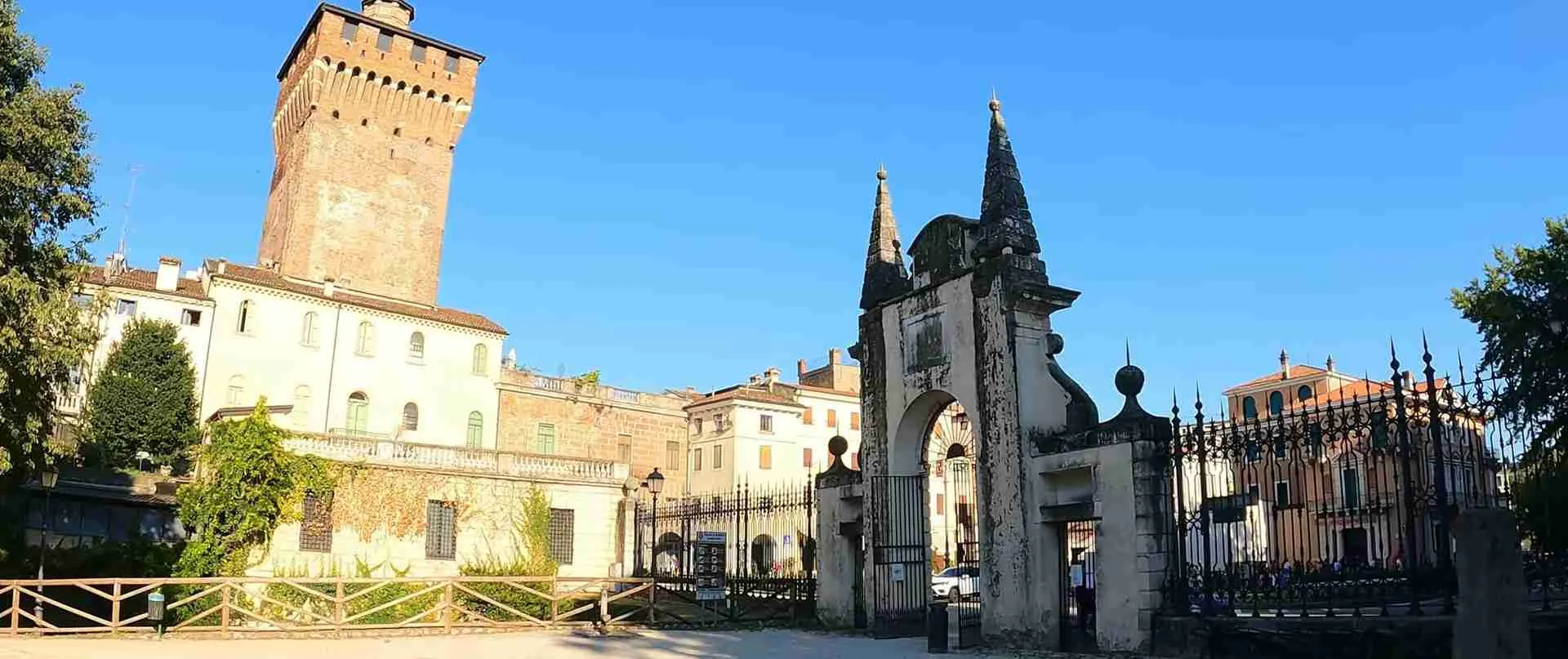
Visiting Vicenza: Ultimate Planning Resource & Travel Guide 2026
Vicenza is northern Italy’s most architecturally concentrated UNESCO World Heritage city — a compact Veneto gem where 23 buildings by Andrea Palladio transform every street into a living textbook of Renaissance design. Located 47 minutes from Venice and 25 minutes from Verona by direct train, the city rewards visitors with genuinely world-class monuments, outstanding regional cuisine, and hotel and restaurant prices that run 30–50% below Venice equivalents. This complete 2026 guide covers verified admission prices, accommodation costs across all budget levels, pre-calculated daily budgets, transport connections, day trips, and the insider knowledge needed to make the most of one of Italy’s most underrated destinations.
Key Takeaways
- UNESCO World Heritage Status: Vicenza holds UNESCO inscription awarded in 1994 under Criteria (i) and (ii) — Reference 712 — covering 23 Palladian monuments within the city walls. A 1996 extension incorporated 24 Palladian villas across the wider Veneto, creating a serial property of 47 Palladian buildings, one of the most coherent architectural World Heritage Sites in Europe.
- Budget Travelers (2026): Plan €65–105 per person daily (two sharing budget accommodation), covering lodging, all meals, local bus transport, and one or two paid admissions — significantly cheaper than equivalent days in Venice or Florence.
- Mid-Range Travelers (2026): Budget €130–200 per person daily (two sharing a mid-range hotel), which covers a 3- or 4-star hotel, full trattoria meals, the Gold Card for 11 museums, and local transport including a taxi for villa visits.
- Luxury Travelers (2026): Plan €260–405 per person daily (two sharing a boutique or 4-star spa hotel), which funds fine dining, guided villa tours, and premium experiences at a fraction of Venice luxury prices.
- Essential Ticket: The Vicenza Gold Card (€22 per adult for 11 sites over 12 days, verified January 2025) costs less than two single Teatro Olimpico tickets (2 × €12 = €24) and unlocks ten additional museums and monuments. For any visitor staying two or more days, it is the correct purchase from the moment you arrive.
- Best Time to Visit 2026: April–June for spring conditions and full villa opening hours; September–October for harvest festivals, the Festa del Baccalà, lower crowds, and hotel rates 20–30% below spring peaks.
People Also Ask About Visiting Vicenza 2026
How much does it cost to visit Vicenza in 2026?
Daily costs in Vicenza in 2026 range from €65–105 per person for budget travelers (two sharing a hostel or budget B&B) to €130–200 per person for mid-range comfort (two sharing a 3- or 4-star hotel) and €260–405 per person for a luxury stay (two sharing a boutique or spa hotel). The main paid attraction is the Teatro Olimpico at €12 for a single adult ticket, but the Vicenza Gold Card at €22 covers 11 sites over 12 days, making it outstanding value for anyone spending two or more days in the city. A complete 3-day mid-range visit for two people sharing accommodation costs approximately €780–1,200 in total, including hotel, all meals, admissions, and local transport.
How many days do you need in Vicenza in 2026?
One full day covers the essential highlights: Teatro Olimpico, Basilica Palladiana, a walk along Corso Palladio, and the Palladio Museum. Two to three days allows you to explore all 11 Gold Card sites, make a half-day trip to Villa La Rotonda and Villa Valmarana ai Nani, and experience Vicenza’s food and wine culture without rushing. Three days is the optimal stay for first-time visitors who also want to include day trips to Venice (47 minutes by train) or Verona (25 minutes). Architecture enthusiasts can justify four to five days by adding outlying Palladian villas across the wider Veneto province.
How do you get to Vicenza in 2026?
Vicenza sits directly on the Milan–Venice high-speed rail corridor with extremely frequent service. Regional trains from Venice Santa Lucia arrive in 45–55 minutes from €7 one way; Frecciarossa and Italo services take 33–40 minutes from around €10–20 advance economy. From Verona Porta Nuova: 20–35 minutes, from €4–8. From Padua: 15–25 minutes, from €4–7. From Milan Centrale: 50–65 minutes by high-speed, from €15–35. The nearest airports are Verona Catullo (45 km — airport shuttle to Verona station, then direct train, total 50–60 minutes) and Venice Marco Polo (70 km — airport bus to Venice Santa Lucia, then direct train, total 80–100 minutes).
Is Vicenza worth visiting in 2026?
Vicenza is one of Italy’s most rewarding mid-size cities for cultural travelers in 2026. Its UNESCO historic centre contains 23 Palladian monuments within 20 minutes’ walk of one another, yet visitor numbers are a fraction of Venice, Florence, or Verona, meaning you stand inside the Teatro Olimpico’s extraordinary trompe-l’oeil interior without crowds and photograph Piazza dei Signori without queuing. Local dining is exceptional — baccalà alla vicentina is one of the great regional dishes of the Veneto — and restaurant prices consistently undercut equivalent quality in larger tourist centres. The 30th anniversary of the 1996 UNESCO Palladian Villas extension generates a calendar of special exhibitions and events throughout 2026, making this an especially good year to visit.
Extended multi-day tours – 5+ days
Featured Vicenza Multi-Day Tour Packages

3 days
Vicenza 3-Day Discovery Tour
- ✓ Comprehensive Vicenza experience
- ✓ Expert local guides included
- ✓ All accommodation included
- ✓ Transportation provided
5 days
Vicenza 5-Day Highlights Experience
- ✓ Comprehensive Vicenza experience
- ✓ Expert local guides included
- ✓ All accommodation included
- ✓ Transportation provided

7 days
Vicenza 7-Day Cultural Journey
- ✓ Comprehensive Vicenza experience
- ✓ Expert local guides included
- ✓ All accommodation included
- ✓ Transportation provided
10 days
Vicenza 10-Day Complete Adventure
- ✓ Comprehensive Vicenza experience
- ✓ Expert local guides included
- ✓ All accommodation included
- ✓ Transportation provided
Multi-day tour packages powered by TourRadar. Prices and availability subject to change.
Introduction: Vicenza — Italy’s Living Palladian Capital
Vicenza stands apart from Italy’s more heavily touristed cities through the sheer concentration and coherence of its architectural heritage. Founded in the second century BC and prospering under Venetian rule from 1404, the city achieved international architectural significance through a single figure: Andrea Palladio (1508–1580), who spent his career here transforming a medieval Veneto city with buildings that would define European and North American architecture for the next four centuries. The Palladian style — symmetry, classical porticos, harmonic proportion, and the integration of Roman temple forms into domestic and civic architecture — radiated outward from Vicenza’s streets to Britain’s country houses, to Thomas Jefferson’s Monticello, to the US Capitol, and to public buildings across the world.
UNESCO recognized this exceptional concentration of genius in 1994, inscribing the city and its 23 Palladian monuments under Criteria (i) and (ii): criterion (i) as a masterpiece of human creative genius, and criterion (ii) as an outstanding example of the interchange of human values in architecture, demonstrating how Palladio’s work spread to influence building design globally. The inscription (Reference 712) was extended in 1996 to incorporate 24 Palladian villas across the wider Veneto region, creating a serial property of 47 Palladian buildings — one of the most intellectually coherent architectural World Heritage Sites anywhere in Europe.
For the modern traveler, this heritage translates into a practical and very accessible experience. The historic centre is compact enough to explore entirely on foot in a single day yet rich enough to reward three or more. The Teatro Olimpico — the oldest surviving indoor theatre in the world — alone justifies the journey from anywhere in northern Italy. The city is easy to reach, exceptionally pleasant to navigate on foot, affordable compared to Venice or Verona, and home to a cuisine and wine culture that receives far less international attention than it deserves. This guide provides the complete, verified information needed to plan your 2026 visit efficiently: which sites to prioritize, which transport to use, and how to allocate your budget across all spending levels.
Why Vicenza Belongs on Your 2026 Italy Itinerary
Three characteristics distinguish Vicenza from comparable Italian cities in 2026. The first is architectural coherence: the concentration and quality of Palladian buildings here is unmatched anywhere outside Rome and Florence for overall heritage density, yet the visitor numbers are a fraction of those cities. You can stand inside the Teatro Olimpico’s extraordinary stage set without crowds and photograph the Basilica Palladiana from Piazza dei Signori without queuing. The second is position: Vicenza sits on Italy’s busiest rail corridor, placing Venice under an hour to the east, Verona 25 minutes to the west, Padua 20 minutes east, and the Dolomite foothills to the north — making it one of the best bases in northern Italy for multi-destination travel. The third is value: a mid-range trattoria dinner in Vicenza costs €30–45 per person against €50–70 in Venice for equivalent quality, and hotel rooms run 30–50% below comparable Venice properties.
In 2026, a fourth factor comes into play: the 30th anniversary of the 1996 UNESCO extension that incorporated the Palladian villas of the Veneto into the World Heritage serial property. The anniversary generates a programme of special exhibitions, guided tours, and events throughout the year, with particular activity at the Basilica Palladiana, the Teatro Olimpico, and at the villas themselves. The IAT tourist office at Piazza Matteotti 12 maintains an updated calendar.
Vicenza is also notable for being a genuine working city. Gold and jewelry manufacturing — Vicenza is Italy’s gold capital, hosting the international VicenzaOro fair twice yearly — textiles, advanced manufacturing, and a substantial university population create an Italian daily life largely independent of tourism. Markets, aperitivo culture, and a busy classical music programme at the Teatro Olimpico run alongside the heritage itinerary. For travelers who want cultural depth alongside authentic Italian urban life, Vicenza delivers in a way that Venice, with its overwhelming tourist monoculture, no longer can.
Top Palladian Monuments and Attractions in Vicenza 2026
Vicenza’s 23 UNESCO-listed Palladian buildings are distributed across the historic centre within a walkable radius. The following are the most important for first-time visitors, with 2026 admission prices and opening hours verified from official sources. All are included in the Vicenza Gold Card (€22 per adult) unless noted otherwise.
Teatro Olimpico: The World’s Oldest Surviving Indoor Theatre
The Teatro Olimpico is Vicenza’s single most extraordinary sight and one of the most astonishing architectural interiors in the world. Palladio designed it in 1580 — his final major work — for the Accademia Olimpica, a learned society of mixed social classes founded in 1555 for cultural and scientific purposes, of which Palladio himself was a member. He died in August 1580 and the theatre was completed by his pupil Vincenzo Scamozzi, who added the permanent stage scenography: five streets of ancient Thebes rendered in wood, stucco, and gypsum, converging in forced perspective to create a breathtaking illusion of a city receding hundreds of metres into the distance. The inaugural performance, Sophocles’ Oedipus Rex, took place on 3 March 1585 and the original set has remained in place ever since.
The theatre seats approximately 400 in a semicircular cavea modelled on a Roman amphitheatre, with 95 statues of Accademia founders and allegorical figures distributed across the colonnade above the stage. The overall effect — classical Roman grandeur compressed into a palace-scale interior, with a permanent theatrical world existing behind the stage wall — is unlike any other space in existence. The theatre hosts regular performances and concert seasons throughout the year; check the official website for the 2026 programme.
- Single ticket 2026: €12 (full price), €9 (reduced — students under 25 with university card, FAI/TCI/ISIC members, Mantova Sabbioneta Card holders)
- Free admission: Children and young people up to age 17; journalists; people with disabilities and their accompanying person; guides and tour leaders with official accreditation
- Opening hours (September–June): Tuesday–Sunday 9am–5pm, last admission 4:30pm; closed Monday
- Summer hours (July–August): Tuesday–Sunday 10am–6pm, last admission 5:30pm
- Closed: Monday (all year), 25 December, 1 January
- Advance booking: Not required for individual visitors (fewer than 10 people); buy tickets at the door at Piazza Matteotti 12
- Online tickets: Available via Ticketlandia platform at teatrolimpicovicenza.it
Verify current hours and special closures at teatrolimpicovicenza.it before visiting; theatrical performances occasionally affect daytime visiting access on specific dates.
Basilica Palladiana and Piazza dei Signori
The Basilica Palladiana — not a church despite the name, but the seat of medieval civic government — is the most photographed Palladian façade in Vicenza and the building that launched Palladio’s career. The medieval Palazzo della Ragione (law court) existed on the site, but its loggias were structurally failing in the 1540s. Palladio’s solution, beginning in 1549, was to wrap the existing Gothic building in a double loggia of white Vicenza stone: two stories of Serlian arches (a central arch flanked by two rectangular openings) that created the optical illusion of a perfectly regular classical building from a structurally irregular base. The technique demonstrated a mastery of classical adaptation that immediately established Palladio’s reputation. The copper roof, reconstructed after World War II bombing damage, gives the building its distinctive green profile above Piazza dei Signori.
The Salone (main hall) inside hosts temporary exhibitions and is open to visitors as part of the museum circuit: admission is €6 (full price) for non-residents when exhibitions are running, included in the Gold Card. The exterior, the loggia, and Piazza dei Signori are freely accessible at all times. The piazza is lined with outdoor cafés under the porticos — Caffè Garibaldi at number 1 is the grand-café option with tables facing the Basilica — and remains the social heart of Vicenza throughout the day. The adjacent Torre Bissara (Bissara Tower, 82 metres, also called Torre di Piazza) punctuates the skyline; the Loggia del Capitaniato (1571), Palladio’s unfinished three-bay loggia directly opposite the Basilica, allows immediate stylistic comparison across the square.
Museo Civico di Palazzo Chiericati
Palazzo Chiericati (from 1550) is one of Palladio’s most original urban buildings, designed as if a country villa elevated onto a city piazza: the entire ground-floor façade is an open portico, and the piano nobile above it is partially open loggia rather than solid wall — a configuration almost without precedent in urban architecture. It now houses Vicenza’s Civic Museum, with one of the Veneto’s most important painting collections: works by Bartolomeo Montagna (the leading 15th-century Vicentine master), Paolo Veronese, Jacopo Tintoretto, Giambattista and Giandomenico Tiepolo, Giovanni Bellini, and a Van Dyck portrait acquired in the 17th century. The building itself — with views through the loggias onto Piazza Matteotti — is an architectural experience alongside the gallery visit. Admission is included in the Vicenza Gold Card. Allow 90 minutes for a thorough visit.
Palladio Museum — Palazzo Barbaran da Porto
The Palladio Museum, housed in Palazzo Barbaran da Porto (begun 1570, one of Palladio’s most complex urban commissions), presents a permanent interactive exhibition documenting Palladio’s life, working methods, proportional systems, and influence on world architecture from the 16th century to the present. The museum uses original drawings, high-quality architectural models, digital reconstructions, and comparative analysis to explain the classical references and mathematical relationships underlying Palladio’s designs in ways that no exterior visit alone can convey. It is particularly recommended as a first stop before visiting other monuments, since the contextual understanding it provides enriches every subsequent site. Admission is included in the Vicenza Gold Card.
Chiesa di Santa Corona
Santa Corona is a 13th-century Dominican church on Contrà Santa Corona that holds two of the Veneto’s most important Renaissance altarpieces: Giovanni Bellini’s “Baptism of Christ” (c.1502), a late masterwork of serene luminosity, and Paolo Veronese’s “Adoration of the Magi” (1573), displayed in the Chapel of the Magi at the end of the right nave. Palladio contributed the Valmarana funerary chapel (1576) within the church. The combination of major altarpieces, Palladio’s chapel, and the serene Gothic interior — longer and more atmospheric than many of Vicenza’s museum spaces — makes Santa Corona one of the most satisfying single visits in the city. Admission is included in the Gold Card; entry is free during mass hours (check the church door for schedules).
Gallerie d’Italia – Palazzo Leoni Montanari
This early 18th-century Baroque palace, acquired by Intesa Sanpaolo bank and opened as a museum, houses an exceptional collection on two floors: an upper gallery of approximately 130 Russian icons (one of the largest and finest collections outside Russia, assembled by the Leoni Montanari family in the 17th–18th centuries) and lower rooms of Venetian genre paintings by Pietro Longhi, alongside 18th-century masters. The building itself — highly decorated Baroque with frescoed ceilings — provides architectural contrast to the surrounding Palladian buildings and is an important reminder that Vicenza’s cultural life extended beyond a single architect. Admission is included in the Vicenza Gold Card. Combined with the icon collection, this is one of the most distinctive smaller museum experiences in northern Italy.
Corso Palladio: Vicenza’s Free Open-Air Architecture Museum
Corso Palladio is the main boulevard through the historic centre and, effectively, a free open-air exhibition of Renaissance and post-Palladian architecture. Walking its length from Piazzale de Gasperi to Piazza Castello takes approximately 20 minutes and passes at least ten significant palazzi. Key buildings to identify: Palazzo Valmarana Braga (numbers 13–16, a Palladio work from 1565), Palazzo Thiene (entered from Via San Gaetano da Thiene, now housing the Banca Popolare), Palazzo Pojana (number 90), and at the western end, the celebrated Ca’ d’Oro (numbers 165–167), recognisable by gilded Gothic windows that survive from the medieval building beneath its later façade. None of these charge admission from the street.
Two monuments slightly off the Corso demand attention: Palazzo Porto-Breganze (Piazza Castello 3), an unfinished Palladio project left with only two bays of a planned seven — the truncated façade makes Palladio’s ambitious scale immediately legible — and the Arco delle Scalette (1595, based on Palladio designs), the gateway at the foot of the staircase rising to Monte Berico. Allow at least an hour for a leisurely Corso Palladio walk, and aim for morning or early evening when light on the stone façades is most dramatic.
Villa La Rotonda and the Palladian Villas in 2026
Beyond the city walls, three Palladian properties are within easy reach of the historic centre on a half-day excursion and belong on any serious Vicenza itinerary. The wider UNESCO serial property extends across the Veneto with 24 villas scattered from Vicenza province to Treviso and Padua.
Villa Capra “La Rotonda” — The World’s Most Influential Private House
Villa La Rotonda (officially Villa Almerico Capra) stands approximately 1.5 km south-east of the historic centre on a hilltop with views in all four cardinal directions. Designed from 1566 for Bishop Paolo Almerico and completed after his death by Vincenzo Scamozzi from 1591, the villa is a near-perfect cube topped by a dome — modelled directly on Rome’s Pantheon — with identical pedimented temple porticos on all four sides. It is privately owned by the Valmarana family and is one of the most copied buildings in Western architectural history: Thomas Jefferson’s Monticello, Lord Burlington’s Chiswick House, the rotunda of the US Capitol, and dozens of neo-Palladian country houses across Britain and the Americas trace their central design language directly to this building. Visiting it in person, understanding how Palladio calibrated the building’s proportions to its hilltop setting and the views from each portico, clarifies the logic of four centuries of architectural imitation.
- Standard visit 2026 (garden, Piano Nobile, 19th-century Romantic Grove): €15 per adult
- Smart Visit 2026 (guided tour of exteriors and Piano Nobile, min. 5 people): €20 per adult
- “Secrets of the Rotonda” 2026 (guided tour including basement and monumental kitchen, Saturday at 12:00, min. 10 people): €25 per adult; reduced €15 for ages 10–18 and people with disability certification
- Students (guided tour or visit with narrated service): €15; independent visit €10
- Opening hours (April–October): Friday, Saturday, Sunday 10am–1pm and 3pm–6pm
- Opening hours (March and November): Saturday, Sunday 10am–12:30pm and 2:30pm–5pm
- Closed: December–February, Easter Sunday, 25 December, 1 January
- Getting there: SVT Bus 8 from Viale Venezia (in front of the train station) to the Riviera stop, then 10–15 minutes on foot; taxi from the train station approximately €10; 30-minute walk from the historic centre
- Guided tour reservations: WhatsApp to +39 351 7922118; English-language groups require minimum 15 days’ advance notice with minimum 10 participants
The interior of the villa is not wheelchair-accessible due to the large external steps that are a defining feature of Palladian villa design. The Romantic Grove grounds are fully accessible.
Villa Valmarana ai Nani
Approximately 800 metres from Villa La Rotonda along the Berici Hills road stands Villa Valmarana ai Nani, a 17th-century villa famous not for its architecture but for its extraordinary cycle of frescoes painted in 1757 by both Giambattista Tiepolo (in the Villa Palazzina) and his son Giandomenico Tiepolo (in the Foresteria guesthouse). The frescoes in the Palazzina depict episodes from Homer, Virgil, Tasso, and Ariosto with Giambattista’s characteristic luminous grandeur; the Foresteria frescoes by Giandomenico offer a more intimate, genre-painting world of Carnival scenes, Chinese landscapes, and New World subjects. Together they constitute one of the finest secular Rococo decorative cycles in Italy. The garden walls are lined with characteristic stone statues of dwarves (nani) that give the villa its name. The villa is open from mid-March to early November; verify current hours and ticket prices at villasvalmarana.com before visiting.
Further UNESCO Palladian Villas in the Veneto
The 1996 UNESCO extension incorporated 21 additional Palladian villas across the Veneto. Key examples for a dedicated day excursion include Villa Barbaro at Maser (northeast of Vicenza, 40 km, with a complete interior fresco cycle by Paolo Veronese from around 1561, admission approximately €12); Villa Godi Malinverni at Lonedo di Lugo Vicentino (25 km north, Palladio’s earliest surviving villa from 1537, admission approximately €8); Villa Emo at Fanzolo di Vedelago (50 km north-east, one of the most harmonious later Palladio designs, 1558–1565, admission approximately €8); and Villa Pisani Bonetti at Bagnolo di Lonigo. Each requires its own transport — car or organized tour — and most are open only on weekends and selected weekdays from spring to autumn. Check each villa’s website for 2026 opening schedules before planning. Organized half-day villa tours departing from Vicenza are available from tour operators for €60–100 per person including transport.
Vicenza Museum Cards 2026: Gold Card vs Silver Card
Vicenza’s integrated museum card system delivers exceptional value for visitors planning two or more days in the city. Two options are available to individual visitors in 2026, both purchased at the Teatro Olimpico ticket office (Piazza Matteotti 12) or at the Basilica Palladiana.
The Vicenza Gold Card at €22 (full price) or €17 (reduced — students under 25 with university card, FAI/TCI/ISIC members, residents of Vicenza’s twin cities Annecy and Pforzheim) covers all 11 municipal museums and monuments for 12 days: Teatro Olimpico, Museo Civico di Palazzo Chiericati, Museo Naturalistico-Archeologico, Chiesa di Santa Corona, Gallerie di Palazzo Thiene, Museo Diocesano, Palladio Museum, Gallerie d’Italia – Palazzo Leoni Montanari, Basilica Palladiana (according to the visit policy on the day), Museo del Gioiello, and Museo del Risorgimento e della Resistenza. The mathematics are straightforward: the Teatro Olimpico alone costs €12 as a single ticket; adding Palazzo Chiericati and Santa Corona at their standalone rates brings the total above €22 before the other eight sites are even counted. For any visitor planning to see the Teatro Olimpico plus two or more other sites, the Gold Card is the correct purchase from arrival.
The Family Gold Card at €26 covers two adults plus one to four children under 17. Since children under 17 receive free individual admission regardless, the Family Card’s value lies in the adult pricing: two adult Gold Cards would cost €44 separately; the Family Card costs €26, saving €18 immediately.
The Vicenza Silver Card at €16 (full) or €14 (reduced) allows four visits of your choice among the 11 sites, valid for 8 days. It suits visitors who plan to see exactly three or four specific sites and are confident they will not return for additional visits. For most two- or three-day itineraries, the Gold Card provides better value.
Reduced and free tickets are only available at the physical ticket offices, not online. The online platform (Ticketlandia) is available for standard-price individual tickets to the Teatro Olimpico.
Getting to Vicenza in 2026
Vicenza is one of Italy’s most accessible cities: directly on the Milan–Venice high-speed rail corridor with up to 92 trains per day in both directions and no changes required from Venice, Verona, Padua, or Milan.
By Train from Venice, Verona, Milan, and Padua
From Venice Santa Lucia: Regional trains (Trenitalia Regionale) run every 20–30 minutes throughout the day, journey time 45–55 minutes, tickets from €7 one way. High-speed Frecciarossa and Italo services reach Vicenza in 33–40 minutes; advance economy tickets start from €10–20, walk-up prices from €20–30. From Verona Porta Nuova: Regional trains every 20–30 minutes, journey 20–35 minutes, from €4–8 one way. From Padua (Padova): Regional trains every 20–30 minutes, journey 15–25 minutes, from €4–7 one way. From Milan Centrale: Frecciarossa and Italo high-speed trains take 50–65 minutes; advance economy fares from €15–35, walk-up from €30–50. Buy tickets at trenitalia.com or italotreno.it; booking 7 or more days in advance on high-speed services typically saves 30–50% versus walk-up prices.
From Venice Marco Polo Airport to Vicenza 2026
The fastest connection runs via ATVO Airlink bus or ACTV bus from the airport to Venice Mestre station (15–20 minutes, €8–10 one way) or to Venice Santa Lucia (30–40 minutes, €10), then a direct regional or high-speed train to Vicenza. Total journey time from airport arrival to Vicenza: 80–105 minutes. An alternative for those arriving at Marco Polo is to transfer to Treviso or Mestre by airport connector and take a regional train from there; journey times are similar. Private taxi from Venice airport to Vicenza costs approximately €80–100 depending on traffic.
From Verona Catullo Airport to Vicenza 2026
The ATV Shuttle bus connects Verona airport to Verona Porta Nuova railway station in 20 minutes (€6 one way); regional trains then run to Vicenza in 20–35 minutes. Total airport-to-Vicenza journey: approximately 50–65 minutes — the fastest airport connection of any option.
By Car: Driving and Parking in Vicenza 2026
Vicenza lies on the A4 Torino–Venezia motorway; exit at Vicenza Est or Vicenza Ovest depending on direction. Driving times: Milan 1.5 hours, Venice 45–55 minutes, Verona 30 minutes. The historic centre operates a ZTL (Zona a Traffico Limitato) with camera enforcement — driving into the restricted zone without an authorized permit triggers a fine of €80–160 delivered weeks later to the rental company and charged to your credit card. Use park-and-ride facilities instead: three lots (Stadio, Mercato Nuovo, Cricoli) connect to the centre via the free Centrobus (SVT lines 10, 20, 30) at 15-minute intervals. Paid street parking in the surrounding ring costs €1.50–2.50 per hour, typically with 1–2 hour maximum limits. Underground car parks charge €1.50–2 per hour without time limits, available near the station and on the ring road.
Getting Around Vicenza in 2026
Vicenza’s historic centre is almost entirely walkable. The Teatro Olimpico, Piazza dei Signori, Palazzo Chiericati, and Corso Palladio all lie within 10–15 minutes’ walk of the train station on flat, mostly pedestrianized streets.
Walking the Historic Centre
Walking is the primary and most rewarding mode of transport within the historic centre. The entire area can be crossed in 20 minutes on foot; individual site-to-site distances rarely exceed 10 minutes. Corso Palladio itself — the main architectural artery — is best experienced slowly on foot, where façades, doorways, and proportional relationships are only perceptible at walking pace. Comfortable flat shoes suffice; the historic centre has some cobblestone areas but no significant hills within the pedestrian zone.
SVT City Buses
SVT (Società Vicentina Trasporti) operates 20 urban lines in Vicenza. Single-ride tickets cost €1.30 (valid 90 minutes from validation). The most useful bus for visitors is Bus 8, which runs from Viale Venezia (in front of the train station) toward Riviera Berica, passing close to Villa La Rotonda and Villa Valmarana ai Nani — disembark at the Riviera stop and walk 10–15 minutes to La Rotonda. The Centrobus service (lines 10, 20, 30) connects the three park-and-ride lots to the historic centre every 15 minutes. Tickets are available from tobacconists (tabaccherie), newsstands, and via the SVT Vicenza app (iOS and Android). Validate your ticket immediately upon boarding using the on-board validator.
Taxis and Car Services
Radiotaxi Vicenza (+39 0444 920600) is the standard taxi service. Typical fares: train station to Villa La Rotonda approximately €10; train station to Berici Hills agriturismo approximately €15–20. For a day of outlying villa visits where bus connections are impractical, a private car hire with driver costs approximately €120–200 for a half-day tour covering Villa La Rotonda, Villa Valmarana, and one or two further Berici Hills properties. Ride-hailing apps have limited coverage in Vicenza — taxi booking by phone or app is more reliable for on-demand service.
Cycling
Vicenza’s flat historic centre and river paths make it pleasant for cycling. Bikes are available for rent near the train station. Cycling is permitted on most routes through the historic centre outside the pedestrian zone; check for restrictions on specific streets. The route from the centre to Villa La Rotonda along the Bacchiglione River and through the Berici Hills is particularly scenic and achievable in 30–40 minutes each way.
Where to Stay in Vicenza 2026
Vicenza’s accommodation range is smaller than Venice or Verona but improving, with several recent boutique openings in the historic centre. The great majority of visitors spend 1–3 nights. Prices below are per room per night for two people sharing; per-person costs (dividing by two) are what the daily budget calculations reference.
Budget Accommodation in Vicenza 2026
The best budget option in central Vicenza is Ostello Olimpico Vicenza (Viale Giuriolo 9, steps from the Teatro Olimpico), an HI-affiliated hostel with dormitory beds from €25–35 per person per night including a buffet breakfast served daily 7:30–9am. Private rooms are available from €60–80 for two people. The hostel is clean, well-maintained, has communal spaces and a garden, and its location adjacent to the Teatro Olimpico is genuinely excellent. Budget B&Bs and guesthouses in the historic centre and train station area range from €65–90 per room per night. Apartments via Booking.com and Airbnb from €60–85 per night provide budget self-catering options, particularly for stays of three or more nights where kitchen access reduces food costs. Country Home B&B Il Melo is a consistently well-rated budget option approximately 10 minutes from the historic centre on foot.
Mid-Range Hotels in Vicenza 2026
Mid-range hotels in Vicenza offer strong value by Italian standards. The AC Hotel Vicenza by Marriott (Viale dell’Industria) is a modern 4-star with spa, pool, and Turkish bath; rooms run €120–170 during spring and autumn peak periods, €90–130 in low season. The Glam Boutique Hotel in the historic centre (9.2 rating on Booking.com) offers stylish rooms and personalised service from €100–155 per night. Hotel Cristina (Via Cristina, near the historic centre) is a reliable 3-star at €90–130 per room. Hotel Victoria is a 4-star with consistently high ratings (8.8), pet-friendly, and priced at €110–155 per room. Antico Hotel Vicenza (historic centre, steps from Loggia del Capitaniato, rooftop terrace, 9.0 rating) runs €110–160 per room. During VicenzaOro trade fair weeks (mid-January and mid-June), all properties see 30–50% price surges — book well in advance if your travel coincides with the fair.
Luxury and Boutique Hotels in Vicenza 2026
Vicenza’s boutique luxury market centres on a handful of distinguished properties. Palazzo Scamozzi (historic centre) is the highest-rated accommodation in the city (9.4 on Booking.com), a refined boutique hotel with 24-hour room service and elegant design, from €160–230 per room. Palazzo Otello 1847 Wellness & Spa (Contrà Gazzolle, adjacent to the Basilica Palladiana) combines a historic 1847 building with spa facilities including hot tub and sauna; rooms from €150–230 per night. Hotel Villa Michelangelo in the Berici Hills offers a garden, pool, and spa in a villa setting outside the centre — best for guests with a car or prepared to take taxis; rooms from €150–250 per night. SHG Hotel De La Ville offers classical luxury with a terrace garden and covered parking from €140–210 per room.
Best Areas to Stay in Vicenza 2026
The historic centre (within the ring bounded by Corso Palladio, Piazza dei Signori, Piazza Matteotti, and the southern ring road) is the optimal base for sightseeing: all major sites are within 15 minutes on foot, the best restaurants and wine bars are immediately accessible, and the full atmosphere of the Palladian city surrounds you. It carries a 10–25% price premium over equivalent accommodation elsewhere. The train station area (Viale Roma, Viale Venezia) is 10–12 minutes’ walk from the historic centre and offers marginally lower prices with excellent rail connections to Venice and Verona — the right choice for those using Vicenza primarily as a day-trip base. Suburban areas such as Creazzo, Altavilla Vicentina, and Arcugnano offer room rates from €50–75 but require a car or 20–40 minute bus journeys, making them unsuitable unless you have specific reasons to be outside the centre.
Food and Dining Costs in Vicenza 2026
Vicenza is an outstanding dining destination that receives far less international culinary attention than its quality warrants. The local cuisine is rooted in Veneto traditions — robust, seasonally driven, and tied to exceptional regional ingredients — and restaurant prices are consistently lower than Venice or Verona for equivalent cooking.
Baccalà alla Vicentina and Local Specialties
Baccalà alla Vicentina is the defining dish of Vicenza and one of the great preparations in Italian regional cooking. Despite the name, it is made not with salt cod (baccalà) but with stoccafisso — air-dried Norwegian stockfish (merluzzo) — soaked for three full days to rehydrate, then slow-cooked in a covered terracotta pot for four to five hours with thinly sliced onion, whole milk, extra-virgin olive oil, anchovy fillets, parsley, and occasionally Grana Padano, served on white Marano polenta. The result is a dish of extraordinary richness and depth, utterly unlike the thin baccalà preparations of other Italian regions. The tradition dates to 1431, when Venetian navigator Pietro Querini was shipwrecked off the Norwegian island of Røst and brought the stockfish preservation technique back to Vicenza; the recipe has been codified since 1987 by the Venerabile Confraternita del Bacalà alla Vicentina, founded in nearby Sandrigo.
Other essential Vicentine dishes: bigoli all’anatra (thick rough-surfaced whole-wheat spaghetti with slow-cooked duck ragù, the Veneto’s defining pasta preparation); risi e bisi (rice with fresh spring peas, a late-April–May specialty); risotto con i tastasàl (risotto with fresh Vicentine sausage, sweet and porky); sopressa vicentina DOP (the great aged cured sausage of the province, sweet and complex); and Asiago cheese from the plateau to the north — Asiago Pressato (fresh, mild) and Asiago d’Allevo (aged, nutty). Wines to order by the glass: Tai Rosso (the indigenous red of the Colli Berici DOC, earthy and mineral), Vespaiolo di Breganze (a fragrant, slightly bitter white), and Gambellara DOC (crisp white from the western province). Grappa production is centred at Bassano del Grappa, 35 km north; Poli and Nardini are the most celebrated houses.
Budget Dining in Vicenza 2026
Budget meals in Vicenza are genuinely affordable by northern Italian standards. A bar breakfast of espresso and cornetto (croissant, typically filled with cream, jam, or chocolate) costs €2.50–4 at any café in the centre — one of Italy’s most civilised and affordable morning rituals. For lunch, self-service restaurants offer the best value: the classic Righetti in Piazza Duomo serves generous traditional Veneto dishes — baccalà, bigoli, polenta, roast meats — for €10–15 per person including a glass of house wine. Salumerie and rosticcerie sell excellent panini with sopressa, mortadella, or roasted vegetables for €4–7, ideal between site visits. Pizza at a sit-down pizzeria restaurant: €8–14 for a single pizza. At an osteria during aperitivo hour (typically 6–8pm), three cicchetti (small Venetian-style snacks at €2–3 each) plus a Spritz (€4–6) or glass of Tai Rosso (€3–5) provides a satisfying light meal for €10–15 per person.
Mid-Range Dining in Vicenza 2026
At a trattoria or osteria, a full meal — primo (pasta or risotto), secondo (main course with contorno side dish), house wine by the quarter-litre carafe, and acqua — costs €25–45 per person. The cover charge (coperto) of €1.50–3 per person is standard at sit-down restaurants throughout Italy and appears separately on the bill. Well-regarded addresses for baccalà alla vicentina include Trattoria Ponte delle Bele (Contrà Ponte delle Bele 5, a warm, popular trattoria in the historic centre, excellent Sunday lunch atmosphere), Angolo Palladio (Piazzetta Andrea Palladio 12, with outdoor tables facing the Basilica), and Garibaldi Bistrot (Piazza dei Signori 1, slightly higher prices for the unbeatable location under the Basilica porticos). For traditional osteria atmosphere, Osteria Il Cursore (Strada Pozzetto 10) and Antica Casa della Malvasia (Contrà Muscheria 5) are local institutions. A dinner for two at mid-range level, with wine, runs €60–90 total including the coperto.
Fine Dining in Vicenza 2026
Vicenza’s upscale dining scene is respected across the Veneto but rarely publicised internationally, keeping quality high and prices below comparable restaurants in Venice. Several restaurants offer tasting menus at €50–80 per person excluding wine; wine pairing adds €30–55. For a complete fine-dining evening at one of Vicenza’s best tables, budget €80–120 per person all-in. Osteria Il Cursore operates at the higher level of quality within a traditional format. The growing cluster of enoteca-restaurants near Contrà Porti combines serious wine lists with creative interpretations of Veneto ingredients at mid-to-fine dining price points.
Wine, Aperitivo, and Café Culture
Aperitivo hour (6–8pm) is a central Vicentine ritual that rewards participation. Order a Spritz (€4–6) or a glass of Tai Rosso (€3–6) at any enoteca or osteria around Piazza dei Signori, and most will provide cicchetti or olives with the drink — making aperitivo a cost-effective and sociable early evening meal. The wine-bar circuit along Contrà Porti and around the Piazza fills with locals from 6pm onward, providing the best unscripted introduction to daily life in Vicenza. Caffè Garibaldi at Piazza dei Signori 1 occupies the grandest café position in the city; less expensive bars on the side streets serve equally good espresso and more affordable tramezzini sandwiches throughout the day.
Complete Vicenza Budget Breakdown 2026
All figures below are per person per day, assuming two people sharing hotel accommodation. Hotel room rates are divided by two before inclusion in per-person totals. Individual cost components are stated as ranges; daily totals are calculated by summing low-end components and high-end components separately.
Budget Travelers: €65–105 Per Person Daily in 2026
Budget travelers sharing a hostel dormitory or a basic B&B spend €65–105 per person per day in Vicenza in 2026.
- Accommodation: hostel bed or budget B&B share — €28–40 per person
- Breakfast (bar): espresso + cornetto — €3–5
- Lunch (self-service restaurant or panino): €8–13
- Dinner (budget trattoria or pizzeria): €18–28
- Local transport (SVT bus, 2–3 rides): €3–5
- Attractions (free Corso Palladio walk plus one paid entry): €5–12
Total: approximately €65–105 per person daily. Over a 3-day visit: €195–315 per person total. Over a week: €455–735 per person. At this budget level, the Gold Card (€22) spread across 3 days represents excellent value relative to single tickets, and the SVT Bus 8 (€1.30) handles the Villa La Rotonda excursion. Free sights — Corso Palladio, Piazza dei Signori, Parco Querini, Monte Berico — fill entire afternoons without additional cost.
Mid-Range Travelers: €130–200 Per Person Daily in 2026
Mid-range travelers sharing a 3- or 4-star hotel spend €130–200 per person daily in Vicenza in 2026.
- Accommodation: mid-range hotel €90–150 per room, divided by two — €45–75 per person
- Breakfast (hotel or café): €7–12
- Lunch (trattoria, primo and glass of wine): €20–30
- Dinner (restaurant, two courses and wine): €35–50
- Local transport (SVT bus plus occasional taxi): €5–10
- Attractions (Gold Card averaged over 3-day visit, Villa La Rotonda on one day): €15–25
Total: approximately €130–200 per person daily. Over 3 days: €390–600 per person. Over a week: €910–1,400 per person. This tier covers the full Gold Card museum circuit, a standard visit to Villa La Rotonda, full-service trattoria meals, and one evening at a better restaurant. Peak spring and autumn fair periods push accommodation toward the high end of this range.
Luxury Travelers: €260–405 Per Person Daily in 2026
Luxury travelers sharing a boutique or 4-star spa hotel spend €260–405 per person daily in Vicenza in 2026.
- Accommodation: boutique or 4-star hotel €180–280 per room, divided by two — €90–140 per person
- Breakfast (hotel or upscale café): €15–20
- Lunch (upscale restaurant with wine): €40–60
- Dinner (fine dining with wine pairing): €65–90
- Transport (taxis and private transfers): €20–40
- Attractions (guided villa tours, private Palladian walk, premium experiences): €30–55
Total: approximately €260–405 per person daily. Over 3 days: €780–1,215 per person. Over a week: €1,820–2,835 per person. This tier includes the “Secrets of the Rotonda” guided tour (€25), a private licensed guide for Palladian palazzi, and dinner at one of Vicenza’s finest tables — experiences unavailable at lower price points and representing genuine cultural depth.
Sample 3-Day Budget Itinerary: Mid-Range Travelers 2026
The following illustrates a concrete 3-day, 2-night mid-range visit (2 adults sharing accommodation). All amounts are per person.
Day 1 — Historic Centre and Teatro Olimpico: Hotel check-in (first night’s share: €65 per person), Gold Card purchase €22, Teatro Olimpico visit (included in card), Corso Palladio walk and Palazzo Chiericati (free and card-included), lunch at Garibaldi Bistrot €28, afternoon at Gallerie d’Italia and Palladio Museum (card-included), aperitivo at enoteca near Piazza dei Signori €12, dinner at Trattoria Ponte delle Bele €38, evening stroll (free). Day total: approximately €165 per person.
Day 2 — Villa La Rotonda and Berici Hills: Hotel (second night’s share: €65 per person), café breakfast €10, SVT Bus 8 to Riviera €1.30, Villa La Rotonda standard visit €15, walk to Villa Valmarana ai Nani (admission approximately €12), lunch at a Berici Hills trattoria €25, taxi back to centre €10, afternoon at Santa Corona (card-included), dinner at Osteria Il Cursore €45. Day total: approximately €183 per person.
Day 3 — Verona Day Trip and Departure: Café breakfast €10, regional train to Verona €6 one way, Verona Arena admission €10, lunch in Verona €25, gelato €3, return train to Vicenza €6, final aperitivo in Vicenza and light dinner €38. Hotel checkout this morning (accommodation covered on Day 2). Day total: approximately €98 per person.
3-day total per person: approximately €446. This falls within the mid-range range of €390–600 for 3 days. The lower end of the range applies to visitors who skip Villa Valmarana, eat more self-service lunches, and walk everywhere; the higher end reflects an additional fine-dining dinner and private guided tour.
Seasonal Price Variations in Vicenza 2026
Hotel prices in Vicenza vary significantly across the year, with two distinct price peaks driven by the VicenzaOro trade fairs rather than summer beach tourism.
- January: Lowest prices of the year except during VicenzaOro (mid-January, approximately one week) when rates spike 30–50%. Budget hotels from €55–70 per room, mid-range from €80–110 outside the fair.
- February–March: Shoulder season, very low crowds, pleasant for cultural visits. Budget hotels €55–75, mid-range €85–120. Villa La Rotonda opens weekends from March.
- April–May: Peak spring season, all sites open including Villa La Rotonda on Fridays. Budget hotels €75–95, mid-range €105–155. The best balance of weather, programming, and open villas.
- June: Early summer, VicenzaOro trade fair in mid-June causes a fair-week spike. Budget hotels €70–100, mid-range €100–160 outside fair week.
- July–August: Summer heat (28–35°C), extended Teatro Olimpico hours (10am–6pm). Budget hotels €70–90, mid-range €90–140. Smaller crowds than spring; comfortable for those who tolerate heat.
- September–October: Best overall season — harvest festivals, the Festa del Baccalà in Sandrigo (September), mild temperatures 18–25°C, 20–30% lower hotel rates than spring. Budget €60–85, mid-range €85–130. The most recommended period for a first visit.
- November–December: Low season with atmospheric Christmas markets (late November–early January). Budget hotels €55–75, mid-range €80–110. Villa La Rotonda closes from December. Uncrowded and scenic in the Palladian centre.
Day Trips from Vicenza in 2026
Vicenza’s position on the Milan–Venice rail corridor makes it an outstanding base for day trips across the Veneto. All destinations below are reachable by direct train, no car required.
Venice Day Trip from Vicenza 2026
Venice is 45–55 minutes from Vicenza by regional train (from €7 one way) or 33–40 minutes on a Frecciarossa/Italo service (from €10–20). A full Venice day trip adds approximately €55–90 per person beyond Vicenza base costs: ACTV day travel pass for vaporetto €25, one major museum such as Doge’s Palace €18 or Accademia €16, cicchetti lunch in Cannaregio €15–20 (significantly cheaper than the San Marco tourist strip), and perhaps an ice cream on the walk to the Rialto. Book train tickets in advance on high-speed services to secure economy fares. Return to Vicenza for dinner — the contrast between Venice’s tourist-priced restaurants and Vicenza’s genuine osterie makes the comparison very clear.
Verona Day Trip from Vicenza 2026
Verona is 20–35 minutes from Vicenza by regional train (€4–8 one way), the easiest half-day or full-day excursion from the city. The Roman Arena di Verona (€10 admission) and Piazza Bra are Verona’s defining experiences; Juliet’s House on Via Cappello (€6 admission) is heavily visited but remains atmospheric; the Romanesque Basilica of San Zeno Maggiore (free entry or small donation) is one of the finest Romanesque interiors in Italy. The medieval Castelvecchio and its museum (€6) complete a full-day itinerary. Lunch in Verona at a mid-range trattoria: €20–35 per person. Total Verona day-trip add-on to Vicenza costs: €30–60 per person.
Padua Day Trip from Vicenza 2026
Padua is 15–25 minutes from Vicenza by regional train (€4–7 one way). The mandatory site is the Scrovegni Chapel — Giotto’s complete fresco cycle from 1304–1306, among the most important works in European art. Entry costs €15 per person with mandatory advance booking via cappelladegliscrovegni.it (book weeks ahead during peak season; timed entries sell out well in advance). The Basilica di Sant’Antonio is free and architecturally extraordinary; the medieval Prato della Valle is Europe’s largest square and costs nothing; the Orto Botanico (UNESCO-listed as the world’s oldest university botanical garden, from 1545) charges €10. Total Padua day-trip add-on: €25–45 per person depending on sites visited.
Palladian Villas Day Tour from Vicenza 2026
A dedicated villa excursion can reach two to three UNESCO-listed properties beyond Villa La Rotonda in a single day by car or organized tour. The most logical circuit: Villa Barbaro at Maser (40 km northeast of Vicenza, approximately €12 admission, open Tuesday–Sunday, complete interior Veronese fresco cycle from c.1561 is the highlight); Villa Emo at Fanzolo di Vedelago (50 km northeast, approximately €8 admission, one of the most harmonious and serene late-Palladio villas); Villa Godi Malinverni at Lonedo di Lugo Vicentino (25 km north, approximately €8 admission, Palladio’s first surviving villa, 1537). Most villas are open only on weekends and selected weekdays from April to November — verify individual websites before planning. Organized half-day or full-day villa tours from Vicenza are available from tour operators at €60–100 per person including transport, English guide, and admissions.
Bassano del Grappa Day Trip from Vicenza 2026
Bassano del Grappa lies 35 km north of Vicenza, reached by regional train in 45–60 minutes (€5–8 one way) or by SVT extraurbano bus. The town is famous for its covered wooden bridge — the Ponte degli Alpini, originally designed by Palladio in 1569 and rebuilt faithfully after its destruction in World War II — its white asparagus harvest (April–May), and its grappa distilleries. The Poli Museo della Grappa (Ponte Vecchio area) provides free entry and tastings in a beautifully designed museum space. The historic centre, Piazza Libertà, and the river frontage are all freely accessible. Budget €20–40 per person for lunch and grappa purchases. An ideal half-day excursion combined with a morning in Vicenza’s historic centre.
Best Time to Visit Vicenza in 2026
The two optimal months for visiting Vicenza in 2026 are April–May and September–October.
April and May bring spring flowers in Parco Querini and the Berici Hills, full villa opening hours (Villa La Rotonda opens Fridays from April), the complete Gold Card museum circuit, and a rich calendar of events tied to the 30th anniversary of the 1996 UNESCO Palladian Villas extension. Temperatures range 16–24°C, outdoor dining on Piazza dei Signori is fully pleasant, and the historic centre is busy but not overwhelmed. The main trade-off is that hotel rates reach their annual peak.
September and October combine mild temperatures (18–25°C), harvest-season menus in restaurants (fresh porcini, new wine, truffles from the Berici Hills), the annual Festa del Baccalà in Sandrigo in September, and hotel rates 20–30% below spring peaks. All major sites remain open, villa hours continue through October, and the reduced visitor numbers from August create a noticeably more relaxed atmosphere in museums and restaurants.
Summer (July–August) suits visitors who tolerate heat and want extended museum hours (Teatro Olimpico opens at 10am and closes at 6pm). Villa La Rotonda is open Fridays through Sundays throughout summer. Crowds are present but significantly smaller than Venice or Verona in August.
Winter (November–March) offers the lowest prices, maximum architectural clarity on Corso Palladio without summer foliage, and Christmas market atmosphere in Piazza dei Signori from late November. Villa La Rotonda closes December–February; the Teatro Olimpico remains open throughout except Christmas and New Year’s Day. Avoid the VicenzaOro fair weeks (mid-January and mid-June) unless attending the fair itself.
Money-Saving Strategies for Vicenza 2026
Vicenza rewards strategic planning. The following approaches produce meaningful savings without compromising the quality of the visit.
- Buy the Gold Card immediately upon arrival: At €22 for 11 sites over 12 days, the Gold Card pays for itself after the Teatro Olimpico plus any one additional museum. Visitors who see the Teatro Olimpico, Palazzo Chiericati, Santa Corona, Gallerie d’Italia, and the Palladio Museum save €30–40 compared to individual tickets. There is no reason to visit the Teatro Olimpico without the Gold Card.
- Use the Family Gold Card for families: At €26 for two adults and up to four children under 17, the Family Gold Card saves €18 compared to buying two individual adult Gold Cards (€22 × 2 = €44). Children under 17 are free individually regardless.
- Book trains in advance: Regional tickets (€4–10) are fixed-price regardless of lead time. Frecciarossa and Italo advance economy fares on the Venice/Milan corridor (booked 7+ days ahead) save 35–55% over walk-up prices — particularly relevant for the Venice and Milan connections.
- Self-service restaurants for lunch: Righetti and similar operations in the centre provide excellent Veneto cooking for €10–15 per person against €25–35 at a sit-down trattoria. The quality difference is minimal; the price difference is significant.
- Use aperitivo as a light meal: Spritz plus three cicchetti (€12–18 per person, 6–8pm) functions as a satisfying early dinner and costs less than a restaurant starter alone. Many Vicenza bars include free snacks with drinks during aperitivo hours.
- Walk everywhere within the centre: No transport cost for the vast majority of cultural visiting. Bus 8 (€1.30) handles Villa La Rotonda; taxis (€10) are reserved for specific outlying trips. The entire core historic centre requires no transport expenditure.
- Visit in shoulder season: September, October, February, and March bring 20–35% lower hotel rates than peak spring with no reduction in the cultural programme. All major sites and the Teatro Olimpico remain open throughout.
- Maximize free sights: Corso Palladio, Piazza dei Signori and the Basilica exterior, Piazza Castello, Parco Querini (daily, free), and the Basilica di Monte Berico (free, panoramic views over the city and the Alpine horizon) cost nothing. A full day of walking, architecture, and outdoor experience in Vicenza requires zero admission cost.
Hidden Costs and Fees in Vicenza 2026
Several standard Italian fees catch first-time visitors by surprise. Accounting for them in advance prevents budget miscalculation.
- Tourist tax (tassa di soggiorno): Vicenza charges €1–3 per person per night, collected by hotels at check-out and not included in online booking totals. On a 2-night stay at a mid-range hotel, expect to pay €4–6 per person in tourist tax at check-out.
- Restaurant cover charge (coperto): €1.50–3 per person at virtually all sit-down restaurants. This is legal, standard, and non-negotiable; it appears as a line item on the bill. It is per person, not per table.
- ZTL driving fines: Driving a rental car into the ZTL historic zone without an authorized permit generates a fine of €80–160, transmitted from the camera operators to the rental company and charged to your credit card weeks after your return home. Use park-and-ride lots with the Centrobus.
- Water at restaurants: A bottle of still or sparkling water costs €2–4 at sit-down restaurants. Tap water is safe and excellent throughout Vicenza; requesting “acqua del rubinetto” (tap water) saves money but is not universally provided at traditional establishments.
- Villa La Rotonda entry levels: The standard €15 ticket covers the garden, Piano Nobile, and Romantic Grove, but not the basement or monumental kitchen. The “Secrets of the Rotonda” guided tour at €25 is the only way to see the complete building. Decide which experience you want before purchasing.
- Audio guides: Available at the Teatro Olimpico for €4–6 per device. The SVT soundtouring app (free download) provides a mobile alternative for the broader museum circuit.
- Street parking: Pay-and-display parking in the historic centre ring costs €1.50–2.50 per hour with 1–2 hour maximum limits in most zones. Underground car parks charge €1.50–2 per hour without time limits. Budget €10–15 per day if arriving by car.
- Booking fee for groups at Teatro Olimpico: Groups of 10 or more require advance reservation; a booking fee of €10 per 25 persons applies. Individual visitors (fewer than 10) require no reservation and pay no booking supplement.
Practical Tips for Visiting Vicenza in 2026
The following practical logistics apply to most visitor types arriving in Vicenza in 2026.
Solo Travel in Vicenza 2026
Vicenza is among northern Italy’s safest and most welcoming cities for solo travelers. The compact historic centre with its café culture, active piazzas, and aperitivo scene from 6pm onward creates natural opportunities for interaction with locals and other visitors. The Ostello Olimpico is the optimal social base for budget solo travelers, with communal spaces and a central location. Walking tours in English (organized through the IAT tourist office at Piazza Matteotti 12) provide orientation and group experience without requiring pre-organisation. Solo diners receive comfortable and unsurprised treatment at Vicenza’s wine bars and smaller osterie — the cicchetti and aperitivo format is particularly accessible for individual travelers. The University of Vicenza generates a cosmopolitan, international atmosphere that extends into the city’s social life.
Family Travel with Kids in Vicenza 2026
Vicenza’s free admission policy for children under 17 at all civic museums makes it exceptional value for family travel. The Family Gold Card (€26 for 2 adults plus up to 4 children under 17) provides access to all 11 Gold Card sites with no per-child admission cost. Parco Querini — a free public park with resident ducks, geese, a fountain island, and extensive green lawns — serves as a natural rest stop between site visits. The Teatro Olimpico’s trompe-l’oeil stage sets consistently delight children with their optical illusion depth; most children engage with the perspective trick in a way they cannot in conventional museums. Villa La Rotonda’s grounds are enjoyable for family exploration, though the steep internal stairs are not wheelchair-accessible. High-quality gelaterie are distributed throughout the historic centre.
Accessibility in Vicenza 2026
The Teatro Olimpico is fully accessible for wheelchair users. The Museo Civico di Palazzo Chiericati, Palladio Museum, Gallerie d’Italia, and Santa Corona are substantially accessible. Villa La Rotonda’s interior is not wheelchair-accessible due to the large external steps integral to Palladian design, but the grounds and Romantic Grove are fully accessible. SVT city buses are adapted for wheelchair users. The historic centre’s main walking routes — Corso Palladio and the principal pedestrian streets — are paved and flat; some side streets have uneven cobblestones. Contact the IAT tourist office (+39 0444 320854) for specific accessibility information before planning villa visits or attending Teatro Olimpico events, where seating arrangements vary.
Essential Logistics 2026
The IAT tourist information office at Piazza Matteotti 12 (adjacent to the Teatro Olimpico) opens daily 9am–5:30pm, closed only on 25 December and 1 January, providing city maps, Gold Card purchases, guided tour bookings, and English-language assistance. All major sites and most hotels accept card payments; cash is useful for bar breakfasts, market purchases, and some traditional osterie that retain a cash preference. The SVT Vicenza app (iOS and Android) provides real-time bus information and allows mobile purchase of €1.30 urban bus tickets. Pharmacies (identified by green cross signs) are distributed throughout the historic centre; at least one pharmacy operates a night-duty rotation at all times, with addresses posted on each pharmacy door and available from the IAT office.
Frequently Asked Questions About Visiting Vicenza in 2026
What is the best single-day itinerary for Vicenza in 2026?
Arrive by 9am and go directly to the Teatro Olimpico (opens 9am; single ticket €12 or Gold Card €22). Spend 50–60 minutes inside the theatre and its stage sets. Walk 10 minutes to Piazza dei Signori: photograph the Basilica Palladiana exterior and Loggia del Capitaniato (free, open always), then walk the full length of Corso Palladio (45 minutes at a cultural pace). Visit the Palladio Museum for architectural context (60 minutes, Gold Card). Have lunch at a trattoria near Piazza dei Signori (€25–35). Use the afternoon for the Palazzo Chiericati Civic Museum and Santa Corona (both Gold Card-included), and end the day with aperitivo at an enoteca on Piazza dei Signori from 6pm. This itinerary covers all major cultural highlights in one full day.
Is the Vicenza Gold Card worth buying for a one-day visit in 2026?
Yes, for virtually any visitor. At €22, the Gold Card costs less than two Teatro Olimpico single tickets (€24). On a full-day visit, it is straightforward to use the card at Teatro Olimpico, Palazzo Chiericati, Santa Corona, the Palladio Museum, and the Gallerie d’Italia — five sites whose standalone ticket prices total significantly more than €22. The card is valid for 12 days, so any additional visit on a second day extends its value further. The Family Gold Card at €26 (2 adults plus up to 4 children under 17) is one of Italy’s most generous family heritage ticketing arrangements.
Can I visit Villa La Rotonda without a car in 2026?
Yes. SVT Bus 8 departs from Viale Venezia in front of the train station and runs to the Riviera stop on the Berici Hills road; from the stop, it is a 10–15 minute walk up to the villa. Bus fare: €1.30 each way. Alternatively, a taxi from the train station costs approximately €10 one way. The villa is also a pleasant 30-minute walk from the historic centre via Via della Rotonda. The most convenient combination for a half-day villa excursion: Bus 8 to La Rotonda for the standard visit (€15), then walk the 800 metres to Villa Valmarana ai Nani, then taxi back to the centre (€10–12). Total transport cost for the half-day: approximately €11–13 per person.
What are Vicenza’s opening hours for the main attractions in 2026?
Teatro Olimpico: Tuesday–Sunday 9am–5pm (last admission 4:30pm); July–August 10am–6pm; closed Monday. Palazzo Chiericati, Palladio Museum, Gallerie d’Italia, and Santa Corona follow similar Tuesday–Sunday schedules with Monday closures. Basilica Palladiana Salone: Tuesday–Sunday 10am–6pm when exhibitions are running. Villa La Rotonda: Friday–Sunday 10am–1pm and 3–6pm (April–October); Saturday–Sunday 10am–12:30pm and 2:30–5pm (March and November); closed December–February. All major civic museums are closed on Monday — plan any Monday in Vicenza around free sights, Corso Palladio, and the Villa La Rotonda circuit (which is closed Mondays but open Friday–Sunday). Always verify current hours at official websites before visiting.
How much should I budget for a 3-day trip to Vicenza in 2026?
Budget travelers sharing a hostel or budget B&B: €195–315 per person for 3 days (2 nights). Mid-range travelers sharing a 3- or 4-star hotel: €390–600 per person for 3 days. Luxury travelers in boutique or spa hotels: €780–1,215 per person for 3 days. These ranges include all accommodation, meals, local transport, and admissions (including Gold Card and Villa La Rotonda) but exclude international transport to/from Vicenza and day-trip costs to Venice or Verona. A sample mid-range 3-day visit (2 adults sharing, Gold Card, La Rotonda, Verona day trip, all meals) costs approximately €446 per person — solidly within the mid-range band.
What is Vicenza’s signature dish and where should I eat it in 2026?
Baccalà alla Vicentina — slow-cooked air-dried Norwegian stockfish (stoccafisso) in milk, olive oil, onion, and anchovies, served on white Marano polenta — is the defining dish of Vicentine cuisine and one of Italy’s great regional preparations. The recipe is certified by the Venerabile Confraternita del Bacalà alla Vicentina, founded 1987 in Sandrigo. The best-regarded addresses in Vicenza for the authentic version include Osteria Il Cursore (Strada Pozzetto 10), Trattoria Ponte delle Bele (Contrà Ponte delle Bele 5), and Angolo Palladio (Piazzetta Andrea Palladio 12). A main-course portion costs €18–25 at a traditional trattoria. Pair it with a glass of Tai Rosso dei Colli Berici or Vespaiolo di Breganze.
Is Vicenza safe for tourists in 2026?
Vicenza is one of the safest mid-size Italian cities for visitors. Petty theft — the primary concern in Venice and Florence — is significantly lower in Vicenza’s less tourism-saturated centre. The city has a substantial resident population, active police presence, and a cultural atmosphere that keeps Piazza dei Signori lively with locals throughout the evening. Standard Italian precautions apply: keep bags in front on crowded buses, use hotel safes for passports and excess cash, and note ZTL camera locations if driving a rental vehicle. Solo female travelers consistently report Vicenza as comfortable and welcoming.
What makes Vicenza architecturally different from other Veneto cities in 2026?
Vicenza’s UNESCO status rests on a singular architectural coherence absent from other Veneto cities. Venice’s heritage spans Byzantine, Gothic, Renaissance, and Baroque across 1,500 years; Verona’s encompasses Roman, Romanesque, Gothic, and Renaissance across 2,000 years; Vicenza’s World Heritage inscription derives entirely from the work of a single architect operating over approximately 35 years (1545–1580). This concentration means that walking Corso Palladio is an architectural argument — every façade in dialogue with the others, the same proportional systems and classical language repeated and varied in building after building. No other city on earth offers this experience of architectural coherence at such intensity.
What are the most important free sights in Vicenza in 2026?
Several of Vicenza’s most rewarding experiences cost nothing. Corso Palladio (free at all times) offers a continuous encounter with Palladian architecture at its most urban and integrated. Piazza dei Signori with the Basilica Palladiana and Loggia del Capitaniato exterior is accessible always and at its most beautiful in early morning or early evening light. Parco Querini (free, daily) provides green space with waterfowl and a fountain island popular with residents. The Basilica di Monte Berico (free, accessible by SVT Bus 13 from the centre at €1.30) is a baroque pilgrimage church on a hill south of the centre with the finest panoramic view of Vicenza, the Veneto plain, and the Alpine horizon available from anywhere in the region.
When is the Festa del Baccalà and should I plan my 2026 visit around it?
The Festa del Baccalà takes place annually in September in Sandrigo, 12 km north of Vicenza, organized by the Venerabile Confraternita del Bacalà alla Vicentina. The festival runs across several days, including communal lunches of certified baccalà alla vicentina, local wine, music, and the formal investiture ceremony for new Confraternita members. Specific 2026 dates are announced closer to the event — check confraternita-del-bacala.it or the IAT tourist office for the confirmed calendar. Sandrigo is reached from Vicenza by SVT extraurbano bus (approximately 30 minutes, from €2–3 one way). Planning a September visit around the festival weekend combines Vicenza’s architectural heritage with the most important food event in the province — an itinerary that captures the full character of the Veneto in a single trip.