Vicenza Best Tours & Walking Routes 2026: Secret Spots & Lesser-Known Treasures
Vicenza rewards exploration at every pace: the UNESCO-inscribed historic center unfolds within a 15-minute walk from the station, yet the city conceals layers of Gothic streetscapes, Roman underground passages, and frescoed suburban villas that most visitors walk straight past on their way to the Teatro Olimpico. This guide maps the best walking routes, verified tour options, and the lesser-known corners that define Vicenza’s real character in 2026, with current admission prices and practical logistics for every budget.
Key Takeaways: Vicenza Tours and Walking Routes 2026
- The historic center costs nothing to walk: Corso Palladio, Piazza dei Signori, Contra Porti, and the Monte Berico portico are free; paid highlights include Teatro Olimpico (€12), Basilica Palladiana interior (€6), and Palazzo Chiericati (€8). The Vicenza Gold Card at €22 covers eleven sites over twelve days and saves substantially versus individual tickets if you plan to visit four or more venues.
- Official guided walking tours run every Saturday at 14:30, departing from the IAT office at Piazza Matteotti 12; €12 per person, children under 12 free, booking required on 0444 320854. Private licensed guides offer architecture-focused tours from around €80–180 per group, bookable on GetYourGuide, Viator, or directly via local specialists.
- The lesser-known treasures are free: Casa Pigafetta’s ornate Gothic facade, Giardino Salvi’s hidden canal and Loggia Valmarana, the porticoed walkway to Monte Berico (180 arches, free), and the Valletta del Silenzio below Villa Valmarana rank among the city’s finest experiences and carry no admission charge.
- Villa La Rotonda (€15) and Villa Valmarana ai Nani (€11) lie 2–3 km south of the center; both are excluded from the Vicenza Gold Card and require separate tickets. La Rotonda opens Friday through Sunday April–October; Valmarana opens daily 10:00–18:00. Bus 8 from the train station serves both.
- Daily budgets range widely: budget travelers spend €65–110 per person (two sharing budget accommodation); mid-range visitors spend €125–205; and those choosing luxury hotels with private guides spend €245–430. All figures are per person, per day, with hotel costs shared between two.
- Vicenza is 40 minutes from Venice and 25 minutes from Verona by regional train, making it an ideal day trip or 2-night base for Palladian villa touring. Trains run every 30–60 minutes and tickets cost €4–8 from either city on the regional service.
People Also Ask About Vicenza Tours and Walking Routes 2026
How much do tours and walking routes in Vicenza cost in 2026?
Self-guided walking around Vicenza’s historic center is free — the streets, piazzas, and exterior facades of Palladio’s buildings require no ticket. Paid admission begins at €4 for the church of Santa Corona, rising to €12 for the Teatro Olimpico and €15 for Villa La Rotonda. The Vicenza Gold Card at €22 grants access to eleven sites over twelve days and delivers significant savings for visitors visiting four or more venues. Official guided walking tours cost €12 per person (Saturday afternoons), and private architecture tours booked through platforms such as GetYourGuide or Viator run from approximately €80–180 per group for a half-day. Budget travelers planning a 2-day visit — including two nights’ accommodation, meals, transport, and key site admissions — spend approximately €325–375 per person in total (mid-range), depending on how many paid attractions they choose.
What are the best walking routes in Vicenza in 2026?
The city offers three distinct walking circuits that together require a full day. The Palladian Core Route (90 minutes) moves from Piazza Matteotti through Corso Palladio to Piazza dei Signori, taking in the Basilica Palladiana, Loggia del Capitaniato, and the Bissara Tower. The Hidden Vicenza Route (2 hours) branches into Contra Porti for Gothic streetscapes, continues to Giardino Salvi with its secret Scamozzi loggia, and loops through Borgo Berga to the Monte Berico portico. A Southern Villa Walk (3 hours round trip) leaves the center via the Portici di Monte Berico, descends through the Valletta del Silenzio to Villa Valmarana ai Nani, and continues the short distance to Villa La Rotonda. All three routes can be linked into a full-day walk of roughly 10 km with minimal elevation change through the historic center.
Are there guided tours of Vicenza available in 2026?
Several tour formats operate in Vicenza in 2026. The city’s own “Scopri Vicenza” guided walks depart every Saturday at 14:30 from Piazza Matteotti 12, cost €12 per person, and require advance booking by phone (0444 320854) or in person at the IAT office. Licensed private guides offering Palladian architecture tours can be booked through GetYourGuide, Viator, and specialist operators; half-day private tours for two run €80–180 for the group, with entry fees paid separately. Villa Valmarana ai Nani runs its own guided tours every Sunday at 10:30, in Italian, for a €5 supplement on top of the €11 standard ticket. Villa La Rotonda offers a guided “Smart” visit at €20 and the in-depth “I Segreti della Rotonda” tour at €25, both requiring advance booking via WhatsApp on +39 351 7922118.
What are the secret spots and lesser-known attractions in Vicenza in 2026?
Vicenza’s best-kept secrets sit within a 10-minute walk of the Teatro Olimpico. Contra Porti, a single block north of Corso Palladio, presents the finest Gothic streetscape in the city alongside Palladian palazzi that most visitors never find. Giardino Salvi at the western end of Corso Palladio contains a 16th-century loggia by Scamozzi reflected in a canal, entirely free and rarely crowded. Casa Pigafetta on Contra Pigafetta is a flamboyant Gothic-Venetian palace built for the chronicler of Magellan’s circumnavigation, its stone facade carved with the motto “il n’est rose sans épines” — free to admire from the street. The San Lorenzo church on Piazza San Lorenzo harbors some of the finest 14th-century Gothic architecture in the Veneto, with a monumental portal and apse in local red marble, and entry is free. North of the center, the 180-arch portico climbing to Monte Berico Sanctuary offers panoramic views over the city and plain that rival anything Venice commands — and costs nothing.
Extended multi-day tours – 5+ days
Featured Vicenza Multi-Day Tour Packages
3 days
Vicenza 3-Day Discovery Tour
- ✓ Comprehensive Vicenza experience
- ✓ Expert local guides included
- ✓ All accommodation included
- ✓ Transportation provided

5 days
Vicenza 5-Day Highlights Experience
- ✓ Comprehensive Vicenza experience
- ✓ Expert local guides included
- ✓ All accommodation included
- ✓ Transportation provided

7 days
Vicenza 7-Day Cultural Journey
- ✓ Comprehensive Vicenza experience
- ✓ Expert local guides included
- ✓ All accommodation included
- ✓ Transportation provided
10 days
Vicenza 10-Day Complete Adventure
- ✓ Comprehensive Vicenza experience
- ✓ Expert local guides included
- ✓ All accommodation included
- ✓ Transportation provided
Multi-day tour packages powered by TourRadar. Prices and availability subject to change.
Introduction to Vicenza’s Walking Culture and Tour Heritage in 2026
Vicenza stands apart from its Veneto neighbors — Venice, Verona, and Padua — in one defining respect: the city is compact enough to explore entirely on foot, yet architecturally rich enough to sustain days of serious looking. The UNESCO World Heritage inscription covers not just the historic center but also the Palladian Villas of the Veneto scattered across the province, making Vicenza the only Italian city where a walking tour can legitimately begin in a Renaissance theater, pass through Gothic medieval streetscapes, and conclude at a 16th-century suburban villa all without leaving a radius of 5 kilometers.
Andrea Palladio worked in Vicenza from 1540 until his death in 1580, transforming a prosperous wool-and-silk trading city into the most coherent laboratory of Renaissance civic architecture anywhere in Europe. His buildings are not distributed randomly across the center; they form deliberate sequences along Corso Palladio and its side streets, with each structure designed in dialogue with the buildings around it. Walking these sequences in order — rather than ticking off individual monuments — is the key to understanding what makes Vicenza exceptional.
The city is small enough (the historic center measures roughly 1.5 km by 1 km) that even a slow walker covers the main circuit in under two hours. But Vicenza rewards lingering. The side streets off Corso Palladio conceal Gothic arches embedded in Renaissance facades, medieval tower stumps absorbed into later palazzo walls, Baroque church interiors almost never mentioned in guidebooks, and public gardens whose Scamozzi-designed loggias appear in no major tourist brochure. In 2026, with the complete museum card system now operating under the updated Gold and Silver Card format, visiting strategically also delivers substantial value savings over individual ticket purchases.
The practical foundation for 2026 visits is the IAT tourist information office at Piazza Matteotti 12, directly beside the Teatro Olimpico entrance. It sells all museum tickets online and on site, books the Saturday guided walks, and provides free walking route maps. The office opens daily 09:00–17:30, closed only on 25 December and 1 January.
The Palladian Walking Route 2026: Vicenza’s UNESCO Core Circuit
The standard Palladian walking circuit links Vicenza’s seven or eight most visited monuments in a logical sequence that takes 90 minutes at a brisk pace or a relaxed 3 hours with stops. It covers under 2 km in total and involves no significant elevation change. Starting at Piazza Matteotti and finishing at the same point, it forms a rough figure-of-eight with Piazza dei Signori at its center.
Starting Point: Piazza Matteotti and the Teatro Olimpico
The Teatro Olimpico (Piazza Matteotti 11) is Palladio’s final work and the oldest permanently roofed theater in the world, completed after his death by Vincenzo Scamozzi and inaugurated in 1585 with a performance of Sophocles’ Oedipus Rex. The theater seats approximately 400 and remains in active use for musical and theatrical performances. What makes it architecturally extraordinary is Scamozzi’s fixed stage set — a trompe l’oeil perspective of the streets of Thebes constructed in wood, plaster, and stucco, permanently installed after the inaugural production and unchanged ever since. The illusion of a city extending backward through seven vanishing points, created on a stage only a few meters deep, is one of the most disorienting visual experiences in all of Italian architecture.
In 2026 the Teatro opens Tuesday through Sunday, 09:00–17:00 (last entry 16:30); July and August hours extend to 10:00–18:00. Single adult admission costs €12, with a reduced rate of €9 for qualifying visitors; children under 18 enter free. No reservation is required for groups of fewer than 10 people — walk-in visitors purchase tickets at the IAT office adjacent to the entrance. An included light-and-sound performance, “POP,” runs as part of the standard visit. Photography without flash is permitted throughout. Check villalarotonda.it for the official site confirmation before visiting, as the website notes occasional extraordinary closures for events.
Directly opposite the Teatro on the eastern side of Piazza Matteotti stands Palazzo Chiericati, Palladio’s great experiment in civic architecture, now housing the Museo Civico. The building’s continuous double loggia — open at ground level across the entire facade — was revolutionary for its time, requiring a special city council dispensation since it encroached on public land. The museum collection includes works by Bartolommeo Montagna, Tintoretto, Van Dyck, and Tiepolo. Admission costs €8 for adults (€6 reduced), or is included in the Vicenza Gold Card.
Corso Palladio: The Architectural Spine of Vicenza
Corso Palladio runs for roughly 800 meters from Piazza Matteotti to Piazza Castello, forming the primary axis of the historic center and the world’s densest concentration of Palladian civil architecture. Walking its length from east to west takes about 10 minutes at shopping pace; dedicated architectural walkers should allow 45 minutes to study the building sequence properly.
On the north side, Palazzo Porto-Breganze (numbers 11–13) shows Palladio experimenting with superimposed Roman orders while respecting the medieval street alignment. Further west, Palazzo Thiene Bonin Longare displays the Palladian wing alongside the medieval remnant it engulfed. On the south side, Palazzo Trissino (later the Town Hall annex) and Palazzo Civena demonstrate how Palladio adapted classical vocabulary to the constraints of existing urban plots. None of these buildings requires an admission ticket — their facades are the exhibit, and studying them from the pavement is the correct way to understand Vicenza’s architectural character.
The side streets branching north and south from Corso Palladio repay exploration. Contra dei Porti, running parallel one block north, contains Gothic palazzi that predate Palladio alongside works by Palladio himself — a compressed architectural timeline from the 14th through 16th centuries within a single street (see the Secret Spots section for a full treatment). South of Corso Palladio, Contra Riale and Contra Cavour wind through quieter residential fabric toward the river Retrone.
Piazza dei Signori: The Heart of Palladian Vicenza
Piazza dei Signori is the civic and symbolic center of Vicenza: the medieval equivalent of a Roman forum, framed by Palladio’s most recognizable public work and visually dominated by a medieval tower of extraordinary height. The piazza is free to enter and explore at any hour.
The Basilica Palladiana occupies the entire eastern side of the piazza. Despite the name, it was never a church but rather the public courthouse and council chamber of medieval Vicenza, given a classical stone shell by Palladio between 1549 and 1614. Palladio’s masterstroke was inventing the “Palladian motif” — an arched central opening flanked by two smaller rectangular lights — to wrap the existing Gothic building in a two-story loggia of Istrian stone that has since been copied in hundreds of public buildings across the Western world. Interior access to the Basilica costs €6 (adult) or €4 (reduced), with entry included in both the Gold and Silver Cards. The great Salone hosts rotating exhibitions throughout the year; check the current program at teatrolimpicovicenza.it.
The Torre di Piazza (also known as the Bissara Tower) rises 82 meters at the piazza’s northwest corner — visible from virtually every point in the city and the highest medieval tower in the Veneto. A second slimmer tower, the Torre del Tormento, stands beside it; both date from the 12th century and were once part of rival noble family compounds before the city absorbed them into civic fabric. Neither requires a ticket to view from outside.
On the piazza’s western flank, the Loggia del Capitaniato (1571–72) is Palladio’s most exuberant public facade — only three of the intended five bays were ever completed, giving it an unresolved, energetic quality entirely unlike the measured serenity of the Basilica opposite. The deep brick pilasters, oversized capitals, and carved military trophies commemorating the Battle of Lepanto (1571) make this one of the most visually charged facades in the city. The building today serves as Vicenza’s city council chamber and is not regularly open to the public, though the loggia itself fronts onto the piazza and is freely accessible.
Completing the Circuit: Churches and Palazzi
From Piazza dei Signori, the walking circuit loops south via Contra San Gaetano dalle Scale to the church of Santa Corona, one of Vicenza’s two mandatory ecclesiastical stops. Built by the Dominican order beginning in 1261, Santa Corona contains Giovanni Bellini’s “Baptism of Christ” (1505) — painted when the Venetian master was in his late seventies and among the finest altarpieces he produced — and Paolo Veronese’s “Adoration of the Magi” (1573) in the right transept. Both are in exceptional condition. Entry costs €4 for adults, or is included in the Vicenza Gold and Silver Cards. Opening hours follow the general museum circuit: Tuesday to Sunday, with closure on Monday.
Continuing westward, the Palladio Museum (Contra Porti 11, inside Palazzo Barbaran da Porto) offers the most rigorous available introduction to Palladio’s architectural thinking: original drawings, scale models, and detailed studies of his major projects in Vicenza and the Veneto. Admission costs €8 (reduced €6), or is included in the Gold Card. The museum’s research library and rotating exhibitions make it worth a dedicated 90-minute visit rather than a quick pass-through.
Secret Spots and Lesser-Known Attractions in Vicenza 2026
The greatest pleasures in Vicenza cost nothing — or very little. The city’s parallel universe of Gothic streets, hidden gardens, medieval fortifications, and frescoed churches rarely appears in tour operator brochures, yet these spaces capture a dimension of Vicenza that the headline Palladian monuments, for all their magnificence, cannot provide alone. The following six locations constitute a hidden itinerary that sits directly alongside the standard tourist circuit without duplicating it.
Contra Porti: Vicenza’s Most Atmospheric Medieval Street
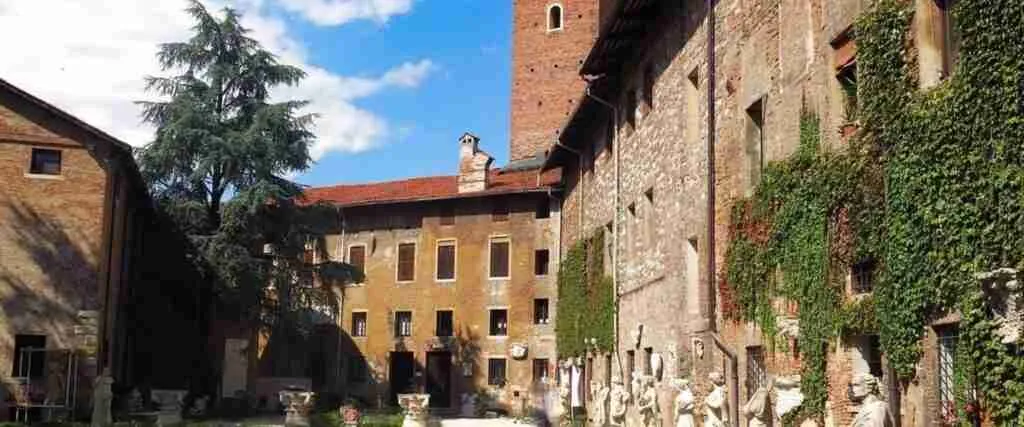
Contra Porti is one block north of Corso Palladio and runs parallel to it for 300 meters — a distance achievable in four minutes of walking, yet a world away from the polished Renaissance surfaces of the main street. The north side of Contra Porti is lined with 14th-century Gothic palazzi of the Thiene, Porto, and Colleoni families: buildings of warm red brick and carved Venetian Gothic detail that represent Vicenza’s pre-Palladian architectural culture in its most complete surviving form. The south side is Palladian: Palazzo Porto (Contra Porti 17) and Palazzo Barbarano Porto (Contra Porti 11, now the Palladio Museum) represent two very different phases of Palladio’s career alongside each other.
The compositional dialogue between Gothic and Renaissance across the narrow street width — never more than 8 meters — concentrates Vicenza’s architectural history into a single visual experience. The Gothic facades have never been restored to tourist-friendly polish; they retain the marks of centuries of occupation, embedded wooden beams, altered window proportions, and the organic irregularity of buildings modified across six centuries. Entry is free; the street is public and permanently accessible.
Casa Pigafetta: A Gothic Anomaly on Contra Pigafetta
At the junction of Contra Pigafetta and Contra San Francesco da Paola, a building survives that has nothing to do with Palladio and everything to do with the culture that preceded him. Casa Pigafetta, built in the late 15th century in an extravagant hybrid of Venetian Gothic and early Flemish Flamboyant influence, belonged to the Pigafetta family — specifically to Antonio Pigafetta, the Vicentine scholar who sailed with Ferdinand Magellan and wrote the only first-hand account of the first circumnavigation of the globe (1519–1522). The facade is carved in dense stone ornament: floral tracery, interlaced arches, lozenges, and crosses, with the family motto “il n’est rose sans épines” (no rose without thorns) inscribed in old French on the upper story. The building is privately owned and not open for interior visits, but the facade is entirely viewable from the street. No ticket required.
Giardino Salvi and the Loggia Valmarana
At the western terminus of Corso Palladio, just before the Porta Castello, lies one of Vicenza’s most pleasant and least-visited public spaces: the Giardino Salvi. The garden occupies a roughly trapezoidal site bounded by the Bacchiglione canal on one side and the old city fortifications on another. At its heart is a small artificial lake with a central island connected by a bridge, with the star attraction positioned on the canal bank: the Loggia Valmarana, a two-story Renaissance loggia built around 1592 and attributed to Vincenzo Scamozzi — Palladio’s direct successor in Vicenza. The loggia’s reflection in the canal makes it one of the most photographed structures in Vicenza among local residents; it appears in very few international travel publications.
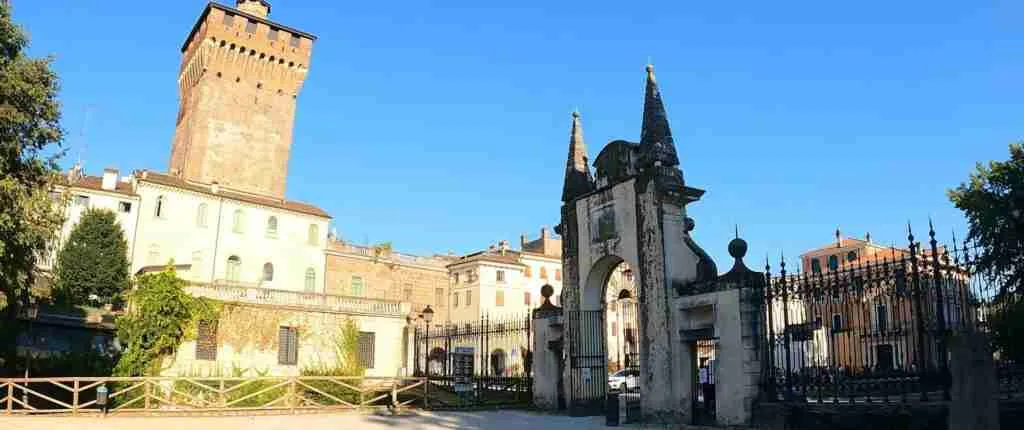
The Giardino Salvi is free to enter and opens during daylight hours. It functions as a genuine neighborhood park: locals walk dogs, children use the paths, elderly Vicentini sit on the benches. It is the kind of space that repays 20 minutes of sitting quietly more than it rewards a 2-minute photographic pass-through. The nearby Porta Castello (1366), with its crenellated battlements and tall square tower, marks the medieval western edge of the city and requires no ticket to view and photograph from ground level.
San Lorenzo: Vicenza’s Finest Gothic Church
The church of San Lorenzo stands on Piazza San Lorenzo, two blocks south of Contra Porti, and represents the peak of Vicenza’s pre-Renaissance ecclesiastical architecture. Built by the Franciscans beginning in the mid-13th century, the structure is in dark red Nanto stone, with a monumental Gothic portal carved by the Venetian master Andriolo de Sanctis (1344) featuring figures of the Virgin, the Christ child, and the Franciscan saints. The interior is a single broad nave with brick walls and painted decorations by Bartolommeo Montagna and his school. The early 15th-century fresco fragments in the apse chapel show Venetian Gothic painting at its provincial best.
San Lorenzo is rarely mentioned in tourist materials despite being one of the architecturally most significant Gothic buildings in the Veneto. It is not included in the Vicenza Gold Card circuit; entry is free. Hours vary seasonally; the church opens mornings and late afternoons, and the sacristy can provide access outside posted hours for serious visitors.
The Portici di Monte Berico and the Sanctuary
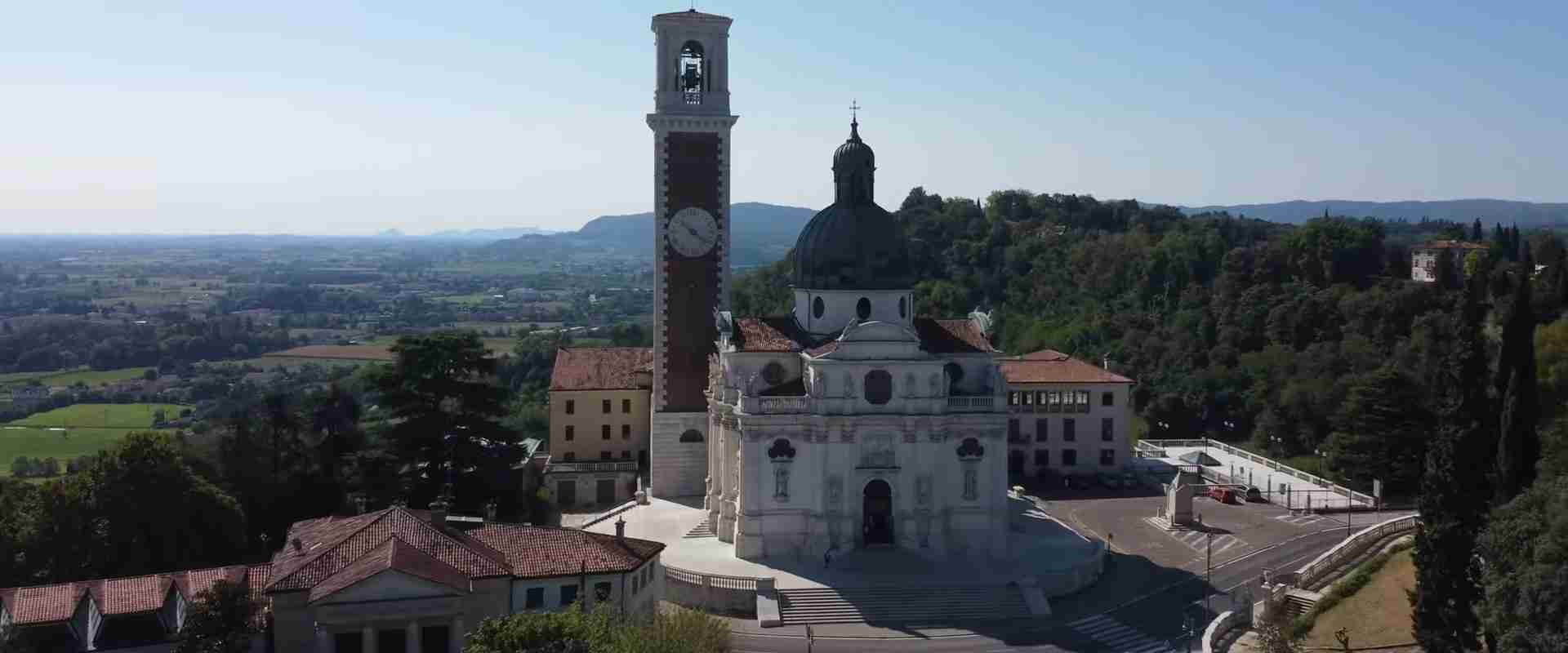
One of Vicenza’s most visually dramatic experiences has no admission price and no tourist queue: the covered portico walkway climbing from Borgo Berga to the Monte Berico Sanctuary. Built between 1746 and 1778, the portico consists of 180 brick arches rising steadily up the hillside for approximately 700 meters, the longest such sacred walkway in Italy outside Varallo Sesia. Each arch frames a different angle of the city below, the portico itself aging from terracotta to moss-green as it ascends the hillside. The walk takes 10–15 minutes at a comfortable pace.
At the summit, the Basilica di Monte Berico (free entry) houses one of the most spectacular single paintings in the Veneto: Veronese’s enormous “Supper of St Gregory the Great” (1572), 7 meters wide and one of his largest surviving canvases, recently cleaned to reveal its original luminous palette. The sanctuary terrace offers a panoramic view across the entire Vicenza plain toward the Dolomites on clear days — a view that is broadly equivalent to Verona’s viewpoint from Castel San Pietro, yet experienced by a tiny fraction of the visitors. The Monte Berico sanctuary opens daily with no admission charge.
The Valletta del Silenzio: A Hidden Rural Valley
Between the Monte Berico ridge and the slope carrying Villa Valmarana ai Nani lies a narrow valley locally called the Valletta del Silenzio — the Valley of Silence. The valley floor is cultivated with small gardens and orchards, traversed by a footpath that connects the sanctuary area with Via dei Nani below Villa Valmarana. The walk through the valley takes 20 minutes and passes through a landscape that is extraordinary in its proximity to the city center: old stone walls, kitchen gardens, fig trees, and total silence apart from birdsong. The Vicentine novelist Antonio Fogazzaro described this valley repeatedly in his fiction; it provided him with a retreat within 1 km of his city house. The valley path is free and permanently accessible.
Palazzo Valmarana Braga Rosa: A Palladio Building Almost Nobody Visits
On Corso Antonio Fogazzaro, two blocks west of Piazza dei Signori, stands Palazzo Valmarana Braga Rosa — one of Palladio’s more adventurous civil works (begun 1565) and one that appears in fewer than 10% of Vicenza walking tour itineraries. The facade experiments with colossal pilasters rising through two stories while the flanking sections use smaller orders at each floor level, a hierarchical commentary on the relationship between the piano nobile and the service levels that anticipates Michelangelo’s moves on the Campidoglio. The building is privately occupied and not open for interior visits, but the facade is accessible from the street. No admission charge applies.
Best Guided Tours of Vicenza’s Historic Center in 2026
Vicenza supports guided tours at every price point in 2026, from free audio-guide apps to private full-day architecture tours with licensed historians. The city’s own official walking tours represent exceptional value; private options add personalization and depth that justify the additional cost for visitors with specific architectural interests.
Official Saturday Walking Tours: “Scopri Vicenza”
The Comune di Vicenza and the Association of Licensed Tourist Guides run weekly guided walking tours under the banner “Scopri Vicenza — Un Capolavoro di Città.” Tours depart every Saturday at 14:30 from the IAT office at Piazza Matteotti 12 (check official communications for holiday dates when additional departures are scheduled). The route covers the central historic area over approximately 2 hours, led by licensed guides who carry museum accreditation. The tour is specifically designed without architectural barriers, making it accessible to visitors with mobility limitations. Cost: €12 per person; children under 12 enter free. The tour is accessible to all without barriers throughout the route. Booking is mandatory: call the IAT on 0444 320854 (Monday to Sunday 09:00–17:30).
These tours do not include Teatro Olimpico interior access, which must be purchased separately at €12. The route does include pauses at key exterior facades, the interior of Santa Corona (admission included in the tour price during the walk), and detailed commentary on buildings along Corso Palladio and Piazza dei Signori that are not visible or explained from a simple self-guided walk. For visitors arriving in Vicenza specifically to understand Palladio’s work in context, this tour is the recommended starting point before any individual monument visit.
Private Licensed Architecture Tours in 2026
Licensed private guides in Vicenza specialize in Palladian architecture for international visitors and offer English-language tours of two to four hours duration. These tours are available as pure walking routes through the historic center (typical duration 2–3 hours) or as extended programs that incorporate Villa La Rotonda and Villa Valmarana. Private tours for groups of two start from approximately €80–180 for the guide’s fee, depending on duration and operator; admission fees to individual monuments are paid separately at the box office.
GetYourGuide lists several Vicenza walking tours, with options starting from around €25 per person for small-group tours. The “Palladian Classic — Vicenza 1st Experience” is consistently reviewed as the most comprehensive group offering, designed by the Palladian Villa Owners Network and drawing on the deep knowledge of specialists connected to the villas themselves. Viator offers additional options including a City Sightseeing Walking Tour that meets at the Giardino Salvi entrance on Corso Santi Felice e Fortunato. Avventure Bellissime (tours-italy.com) operates a well-regarded private Vicenza and Palladio walk lasting 3 hours that can be extended to include Villa La Rotonda on weekend visits.
For visitors with serious architectural interests, the specialist Monica Facchini — an art historian based at Marostica who has guided Vicenza for over a decade — offers private half-day tours of the historic center and the Palladian villas, bookable directly through the Hotel Due Mori in Marostica. Her tours are particularly recommended for groups exploring the Palladian villa network beyond the city limits.
Villa-Based Guided Tours in 2026
Both Villa La Rotonda and Villa Valmarana ai Nani offer their own guided experiences that go substantially beyond the standard self-entry visit. At Villa La Rotonda, the “Smart Visit” (€20 per person) is a guided tour of the exterior and Piano Nobile running Saturday and Sunday at 10:30 and 15:30, lasting approximately one hour. The deeper “I Segreti della Rotonda” tour (€25 per person) adds the basement, the monumental kitchen, and detailed commentary on the structural engineering behind the famous dome; it runs Saturday mornings and requires advance booking via WhatsApp at +39 351 7922118 (minimum 10 people).
At Villa Valmarana ai Nani, guided tours in Italian run every Sunday at 10:30 for a supplement of €5 over the standard €11 ticket — advance reservation is required and can be made via the villa website (villavalmarana.com). These weekly tours are led by the villa’s in-house guides and cover both the Palazzina (with Giambattista Tiepolo’s monumental fresco cycles from the Iliad, Aeneid, and Orlando Furioso) and the Foresteria (with Giandomenico Tiepolo’s domestic and genre scenes). The contrast between the father’s heroic classicism and the son’s affectionate realism makes the Valmarana cycle one of the most intellectually rewarding 18th-century fresco programs in Northern Italy. Periodically, members of the Valmarana family themselves lead “Visit with the Owners” tours; check the villa website for scheduling.
Digital Guides and App-Based Tours in 2026
For independent visitors who prefer technology to human guides, several digital options work well in Vicenza in 2026. Audiala and similar audio guide platforms offer downloadable Vicenza tours covering the principal monuments with audio commentary in English, running 30–75 minutes. Audiogiro provides a 30-minute Vicenza tour in Italian, English, French, and German. Neither substitute for a licensed guide on a first visit, but both serve repeat visitors or those combining Vicenza with a longer Veneto itinerary who need to move quickly through the core monuments. The Palladio Museum (Contra Porti 11) sells its own multimedia guide to Palladio’s works across the city, which is particularly useful as a reference tool during exploratory walks.
Self-Guided Walking Itineraries for Vicenza in 2026
Three self-guided routes suit different amounts of time and different levels of architectural engagement. All start from the train station forecourt, which is a 5-minute walk from the historic center along Viale Roma. No tickets are needed for the walking routes themselves; admission fees apply only when entering specific monuments.
The 90-Minute UNESCO Classic Route
This compact loop takes in the essential Palladian monuments in a sequence that mirrors the historical development of Palladio’s career in Vicenza. Exit the station and walk north along Viale Roma, turning right on Viale Giuriolo and entering the historic center through Piazza del Castello. Walk east along Corso Palladio, studying the palazzo sequence on both sides, until reaching Piazza Matteotti. Pause to examine the Teatro Olimpico facade (entry optional; allow 45 minutes if visiting the interior). Cross the piazza to Palazzo Chiericati. Return west along Corso Palladio, turning south at Contra Garibaldi into Piazza dei Signori. Examine the Basilica Palladiana, Loggia del Capitaniato, and the medieval towers. Exit south through the piazza, turn left, and return to Piazza Castello via the back streets. Total walking distance: approximately 1.8 km. Monuments accessible from the exterior: all of the above. Interior admission if desired: Teatro Olimpico €12, Basilica Palladiana €6.
The Half-Day Hidden Corners Route
Begin at Piazza Castello and walk north on Via Piancoli to reach Giardino Salvi (free; allow 20 minutes). Continue east along Corso Palladio to Contra Porti and turn north to walk the entire length of the Gothic and Palladian street sequence (20 minutes). Rejoin Corso Palladio at the Palladio Museum (Palazzo Barbaran da Porto, Contra Porti 11; entry €8 or Gold Card; allow 60–90 minutes). Continue east to the corner of Contra Garibaldi and turn south to enter Piazza dei Signori. Continue south along the back of the Basilica to reach Contra Pigafetta and Casa Pigafetta (exterior, free; 10 minutes). Continue west on Contra San Gaetano to the church of Santa Corona (€4 or Gold Card; 30 minutes). Return north via Contra del Monte to Piazza dei Signori. This route takes 3.5–4 hours at a comfortable pace and combines all the major free secrets with two or three paid interior visits. Total walking distance approximately 3.5 km.
The Full-Day Vicenza Deep Dive
The full-day route begins with the Half-Day Hidden Corners circuit described above, then extends south from the historic center to Borgo Berga. From Piazza dei Signori, walk south along Contra Mure Carmini and continue on Via Bassano, crossing the Bacchiglione river at Ponte San Michele. Follow Via Montagna and Borgo Berga south to the base of the Monte Berico portico. Walk the 180-arch covered ascent (free; 12 minutes). Visit Monte Berico Sanctuary (free; 30 minutes including Veronese’s “Supper of St Gregory”). Descend via the southern slope to the Valletta del Silenzio footpath (free; 20 minutes) and emerge on Via dei Nani below Villa Valmarana. Visit Villa Valmarana ai Nani (€11 or €13; 60–90 minutes). Walk 600 meters south on Via della Rotonda to Villa La Rotonda (€15; 60 minutes; open Friday–Sunday April–October). Return to the center by Bus 8 from the La Rotonda stop or walk back 30 minutes via the direct route. Total distance for the full day: approximately 9 km. Allow 7–8 hours including monument visits and a lunch break at one of the small restaurants near Monte Berico or Valmarana.
Day Trips to Palladian Villas from Vicenza in 2026
The UNESCO inscription covers not only Vicenza’s historic center but the Palladian Villas of the Veneto as a serial property — a dispersed network of rural estates across the province built to Palladio’s designs between roughly 1540 and 1580. The two most visited are within walking or bus distance of the city center; the remainder require a car or organized tour.
Villa La Rotonda (Villa Almerico Capra): Palladio’s Most Famous Work
Villa La Rotonda — correctly named Villa Almerico Capra — stands on a small hill 3 km south of Vicenza’s historic center, commissioned by the retired papal official Paolo Almerico in 1566 and completed after both Palladio’s and Almerico’s deaths by Vincenzo Scamozzi for the Capra brothers, who purchased the property in 1591. The building is simultaneously Palladio’s most familiar work internationally (it has been copied in whole or part more often than any other villa in the world, including the Chiswick House in London and numerous American country houses) and his most unusual: it was designed as a suburban retreat rather than a working agricultural estate, positioning a domed central rotunda with four identical temple-facade porticos facing each cardinal direction.
In 2026, La Rotonda opens Friday through Sunday from April to October, 10:00–12:00 and 15:00–18:00. During March and November it opens Saturday and Sunday only, 10:00–12:30 and 14:30–17:00. Standard admission (garden, Romantic Grove, and Piano Nobile) costs €15 for adults, €10 for visitors under 19, and €5 for those with disabilities up to 80%. Guided Smart visits (garden and Piano Nobile with a guide) cost €20 per person; the in-depth “I Segreti della Rotonda” tour costs €25. Advance booking for guided visits is required via WhatsApp at +39 351 7922118 or at [email protected]. Walk-in individual visitors need no reservation for standard entry.
Reaching La Rotonda without a car is straightforward in 2026. Bus 8 departs from Viale Venezia 14b opposite the train station; alight at the “Riviera” stop and walk 6 minutes to the villa entrance. The taxi fare from the station is approximately €10. The walk from the historic center takes 30 minutes via the southern route through Borgo Berga and the Valletta del Silenzio, making the combination of Valmarana and La Rotonda into a single half-day walk entirely feasible for moderately fit visitors.
Villa Valmarana ai Nani: Tiepolo’s Great Fresco Cycle
Villa Valmarana ai Nani occupies a different category from Palladio’s villas — the architecture is handsome but not groundbreaking — but it contains the finest 18th-century fresco cycle in the Veneto outside Venice itself. The estate was purchased by Giustino Valmarana in 1715, who commissioned an ensemble of buildings (Palazzina, Foresteria, and Scuderia) around the existing 17th-century core. In 1757, the 61-year-old Giambattista Tiepolo and his son Giandomenico frescoed the interiors in a single extraordinary campaign, working simultaneously in different buildings and in distinctly different styles.
Giambattista’s six rooms in the Palazzina illustrate scenes from Homer, Virgil, Ariosto, and Tasso in his characteristic palette of pale blues, warm golds, and theatrical foreshortening — heroic figures caught in the decisive moment of action or emotion. Giandomenico’s five rooms in the Foresteria take a diametrically opposite approach: domestic genre scenes, Chinese-style decorations, commedia dell’arte figures, and intimate vignettes of 18th-century rural life painted with earthy ochres and warm russets. The two cycles complement each other as a study in the generational difference between high Rococo grandeur and the emerging sensibility of genre painting.
In 2026 Villa Valmarana opens daily 10:00–18:00, except Christmas Day. Standard entry costs €11 per person (printed multilingual guides included). The premium multimedia kit, which adds a digital tablet with high-resolution fresco detail and thematic commentary, costs €13. Youth aged 12–25 pay €6; children under 12 enter free. Groups of 15 or more qualify for a reduced rate of €9 per person, with advance booking required. The villa is 2 km from Vicenza’s center, accessible via Via dei Nani (pedestrian) or Via della Rotonda (vehicular, with paid parking at the property).
Monte Berico Sanctuary: The Free Panoramic Escape
Monte Berico (236 m above sea level) is Vicenza’s local sacred hill, crowned by a sanctuary first built in the 15th century and substantially rebuilt in the late 17th century by Carlo Borella. The sanctuary is a functioning church of deep local significance — Marian apparitions were reported here in 1426 and 1428 during a plague outbreak, and the building became the focus of votive devotion that persists today. Architecturally the exterior is Baroque with a later colonnade; the interior conceals Bartolommeo Montagna’s “Pietà” (1500) and Veronese’s “Supper of St Gregory” (1572), one of the artist’s most accomplished large-format compositions.
Entry to the sanctuary is free. The terrace loggia commands views north across the city to the Berici Hills, west toward Verona, and on clear days north to the Piccole Dolomiti — a panoramic experience roughly comparable to what Florence provides from Piazzale Michelangelo, but shared with a fraction of the visitors. The monte is reached either via the Portici covered walkway from Borgo Berga (free, 12–15 minutes on foot) or by city bus on the routes serving the southern districts. Restaurants cluster near the summit and offer Vicentine cuisine in a cooler, quieter setting than the city center; try baccalà alla vicentina (salt cod in milk and onions) if available.
Further Afield: Palladian Villas in the Veneto Province
Visitors with a car and a half day to spare access the broader Palladian villa network across the province. Villa Caldogno (Caldogno, 10 km north) is a well-preserved example of Palladio’s rural villa typology with an interior loggia and original frescoes by Giovanni Antonio Fasolo; entry is managed by the Palladio Museum. Villa Godi in Lonedo di Lugo (30 km north) is Palladio’s earliest surviving villa commission (1537–1542), set on a hilltop above the Astico valley with views toward the Prealpi; it contains a museum of 19th-century painting and Fossil Museum. Villa Barbaro at Maser (50 km northeast, in Treviso province) is widely considered the finest example of Palladio-Veronese collaboration: the exterior architecture is Palladio at his most serene while the interior is entirely covered in Veronese’s trompe l’oeil fresco program of 1560–61, among the greatest fresco decorations anywhere in Europe. All three are accessible by car and well-signposted; day tours from Vicenza combining two or three villas are offered by specialist operators through the Palladian Villa Owners Network.
Vicenza Museum Cards and Tour Passes in 2026: What to Buy
The Vicenza museum ticketing system operates on a straightforward logic in 2026: individual tickets suit visitors going to one or two sites; the Silver Card suits visitors to four sites; the Gold Card suits visitors planning to explore five or more sites over multiple days. The cards replaced the old Vicenza Card naming system in January 2025 with revised pricing and extended validity.
Vicenza Gold Card vs Silver Card: The Value Calculation
The Vicenza Gold Card costs €22 (reduced €17) and grants one entry to each of eleven sites over twelve days: Teatro Olimpico, Museo Civico di Palazzo Chiericati, Museo Naturalistico-Archeologico, Chiesa di Santa Corona, Gallerie di Palazzo Thiene, Basilica Palladiana, Museo del Risorgimento e della Resistenza, Gallerie d’Italia at Palazzo Leoni Montanari, Museo Diocesano, Palladio Museum, and Museo del Gioiello. The twelve-day validity (extended from eight days in January 2025) means a card purchased on arrival covers the entire stay for most visitors.
Buying individual tickets for the six busiest paid sites — Teatro Olimpico (€12), Palazzo Chiericati (€8), Santa Corona (€4), Basilica Palladiana (€6), Palladio Museum (€8), and Museo del Gioiello (€10) — totals €48. The Gold Card at €22 covers these and five additional venues, making it substantially better value for anyone visiting four or more sites. The Family Gold Card at €26 covers two adults and their children for twelve days at the same eleven venues.
The Vicenza Silver Card costs €16 (reduced €14) and grants access to any four sites from the eleven in the circuit, valid for eight days. If your four chosen sites are Teatro Olimpico, Palazzo Chiericati, Santa Corona, and Basilica Palladiana, the combined individual price is €30 — the Silver Card saves €14 and 47% on that selection. The Silver Card is the right choice for visitors with limited time who know exactly which four venues they want.
Important for planning: Villa La Rotonda, Villa Valmarana ai Nani, and Monte Berico Sanctuary are not included in either card and require separate tickets or are free, respectively. The cards are available at the IAT office, participating museum box offices, and online via Ticketlandia at ticketlandia.com/m/civici-vicenza. Trenitalia cardholders arriving on Frecciarossa or regional services can access a discounted Gold Card rate; the standard discount is valid through 31 December 2026.
Free Attractions and No-Cost Experiences in 2026
A complete day in Vicenza — encompassing the most memorable experiences the city offers — is achievable entirely free. All Palladian building exteriors are permanently viewable at no charge. Piazza dei Signori, Piazza Matteotti, Corso Palladio, and all side streets are free. The Monte Berico Sanctuary, Giardino Salvi, Casa Pigafetta, San Lorenzo church, Porta Castello, Contra Porti, Palazzo Valmarana Braga Rosa, and the entire Portici di Monte Berico walkway carry no admission fee. The Museo del Risorgimento e della Resistenza (Villa Guiccioli) in the museum card circuit always admits free. On select Sundays and national holidays, the “Domeniche al Museo” initiative periodically opens state-managed cultural sites for free; check the ministry calendar at beniculturali.it in advance.
Tour Costs and Daily Budget Planning for Vicenza in 2026
All figures below are per person, per day, assuming two travelers sharing hotel accommodation. Hotel rates are divided by two before inclusion in any daily total. These are ranges, not fixed numbers: actual spending depends on the specific accommodation, restaurants, and sites chosen on a given day.
Budget Traveler: €65–110 Per Person Daily (Two Sharing)
Accommodation in a budget hotel or B&B double room costs €70–100 per night in 2026; per-person share amounts to €35–50. Add café breakfasts at €2–4 per person, a simple lunch of pizza al taglio, a focaccia, or a fixed-price menu del giorno at €8–14, and a dinner at a straightforward trattoria at €12–20 per person, totaling €22–38 for all meals. Local transport costs €2–5 (mostly on foot with one or two city bus journeys). Attractions on a budget approach — perhaps Santa Corona (€4), the free walk up Monte Berico, and the free street circuit — add €4–15. The combination of accommodation share, meals, transport, and a few paid sites yields a daily range of €65–110 per person.
At this level, strategy matters: the free walking circuits outlined in this guide cover more architectural ground than several consecutive days of paid admission. Budget visitors who spend one day on the free secret spots route and one day with the Gold Card (€22 for eleven museum sites, approximately €11 per person per day when shared between two people) see everything Vicenza offers for a fraction of the cost of visiting every site individually.
Mid-Range Traveler: €125–205 Per Person Daily (Two Sharing)
A comfortable mid-range hotel in Vicenza’s center or within 1 km of the historic core costs €110–160 per night for a double room; the per-person share is €55–80. Breakfast at a café or included at the hotel adds €5–10; lunch at a restaurant is €15–25; dinner with a glass of wine costs €25–40. Total meals: €45–75. Transport (city bus plus occasional taxi or rideshare for villa excursions) adds €5–15. Tours and attractions — the official Saturday guided walk (€12), Teatro Olimpico (€12), Gold Card (€22), or Villa La Rotonda (€15) — average €20–35 per person per day when spread across the visit. Accommodation share (€55–80), meals (€45–75), transport (€5–15), and activities (€20–35) total €125–205 per person daily.
Luxury Visitor: €245–430 Per Person Daily (Two Sharing)
Four- and five-star hotels in Vicenza and the immediate surroundings range from €180 to €280 per room per night; the per-person share for two is €90–140. Upscale dining — hotel breakfast plus long restaurant lunches and formal evening meals with wine — adds €102–168 per person. Taxis and private transfers for villa excursions add €20–40. Private licensed architecture tours for two, at €80–180 per group, add €40–90 per person; combined with admission fees (La Rotonda €15, Valmarana €11, Teatro Olimpico €12), attractions total €35–80 daily. The combination of accommodation (€90–140), meals (€102–168), transport (€20–40), and premium experiences (€35–80) yields €245–430 per person daily.
Sample 2-Day Mid-Range Itinerary with Verified Costs
Day 1 — Historic Center and Museum Circuit: Breakfast at a café (€7), official Saturday guided walking tour (€12), Teatro Olimpico entry included in Vicenza Gold Card — buy Gold Card here (€22), lunch on Corso Palladio (€20), afternoon visits to Gallerie di Palazzo Thiene and Palladio Museum using remaining Gold Card visits, afternoon coffee (€3), dinner at a local osteria (€32), glass of house wine (€8), bus ticket (€2). Day 1 total excluding accommodation: €106.
Day 2 — Villa Circuit and Monte Berico: Breakfast at hotel (€7), return bus 8 to villas (€4 for the round trip), Villa La Rotonda entry (€15), Villa Valmarana ai Nani standard entry (€11), lunch near the villas (€16), gelato and coffee (€3), dinner on return to center (€35), wine (€10). Day 2 total excluding accommodation: €101.
Accommodation: Two nights in a mid-range hotel at €110–160 per room per night total €220–320, or €110–160 per person for two sharing. Activities and food across both days total €207. Adding the per-person accommodation share of €110–160 produces a total 2-day trip cost of approximately €325–375 per person, including accommodation, all meals, two days’ transport, Gold Card, guided walk, both villas, and two restaurant dinners.
Booking Tours in Vicenza in 2026: When, Where, and How
Vicenza does not operate on the advance-booking pressure model of Florence or Venice — walking-in on the day works for the vast majority of visits. The exceptions are specific guided tours that require confirmation for logistical reasons.
What Requires Advance Booking
The official Saturday “Scopri Vicenza” guided walk requires advance reservation by phone (0444 320854, IAT office, Monday–Sunday 09:00–17:30). Booking 24–48 hours in advance is sufficient except on major Italian holiday weekends (Easter, 25 April, 1 May, 2 June, 15 August) when the tours fill earlier. The Sunday guided tour at Villa Valmarana ai Nani requires advance reservation via the villa website (villavalmarana.com). Guided tours at Villa La Rotonda — the Smart Visit and “I Segreti della Rotonda” — require booking by WhatsApp at +39 351 7922118, with at least 24 hours’ notice; guided tours in English require 15 days’ notice to arrange language-specific guides. Private licensed guide tours booked through GetYourGuide or Viator confirm within 24–48 hours outside peak season; booking 5–7 days ahead is wise for late-spring and summer visits.
What Requires No Advance Booking
Teatro Olimpico admits individual visitors (groups under 10 people) without any reservation; tickets are purchased at the IAT box office on arrival. All other Vicenza civic museum sites — Palazzo Chiericati, Santa Corona, Gallerie di Palazzo Thiene, and the Palladio Museum — admit without reservation. Villa La Rotonda admits individual visitors for standard entry (no guided tour) without reservation during normal opening hours. Villa Valmarana ai Nani admits all visitors without reservation except groups of more than 15 people. Monte Berico Sanctuary is always open to all.
Online Ticket Purchase
The Teatro Olimpico single ticket, Vicenza Gold Card, and Vicenza Silver Card are available for advance online purchase through the Ticketlandia platform at ticketlandia.com/m/civici-vicenza. Online purchase is optional, not required; no surcharge applies for box-office purchase. The reduced-rate Gold Card (€17) requires visiting a physical box office to verify qualifying status. Villa La Rotonda sells tickets at the property gate. Villa Valmarana sells tickets online and at the property; online purchase is recommended for the Sunday guided tour to confirm the reservation.
Seasonal Considerations for Walking and Tours in Vicenza in 2026
Vicenza’s climate and visitor patterns create distinct walking conditions across the year. The city lacks the extreme tourist pressure of Venice or Verona in high season; even in July and August, the historic center moves at a manageable pace outside of day-trip arrival windows (roughly 10:00–14:00).
Spring Walking Season (March–May 2026)
Spring is the optimum season for walking Vicenza: temperatures range from 12°C to 22°C, the city gardens are in flower (Giardino Salvi is particularly beautiful in April), and visitor volumes are moderate before the school-group and holiday season peaks of late April and May. Villa La Rotonda opens on weekends only from March 14th, extending to Friday–Sunday from April onward — the combination of the Villa with Valmarana and Monte Berico works well as a Saturday or Sunday excursion without crowds. The “Settimane Musicali al Teatro Olimpico” musical festival runs in autumn rather than spring, but the theater’s evening concert program across May and June rewards checking in advance at teatrolimpicovicenza.it.
The national holidays of 25 April (Liberation Day) and 1 May (Labor Day) see increased visitor numbers in 2026; the official guided walk adds supplementary departures on these dates, but book early. Villa La Rotonda opens on both holidays as part of its national holiday opening schedule.
Summer Heat and Scheduling in Vicenza in 2026
June, July, and August bring heat to the Vicenza plain: typical July highs reach 30–34°C, with occasional heat waves pushing above 36°C. The historic center’s ZTL pedestrian zone concentrates heat between the stone facades of Corso Palladio, making morning starts (before 10:00) and evening walks (after 17:00) significantly more comfortable than midday circuits. The Teatro Olimpico switches to summer hours from 1 July (10:00–18:00), opening later and closing later to accommodate heat patterns.
The Monte Berico portico walk is best done before 09:00 in July and August; the covered arches provide shade but the climb generates heat. Villa Valmarana’s large garden and the Valletta del Silenzio offer natural shade at any hour. La Rotonda’s garden includes mature trees on the southern slope that provide midday relief. Carrying a minimum of 1.5 liters of water per person for full-day walks is non-negotiable in summer. Several bars along Corso Palladio and on Piazza dei Signori refill water bottles on request; the public fountain at Giardino Salvi provides a cold water source mid-route.
Autumn and Winter Walking in Vicenza 2026
September and October combine comfortable walking temperatures (18–25°C), the grape harvest in the surrounding Berici Hills, and the lowest visitor numbers of the year. The vineyard slopes south of Monte Berico produce Gambellara DOC whites (Garganega grape) and are traversable on foot via farm tracks; the 3-km walk from Villa La Rotonda south through the Berici Hills is one of the secret longer routes in the Vicenza area, passing through villages that retain a rural Veneto character largely unchanged since the early 20th century.
November through February sees Villa La Rotonda close (except for privately booked visits), but all 11 Gold Card sites remain operational. Winter walking in the historic center is cold (5–10°C typical lows) but uncrowded; the Teatro Olimpico in particular is best visited without competition in December and January, when groups are rare. Giardino Salvi in November, with leaf-fall reflected in the canal and the Loggia Valmarana emerging through bare branches, is one of the quietest and most atmospheric scenes in the city.
Getting to and Around Vicenza in 2026
Vicenza’s position on the Milan-Venice high-speed rail axis makes it one of the most easily reached provincial cities in Northern Italy for rail travelers, and the compact historic center means that once arrived, essentially no transport is needed for the walking circuits described in this guide.
Arriving by Train
Vicenza station (Stazione Centrale, Viale Roma 1) is served by Trenitalia regional and Intercity services throughout the day. From Venice Santa Lucia, regional trains depart roughly every 30 minutes and cover the 60 km in approximately 40–50 minutes; fares on the regional service are €4–6. From Verona Porta Nuova, the journey takes 25–30 minutes by regional train; fares are €4–6. From Milan Centrale, Frecciarossa services stop at Vicenza and cover the journey in approximately 1 hour 10 minutes to 1 hour 30 minutes; fares vary by booking date and class; advance purchase yields rates of €15–40. Standard regional trains from Milan (via Brescia and Verona) take approximately 2.5 hours at lower fares. From Padua, the journey is 15–20 minutes; fares are €3–4.
Trenitalia’s Frecciarossa and Regionale cardholders qualify for discounted Gold Card access at the IAT office; this offer runs through 31 December 2026 and applies on the day of train arrival.
Navigating Vicenza’s Historic Center on Foot
The entire historic center lies within a 1.5 × 1 km area, and Vicenza’s ZTL (traffic-restricted zone) makes the central streets pedestrian-only. From the station to Piazza Matteotti (Teatro Olimpico) is a 10-minute walk of approximately 800 meters via Viale Roma and Contra Garibaldi. From the station to Piazza dei Signori is 12 minutes. No public transport is needed for any monument in the historic center; the walking circuits described in this guide are practical for any visitor without mobility limitations. The official Saturday guided walk is specifically designed to be barrier-free and accessible for visitors using mobility aids.
City buses serve the neighborhoods south of the center (Monte Berico, Villa Valmarana, La Rotonda). Bus 8, departing from Viale Venezia 14b opposite the station, is the standard route for villa visits; alight at “Riviera” for La Rotonda and Villa Valmarana. A return journey on Bus 8 costs approximately €2–4 depending on the number of journeys. Taxis from the station to Villa La Rotonda cost approximately €10 and are available from the station forecourt rank.
Visitors arriving by car should park outside the ZTL zone. The closest paid car park to the historic center is Park Canove (approximately 150 meters from the Teatro Olimpico, cost approximately €2 per hour up to €25 per day). Park Stadio, approximately 1 km south of the center, offers a €2 flat daily rate with a shuttle bus included — the significantly lower cost makes it the default recommendation for visitors planning a full day.
Frequently Asked Questions About Vicenza Tours and Walking Routes 2026
Is Vicenza worth visiting for more than a day trip in 2026?
Vicenza absolutely justifies one or two nights. A day trip from Venice or Verona covers the main Palladian circuit but misses Villa Valmarana, Villa La Rotonda (open Friday–Sunday only in peak season), Monte Berico, and the free hidden routes that constitute the city’s real depth. Two nights allows both the standard and secret itineraries at a relaxed pace plus a full morning at the villas. The city also serves well as a base for exploring the broader Palladian villa network across the Vicenza province.
How long does it take to visit the Teatro Olimpico in 2026?
Allow 45–60 minutes for a standard individual visit to the Teatro Olimpico. The theater is small — the seating area holds approximately 400 — but the visual complexity of Scamozzi’s trompe l’oeil perspective scenery rewards slow examination. The included “POP” light-and-sound experience runs approximately 10 minutes and is incorporated into the flow of the standard visit. Groups of ten or more must book through the center (0444 964380, Monday–Friday 09:00–13:00 and 14:00–18:00); individual visitors walk in without reservation.
Can I combine Villa La Rotonda and Villa Valmarana in a single half-day in 2026?
Yes, efficiently. La Rotonda and Valmarana are 600 meters apart on the same road (Via della Rotonda); a visit to both, allowing 60 minutes at each, takes approximately 2.5–3 hours including travel time from the center. The logical sequence is Valmarana first (open daily), then La Rotonda (open Friday–Sunday April–October). Combining both with the Monte Berico portico and the Valletta del Silenzio walk extends the excursion to a comfortable full afternoon (14:00–18:30). Bus 8 returns to the center from the La Rotonda stop; alternatively, the walk back through the city’s southern streets takes 30 minutes.
Is the Vicenza Gold Card worth buying in 2026?
The Gold Card at €22 delivers clear value if you plan to visit four or more sites from its eleven-venue circuit over twelve days. Buying Teatro Olimpico (€12), Palazzo Chiericati (€8), Santa Corona (€4), and Basilica Palladiana (€6) individually totals €30 — already more expensive than the Gold Card at €22, and the card additionally covers seven further venues. The Silver Card at €16 is the better choice for visitors who know they want exactly four sites and no more. Single tickets are the sensible choice only for visitors with time for one or two monuments. Neither card covers Villa La Rotonda, Villa Valmarana ai Nani, or Monte Berico Sanctuary.
How much do private guided architecture tours cost in Vicenza in 2026?
Private licensed guide fees for Vicenza history and architecture tours range from approximately €80 to €180 per group for a half-day, with museum admission fees paid separately at each site. The fee covers 2–3 hours of walking in the historic center. Extended tours incorporating Villa La Rotonda and Villa Valmarana on the same day cost more — expect €150–250 for the guide fee alone, before admission. Group tours listed on Viator and GetYourGuide start from around €25 per person for structured small-group walks of 75–90 minutes. The official city walk on Saturday afternoons at €12 per person represents the best value for a structured English-language introduction to the city.
What are the opening hours for the main sites in Vicenza in 2026?
Teatro Olimpico opens Tuesday to Sunday 09:00–17:00 (last entry 16:30); July–August 10:00–18:00; closed Monday. Palazzo Chiericati, Santa Corona, and Gallerie di Palazzo Thiene follow similar Tuesday–Sunday patterns within the civic museum network; the IAT office confirms exact daily hours. Basilica Palladiana interior (exhibitions) is open Tuesday–Sunday 10:00–18:00. Palladio Museum opens Tuesday–Sunday; check palladiomuseum.org for current hours and exhibition programs. Villa La Rotonda opens Friday–Sunday April–October 10:00–12:00 and 15:00–18:00; March and November Saturday–Sunday only. Villa Valmarana ai Nani opens daily 10:00–18:00 except Christmas Day. Monte Berico Sanctuary is open daily with no admission charge.
Is Vicenza accessible on a tight budget in 2026?
Vicenza is one of the most budget-friendly UNESCO cities in Northern Italy. The free walking circuits described in this guide — Contra Porti, Giardino Salvi, Monte Berico portico, Casa Pigafetta, San Lorenzo church, Palazzo Valmarana Braga Rosa, and all exterior Palladian facades — fill a full day without spending a single euro on admission. Adding one paid site (Santa Corona at €4) and a simple trattoria lunch keeps a full day under €30 per person for a traveler who packs their own water and has accommodation already budgeted. The official city walk at €12 represents the highest-value paid experience for budget visitors.
How do I get from Venice to Vicenza for a day trip in 2026?
Regional trains from Venice Santa Lucia to Vicenza depart roughly every 30 minutes throughout the day; journey time is approximately 40–50 minutes. Fares on the regional service are €4–6 per person each way, bookable at the station or through the Trenitalia app. Intercity and Frecciarossa services cover the same route in 30–40 minutes at higher fares (€10–20 depending on timing and booking class). The first regional train from Venice departs before 06:00, making an early start practical for a full-day visit. Return trains run until after 22:00. No advance booking is required for regional tickets; they can be purchased at the station on the day.
What food and restaurants should I try near the walking routes in Vicenza in 2026?
Vicentine cuisine centers on baccalà alla vicentina — salt cod braised slowly in milk with onions and anchovies, served on polenta — which is the city’s signature dish and found at every serious local restaurant. Risotto al tastasal (a thin pork sausage risotto) is a winter specialty. On the walking circuits, the restaurants and bars under the Basilica Palladiana’s arcade offer outdoor seating directly on Piazza dei Signori; prices here are slightly elevated for the location but not unreasonable. For more authentic neighborhood dining, the streets north of Corso Palladio toward Contra Porti harbor several family-run osterie and pizzerie. Near Monte Berico, the restaurants on the hilltop serve traditional Vicentine menus at lunch, with views over the city included.
Are children welcome on Vicenza’s walking tours in 2026?
Children are welcome throughout Vicenza’s walking circuits, and several free experiences appeal particularly well to families: the Monte Berico portico walk, the Giardino Salvi with its canal and ducks, and the Villa Valmarana ai Nani with its famous 17 stone dwarf statues along the garden wall (the source of the villa’s nickname, and consistently popular with younger visitors). The official Saturday walking tour is accessible without barriers and free for children under 12. The Teatro Olimpico’s trompe l’oeil perspective scenery — a corridor that appears to extend dozens of meters but is actually only a few meters deep — is invariably the most memorable moment for children visiting Vicenza. All Vicenza civic museums admit children under 18 for free (not in school groups, which have a nominal fee).