Visiting the Doge’s Palace: Complete Guide
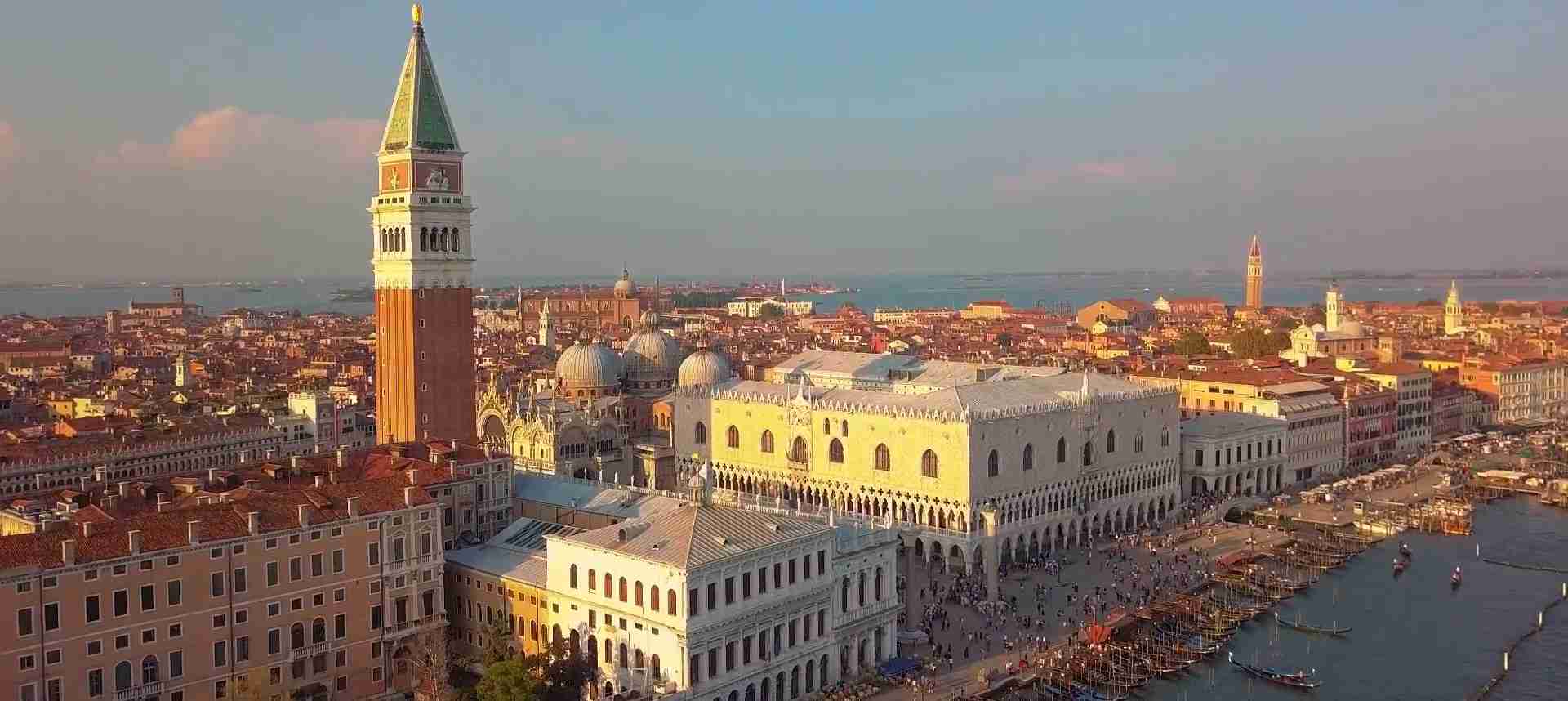
The Doge’s Palace (Palazzo Ducale) served as the residence of Venice’s elected rulers and the seat of the Venetian Republic’s government for nearly 1,000 years, transforming political history into architectural grandeur through its Gothic facade and gilded state rooms. This symbol of Venetian power now functions as a museum where visitors walk through ornate council chambers, cross the enclosed Bridge of Sighs into historic prisons, and witness Tintoretto’s Paradise—one of the world’s largest oil paintings covering an entire wall.
Key Takeaways
- Standard admission includes the Doge’s Palace, Museum Correr, National Archaeological Museum, and Marciana Library, with timed entry preventing excessive crowding
- The Bridge of Sighs crossing into the New Prisons is part of the regular visit route, despite common misconceptions requiring special tours
- Secret Itineraries tours access restricted areas including Casanova’s attic prison cell, torture chambers, and administrative offices closed to general visitors
- Early booking (30+ days advance) reduces ticket costs from €35 to €30, while same-day availability proves unreliable during peak seasons
- The palace layout follows a fixed one-way route through the Golden Staircase, state apartments, council halls, armory, and prisons requiring 90-120 minutes minimum
- Photography without flash is permitted throughout the palace including in the Hall of the Great Council and Bridge of Sighs
People Also Ask About the Doge’s Palace
What is the Doge’s Palace and why is it important?
The Doge’s Palace served as the epicenter of Venetian political power from the 9th century until Napoleon’s conquest in 1797, housing both the Doge’s residence and all government institutions under one roof. This unique combination of palace, parliament, court, and prison in a single complex reflected Venice’s distinctive republican system where the Doge ruled as elected head of state rather than hereditary monarch. The palace hosted the Great Council, an assembly of up to 1,700 patrician members who collectively governed the republic, making it Europe’s largest governing body operating from one chamber. Today the palace functions as a museum preserving Venetian Gothic architecture, Renaissance artwork by Tintoretto and Veronese, and institutional spaces revealing how a maritime trading empire administered justice, conducted diplomacy, and maintained power for centuries.
How long does it take to visit the Doge’s Palace?
Most visitors spend 90-120 minutes completing the standard palace route from the Golden Staircase through the state rooms, armory, Hall of the Great Council, Bridge of Sighs, and New Prisons. Visitors focused primarily on major highlights (Golden Staircase, Hall of the Great Council, Bridge of Sighs) can rush through in 60-75 minutes by skipping detailed artwork examination and side galleries, though this compressed timeline misses significant palace elements. Art enthusiasts examining Tintoretto’s Paradise closely, reading interpretive panels about Venetian government structure, and exploring the armory’s historic weapon collections may extend visits to 2-2.5 hours. Secret Itineraries tours add 75-90 minutes accessing restricted areas, creating 3-4 hour total palace experiences when combined with standard route exploration afterward.
Can I walk across the Bridge of Sighs?
Yes, crossing the Bridge of Sighs is included in all standard admission tickets as part of the one-way visitor route through the palace. The bridge corridor appears near the visit’s end after viewing the state apartments and council chambers, providing the prisoner’s perspective walking from interrogation rooms toward cells in the New Prisons. Visitors walk through the same enclosed limestone corridor that condemned prisoners traversed, viewing Venice through the same stone-barred windows where legend claims prisoners sighed at their final glimpses of freedom. The crossing takes approximately 3-5 minutes including brief pauses for photography through the windows, though crowd flow during peak hours limits how long visitors can linger inside the narrow bridge passage.
Extended multi-day tours – 5+ days
Featured Venice Multi-Day Tour Packages

3 days
Venice City Break
- ✓ Comprehensive Venice tour
- ✓ Expert local guides included
- ✓ All accommodation arranged
- ✓ Transportation provided
7 days
7 Days in Venice: The Ultimate Italian Getaway
- ✓ Comprehensive Venice tour
- ✓ Expert local guides included
- ✓ All accommodation arranged
- ✓ Transportation provided

5 days
A Venetian & Veronese Getaway
- ✓ Booking needs min. 2 travelers
5 days
Venice & Verona: Art, History, and Italian Elegance
- ✓ Booking needs min. 2 travelers
Multi-day tour packages powered by TourRadar. Prices and availability subject to change.
What is the Secret Itineraries tour and should I book it?
The Secret Itineraries tour provides exclusive access to administrative and judicial spaces closed to general visitors, including the Council of Ten’s meeting chambers, the secret archives where Venice stored confidential state documents, the torture chamber used for interrogations, and the Piombi attic prisons where Giacomo Casanova was confined before his famous 1756 escape. These restricted areas reveal the operational machinery of Venetian government and justice beyond the ceremonial state rooms all visitors see, offering deeper understanding of how the republic functioned. The tour suits history enthusiasts interested in Venice’s governmental mechanics, Casanova admirers wanting to see his actual cell, and visitors seeking access to palace sections photographed less frequently than the standard route’s already-documented highlights. Skip the Secret Itineraries if your palace visit serves primarily checklist purposes, if your Venice schedule lacks time for 3-4 hour combined experiences, or if you prefer self-paced exploration over mandatory guided group tours.
Introduction: Understanding the Doge’s Palace’s Role in Venetian History
The Doge’s Palace occupies the waterfront edge of Piazza San Marco, its facade facing the lagoon where Venetian merchant ships once departed for Constantinople, Alexandria, and the trading ports that built the republic’s wealth. The current Gothic structure dating primarily from 1340-1424 replaced earlier fortified palaces destroyed by fires in 976 and 1106, representing Venice’s transformation from defensive settlement to confident maritime empire no longer requiring castle-like fortress architecture. The palace’s distinctive pink and white diamond-patterned exterior, delicate arcaded galleries, and seemingly top-heavy design inverting typical palazzo proportions (heavy upper floors resting on light columned ground level) demonstrate Venetian Gothic’s unique aesthetic departing from mainland Italian architectural conventions.
Unlike European monarchies where separate buildings housed royal residences, parliaments, courts, and prisons, the Doge’s Palace concentrated all governmental functions in an integrated complex. The Doge’s private apartments occupied the waterfront wing overlooking the lagoon, providing luxurious living quarters while keeping Venice’s elected leader within the governmental apparatus rather than isolated in separate royal estates. The Great Council chamber filled the palace’s largest room with space for 1,700 patrician members voting on laws and electing officials, while the Council of Ten met in smaller chambers to handle state security and criminal investigations. This architectural integration reflected Venice’s republican ideology where power derived from collective institutions rather than individual rulers, with the Doge serving as ceremonial head constrained by councils and committees rather than as absolute monarch.
The palace’s transformation from active government center to museum began with Venice’s incorporation into Austria’s empire after Napoleon’s 1797 conquest ended the republic’s independence. Various Italian governmental bodies occupied the palace throughout the 19th century, but by 1923 authorities designated it a museum preserving Venice’s political heritage and artistic treasures. Today the palace receives over 1 million annual visitors, making it Venice’s most-visited monument after St. Mark’s Basilica and one of Italy’s top ten museum attractions. This popularity stems from the palace’s dual appeal as both architectural masterwork showcasing Venetian Gothic design and historical museum where visitors experience the physical spaces where European history unfolded through decisions made in these very council chambers.
The palace layout reflects its dual governmental and residential functions, with ceremonial state rooms occupying the upper floors accessed via the Golden Staircase, while service areas, armory, and prisons filled lower levels and annexed buildings. Visitors follow a one-way route climbing the Golden Staircase to the state apartments, progressing through progressively more important council chambers culminating in the Great Council hall, then descending to the prisons via the Bridge of Sighs. This choreographed path recreates the experience of important foreign visitors proceeding through increasingly impressive spaces before audiences with the Doge and council, though modern tourist flow prevents the intimate small-group access that historical diplomatic delegations enjoyed.
Ticket Types, Pricing, and Booking Strategies
The Doge’s Palace operates a combined ticket system including admission to the palace itself, Museum Correr in Piazza San Marco’s opposite wing, the National Archaeological Museum, and the Marciana Library’s monumental rooms. This package costs €30 for tickets booked more than 30 days before visit dates, rising to €35 for reservations made within 30 days of entry, creating financial incentive for advance planning. The pricing structure reflects Venice’s municipal museum authority (MUVE) managing these institutions collectively rather than operating the Doge’s Palace as isolated attraction, though most visitors focus exclusively on the palace without exploring the included additional museums.
Standard Admission and What It Includes
The standard combined ticket grants timed-entry access to the Doge’s Palace with specific entry slots available every 15 minutes throughout operating hours. Unlike some European museums selling general day admission allowing entry anytime, the Doge’s Palace requires selecting precise entry times (for example: 10:00 AM, 2:30 PM) managing visitor flow to prevent overwhelming crowding in the palace’s sequential one-way route. The ticket remains valid for single entry to each included museum without time limits once inside, allowing visitors to spend hours exploring if desired, though the New Prisons route eventually funnels all visitors toward the exit without loops returning to earlier palace sections.
Entry to Museum Correr, the Archaeological Museum, and Marciana Library can occur on the same day as palace admission or within three days afterward, providing flexibility for visitors spreading Piazza San Marco museums across multiple days rather than cramming everything into marathon single-day sessions. This three-day validity suits travelers spending several days in Venice with time for leisurely museum exploration, while quick-visit tourists often skip the additional museums entirely despite their inclusion in the ticket price. Museum Correr alone occupies 2-3 hours for comprehensive viewing of its Venetian art and historical collections, making the combined ticket most valuable for visitors investing 5-6 hours total across all four institutions.
Reduced-Price Admission Categories
Children ages 6-14, students ages 15-25, and visitors over age 65 qualify for reduced admission at €15 (30+ days advance) or €17.50 (<30 days advance), representing approximately 50% discount from full pricing. Verification requires presenting valid identification, student cards (ISIC International Student Identity Card), or age-proving documents at entrance, with staff sometimes requesting documentation even when visitors appear obviously within qualifying age ranges. Children under age 6 enter free without requiring tickets, making family visits with young children economically favorable compared to similar European heritage sites charging full admission from younger ages.
Venetian residents receive special reduced rates as municipal taxpayers supporting the MUVE museum system, paying significantly less than tourists for access to publicly-funded cultural institutions. The “Residenti” ticket requires proof of Venice residence through official documentation, preventing tourists from claiming local status for cheaper admission. Rolling Venice Card holders (a youth discount card for visitors ages 6-29 staying in Venice) also qualify for reduced admission, though obtaining the Rolling Venice Card itself requires €6 purchase and Venice accommodation confirmation, making it cost-effective only for visitors planning multiple museum entries or using other card benefits like transportation discounts.
Museum Pass for Extended Venice Stays
The Museum Pass covering all MUVE institutions including the Doge’s Palace costs €40 and remains valid for six months from purchase, granting single entry to each museum within the network. The pass includes the Doge’s Palace, Museum Correr, Archaeological Museum, Marciana Library, Ca’ Rezzonico (18th-century Venice museum), Palazzo Mocenigo (fashion and perfume museum), Ca’ Pesaro (modern art), Glass Museum in Murano, Lace Museum in Burano, Natural History Museum, and several smaller venues. For visitors exploring Venice comprehensively over multiple days or weeks, the Museum Pass delivers substantial value, as accessing just the Doge’s Palace (€30-35), Ca’ Rezzonico (€10), and Ca’ Pesaro (€10) individually already approaches the €40 pass cost before considering additional museums.
The six-month validity makes the Museum Pass particularly valuable for seasonal residents, repeat visitors returning to Venice multiple times within half-year periods, or travelers making extended stays exploring Venetian islands and neighborhoods beyond typical tourist itineraries. Single-trip tourists cramming Venice into 2-3 day visits rarely maximize Museum Pass value unless planning unusually ambitious museum schedules visiting 4-5 institutions daily, which creates exhausting experiences diminishing enjoyment through cultural overload.
Secret Itineraries and Hidden Treasures Special Tours
The Secret Itineraries tour accessing restricted palace areas requires separate ticket purchase beyond standard admission, though the enhanced ticket includes regular palace access afterward allowing comprehensive exploration combining guided restricted areas with self-paced standard route viewing. Secret Itineraries tickets must be reserved in advance through the MUVE booking system, as the limited group sizes (maximum 20-25 participants) and scheduled departure times prevent same-day walk-up purchases. The tour operates in English, Italian, and French depending on seasonal demand and guide availability, with English departures running most frequently to serve international tourist majorities.
The Hidden Treasures tour provides alternative special access focusing on the Doge’s private chapel and personal apartments restored after conservation work, revealing intimate religious and residential spaces contrasting with the grand ceremonial rooms general visitors see. This tour also requires advance booking with limited availability and combines guided restricted-area access with subsequent independent exploration of standard palace sections. Visitors particularly interested in Renaissance religious art, private devotional spaces, or the Doge’s personal life beyond public roles may prefer Hidden Treasures over Secret Itineraries’ focus on governmental machinery and prisons.
Third-Party Booking Platforms and Tour Packages
Alternative booking sources including GetYourGuide, Viator, and Tiqets offer Doge’s Palace tickets at €35-45 per person, adding €5-15 markup over official MUVE pricing. These platforms provide English-language customer service, flexible cancellation policies typically allowing free cancellation 24-48 hours before entry, and combined packages bundling palace admission with St. Mark’s Basilica tours, gondola rides, or multi-day Venice passes. The convenience and support justify premium pricing for travelers preferring one-stop booking covering multiple Venice attractions rather than navigating various official websites and reservation systems.
Guided tour packages priced €50-75 per person include reserved palace entry with expert guides providing 90-120 minute tours explaining Venetian government structure, identifying major artworks, and narrating historical events occurring in specific rooms. These tours deliver educational value for first-time visitors seeking interpretive context beyond the palace’s limited wall text and audio guides, though photography restrictions during guided portions and mandatory group pacing may frustrate visitors preferring self-directed exploration. Tour guides cannot provide closer access to artworks than independent visitors achieve, eliminating viewing advantages beyond the historical and artistic commentary provided.
Planning Your Visit: Hours, Best Times, and Crowd Management
The Doge’s Palace opens daily year-round from 8:30 AM to 7:00 PM during peak season (April-October) with last admission at 6:00 PM, and 8:30 AM to 5:30 PM during winter (November-March) with last admission at 4:30 PM. Unlike many Italian museums closing Mondays, the palace operates seven days weekly recognizing Venice’s year-round tourism and visitors’ compressed schedules unable to accommodate closure days. The palace closes only January 1 and December 25, remaining accessible during most Italian holidays when other cultural institutions shut down, though operating hours may compress on specific holidays with last admission moving earlier than standard schedules.
Optimal Visit Timing Throughout the Day
Opening time entry (8:30 AM) delivers the quietest palace experience with minimal crowds in the state rooms and uncongested Bridge of Sighs crossing allowing unhurried photography. The first entry slots through 9:30 AM attract experienced travelers and local guides bringing small tour groups, creating manageable visitor density before midmorning tour bus arrivals flooding Piazza San Marco around 10:00-10:30 AM. Arriving for your timed entry slot 10-15 minutes early allows locating the entrance queue (separate from ticket office lines), presenting your reservation confirmation, and passing through security screening without rushing.
Late afternoon slots (after 4:00 PM) create compressed visits with only 2.5-3 hours before palace closing, though reduced visitor numbers during these slots partially compensate for time pressure. This timing suits travelers primarily interested in major highlights (Golden Staircase, Great Council hall, Bridge of Sighs) who can efficiently view key spaces before 7:00 PM closure, skipping detailed artwork examination and secondary galleries. The afternoon light through the palace’s lagoon-facing windows creates different photographic conditions than morning illumination, with golden hour before sunset producing warm tones on gilded ceilings and paintings.
Seasonal Crowd Patterns and Peak Periods
Summer months (June-August) bring maximum tourist volumes creating all-day crowding in the palace’s sequential route where visitor flow concentrates in narrow corridors and small chambers unable to accommodate large simultaneous groups. The Hall of the Great Council’s vast size absorbs crowds more effectively than bottleneck spaces like the Golden Staircase and Bridge of Sighs, where summer peak periods create 10-15 minute waits shuffling through confined passages. Venice’s broader seasonal patterns affect palace visitation with April-June and September-October representing highest-demand months when pleasant weather, spring/fall break schedules, and cultural tourism interest converge.
Winter visits (November-February) deliver dramatically reduced crowds with easy advance booking availability and comfortable viewing conditions in popular spaces like the Bridge of Sighs where summer visitors photograph shoulder-to-shoulder while winter groups spread naturally. The winter trade-offs include shorter operating hours (closing 5:30 PM vs. 7:00 PM in summer) reducing available daylight for palace exploration, occasional acqua alta flooding forcing palace closures when St. Mark’s Square floods during exceptional high tides, and cooler temperatures in unheated palace sections though generally remaining tolerable with layered clothing.
Special Event Closures and Free Admission Days
Specific Sundays throughout the year provide free admission to Venice residents and Metropolitan Venice area residents, creating overwhelming local crowds making these dates impractical for tourists hoping to benefit from free entry. The 2026 free admission dates include January 11, February 8, March 15, April 16, May 14, and June 11, with additional dates announced closer to occurrence. Tourists lacking Venice residency documents cannot access free admission regardless of timing, while residents enjoy waived entrance fees in exchange for multi-hour waits in security and entry queues far exceeding normal visitor processing times.
March 8 (International Women’s Day) provides free admission for all women regardless of nationality or residency, creating one opportunity for female tourists to access the palace without charge though accepting significantly increased crowds and extended waits as the trade-off for free entry. Male companions of women visiting free on March 8 must purchase standard admission, creating potential family dynamic complications when some party members enter free while others pay full price.
The Palace Architecture and Exterior
The Doge’s Palace facade presents Venetian Gothic at its most refined, with the distinctive design featuring a heavy upper story seemingly floating above delicate ground-level arcades creating visual tension that defies structural logic visible in mainland Italian palaces. The pink and white diamond-patterned exterior results from contrasting Istrian limestone (white) and Verona red marble, with the geometric patterning producing a decorative textile-like quality unusual in stone architecture. The facade’s two public faces—one toward the lagoon, one toward Piazzetta San Marco—display nearly identical proportions with ground-level colonnade supporting first-floor loggia topped by solid wall with large Gothic windows, though subtle details vary between the two sides reflecting their construction in different periods.
The Porta della Carta and Courtyard Entrance
The Porta della Carta (Paper Gate) serves as the palace’s ceremonial entrance from Piazzetta San Marco, its elaborate 15th-century Gothic portal featuring sculpted figures of Doge Francesco Foscari kneeling before the winged Lion of St. Mark. The gate’s name possibly derives from documents (carta meaning paper) posted here for public reading or from the professional scribes (cartoleri) maintaining offices nearby. Modern visitors enter through side entrances rather than the Porta della Carta, as the historic portal’s delicate carved details and limited width suit ceremonial processions better than modern tourist flows requiring efficient crowd management.
The internal courtyard provides the palace’s organizational center with the Golden Staircase occupying the eastern side, residential wings surrounding the perimeter, and the Giants’ Staircase (Scala dei Giganti) dominating the western arcade. The Giants’ Staircase takes its name from Mars and Neptune statues by Jacopo Sansovino flanking the landing where newly-elected Doges received ceremonial inauguration, though visitors now bypass this staircase following the routed path through entrances leading directly to the Golden Staircase and upper floors. The courtyard’s well-head dating from the mid-1500s demonstrates the decorative bronze-work Venice produced during its artistic golden age, though its functional purpose providing fresh water proved more important than aesthetic considerations when originally installed.
Understanding the Palace’s Construction History
The current palace reflects multiple construction campaigns spanning from 1340 to the early 1600s, with the southern lagoon-facing wing built first (1340-1419) establishing the Gothic arcade design extended to the western Piazzetta wing (1424 onward) creating the palace’s characteristic dual-facade composition. Fires in 1483 and 1577 destroyed portions of the interior requiring reconstruction of the Doge’s apartments and state rooms, with architects like Antonio Rizzo and Antonio da Ponte rebuilding damaged sections while maintaining architectural continuity with surviving Gothic exteriors. The New Prisons addition (1563-1614) represented the palace’s final major expansion, addressing overcrowded and inadequate earlier prison facilities through purpose-built detention structure connected via the Bridge of Sighs.
The palace’s evolution from 9th-century fortified castles to the current Gothic palazzo reflects Venice’s political development from vulnerable lagoon settlement to confident maritime empire. Early structures featuring defensive towers and thick walls protected against external threats when Venice remained militarily vulnerable, while the current design’s open arcades and decorative facades signaled Venice’s security permitting ostentatious display replacing fortress functionality. The Gothic style’s persistence into the 1400s when Renaissance architecture dominated mainland Italy demonstrates Venetian architectural conservatism maintaining distinct regional identity rather than following broader Italian trends, creating the unique late-Gothic aesthetic defining Venice’s most important civic buildings.
The Golden Staircase and Ceremonial Route
The Golden Staircase (Scala d’Oro) serves as the ceremonial ascent from the courtyard to the state apartments, its gilded stucco ceiling and marble balustrades creating an impressive architectural statement signaling the magnificence awaiting visitors in upper-floor chambers. Built between 1538-1559 by Jacopo Sansovino following the 1483 fire, the staircase replaced earlier access routes with monumental Renaissance design featuring barrel-vaulted ceilings decorated with intricate stucco-work originally gilded (hence “golden”) though now appearing predominantly white after centuries of environmental exposure reducing metallic sheen. The staircase’s symbolism extended beyond functional circulation, as foreign ambassadors and important visitors ascending these steps understood they approached Venice’s power center with each upward step representing hierarchical progression toward the Doge and governing councils.
The Doge’s Apartments: Private Life in Public Space
The Doge’s apartments occupy the second floor overlooking the lagoon, providing residential spaces where Venice’s elected head of state lived under official constraints limiting personal freedom despite luxurious surroundings. Unlike hereditary monarchs maintaining private family estates separate from governmental palaces, Doges resided within the governmental complex throughout their life tenures, unable to leave Venice without senatorial permission or conduct private business potentially conflicting with state interests. The apartments’ public rooms where the Doge received visitors display artwork by major Venetian painters including Titian and Bellini, while more intimate private chambers reveal the living conditions of officials who theoretically wielded great power but practically experienced constant surveillance and institutional oversight.
The apartments’ relatively modest scale compared to European royal palaces reflects the Doge’s status as first-among-equals servant of the republic rather than absolute ruler, with Venice deliberately constraining Doge powers through constitutional limits preventing dictatorial authority. The residence provided comfortable but not extravagant accommodation, avoiding ostentatious luxury that might suggest the Doge elevated himself above fellow patricians who collectively governed Venice through council participation. This architectural restraint embodied Venice’s republican ideology where institutional authority superseded individual power, manifest through building design preventing Doge residences from rivaling great European palaces’ grandeur.
The State Rooms and Council Chambers
The palace’s state rooms occupy the third and fourth floors, arranged in sequential progression where visitors move through increasingly important governmental spaces culminating in the Hall of the Great Council. This routing recreates the hierarchical access historical visitors experienced when meeting Venetian authorities, though modern tourist flows prevent the intimate small-group audiences that diplomatic delegations once enjoyed. Each room served specific governmental functions from receiving foreign ambassadors to debating legislation, with architectural grandeur and artistic decoration communicating Venice’s power to visitors while providing functional spaces for political deliberation.
The Senate Chamber: Legislative Deliberation
The Senate chamber accommodated Venice’s upper legislative council of 200-300 members debating foreign policy, military matters, and financial legislation requiring specialized expertise beyond the Great Council’s broader but less-focused authority. The room’s ceiling features Tintoretto’s Triumph of Venice showing allegorical figures surrounding the personification of Venice receiving tribute from subject territories, reinforcing ideological messages about Venetian maritime dominance and divine favor justifying the republic’s expansion. The senators sat on tiered benches facing the Doge’s throne platform, creating amphitheater-like configuration facilitating group deliberation while maintaining hierarchical seating arrangements reflecting members’ political rank and family status.
Painted decorations throughout the Senate chamber depict Venetian military victories, successful diplomatic negotiations, and allegorical representations of virtues like Justice and Prudence, serving pedagogical functions reminding senators of their responsibilities while impressing foreign visitors with Venice’s achievements. These decorative programs represent state propaganda in painted form, shaping how Venetians understood their own history while presenting curated narratives to outsiders seeking to understand Venetian power. The artistic quality of works by Tintoretto, Veronese, and other masters elevates this propaganda beyond crude political messaging, creating enduringly powerful images transcending their original propagandistic purposes.
The Council of Ten Chamber: Secret Police and Security
The Council of Ten operated as Venice’s state security apparatus investigating treason, espionage, and threats to republican stability through secretive proceedings lacking the transparency characterizing other Venetian institutions. This chamber’s smaller scale compared to the Senate reflects the Council’s 10-17 member composition (ten core members plus the Doge and six ducal councillors serving ex-officio), creating intimate space where confidential deliberations proceeded without public oversight. The Council’s power to arrest, interrogate, and execute suspected traitors without normal judicial processes made it Venice’s most feared institution, with even powerful patricians vulnerable to secret denunciations triggering investigations ending in imprisonment or exile.
The chamber’s proximity to torture rooms and prison access stairs reflects the Council’s law-enforcement functions requiring physical spaces for interrogations and detention beyond the purely deliberative requirements of legislative bodies like the Senate. Decorative ceiling paintings by Veronese depicting religious and allegorical themes create jarring contrast with the harsh justice administered here, though contemporary Venetians likely viewed the Council’s activities as necessary security measures protecting republican liberty rather than as human rights violations by modern standards.
The Hall of the Great Council: Venice’s Political Heart
The Hall of the Great Council (Sala del Maggior Consiglio) ranks among Europe’s largest rooms at 53 meters long and 25 meters wide, housing up to 1,700 patrician members who collectively governed Venice through voting on legislation, electing officials, and debating policy. The room’s vast scale accommodated an unusually large governing body by medieval and Renaissance standards, with most European cities concentrating power in smaller councils while Venice’s system required space for extensive patrician participation. The hall’s uninterrupted ceiling (no internal columns supporting the roof structure) creates unobstructed floor space where members sat on tiered benches facing the Doge’s throne platform and deliberative officers’ stations, enabling visibility and acoustic projection allowing speeches to reach all attendees.
Tintoretto’s Paradise covering the room’s eastern wall measures approximately 7 meters high by 22 meters wide, making it one of the world’s largest oil paintings occupying an entire wall surface. The painting depicts paradise with Christ and Mary surrounded by concentric circles of saints and blessed souls, creating swirling composition drawing viewers’ eyes upward through increasingly divine realms culminating in celestial glory. The political symbolism positions paradise’s order and harmony as metaphors for ideal republican government, suggesting Venice’s political system reflected divine plan with hierarchical organization and collective harmony producing stable governance mirroring paradise’s perfect society.
The ceiling’s compartmented decorative program features paintings by Veronese, Tintoretto, and Palma il Giovane depicting Venetian military triumphs and allegorical virtues, creating comprehensive visual narrative communicating Venice’s power and ideological self-understanding. The frieze containing portraits of the first 76 Doges reinforces governmental continuity and institutional legitimacy, though one portrait appears covered in black representing Doge Marin Faliero who was executed for treason in 1355, serving as permanent warning about consequences of betraying the republic. This visual condemnation demonstrates how Venice wielded art as political messaging tools, erasing traitors from historical memory while celebrating loyal servants.
The Armory Collection
The palace armory displays weapons, armor, and military equipment spanning Venetian martial history from medieval crossbows through 17th-century firearms, revealing the arsenal supporting Venice’s military power during centuries of Mediterranean dominance. The collection includes ceremonial armor worn by Doges during state occasions, practical battle equipment used in Venetian military campaigns, captured enemy weapons taken as war trophies, and technological innovations Venice developed advancing military engineering. Unlike purely decorative arms collections emphasizing craftsmanship over functionality, the Doge’s Palace armory maintains balance between appreciating objects’ artistic qualities while communicating their historical purposes as tools of warfare and state power.
Notable Weapons and Historical Context
The armory’s firearms collection demonstrates Venice’s adoption of gunpowder weapons from the 1400s onward, with arquebuses, muskets, and pistols showing technological progression as firearms evolved from unreliable, slow-loading novelties to primary infantry weapons replacing crossbows and longbows. Venetian gunsmiths developed distinctive firing mechanisms and decorative techniques creating weapons valued throughout Europe, with the armory displaying examples showing both functional innovation and aesthetic craftsmanship. The collection contextualizes Venice’s military history, which emphasized naval power and Mediterranean trade route protection rather than land-based territorial expansion characterizing other Italian city-states and European kingdoms.
Armor suits including a notably large example traditionally attributed to King Henry IV of France reveal the protective equipment evolution from full plate armor providing comprehensive coverage to lighter partial armor balancing protection with mobility as firearms made heavy armor obsolete. The variety of helmets, breastplates, and gauntlets demonstrates regional styles and chronological changes, with late-medieval enclosed helms giving way to open-faced designs improving vision and breathing at acceptable increased vulnerability risk. These objects provide tangible connection to historical warfare’s physical realities, moving beyond artistic representations in paintings to actual equipment soldiers wore in battles determining Venetian commercial and political fortunes.
The Bridge of Sighs and Prison System
The Bridge of Sighs (Ponte dei Sospiri) spans the Rio di Palazzo canal connecting the Doge’s Palace interrogation rooms to the New Prisons, its enclosed limestone corridor allowing secure prisoner transfer without public view or escape opportunity. Built between 1600-1603 by architect Antonio Contino, the Baroque bridge takes its romantic name from Lord Byron’s 19th-century poetry imagining condemned prisoners sighing as they glimpsed Venice through barred windows before imprisonment, though historical prisoners likely experienced more mundane emotions than Byron’s poetic imagination suggested. The bridge contains two parallel corridors allowing simultaneous movement in opposite directions, preventing contact between prisoners going to interrogation and those returning to cells.
The New Prisons: 17th-Century Detention Innovation
The New Prisons (Prigioni Nuove) represented advanced prison design when constructed in the late 1500s-early 1600s, featuring larger cells with better ventilation and natural light compared to the damp ground-floor Pozzi (Wells) and sweltering attic Piombi (Leads) prisons within the palace itself. The purpose-built detention structure accommodated up to 400 inmates in cells lined with overlapping larch planks providing insulation while preventing prisoners from writing on or damaging stone walls. Individual cells measuring approximately 2 by 3 meters provided basic accommodation for single occupants or pairs, representing relatively humane conditions by early modern European prison standards though remaining harsh by contemporary measures.
The prison design included internal courtyard allowing prisoner exercise and guards’ circulation, administrative offices for wardens and magistrates overseeing detention operations, and segregated sections separating prisoners by crime severity and social status. Noble prisoners received better cells with furniture and permission to receive food from outside, while common criminals endured basic cells with minimal amenities beyond straw sleeping pallets. This hierarchical treatment reflected broader Venetian social structures where patrician status conferred privileges even in punishment, though the republic’s judicial system prided itself on applying legal procedures to all classes rather than granting nobility complete immunity from prosecution as some European legal systems did.
Experiencing the Prison Route
Visitors cross the Bridge of Sighs approximately two-thirds through the standard palace route after viewing the state apartments and council chambers, creating deliberate contrast between governmental magnificence and penal austerity. The bridge interior provides minimal natural light through small stone-barred windows, with the crossing taking just 3-5 minutes including brief photography pauses capturing the canal view and exterior perspectives. The New Prisons interior contains several cells visitors can enter and photograph, with interpretive panels explaining detention conditions and the Venetian judicial system that sentenced prisoners to these facilities.
Historic graffiti carved into cell walls by prisoners provides tangible connection to individuals who endured detention here, with dates, names, and crude drawings revealing personal responses to imprisonment. These informal historical documents humanize the prison experience beyond official records and statistical data about detention rates and sentence lengths, though interpretation requires caution as graffiti dates span several centuries with more recent inscriptions potentially obscuring or replacing earlier markings. The prison tour concludes near the palace exit, preventing return to earlier sections and ensuring controlled one-way visitor flow managing crowd density throughout the palace.
Secret Itineraries Tour: Behind-the-Scenes Access
The Secret Itineraries tour provides exclusive access to restricted palace areas including the Piombi attic prisons where Casanova was confined, the Council of Ten’s meeting chambers and adjacent torture room, the secret archives, and administrative offices normally closed to visitors. These spaces reveal the governmental machinery operating behind the ceremonial facade visible in the state rooms, showing where Venice’s secret police interrogated suspects, where confidential documents were stored, and where the republic’s less photogenic bureaucratic functions occurred. The guided 75-90 minute tour limits groups to 20-25 participants allowing comfortable passage through narrow corridors and small chambers unable to accommodate larger crowds.
The Piombi Attic Prisons and Casanova’s Cell
The Piombi prisons occupy the palace’s attic beneath lead-covered roofing (piombi meaning “leads”), creating unbearably hot cells during summer when lead absorbed solar radiation raising interior temperatures above 40°C (104°F) and freezing conditions in winter. These cells housed special prisoners including political detainees and inmates awaiting trial by the Council of Ten, with the miserable conditions serving as punishment through environmental discomfort rather than formal torture. Giacomo Casanova occupied one Piombi cell from 1755-1756 before executing his famous escape by drilling through the ceiling, crossing palace roofs, and eventually reaching freedom—a feat he detailed in his memoir Histoire de ma fuite (Story of My Escape).
The Secret Itineraries tour visits the specific cell tradition identifies as Casanova’s prison, though historical documentation doesn’t conclusively prove which cell housed him during his 15-month detention. The cramped space measuring approximately 1.5 by 2 meters barely accommodates standing visitors, conveying the claustrophobic conditions Casanova endured while plotting his escape. Tour guides narrate the escape story including how Casanova obtained tools, executed the ceiling penetration, and navigated palace roofs reaching an unlocked door allowing interior access before walking out the palace’s main entrance dressed as nobleman—a combination of planning, luck, and audacity making the escape legendary among prison breakout stories.
The Council of Ten Chambers and Secret Archives
The Secret Itineraries tour enters the Council of Ten’s meeting chambers and adjacent administrative offices where Venice’s secret police maintained files on suspected criminals, political opponents, and potential threats to state security. The secret archives room contains historic wooden filing cabinets where confidential documents were stored, with elaborate security measures including hidden locks and compartments protecting sensitive information from unauthorized access or theft. These spaces demonstrate how Venice’s republican government, while more transparent than monarchies in many aspects, maintained robust secret intelligence apparatus gathering information about citizens’ activities and foreign agents’ operations threatening Venetian interests.
The adjacent torture chamber where the Council conducted interrogations reveals darker aspects of Venetian justice, with the rope torture (strappado) device remaining visible along with interpreters explaining interrogation procedures. Suspects were raised by rope binding their wrists behind their backs, creating intense shoulder pain without leaving permanent marks or causing death, making the technique preferred for extracting confessions from reluctant prisoners. The torture chamber’s proximity to meeting rooms where councillors deliberated demonstrates the intimate connection between judicial decision-making and coercive enforcement, with physical punishment occurring just steps from debate chambers where evidence was weighed and sentences determined.
Practical Visitor Information
The Doge’s Palace entrance for ticket holders is located near the waterfront side of the building rather than through the ceremonial Porta della Carta, with clearly marked signage directing visitors toward the correct access point. Separate queues exist for visitors with advance timed-entry tickets and same-day ticket purchasers (when available), with pre-booked visitors typically bypassing longer ticket office lines though still passing through mandatory security screening. Arriving 10-15 minutes before your scheduled entry time allows locating the correct queue, presenting your confirmation (printed or digital), and completing security checks without rushing.
Security Screening and Prohibited Items
All visitors pass through airport-style security screening with metal detectors and bag x-rays before palace entry, with prohibited items including large bags or backpacks (sum of three dimensions exceeding 1 meter), weapons, glass containers, and potential hazardous materials. Large bags require checking in the free cloakroom near the entrance, operated throughout palace opening hours and returning stored items upon exit by presenting claim tickets. Small personal bags and purses that fit under seats (approximately 35cm x 40cm maximum dimensions) can be carried into the palace, though staff may request larger marginal cases be checked.
Photography without flash is permitted throughout the palace including in the Hall of the Great Council and Bridge of Sighs, allowing documentation of major artworks and architectural features. Tripods and professional lighting equipment are prohibited to prevent visitor flow obstruction and avoid creating commercial photography appearance requiring special museum permissions. Selfie sticks fall into gray areas with enforcement varying based on crowding and staff discretion, though using them in congested spaces like the Bridge of Sighs creates obstruction issues drawing staff intervention.
Accessibility and Visitor Facilities
The palace provides elevator access to upper floors accommodating wheelchair users and visitors with mobility limitations, though some areas including the armory and Bridge of Sighs require stair navigation limiting accessibility. The main state rooms including the Hall of the Great Council, Senate chamber, and Doge’s apartments offer wheelchair access, providing substantial palace exposure even for visitors unable to complete the full route with stairs. Advance contact with the palace accessibility office allows arranging specialized assistance including dedicated staff escorts navigating accessible routes optimized for wheelchair users.
Restrooms are located on multiple floors throughout the palace with accessible facilities meeting Italian accessibility standards. A museum shop near the exit sells exhibition catalogs, guidebooks, postcards, and Venice-themed souvenirs, operating during palace hours and accepting credit cards and cash. No café operates within the palace, requiring visitors to exit for refreshments without re-entry permission, making food and hydration planning important for extended visits particularly during hot summer months when dehydration risk increases.
Audio Guides and Interpretive Materials
Audio guides available for rent at the entrance (approximately €6-8) provide pre-recorded commentary covering major rooms and artworks, offering interpretation depth exceeding the palace’s wall text but less detailed than guided tours. The audio guides operate on simple numbered-stop systems where visitors select numbers corresponding to rooms they’re viewing, with typical content including 90-120 minutes of total narration though most visitors listen to selected highlights rather than complete content. Multilingual options include English, Italian, French, German, Spanish, and other major languages, ensuring international visitors access interpretive materials in comprehensible languages.
The palace’s wall text in Italian and English provides basic information about room functions and major artworks, though the brevity prevents detailed art-historical analysis or comprehensive governmental explanations. Visitors seeking deeper understanding benefit from audio guides, pre-visit research through guidebooks, or guided tours providing expert commentary unavailable through self-service interpretive materials. The MUVE mobile app offers digital audio guide functionality eliminating physical device rental, though requiring smartphones with adequate battery life and storage capacity for downloading content files.
Combining the Doge’s Palace with Other Venice Attractions
The Doge’s Palace’s location on Piazza San Marco places it within immediate walking distance of Venice’s premier attractions including St. Mark’s Basilica directly adjacent, the Campanile bell tower offering panoramic city views, and Museum Correr occupying the piazza’s opposite wing. Strategic pairing combines complementary attractions whose geographic proximity and thematic connections create coherent half-day or full-day Venice experiences focusing on the city’s political, religious, and cultural heart.
Doge’s Palace and St. Mark’s Basilica
Combining the Doge’s Palace with St. Mark’s Basilica provides balanced exposure to Venice’s political and religious institutions, with the palace representing republican government while the basilica embodies Venice’s religious identity and Byzantine artistic heritage. The institutions’ physical proximity allows sequential visits within 2-3 hours total, creating comprehensive Piazza San Marco experiences covering the square’s two most significant monuments. The basilica requires separate advance reservations during peak season as free-admission timed entries prevent excessive crowding in the relatively small church unable to accommodate unlimited visitors simultaneously.
Most visitors schedule morning Doge’s Palace entry (8:30-10:00 AM) before midday St. Mark’s Basilica visits, allowing museum viewing when mental freshness supports appreciating complex political history before transitioning to the basilica’s religious art and architecture. Alternative sequencing visits the basilica first during morning hours when natural light illuminates the gold mosaics most dramatically, followed by afternoon palace touring when lighting matters less for viewing painted ceilings and interiors without significant natural illumination dependencies.
Extended Museum Correr and Piazza San Marco Complex
The combined Doge’s Palace ticket including Museum Correr, Archaeological Museum, and Marciana Library creates opportunities for extended piazza exploration spanning 4-5 hours across all four institutions. Museum Correr occupies the Procuratie Nuove palace wing opposite the Doge’s Palace, housing Venetian art and historical collections including Carpaccio’s Two Venetian Ladies, neoclassical sculpture galleries, and rooms depicting daily life in historical Venice through documents and artifacts. The Archaeological Museum displays Greek and Roman sculpture collected by Venetian patricians, while the Marciana Library’s monumental rooms preserve illuminated manuscripts and rare books in elaborately decorated Renaissance chambers.
Visitors interested in comprehensive Piazza San Marco cultural immersion can productively spend full days rotating through the Doge’s Palace, St. Mark’s Basilica, Museum Correr complex, and Campanile ascent, though this ambitious schedule requires stamina for extended museum viewing and acceptance that detailed examination of every artwork proves impossible within practical visit timeframes. Strategic selectivity focusing on personal interests (Venetian government, religious art, archaeological collections) prevents exhausting museum overload while achieving satisfying cultural experiences tailored to individual preferences rather than attempting comprehensive coverage producing diminishing returns through fatigue.
Common Visitor Mistakes and How to Avoid Them
The most consequential error involves attempting same-day ticket purchases without advance reservations, gambling that on-site ticket availability will accommodate walk-up visitors. This strategy fails during peak season (April-October) when timed-entry slots sell out days or weeks in advance, forcing ticketless visitors to skip the palace entirely or waste hours waiting for limited same-day availability unlikely to materialize during high-demand periods. Even during quieter winter months, arriving without tickets risks 45-90 minute ticket office waits that €5 advance booking fees eliminate entirely, making pre-purchase sensible regardless of season.
Timing and Route Errors
Underestimating required visit duration causes rushed viewing transforming the palace from meaningful historical engagement into hurried checklist completion. While 60-minute lightning visits physically suffice for seeing the Golden Staircase, Hall of the Great Council, and Bridge of Sighs before exiting, this minimal approach wastes admission costs and travel investment by treating Renaissance masterworks and governmental history as photo opportunities rather than experiences deserving patient attention. Allocate 90-120 minutes minimum for standard visits or 3-4 hours when combining the palace with Secret Itineraries tours and subsequent standard-route exploration.
Attempting to revisit earlier palace sections after progressing through the one-way route proves impossible as architectural layout and visitor flow management prevent backtracking. Visitors realizing they photographed artwork poorly or skipped interpretive panels cannot simply return to earlier rooms, instead facing choice between accepting incomplete documentation or exiting and purchasing new admission for separate second visits. Methodical progression through each room before moving forward prevents regrets about rushed passages leaving important spaces inadequately explored.
Photography and Viewing Mistakes
Excessive photography time transforms palace visits into documentation sessions where experiencing art through camera screens replaces direct visual engagement with Tintoretto’s Paradise and Veronese’s ceiling paintings. While photographing major rooms serves legitimate documentation purposes, spending 20-30 minutes continuously photographing every ceiling panel and wall painting while rarely lowering cameras to actually observe the palace represents counterproductive prioritization. Take 5-10 minutes capturing desired photographs in each major room, then put cameras away to study artworks directly, observing details cameras cannot capture including three-dimensional sculptural elements, gilding catching light at angles impossible to photograph, and spatial relationships flattened in photographic reproduction.
Viewing the Hall of the Great Council exclusively from the entrance without walking the room’s perimeter misses important details visible only from different vantages. The hall’s scale allows approaching individual ceiling paintings for close examination, viewing Tintoretto’s Paradise from various distances revealing different compositional details, and circumnavigating the space appreciating how wall paintings relate to ceiling decorations creating unified decorative programs. Most visitors cluster at the entrance photographing the room’s length before moving forward, missing opportunities for varied perspectives and intimate artwork examination the vast space’s circulation freedom permits.
Frequently Asked Questions About Visiting the Doge’s Palace
Do I need to book Doge’s Palace tickets in advance?
Yes, advance booking proves essential during peak season (April-October) when timed-entry slots sell out days or weeks ahead, and highly recommended during quieter periods to avoid 45-90 minute ticket office waits. The palace operates timed entry with limited capacity per slot, meaning same-day availability proves unreliable particularly for mid-morning through mid-afternoon entry times most tourists prefer. Book tickets when planning your Venice trip rather than upon arrival, treating palace reservations as essential as hotel booking.
How much does it cost to visit the Doge’s Palace?
Standard admission costs €30 when booking 30+ days before visit dates, rising to €35 for reservations made within 30 days of entry. The ticket includes the Doge’s Palace, Museum Correr, National Archaeological Museum, and Marciana Library, with validity for three days allowing visitors to spread museums across multiple days. Reduced admission at €15 (€17.50 for late bookings) applies to children 6-14, students 15-25, and visitors over 65, while children under 6 enter free. Secret Itineraries tours require separate enhanced tickets beyond standard admission.
Can I bring a backpack into the Doge’s Palace?
Large backpacks or bags exceeding 1 meter total dimension (length + width + height combined) must be checked in the free cloakroom near the entrance. Small daypacks and purses under approximately 35cm x 40cm can be carried into the palace, though staff may request marginal cases be checked at their discretion. The cloakroom operates throughout palace hours returning stored items upon exit, so arrival with large bags doesn’t prevent palace access though requires brief checking procedures before entry.
Is the Doge’s Palace suitable for children?
The palace suits older children and teenagers interested in history and art, though younger children may find the sequential route through ceremonial rooms boring without interactive elements or hands-on activities maintaining engagement. The Bridge of Sighs crossing and prison cells hold more intrinsic interest for children than painted ceilings and governmental chambers, creating partial appeal even for less historically-engaged young visitors. Families with children under 10 should manage expectations about attention spans and consider abbreviated 60-75 minute visits focusing on major highlights (Golden Staircase, Great Council Hall, Bridge of Sighs) rather than attempting comprehensive exploration.
What is the best time of day to visit the Doge’s Palace?
Opening time entry (8:30 AM) delivers the quietest experience with minimal crowds in state rooms and uncongested Bridge of Sighs allowing unhurried photography. Late afternoon slots after 4:00 PM provide another low-crowd option, though compressed time before closure limits extended viewing for visitors wanting to examine artworks thoroughly. Avoid mid-morning slots (10:00 AM-12:00 PM) when tour groups flood the palace creating bottlenecks in narrow corridors and confined spaces like the Golden Staircase and Bridge of Sighs.
How does the Secret Itineraries tour differ from the standard visit?
Secret Itineraries tours access restricted areas including the Piombi attic prisons where Casanova was held, the Council of Ten’s chambers, torture room, and secret archives closed to general visitors. The guided tour lasts 75-90 minutes before allowing subsequent independent exploration of standard palace route, creating 3-4 hour combined experiences. Standard admission skips these restricted areas but includes the Bridge of Sighs and New Prisons that general visitors see, making Secret Itineraries an enhancement rather than alternative to standard viewing.
Can I visit the Doge’s Palace and return later the same day?
No, tickets grant single entry without re-entry permission once you exit the palace. Plan to complete your entire visit in one continuous session rather than expecting to leave for meals or breaks before returning, and use restrooms before final exit if you may need facilities immediately afterward. The combined ticket’s three-day validity for Museum Correr, Archaeological Museum, and Marciana Library applies only to those additional venues, not to the Doge’s Palace itself which permits one visit only.
What should I wear to visit the Doge’s Palace?
No strict dress code applies to the Doge’s Palace unlike St. Mark’s Basilica which prohibits shorts and sleeveless tops, allowing casual tourist clothing including shorts and t-shirts. Comfortable walking shoes prove essential for navigating the palace’s stairs, uneven historic floors, and extensive walking required for comprehensive viewing. The palace lacks air conditioning with interior temperatures reaching uncomfortable levels during summer, making light breathable clothing preferable to heavy layers, though the New Prisons’ stone construction maintains cooler temperatures even during hot weather.
Are there restrooms in the Doge’s Palace?
Yes, restrooms are located on multiple floors throughout the palace with accessible facilities meeting Italian accessibility standards. The facilities appear at strategic intervals allowing visitors to use restrooms without extended searches or backtracking, though the one-way route prevents returning to earlier restroom locations once you’ve progressed past them. Use facilities opportunistically when encountered rather than postponing, as the route’s sequential nature makes relocating previous restrooms impossible.
Can I take photographs inside the Doge’s Palace?
Photography without flash is permitted throughout the palace including in the Hall of the Great Council, state apartments, and Bridge of Sighs. Tripods and professional lighting equipment are prohibited, while selfie sticks fall into enforcement gray areas with acceptance depending on crowding and staff discretion. The palace’s painted ceilings and dark interior spaces challenge photography requiring higher ISO settings or image stabilization for sharp results, with many visitors finding smartphone cameras adequate for documentation though lacking the quality that dedicated cameras achieve.