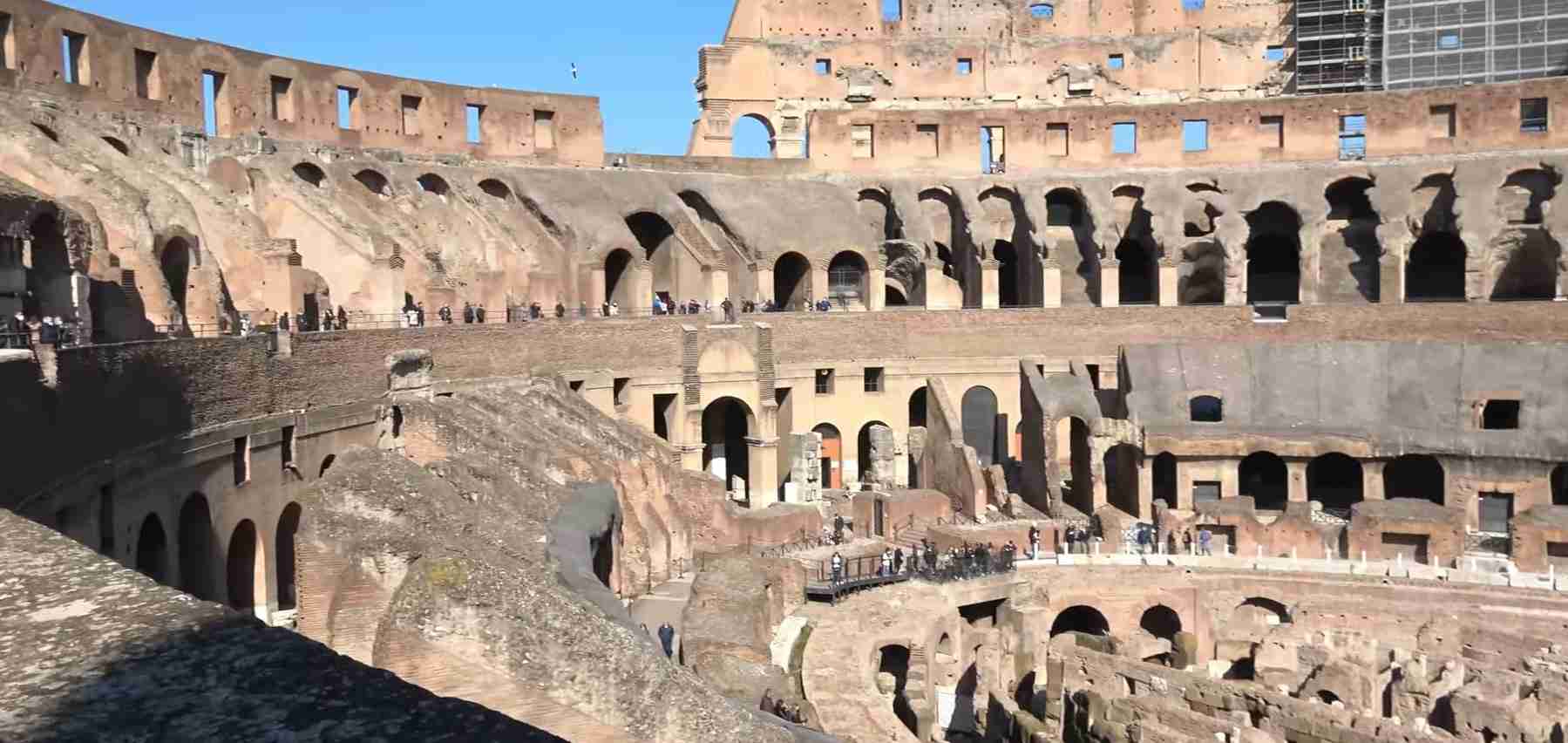
Visiting the Colosseum: Complete Guide
The Colosseum stands as ancient Rome’s most iconic monument, drawing over seven million visitors annually to experience the grandeur of the world’s largest surviving amphitheater where gladiators once battled for emperor and crowd. This architectural marvel offers modern travelers direct connection to Roman engineering brilliance, imperial spectacle, and the social dynamics that defined ancient civilization at its height. Understanding how to navigate ticket types, access special areas like the arena floor and underground hypogeum, and maximize your time within Rome’s most visited archaeological site transforms a rushed tourist obligation into profound historical immersion revealing layers of meaning beneath the famous stone arches.
Key Takeaways About Visiting the Colosseum
- Advance Booking Absolutely Essential: Timed-entry tickets release 30 days before visit dates and sell out rapidly during peak season, requiring online reservation through official channels or authorized resellers to guarantee access, as same-day walk-up availability remains extremely limited and unreliable even during low season.
- Combined Archaeological Park Access: Standard Colosseum tickets include entry to the Roman Forum and Palatine Hill within a 24-hour validity window, creating comprehensive ancient Rome experience across multiple monumental sites with single ticket purchase rather than separate admissions to each location.
- Multiple Access Levels with Varied Pricing: Ticket options range from standard entry viewing the amphitheater from spectator levels (€18) to premium experiences accessing reconstructed arena floor where gladiators fought and underground hypogeum chambers housing mechanical systems, with each level providing distinct perspectives and historical understanding.
- UNESCO World Heritage Recognition Since 1980: The Colosseum achieved World Heritage status as part of the Historic Centre of Rome inscription, recognized for outstanding universal value representing Roman architectural and engineering achievement that influenced amphitheater construction throughout the empire and modern stadium design worldwide.
- Strategic Timing Reduces Crowding: Early morning entries immediately at 8:30 AM opening or late afternoon visits two hours before closing encounter significantly fewer crowds than midday peak hours when coach tours concentrate visitor numbers, while winter low season (November-February excluding holidays) offers most peaceful experiences with easy booking availability.
- Guided Tours Provide Essential Context: The Colosseum’s massive scale, complex history, and limited on-site signage make expert-led tours valuable for understanding what you see, with guides explaining construction techniques, gladiatorial combat logistics, imperial propaganda purposes, and Christian martyrdom traditions invisible to self-guided visitors lacking archaeological background.
People Also Ask About Visiting the Colosseum
How Much Does It Cost to Visit the Colosseum?
Standard Colosseum tickets cost €18 for adults and include access to the Colosseum’s first and second viewing levels, the complete Roman Forum archaeological area, and Palatine Hill with its imperial palaces, all valid for 24 hours from first entry allowing flexible scheduling across two days if desired. Children and teenagers under 18 years old receive free admission regardless of nationality, though they must still reserve complimentary tickets online incurring a €2 booking fee that applies to all advance reservations including free entries. European Union citizens aged 18-25 qualify for reduced-price tickets at €2 plus the €2 booking fee upon presenting valid identification proving age and EU citizenship at entrance. Premium ticket options providing access to restricted areas command higher prices, with Full Experience Arena tickets costing €24 and including reconstructed arena floor access plus 48-hour validity, while Underground and Attic tours typically integrate into guided tour packages ranging €40-80 depending on group size, duration, and included areas. The official Parco Archeologico del Colosseo website (ticketing.colosseo.it) offers lowest base prices, while authorized third-party platforms charge modest premiums for enhanced customer service, flexible cancellation policies, and occasionally better availability when official channels sell out.
Can You Visit the Colosseum Without Booking in Advance?
Same-day walk-up ticket purchases at the Colosseum remain technically possible as an on-site ticket office reopened in May 2023 selling remaining availability for current-day entry, but this approach carries substantial risk of finding all time slots sold out, particularly during peak tourist season April through October when advance bookings fill capacity weeks ahead. Visitors arriving without reservations face long queues at ticket windows only to potentially learn no same-day slots remain available, wasting precious Rome sightseeing time in fruitless waiting that advance planning would eliminate entirely. Alternative same-day strategy involves purchasing tickets at the Roman Forum entrance along Via dei Fori Imperiali where shorter queues often persist because most tourists head directly to the Colosseum, as combined tickets sold at either location provide identical access to all three sites within the archaeological park. Low season months November through February (excluding Christmas-New Year period) offer improved walk-up chances, though even winter weekends and Italian holidays can see full capacity bookings requiring advance purchase. The 30-day advance booking window means prudent travelers secure tickets the moment their desired date becomes available, guaranteeing entry at preferred morning or late afternoon times rather than accepting whatever slots—if any—remain available through last-minute booking attempts that frequently result in disappointment.
What Is the Best Time of Day to Visit the Colosseum?
Early morning visits immediately following 8:30 AM opening time provide optimal conditions with minimal crowds, cool temperatures during summer months, and superior natural lighting illuminating the amphitheater’s travertine exterior from the rising eastern sun creating ideal photography conditions before tour groups arrive around 10:00 AM. Late afternoon entries approximately two hours before seasonal closing times similarly encounter reduced visitor numbers as most tourists have completed their visits, though summer heat may persist making physical comfort less ideal than morning coolness despite beautiful golden-hour lighting enhancing visual appeal. Midday visits between 11:00 AM and 2:00 PM represent peak crowding when coach tours concentrate visitor flow, temperatures reach daily maximums during warm months, and harsh overhead sunlight creates unflattering shadows for photography, making these hours least desirable despite often having better ticket availability than preferred morning slots. Winter visiting offers advantages of cooler comfortable temperatures eliminating summer heat concerns, though shorter daylight hours restrict late afternoon options as closing times advance to 4:30 PM during November-February compared to summer’s extended hours reaching 7:15 PM in peak season. First-Sunday-of-the-month free admission creates exceptional crowding with multi-hour entrance queues, no advance booking possible, and overwhelmed conditions making this free option worthwhile only for extremely budget-conscious visitors willing to sacrifice entire mornings to waiting rather than paying standard €18 admission for civilized timed entry.
Is the Colosseum Underground Tour Worth It?
Accessing the Colosseum’s underground hypogeum chambers provides extraordinary perspective on the mechanical sophistication supporting gladiatorial spectacles, revealing trap doors, pulley systems, animal cage networks, and the complex backstage infrastructure invisible from standard viewing levels where most visitors never comprehend the technological achievement enabling dramatic combat presentations. Underground tours limited to approximately 3,000 daily visitors compared to general admission’s much higher capacity create more intimate experiences with smaller groups, reduced crowding, and extended time exploring restricted areas unavailable to standard ticket holders who can only peer down into underground sections from above without entering. The premium pricing typically €40-80 depending on tour operator reflects both limited capacity maintaining preservation standards and mandatory guide accompaniment explaining what visitors see in chambers otherwise appearing as confusing stone corridors and empty spaces without expert interpretation connecting physical remains to historical function. Photography enthusiasts particularly value underground access for unique perspectives and atmospheric conditions impossible to capture from standard areas, while history buffs gain profound understanding of Roman engineering, theatrical presentation techniques, and the brutal reality behind gladiatorial entertainment’s staged drama. The cost-benefit calculation depends on individual interests and budget constraints—casual visitors satisfied with iconic amphitheater views from spectator levels may find standard tickets sufficient, while those seeking comprehensive understanding and exclusive access to restricted areas typically consider underground tours worthwhile despite higher costs and advance booking challenges as these limited-capacity experiences sell out earliest among all Colosseum ticket options.
Extended multi-day tours – 5+ days
Featured Rome Multi-Day Tour Packages

5 days
The Ultimate Rome Food & Cultural Small-Group Tour Package – 5 Days
- ✓ Comprehensive Rome tour
- ✓ Expert local guides included
- ✓ All accommodation arranged
- ✓ Transportation provided
3 days
3-Day Pompeii, Capri & Sorrento Mini Tour
- ✓ Comprehensive Rome tour
- ✓ Expert local guides included
- ✓ All accommodation arranged
- ✓ Transportation provided
3 days
Advent in Rome: Markets, Churches & Tiramisu
- ✓ Booking needs min. 2 travelers
5 days
Ciao Italia: 5 Days, 2 Cities, Infinite Wonders
- ✓ Comprehensive Rome tour
- ✓ Expert local guides included
- ✓ All accommodation arranged
- ✓ Transportation provided
Multi-day tour packages powered by TourRadar. Prices and availability subject to change.
Introduction: Understanding the Colosseum’s Significance
The Colosseum, formally known as the Flavian Amphitheatre, represents ancient Rome’s most ambitious architectural and engineering achievement, constructed between 72-80 AD under emperors Vespasian and Titus to provide permanent venue for gladiatorial combat, animal hunts, public executions, and theatrical spectacles entertaining up to 50,000 spectators in hierarchically arranged seating reflecting Roman social stratification. This elliptical amphitheater measuring 189 meters long, 156 meters wide, and 48 meters high employed revolutionary concrete construction techniques, complex underground mechanical systems, and sophisticated crowd management infrastructure establishing prototype for modern sports stadiums two millennia later. The building’s original purpose served multiple functions beyond entertainment—imperial propaganda demonstrating Flavian dynasty’s generosity through free spectacles, political control through bread-and-circuses distraction, and cultural reinforcement of Roman military values and hierarchy through ritualized combat presenting conquest and dominance as public theater.
The Colosseum’s survival through nearly 2,000 years of earthquakes, stone robbing, and urban development creates direct physical connection to ancient civilization that written histories alone cannot provide, as walking beneath the same arches where Roman citizens gathered, standing on reconstructed arena floor where gladiators fought, and exploring underground chambers housing elaborate stage machinery transforms abstract historical knowledge into tangible experiential understanding. Medieval and Renaissance Rome treated the abandoned amphitheater as quarry for building materials and fortified stronghold for noble families, with significant architectural elements removed to construct St. Peter’s Basilica, Palazzo Venezia, and other monuments before 18th-century preservation efforts recognized cultural value beyond utilitarian stone supply. Modern conservation balances archaeological integrity with tourism access as seven million annual visitors create wear requiring continuous maintenance, while recent restoration projects funded by Italian government and private sponsors like fashion house Tod’s ensure the monument survives for future generations to experience its powerful testimony to human architectural ambition and engineering capability.
Understanding the Colosseum requires appreciating its evolution through distinct historical phases—initial construction demonstrating Flavian imperial power, four centuries of active use hosting increasingly elaborate spectacles, gradual abandonment following gladiatorial combat’s prohibition, medieval repurposing for residential and defensive purposes, Renaissance exploitation as building material source, Enlightenment recognition as classical heritage worthy of preservation, and modern status as UNESCO World Heritage Site and global tourism icon. Each phase left physical traces visible in the structure today, from the different colored stone repairs marking earthquake damage through centuries, to the iron clamp extraction marks where medieval metalworkers harvested bronze fixtures, to the modern concrete reinforcements stabilizing weakened sections. This guide explores every dimension of visiting this architectural colossus, from practical logistics of tickets and tours to deeper appreciation of the cultural forces that shaped its creation, use, abandonment, and preservation as humanity’s most recognizable connection to ancient Rome’s grandeur and brutality.
History and Construction of the Colosseum
Emperor Vespasian commissioned the Colosseum’s construction around 72 AD on the site of Nero’s former artificial lake within the extravagant Domus Aurea complex, symbolically reclaiming public land from the tyrannical emperor’s private pleasure grounds and returning it to Roman citizens through construction of the world’s largest amphitheater. This location choice served propaganda purposes demonstrating Flavian dynasty’s contrast with Neronian excess, while the drained lake bed’s clay soil later contributed to foundation settling causing damage visible in the structure’s southern wall tilt. Construction employed between 60,000-100,000 workers including skilled Roman engineers, stonemasons, and artists alongside Jewish slaves captured during the 70 AD siege of Jerusalem, whose labor transformed Vespasian’s vision into physical reality through estimated 100,000 cubic meters of travertine stone quarried from Tibur (modern Tivoli) 20 miles distant, plus volcanic tufa blocks, brick, and innovative Roman concrete formed from volcanic pozzolana creating unprecedented structural possibilities.
The building’s construction proceeded with remarkable speed given its massive scale and technical complexity, with the first three tiers completed within eight years by Vespasian’s death in 79 AD, while his son Titus inaugurated the still-incomplete amphitheater in 80 AD with 100 days of games reportedly killing 9,000 animals and countless gladiators in spectacular opening ceremonies. Emperor Domitian later added the underground hypogeum level housing elaborate mechanical systems for raising animals and scenery through trap doors, plus the highest fourth tier increasing seating capacity and completing the structure approximately 81-96 AD. The construction employed innovative techniques including precise stone cutting achieving tight joints without mortar in the travertine facade’s decorative arches and columns, iron clamps connecting massive blocks (later extracted by medieval metal scavengers leaving visible holes throughout the structure), and sophisticated concrete vaulting creating the elliptical bowl’s rising tiers of seating accessed through numbered arches enabling rapid crowd entry and exit.
Architectural design reflected Greek influence through three tiers of arcades featuring different classical column orders—Doric engaged columns on the ground level, Ionic on the second, Corinthian on the third—creating rhythmic visual progression upward, while the fourth attic story employed flat Corinthian pilasters between rectangular window openings supporting the wooden masts from which sailors operated the velarium sun awning system. This retractable canvas covering protected spectators from sun and rain through complex rigging requiring specialized crews from the Roman fleet, demonstrating the integration of naval engineering into architectural function. The elliptical plan measuring 189 x 156 meters optimized sightlines from all seating positions to the 87 x 55-meter arena floor, while the underground hypogeum’s trap doors, pulley systems, and animal cage corridors enabled dramatic surprise appearances of combatants and beasts creating theatrical effects impossible in earlier temporary wooden amphitheaters.
The Colosseum’s active use spanned approximately 400 years from its 80 AD inauguration through the early 6th century when gladiatorial combat ceased, though the building continued hosting animal hunts until 523 AD and likely saw occasional use for public gatherings afterward. Major earthquakes in 442, 508, and particularly devastating damage in 1349 caused the southern exterior wall’s partial collapse creating the asymmetrical profile visible today where three-quarters of the outer ring survives while the southern section reveals internal structure usually hidden behind facade. Medieval Rome treated the abandoned monument as fortress when the Frangipani family fortified it in the 12th century, then as building material quarry where marble seats, travertine blocks, and decorative elements were systematically removed to construct Renaissance palaces, churches including St. Peter’s Basilica, and Palazzo Venezia throughout the 15th-16th centuries. Pope Benedict XIV’s 1749 consecration of the amphitheater as Christian martyrdom site based on dubious historical evidence nevertheless provided official protection ending stone removal, while 18th-19th century preservation efforts culminating in systematic archaeological study and structural stabilization transformed the Colosseum from ruin into monument, setting the foundation for its modern status as Rome’s primary tourist attraction and universal symbol of ancient civilization’s architectural achievement.
Architecture and Engineering Achievements
The Colosseum’s elliptical form measuring 189 meters along its major axis and 156 meters on the minor axis creates optimal geometry for amphitheater function, providing unobstructed sightlines from every seating position to the arena floor while the curved walls focus acoustic energy inward amplifying sound from combat and spectacle without modern electronic systems. This ellipse required extraordinary surveying precision establishing the geometric centerpoints and maintaining curve accuracy throughout construction using Roman measuring techniques including groma for right angles, chorobates for leveling, and sophisticated mathematical calculations determining each stone’s precise position within the curved wall rising 48 meters from foundation to upper cornice. The foundation itself extends 13 meters deep with concentric elliptical rings of concrete and stone distributing the enormous weight, though inadequate accounting for variable soil conditions beneath different sections contributed to the differential settling damaging the southern wall over centuries.
Load-bearing structure employs travertine piers connected by concrete barrel vaults creating the radiating wedge-shaped sections supporting rising seating tiers, an innovative system transferring weight through compression rather than tension allowing construction to unprecedented height without requiring massive solid walls that would block access and circulation. The vaulted corridors (vomitoria) penetrating the structure radially provided rapid crowd movement enabling the estimated 50,000 spectators to enter and fill the amphitheater within 15 minutes through the 80 numbered ground-level arches, each corresponding to seating sections marked by Roman numerals guiding ticket holders to proper locations in ancient precursor to modern stadium design. The four levels of seating (cavea) divided by horizontal access corridors maintained strict social hierarchy with senators occupying marble-seated first row, equestrian class behind them, ordinary citizens in upper tiers, and women relegated to highest wooden seats, creating architectural expression of Roman social stratification where physical position reflected legal status and political power.
The exterior facade originally featured three stories of arched openings framed by engaged columns creating rhythmic pattern of solid and void, light and shadow that Renaissance architects studied and imitated, though the fourth attic level’s flat wall surface contrasted with the arcaded levels below, supporting the wooden masts and bronze brackets holding the velarium sun shade. Decorative elements included travertine sculptures of gods and heroes filling the second and third level arch recesses (long since removed), while the cornice supported statues adding visual crown to the composition. Material choices reflected both engineering requirements and aesthetic aspirations—dense travertine limestone for structural elements requiring strength and durability, lighter volcanic tufa for interior secondary walls where weight reduction mattered, brick for curves and complex geometries easier to form than stone, and concrete providing unprecedented spanning capability in the vaults while employing local volcanic pozzolana creating hydraulic setting properties superior to lime mortar.
The underground hypogeum added by Domitian demonstrates Roman mechanical engineering sophistication through two-level subterranean structure housing cages for animals including lions, bears, and elephants, storage for weapons and scenery, chambers for gladiators awaiting combat, and complex systems of trap doors, ramps, and vertical shafts enabling dramatic surprise appearances on arena floor. The 32 animal lifts operated through windlass mechanisms pulling platforms vertically through trap doors, while corridors allowed handlers to move beasts from underground cages to lift positions without exposing themselves to danger. Scenery changes employed similar mechanical systems creating forests, buildings, or theatrical backdrops that appeared and disappeared during performances through coordinated operation of multiple lifts and trap doors, achieving special effects that Renaissance theaters would not match for another millennium. This underground complexity meant the arena floor required wooden platform construction covering the hypogeum and finished with sand surface (harena, source of the word “arena”) absorbing blood and providing traction for combat, though flooding for naval battle reenactments (naumachiae) became impossible after hypogeum installation replaced the earlier sealed floor capable of water retention.
UNESCO World Heritage Significance
The Colosseum achieved UNESCO World Heritage status in 1980 as integral component of the “Historic Centre of Rome, the Properties of the Holy See in that City Enjoying Extraterritorial Rights and San Paolo Fuori le Mura” inscription, one of the earliest and most significant World Heritage designations recognizing Rome’s extraordinary concentration of monuments spanning 3,000 years of continuous urban development. The inscription acknowledges the Colosseum under multiple UNESCO criteria including Criterion (i) representing “a masterpiece of human creative genius” through its innovative architectural and engineering solutions establishing amphitheater design principles influencing stadium construction through two millennia, and Criterion (ii) exhibiting “an important interchange of human values over a span of time” as Roman architectural techniques spread throughout the empire creating amphitheaters from Britain to North Africa following the Colosseum’s prototype. Additional criteria recognize the monument under Criterion (iii) as bearing “unique or exceptional testimony to a cultural tradition or civilization which is living or has disappeared,” with the Colosseum serving as civilization’s most tangible connection to Roman imperial culture, gladiatorial combat traditions, and the social dynamics of ancient Mediterranean world.
The World Heritage inscription carries obligations requiring Italian authorities and the Parco Archeologico del Colosseo (archaeological park managing the monument) to maintain the site’s outstanding universal value through appropriate conservation interventions, visitor management strategies preventing excessive wear, and protection from incompatible development in surrounding buffer zones. Recent major restoration projects including the 2011-2016 cleaning funded by Tod’s fashion house at €25 million demonstrated UNESCO standards requiring reversible interventions using compatible materials, documenting all work photographically and in writing, and maintaining the monument’s authentic character while addressing structural concerns and surface degradation from pollution. The designation also increases international attention and tourism bringing both benefits through enhanced global recognition and challenges through visitor pressure creating wear that accelerates deterioration, requiring constant balance between accessibility enabling people worldwide to experience this universal heritage and preservation ensuring the monument survives for future generations.
For visitors, UNESCO World Heritage status signals that the Colosseum transcends national monument status to represent cultural property of significance to all humanity, a site whose preservation serves interests beyond Italian heritage to embody shared human architectural achievement across civilizations. This global context positions the Colosseum among humanity’s most important cultural landmarks including the Pyramids of Giza, the Great Wall of China, the Taj Mahal, and other icons recognized as irreplaceable testimony to human creative genius warranting protection regardless of political boundaries or national interests. Understanding this UNESCO framework enriches appreciation beyond the monument’s famous profile, encouraging engagement with how ancient Romans expressed imperial power through architecture, how gladiatorial spectacle reflected social values modern sensibilities find disturbing yet historically significant, and how modern societies inherit responsibility for protecting these cultural legacies enabling people today and future generations to encounter physical evidence of civilizations vastly different yet fundamentally connected through shared human aspirations for monumental expression of communal identity.
Tickets and Booking: Essential Information
Standard Colosseum tickets priced at €18 for adults provide access to the amphitheater’s first and second spectator levels, the complete Roman Forum archaeological area, and Palatine Hill with its imperial palace complexes, all valid for 24 hours from first entry allowing visitors to spread exploration across two days rather than exhausting themselves attempting comprehensive coverage in single marathon session. This combined ticket structure means purchasing Colosseum admission automatically includes the Forum and Palatine without additional cost, though each site permits single entry only preventing multiple visits within the 24-hour validity window. Children and teenagers under 18 years old from all countries receive free admission but must still reserve complimentary tickets through the online booking system incurring the mandatory €2 reservation fee applied to all advance bookings regardless of base ticket price. European Union citizens aged 18-25 qualify for reduced tickets at €2 plus the €2 booking fee, while EU citizens over 65 receive free admission, all requiring valid identification proving eligibility at entrance where staff verify documentation before permitting entry.
Tickets release 30 days before visit dates through the official Parco Archeologico del Colosseo website (ticketing.colosseo.it), creating advance booking window where popular dates during peak season April through October often sell out within hours or days of becoming available, particularly for desirable morning time slots providing coolest temperatures and fewest crowds. The reservation system requires selecting specific date and entry time in 15-minute increments, with this timed entry strictly enforced at entrance where arriving late results in denied admission without refund or opportunity to join later groups. All tickets are issued in holder’s name requiring identification document at entrance matching the name on booking confirmation, preventing ticket transfers or resales that earlier non-nominative systems permitted. This personal identification requirement aims to combat scalping and unauthorized resellers, though it complicates group bookings where one person purchasing tickets for others must ensure names match the actual visitors’ identification documents or face entrance denial.
Third-party booking platforms including GetYourGuide, Viator, Tiqets, and specialized Rome tourism sites offer Colosseum tickets at higher prices than official channels but provide advantages including better availability when official sites sell out, English-language customer service, flexible cancellation policies, and bundled packages combining multiple Rome attractions at modest discounts compared to individual ticket purchases. These authorized resellers typically charge €20-30 for standard tickets versus the official €18, with premium reflecting service value rather than unauthorized scalping, and many travelers find the convenience and flexibility worth the modest markup especially when official booking proves difficult or confusing for non-Italian speakers. Guided tour packages ranging €40-80 per person include both admission and expert guide services, eliminating separate ticket booking while providing educational context most self-guided visitors lack without substantial advance research, creating value proposition that justifies premium pricing through enhanced understanding transforming ruin exploration into meaningful historical engagement.
Special access tickets providing entry to restricted areas command higher prices reflecting both limited daily capacity and enhanced experiences. Full Experience Arena tickets priced at €24 include reconstructed arena floor access where visitors walk the wooden platform covering the underground hypogeum, seeing the amphitheater from the gladiator’s perspective looking up at spectator tiers rather than down from above, with 48-hour validity exceeding standard tickets’ 24-hour window. Underground hypogeum tours accessing the subterranean chambers typically require guided group participation at €40-60 per person depending on operator, as these restricted areas maintain strict visitor number limits protecting fragile archaeological features while creating intimate experiences impossible in the crowded standard viewing levels. Attic level tours ascending to the amphitheater’s highest tier provide panoramic Rome views and unique architectural perspectives, similarly requiring guide accompaniment and premium pricing around €50-70 per person. These special access experiences sell out earliest among all ticket options, often requiring booking the moment the 30-day window opens or even joining waitlists during peak season when demand exceeds the severely limited daily capacity.
Visiting Hours and Practical Information
The Colosseum opens daily at 8:30 AM year-round with closing times varying seasonally to align with available daylight, ranging from 4:30 PM during the shortest winter days (late October through February) to 7:15 PM at summer peak (April through August), with gradual transitions between seasons creating monthly variations requiring visitors to verify exact hours for their specific visit date. The Roman Forum and Palatine Hill maintain slightly later 9:00 AM opening time compared to the Colosseum’s 8:30 AM, though the combined ticket’s 24-hour validity provides flexibility to visit these additional sites before or after the Colosseum at visitor preference within the valid window. Last entry occurs one hour before posted closing time across all seasons, meaning winter’s 4:30 PM closure admits final visitors at 3:30 PM while summer’s 7:15 PM closing stops admissions at 6:15 PM, leaving adequate time for entry procedures and initial exploration before staff close the monument.
The archaeological park closes entirely on December 25 and January 1 for Christmas and New Year holidays, representing the only annual closures barring emergency situations or special events occasionally requiring temporary restrictions. The first Sunday of each month offers free admission to all visitors as part of Italy’s national cultural heritage policy providing barrier-free access to state museums and monuments, though this well-intentioned program creates exceptional crowding with multi-hour entrance queues, no advance booking possible, and overwhelmed conditions making the free admission’s monetary savings questionable compared to paying standard €18 admission for civilized timed entry on any other day. Additional free entry dates include April 25 (Liberation Day), June 2 (Republic Day), and November 4 (National Unity Day), similarly generating intense crowding though somewhat less severe than the monthly first Sunday crush.
Security screening at all entrances employs airport-style metal detectors and bag checks requiring visitors to empty pockets, remove jackets, and pass through scanners before entering, with this process adding 5-15 minutes to entry time depending on crowd levels and thoroughness of staff screening. Large bags, backpacks exceeding standard day-pack size, suitcases, and wheeled luggage are prohibited from entry with no on-site storage facilities provided, forcing visitors carrying oversized items to return to hotels or find commercial luggage storage services near Termini station or other locations before visiting. Food and beverages (except water bottles) are prohibited inside the monument though vendors surrounding the exterior sell refreshments at inflated tourist prices, making advance provisions from neighborhood supermarkets or cafes financially wise. Bathrooms exist within the archaeological park but are limited in number and often crowded during peak hours, suggesting strategic use immediately upon entering before exploring the expansive site.
Weather rarely forces closures as the ruins remain open during rain, though visitors should prepare for exposure as most areas lack covered shelter, with summer sun creating intense heat requiring sun protection, hydration, and appropriate clothing, while winter cold and wind make layered clothing essential especially given the site’s exposed hilltop location catching full weather conditions. The archaeological park’s terrain involves significant walking across uneven ancient paving stones, rough modern pathways, and occasional stairs accessing different site areas, making sturdy walking shoes with good traction essential and ruling out fashion sandals, high heels, or smooth-soled shoes creating slipping hazards on polished stone surfaces especially when wet. Visitors with mobility limitations can access the Colosseum’s ground floor and first viewing level via elevator, though the arena floor, underground areas, and upper tiers remain inaccessible to wheelchairs, while the Forum and Palatine’s extensive archaeological zones present challenging terrain with limited accessibility accommodations.
Exploring the Colosseum Interior
Standard ticket holders enter through the main visitor entrance accessing the first and second viewing levels positioned in the original spectator seating areas (cavea), providing elevated perspectives looking down onto the exposed underground hypogeum chambers where wooden arena floor once covered the complex mechanical systems. The first level approximately 15 meters above the arena floor offers optimal overview of the elliptical structure’s full dimensions, the radiating pattern of underground corridors and chambers, and the southern wall’s partial collapse revealing internal construction techniques usually hidden behind the travertine facade. Informational panels scattered throughout viewing areas provide historical context, construction details, and explanations of gladiatorial combat formats, though these signs remain sparse compared to modern museums, making audio guides or tour participation valuable for comprehensive understanding transforming physical remnants into meaningful historical narrative.
The second viewing level reached via stairs or elevator provides higher perspective revealing how the seating tiers stacked vertically, the vaulted access corridors radiating from the arena center, and panoramic views across the Roman Forum to Palatine Hill creating visual connections between monuments illustrating ancient Rome’s monumental landscape. Photography enthusiasts find both levels offer distinct opportunities—the first level capturing underground detail and human scale with visible brick and stone textures, the second level achieving wider compositional frames encompassing more architectural context and surrounding urban fabric. The interior circuit follows one-way routing through the ancient structure preventing backtracking, though visitors can spend unlimited time within their ticketed entry window photographing, reading informational panels, and absorbing the overwhelming sense of history embedded in weathered stone and surviving structural elements.
Reconstructed sections help visitors visualize original configurations difficult to comprehend from ruins alone, including partial wooden arena floor reconstruction revealing how planking covered the hypogeum creating combat surface finished with sand (harena) absorbing blood and providing traction, and architectural models showing the complete structure with its missing outer wall sections, upper tiers, and velarium sun shade. The exposed underground hypogeum visible from standard viewing levels presents complex network of corridors, chambers, and vertical shafts that held caged animals, staged scenery, and operated mechanical lifts raising beasts and combatants through trap doors for surprise arena appearances, demonstrating theatrical sophistication behind gladiatorial spectacle’s apparently spontaneous violence. Visitors without underground tour access can only view this level from above, seeing the brick-walled chambers and corridors but unable to enter the passages or experience the scale from gladiator perspective available exclusively through restricted-access tours.
Interpretive challenges stem from the Colosseum’s status as archaeological site rather than museum, with limited climate control, minimal built interpretation infrastructure, and presentation prioritizing preservation over visitor education compared to purpose-built exhibition spaces. The monument’s massive scale creates orientation difficulties as first-time visitors struggle to comprehend spatial relationships between different areas, understand which ruins represent which historical functions, and visualize how fragmentary remains connected in the complete operational amphitheater. These interpretation gaps make audio guides available for rent or included with some ticket types valuable investments at modest cost, providing walking commentary synchronized to numbered stations throughout the monument explaining what visitors see and contextualizing physical remains within broader historical narratives about Roman entertainment, imperial propaganda, architectural innovation, and the social dynamics dividing spectators by class across hierarchical seating tiers expressing political order through spatial organization.
Special Access Areas: Arena Floor and Underground
Arena floor access available exclusively through Full Experience Arena tickets or guided tours transforms the visitor perspective from spectator viewing combat from above to participant standing where gladiators fought, seeing the amphitheater from ground level as combatants experienced it with the towering seating tiers rising 48 meters overhead creating visceral sense of enclosure and exposure impossible to appreciate from standard elevated viewpoints. The reconstructed wooden platform covering portions of the underground hypogeum demonstrates how the original complete arena floor concealed the elaborate backstage machinery from spectators’ view, creating illusion of open combat space while hiding the mechanical systems, animal cages, and theatrical infrastructure enabling surprise appearances, scenery changes, and dramatic effects that made Roman spectacles psychologically powerful beyond mere violence. Walking this surface where historical evidence documents thousands of deaths over four centuries of use creates profound emotional impact transcending archaeological interest, connecting visitors physically to the brutal entertainment that defined Roman popular culture and expressed imperial power through ritualized violence presented as public theater.
Photography from arena level provides unique perspectives impossible from standard viewing areas, capturing upward angles emphasizing the seating tiers’ vertiginous height, framing the partial south wall collapse against sky, and creating dramatic human-scale compositions where visitors pose against architectural elements appearing as towering backdrops rather than distant structures. The reduced crowding compared to standard levels where thousands of visitors circulate simultaneously makes arena access more pleasant experientially beyond the exclusive access prestige, allowing contemplative time to absorb the space’s atmosphere and historical significance without constant jostling from tour groups. The 48-hour ticket validity exceeding standard tickets’ 24-hour window provides additional flexibility for visitors wanting to return at different times of day experiencing varied lighting conditions or scheduling conflicts preventing single comprehensive visit, though the timed entry for initial arena access requires meeting the reserved slot even if subsequent Colosseum visits within the validity period have no time restrictions.
Underground hypogeum tours descending into the subterranean chambers where gladiators awaited combat and caged animals roared before being mechanically lifted to arena level provide the Colosseum’s most exclusive and intimate visitor experience, with strict daily capacity limits around 3,000 visitors compared to general admission’s much higher numbers creating genuinely restricted access justifying premium pricing. The two-level underground network extends beneath the entire arena floor with corridors connecting chambers that held different animal species (lions, bears, elephants, exotic imports from across the empire), armories storing weapons distributed to combatants, and the mechanical systems operating trap doors and vertical lifts creating surprise appearances and theatrical effects. Modern walkways through these brick-vaulted passages allow visitors to appreciate the scale and complexity while preserving fragile archaeological features from contact damage, with the cool underground environment providing relief from summer heat while creating atmospheric conditions enhancing the experience’s emotional impact through sensory contrast with the bright open amphitheater above.
Tour guides mandatory for underground access explain functions of different chambers, mechanical operation of the vertical shaft systems raising platforms through trap doors, logistics of moving dangerous animals from storage cages to lift positions, and the coordination required between multiple operators working underground to synchronize surface appearances with the combat narrative’s dramatic requirements. This expert interpretation transforms confusing corridors and empty chambers into comprehensible theatrical infrastructure, helping visitors understand how the Romans achieved spectacular effects through mechanical engineering rather than modern electronics or digital systems. The hypogeum’s preservation challenges stem from its subterranean position creating moisture accumulation damaging brick and mortar, limited ventilation causing air quality concerns, and structural vulnerabilities from earthquake damage and settling requiring constant monitoring, making visitor number restrictions essential for conservation while creating scarcity that enhances the experience’s prestige and makes advance booking essential as these tours sell out earliest among all Colosseum ticket options.
The Complete Archaeological Park Experience
The Colosseum ticket’s inclusion of Roman Forum and Palatine Hill access within 24-hour validity creates comprehensive ancient Rome experience spanning the empire’s most important monuments rather than isolated amphitheater visit, as these three interconnected sites together document Roman civilization from republican government through imperial spectacle to palatial residential grandeur. The Roman Forum served as ancient Rome’s political, commercial, and religious center where the Senate met in the Curia, law courts operated from the Basilica Julia, triumphal processions passed along the Via Sacra, and temples honored Jupiter, Saturn, Vesta and other deities central to Roman religion and civic identity. Walking the Forum’s ancient paving stones where Julius Caesar was cremated, Cicero delivered orations, and centuries of Roman history unfolded creates tangible connection to events known through texts but experienced physically only in this extraordinary archaeological landscape preserving monumental architecture otherwise lost to time.
Major Forum monuments include the Temple of Saturn with its eight surviving columns, the Arch of Septimius Severus celebrating military victories through detailed relief sculptures, the restored Curia Senate house with its geometric marble floor patterns, the Basilica of Maxentius demonstrating Roman concrete vaulting at massive scale, and the Temple of Vesta where sacred flame tended by Vestal Virgins symbolized Rome’s eternal existence. The Via Sacra (Sacred Way) connecting these monuments functioned as Rome’s primary ceremonial route where triumphal processions entered the city showcasing conquered peoples, looted treasures, and victorious generals before crowds lining the street and filling the Forum’s public spaces. The archaeological remains present challenges similar to the Colosseum—minimal signage, confusing spatial relationships between ruined structures, and difficulty visualizing how fragmentary walls and isolated columns connected in the complete urban fabric—making audio guides or expert tours valuable for transforming scattered ruins into comprehensible cityscape.
Palatine Hill rising above the Forum represents ancient Rome’s most exclusive residential district where emperors built increasingly elaborate palace complexes commanding views across the city and creating architectural expressions of imperial power rivaling the public monuments below. The Domus Augustana, Domus Flavia, and other imperial residences combined private apartments, state reception halls, gardens with elaborate fountain systems, and administrative spaces housing the governmental machinery of empire, all constructed with luxury materials including imported marbles, intricate mosaic floors, painted wall frescos, and architectural sophistication demonstrating that Roman building technology served residential comfort alongside monumental public works. The Palatine Museum displays sculptural fragments, frescoes, architectural decorations, and artifacts recovered from the hill’s excavations, providing climate-controlled exhibition space presenting objects whose original context in ruins outside remains difficult for non-specialists to imagine.
Strategic visiting sequencing can optimize the combined ticket’s value by starting at the Roman Forum entrance along Via dei Fori Imperiali where ticket office queues typically remain shorter than the Colosseum’s main entrance despite selling identical access to all three sites. This approach allows exploring the Forum and Palatine Hill first during morning hours when crowds remain manageable and temperatures stay cool, then proceeding to the Colosseum for pre-booked timed entry later in the day after initial archaeological immersion has provided historical context making the amphitheater more meaningful than if visited first without understanding its place within broader Roman urban landscape. The 24-hour validity permits splitting the experience across two days, visiting the Colosseum on day one then returning the next morning for Forum and Palatine exploration when fresh rather than exhausted from attempting comprehensive coverage in marathon single-day session risking heat exhaustion, museum fatigue, and diminished appreciation from information overload.
Guided Tours: Value and Options
Professional guided tours provide substantial value for Colosseum visitors lacking archaeological background or extensive advance research, as expert guides explain construction techniques, gladiatorial combat logistics, imperial propaganda purposes, architectural innovations, and historical contexts invisible to self-guided exploration of ruins offering minimal on-site interpretation. The Colosseum’s massive scale, complex 2,000-year history spanning multiple construction phases and functional transformations, and presentation as archaeological site rather than museum create comprehension challenges that casual visitors struggle to overcome independently, making expert interpretation difference between confusing ruin exploration and meaningful engagement with Roman civilization’s architectural and cultural achievement. Tours ranging 1-3 hours depending on format provide structured itineraries ensuring visitors see key features, understand significant historical events, and gain perspective on how the monument functioned during its active use that independent visiting without substantial preparation typically fails to achieve.
Standard group tours accommodating 15-25 participants represent most affordable guided option at €40-60 per person including admission tickets, combining economy with expert knowledge though requiring acceptance of slower pacing accommodating varied participant abilities and interests. Semi-private tours limiting groups to 6-12 people command premium pricing €60-80 per person but provide more intimate experiences with easier guide interaction, question opportunities, and flexible pacing responding to group interests rather than rigid schedules. Private tours for individual parties ranging €200-400 total depending on group size offer maximum flexibility, personalized attention, customized pacing and focus areas, and scheduling convenience, creating value proposition for families, couples, or small friend groups seeking investment in enhanced experience. Skip-the-line marketing appearing prominently in tour advertising refers primarily to avoiding the ticket office queue rather than the security screening all visitors undergo, as advance ticket purchase whether independent or tour-included eliminates ticket-buying waits but creates no special security privileges.
Specialized tours focusing on particular aspects provide depth beyond general overviews, including underground hypogeum access tours mandatory for entering restricted areas, gladiator-focused programs explaining combat formats and weaponry, architectural tours analyzing engineering techniques, and evening tours during extended summer hours experiencing the monument under artificial lighting creating atmospheric conditions impossible during daytime. Language options extend beyond English and Italian to include Spanish, French, German, Portuguese, and other major languages, with guide quality varying significantly based on individual expertise, communication skills, and personality requiring advance research of tour operator reviews and ratings. The highest-quality tours employ archaeologists, historians, or extensively trained specialists bringing academic knowledge and research experience, while budget operators may use guides with minimal formal education reading memorized scripts lacking depth to address sophisticated questions or adapt presentations to participant backgrounds and interests.
Audio guide alternatives provide self-paced interpretation at lower cost than live tours, available as standalone rentals for €5-7 or included with certain ticket packages, delivering pre-recorded commentary synchronized to numbered stations throughout the Colosseum with options in numerous languages. These automated guides sacrifice the interaction, question-answering, and personalization that human experts provide, but offer flexibility for visitors preferring independent pacing, freedom to linger at points of personal interest, and ability to skip segments lacking relevance to individual priorities. Smartphone applications including the official MyColosseum app provide free audio guides, interactive maps, augmented reality features overlaying digital reconstructions on physical ruins through device cameras, and multimedia content enriching the visit without rental costs, though battery consumption during extended use requires ensuring adequate device charge before visiting or carrying portable power banks.
Photography Tips and Restrictions
Photography for personal non-commercial use is permitted throughout the Colosseum without restrictions on cameras, smartphones, or equipment, allowing visitors to document their experience freely while respecting other guests’ enjoyment and avoiding obstruction of pathways or viewing areas during shooting. The monument’s iconic status and photogenic qualities from ancient stone textures to dramatic arches and scale contrasts make it irresistible subject for both casual snapshots and serious photography, though achieving quality images requires understanding the lighting challenges, compositional opportunities, and technical considerations specific to this complex architectural subject. Morning light from the east illuminates the amphitheater’s western interior and exterior facades creating warm tones and revealing surface textures, while afternoon sun from the west creates raking light across the eastern sections emphasizing three-dimensional form through shadows, making time-of-day planning significant for photographers pursuing particular aesthetic effects beyond simple documentation.
Exterior photography benefits from distance establishing shots from Oppian Hill directly south of the amphitheater, where elevated vantage point reveals the elliptical form, southern wall collapse, and full height impossible to appreciate from ground level where proximity prevents comprehensive views. The northwestern approach along Via dei Fori Imperiali provides classic perspective capturing the intact three-quarters of the outer ring with Arch of Constantine in foreground creating layered historical composition. Sunrise photography requires very early arrival before opening hours shooting from public areas outside the archaeological park, rewarding dedicated photographers with golden light, empty tourist-free scenes, and atmospheric conditions worth the predawn wake-up time. Interior photography faces challenges from high dynamic range between bright sky visible through arches and dark shadowed vaults requiring exposure bracketing for HDR processing, careful highlight and shadow balance, or acceptance of blown highlights or blocked shadows inherent to single-exposure capture.
Compositional strategies should emphasize the architecture’s geometric patterns through symmetrical framing of arches, radiating lines of the vaulted corridors, rhythmic repetition of columns and openings, and scale contrasts placing human figures against massive structural elements conveying the monument’s overwhelming dimensions. Wide-angle lenses 16-35mm full-frame equivalent capture comprehensive interior views and establish architectural context, though distortion requires careful leveling to prevent converging verticals creating leaning appearance. Standard focal lengths 35-70mm provide natural perspective for detail shots, column groupings, and human-scale scenes. Telephoto lenses 70-200mm or longer isolate architectural details, compress perspective stacking arches visually, and enable candid visitor portraits without intrusive close approach. Tripod use is prohibited inside the monument creating handheld shooting necessity requiring image stabilization or high ISO settings in darker areas, though mini tripods or beanbags rested on walls or floors during uncrowded periods can provide stability without formal tripod setup likely to attract staff intervention.
Drone photography is strictly prohibited over the archaeological park without special permits requiring months of advance application through bureaucratic processes, with violation risking substantial fines and equipment confiscation, making aerial perspectives unavailable to typical visitors though commercially licensed operators occasionally receive authorization for specific projects. Professional photography beyond personal documentation including commercial shoots, fashion photography, wedding photography, or filming requires advance permits and fees, with unauthorized professional activity subject to intervention and potential fines when detected by security personnel. The archaeological park’s openness to personal photography without permits or fees represents generous policy compared to many historic sites restricting cameras or charging photography fees, requiring only that visitors exercise courtesy toward others, avoid dangerous positions climbing on ruins or barriers for shots, and refrain from obstructing access while setting up equipment.
Best Times to Visit and Seasonal Considerations
Spring months April through May offer optimal visiting conditions combining pleasant temperatures averaging 15-20°C (59-68°F), manageable tourist crowds building but not yet reaching summer peaks, blooming vegetation in the Forum and Palatine adding natural beauty to archaeological landscapes, and extended daylight hours compared to winter allowing afternoon and early evening visits. Autumn September through October mirrors spring advantages with warm weather, reduced visitor numbers compared to summer, comfortable walking conditions without summer’s intense heat, and golden lighting enhancing photography as autumn sun angle creates warm color temperatures. These shoulder seasons represent ideal times for visitors prioritizing experience quality over guaranteed weather, as occasional rain remains possible unlike summer’s near-certain sunshine, but precipitation typically arrives in brief showers rather than day-long downpours and the cooler temperatures make rain less disruptive than summer heat proving.
Summer peak season June through August brings maximum crowding as international tourists, European holiday-makers, and Italian domestic visitors converge on Rome creating the year’s busiest archaeological park conditions, with midday temperatures often exceeding 30°C (86°F) and minimal shade across the exposed ancient ruins making heat management essential through early morning or late afternoon scheduling, adequate hydration, sun protection, and realistic acknowledgment that summer visiting involves physical discomfort alongside guaranteed weather and maximum operational hours. The season’s advantages include extended closing times reaching 7:15 PM providing late afternoon and early evening entry opportunities, near-zero rain probability enabling confident outdoor planning, vibrant urban atmosphere as Romans embrace outdoor dining and evening socializing, and maximum availability of tours, services, and amenities as the tourism industry operates full capacity. Advance booking becomes absolutely critical during summer when preferred time slots sell out weeks ahead and same-day availability essentially disappears, while strategic timing targeting earliest possible entry (8:30 AM) or latest afternoon slots (two hours before closing) mitigates crowding though not heat.
Winter low season November through February attracts minimal tourists creating peaceful archaeological park experiences with easy ticket availability, short or nonexistent queues, intimate conditions allowing contemplative engagement with ruins, and significantly lower Rome hotel and restaurant prices compared to peak season though the Colosseum itself maintains consistent admission pricing year-round. Cold temperatures averaging 5-12°C (41-54°F) require warm layered clothing especially given wind exposure on Palatine Hill’s summit, while reduced daylight hours and 4:30 PM closing times limit afternoon visiting options compared to summer’s extended operations. December-January holiday period brings increased visitors and special hours despite overall winter slowdown, while November and February represent true quiet season with February particularly uncrowded as most tourists avoid Rome entirely before spring arrives. Rain probability increases compared to summer though still remains relatively low by northern European standards, and wet days make exploring ancient ruins slippery and uncomfortable requiring waterproof footwear and rain gear.
Day-of-week patterns show weekdays particularly Tuesday through Thursday encountering fewer visitors than weekends when Romans join international tourists for cultural outings, creating more relaxed conditions for weekday visiting if travel schedules permit. Monday maintains comparable crowding to other weekdays despite some tourist attractions closing Mondays, as the Colosseum’s daily operation prevents the museum-closed visitor concentration affecting other Rome monuments. Weekends see highest crowds especially Saturdays when day-trippers from surrounding regions supplement overnight tourists, while Sunday first-of-month free admission creates extraordinary conditions discouraging all but extremely budget-conscious visitors willing to sacrifice hours to queuing for monetary savings. Italian national holidays including April 25 (Liberation Day), May 1 (Labor Day), June 2 (Republic Day), August 15 (Ferragosto), and November 1 (All Saints) generate domestic tourism peaks rivaling or exceeding typical summer weekend crowding, making these dates worth avoiding when possible despite generally pleasant seasonal conditions.
Getting to the Colosseum
Metro Line B (blue line) provides the most direct public transportation option with the Colosseo station opening directly across from the amphitheater’s main entrance, requiring only crossing Via dei Fori Imperiali to reach ticket control and security screening. This subway connection makes the Colosseum accessible from Termini central railway station via four stops northeast on Line B, from Ostiense station serving regional trains and connections to Fiumicino Airport via three stops south, and from residential neighborhoods throughout Rome’s eastern sectors. Metro tickets cost €1.50 for 100-minute validity allowing transfers between metro lines and buses within the time window, available from automated machines at stations accepting cash and cards, tobacco shops (tabacchi) throughout the city, and some newsstands, with tickets requiring validation in yellow machines before boarding metro or buses though not for return journeys within the 100-minute window.
Bus routes 51, 75, 85, 87, and 118 serve stops within walking distance of the Colosseum along Via dei Fori Imperiali and Via Labicana, providing surface transportation alternatives offering street-level views of Rome’s urban fabric compared to underground metro travel. The electric minibus route 117 navigates the narrow streets of Monti neighborhood and historic center connecting Piazza del Popolo to San Giovanni in Laterano via the Colosseum, serving visitors exploring central Rome on foot who need occasional transit assistance. Rome’s bus system operates on the same €1.50 100-minute ticket as the metro with similar purchase and validation requirements, though vehicles become extremely crowded during rush hours morning and evening making metro generally preferable for speed and comfort when traveling specifically to reach major monuments.
Walking from central Rome locations provides pleasant approach experiencing the city’s layered history and urban character beyond monument-to-monument rushing, with Piazza Venezia approximately 15 minutes northwest via Via dei Fori Imperiali passing the Imperial Forums’ excavations, the Trevi Fountain roughly 20 minutes north through Monti neighborhood’s artisan shops and cafes, and the Spanish Steps about 30 minutes requiring navigation through commercial districts and tourist-oriented streets. These walking routes reveal everyday Roman life, neighborhood bakeries and markets, religious processions and local celebrations, Renaissance palaces converted to apartments, and the texture of lived urban experience that tourist-focused itineraries often miss. The Colosseum’s prominence on Rome’s skyline and frequent signage make navigation relatively straightforward for visitors with basic map-reading abilities or smartphone mapping applications, though Rome’s Medieval street patterns create occasionally confusing routes compared to modern grid-plan cities.
Taxis provide door-to-door convenience charging metered fares with typical rates from Termini station approximately €10-15, from Trastevere neighborhood €15-20, and from Fiumicino Airport €48 fixed rate, though traffic congestion during rush hours or special events can create delays making metro more time-efficient despite less comfort. Ride-sharing services including Uber operate in Rome though with regulatory restrictions limiting availability and forcing use of licensed taxis rather than private drivers in many situations, making traditional taxi use more reliable. Organized tour operators typically include hotel pickup and drop-off in package prices, eliminating transportation concerns while adding convenience for visitors unfamiliar with Rome’s geography or uncomfortable navigating unfamiliar cities, though this door-to-door service comes at cost reflecting both actual transportation expenses and markup for handling logistics that independent travelers manage themselves.
Accessibility and Visitor Limitations
The Colosseum provides wheelchair accessibility to ground floor and first viewing level via elevator, allowing mobility-impaired visitors to experience the monument’s most important areas including views of the exposed underground hypogeum and appreciation of the amphitheater’s scale and architectural features. Accessible entrance routes avoid stairs through designated pathways marked with international accessibility symbols, while accessible bathrooms exist within the archaeological park though in limited number and locations requiring advance planning to identify. The limitations include inaccessibility of the arena floor requiring steps to reach the reconstructed wooden platform, complete inaccessibility of underground hypogeum tours navigating narrow brick-vaulted corridors with uneven ancient flooring, and inaccessibility of upper viewing tiers reached exclusively by stairs, meaning wheelchair users can experience approximately 40% of the monument but miss restricted areas and certain vantage points.
The Roman Forum and Palatine Hill present significant accessibility challenges given their archaeological nature with ancient paving stones, uneven terrain, steep inclines on Palatine’s slopes, and stairs accessing different site levels and monument interiors. Wheelchair users can explore main Forum areas along Via Sacra and view major monuments from pathways, but cannot access many temples’ elevated platforms, Palatine Hill’s summit palaces and gardens, or the Palatine Museum’s upper floors without elevator access. Visitors with mobility limitations but some walking capability face similar challenges from uneven surfaces, distance requiring extensive walking across the large archaeological park, minimal seating for rest stops, and absence of covered areas for shade or weather protection making the visit physically demanding even for able-bodied visitors and potentially exhausting for those with reduced endurance.
Visitors with visual impairments can participate in specialized tactile tours offered periodically providing three-dimensional models, touchable architectural fragments, and verbal descriptions creating alternative sensory access to the monument’s architectural and historical significance, though these require advance reservation and scheduling around limited availability. Audio guide content available through smartphone apps or rental devices provides auditory interpretation valuable for blind visitors when combined with sighted companion describing visual features referenced in commentary. Visitors with hearing impairments face limitations from the guided tour format relying heavily on spoken communication without widespread availability of sign language interpretation or visual aids, though written materials and independent exploration with printed guides or smartphone apps provide alternatives to auditory-focused programming.
Children are welcome throughout the archaeological park without age restrictions, though the monument’s scale, limited child-focused interpretation, extensive walking requirements, and lack of playground or recreational facilities make the visit potentially challenging for young children lacking historical interest or patience for architectural exploration. Family-friendly tours marketed specifically to children employ engaging storytelling techniques, interactive elements, and age-appropriate explanations transforming potentially boring adult-oriented historical lecture into entertainment maintaining juvenile attention, though these specialized programs command premium pricing and require advance booking. Stroller access follows similar limitations as wheelchairs with ground floor accessibility but challenges on uneven terrain, while many parents find baby carriers more practical than wheeled options given the archaeological site’s surfaces and crowding during peak periods.
Combining the Colosseum with Other Rome Attractions
The Palatine Hill’s summit provides direct pedestrian connection to the Roman Forum creating natural sequence exploring all three sites included in the combined ticket, but also offers unexpected proximity to the Circus Maximus valley below visible from southwestern Palatine overlooks and accessible via descent paths connecting to the ancient chariot racing venue’s modern park space. This proximity enables visitors to complete the four major ancient Rome monuments in single comprehensive itinerary covering the Colosseum’s gladiatorial history, the Forum’s political and religious significance, Palatine’s imperial residential grandeur, and Circus Maximus racing traditions, creating thematic coherence around Roman entertainment, power, and urban planning. The nearby Arch of Constantine standing prominently between the Colosseum and Palatine Hill represents triumphal monument architecture worth brief examination for its relief sculptures documenting 4th-century military victories and repurposed decorative elements plundered from earlier monuments.
The Capitoline Museums atop Capitoline Hill 15 minutes northwest display extraordinary Roman sculpture collections including the iconic Capitoline Wolf, monumental equestrian statue of Marcus Aurelius, and portrait busts documenting imperial succession across centuries, while Palazzo Altemps 20 minutes north houses classical sculpture in Renaissance palace setting creating atmospheric presentation connecting ancient art to aristocratic collecting traditions. These museum visits provide climate-controlled respite from outdoor archaeological exploration, deeper engagement with Roman artistic achievement through curated collections versus fragmentary ruins, and essential context for understanding the sculpture, decorative programs, and material culture that animated the monuments whose stripped architectural skeletons dominate the Forum and Palatine’s current appearance. Combination passes bundling multiple attractions offer modest savings compared to individual admissions while providing logistical convenience of single purchase.
The Baths of Caracalla 15 minutes south via Via di San Gregorio represent Rome’s best-preserved imperial bath complex, demonstrating the massive scale, architectural sophistication, and social importance of public bathing culture integral to Roman daily life yet difficult to comprehend from the Forum’s fragmentary bath remains. The complex’s museum displays hypocaust heating systems, mosaic fragments, and sculptural decorations while the atmospheric ruins host summer opera performances utilizing the dramatic ancient setting. San Clemente church 10 minutes northeast reveals Rome’s layered history through three building levels—12th-century basilica atop 4th-century church atop 1st-century Roman apartment building and Mithraic temple—demonstrating urban continuity and religious transformation spanning pagan worship through early Christianity to medieval Catholicism compressed vertically within single site.
Vatican Museums and St. Peter’s Basilica 4 kilometers northwest via metro or bus represent Rome’s other unmissable cultural attractions, though attempting both Vatican and Colosseum in single day creates exhausting marathon requiring excellent physical condition, efficient planning, and acceptance of superficial engagement rather than contemplative exploration. Most visitors benefit from splitting these major attractions across multiple days, dedicating full mornings to each when energy and attention remain high, leaving afternoons for smaller secondary attractions, neighborhood wandering, or rest periods avoiding the fatigue that diminishes appreciation when pushing physical limits. Multi-day Roma Pass options provide unlimited public transportation plus free or discounted admission to numerous attractions, potentially offering value for visitors staying several days and planning intensive cultural itineraries, though careful calculation against actual planned visits prevents purchasing passes exceeding their cost-benefit compared to individual ticket purchases.
Frequently Asked Questions
How Long Should I Plan to Spend at the Colosseum?
Most visitors exploring the Colosseum’s standard first and second viewing levels with moderate pace complete their visit in 60-90 minutes including security entry, initial orientation, circuit of both accessible floors, photography stops, and informational panel reading, though this represents minimum time for basic overview without rushing or comprehensive engagement. Adding arena floor access extends the visit by 30-45 minutes given the separate entrance procedures and additional areas to explore, while underground hypogeum tours typically require 90-120 minutes including mandatory guide commentary explaining the subterranean chambers’ historical functions and mechanical systems. Visitors planning to explore the complete archaeological park including the Roman Forum and Palatine Hill should allocate minimum 4-5 hours for all three sites, though a full day proves more realistic for thorough exploration without exhausting museum-fatigue or heat-related stress during summer. Photography enthusiasts, history specialists, or visitors particularly engaged by ancient Rome can easily spend entire days within the park photographing from varied angles, revisiting specific areas at different times, and consulting reference materials contextualizing what they observe, making time allocation highly dependent on individual interests and engagement depth rather than standardized duration recommendations.
Are There Bathrooms Inside the Colosseum?
Public bathrooms exist within the archaeological park at limited locations including near the Colosseum’s main entrance and at several points throughout the Roman Forum and Palatine Hill, though these facilities remain basic with cleanliness and maintenance varying throughout the day as high visitor volume overwhelms cleaning schedules. The bathroom shortage compared to visitor numbers creates queues during peak periods, particularly midday when the site reaches maximum capacity, making strategic bathroom use before entering the park or immediately upon entry advisable before crowds build. No bathrooms exist at elevated viewing levels within the Colosseum itself, requiring visitors needing facilities during their monument exploration to descend to ground level exits and locate the nearest bathroom before re-entering through security screening, potentially losing preferred viewing positions or photographic opportunities depending on crowding levels. Visitors with medical conditions affecting bathroom frequency should plan accordingly, considering locations of facilities along their intended route and timing bathroom stops strategically to avoid urgent situations in areas distant from facilities.
Can I Bring Food and Drinks into the Colosseum?
Food is prohibited inside the Colosseum and throughout the archaeological park with security screening confiscating picnic meals, sandwiches, and other edible items discovered during bag checks at entrance, though enforcement focuses primarily on substantial food quantities rather than emergency snacks or small items like granola bars carried for medical conditions. Water bottles are explicitly permitted and strongly recommended especially during summer when heat and sun exposure create dehydration risk, with refillable bottles ideal for using the park’s drinking fountains providing free water access throughout the site. Vendors surrounding the archaeological park sell bottled water, soft drinks, and basic refreshments at inflated tourist prices, making advance provisions from neighborhood supermarkets or convenience stores financially wise for budget-conscious travelers. The food prohibition aims to prevent litter damaging the archaeological site, reduce pest attraction to sensitive historic areas, and maintain decorum in a monument of cultural significance where eating appears disrespectful, though the policy’s practical effect forces visitors to choose between expensive on-site vendor purchases, exiting the park entirely for meals requiring re-entry through security, or visiting on empty stomachs risking low blood sugar and reduced energy for the physically demanding archaeological exploration.
Is the Colosseum Open at Night?
Standard daytime visiting hours close the Colosseum at seasonal times ranging from 4:30 PM in winter to 7:15 PM in summer, with no regular evening opening hours for general admission tickets providing after-dark access to the monument. Special evening tours and programs occasionally operate during summer months offering unique after-hours access experiencing the monument under artificial lighting creating dramatic atmospheric conditions impossible during daylight, though these limited programs require separate booking through specific tour operators, command premium pricing significantly exceeding standard admission, and sell out rapidly given restricted availability and high demand for exclusive evening experiences. The absence of regular night access reflects both operational cost considerations regarding staffing, lighting, and security, plus conservation concerns about extended daily visiting hours accelerating wear on sensitive archaeological features already stressed by seven million annual visitors during normal operating hours. Exterior viewing remains possible at all hours as the Colosseum’s prominence on Rome’s skyline and floodlit exterior create dramatic nighttime photography opportunities from surrounding streets and elevated vantage points like Oppian Hill, providing atmospheric shots without requiring paid admission or scheduled tour participation.
What Should I Wear When Visiting the Colosseum?
Comfortable walking shoes with good traction represent the single most important clothing consideration given the extensive walking across uneven ancient paving stones, modern gravel pathways, occasional stairs, and surfaces that become slippery when wet, making athletic shoes, hiking boots, or sturdy walking shoes essential while fashion sandals, high heels, or smooth-soled dress shoes create safety hazards and guaranteed foot pain. Sun protection including wide-brimmed hats, sunglasses, and high-SPF sunscreen proves critical during summer when intense Italian sun, minimal shade across the exposed ruins, and reflective white travertine stone create severe sunburn risk even during short visits, with heat exhaustion and dehydration serious concerns requiring loose breathable clothing in light colors rather than dark heat-absorbing fabrics. Modest dress sufficient for entering churches elsewhere in Rome suffices for the Colosseum as no religious dress codes apply to the secular archaeological site, though visitors planning to include Forum churches or other sacred sites in their itinerary should ensure shoulders and knees remain covered meeting Catholic church requirements. Layered clothing proves valuable given microclimates ranging from exposed sunny areas to shaded corridors, winter wind exposure on Palatine Hill’s summit, and the temperature drop descending into underground hypogeum chambers, making removable outer layers more practical than single-piece outfits preventing adjustment to changing conditions throughout the visit.
Are There Skip-the-Line Tickets for the Colosseum?
All advance-purchased tickets whether from official sources or third-party platforms provide “skip-the-line” access to the ticket office queue, as online booking eliminates the need to wait at ticket windows purchasing admission on-site, though this frequently advertised benefit can mislead visitors expecting complete line avoidance when security screening lines affect all visitors equally regardless of ticket purchase method. The security queue checking bags and screening visitors through metal detectors represents unavoidable wait affecting both advance ticket holders and those with tour reservations, typically requiring 5-30 minutes depending on time of day, visitor volume, and staffing levels, creating the actual bottleneck that no ticket type bypasses. The value of advance booking lies in guaranteed admission at chosen time slots rather than security queue avoidance, preventing disappointment from arriving to discover same-day tickets sold out, providing scheduled entry enabling itinerary planning around fixed Colosseum times, and eliminating ticket office wait that could extend 30-60 minutes during peak periods even when admission remains available. Visitors should understand “skip-the-line” marketing refers specifically to ticket purchase queue avoidance, setting realistic expectations that security screening waits remain inevitable regardless of premium paid for advance tickets or tour packages promising expedited access.
Can I Visit the Colosseum on Sundays?
The Colosseum operates normally on Sundays maintaining standard seasonal hours and admission procedures, though the first Sunday of each month implements Italy’s national free museum admission policy creating exceptional crowding with multi-hour entrance queues, no advance booking possible, and overwhelmed conditions as budget-conscious visitors converge to exploit free entry opportunity. Regular Sundays outside this monthly free admission create typical weekend crowding exceeding weekday levels as Roman families join international tourists for cultural outings, domestic day-trippers from surrounding Lazio region supplement overnight visitors, and the general weekend pattern of increased leisure activity drives higher archaeological park attendance. Sunday visiting during busy season May through September presents challenges from larger crowds, reduced ticket availability requiring earlier booking than weekdays, and general tourist-heavy atmosphere compared to quieter weekday experiences, though sufficient advance planning and early morning entry mitigate these issues for visitors whose travel schedules permit only weekend Rome visits. The cost-benefit of first-Sunday free admission rarely favors time-constrained tourists as the monetary saving of €18 admission proves negligible compared to the multiple hours spent queuing that could be invested in additional sightseeing, relaxation, or enjoyable experiences beyond standing in slow-moving entrance lines under Roman sun or winter cold saving what amounts to modest sum in overall trip budget context.
What Is the Colosseum’s Historical Significance?
The Colosseum represents ancient Rome’s most ambitious architectural achievement demonstrating engineering capabilities, organizational sophistication, and imperial power through construction of the world’s largest amphitheater accommodating 50,000 spectators for gladiatorial combat, animal hunts, executions, and theatrical spectacles that served multiple functions beyond entertainment. The monument functioned as imperial propaganda where emperors demonstrated generosity through free admission and elaborate games, reinforced military values through ritualized combat presenting warfare as spectacle, maintained social control through bread-and-circuses distraction from political concerns, and expressed Roman identity through architectural grandeur proclaiming civilization’s superiority over conquered peoples brought as prisoners to fight and die in the arena. The building’s innovative engineering including the underground hypogeum’s mechanical systems, the sophisticated crowd circulation enabling rapid entry and exit, the concrete vaulting spanning unprecedented dimensions, and the retractable velarium sun shade established principles influencing amphitheater construction throughout the Roman Empire and modern stadium design two millennia later. Cultural significance extends beyond architecture to the gladiatorial combat tradition itself reflecting Roman social values, religious beliefs about death and spectacle, class hierarchies expressed through seating arrangements, and the complex relationship between violence, entertainment, and political power that defined imperial Rome’s popular culture in ways modern democratic societies find disturbing yet historically essential to understanding ancient civilization’s fundamental differences from contemporary values and social organization.
How Many Levels Can Visitors Access in the Colosseum?
Standard admission tickets provide access to the first and second viewing levels (cavea prima and cavea secunda) positioned in the original spectator seating tiers approximately 15 and 25 meters above the arena floor, offering elevated perspectives looking down into the exposed underground hypogeum chambers and across the amphitheater’s full elliptical dimensions. The reconstructed arena floor where gladiators fought remains accessible exclusively through Full Experience Arena tickets or guided tours, creating ground-level perspective looking upward at the towering seating tiers rather than viewing from above, while the underground hypogeum’s two subterranean levels housing animal cages, mechanical systems, and gladiator preparation areas require specialized tours with mandatory guide accompaniment and strictly limited capacity. The highest levels including the third tier (cavea summa) and fourth attic story where the poorest spectators watched from wooden seats generally remain closed to visitors outside specialized attic tours, preserving these fragile upper areas from excessive wear while restricting access to the monument’s panoramic summit views across Rome. This tiered access system reflects both conservation priorities protecting sensitive areas from millions of annual visitors and revenue optimization where premium access to restricted areas commands higher ticket prices, creating differentiated visitor experiences ranging from basic €18 admission viewing from standard levels to premium €60-80 underground or attic tours accessing exclusive areas providing unique perspectives and intimate engagement with the monument’s less-visited architectural features and historical spaces.
What Happened to the Colosseum After Gladiatorial Games Ended?
Gladiatorial combat ceased in the early 5th century following Christianity’s rise making the blood sports incompatible with religious values, though the Colosseum continued hosting animal hunts until 523 AD before falling into disuse as the Western Roman Empire’s collapse eliminated the imperial administration, economic resources, and social structures supporting elaborate public spectacles. Medieval Rome treated the abandoned amphitheater as fortified stronghold when the aristocratic Frangipani family occupied and fortified the structure in the 12th century, then as quarry where marble seats, travertine facade blocks, decorative elements, and iron clamps connecting stones were systematically removed to construct Renaissance churches, palaces, and public buildings throughout the 14th-16th centuries with St. Peter’s Basilica, Palazzo Venezia, and numerous other monuments incorporating recycled Colosseum materials. Pope Benedict XIV’s 1749 consecration as Christian martyrdom site based on largely unfounded tradition that early Christians were executed in the arena nevertheless provided official protection ending stone removal, marking transition from utilitarian building material source to protected monument valued for historical and cultural significance rather than practical construction resources. The 18th-19th centuries witnessed growing appreciation as classical heritage inspiring Romantic era artists and writers, systematic archaeological study documenting construction techniques and historical use, and structural stabilization preventing further earthquake damage and collapse, transforming the Colosseum from medieval ruin into carefully preserved archaeological monument protected through modern conservation techniques ensuring survival for future generations to experience this tangible connection to ancient Rome’s architectural achievement and cultural traditions.