
Visiting Switzerland: Complete Travel Guide 2026
Switzerland stands as one of Europe’s most captivating destinations, combining breathtaking Alpine landscapes with legendary precision, world-class infrastructure, and cultural diversity spanning four language regions. This comprehensive guide provides everything you need to plan an unforgettable Swiss adventure in 2026, from navigating the renowned public transport system to maximizing your budget across varied price points.
Key Takeaways for Visiting Switzerland 2026
- Budget Reality for 2026: Expect $150-250 per person daily for budget travel, $310-440 for mid-range comfort, or $810-1,000+ for luxury experiences. A week in Switzerland costs approximately $1,050-1,750 budget, $2,170-3,080 mid-range, or $5,670-7,000+ luxury per person, assuming two sharing accommodation.
- Swiss Travel Pass Essential Investment: The Swiss Travel Pass (CHF 254-499 / $320-625 for 3-15 consecutive days in 2026) provides unlimited travel on trains, buses, boats, free entry to 500+ museums, and discounts on mountain excursions. The pass typically pays for itself within 3-4 days of active travel and eliminates ticket-buying hassles throughout your trip.
- ETIAS Requirement Starting Late 2026: Visitors from visa-exempt countries (including USA, Canada, UK, Australia) will need ETIAS authorization starting Q4 2026. The electronic travel authorization costs €20 (approximately $23), remains valid for three years, and must be obtained online before departure.
- Seasonal Pricing Variations Impact Costs: Summer (June-August) and winter ski season (December-March) command premium rates 30-50% higher than shoulder seasons. Visiting in May, June, September, or October reduces accommodation costs by 20-30% while maintaining excellent weather and full access to mountain attractions.
- Strategic Money-Saving Approach 2026: Purchase groceries at Coop or Migros supermarkets for 50-60% savings versus restaurants, invest in the Swiss Travel Pass for unlimited transport, prioritize free hiking over expensive cable cars when weather permits, and book accommodation three months advance for 20-30% lower rates.
- Language Diversity Simplifies Travel: Switzerland operates in four official languages (German, French, Italian, Romansh), but English is widely spoken in tourist areas, train stations, and major cities. The Swiss public transport system uses intuitive visual signage and multilingual announcements, making navigation straightforward regardless of language skills.
People Also Ask About Visiting Switzerland 2026
How much does a trip to Switzerland cost in 2026?
A trip to Switzerland in 2026 costs $150-250 per person daily for budget travelers, $310-440 for mid-range comfort, or $810-1,000+ for luxury experiences, assuming two sharing hotel accommodation. Budget travelers stay in hostel dorms at CHF 35-55 ($44-69) per night, eat supermarket meals costing CHF 40-60 ($50-75) daily, use regional transport passes economically for CHF 15-30 ($19-38), and prioritize free hiking with occasional paid attractions at CHF 10-25 ($13-32). Mid-range travelers occupy 3-4 star hotels at CHF 180-280 ($225-350) per room divided by two, dine at restaurants spending CHF 75-110 ($95-138) daily, purchase the Swiss Travel Pass for CHF 30-50 ($38-63) daily value, and visit museums plus mountain excursions costing CHF 50-80 ($63-100). A comfortable one-week trip costs approximately $2,170-3,080 per person for mid-range travelers, excluding international flights.
Is the Swiss Travel Pass worth it in 2026?
The Swiss Travel Pass is worth the investment in 2026 for travelers visiting multiple destinations or taking mountain excursions over 3-4 days. The pass costs CHF 254 ($320) for three days, CHF 355 ($445) for four days, CHF 439 ($550) for eight days, or CHF 499 ($625) for fifteen days in second class. A single round-trip train journey from Zurich to Zermatt costs CHF 157 ($197), while Zurich to Interlaken costs CHF 126 ($158) return, meaning the three-day pass pays for itself with just two intercity journeys. The pass includes unlimited travel on all trains, buses, boats, and city trams, free admission to over 500 museums, and 25-50% discounts on mountain railways like Jungfraujoch (CHF 177/$222 with pass versus CHF 261/$327 full price). For travelers staying primarily in one city with minimal movement, point-to-point tickets or the Swiss Half Fare Card at CHF 150 ($188) may provide better value.
What is the best time to visit Switzerland in 2026?
The best time to visit Switzerland in 2026 is September for optimal conditions combining warm weather, operational mountain railways, manageable crowds, and costs 20% lower than peak summer. September temperatures range 15-23°C (59-73°F) in lower elevations, most hiking trails remain accessible at high altitudes, all cable cars and mountain trains operate on full schedules, and hotels charge shoulder-season rates 20-30% below July-August peaks. May through early June offers similar value with spring flowers, while late June through August delivers guaranteed warm weather but significantly higher prices and crowded attractions. Winter ski season (December-March) suits snow sports enthusiasts, with Christmas markets in December providing magical urban experiences, though resort town prices spike 40-50% above shoulder season rates. April and November represent low season with limited mountain access due to maintenance schedules and unpredictable weather, though cities like Zurich, Geneva, and Basel remain fully operational with the lowest accommodation rates of the year.
Do I need a visa to visit Switzerland in 2026?
Most visitors do not need a traditional visa to visit Switzerland in 2026 for stays under 90 days, but starting Q4 2026, travelers from visa-exempt countries must obtain ETIAS authorization before departure. Switzerland participates in the Schengen Agreement, allowing citizens of the United States, Canada, United Kingdom, Australia, Japan, South Korea, and 50+ other countries to enter visa-free for tourism, business, or family visits up to 90 days within any 180-day period. The new ETIAS (European Travel Information and Authorization System) costs €20 (approximately $23), remains valid for three years or until passport expiration, and requires a simple online application taking 10-20 minutes. Travelers from countries requiring traditional Schengen visas must still apply through Swiss embassies or consulates months in advance, with visa fees around CHF 90 ($113) and processing times of 10-15 business days. Your passport must have at least three months validity beyond your planned departure date from the Schengen Area.
Extended multi-day tours – 5+ days
Featured Switzerland Multi-Day Tour Packages
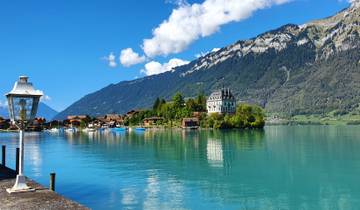
7 days
Swiss Miracle
- ✓ Comprehensive Switzerland tour
- ✓ Expert local guides included
- ✓ All accommodation arranged
- ✓ Transportation provided
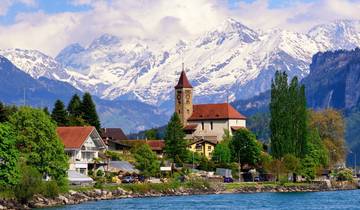
6 days
Swiss Capitals
- ✓ Comprehensive Switzerland tour
- ✓ Expert local guides included
- ✓ All accommodation arranged
- ✓ Transportation provided
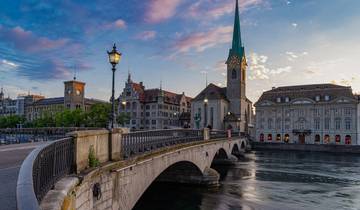
5 days
5 Day Zurich including Lake ferry, Cable Car, Mount Rigi, Grindelwald and Interlaken
- ✓ Comprehensive Switzerland tour
- ✓ Expert local guides included
- ✓ All accommodation arranged
- ✓ Transportation provided
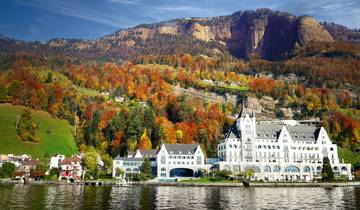
7 days
7 Day Zurich And Lucerne By Train
- ✓ Comprehensive Switzerland tour
- ✓ Expert local guides included
- ✓ All accommodation arranged
- ✓ Transportation provided
Multi-day tour packages powered by TourRadar. Prices and availability subject to change.
Introduction to Switzerland Travel 2026
Switzerland occupies a unique position in European travel, offering experiences that justify its premium pricing through unmatched quality, efficiency, and natural beauty. The Swiss Confederation spans 41,285 square kilometers across the heart of Europe, bordered by Germany, France, Italy, Austria, and Liechtenstein, creating a cultural crossroads where Germanic precision meets Latin vivacity. Four official languages (German 63%, French 23%, Italian 8%, Romansh 0.5%) divide the country into distinct regions, each maintaining unique culinary traditions, architectural styles, and cultural identities while sharing Switzerland’s legendary commitment to punctuality, cleanliness, and environmental preservation.
The Swiss landscape ranges from the towering peaks of the Alps, where 48 mountains exceed 4,000 meters, to pristine lakes reflecting medieval town centers, to pastoral valleys dotted with traditional chalets producing world-renowned cheeses. Major cities blend medieval old towns with contemporary architecture and finance, creating sophisticated urban environments where residents maintain surprisingly strong connections to mountain traditions. Zurich serves as the financial capital and largest city with 400,000 residents, Geneva hosts international organizations along the shores of Lac Léman, Basel guards the Rhine River border with Germany and France, and Bern functions as the federal capital with its UNESCO-listed medieval old town.
Switzerland’s reputation for expense is earned but manageable with strategic planning. The strong Swiss Franc (CHF), high labor costs, and premium quality standards create price levels 50-70% above neighboring countries, but travelers who understand the system can access extraordinary value. The integrated public transport network eliminates rental car needs in most itineraries, mountain hiking provides free world-class experiences, supermarket meals cost 50-60% less than restaurants without sacrificing quality, and advance booking secures accommodation rates 20-30% below last-minute prices.
The 2026 travel landscape introduces important changes including mandatory ETIAS authorization for visa-exempt visitors starting Q4 2026, a 5% increase in Swiss Travel Pass prices effective January 2026, and continued recovery from pandemic-era capacity restrictions meaning full mountain railway operations and unrestricted museum access. Understanding seasonal pricing variations, transportation options, regional differences, and practical money-saving strategies transforms Switzerland from prohibitively expensive to achievable luxury across varied budget levels.
This comprehensive guide covers every aspect of planning your 2026 Swiss journey. You will learn how to calculate realistic daily budgets across three spending tiers, navigate the renowned Swiss public transport system, choose optimal accommodation in each major destination, identify the best times to visit for weather and value, understand visa and entry requirements including new ETIAS regulations, maximize experiences at iconic attractions like the Matterhorn and Jungfraujoch, discover money-saving strategies that reduce costs without compromising quality, and plan itineraries ranging from long weekend city breaks to comprehensive two-week Alpine adventures.
Understanding Switzerland Costs in 2026
Switzerland consistently ranks among the world’s most expensive countries, but understanding the cost structure allows strategic travelers to manage expenses effectively. The strong Swiss Franc maintains high value against most currencies, labor costs reflect high Swiss wages and stringent worker protection laws, import costs add premiums to many goods due to Switzerland’s non-EU status, and quality standards ensure premium products and services across all price points. These factors combine to create price levels approximately 50-70% higher than neighboring Germany or France, 80-100% higher than Southern Europe, and roughly double typical United States costs outside major metropolitan areas.
Daily costs break down into four major categories with distinct pricing patterns. Accommodation represents the largest single expense, consuming 35-45% of budget traveler costs and 25-35% of mid-range budgets, with hotel rates varying dramatically by city, season, and booking timing. Food and dining follow as the second major expense, accounting for 30-35% of daily costs for budget travelers eating supermarket meals and 25-30% for mid-range travelers mixing restaurants with occasional self-catering. Transportation costs vary wildly based on strategy, ranging from 15-25% of daily budgets for travelers using regional passes economically to 10-15% for Swiss Travel Pass holders enjoying unlimited travel. Attractions and activities consume 15-20% of budget traveler expenses focusing on free hiking with occasional paid museums, scaling up to 25-35% for mid-range travelers visiting major mountain excursions and paid sites regularly.
The Swiss Travel Pass fundamentally changes cost calculations by converting variable per-ride transport expenses into fixed daily rates with unlimited usage. Without the pass, a single Zurich-Interlaken round trip costs CHF 126 ($158), Zurich-Lucerne costs CHF 50 ($63) round trip, Interlaken-Grindelwald costs CHF 28 ($35) round trip, and urban transport in Zurich costs CHF 9 ($11) for a day pass. These individual ticket costs accumulate rapidly, with even moderate travel consuming CHF 40-80 ($50-100) daily. The Swiss Travel Pass at CHF 55 ($69) per day for eight-day validity provides unlimited national transport plus museum entry and mountain discounts, typically saving CHF 20-40 ($25-50) daily for active travelers while eliminating ticket-buying hassles and enabling spontaneous itinerary changes.
Regional price variations affect accommodation and dining costs significantly. Zurich and Geneva command premium prices as international cities, with mid-range hotels averaging CHF 200-320 ($250-400) per night and restaurant meals costing CHF 35-65 ($44-81) for mains. Ski resort towns like Zermatt, St. Moritz, Verbier, and Gstaad spike 40-60% above Zurich rates during winter season (December-March) but drop to reasonable levels during summer. Mountain towns like Interlaken, Lucerne, Grindelwald, and Wengen charge moderate rates year-round, averaging CHF 150-250 ($188-313) for mid-range hotels and CHF 25-45 ($31-56) for restaurant meals. Smaller cities like Bern, Basel, and Lausanne offer the best urban value, with quality hotels at CHF 140-220 ($175-275) and diverse dining at CHF 22-40 ($28-50) per main course.
Seasonal pricing follows predictable patterns with dramatic swings. Peak summer season (July-August) sees maximum demand across Switzerland, with accommodation rates 30-40% above shoulder season, mountain railways operating maximum schedules, attractions crowded between 10 AM and 4 PM, and restaurants filling quickly without reservations. Winter ski season (December-February) concentrates demand in resort towns where rates spike 50-80% while cities remain reasonable, Christmas markets create magical December urban experiences, and January-February offer optimal snow conditions with slightly lower weekend rates than holiday periods. Shoulder seasons (May-June and September-October) deliver exceptional value with rates 20-30% below peak, excellent weather still prevailing, full mountain railway operations continuing, and significantly smaller crowds at major attractions. Low season (November and April) brings maintenance closures at high-altitude attractions, unpredictable weather limiting hiking options, and the lowest accommodation rates of the year in cities, though many hotels in pure mountain towns close completely during these periods.
Budget Breakdown Switzerland 2026: Three Spending Tiers
Understanding realistic daily costs across different spending levels allows accurate trip planning and budget management. The following breakdowns detail per-person expenses assuming two travelers sharing accommodation, which remains the most common travel configuration and provides the most favorable per-person rates. Solo travelers add 40-60% to accommodation costs by bearing full room rates, while groups of three or four can reduce per-person accommodation expenses by 15-25% through apartment rentals or family rooms.
Budget Traveler Daily Costs 2026
Budget travelers spend $150-250 per person daily (CHF 120-200) in 2026, assuming two sharing budget accommodation. Hostel dormitory beds cost CHF 35-55 ($44-69) per night in major cities like Zurich, Geneva, Bern, and Lucerne, with excellent Swiss Youth Hostels network properties offering guaranteed cleanliness, modern facilities, and reliable quality. Budget hotel double rooms cost CHF 80-150 ($100-188) per night, dividing to CHF 40-75 ($50-95) per person when shared, in smaller towns and cities outside prime tourist zones. Both options typically include basic breakfast saving CHF 8-12 ($10-15) daily.
Food costs for budget travelers average CHF 40-60 ($50-75) daily through strategic supermarket shopping. Breakfast from Coop or Migros supermarkets costs CHF 5-8 ($6-10) with bread, cheese, yogurt, and fruit. Lunch assembled from supermarket ingredients costs CHF 10-15 ($13-19) with quality sandwiches, salads, and Swiss specialties readily available. Dinner requires CHF 12-20 ($15-25) for pasta, vegetables, cheese, cured meats, and Swiss chocolate desserts from supermarket selections. Occasional restaurant meals for fondue or raclette experiences add CHF 30-50 ($38-63) but should be treated as special events rather than daily occurrences on budget schedules. Water is free and excellent quality from any tap in Switzerland, eliminating beverage costs entirely.
Transportation for budget travelers costs CHF 15-30 ($19-38) daily through economical regional pass use or extensive walking combined with selective public transport. Regional day passes like Berner Oberland regional pass or Ticino day pass cost CHF 40-60 ($50-75) covering full-day unlimited travel in specific regions. Walking 8-12 kilometers daily between urban attractions eliminates most city transport costs, with Swiss cities maintaining compact, pedestrian-friendly centers. Single urban transit rides cost CHF 3-5 ($4-6) when unavoidable, while intercity train tickets purchased as Supersaver fares 60 days advance save 40-60% off standard rates.
Attractions and activities consume CHF 10-25 ($13-32) daily for budget travelers prioritizing free hiking, free lake swimming, free city walking tours, and selective museum visits. Switzerland offers extraordinary free hiking across all regions, with marked trails requiring no fees, entry charges, or guides. Museums charge CHF 12-20 ($15-25) admission but many cities provide free access on first Sunday of each month. Mountain viewpoints accessible by hiking rather than cable car eliminate CHF 60-100 ($75-125) daily mountain railway costs while providing superior exercise and engagement with landscapes. Budget travelers reach daily totals of approximately $150-250 per person through disciplined supermarket meal planning, extensive use of free hiking, strategic accommodation selection, and economical regional transport pass purchases.
Mid-Range Traveler Daily Costs 2026
Mid-range travelers spend $310-440 per person daily (CHF 250-350) in 2026, assuming two sharing mid-range accommodation. Three-star and four-star hotels cost CHF 180-280 ($225-350) per night for double rooms, dividing to CHF 90-140 ($113-175) per person. These properties provide private bathrooms, air conditioning, reliable WiFi, often include substantial breakfast buffets worth CHF 15-25 ($19-32), and occupy central locations near train stations and attractions. Boutique hotels and family-run properties in this tier frequently exceed chain hotel quality while maintaining comparable or lower prices.
Food costs for mid-range travelers average CHF 75-110 ($95-138) daily mixing restaurant dining with occasional supermarket meals. Restaurant breakfast when not included with accommodation costs CHF 15-25 ($19-32) at Swiss bakeries and cafes. Lunch at casual restaurants costs CHF 25-40 ($32-50) for daily specials (Tagesmenu) offering soup or salad, main course, and sometimes dessert. Dinner at mid-range restaurants costs CHF 35-50 ($44-63) for main courses, with full three-course meals totaling CHF 60-85 ($75-106) including beverages. Mid-range budgets allow regular restaurant dining without financial strain, experiencing Swiss specialties like fondue (CHF 28-38 / $35-48), raclette (CHF 32-45 / $40-56), and Zürcher Geschnetzeltes (CHF 35-48 / $44-60) at authentic venues.
Transportation for mid-range travelers costs CHF 30-50 ($38-63) daily value through Swiss Travel Pass investment. The eight-day Swiss Travel Pass costs CHF 439 ($550) total, equating to CHF 55 ($69) per day with unlimited train, bus, boat, and urban tram access across entire Switzerland. This single purchase eliminates all ticket-buying decisions, enables spontaneous routing changes, includes free museum entry to 500+ institutions, and provides 25-50% discounts on mountain railways. Mid-range travelers typically take 3-4 train journeys daily, visit 1-2 museums weekly, and take 2-3 mountain excursions per week, with the pass paying for itself while providing psychological freedom from fare calculations.
Attractions and activities consume CHF 50-80 ($63-100) daily for mid-range travelers visiting major mountain excursions, paid museums, and organized activities. Jungfraujoch Top of Europe costs CHF 177 ($222) round trip with Swiss Travel Pass discount, Matterhorn Glacier Paradise cable car costs CHF 85 ($106) round trip with pass discount, Schilthorn cable car costs CHF 67 ($84) with pass discount, and Pilatus mountain excursion costs CHF 48 ($60) with pass discount. Museum admissions are free with Swiss Travel Pass at 500+ institutions including Verkehrshaus Transport Museum Lucerne, Olympic Museum Lausanne, Kunstmuseum Basel, and dozens of local historical museums. City walking tours cost CHF 25-35 ($32-44) for 2-3 hour guided experiences. Mid-range travelers reach daily totals of approximately $310-440 per person combining quality hotel accommodation, regular restaurant dining, Swiss Travel Pass unlimited transport, and frequent paid attraction visits.
Luxury Traveler Daily Costs 2026
Luxury travelers spend $810-1,000+ per person daily (CHF 650-800+) in 2026, assuming two sharing luxury accommodation. Five-star hotels and palace properties cost CHF 400-800+ ($500-1,000+) per night for double rooms, dividing to CHF 200-400+ ($250-500+) per person. Properties like Badrutt’s Palace St. Moritz, The Dolder Grand Zurich, Fairmont Le Montreux Palace, and Grand Hotel Victoria-Jungfrau Interlaken provide legendary service, Michelin-starred dining, extensive spa facilities, and impeccable locations. Historic grand hotels built during Belle Époque era combine architectural grandeur with thoroughly modern amenities and world-class hospitality.
Food costs for luxury travelers average CHF 150-300+ ($188-375+) daily through fine dining and gourmet experiences. Breakfast at luxury hotels provides lavish buffets included in room rates. Lunch at quality restaurants costs CHF 50-90 ($63-113) for refined preparations of Swiss and international cuisine. Dinner at Michelin-starred restaurants costs CHF 150-400+ ($188-500+) for multi-course tasting menus, with wine pairings adding CHF 80-200 ($100-250). Switzerland maintains 129 Michelin-starred restaurants as of 2026, including three three-star establishments: Restaurant de l’Hôtel de Ville Crissier, Cheval Blanc Basel, and Memories Corsier-sur-Vevey. Luxury budgets enable regular fine dining without compromising on wine selections, special ingredients, or exclusive reservations.
Transportation for luxury travelers costs CHF 60-100+ ($75-125+) daily value through first-class Swiss Travel Pass, private transfers, and premium panoramic trains. The eight-day first-class Swiss Travel Pass costs CHF 693 ($866) total, equating to CHF 87 ($109) per day with unlimited first-class rail travel, spacious seating, quieter carriages, and exclusive panoramic train access. Glacier Express requires seat reservations at CHF 39-49 ($49-61) and dining car reservations at CHF 59 ($74), while Bernina Express requires CHF 14-18 ($18-23) seat reservations. Private airport transfers cost CHF 120-180 ($150-225) from Zurich Airport to city center versus CHF 7 ($9) for excellent airport trains. Helicopter tours and private guides add CHF 400-800+ ($500-1,000+) for exclusive mountain experiences.
Attractions and activities consume CHF 150-300+ ($188-375+) daily for luxury travelers booking premium experiences, private guides, and VIP access. Private mountain guides cost CHF 600-900 ($750-1,125) for full-day experiences guiding exclusive hiking routes, providing expert geological and botanical interpretation, and ensuring optimal photography timing. Helicopter tours over the Matterhorn cost CHF 350-550 ($438-688) for 20-30 minute flights. Spa treatments at luxury hotels cost CHF 180-350 ($225-438) for 90-minute massages and wellness therapies. Private chocolate factory tours with master chocolatiers cost CHF 280-400 ($350-500) for groups up to six. VIP ski passes with dedicated instructors cost CHF 450-650 ($563-813) daily. Luxury travelers reach daily totals of approximately $810-1,000+ per person through five-star accommodation, Michelin-starred dining, first-class transport with private transfers, and premium exclusive experiences.
Swiss Travel Pass Guide 2026: Prices and Value Analysis
The Swiss Travel Pass represents Switzerland’s signature contribution to tourism infrastructure, providing unlimited travel across the world’s most extensive and punctual public transport network. Understanding pass pricing, benefits, and break-even calculations determines whether this investment suits your itinerary or whether alternative transport strategies provide better value for your specific travel pattern.
Swiss Travel Pass Pricing 2026
Swiss Travel Pass prices increased 5% effective January 2026, with passes available for 3, 4, 6, 8, or 15 consecutive days of validity. Second-class pass prices for 2026 are: 3 days CHF 254 ($320), 4 days CHF 312 ($390), 6 days CHF 390 ($488), 8 days CHF 439 ($550), and 15 days CHF 499 ($625). First-class pass prices providing spacious seating and exclusive panoramic train access are: 3 days CHF 405 ($506), 4 days CHF 494 ($618), 6 days CHF 621 ($776), 8 days CHF 693 ($866), and 15 days CHF 787 ($984). Youth passes for travelers under 26 years provide 30% discounts off standard prices, while children ages 6-15 travel free with Swiss Family Card when accompanied by parent holding Swiss Travel Pass. Pass prices remain constant year-round regardless of travel dates or seasonal demand.
The Swiss Travel Pass Flex offers alternative scheduling for travelers requiring non-consecutive travel days, allowing 3, 4, 6, 8, or 15 days of validity within one calendar month at premium pricing roughly 5% above consecutive-day passes. This flexibility suits travelers planning rest days, multi-night stays in single locations, or combining Swiss travel with other countries. Standard consecutive-day passes provide better value for travelers moving between destinations regularly, which describes most Switzerland itineraries given compact geography and excellent connections.
Half Fare Card represents alternative option for travelers taking fewer journeys or staying primarily in one region. The card costs CHF 150 ($188) for one month validity, providing 50% discount on all trains, buses, mountain railways, and most cable cars. Break-even analysis suggests Half Fare Card suits travelers taking 3-4 major train journeys weekly, while Swiss Travel Pass better serves travelers taking 5+ journeys weekly or visiting multiple mountain excursions. Travelers planning one week with limited movement (Zurich 3 nights, Lucerne 3 nights, Zurich 1 night with only 2 intercity journeys) typically achieve better value with Half Fare Card, while travelers covering broader territory (Zurich, Lucerne, Interlaken, Zermatt with 5-6 intercity journeys) clearly benefit from Swiss Travel Pass unlimited access.
Swiss Travel Pass Benefits Beyond Transportation
The Swiss Travel Pass includes benefits extending far beyond simple train tickets, transforming the pass from transport tool into comprehensive tourism package. Free museum admission to over 500 Swiss institutions represents value of CHF 12-20 ($15-25) per museum visit, with popular museums included: Verkehrshaus Transport Museum Lucerne, Olympic Museum Lausanne, FIFA World Football Museum Zurich, Kunstmuseum Basel art museum, Swiss National Museum Zurich, Ballenberg Open-Air Museum, and hundreds of local historical museums across all regions. Active museum visitors saving CHF 40-60 ($50-75) weekly on admissions adds significant pass value beyond transportation.
Mountain railway discounts provide 25-50% off major Alpine excursions, with some routes fully included. Fully included mountain railways are: Rigi (Queen of the Mountains), Stoos funicular (steepest in world), Stanserhorn cable car, and regular mountain trains in Jungfrau region. Major mountain excursions receiving 25-50% discounts include: Jungfraujoch Top of Europe (CHF 177/$222 with pass versus CHF 261/$327 full price), Matterhorn Glacier Paradise (CHF 85/$106 with pass versus CHF 125/$156 full price), Schilthorn Piz Gloria (CHF 67/$84 with pass versus CHF 109/$136 full price), and Mt. Pilatus (CHF 48/$60 with pass versus CHF 72/$90 full price). Travelers taking 2-3 mountain excursions weekly save CHF 120-200 ($150-250) through pass discounts alone.
Urban transport inclusion eliminates ticket purchases in over 90 Swiss cities, covering trams, buses, and funiculars within municipal boundaries. Zurich public transport day pass costs CHF 9 ($11) independently, Geneva day pass costs CHF 10 ($13), Basel day pass costs CHF 9 ($11), and Lucerne day pass costs CHF 7 ($9). Week-long travelers save CHF 50-70 ($63-88) on urban transport when visiting multiple cities regularly. Boat travel on Swiss lakes is fully included, with scenic lake cruises on Lake Lucerne, Lake Geneva, Lake Thun, Lake Brienz, and dozens of smaller lakes providing delightful free experiences maximizing pass value.
Break-Even Analysis and When Pass Makes Sense
Calculating break-even point requires comparing pass cost against planned individual ticket expenses. A typical active Switzerland itinerary might include: Zurich Airport to Lucerne CHF 50 ($63), Lucerne to Interlaken CHF 63 ($79), Interlaken to Grindelwald CHF 14 ($18), Grindelwald to Jungfraujoch with discount CHF 177 ($222), Grindelwald to Zermatt CHF 110 ($138), Zermatt Matterhorn excursion with discount CHF 85 ($106), Zermatt to Montreux CHF 85 ($106), Montreux to Geneva CHF 32 ($40), Geneva to Zurich Airport CHF 95 ($119), plus daily urban transport CHF 8-10 ($10-13) in each city and two additional museum visits at CHF 15 ($19) each. This itinerary totals CHF 729 ($911) in individual tickets versus CHF 439 ($550) for eight-day Swiss Travel Pass, saving CHF 290 ($363) while providing complete flexibility.
The pass makes clear sense for travelers visiting 3+ destinations over 4+ days with regular intercity train journeys, 2+ mountain excursions during trip, interest in multiple museums, preference for spontaneous routing changes without fare concerns, and value placed on convenience and psychological freedom from ticket purchasing. The pass makes marginal sense for travelers taking 2-3 major journeys over 4-5 days, visiting 1 mountain excursion, staying primarily in single region, and having limited interest in museums. The pass makes no sense for travelers staying single city entire trip, taking only 1-2 train journeys, focusing on urban attractions without mountain excursions, and preferring rental car for countryside exploration.
Regional passes provide alternatives for travelers concentrating on specific areas. Berner Oberland Pass covers Interlaken, Grindelwald, Lauterbrunnen, Wengen region for CHF 240-435 ($300-544) for 3-10 days. Jungfrau Travel Pass focuses specifically on Jungfrau region for CHF 210-395 ($263-494) for 3-7 days. Tell-Pass covers Central Switzerland (Lucerne region) for CHF 182-378 ($228-473) for 2-10 days. Ticino Ticket provides free regional transport for hotel guests staying overnight in canton. These regional passes suit travelers dedicating entire trip to single area rather than touring broadly across Switzerland.
Accommodation Strategies Switzerland 2026
Accommodation consumes the largest single expense category for most Switzerland travelers, making strategic selection and booking timing critical for budget management. Swiss accommodation maintains extremely high standards across all price categories, with even budget hostels providing cleanliness, functionality, and service exceeding international norms. Understanding regional variations, seasonal pricing, booking strategies, and accommodation type advantages enables optimal value at every budget level.
Budget Accommodation Options 2026
Budget accommodation in Switzerland centers on two main options: Swiss Youth Hostels network properties and budget hotel chains. Swiss Youth Hostels operate 45 hostels nationwide, offering dormitory beds at CHF 35-55 ($44-69) per night and private rooms at CHF 80-140 ($100-175) for doubles. These hostels maintain government support ensuring consistent quality, provide excellent facilities including modern showers, full kitchens, communal lounges, and often spectacular mountain locations. Standout properties include Grindelwald hostel with Eiger views, Zermatt hostel near Matterhorn, Lucerne lakeside hostel, Interlaken riverside property, and Lausanne Olympic Museum area hostel. Most provide substantial breakfast buffets for CHF 12-16 ($15-20) delivering better value than restaurant breakfasts.
Budget hotel chains like Ibis Budget, B&B Hotels, and Motel One offer private rooms with ensuite bathrooms at CHF 90-150 ($113-188) per night for doubles in major cities. These properties sacrifice charm for functionality, but deliver reliable cleanliness, free WiFi, convenient locations near train stations, and independence from hostel dormitory communal living. Budget hotel advantages include storage security for valuable equipment, private bathroom access without hallway walks, quieter environment for quality sleep, and greater suitability for couples or families versus solo backpacker hostels.
Alternative budget options include campgrounds charging CHF 20-35 ($25-44) per person including tent pitch, mountain huts (berghuette) offering dormitory sleeping at CHF 30-50 ($38-63) plus dinner and breakfast, farm stays through Agrotourism Switzerland from CHF 35-65 ($44-81) per person, and Couchsurfing free accommodation with local hosts. These alternatives suit adventurous budget travelers comfortable with basic facilities and communal experiences, providing authentic Swiss interactions often missing from hostel anonymity.
Mid-Range Accommodation Selection 2026
Mid-range accommodation spans three-star and four-star hotels, boutique properties, and family-run establishments charging CHF 180-280 ($225-350) per night for double rooms in most locations. These properties provide private bathrooms, comfortable beds with quality linens, reliable heating or air conditioning, strong WiFi, often breakfast buffets saving CHF 15-25 ($19-32) daily, and central locations within walking distance of train stations and attractions. Swiss three-star hotels frequently exceed four-star standards in other countries through exceptional cleanliness, functional design, and attentive service reflecting cultural values.
Booking timing significantly affects mid-range costs, with advance reservations 3-4 months before travel securing rates 20-30% below last-minute prices. Major booking platforms (Booking.com, Hotels.com, Expedia) compete for Swiss inventory, frequently offering promotional rates below direct hotel booking. Direct hotel bookings occasionally provide benefits like room upgrades, late checkout flexibility, or included parking, making price comparison worthwhile. Loyalty programs with international chains (Marriott Bonvoy, IHG Rewards, AccorHotels) deliver points accumulation and sometimes elite status benefits including breakfast, though independent Swiss hotels often provide superior local character.
Location selection within cities affects convenience and costs meaningfully. Hotels within 400 meters of main train stations command premium rates but eliminate transport needs between station and accommodation, particularly valuable when carrying luggage. Properties in historic old towns provide charm and walkable access to attractions but sometimes involve cobblestone streets challenging for wheeled luggage. Slightly peripheral locations 10-15 minutes from centers save 15-25% on rates while remaining well-served by excellent urban transit systems. Geneva, Zurich, and Basel airports offer airport hotels at rates similar to city centers, providing convenience for very early departures or very late arrivals.
Luxury Accommodation Experiences 2026
Luxury accommodation in Switzerland encompasses historic grand hotels, contemporary design properties, and exclusive mountain resorts charging CHF 400-800+ ($500-1,000+) per night for doubles. Historic grand hotels like Badrutt’s Palace St. Moritz (from CHF 900/$1,125), The Dolder Grand Zurich (from CHF 650/$813), Grand Hotel Les Trois Rois Basel (from CHF 550/$688), and Fairmont Le Montreux Palace (from CHF 480/$600) combine Belle Époque architectural grandeur with thoroughly modern amenities including spa facilities, Michelin-starred restaurants, personalized butler service, and impeccable locations. These properties often hosted royalty, celebrities, and historical figures, maintaining heritage and tradition while incorporating contemporary luxury expectations.
Contemporary luxury properties emphasize design, sustainability, and wellness rather than historic pedigree. The Chedi Andermatt (from CHF 700/$875) provides Japanese-inspired minimalism in Alpine setting. 7132 Hotel Vals (from CHF 650/$813) features architecturally significant Peter Zumthor thermal baths. The Omnia Zermatt (from CHF 850/$1,063) offers futuristic design suspended above Zermatt village. These design-focused properties attract guests valuing cutting-edge aesthetics, environmental consciousness, and architectural significance alongside luxury amenities.
Luxury booking strategies differ from mid-range approaches, with direct hotel reservations often providing better rates than third-party platforms due to relationship-focused luxury service models. Many luxury properties offer value-added packages including airport transfers, spa credits, or dining inclusions that improve overall experience value beyond room rates. Luxury travel advisors specializing in Switzerland sometimes access unpublished rates or upgrades unavailable through public booking channels, particularly for extended stays or repeat clients. Shoulder season luxury bookings (May and September) deliver optimal value, providing 25-35% discounts versus peak summer rates while maintaining excellent weather and full property operations.
Food and Dining Costs Switzerland 2026
Food costs in Switzerland reflect the country’s high wages, import expenses, and quality standards, but strategic approaches ranging from supermarket self-catering to selective restaurant dining enable budget management without sacrificing culinary experiences. Understanding Swiss supermarket culture, restaurant pricing patterns, regional specialties, and strategic timing transforms dining from prohibitive expense into manageable pleasure.
Supermarket Strategy for Budget Savings
Swiss supermarkets Coop and Migros provide exceptional quality at prices 50-60% below restaurant equivalents, making supermarket-based eating the primary strategy for budget travelers and smart mid-range travelers reducing dining costs. Both chains maintain hundreds of locations nationwide, with large-format stores in every city and town plus smaller convenience formats in rural areas and mountain villages. Supermarkets open Monday-Saturday 7:00 AM-7:00 PM, with larger urban stores extending to 9:00 PM, but close completely on Sundays except in train stations and airports.
Breakfast from supermarkets costs CHF 5-8 ($6-10) per person with bread or croissants CHF 2-4 ($3-5) per package, Swiss cheese CHF 3-5 ($4-6) for 200g, yogurt CHF 1-2 ($1.25-2.50) per container, and fresh fruit CHF 3-5 ($4-6) per portion. Swiss bread quality exceeds international expectations, with whole grain, seed-topped, and traditional varieties providing substantial nutrition and satisfaction. Swiss dairy products represent world-class quality with fresh milk, yogurt, and over 450 distinct cheese varieties available at supermarket counters.
Lunch assembled from supermarket ingredients costs CHF 10-15 ($13-19) per person with prepared sandwiches CHF 6-10 ($8-13), fresh salads CHF 5-8 ($6-10), or individual ingredients for picnic assembly including cured meats CHF 4-7 ($5-9), cheese selections CHF 4-6 ($5-8), bread CHF 2-3 ($3-4), vegetables CHF 3-5 ($4-6), and chocolate bars CHF 2-3 ($3-4) for dessert. Prepared sandwiches feature quality ingredients with substantial portions, though assembling your own picnic provides greater variety and Swiss cultural engagement through cheese and meat selection.
Dinner from supermarkets costs CHF 12-20 ($15-25) per person with pasta or rice CHF 2-4 ($3-5), sauce or ingredients for cooking CHF 4-8 ($5-10), vegetables CHF 3-5 ($4-6), protein choices including chicken CHF 8-12 ($10-15) or vegetarian alternatives CHF 4-7 ($5-9), and bread or salad accompaniments CHF 2-4 ($3-5). Many hostels and some budget hotels provide guest kitchens enabling full meal preparation, while others offer basic facilities like refrigerators, microwaves, and electric kettles allowing simple meal assembly. Supermarket wine starts at CHF 8-12 ($10-15) per bottle for quality regional selections, with Swiss Fendant white and Dole red from Valais region providing excellent value.
Restaurant Dining Patterns and Costs 2026
Swiss restaurant dining follows distinctive patterns affecting costs and experiences. Lunch represents optimal value timing, with many restaurants offering daily specials (Tagesmenu or Plat du jour) including soup or salad, main course, and sometimes dessert for CHF 18-30 ($23-38). These lunch menus provide identical quality to evening à la carte at 40-50% lower cost, making lunch the strategic time for sampling Swiss specialties at traditional restaurants. Dinner à la carte main courses cost CHF 28-55 ($35-69) at mid-range restaurants, with appetizers CHF 12-22 ($15-28), desserts CHF 10-16 ($13-20), and beverages adding CHF 8-18 ($10-23).
Swiss specialties worth experiencing include fondue (CHF 28-38 / $35-48 per person), raclette (CHF 32-45 / $40-56 per person), Zürcher Geschnetzeltes veal in cream sauce (CHF 35-48 / $44-60), Rösti potato dish (CHF 18-28 / $23-35 as side or CHF 24-35 / $30-44 as main), and Alpine macaroni with cheese (CHF 22-32 / $28-40). Regional variations provide distinct experiences, with French-speaking regions emphasizing refined sauces and lake fish, German-speaking areas featuring hearty meat preparations, Italian-speaking Ticino offering Mediterranean influences, and mountain valleys maintaining traditional cheese-based dishes developed for Alpine farming communities.
Tipping in Switzerland differs from American practices, with service charges included in all menu prices by law. Bills reflect final amounts owed without additional calculations necessary. Small tips rounding up to convenient amounts (CHF 2-5 / $3-6 on CHF 45 / $56 bill) acknowledge excellent service but remain completely optional. Credit cards process widely with no added fees, while cash payments in Swiss Francs provide most convenient settlement.
Water represents free resource in Switzerland, with tap water meeting highest safety and taste standards nationwide. Restaurants provide free tap water on request, though some resist this cultural shift from traditional bottled water sales. Mineral water bottles cost CHF 5-8 ($6-10), beer CHF 6-9 ($8-11), wine by glass CHF 8-14 ($10-18), and coffee CHF 4-6 ($5-8). Beverage costs accumulate rapidly, making water requests and skipping alcohol significant budget strategies when dining out regularly.
Strategic Dining for Mid-Range and Luxury Budgets
Mid-range dining strategies combine restaurant meals with occasional supermarket supplements, typically budgeting one restaurant lunch or dinner daily at CHF 35-55 ($44-69) per person while substituting supermarket meals for remaining occasions. This pattern enables authentic Swiss culinary experiences without unsustainable costs, allowing fondue enjoyment one evening, traditional restaurant another day, and supermarket supplements maintaining reasonable daily averages. Many mid-range travelers find breakfast included with hotel accommodation, simplifying meal planning and reducing daily food costs by CHF 15-25 ($19-32).
Luxury dining in Switzerland enables access to 129 Michelin-starred restaurants as of 2026, including three three-star establishments and numerous one-star and two-star venues across all regions. Michelin-starred tasting menus cost CHF 180-450+ ($225-563+) for multi-course experiences, with wine pairings adding CHF 90-250+ ($113-313+). Notable restaurants include Restaurant de l’Hôtel de Ville Crissier (three Michelin stars, CHF 420/$525 tasting menu), Cheval Blanc Basel (three stars, CHF 380/$475), Memories Corsier-sur-Vevey (three stars, CHF 390/$488), and dozens of one-star establishments providing exceptional cuisine at CHF 150-250 ($188-313) per person.
Luxury budgets also enable Swiss specialty experiences like private chocolate factory tours with tastings CHF 80-150 ($100-188) per person, wine tasting experiences in Lavaux vineyard region CHF 60-120 ($75-150), cheese dairy visits with fondue preparation CHF 50-90 ($63-113), and private chef dinners at mountain chalets CHF 200-350+ ($250-438+) per person. These curated experiences provide cultural immersion and exclusive access beyond standard tourist offerings, justifying premium costs through unique memories and insider perspectives unavailable through conventional channels.
Transportation Within Switzerland 2026
Switzerland’s public transport system ranks among the world’s finest, combining comprehensive coverage, legendary punctuality, seamless integration, and spectacular scenery into a transportation network that makes rental cars unnecessary for most itineraries. Understanding train operations, urban transit, bus networks, boat services, and strategic pass usage maximizes transportation efficiency while minimizing costs and environmental impact.
Swiss Federal Railways (SBB) National Network
Swiss Federal Railways (SBB, CFF in French, FFS in Italian) operates approximately 3,000 kilometers of railway serving over 800 stations, with trains departing major routes every 30 minutes and connecting services ensuring smooth transfers. Punctuality averages 92-95% on-time performance within three minutes of schedule, with delay compensation automatically processed for significant disruptions. Trains maintain exceptional cleanliness with onboard toilets, waste disposal, and climate control functioning reliably.
Intercity trains connect major cities at speeds up to 200 km/h, with Zurich-Geneva requiring 2 hours 45 minutes, Zurich-Lugano 2 hours 15 minutes via Gotthard Base Tunnel, Bern-Interlaken 50 minutes, and Geneva-Lausanne 35 minutes. Regional trains serve smaller towns and mountain villages at reduced speeds but increased frequency, with scenic routes like Golden Pass Line, Bernina Express, and Glacier Express providing panoramic viewing experiences. Double-decker trains on busy routes maximize capacity while maintaining smooth ride quality and consistent comfort.
Train classes divide into second class and first class, with second class providing perfectly comfortable seating, adequate legroom, and quiet environment for most travelers. First class offers wider seats with more spacing, quieter carriages with business traveler focus, power outlets at every seat, and sometimes complimentary coffee service. First class costs approximately 75% above second class fares, justified primarily for business travelers requiring workspace or travelers valuing extra space and quiet on longer journeys. Most leisure travelers find second class entirely satisfactory for Swiss distances rarely exceeding three hours.
Urban Public Transport Excellence
Swiss cities operate integrated tram, bus, and urban train networks (S-Bahn) with frequent service, excellent coverage, and unified fare systems. Zurich public transport includes 13 tram lines, 32 bus lines, and S-Bahn regional trains connecting suburbs, with vehicles arriving every 5-7 minutes on main routes during daytime hours. Geneva operates extensive tram and bus networks reaching all neighborhoods and surrounding French border communities. Basel’s tram system includes international routes crossing into Germany and France. Bern maintains tram and trolleybus networks serving the compact capital efficiently.
Urban transport tickets require purchase before boarding from automated machines at every stop accepting coins, bills, credit cards, and contactless payment. Single rides cost CHF 3-5 ($4-6) for short distances within city zones, CHF 4-7 ($5-9) for longer urban journeys, and day passes CHF 8-11 ($10-14) for unlimited urban travel. Swiss Travel Pass holders ride all urban transit free throughout pass validity, eliminating ticket purchase needs entirely. Urban networks extend service until midnight weekdays with reduced frequency, and until 2:00 AM Friday-Saturday with night bus supplements.
Bicycle integration enhances Swiss urban mobility, with bike lanes, bike parking, and bike-sharing systems operating in major cities. Publibike operates shared bicycle systems in Zurich, Geneva, Lausanne, Bern, and other cities, charging CHF 2-4 ($3-5) per hour or CHF 20-35 ($25-44) per day through mobile app registration. Many train stations offer bike rental services called “Rent a Bike” for CHF 28-38 ($35-48) per day, enabling countryside exploration beyond train station catchment areas.
PostBus Mountain and Rural Services
PostBus (PostAuto, CarPostal) operates bright yellow buses serving over 2,000 communities including mountain villages, Alpine valleys, and rural areas beyond railway reach. PostBus routes follow precise schedules coordinating with train arrivals, enabling seamless connections between rail and bus with covered transfer shelters at many rural stations. Mountain PostBus routes navigate narrow Alpine passes, hairpin switchbacks, and steep gradients with experienced drivers managing challenging road conditions safely.
PostBus fares integrate with Swiss Travel Pass and Half Fare Card, providing identical discounts and access as trains and urban transport. Point-to-point tickets cost CHF 5-15 ($6-19) for most rural routes, with scenic passes like Furka Pass, Grimsel Pass, and San Bernardino Pass costing CHF 15-28 ($19-35) for full traverse. PostBus routes provide sole public transport access to destinations like Saas-Fee, Klosters, Appenzell, and countless traditional villages maintaining car-free or limited-vehicle status.
Boat services on Swiss lakes represent integral public transport components rather than tourist novelties, with regular scheduled services operated as extensions of train networks. Lake Lucerne boats connect Lucerne with Vitznau, Weggis, Brunnen, and other lakeside communities every 30-60 minutes during summer season. Lake Geneva boats link Lausanne, Montreux, Vevey, Evian (France), and Geneva with frequent service. Lake Thun and Lake Brienz boats serve Interlaken region communities. All boat services are fully included with Swiss Travel Pass, providing scenic lake transportation at no additional cost beyond pass purchase.
Major Destinations Switzerland 2026
Switzerland’s compact geography (220 kilometers north-south, 350 kilometers east-west) enables visiting multiple distinct regions within single trips, with train connections making 2-3 hour journeys between dramatically different linguistic, cultural, and landscape areas. Understanding each major destination’s character, primary attractions, logistics, and strategic positioning within broader itineraries allows optimal trip planning matching personal interests and travel pace.
Zurich: Financial Capital and Cultural Hub
Zurich functions as Switzerland’s largest city with 400,000 residents, serving as financial center, transportation hub, and cultural destination combining medieval old town with contemporary architecture and vibrant arts scene. Zurich Airport provides Switzerland’s primary international gateway with direct flights from over 200 destinations worldwide, positioned 11 kilometers from city center with train service every 10 minutes requiring 10-13 minutes and costing CHF 7 ($9) for direct connection versus CHF 60-80 ($75-100) for taxis.
Zurich’s old town (Altstadt) occupies both sides of Limmat River, featuring medieval guild houses, the twin towers of Grossmünster cathedral, Fraumünster church with Chagall stained glass windows, and narrow cobblestone streets hosting boutique shops, galleries, and traditional restaurants. The old town remains compact and entirely walkable, requiring 20-30 minutes to traverse end-to-end. Lake Zurich promenade provides waterfront walking, swimming areas with changing facilities free for public use during summer, and boat cruises to lakeside communities. Bahnhofstrasse shopping street extends 1.4 kilometers from main train station to lake, featuring luxury retailers, department stores, and people-watching opportunities.
Museums in Zurich include Swiss National Museum (Swiss history and culture, free with Swiss Travel Pass), Kunsthaus art museum (international art from medieval to contemporary, CHF 24/$30 adults), FIFA World Football Museum (football history and World Cup exhibits, CHF 24/$30 adults, free with Swiss Travel Pass), and Rietberg Museum (non-European art in parkland setting, CHF 18/$23 adults, free with Swiss Travel Pass). Zurich requires 1-2 full days for comprehensive exploration, serving effectively as arrival/departure hub with convenient airport access and excellent train connections to all Swiss regions.
Lucerne: Gateway to Central Switzerland
Lucerne (Luzern) occupies strategic position at northwest end of Lake Lucerne, serving as tourism center for Central Switzerland with medieval old town, lake setting, mountain access, and manageable size creating ideal Swiss introduction. The city hosts 80,000 residents maintaining walkable historic core with preserved medieval architecture, covered wooden bridges, and lakefront promenades. Lucerne lies 45 minutes from Zurich by direct train every 30 minutes, making it accessible first stop from Zurich Airport or comfortable day trip from Zurich base.
Chapel Bridge (Kapellbrücke) represents Lucerne’s signature landmark, spanning Reuss River with covered wooden construction from 14th century featuring painted panels depicting local history. Adjacent Water Tower (Wasserturm) served defensive and storage functions historically, now providing photography opportunities and historic atmosphere. Lion Monument (Löwendenkmal) commemorates Swiss Guard soldiers killed during French Revolution, carved into sandstone cliff creating moving memorial in peaceful park setting. Old town streets maintain medieval character with painted facades, fountain squares, and Musegg Wall fortifications offering rampart walks and tower climbs with city views.
Mountain excursions from Lucerne include Mt. Pilatus (CHF 72/$90 round trip full price, CHF 48/$60 with Swiss Travel Pass discount) via world’s steepest cogwheel railway ascending 48% gradients, Mt. Rigi (fully included with Swiss Travel Pass) via cogwheel train or cable car providing “Queen of the Mountains” panoramic views, and Stanserhorn (fully included with Swiss Travel Pass) featuring open-top cable car and revolving restaurant at summit. Lake Lucerne boat cruises (fully included with Swiss Travel Pass) connect lakeside villages with scenic transportation alternatives to trains. Lucerne requires 2-3 days for thorough exploration including day trips to surrounding mountains and lake communities.
Interlaken and Jungfrau Region: Alpine Heart
Interlaken functions as tourism capital of the Bernese Oberland, positioned between Lake Thun and Lake Brienz with immediate access to Jungfrau mountain region including Grindelwald, Wengen, Lauterbrunnen, and surrounding peaks. The town itself offers limited attractions, serving primarily as transportation hub and accommodation base with 5,600 residents supporting tourism infrastructure including hotels, restaurants, adventure sports operators, and transport connections. Interlaken lies 2 hours from Zurich, 50 minutes from Bern, and 2 hours 30 minutes from Geneva, positioning it centrally for broader Switzerland exploration.
Jungfraujoch Top of Europe represents Switzerland’s most visited mountain attraction, reaching 3,454 meters elevation via cogwheel railway from either Grindelwald or Lauterbrunnen valleys. The excursion costs CHF 261 ($327) round trip from Interlaken at full price, CHF 177 ($222) with Swiss Travel Pass discount, requiring reserved time slots during peak season (May-October 2026) at CHF 10 ($13) per person mandatory supplement. The journey requires 2.5-3 hours ascent including changes at Kleine Scheidegg or Eigergletscher stations, with summit facilities including viewing platforms overlooking Aletsch Glacier (Europe’s longest), ice palace carved into glacier, restaurants, shops, and scientific research station. Optimal visiting strategy departs earliest morning trains avoiding crowds, dedicates 3-4 hours at summit exploring all facilities, and descends via alternate route (up through Grindelwald, down through Lauterbrunnen) maximizing scenery.
Additional mountain excursions include Schilthorn (CHF 109/$136 full price, CHF 67/$84 with pass discount) featuring 360-degree rotating restaurant and James Bond filming location, First cliff walk and zip line activities above Grindelwald (CHF 58/$73 full price, CHF 29/$36 with pass discount), and extensive hiking networks through Lauterbrunnen valley’s 72 waterfalls, Grindelwald meadows beneath Eiger North Face, and Kleine Scheidegg alpine pastures between peaks. Interlaken region requires minimum 3-4 days for meaningful exploration, with 5-7 days enabling comprehensive mountain excursions, valley hiking, and weather contingency for visibility-dependent activities.
Zermatt and the Matterhorn
Zermatt maintains car-free mountain village status at 1,620 meters elevation, dominated visually and culturally by the Matterhorn’s distinctive pyramidal peak rising to 4,478 meters. The village hosts 5,800 residents serving year-round tourism with ski infrastructure winter, hiking networks summer, and mountaineering heritage dating to 1865 first Matterhorn summit. Zermatt requires train access exclusively, positioned 3 hours 30 minutes from Zurich, 2 hours 30 minutes from Interlaken, and 3 hours 15 minutes from Geneva via Visp transfer. The car-free environment maintains air quality, reduces noise pollution, and creates pedestrian-friendly atmosphere with electric taxis providing village transport for luggage and mobility-impaired visitors.
Matterhorn Glacier Paradise cable car ascends to 3,883 meters representing Europe’s highest cable car station, providing viewing platform with 360-degree Alpine panoramas spanning Switzerland, Italy, and France. The excursion costs CHF 125 ($156) round trip full price, CHF 85 ($106) with Swiss Travel Pass discount, requiring 45 minutes ascent through Furi and Trockener Steg intermediate stations. Summit facilities include observation decks, ice palace carved into glacier, highest alpine cinema showing Matterhorn documentaries, and restaurant offering meals at extreme elevation. Optimal timing targets early morning departures before clouds potentially obscure visibility, with weather forecasts critical for deciding day of visit versus postponing for better conditions.
Gornergrat cogwheel railway provides alternative mountain excursion departing village center and ascending to 3,089 meters in 33 minutes, offering direct Matterhorn views framed by surrounding 4,000-meter peaks. The journey costs CHF 103 ($129) round trip full price, CHF 52 ($65) with Swiss Travel Pass discount, operating year-round with departures every 24 minutes during summer high season. Gornergrat enables easier viewing than Glacier Paradise due to lower elevation reducing altitude effects, provides accessible terrain for short walks between viewpoints, and includes restaurants and viewing platforms spreading visitors across multiple locations reducing crowding.
Hiking networks around Zermatt total over 400 kilometers of marked trails ranging from valley walks accessible to all fitness levels to technical Alpine routes requiring mountaineering equipment. Five Lakes Walk represents most popular moderate hike requiring 2.5 hours with Matterhorn reflections in alpine lakes creating classic photography opportunities. Riffelsee lake provides another reflection photography location reached by 45-minute hike from Gornergrat railway. Höhbalmen panoramic trail traces sunny slopes above village with continuous Matterhorn views and wildflower meadows June-August. Zermatt requires 3-4 days for thorough exploration including multiple mountain excursions, valley hiking, and weather contingency days enabling flexibility for optimal visibility conditions.
Geneva: International City on Lake Geneva
Geneva functions as Switzerland’s most international city hosting United Nations European headquarters, numerous international organizations, and French-speaking cultural identity distinct from German Switzerland. The city occupies southwestern corner of Lake Geneva (Lac Léman) at French border, with 200,000 residents and international worker population creating cosmopolitan atmosphere. Geneva Airport provides international gateway with flights from worldwide destinations, positioned 4 kilometers from city center with train service every 10-15 minutes requiring 6-8 minutes and costing CHF 3 ($4) versus CHF 35-45 ($44-56) for taxis.
Geneva’s lakefront features Jet d’Eau fountain shooting water 140 meters skyward, visible throughout city and illuminated evenings creating dramatic landmark. Old town (Vieille Ville) occupies hillside above lake with St. Pierre Cathedral, narrow medieval streets, galleries, antique shops, and Place du Bourg-de-Four square maintaining historic atmosphere. International District houses Palais des Nations (United Nations), International Red Cross Museum, and numerous NGO headquarters creating diplomatic quarter. Lake Geneva boats provide transport to Lausanne, Montreux, Vevey, and French shore communities with services fully included in Swiss Travel Pass.
Museums include International Red Cross and Red Crescent Museum (CHF 15/$19 adults, free with Swiss Travel Pass) covering humanitarian history and current operations, Patek Philippe Museum (CHF 10/$13 adults) displaying watchmaking artistry and Swiss timekeeping heritage, Museum of Art and History (free admission) with archaeological collections through contemporary art, and Natural History Museum (free admission) featuring extensive taxidermy displays and natural science exhibits. Geneva requires 1-2 days for city exploration, serving effectively as arrival/departure point for broader Switzerland travel or base for Lake Geneva region day trips to Lausanne, Montreux, and Swiss or French lakeside villages.
Mountain Excursions Switzerland 2026
Switzerland’s mountains represent the primary draw for international visitors, with engineering marvels enabling access to extreme elevations through cable cars, cogwheel railways, and funiculars constructed over past 150 years. Understanding mountain excursion costs, pass discount structures, optimal timing, and weather contingencies ensures maximum value from these signature Swiss experiences that justify significant portions of travel budgets.
Jungfraujoch Top of Europe: Highest Railway Station
Jungfraujoch holds official designation as Europe’s highest railway station at 3,454 meters elevation, reached via cogwheel train through 7-kilometer tunnel bored through Eiger and Mönch mountains between 1896-1912. The engineering achievement enabled mass tourism to extreme elevation, with modern operations transporting over 900,000 annual visitors to summit facilities including observation platforms, ice palace, restaurants, shops, research station, and viewing terrace overlooking 23-kilometer Aletsch Glacier recognized as UNESCO World Heritage Site.
Access routes offer two main options with identical pricing but different scenery. Eastern route via Grindelwald uses new Eiger Express 3S cable car completed 2020 reaching Eigergletscher station in 15 minutes, followed by cogwheel train through Eiger tunnel requiring 25 minutes to summit. This route provides dramatic Eiger North Face views and fastest total journey time of approximately 2 hours 15 minutes from Interlaken. Western route via Lauterbrunnen and Wengen uses traditional cogwheel trains requiring 2 hours 45 minutes total journey time but offering spectacular Lauterbrunnen valley waterfalls and gradual elevation gain better suited for altitude-sensitive visitors. Most visitors ascend one route and descend the other, maximizing scenery variety and photographic opportunities.
Ticket costs reflect extreme construction and operational expenses, with round-trip pricing from Interlaken Ost station at CHF 261 ($327) full adult fare, CHF 177 ($222) with Swiss Travel Pass discount representing 32% savings, and CHF 131 ($164) with Swiss Half Fare Card discount providing 50% reduction. Children 6-15 travel CHF 20 ($25) with Junior Card issued at CHF 30 ($38) per child for series validity. Seat reservations become mandatory May 1-August 31 on final Eigergletscher-Jungfraujoch leg costing CHF 10 ($13) per person guaranteeing specific departure times and preventing potential multi-hour waits during peak season crowding. Reservations book online at jungfrau.ch/seatreservation up to 60 days advance, with morning slots (7:00-9:00 AM) and evening slots (4:00-6:00 PM) offering better availability than midday periods (10:00 AM-3:00 PM).
Optimal visiting strategy departs earliest possible trains from Interlaken (typically 6:35-7:05 AM departures) reaching summit by 9:00-9:30 AM before main tourist influx, dedicates 2.5-3 hours at summit exploring all facilities, and descends by 12:30-1:00 PM as incoming crowds peak. Early morning lighting provides optimal photography conditions with direct sunlight illuminating Aletsch Glacier and surrounding peaks. Weather conditions dominate experience quality, with webcams at jungfrau.ch showing live summit conditions enabling same-day go/no-go decisions. Cloud coverage above 3,000 meters eliminates views entirely, making clear morning forecasts essential for committing to this expensive excursion. Altitude effects including shortness of breath, mild headaches, and fatigue affect some visitors at 3,454 meters, with gradual ascent, hydration, and avoiding alcohol previous evening minimizing symptoms.
Matterhorn Glacier Paradise: Europe’s Highest Cable Car
Matterhorn Glacier Paradise claims status as Europe’s highest cable car station at 3,883 meters elevation, perched on Klein Matterhorn peak providing 360-degree Alpine panoramas spanning Switzerland, Italy, and France with 38 peaks and 16 glaciers visible on clear days. The cable car system constructed 1979-1980 with major renovation 2018 carries visitors from Zermatt village (1,620m) through Furi (1,867m) and Trockener Steg (2,939m) intermediate stations, with final ascent covering 950 vertical meters in 8 minutes requiring 45 minutes total journey time.
Ticket pricing reflects premium positioning and year-round operations serving both summer tourists and winter skiers, with round-trip costs from Zermatt at CHF 125 ($156) full adult fare, CHF 85 ($106) with Swiss Travel Pass discount providing 32% savings, and CHF 63 ($79) with Swiss Half Fare Card providing 50% discount. Children 6-15 pay half adult rates. No seat reservations exist for cable cars, with waiting times during peak periods (July-August weekends 10:00 AM-2:00 PM) potentially reaching 30-60 minutes though continuous departures maintain reasonable flow. Cable cars depart every 15-20 minutes during normal operations, increasing to 10-minute frequency during peak season high demand.
Summit facilities occupy compact area with observation platform providing walkout access to surrounding glacier landscape, ice palace featuring carved ice sculptures and tunnels through glacier interior, viewing lounge with floor-to-ceiling windows, restaurant offering hot meals at extreme elevation, and shop selling souvenirs and Matterhorn memorabilia. The distinctive Klein Matterhorn summit structure rises 429 meters higher than Jungfraujoch, creating more pronounced altitude effects for some visitors including breathlessness and mild altitude sickness. The primary attraction remains the spectacular 360-degree views spanning Mont Blanc (highest Alpine peak at 4,808m) visible 70 kilometers west, entire Swiss Valais Alps, Italian Monte Rosa massif, and of course the Matterhorn itself appearing dramatically different from this eastern viewing angle versus the classic Zermatt village perspective.
Optimal visiting strategy targets first cable car departures (7:00-8:00 AM summer season) reaching summit before cloud buildup commonly occurring mid-morning in mountain weather patterns, dedicates 1.5-2 hours at summit balancing thorough exploration with altitude exposure minimization, and descends by late morning preserving afternoon energy for valley hiking or additional activities. Weather forecasting proves critical with Zermatt tourism webcams showing live conditions at multiple elevations enabling informed decisions. Complete cloud coverage above 2,500 meters eliminates views entirely, wasting significant expense on essentially invisible experience. Winter season (December-April) provides excellent visibility periods with high-pressure weather systems creating stable conditions, though extreme cold at elevation requiring additional insulated clothing layers.
Strategic Mountain Excursion Planning
Mountain excursion expenses accumulate rapidly with multiple visits, making strategic selection essential for budget management. Two major mountain excursions during one-week Switzerland trip (Jungfraujoch and Matterhorn for example) consume CHF 262-354 ($328-443) even with Swiss Travel Pass discounts, representing 15-20% of mid-range weekly budgets. Three mountain excursions push costs to CHF 371-481 ($464-601) requiring careful budget allocation or luxury spending levels. Budget travelers typically limit themselves to one major paid mountain excursion, supplementing with free hiking providing equally spectacular views from lower but still dramatic elevations.
Weather contingency planning proves essential given mountain visibility unpredictability and expensive tickets wasted during poor conditions. Flexible itineraries building 1-2 buffer days enable postponing mountain excursions when weather forecasts predict clouds, fog, or precipitation obscuring views. Swiss weather forecasts maintain high accuracy 24-48 hours advance, with meteoswiss.ch providing detailed mountain weather including freezing levels, cloud base altitudes, and visibility predictions. Most mountain excursions operate year-round except brief maintenance periods (November, April typically), with winter providing excellent visibility during high-pressure systems and summer offering warmer conditions but more variable weather including afternoon thunderstorm risks.
Free hiking alternatives provide extraordinary mountain experiences without cable car expenses, though requiring fitness levels, appropriate footwear, weather awareness, and time investment. Five Lakes Walk near Zermatt (2.5 hours moderate difficulty) provides classic Matterhorn reflections without cable car costs. Schynige Platte Alpine garden and panorama trail (reached by cogwheel train included with Swiss Travel Pass) delivers dramatic Eiger-Mönch-Jungfrau views comparable to paid excursions. Harder Kulm funicular Interlaken (CHF 32/$40 round trip, CHF 16/$20 with Swiss Travel Pass discount) reaches 1,322 meters providing excellent Jungfrau region overview at fraction of Jungfraujoch expense. Strategic combination of one major paid excursion plus multiple free hiking days balances budget constraints with comprehensive mountain experiences.
Seasonal Planning Switzerland 2026
Switzerland’s seasonal variations affect costs, weather, operational schedules, and crowd levels significantly, making timing decisions critical for budget optimization and experience quality. Understanding each season’s characteristics, regional variations, and strategic advantages enables informed scheduling matching personal priorities for weather guarantees, cost savings, crowd avoidance, or specific seasonal attractions.
Peak Summer Season (July-August 2026)
Peak summer represents maximum demand period with guaranteed warm weather, full mountain railway operations, longest daylight hours, and corresponding premium pricing plus maximum crowds. July-August temperatures average 18-25°C (64-77°F) in lower elevations and 10-15°C (50-59°F) at mountain altitudes, with minimal precipitation risk and excellent hiking conditions across all trail networks. Accommodation prices reach annual maximums with mid-range hotels commanding CHF 220-320 ($275-400) per night versus CHF 160-220 ($200-275) shoulder season rates, representing 30-40% premiums. Popular destinations like Zermatt, Interlaken, Lucerne, and mountain towns book fully weeks or months advance, requiring early reservations and accepting limited availability.
Crowds concentrate at major attractions with Jungfraujoch receiving 3,000-4,000 daily visitors during July-August versus 1,500-2,000 daily in shoulder months, creating congestion at viewing platforms, restaurants, and trains requiring reserved time slots. Hiking trails experience maximum usage with popular routes like Five Lakes Walk Zermatt or Eiger Trail Grindelwald hosting hundreds of hikers daily. Cities maintain manageable crowd levels as many Swiss residents vacation abroad during summer, but tourist hotspots like Lucerne Chapel Bridge or Geneva Jet d’Eau see constant visitor flow.
Strategic summer visitors book accommodation 4-6 months advance securing preferred properties and reasonable rates, target weekday travel avoiding weekend surge particularly in resort towns, use earliest morning or late afternoon time slots for mountain excursions avoiding peak midday crowds, and consider slightly less-famous destinations like Appenzell region or Ticino valleys offering comparable beauty with fewer tourists. Summer suits families with school-age children facing vacation schedule constraints, travelers prioritizing weather certainty over cost considerations, and first-time visitors wanting guaranteed Alpine accessibility without weather risks compromising major mountain excursions.
Optimal Shoulder Seasons (May-June and September-October 2026)
Shoulder seasons deliver Switzerland’s best overall value combining favorable weather, full operational capacity, moderate crowds, and costs 20-30% below peak summer levels. May-June features spring flowers at lower elevations through July, snow-free hiking trails above 2,000 meters by late May, lengthening daylight approaching summer solstice maximums, and temperatures averaging 15-22°C (59-72°F) creating comfortable conditions for active outdoor pursuits. September-October provides stable weather patterns during early September, autumn colors transforming forests and valley vegetation mid-September through October, excellent visibility from crisp air following summer haze, and temperatures maintaining 12-20°C (54-68°F) through September with gradual cooling through October.
Accommodation pricing drops 20-30% versus July-August peaks, with mid-range hotels charging CHF 160-220 ($200-275) per night and accepting last-minute bookings one week advance versus summer’s multi-month advance requirements. Mountain railways operate full summer schedules through mid-October, with Jungfraujoch, Gornergrat, Schilthorn, and other major excursions running normal frequencies. Cable cars and cogwheel trains conduct annual maintenance typically during November and April, meaning September-early October maintains complete access while delivering shoulder season pricing and crowds.
September represents optimal single-month choice balancing all factors: weather remains reliably warm and stable particularly first three weeks, accommodation costs drop immediately after August 31 as German and Swiss school years resume, mountain facilities operate full schedules until mid-October, hiking trails maintain peak conditions without snow or mud issues, and daylight remains substantial with sunset occurring 7:30-8:00 PM early September extending to 7:00 PM by month end. First-time Switzerland visitors seeking balance between weather certainty and value optimization should target September as primary window, with early June providing secondary option for travelers preferring spring flowers and avoiding any residual summer heat.
Winter Ski Season (December-March 2026)
Winter transforms Switzerland into premier ski destination with Zermatt, Verbier, St. Moritz, Davos, and dozens of other resorts operating extensive lift networks, groomed piste kilometers, and off-piste terrain serving skiers and snowboarders of all abilities. December-March temperatures average -2 to +5°C (28-41°F) in valleys and -8 to -2°C (18-28°F) at skiing elevations, with reliable snowfall accumulation and excellent conditions January-March representing seasonal peak. Winter accommodation pricing in resort towns spikes 50-80% above summer rates, with Zermatt mid-range hotels charging CHF 280-450 ($350-563) per night versus CHF 180-260 ($225-325) summer rates, while non-resort cities maintain moderate pricing throughout winter.
Ski pass costs add significantly to winter budgets, with daily lift passes ranging CHF 75-95 ($94-119) at major resorts, weekly passes CHF 400-520 ($500-650), and equipment rentals CHF 45-75 ($56-94) daily for skis or snowboards with boots. Swiss Travel Pass provides no discounts on ski passes or ski lifts, though continues covering train, bus, and boat transport throughout country. Winter sports insurance proves essential with medical evacuation and mountain rescue potentially costing thousands of francs, typically included in comprehensive travel insurance policies or available as specific ski insurance supplements from CHF 30-60 ($38-75) per week.
Non-skiing winter activities include Christmas markets operating November-December in major cities with Zurich, Basel, Bern, and Montreux hosting atmospheric markets featuring local crafts, mulled wine, and seasonal foods, winter hiking on designated cleared trails at lower elevations and selected maintained routes in mountains, tobogganing on designated runs like Faulhorn-Grindelwald (15km longest in Alps) or Preda-Bergün (6km), and urban cultural activities with museums, theaters, and indoor attractions maintaining full winter operations. Cities prove especially attractive December-February with accommodation deals, reduced crowds versus summer tourism season, and authentic Swiss urban winter atmosphere without tourist masses.
Low Seasons (November and April 2026)
November and April represent transition periods with significantly reduced tourism, maintenance closures affecting mountain attractions, unpredictable weather creating challenging conditions, and lowest accommodation rates providing maximum value for city-focused itineraries. November temperatures average 5-10°C (41-50°F) with increasing precipitation, shortened daylight hours providing only 8-9 hours, and early snowfall closing high-elevation trails while insufficient snow prevents ski resort openings. April reverses this pattern with temperatures rising to 8-15°C (46-59°F), daylight increasing toward 14 hours by month end, melting snow creating muddy trail conditions, and ski resorts closing by Easter despite often excellent remaining snow conditions.
Mountain railway maintenance schedules concentrate in November and April when tourism demand reaches annual minimum, with Jungfraujoch closing completely November 11-December 6 for annual maintenance, Gornergrat maintaining operations but reducing frequency, and numerous cable cars and funiculars closing entirely for technical inspections and repairs required before winter or summer season operations. Attempting mountain-focused Switzerland trips during November or April risks finding preferred attractions closed or operating limited schedules significantly restricting itinerary options.
Urban Switzerland thrives during low seasons with major cities fully operational, museums maintaining standard hours, restaurants and shops conducting normal business, and cultural events including theater, concerts, and exhibitions proceeding without interruption. Accommodation rates drop 40-50% below summer peaks, with Zurich, Geneva, Basel, Bern, and Lausanne mid-range hotels charging CHF 100-160 ($125-200) per night versus CHF 180-280 ($225-350) summer rates. Low season city trips suit repeat Switzerland visitors who have already experienced major mountain attractions, budget travelers accepting mountain access limitations for substantial cost savings, and travelers with flexible schedules enabling last-minute booking during brief favorable weather windows.
Visa and Entry Requirements Switzerland 2026
Switzerland participates in the Schengen Agreement enabling visa-free travel for citizens of 60+ countries while requiring ETIAS authorization starting Q4 2026, creating new entry procedures affecting virtually all leisure travelers from traditional visa-exempt nations. Understanding current visa-free access, upcoming ETIAS requirements, passport validity rules, and Schengen day counting proves essential for compliance and avoiding entry denial issues.
Visa-Free Access and Schengen Rules
Switzerland grants visa-free entry to citizens of United States, Canada, United Kingdom, Australia, New Zealand, Japan, South Korea, Singapore, and 50+ additional countries for stays up to 90 days within any 180-day period for tourism, business, family visits, or short-term educational purposes. Visa-free access applies exclusively to short-term stays, with work, long-term study, or permanent residence requiring separate visa categories processed through Swiss embassies or consulates months in advance. Switzerland participates fully in Schengen Agreement despite non-EU status, meaning days spent in Switzerland count toward your 90-day Schengen allowance alongside days in France, Germany, Italy, Austria, Spain, and 21 other Schengen member states.
Passport validity requirements mandate at least three months remaining validity beyond your planned departure date from the Schengen Area, with passport issued within previous ten years. United States passports remain valid for ten years from issuance, meaning travelers should verify sufficient validity extends at least three months beyond Switzerland departure. Passport pages require at least two blank pages for entry and exit stamps, though Switzerland rarely stamps passports for most Schengen entries due to borderless travel within Schengen zone. Travelers entering Switzerland directly from non-Schengen countries like United Kingdom or United States receive entry stamps at Switzerland border, while travelers arriving from other Schengen countries like France or Germany experience no border formalities.
The 90/180 rule operates on rolling basis rather than calendar periods, creating potential confusion for travelers making multiple European trips. The rule states: you may spend maximum 90 days within any 180-day period in Schengen Area. The 180-day window moves constantly, always looking backward from current date. Online Schengen calculators at schengenvisainfo.com/schengen-visa-calculator enable accurate day counting entering your entry and exit dates for all Schengen trips. Overstaying Schengen allowance results in entry bans, fines, and serious immigration consequences affecting future European travel for years, making careful day counting essential for frequent Europe visitors.
ETIAS Requirements Starting Q4 2026
European Travel Information and Authorization System (ETIAS) launches Q4 2026 requiring pre-travel authorization for visa-exempt travelers entering Schengen Area including Switzerland. ETIAS represents electronic travel authorization similar to United States ESTA system, USA requiring pre-screening security checks before travel rather than visa requirements. Travelers from visa-exempt countries must obtain ETIAS approval before boarding flights to Schengen countries or crossing land borders, with system operational by late 2026 though specific launch date requires official confirmation closer to implementation.
ETIAS application occurs entirely online through official EU website, requiring 10-20 minutes to complete with personal information, passport details, travel plans, education background, employment status, and security questions regarding criminal history, serious diseases, or travel to conflict zones. Applicants pay €20 (approximately $23) application fee via credit or debit card, with children under 18 and seniors over 70 exempt from fees though still requiring ETIAS authorization. Most applications receive instant approval through automated screening systems, with 0.1% of applications requiring manual review potentially extending processing up to 30 days though 96% of manual reviews complete within 96 hours.
ETIAS authorization remains valid three years or until passport expiration, whichever occurs first, enabling multiple entries to Schengen Area during validity period without reapplication for each trip. Authorization links electronically to passport, with border officials verifying ETIAS status when scanning passport at entry. Travelers should save approval email and potentially print confirmation for backup reference, though electronic linking eliminates paper document requirements. ETIAS applies exclusively to visa-exempt travelers, meaning travelers from countries requiring traditional Schengen visas continue applying through embassy processes without ETIAS involvement. United States, Canadian, UK, Australian, Japanese, and Korean citizens among 60+ nationalities require ETIAS starting Q4 2026.
Traditional Visa Requirements for Other Countries
Citizens of countries requiring traditional Schengen visas must apply through Swiss embassy or consulate in home country or nearest Swiss representation, with processing requiring 10-15 business days and fees around CHF 90 ($113) for short-stay tourism visas. Required documentation includes valid passport (six months validity), completed application form, recent passport photos, travel itinerary with confirmed accommodation bookings, proof of financial means demonstrating ability to cover trip costs, return flight tickets, and travel insurance with minimum €30,000 ($35,000) medical coverage including emergency repatriation. Some nationalities require additional documents like employment letters, bank statements covering three months, or invitation letters from Swiss residents.
Long-term visas exceeding 90 days for purposes like work, study, family reunification, or retirement require separate national visa categories processed through Swiss embassy with processing times extending 8-12 weeks and involving extensive documentation proving legitimate purpose, financial sustainability, accommodation arrangements, and health insurance. Switzerland maintains restrictive immigration policies with work permits granted primarily to highly skilled professionals in fields experiencing Swiss labor shortages, making long-term residence significantly more difficult to obtain than in many EU countries. Tourist visa applicants should apply 2-3 months before planned travel allowing sufficient processing time and avoiding last-minute complications potentially forcing trip postponement.
Money-Saving Strategies Switzerland 2026
Managing Switzerland’s high costs requires strategic approaches across all expense categories, with informed decisions reducing total trip costs by 25-40% without sacrificing experience quality or compromising must-see attractions. The following proven strategies derived from experienced budget travelers and local insights transform Switzerland from prohibitively expensive to financially manageable across varied budget levels.
Accommodation Cost Reduction Tactics
Book accommodation 3-4 months advance securing rates 20-30% below last-minute prices, particularly for summer travel when properties fill completely. Major booking platforms run promotional campaigns offering additional 10-15% discounts through membership programs like Booking.com Genius, Hotels.com Rewards, or Expedia VIP benefits accessed after 5-10 bookings. Compare multiple platforms for identical properties as rate parity breaks down frequently with specific platforms offering better deals on particular dates. Direct hotel websites occasionally match or beat platform prices while providing flexible cancellation policies and potential upgrade opportunities unavailable through third parties.
Select slightly peripheral locations 10-15 minutes from city centers via excellent public transport, saving 15-25% versus prime central properties while maintaining convenient access. Interlaken Ost neighborhood hotels cost CHF 40-60 ($50-75) less per night than Interlaken Höheweg area properties, connected by 5-minute train rides included in Swiss Travel Pass. Zurich properties in Oerlikon or Altstetten districts cost 20-30% less than Zurich Hauptbahnhof area hotels, reached by 8-12 minute S-Bahn trains running every 10 minutes. Geneva Eaux-Vives or Carouge neighborhoods offer authentic residential atmosphere at 25% lower costs than city center lakefront properties, connected by trams every 6-8 minutes.
Apartment rentals through Airbnb or Booking.com apartment listings provide kitchen facilities enabling significant food cost savings, particularly for stays exceeding 3-4 nights when kitchen use justifies setup time and grocery shopping efforts. Four-person groups renting two-bedroom apartments in Lucerne pay CHF 180-250 ($225-313) total per night versus CHF 160-220 ($200-275) per double room totaling CHF 320-440 ($400-550) for two rooms, saving CHF 140-190 ($175-238) nightly while adding private cooking and living space. Many Swiss apartments include surprisingly complete kitchen equipment, dishwashers, washing machines, and local neighborhood shopping guides from hosts.
Food Cost Management Without Sacrifice
Supermarket meal planning reduces food costs 50-60% versus restaurant dining, with strategic approach maintaining variety and satisfaction. Coop and Migros operate extensive prepared food sections offering quality hot meals, salad bars, sushi counters, and rotisserie chickens at CHF 8-16 ($10-20) per complete meal ready for immediate consumption. These prepared options cost slightly more than ingredient assembly but save time and effort while maintaining supermarket pricing far below restaurant equivalents. Large supermarkets in train stations open Sundays when regular stores close, providing emergency provisions for travelers arriving Sunday evenings or needing Sunday supplies.
Strategic restaurant timing maximizes value through lunch specials (Tagesmenu) offering identical kitchen quality as evening service at 40-50% lower prices. Lunch specials typically available Monday-Friday 11:30 AM-2:00 PM include soup or salad, main course with sides, and sometimes dessert or coffee for CHF 18-30 ($23-38) versus CHF 35-55 ($44-69) for similar evening à la carte selections. This pricing enables experiencing authentic Swiss restaurants and regional specialties at budget-friendly costs when scheduled strategically during lunch hours. Some restaurants extend lunch special availability to Saturday, with Sunday typically lacking special menus due to reduced business lunch demand.
Breakfast strategies significantly impact daily food budgets, with hotel breakfast buffets typically costing CHF 15-25 ($19-32) when not included in room rates. Many budget and mid-range hotels include breakfast in quoted room rates, making this inclusion valuable decision factor when comparing properties. Hotels charging separately for breakfast may provide poor value versus supermarket self-assembly costing CHF 5-8 ($6-10) with superior variety customized to personal preferences. Pack breakfast items from supermarket evening purchases enabling morning consumption without locating early-opening restaurants or paying premium breakfast prices.
Transportation Expense Optimization
Swiss Travel Pass purchase timing affects available pass types and pricing, with consecutive-day passes requiring precise planning for maximum utilization. Eight-day consecutive pass at CHF 439 ($550) represents optimal value for most one-week trips, providing unlimited transport for CHF 55 ($69) daily average. Purchasing passes immediately upon Switzerland arrival enables using travel days for journey to first destination, while purchasing online before departure allows advance planning and eliminates first-day ticket office visits. Half Fare Card at CHF 150 ($188) suits travelers taking fewer journeys over longer periods, breaking even against full-price tickets after approximately CHF 300 ($375) in point-to-point travel.
Regional passes provide superior value for area-focused trips, with Berner Oberland Pass covering Interlaken region extensively for CHF 240-435 ($300-544) for 3-10 days including many lifts and mountain railways surcharging Swiss Travel Pass. Jungfrau Travel Pass at CHF 210-395 ($263-494) for 3-7 days covers Jungfraujoch region comprehensively. These regional passes suit travelers dedicating entire trip to single area rather than touring nationally, providing better value than Swiss Travel Pass for concentrated regional exploration. Calculate specific planned journeys and compare costs against regional pass pricing determining optimal pass type for actual itinerary rather than assuming national Swiss Travel Pass superiority.
Walking and free hiking reduce transport needs significantly, with Swiss cities maintaining compact, pedestrian-friendly centers rarely requiring public transport for attractions within historic districts. Zurich old town, Lucerne center, Bern medieval core, and Basel historic quarters span 1.5-2.5 kilometers end-to-end, easily traversed on foot in 25-40 minutes. Free hiking provides extraordinary mountain experiences without cable car expenses, with marked trails requiring only appropriate footwear and weather awareness. Schynige Platte Alpine garden (cogwheel train included with Swiss Travel Pass) enables summit access for subsequent free hiking, eliminating expensive cable car rides while providing comparable views and superior Alpine immersion.
Attraction Selection and Free Alternative Activities
Prioritize one major mountain excursion during trip rather than attempting multiple expensive cable car visits, supplementing with free hiking at lower elevations providing equally spectacular scenery and superior physical engagement. Choose between Jungfraujoch or Matterhorn Glacier Paradise as signature mountain experience costing CHF 177-262 ($222-328) with Swiss Travel Pass discounts, then focus remaining mountain time on free hiking networks providing diverse landscapes, wildflower meadows, Alpine lakes, and village-to-village walks requiring only comfortable footwear and basic fitness.
Museum entry with Swiss Travel Pass covers over 500 institutions eliminating individual admission fees, making museum visits free activities rather than budget line items. Swiss Travel Pass holders should maximize museum utilization visiting 3-5 museums weekly at CHF 12-20 ($15-25) typical individual admission, effectively adding CHF 40-100 ($50-125) weekly value beyond transportation included in pass purchase. Popular included museums span Swiss National Museum Zurich (Swiss history), Verkehrshaus Lucerne (transport museum), Olympic Museum Lausanne (sports history), Kunsthaus Basel (art museum), and hundreds of local historical museums providing regional cultural insights.
Lake swimming and public beaches provide free summer activities with changing facilities, toilets, and sometimes diving platforms available at no charge. Zurich operates numerous public lake swimming areas along Lake Zurich shores with facilities open May-September. Lucerne lakefront features multiple swimming zones with mountain views. Geneva operates public beaches along Lake Geneva (Lac Léman) with extensive grass areas, volleyball courts, and infrastructure fully free for public use. Swiss cities prioritize public access to natural recreational areas, making lake and river swimming authentic local experiences without tourism industry commercialization.
Practical Travel Tips Switzerland 2026
Understanding Swiss cultural norms, practical logistics, communication patterns, and daily life expectations enables smoother travel experiences while respecting local customs and optimizing time efficiency. Switzerland’s precision culture, environmental consciousness, and multilingual reality create distinctive travel environment rewarding preparation and cultural awareness.
Language and Communication Realities
Switzerland operates in four official languages creating linguistic diversity rarely encountered in single countries. German (63% of population) dominates central and eastern regions including Zurich, Lucerne, Bern, Basel, and Alpine areas. French (23%) prevails in western Switzerland including Geneva, Lausanne, Montreux, and Neuchâtel. Italian (8%) concentrates in southern canton Ticino including Lugano and Locarno. Romansh (0.5%) exists in southeastern Graubünden canton as preserved ancient language spoken by small communities. English functions as lingua franca in tourism contexts, with train station staff, hotel personnel, restaurant servers in tourist areas, and museum employees speaking functional to fluent English enabling communication without language study requirements.
Swiss German (Schwiizertüütsch) differs substantially from standard German (Hochdeutsch) taught internationally and used in German media, creating potential confusion for German-language students. Swiss German exists as collection of dialects varying by canton and valley, generally incomprehensible to standard German speakers without exposure and practice. Written communication uses standard German, while spoken interactions among German-Swiss employ local dialects. English travelers interacting in German should use standard German rather than attempting Swiss German, as locals code-switch to standard German when addressing non-natives.
Basic polite phrases prove valuable despite English prevalence, with “Grüezi” (hello in Swiss German), “Merci” (thank you in French), “Grazie” (thank you in Italian), “Bitte” (please in German), and “Excusez-moi” (excuse me in French) demonstrating cultural respect and typically eliciting warmer interactions. Swiss cultural values emphasize politeness, formality in initial interactions, and proper greeting etiquette. Always greet shopkeepers upon entering stores, say farewell when leaving, and maintain formal address (Sie in German, vous in French) until invited to familiar forms by locals. These small cultural courtesies differentiate respectful travelers from ignorant tourists, improving service quality and creating positive impressions.
Swiss Cultural Values and Behavioral Expectations
Punctuality represents core Swiss value extending beyond legendary train schedules to all social and business interactions. Arriving 5-10 minutes early for reservations, appointments, or tours demonstrates respect and aligns with local expectations, while tardiness creates negative impressions and potentially forfeits reservations or services. Swiss schedule precision enables tight connection planning with 2-4 minute train transfers functioning reliably, but requires traveler punctuality arriving at platforms with adequate time before scheduled departures.
Quietness and noise consciousness pervade Swiss public spaces, with speaking volumes, phone conversations, and music significantly lower than American norms. Train passengers converse in subdued voices, phone calls occur briefly and quietly, and eating on trains avoids strong odors or messy foods. Swiss public transport includes designated quiet carriages marked with silence symbols where phone use and conversations should cease entirely. Respecting these sound norms prevents annoyed glances from locals and aligns behavior with cultural expectations valuing consideration for others sharing public spaces.
Environmental consciousness shapes Swiss behavior including extensive recycling programs, public transport preference over private cars, reusable shopping bag culture, and energy conservation. Swiss homes typically lack air conditioning relying on natural ventilation and shutters for cooling, hotels maintain moderate heating rather than tropical indoor temperatures, and buildings use timers for hallway and public area lighting reducing unnecessary electricity consumption. Travelers should carry reusable shopping bags as supermarkets charge CHF 0.30-0.50 ($0.40-0.65) for plastic bags, encouraging bag reuse aligning with environmental priorities. Swiss recycling systems separate glass by color, collect aluminum separately from other metals, and require organic waste separation in some municipalities, with public recycling stations featuring multiple container types requiring thoughtful waste sorting.
Practical Daily Logistics
Sunday closures affect supermarkets, shops, and some services requiring advance planning for groceries and supplies. Supermarkets close completely Sundays except locations in train stations and airports operating 6:00 AM-10:00 PM serving travelers. Restaurants, cafes, museums, and tourist attractions remain open Sundays operating normal schedules. Banks and post offices close Sundays requiring weekday visits for currency exchange, postal services, or financial transactions. Travelers arriving Sunday evenings should purchase groceries Saturday before stores close or use train station supermarkets for Sunday supplies.
Tipping practices differ from American 15-20% automatic gratuity expectations, with Swiss restaurant prices including service charges by law. Bills reflect complete amounts owed without additional calculations necessary. Rounding up to convenient amounts (CHF 47 bill rounded to CHF 50) or adding CHF 5-10 ($6-13) for exceptional service acknowledges quality without obligation. Taxi drivers receive similar treatment with small rounding appreciated but not mandatory. Hotel porters and cleaning staff don’t expect tips in Swiss culture, though CHF 2-5 ($3-6) per bag or daily cleaning remains acceptable for exceptional service. Swiss service workers receive living wages eliminating tip dependency, making gratuity genuinely optional appreciation rather than income necessity.
Public toilets maintain high cleanliness standards with typical usage fees CHF 1-2 ($1.25-2.50) at train stations, highway rest areas, and public facilities. Many restaurants and cafes restrict toilet access to paying customers, with codes printed on receipts unlocking toilet doors. Swiss cities provide free public toilets in some locations including lakefront parks and main squares, though paid facilities generally offer superior cleanliness justifying small fees. Train station toilets operate reliably throughout country with attendants ensuring continuous cleaning and maintenance. Hotels and museums provide free toilet access for guests and visitors without restrictions or usage tracking typical in some European countries.
Electrical outlets use Type C and Type J configurations operating on 230V/50Hz standard requiring adapters for American devices rated 110V. Universal adapters purchased before departure prove more economical than airport or hotel purchases at premium prices. Many modern electronics (phones, laptops, tablets, camera chargers) operate automatically on 110-230V requiring only plug adapters, while older devices like hair dryers may require voltage converters preventing damage. Swiss hotel rooms typically provide limited outlets near desks and nightstands, making outlet splitters useful for groups sharing rooms and needing to charge multiple devices simultaneously.
Sample Switzerland Itineraries 2026
Successful Switzerland itineraries balance iconic attractions with travel logistics, budget management, weather contingencies, and realistic pacing avoiding exhaustion from over-scheduling. The following sample itineraries represent proven patterns optimizing experiences across one-week, 10-day, and two-week durations for first-time visitors. All assume mid-range budget level with Swiss Travel Pass, mid-range accommodation, and mixed restaurant/supermarket dining.
Seven-Day Classic Switzerland Itinerary
This itinerary focuses on Switzerland’s most iconic destinations, providing comprehensive Alpine experience within one-week timeframe suitable for first-time visitors with limited vacation time. Total estimated cost runs $2,170-3,080 per person assuming mid-range accommodation, Swiss Travel Pass, mixed dining, and two major mountain excursions.
Day 1 – Arrival Zurich: Arrive Zurich Airport morning or early afternoon via international flight. Clear customs and immigration typically requiring 15-30 minutes EU/EFTA/Schengen passport holders, potentially longer for non-Schengen nationalities. Purchase Swiss Travel Pass at airport train station SBB counter or activate pre-purchased pass. Train to Lucerne departs every 30 minutes requiring 70 minutes travel time. Check into Lucerne accommodation, explore old town including Chapel Bridge, Water Tower, old town squares, and lakefront promenade. Dinner at local restaurant experiencing first Swiss meal. Overnight Lucerne.
Day 2 – Mt. Pilatus Excursion: Full-day mountain excursion departing Lucerne 9:00 AM via boat across Lake Lucerne to Alpnachstad (fully included Swiss Travel Pass), then world’s steepest cogwheel railway ascending 48% gradients to Mt. Pilatus summit at 2,132 meters (CHF 48/$60 with pass discount). Spend 2-3 hours at summit exploring multiple viewing platforms, walking trails between peaks, and restaurants with panoramic terraces. Descend via cable car to Fräkmüntegg and subsequent cable car to Kriens (both fully included with pass), then bus returning to Lucerne (included). Evening free for Lucerne old town exploration, shopping, and dinner. Overnight Lucerne.
Day 3 – Lucerne to Interlaken: Morning departure Lucerne to Interlaken via Brünig Pass scenic route requiring 2 hours with stunning lake and mountain views throughout journey (fully included with pass). Afternoon arrival Interlaken, hotel check-in, orient to town layout and services. Walk Höheweg promenade between two lakes, explore gardens with Jungfrau mountain views (weather permitting), locate supermarket for grocery shopping evening or following morning. Dinner in Interlaken. Overnight Interlaken.
Day 4 – Jungfraujoch Top of Europe: Early departure 7:00 AM Interlaken Ost station via Grindelwald and Eiger Express to Jungfraujoch (CHF 177/$222 with pass discount, plus CHF 10/$13 mandatory seat reservation). Reach summit approximately 9:30 AM, spend 3 hours exploring Sphinx observation deck, ice palace, viewing platforms, restaurants, and shops at Europe’s highest railway station 3,454 meters. Descend via Kleine Scheidegg and Lauterbrunnen alternate route maximizing scenery diversity. Return Interlaken early afternoon, remainder of day free for rest, supermarket shopping, or short evening walk. Overnight Interlaken.
Day 5 – Interlaken to Zermatt: Departure Interlaken to Zermatt requiring 2 hours 30 minutes via Spiez and Visp transfers (fully included with pass). Arrive Zermatt early afternoon, hotel check-in, explore car-free village and locate main Matterhorn viewing points. Walk village main street Bahnhofstrasse, visit cemetery honoring early mountaineers who perished on Matterhorn, and scout restaurant options for evening. Dinner in Zermatt. Overnight Zermatt.
Day 6 – Matterhorn Glacier Paradise: Full-day mountain excursion departing Zermatt 8:00 AM via cable car to 3,883 meters Matterhorn Glacier Paradise (CHF 85/$106 with pass discount). Spend 2-3 hours at Europe’s highest cable car station exploring viewing platforms, ice palace, and multiple perspective points on glacier landscape. Descend mid-morning, afternoon free for Gornergrat cogwheel railway alternative mountain excursion (CHF 52/$65 with pass discount) or valley hiking including popular Five Lakes Walk (free, 2.5 hours moderate difficulty). Evening village exploration and dinner. Overnight Zermatt.
Day 7 – Zermatt to Zurich Departure: Morning departure Zermatt to Zurich Airport requiring 3 hours 30 minutes via Visp transfer (fully included with pass). Arrive Zurich Airport 2-3 hours before international departure flight as recommended for international check-in and security. Alternatively, final night in Zurich with departure following morning enables less rushed schedule and evening Zurich exploration. This itinerary provides comprehensive Switzerland experience covering three major destinations, two iconic mountain excursions, scenic train travel, and balanced pace avoiding over-scheduling while maximizing signature Swiss experiences.
Ten-Day Extended Switzerland Experience
Extended itinerary adds Bern, Montreux/Lake Geneva region, and additional mountain excursions, providing comprehensive Swiss experience across both German and French linguistic regions. Total estimated cost runs $3,100-4,400 per person for ten days including extended Swiss Travel Pass, mid-range accommodation throughout, and three major mountain excursions plus numerous free activities.
Days 1-4 follow seven-day itinerary above (Zurich arrival, Lucerne with Mt. Pilatus, travel to Interlaken, Jungfraujoch excursion). Day 5 modifies to full day Berner Oberland region exploration: morning Schilthorn cable car excursion via Lauterbrunnen and Mürren (CHF 67/$84 with pass discount), afternoon Trümmelbach Falls visit (CHF 12/$15 admission, powerful glacial waterfalls inside mountain accessed via underground funiculars), evening return Interlaken. Day 6: depart Interlaken to Montreux via Zweisimmen scenic route (Golden Pass Line panoramic train, fully included with pass, 2 hours 45 minutes). Afternoon Montreux arrival, explore lakefront promenade, visit Chillon Castle (CHF 14/$18 admission, medieval castle on Lake Geneva shores with excellent preservation). Overnight Montreux two nights.
Day 7: full day Lake Geneva region exploration. Morning Lavaux vineyard terraces UNESCO World Heritage Site reached by short train to Cully or Rivaz (included with pass), walk terraced vineyards overlooking lake with wine tasting optional CHF 15-30 ($19-38) at local wineries. Afternoon return Montreux, optional cogwheel train to Rochers-de-Naye summit (CHF 35/$44 with pass discount) providing sweeping Lake Geneva panoramas and marmot park. Evening Montreux jazz club or lakefront dinner. Day 8: depart Montreux to Zermatt via Visp (2 hours 30 minutes included with pass). Days 8-9 in Zermatt follow seven-day itinerary Days 5-6 (village exploration, Matterhorn Glacier Paradise, optional Gornergrat or hiking). Day 10: morning departure Zermatt to Geneva or Zurich for international departure flights, or extend Geneva one night with old town exploration, UN building visit, and Lake Geneva boat cruise before departure Day 11.
Two-Week Comprehensive Switzerland Tour
Two-week itinerary enables comprehensive coverage including German, French, and Italian Switzerland, extensive mountain experiences, multiple UNESCO sites, and relaxed pacing with buffer days for weather contingencies and spontaneous activities. Estimated cost runs $4,300-6,200 per person including 15-day Swiss Travel Pass maximizing unlimited travel benefits, mid-range accommodation throughout, four major mountain excursions, and comprehensive dining mix enabling regular restaurants without daily budget stress.
Week 1 combines ten-day itinerary Days 1-7 (Zurich, Lucerne, Interlaken, Montreux) with additions: Day 5 adds Bern day trip from Interlaken (50 minutes each way included with pass), UNESCO World Heritage old town exploration including Zytglogge clock tower, bear park, Rose Garden viewpoint, and Bundeshaus parliament building. Day 6 explores Grindelwald valley before or after Lauterbrunnen valley activities, hiking Grindelwald-First area or Eiger trail beneath North Face. Week 2 continues: Day 8 Zermatt exploration and Matterhorn excursions as per ten-day itinerary. Day 9: depart Zermatt to Lugano (4 hours via Andermatt and Gotthard Base Tunnel, included with pass), crossing linguistic boundary into Italian-speaking Ticino. Afternoon Lugano arrival, explore Mediterranean-atmosphere lakefront, old town Italian architecture, and surrounding hills. Overnight Lugano two nights.
Day 10: full day Lake Lugano exploration with boat excursions to Gandria village (included with pass) and Morcote traditional fishing village (included), or Monte San Salvatore funicular (CHF 30/$38 full price, CHF 15/$19 with pass discount) for panoramic views. Day 11: depart Lugano to St. Moritz (4 hours via Bernina Express panoramic route, included with pass, seat reservation CHF 14/$18 required). This spectacular journey crosses Bernina Pass reaching 2,253 meters with dramatic Alpine viaducts and glacial landscapes. Afternoon St. Moritz arrival, explore this legendary resort town including lake, old town boutiques, and mountain setting. Day 12: full day Bernina Pass area exploration possibly including Muottas Muragl funicular (included with pass) or Diavolezza cable car (CHF 40/$50 with pass discount). Day 13: depart St. Moritz to Zurich (3 hours 30 minutes included with pass), afternoon and evening Zurich exploration including Bahnhofstrasse shopping, old town churches, Limmat River walks, and Zurich West trendy district. Day 14: morning Zurich departure to airport for international flight, or additional leisure day if flight departs Day 15. This comprehensive itinerary covers all major Swiss regions, provides diverse mountain and cultural experiences, and allows flexibility for weather-dependent decisions and personal interests.
Frequently Asked Questions: Visiting Switzerland 2026
How expensive is Switzerland compared to other European countries in 2026?
Switzerland costs 50-70% more than neighboring Germany, France, or Austria, 80-100% more than Southern European countries like Spain or Portugal, and roughly double typical United States costs outside major metropolitan areas like New York or San Francisco. A mid-range meal costing $20-30 in Germany costs $32-50 in Switzerland, while hotel rooms averaging $120-180 in France cost $225-350 in Switzerland for comparable quality. These price differences reflect Switzerland’s strong currency, high wages, premium quality standards, and non-EU status creating import duties. Budget travelers spending $60-90 daily in Portugal need $150-250 daily in Switzerland for similar travel style, while mid-range travelers comfortable at $120-180 daily elsewhere require $310-440 daily in Switzerland.
Can I use euros in Switzerland instead of Swiss Francs?
Switzerland uses Swiss Franc (CHF) as official currency, not euros despite bordering EU countries. Major tourist businesses including hotels, restaurants in tourist areas, and some shops accept euros as courtesy, but provide change in Swiss Francs at unfavorable exchange rates effectively penalizing euro usage. ATMs throughout Switzerland dispense Swiss Francs using international bank cards at reasonable exchange rates, typically charging 1-3% foreign transaction fees plus whatever your home bank charges. Credit cards process widely in Switzerland with Visa and Mastercard accepted almost universally, often providing better exchange rates than cash conversion. Travelers should obtain Swiss Francs through ATM withdrawals rather than exchanging currencies before travel or using euros, maximizing value and avoiding poor exchange rates charged by tourist-facing businesses.
Is Switzerland safe for tourists in 2026?
Switzerland ranks among the world’s safest countries with extremely low violent crime rates, minimal petty theft, reliable emergency services, and stable political environment. Major cities maintain safe walking environments day and night, public transport operates without security concerns, and tourist areas experience negligible crime compared to other European capitals. Petty theft including pickpocketing occurs occasionally in crowded locations like Zurich main train station, busy tram stops, and tourist attraction queues, but at significantly lower rates than Paris, Rome, or Barcelona. Standard precautions including securing valuables, maintaining awareness in crowded areas, and using hotel safes for passports and excess cash prove sufficient. Emergency services respond quickly and effectively, with ambulances, police, and mountain rescue maintaining high professional standards. Women traveling solo report feeling extremely safe throughout Switzerland day and night. The primary risks involve mountain activities including hiking, skiing, and mountaineering where weather changes, terrain challenges, and altitude effects require appropriate preparation, equipment, and respect for conditions rather than security concerns.
How much time do I need for a first visit to Switzerland?
First-time visitors should allocate minimum one week (7 days) for meaningful Switzerland experience covering 2-3 major destinations, one-two mountain excursions, and core Alpine highlights without excessive rushing. One week enables classic itinerary including Lucerne, Interlaken/Jungfrau region, and Zermatt with two major mountains (Jungfraujoch and Matterhorn Glacier Paradise), creating satisfying introduction showcasing Swiss landscapes, efficient transport, and cultural experiences. Ten days significantly improves experience adding Geneva/Montreux region, Bern, or extended mountain exploration with weather buffer days enabling flexibility for visibility-dependent activities. Two weeks provides comprehensive coverage including German, French, and Italian Switzerland, multiple mountain regions, diverse cultural experiences, and relaxed pace reducing daily pressure while enabling spontaneous discoveries. Shorter visits (4-5 days) remain possible focusing tightly on single region like Jungfrau area or Lucerne/Zermatt combination, but sacrifice breadth and create rushed schedules potentially reducing enjoyment. Switzerland’s compact size enables efficient coverage, but mountain weather unpredictability, elevation effects on pacing, and premium pricing making each day expensive argue for adequate time maximizing investment.
Do I need to speak German, French, or Italian to visit Switzerland?
English functions effectively throughout Swiss tourist infrastructure including train station staff, hotel personnel, restaurant servers in tourist areas, museum employees, and shops in major cities, eliminating foreign language requirements for successful travel. Most Swiss under 40 years old study English in school achieving functional to fluent proficiency, while older generations in tourist-facing roles maintain business English capability developed through decades of international visitor interactions. Train announcements occur in local language plus English, station signage includes English translations, and the Swiss Travel Pass system operates with multilingual customer service. That said, learning basic polite phrases in relevant regional language demonstrates cultural respect and typically elicits warmer interactions. Greeting shopkeepers with “Grüezi” in German regions, “Bonjour” in French areas, or “Buongiorno” in Ticino, saying “thank you” in local language, and attempting “please” and “excuse me” appropriately shows consideration for cultural context rather than presuming English as universal entitlement. Swiss residents appreciate attempts at local language even if conversation switches immediately to English after initial greeting.
What are the best money-saving tips for Switzerland travel?
Strategic money-saving starts with booking accommodation 3-4 months advance securing 20-30% lower rates than last-minute bookings, selecting shoulder season travel (May, June, September, October) reducing costs 20-30% versus peak summer while maintaining excellent weather, purchasing Swiss Travel Pass providing unlimited transport plus museum access eliminating variable per-ride costs, and implementing supermarket meal strategy reducing food expenses 50-60% versus full restaurant dining. Additional tactics include staying in slightly peripheral locations 10-15 minutes from city centers saving 15-25% on accommodation while maintaining excellent transit access, prioritizing one major mountain excursion supplemented by free hiking providing comparable scenery without cable car expenses, maximizing Swiss Travel Pass museum benefit visiting 3-5 included institutions weekly, booking lunch at restaurants during Tagesmenu special periods saving 40-50% versus evening à la carte, carrying reusable water bottles refilling from excellent tap water eliminating beverage purchases, and using regional passes when staying primarily in single area rather than touring nationally. Combining multiple strategies simultaneously creates compound savings, with disciplined mid-range travelers implementing comprehensive cost management potentially reducing total trip expenses by 30-40% versus typical mid-range spending without sacrificing essential experiences or compromising Switzerland’s signature attractions.
Can I drink tap water in Switzerland?
Swiss tap water maintains exceptional quality throughout the country, meeting or exceeding bottled water standards with rigorous testing and pristine source protection. Drinking tap water occurs routinely among Swiss residents and represents perfectly safe practice for visitors without health risks or taste concerns. Hotels, restaurants, hostels, and public drinking fountains throughout cities and mountain areas provide safe tap water for consumption, bottle filling, and cooking. Many Swiss cities operate public drinking fountains in old towns, parks, and squares flowing continuously with potable water often sourced from mountain springs or deep wells. Restaurants provide free tap water on request though some resist this cultural shift from traditional bottled water sales, with polite but firm requests typically succeeding. Travelers should carry reusable water bottles refilling throughout day from taps, drinking fountains, or accommodation facilities, eliminating beverage purchase costs while accessing superior water quality compared to many bottled alternatives. This practice aligns with Swiss environmental consciousness reducing plastic waste while providing practical cost savings as bottled water costs CHF 5-8 ($6-10) per liter in restaurants and CHF 1-2 ($1.25-2.50) at supermarkets versus free unlimited tap water access.
What is the best way to get around Switzerland?
Swiss public transport represents optimal travel method for virtually all tourist itineraries, combining comprehensive coverage, legendary punctuality, integrated scheduling, and scenic routes making trains, buses, and boats superior to rental cars. Trains connect all major cities and tourist destinations with frequencies every 30-60 minutes, precise schedules maintaining 92-95% punctuality, comfortable seating with excellent visibility, and seamless transfers at major stations with covered platforms and clear signage. Mountain PostBus services extend public transport to villages, Alpine valleys, and remote areas beyond railway reach, coordinating schedules with train arrivals enabling smooth connections. Lake boats function as integral transport components providing scenic alternatives to trains on routes serving lakeside communities. The Swiss Travel Pass at CHF 439 ($550) for eight days provides unlimited access to entire integrated network, eliminating per-ride costs, ticket purchase hassles, and fare calculation concerns while enabling spontaneous routing changes. Rental cars prove unnecessary for classic Switzerland itineraries and create parking expenses, navigation challenges in medieval town centers, and environmental impact contradicting Swiss sustainability values. Exceptions supporting rental cars include families requiring car seats for young children, travelers with mobility limitations complicating train travel, or specific itineraries reaching remote accommodations poorly served by public transport requiring taxis or difficult connections.
Do I need travel insurance for Switzerland in 2026?
Travel insurance proves strongly recommended for Switzerland trips given high medical costs, expensive mountain rescue operations, and valuable trip investments justifying protection against unforeseen disruptions. Swiss medical care maintains world-class quality but commands premium pricing, with emergency room visits costing CHF 1,000-2,500 ($1,250-3,125), hospital stays CHF 2,000-5,000+ ($2,500-6,250+) daily, and mountain rescue operations via helicopter reaching CHF 3,000-8,000+ ($3,750-10,000+) depending on location and complexity. Most home country health insurance provides minimal or no coverage outside domestic territory, making comprehensive travel insurance essential rather than optional. Recommended coverage includes medical expenses minimum $100,000, emergency medical evacuation including mountain rescue, trip cancellation and interruption covering nonrefundable expenses if illness, injury, or emergency forces cancellation, baggage loss or delay replacing essential items, and travel delay compensation for missed connections or extended stays due to weather or technical issues. Comprehensive annual policies suit frequent international travelers at lower per-trip costs than single-trip coverage, while adventure sports riders prove essential for skiing, mountaineering, or high-altitude hiking coverage. Specialized mountain rescue coverage through Swiss Alpine Club costs CHF 30-60 ($38-75) annually providing helicopter rescue coverage specifically, worthwhile supplement to standard travel insurance potentially excluding mountain-specific scenarios.
What should I pack for Switzerland in 2026?
Essential Switzerland packing centers on layered clothing for variable mountain weather, comfortable walking footwear for extensive pedestrian activity, and practical items maximizing Swiss Travel Pass benefits. Core clothing includes moisture-wicking base layers for hiking and active days, insulating mid-layers like fleece or lightweight down providing warmth without bulk, waterproof breathable outer shell jacket protecting against rain and wind at elevation, long pants for train travel and mountain excursions, comfortable walking shoes with ankle support and grippy soles for cobblestones and trails, and sun protection including hat, sunglasses, and high-SPF sunscreen given increased UV exposure at elevation. Summer visitors add shorts for warm valley days, lightweight shirts, and breathable layers while winter visitors require insulated coat, gloves, warm hat, and potentially thermal underwear. Switzerland’s unpredictable mountain weather demands packing for all conditions even during summer, with temperature swings of 15-20°C (27-36°F) possible between valleys and mountain summits or between morning and afternoon in same location. Practical items include reusable water bottle maximizing free tap water access, small daypack for daily excursions, universal electrical adapter for Swiss Type C and J outlets, unlocked phone enabling local SIM card or international plan, portable battery pack maintaining device charges during long train journeys and mountain excursions, and downloaded Swiss Travel System app providing offline timetable access and trip planning capability.
What are the most common mistakes first-time visitors make in Switzerland?
Common first-time visitor mistakes include underestimating costs leading to budget stress, overpacking itineraries creating rushed schedules without buffer days for weather contingencies, attempting to drive everywhere despite superior public transport alternatives, booking accommodation last-minute forfeiting 20-30% advance booking discounts, purchasing individual train tickets rather than Swiss Travel Pass missing significant savings and convenience benefits, visiting mountain excursions during poor visibility wasting expensive tickets on cloud-obscured views, and neglecting supermarket meal strategy causing food costs to consume unsustainable budget portions. Additional errors include arriving Sundays unprepared for supermarket closures, expecting American service standards and tipping practices rather than adapting to Swiss customs, planning single days for locations requiring 2-3 days for proper exploration, assuming summer guarantees perfect weather without packing rain gear, and booking non-refundable accommodation without flexibility for weather-dependent itinerary adjustments. Learning from these common mistakes enables superior Switzerland experiences through realistic budgeting accounting for actual Swiss costs, strategic advance planning maximizing value and availability, appropriate pacing allowing spontaneous discoveries and weather contingencies, and cultural adaptation respecting Swiss values around punctuality, quietness, and environmental consciousness.