Visiting St. Mark’s Basilica: Complete Guide
St. Mark’s Basilica stands as Venice’s most iconic architectural masterpiece, blending Byzantine grandeur with Venetian splendor through 8,000 square meters of golden mosaics, precious marble columns, and centuries of artistic treasures. This complete guide navigates the basilica’s complex ticketing system, reveals the stories behind its glittering interior, and helps you experience one of Christianity’s most extraordinary sacred spaces without the overwhelming crowds.
Key Takeaways
- St. Mark’s Basilica requires mandatory online advance booking since July 2025, with entry fees starting at €10 for the basilica nave and reaching €30 for the complete experience including the Pala d’Oro golden altarpiece and museum access
- The basilica showcases 8,000 square meters of Byzantine and medieval mosaics created between the 11th and 13th centuries, covering every surface with biblical narratives rendered in gold leaf and precious tesserae
- Visiting during weekday mornings or late afternoons avoids peak crowds, while the 11:30 AM to 12:30 PM window offers optimal interior lighting when all lights are activated specifically for viewing the mosaics
- The Greek cross floor plan houses five grand domes, over 500 columns plundered from Constantinople, and the Pala d’Oro altarpiece containing 1,300 pearls, 300 emeralds, and hundreds of other precious gems set in Byzantine enamel work
- Strict dress codes prohibit shorts, sleeveless tops, and revealing clothing, while photography without flash is generally permitted in most areas though specific restrictions apply to the Pala d’Oro and treasury
- A comprehensive visit requires 1.5 to 2 hours to properly appreciate the main basilica, Pala d’Oro, museum with the original bronze horses, and optional bell tower ascent for panoramic views across Venice
People Also Ask About St. Mark’s Basilica
How much does it cost to visit St. Mark’s Basilica?
St. Mark’s Basilica entry costs €10 for access to the main basilica nave and mosaics. Combined tickets are available at €20 for the basilica plus Pala d’Oro golden altarpiece, or €30 for the complete experience including the basilica, Pala d’Oro, and museum with the loggia terrace. The bell tower requires a separate €15-18 ticket. These prices reflect the new mandatory online booking system implemented in July 2025, which replaced the previous on-site ticketing. Skip-the-line guided tours range from €18 to €35 depending on the operator and inclusions. Discounts of 50% apply to students under 26 and visitors over 65, while children under 10 enter free. The ticketing system operates on 30-minute time slots released 45 days in advance.
What are the opening hours for St. Mark’s Basilica?
St. Mark’s Basilica opens Monday through Saturday from 9:30 AM to 5:15 PM, with last admission at 4:45 PM. On Sundays and religious holy days, the basilica opens to tourists at 2:00 PM and closes at 5:15 PM, as morning hours are reserved for Mass and worship. The museum and Loggia dei Cavalli remain accessible on Sunday mornings from 9:30 AM to 2:00 PM. The bell tower operates extended hours daily from 9:30 AM to 9:15 PM, closing only during adverse weather conditions, with final entry at 8:45 PM. Worshippers can enter for prayer and Mass through the Porta dei Fiori entrance on the north side from 8:00 AM to 7:30 PM daily without requiring advance tickets.
Why is St. Mark’s Basilica so famous?
St. Mark’s Basilica gained fame as the repository of Saint Mark the Evangelist’s relics, smuggled from Alexandria in 828 AD and enshrined as Venice’s spiritual foundation and symbol of divine blessing on the republic’s independence. The basilica’s architectural magnificence stems from its role as the Doge’s private chapel and state sanctuary, lavishly decorated with spoils from Constantinople following the Fourth Crusade. Its 8,000 square meters of golden Byzantine mosaics represent one of the world’s largest and finest collections outside Istanbul, while the five distinctive domes visible across Venice’s skyline created an instantly recognizable silhouette. The building embodies Venice’s unique position bridging Eastern Byzantine and Western European cultures, showcasing eight centuries of artistic contributions from Byzantine, Gothic, and Renaissance masters including Tintoretto, Titian, and Paolo Veronese.
What is the dress code for visiting St. Mark’s Basilica?
St. Mark’s Basilica enforces strict dress codes requiring shoulders and knees to be covered for all visitors. Shorts, miniskirts, sleeveless tops, tank tops, low-cut shirts, and revealing clothing are prohibited. Men must wear long pants or knee-length shorts at minimum, while women should choose pants, long skirts, or dresses extending below the knee with covered shoulders. Enforcement occurs at entry gates where staff turn away inappropriately dressed visitors without refund. During summer months, carrying a light scarf or shawl allows quick coverage if needed. The dress code applies year-round regardless of temperature, as the basilica functions as an active place of worship. Hats must be removed inside, and visitors should maintain respectful behavior befitting a sacred space, including speaking quietly and refraining from eating or drinking within the church proper.
Extended multi-day tours – 5+ days
Featured Venice Multi-Day Tour Packages

3 days
Venice 3-Day Discovery Tour
- ✓ Comprehensive Venice experience
- ✓ Expert local guides included
- ✓ All accommodation included
- ✓ Transportation provided

5 days
Venice 5-Day Highlights Experience
- ✓ Comprehensive Venice experience
- ✓ Expert local guides included
- ✓ All accommodation included
- ✓ Transportation provided
7 days
Venice 7-Day Cultural Journey
- ✓ Comprehensive Venice experience
- ✓ Expert local guides included
- ✓ All accommodation included
- ✓ Transportation provided
10 days
Venice 10-Day Complete Adventure
- ✓ Comprehensive Venice experience
- ✓ Expert local guides included
- ✓ All accommodation included
- ✓ Transportation provided
Multi-day tour packages powered by TourRadar. Prices and availability subject to change.
Introduction
St. Mark’s Basilica rises from the eastern edge of Piazza San Marco as Venice’s spiritual heart and architectural crown, its five Byzantine domes catching light across the lagoon for over nine centuries. What began in 828 as a modest chapel to house stolen relics evolved through successive reconstructions into the opulent masterpiece visitors encounter today, each generation adding layers of gold, marble, and artistic brilliance that transformed a simple church into what Napoleon called “the most beautiful drawing room in Europe.”
The current basilica, constructed between 1063 and 1094, represents Venice at the height of its maritime power, when the republic commanded Mediterranean trade routes and possessed the wealth and ambition to create a cathedral rivaling Constantinople’s greatest churches. Modeled after the Church of the Holy Apostles in Constantinople, the building deliberately echoed Byzantine imperial grandeur while asserting Venice’s unique identity through distinctive Venetian adaptations and decorative excess that ultimately exceeded its model.
Understanding St. Mark’s Basilica requires grasping its dual role throughout Venetian history. While serving as the Doge’s private chapel rather than the city’s official cathedral until 1807, the basilica functioned as the republic’s primary ceremonial space where doges were crowned, foreign dignitaries received, and military victories celebrated. This political function shaped every aspect of its design and decoration, from the deliberate display of Constantinople’s plundered treasures to the continuous embellishment that demonstrated Venice’s ongoing prosperity and divine favor.
The basilica’s most striking feature remains its comprehensive mosaic program, created primarily between the 11th and 13th centuries by Byzantine and Venetian artists working in collaboration. These mosaics cover approximately 8,000 square meters of interior surface, rendering biblical narratives from creation through the last judgment in brilliant gold-ground tesserae that glow with ethereal light filtering through the building’s carefully controlled windows. Later centuries saw damage and restoration cycles that introduced Renaissance and Baroque elements, creating the layered artistic complexity that defines the basilica’s current appearance.
Modern visitors encounter a building that accumulated treasures and architectural modifications across eight centuries, from the four bronze horses seized from Constantinople’s hippodrome in 1204 to the Gothic pinnacles added in the 15th century. This continuous evolution means the basilica represents not a single historical moment but rather the entire arc of Venetian power, ambition, and artistic patronage compressed into one extraordinary structure that somehow maintains coherence despite its eclectic sources and styles.
History and Origins of St. Mark’s Basilica
St. Mark’s Basilica originated with a bold act of relic theft in 828, when two Venetian merchants, Bono and Rustico, smuggled the body of Saint Mark the Evangelist from Alexandria in Egypt. According to Venetian tradition, the merchants concealed the relics in a basket covered with pork and fruit, knowing Muslim customs officials would avoid examining such contents. This acquisition provided Venice with an apostolic patron saint whose spiritual authority matched that of Rome’s Saint Peter, establishing the city’s claim to religious independence from both Rome and Constantinople.
The first church built to house Saint Mark’s relics was constructed around 829 under Doge Giustiniano Partecipazio as an extension of the ducal palace complex. This original structure burned during a civil uprising in 976, destroying most of the early building except portions that were incorporated into subsequent reconstructions. The second church, rebuilt under Doge Pietro I Orseolo, served until Doge Domenico Contarini initiated the current basilica’s construction in 1063, seeking to create a structure worthy of Venice’s growing wealth and international prestige.
The current basilica was completed around 1071 and consecrated in 1094, though decoration and modification continued for centuries afterward. Doge Contarini commissioned architects believed to be Greek to design the new church following the plan of Constantinople’s Church of the Holy Apostles, a sixth-century Byzantine masterpiece that served as the burial church of Byzantine emperors. This architectural choice deliberately aligned Venice with Byzantine imperial tradition while the building’s scale and subsequent embellishment signaled the republic’s emergence as Constantinople’s equal or superior in wealth and ambition.
The Fourth Crusade profoundly transformed the basilica’s appearance when Venetian forces participated in the 1204 sack of Constantinople. Ships returned laden with marble columns, sculptural reliefs, precious stones, and complete architectural elements stripped from Byzantine churches and palaces. These spoils were integrated into St. Mark’s fabric over subsequent decades, creating the rich material diversity that characterizes the building today. The four bronze horses installed above the main portal represented the crusade’s greatest trophy, seized from Constantinople’s hippodrome where they had stood since antiquity.
Major architectural modifications occurred during the 13th through 15th centuries as Gothic elements were gradually introduced. The addition of pinnacles, statues, and decorative Gothic tracery transformed the basilica’s upper facade while maintaining its essential Byzantine form. The building’s function evolved when it became Venice’s official cathedral in 1807 following Napoleon’s dissolution of the Venetian Republic, though it had served as the republic’s primary ceremonial and spiritual center for nearly a millennium before receiving formal cathedral status.
Architecture and Design: Byzantine Splendor in Venice
St. Mark’s Basilica follows a Greek cross plan, with four arms of equal length intersecting at a central crossing point. This layout diverges from the elongated Latin cross typical of Western European churches, instead echoing the centralized plans favored in Byzantine sacred architecture where the crossing represents Christ at the center of creation. Five domes rise at the crossing and over each arm, their swelling profiles creating the building’s distinctive silhouette visible across Venice’s rooflines and from approaching boats in the lagoon.
Each dome measures over 13 meters in circumference and features 16 windows arranged in a circle at its base, allowing controlled natural light to illuminate the golden mosaics covering the interior surfaces. The domes rest on pendentives that transition from the square supports below to the circular base of each dome, demonstrating sophisticated Byzantine structural engineering. The central dome rises higher than the four surrounding domes, emphasizing the hierarchical importance of the crossing where the high altar stands directly above Saint Mark’s tomb in the crypt below.
The basilica’s exterior presents a complex interplay of horizontal and vertical elements unified by marble revetment and decorative sculpture. The lower level features five deeply recessed portals framed by columns and sculptural reliefs, many salvaged from earlier Byzantine buildings. Above these portals, a loggia terrace once held the four bronze horses, now replaced by replicas while the originals reside in the museum. The upper facade displays Byzantine relief sculpture, Gothic pinnacles added in the 15th century, and elaborate window tracery that creates visual richness through layered ornamentation rather than structural logic.
Over 500 columns support the basilica’s arcades, galleries, and decorative screens, creating the rhythmic vertical divisions that organize the interior space. These columns derive primarily from ancient Roman and Byzantine structures, brought to Venice as spoils or purchased from architectural salvage markets across the Mediterranean. The varied marble types include porphyry, serpentine, alabaster, and rare colored marbles from North Africa, Greece, and Asia Minor, creating a chromatic diversity that Byzantine architecture prized as evidence of imperial reach and resources.
The interior floor consists of elaborate geometric marble inlay work featuring abstract patterns interspersed with representational designs of animals, plants, and symbolic motifs. These marble floors, created primarily in the 12th century, undulate gently due to centuries of settling on Venice’s soft foundation, adding unintended movement to the already complex visual experience. The floor’s patterns draw from Roman opus sectile traditions adapted through Byzantine decorative sensibilities, creating continuous carpets of stone that complement rather than compete with the glittering mosaics above.
The Golden Mosaics: 8,000 Square Meters of Byzantine Art
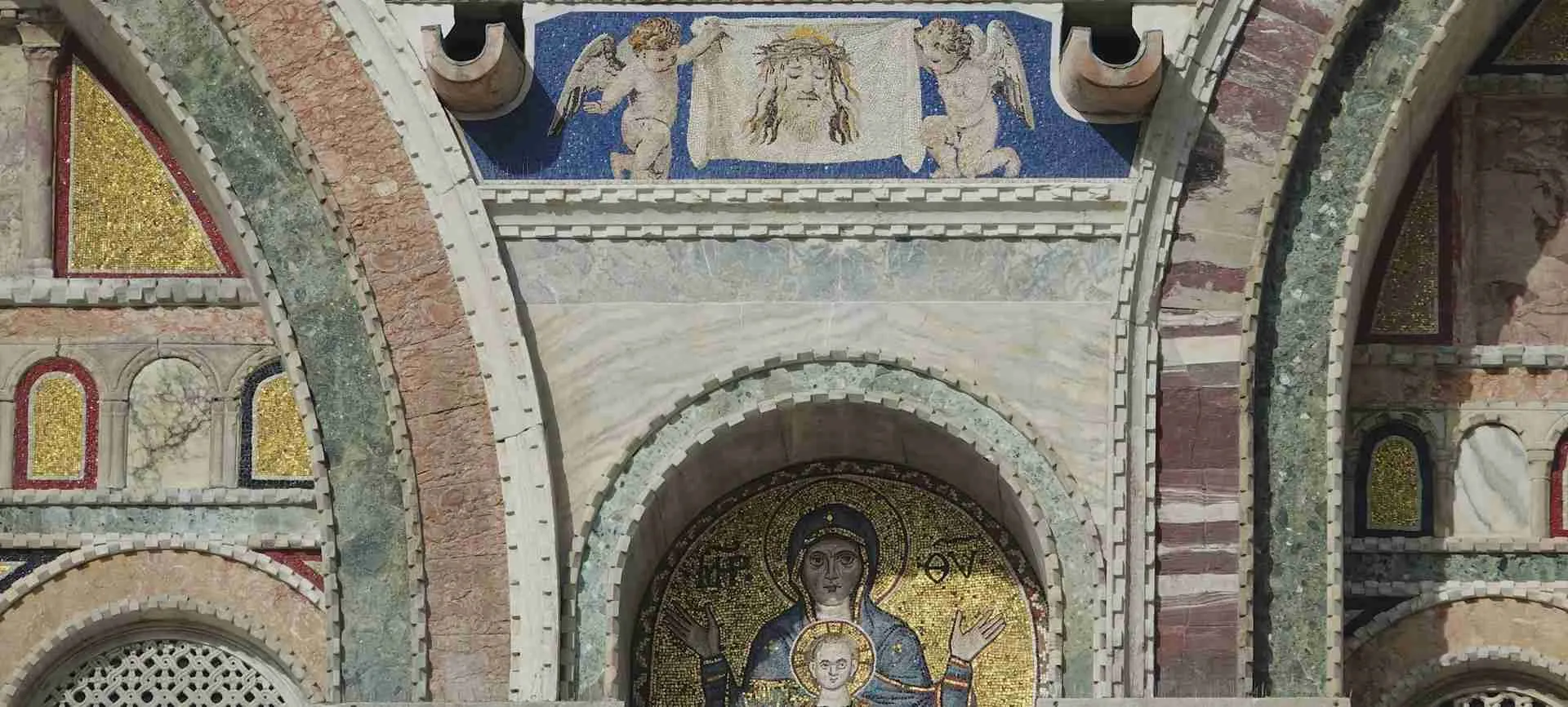
St. Mark’s Basilica contains approximately 8,000 square meters of mosaic decoration, making it one of the world’s most complete surviving examples of Byzantine mosaic art outside Constantinople. The mosaics cover the interior surfaces of all five domes, the barrel vaults connecting them, the upper walls, and numerous smaller surfaces throughout the building. Created primarily between the 11th and 13th centuries, these mosaics follow Byzantine iconographic programs that organize biblical narratives and sacred figures according to theological hierarchy and liturgical function.
The central dome depicts Christ’s Ascension, showing the risen Christ surrounded by the Virgin Mary and apostles witnessing his return to heaven. This placement follows Byzantine tradition of positioning Christ Pantocrator in the central dome as the cosmological center around which all creation revolves. The four surrounding domes continue the narrative chronology, depicting events from the Passion, Pentecost, and lives of the evangelists, creating a comprehensive visual theology readable by both literate clergy and illiterate worshippers.
The mosaics employ gold-ground backgrounds achieved through gold leaf applied between layers of glass tesserae, creating surfaces that catch and reflect candlelight and natural illumination in constantly shifting patterns. Byzantine mosaicists understood that this shimmering golden background represented divine light rather than naturalistic space, creating an otherworldly environment appropriate for sacred subjects. The extensive use of gold required enormous wealth, as each square meter incorporated significant amounts of precious metal along with the labor costs of skilled artisans working at heights on complex curved surfaces.
The western wall above the main entrance contains the basilica’s oldest surviving mosaics, likely executed by Byzantine artists in the late 11th century before the narthex was constructed. These early works show the Virgin Mary flanked by apostles in the classic Byzantine style, with frontal poses, hieratic proportions, and the formal dignity characteristic of Eastern Christian art. Later 12th and 13th-century mosaics demonstrate increasing Venetian influence as local workshops trained in Byzantine techniques began introducing Western narrative elements and compositional innovations.
Significant mosaic restoration and replacement occurred during the Renaissance when damaged medieval sections were recreated following preparatory drawings by prominent Venetian painters including Titian, Tintoretto, and Paolo Veronese. These later mosaics differ stylistically from their Byzantine predecessors, introducing Renaissance perspective, naturalistic anatomy, and dramatic lighting effects into the traditional mosaic medium. This layering of artistic periods means visitors encounter eight centuries of mosaic art spanning from pure Byzantine work through Gothic transitions to Renaissance reinterpretations, all somehow coexisting within the building’s unified golden glow.
The Pala d’Oro: Golden Altarpiece and Byzantine Treasure
The Pala d’Oro stands as St. Mark’s Basilica’s most precious object, a golden altarpiece measuring 3.45 meters long and 1.4 meters high positioned behind the high altar. Created primarily in Constantinople between the 10th and 12th centuries, the screen consists of gold panels decorated with Byzantine enamel work and set with approximately 1,300 pearls, 300 emeralds, 300 sapphires, 400 garnets, 100 amethysts, plus rubies and other precious stones arranged in complex patterns around figurative enamel plaques.
The altarpiece began in 976 when Doge Pietro Orseolo commissioned Byzantine goldsmiths to create a golden antependium for the high altar. Subsequent doges commissioned additions and modifications, incorporating new enamel plaques and increasing the gem settings to demonstrate Venice’s growing wealth. The major expansion occurred in 1204 following the Fourth Crusade, when Venetian forces brought additional Byzantine enamel work from Constantinople’s plundered churches, which were integrated into the existing structure to create its current comprehensive form.
The Pala d’Oro’s enamel plaques depict Christ Pantocrator, the Virgin Mary, evangelists, apostles, prophets, angels, and scenes from Christ’s life arranged in hierarchical tiers. Byzantine enamel work achieved remarkable luminosity through the cloisonné technique, where thin gold wires create compartments filled with colored glass paste fired to create permanent jewel-like surfaces. The combination of glowing enamels, reflective gold surfaces, and faceted gemstones creates overwhelming visual richness that embodies medieval conceptions of heavenly splendor made manifest in precious materials.
The altarpiece underwent major restructuring in 1345 when Gothic elements were added to frame and organize the accumulated Byzantine panels. Venetian goldsmiths created an elaborate architectural framework with pinnacles, trefoil arches, and decorative borders that integrated the disparate enamel plaques into a unified composition while adding additional gemstone settings. This Gothic framework demonstrates how Venice continued adapting and embellishing its greatest treasure across centuries, treating it as a living artwork rather than a static historical object.
Modern conservation maintains the Pala d’Oro behind protective glass to prevent theft and limit environmental damage from humidity and temperature fluctuations. The screen remains in its liturgical function behind the high altar, visible only from a designated viewing area where visitors can approach closely but not touch the surface. Illumination from carefully positioned lights reveals the enamels’ translucent colors and causes the gemstone settings to sparkle, though this artificial lighting necessarily differs from the candlelight for which the piece was originally designed.
Museum and Loggia dei Cavalli: The Bronze Horses
The Museo di San Marco occupies the basilica’s upper galleries, accessible via steep staircases from the narthex. The museum houses liturgical objects, tapestries, illuminated manuscripts, ancient mosaic fragments, and religious vestments that span the basilica’s history. The collection provides context for understanding the building’s evolution while preserving objects removed from liturgical use during various restoration campaigns.
The museum’s primary attraction remains the four original bronze horses, removed from the exterior loggia in 1974 and replaced by fiberglass replicas to prevent environmental deterioration. These gilded bronze sculptures stand among the ancient world’s finest surviving examples of large-scale bronze casting, though scholarly debate continues regarding their original date and location. Most specialists now believe the horses originated in Rome during the late classical period, possibly 2nd or 3rd century AD, though Venice traditionally claimed they came from Constantinople’s hippodrome.
The horses reached Venice in 1204 as part of the Fourth Crusade’s plunder, though their earlier history remains uncertain. Byzantine sources mention bronze horses decorating Constantinople’s hippodrome, but whether these were the same sculptures now in Venice cannot be definitively established. The horses were installed above St. Mark’s main portal where they became Venice’s most recognizable symbol after the winged lion, representing the republic’s military victory over Byzantium and its appropriation of imperial imagery.
Napoleon briefly removed the horses to Paris in 1797 as war trophies when French forces occupied Venice, installing them atop the Arc de Triomphe du Carrousel. Their return to Venice in 1815 following Napoleon’s defeat became a moment of patriotic celebration, though ongoing exposure to Venice’s marine atmosphere gradually caused bronze disease that necessitated their eventual removal to the museum. The current replicas maintain the horses’ iconic presence on the façade while the originals reside in climate-controlled conditions that prevent further deterioration.
The Loggia dei Cavalli provides the museum’s most spectacular feature beyond the horses themselves: an outdoor terrace offering sweeping views across Piazza San Marco toward the lagoon and San Giorgio Maggiore. This elevated perspective reveals the square’s architectural unity while allowing visitors to appreciate the basilica’s own upper facade details, Gothic pinnacles, and decorative sculpture invisible from ground level. The loggia represents one of Venice’s finest viewpoints, justifying the museum visit even for those less interested in the liturgical objects within.
Treasury: Spoils from Constantinople and Sacred Relics
St. Mark’s Treasury contains one of Europe’s richest collections of Byzantine precious metalwork, accumulated primarily through the Fourth Crusade’s 1204 sack of Constantinople. The collection includes chalices, reliquaries, icons, liturgical vessels, enamels, and carved rock crystal objects that once belonged to Byzantine churches, imperial palaces, and aristocratic households. These objects represent Byzantine craftsmanship at its peak, created during the centuries when Constantinople served as Christendom’s wealthiest and most artistically sophisticated capital.
The treasury’s holdings include over 300 pieces of Byzantine metalwork in gold and silver, many incorporating precious stones, pearls, and elaborate enamel decoration. Particularly significant examples include the Archangel Michael icon in gold and enamel, chalices with cabochon gemstone settings, and reliquaries designed to display fragments of saints’ bones or possessions. Byzantine goldsmiths achieved technical mastery in combining different materials and techniques, creating objects where functional liturgical vessels became vehicles for demonstrating imperial and ecclesiastical wealth through precious materials transformed by supreme craftsmanship.
Rock crystal vessels carved from single massive pieces of natural crystal represent the treasury’s most unusual category. Byzantine artisans carved these extremely hard stones into chalices, bowls, and containers using abrasive techniques that required immense patience and skill. The natural transparency of rock crystal made these objects particularly suitable for liturgical use where the substance contained, whether wine or sacred relics, remained visible through the crystal walls. Later medieval Western craftsmen added golden mounts and gemstone settings to enhance and protect these ancient carvings.
The treasury also preserves various relics and reliquaries associated with early Christian saints and martyrs. These include bone fragments, textile scraps, and other physical remains venerated as tangible connections to holy individuals. Byzantine Christianity placed enormous emphasis on relic veneration, creating elaborate containers and display systems that both protected the relics and demonstrated their importance through precious materials and expert craftsmanship. The Venice treasury’s relic collection established the basilica’s spiritual authority while providing pilgrimage destinations that drew visitors throughout the medieval and Renaissance periods.
Display cases present the treasury objects in temperature and humidity-controlled conditions that prevent further deterioration of these thousand-year-old artifacts. Informational panels explain Byzantine metalworking techniques and the historical context of Constantinople’s 1204 sack, though the sheer quantity and richness of objects can overwhelm visitors unfamiliar with Byzantine art. The treasury visit requires additional time beyond the main basilica, but provides essential context for understanding medieval Venice’s relationship with Byzantium and the material sources of the basilica’s legendary opulence.
Entry Fees and Ticketing Options
St. Mark’s Basilica entry costs €10 for access to the main basilica nave and mosaic decoration. This fee applies to the mandatory online booking system implemented in July 2025, which replaced all on-site ticket sales. Visitors select 30-minute time slots released 45 days in advance through the official basilica website, with bookings available up to 24 hours before the visit date. The €10 admission includes access to the main floor, all five domes with their mosaic programs, the narthex, and the main altar area but excludes the Pala d’Oro, museum, and treasury.
Combined tickets offer better value for visitors interested in comprehensive access. The basilica plus Pala d’Oro combination costs €20, providing entry to the main church and close-up viewing of the golden altarpiece behind the high altar. The complete ticket priced at €30 includes the basilica, Pala d’Oro, and museum access with the Loggia dei Cavalli terrace and original bronze horses. These combined tickets use the same time-slot booking system, with all areas accessible during a single visit though not necessarily in a predetermined order.
The bell tower requires a separate ticket costing €15-18 depending on seasonal demand and booking method. This tall campanile standing adjacent to the basilica offers panoramic views across Venice and the lagoon from its observation level. The bell tower operates independently from the basilica with separate entrance and operating hours, so visitors planning to visit both should allow time for potential queues at the tower entrance. Elevator access makes the tower suitable for visitors with mobility limitations, unlike the basilica museum which requires climbing stairs.
Significant discounts apply to specific visitor categories. Students under 26 receive 50% off the standard admission price upon presenting valid student identification. Visitors over 65 similarly qualify for 50% reductions. Children under 10 enter free though still require reserved time slots. These discounts apply only to individual bookings and cannot be combined with other promotional offers. Evening visits, when offered, exclude discount eligibility and charge premium rates for access during special lighting conditions with fewer crowds.
Skip-the-line guided tours range from €18 to €35 depending on tour length, group size, and additional inclusions beyond the basilica itself. These tours typically combine St. Mark’s with the Doge’s Palace or other Piazza San Marco attractions, providing priority entrance that bypasses standard security lines. Guided tours include expert commentary explaining the mosaics, architectural history, and religious significance that enhances understanding beyond self-guided visits. Tour operators must be officially accredited by the basilica’s Procuratoria administration, so booking through reputable companies ensures legitimate access and knowledgeable guides.
Opening Hours and Best Times to Visit
St. Mark’s Basilica opens Monday through Saturday from 9:30 AM to 5:15 PM, with last admission at 4:45 PM. These hours remain consistent throughout the year except during major religious celebrations when special schedules may apply. The 45-minute buffer between last entry and closing time provides minimum duration for viewing the main basilica, though this rushed timeline prevents thorough appreciation of the mosaics and architectural details that deserve more careful examination.
Sundays and religious holy days operate reduced visitor hours, opening at 2:00 PM and closing at 5:15 PM. Morning hours on these days are reserved exclusively for Mass and religious services, with tourist access prohibited until afternoon. The Museum and Loggia dei Cavalli maintain different Sunday hours, opening from 9:30 AM to 2:00 PM, allowing visitors to see the bronze horses and enjoy terrace views even when the main basilica remains closed for worship. This separate museum access makes Sunday mornings viable for partial visits despite limited basilica entry.
The bell tower operates extended hours daily from 9:30 AM to 9:15 PM, with last entry at 8:45 PM. The campanile closes during adverse weather conditions when high winds or storms make the observation level unsafe, with closure decisions made day-of based on current conditions. Evening tower access provides spectacular sunset views across Venice and the lagoon, making late afternoon ascents particularly popular during summer months when extended daylight hours align with the tower’s operating schedule.
Optimal visiting times for minimal crowds occur during weekday mornings shortly after 9:30 AM opening or late afternoons after 4:00 PM approaching closure. Tuesday through Thursday consistently show lighter visitor numbers than weekend days, particularly during shoulder seasons in April, May, September, and October. The 11:30 AM to 12:30 PM window offers unique advantages despite higher crowds, as the basilica activates all interior lighting during this period, revealing mosaic details invisible under natural light alone.
Peak tourist season from June through August brings maximum crowds, extended waiting times despite the reservation system, and uncomfortable heat within the stone-and-marble interior that lacks air conditioning. Winter months from November through March offer the calmest visiting conditions with drastically reduced crowds and cooler temperatures that make the unheated basilica more comfortable for extended viewing. Early December combines manageable crowds with festive lighting and decorations that enhance the already spectacular golden interior, while January and February represent the absolute quietest periods for contemplative visits.
Visitor Guidelines and Dress Code Requirements
St. Mark’s Basilica enforces strict dress codes requiring shoulders and knees covered for all visitors regardless of gender or age. Tank tops, sleeveless shirts, shorts above the knee, miniskirts, low-cut tops, and revealing clothing result in entry denial at security checkpoints. Enforcement occurs consistently with guards positioned at entry gates who turn away inappropriately dressed visitors without refunds or exceptions. During summer months when temperatures encourage casual beach attire, this dress code causes numerous daily rejections, so advance planning prevents disappointment.
Acceptable clothing includes long pants, knee-length shorts at minimum, skirts or dresses extending below the knee, and tops covering shoulders completely. Sheer fabrics or lace that reveal skin underneath fail to meet standards even if technically providing coverage. During warm weather, lightweight cotton or linen garments in loose cuts provide comfort while meeting requirements. Carrying a large scarf or shawl allows quick shoulder coverage if needed, offering flexibility for visitors touring multiple sites with varying dress expectations throughout the day.
Photography without flash is generally permitted throughout most of the basilica, allowing visitors to document the mosaics, architectural details, and overall interior experience. Specific restrictions apply to the Pala d’Oro viewing area and treasury where photography is prohibited to prevent disturbance to other visitors in confined spaces and protect delicate objects from light exposure. Tripods and selfie sticks are banned throughout the basilica due to space constraints and crowd management concerns.
Bags exceeding standard handbag or small backpack size must be left in free bag check facilities located near the basilica entrance. Large backpacks, rolling luggage, and oversized camera bags cannot be brought into the church due to limited aisle space and damage risk to marble, mosaic, and decorative elements from inadvertent contact. The bag check operates during all open hours, though queues form during peak times as all bags undergo security screening before storage.
Maintaining appropriate behavior befitting an active place of worship is mandatory despite the basilica’s heavy tourist traffic. This includes speaking quietly, refraining from eating or drinking, turning mobile phones to silent mode, and showing respect during any ongoing religious services. Visitors should remove hats upon entering and avoid touching frescoes, mosaics, marble surfaces, or any decorative elements. Groups led by guides must remain together and avoid blocking aisles or creating bottlenecks that prevent circulation, with enforcement by basilica staff who actively manage crowd flow during busy periods.
The Crypt and Tomb of Saint Mark
The crypt beneath St. Mark’s Basilica houses the tomb of Saint Mark the Evangelist, the relics whose acquisition in 828 established Venice’s spiritual foundation and justified the basilica’s construction. The tomb sits directly below the high altar, creating vertical alignment between the apostle’s remains and the liturgical space where Mass is celebrated above. This positioning follows Byzantine and early Christian traditions that placed martyrs’ relics beneath altars, sanctifying the Mass through proximity to sacred bones.
The crypt’s design reflects the 11th-century Byzantine architectural vocabulary with low barrel vaults supported by columns creating an intimate underground chapel. Original construction placed the crypt at ground level, but Venice’s gradual subsidence over centuries combined with periodic flooding eventually positioned the space partially below the lagoon’s high-water mark. Modern drainage and waterproofing systems protect the tomb from acqua alta events, though the space’s dimness and humidity create atmospheric conditions very different from the gilded splendor above.
Access to the crypt varies depending on liturgical schedules and conservation requirements. During regular basilica visiting hours, the crypt generally remains visible through grates or restricted viewing points rather than allowing full visitor access. Certain religious feast days and special Masses utilize the crypt for services, when tourist access is prohibited entirely. The tomb itself consists of a simple stone structure, deliberately austere compared to the elaborate marble and mosaic decoration throughout the rest of the basilica.
Historical accounts describe the relics’ dramatic loss and recovery during the 12th century. When fire damaged the basilica in 976, the location of Saint Mark’s relics was reportedly forgotten during reconstruction. The relics miraculously revealed themselves in 1094 during the new basilica’s consecration, when a section of marble column supposedly broke open to reveal the saint’s arm. This legend, depicted in the basilica’s mosaic decoration, reinforced Venice’s claim that divine providence protected the relics and sanctioned the city’s independence.
Modern scientific investigation has never conclusively verified the crypt’s remains as those of Mark the Evangelist, though the Catholic Church accepts them as authentic relics with centuries of unbroken veneration. The historical Mark served as companion to Saint Peter and Saint Paul, authoring the Gospel of Mark before establishing the Church of Alexandria where he suffered martyrdom. Venice’s possession of such significant relics elevated the city’s ecclesiastical status and created pilgrimage traffic that brought economic and political benefits beyond mere spiritual prestige.
Mass Times and Religious Services
St. Mark’s Basilica celebrates daily Mass and maintains an active schedule of religious services despite its overwhelming tourist traffic. Worshippers enter through the Porta dei Fiori entrance on the north side facing Piazzetta dei Leoncini, bypassing tourist security lines and ticket requirements. This separate entrance remains accessible from 8:00 AM to 7:30 PM daily for prayer and participation in liturgical services, allowing Venice residents and pilgrims to use the basilica as an active place of worship rather than merely an architectural monument.
Weekday Masses occur at the Altar of the Nicopeia from 10:00 AM to 12:00 PM and again from 6:30 PM until the evening service concludes. Saturday afternoon and all Sunday morning hours are reserved for Mass and other liturgical celebrations, with the Patriarch of Venice presiding over major solemnities throughout the liturgical year. These Sunday morning services explain the restricted tourist hours on weekends, as the basilica prioritizes religious function over tourism despite the significant visitor revenue that entrance fees generate.
Major feast days including Christmas, Easter, the Feast of Saint Mark, and other significant celebrations feature elaborate liturgies attended by civic officials and religious dignitaries alongside regular parishioners. These ceremonies showcase the basilica’s original purpose as Venice’s state sanctuary where religious and political authority merged in public rituals. The Patriarch of Venice leads these major services, maintaining traditions established during the Venetian Republic when the Doge attended in full ceremonial regalia accompanied by government officials.
Visitors are welcome to attend Mass and religious services, though appropriate behavior and dress become even more critical during worship than during tourist visiting hours. Those attending services should arrive early to secure seating, as space fills quickly during major celebrations. Participating in liturgy provides unique access to the basilica’s spiritual dimension beyond its artistic and historical significance, allowing visitors to experience the building as medieval Venetians intended rather than as a museum artifact separated from its religious purpose.
The liturgical calendar influences tourist access throughout the year, with Holy Week, Easter, and certain other observances reducing or eliminating visitor hours to accommodate intensive religious programming. The basilica administration publishes liturgical schedules showing when special services will affect normal visiting patterns, allowing tourists to plan around major celebrations or intentionally attend to witness the basilica functioning as an active cathedral rather than a tourist destination.
The Baptistery and Its Mosaics
The baptistery occupies the southern arm of the basilica’s narthex, converted from its original function in the 14th century when Doge Andrea Dandolo commissioned extensive mosaic decoration. The baptistery mosaics, completed around 1350, demonstrate transitional style between Byzantine traditions and emerging Gothic sensibilities. These mosaics narrate episodes from the lives of John the Baptist and Christ’s early life, rendered with increased naturalism and narrative detail compared to earlier Byzantine work elsewhere in the basilica.
The space features an octagonal baptismal font created from a single massive block of Egyptian granite, demonstrating Venice’s continued access to prestigious materials from distant sources. The font’s octagonal shape carried symbolic significance in Christian baptismal theology, representing the eighth day of creation when Christ’s resurrection inaugurated the new covenant. Bronze reliefs decorate the font’s panels, though these suffered damage during various flooding events that periodically inundated the low-lying baptistery.
Doge Andrea Dandolo himself is buried within the baptistery in a Gothic sarcophagus that represents one of Venice’s finest 14th-century funerary monuments. His tomb inscription emphasizes his scholarly accomplishments and patronage of the arts, befitting a doge who commissioned significant architectural and decorative projects throughout Venice. The baptistery burial location signaled Dandolo’s piety while associating his memory with the baptismal sacrament that initiated Christians into the faith community.
The mosaic program shows workshop practices in transition, with some panels demonstrating traditional Byzantine approaches while others incorporate Gothic spatial recession and more animated figure poses. This stylistic mixture reflects Venice’s position between East and West, where Byzantine traditions maintained strength even as Gothic innovations arrived from France and northern Italy. The baptistery mosaics deserve careful attention from visitors interested in understanding how Byzantine art evolved during the later Middle Ages as Western influences increased.
Access to the baptistery varies depending on liturgical use and conservation requirements. When open to visitors, the space provides respite from the main basilica’s crowds while offering mosaics of exceptional quality in more intimate surroundings. The baptistery’s lower light levels require time for eyes to adjust, but this dimness creates appropriate atmosphere for contemplating the sacred narratives depicted in the glittering tesserae covering every surface.
Visiting the Bell Tower (Campanile)
St. Mark’s Campanile rises 98.6 meters above Piazza San Marco as Venice’s tallest structure, dominating the city’s skyline and providing observation points accessible via elevator to approximately 70 meters elevation. The current tower represents a careful reconstruction completed in 1912 after the original medieval campanile collapsed catastrophically on July 14, 1902. The reconstruction followed the principle “com’era, dov’era” (as it was, where it was), replicating the fallen tower’s exact appearance while incorporating modern structural techniques to prevent future collapse.
The original campanile began construction in the 12th century on Roman foundations, with the belfry and pyramidal spire added during 16th-century modifications. Over centuries, the tower developed a slight lean due to Venice’s soft subsoil, while lightning strikes, earthquakes, and structural stress from the bells’ vibrations gradually weakened the masonry. The 1902 collapse occurred without casualties, as the tower fortunately fell during a period when the surrounding piazza was nearly empty. Only the custodian’s cat perished, later memorialized in Venetian folklore.
Visitors access the observation level via elevator rather than climbing stairs, making the campanile Venice’s most accessible elevated viewpoint. The observation deck provides 360-degree views extending across the city’s rooftops to the lagoon, the Alps visible on clear days to the north, and the Adriatic stretching to the eastern horizon. Identifying landmarks becomes easier from this height, with the Grand Canal’s serpentine course visible along with major churches, palaces, and the relationship between Venice’s islands and surrounding waterways.
The tower contains five historical bells, each with specific traditional functions in Venetian civic life. The largest bell, called the “Marangona,” announced the beginning and end of workdays, while the “Trottiera” signaled governmental assemblies. The “Nona” rang at noon, the “Mezza-terza” marked midafternoon, and the “Maleficio” tolled during executions. These bells still ring on schedule, maintaining audible connections to Venice’s past when towers served essential communication functions before modern technology.
The bell tower operates independently from the basilica with separate entrance fees and operating hours. Opening daily from 9:30 AM to 9:15 PM with last entry at 8:45 PM, the extended schedule allows sunset viewing during summer months when late light creates spectacular photographic conditions. The tower closes during high winds, storms, or other adverse weather that makes the observation level unsafe, with closure decisions announced day-of based on current conditions. Lines form during peak hours, so visiting early morning or late afternoon typically reduces waiting time.
Combining St. Mark’s with Doge’s Palace Visits
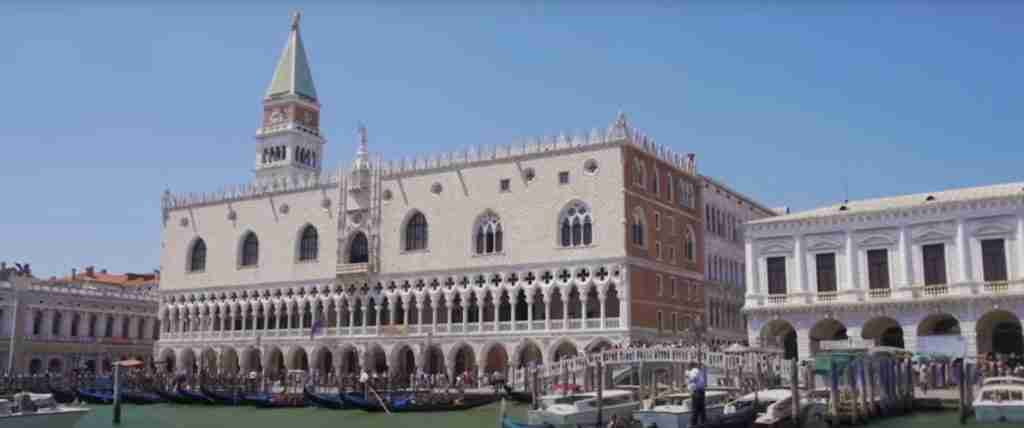
The Doge’s Palace stands adjacent to St. Mark’s Basilica on the piazza’s southern edge, creating logical combination visits that maximize time in this concentrated area of Venetian monuments. Combined tickets bundling the basilica and palace with additional museums around Piazza San Marco offer financial savings versus separate admissions while encouraging comprehensive exploration of Venice’s governmental and religious heart. These combination passes typically include the Museo Correr, Archaeological Museum, and Biblioteca Marciana alongside the two primary attractions.
Thematic connections link the basilica and palace beyond mere physical proximity. The Doge’s Palace served as the Venetian Republic’s governmental center where the doge resided, the Great Council met, and administrative functions occurred. The basilica functioned as the doge’s private chapel and state sanctuary where political and religious ceremonies merged. Understanding medieval Venice requires grasping this institutional partnership where political authority derived partial legitimacy from association with Saint Mark’s relics and the spiritual prestige they conferred.
Architectural passages historically connected the palace and basilica, allowing the doge and government officials to move between buildings during state ceremonies without descending to street level. Though these connecting passages are not accessible to modern tourists, their existence emphasized the unified nature of religious and political power in the Venetian system. The palace’s Sala del Maggior Consiglio (Great Council Hall) faces toward the basilica, maintaining visual connection between the two centers of authority.
Combined visits require significant time allocation, as each building deserves 1.5 to 2 hours minimum for adequate exploration. Attempting to rush through both locations in a half-day produces superficial impressions that miss the detailed artistry and historical complexity that make these buildings extraordinary. Full-day itineraries work better, allowing morning hours at one site, lunch break, and afternoon at the second location. Breaking visits across multiple days permits more thorough engagement, though single-day combination visits remain feasible for travelers with limited Venice time.
Guided tours frequently combine both buildings, providing expert commentary that connects their historical, artistic, and political relationships. These tours skip regular admission lines through priority entrance, particularly valuable at the Doge’s Palace where queues extend considerably during peak season. Quality tours employ licensed guides with art history or architecture backgrounds who explain the complex iconography in the palace’s painted ceilings and the basilica’s mosaic programs, adding interpretive layers unavailable to self-guided visitors.
Photography Tips for Capturing the Golden Interior
Photographing St. Mark’s Basilica’s golden mosaics presents technical challenges due to low ambient light, mixed color temperatures, and reflective surfaces that create hotspots and glare. The basilica prohibits flash photography, requiring high ISO settings, wide apertures, or image stabilization to achieve sharp handheld exposures. Modern cameras and smartphones perform surprisingly well in low light, but understanding a few key techniques improves results significantly beyond simple point-and-shoot attempts.
Arriving during the 11:30 AM to 12:30 PM window when interior lights are activated provides optimal conditions for photography. The artificial illumination reveals mosaic details invisible under natural light while providing consistent color temperature across the frame. This lighting creates the golden glow visitors associate with the basilica, as carefully positioned spotlights activate the gold-ground tesserae’s reflective properties. Outside this window, natural daylight filtering through windows creates uneven illumination with deep shadows in vaulted areas distant from window openings.
Wide-angle lenses capture the soaring domes and comprehensive architectural views that convey the basilica’s spatial grandeur. However, ultra-wide focal lengths introduce distortion that warps the domes’ curves and architectural lines. Moderate wide angles between 24-35mm (full-frame equivalent) balance coverage with more natural perspective rendering. Detail shots benefit from longer focal lengths that isolate specific mosaic sections, allowing appreciation of individual tesserae and artistic techniques invisible in wide establishing views.
Managing exposure requires balancing the brilliant gold surfaces against darker marble and shadowed architectural elements. Spot metering on mid-tone areas prevents the golden highlights from fooling the camera’s meter into underexposure. Shooting in RAW format preserves maximum information for post-processing adjustments, as JPEG compression discards subtle tonal gradations in both highlights and shadows. Bracketing exposures ensures capturing detail across the scene’s full dynamic range.
Vertical compositions work well for capturing the domes’ height and the relationship between floor-level decoration and overhead mosaics. The basilica’s Greek cross plan creates strong symmetrical compositions when shooting down the central axis, though crowds during visiting hours make unobstructed centerline views difficult. Patient photographers wait for momentary gaps in foot traffic, though weekday early mornings or late afternoons offer better odds of reduced crowds. The Loggia dei Cavalli terrace provides elevated perspectives impossible from the main floor, adding valuable variety to standard ground-level imagery.
Accessibility Information for Visitors with Mobility Limitations
St. Mark’s Basilica presents significant accessibility challenges due to its medieval construction, numerous stairs, uneven marble floors, and narrow passages between architectural elements. The main entrance features several steps that prevent wheelchair access through the primary portals. An accessible entrance exists on the north side through the Porta dei Fiori, though this route requires advance notification to basilica staff and may not be available during all visiting hours. Visitors requiring accessible entry should contact the basilica administration before their visit to arrange appropriate access.
Once inside the main basilica floor, the marble pavement’s gentle undulations and occasional level changes create challenges for wheelchairs and visitors with limited mobility. The historic floor shows eight centuries of settling on Venice’s soft subsoil, producing gentle waves and slopes that, while visually interesting, complicate navigation for those using mobility aids. The main floor areas remain generally accessible despite these surface irregularities, allowing visitors in wheelchairs to view the primary mosaic programs and architectural features.
The museum and Loggia dei Cavalli remain completely inaccessible to wheelchair users due to steep stair access without elevator alternatives. Visitors unable to climb stairs cannot view the original bronze horses or access the terrace viewpoint, representing significant limitations for those interested in comprehensive visits. The treasury and Pala d’Oro viewing areas have minimal stairs and can accommodate most visitors with mobility limitations, though tight spaces and crowds during peak hours create additional challenges.
The bell tower provides excellent accessibility through elevator service that transports visitors directly to the observation level without stair climbing. This makes the campanile Venice’s most accessible elevated viewpoint, offering panoramic views unavailable to mobility-limited visitors at most other observation points throughout the city. The observation deck itself is level and spacious, allowing wheelchair users to circulate and view in all directions.
Visitors with visual impairments face particular challenges in appreciating the basilica’s primarily visual artistic program. No tactile models or comprehensive audio descriptions currently exist for the mosaics and architectural features. Guided tours can provide verbal descriptions though standard group tours move too quickly for detailed verbal explanation of complex visual elements. Private tours arranged in advance offer better options for visitors requiring extensive verbal description and flexible pacing.
Nearby Attractions in Piazza San Marco
Piazza San Marco contains Venice’s greatest concentration of major monuments, with most located within a few minutes’ walk of St. Mark’s Basilica. This clustering allows efficient full-day itineraries that maximize time exploring historically connected buildings rather than navigating between distant locations across Venice’s complex canal system and narrow pedestrian passages.
The Doge’s Palace stands immediately adjacent to the basilica’s southern side, connected historically through passages allowing the doge direct access between his residence and private chapel. The palace interior contains spectacular painted ceilings by Tintoretto, Veronese, and other Venetian masters decorating the governmental halls where the republic’s business occurred. The palace route includes the famous Bridge of Sighs connecting to the prison where Casanova and other notable inmates spent time in cells below the lagoon’s waterline.
The Museo Correr occupies the Procuratie Nuove buildings closing the piazza’s western end opposite the basilica. This civic museum preserves paintings, sculptures, historical documents, and decorative arts illustrating Venetian cultural development from medieval through modern periods. The museum’s Neoclassical rooms designed by architect Napoleone Bettotti house works by Bellini, Carpaccio, and other Venetian masters alongside historical artifacts including doges’ ceremonial robes, globes, navigational instruments, and weaponry.
The Archaeological Museum and Biblioteca Marciana share the Procuratie Nuove complex with the Correr, accessible through combined tickets. The archaeological collection displays Greek and Roman sculptures, coins, and decorative objects assembled by Venetian collectors. The Marciana Library, designed by Jacopo Sansovino, houses one of Italy’s most important manuscript collections in a magnificent 16th-century reading room with painted ceilings and elaborate stucco decoration demonstrating high Renaissance aesthetics.
The Torre dell’Orologio (Clock Tower) dominates the piazza’s northern side where the passageway leads toward the Rialto. This Renaissance tower contains an elaborate astronomical clock showing lunar phases, zodiac signs, and time in multiple formats through mechanical movements created in the late 15th century. Guided tours access the tower’s upper levels and clock mechanism, revealing the engineering sophistication behind the decorative facade. The tower’s upper terrace supports bronze figures of two Moors who strike the hours on a massive bell visible and audible throughout the piazza.
Exploring the Narthex and Entrance Mosaics
The narthex wraps around the western and northern sides of St. Mark’s Basilica, creating a transitional space between the exterior piazza and the interior sacred space. This vaulted gallery features exceptional mosaic decoration depicting Old Testament narratives from Genesis, creating comprehensive visual theology that prepares visitors for the New Testament scenes inside the main church. The Genesis mosaics date from the early 13th century and represent some of the finest Byzantine narrative art surviving in Italy.
The Genesis cycle presents creation through the story of Joseph in Egypt through dozens of individual mosaic panels arranged in chronological sequence along the narthex vaults. Each scene contains remarkable detail including landscapes, architectural settings, and multiple figures engaged in dramatic action. The artists demonstrated sophisticated narrative techniques, showing sequential moments within single scenes to indicate temporal progression and cause-and-effect relationships essential to understanding the stories.
The narthex floor continues the main church’s elaborate geometric marble inlay, creating visual continuity between transitional and sacred spaces. The pavement’s undulating surface results from centuries of settling, creating gentle waves that add movement to the already complex geometric patterns. These floor designs derive from Roman opus sectile traditions transmitted through Byzantine decorative vocabulary, demonstrating cultural continuities spanning classical antiquity through the medieval period.
Three portals provide entry from the narthex into the main church, with the central doorway featuring elaborate bronze doors cast in the 11th century. These doors show Byzantine metalworking techniques with figural panels depicting Christ, evangelists, and prophets arranged in hierarchical tiers. The doors’ green patina results from centuries of oxidation affecting the bronze alloy, creating surface colors that complement the surrounding marble and mosaic decoration.
The lunette above the central portal contains the basilica’s oldest surviving mosaic, depicting the Virgin Mary flanked by apostles in late 11th-century Byzantine style. This mosaic predates the narthex construction, suggesting it originally faced the exterior piazza before the narthex enclosed it. The frontal poses, gold backgrounds, and hieratic arrangement demonstrate pure Byzantine aesthetics before Venetian workshops began introducing Western innovations. Careful examination reveals subtle differences between these early mosaics and the slightly later Genesis cycle, showing stylistic evolution within the broader Byzantine tradition.
Hidden Details and Symbolic Elements
St. Mark’s Basilica contains countless small-scale details invisible during cursory visits, rewarding careful observation with discoveries of symbolic elements, artistic signatures, and architectural refinements that enrich understanding of the building’s complexity. These hidden features span from floor-level marble inlay to sculptural elements tucked into dark corners, each contributing to the comprehensive decorative program that left no surface unornamented.
The marble floor incorporates animal motifs including peacocks, roosters, foxes, and lions worked into the geometric patterns through colored stone inlay. These animals carried specific Christian symbolic meanings understood by medieval viewers though less obvious to modern tourists unfamiliar with medieval iconography. Peacocks represented resurrection due to beliefs that peacock flesh never decayed, while roosters symbolized Christ’s resurrection announced by crowing at dawn. Close examination reveals these creatures positioned throughout the nave and transepts, creating a symbolic bestiary beneath visitors’ feet.
Column capitals throughout the basilica display remarkable variety in carving styles and decorative motifs, reflecting their diverse origins from salvaged Byzantine and Roman sources. Some capitals feature deeply undercut acanthus leaves showing classical influence, while others display flatter Byzantine basket-weave patterns or Christian symbols including crosses and monograms. Scholars have identified several capitals as Roman imperial spolia dating to the 3rd or 4th centuries, brought to Venice from various Mediterranean sources and reused in new architectural contexts.
The exterior sculpture includes numerous small figures, grotesques, and decorative elements easily missed when attention focuses on the prominent mosaics and overall architectural composition. The south facade toward the waterfront contains relief sculptures showing craftsmen, merchants, and trades representing Venice’s commercial economy. These genre scenes provide rare glimpses of ordinary medieval life rarely depicted in religious art focused on sacred subjects. The sculptural programs continue this theme of celebrating Venice’s commercial success as divine blessing manifested through material prosperity.
Signature inscriptions occasionally appear in mosaic borders or on sculptural elements, identifying individual artists or workshops responsible for specific sections. These signatures, though not common, provide valuable evidence for understanding workshop organization and artistic attribution during the medieval and Renaissance periods. Byzantine tradition generally avoided artistic signatures in favor of anonymous craftsmanship glorifying God rather than human makers, making the occasional signed works particularly significant as evidence of changing attitudes toward artistic individuality.
Conservation and Restoration Challenges
St. Mark’s Basilica faces ongoing conservation challenges from Venice’s aquatic environment, where high humidity, salt air, and periodic flooding threaten the building’s fabric and artistic decoration. The lagoon’s rising water levels create acqua alta events that increasingly inundate the basilica’s ground floor, depositing salt water that evaporates leaving crystalline deposits damaging to marble, mosaic, and metal elements. Climate change predictions suggesting accelerated sea-level rise intensify concerns about the basilica’s long-term preservation.
The mosaic decoration requires continuous monitoring and intervention to prevent tesserae loss and adhesion failure. Individual mosaic cubes gradually detach from their setting beds due to moisture infiltration, structural movement, and aging of medieval mortar. Restoration teams work constantly replacing lost tesserae, re-adhering loosened sections, and cleaning surfaces darkened by centuries of candle smoke, incense residue, and atmospheric pollution. This work never truly finishes, as the vast 8,000 square meters of mosaics ensure that completing one section means others have deteriorated during the interval.
Structural concerns focus on foundation stability in Venice’s notoriously soft subsoil, where all buildings gradually settle and shift over time. The basilica’s marble floors undulate from centuries of differential settling, while walls and vaults show minor cracks indicating ongoing structural movement. Major interventions during the 20th century introduced steel reinforcement and foundation grouting to prevent catastrophic failures, though monitoring systems continue tracking movement to detect any acceleration requiring additional intervention.
Tourism itself creates conservation challenges through visitor impacts including foot traffic abrading the marble floors, breath humidity affecting indoor climate, and touching that damages surfaces. The basilica receives over three million visitors annually, each contributing incremental wear accumulating to significant degradation over time. Balancing tourism revenue necessary for funding conservation work against the damage tourism causes creates ongoing tensions in basilica management. The recent introduction of mandatory advance booking and entrance fees provides funding for conservation while potentially limiting visitor numbers to more sustainable levels.
Modern restoration philosophy emphasizes minimal intervention and reversibility, preferring stabilization and preventive conservation over aggressive replacement of historic materials. This approach recognizes that overly enthusiastic restoration can destroy the authentic historical layers that make the basilica valuable. Major controversies emerged during 20th-century restorations when some original Byzantine mosaics were replaced with modern copies following Renaissance drawings, eliminating the medieval work entirely. Current practice favors preserving original materials wherever possible, accepting accumulated age and damage as part of the building’s authentic historical character.
Frequently Asked Questions
How long does a visit to St. Mark’s Basilica take?
A comprehensive visit to St. Mark’s Basilica requires 1.5 to 2 hours to adequately experience the main church, Pala d’Oro, and museum including the Loggia dei Cavalli terrace. Rushing through in the minimum 45-minute window between last entry and closing produces superficial impressions that miss the mosaic details and architectural complexities deserving careful attention. Visitors interested in photography, detailed mosaic observation, or contemplative spiritual experience should allocate 2 to 3 hours. Adding the bell tower extends total time by another 45 minutes to 1 hour including elevator wait times and observation deck viewing.
Can I attend Mass at St. Mark’s Basilica without a ticket?
Worshippers can attend Mass and enter for prayer without tickets or advance reservations through the Porta dei Fiori entrance on the north side facing Piazzetta dei Leoncini. This entrance operates from 8:00 AM to 7:30 PM daily, bypassing the tourist security and ticketing systems entirely. Weekday Masses occur from 10:00 AM to 12:00 PM and 6:30 PM through evening service conclusion. Sunday mornings are reserved exclusively for worship with tourist access prohibited until 2:00 PM. Appropriate dress codes and behavior expectations apply even more strictly during religious services than tourist visiting hours, with shoulders and knees covered and respectful silence maintained.
Are there any free viewing times for the basilica?
St. Mark’s Basilica no longer offers free general admission since implementing the mandatory online ticketing system in July 2025. All tourist visitors pay minimum €10 entry fees regardless of visit timing. Free access remains available only for worship purposes through the prayer entrance, though this access prohibits tourist activities like photography, wandering, or treating the space as a sightseeing attraction. Certain groups including children under 10, residents of specific Venetian diocesan parishes, disabled visitors and accompanying persons, clergy, and accredited tour guides qualify for free admission but must still reserve time slots through the booking system.
What should I do if I’m turned away for inappropriate dress?
Visitors turned away for dress code violations have limited options, as the basilica does not provide covering garments and guards consistently enforce standards without exceptions. Nearby shops around Piazza San Marco sell lightweight scarves, shawls, or wraps that provide shoulder coverage, though finding appropriate lower-body covering requires visiting clothing stores farther from the immediate piazza area. Planning ahead prevents this situation by wearing long pants or knee-length skirts and tops with sleeves or bringing a large scarf for shoulder coverage. No refunds apply for advance-booked tickets if dress code violations prevent entry, making appropriate clothing essential for protecting both ticket investment and visit timing.
Can I bring a backpack or large bag into the basilica?
Large backpacks, rolling luggage, and oversized bags cannot enter St. Mark’s Basilica due to space constraints and damage risk to architectural elements. Free bag check facilities near the entrance accept bags exceeding standard handbag or small daypack size, though queues form during peak hours as all items undergo security screening. The bag check operates during all basilica open hours and provides secure storage, though valuable items should be kept with you rather than checked. Small purses, camera bags, and daypacks fitting under seats are generally acceptable, though final determination rests with security staff at entry checkpoints.
Is photography allowed inside St. Mark’s Basilica?
Photography without flash is permitted throughout most of the basilica, allowing documentation of mosaics, architecture, and the overall interior experience. Flash photography is strictly prohibited as it disturbs other visitors and potentially damages delicate artistic surfaces through repeated light exposure. Specific restrictions apply to the Pala d’Oro viewing area and treasury where photography is completely banned. Tripods and selfie sticks are prohibited throughout the basilica due to space constraints, crowd management concerns, and potential damage to floors and architectural elements. Security staff actively enforce these rules, requesting deletion of images taken in restricted areas.
How do I skip the lines at St. Mark’s Basilica?
The mandatory advance booking system implemented July 2025 essentially eliminates traditional entry queues by assigning specific 30-minute time slots. Visitors booking tickets online through the official website select their preferred time and present confirmation at the designated entrance, bypassing any crowds of walk-up visitors unable to access the building. Guided tours provide additional priority access through dedicated entrances for tour groups, though these tours cost more than self-guided tickets. Booking during less popular time slots like weekday late afternoons or first morning entry naturally reduces crowds beyond the formal queue-skipping mechanisms.
Can I visit the basilica and Doge’s Palace on the same day?
Visiting both St. Mark’s Basilica and Doge’s Palace in a single day is feasible though requires dedicating most of the day to these two attractions. Each building deserves 1.5 to 2 hours minimum for adequate exploration, with additional time for potential queues, breaks, and transitions between sites. Combined tickets bundling both attractions with surrounding museums save money versus separate admissions while encouraging comprehensive visits across multiple hours. Comfortable pacing allows morning hours at one location, lunch break, and afternoon at the second site. Attempting to rush both buildings in a half-day produces superficial impressions missing the detailed artistry and historical complexity that make these monuments extraordinary.
What is the best time of day to visit for photographs?
The 11:30 AM to 12:30 PM window provides optimal photography conditions when interior lights are activated, revealing mosaic details invisible under natural light alone and creating the golden glow visitors associate with the basilica. Early morning visits shortly after 9:30 AM opening or late afternoon approaching 5:15 PM closure offer reduced crowds despite standard natural lighting conditions. Winter months provide interesting light quality as low-angle sun creates dramatic illumination through windows, though shorter days limit natural light duration. Weekday visits consistently show lighter crowds than weekend days regardless of specific timing, improving both photographic opportunities and overall viewing experience.
Are there guided tours available in languages other than English and Italian?
Guided tours of St. Mark’s Basilica are available in multiple languages including English, Italian, French, German, and Spanish through various licensed tour operators. The high concentration of international tourists visiting Venice ensures tour companies maintain multilingual guide rosters covering major European languages and occasionally Asian languages for specialized group tours. Audio guides downloadable to personal devices provide additional language options beyond live tour availability, offering self-paced exploration with professional narration in numerous languages. Booking tours through reputable companies ensures officially accredited guides with art history expertise rather than unlicensed operators lacking proper basilica authorization and scholarly background.