
Visiting Split with Kids 2026: Family Guide to Dalmatia
Split transforms family travel into an adventure where ancient Roman palaces become playgrounds, shallow Adriatic beaches provide safe swimming, and every cobblestoned street reveals discoveries for curious minds. Croatia’s second-largest city combines UNESCO World Heritage history with child-friendly infrastructure, Mediterranean sunshine with accessible beaches, and cultural depth with modern family amenities that make traveling with children effortless rather than stressful.
Key Takeaways for Families Visiting Split in 2026
- Free Historical Exploration: Diocletian’s Palace requires no entrance fee for walking and exploring, providing hours of free entertainment while children discover ancient Roman architecture, hidden courtyards, and narrow medieval streets that feel like stepping into history books.
- Family Beach Variety: Split offers sandy Bacvice Beach perfect for toddlers, pebble Kasuni Beach with clearer waters for snorkeling, and modern Znjan Beach with playgrounds and sports facilities, all within 15-30 minutes of the Old Town by public transport or walking.
- Compact and Walkable: The city’s pedestrian-friendly Old Town eliminates stroller navigation stress, while the Riva promenade provides flat, accessible routes with gelato shops, shaded benches, and public restrooms positioned every few hundred meters.
- Budget-Friendly Transportation: City buses cost €1 when purchased through the mobile app or €2 from drivers, children under 6 ride free, and most family attractions cluster within walking distance, minimizing transport expenses and logistics.
- Seasonal Flexibility: June and September provide warm weather with smaller crowds and lower prices than peak July-August, while May and October offer pleasant temperatures for sightseeing with significantly reduced accommodation costs and empty beaches.
- Island-Hopping Base: Split’s central location enables easy day trips to family-friendly islands like Brac (50-minute ferry), Hvar, and Solta, plus mainland attractions including Krka National Park waterfalls and medieval Trogir, all manageable with children.
People Also Ask About Visiting Split with Kids 2026
How much does a family trip to Split cost per day in 2026?
A family of four can expect daily costs ranging €120-300 in Split during 2026, depending on accommodation choices and dining preferences. Budget-conscious families spending €120-160 daily stay in apartments with kitchens (€80-100 nightly), prepare some meals at home, eat at local konobas rather than tourist restaurants, use public transport (€8-12 for family travel), and visit free attractions like Diocletian’s Palace and public beaches. Mid-range families budgeting €200-250 daily choose family hotels with breakfast included (€140-180 nightly), dine at restaurants for most meals, take organized family tours, and visit paid attractions including the Cathedral bell tower and basement cellars. Comfortable families spending €250-300+ daily stay at beachfront resorts (€200-300+ nightly), enjoy restaurants without price concerns, book private boat tours, and incorporate activities like sailing lessons or Game of Thrones tours. These estimates exclude accommodation costs from the daily totals, as lodging represents a separate major expense category detailed in the Accommodation section.
What are the best family-friendly beaches near Split in 2026?
Bacvice Beach stands as Split’s most family-friendly option in 2026, featuring rare sandy shores (most Croatian beaches are pebble), shallow gradual waters perfect for toddlers, lifeguards during summer months, playground equipment, changing facilities with showers, and beachfront restaurants serving child-friendly menus just 10 minutes’ walk from the Old Town. Kasuni Beach on the Marjan Peninsula offers pebble shores with crystal-clear waters ideal for older children interested in snorkeling, pine tree shade for hot afternoons, beach bar with snacks, and quieter atmosphere than central Bacvice, reached by city bus in 15 minutes or 30-minute scenic walk. Znjan Beach provides modern infrastructure including sports facilities (beach volleyball, water sports rentals), extensive playgrounds, multiple restaurant options, ample parking for families with rental cars, and clean public restrooms, located 20 minutes from the Old Town by bus or 10 minutes by car. Trstenik Beach creates a local atmosphere with fewer tourists, smaller crowds even in peak season, nearby cafes, and residential neighborhood feel, positioned between Bacvice and Znjan for families seeking authentic Croatian beach culture.
Is Split safe for families traveling with young children in 2026?
Split ranks among Europe’s safest cities for family travel in 2026, with violent crime virtually nonexistent in tourist areas, pedestrian zones throughout the Old Town eliminating traffic dangers, well-maintained infrastructure including smooth pavements suitable for strollers, and local culture that welcomes children in all public spaces including restaurants and attractions. The primary safety considerations involve typical Mediterranean precautions: strong summer sun requiring sunscreen and hats (UV index reaches extreme levels June-August), sudden afternoon thunderstorms during spring and fall necessitating indoor backup plans, sea urchins on some pebble beaches making water shoes advisable, and crowded peak-season streets where keeping track of young children requires attention. Healthcare infrastructure exceeds many European destinations, with the main Split Hospital providing 24/7 emergency services, pharmacies located every few blocks selling familiar international brands of children’s medications, and most medical staff speaking English. Public restrooms appear throughout the Old Town and beaches (typically €0.50-1), drinking fountains provide safe tap water meeting EU standards, and pedestrian infrastructure including crosswalks, traffic lights, and sidewalks matches Western European safety standards.
What family activities work well during rainy days in Split 2026?
Split’s covered Diocletian’s Palace cellars transform rainy days into underground adventures, where children explore ancient Roman storage chambers with arched ceilings, atmospheric lighting, and market stalls selling crafts and souvenirs (€8 adults, €6 children). The Croatian Maritime Museum displays ship models, naval artifacts, and interactive exhibits explaining Dalmatian seafaring history in an engaging format for ages 6+ (€3 entrance), while the Museum of Illusions offers hands-on exhibits, optical illusions, and photo opportunities that entertain children ages 4+ for 60-90 minutes (€10 adults, €7 children). The Cathedral complex provides architectural exploration including the treasury’s medieval religious art and bell tower climb rewarding older children with panoramic city views (€10 combined entrance). Joker Shopping Center features indoor playground, cinema showing English-language films, bowling alley, and food court 10 minutes from the Old Town by bus, serving as comprehensive bad-weather headquarters. Local konobas (traditional taverns) welcome families for extended lunches during rain, offering Croatian cuisine including pasta dishes children enjoy, while cafes throughout the pedestrian Old Town provide indoor seating, hot chocolate, and Italian-style pastries perfect for afternoon refuge from weather.
Extended multi-day tours – 5+ days
Featured Split Multi-Day Tour Packages
3 days
Split 3-Day Discovery Tour
- ✓ Comprehensive Split experience
- ✓ Expert local guides included
- ✓ All accommodation included
- ✓ Transportation provided
5 days
Split 5-Day Highlights Experience
- ✓ Comprehensive Split experience
- ✓ Expert local guides included
- ✓ All accommodation included
- ✓ Transportation provided

7 days
Split 7-Day Cultural Journey
- ✓ Comprehensive Split experience
- ✓ Expert local guides included
- ✓ All accommodation included
- ✓ Transportation provided
10 days
Split 10-Day Complete Adventure
- ✓ Comprehensive Split experience
- ✓ Expert local guides included
- ✓ All accommodation included
- ✓ Transportation provided
Multi-day tour packages powered by TourRadar. Prices and availability subject to change.
Introduction to Family Travel in Split and Dalmatia 2026
Split occupies a unique position in European family travel where ancient history becomes tangible rather than theoretical, where Mediterranean beaches meet compact urban convenience, and where Croatian hospitality transforms traveling with children from logistical challenge into genuine pleasure. The city that grew from Diocletian’s Palace — a Roman emperor’s retirement residence built 1,700 years ago — now serves 180,000 residents while welcoming millions of annual visitors, yet maintains remarkably accessible scale for families navigating with strollers, managing nap schedules, and requiring child-friendly infrastructure.
The UNESCO World Heritage Diocletian’s Palace forms Split’s historical heart, but unlike most ancient monuments where children must observe from distance behind barriers, this living archaeological site functions as the actual city center where locals shop, dine, and socialize among Roman walls, medieval churches, and Renaissance palaces. Families discover this creates unexpected advantages: children run through the same columned Peristyle where emperors once walked, explore narrow medieval alleys that spark imagination, and climb ancient steps worn smooth by centuries of feet, all while parents access modern cafes, clean restrooms, and gelato shops positioned every few meters.
Split’s coastal location provides the second essential ingredient for family success — beaches positioned within walking distance or short bus rides from accommodation, offering calm Adriatic waters, gradual depths safe for young swimmers, and facilities ranging from basic (Trstenik’s local atmosphere) to comprehensive (Znjan’s playgrounds and sports centers). The Mediterranean climate delivers 2,700 annual sunshine hours, with summer temperatures averaging 28°C (82°F) and seawater reaching pleasant 24°C (75°F) in July-August, though families planning 2026 visits discover June and September provide nearly identical weather with significantly fewer crowds and lower prices.
The city’s compact geography creates the third advantage — most family priorities cluster within 2 kilometers of the Old Town, eliminating the transportation logistics that complicate visits to sprawling cities. Children walk between Roman ruins and beaches, between breakfast and ancient temples, between playground time and UNESCO monuments, building physical activity into sightseeing rather than adding separate exercise requirements. This walkability combines with excellent public transportation (modern air-conditioned buses covering all districts) and affordable taxis/Uber to create flexible movement options matching children’s energy levels and weather conditions.
Dalmatia’s broader context enhances Split’s appeal as a family base for 2026 exploration. The city’s ferry port connects to islands including Brac (home to Zlatni Rat, Croatia’s most famous beach), Hvar, and Solta within 50-90 minutes’ sailing, creating manageable day trips without requiring overnight stays that disrupt children’s routines. Mainland excursions reach Krka National Park’s waterfalls (90 minutes), medieval Trogir (30 minutes), and ancient Salona ruins (20 minutes), providing variety that prevents older children from becoming bored while keeping travel times reasonable for younger siblings.
Croatian culture adds the final element that transforms Split into exceptional family destination — children are genuinely welcome in all public spaces, restaurants serve early enough for family dining schedules (many open at 11 AM for lunch, 6 PM for dinner), staff throughout the tourism industry speak English and demonstrate patience with family logistics, and local attitudes view children as natural part of public life rather than disturbances requiring apologies. This cultural approach means families dine at quality restaurants without stress, visit attractions without sensing they’re creating disruptions, and navigate daily activities feeling welcomed rather than tolerated.
The 2026 planning context presents specific opportunities and considerations for families. Croatia’s 2023 euro adoption simplifies budgeting and currency management, eliminating the exchange rate calculations that complicated earlier visits. Tourism infrastructure continues expanding with new family hotels, improved beach facilities, and enhanced public transportation, while Split’s growing international airport offers direct summer flights from major European cities, reducing connection complexity for families managing luggage and tired children. However, this growth also means popular summer weeks (mid-July through mid-August) bring significant crowds and premium prices, making shoulder season months increasingly attractive for family travel.
Family-Friendly Attractions in Split’s Old Town 2026
Diocletian’s Palace entry requires no tickets for the main palace complex, allowing families to explore freely through Roman gates, across marble Peristyle squares, and along ancient colonnaded streets where emperors once walked. Children ages 5-12 particularly enjoy the discovery aspect — finding hidden courtyards accessed through narrow passages, spotting Egyptian sphinxes positioned outside temple entrances, and climbing worn stone steps connecting different palace levels. The palace’s free accessibility means families return multiple times during visits, exploring when children’s energy and interest peak rather than forcing single exhaustive tours that exhaust everyone.
The Cathedral of Saint Domnius provides the palace’s primary paid attraction, with entrance fees of €10 for combined access to the cathedral, bell tower, treasury, and crypt, or €7 for cathedral and bell tower only. The 57-meter bell tower climb rewards families with older children (recommended ages 8+) through narrow spiral staircases leading to panoramic views across Split’s red-tiled roofs, the blue Adriatic, and surrounding mountains. The climb requires approximately 200 steps with increasingly narrow passages near the top, making it inappropriate for very young children or anyone uncomfortable with heights, but older children enjoy the adventure and memorable photographs from the summit. The cathedral interior showcases medieval architecture and religious art that interests history-focused families, though very young children may find it less engaging than the palace’s outdoor spaces.
The palace cellars (€8 adults, €6 children 7-14, seniors 65+, and students with ID; children under 6 free) transform ancient Roman storage chambers into atmospheric underground exploration that fascinates children across age ranges. The cellars maintain cool temperatures even during summer heat (bring light jackets), feature dramatic arched ceilings and stone columns illuminated for effect, and connect multiple chambers families navigate while imagining Roman-era life. The main passage houses market stalls selling crafts, toys, and souvenirs where children browse Croatian products, while side chambers display archaeological findings and architectural details. Game of Thrones fans recognize the cellars as Daenerys’ dragon dungeon, adding pop culture interest for older children and teens.
The Vestibule creates a circular open-air chamber where traditional a cappella groups (klapa singers) perform most evenings during summer months, providing free entertainment that introduces families to Croatian musical heritage. The chamber’s exceptional acoustics amplify voices beautifully, performances last 15-20 minutes matching children’s attention spans, and the outdoor setting allows movement without disturbing others. Children enjoy tossing coins upward through the Vestibule’s open dome, attempting to land them on remaining rim edges — a tradition creating harmless fun and photo opportunities.
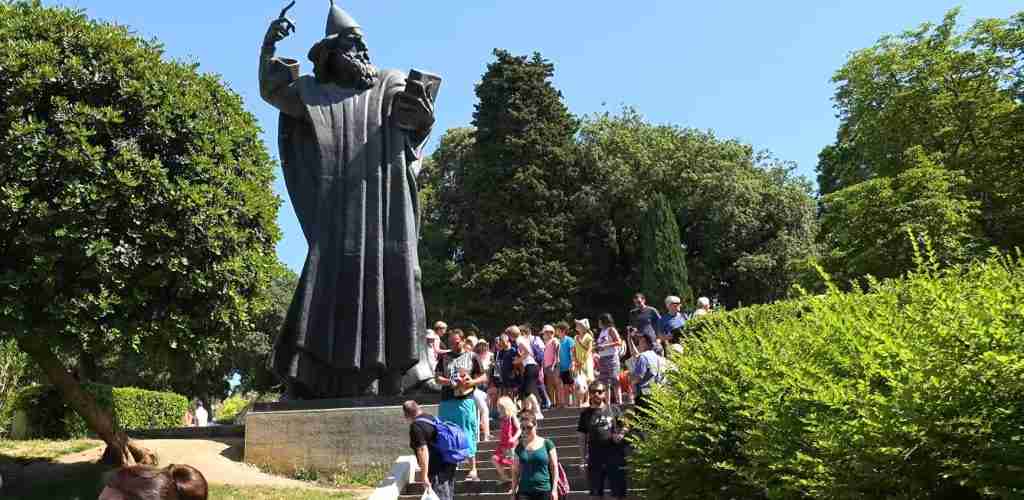
Gregory of Nin’s statue stands just outside the Golden Gate, where children join the tradition of rubbing the statue’s golden toe for good luck. The 20th-century sculpture by Croatia’s renowned artist Ivan Meštrović depicts the medieval bishop who championed Croatian language use in religious services, though most children simply enjoy the legend and participatory element. The toe shines bright gold from centuries of rubbing, and taking photographs here provides a tangible memory that children understand and remember.
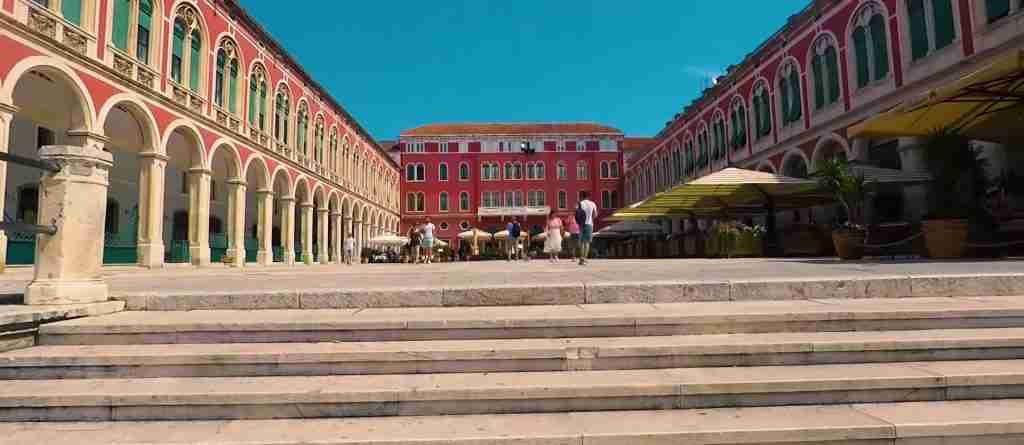
The Peristyle square functions as the palace’s central gathering point where families rest on ancient steps, watch street performers during summer months, and access gelato shops and cafes with outdoor seating. The square’s flat marble pavement suits strollers, surrounding cafes provide restrooms and changing facilities, and the open design allows children to move freely while parents maintain visibility. Evening visits often feature live music performances or cultural events that create festive atmosphere without requiring tickets or reservations.
Split City Museum occupies a Gothic palace within the complex but currently undergoes renovation through 2026, with reopening expected to showcase expanded exhibits including newly discovered Roman sections found during construction. When reopened, the museum will provide air-conditioned respite during hot afternoons, historical context enriching palace exploration, and exhibits designed to engage younger visitors through interactive elements and visual storytelling.
Best Family Beaches in Split 2026
Bacvice Beach stands 10 minutes’ walk from the Old Town, offering Split’s only significant sandy beach — a rarity along Croatia’s predominantly pebble coastline that makes it invaluable for families with young children. The sand extends into shallow gradual waters where toddlers wade safely 10-15 meters offshore before depths reach chest height on adults, creating natural paddling pools that eliminate deep-water anxieties. Lifeguards staff the beach daily from June through September (typically 9 AM-6 PM), while changing facilities with showers, public restrooms, and outdoor foot-washing stations maintain cleanliness standards. The beach curves into a protected bay that calms wave action, though summer weekends bring significant crowds with local families and tourists filling available sand space by mid-morning.
Beachfront infrastructure includes multiple cafes and restaurants serving child-friendly menus (pizza, pasta, grilled fish, ice cream), playground equipment positioned on the beach’s western edge, and equipment rentals offering paddleboards, kayaks, and pedalos for older children. The sandy beach bottom eliminates the sea urchin concerns affecting some Croatian pebble beaches, allowing barefoot playing without water shoes. Evening visits create entirely different atmosphere as families depart and young adults arrive for beach clubs and nightlife, making morning-to-afternoon timing ideal for family enjoyment. The beach’s proximity to the Old Town means families easily walk back for lunch or naps, then return later, rather than committing full days to single locations.
Kasuni Beach on Marjan Peninsula’s southern shore provides pebble beach alternative 15 minutes from the Old Town by city bus (line 12) or 30 minutes walking through scenic pine forests. The pebble composition creates crystal-clear waters ideal for snorkeling, with rocky areas near the beach edges hosting small fish, sea urchins, and marine life that fascinate older children equipped with masks and fins. Water shoes become essential on pebble beaches, protecting feet during entry and exit while allowing comfortable walking on stones. The beach’s smaller size and residential location attract fewer tourists than central Bacvice, creating quieter family-friendly atmosphere even during peak summer weeks.
Pine trees lining the beach provide natural shade during intense afternoon sun (UV index reaches extreme levels July-August), eliminating the umbrella rental expenses common at more commercialized beaches. A small beach bar serves drinks, snacks, and simple meals, while public restrooms and changing areas maintain basic functionality. The surrounding Marjan Hill forest offers hiking trails, viewpoints, and green space for children to explore beyond beach time, creating full-day activity potential. Families with rental cars find parking available near the beach, though spaces fill quickly on summer weekends requiring early arrival.
Znjan Beach extends along Split’s eastern coast 3 kilometers from the Old Town, reached by city bus (line 11, 15 minutes) or 10 minutes by car with ample parking. This modern beach facility combines pebble shores with extensive infrastructure including multiple playgrounds with slides, swings, and climbing equipment, beach volleyball courts, water sports rental center offering kayaks, paddleboards, and jet skis, and numerous cafes and restaurants positioned along the beach’s kilometer-long promenade. The beach’s size prevents the overcrowding affecting smaller Bacvice and Kasuni, with families finding space even during peak July-August weeks.
The beach’s eastern section features sports facilities and active areas where older children and teens enjoy beach volleyball, soccer, and water sports, while the western section maintains quieter family zones with playground access and calmer atmosphere. Public restrooms, changing facilities with showers, and first aid stations appear at regular intervals along the beach. The promenade’s flat paved surface suits strollers and provides wheelchair accessibility, while shaded benches offer rest points for supervising children’s beach play without sitting directly on pebbles.
The beach’s modern infrastructure includes lifeguard coverage during summer months, equipment storage lockers available for rent, and beach bars providing music and entertainment that create lively but family-appropriate atmosphere. Water quality meets EU Blue Flag standards (regularly tested and posted), and the gradual depth increase allows children to wade 15-20 meters offshore before reaching swimming depth. Evening visits showcase spectacular sunsets over the Marjan Peninsula, though mosquitoes emerge after dark making insect repellent advisable for sunset beach picnics.
Trstenik Beach fills a residential neighborhood niche 2 kilometers from the Old Town, attracting primarily local Croatian families seeking authentic beach experience without tourist infrastructure. The small pebble beach offers basic amenities including a simple cafe, public restrooms, and changing areas, but lacks the commercial development characterizing Bacvice or Znjan. This creates relaxed local atmosphere where children play in Croatian alongside minimal English-speaking tourists, providing cultural immersion that some families value over polished facilities.
The beach’s compact size suits younger children who remain easily supervised, while surrounding residential streets offer neighborhood cafes and small shops where families experience daily Croatian life. Water shoes remain essential on pebbles, and shade comes primarily from positioned umbrellas rather than natural tree cover. The beach represents ideal choice for families staying in eastern Split neighborhoods, for those seeking authentic local experience, or as variety from more commercialized beach options during extended visits.
Family Accommodation Options in Split 2026
Family apartments dominate Split’s accommodation landscape in 2026, offering kitchens that enable breakfast preparation and snack storage, separate bedrooms allowing parents evening privacy after children sleep, washing machines reducing luggage requirements for extended stays, and living areas providing space beyond hotel room confinement. Two-bedroom apartments sleeping 4-6 people cost €80-150 nightly during summer peak season, €60-100 in shoulder months (May-June, September-October), and €50-80 during winter. These apartments cluster throughout the city with prime family locations including Bacvice area (beach access), Meje neighborhood (residential quiet near beaches), and Grad (Old Town edge providing walkable access to attractions).
Booking platforms including Airbnb, Booking.com, and Vrbo offer hundreds of family apartment options, with verification of features including elevator access for stroller management, air conditioning for summer comfort (essential June-August when temperatures regularly exceed 30°C), and parking availability for families with rental cars. Reading recent reviews reveals accurate apartment conditions, neighborhood noise levels, and host responsiveness that determine family satisfaction. Booking 3-4 months ahead for July-August visits secures best availability and rates, while shoulder season allows flexibility with bookings 4-6 weeks before arrival still finding excellent options.
Mid-range family hotels provide breakfast buffets included in rates (typically €15-20 per person value), pools for children’s recreation, reception staff assistance with tour bookings and local information, and housekeeping that frees families from cleaning duties during vacation. Three-star family hotels near beaches or Old Town cost €140-200 nightly for family rooms sleeping four, while four-star properties with enhanced facilities reach €180-250. Hotel Park Split (adjacent to Bacvice Beach), Cornaro Hotel (near Old Town), and Hotel Adriana (on waterfront) represent quality family hotel options offering interconnecting rooms, children’s menus, and family-friendly atmosphere.
Family suites in hotels typically include separate sleeping areas with pullout sofas or bunk beds for children, small refrigerators for storing drinks and snacks, and bathroom configurations preventing morning chaos when everyone prepares simultaneously. Breakfast buffets solve the daily “what’s for breakfast” debate, typically offering selection spanning Croatian pastries, eggs, cereals, fruit, yogurt, and juice that satisfies varied children’s preferences. Pool facilities range from simple splash pools at three-star properties to water slides and children’s areas at upscale hotels, providing backup recreation during beach rain-outs or when children need variety.
Luxury resorts positioned on Split’s outskirts deliver comprehensive family vacation experiences including kids’ clubs with supervised activities, multiple pools with children’s areas and water features, direct beach access with equipment rentals, multiple restaurant options accommodating varied family tastes, and spa facilities where parents find relaxation. Le Méridien Lav (20 minutes from Split in Podstrana) exemplifies this category, offering extensive grounds where children roam safely, organized activities including sports and crafts, and family suites with sea views. Nightly rates reach €250-400 for family accommodations during summer, dropping to €180-280 in shoulder season.
These resort properties trade central location for comprehensive on-site facilities, meaning families spend more time at the hotel complex and less exploring Split’s Old Town. This suits families with very young children who benefit from predictable routine and easy facilities, or those seeking relaxation-focused vacations rather than intensive sightseeing. The resorts typically provide shuttle services to Split’s center for families desiring occasional Old Town visits, though these shuttles may run limited schedules requiring advance planning.
Budget hostels now include family room options (private rooms with bathroom, not dormitories) offering cheapest accommodation at €50-80 nightly for basic private rooms sleeping four. These rooms provide beds, basic furniture, and shared bathroom, with hostel common areas including kitchens for meal preparation and social spaces for meeting other travelers. Budget family rooms eliminate hostel concerns about dormitory sharing with strangers, while maintaining cost savings and social atmosphere. Hostel Oktarin and Hostel Renato represent reputable options offering family rooms, though parents should verify exact room configurations, bathroom arrangements, and noise levels from common areas that might disturb children’s sleep.
Booking timing significantly impacts family accommodation costs in Split during 2026, with advance reservations (90-120 days before July-August arrival) securing lowest rates and best availability. Last-minute bookings (2-3 weeks before arrival) during peak season often find limited family-appropriate options with premium pricing, particularly for apartments and hotels near beaches or Old Town. Shoulder season (May-June, September-October) provides more flexibility with quality last-minute options still available, though advance booking still ensures optimal choice and pricing. Winter visits (November-March) find deeply discounted rates but many family hotels closed seasonally, with available apartments offering significant savings (50-60% below summer rates) for families willing to accept cooler weather and reduced beach swimming.
Getting Around Split with Kids 2026
Walking forms the primary transportation mode for families staying near Split’s Old Town, with pedestrian zones eliminating traffic concerns throughout the historic center, flat Riva promenade providing stroller-friendly 2-kilometer waterfront route, and most attractions positioned within 15-20 minutes’ walk from central locations. Split’s compact Old Town measures roughly 1 kilometer across, allowing families to cross from the Green Market to the waterfront, or from Diocletian’s Palace to the western neighborhoods, in 10-15 minutes’ walking time. This walkability means families avoid daily transportation logistics affecting larger cities, instead integrating movement into sightseeing while children burn energy that reduces restlessness.
The city’s pedestrian infrastructure suits family needs with wide sidewalks accommodating strollers, frequent crosswalks with traffic signals, and marble or stone pavements throughout the Old Town that roll smoothly despite historical appearance. The Riva promenade stands entirely car-free, providing safe running space for energetic children, benches every 50-100 meters for rest breaks, public restrooms positioned at eastern and western ends, and gelato shops appearing every few hundred meters for motivational bribery during longer walks. Parents should note that some Old Town alleys include steps or uneven surfaces challenging for strollers, though main routes maintain accessibility.
Split’s public bus system operates 19 city routes plus suburban lines reaching Trogir, Solin, and surrounding areas, with modern air-conditioned buses running frequent service (every 10-15 minutes on main routes during daytime, 20-30 minutes evenings and weekends). Bus tickets cost €2 when purchased from drivers (cash only, exact change recommended) or €1 when bought through the Promet Split mobile app, at ticket machines near major stops, or from tobacco shops (Tisak newsstands) throughout the city. Children under 6 ride free, children 6-11 pay reduced fares on certain routes, making bus travel economical for families with young children.
The mobile app provides significant advantages for families, including route planning showing exact bus times and stops, real-time vehicle tracking eliminating wait uncertainty, digital ticket storage avoiding paper ticket management, and English-language interface. Downloading the app before arrival and loading credit allows immediate transportation access without finding ticket vendors or managing Croatian currency. Buses display route numbers prominently, announce stops in Croatian and English, and feature stroller-friendly low floors with dedicated spaces, though crowded summer buses may require folding strollers to create space for other passengers.
Key family bus routes include Line 12 (Old Town to Marjan/Kasuni Beach), Line 11 (Old Town to Znjan Beach), Line 37 (Split to Airport and Trogir, essential for airport transfers), and Lines 1, 3, 5 (connecting Old Town to residential neighborhoods and Bacvice area). Route maps appear at major bus stops and within the mobile app, with printed schedules showing weekday versus weekend timing that varies significantly (reduced weekend service on many routes). Evening and night services run limited routes with reduced frequency, making taxis or Uber more practical for late restaurant returns with tired children.
Taxi and Uber services provide on-demand transportation eliminating bus wait times and route limitations, with typical in-city fares ranging €5-10, airport transfers costing €25-35 depending on season and traffic, and island ferry port drop-offs running €8-12 from Old Town. Uber and Bolt (European competitor) operate throughout Split with English-language apps, upfront pricing, and cashless payment reducing typical taxi concerns. Traditional taxis use meters but may negotiate fixed prices for common routes, with reputable companies including Radio Taxi Split (phone +385 60 700 700) providing reliable service with child seats available on request.
Taxis become particularly valuable for families during specific scenarios: airport arrivals with jet-lagged children and luggage, late restaurant dinners when walking long distances with tired children seems unappealing, rainy days when waiting for buses in weather proves impractical, and beach returns when children are exhausted from sun and swimming. The cost difference between bus and taxi transport (€1-2 per person versus €8-15 for taxi) creates meaningful budget impact over multiple trips, though convenience factor during certain situations justifies the premium.
Car rental suits families planning extensive day trips to Krka National Park, Plitvice Lakes, or multiple island visits requiring freedom from ferry schedules, though proves unnecessary for families staying primarily in Split itself. The city’s limited parking, pedestrian-only Old Town, and excellent public transportation make cars more burden than asset for urban exploration. Families renting cars should book child seats in advance (€5-8 daily), verify parking availability at accommodations (€10-20 daily at hotels, often included with apartments), and prepare for narrow streets and aggressive local driving styles that surprise visitors from North America or Northern Europe.
Bike rentals through Nextbike (public bike-sharing system) or private shops enable active families to explore the Riva promenade, Marjan Hill forest trails, and coastal paths, though Split’s traffic and limited bike infrastructure make cycling with young children challenging. The bike-share system requires app registration and credit card, with bikes available at docking stations throughout the city for €1-2 per hour. Child seats and tag-along bikes prove difficult to source, limiting options for families with children under 7-8 who cannot independently cycle.
Family Dining Costs and Restaurant Options in Split 2026
Croatian konobas (traditional taverns) serve as ideal family dining venues combining authentic local cuisine with welcoming informal atmosphere, reasonable prices, and menus featuring child-friendly options alongside traditional dishes. A family of four dining at konobas expects total bills of €50-80 for substantial meals including appetizers, main courses, drinks, and dessert. Children’s portions (when available) typically cost €6-10 for pasta, grilled chicken, or fish, while adult mains range €12-18 for traditional dishes like peka (meat or seafood baked under iron dome), risotto, or grilled seafood platters.
Konoba Matejuska, Konoba Fetivi, and Konoba Varos represent family-friendly konoba choices offering tables accommodating strollers (outdoor seating), patient staff accustomed to children, and flexible timing (serving continuously from noon through 10 PM rather than enforcing rigid meal schedules). The informal atmosphere tolerates children’s movement and noise without disapproving glances, while Croatian cuisine’s emphasis on grilled meats, fresh fish, pasta, and bread provides options for selective eaters. Booking reservations 1-2 days ahead ensures seating during peak summer dinner hours (7-9 PM), though lunch visits rarely require advance planning.
Pizzerias blanket Split’s Old Town and residential neighborhoods, serving as reliable fallback for families with pasta-refusing, pizza-demanding children. Neapolitan-style wood-fired pizzas cost €8-14 each (easily shared between younger children or supplemented with salads), pasta dishes run €9-13, and child-appropriate options including margherita pizza, spaghetti with tomato sauce, and simple grilled chicken appear on most menus. Notable family-friendly pizzerias include Pizzeria Galija (near the Green Market), Pizzeria Portas (Old Town location), and Bakra (combination wine bar and pizzeria with outdoor seating).
Casual dining restaurants along the Riva promenade offer people-watching entertainment complementing meals, though prices run 20-30% higher than restaurants one block inland from the waterfront. A Riva family dinner typically costs €70-100 for four people, paying premium for prime location and sea views. The flat pedestrian promenade allows children to safely move between bites, gelato shops position conveniently for dessert detours, and outdoor seating provides space reducing confinement stress for restless children. However, service can be slower than inland restaurants, and quality varies widely with some establishments relying on location rather than food quality to attract customers.
Self-catering through apartment kitchens or picnics enables significant food cost savings, with the Green Market (Pazar) providing fresh fruit, vegetables, local cheeses, and bread daily from 7 AM-2 PM. Croatian supermarkets including Tommy, Konzum, and Lidl offer familiar groceries at prices comparable to Western European averages: bread €1-2 per loaf, local cheese €8-12 per kilogram, fresh fruit and vegetables €2-4 per kilogram, pasta €1-2 per package, and yogurt €0.50-1 per container. A family of four preparing breakfasts and lunches while dining out for dinners reduces daily food costs to €80-120 compared to €120-160 for full restaurant dining.
Breakfast options range from hotel buffets included in accommodation rates (€15-20 value per person), to cafes serving Croatian breakfast pastries and coffee (€5-8 per person for pastries, juice, and coffee), to self-prepared meals costing €2-3 per person for yogurt, fruit, bread, and spreads. The Croatian breakfast tradition leans toward simple pastries and coffee rather than elaborate cooked breakfasts, though hotels catering to international tourists provide eggs, meats, and hot options. Families with apartment kitchens easily prepare breakfast for €8-15 daily, then enjoy cafe coffee and pastries occasionally as treats rather than daily expense.
Lunch represents prime opportunity for budget savings, with bakeries throughout Split selling burek (savory phyllo pastries filled with cheese, meat, or spinach) for €2-3 per large piece sufficient for light meal, sandwiches running €4-6, and pizza slices costing €2-3. Beach picnics assembled from market and supermarket ingredients cost €20-30 for family of four (cheese, bread, fruit, drinks, cookies), compared to €50-80 for beachside restaurant lunch. The Green Market’s fruit vendors sell pre-cut watermelon (€2-3 for large container), perfect beach snack combining hydration with nutrition.
Ice cream and gelato shops appear every block throughout the Old Town, with Italian-style gelaterias charging €2-3 per scoop (children typically satisfied with single scoop, adults often choosing two). Emiliana represents Split’s most famous gelateria, though numerous alternatives offer equally quality products at slightly lower prices. Daily gelato for family of four costs €10-15, budget item easily absorbed but worth tracking as daily treats accumulate over week-long stays. Water remains free at restaurants (tap water meets EU safety standards), though paying for bottled water or soft drinks adds €2-4 per beverage to meal costs.
Family Day Trips from Split 2026
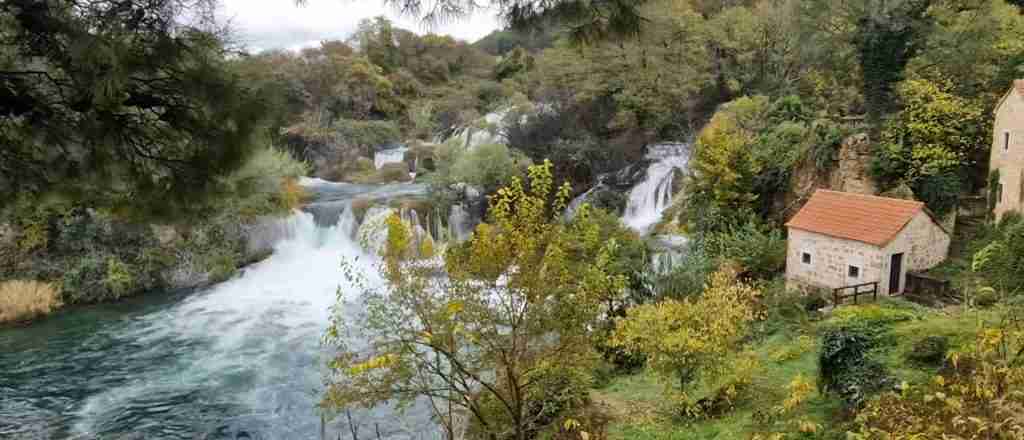
Krka National Park delivers Croatia’s most family-accessible waterfall experience 90 minutes from Split by car or organized tour, featuring boardwalk trails eliminating difficult hiking, shallow pools where children swim safely near waterfalls (summer months only, swimming prohibited in winter for environmental protection), and comprehensive visitor facilities including restrooms, restaurants, and first aid. The park’s most famous feature, Skradinski Buk waterfall, cascades in multiple tiers creating natural swimming areas where families splash under falling water, though life jackets are mandatory for children and water shoes protect feet on slippery rocks. Park entrance costs €10-20 adults and €5-10 children depending on season (summer peak versus winter), with organized day tours from Split running €45-60 per person including transportation, entrance, and guided commentary.
The park encompasses more than just waterfalls, with mill buildings converted to small museums, botanical gardens showcasing native plants, boat rides connecting different park sections (€10-15 per person), and monastery visit options adding cultural dimension beyond pure nature. Families should allocate 4-5 hours for comprehensive park exploration including swimming time, or 2-3 hours for abbreviated waterfall visits. The summer season (June-September) brings significant crowds with parking filling by 10 AM on weekends, making early arrival essential or organized tours bypassing parking concerns through reserved access.
Self-driving families face highway tolls (€5-8 each direction), parking fees (€10), and fuel costs (€15-20 round trip), making the economics of organized tours versus independent travel roughly comparable. Tours provide stress-free transportation while children rest or watch scenery, guide information enhancing understanding, and schedule certainty, while self-driving offers flexibility for longer stays, ability to leave when children tire rather than group schedule, and control over lunch timing and locations. Families with children under 5 often prefer tours eliminating driving stress, while those with older children value independent schedule control.
Trogir sits 30 minutes from Split via direct bus (line 37, €5 per person, buses every 30 minutes) or 25 minutes by car, offering UNESCO-listed medieval town small enough for children to explore completely while large enough to justify half-day visits. The historic island core measures roughly 400 meters across, connected to mainland by short bridge, with car-free streets where children wander safely among Renaissance palaces, Romanesque churches, and stone town squares. The Cathedral of St. Lawrence provides architectural highlight with portal considered Croatia’s finest Gothic sculpture, while the town’s waterfront promenade offers cafes, gelato shops, and marina atmosphere.
Children particularly enjoy Trogir’s scale — unlike overwhelming Split with countless choices, Trogir can be comprehensively explored in 2-3 hours including lunch. The Kamerlengo Fortress (€3 entrance) provides rampart walks with sea views, though parents must supervise younger children on unprotected walls. Swimming beaches exist on nearby Ciovo island (connected by bridge, 5-10 minutes walking from Trogir center), creating possibility for combined sightseeing and beach afternoon. The absence of major paid attractions means Trogir excursions cost primarily for transportation and meals, making it budget-friendly day trip particularly when combined with self-prepared picnic lunch eaten on waterfront benches.
Brac Island ferry (50 minutes from Split, €8-12 per person each direction depending on season, cars €80-100 round trip) opens access to Zlatni Rat beach ranked among Croatia’s most photographed natural features. The beach extends into the sea as golden pebble promontory that shifts shape with currents and winds, surrounded by pine forest and backed by restaurants and facilities. Families appreciate the beach’s shallow gradual waters safe for children, though summer crowds create challenging logistics finding beach space and navigating to water. The town of Bol nearby provides restaurants, accommodation, and supplementary beaches less crowded than Zlatni Rat itself.
Day trips to Brac work best with car rental allowing exploration beyond Supetar ferry arrival point to Bol (40 minutes driving) and other island beaches, though organized boat tours from Split reach Zlatni Rat directly without car needs (€50-80 per person including beach time, lunch, and swimming stops). These tours eliminate ferry booking stress and parking concerns while adding boat ride experience, though they constrain timing to group schedules. Families staying overnight on Brac spread exploration across two days without ferry pressure, though this requires packing and accommodation changes disrupting routines.
Salona archaeological site positions 20 minutes from Split by bus (lines 1, 37, several others, €2 per person) or 15 minutes driving, showcasing remains of ancient Roman city that served as Dalmatia’s capital before Diocletian’s Palace. The site sprawls across olive groves with amphitheater ruins, early Christian churches, and Roman baths accessible for free entry and self-guided exploration. Children enjoy the site’s openness allowing running and climbing (within reason), lack of crowds compared to Split’s packed palace, and tangible sense of discovering ruins rather than viewing preserved monuments.
The site’s limited shade makes afternoon summer visits uncomfortable, with morning arrival (before 11 AM) or late afternoon (after 5 PM) providing better temperatures. Bringing water, snacks, and sun protection proves essential as facilities are minimal (basic restrooms, no restaurants). The Tusculum Museum near the site provides artifacts and context (€3 entrance, limited hours), though most families find the outdoor ruins alone sufficient. Combining Salona with Klis Fortress (medieval stronghold used in Game of Thrones filming, 15 minutes from Salona by car) creates full day trip for families with older children interested in history.
Sample Family Budget Breakdowns Split 2026
Budget family of four spending approximately €120-160 daily achieves this through strategic choices while maintaining enjoyable vacation quality. Accommodation in two-bedroom apartment with kitchen costs €70-90 nightly during summer peak, €50-70 shoulder season. Breakfast prepared in apartment runs €10-15 for family (yogurt, fruit, bread, spreads, juice). Lunch combines supermarket-purchased items for beach picnic costing €20-25 (cheese, bread, vegetables, fruit, cookies, drinks), or budget restaurant meal €30-40 (pizzeria or konoba serving simple dishes). Dinner at konoba or casual restaurant costs €50-70 for family of four (appetizers to share, four main courses, drinks, dessert). Transportation via public bus costs €4-8 daily for beach visits and occasional attractions outside walking distance (children under 6 free). Free activities including Diocletian’s Palace exploration, public beaches, and waterfront promenades fill most days, with occasional paid attraction like Cathedral bell tower (€10 adults, €7 children) or ice cream treats (€10-15 daily) adding modest costs.
This budget allocation works successfully for families comfortable with apartment self-catering for some meals, utilizing free public spaces rather than paid attractions daily, and managing logistics including grocery shopping and meal preparation. Children accustomed to picnics and casual dining adapt easily, while apartment space provides comfort and privacy that maintains family harmony despite budget constraints. The primary trade-offs involve time spent shopping and preparing meals rather than pure vacation relaxation, and limitations on splurge dining experiences or premium paid activities.
Mid-range family of four budgeting €200-250 daily gains convenience and variety while maintaining reasonable costs. Hotel accommodation with breakfast buffet included runs €140-180 nightly for family room during summer, €100-140 shoulder season. The included breakfast (€60-80 value) eliminates morning meal preparation, while hotel pools and facilities provide backup activity options. Lunch at casual restaurant or cafe costs €40-60 for family (pizza, pasta, sandwiches, drinks), occasionally substituted with supermarket picnics for variety and cost savings. Dinner at mid-range konoba or seafood restaurant runs €60-80 (broader menu selection than budget dining, appetizers, higher-quality main courses, occasional wine for parents). Transportation mixes walking for nearby destinations with taxis for longer distances or tired children moments (€15-25 daily including occasional beach drop-offs). Paid activities average €30-40 daily including Cathedral entrance, boat rental, or organized tour every few days.
This mid-range approach provides balance between budget consciousness and vacation ease, eliminating meal preparation stress while maintaining cost awareness, and allowing spontaneous taxi use without budget guilt. Families enjoy restaurant variety without premium waterfront pricing, paid attractions add interest without dominating budgets, and hotel breakfast buffets solve the “what’s for breakfast” debate while providing nutrition to start sightseeing days. The middle ground suits families seeking comfortable travel without luxury premiums or budget constraints.
Comfortable family of four spending €250-300+ daily accesses Split’s full range without budget restrictions affecting decisions. Beachfront resort or boutique hotel accommodation costs €200-280 nightly for family suite with sea views and premium facilities, providing pools, direct beach access, and comprehensive amenities. All meals at restaurants eliminate cooking, with breakfast at hotel or popular cafe (€40-50 for family), lunch at Riva waterfront or beach restaurant (€70-90), and dinner at upscale konoba or seafood specialist (€90-120 for quality multi-course meals with wine). Transportation via private transfers or taxi-on-demand runs €30-50 daily, eliminating public bus logistics. Activities include organized boat tours (€200-250 for family), premium attractions with guides (€60-80), and spontaneous purchases like new beachwear or toys (€30-50 daily miscellaneous).
This comfortable budget eliminates cost-driven decisions, allowing families to choose activities based purely on interest, dine at quality establishments without price checking, and utilize taxis freely for convenience. The premium accommodations provide high-quality base including pool facilities and beach access that function as activities themselves, reducing pressure for constant external entertainment. Families at this budget level typically employ similar spending patterns at home, making the vacation approach feel natural rather than special-occasion splurging requiring post-trip budget recovery.
Best Times to Visit Split with Kids in 2026
June 2026 delivers optimal family travel conditions combining warm weather with manageable crowds, pleasant sea temperatures reaching 22-23°C (72-73°F) suitable for swimming, school vacation timing for families with school-age children, and shoulder-season pricing on accommodation 20-30% below July-August peaks. Daily temperatures average 26-28°C (79-82°F), warm enough for beach days without the extreme heat affecting August afternoons when temperatures exceed 32°C (90°F). The sea feels refreshing rather than warm, encouraging active swimming rather than mere floating, though young children sensitive to cold water may initially protest before acclimating.
June’s crowd levels remain below summer peak, with beaches finding space even on weekends, restaurants accepting walk-in diners without long waits, and Old Town exploration proceeding without constant shoulder-to-shoulder crowds that characterize July-August. Families discover this creates more relaxed vacation atmosphere with reduced stress from constant crowd navigation and competition for beach space, restaurant tables, or attraction access. Accommodation availability remains good even for late bookings (4-6 weeks ahead), though advance reservation still secures best options and rates.
The month’s primary limitation involves school calendars — families with children in U.S. or Canadian schools find June impossible due to academic year extending through mid-late June, while European families with earlier school endings access the month freely. Weather reliability remains slightly lower than July-August, with occasional rainy days (average 6-8 rainy days monthly) requiring backup indoor plans, though overall sun dominance (average 10 hours daily sunshine) ensures beach-focused vacations succeed.
July and August represent peak family season combining guaranteed warm weather with school vacation timing across Europe and North America, though this creates maximum crowds, highest prices, and infrastructure strain requiring advance planning and patience. Sea temperatures reach delightful 24-25°C (75-77°F), warm enough that even young children swim comfortably for extended periods. Daily air temperatures average 30°C (86°F) with regular 32-35°C (90-95°F) afternoons, making morning beach visits, midday siestas, and late afternoon returns ideal rhythm for families with young children.
The crowd factor dominates July-August experience, with Bacvice Beach filling completely by 10 AM on weekends, restaurants requiring reservations even for casual dining, Diocletian’s Palace packed with tour groups creating constant navigation challenges, and public transportation crowded enough that stroller folding becomes necessary. Accommodation prices peak 40-50% above shoulder season with properties requiring 3-6 month advance booking for prime July-August weeks, particularly for family apartments near beaches or Old Town. Families willing to accept these trade-offs gain perfect weather reliability (rain extremely rare, averaging 2-3 days monthly) and peak infrastructure operation with all facilities, beaches, and activities fully operational.
September delivers outstanding family value combining still-warm conditions with dramatically reduced crowds and lower prices, though timing depends on school calendars. Sea temperatures remain very pleasant at 23-24°C (73-75°F) through mid-September, warmer than June and comfortable for all swimming ages. Air temperatures average 25-27°C (77-81°F), slightly cooler than summer peak but still beach-appropriate with less extreme afternoon heat. The month’s character shifts through four weeks: early September (1st week) feels like summer extension with full crowds, mid-September (2nd-3rd weeks) represents sweet spot with warm weather and moderate crowds, late September (final week) transitions toward autumn with cooler evenings and occasional rain.
Accommodation prices drop 25-35% compared to August, while availability increases substantially allowing booking 4-6 weeks before arrival. Beaches find comfortable space throughout the day, restaurants welcome walk-ins, and Old Town exploration proceeds without constant crowd battles. European families with children return to school by early-to-mid September, leaving primarily adult tourists and families with pre-school age children, creating quieter overall atmosphere. The primary limitations involve school calendar conflicts for families with school-age children (most schools globally resume by early September) and slightly reduced facility hours as some seasonal beach operations wind down.
May and October represent shoulder months suitable for families prioritizing budget savings and crowd avoidance over guaranteed beach weather. May temperatures average 21-23°C (70-73°F) for air and 18-19°C (64-66°F) for sea, warm enough for brave children to swim but chilly for extended water time. October sees similar patterns with slightly warmer sea temperatures (21-22°C) but cooler air (18-21°C). Both months experience more rainfall (8-10 days monthly) requiring flexible planning and indoor backup activities, though extended sunny periods still enable beach days and outdoor exploration.
The cost advantages prove substantial, with accommodation 40-50% below summer peak and many family hotels offering promotional rates or added value (free child stays, meal inclusions, activity packages). Crowds essentially disappear outside Easter week, with beaches nearly private, restaurants eager for customers, and attractions accessible without waits or advance booking. Families with flexible schedules or pre-school age children not bound by academic calendars discover these months offer exceptional value, particularly when approaching travel with attitude that beach swimming represents bonus rather than essential component. Indoor attractions, hiking, cultural sites, and city exploration all function excellently during these months.
Practical Planning Tips for Families 2026
Packing for Split family vacation requires Mediterranean climate awareness: swimwear and beach gear dominate summer needs, with 2-3 swimsuits per child allowing rotation while wet suits dry, rash guards providing sun protection for extended beach days, and water shoes protecting feet on pebble beaches and against sea urchins. Sun protection reaches critical importance with UV index regularly achieving “extreme” levels June-August, demanding high-SPF waterproof sunscreen reapplied every 90 minutes, wide-brimmed sun hats for children, UV-protective sunglasses, and beach umbrella or tent providing shade during peak 11 AM-3 PM sun hours. Croatian pharmacies stock international sunscreen brands though at premium prices, making advance purchase at home more economical.
Evening clothing can be casual throughout Split, with restaurants welcoming families in beach-casual attire (clean shorts, casual dresses, sandals) rather than requiring formal dress codes. Light cotton or linen clothing provides comfort in heat while allowing easy washing and quick drying, essential for beach-town life where children require multiple daily outfit changes. A light sweater or jacket proves useful for air-conditioned indoor spaces (museums, restaurants) and cooler evening ferry rides during shoulder season. Stroller-dependent families should verify accommodation includes elevator access (many historic buildings use stairs only) and pack lightweight umbrella stroller suitable for cobblestones rather than bulky jogging strollers better suited to smooth surfaces.
Medical preparation involves ensuring family health insurance covers international emergency care or purchasing travel insurance including medical coverage (€40-80 for family week-long policy). EU residents with European Health Insurance Card access Croatian public healthcare, while non-EU visitors face private healthcare costs (typically reasonable compared to U.S. prices, though still substantial). Packing basic first aid kit including children’s pain reliever (acetaminophen/ibuprofen), antihistamines for allergic reactions, band-aids, antibacterial cream, and any prescription medications in original containers prevents pharmacy hunting emergencies. Croatian pharmacies (Ljekarna) appear frequently throughout cities, staffed by English-speaking pharmacists who provide over-the-counter medications for common childhood ailments.
Money and payment logistics simplified significantly with Croatia’s 2023 euro adoption, eliminating exchange rate confusion and allowing use of euros carried from other European destinations. ATMs throughout Split dispense euros without difficulty, credit cards work universally at hotels and restaurants (though small cafes and market vendors may prefer cash), and keeping €100-200 cash reserves handles beach cafe purchases, bus tickets from drivers, and small shops preferring cash. Tipping practices follow European norms with 10% restaurant gratuity standard for good service (though not obligatory), rounding up taxi fares to nearest euro, and leaving €1-2 daily for hotel housekeeping.
Communication needs for families typically involve data/internet access for maps, restaurant recommendations, activity bookings, and staying connected with family at home. Most accommodation includes WiFi, restaurants and cafes offer free connection, and purchasing local SIM card (€10-20 for week’s data) at airport or mobile shops provides constant connectivity for navigation and communication. EU residents with mobile plans benefit from EU roaming elimination, using home data allowances without additional charges. Downloading offline maps through Google Maps before arrival provides backup navigation during connection gaps, while offline translation apps (Google Translate) enable basic Croatian communication though English widely spoken in tourist areas.
Restaurant booking becomes essential during peak July-August evenings at popular konobas and waterfront establishments, with reservations made 1-2 days ahead securing preferred timing and seating arrangements accommodating strollers or larger families. The Croatian dining schedule runs later than North American norms, with dinner service beginning 6-7 PM and peak dining occurring 8-10 PM, though restaurants catering to tourists accommodate earlier dining preferences. Families with young children maintain earlier schedules without difficulty, though arriving at 6 PM means dining before local families who typically appear 7:30-8:30 PM with their own children, creating slightly different atmosphere than peak-hour visits.
Safety considerations in Split remain minimal with crime rates low, though normal urban precautions apply: supervising children in crowded areas, using hotel safes for passports and valuables, watching belongings at beaches, and teaching children meeting points if separated. The pedestrian Old Town eliminates traffic concerns, though children must learn proper crosswalk use for areas with vehicle access. Water safety requires age-appropriate supervision with young children staying within arm’s reach in water, older children establishing clear boundaries for swimming range, and all family members aware of lifeguard locations (summer beach operations only, 9 AM-6 PM typically). Sea conditions generally remain calm in protected bays though afternoon winds sometimes create choppier water requiring increased vigilance.
Weather and Seasonal Considerations 2026
Summer months (June-August) deliver Mediterranean heat requiring families to structure days around sun intensity: morning beach visits starting 8-9 AM capture gentle morning sun before peak heat, midday returns to accommodation for lunch and siesta (11:30 AM-3 PM) escape afternoon temperature peaks regularly exceeding 32°C (90°F), and late afternoon second beach shift (4-7 PM) provides pleasant swimming when sun softens but retains warmth. This rhythm matches Croatian daily life where locals abandon outdoor activities during peak heat hours, shops close for afternoon break, and streets empty until evening cooling.
Families ignoring heat rhythms face challenges including children’s discomfort, sunburn risk, dehydration concerns, and exhaustion from fighting weather rather than adapting to it. The afternoon siesta initially frustrates families accustomed to continuous activity, particularly when children resist napping, though adjusting attitude from “wasted time” to “vacation luxury” transforms perspective. Using afternoon hours for pool swimming at accommodation, indoor attraction visits, or simple relaxation prevents the burnout affecting families attempting full-day beach marathons in extreme heat.
Hydration demands increase dramatically during summer heat, with children requiring constant water access and reminders to drink before thirst signals dehydration. Carrying refillable water bottles, purchasing 1.5-liter bottles at supermarkets (€0.50-1), and ensuring children drink water regularly throughout beach days prevents the dehydration headaches, crankiness, and reduced energy affecting those who ignore fluid needs. Croatian tap water meets EU safety standards and tastes fine, allowing free bottle refilling at accommodations and public fountains throughout the city.
Shoulder season months (May, September, October) introduce weather variability requiring flexible planning: some days deliver perfect beach weather matching summer conditions, others bring clouds and wind making indoor attractions more appealing, occasional rain days mandate museum visits and Old Town covered exploration under arcades and shopping galleries. This unpredictability proves challenging for families with fixed “beach vacation” expectations, while those approaching with flexibility discover shoulder season often provides outstanding weather value, with extended sunny stretches interrupted by brief weather breaks rather than constant rain.
Packing for shoulder season requires layering capability: swimwear and beach gear for warm days, light jackets or sweaters for cooler evenings and indoor spaces, rain jackets or compact umbrellas for occasional precipitation, and closed-toe shoes supplementing sandals for cooler or wet conditions. The temperature variability means morning beach visits may require light cover-ups that afternoon heat eliminates, or evening walks needing layers after warm afternoon beach sessions. Checking 7-10 day weather forecasts before arrival informs packing decisions better than general seasonal averages.
Family-Friendly Tours and Activities in Split 2026
Walking tours designed specifically for families provide engaging introduction to Diocletian’s Palace and Split history, with guides adapting content for children through stories, interactive elements, and activity pacing maintaining attention. These tours typically last 90 minutes (shorter than adult-focused 2-3 hour versions), include treasure hunt elements or quiz games engaging children, and cost €20-30 per adult with children often participating free or at reduced rates. Several tour companies offer family-specific departures during summer months, though verifying age appropriateness (typically designed for ages 6-12) prevents booking tours unsuitable for toddlers or teens.
Boat tours to nearby islands, Blue Cave, or swimming spots create adventure memories combining transportation with sightseeing and swimming opportunities. Full-day island-hopping tours visiting multiple locations cost €60-90 per adult and €30-45 per child, including boat transportation, guide commentary, swimming stops, and sometimes lunch or snacks. These tours eliminate ferry booking logistics and driving needs while adding variety through multiple destinations, though long days (typically 8-10 hours) prove exhausting for young children. Half-day boat tours (4-5 hours) provide better fit for families with children under 8, focusing on single destination with swimming time rather than attempting multiple stops.
Private boat charters offer ultimate flexibility for families willing to invest premium prices (€400-800 for half-day depending on boat size and season), allowing custom timing, destination selection, and pacing matching family needs. Charter boats accommodate 6-12 passengers, making them economical for larger family groups or families traveling together with friends, while providing freedom to leave when children tire, spend extended time at preferred locations, and avoid the group tour pace and crowds. Booking charters 4-8 weeks ahead for peak summer ensures availability, while shoulder season allows more spontaneous arrangements.
Stand-up paddleboard and kayak rentals at Split beaches enable active families with older children (typically 8+) to explore coastline independently. Rental companies positioned at Bacvice, Kasuni, and Znjan beaches charge €10-15 hourly for kayaks and €12-18 for paddleboards, with double kayaks accommodating adult-child pairs. Guided kayak tours to Marjan Peninsula caves or nearby islands provide structure and safety for first-time kayakers, costing €35-50 per person for half-day excursions including guide, equipment, and basic instruction.
Cooking classes teaching Croatian cuisine appeal to families with food-interested children ages 10+, providing cultural engagement beyond sightseeing. These classes typically run 3-4 hours including market shopping and meal preparation, culminating in eating the created dishes, and cost €60-90 per person (children sometimes discounted). Topics include traditional Dalmatian fish dishes, pasta making, or regional specialties like peka or crni rižot (black risotto). Classes operate in small groups (6-12 participants), though some companies offer private family sessions at premium rates.
Game of Thrones tours capitalize on Split’s filming locations including Diocletian’s Palace cellars (Daenerys’ dragon dungeon) and other Croatian sites, appealing primarily to teen fans or parents sharing the show interest. These tours last 90-120 minutes, cost €25-35 per person, and operate year-round with multiple daily departures during summer. The show’s adult content makes tours inappropriate for young children, though teens familiar with the series enjoy recognizing filming locations and learning production details.
Cultural Experiences and Local Life with Kids 2026
Split’s Green Market (Pazar) operates daily 7 AM-2 PM adjacent to Diocletian’s Palace, where vendors sell fresh fruit, vegetables, local cheeses, olives, dried figs, honey, and lavender products in open-air stall setting that immerses families in daily Croatian life. Children enjoy selecting fruit for beach picnics, sampling cheese offered by vendors, and experiencing market atmosphere where locals shop daily for fresh ingredients rather than weekly supermarket runs. The market’s sensory environment — colorful produce displays, vendor calls, Mediterranean scents, and bustling activity — creates engagement even for children who typically resist food shopping.
Vendors often offer fruit samples, engage with children through simple Croatian greetings, and demonstrate genuine warmth toward families exploring their stalls. Purchasing selections for day’s picnic (€10-15 buys substantial fruit, cheese, bread, and treats) provides practical outcome while cultural experience teaches children about food sourcing and local commerce. The adjacent fish market operates similarly (morning hours only), showcasing fresh Adriatic catch that fascinates children through sheer variety of unfamiliar species and active vendor-customer negotiations.
Evening promenades along the Riva represent essential Croatian social tradition where families join locals in paseggiata — leisurely evening walks seeing and being seen, stopping for gelato or coffee, and participating in community life. This tradition typically begins around 6 PM as afternoon heat breaks, continuing through sunset and into evening as restaurants and cafes fill with diners. Children enjoy the relaxed atmosphere where running ahead remains acceptable (the pedestrian promenade eliminates traffic danger), gelato shops appear every block providing motivation, and street performers often provide free entertainment.
The Riva transforms into outdoor living room during summer evenings, with benches filled by multi-generational families, children playing while parents socialize, and general atmosphere valuing community presence over rushed scheduled activities. Participating in this tradition rather than merely observing provides authentic cultural immersion, teaches children about different social rhythms, and creates vacation memories beyond sightseeing checklists.
Local festivals and events during 2026 summer season include Split Summer Festival (July-August) presenting outdoor opera, theater, and concerts in historic venues including Diocletian’s Palace, Ultra Europe music festival (mid-July) attracting international DJs and electronic music fans, and various neighborhood feast days (svetkovine) celebrating patron saints with processions, live music, and food stalls. Families should research festival timing when planning July visits, with Split Summer Festival adding cultural programming suitable for children (some performances specifically designed for young audiences) while Ultra Europe brings party crowds less family-appropriate.
Day Trips for Active Families 2026
Marjan Forest Park covers the peninsula west of Split’s Old Town, providing 3.5 square kilometers of pine forest laced with trails, scenic viewpoints, hidden beaches, and recreation areas accessible by 10-minute walk from the city center. Families discover this local treasure offers hiking trails ranging from easy 20-minute loops to more challenging 2-hour peninsula circuits, all shaded by Mediterranean pine forests providing welcome relief from beach heat. The trails appeal to children through variety: coastal paths with sea views, forest trails revealing hidden coves, and summit routes reaching viewpoint cafe where families reward hiking effort with refreshments and panoramic photographs.
Multiple beaches dot the Marjan coast including Kasuni (detailed in Beach section) and smaller pebble coves discovered along trails, creating possibilities for hike-swim combinations popular with active families. The park includes children’s playground near the forest entrance, outdoor gym equipment families use together, and benches positioned at frequent intervals for rest breaks. Trail surfaces vary from paved paths suitable for jogging strollers to rocky forest tracks requiring proper footwear, with the main coastal promenade (Šetalište Sustipan) offering stroller-friendly flat path with sea views.
Bringing water, snacks, and sun protection proves essential as facilities within the park remain limited, though the entrance area includes small cafe and the summit viewpoint serves refreshments. The forest’s shade significantly reduces heat compared to exposed beach environments, making Marjan ideal destination for morning hikes before beach afternoons, or late afternoon exploration when beach crowds peak and sun intensity lessens.
Cycling enthusiasts find Marjan trails accommodate mountain bikes, though families with young children face challenges with hill climbs and technical sections. The perimeter coastal path provides easier cycling suitable for families with children 8+ on bikes, offering primarily flat route with scenic stops and beach access points. Bike rentals near Marjan entrance (€10-15 for adult bikes, €8-12 children’s bikes) include helmets and basic maps, though verifying trail suitability for family cycling ability prevents disappointment from attempting overly challenging routes.
Cetina River rafting operates April-October approximately 90 minutes from Split, offering family-friendly rafting on Class II-III rapids suitable for children ages 7+ (age limits vary by operator, some accept children 5+ during lower water periods). Half-day rafting trips cost €45-65 per person including transportation from Split, equipment (raft, paddle, life jacket, helmet, wetsuit if needed), guide instruction, and scenic river journey through canyon landscapes. The rafting difficulty remains moderate with exciting rapids alternating with calm pools for swimming and cliff jumping (optional for brave participants), creating adventure appropriate for active families rather than extreme sport thrill-seekers.
Organized rafting tours manage all logistics including transportation, safety equipment, and professional guides, though families must verify children meet minimum age/swimming requirements. The river’s spring snowmelt creates higher water levels and more exciting rapids (April-June), while summer months (July-September) bring lower calmer water better suited to younger or less confident participants. The full excursion typically requires 5-6 hours including transportation from Split, making this full-day commitment unsuitable for families with very young children staying behind or those unwilling to spend entire day away from Split.
Rainy Day and Indoor Activities 2026
Split’s Museum of Illusions offers hands-on entertainment for children ages 4+ through optical illusions, holograms, infinity rooms, and interactive exhibits designed for photographs and exploration rather than passive observation. The museum occupies compact space requiring 60-90 minutes for thorough exploration, entrance costs €10 adults and €7 children, and central Old Town location (near cathedral) makes it accessible for quick rainy-day refuge. Children enjoy the interactive approach allowing touching, photographing, and experimenting with exhibits, while parents appreciate the air-conditioned environment and compact duration preventing restlessness.
The Maritime Museum inside Gripe Fortress presents nautical history through ship models, navigation instruments, naval uniforms, and exhibits explaining Croatia’s seafaring heritage. The museum appeals primarily to children ages 8+ with interest in maritime topics or history, entrance costs €3, and fortress setting adds architectural interest beyond indoor galleries. The museum’s modest size makes it suitable for 45-60 minute visits rather than full rainy-day solution, though combining with nearby attractions or cafe breaks extends indoor time during persistent weather.
Shopping centers including Joker (city center location) and City Center One (eastern Split) provide comprehensive indoor refuge featuring shops, cafes, cinemas showing current releases (often in English with Croatian subtitles), bowling alleys, and indoor play areas. These modern complexes deliver familiar Western retail experience less interesting culturally than traditional markets but valuable for entertaining children during extended rain. Cinemas typically cost €6-8 per person for tickets, bowling runs €15-25 per hour per lane, and food courts offer international chain restaurants alongside Croatian options.
Aquarium Split near the ferry port displays Adriatic marine life through tanks showcasing local fish species, seahorses, octopi, and small sharks in modest facility requiring 30-45 minutes. Entrance costs €4 adults and €2 children, making it budget-friendly rainy-day activity particularly valuable for children ages 4-10 fascinated by marine creatures. The aquarium’s compact size and location (5 minutes from Old Town) suit it for combination with other indoor activities rather than standalone destination, and educational signage (Croatian and English) provides learning opportunities beyond pure entertainment.
Indoor play centers designed for young children (ages 1-8) operate in several Split locations, offering climbing structures, ball pits, slides, and supervised play areas where parents relax with coffee while children burn energy. These facilities charge €5-8 per child for 1-2 hour sessions, provide essential service during rainy days with young children bouncing off accommodation walls, and create social opportunities where children interact with Croatian kids despite language barriers. Searching “dječja igraonica Split” (children’s play area Split) finds current options, as these businesses change locations and ownership frequently.
Extended restaurant lunches transform rainy weather from problem into opportunity for relaxed Croatian dining experiences, with family-friendly konobas welcoming afternoon arrivals for 1.5-2 hour meals including multiple courses, desserts, and post-meal coffee for adults. Many restaurants accommodate extended stays during rain when business slows and staff appreciate customers willing to linger, creating low-pressure environment where children color, play quiet games, or watch videos on devices while adults enjoy slower pacing.
Frequently Asked Questions About Visiting Split with Kids 2026
What age children are best suited for Split family vacations?
Split accommodates families with children across all ages from infants through teenagers, though children ages 4-12 gain maximum enjoyment from the city’s combination of beaches, historical exploration, and family activities. Infants and toddlers (0-3) travel successfully with parents managing logistics including stroller navigation on cobblestones, baby supplies purchased from Croatian pharmacies and supermarkets stocking international brands, and accommodation selecting carefully for elevator access and kitchen facilities. The compact walkable city suits families avoiding constant car seat transitions, while beaches provide safe outdoor spaces for early walkers. School-age children (6-12) appreciate Diocletian’s Palace history when presented engagingly, enjoy swimming and water activities at beaches, and handle the walking distances between attractions without constant carrying requests. Teenagers respond to water sports opportunities, island boat trips, Game of Thrones tours, and social atmosphere at beaches and Riva promenade, though may find small-city environment less exciting than larger European capitals for extended stays.
How do Croatian attitudes toward children in public spaces compare to other countries?
Croatian culture views children as natural participants in public life rather than disturbances requiring isolation, creating welcoming environment where families dine at quality restaurants without stress, children’s noise and movement receive tolerance rather than disapproval, and accommodations, tours, and businesses genuinely welcome family travelers. Restaurants throughout Split serve families at all hours with patience and helpfulness, often providing high chairs without requesting, offering to warm baby food, and accommodating special requests for child meals not listed on menus. This cultural approach contrasts with some Northern European or American environments where children’s presence in certain restaurants or evening hours creates tension, instead reflecting Mediterranean family-centricity where multi-generational groups including babies through grandparents dine together normally. Public spaces including beaches, parks, and the Riva promenade welcome children’s play, running, and age-appropriate noise without the disapproving glances or explicit restrictions common in more child-restrictive cultures, though basic courtesy and supervision remain expected.
What baby and toddler supplies are readily available in Split?
Croatian pharmacies and supermarkets stock comprehensive baby supplies including major international diaper brands (Pampers, Huggies at €8-12 per package), infant formula (various brands including familiar European names at €12-18 per container), baby food jars and pouches (€1-2 each), and common medications including infant pain relievers and fever reducers. Pharmacists speak English and provide advice on appropriate products when parents describe symptoms or needs, while supermarkets position baby aisles clearly with selection matching typical Western European availability. Specialized baby stores in Split offer equipment including strollers, car seats, and toys when needed, though carrying essential items from home proves easier than purchasing in destination. The primary consideration involves European product differences from American standards: formula composition follows European regulations differing slightly from FDA standards, diaper sizing may use different numbering, and medication dosing uses metric measurements. Families bringing specific brands from home ensure consistency for particular children, while those purchasing locally find quality equivalent products meeting European safety standards.
Are Croatian beaches safe for young children and what precautions should families take?
Split’s family beaches provide safe swimming for supervised children with gradual depths, calm protected waters in bays, and summer lifeguard presence, though families should understand Croatian beach characteristics differ from some international norms. Pebble beaches dominate Croatian coastline with only Bacvice offering significant sand, requiring water shoes for comfortable entry/exit and foot protection against sharp stones and occasional sea urchins lurking near rocky areas. Sea urchins pose minimal danger when children wear water shoes and avoid touching rocks or dark sea floor areas, though if stepping on urchin occurs, removal of spines and disinfection prevents infection (pharmacies sell removal tools and antiseptics). Water quality throughout Split beaches meets EU Blue Flag standards with regular testing, clear visibility typically exceeding 10 meters allows spotting hazards, and calm conditions prevail most days though afternoon winds sometimes create choppy surface. Lifeguards staff major beaches (Bacvice, Znjan, Kasuni) during summer months typically 9 AM-6 PM, providing rescue capability and first aid, though families should not rely solely on lifeguards for constant child supervision. The greatest danger involves sun exposure in intense Mediterranean UV requiring diligent sunscreen application, shade breaks, and hydration rather than water hazards affecting ocean beaches.
How does Split compare to other Croatian destinations for family travel?
Split balances historical richness, beach access, modern infrastructure, and day trip possibilities making it arguably Croatia’s most versatile family destination, though different cities suit different family priorities. Dubrovnik offers more dramatic medieval walls and Game of Thrones fame but brings more intense crowds, higher prices, and less family-beach variety, though provides more “wow factor” for history-focused families. Zagreb delivers big-city amenities, museums, and urban culture but lacks beach access, serving better as cultural complement to coastal time rather than primary family beach destination. Rovinj and Istrian Peninsula provide charming medieval towns with excellent beaches but require longer transfers from major airports and offer less historical depth than Split or Dubrovnik. Zadar combines Roman ruins with modern attractions and beaches but provides smaller-city feel with fewer services and tour options than Split. Split’s central Dalmatian coast location enables easy day trips to Krka waterfalls, Trogir, and islands, its airport receives direct international flights reducing transfer stress, its size provides full services without overwhelming scale, and its UNESCO palace creates unique environment where children explore ancient history without museum confinement.
What vaccinations or health preparations do families need for Croatia?
Croatia requires no mandatory vaccinations for visitors from Western countries, with CDC recommending only routine vaccines current (measles-mumps-rubella, diphtheria-tetanus-pertussis, varicella, polio, and yearly flu shot) without specific Croatian immunizations needed. Health risks remain minimal with food and water safety meeting EU standards, mosquito-borne diseases virtually nonexistent (though nuisance mosquitoes appear after dark near water requiring insect repellent), and modern medical infrastructure available. Families should ensure children’s routine immunizations stay current, particularly measles (European measles outbreaks occur periodically), and consider adding hepatitis A vaccination if plans include extended Croatian travel to rural areas. Travel health insurance covering emergency medical care and potential evacuation proves essential for non-EU visitors, while EU residents should carry European Health Insurance Card accessing Croatian public healthcare. Packing adequate supplies of prescription medications in original containers with written prescriptions allows replacement if needed, while basic first aid kit including pain relievers, antihistamines, antibacterial cream, and band-aids handles minor childhood ailments. The primary health consideration involves sun exposure requiring diligent protection rather than infectious disease concerns affecting some international destinations.
Can families with special needs children successfully visit Split?
Split’s accessibility for families with special needs varies significantly depending on specific requirements, with modern areas and newer hotels offering good wheelchair access and facilities while historic Old Town presents challenges through cobblestones, steps, and limited elevator infrastructure. Diocletian’s Palace core includes uneven stone surfaces, medieval steps, and narrow passages challenging for wheelchairs or mobility limitations, though the main Peristyle square and some surrounding streets allow limited access. Modern beaches including Znjan provide wheelchair-accessible promenades, beach wheelchairs available at some locations, and flat approaches to water, while historic Bacvice requires navigating steps or steep ramps. Hotels built within past 15 years typically offer accessible rooms with roll-in showers, elevators, and ramps, meeting EU accessibility standards, though many family apartments in historic buildings lack elevator access or accessible bathrooms. Families requiring specific accessibility should research individual properties carefully, contact hotels directly to verify rooms meet needs, and consider specialist travel agencies focusing on accessible travel who provide current accurate information beyond standard booking platforms. Croatian attitudes toward disabilities generally show acceptance and helpful accommodation, though infrastructure outside major hotels and modern facilities lags behind Northern European or North American accessibility standards.
What are realistic expectations for children’s behavior and routine maintenance in Split?
Split family vacations disrupt normal routines through later European dining schedules, beach-focused days emphasizing outdoor activity, and Mediterranean heat requiring schedule adaptation, though families managing expectations successfully create positive experiences. Young children typically adjust sleep schedules to accommodate later dinners (most restaurants fill 7:30-9 PM) and evening promenades, sometimes resulting in later bedtimes offset by later wake times and afternoon siestas. The Mediterranean afternoon rest period (1-4 PM when many businesses close and activity pauses) initially frustrates families expecting continuous sightseeing but proves essential for preventing heat exhaustion and childhood meltdowns, with parents reframing this as vacation luxury rather than lost time. Beach-focused days replace structured activity schedules common at home, requiring parents comfortable with “doing nothing” beyond swimming, sand play, and relaxation rather than constant stimulation. Children accustomed to devices may initially resist screen-free beach hours, though most adapt quickly to outdoor play, swimming, and social interaction with other beach children despite language barriers. Behavioral expectations should account for heat effects (crankiness increases when children overheat), stimulation from new environments, and disrupted routines affecting even well-behaved children, with parents building flexibility and patience into daily plans rather than rigid schedules bound to create frustration.
How do language barriers affect family travel in Split?
English fluency throughout Split’s tourism sector means families navigate restaurants, hotels, attractions, shops, and tours without Croatian language knowledge, though learning basic phrases enhances cultural connection and demonstrates respect. Hotel reception staff, restaurant servers in tourist areas, tour guides, and shop employees consistently speak English at conversational or fluent levels, allowing families to book activities, ask directions, order meals, and request assistance in English. Menus appear in English at most restaurants serving tourists, attraction signage includes English text, and even public transportation announcements broadcast in Croatian and English. Venture beyond prime tourist zones into residential neighborhoods or local markets, and English fluency decreases though remains higher than equivalent situations in France, Spain, or Italy where English use lags behind. Children quickly learn key Croatian words including “hvala” (thank you), “dobar dan” (good day), and “molim” (please), impressing locals who appreciate any language effort from foreign visitors. Translation apps including Google Translate provide backup for unusual situations or specific communications, with photo translation function allowing menu or sign interpretation when needed. The language situation proves significantly easier than many European destinations, eliminating communication anxiety for English-speaking families while creating opportunities for cultural learning through basic phrase teaching to children.
What should families know about Croatian food culture and children’s eating?
Croatian cuisine emphasizes grilled meats, fresh seafood, pasta, risotto, and Mediterranean vegetables creating numerous child-friendly options, though families should understand cultural differences in portion sizes, meal timing, and specific dishes. Restaurants serve generous portions compared to typical children’s meals in family chain restaurants, with half portions or sharing adult meals often more practical than dedicated children’s menus (when available). Grilled chicken, fish, and calamari appear on nearly every menu and satisfy most children willing to try local foods, while pizza and pasta provide familiar fallbacks at any restaurant. Some traditional Croatian dishes prove challenging for selective young eaters: black risotto (colored with squid ink) looks unusual despite mild flavor, peka (meat or seafood baked under iron dome) arrives in shared portions requiring family-style serving, and pasticada (slow-cooked beef in wine sauce) offers complex flavors some children resist. Ice cream (sladoled) and Croatian pastries provide treats children universally enjoy, with gelaterias offering high-quality Italian-style ice cream in countless flavors. Restaurant culture differs from American casual dining where servers immediately check satisfaction and rush courses; Croatian service proceeds more leisurely with courses paced slowly and servers allowing families to linger without pressure, creating relaxed atmosphere though requiring patience when hungry children want food immediately. Requesting courses arrive together rather than succession (common Croatian practice separating appetizers, main courses by 15-20 minutes) prevents youngest family members from waiting restlessly while others eat.