Visiting Murano: Complete Guide to Venice’s Glass Island
Murano stands as one of the Venetian Lagoon’s most celebrated islands, renowned for seven centuries of glassmaking mastery that transformed simple silica sand into objects of breathtaking beauty. Located just 1.5 kilometers northeast of Venice, this compact island of canals, bridges, and centuries-old furnaces offers visitors an intimate encounter with artisan traditions that have survived wars, economic upheavals, and the relentless pressures of mass tourism while maintaining their fundamental character and extraordinary standards of craftsmanship.
Key Takeaways About Visiting Murano
- Murano’s glassmaking tradition dates to 1291 when Venice relocated all glass furnaces to the island to prevent fires in the city, creating a concentrated center of excellence that became Europe’s premier glass production hub
- The island measures approximately 1.5 kilometers in length and comprises seven smaller islands connected by bridges, making it entirely walkable in 2-3 hours while allowing deeper exploration of individual workshops and hidden corners
- The Murano Glass Museum (Museo del Vetro) houses the world’s largest historical collection of Murano glass spanning fifteen centuries, from Roman artifacts to contemporary masterpieces, displayed chronologically in the aristocratic Palazzo Giustinian
- Glass factory demonstrations remain free at most traditional furnaces, offering 15-25 minute presentations where master glassmakers transform molten material at 1,400°C into finished sculptures using techniques fundamentally unchanged since medieval times
- Authentic Murano glass carries the “Vetro Artistico Murano” trademark certification, a consortium mark guaranteeing production on the island by registered artisans using traditional methods rather than industrial techniques or imported materials
- The island’s vaporetto (water bus) network connects to Venice through seven separate landing stages, providing access to different neighborhoods and allowing visitors to customize their exploration based on specific interests in museums, factories, or shopping districts
People Also Ask About Visiting Murano
What makes Murano glass different from other glass?
Murano glass distinguishes itself through proprietary chemical formulas developed over seven centuries, techniques requiring 10-15 years of apprenticeship to master, and quality standards enforced by the Consorzio Promovetro consortium. The island’s glassmakers developed innovations including cristallo (crystal-clear glass invented in the 1450s by Angelo Barovier), lattimo (milk-white opaque glass), aventurine (containing metallic copper crystals), and calcedonio (imitating semi-precious stones). These formulas remain closely guarded secrets passed from master to apprentice within family workshops. The physical properties of authentic Murano glass—its clarity, brilliance, color saturation, and structural integrity—result from precise control of silica sand purity, metallic oxide additives, and furnace temperatures maintained at 1,400-1,500°C. Modern imitations from China, India, or Eastern Europe cannot replicate these characteristics because they lack both the chemical knowledge accumulated over centuries and the artisan skills developed through generational training. The weight, resonance when tapped, and visual depth of authentic Murano glass provide immediate sensory confirmation of quality that trained collectors recognize instantly.
How long does it take to visit Murano?
A basic Murano visit exploring the main canal (Fondamenta dei Vetrai), watching one glass demonstration, and browsing several showrooms requires 2-3 hours from arrival to departure. This timeframe allows visitors to walk the island’s primary route, experience the glassmaking process firsthand, and make informed purchasing decisions without rushing. Visitors who include the Murano Glass Museum add 45-90 minutes depending on their interest in the collection’s depth, with the museum’s chronological arrangement allowing self-paced exploration from Roman antiquities through contemporary works. Those visiting multiple factories to compare techniques and styles extend their stay to 4-5 hours. Photography enthusiasts seeking the island’s best light—particularly the golden hour reflections on canal waters and the dramatic backlighting through colored glass windows—often spend 5-6 hours waiting for optimal conditions. Combined visits with Burano and Torcello typically allocate 2-3 hours for Murano as part of a full-day island itinerary. The island’s compact geography permits flexible time management, as the farthest points stand only 20-25 minutes apart on foot, allowing visitors to adjust their schedule based on discovered interests rather than rigid advance planning.
Where can I see authentic glass demonstrations in Murano?
Authentic glass demonstrations occur daily at traditional furnaces along Fondamenta dei Vetrai and Fondamenta Daniele Manin, the island’s two primary workshop corridors where family-operated furnaces have maintained continuous production for multiple generations. Major furnaces offering demonstrations include Colleoni Glass Factory, Gino Mazzuccato (located in a 13th-century former monastery), Original Murano Glass (OMG), Wave Murano Glass, and Vetreria Guarnieri. These demonstrations run continuously throughout business hours, typically starting every 20-30 minutes as groups gather, with no advance reservation required for standard viewing. The demonstrations last 15-25 minutes and showcase both blowing techniques (creating hollow vessels by inflating molten glass through metal pipes) and sculpture methods (shaping solid glass into figurative forms using hand tools). Master glassmakers produce complete objects during each demonstration—commonly horses, vases, or goblets—allowing visitors to witness the entire transformation from glowing orange mass to finished artwork. Many furnaces provide multilingual narration explaining the chemical composition of glass, the function of different tools, and the specific techniques being demonstrated. The furnaces maintain working temperatures above 1,400°C year-round, making demonstrations possible regardless of season or weather, though the heat becomes particularly intense during summer months when combined with outdoor temperatures.
What is the best way to reach Murano from Venice?
Vaporetto (water bus) lines provide the most economical and practical transportation between Venice and Murano, with multiple routes offering different advantages based on departure points and desired arrival locations. Line 4.1 and 4.2 circle Venice’s perimeter and stop at Murano as part of their full circuit, providing scenic approaches that showcase the lagoon’s geography. Line 3 connects Venice’s Piazzale Roma bus terminal and Santa Lucia train station directly to Murano, serving travelers arriving from the mainland. Line 12 links Venice to Murano before continuing to Burano and Torcello, making it ideal for visitors planning multi-island itineraries. The quickest route departs from Fondamente Nove (a 10-minute walk from the Rialto Bridge) and reaches Murano’s Museo stop in 8-12 minutes, providing the most efficient access for visitors already in Venice’s historic center. Departures from St. Mark’s Square require 35-40 minutes due to the circuitous route around Venice’s southern perimeter. Murano has seven vaporetto stops distributed across its neighborhoods: Colonna (southern entrance), Faro (lighthouse area), Navagero (eastern district), Museo (Glass Museum and main shopping area), Da Mula (central island), Venier (northern section), and Serenella (western end). This distribution allows visitors to select their entry point based on specific destinations rather than following a single standard route through the island.
Extended multi-day tours – 5+ days
Featured Venice Multi-Day Tour Packages
3 days
Venice 3-Day Discovery Tour
- ✓ Comprehensive Venice experience
- ✓ Expert local guides included
- ✓ All accommodation included
- ✓ Transportation provided
5 days
Venice 5-Day Highlights Experience
- ✓ Comprehensive Venice experience
- ✓ Expert local guides included
- ✓ All accommodation included
- ✓ Transportation provided
7 days
Venice 7-Day Cultural Journey
- ✓ Comprehensive Venice experience
- ✓ Expert local guides included
- ✓ All accommodation included
- ✓ Transportation provided
10 days
Venice 10-Day Complete Adventure
- ✓ Comprehensive Venice experience
- ✓ Expert local guides included
- ✓ All accommodation included
- ✓ Transportation provided
Multi-day tour packages powered by TourRadar. Prices and availability subject to change.
Introduction: Understanding Murano’s Cultural and Historical Significance
The island of Murano represents one of European history’s most remarkable examples of concentrated artisan excellence, where geographical isolation, economic necessity, and political strategy combined to create a glassmaking center whose products defined luxury across medieval and Renaissance Europe. When the Venetian Republic issued its 1291 decree relocating all glass furnaces from Venice proper to Murano, ostensibly to prevent fires in the wooden-built city, it simultaneously created the world’s first industrial district dedicated to a single craft. The concentration of hundreds of glassmakers on one small island fostered technical innovation through competitive pressure while allowing the Republic to monitor and control an industry generating enormous wealth and diplomatic prestige. Murano glass became Venice’s most valuable export after spices, with nobles across Europe commissioning elaborate chandeliers, mirrors, and tableware that demonstrated their refined taste and substantial wealth.
The glassmakers’ social status reflected their economic importance. Unlike most medieval artisans, Murano’s master glassmakers received noble privileges including the right to wear swords, marry into aristocratic families, and immunity from prosecution for minor crimes. Their daughters became sought-after marriage partners for impoverished nobles seeking to restore family fortunes through alliance with wealthy craftsmen. This elevated status came with corresponding restrictions: glassmakers faced execution if they attempted to leave Venice and establish furnaces elsewhere, revealing proprietary formulas that constituted state secrets. The Republic enforced these prohibitions ruthlessly, dispatching assassins across Europe to eliminate craftsmen who defected and established competing workshops in France, Bohemia, or England. This combination of privilege and constraint created a closed community where technical knowledge passed exclusively through family lineages, each generation refining techniques developed by their predecessors.
The island’s physical geography shaped glassmaking practices and social organization. Murano consists of seven smaller islands—Murano San Pietro, Santo Stefano, San Donato, San Matteo, Santa Maria degli Angeli, Sacca Serenella, and Sacca San Mattia—connected by bridges and divided by internal canals that once powered waterwheels for grinding raw materials. The largest island, San Pietro, housed the Cathedral of Santa Maria e San Donato, established in the 7th century and rebuilt in the 12th century with its magnificent Byzantine mosaic floor depicting peacocks, griffins, and eagles in colored stone. The cathedral’s relics of St. Donatus supposedly included dinosaur bones displayed as dragon remains, adding mystical associations to an island already renowned for transforming earth, fire, and human skill into objects of impossible delicacy. The furnaces clustered along the main canals where barges delivered silica sand from Istria, soda ash from the Levant, and manganese from Piedmont—raw materials whose precise combinations and proportions remained industrial secrets.
Murano’s golden age spanned the 15th through 17th centuries, when innovation followed innovation in rapid succession. Angelo Barovier’s development of cristallo in the 1450s created genuinely transparent glass for the first time in post-Roman Europe, ending centuries of translucent but ultimately cloudy production. The subsequent invention of lattimo (1500s) produced opaque white glass imitating Chinese porcelain, while aventurine (1620s) incorporated metallic copper crystals creating shimmering golden surfaces. Mirror production, perfected in the early 1500s, gave Venice monopoly control of an essential luxury item, with Murano mirrors costing equivalent to several years’ wages for skilled craftsmen. The Republic prohibited mirror export, requiring foreign buyers to travel to Venice and purchase through government-licensed dealers who collected substantial taxes. This monopoly lasted until French spies successfully recruited Murano mirror makers in the 1660s, establishing the Saint-Gobain manufactory that broke Venice’s dominance.
The 18th and 19th centuries brought decline as European competitors developed rival industries, Bohemian crystal gained market share through lower prices, and political upheavals disrupted traditional patronage networks. The fall of the Venetian Republic in 1797 eliminated the protective regulations and monopoly controls that had sustained Murano’s preeminence. Furnaces closed, master glassmakers emigrated, and technical knowledge began dispersing across Europe. By the mid-19th century, only a handful of workshops remained operational, producing simplified designs for diminished markets. The founding of the Murano Glass Museum in 1861 by Mayor Antonio Colleoni and Abbot Vincenzo Zanetti represented a conscious preservation effort, collecting historical examples before they disappeared entirely and establishing archives documenting techniques that surviving masters still practiced.
The 20th century revival began in the 1920s when renewed interest in Art Deco aesthetics created demand for Murano’s distinctive style. Designers including Vittorio Zecchin, Napoleone Martinuzzi, and later Paolo Venini transformed traditional techniques into modernist expressions, creating sculptural pieces that galleries and museums collected as fine art rather than decorative objects. This elevation from craft to art renewed economic viability and attracted a new generation of glassmakers who studied historical techniques while developing contemporary applications. Post-World War II prosperity expanded the collector market significantly, with Murano glass becoming essential acquisitions for design-conscious homeowners worldwide. The 1960s through 1980s saw explosive growth in tourism and souvenir production, bringing prosperity but also concerns about quality dilution and brand devaluation through mass-market items bearing the Murano name without authentic production methods.
Contemporary Murano maintains approximately 100 active furnaces, down from the thousands operating during the island’s medieval peak but representing stable equilibrium between artisan production capacity and sustainable market demand. The Consorzio Promovetro Murano, established in 1985, regulates quality standards and grants the “Vetro Artistico Murano” trademark only to workshops meeting strict criteria: production must occur physically on Murano, artisans must undergo formal apprenticeship training, and techniques must follow traditional methods rather than industrial processes. This certification system protects both consumers from counterfeit products and authentic producers from unfair competition by cheap imitations labeled “Murano-style” glass manufactured in Asia or Eastern Europe. The consortium maintains a public database of certified furnaces, allowing buyers to verify authenticity before purchasing.
Modern challenges include attracting young apprentices to an extraordinarily demanding craft requiring decade-long training before achieving master status, competing with digital entertainment for attention spans, and maintaining economic viability against manufactured goods costing fractions of handmade prices. The physical demands of working near 1,400°C furnaces, breathing glass dust despite ventilation systems, and performing repetitive motions requiring absolute precision create occupational health issues that modern labor markets increasingly reject. Yet the island continues producing work of astonishing quality, with individual pieces selling for thousands or tens of thousands of euros to collectors who recognize the combination of technical mastery, artistic vision, and cultural continuity that each object represents. Museums worldwide acquire contemporary Murano glass, understanding that today’s artisans maintain unbroken lineage to medieval predecessors whose innovations created entirely new aesthetic possibilities.
Murano Glass Museum: Exploring Seven Centuries of Artisan Innovation
The Murano Glass Museum (Museo del Vetro) occupies Palazzo Giustinian, built in the Gothic style during the 17th century as the residence of the Bishops of Torcello who administered Murano’s ecclesiastical affairs. The palace’s transition to museum occurred in 1861 when Mayor Antonio Colleoni and Abbot Vincenzo Zanetti recognized that Murano’s glassmaking heritage was disappearing as furnaces closed and master craftsmen died without transmitting their knowledge to successors. Their initiative created one of Italy’s earliest industrial museums, established specifically to preserve artisan techniques rather than fine art in the traditional sense. The museum’s collection grew through donations from local families, purchases from closing workshops, and bequests from collectors who recognized its role as guardian of an irreplaceable cultural patrimony. Today it houses over 4,000 objects spanning from 1st-century Roman fragments to cutting-edge contemporary sculptures, arranged chronologically to demonstrate technical evolution and stylistic changes across fifteen centuries.
The entrance to Museo del Vetro costs €10 for adults, with reduced admission at €7.50 for children aged 6-14, students 15-25, and visitors over 65. Children under six enter free, as do disabled visitors and their accompanying caregivers. The museum opens daily from 10:00 to 18:00, with the ticket office closing at 17:00 to allow final visitors adequate viewing time. Three annual closures occur on January 1, May 1, and December 25. The museum participates in the Venice Civic Museums system, accepting the Museum Pass (valid for six months with single entry to each participating venue including Doge’s Palace, Ca’ Rezzonico, and nine other institutions) and the “Island Museums” combined ticket covering Murano Glass Museum, Burano Lace Museum, and Torcello Museum. An audio guide accessible through the free MUVE app provides detailed commentary in multiple languages, with smartphone-based delivery eliminating the need for rented devices and allowing visitors to proceed at their own pace while accessing deeper information about specific pieces that capture their interest.
The museum’s ground floor begins with the archaeological collection displaying Roman glass from the 1st through 4th centuries CE, primarily cinerary urns and burial objects excavated from Northern Dalmatian necropolises. These pieces demonstrate that sophisticated glassblowing techniques existed in the Roman Empire, with some examples showing quality approaching later Murano standards. The medieval section traces glass production from the 5th through 14th centuries, a period poorly documented in surviving examples due to glass’s fragility and the practice of melting broken pieces for reuse. The few surviving medieval objects include enameled beakers, gilded vessels, and early examples of millefiori (thousand-flowers) technique creating complex patterns through fused glass canes. The 15th-century gallery showcases the revolutionary impact of Angelo Barovier’s cristallo invention, displaying the Barovier Cup (circa 1470-1480), one of the museum’s most celebrated pieces. This wedding cup demonstrates cristallo’s unprecedented transparency while incorporating enamel decoration depicting a procession of mounted nobles, its survival across five centuries representing remarkable fortune given glass’s vulnerability to breakage.
The Renaissance galleries (16th-17th centuries) demonstrate Murano’s technical and artistic apex, when glassmakers developed innovations that European competitors could not match for over a century. The collection includes examples of lattimo (opaque white glass imitating porcelain), calcedonio (multicolored glass imitating semi-precious stones), and aventurine (copper-crystal-infused glass creating golden shimmer). The mirrors section displays examples of the perfectly flat, distortion-free reflective surfaces that made Murano mirrors the most expensive luxury objects in Europe, worth more per square centimeter than equivalent-sized gold sheets. The chandeliers gallery contains spectacular multi-armed lighting fixtures designed for palace ballrooms, their hundreds of individual components—arms, flowers, leaves, candle holders—assembled into unified compositions weighing several hundred kilograms yet appearing weightless when illuminated. These chandeliers demonstrate both technical mastery (creating structurally sound assemblies from inherently fragile material) and artistic vision (composing three-dimensional sculptures that function as both objects and light sources).
The 18th and 19th-century collections document Murano’s declining fortune as political upheaval, economic competition, and changing tastes reduced the island’s market dominance. The later 19th-century section shows the historicist revival when furnaces began reproducing Renaissance and Baroque styles for newly wealthy collectors seeking authentic Venetian aesthetics. The museum’s 20th-century galleries trace modernist reinvention, displaying works by Vittorio Zecchin, Napoleone Martinuzzi, Paolo Venini, Archimede Seguso, and Ercole Barovier (direct descendant of Angelo Barovier, the cristallo inventor). These pieces demonstrate how traditional techniques adapted to contemporary design vocabularies, with abstract forms and bold colors replacing the naturalistic ornament characteristic of earlier periods. The final room contains recent donations from active furnaces, showing that innovation continues in the 21st century as new generations of glassmakers explore possibilities their predecessors never imagined.
Special exhibitions rotate through the museum’s temporary gallery spaces, focusing on specific artists, techniques, or historical periods. Recent exhibitions have explored the Moretti family’s contributions across multiple generations, the Toso Brothers workshop (established 1854 and still operating), and thematic presentations examining particular glass types or decorative methods. The museum’s garden provides an atmospheric setting for contemporary glass sculptures, with natural light illuminating translucent and transparent pieces in ways interior gallery lighting cannot achieve. Outdoor installations change seasonally, allowing the museum to showcase different artists and styles while maintaining visual freshness for repeat visitors. The garden’s location overlooking the lagoon creates dramatic backdrops, particularly during sunset when the glass pieces glow with transmitted light against darkening skies.
Educational programs at the museum include workshops for school groups demonstrating basic glassworking techniques (cold-working rather than furnace operations due to safety requirements), lectures by practicing glassmakers discussing their creative processes, and conservation demonstrations showing how museum staff restore damaged historical pieces. The museum’s library contains the most comprehensive collection of glassmaking literature in existence, with volumes dating to the 16th century and including treatises describing chemical formulas, technical procedures, and workshop organization. Researchers access this material by appointment, using the archives to study trade patterns, technical evolution, and artistic influences across centuries of production. The library’s photographic collection documents thousands of pieces that have dispersed into private collections worldwide, creating visual records of works that may never be exhibited publicly again but represent important evidence of Murano’s stylistic development.
The museum shop sells reproductions of historical pieces, contemporary works by certified Murano artisans, and exhibition catalogs documenting past presentations. Unlike the commercial showrooms throughout the island, the museum shop emphasizes educational value and historical authenticity rather than tourist souvenirs, with each piece accompanied by documentation explaining its historical context and technical characteristics. Proceeds support the museum’s acquisition budget, allowing purchase of significant works that become available through estate sales or auction when private collectors divest holdings. This acquisition program ensures the collection continues growing, documenting contemporary production for future historians while preserving works that might otherwise disappear into inaccessible private collections.
Getting to Murano: Vaporetto Lines and Navigation Strategies
Venice’s ACTV vaporetto network provides comprehensive connections between the historic city and Murano through multiple lines designed for different travel patterns and departure points. Single vaporetto tickets cost €9.50, valid for 75 minutes from validation, allowing one-way travel or brief visits before return. Day passes provide better value for visitors making multiple trips or combining Murano with other destinations: the one-day pass costs €25, two-day €35, three-day €45, and seven-day €65. These passes cover unlimited travel on all ACTV water and land routes within Venice’s municipal boundaries, including service to Lido, Murano, and Burano, making them economical choices for visitors planning comprehensive lagoon exploration. The passes activate upon first validation and remain valid for consecutive 24-hour periods rather than calendar days, maximizing utility for travelers arriving afternoon or evening who can extend coverage into subsequent days.
Line 3 provides direct service between Piazzale Roma (Venice’s bus terminal and parking area) and Murano, serving travelers arriving from Marco Polo Airport via ACTV bus or from the mainland via road connections. This line stops at Murano Colonna (southern entrance), Murano Museo (museum and main shopping district), and Murano Faro (lighthouse area), covering the island’s primary visitor destinations. The route continues beyond Murano to Venice’s train station (Santa Lucia), creating bidirectional service useful for different trip origins. Travel time from Piazzale Roma to Murano Museo averages 18-22 minutes depending on passenger volume at intermediate stops. Line 3 operates from early morning through late evening, with boats departing every 20-30 minutes during daytime hours and extended intervals after 21:00.
Lines 4.1 and 4.2 circle Venice’s perimeter in opposite directions, providing scenic routes that showcase the lagoon’s geography while serving Murano as an intermediate destination. These circular routes depart from multiple points including Piazzale Roma, Santa Lucia train station, Fondamente Nove, San Marco, and the Lido, making them accessible from virtually any Venice location. The complete circuit requires 75-90 minutes, with Murano appearing approximately one-third into the journey when boarding from Piazzale Roma or the train station. This indirect routing extends travel time but offers superior views of Venice’s northern shore, passing the cemetery island of San Michele and approaching Murano from the lagoon’s open waters rather than through restricted canals. Lines 4.1 and 4.2 stop at all seven Murano landing stages—Colonna, Faro, Navagero, Museo, Da Mula, Venier, and Serenella—allowing visitors to select entry points based on specific interests rather than following standard routes.
Line 12 creates the primary connection for multi-island itineraries, linking Venice (departing from Fondamente Nove) to Murano, continuing to Burano and terminating at Torcello. This route serves visitors planning comprehensive lagoon exploration in a single day, with strategic timing allowing 2-3 hours on Murano, 1-2 hours on Burano, and 45-90 minutes on Torcello before returning to Venice. The complete outbound journey from Venice to Torcello requires approximately 90 minutes, with return trips following the same route in reverse. Line 12 operates with reduced frequency compared to other routes—typically 30-60 minute intervals depending on season and time of day—requiring advance schedule consultation to avoid extended waits at transfer points. Summer months see increased frequency accommodating higher tourist volumes, while winter service contracts to hourly departures reflecting diminished demand.
The quickest Venice-to-Murano connection departs from Fondamente Nove, a vaporetto station located on Venice’s northern shore approximately 10 minutes walking from Rialto Bridge and 15 minutes from St. Mark’s Square. Multiple lines serve Fondamente Nove including 4.1, 4.2, and 12, with boats departing every 10-20 minutes during peak hours. From Fondamente Nove, vaporetto service reaches Murano’s Museo stop in 8-12 minutes, making this the optimal route for visitors prioritizing efficiency over scenic experience. The Museo stop provides immediate access to the island’s primary shopping corridor (Fondamenta dei Vetrai), the Glass Museum, and numerous demonstration furnaces, concentrating key attractions within easy walking distance. Visitors can explore the museum and main commercial area, then walk to more distant neighborhoods if time and interest permit, rather than navigating multiple vaporetto transfers between stops.
Murano’s seven vaporetto stops serve distinct neighborhoods and purposes. Colonna, the southernmost stop, provides access to the Church of San Pietro Martire with its Renaissance altarpieces and proximity to residential areas where tourist density decreases noticeably. Faro (lighthouse) serves the northeastern district including some of the island’s most prestigious contemporary furnaces and the lighthouse itself, a functioning navigational aid dating to the 19th century. Navagero stops at the eastern extremity, convenient for visitors staying at Murano hotels or exploring residential neighborhoods. Museo, centrally located near Palazzo Giustinian, provides optimal access for first-time visitors prioritizing maximum attractions within limited time. Da Mula stops near Palazzo Da Mula, a Byzantine-Gothic structure with distinctive exterior decoration. Venier serves the northern section with additional furnaces and quieter canals. Serenella, the westernmost stop, accesses the island’s least touristed areas where local residents conduct daily activities with minimal visitor presence.
Vaporetto schedules vary by season, day of week, and time of day, with the most frequent service occurring during summer months (June-September), weekdays, and daytime hours (8:00-20:00). Winter schedules reduce frequency significantly, particularly on Sundays and holidays when boats may operate at 45-60 minute intervals rather than the 10-20 minute summer standard. Real-time information appears on digital displays at major vaporetto stops, showing next departure times and any delays due to high water (acqua alta), fog, or mechanical issues. The official ACTV website and smartphone app provide schedule downloads, real-time updates, and trip planning tools allowing visitors to optimize routes based on departure points and desired arrival times. The app’s route planner suggests optimal connections when traveling between locations not served by direct lines, calculating transfer points and total journey duration including waiting times.
Private water taxis provide faster but significantly more expensive alternatives to vaporetto service, with fares typically ranging €100-150 for direct Venice-to-Murano transfers accommodating up to 8-10 passengers. These taxis eliminate waiting for scheduled departures and make direct runs to specific Murano furnaces offering private landing stages, saving 15-25 minutes compared to vaporetto routing. Group tours often include private water taxi transportation as part of package pricing, combining transport with guided visits to multiple furnaces and return to Venice without requiring independent navigation. For solo travelers or couples, water taxis cost 10-15 times vaporetto fares, making them impractical except when time constraints or mobility limitations justify premium pricing. Larger groups can achieve per-person costs approaching vaporetto passes when splitting taxi fares among maximum passenger capacity, though scheduling coordination among strangers proves challenging in practice.
Visiting Glass Factories: Understanding Demonstrations and Workshop Culture
Glass factory demonstrations constitute Murano’s primary visitor attraction, offering direct observation of techniques fundamentally unchanged since medieval times despite modern safety equipment and electrical furnaces replacing wood-fired predecessors. Most traditional furnaces along Fondamenta dei Vetrai and Fondamenta Daniele Manin provide free demonstrations scheduled continuously throughout business hours, typically running every 20-30 minutes as groups gather. Some furnaces charge nominal fees (€5-10) credited toward purchases, while others monetize demonstrations indirectly through showroom sales following presentations. The demonstrations last 15-25 minutes and showcase both blowing techniques (creating hollow vessels) and sculpture methods (shaping solid glass into figurative forms), with master glassmakers producing complete finished objects during each presentation rather than partial demonstrations requiring imagination to envision final results.
Major furnaces offering demonstrations include Colleoni Glass Factory (Fondamenta San Giovanni dei Battuti 12), accessible from Murano Faro vaporetto stop with signage directing visitors through a short walk. Gino Mazzuccato Glass Factory occupies a converted 13th-century monastery at Fondamenta Manin 1, reachable from Murano Colonna stop via a brief waterside walk, its historic building and lagoon-view courtyard creating atmospheric settings that complement the glassmaking presentation. Original Murano Glass (OMG) operates at Fondamenta San Giovanni dei Battuti 4B near the Faro lighthouse, offering demonstrations in multiple languages with explanatory commentary describing chemical processes, temperature requirements, and tool functions. Wave Murano Glass provides both demonstrations and hands-on workshops where visitors attempt basic glassworking under master supervision, creating simple objects they can take as souvenirs. Vetreria Guarnieri, Ellegi Murano Glass, and dozens of smaller family-operated furnaces maintain similar demonstration schedules, with quality and presentation style varying based on furnace size, target market, and individual master craftsmen’s personalities.
Demonstrations follow standardized formats dictated by the glassmaking process itself. The presentation begins with explanation of raw materials—silica sand (70% of the mixture), soda ash (sodium carbonate providing flux to lower melting point), lime (calcium oxide stabilizing the glass structure), and metallic oxides (iron for green, cobalt for blue, gold for red, manganese for purple). These materials melt together in ceramic crucibles maintained at 1,400-1,500°C, creating molten glass with honey-like consistency ideal for working. The master glassmaker gathers a blob of glowing orange material on the end of a hollow metal pipe (blowpipe), rolling it on a steel table (marver) to create initial shape and remove surface irregularities. Blowing through the pipe inflates the glass into a bubble, with the master controlling size and wall thickness through breath pressure and rotation speed. Specialized tools including jacks (spring-loaded pliers), shears, wooden paddles, and graphite molds shape the expanding bubble into specific forms—vases, goblets, bowls—through constant rotation preventing gravity from distorting the asymmetric object.
Sculpture demonstrations showcase different techniques where the glassmaker works solid rather than hollow material, creating figurative objects like horses, fish, or abstract forms. The process begins similarly with gathering molten glass, but instead of inflating a bubble, the master shapes the material through pulling, stretching, and cutting while maintaining constant rotation. A classic demonstration piece is the prancing horse, created in 3-4 minutes through rapid manipulation while the glass remains workable. The master pulls the legs from the body mass, creates the head and mane through strategic cuts and stretches, and adds details like ears and tail with small attached pieces. The entire process occurs at temperatures where the glass glows orange-red, requiring the craftsman to work by feel and experience rather than careful visual inspection. The finished piece goes into an annealing oven where it cools gradually over 12-24 hours, preventing internal stresses that would cause spontaneous fracture if cooling occurred rapidly.
Color application demonstrates another specialized technique. Murano masters achieve colors through two primary methods: mixing metallic oxides into the base glass batch (producing glass colored throughout its mass) or applying thin colored surface layers over clear or differently-colored cores. The latter technique, called overlay or cased glass, creates objects with one exterior color and contrasting interior visible through deliberate surface cuts or natural translucency. Masters demonstrate this by gathering clear glass, dipping it into a crucible containing colored glass, gathering additional clear glass over that, creating a sandwich structure. Skilled cutting then reveals the layers in decorative patterns, producing striped, checkered, or figured designs impossible through surface painting. The chemical formulas for stable, vivid colors represent proprietary knowledge, with each furnace maintaining slightly different recipes producing characteristic hues that experienced collectors recognize as house signatures.
Furnace operating hours generally run 9:00-17:00 daily, with some extending to 18:00 during summer months (May-September). Most furnaces close on major holidays (Christmas, New Year’s Day, Easter) but otherwise maintain daily schedules including Sundays, recognizing that tourist visitors concentrate on weekends when Venetians typically make day trips. The physical demands of glassmaking limit continuous demonstrations, as master craftsmen require breaks from furnace heat and repetitive motions. Visitors may encounter 15-30 minute intervals between demonstrations when craftsmen rest or attend to production work unrelated to tourist presentations. Arriving mid-morning (10:00-11:00) or mid-afternoon (14:00-15:00) typically ensures minimal waiting, while early morning and late afternoon risk finding furnaces between demonstration cycles or closing for the day.
The demonstrations occur in working furnaces where production continues alongside tourist presentations, providing authentic context showing glassmaking as ongoing commercial activity rather than museum piece. Visitors observe actual manufacturing processes—assistants preparing materials, apprentices practicing techniques under master supervision, finished pieces awaiting annealing or shipment. This working environment creates sensory immersion absent from pure demonstrations: the furnace roar, the 40-50°C ambient temperature even meters from the heat source, the smell of hot glass and burnt wood (in traditionally-heated furnaces), the constant motion of multiple craftsmen coordinating workflows. The experience conveys the physically demanding nature of glassmaking in ways verbal explanation cannot achieve, helping visitors understand why authentic Murano glass commands premium prices reflecting not just artistic merit but extraordinary human effort.
Most furnaces welcome photography and video recording during demonstrations, recognizing that documentation serves as advertisement when visitors share images on social media. Some request that flash photography be avoided to prevent disturbing working craftsmen, while others prohibit tripods or other equipment that might obstruct movement in crowded demonstration areas. Visitors should request permission before photographing if policies are unclear, respecting that furnaces operate as private commercial spaces where owners set usage terms. The best photographs capture the glowing orange glass against darker backgrounds, require fast shutter speeds freezing motion as craftsmen manipulate rapidly rotating pieces, and benefit from positioning that shows the master’s hands and tools in action rather than merely the finished object.
Following demonstrations, visitors typically enter showrooms displaying the furnace’s production range from small souvenirs (€10-30) through medium decorative pieces (€100-500) to major artistic works (€1,000-50,000+). Sales staff explain authentication, care instructions, and shipping arrangements for purchases too large or fragile for hand transport. Reputable furnaces provide Certificates of Authenticity signed by master craftsmen, export documentation for international shipments, and insurance arrangements protecting against transit damage. Prices remain negotiable within reason, particularly for multiple-item purchases or higher-value pieces where 10-15% discounts may apply. However, the fundamental economics of handmade production—hours of skilled labor, high reject rates when pieces develop flaws, expensive materials—set price floors below which authentic pieces cannot sustainably be sold. Items priced suspiciously low almost certainly represent mass-produced imitations from Asian manufacturers rather than genuine Murano glass.
Shopping for Authentic Glass: Certification, Quality Assessment, and Purchasing Strategies
Authenticating Murano glass requires understanding the certification system established by Consorzio Promovetro Murano, the trade association regulating quality standards and protecting the Murano brand from counterfeit products. Genuine Murano glass carries the “Vetro Artistico Murano” trademark, a registered certification mark granted exclusively to furnaces meeting specific criteria: production must occur physically on Murano island, craftsmen must complete formal apprenticeship training documented through guild records, and manufacturing techniques must follow traditional methods rather than industrial processes like pressing, molding, or machine-assisted forming. The trademark appears as a label affixed to finished pieces or printed on accompanying certificates, with unique serial numbers allowing verification through the consortium’s online database. Pieces lacking this certification may still be authentic Murano glass if produced by artisans choosing not to participate in the consortium system, but absence of certification increases authentication burden on buyers who must rely on other evidence.
Physical characteristics distinguish authentic Murano glass from industrial imitations. Genuine pieces show subtle irregularities reflecting handwork—slightly asymmetric forms, minor variation in wall thickness, small bubbles trapped in the glass matrix, tool marks where jacks or paddles compressed surfaces. These “imperfections” constitute evidence of authenticity rather than flaws, as machine-made glass achieves uniform perfection impossible in handwork. The weight provides another indicator: authentic Murano glass feels substantially heavier than expected for its size because artisans work thick material ensuring structural stability, while cheap imitations use minimal glass to reduce costs. Tapping genuine pieces produces clear ringing tones that sustain briefly before fading, whereas imitations create dull thuds reflecting inferior glass quality and poor annealing. Color saturation and depth distinguish handmade from manufactured glass, with authentic pieces showing rich, complex hues resulting from metallic oxide integration throughout the glass matrix rather than surface-applied tints that industrial producers use.
Price provides a reliable though imperfect authentication indicator. Simple pieces like small vases, bowls, or figurines from certified furnaces start around €30-50, reflecting minimum labor costs and materials for competent work. More complex items incorporating multiple colors, elaborate shaping, or specialized techniques (millefiori, lattimo, aventurine) range €100-500 depending on size and intricacy. Major artistic pieces by renowned masters command €1,000-10,000+, with museum-quality works by celebrated artisans reaching five-figure prices justifiable through documentation of provenance, exhibition history, and critical recognition. Items priced below €20-30 almost certainly represent imports from China, India, or Eastern Europe marketed deceptively as “Murano glass” through technically true but misleading claims like “Murano-style glass” or “made using traditional Murano techniques.” EU consumer protection laws require origin disclosure, but enforcement remains inconsistent and purchasers bear responsibility for due diligence.
The island’s shopping geography divides roughly into three tiers reflecting price points and authenticity likelihood. The Fondamenta dei Vetrai (Glass Artisans’ Embankment) along Murano’s main canal hosts the highest concentration of showrooms, ranging from mass-market tourist shops selling inexpensive items to prestigious galleries representing renowned contemporary artists. This corridor receives overwhelming majority of visitor traffic, creating intense commercial pressure and corresponding wide quality variation. Buyers benefit from concentrated options allowing comparison shopping but must exercise caution distinguishing authentic artisan furnaces from import retailers. Side streets and secondary canals contain smaller workshops where families have operated for multiple generations, often producing specialized items (beads, jewelry components, chandeliers) requiring particular expertise. These workshops typically sell primarily wholesale to retailers but welcome retail customers, offering better prices by eliminating dealer markups though requiring more initiative to locate and visit.
Purchasing strategies depend on buyer expertise and budget. First-time visitors with limited knowledge should prioritize certified furnaces displaying “Vetro Artistico Murano” marks, accepting slightly higher prices in exchange for authentication certainty. Requesting demonstrations before purchasing allows observation of actual production, confirming that advertised handwork occurs on-site rather than items being imported finished goods. Asking detailed questions about techniques, annealing processes, and raw materials helps assess vendor knowledge—authentic furnaces employ staff who understand glassmaking thoroughly and answer questions with specific technical detail, while import retailers offer vague generalities or change subjects when pressed. Examining multiple pieces for consistency helps identify mass-production evidence: absolutely identical objects in quantity suggest industrial manufacturing rather than handwork, which inherently produces variation even when craftsmen attempt replication.
For buyers seeking investment-quality pieces or major decorative works, building relationships with specific furnaces over multiple visits yields superior results. Murano operates on personal connections where repeat customers receive preferential treatment—advance notice of new collections, opportunities to commission custom pieces, introduction to master craftsmen who explain their artistic processes and inspirations. These relationships develop gradually through repeated visits, thoughtful questions demonstrating genuine interest rather than mere tourism, and purchases showing willingness to invest significantly in quality work. The most important collections worldwide emerged through decades-long relationships between collectors and specific Murano families, with trust enabling acquisition of museum-quality pieces before they reached open market.
Shipping arrangements require careful attention as glass fragility creates significant breakage risk during international transport. Reputable furnaces maintain relationships with specialized shippers experienced in glass packing and handling, using custom-built crates with dense foam padding and multiple protection layers. Insurance covering replacement value (not just shipping cost) should be mandatory for valuable pieces, with clear understanding of claims procedures if damage occurs. Shipping costs often equal 20-40% of purchase price for international destinations, making it economically sensible only for pieces valued above €200-300 where hand-transport impracticality justifies expense. Small items that fit in carry-on luggage should be personally transported wrapped in clothing, avoiding checked baggage where rough handling causes frequent breakage.
Seasonal timing affects both prices and shopping experience. Summer months (June-September) bring maximum tourist density and corresponding firm pricing, as demand exceeds supply and furnaces have no incentive to negotiate. Winter months (November-March excluding Christmas/New Year) see dramatically reduced visitor numbers, creating buyer’s market conditions where negotiation yields better results and sales staff have more time for extended discussions. The weeks following Epiphany (January 6) through late February represent optimal shopping periods combining minimal crowds, maximum sales staff attention, and greatest price flexibility as furnaces seek revenue during their slowest season. Conversely, Christmas and Easter periods see premium pricing and limited inventory as production focuses on holiday-specific items commanding seasonal premiums.
Churches and Religious Architecture: Byzantine Heritage and Renaissance Altarpieces
Murano’s religious architecture reflects the island’s prosperity during Venice’s golden age, when successful glassmakers funded elaborate churches demonstrating both piety and wealth. The Cathedral of Santa Maria e San Donato stands as Murano’s most significant ecclesiastical building, founded in the 7th century and rebuilt during the 12th century in the Veneto-Byzantine style characteristic of Venice’s eastern cultural orientation. The cathedral’s exterior features a magnificent apse composed of two tiers of arcades with slender marble columns, creating rhythmic vertical emphasis that dominates views from the island’s canals. The brick construction with white Istrian stone details demonstrates the material palette that pre-industrial Venice employed universally, working with what arrived efficiently by sea rather than expensive overland transport.
The cathedral’s interior overwhelms visitors through its 12th-century mosaic floor, one of the finest Byzantine pavement survivals in northern Italy. The geometric and figurative designs cover the entire nave floor in colored marble and stone tesserae, creating carpet-like patterns that guide the eye toward the raised altar area. Figurative panels depict peacocks, eagles, griffins, deer, and roosters in naturalistic poses, surrounded by intricate geometric borders employing ancient opus sectile technique where precisely cut stones fit together like puzzles. The iconographic program combines Christian symbols (peacocks representing resurrection, eagles symbolizing Christ) with classical decorative vocabulary inherited from late Roman floor mosaics, demonstrating the cultural continuity that characterized Byzantine art when western European contemporaries were producing comparatively crude work.
The cathedral’s most famous relic consists of bones displayed behind the high altar, traditionally identified as remains of St. Donatus of Arezzo but likely representing dinosaur fossils mistaken for dragon bones during medieval times when paleontology was unknown and unusual skeletal remains were interpreted through religious frameworks. The bones’ display reflects medieval belief in dragons as real creatures mentioned in biblical texts, with physical evidence seemingly confirming theological truth. Modern scientific analysis would easily identify the bones’ actual origins, but the cathedral maintains traditional interpretation respecting historical significance and visitor expectations rather than pursuing contemporary accuracy. The relics attract pilgrims seeking intercession from St. Donatus, whose patronage supposedly protected against lightning strikes—particularly relevant for an island where glass furnaces created perpetual fire hazard.
The Church of San Pietro Martire, built in the 15th century, houses significant Renaissance paintings including works by Giovanni Bellini and Paolo Veronese. Bellini’s altarpiece depicting the Madonna and Child with Doge Agostino Barbarigo demonstrates the artist’s mastery of color, light, and psychological characterization, with the infant Christ reaching toward his mother in gesture of remarkable tenderness. The painting’s composition places the holy figures within architectural frames suggesting heavenly palace, while the doge kneels in donor portrait showing his devotion and political connection to divine authority. Veronese’s St. Jerome in the Desert displays that artist’s different sensibility, emphasizing dramatic gesture and brilliant color over Bellini’s meditative calm. These works represent the island’s ability to commission first-rank artists, demonstrating that glassmakers’ wealth translated into patronage of multiple art forms rather than exclusive focus on their craft specialty.
The church’s architecture follows standard Venetian Gothic conventions with single nave, wooden truss ceiling, and eastern apse housing the high altar. Side chapels funded by wealthy families contain additional altarpieces and funerary monuments, creating gallery-like progression along the nave walls. The chapel dedicated to glassmakers features imagery specific to their craft—furnaces, blowing pipes, finished vessels—providing rare visual documentation of medieval working methods. These frescoes and painted panels show craftsmen at work in settings that permit comparison with contemporary practices, revealing that fundamental techniques remain essentially unchanged despite technological refinements in furnace construction and ventilation.
Smaller churches scattered across Murano include San Stefano, Sant’Angelo, and Santa Maria degli Angeli, most now deconsecrated and converted to secular uses or demolished entirely. The island’s population decline from medieval peaks eliminated the congregations that sustained multiple parishes, leaving only the cathedral and San Pietro Martire as active worship sites. The abandoned churches’ furnishings dispersed to museums and private collections, with altarpieces, sculptures, and liturgical objects representing Murano’s artistic patronage now exhibited throughout Europe. This dispersion reflects broader patterns where religious art commissioned for specific devotional contexts becomes aesthetic objects divorced from original functions, appreciated for formal qualities rather than spiritual purposes intended by creators and patrons.
Walking Murano: Canals, Bridges, and Island Geography
Murano’s compact geography permits complete exploration on foot within 2-3 hours at leisurely pace, though deeper investigation of specific areas can extend to half-day or full-day itineraries depending on visitor interests. The island measures approximately 1.5 kilometers from its southeastern to northwestern extremities, with maximum width of 800 meters, creating walkable scale that eliminates transportation requirements beyond initial vaporetto arrival. The canal network divides Murano into seven constituent islands connected by bridges, with the main waterway (Rio dei Vetrai) paralleled by pedestrian embankments (fondamente) hosting the primary commercial and workshop corridor. Walking the complete perimeter via waterside paths requires 45-60 minutes, providing overview of island geography while passing numerous glass showrooms, factories, and restaurants.
The suggested walking route begins at Murano Colonna vaporetto stop, the island’s southern entrance where boats from Venice first make landfall. The Church of San Pietro Martire stands immediately adjacent, warranting 20-30 minute visit to examine Renaissance altarpieces and glassmakers’ chapel. From the church, Fondamenta dei Vetrai extends northward along the main canal, creating the island’s primary commercial axis where showrooms occupy virtually every ground-floor space in continuous retail corridor stretching 600 meters. This embankment represents Murano at its most touristic—dense pedestrian traffic, aggressive sales approaches, quality ranging from excellent to questionable—requiring discrimination to identify authentic artisan furnaces among import retailers and souvenir shops. The experience nonetheless provides useful orientation, allowing comparison shopping across dozens of establishments and observation of how different merchants present their wares.
At the canal’s midpoint, Campo San Donato opens as the island’s largest public square, dominated by the cathedral’s Byzantine apse and providing spatial relief from the compressed fondamenta. The square hosts a morning vegetable market serving local residents, creating rare opportunity to observe Murano’s continuing function as living community beyond tourist economy. Small cafes around the campo serve espresso and pastries to workers from nearby furnaces, their presence indicating authentic local establishments rather than tourist traps. The cathedral warrants 30-45 minute visit examining the mosaic floor, apse mosaics, and St. Donatus relics, with posted information panels explaining architectural history and artistic significance in multiple languages.
From Campo San Donato, the route continues northward to the Glass Museum at Fondamenta Giustinian, passing additional showrooms and small workshops producing specialized items. The museum visit consumes 45-90 minutes depending on interest level, with chronological displays allowing selective viewing of periods that most interest individual visitors. The museum’s garden provides photographic opportunities overlooking the lagoon, particularly effective during late afternoon when western light illuminates the glass sculptures’ translucent and transparent qualities. Exiting the museum, visitors can turn right (north) to explore Murano’s quieter residential areas or left (south) to return toward the main commercial district.
The northern route follows canals toward the lighthouse (Faro), passing residential neighborhoods where tourism impact diminishes noticeably. These areas reveal how Murano’s 5,000 permanent residents conduct daily lives among the tourists who outnumber them 20-to-1 during summer months. Laundry hangs across narrow streets, children play in small campos, elderly residents sit on benches observing passing visitors with expressions ranging from welcoming to weary. The residential districts contain corner grocery shops, pharmacies, and services catering to local needs rather than tourist demands, their presence confirming that Murano retains identity beyond glass production and visitor entertainment. The lighthouse itself, a 19th-century navigation aid still functioning, marks the island’s northeastern extremity with views across open lagoon toward Venice’s northern islands and the distant Alps visible on clear days.
Returning southward along the western canals creates circular route passing different vistas and additional workshops. This side of the island receives less tourist traffic, making it pleasant for photography and quiet observation. Several prestigious contemporary furnaces operate along these secondary waterways, their lower pedestrian traffic creating more relaxed browsing atmospheres than the Fondamenta dei Vetrai’s commercial intensity. These furnaces often welcome extended conversations about techniques, artistic approaches, and family histories, recognizing that visitors who seek them out demonstrate genuine interest rather than casual curiosity. The western route reconnects with the main canal at various points, allowing flexible return to vaporetto stops based on schedule and energy levels.
Murano’s bridges represent minor engineering works but create essential connections between constituent islands. Most are simple arch structures in Istrian stone or brick, rising steeply to clear boat traffic beneath while minimizing approach ramps given limited space. The bridges lack the monumental character of Venice’s Rialto or Accademia, instead serving purely functional roles connecting neighborhoods. Photographers find them useful as elevated vantage points overlooking canals, particularly during early morning when low sun creates long shadows and golden light, or at dusk when workshops’ interior lights begin glowing against darkening exteriors.
The island’s street plan follows organic medieval development rather than planned grid, creating maze-like passages that occasionally confuse first-time visitors. Primary routes are well-signed in Italian and English, directing pedestrians toward major landmarks (Museo, Faro, Colonna), while secondary streets often lack signage entirely, requiring attention to sun position and general geography to maintain orientation. Getting temporarily lost represents minimal inconvenience given the island’s small size—continuing in any direction for 10-15 minutes inevitably reaches waterfront where location becomes apparent and course corrections easily made. This navigational uncertainty adds adventure to exploration, encouraging discovery of unexpected corners and chance encounters with artisan workshops that don’t advertise international presence.
Dining on Murano: Restaurants, Cafes, and Culinary Traditions
Murano’s dining scene serves primarily tourist clientele, with restaurant density, menu offerings, and price structures calibrated to visitor expectations rather than local tastes. The island hosts approximately 25-30 restaurants ranging from simple cafes serving coffee and pastries to full-service establishments offering multi-course Venetian specialties. Quality varies significantly, with some venues providing excellent food at fair prices while others deliver mediocre tourist menus at inflated costs. Strategic restaurant selection requires discriminating between authentic establishments and tourist traps, using indicators like Italian-language menus (suggesting local patronage), posted prices (avoiding places without clear pricing), and location (establishments away from main vaporetto stops often provide better value seeking repeat local business rather than one-time tourist transactions).
Traditional Venetian cuisine emphasizes seafood reflecting the lagoon environment that shaped regional foodways for centuries. Appetizers include sarde in saor (sardines marinated with onions, vinegar, pine nuts, and raisins in sweet-sour preparation dating to medieval times), baccalà mantecato (creamed salt cod whipped with olive oil into mousse-like consistency served on grilled polenta), and moleche (soft-shell crabs available only during spring and autumn molting seasons, fried whole and eaten completely). First courses feature risotto variants including risotto al nero di seppia (squid ink risotto creating dramatic black presentation), risotto di gò (risotto with lagoon goby fish), and risi e bisi (rice and peas, traditionally served on April 25th for the feast of St. Mark). Main courses emphasize whole grilled fish purchased that morning from Rialto market, fried seafood platters, or traditional preparations like seppie in nero (cuttlefish stewed in its own ink).
Restaurant price ranges divide into three tiers. Budget establishments (€15-25 per person for full meal including wine) include simple trattorias and bacari (wine bars) serving cicchetti (Venetian-style tapas) with glasses of local wine. Mid-range restaurants (€30-50 per person) offer more extensive menus, better wine selections, and table service in settings with lagoon views or atmospheric interiors. High-end dining (€70-100+ per person) provides refined presentations of traditional dishes, extensive wine cellars featuring prestigious Veneto labels, and locations with superior views or historic settings. Most visitors find mid-range establishments provide the best balance of quality, atmosphere, and value, though budget options serve adequately for quick lunches between glass factory visits.
Specific recommended establishments include Busa alla Torre (Fondamenta Vetrai 3), a family-operated trattoria serving traditional Venetian seafood with outdoor seating overlooking the canal and reputation for fresh fish and reasonable prices. Acquastanca (Fondamenta Manin 48) offers modern interpretations of classic dishes in stylish interior, popular with local residents for quality and moderate pricing. Osteria al Duomo (Fondamenta Serenella 26) provides traditional menu and prime location facing the cathedral, convenient for lunch breaks during museum visits. Al Gatto Nero (Fondamenta della Giudecca 88) represents the island’s most acclaimed restaurant, earning Michelin recognition for innovative seafood preparations using traditional techniques and local ingredients, with correspondingly high prices justified by exceptional quality.
Cafes and bakeries serving breakfast and coffee breaks cluster around vaporetto stops and the cathedral square, offering cornetti (Italian croissants), brioche, and espresso at standing bars where locals consume quick meals before work. These establishments charge fraction of sit-down restaurant prices—€3-5 for coffee and pastry—making them economical choices for morning fuel before glass factory visits. Gelaterias provide afternoon refreshment, with quality ranging from industrial ice cream to artisanal productions using fresh fruit and traditional recipes. Discerning artisanal from industrial gelato requires checking displayed ingredients (real gelato lists specific fruits, nuts, chocolate rather than generic “flavorings”), observing texture (artisanal gelato has dense, less-aerated structure), and noting color (natural pistachio gelato appears brownish-green, not bright artificial green).
Wine drinking in Venice follows different patterns than mainland Italy, with preference for crisp white wines accompanying seafood rather than heavy reds that overpower delicate fish flavors. Local wines include Soave (dry white from volcanic soils near Verona), Prosecco (sparkling wine from Valdobbiadene and Conegliano), and various Pinot Grigios and Garganega-based whites. Traditional accompaniment is “ombra” (small glass of wine) served at standing bars, where workers consume quick drinks during breaks from physical labor. This informal drinking culture creates more relaxed atmosphere than formal restaurant wine service, with bartenders pouring generously and encouraging social interaction among strangers united by shared appreciation for good wine at fair prices.
Dining timing follows Italian rather than international norms, with lunch service running 12:30-14:30 and dinner beginning 19:30-20:00. Restaurants close between services, making mid-afternoon dining impossible except at cafes serving sandwiches and light fare throughout the day. Visitors should plan accordingly, either eating during traditional hours or carrying snacks for afternoon energy maintenance. Reservations benefit dinner service at better restaurants, particularly during summer months when demand exceeds capacity, though lunch typically accommodates walk-in guests except at the most acclaimed establishments.
Photography on Murano: Light, Reflections, and Compositional Opportunities
Murano’s photographic appeal combines colorful subject matter, dramatic lighting conditions, and compositional variety within compact geography that permits thorough documentation in single day. The island’s glass showrooms, canal reflections, Byzantine architecture, and artisan workshops provide diverse subjects suited to different photographic approaches from documentary realism through abstract color studies. Optimal photographic results require understanding how the lagoon environment affects light quality throughout the day, seasonal variations in sun angle and color temperature, and technical considerations specific to shooting highly reflective glass surfaces.
Early morning light (6:30-9:00 in summer, 7:30-10:00 in winter) provides the most dramatic conditions for canal photography as low sun creates long shadows emphasizing architectural details while warm color temperature enriches brick and stone surfaces. The eastern exposure along Rio dei Vetrai receives direct illumination during these hours, creating brilliant highlights on rippling water surfaces contrasted against shadowed building facades. This directional sidelight emphasizes texture in weathered masonry, picks out ornamental details often lost in flat overhead lighting, and creates clearly defined reflections in calm morning waters before boat traffic disturbs surface stillness. Photographers position themselves along western embankments shooting eastward to capture this effect, using buildings’ shadows to shield cameras from direct sun while maintaining illuminated canal and building surfaces in frame.
Midday light (11:00-15:00) proves challenging for conventional landscape photography as overhead sun creates harsh contrasts, washed-out colors, and minimal dimensional modeling. However, these conditions prove ideal for photographing glass displays where strong directional light transmitted through colored objects creates brilliant color saturation and dramatic shadows. Showroom windows transform into light boxes projecting saturated hues onto sidewalks and adjacent surfaces, creating opportunities for abstract compositions emphasizing pure color relationships. Interior photography in glass factories benefits from midday light supplementing overhead artificial lighting, raising ambient levels enough to permit handheld photography without flash that would create unwanted reflections in glass surfaces.
Late afternoon golden hour (17:00-19:30 in summer, 15:30-17:00 in winter) provides the day’s most celebrated lighting conditions as setting sun creates warm color temperatures and directional sidelight emphasizing architectural form. The western exposure along secondary canals receives this illumination, creating mirror-like reflections in still water and brilliant highlights on glass objects displayed in windows facing afternoon sun. Photographers position along eastern embankments shooting westward into the light, using buildings as silhouetting elements while capturing transmitted illumination through colored glass creating jewel-like effects. The brief duration of optimal golden hour light—typically 30-45 minutes—requires advance location scouting and planned positioning to maximize the limited time window.
Overcast conditions provide paradoxically excellent photography light for glass documentation, as diffuse cloud cover creates soft, even illumination without harsh shadows or blown highlights. The muted ambient light allows colorful glass objects to dominate compositions without competing with brilliant skies or strong environmental reflections. Interior furnace photography benefits particularly from overcast days, as natural light from windows supplements artificial lighting without creating complex mixed-lighting color casts. The diffuse illumination also permits slower shutter speeds without risk of subject or shadow movement destroying sharpness, allowing photographers to use smaller apertures achieving greater depth of field.
Blue hour twilight (approximately 30-45 minutes after sunset) creates brief but spectacular conditions for architectural photography as residual sky luminosity balances against artificial building lighting. Interior lights in showrooms, restaurants, and workshops begin glowing against deepening blue sky, creating transitional atmosphere impossible during full daylight or complete darkness. Glass displays illuminated from within create lantern effects, with colored objects projecting hues into surrounding twilight. Reflections in canals record both illuminated buildings and darkening sky simultaneously, creating layered compositions impossible under other lighting conditions. The brief duration and rapidly changing light levels require advance positioning and continuous shooting to capture the optimal moment when sky and artificial lighting achieve precise balance.
Technical considerations for glass photography include managing reflections (using polarizing filters to reduce unwanted surface reflections while maintaining transmitted light through transparent objects), controlling exposure (matrix metering often fooled by highly reflective surfaces suggesting exposure compensation or manual exposure control), and achieving adequate depth of field (glass objects’ transparency creates complex spatial relationships requiring smaller apertures ensuring both foreground and background sharpness). Flash photography proves problematic with glass, creating harsh reflections and destroying the object’s inherent luminosity, suggesting natural or continuous artificial lighting as superior alternatives. Window displays benefit from positioning cameras perpendicular to glass surfaces minimizing photographer reflections while using lens hoods to block stray light creating flare.
Compositional strategies emphasize Murano’s distinctive elements: canals creating leading lines directing viewer attention toward architectural focal points, bridges providing elevated vantage points overlooking waterways, glass objects creating color accents against neutral architectural backgrounds, and reflections doubling compositional elements. Pattern photography finds rich subjects in mosaic floors, repetitive window displays, and rows of similar vessels organized by color or form. Detail photography isolates specific glass techniques—millefiori cross-sections, pulled cane structures, bubble inclusions—creating abstract studies emphasizing material properties. Environmental portraits of glassmakers at work document the island’s living craft traditions, capturing gestures, tools, and intense focus required for precision handwork at extreme temperatures.
Combining Murano with Other Lagoon Islands: Burano, Torcello, and Day Trip Planning
Multi-island itineraries combining Murano with Burano and Torcello create comprehensive lagoon experiences showcasing different aspects of Venetian maritime culture within single-day timeframes. These three islands represent distinct typologies: Murano demonstrates concentrated artisan production, Burano displays colorful residential architecture and lacemaking traditions, and Torcello preserves early medieval monuments in near-abandoned pastoral setting. Strategic planning permits meaningful visits to all three islands in 8-10 hours using vaporetto Line 12 which connects them sequentially, though rushed pacing necessarily limits depth of exploration at each location. Alternatively, visitors can combine Murano with one other island in more relaxed half-day itineraries allowing thorough investigation rather than superficial touring.
The standard three-island itinerary begins with early morning departure (8:00-9:00) from Venice’s Fondamente Nove on Line 12, reaching Murano in 10-15 minutes for 2-3 hour visit. This allocation permits Glass Museum tour, one glass demonstration, and selected showroom browsing without excessive rushing. Departing Murano by midday on continuing Line 12 service reaches Burano in 25-35 minutes (the exact duration depends on which Murano stop was used for departure). Burano receives 1.5-2 hour allocation for walking the colorful house canals, visiting the Lace Museum, and lunch at one of the island’s seafood restaurants. Mid-afternoon departure from Burano on Line 12 reaches Torcello in 5-10 minutes, where 60-90 minutes suffices for the Cathedral of Santa Maria Assunta with its spectacular Byzantine mosaics and climbing the campanile for lagoon views. Late afternoon return via Line 12 retraces the route through Burano and Murano back to Venice’s Fondamente Nove, completing the circuit by 17:00-18:00.
This compressed schedule sacrifices depth for breadth, permitting only highlights at each destination while eliminating flexibility for discovered interests or slower pacing. Many visitors find the experience exhausting rather than enjoyable, particularly in summer heat when walking, boat waiting, and crowd navigation create cumulative fatigue. The alternative approach dedicates full days to single islands or half-days to two-island combinations, allowing relaxed exploration, spontaneous detours, and adequate time for photography, shopping, or simply absorbing atmosphere without schedule pressure. A leisurely Murano day permits morning glass factory visits, extended museum time, lunch at quality restaurant, afternoon shopping with careful consideration, and return to Venice at individual pace rather than fixed schedule.
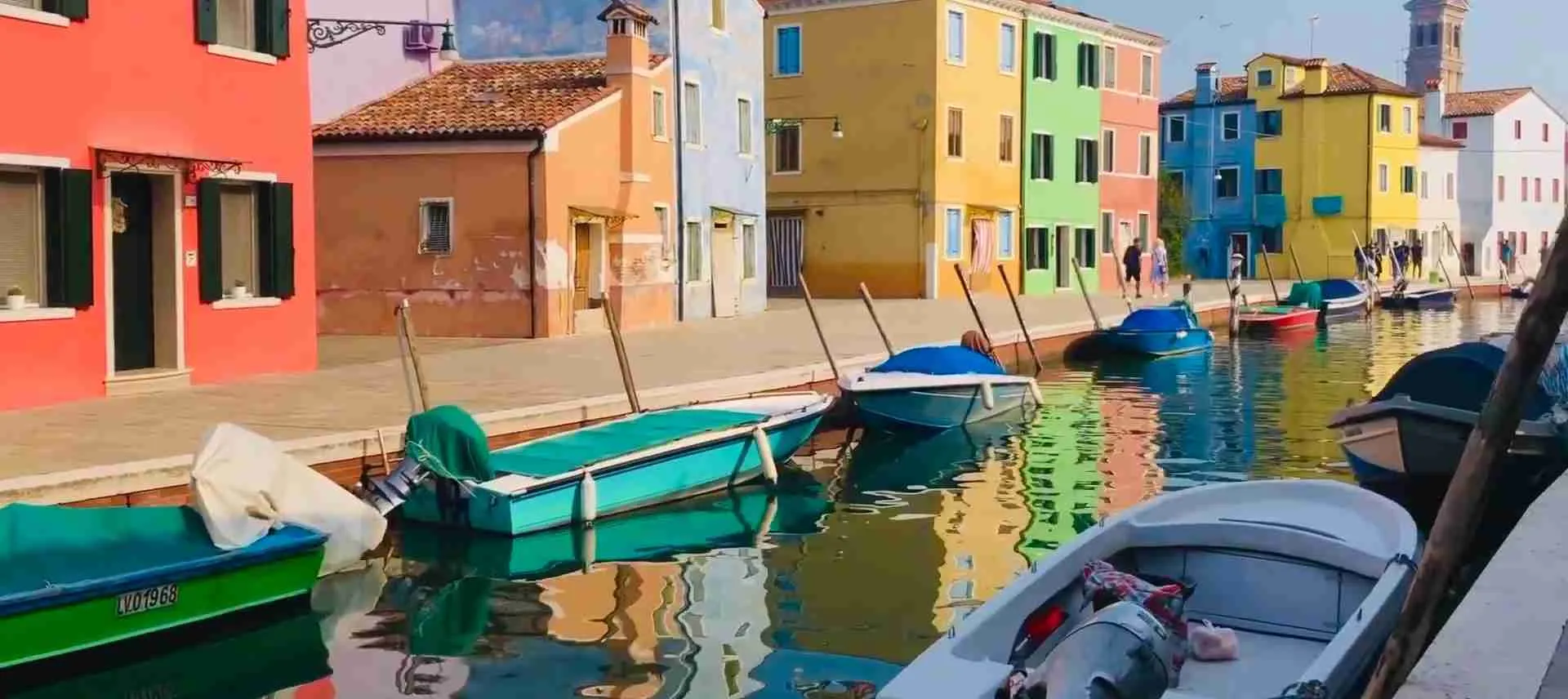
Burano’s appeal centers on vibrant house colors—brilliant blues, yellows, reds, purples, greens—creating Instagram-perfect streetscapes that photograph spectacularly under any lighting conditions. The island’s lacemaking tradition, while mostly extinct as commercial activity, survives in the Lace Museum and occasional demonstrations by elderly craftswomen maintaining skills their mothers and grandmothers practiced commercially. Burano’s restaurants specialize in seafood risottos and grilled fish, with several establishments earning reputations exceeding Venice proper for quality and atmosphere. The island’s residential character—4,000 permanent residents compared to Murano’s 5,000 and Venice’s 50,000—creates more authentic lived-in feeling than the tourist-dominated historic centers, though summer crowds still overwhelm the limited geography.
Torcello represents archaeological rather than living community, with population declining from 20,000 during medieval peak to fewer than 15 residents today. The island’s significance lies in its Cathedral of Santa Maria Assunta, founded 639 CE and rebuilt in the 11th century, containing the finest Byzantine mosaics in northern Italy after Ravenna. The apse mosaic depicting the Virgin and Child in glittering gold tesserae demonstrates Byzantine aesthetic at its most refined, while the west wall’s Last Judgment fills the entire interior end with terrifying depictions of hell’s torments contrasted against heaven’s serene beauties. The cathedral’s survival in near-original condition—most Venice churches suffered baroque remodeling destroying medieval character—makes Torcello invaluable for understanding pre-Gothic Venetian culture. The island’s pastoral atmosphere, with agricultural fields replacing the dense medieval urban fabric that once existed, creates meditative contrast to Venice’s constant activity.
Combined ticket options provide economic advantages for multi-island visits. The “Island Museums” pass covers Murano Glass Museum, Burano Lace Museum, and Torcello Museum (the cathedral and archaeological sites) at reduced rates compared to individual admission. Venice Museum Pass includes these island venues plus all Venice civic museums, creating significant savings for visitors planning comprehensive cultural touring. However, the passes require activation at first use and expire after defined periods (6 months for Museum Pass), making them practical only for extended Venice stays or intensive museum visiting during shorter trips.
Seasonal considerations significantly affect multi-island itineraries. Summer months see maximum crowds, extended vaporetto wait times, and intense heat making prolonged walking exhausting. Spring (April-May) and autumn (September-October) provide optimal conditions combining moderate temperatures, fewer crowds, and reliable weather without winter’s rain and cold. Winter visits (November-March excluding Christmas/New Year) offer nearly empty islands and dramatic atmospheric conditions but face shorter daylight hours, frequent rain, and occasional acqua alta flooding disrupting vaporetto service. Each season creates distinct experiences requiring different clothing, schedule planning, and expectation management.
Practical Visiting Information: Hours, Seasons, and Trip Planning Essentials
Murano operates as accessible destination year-round, with glass furnaces maintaining continuous production regardless of season or weather and vaporetto service running daily except during extreme acqua alta events when flooding makes lagoon navigation hazardous. However, visiting experience varies dramatically by season, affecting crowds, weather conditions, operating hours, and overall atmosphere. Understanding these seasonal patterns permits informed decision-making about optimal timing balancing personal preferences for weather, crowds, and specific activities.
Peak summer season (June-September) brings maximum tourist density, extended business hours, guaranteed factory operations, and warmest weather. Temperatures average 25-30°C (77-86°F) with occasional peaks exceeding 35°C (95°F), making air-conditioned spaces and frequent water breaks essential. The combination of outdoor heat and furnace proximity creates physically demanding conditions, with demonstration areas often reaching 40-50°C ambient temperature. Crowds peak during July-August when European vacation schedules concentrate tourism, creating 30-45 minute vaporetto waits during busy hours and packed showrooms where browsing becomes challenging. However, summer guarantees maximum restaurant and shop hours, continuous demonstrations, and reliable weather minimizing rain-related disruptions.
Shoulder seasons (April-May, September-October) provide optimal conditions balancing comfortable temperatures (15-22°C / 59-72°F), moderate crowds, and full operational schedules. These periods avoid summer’s oppressive heat and winter’s cold rain while maintaining sufficient tourist volume that furnaces operate regular hours and restaurants stay open. Photography benefits particularly from shoulder season’s dramatic skies—spring thunderstorms create spectacular cloud formations and brilliant post-rain light, while autumn’s lengthening shadows and golden afternoon light enhance architectural photography. The trade-off involves slightly higher rain probability than summer’s relatively dry months, requiring flexible schedules allowing weather-dependent activity adjustments.
Winter months (November-March) transform Murano into quiet local community with minimal tourism, creating opportunities for genuine interaction with resident artisans and unhurried exploration. Temperatures average 5-10°C (41-50°F) with frequent rain and occasional snow, requiring warm waterproof clothing and acceptance of abbreviated daylight hours limiting afternoon activities. Many restaurants close or reduce hours during winter, and some smaller furnaces suspend demonstrations when tourist demand doesn’t justify continuous operation. However, serious collectors and photography enthusiasts often prefer winter for precisely these reasons—empty showrooms permit extended conversations with artisans, flexible lighting conditions create moody atmospheric images, and reduced crowds allow photography without including unwanted tourists in frames.
Daily timing considerations complement seasonal planning. Morning visits (9:00-12:00) capture the island before midday heat and afternoon crowds while ensuring furnace demonstrations run full schedules with fresh energy. The morning light particularly favors photography along eastern-facing canals where low sun creates optimal illumination. Afternoon timing (14:00-17:00) coincides with lunch closure at many establishments but provides golden hour light approaching sunset, creating spectacular photography opportunities. Late afternoon timing risks missing demonstrations as furnaces wind down daily operations, though showrooms typically remain open until 18:00-19:00 even after furnace closure. Evening visits offer minimal photography light and reduced operational hours but create romantic atmosphere as interior lights glow against darkening skies and crowds disperse.
Clothing recommendations emphasize comfortable walking shoes (the island’s irregular stone pavement and frequent bridges require stable footwear), layered clothing permitting adjustment as moving between air-conditioned showrooms and outdoor heat or furnace areas, and sun protection (hat, sunglasses, sunscreen) during warm months. Winter visits require waterproof outerwear and warm underlayers, as damp lagoon cold penetrates more effectively than equivalent dry temperatures. Camera equipment benefits from protective rain covers during uncertain weather, with backup battery charges essential as cold weather dramatically reduces lithium battery performance.
Physical accessibility varies across Murano’s infrastructure. Vaporetto boats accommodate wheelchairs and have designated boarding areas at major stops, though transfer from dock to boat can prove challenging when water levels create significant height differences. The island’s bridges nearly universally feature steps without ramps or elevators, making wheelchair navigation impossible without assistance. Ground-floor showrooms and restaurants provide accessible entry, but upper floors remain unreachable except via stairs. The Glass Museum offers wheelchair accessibility through designated entrance and elevator to upper floors, with accessible restroom facilities. Visitors with mobility limitations should plan routes emphasizing ground-level activities along level fondamente, avoiding neighborhoods requiring repeated bridge crossings.
Language considerations generally favor English speakers, as tourism-dependent economy ensures most showroom staff, restaurant servers, and furnace guides speak functional to fluent English. Italian knowledge enhances experience by permitting interaction with local residents and access to businesses not catering primarily to tourists, but remains unnecessary for successful navigation and basic transactions. German and French receive secondary support in larger establishments, while Asian languages (Japanese, Mandarin) appear occasionally in major showrooms targeting those demographic markets. Museum information and signage appears in Italian and English as standard, with audio guides offering additional language options.
Frequently Asked Questions About Visiting Murano
What is the best time of day to visit Murano?
Morning visits between 9:00-12:00 provide optimal conditions combining cooler temperatures, fresh energy for walking and shopping, and full demonstration schedules as furnaces begin daily operations. The morning light particularly favors photography along eastern-facing canals where sunrise creates dramatic illumination. Arriving early also avoids afternoon crowds that concentrate after lunch when day-trippers from Venice arrive. However, late afternoon visits (16:00-18:00) offer superior photography light during golden hour and more relaxed atmospheres as crowds thin before dinner service. Visitors prioritizing photography over shopping may prefer afternoon timing despite reduced demonstration availability.
Can I visit Murano glass factories without a guided tour?
Independent factory visits are standard practice and actually preferred by most artisan furnaces who welcome individual visitors arriving spontaneously throughout business hours. Guided tours typically serve groups with limited time requiring structured itineraries, but individual visitors gain flexibility to spend extended time at factories that interest them while quickly moving past those that don’t. Most furnaces along Fondamenta dei Vetrai welcome walk-in visitors for demonstrations running continuously throughout the day, with multilingual staff providing explanations without requiring advance booking. This independent approach allows genuine discovery of personal favorites rather than visiting predetermined stops on tour operator contracts.
How can I tell if Murano glass is authentic?
Authentic Murano glass displays the “Vetro Artistico Murano” trademark label or provides accompanying certificates signed by master craftsmen, though not all genuine producers participate in this consortium system. Physical examination reveals authentication clues: genuine pieces show subtle irregularities reflecting handwork, feel heavier than expected due to thick construction ensuring durability, produce clear ringing tones when tapped, and display rich color saturation throughout the glass matrix rather than surface-applied tints. Price provides another indicator—authentic pieces start around €30-50 for simple items with complex works commanding hundreds or thousands of euros reflecting skilled labor costs. Items priced under €20 almost certainly represent industrial imitations from Asia marketed deceptively as “Murano-style” glass.
Should I buy glass directly from factories or in Venice shops?
Purchasing directly from Murano factories provides multiple advantages: lower prices by eliminating retail markups, authentication certainty seeing production occur on-site, opportunity to meet actual craftsmen explaining their work, and wider selection including pieces not distributed to Venice retailers. However, Venice shops offer convenience for travelers with limited schedules, concentrated comparison shopping across multiple producers in single location, and sometimes better bargaining leverage when retailers need to move inventory. For significant purchases above €200-300, factory buying provides superior value and authentication confidence justifying the vaporetto trip. For small souvenirs under €50, Venice convenience may outweigh minor price premiums.
What should I know about shipping fragile glass purchases internationally?
International glass shipping requires specialized packing using custom-built wooden crates with dense foam padding, multiple protection layers, and professional handling throughout the shipping chain. Reputable Murano furnaces maintain relationships with experienced shippers who understand glass fragility and insurance requirements. Shipping costs typically range 20-40% of purchase price for international destinations, making it economical only for pieces valued above €200-300 where personal transport proves impractical. Insurance covering full replacement value (not merely shipping cost) should be mandatory for valuable pieces, with clear understanding of claims procedures if damage occurs. Small items that fit in carry-on luggage should be hand-transported wrapped in clothing rather than risking checked baggage where rough handling frequently causes breakage.
Are there places to eat on Murano or should I return to Venice for meals?
Murano hosts approximately 25-30 restaurants ranging from simple cafes to full-service establishments serving traditional Venetian seafood, making it unnecessary to return to Venice for meals unless seeking specific dining experiences unavailable on the island. Restaurant quality varies significantly from excellent to mediocre tourist traps, requiring discrimination in selection. Recommended establishments include Busa alla Torre for traditional trattoria atmosphere and reasonable prices, Acquastanca for modern interpretations of classic dishes, and Al Gatto Nero for Michelin-recognized fine dining. Budget visitors can assemble picnic lunches from grocery shops and bakeries, eating along canal-side fondamente while enjoying waterfront views without restaurant costs. However, Venice proper offers vastly greater restaurant selection and generally superior quality-to-price ratios, making return reasonable for visitors prioritizing exceptional dining.
How long does a typical Murano glass demonstration last?
Standard glass demonstrations run 15-25 minutes, presenting both blowing techniques (creating hollow vessels) and sculpture methods (shaping figurative forms like horses or fish). The master glassmaker produces complete finished objects during this timeframe—commonly vases, goblets, or animal sculptures—allowing visitors to witness entire transformation from molten material to cooled artwork. Some furnaces offer extended demonstrations or workshops where visitors attempt basic glassworking under master supervision, these longer programs requiring 45-90 minutes and advance reservation. Most visitors find the standard 20-minute demonstration provides adequate understanding of techniques and appreciation for skill required while maintaining engagement without becoming repetitive.
Is Murano suitable for visiting with children?
Murano offers family-friendly experiences combining educational content (glassmaking demonstrations showing traditional crafts) with visual spectacle (colorful showrooms, canal views) that engage children while providing adult interest. The demonstrations particularly captivate young visitors watching masters manipulate glowing orange material into recognizable forms within minutes. However, several considerations require planning: the compact island demands substantial walking over irregular pavement, showrooms contain fragile objects creating anxiety about breakage, and summer heat combined with furnace proximity can prove exhausting for small children. Families with children under 8-10 should plan shorter visits (2-3 hours maximum) with strategic gelato breaks, emphasize demonstrations and outdoor spaces over extended showroom browsing, and avoid peak afternoon heat during summer months.
Can I take photographs inside glass factories and showrooms?
Photography policies vary by individual furnace and showroom, with most permitting photography during demonstrations recognizing that images serve as advertisement when shared on social media. However, some showrooms prohibit photography to prevent design copying or protect proprietary techniques from documentation, while others restrict flash photography to avoid disturbing working craftsmen. Visitors should request permission before photographing if policies aren’t clearly posted, respecting that factories operate as private commercial spaces where owners set usage terms. Museum photography follows standard Italian institution policies—permitted for personal use without flash or tripods but prohibited for commercial purposes without advance permission. The Glass Museum specifically allows photography throughout permanent collections while occasionally restricting it in special exhibitions containing loaned works.
What is the difference between Murano glass and other Venetian glass?
Murano glass specifically refers to glass produced on Murano island by certified artisans using traditional handworking techniques, while “Venetian glass” encompasses broader category including industrial production, mechanized processes, and items merely designed in Venice but manufactured elsewhere. The Consorzio Promovetro Murano established the “Vetro Artistico Murano” trademark creating legal distinction: certified Murano glass must be physically produced on the island through documented traditional methods by apprentice-trained craftsmen. “Venetian glass” sold throughout Venice may include authentic Murano pieces but also industrial imitations from Asia, mechanically-produced items from Italian factories elsewhere, or designs inspired by Venetian aesthetics but lacking handwork. Quality “Venetian glass” from reputable producers can equal Murano standards, but the geographic designation provides no authentication guarantee requiring buyers to exercise independent judgment about manufacturing origins and quality.