Florence Baptistery Guide: Ghiberti’s Gates of Paradise & Byzantine Mosaics
The Florence Baptistery stands as one of Italy’s most extraordinary medieval monuments, combining Romanesque architectural mastery with Byzantine artistic splendor across an octagonal structure that has captivated artists and visitors for nearly a millennium. Housing three sets of revolutionary bronze doors including Ghiberti’s legendary Gates of Paradise and nearly ten million golden mosaic tesserae depicting the Last Judgment, this 11th-century baptistery represents the pinnacle of pre-Renaissance artistic achievement in Tuscany.
Key Takeaways
- The Baptistery predates the Florence Cathedral by centuries, constructed in the 11th-12th century as one of Florence’s oldest standing buildings
- Ghiberti’s Gates of Paradise required 27 years of continuous work (1425-1452) and revolutionized Renaissance sculpture through innovative perspective techniques
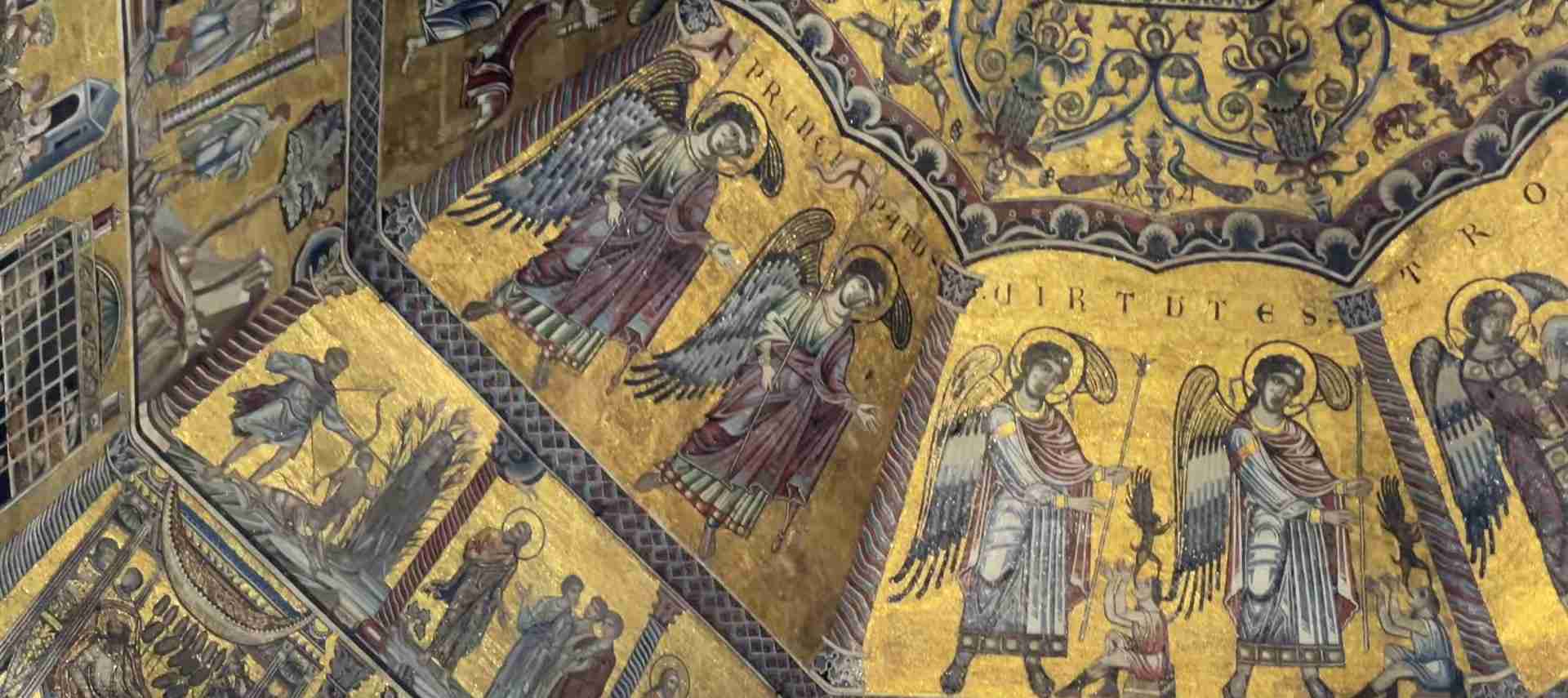
- The interior dome contains approximately 10 million Byzantine-style mosaic tesserae created over a century by Florentine masters including Coppo di Marcovaldo and Cimabue
- Original Gates of Paradise panels are preserved in the Museo dell’Opera del Duomo, while gilded bronze copies adorn the Baptistery’s east entrance
- The octagonal architectural design symbolizes resurrection and the transition from earthly life to eternal salvation in Christian theology
- Ongoing restoration work through 2026 may partially obscure ceiling mosaics, though visits remain highly worthwhile for the bronze doors and architectural significance
People Also Ask About Florence Baptistery
Why is it called the Gates of Paradise?
Michelangelo supposedly gave Lorenzo Ghiberti’s east doors their famous name upon seeing the completed masterpiece, declaring them so beautiful they were worthy of serving as the entrance to Paradise itself. This legendary attribution reflects the doors’ extraordinary artistic achievement and the profound impression they made on Renaissance contemporaries. The name emphasizes both the religious function of the Baptistery as a gateway to Christian salvation through baptism and the secular recognition of Ghiberti’s technical virtuosity in bronze casting, perspective rendering, and narrative composition across ten Old Testament panels.
What makes the Baptistery mosaics significant in art history?
The Florence Baptistery mosaics represent the largest and most important pictorial cycle of 13th-century Tuscan art, bridging Byzantine mosaic traditions with emerging Italian Gothic expressiveness. Created between approximately 1225-1330 using designs by major Florentine painters including Coppo di Marcovaldo, Cimabue, and Meliore di Jacopo, the approximately 10 million tesserae cover the entire octagonal dome with scenes from Genesis, the Last Judgment, and the life of Saint John the Baptist. The monumental six-meter-high Christ in Judgment dominates the composition, demonstrating sophisticated three-dimensional modeling techniques that influenced subsequent Renaissance painting and served as a collective masterwork of Florentine art before Giotto transformed the medium.
How old is the Florence Baptistery compared to the Duomo?
The Baptistery was constructed in the 11th-12th century, making it significantly older than the Florence Cathedral which began construction in 1296. Scholarly consensus based on construction techniques and architectural analysis dates the current Romanesque structure to this period, though the site may have served religious functions since the early Christian era. The Baptistery stood as Florence’s primary religious monument for centuries before the Cathedral construction commenced, serving as the exclusive baptismal site for all Florentine Catholics including Dante Alighieri and establishing the octagonal Piazza del Duomo as the city’s spiritual center long before Brunelleschi’s famous dome rose above the skyline.
Are the bronze doors visitors see today the originals?
Visitors see high-quality gilded bronze copies on the exterior Baptistery portals, created in 1990 from gypsum molds made in the 1940s-1950s. The original Gates of Paradise by Ghiberti were removed from the east entrance in 1990 for comprehensive restoration and permanent museum preservation after centuries of exposure to weather, pollution, and the catastrophic 1966 Florence flood. The Museo dell’Opera del Duomo now displays the restored original panels in climate-controlled galleries where visitors can examine the intricate relief work, gilding, and perspective techniques at close range, while the exterior copies allow the Baptistery façade to retain its complete Renaissance appearance without risking further damage to priceless 15th-century artworks.
Extended multi-day tours – 5+ days
Featured Florence Multi-Day Tour Packages
3 days
Florence & Tuscany City Break – 3 Days/2 Nights
- ✓ Comprehensive Florence tour
- ✓ Expert local guides included
- ✓ All accommodation arranged
- ✓ Transportation provided

3 days
The Essence of Tuscany: Florence & Tuscany in 3 Days
- ✓ Comprehensive Florence tour
- ✓ Expert local guides included
- ✓ All accommodation arranged
- ✓ Transportation provided
5 days
5 Day Florence Including Chianti Region,Pisa and Cinque Terre
- ✓ Comprehensive Florence tour
- ✓ Expert local guides included
- ✓ All accommodation arranged
- ✓ Transportation provided
2 days
Flavors of Florence & Chianti: 2 days culinary escape with food & wine tour
- ✓ Booking needs min. 2 travelers
Multi-day tour packages powered by TourRadar. Prices and availability subject to change.
Introduction: Florence’s Architectural and Artistic Cornerstone
The Baptistery of San Giovanni stands at the geographic and symbolic heart of Florence, occupying Piazza del Duomo alongside the Cathedral and Campanile in a monumental ensemble that defines the city’s historic center. Yet unlike its later neighbors, this octagonal marvel predates the Renaissance by centuries, representing instead the sophisticated architectural and artistic achievements of 11th-12th century Romanesque Tuscany. Clad in geometric patterns of white Carrara and green Prato marble, the Baptistery served as Florence’s exclusive baptismal site from the Middle Ages through the Renaissance, welcoming every citizen regardless of social status into the Christian faith within its eight-sided walls.
What elevates the Baptistery from important civic monument to transcendent artistic landmark is the convergence of two extraordinary medieval achievements: the Byzantine-style mosaic ceiling begun in the 1220s-1240s and completed around 1330, and the three sets of bronze doors created across the 14th and 15th centuries that revolutionized European sculpture. The mosaic cycle represents collaborative genius, with Florentine masters Coppo di Marcovaldo, Cimabue, Meliore, and others designing narrative scenes from Genesis, the Last Judgment, and the life of Saint John the Baptist that Venetian craftsmen executed in approximately ten million golden tesserae. These shimmering compositions transformed the octagonal vault into a luminous vision of Christian cosmology, with a monumental Christ in Judgment presiding over humanity’s eternal destiny.
The bronze doors tell an equally compelling story of artistic evolution and competitive excellence. Andrea Pisano’s south doors from 1330-1336 established the template with twenty-eight gilded panels depicting Saint John the Baptist’s life and cardinal virtues. Lorenzo Ghiberti’s first commission for the north doors (1403-1424) emerged from the famous 1401 competition against Filippo Brunelleschi, demonstrating the workshop collaboration and technical mastery that would reach its apex in his second commission. The Gates of Paradise, installed on the east portal facing the Cathedral in 1452 after twenty-seven years of labor, synthesized classical perspective, humanist narrative interpretation, and bronze casting virtuosity into ten Old Testament scenes that Michelangelo declared worthy of Paradise’s entrance.
Today’s visitors encounter the Baptistery in a state of ongoing preservation and partial transformation. Since 2023, comprehensive restoration work on the mosaic vault has erected scaffolding that obscures portions of the ceiling through approximately 2028, though the structural intervention allows unprecedented close viewing opportunities for those who ascend the specially designed platforms. The exterior Gates of Paradise are gilded bronze copies created from 1940s-era molds and installed in 1990, while the restored original panels rest in climate-controlled galleries at the Museo dell’Opera del Duomo where centuries of patina, flood damage, and pollution effects have been meticulously reversed. This dual presentation honors both the Baptistery’s visual integrity and the originals’ preservation needs, allowing modern audiences to experience Ghiberti’s achievement in context and in protected detail.
Understanding the Baptistery requires appreciating its multifaceted significance across architectural, religious, civic, and artistic domains. Architecturally, the octagonal design represents sophisticated geometric planning rooted in early Christian symbolism, where eight sides signify resurrection and the eighth day of creation when eternal life begins. Religiously, baptism within these walls marked entrance into Florence’s Christian community and remained the exclusive rite for all citizens until the 19th century. Civically, the powerful Arte di Calimala merchant guild exercised patronage over the building’s maintenance and embellishment, commissioning the mosaic program and bronze doors as demonstrations of Florentine wealth, taste, and artistic leadership across Europe.
Artistically, the Baptistery served as a workshop of innovation where medieval traditions encountered Renaissance humanism. The mosaic program demonstrates the transition from Byzantine iconographic rigidity toward Italian Gothic emotional expressiveness, while Ghiberti’s doors pioneered systematic linear perspective decades before its theoretical codification. Famous Florentines baptized within include Dante Alighieri, who references the building in the Divine Comedy, and Lisa Gherardini, Leonardo da Vinci’s Mona Lisa model, connecting the structure to both literary and visual Renaissance achievements. The building influenced architects for centuries—Brunelleschi studied its proportions and spatial organization when developing his revolutionary architectural approach, finding in this Romanesque predecessor principles of harmony and geometric clarity that would define Renaissance design.
Architectural Foundations: Romanesque Geometry and Symbolism
The Florence Baptistery embodies Romanesque architectural principles through its octagonal plan, massive proportions, and geometric marble cladding that creates visual harmony through mathematical relationships. The eight-sided configuration measures approximately 25 meters in interior diameter, with each wall supporting one of eight segments of the cloister vault that rises to an interior height of roughly 25 meters at the dome’s apex. This 1:1 ratio between diameter and height produces a perfectly balanced interior volume where the eye moves naturally from floor to vault, experiencing the space as both grounded and ascending—a spatial metaphor for baptism’s dual nature as earthly ritual and spiritual transformation.
The octagonal shape carries profound theological symbolism in Christian architecture. Eight represents resurrection in biblical numerology because Christ rose on the eighth day (the day after the seventh-day Sabbath), making the octagon the ideal geometric form for baptisteries where Christians died to sin and rose to new life through the sacrament. This symbolism extends across early Christian and medieval baptisteries from Ravenna to Pisa, but Florence’s implementation achieves particular architectural sophistication through the structural marriage of octagonal walls with an eight-segmented vault that mirrors the floor plan in three dimensions. Each vault segment corresponds to one wall facet, creating perfect geometric correspondence that Renaissance architects would study when developing their own centralized-plan buildings.
Massive granite columns salvaged from ancient Roman structures support the interior arcades and gallery levels, connecting the medieval building to Florence’s classical past. These monumental columns could not be produced in the 11th-12th centuries, requiring builders to quarry materials from the Roman forum that stood at the site of present Piazza della Repubblica. The reuse demonstrates both practical resourcefulness and cultural continuity—medieval Florence building upon literally and figuratively Roman foundations while creating something architecturally distinct. The columns support a gallery level with bifore (two-light windows) that allows light to filter into the upper vault while creating an intermediate zone between floor and ceiling that enhances the interior’s vertical hierarchy.
The exterior marble cladding creates one of Florence’s most recognizable façades through geometric patterns in white Carrara and green Prato marble. Horizontal bands alternate with vertical pilasters topped by blind arcades, producing a rhythmic play of line and color that would influence later Florentine buildings including the Cathedral itself. The marble panels are precisely cut and fitted to create geometric designs including squares, circles, and triangular patterns that demonstrate sophisticated stone-cutting techniques and mathematical planning. This decorative approach reflects the Tuscan proto-Renaissance aesthetic that bridged Romanesque solidity with classical proportions, creating buildings that appeared both ancient and innovative to contemporary viewers.
Three portals puncture the octagonal perimeter, each corresponding to one of the bronze door sets that would be added across the 14th-15th centuries. The south portal served as the traditional entrance for parents bringing infants for baptism, the north portal faced the city center and older urban fabric, while the east portal faced the Cathedral site and would eventually receive Ghiberti’s masterwork. These orientations reflect both practical urban geography and religious symbolism—the east as the direction of Christ’s Second Coming and the rising sun, making it the position of honor that explains why Ghiberti’s completed Gates of Paradise were moved from their original north location to the east entrance facing the Duomo.
Interior architectural details include a scarsella (rectangular apse) projecting from one wall that replaced an earlier semicircular apse and provided space for the altar and liturgical functions. The scarsella’s vault received the first mosaic decoration in the 1220s, establishing the artistic program that would eventually cover the entire dome. The baptismal font traditionally occupied the floor center, though the current marble font dates from 1912 reconstruction using fragments and documentation from the original 12th-century version designed by Antonio Francesco Gori. The octagonal font echoes the building’s geometric theme, creating nested octagons that reinforce the symbolism of eight throughout the sacred space.
The building’s external measurements and proportional relationships demonstrate sophisticated geometric planning that Renaissance architects would analyze and emulate. Filippo Brunelleschi reportedly spent years measuring and studying the Baptistery’s dimensions, proportions, and structural solutions, finding in this Romanesque building principles that would inform his revolutionary architectural approach. The relationship between wall thickness, column placement, vault geometry, and overall proportions creates a mathematically coherent system that produces both structural stability and aesthetic harmony—precisely the qualities Renaissance architects sought to achieve through systematic application of classical principles and mathematical ratios.
Byzantine Mosaic Masterwork: The Golden Vault of Heaven
The Florence Baptistery’s mosaic ceiling represents one of medieval Italy’s most ambitious artistic undertakings, covering approximately 1,000 square meters of curved vault surface with nearly ten million gilded glass tesserae that transform the octagonal dome into a shimmering vision of Christian cosmology. Created over approximately a century between the 1220s-1240s and around 1330, the mosaics demonstrate the collaborative nature of medieval artistic production, with Florentine masters providing designs or cartoons that Venetian specialist craftsmen executed using Byzantine mosaic techniques adapted to Tuscan aesthetic preferences. The result bridges Eastern and Western artistic traditions, combining Byzantine iconographic conventions and gold-ground techniques with emerging Italian Gothic interest in narrative clarity, emotional expression, and spatial coherence.
The Arte di Calimala merchant guild commissioned and financed the mosaic program as part of their patronage responsibilities for the Baptistery’s maintenance and embellishment. This powerful organization of wool and cloth merchants controlled international trade networks that generated the wealth necessary for such expensive artistic undertakings—contemporary documents record the substantial costs of importing gold leaf, colored glass, and Venetian master mosaicists while supporting local painters who created full-scale preparatory drawings. The guild’s investment reflected both religious devotion to Florence’s patron saint John the Baptist and civic pride in creating a monument that would demonstrate Florentine artistic leadership across Europe.
The mosaic program organizes narrative and symbolic content across eight vault segments in a hierarchical system that moves from earth to heaven. Six horizontal registers structure five of the eight segments, with the upper registers containing ornamental motifs and angelic hierarchies while lower registers present complete narrative scenes. Three western segments abandon this regular division to accommodate the composition’s centerpiece: a monumental Christ in Judgment approximately six meters tall, seated within a circular mandorla and dominating the entire vault. This massive figure represents the culmination of the decorative program, drawing every viewer’s attention upward to encounter divine judgment as the ultimate reality beyond all earthly concerns.
Coppo di Marcovaldo, one of 13th-century Florence’s most important painters, provided designs for the Christ in Judgment and Hell representations. His powerful figure style creates three-dimensional modeling through drapery folds, anatomical structure, and expressive gestures that bring Byzantine formality toward Italian Gothic emotional intensity. Christ extends his right hand in blessing toward the saved while his left hand gestures toward the damned, the wounds of crucifixion visible on hands and feet as proof of redemptive sacrifice. The figure overlaps its aureole boundary with halo and foot placement, creating dynamic tension between contained composition and expansive divine presence that medieval viewers would experience as awe-inspiring manifestation of sacred power.
Hell scenes below the Christ figure demonstrate medieval artistic imagination at its most vivid, with demons consuming damned souls in grotesque detail that has entertained and horrified viewers across centuries. These representations draw from Byzantine iconographic conventions while adding Tuscan narrative specificity and emotional intensity—sinners suffer punishments matching their earthly crimes, demons display inventive cruelty, and the entire composition functions as both theological instruction and visceral warning. The level of detail rewards close examination, which ongoing restoration scaffolding now enables through specially designed platforms that bring viewers within arm’s reach of tesserae they would normally see only from 25 meters below.
Cimabue, traditionally considered the teacher of Giotto and a pivotal figure in Italian painting’s evolution from Byzantine conventions toward Renaissance naturalism, may have provided designs for the Joseph narrative cycle that occupies several registers. These scenes demonstrate sophisticated spatial organization and emotional characterization that point toward the artistic revolution Giotto would soon accomplish. Figures interact within coherent architectural and landscape settings, expressions convey psychological states, and narrative moments unfold with dramatic clarity across individual panels that function both as independent scenes and as connected storytelling sequences.
Additional artists whose work contributed to the mosaic program include Meliore di Jacopo, the Master of Magdalene, and Gaddo Gaddi, creating what scholars describe as a collective essay of Florentine painting before Giotto’s transformative influence. Each artist brought distinct stylistic approaches ranging from conservative Byzantine adherence to experimental Italian Gothic innovation, producing stylistic variations that reflect the program’s century-long execution period and the evolving artistic preferences across multiple generations of patrons, designers, and craftsmen. These variations create visual richness rather than incoherence, as the overall compositional structure and thematic unity override individual stylistic differences.
The narrative content organizes biblical history from Creation through Judgment Day in theological sequence. Genesis scenes show Adam and Eve’s creation, temptation, and expulsion from Paradise, establishing humanity’s fallen state that requires redemption. Abraham, Isaac, Jacob, Joseph, and Moses cycles demonstrate God’s covenant relationship with the chosen people and prefigure Christ’s salvific mission. New Testament scenes focus on John the Baptist’s life as Florence’s patron saint, while the Last Judgment representations bring salvation history to its eschatological conclusion. This comprehensive narrative transforms the dome into a visual Bible that instructed medieval viewers in Christian theology while demonstrating contemporary artistic capabilities.
Ornamental borders and decorative elements demonstrate sophisticated design integration, with geometric patterns, floral motifs, and architectural frameworks organizing the narrative scenes into coherent compositional units. Gold backgrounds behind figures create the luminous effect characteristic of Byzantine mosaics while symbolically representing divine light and heavenly realms beyond earthly materiality. The tesserae themselves vary in size, color intensity, and setting angles to create modeling effects, color gradations, and textural variety that bring figures and scenes to visual life despite the medium’s inherent restrictions.
Technical execution required importing specialized materials and craftsmen. Glass tesserae came from Venetian workshops that had inherited and refined Byzantine manufacturing techniques, while gold leaf backing created the characteristic shimmer that transforms ambient light into celestial radiance. Venetian mosaicists possessed the technical knowledge to set tesserae at precise angles that would catch and reflect light optimally when viewed from below, creating three-dimensional modeling effects and preventing the flat, lifeless appearance that unskilled mosaic work produces. The collaboration between Florentine designers and Venetian craftsmen represents medieval artistic production at its most sophisticated—combining conceptual innovation with technical mastery across specialized workshop traditions.
Current restoration efforts that began in 2023 and continue through approximately 2028 address centuries of deterioration from candle smoke, incense, moisture infiltration, and pollution. Hundreds of square feet of tesserae had begun detaching from the vault substrate, requiring comprehensive consolidation work that removes each affected tessera, cleans and treats it, restores the substrate layer, and resets the tessera using modern adhesives that allow future conservation access. The innovative mushroom-shaped scaffolding structure occupies minimal floor space while providing extensive working platforms at multiple heights, creating the additional benefit of allowing public access to view the mosaics at close range during restoration periods—an unprecedented opportunity to examine medieval artistry at eye level rather than from 25 meters below.
Gates of Paradise: Ghiberti’s Renaissance Masterpiece
Lorenzo Ghiberti’s Gates of Paradise represent the culmination of Renaissance bronze casting achievement and the synthesis of classical perspective, humanist biblical interpretation, and workshop virtuosity developed across twenty-seven years from commission to completion (1425-1452). These east portal doors consist of ten large rectangular panels depicting Old Testament narratives, surrounded by elaborate frames containing twenty-four portrait heads and twenty-four statuettes of prophets and sibyls, all enclosed within lush foliate borders populated with flora and fauna. The complete doors stand over five meters tall and weigh approximately two tons, created through lost-wax bronze casting techniques that Ghiberti perfected across decades of continuous experimentation and refinement.
Michelangelo’s legendary attribution of the name “Gates of Paradise” reflects the doors’ extraordinary impression on Renaissance contemporaries who recognized revolutionary achievement in perspective rendering, figural composition, and narrative integration. Whether Michelangelo actually coined the phrase remains debated among scholars, but the attribution captured genuine artistic consensus that Ghiberti had created bronze sculpture worthy of serving as heaven’s entrance. This recognition stemmed from the doors’ successful marriage of classical artistic principles with Christian narrative content, demonstrating that Renaissance humanism could enhance rather than contradict religious artistic expression.
The commission emerged from the east doors’ intended function as the Baptistery portal directly facing the Cathedral, making them the most prominent and symbolically significant entrance. The Arte di Calimala guild that administered both buildings invited Ghiberti to design this third door set after his successful completion of the north doors (1403-1424), demonstrating confidence in his abilities and eliminating the competitive commission process that had governed earlier door assignments. This invitation recognized Ghiberti as Florence’s preeminent sculptor and bronze caster, a reputation he had established through the north doors and would definitively confirm through the Gates of Paradise.
The ten panels depict Old Testament scenes selected to prefigure New Testament events and Christian theological concepts: Creation of Adam and Eve with their Fall and Expulsion; Cain and Abel’s fraternal conflict and first murder; Noah’s sacrifice after the Flood and divine covenant; Abraham’s near-sacrifice of Isaac demonstrating faith; Jacob and Esau’s rivalry and reconciliation; Joseph’s enslavement, rise to power, and family reunion; Moses receiving the Law on Mount Sinai; Joshua’s conquest of Jericho; David’s defeat of Goliath; and Solomon receiving the Queen of Sheba. This selection moves from Creation through Law to Kingdom, establishing the theological framework for Christ’s arrival as new creation, fulfillment of Law, and eternal king.
Ghiberti’s revolutionary approach transformed traditional relief sculpture through systematic application of linear perspective that creates convincing architectural spaces receding to vanishing points, atmospheric perspective that diminishes detail and sharpens edges in distant elements, and multiple relief heights ranging from nearly full-round foreground figures to barely raised background elements. This perspective system allows each panel to function as a window into a complete three-dimensional world rather than as a shallow sculptural surface, fundamentally changing the relationship between viewer and artwork from contemplation of crafted surface to immersion in narrative space.
The panel depicting Jacob and Esau demonstrates Ghiberti’s mastery at peak achievement. The composition situates multiple narrative moments within a coherent architectural setting of arched colonnades that lead the eye through Renaissance one-point perspective toward background scenes. Jacob and Esau’s encounter occupies the foreground with figures modeled in high relief approaching three-dimensionality, while simultaneous earlier and later narrative moments unfold in middle and background zones rendered in progressively lower relief. This temporal compression allows a single composition to present sequential story development, creating narrative sophistication that challenges viewers to trace character movements across time and space within the panel’s integrated perspective system.
The Creation panel integrates four distinct narrative moments into naturalistic landscape unified by consistent perspective and atmospheric effects. God creates Adam from clay at left, fashions Eve from Adam’s rib at upper center, oversees their temptation by the serpent at right, and expels them from Paradise toward the panel’s base. Multitudes of angels observe from celestial realms above while the garden landscape transitions from paradisiacal abundance to fallen barrenness, visualizing theological concepts through artistic means that engage viewers emotionally and intellectually. The compositional sophistication demonstrates how thoroughly Ghiberti had absorbed and advanced Renaissance spatial representation techniques.
The David panel presents battlefield action with stunning detail in armor, weapons, and military equipment that demonstrates Ghiberti’s study of classical sculptural sources. Saul commands from his chariot while troops engage Philistine forces across a valley framed by steep mountains that create dramatic spatial recession. Young David stands triumphant over the decapitated Goliath in foreground center, the narrative’s climactic moment rendered at largest scale and highest relief to ensure visual and theological emphasis. The compositional organization guides viewer attention through sequential narrative elements while maintaining overall unity through perspective convergence and balanced figure distribution.
Workshop production involved extensive collaboration among trained assistants and specialists who executed Ghiberti’s designs under his direction and final approval. Among the workshop members were Donatello, already recognized as a major sculptural innovator, and Paolo Uccello, who would become a celebrated painter known for perspective experiments. This roster demonstrates how major Renaissance artists received training through workshop collaboration on monumental projects, developing technical skills and artistic principles they would apply across independent careers. The Gates of Paradise functioned as an educational laboratory where Renaissance artistic innovations were forged through collective effort under master supervision.
Bronze casting techniques required creating full-scale wax models for each panel, constructing ceramic shell molds around the wax, melting out the wax to leave hollow molds, pouring molten bronze to fill the voids, breaking away the ceramic after cooling, and chasing the bronze surfaces to refine details and prepare for gilding. This lost-wax process allowed extremely fine detail reproduction but required immense technical expertise to prevent casting flaws, control metal composition for optimal strength and workability, and achieve consistent results across multiple large-scale pours. Ghiberti’s workshop mastered these challenges through decades of accumulated experience and systematic experimentation.
Gilding through fire-gilding techniques applied gold-mercury amalgam to cleaned bronze surfaces and heated the assembly to vaporize mercury, leaving gold permanently bonded to the bronze substrate. This dangerous process required careful mercury handling and precise temperature control to achieve consistent gold coverage without damaging the underlying bronze details. The resulting golden surface transformed brown bronze into radiant metal that caught sunlight and created the luminous visual effects that impressed Renaissance viewers and justified Michelangelo’s paradisiacal attribution. Centuries of exposure gradually wore the gilding, which comprehensive 20th-century restoration efforts have restored on the original panels now in the Museo dell’Opera del Duomo.
The elaborate frames surrounding the narrative panels demonstrate decorative virtuosity matching the panels’ narrative achievement. Twenty-four niches contain statuettes of Old Testament figures including prophets, judges, and heroes, while twenty-four roundels present portrait heads that include Ghiberti’s self-portrait and his son Vittorio’s portrait in the central positions. Foliate borders populate every surface with precisely rendered flora and fauna that demonstrate Ghiberti’s observation of natural forms and his ability to integrate decorative and narrative elements into unified compositions. These frames transform the doors from collections of panels into complete artistic environments where every square centimeter receives sculptural attention.
The doors’ artistic influence radiated across Renaissance art and beyond, establishing perspective relief sculpture as a major medium and demonstrating how classical artistic principles could serve Christian narrative purposes. Artists traveled to Florence specifically to study the doors, copying compositions, analyzing perspective systems, and absorbing lessons about figure modeling, spatial organization, and narrative integration. The Gates of Paradise became touchstones for measuring artistic achievement, with subsequent sculptors and painters either emulating Ghiberti’s approach or defining their innovations against his accomplishments.
Other Bronze Door Masterworks: Pisano and Ghiberti’s North Doors
The Florence Baptistery’s three bronze door sets represent connected artistic evolution across more than a century of sculptural innovation, with Andrea Pisano’s south doors establishing the format that Lorenzo Ghiberti would develop through two successive commissions of increasing ambition and technical sophistication. Understanding the complete sequence illuminates how Florentine artistic patronage, competitive commissions, and workshop traditions combined to produce cumulative achievement that transformed European sculpture.
Andrea Pisano created the south doors between 1330-1336, establishing the template of gilded bronze panels within geometric frames that would govern subsequent door designs. Twenty-eight panels present narrative scenes from John the Baptist’s life and personifications of cardinal and theological virtues, executed in Gothic style with figures in high relief against neutral backgrounds. The doors demonstrated that bronze casting could achieve the monumental scale and narrative complexity previously reserved for stone sculpture, establishing technical precedents that made Ghiberti’s later commissions feasible. The Arte di Calimala guild that commissioned this first bronze door set intended it for the east entrance, but Ghiberti’s superior achievement decades later prompted moving Pisano’s doors to the south portal where parents traditionally entered with infants for baptism.
The John the Baptist narrative panels follow the saint’s life from Annunciation of his birth through his martyrdom at Herod’s command, creating visual hagiography that honored Florence’s patron saint while instructing viewers in his exemplary faith, ascetic discipline, and prophetic mission. Each panel isolates a single narrative moment within Gothic architectural frames, presenting clear compositional focus without the spatial complexity or temporal compression that would characterize Ghiberti’s later work. This narrative clarity served liturgical and educational purposes effectively, making the doors both devotional objects and visual scripture for largely illiterate medieval viewers.
The virtue panels personify Faith, Hope, Charity, Fortitude, Temperance, Justice, Prudence, and Humility as crowned female figures holding symbolic attributes within quatrefoil frames. These representations transform abstract moral concepts into memorable visual forms, demonstrating how medieval and Renaissance art served pedagogical functions by making invisible spiritual realities tangible through allegory and personification. The virtue sequence complements the John the Baptist narratives by presenting the moral framework within which his holy life exemplified Christian perfection.
Technical execution involved collaboration with Venetian bronze casters who possessed the specialized knowledge required for large-scale casting, similar to the arrangement that would govern the Baptistery mosaic program. Andrea Pisano provided the artistic designs and wax models, while Venetian specialists managed the casting process that transformed wax to bronze through lost-wax techniques. Pisano then completed the gilding that gave the doors their golden radiance, establishing the aesthetic precedent that Ghiberti would follow in his two commissions. This division of labor between Tuscan artistic design and Venetian technical execution reflects the specialized nature of medieval artistic production and the importance of workshop networks that spanned Italian city-states.
Lorenzo Ghiberti’s north doors resulted from the famous 1401 competition that pitted him against Filippo Brunelleschi, Jacopo della Quercia, and other leading sculptors in a contest to determine who would receive the commission for the Baptistery’s second bronze door set. The Arte di Calimala guild established the competition to ensure they secured the finest possible artist while generating civic excitement through public artistic rivalry. Each competitor submitted a trial relief panel depicting Abraham’s sacrifice of Isaac within a quatrefoil frame, demonstrating their compositional skill, technical mastery, and artistic vision within identical constraints.
Ghiberti’s winning trial panel survives in the Bargello Museum alongside Brunelleschi’s runner-up submission, allowing direct comparison of the approaches that determined the commission outcome. Ghiberti’s composition integrates all narrative elements into fluid spatial unity with elegant figure proportions, graceful drapery movement, and emotional intensity balanced by classical restraint. Brunelleschi’s more dramatic and emotionally charged composition demonstrates powerful sculptural innovation but lacks Ghiberti’s refinement and spatial coherence. The competition outcome established Ghiberti as Florence’s preeminent bronze sculptor and initiated Brunelleschi’s shift from sculpture to architecture where his revolutionary achievements would transform Renaissance building.
The north doors executed between 1403-1424 follow Pisano’s format of twenty-eight panels within Gothic quatrefoil frames, presenting New Testament scenes from Christ’s life, the four Evangelists, and four Church Fathers. Ghiberti’s execution demonstrates significant artistic advance beyond Pisano’s approach through more sophisticated spatial organization, greater anatomical accuracy, enhanced emotional expression, and refined surface modeling. These improvements reflect both Ghiberti’s superior artistic capabilities and the two-decade period’s accumulating Renaissance achievements in representing human figures, spatial relationships, and narrative clarity.
The New Testament narrative follows Christ’s life from Annunciation through Resurrection and Pentecost, creating gospel visualization that complements the Baptistery’s broader theological program. Each scene demonstrates Ghiberti’s evolving understanding of spatial representation and figure composition, with later panels showing increasing sophistication as his artistic vision developed across the twenty-one-year execution period. This gradual refinement documents Ghiberti’s artistic maturation and establishes technical foundations he would fully realize in the subsequent Gates of Paradise commission.
The completion of the north doors in 1424 established Ghiberti’s reputation so thoroughly that the Arte di Calimala invited him without competition to design the east doors, the commission that would occupy the next twenty-seven years and produce the Gates of Paradise. This direct invitation demonstrates the patron satisfaction with his work and their confidence that he would create the supreme achievement worthy of the Baptistery’s most prominent portal. The three door sets collectively span over a century of continuous bronze sculpture production (1330-1452), representing sustained civic investment in artistic excellence and accumulating technical knowledge that made each successive commission more ambitious and accomplished than its predecessors.
Original Panels in Museo dell’Opera del Duomo: Preservation and Study
The Museo dell’Opera del Duomo houses the original Gates of Paradise panels in the Sala del Paradiso gallery, a climate-controlled space designed specifically to preserve and present Ghiberti’s masterwork after its removal from the Baptistery east portal in 1990. This relocation resulted from comprehensive conservation assessment that determined centuries of weather exposure, urban pollution, and the catastrophic 1966 Arno flood had caused irreversible damage requiring immediate intervention and permanent indoor preservation. The museum installation allows close examination of the panels’ extraordinary details, gilding techniques, and perspective systems that distance and outdoor viewing conditions had made difficult to appreciate fully.
The original panels underwent approximately equal time in creation and restoration—twenty-seven years for Ghiberti’s workshop to design and cast them (1425-1452), and roughly twenty-seven years for modern conservators to clean, repair, and stabilize them (1966-1990s). This restoration addressed flood damage when muddy Arno waters submerged five panels and coated all surfaces with contaminated sediment, removed centuries of accumulated grime and corrosion that had obscured gilding and surface details, stabilized bronze substrates that had corroded or cracked, and consolidated gilding that had delaminated from bronze surfaces. The painstaking work required panel-by-panel disassembly, comprehensive documentation, individual treatment programs, and reassembly using modern conservation materials that allow future access while providing stable support.
Conservation revealed significant technical information about Ghiberti’s workshop methods that close examination of installed doors would never permit. Metallurgical analysis determined bronze alloy compositions that Ghiberti selected for optimal casting properties and post-casting workability. Microscopic examination showed chisel marks, punching patterns, and surface finishing techniques that completed the casting process. Gilding analysis documented mercury-gold amalgam application methods and heating procedures that bonded gold to bronze. X-radiography exposed internal casting structures, core materials, and construction techniques invisible on finished surfaces. This technical understanding transforms appreciation of the panels from aesthetic admiration to informed recognition of workshop expertise that made artistic vision materially realizable.
The museum’s Sala del Paradiso installation presents all ten panels in their original door configuration, mounted vertically in pairs as Ghiberti designed them for the Baptistery portal. Gallery lighting replicates natural illumination patterns while providing optimal viewing conditions that highlight relief modeling, perspective effects, and gilded surfaces. Visitors can approach within inches of the panels, examining details of facial expressions, drapery folds, architectural elements, and background landscape features that distance and exterior weathering had rendered indistinct. This intimate viewing transforms understanding of Ghiberti’s achievement from general recognition of masterwork status to specific appreciation of technical virtuosity, artistic refinement, and narrative sophistication.
Educational displays contextualize the panels within Renaissance artistic development, explaining perspective systems Ghiberti pioneered, workshop organization required for creation, theological programs guiding subject selection, and conservation challenges facing bronze sculpture preservation. Comparative materials show the 1401 competition trial panels that launched Ghiberti’s career, contemporary paintings and sculptures that shared artistic influences, and documentation of flood damage and restoration processes. This comprehensive presentation makes the Sala del Paradiso not merely a display space but an educational environment where visitors gain deep understanding of Renaissance artistic production, bronze casting technology, and cultural significance.
The frames surrounding the narrative panels receive equal conservation and presentation attention, demonstrating how thoroughly Ghiberti conceived the doors as unified artistic environments. The twenty-four statuette niches and twenty-four portrait roundels that populate the frames show the same perspective sophistication, anatomical accuracy, and surface refinement that characterize the major panels. Ghiberti’s self-portrait roundel at the door’s center presents the artist in three-quarter view with confident gaze, establishing authorial presence and pride in accomplishment. His son Vittorio’s adjacent portrait documents workshop collaboration across generations, typical of Renaissance artistic training where master craftsmen transmitted knowledge through family and apprentice relationships.
Seeing the originals indoors fundamentally changes appreciation compared to viewing exterior copies. The restored gilding’s brilliant gold surfaces catch gallery lighting to create luminous effects that weathered outdoor panels could never achieve. Fine details of relief modeling, perspective gradations, and surface textures emerge clearly without atmospheric interference, environmental shadows, or viewing distance complications. The controlled environment eliminates weather, pollution, and vandalism concerns that constrained outdoor preservation, ensuring the panels survive for future generations in pristine condition rather than gradually deteriorating despite protective measures.
The museum visit complements rather than replaces Baptistery experience. Viewing the copies installed on the east portal allows appreciation of the doors’ architectural integration, their relationship to the marble façade, and their function as monumental entrance portals that transform approaching the Baptistery into encountering artistic masterwork. Seeing the originals in the museum reveals details, techniques, and artistic subtleties invisible on exterior copies while providing educational context through displays and documentation. Comprehensive Florence Baptistery engagement requires experiencing both installations—the architectural context outdoors and the artistic details indoors.
Visiting the Florence Baptistery: Practical Information and Planning
The Florence Baptistery opens daily from 8:30 AM to 7:00 PM with closure on the first Tuesday of each month for maintenance. These extended hours accommodate high visitor volumes while allowing flexibility for travelers planning Piazza del Duomo visits around other Florence attractions. Arriving during early morning opening or late afternoon periods typically provides less crowded conditions than midday peak hours when tour groups concentrate their schedules. The Baptistery’s compact interior fills quickly with standard tour group sizes, making timing selection important for comfortable viewing experiences.
Admission requires purchasing one of three combination passes valid for 72 hours that provide access to multiple Duomo complex monuments rather than individual Baptistery tickets. The Ghiberti Pass costs €15 and includes the Baptistery, Museo dell’Opera del Duomo, and Santa Reparata crypt beneath the Cathedral. The Giotto Pass costs €20 and adds Giotto’s Campanile bell tower with time-slot reservation requirement for the climb. The Brunelleschi Pass costs €30 and includes all previous monuments plus Brunelleschi’s dome, requiring advance time-slot reservations for the dome climb that often sell out weeks ahead during peak season. Children ages 7-14 receive reduced pricing at €12, €7, and €5 respectively for these three pass levels.
The ticket office occupies Piazza San Giovanni No. 7 directly adjacent to the Baptistery, operating Monday-Saturday from 8:00 AM to 7:15 PM and Sundays from 10:15 AM to 5:45 PM. Online advance purchase through the official Duomo website at tickets.duomo.firenze.it eliminates queuing uncertainty and guarantees access, particularly important during summer peak season from May through September and Christmas holiday periods when same-day availability becomes unpredictable. The 72-hour validity period begins at midnight of the selected visit date, providing flexible scheduling across three days for complex monuments requiring separate visits.
Dress code requirements mandate coverage from shoulders to knees with prohibition on flip-flops, tank tops, shorts above the knee, and other casual beachwear inappropriate for religious sites. These standards apply universally regardless of visitors’ religious affiliations or cultural backgrounds, enforced by entrance attendants who deny entry to improperly dressed individuals without refunds. Bringing a shawl or cardigan allows quick compliance if outfit questions arise, particularly during hot summer weather when minimal clothing tempts travelers to risk enforcement. The modest dress requirement reflects the Baptistery’s continuing religious function as consecrated space where baptisms still occur rather than purely secular museum status.
Current ongoing restoration work on the mosaic vault has erected scaffolding that partially obscures ceiling views through approximately 2028, though this infrastructure creates unprecedented opportunities for close mosaic examination through guided platform visits. The scaffolding obscures perhaps 30-40% of the dome surface at any given time as restoration progresses across sectors, meaning substantial mosaic areas remain visible during standard visits. Visitors should understand this temporary condition before purchasing tickets to avoid disappointment, though the bronze doors, marble architecture, and accessible mosaic sections provide substantial artistic and historical value justifying admission despite incomplete ceiling visibility.
Photography policies permit personal photography without flash or tripods throughout the Baptistery interior, allowing souvenir images while protecting artwork from light damage and preventing tripod congestion in the compact space. Commercial photography requires advance permission and additional fees through the Opera di Santa Maria del Fiore administration. The dim lighting conditions that preserve mosaics and create atmospheric ambiance pose technical challenges for smartphone cameras, making steady hand positioning and ISO sensitivity adjustments necessary for acceptable image quality. The exterior Gates of Paradise copies receive excellent natural light throughout the day, providing easier photography opportunities for visitors wanting detailed door images.
Guided tour options through the official Opera di Santa Maria del Duomo organization and licensed third-party providers offer expert interpretation of the Baptistery’s artistic, architectural, and historical significance. These tours typically combine the Baptistery with the Museo dell’Opera del Duomo where original Gates of Paradise panels reside, creating comprehensive experiences that connect exterior copies to preserved originals while expert guides explain Ghiberti’s techniques, the competition history, and Renaissance artistic development. Audio guide apps including the official OperaGuide provide self-paced alternatives with similar content delivery for independent travelers preferring flexible timing and personalized exploration rhythms.
Accessibility accommodations include ramped entrance access avoiding steps, though the historic building’s compact interior and ongoing restoration scaffolding create navigation challenges for wheelchair users and mobility-impaired visitors. Contacting the Duomo administration in advance allows arrangement of assistance and identification of optimal visiting times when crowds minimize congestion. The Baptistery’s small scale means complete interior viewing requires minimal walking, though standing periods during crowded conditions may challenge visitors with stamina limitations. Portable folding stools prove helpful for extended viewing sessions, though large groups arriving simultaneously can make floor space tight.
Combining the Baptistery visit with the Museo dell’Opera del Duomo located at Piazza del Duomo 9 creates the most comprehensive Gates of Paradise experience, allowing comparison between exterior copies and restored originals while educational displays explain conservation processes and workshop techniques. The museum sits approximately 100 meters from the Baptistery with clearly marked pedestrian routes across the piazza, requiring 2-3 hours for thorough examination of the Sala del Paradiso and other galleries containing Duomo-related sculptures, architectural elements, and historical documentation. The combined visit illuminates how the Baptistery functioned within Florence’s broader religious and civic life while individual monument preservation allows focused artistic appreciation.
Luggage storage at Piazza Duomo 38/r operates daily from 7:30 AM to 8:15 PM (closed Easter Sunday, Christmas, and New Year’s Day), providing secure bag checking for travelers visiting between hotel checkout and departure or arriving before accommodation check-in times. The compact Baptistery interior prohibits large bags and backpacks, making storage utilization necessary for day-trippers and travelers managing luggage during monument visits. Storage fees apply per item with pricing available through the official Duomo website, providing convenient solutions that avoid hauling bags across crowded tourist areas or risking theft in unsecured locations.
The Baptistery’s Cultural Significance and Artistic Legacy
The Florence Baptistery’s cultural significance extends far beyond its architectural magnificence and artistic masterworks to encompass its role in Florentine civic identity, Renaissance artistic development, and Western cultural heritage preservation. Every Florentine citizen received baptism within these octagonal walls from the Middle Ages through the 19th century, creating shared religious experience that transcended social class divisions and bound the city’s population together through common sacred ritual. This universal baptismal function made the Baptistery Florence’s most democratically important building, where merchant princes and artisan families alike entered Christian community through identical sacrament administered within identical sacred space.
Famous Florentines baptized in the Baptistery include Dante Alighieri, whose Divine Comedy references the building and whose personal connection to this sacred space influenced his poetic imagination. The poet’s baptism around 1265 occurred within the original medieval interior before the mosaic completion, though he certainly knew the building throughout his life and witnessed the south doors’ installation. Leonardo da Vinci’s Mona Lisa model Lisa Gherardini received baptism here, connecting Renaissance Florence’s greatest painter to its most important religious monument through his portrait subject’s biographical history. These personal connections demonstrate how the Baptistery wove itself into individual Florentine lives while serving collective civic and religious functions.
The building’s influence on Renaissance architectural development operated through both direct study and symbolic inspiration. Filippo Brunelleschi measured and analyzed the Baptistery’s proportional systems, geometric relationships, and structural solutions during his formative architectural studies, finding in this Romanesque building principles that would inform his revolutionary Renaissance designs. The harmonious relationship between octagonal plan and eight-segmented vault, the proportional ratios governing height-to-width relationships, and the integration of classical columns within medieval structural systems all provided lessons that Brunelleschi adapted when developing his architectural approach. The Baptistery thus functioned as an architectural textbook where Renaissance masters learned geometric principles and spatial organization that would transform European building.
Artistic influence radiating from the Gates of Paradise shaped Renaissance sculpture, painting, and even printmaking as artists absorbed Ghiberti’s perspective innovations and narrative techniques. The systematic application of linear perspective to relief sculpture demonstrated how classical spatial representation could serve Christian storytelling, encouraging painters to pursue similar integration of perspectival coherence with religious subject matter. The emotional expressiveness Ghiberti achieved through figure modeling and gesture influenced sculptors across Italy who studied the doors directly or through workshop copies, drawings, and verbal descriptions transmitted across artistic networks. The narrative compression techniques showing multiple temporal moments within unified spatial settings influenced painting composition well into the Baroque period.
The Baptistery’s patronage history illuminates Renaissance relationships between merchant wealth, civic pride, and artistic investment. The Arte di Calimala guild that commissioned the mosaics and bronze doors represented international commerce success that generated surplus capital for artistic patronage, demonstrating how economic prosperity enabled cultural achievement. These merchants understood artistic excellence as civic advertisement, showing visiting foreigners that Florence commanded not only financial but cultural leadership across Europe. This connection between commerce and culture helped drive the Renaissance flowering as successful merchants competed through artistic patronage that employed the era’s finest talents in increasingly ambitious projects.
Modern preservation efforts represent international commitment to safeguarding Renaissance heritage for future generations. The original Gates of Paradise removal to the Museo dell’Opera del Duomo despite their iconic outdoor presence demonstrates willingness to prioritize preservation over touristic convenience, accepting that visitors must travel between sites to experience complete artistic contexts rather than risking continued deterioration through outdoor exposure. The ongoing mosaic restoration accepting years of scaffolding obstruction shows similar commitment to long-term preservation over short-term visitor satisfaction, ensuring the 13th-century mosaics survive for centuries ahead despite current viewing limitations.
Educational value extends beyond art historical significance to encompass theological instruction, technical understanding, and cultural appreciation. The mosaic program presents comprehensive biblical narrative from Creation through Last Judgment, creating visual scripture that instructed medieval viewers and continues educating modern audiences in Christian theology’s narrative arc. The bronze doors demonstrate lost-wax casting, mercury gilding, and Renaissance workshop organization, revealing technical knowledge required for monumental artistic production. The building’s role in Florentine civic life illuminates relationships between religious ritual, social cohesion, and urban identity that characterized medieval and Renaissance city-states across Italy.
UNESCO World Heritage designation of Florence’s historic center with the Baptistery as a central monument recognizes its outstanding universal value to humanity’s shared cultural heritage. This protected status ensures international cooperation in preservation efforts, provides frameworks for conservation standards, and acknowledges that the Baptistery transcends Italian or European significance to represent human artistic achievement at its highest level. The designation brings responsibilities for maintenance quality, visitor management, and long-term preservation planning that protect the monument while allowing appropriate public access and appreciation.
Photography Guide: Capturing the Baptistery’s Artistic Details
Photographing the Florence Baptistery presents technical challenges from lighting limitations protecting the artwork and spatial constraints within the compact octagonal interior, though understanding optimal techniques and timing produces images capturing the monument’s artistic magnificence and architectural harmony. The exterior marble façade receives excellent natural light throughout the day, making it the most photographable element with standard camera equipment and smartphone capabilities. Morning light from the east illuminates the white and green marble geometric patterns while creating gentle shadows that emphasize the pilaster divisions and blind arcade relief, producing images with dimensional depth rather than flat frontal recording.
The Gates of Paradise copies on the east portal benefit from mid-morning to early afternoon lighting when the sun position illuminates the gilded bronze surfaces without creating harsh shadows that obscure relief details. Positioning the camera perpendicular to the door panels minimizes perspective distortion that makes rectangular panels appear trapezoidal in oblique views, though moderate angles can enhance three-dimensional modeling perception. Photographing individual panels rather than complete door sets allows detail capture showing Ghiberti’s perspective techniques, figure modeling, and narrative complexity that wide shots compress into illegibility. Macro or telephoto lens capabilities reveal facial expressions, drapery textures, and background landscape elements that demonstrate the artist’s virtuosity.
Interior photography requires high ISO sensitivity settings (1600-3200) and image stabilization to compensate for dim lighting conditions that preserve the mosaics and create atmospheric ambiance. Tripods and flash remain prohibited, making steady hand technique essential for acceptable image sharpness. Bracing against walls or architectural elements provides stability unavailable through freehand shooting, though avoiding contact with historic surfaces and artworks remains mandatory. The mosaic vault presents the greatest technical challenge given its height, curvature, and ongoing restoration scaffolding that blocks portions of the ceiling, requiring wide-angle lens capabilities that introduce barrel distortion in curved dome photography.
The colossal Christ in Judgment figure dominates most vault photographs given its central position and monumental scale, making compositional isolation possible despite the curved surface and surrounding narrative registers. Photographing individual mosaic sections rather than attempting comprehensive vault coverage produces more successful images showing tesserae detail, color relationships, and figure modeling that wide shots reduce to indistinct golden patterns. The ongoing restoration scaffolding creates unavoidable foreground elements in many angles, though accepting this contemporary reality documents the monument’s living preservation history rather than presenting frozen perfection detached from conservation realities.
Time of day significantly affects interior lighting character and visitor crowd levels. Early morning visits shortly after 8:30 AM opening provide minimal crowds and natural daylight streaming through the lantern and windows before intense midday sun creates extreme contrast between illuminated and shadowed zones. Late afternoon light around 5:00-6:00 PM produces warm color temperatures and lower crowd densities as tour groups depart, creating atmospheric conditions particularly effective for capturing the golden mosaic surfaces and bronze door details. Avoiding midday hours from 11:00 AM to 2:00 PM prevents both crowd congestion and harsh lighting that creates problematic exposure challenges.
Exterior photography from Piazza del Duomo allows architectural context shots showing the Baptistery’s relationship to the Cathedral, Campanile, and surrounding historic buildings. Wide-angle perspectives capture the octagonal building’s complete geometry and marble façade patterns, while pedestrian activity provides scale references demonstrating the monument’s impressive dimensions. Sunrise and sunset hours offer dramatic lighting with warm color temperatures and long shadows that enhance architectural relief and create emotional atmosphere absent in flat midday illumination. Evening blue hour after sunset produces particularly striking images combining artificial lighting on the Baptistery with residual twilight sky color.
Detail photography of the marble inlay patterns, door frame decorations, and architectural elements reveals craftsmanship easily overlooked during comprehensive viewing focused on major artworks. The geometric precision of marble cutting, the organic naturalism of bronze foliate borders, and the architectural proportion systems become apparent through close examination that photography facilitates. These detail images complement wide shots by documenting the artistic excellence extending from monumental conception through minute execution, showing how Renaissance and medieval craftsmen maintained quality standards across all scales of production.
Photographing the Baptistery across multiple visits allows capturing varying lighting conditions, seasonal changes, and restoration progress that document the monument’s living existence rather than static preservation. Winter’s lower-angle sunlight creates different shadow patterns and color temperatures compared to summer’s overhead illumination, while seasonal restoration work reveals previously obscured mosaic sections or temporarily blocks familiar views. This longitudinal documentation approach produces comprehensive visual records showing the monument’s dynamic reality across temporal changes.
Comparing the Baptistery to Other Italian Romanesque Monuments
The Florence Baptistery exists within a broader tradition of Italian Romanesque architecture and medieval mosaic programs, though its specific combination of octagonal geometry, marble geometric cladding, Byzantine mosaic techniques, and bronze door artistry creates distinctive character that distinguishes it from related monuments. Comparing the Baptistery to similar buildings illuminates both shared medieval architectural principles and Florence’s particular artistic choices that made this structure emblematic of Tuscan proto-Renaissance style.
The Baptistery of San Giovanni in Ravenna provided the octagonal model that Florence’s architects adapted when designing their city’s baptistery. Ravenna’s structure dates from the 5th-6th century and features spectacular Byzantine mosaics executed during the period when Ravenna served as Western Roman Empire capital, creating authoritative examples of early Christian mosaic art that medieval and Renaissance artists studied. Florence’s builders referenced this earlier octagonal baptistery while creating a distinctly Romanesque interpretation through geometric marble cladding, different proportional systems, and vault structures adapted to Tuscan architectural traditions. The relationship demonstrates cultural continuity across centuries as later builders honored earlier models while innovating within traditional forms.
The Pisa Baptistery presents a contrasting Tuscan Romanesque approach through its circular plan, white marble exterior, and distinctive conical dome that creates dramatically different spatial character despite similar regional context and chronological proximity. Pisa’s baptistery construction began in 1152 and continued for centuries with Gothic elements added to the original Romanesque conception, producing architectural hybridity that Florence’s octagonal clarity avoids. The Pisa bronze doors by Bonanno Pisano (1180) and later additions established Tuscan bronze door traditions that would culminate in Florence’s three door sets, demonstrating regional artistic networks and competitive relationships that drove innovation through comparison and emulation.
Venice’s Basilica di San Marco provides comparison for Byzantine mosaic programs adapted to Italian contexts, with its gold-ground mosaic cycles covering approximately 8,000 square meters of interior surface created across centuries from the 11th through 13th centuries. San Marco’s mosaics maintain stronger Byzantine stylistic conventions than Florence’s work, reflecting Venice’s close political and cultural ties to Constantinople and the Eastern Roman Empire. Florence’s mosaics show greater influence from emerging Italian Gothic painting styles through the involvement of Tuscan masters whose work bridged Byzantine iconographic traditions and Western narrative preferences, creating synthesis that points toward Renaissance developments.
The baptistery’s architectural proportions and geometric clarity influenced later Renaissance centralized-plan buildings including Brunelleschi’s Santo Spirito and San Lorenzo churches in Florence. These Renaissance structures adopted octagonal, circular, or Greek-cross plans that created geometric unity and spatial clarity comparable to the Baptistery’s octagonal perfection. Brunelleschi’s careful study of the Baptistery’s proportional systems informed his understanding of how mathematical relationships create aesthetic harmony and structural integrity, demonstrating the monument’s continuing influence as architectural textbook beyond its medieval context.
The marble cladding technique using white Carrara and green Prato marble in geometric patterns became characteristic of Tuscan Romanesque architecture appearing across Florence’s medieval buildings including San Miniato al Monte, the Cathedral facade, and various church exteriors. This regional aesthetic preference created visual unity throughout Florence’s historic center while distinguishing Tuscan buildings from Lombard, Venetian, or southern Italian Romanesque styles that employed different materials, colors, and decorative approaches. The Baptistery exemplifies this Tuscan aesthetic at its most refined, establishing standards that later buildings would emulate with varying degrees of success.
The Baptistery in Florentine Literature and Arts
The Florence Baptistery appears throughout Florentine and Italian literature, most famously in Dante Alighieri’s Divine Comedy where the poet references his baptism and the building’s architecture as touchstones for theological and autobiographical themes. In the Inferno’s nineteenth canto, Dante mentions the baptistery’s fonts when describing how he once broke one to rescue a drowning child, establishing his moral authority through this act of necessary structural violation to save a life. This reference demonstrates how thoroughly the Baptistery wove itself into Florentine consciousness, serving as shared cultural reference point that required no explanation for contemporary readers familiar with the building’s physical and spiritual significance.
The Paradise section references the Baptistery when Dante imagines returning to Florence to receive poetic crown at his “bel San Giovanni,” the beautiful Saint John Baptistery where he entered Christian faith. This autobiographical moment connects the poet’s spiritual journey through Hell, Purgatory, and Paradise to his baptismal origins, suggesting that Christian salvation begun in baptism culminates in paradisiacal vision. The reference demonstrates the Baptistery’s role in Florentine identity formation, where physical monument and personal biography intertwined through shared religious experience across generations.
Giorgio Vasari’s Lives of the Artists provides extensive discussion of the Baptistery’s bronze doors and the famous 1401 competition between Ghiberti and Brunelleschi that determined the north doors commission. Vasari’s narrative established the competition story as foundational Renaissance mythology, emphasizing artistic excellence arising from competitive pressure and patron discrimination between superior and inferior submissions. His detailed descriptions of the Gates of Paradise panels and praise for Ghiberti’s achievement shaped subsequent artistic criticism and ensured the doors remained canonical works in Western art historical consciousness.
Renaissance humanist writers including Leonardo Bruni and Coluccio Salutati referenced the Baptistery when constructing historical narratives connecting Florence to ancient Rome and arguing for the city’s cultural superiority over rival Italian cities. These writers sometimes accepted the erroneous belief that the Baptistery originated as a Roman temple to Mars, using this supposed classical foundation to argue for Florence’s ancient pedigree and cultural continuity with Rome. Though modern scholarship rejects the Roman temple theory, these Renaissance writings demonstrate how the Baptistery functioned in civic mythology and political rhetoric beyond its religious and artistic significance.
The building inspired visual artists across media who used its distinctive octagonal form and marble patterns as compositional elements in paintings, prints, and drawings depicting Florence’s urban landscape. Renaissance and Baroque paintings showing Florence from elevated viewpoints invariably include the Baptistery’s recognizable geometry alongside the Cathedral dome and Campanile, establishing the three buildings as the city’s visual signature. These representations circulated throughout Europe, making the Baptistery internationally recognizable even to audiences who never visited Florence, spreading its architectural influence through visual reproduction and artistic emulation.
Future of the Baptistery: Preservation Challenges and Opportunities
Long-term preservation of the Florence Baptistery confronts challenges from environmental pollution, climate change effects, tourist pressure, and the inherent deterioration processes affecting all medieval monuments despite comprehensive conservation efforts. Urban air pollution containing sulfur compounds, nitrogen oxides, and particulate matter attacks the marble façade through acid deposition that gradually dissolves calcium carbonate, requiring periodic cleaning and consolidation to prevent progressive stone loss. Climate change intensification promises increased temperature fluctuations and extreme weather events that accelerate freeze-thaw cycles, moisture infiltration, and thermal expansion-contraction stresses on historic materials designed for different environmental conditions.
The ongoing mosaic restoration through approximately 2028 addresses immediate deterioration concerns while establishing conservation protocols and documentation standards that will guide future interventions. This comprehensive campaign creates detailed condition records for every vault section, identifies underlying deterioration mechanisms requiring remediation, and develops treatment methodologies balancing preservation needs against material authenticity and aesthetic integrity. The knowledge generated through current restoration work provides foundation for predictive maintenance programs that can identify emerging problems before they reach crisis levels, shifting from reactive emergency interventions toward proactive preservation management.
Tourism management presents ongoing challenges as visitor numbers strain the compact interior’s capacity while generating revenue supporting preservation programs and creating political constituencies advocating for monument protection. The 72-hour combination ticket system spreads visitation across multiple Duomo complex monuments and multiple days, reducing Baptistery crowding compared to unlimited daily access models that would create perpetual congestion. Future management may require timed entry systems limiting simultaneous visitors to levels compatible with building capacity and visitor experience quality, accepting reduced daily totals in exchange for enhanced individual experiences and reduced conservation risks from overcrowding.
Digital documentation through 3D scanning, photogrammetry, and virtual reality creation provides insurance against catastrophic loss while enabling global access to the monument’s artistic and architectural significance. High-resolution digital models capture geometric relationships, surface textures, and color information at microscopic precision, creating archival records that could guide reconstruction following damage while providing research materials for scholars worldwide. Virtual reality experiences allow remote audiences to explore the Baptistery’s interior and examine artwork details with simulated proximity impossible during actual visits, democratizing access while reducing physical visitor pressure on the fragile monument.
Climate control technology advancement may eventually allow interior environmental management that slows deterioration processes without compromising the building’s architectural character or requiring unsightly modern systems. Experimental approaches including humidity control through hygroscopic materials, temperature moderation through ground-source heat exchange, and air filtration removing pollutants before they contact artwork surfaces could extend conservation intervals and reduce intervention frequency. However, implementing such systems in a protected UNESCO World Heritage medieval monument requires balancing preservation benefits against architectural integrity concerns and reversibility requirements that prevent permanent alterations foreclosing future conservation options.
Educational programming development creates public constituencies supporting preservation through understanding rather than merely consuming the monument as tourist attraction. Guided tours explaining mosaic techniques, bronze casting processes, and architectural symbolism transform passive viewing into active learning that builds appreciation for the monument’s significance and the specialized expertise required for its preservation. School programs introducing young Florentines to their city’s artistic heritage foster civic pride and long-term preservation advocacy, creating generational continuity in cultural stewardship that extends beyond current preservation professionals and municipal administrators.
International cooperation through UNESCO frameworks, academic partnerships, and conservation organization networks shares expertise and resources that exceed any single institution’s capabilities. The ongoing mosaic restoration involves Italian conservation institutes, international scholars, and specialized craftspeople from multiple countries, demonstrating how preservation programs benefit from global collaboration bringing diverse methodologies and technologies to bear on complex conservation challenges. This collaborative approach also distributes preservation knowledge globally, ensuring that expertise developed through Florence Baptistery conservation informs other monument preservation efforts worldwide.
Frequently Asked Questions
What are the Florence Baptistery opening hours and admission prices?
The Baptistery opens daily from 8:30 AM to 7:00 PM, closing on the first Tuesday of each month for maintenance. Admission requires purchasing combination passes valid for 72 hours: the Ghiberti Pass costs €15 (Baptistery, museum, crypt), the Giotto Pass costs €20 (adds bell tower), or the Brunelleschi Pass costs €30 (adds dome climb). Children ages 7-14 receive reduced rates at €12, €7, and €5 respectively. Tickets are available at the Piazza San Giovanni 7 office or online through the official Duomo website at tickets.duomo.firenze.it with advance purchase recommended during peak season from May through September.
Can I see the original Gates of Paradise at the Baptistery?
The Baptistery’s east portal displays high-quality gilded bronze copies created in 1990 from molds made in the 1940s-1950s, while the original panels are permanently exhibited in the Museo dell’Opera del Duomo’s Sala del Paradiso gallery. The originals were removed in 1990 after comprehensive conservation assessment determined centuries of weather exposure and the 1966 Florence flood had caused damage requiring indoor preservation. Visiting the museum at Piazza del Duomo 9 allows close examination of the restored panels showing details invisible on outdoor copies, with the Ghiberti Pass, Giotto Pass, or Brunelleschi Pass all including museum admission.
Why is the mosaic ceiling partially covered with scaffolding?
Comprehensive restoration of the approximately 10 million mosaic tesserae began in 2023 and continues through approximately 2028, requiring scaffolding that partially obscures the ceiling while conservators address detaching tesserae, clean accumulated grime, and prevent future deterioration. This restoration work represents the final phase of Baptistery conservation that started in 2014 with exterior façade and roof repairs. Though scaffolding blocks some views, substantial mosaic areas remain visible, and the innovative mushroom-shaped scaffolding structure provides special viewing opportunities allowing visitors to examine the mosaics at close range during guided platform visits—an unprecedented access impossible during normal viewing conditions.
What is the dress code for entering the Baptistery?
Visitors must cover shoulders and knees with prohibition on flip-flops, tank tops, shorts above the knee, and beachwear as appropriate for a functioning religious site where baptisms still occur. Entrance attendants enforce these standards universally regardless of visitors’ religious affiliations or cultural backgrounds, denying entry to improperly dressed individuals without refunds. Bringing a shawl, cardigan, or covering garment allows quick compliance if outfit questions arise, particularly during hot summer weather when minimal clothing tempts travelers to risk enforcement of the modest dress requirement.
How long did it take Lorenzo Ghiberti to create the Gates of Paradise?
Ghiberti and his workshop required twenty-seven years from commission to completion (1425-1452) to design, cast, finish, and gild the Gates of Paradise. This extended timeline resulted from the doors’ technical complexity involving ten large narrative panels plus elaborate frames containing twenty-four statuette niches and twenty-four portrait roundels, all requiring individual wax modeling, lost-wax bronze casting, chasing to refine cast surfaces, and mercury-gilding to apply gold. The workshop employed numerous assistants and specialists including Donatello and Paolo Uccello, creating a collaborative production process typical of major Renaissance artistic commissions where master artists directed large workshops executing ambitious projects over years or decades.
Who created the mosaics inside the Baptistery?
The mosaic program created between approximately 1225-1330 involved collaborative work by major Florentine painters who provided designs and Venetian specialist craftsmen who executed the tesserae setting. Coppo di Marcovaldo designed the monumental Christ in Judgment and Hell scenes, while Cimabue likely contributed the Joseph narrative designs. Additional artists included Meliore di Jacopo, the Master of Magdalene, and Gaddo Gaddi, with Venetian mosaicists from workshops inheriting Byzantine techniques translating these painted designs into approximately ten million glass tesserae applied across the octagonal dome’s curved surface. This division between Tuscan artistic conception and Venetian technical execution was typical of major Italian mosaic programs during the medieval period.
Why is the Baptistery octagonal rather than circular?
The eight-sided geometry carries profound Christian symbolism representing resurrection and eternal life because Christ rose from the dead on the eighth day (the day after the seventh-day Sabbath), making the octagon the ideal form for baptisteries where Christians died to sin and rose to new life through baptism. Eight also symbolizes the transition from earthly time measured in seven-day weeks to eternal time beyond temporal measurement, making the octagonal space a threshold between human and divine realms. This theological symbolism extends across early Christian and medieval baptisteries throughout Italy including the influential model at Ravenna that Florence’s architects referenced when designing their city’s baptistery during the 11th-12th century construction period.
What famous Florentines were baptized in the Baptistery?
Every Florentine Catholic citizen from the Middle Ages through the 19th century received baptism within the Baptistery as the city’s exclusive baptismal site, creating shared religious experience across all social classes. Famous individuals baptized here include Dante Alighieri around 1265, who references the building in the Divine Comedy, and Lisa Gherardini who modeled for Leonardo da Vinci’s Mona Lisa portrait. The universal baptismal function made the Baptistery Florence’s most democratically important building where merchant princes and artisan families alike entered Christian community through identical sacrament administered within identical sacred space, creating civic unity through shared ritual participation.
How does the Baptistery relate to the Florence Cathedral?
The Baptistery predates the Cathedral by centuries, constructed in the 11th-12th century while the Cathedral construction began in 1296 and continued through the 15th century with Brunelleschi’s dome completion in 1436. The Baptistery served as Florence’s primary religious monument before the Cathedral project commenced, functioning as the exclusive baptismal site and important civic gathering space at the geographic heart of the medieval city. The two buildings occupy adjacent positions in Piazza del Duomo, with Ghiberti’s Gates of Paradise on the Baptistery’s east portal facing the Cathedral’s west entrance, creating architectural dialogue between the medieval baptistery and Renaissance cathedral that define Florence’s religious and civic center together with Giotto’s Campanile bell tower.
Is it worth visiting the Baptistery if the mosaics are partially covered?
Absolutely, as substantial mosaic areas remain visible during restoration work, the three bronze door sets retain their complete artistic impact, and the Romanesque architecture’s geometric marble cladding and octagonal interior demonstrate medieval design sophistication independent of the ceiling program. The exterior Gates of Paradise copies allow full appreciation of Ghiberti’s compositional genius and perspective innovations, while the ongoing restoration represents an opportunity to witness conservation processes and potentially access special viewing platforms that bring visitors closer to the mosaics than normal viewing conditions permit. The Baptistery’s significance as one of Florence’s oldest buildings, the site where every medieval and Renaissance Florentine received baptism, and the location of revolutionary bronze door sculpture justifies visitation regardless of temporary restoration conditions that will eventually reveal fully conserved mosaics in pristine condition.