
Visiting Münster: Ultimate Planning Resource & Travel Guide 2026
Münster combines 1,200 years of history with one of Germany’s most vibrant cycling cultures, creating a university city where Gothic spires rise above tree-lined promenades and historic arcaded markets hum with daily life. Whether you arrive for the reconstructed Prinzipalmarkt facades, the Peace of Westphalia legacy, or the world-class museum scene, this guide covers every practical detail you need to plan your 2026 visit — from daily budgets and neighborhood strategies to transport options and seasonal timing.
Key Takeaways for Visiting Münster in 2026
- Budget-Friendly Destination: Münster ranks more affordable than Munich, Hamburg, or Berlin for travelers. Budget visitors spend approximately €70–105 per person daily, mid-range travelers €120–185, and luxury visitors €250–380+, all assuming two sharing hotel accommodation.
- Germany’s Cycling Capital: With 400,000 bicycles for 320,000 residents and 4,500 kilometres of signposted cycle paths, Münster is best explored on two wheels. Bike rental costs €8–15 per day.
- Compact, Walkable Old Town: The Prinzipalmarkt, Cathedral, Picasso Museum, LWL-Museum für Kunst und Kultur, and Historic City Hall all sit within a 10-minute walk of each other, making sightseeing efficient and transport costs minimal.
- Rich Museum Scene at Modest Prices: Most museums charge €8–13 for adults, the Cathedral is free, and the LWL-Museum für Kunst und Kultur offers free admission on the second Friday evening of each month.
- Deutschlandticket Advantage: The €63 monthly Deutschlandticket covers all local buses in Münster plus regional trains across Germany, making day trips to cities like Osnabrück, Dortmund, and the Münsterland countryside extremely economical.
- Ideal for 2–4 Day Visits: Two days cover the essential old town, museums, and Aasee district. Three to four days allow day trips into the Münsterland castle region and surrounding Westphalian towns.
People Also Ask About Visiting Münster in 2026
How Much Does a Day in Münster Cost in 2026?
A day in Münster costs €70–105 per person on a budget, €120–185 at mid-range comfort, or €250–380+ for luxury experiences, all based on two people sharing hotel accommodation. Münster is more affordable than major German cities because of lower hotel rates, free or inexpensive museum entry, and a compact centre that reduces transport spending. Budget travelers benefit from free attractions like the Cathedral and Prinzipalmarkt, affordable street food from Imbiss stands at €4–7, and hostels or budget hotels starting from €60 per room. Mid-range visitors enjoy comfortable 3- to 4-star hotels, restaurant lunches, and a full museum circuit for under €185 daily per person. The Deutschlandticket at €63 per month provides unlimited local bus travel plus regional rail, offering outstanding value for stays of four days or longer.
Is Münster Worth Visiting for Tourists in 2026?
Münster rewards visitors with a concentration of historical, cultural, and recreational experiences rare in a city of its size. The Prinzipalmarkt’s reconstructed gabled arcades, the 13th-century Cathedral with its functioning 1540 astronomical clock, and Germany’s only Picasso museum represent just the starting highlights. The city’s defining character emerges from its cycling culture — more bikes than residents — and its lakeside Aasee district, Kreativkai harbour quarter, and year-round market traditions. Münster hosted the signing of the Peace of Westphalia in 1648, ending the Thirty Years’ War, and the Peace Hall inside the Historic City Hall remains a major draw for history enthusiasts. The vibrant student population (roughly 60,000 at the University of Münster) ensures lively nightlife, diverse dining options, and a cultural calendar packed with events throughout the year.
What Is the Best Way to Get Around Münster in 2026?
Cycling is the best way to explore Münster, and it is the primary mode of transport for locals. The city is flat, bike lanes are clearly marked, and a continuous green promenade ring encircles the entire old town. Bike rental shops near the Hauptbahnhof charge €8–15 per day. For those who prefer not to cycle, Stadtwerke Münster operates a comprehensive bus network with single tickets at €3.20 (advance purchase) or €3.60 (on the bus). The Deutschlandticket at €63 per month covers all local buses. Walking is also practical — the entire Altstadt measures roughly one kilometre across, and all major attractions sit within comfortable walking distance of each other.
When Is the Best Time to Visit Münster in 2026?
Late spring (May–June) and early autumn (September–October) offer the most pleasant conditions for visiting Münster, with mild temperatures between 15°C and 22°C, long daylight hours, and manageable crowds. Summer (July–August) brings warmer weather ideal for Aasee lake activities and outdoor dining but coincides with peak hotel prices and university events. The Münster Christmas Market (late November through December) draws visitors to the Prinzipalmarkt and surrounding squares for Glühwein, handmade crafts, and festive atmosphere — book accommodation well in advance for this period. Winter (January–February) offers the lowest hotel rates, with prices dropping 30–40% below summer peaks, making it the most budget-friendly window despite cold and occasionally grey weather.
Extended multi-day tours – 5+ days
Featured Rhine Valley Multi-Day Tour Packages

3 days
Rhine Valley 3-Day Discovery Tour
- ✓ Comprehensive Rhine Valley experience
- ✓ Expert local guides included
- ✓ All accommodation included
- ✓ Transportation provided
5 days
Rhine Valley 5-Day Highlights Experience
- ✓ Comprehensive Rhine Valley experience
- ✓ Expert local guides included
- ✓ All accommodation included
- ✓ Transportation provided

7 days
Rhine Valley 7-Day Cultural Journey
- ✓ Comprehensive Rhine Valley experience
- ✓ Expert local guides included
- ✓ All accommodation included
- ✓ Transportation provided

10 days
Rhine Valley 10-Day Complete Adventure
- ✓ Comprehensive Rhine Valley experience
- ✓ Expert local guides included
- ✓ All accommodation included
- ✓ Transportation provided
Multi-day tour packages powered by TourRadar. Prices and availability subject to change.
Introduction to Münster: Germany’s Cultural Cycling Capital 2026
Münster sits in the heart of North Rhine-Westphalia, roughly equidistant between the Ruhr metropolis to the south and the Dutch border to the west. Founded as a monastic settlement by Charlemagne’s missionaries in 793 AD and granted city rights in 805 AD, the city has evolved through medieval prosperity, wartime devastation, and painstaking reconstruction into one of Germany’s most liveable and culturally rich mid-sized cities.
The city’s relationship with bicycles defines daily life here more than in any other German city. Münster earned its reputation as Germany’s cycling capital through decades of infrastructure investment — the Promenade, a tree-lined ring that follows the path of the former city walls, serves as a dedicated cycling and pedestrian route encircling the Altstadt. The massive Radstation at the Hauptbahnhof, Germany’s largest bicycle parking facility with 3,300 spaces, underscores how deeply cycling culture penetrates urban planning.
For travelers in 2026, Münster offers a distinctive combination of attractions. The Prinzipalmarkt, a Gothic and Renaissance arcade-lined market street meticulously rebuilt after World War II, anchors the commercial and social life of the old town. The Peace of Westphalia, signed here in 1648, ended the devastating Thirty Years’ War and established foundational principles of modern European diplomacy — the Friedenssaal (Peace Hall) inside the Historic City Hall preserves this legacy with its original wood-panelled interior and portraits of the negotiating envoys. Three significant museums — the LWL-Museum für Kunst und Kultur, the Kunstmuseum Pablo Picasso, and the LWL-Museum für Naturkunde — provide rainy-day anchors, while the Aasee lake district, Kreativkai harbour, and Botanical Garden offer outdoor leisure just minutes from the centre.
Münster’s university population of approximately 60,000 students fuels a vibrant food and nightlife scene that keeps prices competitive and quality high. The Kuhviertel (Cow Quarter) north of the Cathedral hosts independent bars, bookshops, and restaurants, while the converted harbour warehouses along the Dortmund-Ems Canal now house galleries, restaurants, and the creative start-up scene that gives the Kreativkai its name. This blend of historical depth, daily cycling culture, student energy, and cultural programming makes Münster one of Germany’s most rewarding yet underrated destinations for international visitors.
Accommodation Costs and Strategies in Münster 2026
Münster hotel rates sit below those of Germany’s major tourist cities, with the average hotel room costing approximately €100–120 per night across all categories. Seasonal variation runs roughly 30–40% between winter lows and summer or Christmas market peaks. Booking directly through hotel websites or using platforms like Booking.com and HRS at least two to three weeks in advance consistently delivers better rates than last-minute searches. Check hotel websites for current rates as pricing varies by date and demand.
Budget Accommodation in Münster 2026 (€60–90 Per Room)
Budget travelers find several well-rated options near the city centre. The Prize by Radisson on Bremer Platz sits directly beside the Hauptbahnhof, with rooms starting around €65–80 per night. The B&B Hotel Münster Hafen in the Hansaviertel neighbourhood offers clean, no-frills rooms from €55–75 per night and sits a 15-minute walk from the Prinzipalmarkt. The ibis budget Münster City on the Innenstadtring provides functional rooms from €55–70 within walking distance of the old town. Jugendgästehaus Münster (the DJH youth hostel) on Bismarckallee offers dormitory beds from €30–40 per person and private rooms from €70–85, ideal for solo travelers seeking social atmosphere. All budget options benefit from Münster’s compact layout — even properties slightly outside the ring road remain within a 10- to 15-minute cycle or bus ride of every major attraction.
Mid-Range Hotels in Münster 2026 (€100–160 Per Room)
Mid-range accommodation clusters around the Altstadt and Innenstadtring. The H4 Hotel Münster in the Altstadt district delivers 4-star comfort within 300 metres of the Prinzipalmarkt, with standard rooms from €110–150 per night. The Mövenpick Hotel Münster am Aasee combines lakeside location with city access, offering rooms from €105–145 with views over the Aasee. The Factory Hotel in the eastern Mitte-Nordost quarter occupies a converted factory building with industrial-chic design and rooms from €95–140. The Parkhotel Hohenfeld, set in a peaceful parkland estate, provides a quieter retreat with rooms from €100–130 and on-site restaurant. Mid-range hotels in Münster consistently include high-speed WiFi and often provide bicycle rental or storage, recognizing the cycling-centric nature of visitor movement.
Luxury Accommodation in Münster 2026 (€180–300+ Per Room)
Luxury options are more limited than in larger German cities but deliver high quality. The ATLANTIC Hotel Münster on Engelstraße commands a 9.0 guest rating with its rooftop bar, modern design, and central location, with rooms from €180–250 per night. The Mauritzhof Hotel, a member of Design Hotels on the Innenstadtring, provides boutique luxury with individually designed rooms from €200–280. The Hotel Kaiserhof on Bahnhofstraße blends traditional elegance with modern amenities, with rooms from €175–240. The Romantik Hotel Hof zur Linde in nearby Handorf offers a countryside manor experience with gourmet dining, at €190–300 per night, reachable in 15 minutes by car or bicycle from the city centre.
Vacation Rentals and Alternative Accommodation in Münster 2026
Apartment rentals through Airbnb and Ferienwohnung platforms provide excellent value for stays of three nights or longer, with central one-bedroom apartments available from €65–100 per night and two-bedroom units from €85–140. Self-catering apartments reduce dining costs significantly, with nearby supermarkets including Rewe on Salzstraße and Edeka in the Arkaden shopping centre. For longer stays, serviced apartment providers like POHA House near the Hauptbahnhof offer community-oriented accommodation with shared workspaces and social events, at rates from €900–1,500 per month.
Food and Dining Costs in Münster 2026
Münster’s dining scene balances traditional Westphalian cuisine with the international variety driven by its large student population. Dining costs run lower than in Munich or Hamburg, and the concentration of options within the walkable centre makes restaurant hopping easy and affordable.
Budget Dining in Münster 2026 (€15–30 Per Person Daily)
Street food and Imbiss stands cluster around the Hauptbahnhof, Prinzipalmarkt, and harbour area. Döner Kebab costs €5–7, Currywurst €4–6, and a Bratwurst im Brötchen €3–5. Bakeries throughout the city — including chains like Kamps and independent shops in side streets off the Prinzipalmarkt — sell fresh rolls, pastries, and sandwiches from €2–5 for breakfast or a light lunch. Supermarket self-catering at Rewe, Edeka, or Aldi provides a full day’s food for €10–18 per person. The Mensa (university canteen) locations near Schlossplatz serve filling hot meals for €3–6 — technically for students, but visitors are not turned away (you pay a slightly higher guest rate). Weekly market stands at the Domplatz on Wednesdays and Saturdays sell fresh bread, cheese, cured meats, and fruit ideal for picnic lunches along the Aasee.
Mid-Range Dining in Münster 2026 (€35–60 Per Person Daily)
Lunch menus (Mittagstisch) at mid-range restaurants cost €9–16, representing the best value for sit-down dining. The Kuhviertel north of the Cathedral concentrates independent restaurants offering lunch specials and dinner mains from €14–22. The Altes Gasthaus Leve on Alter Steinweg, one of Münster’s oldest restaurants, serves traditional Westphalian dishes — Münsterländer Töttchen (a local ragout), Pfefferpotthast (pepper stew), and hearty Schnitzel — at €15–24 per main course. The Kreativkai harbour district hosts modern bistros and international restaurants where dinner mains run €16–28. Italian, Asian, and Mediterranean restaurants are plentiful throughout the city centre, with pasta and pizza from €10–16 and Asian mains from €12–18. A glass of local Altbier or Pilsner costs €3–5 at most restaurants, and a glass of wine runs €5–8.
Fine Dining and Special Experiences in Münster 2026 (€60–120+ Per Person)
Münster’s fine dining scene centres on hotel restaurants and a handful of independent establishments. The Villa Medici near the Aasee serves Italian-influenced fine dining with tasting menus from €70–95. Restaurant Giverny at the Mauritzhof Hotel offers contemporary European cuisine with mains from €30–45. The Landhaus Eggert in the eastern suburbs holds recognition for its creative regional cuisine with multi-course menus from €80–120. Wine dinners and private dining experiences at several venues run €90–150 per person including pairings. For a special but less formal experience, the GOP Varieté-Theater Münster combines dinner and live entertainment from €55–85 per person.
Café Culture and Coffee in Münster 2026
Münster’s café scene thrives thanks to the student population. An espresso costs €2–3, a Latte or Cappuccino €3–5, and traditional German Kaffee und Kuchen (coffee and cake) runs €6–9 at most cafés. Popular spots include Café Gasolin in the Kuhviertel, the terrace cafés along the Prinzipalmarkt arcades, and the waterfront cafés at the Aasee. The Kreativkai harbour area hosts specialty coffee roasters and third-wave cafés where flat whites and pour-overs run €4–6.
Transportation Costs and Options in Münster 2026
Münster’s flat terrain, compact centre, and exceptional cycling infrastructure mean most visitors spend very little on transport. The entire old town sits within a roughly one-kilometre diameter, and the Promenade cycling ring provides a dedicated car-free route around it.
Getting to Münster in 2026
Münster Hauptbahnhof connects to Germany’s ICE and IC high-speed rail network. Direct ICE trains from Cologne take 1 hour 20 minutes, from Hamburg 2 hours 15 minutes, from Berlin approximately 3 hours, and from Frankfurt 2 hours 45 minutes. Advance booking through bahn.de delivers Sparpreis fares from €18–30 for many routes. The Deutschlandticket at €63 per month covers all regional trains (RE, RB) to and from Münster — the regional train from Dortmund takes about 1 hour 30 minutes, from Osnabrück 35 minutes.
Münster-Osnabrück Airport (FMO), located 25 kilometres north of the city, offers flights to domestic German destinations and select European routes. The S50 bus connects the airport to Münster Hauptbahnhof in approximately 30 minutes for €7–9. A taxi from FMO to the city centre costs €40–55. For wider international flight options, Düsseldorf Airport sits 1 hour 30 minutes away by direct train, and Amsterdam Schiphol is reachable in approximately 3 hours by rail via a change at Amersfoort or Utrecht.
Cycling in Münster 2026: Rentals and Infrastructure
Cycling is the recommended transport mode for visitors. Rental shops near the Hauptbahnhof and in the Altstadt offer city bikes from €8–12 per day and electric bikes from €20–30 per day. Multi-day rentals reduce the per-day cost, with weekly city bike rates at €40–65. The Radstation at the Hauptbahnhof — Germany’s largest bicycle parking garage with 3,300 spaces — also rents bikes. Nextbike and other bike-sharing systems operate in Münster with per-ride fees from €1–3.
The cycling network radiates from the Promenade ring into all districts and surrounding countryside. Route signage follows the Münsterland cycling network standards, and dedicated cycle paths separate riders from motor traffic on most major routes. The 100 Schlösser Route (100 Castles Route) begins in Münster and loops through the Münsterland countryside past moated castles and manor houses — a spectacular day trip option for confident cyclists covering 40–80 kilometres.
Local Bus Transport in Münster 2026
Stadtwerke Münster operates 56 bus routes covering the city and immediate surroundings. A single ticket within the city (Preisstufe 0) costs €3.20 when purchased in advance through the münster:mobil app or at ticket machines, or €3.60 when bought on the bus. Short-distance tickets (Kurzstrecke, valid for four stops) cost €2.00 and are available only on the bus. A day ticket for the city network costs approximately €7–8. Buses in Münster accept only cashless payment on board — bring a debit or credit card, or purchase tickets via the app or at ticket machines in advance.
The Deutschlandticket at €63 per month provides the best value for visitors staying five days or longer who also plan day trips by regional train. It covers all Stadtwerke buses in Münster plus all regional train services (RE, RB, S-Bahn) throughout Germany. Visitors staying three to four days who plan at least one regional day trip also benefit from the Deutschlandticket when factoring in combined bus and train savings.
Taxis and Rideshare in Münster 2026
Taxis charge a base fare of approximately €4 plus €2–3 per kilometre. A ride from the Hauptbahnhof to the Allwetterzoo costs roughly €12–18, and from the city centre to the Aasee area €8–12. Uber and similar rideshare services have limited availability in Münster compared to larger German cities. For airport transfers, pre-booked shuttle services through FMO Airport cost approximately €25–35 per person.
Attractions and Activity Costs in Münster 2026
Münster concentrates its major cultural attractions within walking distance of the Prinzipalmarkt. Many of the city’s most compelling experiences — the Cathedral, the Prinzipalmarkt itself, the Promenade, the Aasee, and the Botanical Garden — cost nothing to visit. Paid museums charge moderate admission fees compared to major German cities.
Free Attractions in Münster 2026
The St. Paulus Dom (Münster Cathedral) is free to enter and ranks among northern Germany’s most significant sacred buildings. Construction began in 1225 under Bishop Dietrich II, and the interior combines Romanesque and Gothic elements across its nave, transept, and choir. The astronomical clock, built in 1540, remains functional and displays the time, moon phases, and a calendar calculating the dates of religious holidays — it performs daily at 12 noon with a mechanical procession of the Magi. Guided tours of the Cathedral cost €3 for those wanting deeper historical context.
The Prinzipalmarkt requires no ticket to explore. This arcade-lined street — each gabled house individually designed yet harmoniously unified — was meticulously rebuilt after near-total destruction in World War II, using historical records and photographs to reproduce the pre-war facades. The Historic City Hall (Historisches Rathaus) at the southern end houses the Friedenssaal (Peace Hall), where the Peace of Westphalia was negotiated; entry to the Peace Hall costs €2. The weekly markets on Domplatz (Wednesday and Saturday mornings) are free to browse.
The Promenade, a 4.5-kilometre tree-lined walking and cycling path following the former city walls, provides a free recreational loop around the entire old town. The Aasee (Aa Lake), created in the 1930s, offers free lakeside walking and cycling paths, picnic areas, and views of the Mühlenhof Open-Air Museum across the water. The Botanical Garden of the University of Münster on Schlossgarten opens free to the public and displays tropical, subtropical, and regional plant collections across 4.6 hectares.
Museums and Paid Cultural Attractions in Münster 2026
The LWL-Museum für Kunst und Kultur on Domplatz is Münster’s premier art museum, housing over 300,000 objects spanning medieval to contemporary European art across a building that was redesigned by Staab Architekten and reopened in 2014. Collection admission costs €10 for adults, €5 reduced, and free for visitors aged 17 and under. Special exhibitions cost €13 for adults. The museum opens Tuesday through Sunday, 10:00 AM to 6:00 PM. Free admission applies every second Friday of the month from 6:00 PM onward. Check the museum website for current exhibition details and pricing.
The Kunstmuseum Pablo Picasso Münster on Picassoplatz is Germany’s only museum dedicated to Picasso, housing over 800 lithographs and 101 linoleum cuts — a collection unique worldwide in its completeness. Admission costs €10 for adults, €8 reduced, €4 for visitors under 18, and free for children under 6. A family ticket covering parents and children under 18 costs €20. Audio guides cost €3. The museum opens Tuesday through Sunday, 10:00 AM to 6:00 PM, and Tuesdays are designated Student Day with reduced admission of €4 for students. Check the museum website for current exhibitions and any pricing updates.
The Allwetterzoo Münster (All-Weather Zoo) on Sentruper Straße provides a family-oriented attraction with covered walkways connecting animal houses — designed for comfortable visiting in any weather. Adult tickets cost €23.90 online or €27.90 at the gate; children aged 3–14 pay €15.90 online or €17.90 at the gate. Children under 3 enter free. Family day tickets offer savings: one adult plus one child costs €37.40, two adults plus one child costs €60.40. The zoo hosts four discounted Zoo Days per year (in 2026: March 7, June 13, September 26, November 21) with reduced admission prices. Check the zoo website for current rates and online booking.
The LWL-Museum für Naturkunde (Natural History Museum) with its planetarium on Sentruper Straße charges approximately €8–12 for adults depending on exhibition and planetarium show combination. The Stadtmuseum Münster (City Museum) on Salzstraße is free to enter and documents the city’s history from medieval times through wartime destruction and reconstruction. The Museum of Lacquer Art (Lackkunstmuseum) on Windthorststraße displays one of the world’s largest collections of lacquerware, with admission at approximately €6–8.
Tours and Guided Experiences in Münster 2026
Walking tours of the old town depart from the tourist information office at Heinrich-Brüning-Straße and cost €10–15 per person for a 90-minute group tour. Night watchman tours (Nachtwächter-Touren) offer atmospheric evening walks through the Altstadt for €19.90 per adult. Self-guided digital tours via smartphone apps cost €5–10 and allow flexible pacing. Guided bicycle tours of the city and surrounding Münsterland countryside run €25–40 per person for half-day excursions. Private rickshaw city tours offer a unique perspective at €35–50 for a one-hour circuit. The Münsterland Rad-Touristik (cycling tourism office) provides route maps and planning support for independent Münsterland cycling day trips at no cost.
Complete Daily Budget Breakdown for Münster 2026
All daily costs below are expressed per person, per day, assuming two travelers sharing hotel accommodation. Hotel room rates are divided by two before adding to individual meal, transport, and activity costs.
Budget Travel in Münster 2026 (€70–105 Per Person Daily)
Budget accommodation: hostel dormitory €30–40 per bed or budget hotel €60–90 per room (€30–45 per person sharing). Meals: bakery breakfast €3–5, Imbiss or supermarket lunch €5–8, casual dinner €10–15, coffee or drink €3–4 — total meals €21–32 per person. Transport: bicycle rental €8–12 per day or a combination of walking and one to two bus rides at €3–4. Attractions: mix of free sights (Cathedral, Prinzipalmarkt, Promenade, Aasee, Botanical Garden) with one paid museum at €8–12. Daily total: approximately €70–105 per person.
Budget weekly cost for Münster in 2026: approximately €490–735 per person for seven days, including all meals, accommodation, transport, and a moderate attraction programme.
Mid-Range Comfort in Münster 2026 (€120–185 Per Person Daily)
Mid-range accommodation: 3- to 4-star hotel €100–160 per room (€50–80 per person sharing). Meals: café breakfast €7–10, restaurant lunch with drink €11–16, restaurant dinner with drink €18–27, afternoon coffee and cake €4–7 — total meals €40–60 per person. Transport: bicycle rental €10–15 per day or Deutschlandticket pro-rated daily at roughly €2–3 plus occasional taxi at €5–10. Attractions: two to three paid museums at €10–13 each, totalling €20–30 per person daily including occasional tours. Daily total: approximately €120–185 per person.
Mid-range weekly cost for Münster in 2026: approximately €840–1,295 per person for seven days of comfortable exploration with restaurant dining and comprehensive museum visits.
Luxury Experiences in Münster 2026 (€250–380+ Per Person Daily)
Luxury accommodation: boutique or luxury hotel €180–300 per room (€90–150 per person sharing). Meals: hotel or upscale café breakfast €12–20, fine restaurant lunch €25–40, fine dining dinner with wine €50–80, artisan coffee and afternoon treats €8–12 — total meals €95–152 per person. Transport: private taxi or car hire at €15–25 daily plus bicycle rental for leisure at €10–15, totalling €25–35 daily. Attractions: premium museum visits, private guided tours, and special cultural experiences at €35–50 daily. Daily total: approximately €250–380+ per person.
Luxury weekly cost for Münster in 2026: approximately €1,750–2,660+ per person for seven days of premium dining, boutique accommodation, and curated cultural experiences.
Seasonal Price Variations and Best Timing for Münster 2026
Münster’s accommodation prices follow a predictable seasonal pattern, with weather and university calendar driving the fluctuations.
Peak Season in Münster 2026 (June–August and Christmas Market Period)
Summer months see the highest hotel occupancy as both tourists and business travelers converge. Hotel rates climb 20–35% above shoulder season averages, with mid-range rooms reaching €140–180 per night. The Münster Christmas Market period (late November through late December) pushes rates to similar peaks, and availability tightens significantly — book at least four to six weeks in advance for this period. Summer brings the warmest weather for Aasee lake activities, outdoor café terraces, and long-distance cycling in the Münsterland. The Send folk festival, held three times yearly (spring, summer, autumn) on the Schlossplatz, draws large crowds and can affect accommodation availability for weekends.
Shoulder Season in Münster 2026 (April–May, September–October)
Shoulder months offer the strongest combination of value and experience. Hotel rates sit at average levels (€100–140 for mid-range), weather is comfortable for cycling and outdoor exploration, and cultural institutions run full programming without peak-season crowding. The university semester is in session, keeping the Kuhviertel and harbour nightlife active. May and September provide the most pleasant cycling conditions for day trips into the Münsterland countryside. October brings autumn colours to the Promenade and Aasee district, creating photogenic conditions across the city.
Off-Season in Münster 2026 (January–March, November)
Winter months deliver the lowest accommodation prices, with hotel rates dropping 30–40% below summer peaks — mid-range rooms available from €75–100 per night. Grey skies and temperatures between 0°C and 7°C limit outdoor enjoyment, but museum visits, Cathedral exploration, and indoor cultural programming remain fully available. Münster’s indoor market halls, heated café culture, and vibrant Kuhviertel bar scene ensure the city retains its atmosphere even in poor weather. The Allwetterzoo’s covered walkway design means rain-proof animal viewing remains comfortable. February offers the absolute lowest prices across all accommodation categories.
Neighbourhood Guide to Münster 2026: Where to Stay and Explore
Münster’s districts radiate outward from the Altstadt ring, each with a distinct character that influences both accommodation value and sightseeing convenience.
Altstadt (Old Town) — Historic Core
The Altstadt within the Promenade ring contains the Prinzipalmarkt, Cathedral, Picasso Museum, LWL-Museum, Historic City Hall, and most of Münster’s architectural landmarks. Hotels here command the highest rates (€110–250 per night for mid-range to luxury) but eliminate transport costs entirely. Every major attraction sits within a five- to ten-minute walk. The Prinzipalmarkt’s arcaded ground floors house upscale retail and cafés, while side streets like Klemensstraße and Rothenburg shelter smaller boutiques and galleries. Dining options in the Altstadt lean toward tourist-oriented pricing, especially on the Prinzipalmarkt itself — venture one block into side streets for better value.
Kuhviertel (Cow Quarter) — Bohemian Charm
The Kuhviertel immediately north of the Cathedral along Rosenstraße and Spiekerhof streets concentrates independent restaurants, traditional pubs, bookshops, and artisan shops within a compact area of narrow cobblestone lanes. Accommodation options are limited but include small guesthouses and vacation rentals at €70–120 per night. The neighbourhood’s restaurants — including the historic Pinkus Müller brewery-restaurant, one of Münster’s oldest — serve authentic Westphalian cuisine at €12–22 per main course. The Kuhviertel rewards evening exploration with its bar scene and provides the most atmospheric dining experience in the city. Walking distance to all Altstadt attractions: 5–10 minutes.
Hansaviertel and Kreativkai Harbour — Modern and Creative
The former harbour area south-west of the Hauptbahnhof has transformed into Münster’s creative and gastronomic hub. Converted warehouse buildings along the Dortmund-Ems Canal now house restaurants, galleries, co-working spaces, and event venues. The Kreativkai strip offers Münster’s most contemporary dining scene with restaurants spanning €14–30 for dinner mains. Hotels in the Hansaviertel like the B&B Hotel Münster Hafen offer budget rates (€55–80) with a 15-minute walk or 5-minute bike ride to the Altstadt. The harbour promenade provides pleasant evening walks and summer outdoor dining with waterside ambiance.
Aasee District — Lakeside Leisure
The area surrounding the Aasee lake south-west of the Altstadt combines green space, museums, and residential tranquillity. The Mövenpick Hotel and Parkhotel Hohenfeld anchor the mid-range accommodation options here (€100–150 per night), with the lake, zoo, and Natural History Museum all within walking distance. Sailing clubs, rowing facilities, and lakeside cycling paths make this district ideal for active travelers. The Mühlenhof Open-Air Museum on the lake’s western shore recreates historical Westphalian rural life. Cycling time to the Prinzipalmarkt: 8–12 minutes.
Gievenbeck and Sentruper Höhe — Western Suburbs
These residential areas west of the centre offer the lowest accommodation prices for properties that remain connected by direct bus routes (15–20 minutes to Altstadt). Hotels like the Hotel Adler provide comfortable rooms from €80–100 per night. The Allwetterzoo and LWL-Museum für Naturkunde sit in this area, making it convenient for family visitors prioritising these attractions. Cycling infrastructure connects these western suburbs to the city centre via dedicated paths through the university campus area.
Sample Multi-Day Itineraries with Costs for Münster 2026
Budget 3-Day Münster Itinerary 2026
Day 1 — Old Town Essentials: Arrive at Hauptbahnhof, rent a city bike (€10). Walk the Prinzipalmarkt, visit the Cathedral and astronomical clock (free), explore the Peace Hall in the Historic City Hall (€2). Lunch at an Imbiss stand near the Domplatz (€6). Afternoon at the Stadtmuseum Münster (free) and stroll the Promenade ring. Dinner at a casual Kuhviertel restaurant (€14). Accommodation: budget hotel (€75 per room, €38 per person sharing). Day cost: approximately €70 per person.
Day 2 — Museums and Lake: Breakfast from a bakery (€4). Morning at the LWL-Museum für Kunst und Kultur (€10). Lunch at a Kreativkai harbour restaurant (€12). Afternoon cycling to the Aasee, visiting the Botanical Garden (free), relaxing lakeside. Dinner: self-catered from Rewe supermarket (€8). Bicycle already rented. Accommodation: same budget hotel (€38 per person). Day cost: approximately €72 per person.
Day 3 — Picasso and Departure: Breakfast from bakery (€4). Morning at the Picasso Museum (€10). Browse the Saturday Domplatz market (free) if departing on a Saturday. Coffee and cake at a Prinzipalmarkt café (€7). Return bike, depart. Day cost: approximately €21 per person (half-day, no accommodation).
Budget 3-day total: approximately €165–200 per person including accommodation, meals, transport, and attractions.
Mid-Range 5-Day Münster Itinerary 2026
Day 1 — Arrival and Old Town Discovery: Check into mid-range Altstadt hotel (€130 per room, €65 per person). Rent a bicycle (€12 per day). Explore Prinzipalmarkt, Cathedral, and Peace Hall (€2). Lunch at a Kuhviertel restaurant (€15). Afternoon stroll through the Promenade and Aasee area. Dinner at Altes Gasthaus Leve (€22 including drink). Day cost: approximately €116 per person.
Day 2 — Cultural Immersion: Hotel breakfast (included or €10). Morning at LWL-Museum für Kunst und Kultur (€10). Lunch at museum café (€14). Afternoon at Picasso Museum (€10, audio guide €3). Evening in the Kuhviertel exploring bars and restaurants. Dinner at Pinkus Müller brewery (€18). Day cost: approximately €130 per person.
Day 3 — Zoo and Nature: Breakfast at café (€8). Morning and early afternoon at Allwetterzoo (€24 online ticket). Lunch at zoo restaurant (€12). Afternoon at LWL-Museum für Naturkunde (€10). Evening dinner at Kreativkai harbour restaurant (€25). Day cost: approximately €144 per person.
Day 4 — Münsterland Day Trip: Use Deutschlandticket (€63 for month, or day ticket for Münsterland region ~€15–20). Cycle or take regional train to Burg Hülshoff moated castle (grounds free, exhibition €5–8). Continue to Burg Vischering in Lüdinghausen (€7 admission). Pack a picnic lunch (€8) or eat at a countryside Gasthaus (€14). Return to Münster for dinner (€20). Day cost: approximately €130–145 per person.
Day 5 — Leisure and Departure: Late breakfast at harbour café (€10). Browse Salzstraße and Ludgeristraße shopping streets. Final cycle around the Promenade. Coffee and pastry (€7). Return bicycle, depart. Day cost: approximately €82 per person (half-day activities, full accommodation).
Mid-range 5-day total: approximately €600–750 per person including accommodation, all meals, transport, attractions, and a day trip.
Money-Saving Strategies for Münster 2026
Münster rewards informed travelers with numerous opportunities to reduce spending without sacrificing experience quality.
Free and Low-Cost Experiences in Münster 2026
The Cathedral, Promenade, Aasee lake, Botanical Garden, Stadtmuseum, and weekly markets provide a full day of free exploration. The LWL-Museum für Kunst und Kultur offers free admission on the second Friday evening of each month from 6:00 PM. Many churches in the Altstadt — including the Lambertikirche with its famous cage-like structures hanging from the tower (a reminder of the 1535 Anabaptist uprising) — are free to enter. The Prinzipalmarkt, Domplatz, and Schlossplatz public spaces offer architectural appreciation at no cost. University campus areas including the Schloss (Münster Castle, now the university’s main building) and its surrounding gardens are freely accessible.
Transport Savings in Münster 2026
Cycling eliminates most transport costs for a daily rental of €8–12. For stays of five days or longer with planned regional day trips, the Deutschlandticket at €63 per month covers unlimited local buses and regional trains throughout Germany. The break-even point versus buying individual bus tickets is roughly 17–20 city bus rides — easily reached during a week of active sightseeing that includes trips to the zoo, Aasee district, and suburbs. If visiting multiple cities in the region during a single month, the Deutschlandticket delivers exceptional value.
Accommodation Savings for Münster 2026
Booking three to four weeks ahead saves 15–25% versus last-minute searches, particularly for mid-range properties. Visiting in January through March or November captures the deepest discounts, with hotel rates 30–40% below summer peaks. Apartment rentals from Airbnb or Ferienwohnung platforms reduce costs for stays exceeding three nights, especially when self-catering. Properties in the Hansaviertel or Gievenbeck districts offer rates €20–40 lower per night than equivalent Altstadt options while remaining within a 10–15 minute cycle of the centre.
Dining Savings in Münster 2026
Lunch menus (Mittagstisch/Mittagsmenü) at mid-range restaurants cost €9–16, compared to dinner mains at €16–28 at the same establishments — eating the main meal at midday generates significant savings. Bakeries provide filling breakfasts for €3–6. University Mensa canteens (guest prices €4–7) serve hot meals at unbeatable value. The Wednesday and Saturday Domplatz market sells fresh produce, bread, and cheese for self-catering picnics. Tap water in Germany is safe and free — fill a reusable bottle rather than buying bottled water at restaurants.
Hidden Costs and Practical Fee Information for Münster 2026
Several costs surprise first-time visitors to Münster and Germany more broadly. Preparing for these eliminates budget overruns.
City Tax (Kulturförderabgabe) in Münster 2026
Münster levies a culture tax (Kulturförderabgabe) on overnight stays in hotels and vacation rentals. The rate is approximately €2–3 per person per night for most accommodation categories. This tax is sometimes included in quoted room rates but is often added separately at checkout. Confirm whether your booking rate includes the city tax to avoid a surprise at departure.
Tipping in Münster and Germany 2026
Tipping in Germany follows conventions different from North America. Restaurant tips of 5–10% are standard and appreciated but not obligatory. Round up taxi fares to the nearest euro or add €1–2. Hotel porters receive €1–2 per bag. Tour guides receive €3–5 per person. Germans pay tips directly when settling the bill — tell the server the total amount you wish to pay rather than leaving money on the table.
Parking Costs in Münster 2026
Visitors arriving by car face parking charges in the city centre. The Aegidiimarkt underground car park, closest to the museum district, charges approximately €2–3 per hour with daily maximums of €15–20. Hotel parking ranges from free (suburban properties) to €12–20 per night at central hotels. Street parking in the Altstadt area is metered at €1–2 per hour with strict enforcement. Given Münster’s cycling infrastructure, leaving the car at your hotel and renting a bicycle is both cheaper and more practical for sightseeing.
Public Restrooms in Münster 2026
Public toilet facilities at the Hauptbahnhof charge €0.50–1.00. Department stores and shopping centres in the city centre provide free restroom access during opening hours. Museums include restrooms with admission. Most restaurants and cafés reserve restrooms for customers — ordering a coffee for €2–3 provides access along with a comfortable break.
Day Trips from Münster in 2026
Münster’s position in central Westphalia and its strong rail connections make it an excellent base for regional exploration. The Deutschlandticket at €63 per month transforms day trips into nearly free additions to your itinerary.
Münsterland Castle Country Day Trip 2026
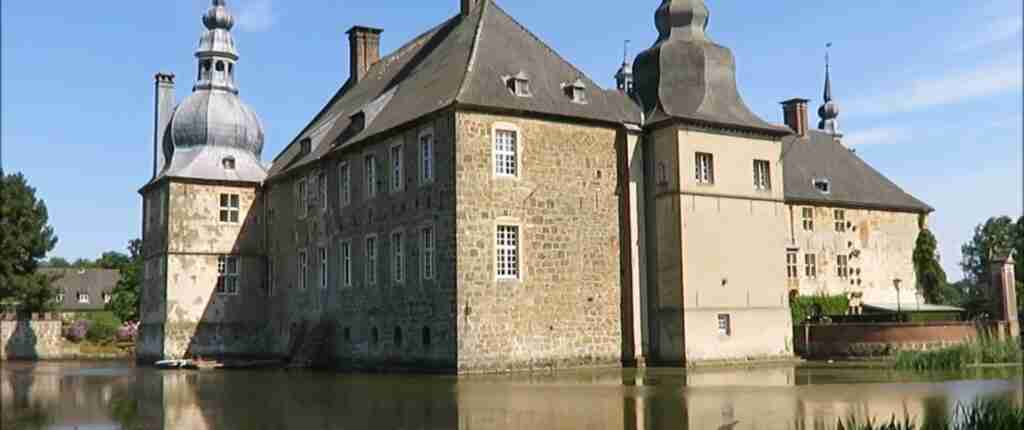
The Münsterland region surrounding the city contains one of Europe’s highest concentrations of moated castles (Wasserburgen) and manor houses. Burg Hülshoff, birthplace of the poet Annette von Droste-Hülshoff, sits 10 kilometres west of Münster and combines a Baroque castle with modern art installations in its grounds and converted farm buildings. The castle grounds are free; exhibitions cost €5–8. Burg Vischering in Lüdinghausen, 30 kilometres south, is Westphalia’s most complete medieval moated castle, with a museum admission of approximately €7. The 100 Schlösser Route cycling network links these and dozens more castles across the Münsterland countryside — plan a 40–60 kilometre loop for a full-day cycling excursion. By regional train (covered by Deutschlandticket), Lüdinghausen is reachable in 20 minutes from Münster.
Osnabrück Day Trip from Münster 2026
Osnabrück, 60 kilometres north, shares Münster’s Peace of Westphalia heritage — the peace treaty negotiations took place simultaneously in both cities. The Osnabrück Rathaus houses the complementary Peace Hall with free entry. The Felix Nussbaum Haus, designed by Daniel Libeskind, displays the work of the Osnabrück-born painter who perished in the Holocaust — admission approximately €6. Regional trains connect Münster to Osnabrück in 35 minutes, covered by the Deutschlandticket.
Dortmund and the Ruhr Day Trip from Münster 2026
The former industrial Ruhr region south of Münster has transformed into a cultural powerhouse. Dortmund’s Deutsches Fußballmuseum (German Football Museum) near the Hauptbahnhof charges €19 for adults. Essen’s UNESCO-listed Zeche Zollverein — a former coal mine turned cultural complex — charges €10 for adults and provides an extraordinary example of industrial heritage conversion. Regional trains from Münster reach Dortmund in approximately 1 hour 30 minutes and Essen in about 2 hours (both covered by the Deutschlandticket).
Tecklenburg Day Trip from Münster 2026
The hilltop town of Tecklenburg, 40 kilometres north-east of Münster, offers a dramatic change from the flat Münsterland landscape. Its castle ruins, half-timbered houses, and open-air theatre (Germany’s oldest) perch on the edge of the Teutoburg Forest. Regional bus connections or a combination of train to Lengerich and bus to Tecklenburg take approximately 50–60 minutes. Walking trails through the Teutoburg Forest provide excellent hiking opportunities — the Hermannsweg long-distance trail passes through the area.
Visiting Münster with Families in 2026
Münster’s compact layout, cycling culture, and family-oriented attractions make it particularly suitable for traveling with children.
Top Family Attractions in Münster 2026
The Allwetterzoo tops the family list with its covered walkways (ideal for rainy days), interactive feeding sessions, and the Meranti-Halle tropical greenhouse. Family day tickets (two adults plus one child at €60.40) deliver meaningful savings over individual tickets. The adjacent LWL-Museum für Naturkunde combines natural history exhibitions with a planetarium — show tickets cost approximately €5–8 for children. The Aasee lake provides pedal boat rental (approximately €10–14 per hour), playground areas, and open space for children to explore. The Mühlenhof Open-Air Museum on the Aasee recreates a historical Westphalian village with working demonstrations that engage children of all ages (approximately €6 adults, €3 children).
Family Budget Considerations in Münster 2026
Children under 6 enter free at the Picasso Museum and Allwetterzoo. Children under 17 enter free at the LWL-Museum für Kunst und Kultur. Many hotels offer family rooms or extra bed options at €20–35 per additional child. Dining with children is affordable through Imbiss stands, bakeries, and casual restaurants — most mid-range restaurants offer children’s menus (Kinderteller) at €5–8. Bicycle rental companies offer child seats, trailers, and children’s bikes, extending the cycling experience to the whole family for an additional €5–10 per day.
Solo Travel in Münster 2026
Münster ranks as one of Germany’s safest mid-sized cities and its student-driven social scene makes it welcoming for solo travelers.
Solo Traveler Budget in Münster 2026
Solo travelers face higher accommodation costs per person since room rates are not shared. A hostel dormitory at €30–40 per night keeps budget solo travel affordable, while a budget hotel at €65–85 per night provides privacy. Mid-range solo travelers spending full room rates of €100–150 plus meals at €40–60, transport at €8–12, and attractions at €15–25 reach daily totals of approximately €165–250 per person. Dining alone is easy and comfortable in Münster — café culture and casual restaurant settings are designed around individual visitors, and the Kuhviertel bar scene provides social opportunities in the evenings.
Safety and Practical Tips for Solo Visitors 2026
Münster is a safe city with low crime rates by German and European standards. The Altstadt, Kuhviertel, harbour, and Aasee areas are well-lit and comfortable to walk at night. The main area requiring normal urban awareness is around the Hauptbahnhof late at night, where standard precautions apply. Solo cycling is safe even after dark, as dedicated cycle paths are separated from vehicle traffic and well-maintained. Tourist information at Heinrich-Brüning-Straße (near the Cathedral) provides maps, event listings, and bicycle route recommendations in English.
Practical Planning Tips for Münster 2026
Language in Münster 2026
English is widely spoken in hotels, museums, and tourist-oriented restaurants. University students and younger staff speak English fluently. Menus in the Altstadt and harbour area are commonly bilingual. In neighbourhood restaurants, smaller shops, and suburban areas, basic German phrases prove helpful. Museum audio guides are available in English at all major institutions. Google Translate works reliably for restaurant menus and signage.
Currency and Payment in Münster 2026
Germany uses the euro (€). Münster remains more cash-oriented than many visitors expect — while hotels, larger restaurants, and chain shops accept credit and debit cards, smaller restaurants, cafés, market stalls, and some bakeries prefer or require cash. ATMs (Geldautomaten) are widely available throughout the city centre, at the Hauptbahnhof, and in shopping areas. Visa and Mastercard work at most ATMs; American Express acceptance is more limited in smaller establishments. Bus ticket purchase on board is cashless only — credit/debit card or the münster:mobil app required.
Internet and Connectivity in Münster 2026
Free WiFi is available at the Hauptbahnhof, many cafés, hotels, and the university campus. The tourist information office provides WiFi access. For mobile data, a German SIM card from providers like Aldi Talk, Lidl Connect, or Telekom is available at supermarkets and electronics shops from €8–15 for a prepaid package with data. EU travelers benefit from roaming regulations allowing use of home mobile plans at no additional cost.
Weather Preparation for Münster 2026
Münster has a reputation for rain — locals joke that “it either rains or the church bells ring, and when both happen simultaneously, it’s Sunday.” Pack waterproof outerwear regardless of season. Average temperatures range from 1–4°C in January to 17–23°C in July. Rain gear, layered clothing, and a compact umbrella are essential travel items year-round. The Allwetterzoo’s covered walkway design and Münster’s indoor market halls ensure that rainy days never become wasted days.
Luggage Storage in Münster 2026
Lockers at the Hauptbahnhof cost approximately €4–7 depending on size, available for periods up to 24 hours. The Radstation bicycle parking facility also provides luggage storage. Several third-party luggage storage services (searchable via Radical Storage or LuggageHero apps) offer drop-off locations near the city centre from €5–8 per bag per day.
Frequently Asked Questions About Visiting Münster in 2026
How many days do you need to visit Münster in 2026?
Two full days cover Münster’s essential old town sights, major museums, and the Aasee district. Three days allow a more relaxed pace with time for the Allwetterzoo, additional museums, and the Kreativkai harbour scene. Four to five days incorporate Münsterland day trips to moated castles, Osnabrück, or the Teutoburg Forest. Weekend visitors (Friday evening to Sunday afternoon) can experience the core highlights comfortably, especially if combining cycling with walking to maximise coverage.
Is Münster expensive compared to other German cities in 2026?
Münster is more affordable than Munich, Hamburg, Frankfurt, or Berlin for tourists. Hotel rates average €100–120 per night for mid-range properties versus €130–180 in major cities. Museum admission prices run €8–13 compared to €12–20 at flagship institutions in Berlin or Munich. Restaurant prices sit 10–20% below major city levels. The main cost advantage comes from Münster’s compact, cyclable layout, which eliminates the transport spending that adds up in larger, more spread-out cities.
What is the best area to stay in Münster in 2026?
The Altstadt provides maximum convenience at premium prices, placing every attraction within walking distance. The Hansaviertel and harbour area offer the best value-to-location ratio, with budget to mid-range properties a 10–15 minute walk from the Prinzipalmarkt. The Aasee district suits families and outdoor enthusiasts with lakeside hotel options and zoo proximity. First-time visitors benefit most from staying within or immediately adjacent to the Promenade ring, where cycling and walking alone cover all major sights.
Can you get by without speaking German in Münster in 2026?
English proficiency is high throughout Münster’s tourist-facing establishments. Hotels, museums, and the tourist information office operate bilingually. The university-age population speaks English fluently. Restaurants in the Altstadt and harbour area commonly offer English menus or bilingual staff. Smaller neighbourhood establishments have more limited English, but translation apps bridge any gaps. Museum audio guides are available in English at all major institutions. Public transport signage and ticket machines offer English-language options.
What food specialties should you try in Münster in 2026?
Westphalian cuisine anchors the local dining identity. Münsterländer Töttchen, a sweet-and-sour ragout made from calf organs in a vinegar-caper sauce, is the signature regional dish — the Altes Gasthaus Leve prepares one of the most authentic versions. Pfefferpotthast (pepper stew with beef) represents another Westphalian staple. Pumpernickel, the dense dark rye bread, originates from this region and appears on breakfast tables throughout the city. Pinkus Müller, Münster’s last remaining traditional brewery, produces a unique organic Altbier and Münstersch Pils served alongside hearty Westphalian platters. The Kiepenkerl statue near the Domplatz represents the historical peddlers of the Münsterland — the restaurant bearing the same name continues to serve traditional regional dishes.
Is Münster safe for tourists in 2026?
Münster consistently ranks among Germany’s safest cities. Violent crime rates are low, and the compact, well-lit city centre remains comfortable for walking and cycling at all hours. The university community creates a welcoming atmosphere across all neighbourhoods. Standard urban precautions — securing belongings in crowded areas, staying aware at the Hauptbahnhof late at night — apply as in any European city. Emergency services are reachable at 112 (pan-European emergency number).
How does the Deutschlandticket work for visitors to Münster in 2026?
The Deutschlandticket costs €63 per month and covers all local public transport (buses, trams, U-Bahn, S-Bahn) and regional trains (RE, RB, IRE) throughout Germany. It does not cover ICE, IC, or EC long-distance trains. Purchase it digitally through the DB Navigator app, the münster:mobil app, or from Deutsche Bahn. The ticket activates for one calendar month and can be cancelled monthly. For Münster visitors, it covers all Stadtwerke buses within the city and regional trains to day-trip destinations including Osnabrück, Dortmund, and the Münsterland towns. The break-even point: if you plan more than 17–20 individual bus or regional train journeys during your stay, the Deutschlandticket saves money.
What are the best day trips from Münster in 2026?
The Münsterland castle region offers the most distinctive day trip, with moated castles like Burg Hülshoff (10 km) and Burg Vischering in Lüdinghausen (30 km) reachable by bicycle or regional train. Osnabrück (35 minutes by train) provides the complementary Peace of Westphalia experience plus the Libeskind-designed Felix Nussbaum Haus. The Ruhr region cities — Dortmund (1.5 hours by regional train) and Essen (2 hours) — deliver world-class industrial heritage and modern cultural institutions. Tecklenburg (50 minutes northeast) provides hilltop scenery and Teutoburg Forest hiking. Amsterdam is reachable in approximately 3 hours by train for those seeking an international day trip.
Where can you rent a bicycle in Münster in 2026?
Multiple rental providers operate near the Hauptbahnhof and in the Altstadt. The Radstation at the Hauptbahnhof — Germany’s largest bike parking facility — offers rental services alongside secure parking for 3,300 bicycles. City bike rentals start at €8–12 per day, electric bikes at €20–30 per day, and weekly rates reduce the daily cost by 20–30%. Nextbike and similar bike-sharing systems provide short-term rentals from €1–3 per ride. Hotel concierges can arrange rental delivery, and several accommodations include bicycles as part of the room rate or offer them for a nominal daily charge of €3–5.
What is the Münster Christmas Market like in 2026?
Münster’s Christmas Market spans five connected markets across different squares in the Altstadt, running from late November through late December. The main market on the Prinzipalmarkt features wooden stalls beneath the arcaded facades selling handmade ornaments, mulled wine (Glühwein, €4–5 per cup plus €2–3 mug deposit), roasted almonds, Lebkuchen, and traditional crafts. Additional themed markets occupy the Domplatz, Aegidiimarkt, Kiepenkerl area, and Harsewinkelplatz. The atmospheric lighting, medieval architecture, and lack of excessive commercialisation distinguish Münster’s Christmas Market from larger but more crowded events in Cologne or Nuremberg. Book accommodation four to six weeks in advance for this period, as hotel rates reach summer-peak levels and availability tightens considerably.