Dortmund Museums & Galleries 2026: Ultimate Cultural Guide
Dortmund’s cultural scene punches well above its weight, offering world-class museums spanning industrial heritage, modern art, football history, and wartime memory — many with free admission. This guide covers every museum and gallery worth visiting in 2026, with verified ticket prices, opening hours, insider strategies, and budget planning to help you build the perfect cultural itinerary in Germany’s surprising Ruhr Valley gem.
Key Takeaways for Dortmund Museums & Galleries 2026
- Free Museum City: Several of Dortmund’s best museums — including the Museum für Kunst und Kulturgeschichte, the Dortmunder U rooftop and select exhibitions, and the Steinwache Memorial — charge no admission, making Dortmund one of Germany’s most affordable cultural destinations in 2026.
- Football Heritage Capital: The German Football Museum (€17 at the door, €15 online) and the Borusseum at Signal Iduna Park (€9) together form a comprehensive football pilgrimage that covers the entire arc of German football history from 1874 to the present day.
- Industrial Heritage Powerhouse: The Zollern Colliery (€8 adults) and the DASA Working World Exhibition (€6 adults) rank among Germany’s finest industrial museums, each requiring three to four hours for a thorough visit.
- RuhrTOPCARD Savings 2026: At €70 for the calendar year, the RuhrTOPCARD provides one-time free entry to over 90 attractions and 50% discounts at another 60+ venues across the Ruhr region, making it essential for visitors planning three or more paid museum visits in 2026.
- Budget-Friendly Cultural Days: Budget-conscious museum visitors spend approximately €60-105 per person daily in 2026 (two sharing hotel accommodation), while mid-range cultural travelers invest €105-180 per person daily for a comfortable experience with paid attractions and restaurant dining.
- Compact Cultural Geography: Most major museums cluster within the city center or along direct U-Bahn/S-Bahn routes, allowing visitors to cover three to four venues in a single day using a €8.80 VRR 24-hour transit ticket.
People Also Ask About Dortmund Museums 2026
How Much Does It Cost to Visit Dortmund’s Museums in 2026?
Many of Dortmund’s flagship museums charge no admission in 2026. The Museum für Kunst und Kulturgeschichte, the Steinwache Memorial, and large portions of the Dortmunder U (including Museum Ostwall’s permanent collection and the rooftop viewing platform) are free to enter. Paid museums include the German Football Museum at €17 for adults (€15 when booked online), the Zollern Colliery at €8 for adults, the DASA Working World Exhibition at €6 for adults, and the Borusseum at approximately €9. Children under 17 enter the Zollern Colliery free of charge, children under 6 enter the DASA free, and reduced rates at most venues range from €3-4 for students and seniors. A full day visiting two free museums and one paid attraction costs approximately €6-17 per person in admission alone, making Dortmund exceptionally affordable compared to most German cultural cities.
What Are the Best Museums to Visit in Dortmund in 2026?
The essential Dortmund museum experience in 2026 centers on five standout venues. The Dortmunder U and Museum Ostwall occupy a converted 1920s brewery tower and showcase modern and contemporary art across multiple floors with free admission. The German Football Museum near the Hauptbahnhof delivers an interactive journey through 140 years of German football history, with a 3D cinema and hands-on play zones. The Zollern Colliery, an Art Nouveau industrial complex built between 1898 and 1904, ranks among Germany’s most architecturally stunning museum sites. The DASA Working World Exhibition spans 13,000 square meters of interactive exhibits exploring the relationship between humans, technology, and labor. The Steinwache Memorial, housed in a former Gestapo detention facility, preserves a harrowing chapter of Dortmund’s wartime history with free admission.
Is the RuhrTOPCARD Worth Buying for Dortmund Museums in 2026?
The RuhrTOPCARD costs €70 for adults and €43 for children in 2026 and provides one-time free entry to over 90 attractions plus 50% discounts at another 60+ venues across the entire Ruhr metropolitan area. For visitors spending three or more days exploring Dortmund and the wider Ruhr region, the card pays for itself quickly — the DASA (€6), Zollern Colliery (€8), and several other regional attractions are included as free-entry partners. The card is valid for the entire calendar year and is available in both digital and physical formats. ADAC members pay a reduced rate of €64. Visitors focused exclusively on Dortmund’s free museums will not recoup the cost, but anyone combining Dortmund with day trips to Essen, Duisburg, or Bochum attractions will see substantial savings.
How Should I Plan a Museum Day in Dortmund in 2026?
A well-planned museum day in Dortmund in 2026 begins with purchasing a VRR 24-hour ticket for €8.80, which covers unlimited travel on all city buses, trams, U-Bahn, and S-Bahn within Dortmund. Start at the Dortmunder U and Museum Ostwall in the morning (opens Tuesday-Sunday 11 AM, rooftop from 11 AM), where two to three hours allows thorough exploration of the contemporary art exhibitions and panoramic city views. Walk ten minutes to the German Football Museum (opens 10 AM Tuesday-Sunday) for a two-to-three-hour visit. In the afternoon, take the U-Bahn to the Steinwache Memorial (free admission) near the Hauptbahnhof or travel to the DASA Working World Exhibition in Dorstfeld for a three-to-four-hour deep dive into industrial heritage. Evening options include returning to the Dortmunder U neighborhood for dinner in the Kreuzviertel district.
Extended multi-day tours – 5+ days
Featured Rhine Valley Multi-Day Tour Packages

3 days
Rhine Valley 3-Day Discovery Tour
- ✓ Comprehensive Rhine Valley experience
- ✓ Expert local guides included
- ✓ All accommodation included
- ✓ Transportation provided

5 days
Rhine Valley 5-Day Highlights Experience
- ✓ Comprehensive Rhine Valley experience
- ✓ Expert local guides included
- ✓ All accommodation included
- ✓ Transportation provided

7 days
Rhine Valley 7-Day Cultural Journey
- ✓ Comprehensive Rhine Valley experience
- ✓ Expert local guides included
- ✓ All accommodation included
- ✓ Transportation provided

10 days
Rhine Valley 10-Day Complete Adventure
- ✓ Comprehensive Rhine Valley experience
- ✓ Expert local guides included
- ✓ All accommodation included
- ✓ Transportation provided
Multi-day tour packages powered by TourRadar. Prices and availability subject to change.
Introduction to Dortmund’s Museum and Gallery Scene 2026
Dortmund sits at the cultural heart of the Ruhr metropolitan area, a polycentric urban region of over five million inhabitants that has undergone one of Europe’s most dramatic post-industrial transformations. The city that once defined itself through coal, steel, and beer has reinvented its identity around art, technology, and heritage — and its museums tell that story with remarkable depth and authenticity.
The museum landscape in 2026 reflects this transformation across every dimension. Former industrial sites now house world-class exhibitions: a 1920s brewery tower became the Dortmunder U arts center, an Art Nouveau colliery complex serves as the Zollern industrial heritage museum, and a Gestapo detention facility preserves the memory of wartime persecution. Alongside these converted spaces, purpose-built institutions like the German Football Museum (opened 2015) and the sprawling DASA Working World Exhibition bring interactive storytelling techniques to subjects ranging from sport to workplace safety.
What makes Dortmund’s cultural scene particularly appealing to visitors in 2026 is the pricing structure. The city maintains a strong commitment to accessible culture, with several major institutions — including the Museum für Kunst und Kulturgeschichte, the Steinwache Memorial, and key exhibitions within the Dortmunder U — offering completely free admission. Even paid institutions keep prices modest by Western European standards, with the most expensive museum (the German Football Museum) charging €17 at the door and €15 for online bookings. This combination of quality, variety, and affordability creates one of Germany’s most rewarding museum cities for travelers who know where to look.
The cultural calendar in 2026 adds further depth to the permanent collections. Rotating exhibitions at the Museum Ostwall bring fresh contemporary perspectives to the Dortmunder U, while the DASA regularly hosts special installations alongside its permanent 13,000-square-meter exhibition. The annual Museum Night (Museumsnacht) and various festival programming create concentrated opportunities to experience multiple venues in a single evening. For visitors arriving by train, the compact geography of Dortmund’s museum scene — most major venues sit within the city center ring or along direct transit routes — makes multi-museum days not just possible but practical.
Major Museums and Cultural Institutions in Dortmund 2026
Dortmund’s museum landscape divides into six distinct categories: modern and contemporary art, industrial heritage, football culture, history and remembrance, natural history and science, and specialized collections. Each category contains at least one institution of national or international significance, and together they provide a comprehensive cultural portrait of a city in continuous reinvention.
Dortmunder U and Museum Ostwall: Contemporary Art Hub 2026
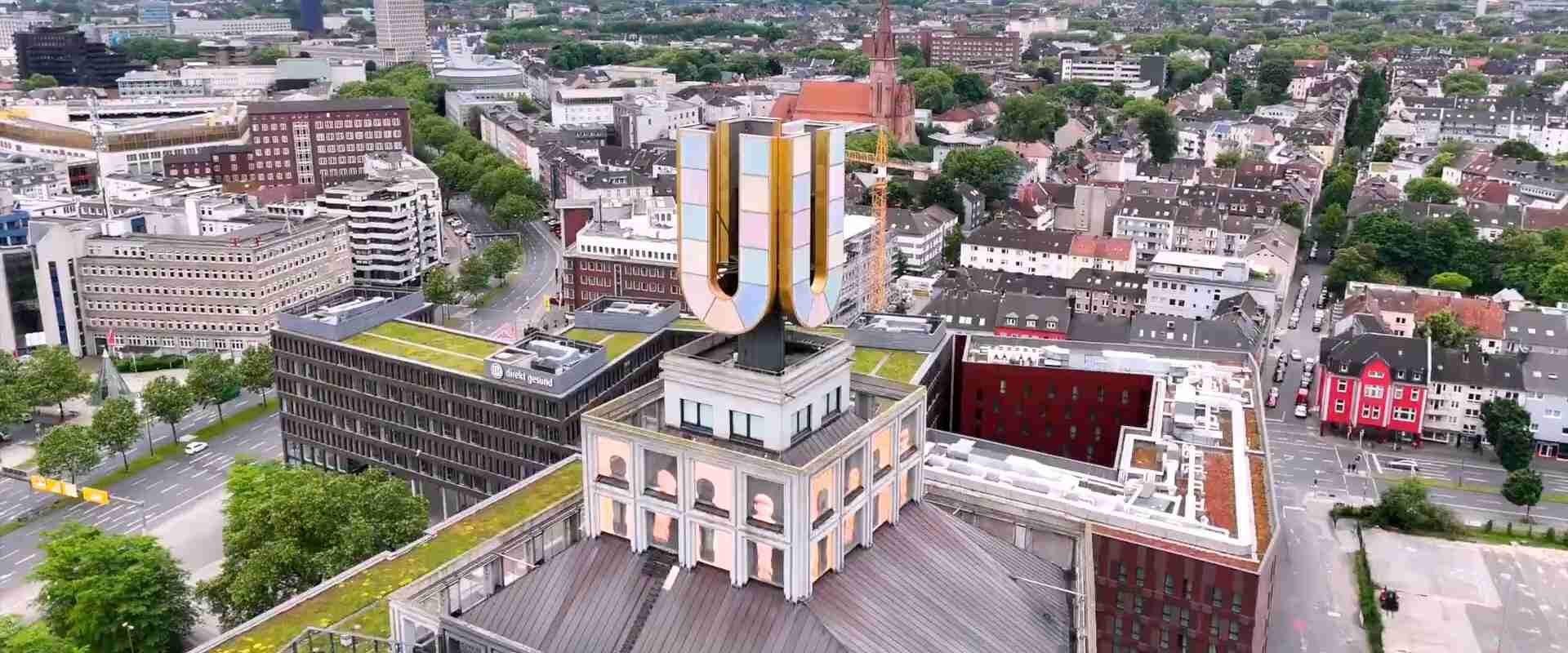
The Dortmunder U stands as both the city’s most recognizable landmark and its primary contemporary art venue. The former Union Brewery fermentation tower, built in 1926-1927 and crowned with its iconic illuminated “U” sign, was extensively renovated between 2008 and 2010 and reopened as a center for art and creativity. The building houses multiple cultural tenants across its seven floors, with the Museum Ostwall occupying levels four and five as the centerpiece institution.
Museum Ostwall is the city of Dortmund’s museum for 20th and 21st-century art, with a collection spanning Expressionist painting, Fluxus works, contemporary video art, and photography. The museum was originally founded in 1949 on the street Am Ostwall before relocating to the Dortmunder U in 2010. Its keystone collection of early 20th-century art, including the renowned Gröppel Collection, provides a strong foundation for rotating temporary exhibitions that bring international contemporary artists into dialogue with the permanent holdings.
Admission to the permanent collection and many exhibitions within the Dortmunder U is free, though specific temporary exhibitions at Museum Ostwall may carry a separate admission fee (check the official website for current exhibition pricing). The rooftop viewing platform on the seventh floor offers panoramic views across Dortmund and the Ruhr Valley at no charge, making it a worthwhile stop even for visitors with limited time. Free cloakroom facilities are available throughout the building.
The Dortmunder U opens Tuesday through Sunday from 11 AM to 6 PM (Thursday until 8 PM) and closes on Mondays. The ground-floor foyer, restaurant, and event spaces operate on extended hours. Additional cultural tenants include programs from Dortmund University of Applied Sciences and Arts, the Technical University of Dortmund, and the cinema collective Kino im U. The building hosts regular evening events, workshops, and lectures that extend the cultural experience beyond the exhibition spaces.
The surrounding Leonie-Reygers-Terrasse and Union Viertel (Union Quarter) have developed into one of Dortmund’s most vibrant creative neighborhoods. Galleries, studios, cafés, and independent shops line the streets around the tower, creating a cultural ecosystem that rewards extended exploration beyond the museum walls.
German Football Museum (Deutsches Fußballmuseum) 2026
The German Football Museum occupies a purpose-built facility at Platz der Deutschen Einheit 1, directly adjacent to Dortmund’s Hauptbahnhof (central station). Opened in 2015, the museum presents 140 years of German football history through interactive exhibitions, multimedia installations, and an extensive collection of original memorabilia.
The museum experience unfolds across multiple themed zones. The trophy room displays original championship silverware and World Cup memorabilia. A 3D cinema installation allows visitors to relive Germany’s four World Cup triumphs with immersive technology. The Bundesliga carousel presents the evolution of professional club football, while the interactive play zone features a full-sized soccer court and dribble course where visitors can test their skills. The exhibition covers not only professional men’s football but also women’s football, amateur grassroots culture, and the social dimensions of the sport in German life.
Admission in 2026 costs €17 for adults at the museum ticket desk and €15 when purchased through the official online shop (check fussballmuseum.de for current rates). Reduced rates are available for students, seniors, and children, with very young children entering free of charge. The museum opens Tuesday through Sunday from 10 AM to 6 PM, with last admission at 5 PM. The museum closes on Mondays. Visitors spend between two and three hours exploring the exhibitions comfortably, with football enthusiasts often extending to four hours when engaging deeply with the interactive elements.
The museum’s central location — a two-minute walk from the Hauptbahnhof — makes it one of Dortmund’s most accessible attractions for travelers arriving by train. Parking is available at nearby facilities, though no dedicated museum lot exists. The facility is fully wheelchair accessible.
DASA Working World Exhibition (DASA Arbeitswelt Ausstellung) 2026
The DASA ranks among Germany’s largest interactive museums, spanning 13,000 square meters of exhibition space across twelve themed units that explore the relationship between people, technology, and work. Located at Friedrich-Henkel-Weg 1-25 in the southwestern Dorstfeld district, the DASA is operated by the German Federal Institute for Occupational Safety and Health and delivers a uniquely hands-on museum experience.
The permanent exhibition covers an extraordinary breadth of subjects. The “At the Screen” section examines work in media and technology. “On the Road” explores transportation, featuring a simulated forklift truck and heavy vehicle driving simulators. The civil engineering and construction sections include tunnel-digging exhibits, while the steel and iron industries zone centers on an authentic Electric Furnace used by Dortmund steelworkers for thirty years. The “Plenty of Tension” section addresses energy past, present, and future. Additional zones cover healthcare, textile manufacturing, printing, and emerging concepts around the future of work.
Children find particular engagement at the DASA, with the “DASA-Drome” ride-on exhibit, construction site play areas, and age-appropriate interactive stations throughout the museum. The combination of genuine industrial machinery, virtual reality installations, detailed miniature models, and participatory exhibits creates an experience that holds attention across all age groups for three to four hours.
Admission in 2026 costs €6 for adults and €3 for reduced categories (children 6-18, students, people with disabilities, military personnel, and federal volunteers). Children under five enter free. School classes visit at no charge. The DASA Single Card annual ticket costs €10, and the DASA Family Card annual ticket costs €18 — both exceptional values for Dortmund residents or repeat visitors. Guided tours range from €60-115 depending on group size, duration, and language requirements.
Opening hours run Monday through Friday from 9 AM to 5 PM and Saturday through Sunday from 10 AM to 6 PM. The DASA is reachable by a five-minute walk from the Dortmund-Dorstfeld Süd S-Bahn station. The museum participates in the RuhrTOPCARD program, offering one-time free admission to card holders.
Zollern Colliery (LWL-Museum Zeche Zollern) 2026
The Zollern Colliery stands as one of the most architecturally magnificent industrial heritage sites in Germany. Built between 1898 and 1904 as a model colliery by the Gelsenkirchen Mining Association (GBAG), the complex earned the nickname “Castle of Work” for its extraordinary Art Nouveau and historicist architectural design — a deliberate statement of industrial prestige that made the site resemble an aristocratic residence rather than a coal mine.
The centerpiece of the complex is the machine hall, whose colourfully-glazed Art Nouveau portal designed by Bruno Möhring represents an icon of industrial heritage. The lead-glazed blue tiles, iron framework filled with red bricks, marble control board set in bronze, and a brass clock suspended from the ceiling create an interior that astonishes visitors accustomed to associating mining with purely functional architecture. The electrical conveyor machine inside, more than a century old, still operates during demonstrations.
The Zollern Colliery ceased active coal production in 1966 and faced demolition before preservation campaigns — triggered specifically by the machine hall’s Art Nouveau portal — saved the entire complex. Today the site operates as part of the LWL (Landschaftsverband Westfalen-Lippe) network of eight industrial heritage museums. Exhibitions cover the social history of mining communities, working conditions underground, the technological evolution of coal extraction, and the broader story of industrialization in the Ruhr region. Visitors can climb the pithead frame, explore behind the magnificent brick facades, and descend into recreated mining environments.
Admission in 2026 costs €8 for adults, €7 for groups of sixteen or more, and €4 for reduced categories (students under 30, apprentices, benefit recipients, volunteers, and people with disabilities). Children and young people aged 17 and under enter free, as do school groups. Holders of the LWL-MuseumsCard, the RuhrTOPCARD (one-time), and ICOM cards receive free admission.
The museum opens Tuesday through Sunday and public holidays from 10 AM to 6 PM, with last admission at 5:30 PM. The complex closes on Mondays except public holidays and between Christmas and New Year. The on-site Pferdestall restaurant serves Westphalian specialties and international cuisine from Tuesday through Sunday (check the restaurant website for precise hours, as they differ from the museum). The Zollern Colliery is located at Grubenweg 5 in the Bövinghausen district, reachable by bus from Dortmund Hauptbahnhof. Free parking is available on site.
Borusseum: Borussia Dortmund Museum 2026
The Borusseum, the official museum of Borussia Dortmund football club, is located at Signal Iduna Park — the largest football stadium in Germany, with a capacity of approximately 81,000 spectators. The museum traces the club’s history from its founding in 1909 through its domestic and European triumphs, presenting original exhibits, photographs, match footage, and interactive installations.
The exhibition follows what the museum calls the “yellow thread” through a permanent collection of memorabilia spanning more than a century. Highlights include the treasure chamber displaying the “Big Five” trophies: the Champions League Cup (1997), the European Cup Winners’ Cup (1966), the DFB-Pokal (multiple), the Bundesliga Championship trophy, and the World Club Cup (1997). Interactive stations allow visitors to test their BVB knowledge, experience the atmosphere of the Yellow Wall (Südtribüne), and sing BVB songs on a replica of the small south stand.
Admission costs approximately €9 per person (check the official website for current rates, as pricing may vary for special exhibitions). Many standard Signal Iduna Park stadium tour tickets include Borusseum entry, offering combined value for visitors interested in both the museum and a behind-the-scenes stadium experience. Opening hours vary — the museum is open on home game days from 9:30 AM until kick-off, and on the first Thursday of each month until 8 PM. Checking the official schedule before visiting is essential, as hours are tied to the football calendar.
Steinwache Memorial (Mahn- und Gedenkstätte Steinwache) 2026
The Steinwache Memorial occupies the former police station and prison at Steinstraße, near the northern exit of Dortmund Hauptbahnhof. Built in 1906, the building was commandeered by the Gestapo in 1933 and served as an interrogation and torture facility known as “West Germany’s Hell.” Between 1933 and 1945, more than 66,000 people were imprisoned within its walls — political opponents, trade unionists, Jews, Sinti and Roma communities, socialists, and communists.
The permanent exhibition “Widerstand und Verfolgung in Dortmund 1933-1945” (Resistance and Persecution in Dortmund 1933-1945) has occupied the building since 1992. The exhibition spreads across five floors, presenting original photographs, documents, propaganda materials, handwritten letters, witness reports, and short texts that document the Nazi regime’s impact on the local community. Several original prison cells have been preserved in their wartime condition, including isolation cells and walls bearing prisoner graffiti. The courtyard features small metal inserts bearing the names of those killed at the site.
Free English-language guidebooks are available at the entrance and provide detailed commentary for each room across all floors, making the exhibition fully accessible to international visitors despite German-language signage. Admission is completely free, with donations welcomed. The memorial is open Tuesday through Saturday from 10 AM to 5 PM. Allow two to two-and-a-half hours for a thorough visit with the guidebook. The location is a two-minute walk from the northern exit of Dortmund Hauptbahnhof, though the entrance through a small courtyard behind the CineStar cinema complex can be slightly tricky to locate on first visit.
Museum für Kunst und Kulturgeschichte (Museum of Art and Cultural History) 2026
The Museum für Kunst und Kulturgeschichte presents a chronological journey through Dortmund’s cultural evolution from the Stone Age to the present day. Housed in a substantial building on Hansastraße in the city center, the museum holds collections spanning fine art, furniture, handicrafts, decorative objects, and design across multiple periods and styles.
The collections include paintings from the medieval period through the modern era, period room reconstructions showing domestic interiors from different centuries, archaeological finds from the Dortmund area, and design objects from the industrial age to contemporary practice. The breadth of the collection means visitors with interests in any aspect of European cultural history will find relevant material. Temporary exhibitions — including the well-received “REMIX 800 Discover Art” exhibition — regularly introduce new perspectives on the permanent holdings.
Admission to the permanent exhibition is free, making this one of Dortmund’s most valuable cultural offerings. Guided tours are available for a fee and are recommended by visitors for adding depth to the experience. The museum opens Tuesday through Sunday (check the official website for current hours, as they follow a similar Tuesday-Sunday pattern to other Dortmund museums). The central location, a short walk from the Hauptbahnhof and the Dortmunder U, makes it easy to combine with other city-center museum visits.
Hoesch Museum 2026
The Hoesch Museum documents the history of the Hoesch steel and iron works, which shaped Dortmund’s economy and identity for over a century. The museum occupies a former porter’s lodge of the Westfalenhütte steelworks on Eberhardstraße and presents the story of steel production in Dortmund from the founding of the Hoesch company in 1871 through its mergers and the eventual decline of heavy industry in the region.
Exhibits include original machinery, photographs, worker testimonials, and interactive displays explaining the steel production process. The museum connects industrial history to social history, exploring how the steel industry shaped neighborhoods, working-class culture, migration patterns, and the physical landscape of Dortmund. The small scale of the museum — visitors need approximately one hour — makes it an efficient complement to the larger Zollern Colliery for visitors seeking a comprehensive understanding of Dortmund’s industrial past.
Admission is free. The museum is open Tuesday, Wednesday, and Sunday from 10 AM to 5 PM and Thursday from 10 AM to 8 PM. Check the official website for any schedule changes in 2026.
Specialized Museums and Galleries Worth Visiting in Dortmund 2026
Beyond the major institutions, Dortmund supports a network of smaller museums and galleries that reward visitors with specific interests. These venues add depth and variety to a multi-day cultural itinerary.
Brauerei-Museum Dortmund (Brewery Museum) 2026
Dortmund was once Germany’s brewing capital, and the Brauerei-Museum on Steigerstraße preserves this heritage through exhibits on the history of industrially brewed beer in the city. The museum traces the development of Dortmund’s brewing industry from its medieval origins through the golden age of mass production, covering the technological innovations, business rivalries, and cultural traditions that made Dortmund synonymous with beer across Germany. The small museum offers guided tours that include historical brewing explanations and tastings. Admission is modest, and the museum operates limited hours — check the official schedule before visiting.
Westfalenpark and Florianturm (Florian Tower) 2026
While primarily a public park, Westfalenpark contains cultural elements worth noting for museum visitors. The Florianturm observation tower, rising 219.6 meters above the park, provides the most comprehensive aerial view of Dortmund and the surrounding Ruhr Valley. The observation deck offers a small admission fee and panoramic interpretive displays identifying landmarks visible from the platform. Westfalenpark itself hosts the Rosarium (one of the world’s largest rose gardens), seasonal exhibitions, and cultural events throughout the year. The park entrance fee is separate from the tower admission. Westfalenpark is adjacent to Signal Iduna Park, making it a natural companion to Borusseum visits.
Mondo Mio! Children’s Museum 2026
Located within Westfalenpark, Mondo Mio! is Dortmund’s dedicated children’s museum focusing on cultural diversity, sustainability, and global awareness. The interactive exhibits are designed for children aged three to twelve and explore themes of how children live, play, and learn in different cultures around the world. The museum regularly hosts workshops and hands-on activities. Admission is included with Westfalenpark entry. This venue transforms a Dortmund museum day from an adults-only experience into a family-friendly itinerary, making it essential for visitors traveling with children.
Naturmuseum Dortmund (Natural History Museum) 2026
The Naturmuseum underwent extensive renovation in recent years and presents exhibits on geology, paleontology, and the natural history of the Westphalia region. The collections include mineral specimens, fossil assemblages, and displays on regional ecology and biodiversity. The museum holds particular interest for visitors curious about the geological foundations that made coal mining possible in the Ruhr — providing scientific context for the industrial history explored at the Zollern Colliery and DASA. Check the official website for current opening status, hours, and any admission fees, as these may have changed following the renovation.
Contemporary Gallery Scene in Dortmund 2026
Dortmund’s independent gallery scene concentrates primarily in two neighborhoods: the Union Viertel around the Dortmunder U and the Kreuzviertel to the east. The Union Viertel has attracted studios, project spaces, and small commercial galleries that feed off the creative energy of the Dortmunder U and the design programs at Dortmund University of Applied Sciences and Arts. The Depot cultural center on Immermannstraße hosts rotating exhibitions, film screenings, and cultural events in a former tram depot — it served as the venue for the World Press Photo Exhibition in 2025. Galleries in the Kreuzviertel tend toward more established contemporary practices. First Thursday gallery walks and coordinated opening events provide concentrated opportunities to explore multiple spaces in a single evening.
Ticket Prices and Admission Strategies for Dortmund Museums 2026
Dortmund’s museum pricing in 2026 rewards informed visitors who understand which venues are free, which offer discounts, and which pass systems deliver genuine savings. This section provides the authoritative pricing reference for planning a cost-effective cultural itinerary.
Complete Admission Price Guide for Dortmund Museums 2026
Free-admission museums and venues in Dortmund 2026:
- Museum für Kunst und Kulturgeschichte — permanent exhibition free
- Steinwache Memorial — free (donations welcome)
- Dortmunder U rooftop viewing platform — free
- Museum Ostwall permanent collection — free (temporary exhibitions may carry a fee; check the official website)
- Hoesch Museum — free
Paid-admission museums in Dortmund 2026 (check official websites for current rates as pricing may vary):
- German Football Museum — €17 adults at door, €15 online; reduced rates for students, seniors, and children
- Zollern Colliery (LWL) — €8 adults, €7 groups of 16+, €4 reduced; free for under-17s and school groups
- DASA Working World Exhibition — €6 adults, €3 reduced; free for under-5s and school classes
- Borusseum — approximately €9 adults; combined stadium tour tickets available
RuhrTOPCARD for Museum Visitors 2026
The RuhrTOPCARD is the Ruhr region’s premier cultural discount card, and for museum-focused visitors in 2026 it delivers substantial value. At €70 for adults and €43 for children (born 2012-2021), the calendar-year card provides one-time free admission to over 90 partner attractions and 50% discounts at another 60+ venues across the entire Ruhr metropolitan area. ADAC members pay €64 for the adult card. Up to three young children (born 2022-2026) receive free admission at “free entry” partners when accompanied by an adult cardholder.
Among Dortmund-specific partners, the DASA Working World Exhibition and the Zollern Colliery are included as free-entry attractions, immediately saving €14 for an adult visiting both. Beyond Dortmund, the card opens access to major Ruhr-region cultural venues including the Gasometer Oberhausen, the Zollverein Coal Mine in Essen (UNESCO World Heritage Site), the German Mining Museum in Bochum, and dozens more. For visitors planning a multi-day exploration of the wider Ruhr cultural landscape, the RuhrTOPCARD pays for itself within two to three venue visits.
The card is available in both digital and physical formats through the official website ruhrtopcard.de, the RuhrTOPCARD app, and at regional tourist information offices. The digital version loads instantly to a smartphone and can be presented directly at venue entrances.
Student, Senior, and Family Discount Strategies 2026
Students receive reduced admission at virtually every paid museum in Dortmund upon presentation of a valid student ID. The DASA charges €3 instead of €6, the Zollern Colliery charges €4 instead of €8, and the German Football Museum offers reduced rates (check the official website for the current student price). Seniors benefit from similar reductions at most venues. Family tickets are available at the German Football Museum and several other institutions, providing savings over purchasing individual adult and child tickets. Children under certain age thresholds enter free at most venues: under 5 at the DASA, under 6 at the German Football Museum, and under 17 at the Zollern Colliery.
Getting Around Dortmund’s Museums: Transportation Guide 2026
Dortmund’s public transit system, operated by DSW21 within the VRR (Verkehrsverbund Rhein-Ruhr) network, connects all major museum locations efficiently. Understanding the ticket options prevents overpaying for transit during a museum-focused visit.
Public Transit Tickets for Museum Hopping in Dortmund 2026
The VRR pricing system divides into price levels based on zones. All Dortmund city travel falls within Price Level A. Key ticket prices for museum visitors in 2026:
- Single ticket (adults, Price Level A): €3.60 — valid for one journey with transfers, no return trips
- Single ticket (children 6-14): €2
- 4-journey ticket (adults, Price Level A): €14.40 — four single journeys at €3.60 each, shareable between travelers
- 24-hour ticket (single person, Price Level A): €8.80 — unlimited travel for 24 hours from validation
- 24-hour ticket additional person supplement: €4.40 — making it €13.20 for two travelers
- DeutschlandTicket: €58 per month — unlimited nationwide travel on all local and regional public transport
For most museum visitors spending a full day exploring Dortmund, the 24-hour ticket at €8.80 delivers the best value. Three or more single journeys in a day exceeds the 24-hour ticket price, making it the break-even point. Couples benefit from the additional person supplement: €13.20 total for two people versus €7.20 for two single tickets — the 24-hour ticket becomes worthwhile once each person makes at least two trips.
The DeutschlandTicket at €58 per month makes sense for visitors spending multiple days across the Ruhr region, as it covers unlimited travel on all regional trains, S-Bahn, U-Bahn, trams, and buses throughout Germany. For a week-long cultural exploration of the Ruhr, the DeutschlandTicket eliminates all transit costs and allows spontaneous day trips to museums in Essen, Bochum, Duisburg, and beyond.
Museum Locations and Transit Connections 2026
The geographic distribution of Dortmund’s museums creates natural groupings for efficient visiting:
City Center Cluster (walkable): The Dortmunder U/Museum Ostwall, Museum für Kunst und Kulturgeschichte, German Football Museum, and Steinwache Memorial all sit within a fifteen-minute walking radius of the Hauptbahnhof. Visitors can cover all four in a single day without using public transit, reserving the transit budget for outlying venues.
Dorstfeld/DASA: The DASA Working World Exhibition is located a five-minute walk from Dortmund-Dorstfeld Süd S-Bahn station, approximately fifteen minutes from the Hauptbahnhof by train.
Bövinghausen/Zollern: The Zollern Colliery at Grubenweg 5 is reachable by bus from the city center, with the journey taking approximately twenty-five to thirty minutes. Free parking on site makes driving a practical alternative for visitors with a rental car.
Signal Iduna Park/Borusseum: The stadium complex is served by U-Bahn (Westfalenhallen station) and sits adjacent to Westfalenpark. The journey from the Hauptbahnhof takes approximately ten minutes by U-Bahn.
Daily Budget Breakdown for Dortmund Museum Visitors 2026
All daily costs in this section are expressed per person, per day, assuming two people sharing hotel accommodation. Hotel rates are divided by two before appearing in any calculation.
Budget Museum Day in Dortmund 2026 (€60-105 Per Person Daily)
Budget-conscious cultural travelers in Dortmund benefit enormously from the city’s free museum offerings. A budget museum day prioritizes free-admission venues, keeps dining affordable, and uses efficient transit strategies.
Budget daily cost breakdown per person (two sharing) in 2026:
- Accommodation: €30-50 per person (budget hotel at €60-100 per room, two sharing)
- Meals: €25-38 per person (bakery breakfast €5-8, cafeteria lunch €8-12, casual restaurant dinner €12-18)
- Transport: €4-9 per person (two to three single tickets or share of 24-hour ticket)
- Attractions: €0-8 per person (free museums plus one affordable paid entry such as the DASA at €6)
Budget travelers spend approximately €60-105 per person daily in Dortmund for a full cultural experience. A focused free-museum day (Steinwache, Museum für Kunst und Kulturgeschichte, Dortmunder U, Hoesch Museum) can reduce the attractions component to zero, bringing the daily total toward the lower end of the range. Over a five-day visit, total per-person spending ranges from approximately €300-525.
Mid-Range Museum Explorer in Dortmund 2026 (€105-180 Per Person Daily)
Mid-range visitors add paid museum admissions, sit-down restaurant meals, and comfortable hotel accommodations to the itinerary without worrying about individual price comparisons.
Mid-range daily cost breakdown per person (two sharing) in 2026:
- Accommodation: €50-90 per person (mid-range hotel at €100-180 per room, two sharing)
- Meals: €40-60 per person (hotel or café breakfast €8-12, restaurant lunch €12-18, quality dinner €20-30)
- Transport: €5-9 per person (24-hour ticket or DeutschlandTicket daily share)
- Attractions: €8-20 per person (one to two paid museums daily plus guided tour occasionally)
Mid-range travelers spend approximately €105-180 per person daily. This tier covers all major paid museums, comfortable dining, and flexible transportation. Over a week-long visit, per-person spending ranges from approximately €735-1,260.
Luxury Cultural Experience in Dortmund 2026 (€185-350 Per Person Daily)
Luxury visitors prioritize premium hotels, fine dining, private tours, and the freedom to experience everything without budget constraints.
Luxury daily cost breakdown per person (two sharing) in 2026:
- Accommodation: €90-175 per person (luxury hotel at €180-350 per room, two sharing)
- Meals: €70-120 per person (hotel breakfast €12-20, upscale lunch €20-35, fine dining €40-65)
- Transport: €10-25 per person (mix of transit and rideshare/taxi for convenience)
- Attractions: €15-30 per person (all paid museums, private guided tours, premium experiences)
Luxury cultural visitors spend approximately €185-350 per person daily. The premium here comes primarily from accommodation and dining rather than museum admission — even the most expensive Dortmund museum (the German Football Museum at €17) remains modest by luxury travel standards. Over a week-long visit, per-person spending ranges from approximately €1,295-2,450.
Sample Museum Itineraries for Dortmund 2026
The following itineraries demonstrate how to structure museum visits for maximum coverage and minimum wasted time. Each itinerary is designed around verified opening hours and realistic transit times.
One-Day Essential Dortmund Museums Itinerary 2026
This itinerary covers the four most significant Dortmund cultural venues in a single day, combining free and paid admissions for an efficient overview.
Morning (10:00-12:30): Begin at the German Football Museum (opens 10 AM, €17/€15 online). The interactive exhibitions, 3D cinema, and trophy room fill two to two-and-a-half hours comfortably. Exit by 12:30 PM.
Lunch (12:30-13:30): Walk five minutes to restaurants along Kampstraße or the Alter Markt for a one-hour lunch. Budget €10-20 per person depending on preference.
Early Afternoon (13:30-15:30): Walk ten minutes to the Steinwache Memorial (free admission). The five-floor exhibition with English guidebook requires approximately two hours. Exit by 15:30.
Late Afternoon (15:30-18:00): Walk eight minutes to the Dortmunder U. Explore Museum Ostwall’s contemporary art exhibitions on levels four and five, browse other cultural programming, and finish at the rooftop viewing platform for panoramic views. All free. The Dortmunder U closes at 6 PM (Thursday at 8 PM).
Approximate cost: German Football Museum €15 (online), meals €25-40, transport €0-4 (walkable itinerary). Total approximately €40-60 per person, excluding accommodation.
Three-Day Comprehensive Museum Itinerary 2026
Day 1 — City Center Culture: German Football Museum (morning, €15 online) → Steinwache Memorial (early afternoon, free) → Museum für Kunst und Kulturgeschichte (late afternoon, free). All walkable from Hauptbahnhof.
Day 2 — Industrial Heritage: Zollern Colliery (morning-early afternoon, €8, allow 3-4 hours including grounds) → Hoesch Museum (late afternoon, free, 1 hour). Use bus to Zollern, U-Bahn for Hoesch Museum.
Day 3 — Art, Science, and Sport: DASA Working World Exhibition (morning-early afternoon, €6, allow 3-4 hours) → Borusseum and Signal Iduna Park area (late afternoon, ~€9) → Dortmunder U evening visit on Thursday (free, open until 8 PM).
Three-day museum admission total: €15 + €8 + €6 + €9 = approximately €38 per person. Add €26.40 for three days of 24-hour transit tickets (€8.80 × 3). Total attractions and transport: approximately €65 per person.
Family Museum Weekend Itinerary 2026
Saturday: DASA Working World Exhibition (full morning and early afternoon — children love the interactive exhibits, simulators, and play zones; €6 adults, €3 children 6-18, free under 5). Afternoon at Westfalenpark, Mondo Mio! children’s museum, and the Florianturm observation tower.
Sunday: German Football Museum (morning — the play zone with soccer court and dribble course keeps children engaged; €17/€15 online with family ticket options). Afternoon at the Dortmunder U (free — children enjoy the building’s architecture and rooftop views). Walk through the Union Viertel for ice cream and street art.
Best Times to Visit Dortmund Museums 2026
Museum visiting in Dortmund follows seasonal and weekly patterns that affect crowd levels, programming, and overall experience quality.
Seasonal Considerations for Dortmund Museums 2026
Spring (April-May) and early autumn (September-October) deliver the optimal combination of comfortable outdoor weather for traveling between venues and moderate visitor numbers at indoor museums. Summer (June-August) brings the highest overall tourist numbers to Dortmund, though museum crowds remain manageable compared to blockbuster institutions in Berlin or Munich — Dortmund’s museums rarely develop long queues. Winter (November-February) is ideal for intensive museum days when outdoor sightseeing holds less appeal, and hotel prices drop to their lowest levels.
The annual Dortmund Museum Night (Museumsnacht), held in autumn, opens multiple museums for a single evening ticket with extended hours, special programming, shuttle buses between venues, and performances. This event provides an exceptional value opportunity to sample many venues in one evening. Check the official Dortmund tourism website for the 2026 date and participating institutions.
Weekly Timing Strategies for Dortmund Museums 2026
Monday closures affect most Dortmund museums — the Dortmunder U, Museum Ostwall, German Football Museum, Zollern Colliery, DASA (open Monday-Friday but check for exceptions), and Steinwache Memorial all close on Mondays. Plan shopping, parks, or neighborhood exploration for Monday arrivals. Tuesday through Thursday mornings offer the quietest visiting conditions at most institutions. Weekend afternoons see the highest visitor numbers, particularly at the German Football Museum and the DASA during school holiday periods.
The Dortmunder U’s Thursday late opening (until 8 PM) creates a valuable evening museum slot unavailable on other days. Combining a late-afternoon arrival with dinner in the Union Viertel neighborhood makes Thursday evenings particularly rewarding for cultural visitors.
Accommodation Areas for Museum Visitors in Dortmund 2026
Hotel location matters for museum-focused visitors in Dortmund. The right neighborhood reduces transit time, eliminates unnecessary transit costs for city-center museums, and places dining options within walking distance of evening activities.
Innenstadt-West: Best Base for Museum Visitors 2026
The Innenstadt-West (inner city west) district places visitors within walking distance of the Dortmunder U, the German Football Museum, the Steinwache Memorial, and the Museum für Kunst und Kulturgeschichte. Hotels in this area range from budget options starting at €60-80 per night to mid-range properties at €100-150 per night. The neighborhood includes the Hauptbahnhof, providing direct transit connections to outlying museums. The Kreuzviertel’s restaurants and bars are within a ten-minute walk.
Near Hauptbahnhof: Maximum Transit Convenience 2026
Hotels directly adjacent to Dortmund Hauptbahnhof offer the strongest transit connectivity for visitors planning daily trips to the DASA, Zollern Colliery, Borusseum, and Ruhr-region day trips. Multiple hotel brands operate within a five-minute walk of the station, with prices starting from approximately €55-75 per night for budget properties and reaching €120-180 for well-appointed mid-range hotels. The German Football Museum and Steinwache Memorial are both within a two-to-five-minute walk of the station.
Hotel Price Ranges in Dortmund 2026
Dortmund hotel prices remain substantially lower than those in Munich, Hamburg, or Berlin, making extended cultural stays affordable. General price ranges for a double room per night in 2026:
- Budget hotels and hostels: €60-100 per night
- Mid-range hotels (3-4 star): €100-180 per night
- Upscale and luxury hotels: €180-350 per night
Prices fluctuate with Bundesliga match schedules — rooms near Signal Iduna Park can spike on BVB home match weekends. Major trade fair events at Westfalenhallen also drive temporary price increases. Booking two to four weeks in advance and checking the BVB fixture calendar helps avoid match-day premiums. January, March, and August offer the lowest average hotel rates. Summer weekends (June, September, October) trend higher.
Money-Saving Strategies for Dortmund Museums 2026
Dortmund already qualifies as an affordable museum city, but specific strategies stretch the cultural budget further.
Free Museum Day Planning in Dortmund 2026
A zero-admission museum day is entirely achievable in Dortmund. The Steinwache Memorial, Museum für Kunst und Kulturgeschichte, Dortmunder U/Museum Ostwall permanent collection, Hoesch Museum, and the Dortmunder U rooftop all charge no entry fee. A visitor spending an entire day visiting free museums experiences world-class contemporary art, centuries of cultural history, wartime memory, industrial heritage, and panoramic city views without spending a single euro on admission.
Combining free-museum days with paid-museum days is the most efficient budget strategy. Dedicate one day to the free city-center cluster and a separate day to the paid outlying museums (Zollern Colliery, DASA), concentrating admission spending into a single transit-heavy day.
RuhrTOPCARD Break-Even Analysis 2026
The RuhrTOPCARD at €70 pays for itself once the accumulated free-entry savings exceed that amount. Within Dortmund alone, the DASA (€6) and Zollern Colliery (€8) together save €14 — useful but insufficient to justify the card for Dortmund-only visitors. The card’s real value emerges for visitors combining Dortmund with wider Ruhr exploration: adding the Gasometer Oberhausen, Zollverein in Essen, and the German Mining Museum in Bochum can easily push total savings past €50-70 in a single multi-day trip. Visitors spending three or more days across the Ruhr region will almost certainly recoup the €70 investment.
Online Booking and Advance Purchase Savings 2026
The German Football Museum offers a €2 discount for online advance purchase (€15 versus €17 at the door), representing the most straightforward online saving among Dortmund museums. Booking through the official website at fussballmuseum.de secures this rate and allows skip-the-line entry during busy periods. Other Dortmund museums do not offer significant online discounts but may require advance booking for guided tours — particularly at the Zollern Colliery, where group tours in English should be reserved ahead.
Transit Cost Optimization for Museum Visitors 2026
The city-center museum cluster (Dortmunder U, German Football Museum, Steinwache, Museum für Kunst und Kulturgeschichte) is entirely walkable, meaning visitors focused on these four venues can eliminate transit costs entirely. On days requiring public transport to the DASA or Zollern Colliery, the 24-hour ticket at €8.80 caps daily transit spending. Couples or groups of two should compare the cost of two individual 24-hour tickets (€17.60) against one 24-hour ticket plus an additional person supplement (€8.80 + €4.40 = €13.20) — the supplementary ticket saves €4.40 per day.
Visitors staying five or more days in the Ruhr region should evaluate whether the DeutschlandTicket at €58 per month undercuts their accumulated daily transit spending. For a seven-day visit using public transit daily, seven 24-hour tickets would cost €61.60, making the DeutschlandTicket marginally cheaper while also enabling spontaneous day trips to museums across the Ruhr, Cologne, or Düsseldorf at no additional cost.
Practical Tips for Visiting Dortmund Museums 2026
Language and Accessibility at Dortmund Museums 2026
English-language support varies across Dortmund’s museums. The German Football Museum provides strong English signage and multimedia content throughout its exhibitions. The Steinwache Memorial offers a comprehensive free English guidebook that compensates for German-only wall texts. The DASA provides English-language multimedia guides. Museum Ostwall and the Dortmunder U include English exhibition texts for most major installations. The Zollern Colliery has English audio guides and some bilingual signage. Smaller museums like the Hoesch Museum and Brauerei-Museum may have limited English material — downloading a translation app provides backup for German-only exhibition texts.
Wheelchair accessibility is strong at purpose-built or recently renovated venues (German Football Museum, DASA, Dortmunder U). The Zollern Colliery has elevators and ramps in most major buildings, though some older sections and outdoor paths present challenges — contact the museum directly for specific accessibility guidance. The Steinwache Memorial, housed in a preserved historical building, has limited accessibility due to the multi-floor layout and narrow prison corridors.
Photography Rules and Etiquette 2026
Personal photography (no flash, no tripods) is permitted in most Dortmund museums for non-commercial use. The German Football Museum allows photography throughout the permanent exhibition. The Steinwache Memorial permits respectful photography. The Dortmunder U and Museum Ostwall allow photography in permanent collection spaces but may restrict it in temporary exhibitions depending on artist agreements — check signage at individual exhibition entrances. The Zollern Colliery’s architecture is extensively photographable both inside and out, with the Art Nouveau machine hall portal ranking among the most photogenic industrial heritage subjects in Germany.
Food and Dining Near Dortmund Museums 2026
The Dortmunder U neighborhood offers the densest concentration of dining options near a museum cluster. The Union Viertel and Kreuzviertel neighborhoods support cafés, bakeries, international restaurants, and traditional German eateries within a five-to-ten-minute walk. The Zollern Colliery’s on-site Pferdestall restaurant serves Westphalian specialties and international cuisine, with a beer garden open in warm weather — note that daytime restaurant access requires museum admission. The DASA has a cafeteria-style dining option. The German Football Museum’s central location places it within easy reach of the Hauptbahnhof’s surrounding restaurants and the Alter Markt dining area.
For budget dining, bakeries (Bäckereien) across Dortmund serve fresh sandwiches, pastries, and coffee for €3-6. The Thier-Galerie shopping center near the Hauptbahnhof contains a food court with diverse affordable options. Dortmund’s traditional brewery restaurants (Brauhäuser) serve hearty Westphalian dishes — Schnitzel, Currywurst, Pfefferpotthast (a local stew), and Pumpernickel bread — in portions that represent strong value at €10-18 for main courses with sides.
Museum Booking and Planning Resources 2026
Official museum websites provide the most current information on hours, prices, and special exhibitions. Key planning resources include:
- Dortmund Tourism (visit.dortmund.de) — comprehensive cultural events calendar and museum listings
- German Football Museum (fussballmuseum.de) — online ticket sales at €15 reduced rate
- DASA (dasa-dortmund.de) — exhibition schedules and group booking
- Zollern Colliery (zeche-zollern.lwl.org) — visitor information and event programming
- Dortmunder U (dortmunder-u.de) — exhibition calendar and opening hours
- RuhrTOPCARD (ruhrtopcard.de) — partner list, pricing, and digital/physical card purchase
- VRR transit (vrr.de/en) — journey planner and ticket purchasing
Day Trips from Dortmund to Regional Museums 2026
Dortmund’s position at the heart of the Ruhr metropolitan area places dozens of additional museums within thirty to sixty minutes by regional train. The DeutschlandTicket (€58/month) or individual VRR tickets make these day trips seamless.
Essen: Zollverein Coal Mine and Museum Folkwang 2026
The Zollverein Coal Mine Industrial Complex in Essen, a UNESCO World Heritage Site since 2001, ranks among Europe’s premier industrial heritage attractions. The former coal mine and coking plant, designed in Bauhaus style, houses multiple museums, exhibition spaces, and cultural venues. Museum Folkwang, one of Germany’s most important art museums, presents collections spanning 19th-century painting through contemporary photography. Essen is approximately 25 minutes from Dortmund Hauptbahnhof by S-Bahn or regional train.
Bochum: German Mining Museum 2026
The Deutsches Bergbau-Museum in Bochum is the world’s largest mining museum, with extensive underground demonstration mines and exhibitions on global mining history. Combined with the Bochum Museum of Art (Kunstmuseum Bochum), a day trip to Bochum offers both industrial and artistic depth. Bochum is approximately 15-20 minutes from Dortmund by S-Bahn.
Duisburg: Museum Küppersmühle and Landschaftspark 2026
Duisburg’s Inner Harbour district contains the Museum Küppersmühle für Moderne Kunst, housed in a converted grain mill and displaying one of the most important collections of German post-war art. The Landschaftspark Duisburg-Nord, a former steelworks converted into a public park, offers a spectacular landscape of illuminated industrial ruins that rivals any museum for visual impact. Duisburg is approximately 40-50 minutes from Dortmund by regional train.
Hagen: Osthaus Museum and Open-Air Museum 2026
Hagen’s Osthaus Museum occupies a building designed by Henry van de Velde and presents modern and contemporary art in one of Germany’s finest Art Nouveau interiors. The LWL-Freilichtmuseum Hagen (Open-Air Museum) reconstructs historical workshops and craft enterprises across a scenic valley. Hagen is approximately 20-25 minutes south of Dortmund by regional train.
Hidden Gems and Lesser-Known Cultural Spaces in Dortmund 2026
Beyond the headline museums, Dortmund rewards curious visitors with cultural spaces that rarely appear in standard guidebooks.
Phoenix See Cultural District 2026
The Phoenix See, an artificial lake created on the former site of the Phoenix-Ost steelworks in the Hörde district, represents Dortmund’s most dramatic urban regeneration project. While primarily a residential and leisure development, the lakeside area includes public art installations, architectural landmarks, and the remnants of the Thomas converter (a preserved piece of steel-making equipment) that function as an open-air industrial heritage exhibit. The contrast between the lake’s contemporary design and the surrounding industrial relics makes this a compelling stop for visitors interested in how Dortmund transforms its industrial past into urban futures.
Street Art and Urban Galleries 2026
Dortmund’s Nordstadt district north of the Hauptbahnhof has developed a vibrant street art scene, with large-scale murals and installations appearing on building facades throughout the neighborhood. The Union Viertel around the Dortmunder U supports project spaces and artist-run galleries that rotate exhibitions frequently. Visitors interested in contemporary art beyond institutional settings will find material for a self-guided walking tour through these neighborhoods. The Depot cultural center on Immermannstraße, a former tram depot converted into an events and exhibition space, hosts diverse cultural programming throughout the year.
Church Architecture as Cultural Heritage 2026
Dortmund’s historic churches function as de facto cultural venues with free admission. The Reinoldikirche (St. Reinold’s Church) at the Alter Markt dates to the 13th century and features Gothic architecture, medieval sculptures, and a distinctive copper-topped tower visible across the city center. The Marienkirche (St. Mary’s Church) nearby holds the Berswordt Altarpiece, a 15th-century masterwork of Late Gothic painting that merits attention comparable to works displayed in formal museum settings. The Propsteikirche (Priory Church) adds Romanesque elements to the city-center cluster. All three churches are within a five-minute walk of each other and together constitute an architectural heritage circuit that enriches any museum-focused itinerary.
Frequently Asked Questions About Dortmund Museums 2026
Are Dortmund museums open on Mondays in 2026?
Most Dortmund museums close on Mondays. The Dortmunder U, Museum Ostwall, German Football Museum, Zollern Colliery, Steinwache Memorial, Museum für Kunst und Kulturgeschichte, and Borusseum all follow a Tuesday-through-Sunday schedule. The DASA opens Monday through Friday (9 AM-5 PM) and Saturday-Sunday (10 AM-6 PM), making it the primary Monday museum option for visitors. Plan non-museum activities — shopping, parks, neighborhood walks, church visits — for Monday arrivals.
How much should I budget per day for museums in Dortmund in 2026?
Budget-conscious visitors spend €60-105 per person daily (two sharing hotel accommodation) for a complete cultural experience, taking advantage of Dortmund’s many free museums. Mid-range museum explorers invest €105-180 per person daily with comfortable hotels, restaurant meals, and all paid museum admissions. Museum admission itself averages €0-17 per venue, with many world-class institutions charging nothing at all.
What is the best museum pass for Dortmund visitors in 2026?
The RuhrTOPCARD at €70 for adults (€43 for children) provides the best structured savings for museum-focused visitors exploring both Dortmund and the wider Ruhr region. The card offers one-time free entry to over 90 attractions including the DASA and Zollern Colliery, plus 50% discounts at 60+ additional venues. Visitors planning three or more paid museum visits across the Ruhr area will recoup the investment. The card is valid for the full 2026 calendar year and is available in digital format for immediate use.
How many days do I need for Dortmund’s museums in 2026?
Two full days cover Dortmund’s essential museums comfortably: one day for the city-center cluster (Dortmunder U, German Football Museum, Steinwache, Museum für Kunst und Kulturgeschichte) and one day split between the DASA and the Zollern Colliery. Three days allow a more relaxed pace, adding the Borusseum, the Hoesch Museum, and time for the contemporary gallery scene. Visitors combining Dortmund museums with day trips to Essen, Bochum, or Duisburg should plan four to five days for a comprehensive Ruhr cultural experience.
Is the German Football Museum worth visiting for non-football fans in 2026?
The German Football Museum delivers a strong experience even for visitors with limited football interest. The 3D cinema technology, the social history of sport in Germany, and the interactive exhibition design make it engaging as a multimedia experience and cultural document. The museum effectively tells the story of modern Germany through the lens of its most popular sport. Dedicated football fans will spend three to four hours; casual visitors find two hours sufficient for a satisfying visit.
Can I visit the Zollern Colliery without a car in 2026?
The Zollern Colliery is accessible by public transport from Dortmund Hauptbahnhof via bus connections, with the journey taking approximately 25-30 minutes. The bus route runs regularly during museum opening hours (Tuesday-Sunday). Free parking is available on site for visitors arriving by car. The journey by public transit requires planning around bus schedules, so checking connections via the VRR journey planner (vrr.de) before departing is recommended.
What are the best free museums in Dortmund in 2026?
Dortmund’s free museums include the Museum für Kunst und Kulturgeschichte (permanent collection spanning Stone Age to present), the Steinwache Memorial (Nazi-era persecution and resistance documentation), the Dortmunder U rooftop viewing platform with panoramic city views, the Museum Ostwall permanent collection of modern and contemporary art, and the Hoesch Museum (steel industry heritage). Together, these free venues provide a full day of cultural exploration covering art, history, industry, and remembrance at zero admission cost.
Is Dortmund suitable for a family museum trip in 2026?
Dortmund is exceptionally well suited for family museum visits. The DASA Working World Exhibition (€6 adults, €3 children 6-18, free under 5) ranks among Germany’s best interactive museums for children, with ride-on exhibits, simulators, and construction play areas. The German Football Museum’s play zone with soccer court appeals to children of all ages. Mondo Mio! children’s museum in Westfalenpark addresses younger children specifically. Free venues like the Steinwache Memorial offer educational value for older children and teenagers. Family tickets and reduced children’s rates keep costs manageable across paid venues.
What is the Dortmunder U and what can I see there in 2026?
The Dortmunder U is a converted 1920s brewery tower that serves as Dortmund’s primary center for art and creativity. The building houses Museum Ostwall (20th and 21st-century art) on levels four and five, cultural programs from local universities, a cinema collective, event spaces, and a restaurant. The rooftop viewing platform on the seventh floor offers free panoramic views of Dortmund and the Ruhr Valley. The “U” illumination on the tower’s crown serves as a moving digital artwork visible across the city. Most exhibitions and the rooftop are free to enter. The building opens Tuesday through Sunday from 11 AM (Thursday until 8 PM).
How does Dortmund’s museum scene compare to other Ruhr cities in 2026?
Dortmund offers the Ruhr region’s most diverse museum landscape in a single city, combining contemporary art (Dortmunder U), industrial heritage (Zollern Colliery, DASA, Hoesch Museum), sports culture (German Football Museum, Borusseum), wartime memory (Steinwache), and traditional cultural history (Museum für Kunst und Kulturgeschichte). Essen rivals Dortmund with the Zollverein UNESCO site and Museum Folkwang. Bochum contributes the German Mining Museum. Duisburg offers the Küppersmühle collection and Landschaftspark. No single Ruhr city matches Dortmund’s breadth across categories, making it the strongest base for a multi-day Ruhr cultural exploration when supplemented with day trips to neighboring cities.