
Visiting Lucerne with Kids 2026: Complete Family Guide
Lucerne transforms family travel into an unforgettable Swiss adventure where medieval charm meets interactive discovery. The lakeside city welcomes children with hands-on transportation exhibits, cogwheel mountain railways, lake cruises, and pedestrian-friendly Old Town streets designed for wandering. From the world’s steepest railway ascending Mount Pilatus to the playgrounds dotting the lakefront promenade, Lucerne delivers experiences that captivate both curious toddlers and adventurous teenagers while maintaining accessibility and comfort for parents navigating Switzerland’s compact geography.
Key Takeaways for Visiting Lucerne with Kids 2026:
- Budget-Conscious Families: Expect CHF 265-335 ($285-360) per adult daily for budget accommodations, simple dining, and essential attractions, with children benefiting from free public transport via Swiss Family Card and reduced admission rates at most family attractions throughout the city.
- Mid-Range Family Comfort: Plan CHF 390-490 ($420-525) per adult daily covering mid-range hotels, diverse restaurant options, comprehensive mountain excursions, and museum visits, balancing cost-effectiveness with experiential variety across Lucerne’s offerings.
- Interactive Learning Hub: The Swiss Museum of Transport anchors family education with CHF 37 ($40) adult admission including hands-on exhibits across aviation, rail, and maritime halls, complemented by planetarium shows and chocolate adventure rides maintaining engagement for ages 4-14.
- Mountain Accessibility: Mount Pilatus Golden Round Trip at CHF 120 ($130) for adults (children 6-15 half price, under 6 free) combines lake cruise, cogwheel railway, and cable car descents with mid-station playground activities including toboggan runs and rope courses suitable for elementary-age adventurers.
- Swiss Family Card Value: Children aged 6-15 travel free on all public transport including trains, buses, and lake boats when accompanied by parents holding Swiss Travel Pass (from CHF 254/$275 for 3 days), eliminating transportation costs for junior travelers throughout the Lake Lucerne region.
- Compact Geography Advantage: Old Town exploration spans walkable distances under 2 kilometers connecting Chapel Bridge, Lion Monument, and lakeside promenades within 25 minutes, accommodating stroller navigation and young walkers without requiring extensive endurance or vehicle logistics.
People Also Ask About Visiting Lucerne with Kids 2026
What Are the Best Family Attractions in Lucerne for Children in 2026?
The Swiss Museum of Transport dominates family itineraries with CHF 37 ($40) adult admission (CHF 62/$67 day pass including planetarium and chocolate adventure) providing 20,000 square meters of interactive transportation exhibits where children board historic locomotives, manipulate flight simulators, and explore Switzerland’s engineering heritage through hands-on displays. Mount Pilatus offers mountain adventure combining lake cruise, cogwheel railway ascent to 2,132 meters, and cable car descents with mid-station activities including rope parks and alpine toboggan runs engaging children ages 6-12 with outdoor Swiss Alpine experiences. Chapel Bridge and Lion Monument provide cultural touchpoints within Old Town’s pedestrian zones where families stroll car-free medieval streets connecting historic landmarks, lakeside playgrounds, and waterfront promenades suitable for toddlers through teenagers exploring at varied paces without traffic concerns affecting young wanderers.
How Much Does a Family Trip to Lucerne Cost Per Day in 2026?
Budget-conscious families managing costs carefully need CHF 265-335 ($285-360) per adult daily covering budget hotel accommodation divided between two adults, simple restaurant meals, public transport via Swiss Travel Pass, and selective attraction admissions, with children under 16 traveling free on public transport via Swiss Family Card and receiving reduced rates at most attractions cutting junior costs significantly. Mid-range families seeking comfort and variety spend CHF 390-490 ($420-525) per adult daily for mid-range hotel stays, diverse dining including sit-down restaurants, comprehensive mountain excursions, and multiple museum visits providing experiential breadth across Lucerne’s cultural and natural offerings. These ranges assume two adults sharing accommodation costs, two children benefiting from Swiss Family Card transport savings, and strategic attraction selection balancing paid experiences with free lakeside exploration, playground visits, and Old Town wandering reducing daily expenditure without compromising engagement quality for junior travelers.
Is Lucerne Easy to Navigate with Young Children and Strollers in 2026?
Lucerne excels in stroller accessibility with pedestrian-friendly Old Town streets, extensive lakeside promenades featuring smooth pavement surfaces, and public transport equipped with low-floor trams and designated family zones on intercity trains providing space for strollers without requiring complex maneuvering through crowded corridors. The Swiss Museum of Transport maintains wheelchair-accessible entrances and elevator access to all exhibition halls allowing stroller navigation throughout the facility without encountering architectural barriers common in historic European museums. Mountain excursions to Pilatus and Rigi accommodate families with young children through spacious cogwheel railway carriages, large cable car cabins, and paved summit pathways suitable for stroller use on observation platforms, though some hiking trails beyond main viewpoints require baby carriers for off-pavement exploration accessing secondary lookout points and mountain restaurant terraces.
What Free Activities Are Available for Families with Kids in Lucerne 2026?
Lakeside promenades offer free exploration along several kilometers of waterfront pathways connecting multiple playground installations equipped with climbing structures, swings, and sandbox areas where children expend energy while parents enjoy mountain and lake vistas from adjacent benches positioned for supervision without entrance fees or time restrictions. Chapel Bridge provides free architectural discovery as families walk Europe’s oldest covered wooden bridge adorned with 17th-century paintings depicting Swiss history, connecting to the medieval Musegg Wall where three towers remain accessible for climbing offering panoramic city views without admission charges. Hinter Musegg urban farm introduces children to farm animals including goats, chickens, and rabbits through petting areas and feeding opportunities operating free of charge as educational community resource teaching agricultural basics to city-dwelling youngsters, complemented by Glacier Garden’s exterior grounds and Ice Age potholes visible from public pathways before entering the paid museum sections requiring tickets for full indoor access.
Extended multi-day tours – 5+ days
Featured Lucerne Multi-Day Tour Packages

3 days
Lucerne 3-Day Discovery Tour
- ✓ Comprehensive Lucerne experience
- ✓ Expert local guides included
- ✓ All accommodation included
- ✓ Transportation provided

5 days
Lucerne 5-Day Highlights Experience
- ✓ Comprehensive Lucerne experience
- ✓ Expert local guides included
- ✓ All accommodation included
- ✓ Transportation provided
7 days
Lucerne 7-Day Cultural Journey
- ✓ Comprehensive Lucerne experience
- ✓ Expert local guides included
- ✓ All accommodation included
- ✓ Transportation provided

10 days
Lucerne 10-Day Complete Adventure
- ✓ Comprehensive Lucerne experience
- ✓ Expert local guides included
- ✓ All accommodation included
- ✓ Transportation provided
Multi-day tour packages powered by TourRadar. Prices and availability subject to change.
Introduction to Family Travel in Lucerne 2026
Lucerne positions itself as Switzerland’s premier family destination where compact geography converges with child-centered infrastructure creating accessibility rarely matched in Alpine tourism. The city spans just 24 square kilometers of navigable urban core where medieval architecture coexists with modern family amenities including designated stroller-friendly pathways, family train carriages with play areas, and restaurant high chairs appearing as standard equipment rather than special accommodation. Lake Lucerne’s enclosed bay provides calm waters for safe boat cruises while surrounding mountains offer gentle cable car ascents suitable for toddlers alongside challenging hiking trails engaging teenagers, establishing activity diversity within 30-minute transit radius accommodating mixed-age sibling groups without logistical complexity fragmenting family togetherness across disparate locations.
The Swiss Travel System’s family-oriented policies transform transportation from expense burden into value amplifier where children under 16 travel free via Swiss Family Card when accompanied by pass-holding parents, eliminating junior fare calculations across trains, buses, boats, and mountain railways throughout the Lake Lucerne region. This infrastructure advantage combines with Switzerland’s cultural emphasis on children-welcome policies manifesting in restaurant kids’ menus appearing ubiquitously, museum staff trained in child engagement rather than crowd control, and public restrooms routinely featuring diaper-changing stations and children’s facilities as baseline expectations rather than premium additions reserved for luxury venues.
Lucerne’s attractions naturally segment by age appropriateness while maintaining proximity allowing families to customize daily itineraries balancing toddler attention spans with teenage adventure appetites. The Swiss Museum of Transport captivates elementary-age children for 3-4 hour visits through interactive exhibits requiring physical manipulation rather than passive observation, while Mount Pilatus mountain excursions provide all-age appeal through varied transportation modes, mild hiking options for young legs, and adrenaline activities including rope courses and toboggan runs for older siblings seeking challenge beyond scenic photography. Old Town exploration accommodates the youngest travelers through pedestrian zones eliminating traffic anxiety, frequent playground intervals preventing fatigue meltdowns, and gelato shops positioned strategically for motivation-sustaining treat rewards throughout afternoon wandering sessions.
The 2026 season brings enhanced digital integration where Swiss Travel Pass QR codes load directly into smartphone wallets eliminating physical ticket management, museum exhibits incorporate augmented reality layers engaging tech-native children through interactive smartphone overlays, and family-specific navigation apps highlight stroller-accessible routes, playground locations, and child-friendly restaurant options streamlining logistics for parents managing real-time decision-making while supervising mobile youngsters. These technological advances complement rather than replace Lucerne’s foundational family appeal rooted in walkable distances, reliable public transport punctuality, and universal English comprehension among service staff reducing language barrier stress for international visitors navigating family travel complexities in unfamiliar environments.
Swiss Museum of Transport: Lucerne’s Premier Family Attraction 2026
The Swiss Museum of Transport (Verkehrshaus der Schweiz) dominates family itineraries as Switzerland’s most-visited museum drawing over 750,000 annual visitors with 20,000 square meters of interactive transportation exhibits where children physically engage rather than passively observe. Admission costs CHF 37 ($40) for adults in 2026, with reduced rates for children and free entry for kids under 6, and a comprehensive day pass at CHF 62 ($67) includes the planetarium, film theater, and Swiss Chocolate Adventure providing 5-6 hours of continuous engagement across multiple entertainment formats maintaining attention through varied stimuli preventing exhibit fatigue common in single-format museums. The facility operates 365 days annually with summer hours extending to 6 PM accommodating flexible scheduling around weather conditions and family energy levels throughout vacation stays.
Aviation halls house full-scale aircraft children board including historic Swiss Air Force jets, commercial airliners with cockpit access, and helicopter simulators allowing hands-on control manipulation teaching aeronautical principles through experiential learning rather than textbook explanation. Rail exhibits feature Switzerland’s iconic red trains displayed at platform level where children climb aboard driver compartments manipulating actual controls while parents photograph memorable moments without glass barriers separating observers from machinery, establishing tactile connection to Switzerland’s transportation heritage through physical interaction impossible in traditional museum formats prohibiting touching. Road transport sections display classic automobiles, modern electric vehicles, and interactive crash test demonstrations explaining physics concepts through visual impact memorable to elementary-age minds processing safety education more effectively through dramatic presentation than abstract lecture.
The Planetarium transports families beyond terrestrial boundaries with dome projection shows exploring solar system mysteries, galaxy formations, and space exploration history narrated in multiple languages including English ensuring comprehension for international visitors. Shows run approximately 30 minutes accommodating young attention spans while maintaining scientific accuracy appealing to curious older siblings and parents appreciating educational content beyond entertainment surface. The Swiss Chocolate Adventure provides sensory journey through chocolate production history combining audio-visual storytelling with actual chocolate tasting samples distributed at ride conclusion, transforming industrial education into engaging narrative children remember as “the train ride through chocolate land” rather than manufacturing process explanation.
The Media World introduces digital technology through interactive stations where children create television broadcasts, manipulate weather prediction tools, and explore communication evolution from telegraph to smartphone connecting historical progression to contemporary devices they manipulate daily. Outdoor exhibits include playground areas, water features, and the Gotthard tunnel boring machine “Sissi” visible before museum entrance, providing physical activity intervals preventing indoor fatigue while maintaining thematic consistency throughout campus exploration. Restaurant facilities offer standard Swiss fare including children’s menus at CHF 12-18 ($13-20) alongside packed lunch accommodations for families managing costs through self-catering, complemented by shaded picnic areas where families spread blankets overlooking Lake Lucerne views during weather-appropriate seasons.
Access from Lucerne city center requires 10-minute bus journey on lines 6, 8, or 24 to Verkehrshaus/Lido stop, or scenic 30-minute lakeside walk suitable for stroller navigation following paved promenade pathways. Swiss Travel Pass holders receive 50% admission discount reducing adult tickets to CHF 18.50 ($20) while maintaining children’s free entry under age 6 and reduced youth rates, creating significant savings for families holding multi-day passes purchased for broader regional exploration. The museum’s wheelchair accessibility extends throughout facilities with elevators serving all floors and accessible restrooms equipped with diaper-changing stations, establishing infrastructure supporting families with varied mobility needs from stroller-dependent toddlers through elderly grandparents joining multi-generational vacation groups.
Mount Pilatus Golden Round Trip: Alpine Adventure for Families 2026
Mount Pilatus delivers quintessential Swiss Alpine experience through the Golden Round Trip excursion combining lake cruise, cogwheel railway, and cable car transportation modes ascending to 2,132-meter summit where panoramic viewing platforms, short hiking loops, and mountain restaurants provide varied activities accommodating ages 4 through adult without requiring strenuous physical exertion beyond walking capabilities. The complete journey operates seasonally from May 11 to October 18, 2026, with ticket pricing at CHF 120 ($130) for adults and half price for children ages 6-15, while kids under 6 travel free when accompanied by paying adults establishing family-friendly economics for mountain excursions frequently representing vacation budget highlights.
The classic clockwise routing departs Lucerne pier via 90-minute lake cruise to Alpnachstad where the world’s steepest cogwheel railway ascends 1,635 vertical meters at gradients reaching 48% maximum steepness, thrilling children through dramatic climbing sensation impossible to replicate in conventional transportation. The railway journey requires 30 minutes ascending through alpine meadows, rock formations, and forest zones where changing vegetation illustrates elevation’s ecological impact, providing natural science education through observable phenomena rather than classroom abstraction. Summit facilities include multiple viewing platforms offering 73 alpine peak panoramas, a hotel complex with restaurants serving lunch options from CHF 20-40 ($22-43) per entree, and short walking paths connecting Esel and Oberhaupt summit peaks accessible within 15-20 minutes accommodating young walkers without technical difficulty.
Descent via Dragon Ride aerial cableway features gondola cabins with transparent floor sections creating flying sensation children describe as “soaring over the mountain” while covering 1,350-meter elevation drop in 4-minute journey to Fräkmüntegg mid-station. This intermediate stop concentrates family activities including Europe’s longest summer toboggan run where participants control sled descent speed through hand brake operation, rope adventure course with multiple difficulty levels segregated by age appropriateness, and Dragon Glider zip line providing adrenaline rush for older children seeking thrill experiences beyond passive sightseeing. Toboggan costs approximately CHF 9 ($10) per ride with multi-ride discounts available, while rope park admission ranges CHF 25-45 ($27-48) depending on course difficulty selected.
Final descent continues via panoramic gondola to Kriens valley station where municipal bus service (line 1) returns families to Lucerne train station completing the circular journey within 5-6 hour timeframe including summit lunch stop and mid-station activity participation. Swiss Travel Pass holders receive 50% discount on the mountain portion reducing adult tickets to approximately CHF 60 ($65) while children under 16 accompanied by pass-holding parents receive free transport via Swiss Family Card, creating substantial savings for families leveraging regional pass benefits beyond simple point-to-point train travel.
Weather dependency affects summit visibility where cloud cover obscures mountain panoramas motivating flexible scheduling around forecast clarity. The official Pilatus website publishes live summit webcams allowing morning departure decisions based on actual conditions rather than valley forecasts occasionally misrepresenting mountaintop weather. Families booking accommodation with flexible policies benefit from ability to shift mountain excursions to optimal weather windows rather than committing to rigid schedules compromising experience quality through poor visibility days diminishing photographic opportunities and scenic appreciation justifying the excursion’s premium pricing within vacation budgets.
Safety protocols include handrails along all walkways, parent supervision requirements for children under 10 on viewing platforms, and altitude awareness where summit’s 2,132-meter elevation rarely causes acclimatization issues for healthy children but warrants monitoring for symptoms including headache, nausea, or unusual fatigue indicating need for prompt descent to lower elevations. Restaurant facilities provide indoor refuge during weather changes where afternoon thunderstorms occasionally develop above 2,000 meters during summer months, establishing secure waiting zones until conditions improve for safe cable car operations resuming after weather clearance.
Accommodation Options for Families in Lucerne 2026
Budget-conscious families find value in properties ranging CHF 200-280 ($215-300) per night accommodating four people through family room configurations featuring two double beds or one double plus bunk beds, positioned strategically near train station or Old Town edges reducing transport costs to attractions while maintaining clean facilities, breakfast inclusion varying by property, and basic amenities sufficient for overnight rest between activity-packed days exploring Lucerne’s offerings. Budget Hotel Rosli represents typical category offering at CHF 220 ($235) nightly with central location near Lion Monument, simple rooms lacking luxury touches but providing functional sleeping space, small pool appealing to children after museum visits, and breakfast buffet at CHF 12-18 ($13-20) per person when not included in room rate.
Mid-range family hotels priced CHF 350-450 ($375-485) nightly deliver enhanced comfort through larger room configurations, superior locations along lakefront promenades or Old Town pedestrian zones, comprehensive breakfast buffets included in rates, and family-specific amenities including cribs available upon request, high chairs in dining rooms, and concierge services booking attraction tickets avoiding queue frustrations. Hotel Monopol Lucerne exemplifies mid-range category at CHF 380 ($410) offering spacious family suites sleeping four, breakfast featuring Swiss specialties alongside international options appealing to varied children’s preferences, 5-minute walk to Chapel Bridge placing families within immediate Old Town access, and multilingual staff assisting with tour arrangements, restaurant reservations, and mountain excursion bookings streamlining vacation logistics for parents managing itinerary complexity.
Luxury family accommodations commanding CHF 600-800 ($645-860) nightly provide premium experiences through lakefront locations with mountain view balconies, extensive room sizes accommodating families without space constraints, full-service breakfast restaurants serving made-to-order options, spa facilities offering parents relaxation opportunities after children’s bedtime, and personalized concierge attention arranging private tours, special occasion celebrations, and exclusive experiences unavailable through standard booking channels. Hotel Schweizerhof Luzern represents luxury tier at CHF 720 ($775) featuring Belle Époque elegance, direct lakefront positioning, family suites with separate children’s sleeping areas, breakfast service until 11 AM accommodating relaxed family schedules, pool facilities, and jazz bar where older teenagers experience sophisticated atmosphere with parental supervision in elegant Swiss setting.
Family room configurations warrant advance verification as European “family rooms” sometimes consist of one double bed plus pullout sofa rather than four separate beds, requiring clarification during booking preventing arrival disappointments necessitating room changes. Connecting rooms provide alternative for families preferring private parent space while maintaining children’s supervision proximity, though typically requiring booking two separate rooms increasing nightly costs beyond single family room pricing. Peak summer months from June through August demand advance reservations 3-6 months before travel dates as family-specific room configurations book earliest within property inventories, leaving fewer options for spontaneous travelers arriving without confirmed accommodation during high-season periods.
Location priorities balance Old Town proximity against lakefront access where families staying near train station sacrifice water views but gain immediate public transport connections, while lakefront properties provide scenic settings requiring 10-15 minute walks to Chapel Bridge and museum concentrations. Properties near Swiss Museum of Transport offer specialized positioning for families prioritizing this attraction, situated on quieter residential streets away from Old Town tourist concentrations but requiring bus transport or 30-minute walks accessing central attractions beyond the museum complex.
Breakfast inclusion significantly impacts daily costs where hotels providing comprehensive morning buffets eliminate need for restaurant expenditure saving CHF 45-75 ($50-80) daily for family of four, while properties offering room-only rates require budgeting additional CHF 15-25 ($16-27) per person for café breakfasts near accommodations. Self-catering options including apartment rentals with kitchen facilities appeal to cost-conscious families preparing simple meals reducing restaurant dependency, though sacrificing hotel services including daily housekeeping, concierge assistance, and breakfast convenience exchanged for grocery shopping and meal preparation responsibilities occupying vacation time.
Family Dining in Lucerne: Restaurants and Budget Strategies 2026
Children’s menus appear ubiquitously across Lucerne restaurants priced CHF 12-22 ($13-24) featuring standard options including spaghetti Bolognese, chicken schnitzel with fries, cheese fondue in child portions, and hamburgers with Swiss twists including locally-sourced beef and artisanal buns elevating familiar formats through quality ingredient sourcing. Restaurant Helvetia exemplifies family-friendly mid-range dining at CHF 25-45 ($27-48) adult entrees with seasonal Swiss cuisine emphasizing local suppliers, garden terrace seating accommodating energetic children without indoor noise concerns, and high chairs plus coloring materials provided automatically upon family seating establishing child-welcome atmosphere beyond mere tolerance.
Budget dining strategies leverage Coop and Migros supermarket chains offering hot food sections with freshly prepared meals at CHF 8-15 ($9-16) per portion including rotisserie chicken, pasta dishes, and salad bars where families assemble picnic spreads carried to lakeside benches, playground areas, or hotel room balconies reducing daily food costs while maintaining nutrition quality through grocery selection rather than fast-food compromise. These supermarkets stock extensive snack sections featuring Swiss favorites including Toblerone chocolate, Rivella soft drinks, and Gruyère cheese cubes providing familiar Swiss product sampling without premium tourist-venue markups, establishing affordable souvenir options doubling as travel day provisions.
Lunch represents primary cost-control opportunity where casual eateries near Chapel Bridge offer CHF 18-28 ($20-30) entrees compared to dinner’s CHF 30-50 ($32-54) evening pricing for similar menu items, motivating families to prioritize substantial midday meals followed by lighter dinner options including bread, cheese, and fruit purchased from markets. Old Town bakeries provide breakfast alternatives to hotel dining at CHF 8-15 ($9-16) per person for pastries, yogurt parfaits, and croissants paired with coffee and juice, though requiring morning navigation to bakery locations rather than hotel dining room convenience.
Lake terrace restaurants command premium pricing for waterfront views where CHF 35-60 ($38-65) adult entrees reflect location advantages over identical cuisine served blocks inland at CHF 25-40 ($27-43), establishing value calculation between scenic dining ambiance and cost efficiency priorities. Families balancing these factors might select one special lakefront dinner celebrating vacation milestones while managing remaining meals through strategic selection balancing experience quality against budgetary constraints across multi-day stays.
Traditional Swiss specialties including fondue and raclette appear on most restaurant menus at CHF 28-45 ($30-48) per person with minimum two-person orders, providing cultural culinary experience children approach with mixed enthusiasm where melted cheese presentation generates curiosity though flavors challenge picky eaters preferring familiar pasta and chicken alternatives appearing alongside Swiss specialties on comprehensive menus. Restaurant staff routinely accommodate substitution requests and plain cooking preparations for children requiring dietary modifications, establishing service flexibility beyond rigid menu enforcement common in formal European dining traditions.
Fast casual options including pizza shops, Asian noodle restaurants, and kebab stands populate Old Town streets at CHF 15-25 ($16-27) per person providing quick service, outdoor seating, and internationally familiar flavors when Swiss cuisine fatigue affects children seeking recognizable food formats. These establishments serve practical function during long touring days when formal dining delays conflict with tired children’s immediate hunger needs requiring prompt food service over leisurely meal rituals extending beyond young attention spans.
Gelato shops strategically positioned along lakefront promenades and Old Town pedestrian zones charge CHF 4-7 ($4-8) per scoop providing afternoon energy boosts, dessert rewards, and motivation tactics parents deploy managing museum fatigue and walking reluctance during late afternoon touring when enthusiasm wanes among elementary-age children covering extensive daily distances beyond their typical activity levels at home.
Transportation Guide: Navigating Lucerne with Children 2026
Swiss Travel Pass eliminates transportation complexity where single QR code stored on smartphone provides unlimited access to trains, buses, boats, and mountain railways throughout Lake Lucerne region, costing CHF 254 ($275) for 3-day adult pass in second class with children under 16 traveling free via complementary Swiss Family Card issued automatically during pass purchase. This system removes ticket-buying friction at each boarding, eliminates fare calculation anxiety across varying route distances, and establishes budget predictability where transportation becomes fixed cost rather than variable expense accumulating unexpectedly throughout vacation days. First-class passes at CHF 405 ($435) provide quieter carriages, dedicated family zones with play areas, and wider seating though questionable value for families prioritizing activities over transport comfort given limited journey durations rarely exceeding 45 minutes within Lucerne’s compact regional geography.
Old Town pedestrian zones span 2 kilometers of car-free medieval streets connecting Chapel Bridge, Lion Monument, lakeside promenades, and shopping districts navigable entirely on foot within 30-minute walks, though stroller-dependent families appreciate tram service on routes 1 and 2 traversing major attractions at 10-minute intervals during daytime hours. Strollers board through designated middle doors with low-floor access avoiding step obstacles, park in spacious entryways designed for wheeled mobility aids, and exit without wrestling narrow aisles common on older European transit vehicles lacking accessibility renovations.
Lake boat cruises operate hourly during summer season connecting Lucerne pier to destinations including Weggis, Vitznau, and Alpnachstad (Mount Pilatus base) with journey durations ranging 30-90 minutes depending on route distance. These vessels feature spacious decks where children observe lake traffic, mountain panoramas, and waterside villages from outdoor viewing positions, complemented by indoor heated cabins during cooler weather and onboard cafeterias serving snacks and beverages at moderate markups over shoreside pricing. Stroller storage areas accommodate families traveling with young children though folding strollers prove more manageable than full-size pram models consuming excessive deck space during crowded summer crossings.
Mountain railways including Pilatus cogwheel train, Rigi rack railway, and various cable cars integrate into Swiss Travel System where pass holders receive 25-50% discounts on most mountain excursions beyond Lucerne’s immediate valley floor, creating savings opportunities on premium-priced alpine experiences typically representing vacation budget’s largest single-day expenses. These mountain transport operators maintain family-specific policies including children’s free travel with Swiss Family Card on participating routes, reduced youth fares for ages 16-25, and group discounts for families traveling with three or more children spreading adult supervision across multiple offspring requiring ticket purchases.
Bicycle rentals through Lucerne Tourism and commercial operators provide alternative exploration mode for athletic families comfortable with children riding independently on bike paths tracing lake perimeters and valley routes physically separated from motor vehicle traffic. Rental costs approximately CHF 35-50 ($38-54) per day for adult bikes with children’s models at CHF 25-35 ($27-38) and trailer attachments accommodating toddlers unable to ride independently, though Switzerland’s mountainous terrain challenges casual cyclists unaccustomed to continuous grade changes requiring fitness levels beyond typical urban cycling demands.
Taxi service provides backup transportation for evening returns from distant restaurants, mountain station transfers when bus timing proves inconvenient, or emergency transport during unexpected weather changes stranding families at locations poorly served by public transit during off-peak hours. Apps including Uber and local Taxi-Luzern operate throughout the city with English-language interfaces, credit card payment acceptance, and child seat availability upon advance request, charging CHF 4-5 ($4-5) base fare plus CHF 3-4 ($3-4) per kilometer creating approximate CHF 25-40 ($27-43) costs for typical Old Town to residential hotel transfers covering 5-8 kilometer distances.
Free and Low-Cost Family Activities in Lucerne 2026
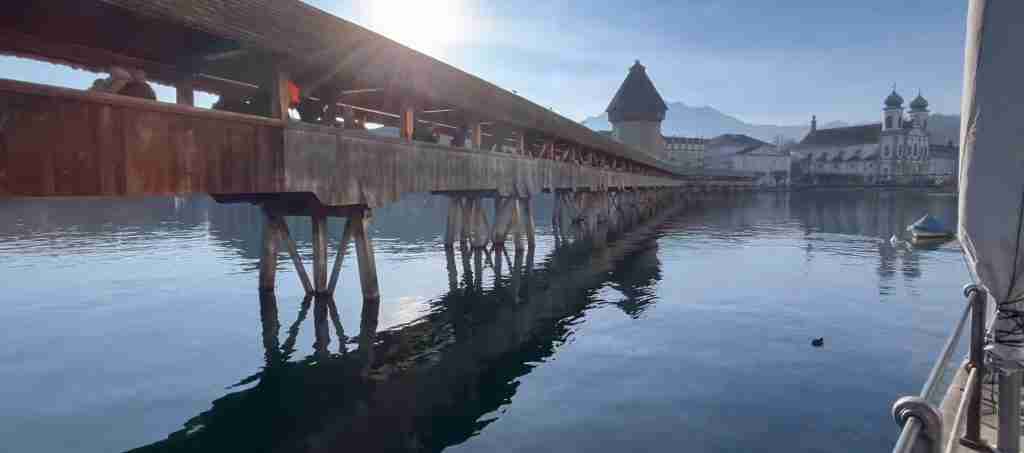
Chapel Bridge and Water Tower provide iconic photo opportunities alongside historical education where 17th-century paintings adorning the covered bridge depict Swiss heritage through pictorial narrative children observe while traversing the 204-meter span connecting Old Town banks. The octagonal Water Tower standing mid-bridge offers exterior architectural appreciation without interior access, establishing quick cultural touchpoint families complete within 10-15 minutes before continuing to adjacent attractions positioned within immediate walking radius. No admission fees apply to bridge crossing though summer crowds compress narrow walkway requiring parental hand-holding for young children navigating shoulder-to-shoulder tourist traffic photographing Switzerland’s most-recognized landmark.
Lakeside promenades extend several kilometers connecting multiple playground installations where climbing structures, swing sets, sandboxes, and water features provide free activity zones breaking museum-heavy itineraries with outdoor play intervals. Notable installations include Nationalquai playground near Swiss Museum of Transport featuring modern climbing equipment and lake-view benches, Ufschötti beach area offering supervised swimming during summer months (though water remains cool year-round), and Carl Spitteler Quai playground positioned midway along lakefront walk between train station and Verkehrshaus museum creating convenient stopping point during longer pedestrian journeys exceeding young children’s continuous walking tolerance.
Musegg Wall represents medieval fortification where three towers (Schirmer, Zyt, and Männli) remain publicly accessible for climbing stone staircases to observation platforms overlooking Old Town rooftops, Lake Lucerne expanses, and surrounding Alpine peaks. Tower access operates free of charge during daylight hours with Zyt Tower featuring Switzerland’s oldest functioning clock mechanism dating to 1535, maintaining privilege of striking the hour one minute before all other Lucerne clocks honoring historical precedence. The wall walk spans approximately 200 meters of reconstructed rampart pathways suitable for elementary-age children comfortable with heights, though toddlers require close supervision near unprotected tower edges lacking modern safety barriers preserving authentic medieval construction character.
Lion Monument (Löwendenkmal) memorializes Swiss Guards killed during French Revolution through dramatic stone carving depicting dying lion embedded in sandstone cliff face. Mark Twain described the monument as “the most mournful and moving piece of stone in the world” establishing literary significance children might appreciate through age-appropriate historical context explanation. The monument sits in small park requiring 5-minute visit duration, positioned 10-minute walk from Old Town center along pedestrian-friendly streets suitable for stroller navigation. No admission charges apply to monument viewing though adjacent Glacier Garden museum requires CHF 15 ($16) adult tickets for access to glacial potholes, ice age exhibits, and mirror maze beyond the free exterior monument area.
Hinter Musegg urban farm introduces agricultural education through free-access petting zoo where children feed goats, observe chickens, and interact with rabbits in supervised petting areas staffed by volunteers explaining animal care basics to curious youngsters. The farm operates as community project rather than commercial attraction, welcoming families without admission charges or time restrictions during daylight hours, positioned along Musegg Wall walking route creating combined itinerary linking medieval fortifications with contemporary urban farming demonstrating sustainable food production within city boundaries.
Jesuit Church (Jesuitenkirche) displays baroque architecture through ornate interior featuring frescoed ceilings, marble altars, and religious artwork accessible during non-service hours. Free entry permits quiet contemplation and architectural appreciation though children’s fidgeting warrants brief visits rather than extended exploration of religious significance lost on elementary-age minds preferring interactive museums over static art observation. The church positions steps from Chapel Bridge establishing convenient routing between lakefront attractions without requiring dedicated time allocation beyond spontaneous interior glimpses during Old Town wandering.
Richard Wagner Museum occupies lakeside villa where composer lived during Lucerne residency, maintaining exterior architecture and gardens accessible without museum admission where families photograph the building and explore shoreline pathways continuing along lake promenade toward Tribschen promontory. Museum entry at CHF 12 ($13) adults provides access to Wagner memorabilia though niche appeal targets classical music enthusiasts rather than general family audiences, making free exterior exploration sufficient for most visitors incorporating the location within broader lakefront walking itineraries.
Day Trip Options from Lucerne for Families 2026
Mount Rigi challenges Mount Pilatus for family mountain excursion supremacy through gentler terrain, extensive hiking trail networks suitable for young walkers, and pricing at CHF 72 ($78) adults for cogwheel railway round trips (children 6-15 half price with Swiss Family Card) creating budget alternative to Pilatus while maintaining Alpine experience quality. The “Queen of the Mountains” reaches 1,798 meters via two ascent routes from Vitznau or Goldau, both accessible via lake boat or train from Lucerne within 45-60 minutes travel time. Summit facilities include multiple restaurants, easy walking paths connecting Rigi Kulm peak to Rigi Staffel station in 30-minute downhill stroll, and sunrise viewing traditions attracting early-morning hikers though families typically prefer midday ascents aligning with children’s natural schedules avoiding pre-dawn departure demands.
Mount Titlis represents premium mountain experience at CHF 98 ($105) adult tickets for cable car access to 3,020-meter summit where year-round snow, ice cave exploration, and Cliff Walk suspension bridge create dramatic Alpine environment exceeding Pilatus and Rigi’s grassland character. The journey from Lucerne requires 90 minutes via train to Engelberg followed by three cable car stages including the rotating Rotair 360-degree panorama cabin ascending final section to summit station. Facilities include Ice Flyer chairlift gliding over glacier crevasses, ice cave tunnel carved through glacier interior with illuminated ice sculptures, and multiple restaurants serving Swiss specialties at elevated prices reflecting 3,000-meter logistics costs. Snow activities including sledding and snow tubing operate year-round attracting children experiencing snow for first time regardless of summer season, though appropriate winter clothing becomes mandatory despite valley’s warm weather creating packing complexity for families arriving from non-Alpine climates.
Zurich positions 45 minutes north via direct train service where Switzerland’s largest city offers zoo featuring African savanna exhibit, rainforest house with free-flying birds, and Masoala rainforest hall replicating Madagascar ecosystem at CHF 33 ($36) adult admission. Zurich Old Town provides shopping diversity, Lake Zurich boat cruises, and Lindt Home of Chocolate museum (CHF 15/$16) where interactive exhibits and chocolate fountain tasting conclude factory tour experiencing Swiss chocolate heritage beyond standard supermarket sampling. Day trip logistics allow morning Zurich exploration returning to Lucerne by late afternoon, or full-day commitment including evening restaurant experience before final train departure avoiding rushed scheduling compromising experience quality through excessive activity packing.
Interlaken stretches 2 hours south via scenic train journey through Brunig Pass where mountain panoramas, lake passages, and valley landscapes entertain children during extended transit duration. Interlaken positions between Lake Thun and Lake Brienz serving as Jungfrau region gateway where higher Alpine peaks, adventure sports concentrations, and mountain village aesthetics differ from Lucerne’s urban-lakeside character. Families considering Interlaken day trips might better allocate overnight stays enabling proper Jungfraujoch or Schilthorn mountain visits requiring full-day commitments incompatible with same-day return to Lucerne accommodations, though brief Interlaken town exploration including Höhematte park and lake promenades fits within day-trip timeframes for families seeking destination variety beyond Lucerne’s immediate surroundings.
Rhine Falls near Schaffhausen represents Europe’s largest waterfall at 150-meter width where observation platforms, boat rides to waterfall base, and children’s playground create 2-3 hour attraction visit accessible via 90-minute train journey from Lucerne. Admission to falls viewpoints costs CHF 5 ($5) adults with boat rides adding CHF 8-12 ($9-13) per person depending on route selected, establishing moderate-cost excursion complementing mountain-heavy Lucerne itineraries with waterfall variety appealing to children fatigued by endless peak panoramas after multiple mountain days. Playground facilities near falls entrance provide activity zone where children expend energy while parents observe waterfall power from adjacent benches, creating relaxed pacing balancing natural wonder appreciation with children’s physical activity requirements.
Weather Planning and Seasonal Considerations for Families 2026
Summer season from June through August delivers peak family travel conditions with average temperatures ranging 20-28°C (68-82°F), long daylight hours extending to 9 PM enabling extended outdoor activities, and mountain access routes operating full schedules including Golden Round Trip seasonal circuits available exclusively during warmer months. These advantages attract maximum visitor concentrations where Chapel Bridge crowds compress to shoulder-to-shoulder density, museum queues extend 30-45 minutes beyond opening times, and hotel rates peak at premium levels commanding CHF 100-200 ($108-215) nightly increases over shoulder season pricing. Families booking summer visits benefit from advance planning securing accommodation 3-6 months ahead, purchasing museum tickets online avoiding entrance queues, and scheduling mountain excursions during midweek days when weekend tourist peaks subside slightly reducing cable car wait times.
Spring months from April through May offer moderate temperatures averaging 12-20°C (54-68°F) with blooming wildflowers decorating mountain meadows, reduced visitor densities allowing spontaneous museum entries without queue frustrations, and hotel rates discounted 20-40% below summer peaks creating budget advantages for families managing cost consciousness. Mountain access limitations apply where Pilatus Golden Round Trip typically begins mid-May after cogwheel railway maintenance completion, though cable car routes operate year-round providing alternative ascent options when full circuits remain unavailable. Pack layered clothing accommodating morning coolness transitioning to afternoon warmth, with rain gear mandatory as spring precipitation occurs frequently though typically as brief showers rather than day-long rainfall compromising outdoor itineraries.
Autumn period from September through October maintains pleasant weather averaging 15-22°C (59-72°F) with golden foliage transforming mountain landscapes, harvest season bringing local food festivals, and continued reduced crowds compared to summer peaks though higher than spring shoulder season levels. Most mountain routes maintain operations through mid-October before winter closures affect seasonal circuits like Pilatus Golden Round Trip, establishing September as optimal autumn visiting month balancing weather reliability with access availability. School year resumption across Europe reduces family travel concentrations dramatically after August conclusion, creating significant crowd relief for families with scheduling flexibility traveling outside traditional vacation windows constrained by academic calendars.
Winter visits from December through March present Alpine Christmas market charm, snow activities including sledding and ice skating, and dramatically reduced accommodation costs discounted 40-60% below summer rates, though mountain access limitations affect family itineraries where Golden Round Trip suspends operations entirely and weather unpredictability creates frequent indoor-activity days when precipitation falls as rain in valley locations lacking snow charm. Swiss Museum of Transport maintains year-round operations providing reliable indoor activity regardless of weather conditions, complemented by indoor playgrounds, swimming pools, and shopping complexes offering climate-controlled alternatives during extended cold snaps. Winter travel suits families prioritizing budget savings over comprehensive mountain access, comfortable with weather-dependent flexibility, and content with Lucerne’s urban attractions over Alpine excursion emphasis driving summer visitation patterns.
Rainy day strategies emphasize indoor attractions where Swiss Museum of Transport dominates with 6-hour visiting potential, supplemented by Rosengart Collection art museum (CHF 18/$19 adults) featuring Picasso works and 19th-century masterpieces appealing to cultured older children, Glacier Garden museum (CHF 15/$16) combining geological exhibits with mirror maze providing entertainment beyond educational content, and Richard Wagner Museum (CHF 12/$13) offering classical music history through composer’s personal effects and manuscript displays. Shopping arcades under Old Town medieval buildings provide weather-protected browsing where Swiss watches, chocolates, and souvenirs occupy rainy afternoon hours, while hotel pools and spa facilities serve as retreat locations when outdoor ambitions surrender to persistent precipitation requiring revised activity planning around weather realities affecting mountain visibility and walking comfort.
Safety and Practical Considerations for Families 2026
Healthcare access exceeds international standards where Lucerne Cantonal Hospital (Luzerner Kantonsspital) maintains 24-hour emergency services, pediatric specialists, and English-speaking medical staff treating international visitors alongside Swiss residents. Walk-in clinics operate throughout the city for non-emergency conditions including minor injuries, illnesses, and prescription needs arising during travel, though costs reflect Switzerland’s premium healthcare pricing where consultation fees begin at CHF 200-300 ($215-320) before treatment or medication expenses. Travel insurance becomes mandatory covering medical emergencies, as Switzerland’s healthcare system charges full commercial rates to foreign visitors without reciprocal agreements reducing costs through home-country medical coverage portability.
Altitude awareness affects mountain excursions where Pilatus summit at 2,132 meters and Titlis at 3,020 meters occasionally trigger mild altitude symptoms including headache, fatigue, or nausea in sensitive individuals though severe altitude sickness remains rare at these moderate elevations compared to destinations exceeding 4,000 meters. Children under age 5 require special monitoring as they cannot articulate discomfort symptoms clearly, warranting parent observation for unusual behavior, excessive crying, or activity level changes indicating need for prompt descent to lower elevations where symptoms resolve within 30-60 minutes returning to valley locations. Hydration importance increases at altitude where dry mountain air accelerates fluid loss through respiration, motivating frequent water consumption beyond thirst triggers and packed snack provisions maintaining blood sugar levels supporting acclimatization processes.
Drowning prevention requires constant supervision near Lake Lucerne where deep waters, boat traffic, and temperature rarely exceeding 20°C (68°F) even during summer create hazards for unsupervised children. Designated swimming areas including Ufschötti and Lido beaches maintain lifeguard surveillance during operating hours, though lakeside promenades lack barrier fencing allowing unrestricted water access requiring parental vigilance particularly with toddlers whose mobility exceeds judgment capabilities. Public swimming pools offer safer alternatives where water temperatures, depth variations, and supervision densities better accommodate young children learning swimming skills or families preferring controlled aquatic environments over open water variables.
Traffic safety improves dramatically through Old Town pedestrian zones where vehicle access remains prohibited except service deliveries during restricted early-morning hours, though tram routes crossing pedestrian areas require awareness teaching children to observe approaching trains despite car-free street assumptions. Crosswalk disciplines differ from North American norms where Swiss drivers yield reliably to pedestrians at marked crossings without requiring wait signals, though teaching children to verify driver acknowledgment before crossing prevents complacency accidents when occasional distracted motorists fail to observe priority rules universally followed by majority drivers.
Pickpocketing risk remains minimal in Lucerne compared to larger European cities though standard travel precautions apply including securing passports in hotel safes, carrying daily spending money in front pockets, and maintaining visual contact with bags in crowded tourist areas including boat boarding queues and museum entrance lines. Police presence throughout Old Town provides visible security reassurance alongside emergency assistance accessing English-speaking officers trained in tourist support protocols resolving issues ranging from lost items to medical emergency coordination connecting travelers with appropriate services.
Pharmacy availability extends throughout Lucerne with Apotheke chains stocking international medication brands, baby supplies including diapers and formula matching common international brands, and pharmacist consultations providing medical advice for minor ailments without requiring doctor visits for simple conditions. Operating hours typically run 8 AM to 6:30 PM weekdays with reduced Saturday schedules and Sunday closures, though rotating emergency pharmacies maintain 24-hour availability posted on all pharmacy entrances listing current week’s emergency service provider.
Language barriers diminish significantly as English comprehension appears universally among tourism-sector workers including hotel staff, restaurant servers, attraction personnel, and transportation employees switching seamlessly to English upon detecting non-German speakers. This linguistic accommodation extends to children where museum staff, playground supervisors, and activity instructors engage youngsters in English without requiring parental translation intermediating communications, establishing comfort for families traveling internationally with children experiencing first overseas adventures beyond home language environments.
Packing Essentials for Lucerne Family Travel 2026
Layered clothing systems prove essential where morning temperatures averaging 10-15°C (50-59°F) transition to afternoon warmth reaching 25°C (77°F) during summer months, requiring fleece jackets or light sweaters removed midday and restored during evening cool-downs particularly during mountain excursions where summit temperatures drop 10-15°C below valley conditions regardless of season. Children require extra layers packed in day bags as their smaller body masses cool rapidly during cable car rides, boat crossings, and shaded mountain restaurant lunches where parents comfortable in t-shirts observe children shivering without adequate insulation preventing full outdoor enjoyment.
Rain gear including packable jackets and compact umbrellas occupies permanent day-bag space where Swiss weather changes rapidly particularly in mountain zones where morning sunshine transforms to afternoon thunderstorms without reliable hourly forecast accuracy. Waterproof shoes or hiking boots provide foot protection during sudden precipitation though comfortable walking shoes suffice for Old Town exploration on dry days, establishing need for dual footwear options balancing comfort against weather preparedness across varied daily conditions.
Sun protection requirements intensify at mountain elevations where UV exposure increases approximately 10% per 1,000-meter altitude gain, necessitating SPF 50+ sunscreen reapplication every 2 hours during Pilatus or Titlis summit visits regardless of cloud cover reducing visible sun intensity while maintaining UV penetration burning unprotected skin. Sunglasses and wide-brim hats complement sunscreen providing additional UV shielding for sensitive children’s skin, while lip balm with SPF prevents painful chapping from combined sun and wind exposure characteristic of Alpine summit conditions.
First-aid supplies including children’s pain reliever, antihistamines for unexpected allergic reactions, bandages for minor scrapes sustained during playground activity, and any prescription medications with sufficient quantities exceeding trip duration by several days preventing shortage anxiety if travel delays extend returns beyond originally scheduled dates. Swiss pharmacies stock international medication brands though unfamiliarity with generic names complicates replacement purchases, motivating travelers to pack adequate supplies eliminating need for emergency pharmacy visits navigating foreign medication nomenclature systems.
Snack provisions reduce daily food costs while preventing hunger meltdowns between planned meal stops where granola bars, dried fruit, crackers, and juice boxes maintain blood sugar levels during extended museum visits or mountain excursions where restaurant options appear infrequently. Swiss supermarkets offer superior snack variety compared to convenience stores, motivating initial grocery shopping trip stocking hotel room provisions replenished mid-trip as consumption depletes original purchases.
Stroller selection prioritizes compact folding models navigating bus storage areas, train luggage racks, and boat deck spaces more successfully than full-size prams consuming excessive space during peak-season boarding when passenger densities challenge even modest stroller dimensions. Baby carriers provide alternative for families comfortable with extended child-wearing during walking tours, offering hands-free mobility navigating narrow Old Town streets, crowded museum galleries, and boat boarding where stroller maneuvering proves frustrating during high-traffic periods.
Entertainment supplies including tablets loaded with downloaded movies, books, coloring materials, and travel games occupy children during transit periods, restaurant wait times, and evening hotel hours after outdoor activities conclude but bedtime remains distant. Switzerland’s excellent mobile data coverage supports streaming services though pre-downloaded content eliminates connectivity dependency and data roaming charges potentially accumulating unexpectedly on international cellular plans lacking European coverage inclusions.
Travel documents including passports, insurance cards, hotel confirmations, and attraction tickets consolidate in single folder preventing frantic searching during check-in procedures, border crossings, or emergency situations requiring immediate access to identification and authorization documentation. Digital backup copies stored in email accounts or cloud storage provide redundancy if physical documents become lost or damaged during travel, enabling embassy assistance securing emergency travel documents or insurance claim processing accessing policy details from remote digital archives.
Creating Balanced Itineraries for Mixed-Age Children 2026
Three-day Lucerne family visit balances museum education, mountain adventure, and relaxed exploration accommodating varied age interests while preventing overscheduling fatigue compromising vacation enjoyment through excessive activity packing. Day one emphasizes Swiss Museum of Transport morning visit allocating 4-5 hours for comprehensive exhibit exploration including planetarium show and chocolate adventure, followed by afternoon lakeside playground interval where physical activity releases pent energy from museum’s indoor focus, concluding with casual Old Town dinner and evening Chapel Bridge stroll photographing the landmark without daytime tourist density constraints.
Day two prioritizes Mount Pilatus Golden Round Trip requiring full-day commitment from 9 AM departure through 4 PM return, incorporating lake cruise engaging young children through boat novelty, cogwheel railway thrilling elementary-age riders with steep ascent drama, summit lunch break providing rest interval between ascent and descent phases, and mid-station toboggan or rope course activity rewarding older children’s patience during scenic portions prioritizing parents’ photographic interests over junior adventure appetites. Evening hotel pool time or simple dinner near accommodation allows family recovery from day’s extensive activity scope exceeding typical daily movement distances particularly affecting youngest members unaccustomed to sustained touring without home-base retreat intervals.
Day three adopts relaxed pacing where morning Old Town walking tour visits Chapel Bridge, Lion Monument, and Jesuit Church within 2-hour timeframe maintaining young children’s engagement through varied destination types preventing single-attraction fixation inducing boredom. Afternoon lake boat cruise to Weggis or Vitznau provides different transportation experience from Pilatus excursion while incorporating swimming opportunity at lakeside beach areas during summer weather, returning to Lucerne for final evening souvenir shopping and farewell dinner reflecting on vacation highlights through family conversation identifying favorite moments establishing shared memories beyond individual attraction assessments.
Five-day extended stays incorporate day trip to Mount Rigi or Zurich expanding geographic scope beyond Lucerne’s immediate surroundings, additional museum visits including Rosengart Collection or Glacier Garden targeting different interest areas from Transport Museum’s technical focus, and flexible scheduling accommodating weather-dependent activity shifts when forecasted conditions motivate indoor refuge or mountain visibility optimizations. Rest afternoon slots allow hotel pool sessions, nap intervals for youngest members, or quiet reading hours where family members pursue individual interests without group coordination requirements exhausting parents managing continuous child supervision across multiple consecutive touring days.
Mixed-age sibling groups benefit from splitting occasionally where older children accompany one parent on rope course adventures or longer hiking trails while younger members engage age-appropriate activities with second parent supervision, reuniting for meals or evening activities when family togetherness resumes after brief separate pursuit accommodations. This flexibility requires dual-parent presence though single parents traveling alone adapt through sequential activity approaches where younger children’s needs dictate daily pacing while older siblings accept experience modifications acknowledging family unit dynamics requiring compromise from all members.
Downtime integration prevents vacation fatigue where every day need not maximize attraction density at exhaustion’s expense. Morning hotel breakfast extending to 10 AM, afternoon hotel returns for rest breaks, and early dinner followed by quiet evenings establish rhythm balancing exploration ambitions with rest requirements particularly crucial for families with toddlers or children under 8 whose stamina limitations constrain daily activity scope below adult touring capacities maintained across multiple consecutive high-intensity days.
Swiss Family Card and Travel Pass Benefits for Families 2026
Swiss Family Card transforms family transportation economics where children aged 6-15 travel free on all public transport including trains, buses, boats, and participating mountain railways when accompanied by at least one parent holding valid Swiss Travel Pass or Half-Fare Card. This benefit applies universally across Switzerland’s integrated transport network rather than limiting to specific regional zones, establishing nationwide value extending beyond Lucerne’s local area when families incorporate Zurich day trips, Interlaken excursions, or broader multi-destination Swiss itineraries routing through Lucerne as base location or intermediate stop within larger touring circuits.
Swiss Travel Pass eliminates ticket-buying complexity where single digital QR code stored on smartphone provides unlimited boarding authority across entire Swiss Travel System without requiring ticket purchases, fare calculations, or validation procedures at each journey commencement. Parents managing multiple children while carrying luggage, strollers, and activity supplies appreciate streamlined boarding procedures where simply showing QR code to conductor replaces ticket counter queuing, ticket machine operations with complex fare structures, or platform validation requirements delaying departures through procedural confusion common when navigating unfamiliar foreign transport systems under time pressure boarding specific scheduled services.
Pass pricing structure favors families through consecutive-day options where 3-day pass at CHF 254 ($275) per adult in second class establishes CHF 85 ($92) daily cost subsequently reduced through children’s free travel via Family Card, versus individual ticket expenses accumulating CHF 50-100 ($54-108) daily per adult depending on routing intensity and mountain excursion inclusion. Families undertaking Mount Pilatus excursion (CHF 60/$65 discounted with pass versus CHF 120/$130 full price), multiple intercity journeys, and frequent boat crossings exceed break-even thresholds typically within 2-3 days even before accounting for children’s transportation savings establishing compelling value proposition for active touring families rather than single-location resort stays minimizing transport usage.
First-class upgrade at CHF 405 ($435) for 3-day adult pass provides access to quieter carriages, dedicated family compartments with play areas on major intercity routes, and wider seating though families must evaluate whether CHF 151 ($163) premium over second-class pricing justifies comfort improvements given relatively short journey durations within Lucerne region rarely exceeding 90 minutes to furthest destinations. Family carriages (Familienwagen) appearing on select routes offer children’s play zones, lower tables, and tolerant atmosphere toward natural childhood energy regardless of class selection, establishing family-specific accommodation within standard second-class ticket pricing without requiring first-class upgrades.
Museum Pass inclusion provides free entry to over 500 Swiss museums automatically included with Travel Pass purchase, expanding cultural opportunities beyond core Lucerne attractions to regional institutions, specialized collections, and smaller venues families might skip when calculating individual admission costs but visit spontaneously when entry becomes “free” through pass inclusion. This benefit particularly advantages families with culturally curious teenagers or parents prioritizing educational experiences supplementing mountain and lake activities with museum content diversifying vacation intellectual stimulation beyond pure recreational focus.
Mountain railway discounts vary by destination where Rigi and Stanserhorn include free access, Pilatus offers 50% reduction, and Jungfraujoch provides 25% discount, establishing varied value propositions requiring individual excursion cost calculation determining whether pass benefits justify purchase or whether point-to-point ticket strategies combined with Swiss Family Card prove more economical for families undertaking limited mountain excursions within primarily Lucerne-focused visits. Online calculators provided by Swiss Travel System website allow precise cost comparisons inputting specific planned routes and determining break-even analysis customized to individual family itineraries rather than relying on general recommendations failing to account for personal touring patterns.
Frequently Asked Questions About Visiting Lucerne with Kids 2026
What is the ideal length of stay in Lucerne for families with children?
Three to four days provides optimal duration balancing core attraction exploration with relaxed pacing suitable for children’s energy levels and attention spans. This timeframe accommodates Swiss Museum of Transport visit, one major mountain excursion to either Pilatus or Rigi, Old Town discovery including Chapel Bridge and lakeside promenades, and flexible scheduling buffer for weather-dependent activity adjustments or spontaneous playground intervals when children require unstructured play breaking museum-intensive touring patterns. Families staying five or more days incorporate additional mountain visits, day trips to Zurich or Interlaken, or specialized museum visits including Rosengart Collection and Glacier Garden expanding cultural scope beyond primary attractions. Two-day minimum visits feel rushed compressing must-see attractions into tight scheduling eliminating downtime crucial for young children’s processing and rest requirements between stimulating experiences.
Are Lucerne restaurants accommodating to families with young children?
Swiss restaurants universally welcome families with dedicated children’s menus at CHF 12-22 ($13-24) featuring familiar options including pasta, schnitzel, and grilled chicken adapted to children’s taste preferences while maintaining quality ingredient sourcing distinguishing offerings from fast-food alternatives. High chairs appear routinely without requiring advance request, coloring materials and crayons arrive automatically upon family seating, and servers demonstrate patience with ordering delays and menu modifications accommodating dietary restrictions or picky eating patterns. Restaurant terraces provide outdoor seating where children’s natural energy and noise levels integrate acceptably without indoor atmosphere disruptions concerning parents self-conscious about potential disturbances to other diners. Swiss cultural norms embrace children’s public presence rather than expecting library-quiet behavior or adult-equivalent table manners from elementary-age youngsters, establishing relaxed dining environments where families enjoy meals without excessive behavioral anxiety constraining natural childhood expression within reasonable limits.
Can we visit Lucerne year-round with children or is summer the only viable season?
Lucerne accommodates family visits across all seasons though experience characteristics differ substantially between summer peak and winter low seasons. Summer from June through August provides optimal weather, complete mountain access including seasonal Golden Round Trip circuits, extended daylight hours supporting late-afternoon activities, and maximum attraction operating schedules at expense of premium accommodation rates and significant crowd densities compressing popular sites. Winter visits from December through March offer dramatically reduced hotel costs discounted 40-60% below summer rates, Christmas market charm, and indoor attraction focus emphasizing Swiss Museum of Transport, swimming pools, and shopping complexes, though mountain access limitations suspend seasonal circuits and weather unpredictability creates frequent indoor-activity days. Shoulder seasons during April-May and September-October balance moderate weather with reduced crowds and mid-range pricing, establishing optimal value periods for families with scheduling flexibility outside school vacation constraints. Each season delivers distinct experience emphasizing different attraction categories based on weather patterns and operational schedules requiring alignment with family priorities whether cost savings, crowd avoidance, or comprehensive mountain access drives vacation timing decisions.
How do we handle language barriers when traveling to Lucerne with children?
English comprehension appears universally among tourism-sector workers including hotel staff, restaurant servers, museum personnel, and transportation employees who switch seamlessly to English upon detecting non-German speakers. This linguistic accommodation extends to children where attraction staff, playground supervisors, and activity instructors engage youngsters directly in English without requiring parental translation, establishing comfort for families whose children interact independently with service providers during bathroom requests, snack purchases, or activity inquiries. Signage throughout Old Town, museums, and transport hubs displays English translations alongside German text, while mobile translation apps provide backup support for rare situations encountering German-only communications. The Swiss cultural emphasis on multilingual capability particularly in tourist centers like Lucerne creates welcoming environment for English-speaking families navigating first European trip with children experiencing international travel nervousness addressed through consistent linguistic accessibility reducing stress typical of destinations where language barriers significantly complicate basic service interactions and emergency assistance access.
What happens if weather ruins our planned mountain excursion day?
Flexible scheduling proves essential where mountain visibility and safe cable car operations require clear conditions motivating day-of departure decisions based on actual summit webcam views rather than valley forecasts occasionally misrepresenting mountaintop weather. Golden Round Trip tickets purchased online typically allow date flexibility within validity windows, while families booking accommodation with cancellation policies retain ability to shift mountain days optimizing weather windows without forfeiting prepaid costs. Alternative indoor activities including Swiss Museum of Transport’s comprehensive exhibits, Rosengart Collection art museum, Glacier Garden geological displays, and shopping arcades under medieval Old Town buildings occupy rainy days without compromising vacation quality through adaptive activity substitution. Swiss weather volatility particularly during shoulder seasons motivates building schedule flexibility where rigid daily plans risk weather-dependent disappointment versus adaptive approaches treating mountain excursions as weather-contingent experiences pursued when conditions optimize rather than scheduled inflexibly around calendar dates regardless of visibility affecting experience quality justifying premium mountain ticket costs.
Are baby changing facilities readily available in Lucerne attractions?
Modern changing stations appear in public restrooms throughout major attractions including Swiss Museum of Transport, train station facilities, shopping centers, and most restaurants frequented by family clientele. Older medieval buildings within Old Town may lack dedicated changing areas requiring parents to utilize portable changing pads in accessible restroom stalls when visiting historic churches or monuments predating contemporary family infrastructure standards. Swiss cleanliness standards ensure well-maintained facilities with regular cleaning schedules, adequate supplies, and hygienic conditions exceeding typical public restroom expectations in many countries. Parents traveling with infants benefit from packing compact changing kit including disposable pad, diaper supply, and hand sanitizer providing backup when encountering rare locations lacking dedicated facilities, though generally Lucerne’s family-oriented infrastructure minimizes situations requiring improvised changing solutions common in destinations with less developed family tourism accommodation.
How do Swiss Travel Pass discounts work for different mountain excursions?
Mountain railway discount percentages vary by operator where fully included routes like Rigi and Stanserhorn provide free access with valid Swiss Travel Pass, 50% discount routes including Pilatus reduce adult tickets to CHF 60 ($65) from full CHF 120 ($130) pricing, and 25% discount destinations like Jungfraujoch offer moderate reductions on premium-priced Alpine experiences. These discounts apply to pass-holding adults while children’s Swiss Family Card provides free travel on participating mountain railways regardless of parent’s discount percentage, though some private operators exclude Family Card benefits requiring children’s ticket purchases at reduced rates rather than complimentary access granted on public transport routes. Families planning multiple mountain excursions should calculate specific routing costs comparing Swiss Travel Pass total cost including discounted mountain tickets against point-to-point ticket strategy combined with Swiss Half-Fare Card determining which approach minimizes total expenditure for planned itinerary rather than assuming Travel Pass automatically delivers superior value for all touring patterns. Online cost calculators provided by Swiss Travel System enable precise comparison inputting specific planned destinations and receiving customized break-even analysis accounting for family size, trip duration, and mountain excursion quantity driving value proposition variability across different family profiles.
Can we safely swim in Lake Lucerne with children during summer?
Designated swimming areas including Ufschötti and Lido beaches maintain lifeguard supervision during operating hours though water temperatures rarely exceed 20°C (68°F) even during peak summer creating shock factor for children accustomed to warmer recreational swimming temperatures. Lake depth increases rapidly beyond shallow shoreline zones requiring constant parental supervision as children venture beyond waist-deep areas where swimming capability becomes mandatory for safety. Boat traffic navigates marked channels separate from swimming zones though wake waves occasionally impact beach areas warranting awareness teaching children to observe approaching vessels and anticipate wave impacts potentially knocking smaller children off balance in shallow water. Public pools offer warmer, more controlled alternatives where heated water, lifeguard density, and depth variety better accommodate young swimmers developing skills or families preferring supervised aquatic environments over open water variables affecting lake swimming. Life jacket availability at beach rental kiosks provides flotation assistance for non-swimming children though direct parental supervision remains mandatory regardless of flotation device usage given potential device failures or improper fit compromising safety effectiveness particularly with toddlers lacking swimming experience or water comfort.
What should we do if our child gets sick during our Lucerne visit?
Hotel front desk staff coordinate medical care connecting families with English-speaking doctors, arranging house calls for hotel room consultations, or directing to appropriate clinic facilities based on symptom severity. Lucerne Cantonal Hospital maintains 24-hour emergency services with pediatric specialists treating everything from minor illnesses to serious conditions requiring hospitalization, though costs reflect Switzerland’s premium healthcare pricing where consultation fees begin CHF 200-300 ($215-320) before treatment or medication expenses. Travel insurance becomes crucial covering medical costs potentially reaching thousands of dollars for emergency treatments, hospitalizations, or medical evacuation scenarios though most childhood illnesses resolve through pharmacy medications and rest without requiring expensive medical intervention. Pharmacies stock familiar international medication brands including children’s pain relievers, cold medicines, and digestive remedies though generic name differences complicate identification motivating travelers to pack adequate medication supplies from home eliminating need for emergency pharmacy visits navigating unfamiliar product nomenclature. Most common childhood ailments including stomach upset, minor colds, or fatigue respond to rest days substituting planned activities with hotel pool time, room service meals, and movie streaming allowing recovery without vacation complete cancellation, resuming touring once symptoms resolve sufficiently for outdoor activity resumption.
How early should we book family accommodation in Lucerne for summer 2026?
Summer peak season from June through August demands reservation timing 3-6 months before arrival dates as family-specific room configurations including connecting rooms, family suites with separate children’s sleeping areas, and quad-occupancy accommodations book earliest within hotel inventories leaving fewer options for last-minute planners arriving 4-8 weeks before travel dates. Shoulder season periods during April-May and September-October allow shorter booking windows 6-12 weeks ahead maintaining reasonable selection at mid-range properties though luxury hotels and budget category rooms with optimal locations still benefit from earlier reservations. Winter low season from December through March provides maximum booking flexibility where advance reservations prove unnecessary except during Christmas market weeks and New Year period when holiday travelers create brief demand spikes despite generally low winter occupancy rates. Families requiring specific room configurations should prioritize early booking preventing disappointment arriving to discover only standard double rooms remain available necessitating separate bookings increasing costs or uncomfortable sleeping arrangements with children sharing beds designed for single adult occupancy. Cancellation policies vary by property where many hotels allow free cancellation until 24-72 hours before arrival enabling tentative bookings securing desired rooms while maintaining flexibility for itinerary changes, though non-refundable rates offering 10-20% discounts lock commitments requiring certainty about travel dates before sacrificing cancellation privileges for modest cost savings.