Visiting Honolulu with Kids 2026: Complete Family Guide
Honolulu transforms family vacations into adventure-filled journeys where children build sandcastles on legendary Waikiki Beach, encounter green sea turtles at protected marine sanctuaries, and discover Pacific marine life at historic aquariums. This comprehensive 2026 guide delivers verified pricing, age-specific activity recommendations, and proven strategies for families navigating Hawaii’s vibrant capital with children of all ages, from toddlers experiencing their first ocean waves to teenagers ready for surf lessons and snorkeling adventures.
Key Takeaways for Families Visiting Honolulu in 2026
- Budget Planning for Families 2026: Budget-conscious families spend $405-560 per day for a family of four (two adults, two children), mid-range families invest $700-925 daily, and luxury-seeking families allocate $1,150-1,620 per day. Weekly family vacations cost $2,835-3,920 for budget travelers, $4,900-6,475 for mid-range comfort, and $8,050-11,340 for luxury experiences.
- Essential Advance Reservations 2026: Hanauma Bay Nature Preserve requires reservations exactly 48 hours before your visit starting at 7 AM Hawaii time through the Honolulu Parks & Recreation website, with slots disappearing within minutes. Diamond Head State Monument bookings open 30 days ahead, and sunrise time slots sell out within hours for this family-favorite hike offering 360-degree ocean views.
- Best Family Beaches 2026: Waikiki Beach delivers gentle waves perfect for beginning swimmers with lifeguards on duty, while Ala Moana Beach Park provides calm protected waters ideal for toddlers. Hanauma Bay ($25 entry adults, $13 children under 13) offers Hawaii’s premier family snorkeling with hundreds of tropical fish visible in shallow protected waters, and Ko Olina Lagoons on the west side feature completely protected man-made lagoons with zero waves for the youngest swimmers.
- Top Kid-Friendly Attractions 2026: Honolulu Zoo ($19 adults, $11 children ages 3-12) showcases African savanna animals and Keiki Zoo petting areas within walking distance of Waikiki hotels. Waikiki Aquarium ($12 adults, $5 children ages 4-12) features Hawaiian monk seals, touch tanks with sea cucumbers and hermit crabs, and mesmerizing jellyfish exhibits. Pearl Harbor offers profound educational experiences with USS Arizona Memorial free tickets (release 8 weeks ahead) and comprehensive museum experiences ($30-90) that engage children ages 7 and older.
- Family Transportation Strategies 2026: TheBus provides the most economical transportation at $3 per ride ($90 monthly pass), connecting Waikiki to Zoo, Aquarium, Pearl Harbor, and Ala Moana shopping. Rental cars cost $65-85 daily before parking fees ($25-40 daily at most Waikiki hotels) but prove essential for families visiting North Shore beaches, Hanauma Bay, or planning multiple daily destinations. Rideshare services (Uber/Lyft) run $15-35 per trip within greater Honolulu.
- Seasonal Timing for Families 2026: April through May and September through October offer ideal family travel conditions with 20-30% lower hotel rates than peak winter months, smaller crowds at major attractions, and comfortable temperatures averaging 78-84°F. Summer months (June-August) deliver calmest ocean conditions on North Shore beaches and coincide with school vacation schedules, while winter (December-March) brings peak pricing but adds humpback whale watching opportunities (December-April season).
People Also Ask About Visiting Honolulu with Kids 2026
What is the best age for kids to visit Honolulu in 2026?
Honolulu accommodates children of all ages remarkably well, with different experiences shining at different developmental stages. Toddlers ages 2-4 thrive at protected beach areas like Ko Olina Lagoons and Ala Moana Beach Park where calm waters and gentle sand slopes allow confident play, while resort kids’ pools with zero-depth entries and splash features at properties like Hilton Hawaiian Village provide supervised water fun. Elementary-age children ages 5-10 experience Honolulu’s sweet spot for family activities, with cognitive development supporting meaningful engagement at Pearl Harbor museums, physical coordination enabling surf lessons (most schools accept students starting at age 5), and swimming ability unlocking snorkeling adventures at Hanauma Bay. Tweens and teenagers ages 11-17 gain independence through activities like Diamond Head sunrise hikes, advanced surf lessons at North Shore breaks, and cultural experiences at Bishop Museum’s interactive exhibits.
Consider your children’s specific interests and abilities rather than age alone when planning activities. Water-confident 6-year-olds often outperform cautious 10-year-olds in ocean activities, while history-engaged 8-year-olds absorb Pearl Harbor experiences that bore less interested teenagers. Honolulu’s diversity of experiences means families with children spanning multiple age ranges find activities satisfying everyone simultaneously, from Zoo visits entertaining toddlers while engaging older siblings to beach days where teenagers bodyboard while parents supervise sandcastle construction.
How much does a family vacation to Honolulu cost in 2026?
A week-long Honolulu family vacation costs $2,835-3,920 for budget-conscious families staying in affordable hotels and eating mixed grocery store meals and plate lunches, $4,900-6,475 for mid-range families enjoying comfortable resorts and restaurant dining, and $8,050-11,340 for luxury families prioritizing premium accommodations with kids’ clubs and fine dining experiences. These totals assume a family of four (two adults, two children ages 5-12) and include accommodation, food, local transportation, and attractions but exclude airfare from mainland United States.
Daily costs break down to $405-560 for budget families utilizing TheBus transportation ($3 per ride), staying in hotels like Aston Waikiki Banyan or Aqua Palms ($180-240 nightly), and balancing free beach time with budget-friendly paid attractions. Mid-range families spending $700-925 daily stay in properties like Embassy Suites Waikiki Beach Walk or Outrigger Waikiki Beachcomber ($280-380 nightly), rent cars for flexibility ($65 daily plus $110-120 total with parking and gas), and incorporate guided tours and premium dining. Luxury families allocating $1,150-1,620 per day book resorts like Hilton Hawaiian Village or Royal Hawaiian ($480-700 nightly), enjoy resort dining and fine restaurants ($390-530 daily food budget), and select premium experiences including private surf lessons and catamaran cruises.
What are the best kid-friendly activities in Honolulu for 2026?
Honolulu’s premier kid-friendly activities combine educational value with entertainment across outdoor adventures, cultural experiences, and marine encounters. Waikiki Beach delivers quintessential Hawaiian experiences with gentle waves perfect for first-time ocean swimmers, surf schools offering family group lessons starting at $89 per person for 2-hour sessions, and outrigger canoe rides ($50-75 per person) providing traditional Hawaiian watercraft experiences. Hanauma Bay Nature Preserve requires advance reservations but rewards families with unmatched snorkeling among hundreds of tropical fish species in protected shallow waters, with ranger-led educational programs explaining Hawaiian marine ecosystems to children at no additional cost beyond the $25 adult, $13 child entry fee.
Educational attractions within walking distance of Waikiki hotels include Honolulu Zoo ($19 adults, $11 children) featuring African savanna exhibits with giraffes and lions plus Keiki Zoo petting areas where children feed goats and interact with farm animals. Waikiki Aquarium ($12 adults, $5 children ages 4-12) showcases Hawaiian monk seals, interactive tide pools where children touch sea cucumbers and hermit crabs under supervision, and mesmerizing jellyfish exhibits. Pearl Harbor provides profound historical education with free USS Arizona Memorial access (reserve 8 weeks ahead through recreation.gov) and comprehensive museum experiences ($30-90 for full passport) engaging children ages 7 and older through aircraft displays, submarine tours, and battleship exploration.
Is Honolulu safe for families with young children in 2026?
Honolulu ranks among America’s safest major cities for family travel, with Waikiki’s tourist-oriented infrastructure providing extensive family-friendly support including lifeguarded beaches, well-maintained sidewalks with stroller accessibility, and abundant family restroom facilities at shopping centers and parks. Waikiki Beach maintains lifeguard stations every 200-300 yards during daylight hours, with guards enforcing safe swimming zones marked by buoys and flags, while beach parks like Ala Moana and Kuhio Beach feature designated calm-water areas specifically designated for young children and beginning swimmers.
Ocean safety requires appropriate supervision as Hawaii’s waves and currents differ significantly from mainland beaches. Always swim at lifeguarded beaches during posted hours, heed warning flags (red flags mean ocean closed to swimming, yellow flags indicate caution), and supervise children constantly even in shallow water as waves arrive in sets with varying sizes. Portuguese man-of-war jellyfish occasionally wash ashore (most common 8-10 days after full moon), causing painful stings treated with vinegar available at lifeguard stations. Reef-safe sunscreen (required by Hawaii law) protects children’s skin from intense tropical sun reflecting off water and sand, with reapplication every 90 minutes essential even on cloudy days. Traffic moves quickly on major roads like Kalakaua Avenue, so use crosswalks with signals and maintain firm hand-holding with young children navigating Waikiki’s busy sidewalks during peak evening hours.
Extended multi-day tours – 5+ days
Featured Honolulu Multi-Day Tour Packages
7 days
Hawaii Oahu Explorer – 7 days
- ✓ Comprehensive Honolulu tour
- ✓ Expert local guides included
- ✓ All accommodation arranged
- ✓ Transportation provided

5 days
5-Day Classic Hawaii Experience
- ✓ Comprehensive Honolulu tour
- ✓ Expert local guides included
- ✓ All accommodation arranged
- ✓ Transportation provided
4 days
4 Day Hawaii Experience: Discover Oahu (Bilingual: Chinese, English)
- ✓ Comprehensive Honolulu tour
- ✓ Expert local guides included
- ✓ All accommodation arranged
- ✓ Transportation provided
5 days
USA – Hawai: Tropical Dreams – 5 days
- ✓ Comprehensive Honolulu tour
- ✓ Expert local guides included
- ✓ All accommodation arranged
- ✓ Transportation provided
Multi-day tour packages powered by TourRadar. Prices and availability subject to change.
Introduction: Why Honolulu Excels for Family Vacations in 2026
Honolulu delivers the rare combination of accessible urban amenities and pristine natural experiences that transform family vacations from logistical challenges into seamless adventures. Where other tropical destinations require complex inter-island flights or remote resort isolation, Honolulu concentrates world-class beaches, educational attractions, cultural sites, and family-friendly restaurants within a walkable beachfront neighborhood supporting families with children from infants through teenagers. Parents navigate Waikiki’s compact geography with strollers accessing beach, zoo, aquarium, and dozens of restaurants within a 20-minute walk, while older children gain appropriate independence exploring safe pedestrian zones under parental oversight.
The city’s family-oriented infrastructure includes practical amenities often lacking at tropical beach destinations. Major shopping centers like International Market Place and Royal Hawaiian Center provide air-conditioned family restrooms with changing tables, nursing rooms, and children’s play areas offering welcome respites from tropical heat. ABC Stores every two blocks stock diapers, sunscreen, beach toys, and grab-and-go meals at prices below resort gift shops, while Times Supermarket and Walmart locations near Waikiki enable families to provision condos or hotel mini-fridges with breakfast items, snacks, and formula at mainland-comparable prices. TheBus public transportation connects Waikiki to Pearl Harbor, Diamond Head, and Ala Moana at $3 per ride, eliminating rental car expenses for families comfortable with bus schedules.
Honolulu’s beaches provide graduated ocean experiences accommodating different ages and comfort levels simultaneously. Toddler-friendly Waikiki Beach features sandy bottom slopes extending 50-75 yards before reaching waist-deep water on adults, allowing young children to play in ankle-to-knee-deep water while parents supervise from nearby. Elementary-age children progress to bodyboarding gentle shore break waves under lifeguard supervision, while teenagers attempt surf lessons or snorkeling adventures at protected reefs. Protected lagoons at Ala Moana Beach Park and Ko Olina eliminate waves entirely for families with children fearful of ocean surf, while Hanauma Bay’s shallow protected reef delivers snorkeling encounters with tropical fish in 3-6 feet of crystal-clear water visible from surface without diving.
Educational opportunities distinguish Honolulu from generic beach resorts through institutions delivering Hawaiian cultural and natural history education. Pearl Harbor’s museums transform abstract World War II history into tangible learning experiences as children walk through aircraft hangars surviving the 1941 attack and explore battleship decks where historical events unfolded. Bishop Museum presents Polynesian voyaging heritage through full-scale canoe replicas and interactive navigation exhibits explaining how ancient Hawaiians crossed thousands of Pacific Ocean miles using stars, waves, and bird movements. Waikiki Aquarium’s focus on Hawaiian endemic species teaches children about marine conservation while touch tanks provide hands-on encounters with sea cucumbers, hermit crabs, and other tide pool residents.
Year-round warm water temperatures averaging 75-80°F eliminate wetsuit requirements for ocean activities, while consistent trade winds moderate tropical heat creating comfortable conditions for beach play even during midday hours. Honolulu’s reliable weather patterns (less than 20 inches annual rainfall compared to 400+ inches on some Hawaiian windward coasts) mean families rarely encounter all-day rain requiring indoor contingency plans, though brief afternoon showers occur several times weekly during summer months and pass within 30-60 minutes.
Best Family-Friendly Beaches in Honolulu 2026
Beach selection significantly impacts family vacation success, with Honolulu offering distinct options matching different children’s ages, swimming abilities, and comfort levels with ocean waves and currents.
Waikiki Beach: Iconic Family Destination
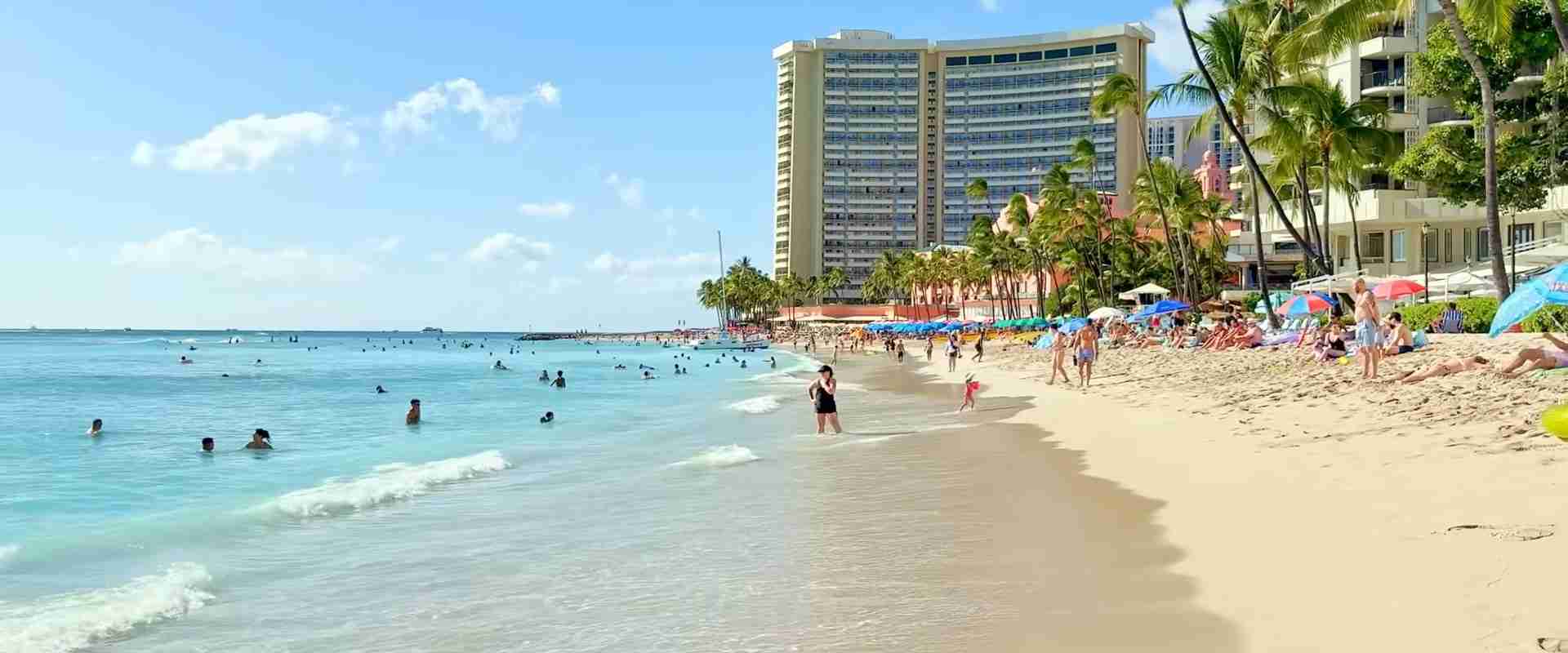
Waikiki Beach anchors family beach experiences with its legendary combination of gentle waves, golden sand, and complete infrastructure including lifeguard stations, restrooms, showers, and beachfront restaurants within steps of the water. The 2-mile crescent comprises multiple distinct beach sections, each offering different characteristics for families. Kuhio Beach near Duke Kahanamoku statue features two protective concrete walls creating a calm lagoon-like area perfect for toddlers and beginning swimmers, with depths remaining waist-deep on adults extending 40-50 yards from shore. The wall structure breaks incoming waves before reaching the protected swimming area, allowing young children to experience ocean water without intimidating surf.
Lifeguards maintain watch from elevated stations positioned every 200-300 yards along Waikiki Beach, with guards actively monitoring swimming areas marked by yellow buoys and enforcing safe zones. Families arrive early (before 10 AM) to claim prime spots near lifeguard stations where guards provide immediate assistance and parents gain peace of mind. Beach rentals including chairs ($10-15 daily), umbrellas ($12-18), and boogie boards ($8-12) operate from stands along the beach, though bringing your own equipment from ABC Store purchases ($15-25 for basic boogie boards, $8-12 for sand toys) saves money over multi-day rentals.
Waikiki’s gentle shore break waves rolling 2-4 feet provide ideal conditions for children learning bodyboarding and wave jumping under parental supervision. Elementary-age children spend hours timing wave arrivals, jumping over smaller sets, and attempting to bodyboard larger swells toward shore. The sandy bottom extends uniformly without sudden drop-offs or coral outcroppings, allowing parents to wade alongside children providing support and supervision. Morning hours (7-11 AM) deliver calmest conditions before afternoon trade winds strengthen, though increased wind creates entertaining wave action for older children while potentially overwhelming younger or more cautious swimmers.
Practical amenities make Waikiki Beach accessible for families with young children requiring frequent restroom access, diaper changes, and shade breaks. Public restrooms with changing tables operate at Kuhio Beach Park near the Duke statue and at Kapiolani Beach Park near the aquarium, with outdoor showers providing fresh water for rinsing sand before walking back to hotels. Shaded areas under palm trees and ironwood groves allow families to escape direct sun during midday heat, though competitive claiming of shaded spots requires morning arrival. Food options range from beachfront restaurants serving sit-down meals to food trucks and ABC Store grab-and-go options, eliminating the need to leave the beach for lunch.
Ala Moana Beach Park: Calm Protected Waters
Ala Moana Beach Park delivers Honolulu’s calmest ocean swimming through a protective offshore reef creating a lagoon-like environment ideal for toddlers, beginning swimmers, and families seeking stress-free beach days without wave concerns. The man-made peninsula extending into the ocean creates a protected swimming area where water remains calm even when open ocean displays significant wave action visible beyond the reef. Depths increase gradually from ankle-deep areas extending 30-40 yards from shore to waist-deep zones another 40-50 yards further, allowing parents to select appropriate depth zones for their children’s comfort and ability levels.
The park’s extensive lawn areas provide shaded picnic zones under mature trees, where families spread blankets for lunch breaks and toddler naps while maintaining visual contact with older children playing in the water. Permanent picnic tables with shade structures support multi-generational gatherings requiring seating for elderly grandparents who prefer observing beach activities rather than participating. Playground equipment installed near the beach allows young children to alternate between ocean swimming and land-based play when water time produces fatigue or overexposure concerns arise.
Lifeguards staff the main swimming area during daylight hours, though coverage extends across a wider area than at Waikiki requiring more vigilant parental supervision. The offshore reef protecting the swimming lagoon also attracts tropical fish visible to snorkelers, with families bringing basic snorkel masks finding numerous colorful species in 4-8 feet of clear water. Children comfortable with snorkeling but intimidated by Hanauma Bay’s deeper waters and reservation requirements practice skills at Ala Moana before attempting more advanced snorkeling destinations.
Beach facilities include multiple restroom buildings with outdoor showers, ample free parking in large lots adjacent to the park (rare in Honolulu), and proximity to Ala Moana Center’s shopping, food court, and air-conditioned indoor spaces. Families combine morning beach time with afternoon shopping and dining at the mall, providing balanced schedules mixing outdoor activity with indoor respite from sun and heat. TheBus routes connect Ala Moana directly to Waikiki hotels with 10-15 minute rides, making car-free access simple for families utilizing public transportation.
Hanauma Bay Nature Preserve: Premier Family Snorkeling
Hanauma Bay delivers Hawaii’s most accessible world-class snorkeling experience, where protected shallow waters teeming with hundreds of tropical fish species allow even beginning snorkelers as young as 6-7 years old to encounter Hawaiian marine life in their natural habitat. The volcanic crater formation creates a protected cove with calm waters year-round, while the extensive shallow reef areas (3-6 feet deep across most of the bay) enable surface snorkeling without diving requirements. Families entering the water from the sandy beach encounter schools of yellow tangs, parrotfish, butterflyfish, and surgeonfish within 20-30 yards of shore, with fish populations so habituated to human presence that they swim within arm’s reach.
Advance reservation requirements complicate Hanauma Bay access but protect the marine environment from overcrowding that damaged the reef ecosystem in past decades. Reservations open exactly 48 hours before your visit at 7 AM Hawaii time through the Honolulu Parks & Recreation website, with slots for popular times disappearing within 3-5 minutes. Set phone alarms for 6:55 AM two days before your planned visit, have payment information ready, and complete the booking process quickly as the system crashes frequently during peak reservation times. Starting November 2025, Roberts Hawaii offers an alternative booking option bundling shuttle transportation and entry tickets reservable up to one month in advance for higher per-person cost but guaranteed access.
Entry fees run $25 per adult and $13 per child under 13 (Hawaii residents and military enter free), with mandatory educational video viewing before beach access. The 9-minute video explains marine conservation, prohibited fish feeding, and safe snorkeling practices while children fidget through the presentation eager to reach the water. Snorkel gear rentals cost $20 per set at the park, though bringing equipment purchased at Walmart ($25-35 for adult mask/snorkel/fin sets, $18-25 for children’s sets) or ABC Stores saves money for families making multiple snorkel outings during the week.
Arrive early (parking lot opens 6:45 AM, beach access 7 AM) to secure parking in the limited lot before it reaches capacity by 9 AM on most days, with late arrivals turned away. The steep walk down to the beach (quarter-mile paved path descending 200 feet elevation) challenges families with young children requiring carrying or extended walking breaks, while the return uphill climb after beach time exhausts even teenagers. A tram shuttle operates for elderly and disabled visitors ($1.25 each way) but does not accommodate general public, so factor the walk into planning for families with children under 5 who tire easily.
Beach facilities include restrooms, outdoor showers, and limited shaded areas under trees requiring early claiming. Food and drinks are not sold at the preserve (mainland-style no concessions policy protecting the natural environment), so pack lunches, snacks, and plenty of water in soft-sided coolers. Plan 3-4 hours total for Hanauma Bay visits including drive time from Waikiki (25-30 minutes each way), parking, video viewing, beach time, and the uphill return walk.
Ko Olina Lagoons: Zero-Wave Family Beach
Ko Olina Lagoons on Oahu’s west coast (40-minute drive from Waikiki) provide the ultimate toddler-friendly beach experience with four man-made lagoons featuring completely protected swimming areas where ocean waves never reach. The curved rock breakwaters surrounding each lagoon create calm pools with gentle sandy beach entries, warm shallow water, and zero current or undertow concerns. Families with children ages 1-6 who fear ocean waves or parents seeking stress-free beach days where constant vigilance isn’t required find Ko Olina’s protected environment ideal for relaxed beach time.
Each lagoon provides similar experiences with slight variations in size and beach configuration. Lagoon 1 near Ko Olina Beach Park offers the most public access with ample parking, playground equipment, and restroom facilities, making it the busiest lagoon attracting local families alongside tourists. Lagoons 2-4 nestle between luxury resorts (Four Seasons, Aulani Disney Resort) with more limited public parking (arrive before 10 AM to secure spots) but generally smaller crowds once beach area is reached. All lagoons feature crystal-clear water revealing sandy bottoms even at the deepest central areas (typically 8-12 feet), allowing parents to visually track children swimming beyond arm’s reach.
Resort amenities at Aulani Disney Resort including character dining, kids’ clubs, and family pool areas with water slides attract families staying on property, though day visitors access the adjacent lagoon beach for swimming without resort guest status. Budget-conscious families make Ko Olina a day trip destination rather than accommodation base, combining morning lagoon beach time with afternoon exploration of the west coast before returning to more affordable Waikiki hotels for the night. The round-trip drive (80 miles total) and limited west coast dining options make rental car investment essential for Ko Olina access rather than relying on public transportation.
Snorkeling in Ko Olina Lagoons reveals fewer fish species than Hanauma Bay due to the artificial nature of the environment, though families still encounter sergeant majors, surgeonfish, and occasional sea turtles entering the lagoons from offshore. The protected environment allows very young children (ages 4-6) to experiment with first-time snorkeling in shallow calm water without the intimidation of open ocean conditions or stronger currents found at natural snorkel sites.
Top Kid-Friendly Attractions in Honolulu 2026
Educational attractions, cultural sites, and marine experiences provide essential variety balancing beach-heavy itineraries while delivering age-appropriate learning opportunities.
Honolulu Zoo: African Savanna and Keiki Zoo Experiences
Honolulu Zoo ($19 adults, $11 children ages 3-12, free for children under 3) occupies 42 acres at the eastern edge of Waikiki adjacent to Kapiolani Park, placing it within 10-15 minute walks from most Waikiki hotels. The zoo showcases over 900 animals representing African, tropical Pacific, and Hawaiian ecosystems through naturalistic habitat designs eliminating traditional cage-style exhibits. African Savanna sections display giraffes, zebras, rhinoceros, lions, and elephants in open-air environments where children observe animals at distances replicating wildlife safari experiences, while elevated viewing platforms position visitors at giraffe eye-level for memorable photo opportunities.
Keiki Zoo (Hawaiian word “keiki” means child) delivers hands-on farm animal encounters where children ages 2-10 interact directly with goats, sheep, chickens, and pot-bellied pigs under staff supervision. The petting zoo area includes brush stations where children groom goats while learning about animal care, feeding opportunities where staff distribute food pellets to children feeding animals through fence openings, and educational signage explaining farm animal behaviors and care requirements. Young children spend 30-45 minutes in the Keiki Zoo area while teenagers explore primates and big cats independently before families reunite.
Keeper talks scheduled throughout the day provide educational content delivered by zoo staff at specific animal exhibits. African elephant talks (11 AM and 2 PM daily) explain elephant social structures and conservation challenges while demonstrating training techniques used in animal care. Chimpanzee feeding sessions (1:30 PM daily) attract crowds as staff describe primate intelligence and tool use while animals forage for scattered food items. Check daily schedule posted at entrance or available through the zoo’s website to coordinate visits with preferred keeper talks.
Visit duration averages 2.5-3.5 hours for families with elementary-age children stopping at most exhibits, though toddlers requiring frequent breaks and teenagers thoroughly exploring every section extend visits to 4+ hours. Arrive at opening time (9 AM) during summer months to complete the majority of the visit before midday heat peaks, or plan afternoon visits (after 2 PM) during winter when temperatures moderate earlier. The zoo lacks extensive shaded areas between exhibits, so sun protection including hats, sunscreen, and frequent water breaks prevents heat exhaustion in children unaccustomed to tropical sun intensity.
Limited food options inside the zoo (single snack bar with basic items) encourage families to pack lunches and snacks, with picnic tables available in shaded areas near the Keiki Zoo. ABC Stores near the zoo entrance stock grab-and-go lunch items, fruit, and bottled water at prices significantly below in-zoo food service. Stroller rental ($5 daily) benefits families with toddlers tiring during the full zoo circuit, while the relatively flat terrain accommodates standard strollers brought from home or borrowed from hotels.
Waikiki Aquarium: Hawaiian Marine Life Education
Waikiki Aquarium ($12 adults, $5 children ages 4-12, free for children under 4) operates as the third-oldest public aquarium in the United States (established 1904) while maintaining focus on Hawaiian and Pacific marine ecosystems. The compact facility houses 3,500+ animals representing 490 species in exhibits emphasizing Hawaiian endemic species found nowhere else on Earth. Families complete aquarium visits in 1-1.5 hours, making it an ideal morning or late afternoon activity before or after beach time at adjacent Sans Souci Beach located directly across the street.
Living coral reef exhibits showcase the vibrant ecosystems supporting Hawaiian marine food chains, with butterflyfish, triggerfish, surgeonfish, and parrotfish swimming among live coral colonies. Children press faces against thick acrylic panels observing fish behaviors at close range, while interpretive signage explains symbiotic relationships between coral polyps and zooxanthellae algae. The Northwestern Hawaiian Islands exhibit features Hawaiian monk seals (though as of early 2026, the aquarium’s resident seals are on loan to a research facility in California – check current status before visiting), while jellyfish galleries display mesmerizing Pacific sea nettles and moon jellies drifting in cylindrical tanks with blue background lighting creating ethereal visual effects.
Interactive tide pool touch tanks remain the primary attraction for children ages 3-8, where supervised hands-on encounters allow gentle touching of sea cucumbers, hermit crabs, sea stars, and sea urchins under staff supervision. Marine educators stationed at touch tanks explain proper handling techniques (gentle two-finger touching, no grabbing or lifting animals from water) while answering children’s questions about tide pool ecology and animal adaptations. Educational programs including behind-the-scenes tours ($16 adults, $10 children) and after-dark flashlight tours provide enhanced experiences for families seeking deeper engagement beyond standard admission.
The aquarium’s location adjacent to a living coral reef ecosystem (visible snorkeling at Sans Souci Beach 100 yards from the entrance) creates unique educational connections between exhibits and natural ocean environments. Families alternate between aquarium exhibits introducing Hawaiian fish species and snorkeling sessions at the adjacent beach identifying the same species in their natural habitats, reinforcing marine ecology learning through direct observation. The compact size prevents overwhelming toddlers who struggle with attention span at larger mainland aquariums, while the Hawaiian-focused content educates children about local ecosystems they’re experiencing during beach activities rather than generic marine life found worldwide.
Pearl Harbor Historic Sites: World War II History Education
Pearl Harbor delivers profound historical education for children ages 7 and older, where abstract World War II history transforms into tangible experiences through battleship exploration, museum exhibits featuring authentic artifacts, and the somber USS Arizona Memorial spanning the sunken battleship where 1,177 crew members remain entombed. The Pearl Harbor National Memorial offers free access to visitor centers and USS Arizona Memorial, while the broader Pearl Harbor Historic Sites Passport ($89.99 ages 13+, $44.99 ages 4-12) bundles entry to USS Missouri battleship, USS Bowfin submarine museum, and Pacific Aviation Museum.
Free USS Arizona Memorial tickets release 8 weeks in advance through recreation.gov and disappear within minutes of becoming available, requiring precise timing (tickets release 3 PM Eastern Time, 9 AM Hawaii Time) and fast internet connections. Families successfully securing tickets arrive at Pearl Harbor Visitor Center 30-45 minutes before scheduled boat departure time for security screening (no bags larger than standard purse allowed – storage lockers available for $7), 23-minute documentary film viewing explaining December 7, 1941 attack, and Navy boat shuttle to the memorial platform. Children under 4 may struggle with the solemn atmosphere and required quiet behavior at the memorial, while elementary-age children grasp the historical significance of standing above the sunken warship visible beneath crystal-clear water.
USS Missouri battleship ($34.99 adults, $17.49 children ages 4-12) moored adjacent to the Arizona Memorial offers contrasting experiences celebrating American victory through exploration of the “Mighty Mo” where Japanese surrender documents ended World War II in Tokyo Bay. Families walk the teak deck where surrender ceremony occurred, explore officer quarters and crew sleeping areas revealing cramped conditions where 2,700 sailors lived during deployment, and view massive 16-inch guns capable of firing 2,700-pound projectiles over 20 miles. Audio tours included with admission guide families through self-paced exploration, while optional guided tours ($25 additional) provide enhanced storytelling from knowledgeable docents. Children ages 8-14 particularly engage with battleship exploration, climbing ladders between decks, peering into gun turrets, and imagining naval life aboard the historic warship.
USS Bowfin submarine museum ($19.99 adults, $9.99 children ages 4-12, children under 4 not permitted inside submarine) allows families to explore the cramped interior of a World War II fleet submarine, walking through berthing areas where 80 crew members slept in stacked bunks, torpedo rooms housing 24 deadly weapons, and the control room containing periscopes and navigation equipment. The self-guided audio tour explains submarine warfare tactics and daily life during 60-90 day underwater patrols. Children under 4 face prohibition due to steep ladders and narrow hatches creating safety concerns, while claustrophobia-prone individuals of any age should skip the interior tour and explore the above-ground museum exhibits instead.
Plan 4-6 hours minimum for comprehensive Pearl Harbor visits including USS Arizona Memorial (2 hours total with film and boat shuttle), either battleship or submarine exploration (1.5-2 hours each), and museum browsing. Food options at Pearl Harbor remain limited to a single snack bar with basic items, so eat substantial breakfast before arrival or plan late lunch after departure. The site provides minimal shade between attractions, requiring sun protection for families making full-day visits during summer months.
Diamond Head State Monument: Family-Friendly Crater Hike
Diamond Head State Monument ($5 entry fee per person ages 3+, $10 parking per vehicle) offers Honolulu’s most accessible summit hike rewarding families with 360-degree views of Waikiki, Pacific Ocean, and Koolau Mountains after a 0.8-mile trail climbing 560 feet elevation. The well-maintained paved and gravel trail includes steep sections with stairs and handrails, two dark tunnels requiring flashlights (phone lights work adequately), and a final 99-step staircase reaching the summit platform. Children ages 5 and older with reasonable fitness levels complete the hike in 30-40 minutes uphill (20-25 minutes downhill return), though families with younger children or frequent photo stops extend duration to 60-75 minutes each way.
Advance reservations became mandatory in 2022 and continue through 2026, with bookings opening 30 days before visit dates. Reserve early-morning time slots (6-7 AM sunrise hikes or 7-8 AM for comfortable starts) to avoid midday heat that makes the shadeless trail significantly more challenging for children. Sunrise slots sell out within hours of becoming available due to photographers seeking golden-hour lighting and families avoiding heat, while afternoon slots (after 2 PM) offer easier booking but expose hikers to hottest conditions. The reservation system limits daily visitors preventing overcrowding that previously created traffic jams at narrow trail sections where ascending and descending hikers passed each other.
Trail difficulty rates as moderate for adults but challenges young children due to uneven footing, steep stairway sections totaling 175+ steps, and sustained uphill climbing without significant level sections for rest breaks. Children ages 5-7 require frequent encouragement and adult hand-holding on steep sections, while ages 8-12 typically hike independently with periodic check-ins. Families with children under 5 should realistically assess their child’s hiking experience and stamina before attempting Diamond Head, as the trail offers no bailout points once committed beyond the first quarter-mile. Baby carriers work better than strollers for families determined to bring toddlers, as stairs and uneven surfaces make stroller use impossible beyond the trailhead.
Pack more water than seems necessary (minimum 16-20 ounces per person even for morning hikes), as sun exposure and physical exertion dehydrate children quickly in tropical heat. Apply sunscreen before starting and reapply at summit before descent. Proper footwear (closed-toe athletic shoes with good tread) prevents twisted ankles on uneven lava rock sections. The summit provides minimal shade, so limit summit time to 10-15 minutes during hot conditions rather than lingering for extended breaks that risk overheating in young children.
Family Accommodation Guide Honolulu 2026
Hotel selection significantly impacts family vacation experience through room configurations supporting four-person families, proximity to beaches and attractions, and amenities including pools, kids’ clubs, and laundry facilities.
Budget-Friendly Family Hotels in Waikiki 2026
Budget family hotels ($180-240 per night) deliver essential amenities including in-room refrigerators and microwaves supporting grocery store meal preparation, pools providing backup swimming options during ocean-unfriendly weather, and locations within walking distance of Waikiki Beach and key attractions.
Aston Waikiki Banyan ($190-230 nightly) provides one-bedroom suites with separate living areas, full kitchens including four-burner stoves and full-size refrigerators, and in-unit washers/dryers eliminating laundromat expenses. The 38-story twin towers house 876 units with varying configurations, so request higher floors for better views and reduced street noise when children sleep. The recreation deck features a large pool, hot tub, tennis courts, and grilling areas where families prepare outdoor meals. The 10-minute walk to Waikiki Beach requires crossing busy Kalakaua Avenue but delivers beach access without beachfront hotel premium pricing. On-site parking costs $30 daily, though the property’s location near the eastern end of Waikiki reduces parking necessity for families willing to walk or use TheBus for attractions.
Aqua Palms Waikiki ($185-225 nightly) occupies a central Waikiki location 5-minute walk from beach and adjacent to International Market Place shopping and dining. Standard rooms include mini-refrigerators and microwaves supporting simple breakfast preparation and snack storage, while one-bedroom suites add full kitchens and separate sleeping areas accommodating families of four without cramming into single-room configurations. The rooftop pool deck provides city and partial ocean views alongside saltwater pool and hot tub. The property lacks kids’ club or organized activities, requiring families to self-direct all entertainment and scheduling.
Ramada Plaza by Wyndham Waikiki ($175-215 nightly) targets budget-conscious families through competitive pricing and location three blocks from beach. Rooms include refrigerators and microwaves, while pool and sundeck provide on-property swimming options. The property receives mixed reviews regarding maintenance and cleanliness, with some rooms showing age and wear. Families prioritizing budget over luxury find adequate accommodations at prices 30-40% below comparable mid-range properties, accepting trade-offs in room condition and limited amenities.
Mid-Range Family Resorts in Waikiki 2026
Mid-range family properties ($280-380 nightly) add premium locations, beachfront or near-beachfront access, enhanced pools with slides or features appealing to children, and family-focused services including kids’ clubs and organized activities.
Embassy Suites by Hilton Waikiki Beach Walk ($295-350 nightly) delivers exceptional family value through all-suite configurations (separate bedroom and living room with sofa bed), complimentary made-to-order breakfast daily (saving $45-65 per family versus restaurant breakfasts), and evening reception offering free drinks and light snacks. The one-bedroom suites comfortably accommodate families of four with separated sleeping areas allowing parents and children different bedtimes without disturbance. The central Waikiki Beach Walk location places families 2-minute walk from beach and surrounded by restaurants, shops, and entertainment venues. The property’s pool lacks wow-factor features like slides but provides adequate swimming space, while the absence of kids’ club means families manage all childcare and activity planning independently.
Outrigger Waikiki Beachcomber Hotel ($285-340 nightly) occupies prime central Waikiki location across from beach and above retail and dining establishments including restaurant offering kids’ menus and poolside bar providing adult beverage options. Family rooms configure with two double beds accommodating four guests comfortably, while connecting rooms suit larger families or those preferring more space. The pool area receives limited sun exposure due to surrounding high-rises, creating comfortable swimming conditions but less ideal sunbathing. The property positions families within 5-minute walks of Zoo, Aquarium, beach, and numerous restaurants, maximizing walkability and minimizing transportation requirements.
Waikiki Beach Marriott Resort & Spa ($305-375 nightly) features two towers on Waikiki Beach’s eastern end with direct beach access, two pools including family pool with waterslide, and Keiki Club (kids’ club) offering supervised activities for children ages 5-12 during select hours. Ocean-view rooms provide premium beach vistas commanding higher rates ($350-425), while city-view rooms deliver same amenities at reduced prices suitable for families prioritizing beach access over room views. The on-site restaurants serve kids’ menus, while the pool bar allows parents pool-side drinks while supervising children’s swimming. The beachfront location eliminates daily walks to beach, creating seamless indoor-outdoor flow as families transition between room, pool, and beach throughout the day.
Luxury Family Resorts in Honolulu 2026
Luxury family properties ($480-700 nightly) provide comprehensive resort experiences including extensive pools with slides and lazy rivers, full-service kids’ clubs offering all-day supervised programming, multiple on-site restaurants, and premium locations delivering immediate beach access.
Hilton Hawaiian Village Waikiki Beach Resort ($495-650 nightly) sprawls across 22 beachfront acres creating a self-contained resort village where families access beaches, pools, restaurants, shops, and entertainment without leaving the property. The five pools include Paradise Pool featuring waterslide popular with elementary-age children, keiki (children’s) pool with zero-depth entry perfect for toddlers, and super pool stretching 10,000 square feet with swim-up bar for parents. Camp Penguin kids’ club ($95 per child full day, $65 half day) provides supervised activities including lei making, hula lessons, pool games, and beach activities for ages 5-12, allowing parents child-free time for spa treatments or adult dining.
The resort’s self-contained nature creates convenience but reduces exposure to broader Waikiki experiences, as families find sufficient on-property dining and entertainment eliminating incentive to explore surrounding neighborhood. Rainbow Tower ocean-view rooms ($565-700) provide premium Diamond Head and ocean vistas, while Kalia Tower garden-view rooms ($495-595) offer same resort access at reduced rates for families unconcerned about room views. Friday evening fireworks launched from the property beach create special experiences for children enjoying weekly tradition of beachfront pyrotechnics accompanied by hula shows and live music.
Royal Hawaiian, a Luxury Collection Resort ($520-685 nightly) targets families seeking boutique luxury through its iconic pink facade, historic property charm, and intimate beach setting. The resort’s smaller size (527 rooms versus Hilton Hawaiian Village’s 3,000+) creates quieter atmosphere with reduced crowds at pool and beach areas, while supervised kids’ club activities and family pool accommodate children without dominating the property’s romantic ambiance. Premium pricing reflects the property’s prestige and prime Waikiki Beach frontage, with families paying 15-25% above comparable luxury properties for the Royal Hawaiian mystique and central beachfront location.
Dining with Kids in Honolulu 2026
Restaurant selection balancing adult dining preferences, children’s menu options, and budget considerations shapes daily meal experiences while controlling food costs that quickly escalate in Honolulu’s expensive dining scene.
Budget-Friendly Family Dining Strategies
Grocery store meal preparation dramatically reduces food expenses while accommodating picky eaters and providing familiar breakfast options for young children resisting tropical fruit and rice-based morning meals. Times Supermarket (2-minute walk from eastern Waikiki, 10-minute walk from central Waikiki) and Walmart (15-minute bus ride from Waikiki on Route 13 or 42) stock mainland-familiar brands at prices comparable to stateside grocery stores (eggs $5-6 dozen, bread $4-5 loaf, peanut butter $4-6 jar, cereal $4-6 box). Families staying in units with full kitchens prepare breakfast daily (saving $45-65 versus restaurant family breakfasts) and simple lunches (sandwiches, fruit, chips) packed in soft-sided coolers for beach days.
ABC Stores located every 2-3 blocks in Waikiki provide convenient grab-and-go options including pre-made sandwiches ($7-9), fruit cups ($4-5), yogurt ($3-4), and milk ($6-7 half-gallon) at prices 15-25% above supermarket rates but significantly below restaurant prices. Families without kitchen facilities rely heavily on ABC Stores for breakfast items (cereal, milk, fruit, yogurt, bagels) eaten in hotel rooms before beach time, reducing restaurant breakfast expense to occasional treats rather than daily requirements.
Plate lunch restaurants deliver authentic local dining experiences at prices accommodating family budgets. Local favorite Rainbow Drive-In (10-minute drive from Waikiki or 25-minute bus ride Route 2 or 13) serves massive portions of teriyaki chicken, kalua pork, or mahimahi plates ($11-14) including two scoops rice and macaroni salad providing sufficient food for adults to share with young children. Ono Hawaiian Foods (near downtown, 15-minute drive from Waikiki) specializes in traditional Hawaiian cuisine including laulau, kalua pig, and lomi salmon at reasonable prices ($13-18 per plate) with portions easily split between parent and child. These local restaurants lack kids’ menus but serve mild proteins (teriyaki chicken, mahimahi) acceptable to most children alongside familiar rice and macaroni salad sides.
Food courts at Ala Moana Center (largest shopping mall in Hawaii, 10-minute bus ride from Waikiki) and International Market Place (central Waikiki location) gather diverse cuisines under one roof allowing families to order different meals satisfying varying preferences. Parents order Thai or poke bowls while children select pizza, chicken tenders, or noodle dishes, eating together at communal seating areas. Prices run $10-16 per person compared to $18-28 at sit-down restaurants, with faster service accommodating families with young children struggling through prolonged restaurant meals.
Mid-Range Family Restaurant Recommendations
Mid-range family restaurants ($18-35 per entrée) provide table service, kids’ menus, and varied cuisine options while maintaining casual atmospheres accepting children’s typical restaurant behavior.
Marukame Udon (central Waikiki location) operates cafeteria-style service where customers watch cooks prepare fresh udon noodles before selecting from multiple udon bowl options ($9-14) and tempura selections ($2-4 per piece). Children enjoy watching the noodle-making process through glass windows, while the quick service and immediate seating (no reservations or waitlists) accommodates families with restless children. The authentic Japanese experience introduces children to udon noodles and tempura in accessible format, with mild broth-based bowls appealing to picky eaters.
Duke’s Waikiki (beachfront Waikiki location) combines ocean views with extensive menu including keiki (children’s) selections ($10-12: chicken tenders, grilled cheese, mini burgers, pasta). Adult entrées ($25-38) feature fresh fish preparations including macadamia nut crusted mahimahi and grilled ahi, while breakfast menu ($15-22) delivers substantial portions of pancakes, benedicts, and island specialties. The open-air setting allows ocean breezes and beach views entertaining children between course arrivals, while the casual beach-bar atmosphere tolerates noise from excited children without judgmental glances from fellow diners.
Heavenly Island Lifestyle (near Waikiki hotels, multiple locations) offers acai bowls ($12-16), smoothies ($8-11), and healthy breakfast/lunch items appealing to health-conscious families. Children customize acai bowls with fruit and granola toppings, creating interactive dining experiences. The counter-service format and quick preparation suit families seeking nutritious meals without prolonged restaurant commitments, while Instagram-worthy presentations delight teenagers seeking social media content.
Special Occasion and Celebration Dining
Families celebrating birthdays, anniversaries, or special achievements find numerous Honolulu restaurants offering elevated experiences justifying premium pricing ($35-65 per entrée) for memorable meals.
House Without a Key at Halekulani Hotel (Waikiki beachfront) presents sunset hula shows Monday-Saturday evenings accompanied by live Hawaiian music while families dine on Pacific Rim cuisine in open-air oceanfront setting. The complimentary hula performances (professional dancers, not resort entertainment-level) engage children ages 4+ while parents enjoy mai tais and appetizers ($18-28) or full dinners ($38-58). The sophisticated-casual atmosphere accepts well-behaved children while maintaining adult-oriented ambiance, requiring parents to manage children’s behavior appropriately.
Roy’s Waikiki (Waikiki location) created by celebrity chef Roy Yamaguchi serves Hawaiian fusion cuisine combining European techniques with Asian ingredients and local seafood. The restaurant offers keiki menu ($12-15) while adults order signature dishes like misoyaki butterfish ($42) or macadamia crusted mahimahi ($38). The upscale-casual environment tolerates children without catering specifically to families, positioning it as appropriate special occasion venue for families with elementary-age or older children capable of restaurant behavior.
Family Transportation Guide Honolulu 2026
Transportation decisions between rental cars, public buses, rideshare services, or walking shape daily logistics, costs, and stress levels while navigating Honolulu with children.
TheBus Public Transportation with Kids
TheBus provides Honolulu’s extensive public transportation network operating 100+ routes connecting Waikiki to Pearl Harbor, Diamond Head, Ala Moana, and virtually every corner of Oahu at $3 per ride ($1.50 children ages 6-17, free children under 6). Monthly passes ($90 adults, $45 children ages 6-17) deliver unlimited rides for families making 15+ trips during the week, breaking even versus individual fare payments while eliminating daily fare calculation hassles. Purchase passes at ABC Stores, Foodland supermarkets, or Walmart rather than through bus drivers who require exact change for individual fares.
Route 13 connects Waikiki to Pearl Harbor with 45-minute rides departing every 30 minutes during peak hours (6 AM-6 PM), positioning it as the primary Pearl Harbor access route for car-free families. Route 23 and 24 serve Hanauma Bay during limited hours (morning outbound, afternoon return), though infrequent service (every 45-60 minutes) and limited capacity make rental car or tour transport more practical for Hanauma Bay visits. Routes 2, 13, 19, 20, and 42 connect Waikiki to Ala Moana Center for shopping and dining, with 10-15 minute rides departing every 10-20 minutes providing excellent service frequency.
Stroller policies allow collapsed strollers in luggage areas but prohibit open strollers in aisles blocking passenger movement. Families with young children requiring strollers during outings face challenges juggling collapsed strollers, diaper bags, and active toddlers while boarding buses, though baby carriers eliminate stroller complications entirely. Air conditioning on buses runs cold (65-68°F) compared to exterior tropical heat, requiring light jackets or long sleeves for extended rides preventing children from getting chilled.
Bus travel extends trip duration significantly compared to rental cars, with 20-minute drives from Waikiki to Ala Moana requiring 35-45 minutes via bus including wait times and multiple stops. Families with young children prone to restlessness during extended sitting find bus rides challenging, while elementary-age children view bus rides as minor adventures observing local life through windows. The trade-off between rental car expense ($65-85 daily plus $25-40 parking) and bus simplicity ($3 per trip) depends on family tolerance for transit challenges and number of daily destination changes requiring multiple trips.
Rental Car Considerations for Families
Rental cars provide maximum flexibility for families visiting destinations poorly served by TheBus (Hanauma Bay, North Shore beaches, Ko Olina Lagoons, hiking trails) while eliminating coordination of multiple children, strollers, beach equipment, and diaper bags on public transportation. Daily rental rates run $65-85 for mid-size sedans or small SUVs accommodating family of four plus luggage and beach gear, with compact cars ($50-65 daily) sufficient for couples with young children but tight for families with teenagers requiring more passenger space.
Parking costs add significantly to rental car expenses in Waikiki where most hotels charge $30-45 daily parking fees (valet-only at many properties, self-parking rarely available). Budget-conscious families staying in hotels with parking charges calculate total rental car cost as daily rate plus daily hotel parking plus occasional public lot parking at destinations ($5-10 at Diamond Head, $10 at Hanauma Bay, free at most beaches). A week-long rental totals $455-595 for car alone, plus $210-315 for hotel parking, reaching $665-910 total transportation expense. Compare this to $126-252 for two weekly TheBus passes (two adults, children ride free or discounted) to determine which option suits the family’s planned activities and budget.
Car seats represent significant rental car complications as airlines typically allow one car seat as free checked baggage (policies vary by carrier), allowing families to bring equipment from home avoiding rental fees ($12-15 daily per seat from rental companies, $84-105 weekly). Families with multiple young children requiring different seat types (rear-facing infant seat, forward-facing toddler seat, booster for elementary age) face $25-35 daily car seat rental fees on top of vehicle rental, potentially reaching $175-245 weekly just for car seats. Bringing car seats from home through airline checked baggage saves $150-200 weekly for families requiring two seats, though managing car seats through airports adds logistical complexity.
Traffic in Honolulu reaches mainland-city levels during rush hours (7-9 AM, 4-6:30 PM), with H-1 freeway regularly backing up and surface streets in Waikiki moving at walking pace. GPS navigation apps (Google Maps, Waze) provide real-time traffic updates helping families avoid worst congestion, while early morning departures (before 7 AM) for destinations like Diamond Head or Hanauma Bay eliminate traffic frustrations entirely. Parking at popular beaches (Lanikai, Kailua, North Shore) fills early during summer months and weekends, requiring 9-10 AM arrivals to secure spots before lots reach capacity.
Rideshare Services for Selective Transportation
Uber and Lyft operate extensively in Honolulu providing on-demand transportation for families making selective trips without committing to full rental car expenses. Rideshare from Waikiki hotels to Pearl Harbor runs $25-35 one-way (15-20 minutes depending on traffic), to Hanauma Bay $35-45 one-way (25-30 minutes), and to Ko Olina Lagoons $65-85 one-way (45-60 minutes). Round-trip rideshare costs often approach or exceed single-day rental car rates, positioning rideshare as economical only for single destination trips rather than multiple daily outings.
Car seat requirements apply to rideshare as strictly as rental cars, with Hawaii law mandating appropriate restraints for children under 8 years old. Uber offers car seat option (limited availability) for $15 additional fee beyond base fare, though availability remains sporadic in Honolulu and families frequently encounter no car-seat-equipped drivers available. Most families with young children bring portable car seats from hotel to use in rideshare vehicles or resort to carrying children in arms during short trips (technically illegal but widely practiced and rarely enforced for short hotel-to-beach transfers).
Age-Specific Activity Recommendations Honolulu 2026
Matching activities to children’s developmental stages maximizes engagement while preventing frustration from age-inappropriate selections.
Toddlers and Preschoolers (Ages 2-5)
Toddler-friendly Honolulu activities emphasize gentle beach play, simple animal encounters, and short-duration engagements matching limited attention spans. Ko Olina Lagoons provide the ultimate toddler beach environment with zero waves, warm shallow water, and sandy beach perfect for bucket-and-shovel play. Waikiki Beach’s protected Kuhio Beach section (near Duke Kahanamoku statue) offers similar calm-water conditions closer to Waikiki hotels, while Ala Moana Beach Park’s extensive shallow areas and playground equipment create variety beyond pure beach time.
Honolulu Zoo’s Keiki Zoo section targets this age group specifically through petting zoo experiences where toddlers interact with goats, chickens, and pot-bellied pigs under close supervision. The encounter-based learning engages toddlers more effectively than passive exhibit viewing at distant animals requiring binoculars or telephoto lenses to observe adequately. Plan 60-90 minute zoo visits focusing on Keiki Zoo and nearby exhibits rather than attempting comprehensive tours that exhaust toddlers before seeing highlight areas.
Waikiki Aquarium captivates toddlers through colorful fish displays at eye level in tanks positioned low enough for 3-4 year-olds to observe without lifting. The touch tank interactive area provides hands-on engagement perfect for toddler attention spans and tactile learning preferences, while the compact facility size (45-60 minute visit duration) prevents overtiring. Schedule aquarium visits during later afternoon hours (3-4 PM) when morning beach time has provided sufficient outdoor play and aquarium’s air conditioning offers welcome relief from heat.
Elementary Age Children (Ages 6-10)
Elementary-age children experience Honolulu’s full activity range with cognitive development supporting historical learning, physical abilities enabling surf lessons and snorkeling, and stamina allowing full-day adventures. Hanauma Bay snorkeling introduces marine ecosystems through direct interaction with tropical fish, while ranger programs explain conservation concepts at age-appropriate levels. Provide child-size snorkel gear ensuring proper fit and comfort, practice snorkeling skills in hotel pools or calm Waikiki Beach areas before attempting Hanauma Bay, and stay in shallow areas (3-6 feet deep) where children maintain confidence and parents provide close supervision.
Surf lessons captivate this age group with most children standing successfully on boards during first attempts. Select instructors specializing in children’s lessons (student-to-teacher ratios of 3:1 or better) rather than large group lessons where individual attention suffers. Two-hour group lessons ($89-110 per child) provide sufficient instruction time without exhausting children, while private lessons ($150-180) deliver personalized attention benefiting nervous or less athletic children. Schedule lessons during morning hours (8-10 AM) when ocean conditions remain calmest and children possess fresh energy before midday heat depletes stamina.
Diamond Head summit hike challenges this age group appropriately, requiring effort but remaining achievable for reasonably fit children. The 99-step final staircase tests determination while the summit reward of panoramic views provides memorable achievement celebrating their hiking success. Start early (arrive by 7 AM) to complete the hike before temperatures peak, pack substantial water and snacks, and plan modest afternoon activities recognizing post-hike fatigue. Children ages 6-7 may require encouragement during steep sections, while ages 8-10 typically complete the hike independently with periodic check-ins.
Tweens and Teenagers (Ages 11-17)
Teenagers seek independence, social experiences, and activities challenging enough to avoid boring “little kid” labels. North Shore surf lesson experiences position teenagers at legendary surf breaks where professionals train, creating authentic Hawaiian surf culture immersion beyond tourist-focused Waikiki lessons. Advanced bodyboarding at Sandy Beach (experienced swimmers only due to powerful shore break) or skimboarding at various South Shore beaches provide progression beyond beginner surf lessons. Supervise from appropriate distance allowing independence while maintaining safety oversight, as teenage overconfidence frequently leads to challenging dangerous conditions beyond their ability level.
Shark cage diving tours operate from North Shore harbors offering thrilling encounters with Galapagos sharks and sandbar sharks in protected cage environments ($130-160 per person, minimum age typically 13). The 2-hour experiences include boat ride to offshore shark territories, cage submersion allowing face-to-face shark viewing, and marine education from guides. While controversial among conservation advocates concerned about shark feeding altering natural behaviors, the experiences deliver adrenaline rushes teenagers crave while maintaining relative safety through professional operation and shark non-aggression toward cages.
Pearl Harbor resonates more strongly with teenagers possessing historical knowledge contextualizing the December 7, 1941 attack’s significance in World War II chronology. The battleship and submarine tours provide technical details about weapons systems, engineering, and military operations engaging teenagers interested in history or technology. Allow teenagers to explore at their own pace with audio guide devices rather than requiring family group togetherness throughout, meeting at designated times and locations for transportation coordination.
Sample Family Itineraries Honolulu 2026
Structured itineraries balance beach time, attractions, dining, and rest periods while accounting for different family energy levels and children’s ages.
Budget Family 3-Day Itinerary (Family of 4)
Day 1 – Waikiki Beach and Neighborhood Exploration ($95-140 daily cost)
Morning: Grocery store breakfast at hotel ($15-25 family), walk to Waikiki Beach arriving 9 AM for gentle wave play and sandcastle building (free). Pack lunch from ABC Store purchases ($35-45 family).
Afternoon: Honolulu Zoo visit ($60 family admission), 2-2.5 hours exploring African Savanna and Keiki Zoo petting areas. Return to hotel for rest break and pool time (hotel amenity, free).
Evening: Dinner at L&L Hawaiian Barbecue plate lunch restaurant ($40-50 family), watch sunset from Waikiki Beach (free), attend free hula show at Royal Hawaiian Center 6-7 PM (free).
Transportation: Walking only. Accommodation: Not included in daily costs.
Day 2 – Pearl Harbor and Ala Moana ($130-180 daily cost)
Morning: Early breakfast at hotel ($15-25 family), TheBus to Pearl Harbor 7:45 AM arrival Route 13 ($12 family), USS Arizona Memorial visit with free tickets secured advance (free admission), Pearl Harbor museum exhibits (free).
Afternoon: TheBus to Ala Moana Center ($12 family), lunch at food court ($45-65 family), shopping and air conditioning break. TheBus return to Waikiki ($12 family).
Evening: Beach sunset walk (free), dinner from ABC Store deli items and fruit ($35-45 family) eaten at hotel.
Transportation: $36 TheBus fares. Accommodation: Not included.
Day 3 – Hanauma Bay Snorkeling ($155-215 daily cost)
Morning: Early breakfast at hotel ($15-25), rental car day ($65-85 with parking) drive to Hanauma Bay arriving 7:30 AM, Hanauma Bay entry ($63 family: two adults $50, two children $13), 3 hours snorkeling with packed lunch ($25-35 groceries).
Afternoon: Return to Waikiki, beach bodyboarding (free), hotel pool time (free).
Evening: Celebrate final night dinner at Duke’s Waikiki ($75-105 family with kids’ menu items and two adult entrées).
Transportation: $65-85 rental car (includes driving Hanauma Bay and evening convenience). Accommodation: Not included.
Three-day total: Approximately $380-535 for activities, food, and transportation (accommodation separate).
Mid-Range Family 5-Day Itinerary (Family of 4)
Day 1 – Arrival and Waikiki Orientation ($175-235 daily cost)
Morning: Hotel breakfast at Embassy Suites complimentary made-to-order breakfast (included), unpack and organize, beach familiarization walk.
Afternoon: Waikiki Beach swimming and boogie board rentals ($32 for two boards), surf lesson for parents while kids bodyboard with beach attendant supervision ($178 for two parents, or skip and enjoy family beach time).
Evening: Dinner at Marukame Udon ($55-75 family), Waikiki Beach Walk evening stroll and window shopping (free).
Transportation: Walking. Rental car (pre-arranged): $65 daily plus hotel parking $30 = $95 starts today but not utilized.
Day 2 – Ocean Adventures ($220-295 daily cost)
Morning: Breakfast at hotel (included), rental car drive to Hanauma Bay ($95 car/parking allocated), Hanauma Bay entry and snorkeling ($63 family, 3-4 hours).
Afternoon: Drive to Lanikai Beach for calm water swimming and kayak rentals ($65-95 two single kayaks or one double), beach time.
Evening: Return to Waikiki, dinner at casual restaurant ($75-110 family).
Transportation: Rental car utilized. Attractions: $128-158.
Day 3 – Cultural Education Day ($195-265 daily cost)
Morning: Breakfast at hotel (included), drive to Pearl Harbor ($95 car allocated), USS Arizona Memorial visit (free, advance tickets), USS Missouri battleship tour ($105 family with full passport).
Afternoon: Bishop Museum visit ($100 family admission), interactive exhibits and planetarium show.
Evening: Dinner at Hawaiian restaurant Roy’s Waikiki celebrating special occasion ($105-145 family).
Transportation: Rental car. Attractions: $205.
Day 4 – North Shore Adventure ($240-310 daily cost)
Morning: Breakfast at hotel (included), drive to North Shore ($95 car), stop at Dole Plantation ($50 family for maze and train), continue to Haleiwa for surf lesson at beginner-friendly break ($200 family for private family lesson or $178 two-person group).
Afternoon: Lunch at food trucks ($45-65 family), Waimea Bay or Shark’s Cove snorkeling (free beach access), drive return stopping at scenic overlooks.
Evening: Return to Waikiki tired from full day, simple dinner from food court or take-out ($45-65 family).
Transportation: Rental car. Attractions and lessons: $250-265.
Day 5 – Departure Day Relaxation ($85-125 daily cost)
Morning: Breakfast at hotel (included), final beach time or pool swimming (free), hotel checkout by noon.
Afternoon: Lunch at Duke’s Waikiki ocean view ($75-105 family), rental car return to airport, departure.
Transportation: $95 car/parking final day. Food: $75-105.
Five-day total: Approximately $915-1,230 for activities, food, and transportation (accommodation separate at approximately $1,400-1,900 for 5 nights mid-range hotel).
Money-Saving Strategies for Families in Honolulu 2026
Strategic planning reduces expenses significantly while maintaining quality family vacation experiences through informed choices about accommodation, dining, transportation, and activity selection.
Accommodation Cost Reduction Techniques
Shoulder season timing (April-May, September-October) delivers 20-30% lower hotel rates compared to peak winter months (December-March) and summer vacation period (June-August). Mid-range Waikiki hotels charging $350-450 nightly during February winter peak drop to $280-350 during April-May shoulder period, saving $70-100 nightly or $490-700 weekly. Families with school-age children face summer scheduling constraints, but those with preschoolers gain flexibility to capture shoulder season savings.
Vacation rental condos with full kitchens enable meal preparation reducing food expenses $45-65 daily for breakfast and $35-55 for packed beach lunches compared to restaurant dining. The savings ($560-840 weekly food cost reduction) offsets higher vacation rental rates ($200-280 nightly for one-bedroom condo) versus budget hotels ($180-240 nightly) while providing more space and amenities. VRBO and Airbnb offer extensive Waikiki condo inventory, though cleaning fees ($125-225) and resort fees ($25-45 daily) add to advertised nightly rates requiring careful total cost calculation.
Hotel loyalty programs provide free nights after accumulating points through credit card sign-up bonuses and everyday spending. Hilton Honors members earn free night certificates after four paid stays (achievable through work travel or planned leisure trips throughout the year), applicable at Hilton Hawaiian Village ($495-650 nightly value). Marriott Bonvoy operates similar programs with Waikiki properties including Waikiki Beach Marriott and Sheraton Waikiki. The programs require advance planning (6-12 months accumulating points) but deliver significant value for organized families willing to manage loyalty program strategies.
Dining Cost Management
Grocery store provisioning represents the single largest food expense reduction technique. Families preparing hotel-room breakfasts (cereal, milk, fruit, yogurt, bagels purchased at Times Supermarket or Walmart) save $45-65 daily compared to restaurant breakfasts ($15-22 per adult, $8-12 per child at typical Waikiki breakfast restaurants). Weekly grocery provisioning totals $125-175 providing all breakfasts plus snacks and drinks versus $315-455 for restaurant breakfasts, saving $190-280 weekly through this single change alone.
Lunch strategy combining packed beach lunches (sandwiches, chips, fruit, drinks from grocery stores totaling $25-35 daily) with occasional restaurant lunches maintains variety while controlling costs. Families packing lunches 4-5 days weekly and eating restaurant lunches 2-3 times weekly spend $175-245 for the week versus $385-525 for seven restaurant lunches, saving $210-280 weekly. Soft-sided coolers ($15-25 at Target or Walmart near Waikiki) keep sandwiches and drinks cool on beach, while reusable water bottles refilled at hotel eliminate purchasing $3-4 bottled waters throughout the day.
Happy hour dining at restaurants like Duke’s Waikiki (3-5 PM daily) and Tommy Bahama Restaurant (2:30-5 PM daily) offers discounted appetizers ($8-14 versus $16-22 regular pricing) and drink specials providing early dinner options at reduced costs. Families ordering several discounted appetizers plus kids’ menu items create substantial meals at 25-35% savings compared to standard dinner pricing, though early dining times (4-4:30 PM arrivals) suit families with young children maintaining earlier dinner schedules.
Activity and Attraction Budget Optimization
Free activities deliver authentic Hawaiian experiences without admission costs. Waikiki Beach, Ala Moana Beach Park, Kapiolani Park, and Magic Island provide unlimited beach and ocean access never charging entry fees. Diamond Head State Monument charges minimal $5 per person entry while delivering summit experiences rivaling expensive helicopter tours for panoramic island views. Free weekly events including Friday evening Hilton Hawaiian Village fireworks (7:45 PM weekly), Royal Hawaiian Center hula shows (multiple weekly performances), and International Market Place cultural activities provide entertainment beyond beach time at zero cost.
Annual pass calculations benefit families planning 7+ days in Honolulu. While rare for first-time visitors, returning families or those with extended stays investigate whether bundled passes deliver savings. The Go Oahu Card and Honolulu Pass bundle multiple attractions at discounted rates, though actual savings depends on family’s planned activities and most tourists find individual admission purchases more economical given selective attraction visits.
Library card access from home states often enables free admission or discounts at participating cultural institutions through reciprocal programs. Families holding library cards should research whether their home library participates in programs offering Bishop Museum discounts or other cultural site benefits, though advance research proves essential as policies vary significantly by library system.
Safety and Practical Tips for Families 2026
Understanding local conditions, ocean hazards, sun protection requirements, and practical logistics prevents common vacation disruptions while ensuring children’s safety and health.
Ocean and Beach Safety
Ocean conditions in Hawaii differ fundamentally from mainland beaches, with powerful currents, larger waves, and varying conditions requiring constant vigilance when children swim. Always select lifeguarded beaches during posted hours (typically 9 AM-5:30 PM), swimming only in areas marked by yellow buoys where lifeguards maintain active surveillance. Red warning flags indicate dangerous conditions prohibiting ocean entry, while yellow flags signal caution requiring extra supervision and limiting swimming to shallow areas.
Shore break waves crash directly on beach sand creating powerful tumbling action capable of knocking children (and adults) down, driving them into hard-packed sand, and causing neck and back injuries. Children body surfing or playing in shore break require close supervision and instruction to dive under approaching waves rather than allowing waves to crash directly on their heads and necks. Demonstrate proper technique (duck under approaching wave or dive forward through the wave face) before allowing independent shore break play.
Rip currents form channels of water flowing rapidly from shore back to open ocean, creating strong seaward pull against which even strong adult swimmers struggle. Teach children that if caught in current pulling them offshore, swim parallel to beach (left or right along the coast) rather than fighting current swimming directly toward shore, exiting the current’s narrow channel before swimming back to beach. Lifeguards rescue dozens of tourists weekly from rip currents, so heed their warnings about current locations and maintain close supervision of children swimming beyond shallow areas.
Marine life encounters generally remain benign but require appropriate responses preventing injuries. Box jellyfish arrive on beaches 8-12 days after full moon, stinging swimmers with tentacles causing painful welts. Check beach warning signs for jellyfish alerts, and treat stings immediately with vinegar (available at lifeguard stations) never fresh water which triggers additional venom release. Sea urchins cluster on shallow reef areas, causing puncture wounds if stepped on – always wear reef shoes or water shoes when walking on rocky or reef areas. Portuguese man-of-war (blue bubble-like jellyfish) wash ashore periodically causing severe stings requiring vinegar treatment and sometimes medical attention for children experiencing strong reactions.
Sun Protection and Heat Management
Hawaii’s tropical sun intensity (located 21 degrees north of equator) burns unprotected skin in 15-20 minutes, requiring vigilant sunscreen application and reapplication throughout beach days. Hawaii state law prohibits sunscreens containing oxybenzone and octinoxate chemicals harming coral reefs, restricting families to “reef-safe” or “reef-friendly” formulations. Purchase reef-safe sunscreen before arriving in Hawaii (CVS, Walgreens, Target stock reef-safe brands at $12-18 per bottle) or buy locally at ABC Stores ($15-22 per bottle) and Walmart ($10-16 per bottle), applying liberally to children 30 minutes before sun exposure and reapplying every 90 minutes and after swimming.
Rash guards (long-sleeve swim shirts) provide superior sun protection compared to sunscreen alone, covering torsos and arms with SPF 50+ fabric requiring no reapplication. Children wearing rash guards require sunscreen only on faces, necks, legs, and hands, dramatically reducing sunscreen quantity needed and eliminating concerns about children rubbing sunscreen from faces into eyes while playing. Purchase rash guards before travel (Target, Old Navy, Amazon sell children’s rash guards $12-25) as Hawaii resort shops charge $35-55 for identical items.
Heat exhaustion affects children faster than adults due to smaller body mass and less efficient thermoregulation, manifesting as excessive fatigue, headache, dizziness, and nausea. Prevent heat exhaustion through frequent water breaks (drinking water every 30-45 minutes during active beach play), periodic shade breaks under beach umbrellas or palm trees, and avoiding peak sun hours (11 AM-3 PM) by scheduling indoor activities (aquarium, shopping mall, hotel room rest) during this period. Recognize early heat exhaustion signs and immediately move children to shade, provide cool water, and apply cool wet towels to forehead and neck rather than continuing beach activities hoping symptoms resolve naturally.
Medical Care and Emergency Services
Urgent care facilities in Waikiki including Doctors of Waikiki Urgent Care (central Waikiki location, open 8 AM-8 PM daily) and Waikiki Health urgent care center provide walk-in treatment for minor injuries, infections, and illnesses without emergency room costs or wait times. Typical urgent care visits for children cost $150-225 for consultation plus any procedures or prescriptions, compared to $800-1,500+ for emergency room visits treating non-life-threatening conditions. Mainland health insurance typically covers Hawaii urgent care visits subject to same copays and deductibles as home-state care, though verify coverage before travel.
Straub Medical Center (10-minute drive from Waikiki) operates comprehensive emergency department treating serious injuries and conditions requiring immediate care. Call 911 for true emergencies including severe allergic reactions, breathing difficulties, serious injuries, or loss of consciousness – Hawaiian ambulance and emergency services respond rapidly with professional training and equipment. Keep hotel address written clearly (many Waikiki hotels share similar names) to provide 911 operators, as GPS location on cell phones doesn’t always transmit accurately from hotel buildings.
Pack basic first aid supplies including children’s acetaminophen or ibuprofen (fever/pain relief), antihistamine like Benadryl (allergic reaction treatment), antibiotic ointment (cut and scrape treatment), bandages in various sizes, and thermometer. ABC Stores stock these items but charge 30-50% premiums over mainland pharmacy prices, so packing from home saves money while ensuring immediate availability when children develop fevers or injuries at inconvenient times.
Day Trip Options from Honolulu with Kids 2026
Oahu’s compact size (44 miles long, 30 miles wide) enables day trips exploring North Shore surf towns, east coast beaches, and central island attractions returning to Waikiki accommodations for the night.
North Shore Circle Tour
The North Shore circle tour (75 miles round-trip, 2.5-3 hours driving time excluding stops) delivers classic Hawaiian plantation towns, legendary surf beaches, shrimp trucks, and tropical fruit stands within day trip framework from Waikiki. Depart Waikiki 8-9 AM driving H-1 west to H-2 north toward Wahiawa, stopping at Dole Plantation ($50 family for garden maze and pineapple express train ride, 45-60 minute stop) where children navigate the world’s largest maze and sample pineapple soft-serve ice cream.
Continue north to Haleiwa town (historic surf town featuring galleries, surf shops, and restaurants), stopping at Matsumoto Shave Ice (iconic Hawaiian shave ice destination, $5-7 per serving) or Aoki’s Shave Ice (local alternative with shorter lines). Browse Haleiwa’s surf shops where teenagers admire surf photography and equipment while parents explore art galleries and boutiques. Lunch at famous North Shore shrimp trucks including Giovanni’s Shrimp Truck or Romy’s Kahuku Prawns & Shrimp ($14-18 per plate) delivers authentic local dining experiences in casual roadside settings.
Beach stops depend on season and ocean conditions. Summer months (May-September) bring calm North Shore waters perfect for family swimming at Waimea Bay, Shark’s Cove (excellent beginner snorkeling), and Haleiwa Beach Park. Winter swells (November-March) create massive waves attracting professional surfers but dangerous conditions prohibiting swimming – families visit during winter to observe surf competitions and massive wave action from beach viewing areas while swimming at calmer South Shore beaches near Waikiki instead. Allow 6-8 hours total for North Shore circuit including driving, Dole Plantation, Haleiwa browsing, beach time, and lunch.
East Oahu Coastal Drive
The southeastern Oahu coastal route (60 miles round-trip, 2 hours driving excluding stops) showcases dramatic coastline, snorkeling beaches, and luxury residential areas through scenic highway hugging volcanic cliffs. Depart Waikiki via Diamond Head Road, stopping at Diamond Head Lookout (free scenic viewpoint with parking area) for photos of the iconic crater and Waikiki skyline. Continue to Hanauma Bay for snorkeling (detailed in beach section earlier), or bypass if family already visited during dedicated snorkel day.
Drive continues past Sandy Beach (expert bodyboarders only due to dangerous shore break – watch from overlooks but don’t attempt swimming with children), Makapuu Lighthouse Trail (paved 2-mile round-trip hike to lighthouse offering whale watching December-April), and Sea Life Park Hawaii ($50 adults, $35 children ages 3-12 – dated marine park with dolphin shows and ray touch pools appealing to young children). The coastal highway provides numerous scenic pullouts where families stop for photos, beach exploration, and whale watching during winter months when humpback whales breach offshore.
Return to Waikiki via Pali Highway traversing the Koolau Mountains through historic Nuuanu Pali Lookout (windy viewpoint where King Kamehameha fought decisive 1795 battle unifying Hawaiian Islands under his rule). The lookout delivers panoramic views across windward coast while wind gusts sometimes exceed 40 mph, requiring secure grip on children and belongings to prevent items blowing away. Total trip duration 4-6 hours including stops, photo opportunities, and either Hanauma Bay snorkeling or Sea Life Park visit.
Seasonal Considerations for Family Travel to Honolulu 2026
Honolulu’s consistent tropical climate varies subtly across seasons, affecting costs, ocean conditions, and specific activity availability while maintaining year-round family vacation viability.
Winter Season (December-March): Peak Pricing and Whale Watching
Winter delivers peak tourist season driven by mainland cold weather, school winter breaks, and holiday travel, creating highest hotel rates (30-40% above shoulder season) and maximum crowds at beaches and attractions. Families paying premium winter pricing gain whale watching opportunities as 10,000+ humpback whales migrate to Hawaiian waters December through April, with peak sightings January-March. Shore-based whale watching from Makapuu Lighthouse Trail, Diamond Head Lookout, and Waikiki Beach provides free viewing of breaching, tail slapping, and spouting whales visible from land, while boat-based whale watch tours ($69-89 adults, $45-59 children) deliver closer encounters with professional naturalist narration.
North Shore surf reaches epic proportions during winter swells when 15-25 foot waves (face height, measured from trough to crest) attract professional surfers competing in tournaments including the Vans Triple Crown held November-December. Families visit North Shore during winter to observe rather than participate, watching world-class surfing from beach viewing areas at Pipeline, Sunset Beach, and Waimea Bay. The massive waves create dangerous swimming conditions prohibiting ocean entry at North Shore beaches, requiring families to swim at South Shore (Waikiki) beaches where wave energy wraps around the island creating protected conditions year-round.
Spring Shoulder Season (April-May): Optimal Family Value
April-May delivers Honolulu’s ideal family travel window combining 20-30% lower hotel rates than winter peak, smaller crowds at attractions, comfortable temperatures averaging 78-84°F, and calm ocean conditions as winter swells subside. Mid-range Waikiki family hotels charging $350-450 during February peak drop to $280-350 during April-May, saving families $490-700 weekly on accommodation alone while maintaining excellent weather conditions and full attraction access.
Ocean conditions transition from winter surf season to summer calm during April-May, with North Shore beaches becoming swimmable as wave heights drop from winter’s 8-15 feet to summer’s 2-4 feet. Families gain North Shore beach access during spring shoulder season before summer crowds arrive, enjoying legendary beaches at their most approachable conditions. Rainfall remains minimal (2-3 inches monthly) with brief afternoon showers occurring 1-2 times weekly and passing within 30-60 minutes rarely disrupting outdoor plans.
Summer Season (June-August): Family Peak and Calm Waters
Summer coincides with mainland school vacations bringing family travel peak despite hot temperatures averaging 82-88°F and occasional humidity increases reducing trade wind comfort. Hotel rates remain elevated though typically 10-15% below winter peak pricing, while beach and attraction crowds reach maximum levels as mainland families vacation during school summer breaks. Early morning beach arrivals (before 9 AM) secure prime spots near lifeguard stations before crowds arrive, while afternoon timing (after 3 PM) finds beaches less crowded as mainland tourists return to hotels escaping peak heat.
North Shore ocean conditions reach calmest levels during summer with 1-3 foot waves creating ideal beginner surf lesson environments and gentle swimming suitable for young children. Popular North Shore beaches including Waimea Bay, Three Tables, and Sharks Cove deliver excellent snorkeling and swimming June-September when calm conditions allow safe family access. The summer surf season at South Shore (Waikiki area) brings slightly larger waves compared to winter’s nearly flat conditions, creating fun bodyboarding opportunities for children while remaining manageable for beginning swimmers.
Fall Shoulder Season (September-October): Second Value Window
September-October replicates April-May’s value proposition through reduced hotel rates (20-30% below summer peak), smaller crowds after school resumption eliminates family travelers, and continued excellent weather with temperatures moderating to 80-86°F. Families with preschool-age children or homeschooling flexibility capitalize on September-October timing avoiding summer crowds while maintaining warm ocean temperatures (79-81°F) and calm conditions. Hurricane season (June-November) poses minimal threat to Honolulu despite technical classification, with direct hurricane strikes occurring decades apart and tropical storms occasionally bringing 1-2 days of rain and wind before passing.
Fall provides optimal value for multi-generational family trips as grandparents and adult children coordinate fall travel more easily than competing summer vacation schedules. Hotel rates, tour prices, and restaurant crowds all decrease after Labor Day week, creating relaxed vacation atmosphere with ready availability at popular restaurants and attractions eliminating advance reservation stress affecting peak season travel.
Frequently Asked Questions: Honolulu with Kids 2026
Do kids fly free to Hawaii in 2026?
Airlines do not offer free flights for children to Hawaii regardless of age, though infants under 2 years traveling on parent’s lap (not occupying their own seat) fly domestically for 10% of adult fare on most carriers. Children occupying their own seats pay adult fares on the same flights, though some airlines offer modest discounts (5-10% off adult fares) for children ages 2-11 on select routes. Family-friendly airline policies to seek include free checked bags (Southwest offers two free checked bags per passenger including children), priority boarding for families with young children (most carriers), and seat selection policies allowing families to sit together without premium seating fees.
What vaccines or health requirements apply for children visiting Honolulu in 2026?
No vaccines or health requirements beyond standard mainland United States requirements apply for children visiting Hawaii from other US states, as Hawaii maintains identical domestic travel status. Children should maintain current routine vaccinations recommended by pediatricians including MMR, DTaP, polio, and seasonal flu, though no Hawaii-specific vaccines exist. COVID-19 vaccination and testing requirements that applied 2021-2022 have been eliminated, with Hawaii dropping all pandemic-related travel restrictions. International visitors from foreign countries follow standard US entry requirements for their nationality including visas and any applicable health screenings.
Can we drink the tap water in Honolulu hotels with young children in 2026?
Honolulu tap water meets all federal drinking water safety standards and tests consistently safe for consumption by people of all ages including infants and young children. Hotels and vacation rentals throughout Waikiki serve city water safe for drinking, cooking, formula preparation, and ice cube making without boiling or filtration. Some visitors report taste differences compared to mainland water due to natural mineral content, but safety concerns don’t exist. Families preferring bottled water for taste preferences purchase gallon jugs ($3-4 at grocery stores, $5-7 at ABC Stores) rather than expensive individual bottles ($3-4 each), though tap water consumption saves money without safety compromise.
Are beaches in Honolulu open year-round for swimming with kids in 2026?
Yes, Honolulu beaches remain open 365 days annually with no seasonal closures, though daily conditions vary based on surf, weather, and occasional marine life concerns. Lifeguarded beaches including Waikiki Beach, Ala Moana Beach Park, and Hanauma Bay staff towers during daylight hours (typically 9 AM-5:30 PM) year-round, while unguarded beaches provide 24-hour access but lack supervision. Brief beach closures occur occasionally when box jellyfish swarms arrive (8-12 days after full moon), Portuguese man-of-war wash ashore, or shark sightings require temporary clearance, but these closures typically last hours rather than days and affect specific beach sections not entire coastlines. Winter brings larger waves at North Shore beaches sometimes closing those beaches to swimming while South Shore (Waikiki area) beaches remain calm and open.
Do Honolulu hotels offer kids’ clubs or babysitting services in 2026?
Select Honolulu resorts operate supervised kids’ clubs providing age-appropriate activities, crafts, and entertainment allowing parents child-free time for adult dining or spa treatments. Hilton Hawaiian Village’s Camp Penguin ($95 full day, $65 half day for ages 5-12) offers the most comprehensive program with lei making, hula lessons, pool games, and beach activities. Outrigger Reef Waikiki Beach Resort’s Coral Kids Club provides similar programming during select hours. Most mid-range and budget hotels lack kids’ club amenities, requiring families to arrange private babysitting through services including Nannies & Grannies Hawaii or Aloha Hawaiian Nannies charging $25-35 per hour with 4-hour minimums and requiring advance booking.
What’s the best hotel location in Honolulu for families with young children in 2026?
Central Waikiki locations (between Kalakaua Avenue and beach, from Royal Hawaiian Center to International Market Place) deliver optimal family convenience through 5-minute walks to beach, immediate access to ABC Stores for supplies and grab-and-go meals, proximity to Honolulu Zoo and Waikiki Aquarium (both 10-15 minute walks), and abundance of nearby restaurants offering kids’ menus. Properties slightly inland (one block from beach) cost 20-30% less than beachfront while maintaining walkability to all attractions. Families with very young children (under 3) prioritize hotels offering connecting rooms or one-bedroom suites providing separate sleeping spaces allowing parents and children different bedtimes without disturbing each other, while in-room mini-refrigerators and microwaves support milk storage and simple meal preparation essential for toddler feeding schedules.
How much cash should we bring for a week in Honolulu with kids in 2026?
Credit cards dominate payment throughout Honolulu with virtually all restaurants, hotels, attractions, shops, and services accepting major credit cards (Visa, Mastercard, American Express, Discover), minimizing cash requirements. Carry $200-300 cash for the week covering situations requiring cash including TheBus exact fare if not using monthly passes ($3 per ride requires exact change, drivers don’t make change), beach equipment rentals from independent operators (some accept only cash), shave ice stands and food trucks (many cash-only), tips for housekeeping and bellhops ($5-10 daily housekeeping, $2-5 per bag bellhop service), and parking meters (though most now accept credit cards). ATMs throughout Waikiki dispense cash in $20 bills with typical $3-5 fees charged by both the ATM operator and your home bank (verify fee structure before withdrawing), making larger withdrawals more economical than multiple small transactions.
Can families cook meals in Honolulu hotel rooms to save money in 2026?
Standard hotel rooms typically include mini-refrigerators suitable for storing milk, yogurt, fruit, drinks, and leftover restaurant meals, while most lack cooking facilities beyond in-room coffee makers limiting meal preparation to cold items. Vacation rental condos booked through VRBO or Airbnb provide full kitchens including four-burner stoves, ovens, full-size refrigerators, dishwashers, and complete cookware enabling families to prepare all meals in-unit. One-bedroom condos cost $200-320 nightly comparable to mid-range hotel rooms while adding kitchen capabilities reducing food expenses $50-85 daily through breakfast and lunch preparation and occasional dinner cooking. Select extended-stay hotels including Aston Waikiki Banyan offer full kitchen suites at prices between standard hotels and vacation rentals, providing cooking facilities without vacation rental booking complications or cleaning fees.
What’s the minimum recommended stay length for families visiting Honolulu in 2026?
Five to seven days provides optimal Honolulu family vacation length balancing activity variety, relaxation time, and travel efficiency without excessive jet lag recovery (Hawaii operates 2-3 hours behind Pacific Time, 5-6 hours behind Eastern Time requiring 1-2 days adjustment for children’s sleep schedules). Shorter 3-4 day trips constrain schedules forcing rushed itineraries attempting to pack major attractions into limited time, while extending beyond 7-10 days encourages consideration of neighbor island visits (Maui, Kauai, Hawaii Island) rather than spending entire vacation on Oahu. First-time visitors allocate 5-7 days exploring Waikiki Beach, Honolulu attractions (Zoo, Aquarium, Pearl Harbor, Diamond Head), one North Shore day trip, and one Hanauma Bay snorkeling day while maintaining adequate beach time and avoiding over-scheduling exhausting children and parents.
Do Honolulu restaurants accommodate children’s dietary restrictions in 2026?
Restaurants throughout Honolulu accommodate common dietary restrictions including vegetarian, gluten-free, dairy-free, and nut allergies through menu modifications and ingredient substitutions, though advance communication ensures proper preparation. Inform servers immediately upon seating about serious allergies (peanut, tree nut, shellfish) requiring kitchen staff awareness and modified preparation, as Hawaiian cuisine frequently incorporates macadamia nuts, coconut, and seafood potentially causing allergic reactions. Many restaurants post allergen information online or provide printed allergen guides detailing which menu items contain common allergens, allowing families to research options before dining. Chain restaurants (Cheesecake Factory, California Pizza Kitchen, P.F. Chang’s all operating Waikiki locations) maintain standardized allergen protocols and dedicated gluten-free menus providing reliable options for families managing dietary restrictions.