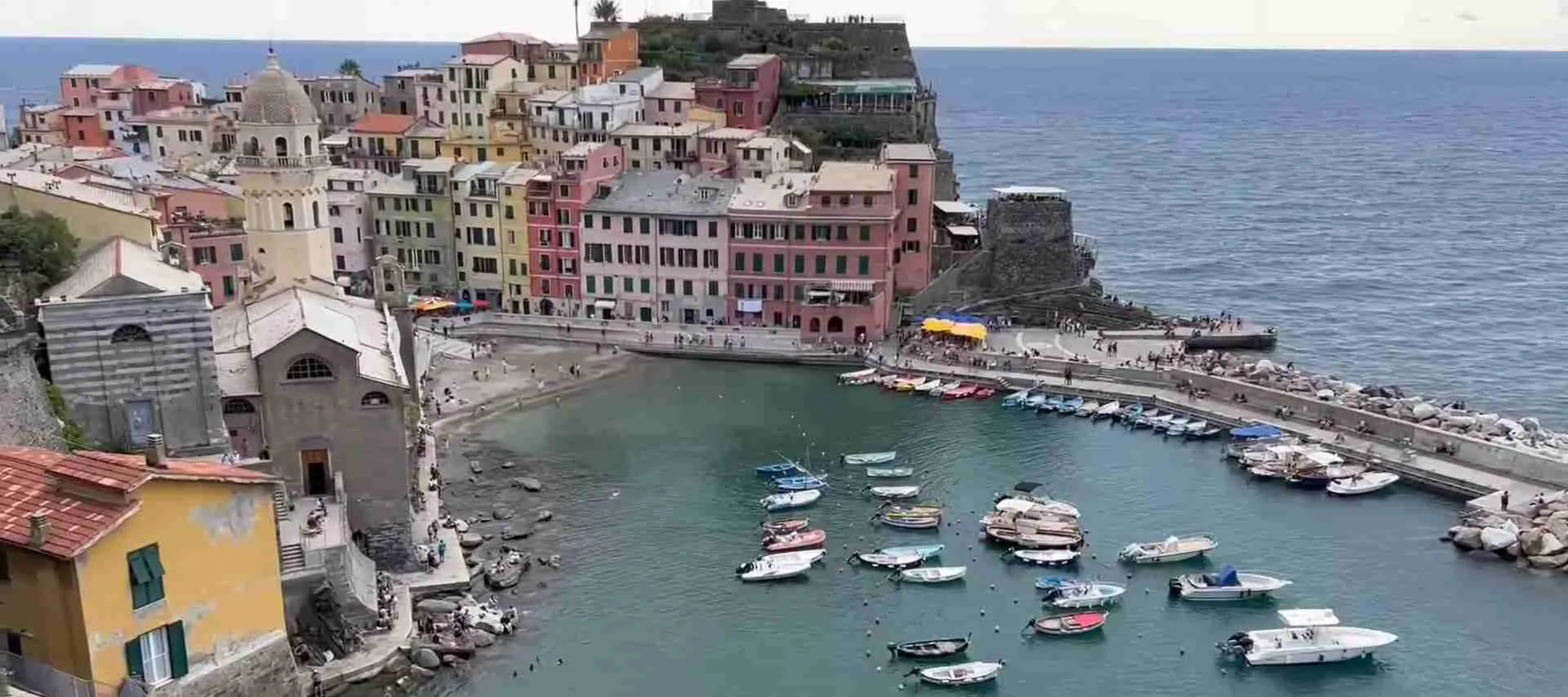
Visiting Cinque Terre: Complete Guide to All Five Villages
Cinque Terre comprises five spectacular coastal villages clinging to rugged cliffs along Italy’s Ligurian Riviera, each offering distinct character while sharing UNESCO World Heritage designation for their remarkable cultural landscape. Monterosso al Mare, Vernazza, Corniglia, Manarola, and Riomaggiore stretch across 15 kilometers of dramatic coastline accessible primarily by train, ferry, and hiking trails rather than roads, preserving centuries-old settlements where terraced vineyards climb impossibly steep slopes. This guide provides comprehensive information for exploring all five villages, understanding the transportation system, hiking the famous coastal trails, and experiencing the unique cultural heritage that earned this landscape international recognition.
Key Takeaways
- Five villages (Monterosso al Mare, Vernazza, Corniglia, Manarola, Riomaggiore) form a UNESCO World Heritage cultural landscape designated in 1997 for harmonious human-environment interaction
- Frequent regional trains connect all villages in 2-5 minutes per segment, with the Cinque Terre Train Card providing unlimited travel plus hiking trail access
- The Blue Trail hiking path connects four villages through dramatic coastal scenery, with sections requiring paid access through the Cinque Terre Card system
- Corniglia perches 100 meters above sea level as the only village without direct beach access, reached by 382 steps from the train station
- Limited car access and no roads between villages preserve authentic character while creating crowds during peak summer months and cruise ship arrival days
- Terraced vineyards producing DOC wines and olive oil cover steep slopes maintained through traditional dry-stone wall construction spanning centuries
People Also Ask About Visiting Cinque Terre
How many days do you need to visit Cinque Terre?
Two to three days allows comfortable exploration of all five villages with time for hiking, dining, and experiencing local character beyond surface-level tourism. One full day enables visiting all villages by train with brief stops in each, though this rushed schedule prevents hiking and deeper immersion. Three days permits thorough village exploration, hiking the Blue Trail sections, enjoying waterfront dining, and potentially visiting nearby Portovenere or Levanto. Longer stays of four to five days suit travelers wanting relaxed pacing, multiple hikes, beach time, and integration into village life rather than constant movement. The compact geography means physical travel between villages consumes minimal time, allowing even short visits to touch all five locations while extended stays enable appreciation of subtle differences and seasonal rhythms distinguishing each community.
What is the prettiest village in Cinque Terre?
Vernazza consistently earns recognition as the most picturesque village, with its harbor piazza, colorful houses surrounding a small port, medieval tower, and church positioned directly on the waterfront creating classic Cinque Terre imagery. However, each village offers distinct visual appeal: Manarola’s dramatic setting on black volcanic rock with colorful houses stacked vertically creates stunning sunset photography opportunities; Riomaggiore’s boat-filled harbor and steep streets lined with pastel buildings charm visitors arriving via Via dell’Amore; Monterosso provides the only extensive beaches and relaxed resort atmosphere; Corniglia’s elevated hilltop position delivers panoramic views unavailable in seaside villages. Personal preference determines “prettiest” based on whether you value compact harbor charm (Vernazza), vertical drama (Manarola), beach accessibility (Monterosso), classic fishing village character (Riomaggiore), or panoramic perspectives (Corniglia). Visiting all five allows individual assessment rather than accepting subjective rankings.
Is the Cinque Terre Card worth buying?
The Cinque Terre Train Card delivers clear value for visitors exploring multiple villages in one day or hiking paid trail sections, as two train journeys plus hiking access exceed the card cost. Adult cards range €19.50-€78.50 depending on date (low/medium/high demand) and duration (1-3 days), with the card providing unlimited train travel between Levanto and La Spezia including all five villages, access to paid Blue Trail sections between Monterosso-Vernazza and Vernazza-Corniglia, village bus services, and wi-fi at park hotspots. Visitors spending a single day train-hopping between villages and hiking coastal trails recoup card cost immediately, while those staying in one village making occasional trips to neighbors may find individual train tickets more economical. The Trekking Card (€7.50-€21) suits hikers staying within the villages who don’t need train access, providing trail entry and bus services without unlimited rail travel. Calculate your planned train trips and hiking intentions: three or more train journeys plus any hiking justifies the Train Card, while pure hikers choose the Trekking Card and car-free visitors staying put in one village may skip both.
Can you swim in Cinque Terre?
Swimming is possible and popular throughout Cinque Terre, with Monterosso offering the most extensive sandy beaches while other villages provide rocky shore access and small swimming areas requiring careful navigation. Monterosso features a long sandy beach divided into free public sections and stabilimenti (beach clubs) with umbrella and lounger rentals, providing the region’s most conventional beach experience with gradual water entry suitable for families. Vernazza maintains a small harbor beach with pebbles and rocks where locals and tourists swim, though limited space creates crowding during summer peak hours. Riomaggiore’s swimming spots consist of rocky platforms near the harbor where people sunbathe and enter deep water directly, requiring confident swimming ability and caution on slippery rocks. Manarola similarly offers rocky swimming from harbor areas and a designated swimming zone with ladders for water entry. Corniglia, perched high above sea level, requires descending to Guvano Beach or using the steep stairway to reach water access points. Water quality throughout Cinque Terre rates excellent due to marine protected area status, though summer crowds concentrate swimmers in small areas near village centers.
Extended multi-day tours – 5+ days
Featured Liguria Multi-Day Tour Packages
3 days
Liguria 3-Day Discovery Tour
- ✓ Comprehensive Liguria experience
- ✓ Expert local guides included
- ✓ All accommodation included
- ✓ Transportation provided
5 days
Liguria 5-Day Highlights Experience
- ✓ Comprehensive Liguria experience
- ✓ Expert local guides included
- ✓ All accommodation included
- ✓ Transportation provided
7 days
Liguria 7-Day Cultural Journey
- ✓ Comprehensive Liguria experience
- ✓ Expert local guides included
- ✓ All accommodation included
- ✓ Transportation provided

10 days
Liguria 10-Day Complete Adventure
- ✓ Comprehensive Liguria experience
- ✓ Expert local guides included
- ✓ All accommodation included
- ✓ Transportation provided
Multi-day tour packages powered by TourRadar. Prices and availability subject to change.
Introduction
The Cinque Terre represents one of Italy’s most distinctive cultural landscapes, where five centuries-old fishing villages occupy an impossibly dramatic coastline that long resisted modern development. Monterosso al Mare, Vernazza, Corniglia, Manarola, and Riomaggiore cling to steep coastal cliffs along a 15-kilometer stretch of Liguria’s eastern Riviera, connected by a historic network of hiking trails, a railway line carved through the mountains, and seasonal ferry service linking harbor villages. The remarkable integration of human settlement with challenging terrain created a landscape UNESCO recognized in 1997 as World Heritage, citing “the harmonious interaction between people and nature to produce a landscape of exceptional scenic quality.”
What distinguishes Cinque Terre from countless other Italian coastal destinations lies not in individual architectural monuments but in the totality of its cultural landscape. Centuries of agricultural labor transformed impossibly steep slopes into productive terraced vineyards and olive groves, supported by thousands of kilometers of dry-stone walls hand-built without mortar. This monumental landscape modification enabled viticulture producing distinctive DOC wines that sustained village economies for generations. The same isolation that made these slopes difficult to cultivate also protected the villages from the coastal development that transformed much of the Mediterranean during the 20th century, preserving authentic settlement patterns and traditional lifeways.
The five villages, while sharing common heritage and geographic proximity, maintain distinct identities shaped by topography, economic history, and community character. Monterosso, the northernmost and largest village, developed significant beach tourism starting in the early 20th century when its sandy shores attracted resort development. Vernazza, considered by many the most picturesque, centers on a compact harbor square surrounded by medieval architecture including a defensive tower and waterfront church. Corniglia occupies a unique position as the only village without direct sea access, perched 100 meters above the water on a clifftop promontory requiring steep climbs from the train station. Manarola rises vertically from dramatic black rock formations, its colorful houses stacked in tiers creating one of Cinque Terre’s most photographed views. Riomaggiore, the southernmost village, marks the beginning of the famous Via dell’Amore coastal path and maintains strong fishing traditions alongside tourism.
Historical isolation defined Cinque Terre development for centuries. Before railway construction in the late 19th century, the villages connected primarily through coastal paths built to link neighboring communities and provide access to hillside agricultural terraces. These trails, originally utilitarian routes for farmers and residents, now constitute the region’s most famous attraction, offering hikers dramatic coastal views and direct experience of the terraced landscape that characterizes this UNESCO site. The famous Sentiero Azzurro (Blue Trail) follows the coastline connecting all five villages through varying terrain ranging from paved walkways to steep stone stairs climbing through vineyards.
Modern Cinque Terre faces challenges balancing tourism pressure with heritage conservation. The same accessibility improvements that transformed isolated villages into international destinations create ongoing tensions between visitor accommodation and preservation of authentic character. Summer crowds, particularly during cruise ship port calls, overwhelm the narrow streets and limited infrastructure of communities originally designed for small resident populations. Off-season visits reveal the villages’ quieter traditional character, when reduced tourist presence allows appreciation of local life, seasonal fishing traditions, and the demanding agricultural work maintaining terraced landscapes.
The Cinque Terre National Park, established in 1999 two years after UNESCO designation, manages the cultural landscape and coordinates conservation efforts across the five municipalities. The park system’s Cinque Terre Card provides funding for trail maintenance and landscape preservation while regulating visitor access to the most popular hiking routes. This integrated management approach recognizes that the landscape’s value lies not just in the villages themselves but in the larger system of terraced agriculture, coastal ecosystems, and traditional land use that created the remarkable scenery attracting millions of annual visitors.
Visiting Cinque Terre today requires understanding both its exceptional heritage and practical realities of navigating popular destinations. The railway connecting all five villages runs frequent trains making village-hopping convenient, while the historic trail network offers active travelers stunning coastal hikes connecting communities on foot. Ferry service during warmer months provides scenic water-based transportation showcasing the dramatic cliffs and colorful villages from maritime perspectives. However, limited accommodation capacity, restricted car access, and seasonal crowding demand advance planning, realistic expectations about tourist impact, and strategic timing to experience Cinque Terre’s renowned beauty alongside its inevitable popularity.
Understanding the Cinque Terre Card System
The Cinque Terre Card functions as a combined access pass and conservation funding mechanism, providing entry to paid hiking trail sections while supporting landscape maintenance through the Cinque Terre National Park. Two distinct card types serve different visitor needs: the Trekking Card grants hiking access and village bus services, while the Train Card includes those benefits plus unlimited regional train travel between Levanto and La Spezia covering all five Cinque Terre villages.
Card validity runs from March 14 through November 2 annually, with trails becoming free access during the off-season period from November 3 through March 13 when no card purchase is required. This seasonal structure reflects both visitor patterns and practical trail maintenance considerations, as winter weather and reduced tourism make fee collection and access control impractical. During the mandatory card period, visitors planning any combination of hiking paid sections or multiple train journeys benefit substantially from purchasing the appropriate card type.
Variable pricing operates on a three-tier system designating dates as low demand (Band A/green), medium demand (Band B/yellow), or high demand (Band C/red) with corresponding price adjustments. Adult one-day Train Cards cost €19.50 on low-demand dates, €27 on medium-demand dates, and €32.50 on high-demand dates. Two-day cards range €34-€59, while three-day cards span €46.50-€78.50 depending on demand tier. Children aged 4-11 receive reduced rates (€12.50-€21 for one day, €22-€38 for two days, €30.50-€51 for three days), while family tickets (two adults plus two children ages 4-11) offer bundled pricing. Children under 4 travel free without requiring cards when accompanied by card-holding adults.
The Trekking Card provides identical hiking access and bus services but excludes train travel, priced significantly lower at €7.50 (Band A), with two-day and three-day options available. This card suits visitors staying in a single village who plan extensive hiking without needing train transportation, or travelers arriving by car who park at one village and explore on foot. However, most visitors find the Train Card delivers better value despite higher cost, as the convenience and flexibility of unlimited train access enables spontaneous travel decisions and efficient village-hopping impossible with individual ticket purchases.
Train travel economics heavily favor the card for active itineraries. Individual tickets between Cinque Terre villages cost €2.70-€5 per journey depending on distance, meaning three train trips equal or exceed the low-demand one-day Train Card cost. Visitors planning to explore multiple villages in a single day save money starting from their third train journey, while the hiking access and bus services included with the card provide additional value beyond pure transportation savings. High-demand period pricing makes this calculation even more favorable, as single tickets rise while Train Card access remains a fixed daily rate.
Card benefits extend beyond transportation and trail access. All cardholders receive free wi-fi at park hotspots located at train stations and major trail entrances, free use of paid public toilets in park facilities (regular price €1), access to the Environmental Education Center workshops according to schedule, guided tours according to park programming, and discounted admission to civic museums in La Spezia including the Amedeo Lia Museum, Castello San Giorgio, and others. These supplementary benefits rarely determine purchase decisions but add marginal value for visitors with time to utilize them.
Purchasing cards occurs through multiple channels designed to maximize accessibility. Online purchase through the official national park website (card.parconazionale5terre.it) allows advance buying and mobile ticket delivery through the MyPass app, eliminating arrival day queues at busy periods. Physical purchase points include all Cinque Terre village train stations, La Spezia Centrale and Levanto stations, tourist information offices in each village, trailhead entrance points along the Blue Trail, and village bus drivers. Payment requires valid photo identification, as cards are nominative and non-transferable, requiring name inscription on the card back before first use.
Card validation follows strict requirements affecting legal access to trains and trails. Train travel requires validating cards at green validation machines located at every station before boarding, with validation good for unlimited journeys until midnight of the expiration date. Trail entry checkpoints staffed by park personnel verify cards and identification, with fines up to €50 for attempted access without valid documentation. Weather-related access restrictions may suspend card sales: orange or red weather alerts trigger automatic sales suspension, while trail closures due to landslides or maintenance make trekking cards unavailable until reopening.
The Via dell’Amore, the famous 900-meter coastal path between Riomaggiore and Manarola, requires both a valid Cinque Terre Card and an additional €10 timed-entry fee since reopening in August 2024 after years of closure for safety restoration. This creates a two-tier access system where the standard Train or Trekking Card grants entry to most trails, but Via dell’Amore demands supplementary payment and advance time-slot reservation through viadellamore.info. This pricing structure reflects the massive restoration investment and ongoing intensive maintenance required for this highly popular but geologically challenging path segment.
Accommodation-based discounts exist for visitors staying at lodging facilities certified with the National Park’s Environmental Quality Label (CETS II) in Riomaggiore, Vernazza, or Monterosso municipalities. These certified properties receive special card pricing for their guests, though discount amounts vary and require verification at time of booking. The certification program encourages sustainable tourism practices while rewarding businesses committed to environmental standards, though most accommodations have not achieved certification and guests pay standard card rates.
Strategic card selection depends on individual itinerary planning and activity priorities. Active visitors exploring multiple villages in one day, hiking coastal trails, and maximizing variety clearly benefit from the Train Card regardless of demand tier, as transportation flexibility alone justifies the cost before adding hiking access. Visitors staying primarily in one village making occasional trips to neighbors should calculate specific train journeys planned: fewer than three trips may cost less through individual tickets. Pure hikers staying within walking distance of trails without needing trains can choose the lower-cost Trekking Card. Off-season visitors (November 3-March 13) enjoy free trail access and can purchase individual train tickets as needed, though should verify current pricing as off-season discounted card options sometimes become available.
Transportation Between Villages
Regional trains operated by Trenitalia connect all five Cinque Terre villages through frequent service running approximately every 15-30 minutes during peak hours, with journey times between adjacent villages ranging 2-5 minutes. This railway, completed in the 1870s through massive tunneling projects carved through coastal mountains, fundamentally transformed village accessibility while preserving the roadless character that maintains authentic settlement patterns. Modern visitors depend on these trains as the primary transportation method enabling efficient multi-village exploration within single days.
The Cinque Terre Express regional train service stops at Levanto, Monterosso al Mare, Vernazza, Corniglia, Manarola, and Riomaggiore before continuing to La Spezia Centrale, creating a linear route allowing seamless north-to-south or south-to-north travel. Journey times for the complete route from Levanto to La Spezia require approximately 20 minutes, with individual village segments consuming 2-5 minutes reflecting the compact coastal geography. This frequency and speed make train travel dramatically more efficient than hiking for pure transportation purposes, though hiking obviously provides landscape appreciation impossible from train windows.
Station locations vary significantly in convenience relative to village centers. Monterosso station sits at beach level immediately adjacent to the tourist center, requiring no climb or significant walking to reach accommodations and waterfront. Vernazza station requires a brief walk through the village’s main street descending to the harbor square, while Manarola and Riomaggiore stations similarly position near village centers with manageable approach walks. Corniglia presents unique challenges as its station sits at sea level while the village perches 100 meters higher, requiring either climbing the Lardarina stairway (382 brick steps) or taking the village shuttle bus connecting station to hilltop settlement.
Train schedules maintain consistent patterns with increased frequency during summer peak season and reduced service in winter off-season, though exact timetables vary monthly. Trains begin operating around 5:00-6:00 AM and continue until approximately midnight, with last train timing requiring verification for evening returns to avoid being stranded without accommodation. Platform displays and announcements in Italian and English indicate departures, though Cinque Terre Express trains are easy to identify through frequent stops at all local stations versus faster regional services bypassing smaller villages.
Ticket purchase without Cinque Terre Card requires buying individual journey tickets from automated machines at stations, ticket offices where staffed, or through the Trenitalia app. Machines accept cash and cards, provide English language options, and allow purchase for immediate or future travel. Each ticket requires validation before boarding using green machines on platforms, with unvalidated tickets subject to significant fines during onboard inspections. The validation system prevents ticket reuse and confirms travel date, operating as an honor system with random inspections enforcing compliance.
Ferry service provides scenic alternative transportation connecting Monterosso, Vernazza, Manarola, and Riomaggiore from late March through early November, weather permitting. Corniglia lacks ferry service due to its elevated position without harbor access. Ferry operator Navigazione Golfo dei Poeti runs scheduled routes between villages and extends to La Spezia, Portovenere, and Levanto, creating broader coastal transportation options beyond the five villages. Service frequency increases during summer months with multiple daily departures, while shoulder season sees reduced schedules requiring advance timetable verification.
Ferry pricing operates independently from the Cinque Terre Card system, requiring separate ticket purchase. One-way journeys between Cinque Terre villages without stops cost €15, while tickets allowing intermediate stops cost €30. Full-day unlimited passes covering all Cinque Terre villages, Portovenere, and La Spezia cost €41 for adults and €15 for children ages 6-11, with children under 6 traveling free. These prices make ferries significantly more expensive than trains for pure transportation, but the scenic coastal views and different village approach perspectives justify premium pricing for travelers prioritizing experience over economy.
Ferry schedules vary throughout the season, with timetables released monthly and downloadable from the operator’s website (navigazionegolfodeipoeti.it). Typical summer schedules show first departures around 9:00 AM and final returns around 6:00 PM, though exact timing changes monthly and weather conditions can cancel service on short notice due to rough seas. This unreliability makes ferries unsuitable as sole transportation method, requiring train access as backup when sea conditions deteriorate. Tickets purchase options include online advance booking, harborside ticket booths before departure, or onboard purchase when available, though popular departures may sell out during peak summer periods.
Village bus services included with the Cinque Terre Card provide access to hilltop viewpoints, trailheads, and areas distant from train stations. Each village operates small buses navigating narrow roads unsuitable for regular vehicles, connecting residential areas and providing access to hiking trail start points like Volastra or Colle del Telegrafo. These buses run limited schedules with significant gaps between departures, making advance schedule verification essential for planning. However, bus routes access scenic viewpoints and convenient trail connections impossible to reach otherwise, adding valuable dimension to village exploration for card holders.
Car access to Cinque Terre exists but faces severe limitations discouraging driving as viable exploration method. Narrow, winding access roads reach Monterosso, Riomaggiore, and Manarola but provide no direct village-to-village routes, requiring backtracking to main roads for transfers between communities. Parking capacity is extremely limited with high fees (€3-5 per hour, €25-35 daily maximum), and available spaces fill completely during summer peak hours. Vernazza and Corniglia have no vehicle access except for residents, making cars actively counterproductive for visiting these villages. The combination of limited parking, high costs, no through-routes, and excellent train access makes car travel the least efficient method for experiencing Cinque Terre.
Walking between villages provides the most immersive transportation option for active travelers with time and physical ability for coastal hiking. The Blue Trail connects all five villages covering approximately 12 kilometers total distance with significant elevation changes, requiring 5-6 hours of hiking time plus village exploration stops. However, trail closures due to landslides or maintenance frequently affect sections, making advance status verification essential before committing to hiking-based transportation. Walking also consumes significantly more time than trains (2 hours hiking versus 5 minutes by train for Vernazza-Monterosso), making it impractical for time-limited visitors trying to see multiple villages in single days.
Combining transportation modes creates flexible itineraries balancing efficiency, cost, and experience. Common patterns include taking trains for initial village-to-village movement while hiking selected scenic sections, using morning trains to reach trail start points before afternoon hiking back, or ferry travel one direction with train returns. The Cinque Terre Train Card’s unlimited train access removes transportation cost considerations from decision-making, allowing spontaneous mode changes responding to weather, energy levels, or time constraints. This flexibility represents the card’s greatest practical benefit beyond pure economic savings.
Hiking the Blue Trail
The Sentiero Azzurro (Blue Trail) connects all five Cinque Terre villages through approximately 12 kilometers of coastal path offering dramatic cliff-edge views, terraced vineyard passages, and intimate village approaches impossible from train or ferry perspectives. This historic route, originally built for local transportation before railway construction, now attracts hikers seeking Cinque Terre’s most iconic landscape experience. However, frequent trail closures, variable difficulty across sections, required fees, and seasonal crowding demand advance planning and realistic physical assessment before committing to coastal hiking as primary exploration method.
Four distinct sections comprise the complete Blue Trail, each presenting unique characteristics, difficulty levels, and access requirements. The Riomaggiore-Manarola segment follows the famous Via dell’Amore (Path of Love), a 900-meter paved walkway requiring approximately 20 minutes walking time with minimal elevation change. This section reopened August 9, 2024 after years of closure for safety restoration following landslides, now requiring both a valid Cinque Terre Card and additional €10 timed-entry fee booked through viadellamore.info. The paved, accessible path attracts the highest crowds and offers easiest hiking suitable for all fitness levels when open.
The Manarola-Corniglia section historically formed part of the classic Blue Trail but has remained closed for extended periods due to terrain instability and landslide damage, with no definite reopening date announced. When closed, hikers must either take the train between these villages or use the challenging alternative high route via Volastra involving steep staircases (1200 steps) and significantly longer distance. This closure unpredictability affects complete trail hiking, requiring advance status verification and flexible backup plans. The official park website maintains current trail status showing open and closed sections.
The Corniglia-Vernazza section covers approximately 3.5 kilometers requiring 1.5-2 hours hiking time with moderate to challenging difficulty. This segment climbs through terraced vineyards on stone stairs and narrow paths, offering exceptional coastal views and authentic agricultural landscape experience. Summer heat intensifies difficulty, as minimal shade coverage and significant elevation gain (approximately 200 meters) demand adequate water, sun protection, and realistic fitness assessment. During peak weekends and holidays, one-way direction restrictions may apply (Monterosso to Vernazza) between 9:00 AM and 2:00 PM for crowd control, requiring afternoon hiking or altered route planning.
The Vernazza-Monterosso section stretches 3.5 kilometers requiring approximately 2 hours hiking with challenging terrain including significant stair climbing, exposed clifftop passages, and substantial elevation changes. This segment provides the most dramatic coastal views and passes through pristine Mediterranean vegetation and terraced vineyards. The rugged beauty and difficulty level attract fewer hikers than the Via dell’Amore, though summer peak hours still see significant traffic. The trail approaches Monterosso through hilltop sanctuary and vineyard areas before descending into town, offering spectacular arrival perspectives impossible from station.
Access to paid trail sections (Monterosso-Vernazza and Vernazza-Corniglia when open) requires valid Cinque Terre Card, verified at checkpoints staffed by park personnel at major trailheads. Rangers check cards and identification, issuing fines starting at €50 for attempted access without proper documentation. The fee system funds essential trail maintenance, erosion control, and safety improvements necessary for sustainable public access along inherently unstable coastal terrain subject to landslides and weather damage.
Free alternative trails exist throughout the Cinque Terre National Park network, offering less-crowded hiking experiences without card requirements. Higher elevation routes connecting villages through hilltop hamlets like Volastra, Groppo, and San Bernardino provide exceptional views and authentic agricultural landscape immersion. These trails typically present greater difficulty with longer distances and more elevation gain, suiting experienced hikers seeking solitude over coastal convenience. The park maintains over 120 kilometers of marked trails beyond the famous Blue Trail, creating extensive exploration opportunities.
Trail conditions change frequently due to weather events, seasonal maintenance, and landslide remediation work. The park website (parconazionale5terre.it) maintains current trail status showing open sections in green and closed sections in black on interactive maps. Social media updates through official park channels provide real-time closure information during weather events or emergency situations. Planning hiking itineraries requires checking status within days of intended hiking, as conditions change faster than printed guidebooks can reflect.
Essential hiking gear includes sturdy closed-toe walking shoes or hiking boots with good traction, as smooth-soled shoes, sandals, and flip-flops are explicitly banned on trails with fines starting at €50 for violation. This regulation reflects genuine safety concerns on steep, uneven stone steps and loose gravel sections where improper footwear causes injuries. Additional recommended equipment includes 1-2 liters of water per person, sun protection (hat, sunscreen, sunglasses), snacks or light meals, and basic first aid supplies. Summer heat requires early morning or late afternoon hiking to avoid midday intensity, while spring and fall provide more comfortable temperatures.
Hiking direction flexibility exists except during peak-season one-way restrictions on the Monterosso-Vernazza section. Most hikers prefer south-to-north progression (Riomaggiore toward Monterosso) as this routing provides more gradual elevation management and concludes at Monterosso’s beaches for post-hike swimming. However, north-to-south offers advantages of morning light on northern sections and downhill approaches into villages. Individual section difficulty varies regardless of direction, though the Vernazza-Monterosso climb from Vernazza presents steeper initial ascent than approaching from Monterosso.
Time requirements for complete Blue Trail hiking total 5-6 hours of walking time excluding village exploration, breaks, and photography stops. Realistic full-day itineraries allocate 8-10 hours for complete hiking with adequate rest and village time. Many hikers split the route across multiple days, hiking one or two sections daily while using trains for returns or village-hopping between hiking days. This pacing allows enjoyment rather than endurance hiking, provides time for village exploration and dining, and accommodates varied fitness levels within travel groups.
Crowds concentrate on the Via dell’Amore when open and the Monterosso-Vernazza-Corniglia sections during summer peak season (July-August) and cruise ship arrival days. Narrow trail widths create congestion requiring patience as faster hikers pass slower groups, while popular photo viewpoints see queuing during busy periods. Early morning departures (before 9:00 AM) encounter significantly fewer crowds, as most tourists begin activities late morning after breakfast. Shoulder season (April-May, September-October) provides optimal conditions balancing good weather with reduced tourist pressure.
Trail closures represent ongoing reality requiring flexible planning. Landslides triggered by heavy rain, erosion undermining cliff-edge paths, rockfall hazards, and infrastructure failures necessitate temporary or extended closures on different sections. The park system’s conservative approach prioritizes visitor safety, closing trails at lower risk thresholds than some hikers might consider necessary. Orange or red weather alerts trigger automatic closure and card sales suspension, even when trails physically remain passable. This precautionary approach frustrates some visitors but reflects responsible management of inherently hazardous terrain.
Water fountains exist in villages and at some trailside locations, though reliability varies and summer heat increases consumption beyond fountain availability. Carrying sufficient water eliminates dependence on uncertain water sources, prevents dehydration-related complications, and allows hiking pace maintenance without constant fountain searching. Village cafes and shops along routes provide rest stops and supply replenishment, though prices reflect tourist demand and convenience location premiums.
Emergency services access trail networks, though response times vary based on location remoteness and terrain difficulty. Cell phone coverage exists throughout most trails, allowing emergency calls when needed. However, the challenging terrain and narrow paths complicate rescue operations, making injury prevention through proper footwear, realistic pace management, and appropriate route selection essential. The park’s strict equipment requirements and trail closure policies reflect this rescue complexity and legitimate safety concerns.
Monterosso al Mare: The Beach Village
Monterosso al Mare, the northernmost and largest of the five villages, offers the only extensive sandy beaches in Cinque Terre along with developed tourist infrastructure including full-service hotels, waterfront restaurants, and resort amenities distinguishing it from its smaller neighbors. The village splits into two distinct areas connected by a tunnel through the San Cristoforo promontory: the old town preserves medieval character with narrow streets and historic churches, while the newer Fegina beach district features hotels, beach clubs, and the famous Gigante statue—a 14-meter concrete figure carved into the cliff representing Neptune.
The beach itself, Cinque Terre’s longest at approximately 500 meters, divides between free public access areas and stabilimenti (beach clubs) offering umbrella and lounger rentals, changing facilities, and bar service. Free beach sections at the ends provide sand space for budget-conscious visitors willing to bring their own equipment, while stabilimenti charge approximately €20-30 per person for full-day umbrella and lounger sets with premium positioning closer to the waterfront. The sandy shore and gradual water entry make Monterosso ideal for families with children and swimmers of all abilities, contrasting sharply with rocky swimming conditions in other villages.
The old town centers on Piazza Garibaldi and the church of San Giovanni Battista, distinguished by its Gothic-Ligurian striped facade of alternating white and dark stone. Narrow caruggi (alleyways) climb through the compact medieval quarter where local shops, wine bars, and traditional restaurants serve residents and tourists in roughly equal measure. The Aurora Tower, one of three surviving medieval defensive structures, marks the old town skyline while the Convento dei Cappuccini hilltop monastery overlooks the village from its elevated position accessible via steep staircases.
Monterosso developed significant early tourism during the early 20th century when Italian beach resort culture emerged, positioning it as Cinque Terre’s most tourism-oriented village with corresponding infrastructure and service levels. Hotels range from simple family-run pensioni to full-service waterfront properties with pools and sea-view rooms, providing the widest accommodation selection in Cinque Terre. However, this development and larger scale dilute the intimate village atmosphere some travelers seek, making Monterosso better suited for visitors prioritizing beach access and resort comfort over maximum authenticity.
Dining options span the spectrum from casual focaccia shops and gelaterias to upscale seafood restaurants with waterfront seating. Local specialties include anchovies prepared numerous ways (fresh, salted, fried, marinated), lemon-based dishes reflecting extensive coastal citrus cultivation, and the local white wine Cinque Terre DOC served in most establishments. The larger village size supports more restaurants than smaller neighbors, though quality varies and waterfront locations command premium prices without guaranteeing superior food.
The train station sits immediately adjacent to the beach in Fegina, requiring no climb or significant walk from arrival to waterfront. This accessibility makes Monterosso the easiest village for travelers with heavy luggage or limited mobility, as accommodations cluster near the flat beach district without the steep approaches characterizing other villages. The old town tunnel walk takes 2-3 minutes, creating minimal separation between beach and historic areas.
Monterosso serves as a natural Blue Trail starting point for hikers tackling the complete coastal route, as the Monterosso-Vernazza section provides challenging but rewarding introduction to trail hiking with spectacular coastal views. The trail begins near the old town, climbing through vineyards and offering backwards views of the village and beach that improve with elevation gain. Early morning departures allow completing significant hiking before heat intensifies, then returning via train for afternoon beach relaxation.
The village’s larger size supports practical services including ATMs, pharmacies, and grocery stores (Coop supermarket) useful for self-catering visitors or hikers provisioning for trail days. These amenities, unremarkable in standard towns, represent genuine advantages in the limited service environment of smaller Cinque Terre villages where basic necessities sometimes require hunting.
Crowds peak during summer months (July-August) when beach capacity fills early and waterfront restaurants require reservations. The larger beach area distributes tourists more effectively than compact harbor areas in other villages, though popular free sections still see intense crowding by mid-morning. Shoulder season (May-June, September-October) provides optimal beach weather with reduced crowds, while off-season (November-March) appeals to visitors prioritizing village atmosphere over swimming when beach clubs close and tourism infrastructure scales back significantly.
Vernazza: The Harbor Gem
Vernazza earns widespread recognition as Cinque Terre’s most picturesque village through its compact harbor square where colorful buildings surround a small port, creating the iconic imagery appearing in countless photographs and travel literature. The Doria Castle tower and Santa Margherita d’Antiochia church positioned directly on the waterfront frame the harbor piazza, while narrow medieval streets climb steeply from sea level through the village’s vertical layout. This concentrated architectural ensemble and dramatic topography create an exceptionally photogenic setting that justifies Vernazza’s reputation despite its small size and limited amenities.
The harbor itself functions as village living room, where locals and tourists mingle on the small pebble beach, stone breakwater, and waterfront cafe seating overlooking boats bobbing in the protected port. Children swim from the beach while adults lounge on smooth rocks, creating animated summer scenes of relaxed Mediterranean life. The compact scale brings everyone into close proximity, fostering the village atmosphere some travelers find charming while others experience as crowded intrusion during peak visitation hours.
The main street, Via Roma, climbs from harbor level toward the train station while shops, restaurants, and residences line the route. Side alleys branch steeply upward through residential areas where laundry hangs between buildings and local life continues amid tourist traffic. The Belforte, a former defensive fortification now housing a renowned restaurant, occupies a dramatic cliffside position offering exceptional views though prices reflect the location and reputation premium.
The Doria Castle ruins crowning the promontory provide Vernazza’s best panoramic viewpoint, accessible via steep stairs from the harbor square. The climb requires modest fitness but rewards effort with 360-degree views encompassing the village below, the harbor with boats, and the dramatic coastline stretching toward Monterosso and Corniglia. The castle admission charges a small fee (several euros) collected at the entrance, supporting maintenance of this medieval structure that survived centuries of weather exposure and 2011 flood damage.
That flood, occurring October 25, 2011, devastated Vernazza when heavy rainfall triggered massive mudflows through the village’s main stream channel, filling the harbor with debris and severely damaging buildings, infrastructure, and businesses. The village’s remarkable recovery from this disaster demonstrates community resilience and the economic importance of tourism, as restoration prioritized reopening accommodations and services enabling visitor return. Evidence of flood damage remains visible in photographs documenting the event displayed in some businesses, though casual observers see little physical reminder of the destruction.
Accommodation options in Vernazza include small hotels, family-run guesthouses, and vacation rentals distributed throughout the compact village. The limited supply and high demand create premium pricing compared to less popular villages, while the steep access stairs to many properties challenge travelers with heavy luggage or mobility limitations. Most accommodations lack elevators due to historic building constraints, requiring physical ability to climb multiple floors with belongings. However, location centrality and photogenic setting justify premium costs for visitors prioritizing scenic immersion over practical convenience.
Dining concentrates around the harbor square and Via Roma, where restaurants serve local seafood, Ligurian pasta dishes (particularly trofie al pesto), and regional wines. Quality varies significantly, with prime harbor-front locations sometimes delivering disappointing food at premium prices while smaller establishments on side streets offer better value and authentic preparations. Reservations become essential during summer dinner hours, as limited seating capacity fills quickly and walk-in diners face long waits or disappointment.
The train station requires a brief walk through the main street descending to the harbor, with the route taking 5-7 minutes and dropping approximately 40 vertical meters. This approach means arrivals enjoy gentle downhill introduction to the village, while departures require uphill walking with luggage. The station itself is basic with minimal facilities, though the compact village means accommodations never require extended luggage hauling from arrival point.
Vernazza serves as midpoint on the Blue Trail, making it convenient stopping point for hikers tackling the route in segments. The trail section from Corniglia arrives from the south with dramatic elevated village views before descending through terraced vineyards, while the Monterosso section departs northward with initial steep climbing before leveling along coastal cliffs. This positioning allows day-hiking one direction with train return, or splitting multi-day hiking with overnight stops in Vernazza.
The village’s small size means thorough exploration requires only 2-3 hours, though the atmospheric harbor setting encourages extended lounging over wine and people-watching. This compact scale suits visitors treating Vernazza as highlight stop while basing elsewhere, though overnight stays allow experiencing quieter evening and early morning hours when day-trippers have departed or not yet arrived.
Corniglia: The Hilltop Village
Corniglia occupies a unique position as Cinque Terre’s only village without direct sea access, perched 100 meters above the water on a narrow promontory wedged between steep slopes. This elevated situation creates distinctive character and practical challenges distinguishing Corniglia from its waterfront neighbors. The village maintains more agricultural identity and receives fewer tourists than harbor villages, preserving quieter atmosphere attractive to visitors seeking authentic character over beach convenience.
Access from the train station requires either climbing the Lardarina stairway (382 brick steps winding up the cliff face) or taking the shuttle bus connecting station to village center. The stairway climb takes 15-20 minutes for fit hikers and provides exceptional coastal views as reward for effort, while the bus runs on limited schedule requiring timing coordination for convenient use. This access challenge automatically filters tourists, as many day-trippers avoid Corniglia’s vertical approach in favor of easier harbor village visits.
The village layout differs from neighboring communities through its linear organization along the promontory spine rather than vertical stacking up slopes from waterfront. The main street, Via Fieschi, runs the village length lined with local shops, small restaurants, and residential buildings exhibiting less tourist-focused development than waterfront villages. The compact scale and limited through-traffic create peaceful atmosphere where locals maintain daily routines less impacted by tourism than in harbor settlements.
Piazza Belvedere occupies the village’s eastern extremity, providing panoramic viewpoint overlooking terraced vineyards, the coastline toward Manarola, and the Ligurian Sea. This terrace serves as village gathering point where residents socialize and tourists rest while absorbing exceptional views. The Church of San Pietro, Corniglia’s principal monument, features a Gothic-Ligurian facade and rose window, though its modest scale reflects the village’s small historic population.
Swimming possibilities exist but require effort, as Corniglia’s elevated position necessitates steep descent to reach water access points. Guvano Beach, once a popular nudist beach, sits below the village accessible via a difficult trail or through a railway service tunnel (access conditions change, requiring current information). The Spiaggione beach lies near the train station at sea level, providing swimming access without village ascent, though facilities and amenities are minimal.
Accommodation in Corniglia costs less than neighboring villages due to reduced tourist pressure and access challenges, creating value opportunities for budget-conscious travelers who don’t prioritize waterfront location. The quieter atmosphere and local character appeal to visitors seeking authentic experience over postcard perfection, though limited dining and shopping options compared to larger villages may disappoint those expecting full resort amenities.
The village’s agricultural heritage remains visible through active vineyard terraces surrounding the settlement and ongoing wine production supplying local establishments and regional distribution. Corniglia produces some of Cinque Terre’s finest DOC wines, particularly white wines from Bosco, Albarola, and Vermentino grapes cultivated on steep terraces. Local wine bars and restaurants feature these productions, offering tasting opportunities in authentic setting with producers sometimes available for conversation about traditional viticulture methods.
Corniglia serves as Blue Trail midpoint, with paths departing both directions toward Vernazza (north) and Manarola (south when open). The Vernazza trail provides moderate to challenging hiking through terraced landscapes with exceptional sea views, while the Manarola section remains closed indefinitely due to landslide damage requiring alternative routing via Volastra high trail. This closure affects complete coastal hiking, though the Volastra detour adds rewarding hilltop perspectives and traditional agricultural landscape exposure.
The village population remains significantly smaller than other Cinque Terre communities, creating more genuine local atmosphere where tourism supplements rather than dominates economic life. This scale means fewer services and amenities, though also reduced crowds and more authentic interaction with residents who haven’t adopted the transactional relationship some heavily-touristed villages develop. Visitors seeking “real” village life appreciate Corniglia’s character, while those wanting developed infrastructure and constant activity may find it underwhelming.
Dining options include several excellent small restaurants serving traditional Ligurian cuisine with emphasis on local ingredients and wine pairings. The reduced tourist volume allows these establishments to focus on quality for discerning visitors rather than maximizing turnover for day-tripper masses. Prices remain reasonable compared to waterfront villages, though options are limited and reservations advisable during peak season to avoid disappointment.
Manarola: The Vertical Village
Manarola rises dramatically from black volcanic rock formations where the village’s characteristic colorful houses stack vertically up steep slopes, creating one of Cinque Terre’s most photographed views particularly at sunset when golden light illuminates the pastel facades. The compact village center focuses on the harbor area where a small swimming zone attracts locals and tourists, while Via Discovolo, the main street, climbs steeply through the settlement connecting the waterfront to upper residential areas and surrounding vineyards.
The harbor serves dual functions as working fishing port and swimming area, with boats pulled onto the sloping rock ramp when not in use and designated swimming zones marked by buoys where people sun on smooth rocks and swim in deep clear water. Concrete platforms and natural rock formations provide sunbathing surfaces, though space is limited and crowding occurs during summer peak hours. Metal ladders facilitate water entry from rocks where the steep shore drops immediately to swimming depth, requiring confident swimming ability and caution on slippery surfaces.
The cemetery perched on the hillside above the village offers the classic Manarola photograph viewpoint, accessed via steep paths from the upper village. This elevated position provides unobstructed views of the colorful house tiers, harbor, and dramatic coastline stretching toward Corniglia. Sunset photography attracts crowds to this vantage point, with prime positions filling early during popular summer months. The path continues beyond the cemetery to quiet hillside areas where visitors seeking solitude escape the concentrated tourist traffic in the village center.
Via dell’Amore, the famous “Path of Love,” connects Manarola to Riomaggiore through a 900-meter paved walkway carved into the cliff face. This path reopened August 9, 2024 after years of closure for extensive safety restoration following landslide damage, now requiring both a Cinque Terre Card and additional €10 timed-entry fee booked through viadellamore.info. The walk takes approximately 20 minutes and offers exceptional coastal views from the exposed clifftop position, though crowds and timed-entry limitations reduce the romantic atmosphere the path’s name suggests.
The train station sits uphill from the village center, requiring a descent through Via Discovolo to reach the waterfront. This approach means arrivals enjoy downhill walking while departures climb uphill with luggage, reversing the pattern found in some neighboring villages. The walk takes 5-7 minutes and provides immediate immersion in village atmosphere through the narrow main street lined with shops, cafes, and residences.
Manarola produces exceptional wine from terraced vineyards covering slopes above the village, particularly the sweet Sciacchetrà dessert wine made from partially dried grapes and representing Cinque Terre’s most prestigious wine tradition. Local wine bars and enotecas offer tastings of Sciacchetrà alongside standard dry white Cinque Terre DOC wines, providing authentic introduction to regional viticulture. The demanding hillside grape cultivation visible throughout surrounding terraces demonstrates the agricultural heritage sustaining villages before tourism became primary economic activity.
Accommodation options include small hotels, guesthouses, and vacation rentals distributed vertically throughout the village. The steep terrain means many properties involve significant stair climbing both from the train station and between village levels, challenging travelers with heavy luggage or mobility limitations. However, the dramatic setting and photogenic character justify access effort for visitors prioritizing scenic immersion, while the compact size means every accommodation delivers proximity to the harbor center.
Dining concentrates around the harbor area and Via Discovolo, where restaurants serve seafood, local pasta dishes, and Ligurian specialties. Nessun Dorma, positioned on the hillside with exceptional views, achieved social media fame creating reservation challenges and often disappointing experiences due to quality inconsistency under heavy volume. Alternative establishments throughout the village offer better value and authentic preparations, though the limited capacity means dinner reservations remain advisable during summer months.
The village’s vertical organization creates distinct upper and lower atmospheres, with the waterfront maintaining active tourist traffic while upper residential streets preserve quieter local character. Exploring these upper areas reveals traditional architecture, residential gardens, and perspectives on village life beyond the tourist-focused harbor zone. The compact overall size means thorough exploration requires 2-3 hours, though the swimming opportunities and sunset viewpoints encourage extended stays.
The famous Christmas Presepe (nativity scene) represents Manarola’s unique seasonal tradition, visible on the hillside above the village from December through January. This massive illuminated installation created by a local resident uses thousands of lights forming nativity figures on the terraced slopes, creating a spectacular nighttime display visible from the harbor and surrounding viewpoints. The tradition attracts special winter visitors and demonstrates village cultural identity maintained alongside mass tourism.
Riomaggiore: The Southern Gateway
Riomaggiore, the southernmost Cinque Terre village, serves as entry point for visitors approaching from La Spezia and marks the beginning of the Via dell’Amore path to Manarola. The village climbs steeply up a narrow valley where Via Colombo, the main street, follows the covered Rio Maggiore stream bed through the settlement’s core. Characteristic tall, narrow houses painted in traditional colors stack vertically along both sides of the valley, creating the distinctive Cinque Terre architectural pattern where limited flat ground forced upward rather than outward development.
The harbor area, called the Marina, features a concrete boat launch ramp where fishing boats are hauled from the water and a small swimming area with rocks and deep water access. Metal ladders facilitate entry and exit, while the protected harbor position creates calmer conditions than more exposed coastline. Space is limited and crowds concentrate in this compact area during summer, though the swimming quality and authentic fishing village atmosphere attract dedicated visitors beyond casual tourists making brief photographic stops.
Via Colombo, the covered main street following the stream channel, creates a distinctive urban experience as the vaulted ceiling and shops lining both sides create almost tunnel-like atmosphere in sections. This unusual configuration protects pedestrians from weather while concentrating commercial activity along the single main route. Cafes, focaccerias, wine bars, and tourist shops occupy ground floors while residents live in upper stories, maintaining mixed-use character increasingly rare in tourist-dominated destinations.
The train station positions at the upper edge of the village, requiring descent to the Marina through Via Colombo or alternative staircases climbing through residential areas. The walk takes 7-10 minutes and drops significant vertical distance, meaning departures involve uphill approaches with luggage. This configuration requires realistic physical assessment before booking accommodations in lower village areas distant from the station, as multiple daily trips become exhausting for travelers with mobility limitations.
Via dell’Amore departs from near the station, providing paved walking access to Manarola in approximately 20 minutes when open. This path’s reopening in August 2024 restored the classic short walk between villages, though the new €10 timed-entry fee beyond the base Cinque Terre Card cost creates significant access barrier compared to the free stroll this route historically represented. The path’s accessibility and brief duration attract crowds despite added cost, requiring advance timed-entry reservation through viadellamore.info to guarantee access during desired time windows.
Accommodation spreads vertically throughout the village, from properties near the harbor offering waterfront atmosphere to higher-elevation locations closer to the station reducing luggage carrying distance. The steep terrain and numerous staircases characterize most accommodations, with few buildings offering elevator access due to historic construction constraints. The active fishing tradition and less-developed tourist infrastructure create more authentic atmosphere than in resort-focused Monterosso, though corresponding reductions in services and amenities may frustrate visitors expecting comprehensive facilities.
Dining options include traditional restaurants serving local seafood and Ligurian specialties alongside tourist-oriented establishments offering standard Italian menu selections. Dau Cila, positioned dramatically on the harbor rocks, provides exceptional setting though premium pricing and reservation requirements. Alternative establishments throughout Via Colombo and side streets deliver better value and often superior authenticity, though quality varies significantly and advance research helps identify legitimate local favorites versus tourist traps exploiting captive markets.
The Church of San Giovanni Battista, dating to 1340, features a Gothic facade and rose window visible from lower village areas. The small adjoining oratory contains a 15th-century wooden crucifix and other religious artworks, though the church’s modest scale and limited decoration reflect Riomaggiore’s historic poverty rather than artistic patronage characterizing wealthier Italian communities. However, the position overlooking the village and harbor provides photographic perspectives worth the brief climb from Via Colombo.
The castle ruins crowning the promontory between the village’s two small beaches offer panoramic views requiring steep stair climbing from the harbor area. This defensive structure formed part of the regional fortification system protecting coastal villages from pirate raids during medieval and Renaissance periods. The ruins remain limited but the viewpoint justifies the brief but challenging ascent, particularly at sunset when lighting transforms the village into glowing tiers of colorful facades against darkening skies.
Riomaggiore’s position as southern terminus and primary access point from La Spezia makes it a natural day-trip base for visitors staying in that larger city. The frequent train service and proximity (approximately 10 minutes) enable easy access while La Spezia’s greater accommodation capacity and lower prices attract budget-conscious travelers. However, staying within Riomaggiore itself provides early morning and evening village atmosphere unavailable to day-trippers, revealing local life beyond the tourist veneer.
Where to Stay in Cinque Terre
Accommodation decisions in Cinque Terre balance practical considerations—transport access, village services, price levels—against atmospheric preferences determining which village character best suits individual travel styles. Limited total capacity across all five villages creates supply constraints driving prices higher than comparable Italian coastal destinations, while the UNESCO designation and National Park regulations restrict new construction preventing accommodation expansion despite increasing demand.
Choosing between villages depends on priorities ranking beach access, hiking convenience, authentic character, and service levels. Monterosso delivers maximum beach access and full resort services with corresponding higher development and larger scale diluting intimate village atmosphere. Vernazza provides iconic harbor setting and compact photogenic center but premium prices, limited capacity, and significant tourist crowding. Corniglia offers authentic character, reduced crowds, and value pricing but requires station-to-village climbing and lacks waterfront location. Manarola combines dramatic setting with excellent wine culture though steep terrain challenges mobility. Riomaggiore maintains fishing tradition authenticity while serving as Via dell’Amore access point.
Basing in a single village for multi-day stays eliminates luggage hauling between accommodations and allows deeper integration into local rhythms, though limiting exposure to the diversity across five distinct communities. Staying in two different villages during extended trips balances settlement familiarity with variety, though the packing and transfer logistics create minor inconvenience. The excellent train connections make single-village basing entirely practical for seeing all communities through day visits, as journey times between furthest villages require only 15-20 minutes.
Booking timing critically affects availability and pricing, as the limited supply fills months in advance for summer peak season. Reservations opening six months ahead often sell quickly for July-August dates, while shoulder season (April-June, September-October) maintains better availability though still benefits from advance booking. Off-season (November-March) sees dramatically reduced tourism and many businesses closing, creating excellent availability and negotiable rates for visitors prioritizing village atmosphere over beach weather and full service availability.
Accommodation types span small hotels, family-run guesthouses (affittacamere), vacation rentals (appartamenti), agriturismi in surrounding hillside areas, and rooms in private homes. Hotels offer traditional services including breakfast and front desk assistance, though true full-service hotels exist primarily in Monterosso with other villages offering more modest pensione-style properties. Vacation rentals provide independence and kitchen access appealing to families or longer-staying visitors, though require more self-sufficiency navigating village resources without property staff assistance.
Prices reflect location scarcity rather than luxury levels, with basic accommodations commanding premium rates due to demand rather than amenities. Summer peak season sees double room rates ranging €150-300 per night for modest properties, €250-450 for mid-range accommodations, and €400+ for superior hotels in Monterosso. Shoulder season brings 20-30% reductions, while off-season rates drop 40-50% though with corresponding service and amenity reductions as businesses scale back operations.
Physical access limitations affect accommodation selection for travelers with mobility challenges or heavy luggage. Monterosso’s flat beach district provides easiest access from the station, while other villages involve significant stair climbing between stations and accommodations. Few buildings offer elevators due to historic construction constraints, meaning upper floor rooms require stair navigation with luggage. Properties near train stations minimize carrying distance but often sacrifice waterfront atmosphere available to lower-village locations. This access-atmosphere tradeoff requires honest assessment of physical abilities and luggage management capacity before booking.
Amenities vary significantly across properties, with air conditioning, private bathrooms, wifi, and breakfast ranging from standard inclusion to notable extras depending on property category. Historic buildings present cooling challenges making summer air conditioning highly valued, though not universal even in mid-range properties. Shared bathroom arrangements persist in budget accommodations and some family-run guesthouses, requiring comfort with hall toilet and shower facilities. Breakfast quality ranges from continental rolls and coffee to elaborate spreads, though many budget properties omit breakfast entirely expecting guests to use village cafes.
Staying outside the five villages in La Spezia, Levanto, or surrounding hilltop hamlets provides cost savings and easier parking when driving, sacrificing the village immersion experience for practical convenience. La Spezia, the regional capital, offers full hotel infrastructure at lower prices with excellent train access to all villages within 10-20 minutes. Levanto, immediately north of Monterosso, provides beach resort atmosphere with less intense Cinque Terre tourist pressure and marginally lower costs. These external bases suit day-tripping visitors prioritizing budget over atmospheric immersion, though missing evening and early morning village experiences when day-trippers depart.
Agriturismo properties in hillside areas around the villages offer rural accommodation combining agricultural operations with guest rooms, often including home-produced wine, olive oil, and meals featuring farm products. These properties provide authentic agricultural landscape experience and exceptional views, though require transportation to villages as distances prevent casual walking access. The rural setting appeals to visitors seeking countryside tranquility over village bustle, particularly travelers with cars able to navigate access roads unsuitable for train-dependent tourists.
Cancellation policies vary by property type, with hotels typically offering more flexible modification terms than vacation rentals requiring full advance payment with limited refund options. Peak season bookings often carry stricter non-refundable terms due to high demand ensuring replacement guests if cancellations occur. Purchasing travel insurance with cancellation coverage protects against illness or emergency preventing travel, though policy terms require careful review as many exclude voluntary cancellation or require specific cancellation reasons for coverage.
Planning Your Visit: Best Times and Practical Considerations
Timing profoundly affects Cinque Terre experiences through weather patterns, crowd levels, service availability, and hiking trail access creating distinct advantages across different seasons. No universally “best” time exists, as optimal timing depends on individual priorities balancing ideal weather, minimal crowds, maximum services, and activity options.
Peak summer months (July-August) deliver reliable sunshine, warmest swimming temperatures, and full service availability including all restaurants, shops, and accommodations operating at maximum capacity. However, this period brings overwhelming crowds, particularly on weekends and cruise ship arrival days when narrow village streets become difficult to navigate. Beach areas fill early, popular restaurants require advance reservations, and hiking trails see significant congestion. Temperatures often exceed 30°C (86°F) making midday hiking uncomfortable, while high-season accommodation prices peak 50-100% above shoulder season rates.
Shoulder season (April-May and September-October) provides optimal conditions balancing pleasant weather with manageable crowds. May and September typically deliver warm temperatures suitable for swimming, excellent hiking conditions without summer heat intensity, and reduced tourist numbers allowing easier restaurant access and more relaxed village exploration. Accommodation prices drop 20-30% below peak summer while maintaining good availability of services. However, these months attract knowledgeable travelers specifically targeting optimal conditions, creating secondary crowding on beautiful weekend days though far less intense than July-August.
Late spring (April-May) offers exceptional hiking weather with wildflowers blooming across terraces and moderate temperatures ideal for exertion. Swimming remains cool but possible for tolerant swimmers, while villages emerge from winter dormancy with businesses reopening and local activity increasing. Early spring (March) sees inconsistent weather and limited services though provides genuine bargain pricing and minimal tourism.
Early autumn (September-October) extends summer warmth with gradually cooling air temperatures while sea temperatures remain pleasant for swimming through September. Grape harvest activities occur during September, offering authentic agricultural experience as local vintners process harvests. October brings increasing rainfall probability and earlier sunsets reducing usable daylight hours, though generally maintains comfortable conditions for hiking and village exploration.
Off-season (November-March) dramatically reduces tourism creating authentic village atmosphere when residents reclaim spaces dominated by tourists during warmer months. Accommodation costs drop 40-50%, trail access becomes free as the Cinque Terre Card requirement suspends, and travelers experience genuine local life rather than tourism-focused facades. However, many businesses close including most restaurants, some accommodations, and various services, while weather variability brings significant rain periods and cool temperatures unsuitable for swimming. This period suits travelers prioritizing cultural immersion over beach activities, willing to accept service limitations for authentic experience and substantial cost savings.
Weather patterns follow Mediterranean coastal norms with hot dry summers, mild wet winters, and spring/fall transition periods. Rainfall concentrates in autumn (October-November) and late winter (February-March), while July-August typically remain very dry. However, intense rainfall events occasionally trigger landslides and trail closures, with October 2011’s devastating floods demonstrating the extreme weather potential. Summer thunderstorms develop occasionally bringing brief but intense rain to otherwise dry periods.
Cruise ship arrivals significantly impact village crowding, as thousands of passengers descend simultaneously for 3-4 hour port calls creating intense concentration during mid-morning through early afternoon hours. These visitors cluster in easily accessible Monterosso and Vernazza while typically skipping Corniglia’s stairway access, creating predictable crowding patterns. Savvy independent travelers avoid cruise-heavy days or visit affected villages during early morning or late afternoon hours when ships have departed.
Festival and event periods bring special atmosphere but increased visitors and accommodation pressure. Religious festivals celebrate village patron saints with processions, special masses, and local festivities providing cultural insight unavailable during routine periods. Christmas traditions include elaborate nativity displays, particularly Manarola’s famous hillside illuminated presepe. However, these special occasions attract additional visitors requiring advance accommodation booking beyond normal advance planning timelines.
Trail access considerations significantly impact hiking-focused visits, as landslide closures and seasonal maintenance affect trail availability. The Via dell’Amore historically formed the Blue Trail’s most popular section but remained closed for years before August 2024 reopening with new fee requirements. The Manarola-Corniglia section continues extended closure with no definite reopening date. Verifying current trail status through the park website (parconazionale5terre.it) before finalizing visit timing prevents disappointment when desired hikes prove inaccessible.
Length of stay depends on activity intensity and desired depth of experience. Rushed day trips from Florence or Pisa allow superficial village touring via train but miss hiking opportunities, atmospheric evening hours, and deeper cultural engagement. Two full days enable visiting all villages with time for one hiking section and leisurely village exploration. Three to four days allow comprehensive hiking of open trail sections, swimming, wine tasting, and developing genuine village familiarity. Week-long stays suit travelers seeking relaxed pacing, integration into local rhythms, potential day trips to nearby destinations (Portovenere, Levanto, La Spezia), and deep rather than broad experiences.
Frequently Asked Questions
How do I get to Cinque Terre?
Regional trains from La Spezia Centrale or Levanto provide primary access to all five villages, with La Spezia serving as the southern gateway connecting to major cities (Pisa 1 hour, Florence 2.5 hours, Genoa 1.5 hours, Rome 4 hours). Trains from Pisa and Florence often require changing at La Spezia Centrale before continuing to Cinque Terre villages on the regional Cinque Terre Express service. Driving to Cinque Terre faces severe limitations with no roads between villages and extremely limited parking in accessible communities (Monterosso, Riomaggiore, Manarola), making train access vastly superior for nearly all visitors. The nearest airports are Pisa (1.5 hours by train via La Spezia) and Genoa (2 hours), both offering good rail connections though requiring station transfers rather than direct service.
Do I need to speak Italian to visit Cinque Terre?
English is widely understood in tourist-facing businesses including hotels, restaurants, shops, and information offices throughout all five villages, making Italian language skills helpful but not essential for standard tourist activities. Train station signage includes English, restaurant menus typically offer English versions, and accommodation staff generally communicate adequately in English. However, learning basic Italian phrases (greetings, please/thank you, numbers for ordering) enhances interactions and demonstrates respect for local culture. Smaller family-run establishments and interactions with residents in upper village areas may require more patience and creativity when language barriers emerge, though goodwill and simple communication usually overcome limitations. Off-season periods when fewer international tourists visit see proportionally less English language accommodation in services.
What should I pack for Cinque Terre?
Sturdy closed-toe walking shoes or hiking boots are essential for trail hiking and navigating steep village stairs, as sandals and flip-flops are banned on trails and impractical for stone staircases. Comfortable walking shoes suffice for visitors not hiking but still navigating significant elevation changes between train stations and village centers. Summer visits require sun protection (hat, sunscreen, sunglasses), swimwear for beach/harbor swimming, light breathable clothing, and daypack for carrying water and supplies during hiking. Shoulder season adds light jacket or sweater for cooler evenings and potential rain protection. Modest clothing covering shoulders and knees respects Italian cultural norms and allows church entry, while evening dining may warrant one nicer outfit beyond daytime hiking/beach wear. Reusable water bottle reduces plastic waste and allows refilling at village fountains.
Are there ATMs in the villages?
ATMs exist in all five villages though with varying availability and reliability, while Monterosso as the largest village maintains most banking infrastructure including multiple machines. Cash remains widely used in Cinque Terre despite increasing credit card acceptance, as many small businesses, beach clubs, some restaurants, and market vendors prefer cash payment or add card processing fees to transactions. Arriving with adequate cash eliminates dependency on potentially empty or malfunctioning machines, while La Spezia provides comprehensive banking services for major cash withdrawals before entering the villages. Card payment capability has expanded but bringing cash backup prevents transaction problems when card readers fail or businesses decline card payments for small purchases.
Can I visit Cinque Terre with kids?
Families successfully visit Cinque Terre with children though the challenging terrain, significant walking, and limited child-specific amenities demand realistic assessment of children’s abilities and adjusted expectations. Monterosso’s sandy beach provides the most child-friendly environment with gradual water entry, playground areas, and flat terrain, while other villages present significant stair climbing and rocky swimming access challenging for young children. The short train rides between villages entertain children briefly though the frequent stops and crowds can overwhelm during peak periods. Strollers prove nearly useless given the stairs and narrow streets, requiring baby carriers for infants and walking ability for toddlers. Hiking trails are inappropriate for very young children due to steep drops, rough terrain, and duration, though older children (8+) with hiking experience can manage sections with supervision. Reduced children’s pricing for trains and trails provides some cost relief, while the visual interest of colorful villages and boats engages children beyond typical museum fatigue.
What are Cinque Terre’s local specialties?
Cinque Terre’s distinctive local products reflect its unique terraced agricultural landscape and coastal position. The sweet dessert wine Sciacchetrà represents the region’s most prestigious specialty, produced from partially dried grapes (Bosco, Albarola, Vermentino) requiring extensive hand labor on steep vineyards. Dry white Cinque Terre DOC wine from the same grape varieties accompanies seafood in most local restaurants. Anchovies prepared numerous ways (salted, marinated, fried) showcase the fishing tradition, while pesto alla Genovese featuring local basil appears frequently though originates from nearby Genoa rather than Cinque Terre specifically. Focaccia, the flatbread staple of Liguria, appears in numerous variations including focaccia di Recco (cheese-filled) and standard olive oil versions. Local olive oil from terraced groves adds distinctive flavor to dishes. Trofie pasta, short twisted shapes traditional to Liguria, frequently serves as vehicle for pesto. Lemon-based dishes reflect extensive coastal citrus cultivation evident in terraced lemon groves.
Is Cinque Terre wheelchair accessible?
Cinque Terre presents severe accessibility challenges for wheelchair users due to the steep terrain, numerous staircases, narrow streets, and historic buildings lacking elevators or level access. Monterosso offers the most accessible village with flat beach district allowing wheelchair navigation of waterfront areas, promenade, and some restaurants, though even here many establishments require step climbing and the old town’s steep alleys remain inaccessible. Other villages prove effectively inaccessible for independent wheelchair users, as the combination of station-to-village stairs, vertical street layouts, and building steps create insurmountable barriers. The Via dell’Amore path between Riomaggiore and Manarola, when open, provides the only relatively accessible trail segment with paved surface and minimal gradient, though even this path includes some steps and uneven sections challenging for wheelchairs. Travelers with mobility limitations should focus on Monterosso’s beach district and realistic assessment of physical barriers before attempting village visits, while considering alternative accessible Italian coastal destinations offering better infrastructure.
Can I visit Cinque Terre as a day trip?
Day trips to Cinque Terre from Florence, Pisa, La Spezia, or Genoa provide viable though rushed introduction to the villages, allowing train-based village hopping with brief stops but insufficient time for hiking or deep exploration. From Florence, early morning departure and evening return create approximately 6-8 hours in Cinque Terre covering train travel between villages and short walking tours of 2-3 communities. Pisa allows slightly more time (8-10 hours) while La Spezia maximizes village time (10-12 hours) through proximity and frequent train service. However, day-trip timing excludes hiking the Blue Trail sections requiring 2+ hours each, prevents experiencing quieter evening/early morning village atmosphere when day crowds depart, and creates rushed transit stress rather than relaxed exploration. Overnight stays dramatically improve experience quality by allowing hiking, swimming, atmospheric dining, and morning/evening hours when villages reveal character beyond tourist veneer. Day trips suit itinerary-constrained travelers accepting superficial exposure, while overnight stays serve anyone prioritizing genuine experience over checklist coverage.
What happens if trails are closed when I visit?
Trail closures represent ongoing reality requiring flexible planning rather than major disaster, as alternative transportation via frequent trains connects all villages regardless of hiking path status. The Blue Trail comprises four distinct sections subject to independent closure, meaning partial closure typically affects one or two segments while others remain accessible. When the Manarola-Corniglia section closes (current status), hikers use trains for this segment while walking other open sections, or tackle the challenging high route alternative via Volastra. The Via dell’Amore closure until August 2024 simply eliminated that segment from hiking options without preventing other trail access. Verifying current status before travel through the park website (parconazionale5terre.it) allows itinerary adjustment, while maintaining flexible expectations prevents disappointment when nature and safety requirements override hiking plans. The villages themselves remain accessible and interesting regardless of trail status, while numerous free alternative trails beyond the Blue Trail provide hiking options for determined walkers when main coastal route sections close. Weather-triggered closures (orange/red alerts) typically affect only brief periods and most visitors can adjust timing or focus on village exploration during closure days.
How crowded does Cinque Terre get?
Summer peak season (July-August), particularly weekends and cruise ship arrival days, brings overwhelming crowds creating difficult navigation through narrow village streets, packed restaurants requiring advance reservations, filled beaches by mid-morning, and congested hiking trails challenging for passing slower walkers. Vernazza and Monterosso receive the most intense tourist pressure, while Corniglia’s stairway access filters some traffic. However, early morning hours (before 10:00 AM) and evening periods (after 6:00 PM) even during peak season reveal quieter village character as day-trippers depart on afternoon trains and cruise ships sail. Shoulder season (April-June, September-October) reduces crowding substantially while maintaining good weather, creating optimal conditions for visitors tolerating moderate tourism rather than seeking empty villages. Off-season (November-March) dramatically reduces visitors, though corresponding service closures and weather limitations create different constraints. Weekdays throughout seasons prove less crowded than weekends when Italian domestic tourists supplement international visitors. Individual village crowding varies with Monterosso and Vernazza attracting most tourists, Manarola and Riomaggiore receiving moderate traffic, and Corniglia maintaining lighter pressure due to access challenges.