
Visiting Castel Sant’Angelo: Complete Guide
Castel Sant’Angelo stands as Rome’s most enigmatic monument, transformed across two millennia from imperial mausoleum to fortress, prison, and papal refuge. This cylindrical giant on the Tiber’s right bank preserves layers of history within its massive walls, from Hadrian’s funerary chambers to Renaissance papal apartments adorned with exquisite frescoes. The monument’s unique evolution through Rome’s most turbulent centuries makes it an essential destination for understanding how power, faith, and survival shaped the Eternal City.
Key Takeaways
- Architectural Transformation: Originally constructed as Emperor Hadrian’s mausoleum in 139 AD, the structure evolved through five major phases—imperial tomb, military fortress, papal stronghold, prison, and state museum—creating an unmatched historical palimpsest in Rome.
- Papal Refuge System: The Passetto di Borgo, an 800-meter fortified corridor connecting Castel Sant’Angelo to the Vatican, served as the papal escape route during sieges and invasions, used most famously during the 1527 Sack of Rome when Pope Clement VII fled to safety.
- Renaissance Art Repository: The papal apartments contain magnificent fresco cycles by Renaissance masters including Perin del Vaga, Luzio Romano, and Livio Agresti, depicting mythological themes, papal power, and classical allegories in remarkably preserved condition.
- Strategic Military Design: The fortress incorporates sophisticated defensive elements including bastions added by Antonio da Sangallo the Younger, artillery positions, storage chambers for munitions and provisions, and multi-level defensive positions that made it virtually impregnable.
- Panoramic Observation Point: The Terrace of the Angel, crowned by the bronze statue of Archangel Michael, offers unrivaled 360-degree views across Rome, encompassing St. Peter’s Basilica, the historic center, and the Tiber River valley.
- Cultural Continuity: The monument preserves continuous historical evidence from the Hadrianic period through the modern era, with original Roman structures, medieval fortifications, Renaissance decorations, and Baroque additions coexisting in architectural dialogue.
People Also Ask About Castel Sant’Angelo
What was Castel Sant’Angelo originally built for?
Castel Sant’Angelo was originally constructed as the Mausoleum of Hadrian, commissioned by Roman Emperor Hadrian in 123 AD to serve as his burial monument and that of his successors. Construction took approximately 15 years, with completion in 139 AD shortly after Hadrian’s death. The mausoleum followed the architectural tradition of Augustus’s earlier tomb, featuring a massive cylindrical drum atop a square base, originally topped by a sculptural group showing Hadrian driving a quadriga (four-horse chariot). The structure served its intended funerary purpose for approximately 60 years, housing the remains of emperors from Hadrian through Septimius Severus and members of their families, with burial chambers arranged in the monument’s lower levels around the central core.
Why is it called Castel Sant’Angelo?
The name “Castel Sant’Angelo” (Castle of the Holy Angel) originates from a legendary vision experienced by Pope Gregory I during the devastating plague of 590 AD. According to tradition, while leading a penitential procession through Rome, the Pope witnessed Archangel Michael appear atop the mausoleum, sheathing his sword to signal the end of the epidemic. This miraculous event transformed the building’s identity from pagan imperial tomb to Christian spiritual symbol. Pope Nicholas III later commemorated the legend by placing an angel statue atop the structure, a tradition maintained through centuries with progressively more elaborate sculptures culminating in the current bronze statue by Flemish artist Peter Anton von Verschaffelt, installed in 1753, which depicts the archangel in the act of sheathing his sword as Gregory described in his vision.
How long does it take to visit Castel Sant’Angelo?
A thorough visit to Castel Sant’Angelo requires 2-3 hours to properly explore the monument’s six levels, extensive collections, and architectural features. This timeframe allows visitors to ascend the helical ramp from the entrance level, explore the Hall of Urns and burial chambers, traverse the papal apartments with their fresco cycles, visit the treasury and armory collections, examine the prison cells, and reach the Terrace of the Angel for panoramic views. Visitors focusing solely on main highlights can complete a condensed visit in 90 minutes, though this pace requires bypassing many significant rooms and artistic details. Photography enthusiasts and history aficionados often spend 3-4 hours examining architectural details, reading interpretive materials, and capturing the changing light on the terrace, particularly those visiting during golden hour for optimal photographic conditions.
Can you visit the Passetto di Borgo at Castel Sant’Angelo?
The Passetto di Borgo, the fortified corridor connecting Castel Sant’Angelo to the Vatican, opens for visits during special evening events and occasionally during regular museum hours, though access is not guaranteed and varies by season and conservation requirements. When accessible, the Passetto visit follows the elevated walkway along its 800-meter length, passing through apertures that once served defensive purposes and offering unique perspectives on both the Vatican walls and surrounding neighborhoods. The corridor’s original medieval stonework, defensive positions, and historical graffiti remain visible along the route. Access requires special tickets or guided tour arrangements, as the passage is not included in standard Castel Sant’Angelo admission and operates under separate scheduling managed by the Italian Ministry of Culture to protect the structure’s fragile medieval fabric and control visitor numbers in the confined space.
Extended multi-day tours – 5+ days
Featured Rome Multi-Day Tour Packages
5 days
The Ultimate Rome Food & Cultural Small-Group Tour Package – 5 Days
- ✓ Comprehensive Rome tour
- ✓ Expert local guides included
- ✓ All accommodation arranged
- ✓ Transportation provided
3 days
3-Day Pompeii, Capri & Sorrento Mini Tour
- ✓ Comprehensive Rome tour
- ✓ Expert local guides included
- ✓ All accommodation arranged
- ✓ Transportation provided
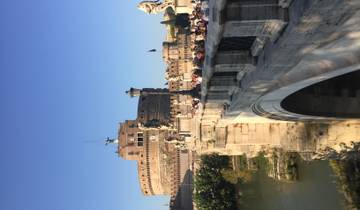
3 days
Advent in Rome: Markets, Churches & Tiramisu
- ✓ Booking needs min. 2 travelers
5 days
Ciao Italia: 5 Days, 2 Cities, Infinite Wonders
- ✓ Comprehensive Rome tour
- ✓ Expert local guides included
- ✓ All accommodation arranged
- ✓ Transportation provided
Multi-day tour packages powered by TourRadar. Prices and availability subject to change.
Introduction
Castel Sant’Angelo represents one of Rome’s most complete historical documents in architectural form, a monument that has adapted to serve the needs of emperors, popes, military commanders, and the modern Italian state across nearly two thousand years. Unlike Rome’s more singular monuments—the Colosseum as amphitheater, the Pantheon as temple—Castel Sant’Angelo embodies transformation itself, its layers of construction and modification revealing how power structures changed, how defensive technologies evolved, and how Roman civilization transitioned from pagan empire through papal theocracy to modern nation-state.
The monument’s extraordinary longevity stems from its fundamental structural soundness combined with strategic location and adaptability. Emperor Hadrian’s architects created a massive concrete core capable of bearing tremendous weight and resisting assault, positioned on the Tiber’s right bank to control river traffic and access to the Vatican area. This combination of durability and position ensured that successive powers would preserve and modify rather than demolish the structure, each era adding layers that complement rather than erase previous phases.
For contemporary visitors, Castel Sant’Angelo offers insights unavailable in Rome’s more archaeologically preserved sites. Where the Roman Forum presents ruins requiring imaginative reconstruction and the Pantheon displays perfected classical architecture frozen in time, Castel Sant’Angelo presents lived history—rooms actually used by popes during crises, prison cells that held Renaissance artists and religious dissidents, military installations that defended against Habsburg armies, all preserved in situ rather than reconstructed or museumified. The monument functions as three-dimensional historical narrative, each level and chamber revealing different chapters of Rome’s evolution.
The fortress also provides crucial context for understanding papal power dynamics and the relationship between spiritual and temporal authority in Rome. The Passetto di Borgo escape corridor, the fortified apartments blending comfort with defensibility, the transformation of an imperial tomb into a papal stronghold—these elements illustrate how the Catholic Church navigated centuries of political instability, military threats, and competing power claims. Castel Sant’Angelo served simultaneously as symbol of papal strength and admission of papal vulnerability, a fortress whose very existence acknowledged that spiritual authority sometimes required military protection.
Understanding Castel Sant’Angelo History and Significance
Castel Sant’Angelo’s history spans five distinct functional periods, each leaving architectural and cultural deposits that create the monument’s complex layered identity. The imperial funerary phase (139-403 AD) established the structural foundation with Hadrian’s massive mausoleum, featuring innovative engineering that would enable all subsequent transformations. The fortification phase (403-1277 AD) saw integration into Rome’s defensive systems as the Mausoleum became a military stronghold. The papal fortress period (1277-1870) marked the structure’s most intensive modification as successive popes transformed it into both refuge and residence. The prison era (primarily 16th-19th centuries, overlapping with papal use) added darker associations as political prisoners and condemned criminals occupied its cells. Finally, the museum period (1901-present) opened the monument to public exploration and scholarly study.
The Hadrianic construction employed Roman concrete technology at its most ambitious scale. The cylindrical drum measures 64 meters in diameter and originally rose approximately 48 meters, built around a square base measuring 89 meters per side. The central structure consisted of a massive concrete core faced with travertine blocks and decorated with marble, statues, and bronze fixtures. Hadrian’s architects created a helical ramped corridor ascending through the drum’s thickness, allowing funeral processions to reach the upper burial chamber where the emperor’s remains and those of his successors would rest in decorated urns. The exterior featured pilasters, niches containing statuary, and a crowning sculptural group—all elements that later fortification would obliterate or incorporate into military modifications.
Medieval militarization fundamentally altered the monument’s character. When Emperor Aurelian constructed new defensive walls around Rome in 271-275 AD, the Mausoleum’s strategic position and robust construction made integration logical. The fortification intensified during the Gothic Wars (535-554 AD) as Byzantine and Ostrogothic forces fought for control of Rome, transforming the tomb into a fortress complete with bastions, gates, and defensive positions. The original marble facing was stripped, some pieces becoming projectiles during sieges while others provided building material for St. Peter’s Basilica and other medieval construction projects. By the 10th century, the structure had fully transitioned from memorial to military installation.
Pope Nicholas III’s 1277 construction of the Passetto di Borgo marked the beginning of the papal fortress era, establishing Castel Sant’Angelo’s role as ultimate papal refuge. Subsequent popes enhanced defensive capabilities while adding residential apartments that reflected their dual requirements for security and dignity. Alexander VI Borgia (1492-1503) fortified the bastions and added luxurious apartments decorated by Pinturicchio and other Renaissance masters. Clement VII strengthened defenses after his harrowing 1527 refuge during the Sack of Rome, when the fortress sheltered him for seven months while imperial troops pillaged the city. Paul III added the beautiful loggia overlooking the Tiber and commissioned elaborate decorative programs celebrating papal authority.
The monument’s cultural significance extends beyond its architectural and historical value to its role in shaping Roman identity and collective memory. Castel Sant’Angelo appears throughout Italian literature, opera (most famously in Puccini’s “Tosca,” whose third act unfolds on its ramparts), and cinema as a symbol of Rome’s layered past. The fortress embodies the continuity principle central to Roman civilization—the practice of building upon and incorporating earlier structures rather than demolishing them, creating palimpsests where multiple historical periods remain simultaneously visible and meaningful.
Architectural Evolution from Mausoleum to Fortress
The transformation of Hadrian’s mausoleum into a military fortress represents one of architecture’s most successful adaptive reuse projects, accomplished through structural modifications that enhanced defensive capability while preserving the original concrete core. The cylindrical form that served funerary purposes proved ideal for fortress adaptation, providing 360-degree defensive positions, thick walls capable of withstanding siege artillery, and height advantage over surrounding terrain. Medieval military engineers recognized these inherent defensive qualities and modified the structure accordingly.
The most dramatic medieval modification involved adding four corner bastions projecting from the square base, creating fields of fire that eliminated blind spots around the fortress perimeter. These angular projections, visible in the monument’s plan view, contrast sharply with the circular drum, marking where Renaissance military engineering intersected with Roman imperial architecture. Antonio da Sangallo the Younger designed the current bastion configuration in the early 16th century, incorporating artillery positions, powder magazines, and connecting corridors that transformed the ancient tomb into a modern fortification capable of withstanding contemporary siege weapons.
Interior modifications created a complex vertical circulation system integrating the original Hadrianic ramp with new staircases, corridors, and defensive positions. The helical ramp, originally designed for solemn funeral processions, became the fortress’s main interior route while additional stairs provided rapid access to defensive positions. Engineers inserted floors dividing the drum’s interior height into six distinct levels, each serving specific military or residential functions. These insertions respected the massive concrete core while creating usable spaces within its volume, demonstrating sophisticated understanding of load distribution and structural capacity.
The fortress’s defensive systems evolved to counter changing military technology. Early medieval modifications focused on height and wall thickness to defeat battering rams and scaling attempts. Renaissance additions incorporated artillery positions with specially designed embrasures allowing cannon fire while protecting gun crews. Later modifications added powder magazines with blast-resistant walls, ventilation systems preventing explosive gas accumulation, and water cisterns ensuring siege survival. Each defensive generation left architectural traces—medieval crenellations, Renaissance gun ports, Baroque reinforcements—creating a vertical timeline of military engineering evolution.
The oil reservoir system exemplifies the fortress’s sophisticated defensive preparation. Large chambers beneath the terrace stored boiling oil that defenders could pour through machicolations onto attackers attempting to breach the walls. These chambers, carved from the Roman concrete core, connected via channels to discharge points positioned above vulnerable approaches. The system required careful engineering to prevent structural damage to the ancient fabric while creating effective defensive capability, achieved through precise positioning that exploited natural weak points in the concrete matrix.
Planning Your Visit: Opening Hours and Admission
Castel Sant’Angelo operates Tuesday through Sunday with consistent 9:00 AM to 7:30 PM hours, with final admission at 6:30 PM allowing adequate time to reach the upper terrace before closure. The monument closes Mondays and three annual holidays: January 1, May 1, and December 25. All other holidays, including Easter and August 15 (Ferragosto), see normal operating hours though with significantly increased visitor numbers requiring advance ticket purchase.
Opening hours variations occur during special evening events, particularly the summer cultural program when the fortress extends hours to 11:30 PM on select dates for performances, temporary exhibitions, and evening terrace access. The “Angel and Moon” summer festival typically includes theatrical performances, musical concerts, and dance programs in the castle’s courtyards and halls, with evening tickets providing combined access to performances and monument exploration. These special openings require separate tickets available through advance booking, as they sell out rapidly once announced.
Admission pricing operates on a tiered structure reflecting visitor categories and optional enhancements. Standard entry tickets provide access to all regular exhibition spaces including the permanent collections, papal apartments, terrace, and temporary exhibition areas when present. Audio guide options add contextual interpretation via smartphone applications, while skip-the-line tickets eliminate waiting time at ticket counters though not security screening queues. Guided tour options include specialized thematic routes focusing on particular historical periods, architectural features, or the Passetto di Borgo when accessible.
Free admission opportunities include the national “First Sunday” initiative offering no-charge entry on the first Sunday of each month, though this popular program generates substantial crowds and long queues requiring arrival before opening time. EU citizens aged 18-25 receive reduced admission rates requiring valid identification proving age and citizenship. Teachers and students in relevant academic programs (architecture, cultural heritage, archaeology, art history) from EU institutions enter free with appropriate documentation. Professional guides conducting tours and journalists with valid credentials also receive complimentary access.
Advance booking proves essential during peak visiting periods (April-September, Easter week, Christmas-New Year period) when same-day tickets may be unavailable or require multi-hour waits. Online reservation systems through the official CoopCulture platform allow selecting specific entry times and ticket types, with confirmation emails providing QR codes for direct entry queue access. Reserved tickets require presentation at designated entrance areas separate from general admission queues, reducing entry time though not eliminating mandatory security screening applying to all visitors.
Special access considerations include the Passetto di Borgo corridor visits, available only during announced special opening periods requiring separate tickets beyond standard castle admission. These limited-capacity experiences sell out immediately upon announcement, necessitating advance planning and rapid booking response. Combined tickets incorporating Castel Sant’Angelo with other Roman monuments (particularly Vatican Museums, Colosseum archaeological area, or National Roman Museum sites) offer cost savings for visitors planning multi-site itineraries, though requiring careful scheduling coordination as combined tickets typically mandate visiting all included sites within 72-hour validity windows.
Exploring the Interior: Level by Level Guide
Castel Sant’Angelo’s interior organization follows six distinct levels connected by the ancient helical ramp and supplementary staircases, each level representing different functional and chronological layers. The systematic vertical exploration reveals the monument’s transformation from tomb to fortress to museum, with architectural elements and collections arranged to demonstrate historical evolution while accommodating contemporary visitor flow.
The entrance level (Ground Floor) begins at the original Roman gateway where the Pons Aelius (modern Ponte Sant’Angelo) met the mausoleum. Visitors enter through this ancient portal into the ambulatory of Boniface IX, a vaulted corridor added in the 15th century that wraps around the monument’s base. This level houses introductory exhibitions explaining the site’s history, architectural evolution, and archaeological discoveries. Display cases contain Roman architectural fragments, medieval weapons, and historical documents establishing context for the vertical journey ahead. The bookshop and information desk occupy this level, providing last-minute guidebooks and orientation materials.
The helical ramp (First Level access) represents Hadrian’s original circulation route, a gently sloping corridor that spirals upward through the drum’s massive concrete walls. This remarkable engineering achievement allowed funeral processions to ascend with dignity while bearing the heavy decorated sarcophagi. The ramp’s walls display the construction technique—Roman concrete poured in successive layers between formwork, creating a monolithic structure of exceptional strength. Modern lighting illuminates original Roman brickwork patterns and structural details often missed during rushed ascent. Several apertures along the ramp provide glimpses into adjacent chambers and occasional views outward, though the primary function remains circulation rather than observation.
The Second Level contains the Hall of Urns (Sala delle Urne), the mausoleum’s original burial chamber where imperial remains rested in decorated containers. This square chamber, positioned in the monument’s geometric center, originally featured elaborate marble facing and sculptural decoration, now largely removed but reconstructed through archaeological evidence and historical descriptions. Display cases present surviving funerary artifacts, inscriptions, and architectural fragments recovered during various excavation campaigns. The hall’s austere concrete walls, stripped of ancient decoration, create powerful atmosphere emphasizing the structure’s age and transformation.
The Third Level encompasses the Courtyard of the Angel (Cortile dell’Angelo), an open space created during papal modifications that provides the transition from ancient tomb to Renaissance residence. This courtyard features a wellhead, marble benches, and the entrance to the papal apartments. Several rooms branch from the courtyard including the Hall of Justice, once serving as tribunal space during the castle’s role as papal court. The armory collections occupy adjacent chambers, displaying weapons, armor, and military equipment spanning medieval through 19th-century periods, illustrating the fortress’s continuous military function across centuries.
The Fourth Level houses the magnificent papal apartments, the monument’s artistic pinnacle featuring Renaissance and Mannerist fresco cycles in remarkably preserved condition. These interconnected chambers served as emergency papal residence during crises, designed to provide dignified accommodation befitting papal status even during siege conditions. The apartments are addressed comprehensively in a dedicated section below given their artistic significance and complex decorative programs.
The Fifth Level includes the Treasury and Archive rooms where popes stored valuables, documents, and precious objects during emergencies. These secure chambers featured reinforced doors, limited access points, and positions allowing defenders to protect contents during assault. Historical records document extraordinary treasures sheltered here during various crises, from jeweled crosses and golden communion vessels to historical manuscripts and artistic masterpieces. The rooms now display historical documents, papal artifacts, and items illustrating the treasury’s historical role.
The Sixth Level culminates at the Terrace of the Angel, the monument’s summit offering panoramic views and featuring the bronze statue of Archangel Michael crowning the fortress. This level merits extensive separate discussion given its unique characteristics and visitor importance, addressed in detail in the dedicated terrace section below.
The Papal Apartments and Renaissance Frescoes
The papal apartments represent Castel Sant’Angelo’s greatest artistic treasure, a suite of interconnected rooms decorated with extraordinary fresco cycles that demonstrate Renaissance and Mannerist art at its finest. These chambers functioned simultaneously as emergency refuge and symbol of undiminished papal authority, their lavish decoration asserting that even in extremis, the Pope maintained dignity and power worthy of magnificent surroundings. The decorative programs reveal sophisticated iconographic planning uniting classical mythology, Christian theology, papal propaganda, and aesthetic pleasure in cohesive artistic statements.
The Room of Apollo (Sala di Apollo) initiates the apartment sequence with frescoes by Perin del Vaga, Raphael’s most talented pupil, executed around 1547 for Pope Paul III. The ceiling presents Apollo driving his solar chariot surrounded by mythological scenes including the Contest of Apollo and Marsyas, Phaeton’s fall, and various mythological episodes demonstrating divine power and artistic skill. The walls feature elaborate grotesque decorations inspired by ancient Roman paintings discovered in Nero’s Domus Aurea, incorporating fantastic creatures, architectural elements, and delicate garlands in the style that influenced Renaissance decoration throughout Europe. The room’s iconographic program links papal authority to classical divine kingship while celebrating artistic achievement and cultural continuity between ancient Rome and the papal court.
The Room of Clement VII (Sala di Clemente VII) preserves frescoes commemorating the Medici pope who took refuge in Castel Sant’Angelo during the catastrophic 1527 Sack of Rome. The decorative program, completed by assistants after Clement’s death, depicts scenes from his life, papal insignia, and allegorical figures representing virtues and achievements. Historical irony pervades this chamber—decorated to celebrate a pontificate that witnessed Rome’s worst disaster since the Gothic invasions, the frescoes present idealized papal power precisely where that power’s limitations became devastatingly apparent. The artistic quality remains exceptional despite the complex historical circumstances, with particular attention to illusionistic architectural elements creating spatial depth.
The Room of Perseus (Sala di Perseo) features frescoes by Perin del Vaga and workshop depicting Perseus’s mythological adventures, particularly his rescue of Andromeda and his defeat of Medusa. The cycle demonstrates extraordinary technical mastery in foreshortening, anatomical rendering, and narrative composition. Perseus appears as heroic liberator overcoming monstrous threats—transparent allegory for papal power defeating heresy and protecting the faithful. The decorative borders incorporate martial imagery, weapons, and armor, emphasizing the fortress setting while maintaining aesthetic sophistication.
The Room of Amor and Psyche (Sala di Amore e Psiche) presents the mythological love story from Apuleius’s “Metamorphoses” through delicate frescoes attributed to Luzio Romano and assistants. The narrative unfolds across walls and ceiling in sequential episodes: Psyche’s beauty arousing Venus’s jealousy, Cupid’s love for the mortal, the trials Venus imposes, and the eventual divine marriage. The iconographic program operates on multiple levels—entertainment through beautiful storytelling, classical erudition demonstrating cultural sophistication, and allegorical interpretation reading Psyche’s trials as the soul’s journey toward divine union, appropriate for a papal residence.
The Pauline Room (Sala Paolina) represents the apartments’ artistic climax, decorated for Pope Paul III with frescoes by Perin del Vaga and workshop creating unified decorative program of exceptional quality. The room served as principal reception space where the Pope would receive visitors even during siege conditions, requiring decorations asserting authority and magnificence. The frescoes present complex allegorical program incorporating classical gods, virtues, historical scenes, and papal imagery in elaborate compositions demonstrating High Renaissance compositional principles and Mannerist decorative abundance. The ceiling’s illusionistic architecture creates apparent spatial expansion, making the actual chamber seem larger and more impressive than physical dimensions allow.
The preservation condition of these frescoes astonishes given the fortress’s military history and environmental exposures. Several factors contributed to survival: the rooms’ interior position protected from weather exposure, restricted access during military phases limiting damage from casual traffic, and 20th-century restoration campaigns employing modern conservation techniques. Recent interventions cleaned accumulated grime and soot while stabilizing plaster, revealing original color intensity and subtle tonal variations invisible for centuries. Contemporary visitors see these masterpieces more clearly than viewers have in four hundred years, thanks to controlled climate systems and lighting designed to prevent further deterioration.
Prisons and Dungeons: Historical Captivity
Castel Sant’Angelo’s transformation into a prison created one of Renaissance Italy’s most notorious detention facilities, housing political prisoners, religious dissidents, common criminals, and unfortunate individuals caught in papal power struggles. The fortress’s inherent security—massive walls, limited access points, position allowing constant surveillance—made escape virtually impossible while its papal control ensured captivity beyond normal legal processes. The prison cells occupy various levels, from dank dungeons near the foundation to more comfortable rooms where privileged prisoners enjoyed relative comfort during indefinite detention.
The historical cortile (courtyard prison cells) occupy the Third Level, arranged around the Courtyard of the Angel in small chambers offering minimal space, limited light, and basic amenities. These cells held prisoners of middling importance—minor nobility, clergy accused of political offenses, merchants imprisoned for commercial disputes with papal interests. Cell conditions varied with prisoner status and ability to pay for improved accommodation, food, and privileges. Better-connected prisoners could receive visitors, books, writing materials, and enhanced rations, while those lacking influence endured sparse conditions with minimal human contact beyond guards delivering basic sustenance.
The Sammalò (or San Marocco) prison, accessed via steep stairs descending into the monument’s lower reaches, represents the fortress’s most severe detention facility. This underground chamber, carved from ancient Roman construction, features minimal light, poor ventilation, and dampness from proximity to the Tiber’s water table. Historical accounts describe prisoners lowered through an opening in the ceiling, the only access point, which closed afterward leaving occupants in near-total darkness. The chamber’s name derives either from “mal’occhio” (evil eye) or from resemblance to a Moorish prison in popular imagination. Renaissance records document numerous deaths from disease, despair, and brutal conditions in this terrible space.
Famous prisoners whose captivity shaped Castel Sant’Angelo’s dark reputation include Benvenuto Cellini, the Renaissance sculptor and goldsmith imprisoned twice (1537-1539) for various offenses including embezzlement and assault. Cellini’s autobiography provides vivid firsthand testimony of prison conditions, guard corruption, and the psychological torment of indefinite detention. His accounts describe attempted escapes, including one dramatic effort where he fashioned rope from bedsheets and descended the exterior wall before recapture and return to harsher confinement. Cellini’s eventual release demonstrated how personal connections and artistic talent could transcend legal difficulties—Pope Paul III pardoned him to secure his services for papal artistic commissions.
Giordano Bruno, the philosopher condemned for heresy, spent his final years imprisoned in Castel Sant’Angelo before his 1600 execution in Campo de’ Fiori. Bruno’s theological and cosmological theories—including the infinity of the universe, plurality of worlds, and rejection of transubstantiation—brought him into fatal conflict with Counter-Reformation orthodoxy. His eight-year imprisonment demonstrated the Inquisition’s methods: isolation, interrogation, pressure to recant, and eventual execution when prisoners refused to renounce condemned beliefs. The fortress’s role in this process connected it to the broader apparatus of religious enforcement characterizing the period.
Count Cagliostro (Giuseppe Balsamo), the adventurer, alchemist, and accused charlatan, died imprisoned in Castel Sant’Angelo in 1795 after Inquisition conviction for heresy and Freemasonry. His case represents the prison’s final decades of active use for religious and political detention before Italian unification ended papal temporal power. Cagliostro’s death in custody, whether from illness, suicide, or other causes, remains historically disputed, adding mystery to the prison’s already dark legend.
The cells’ contemporary preservation raises ethical interpretation questions that museum management addresses through educational materials explaining historical context while acknowledging the human suffering these spaces witnessed. Visitors confront difficult histories—religious persecution, political repression, judicial torture—that complicate romantic notions of Renaissance splendor. The museum’s approach neither glorifies nor sanitizes this history, instead presenting documentary evidence and archaeological findings that allow visitors to form informed understanding of how power functioned in papal Rome and how architectural spaces served systems of control.
The Terrace of the Angel: Panoramic Views
The Terrace of the Angel crowns Castel Sant’Angelo at the monument’s summit, offering Rome’s most comprehensive panoramic viewpoint encompassing both ancient and modern city in 360-degree perspective. The bronze statue of Archangel Michael, the fortress’s defining symbol, dominates the terrace center, depicting the heavenly messenger sheathing his sword as Pope Gregory I witnessed during the 590 AD plague vision. This 18th-century sculpture by Flemish artist Peter Anton von Verschaffelt replaced earlier marble and bronze versions damaged by weather and lightning strikes, its current position representing the culmination of a sculptural tradition spanning more than a millennium.
The western vista presents St. Peter’s Basilica and Vatican City in extraordinary proximity and detail, the massive dome designed by Michelangelo appearing almost touchable from this elevated vantage point. The terrace allows clear observation of the Vatican’s defensive walls, the Vatican Gardens spreading behind the basilica, and the urban fabric of the Borgo neighborhood connecting the two monuments. This perspective reveals the strategic relationship between Castel Sant’Angelo and the Vatican that made the fortress essential to papal security—close enough for rapid refuge via the Passetto di Borgo, yet sufficiently distant to provide defensive depth if the Vatican itself fell to attackers.
The northern view encompasses the modern city spreading toward the Monti hills, with the Villa Borghese park visible in the distance. This perspective demonstrates Rome’s northern expansion beyond ancient limits, the 19th and 20th-century urban development contrasting with the historic center’s medieval and Renaissance fabric. The Tiber’s northward course appears clearly from this height, its meandering path through the city providing orientation and demonstrating the river’s historical role in Roman geography and commerce.
The eastern panorama captures Rome’s ancient heart, with major monuments arrayed in stunning sequence: the Pantheon’s dome rising above surrounding rooftops, the Victor Emmanuel II Monument’s white marble mass dominating Capitoline Hill, the Colosseum visible beyond despite distance, and countless church cupolas punctuating the skyline. This view reveals Rome’s unique urban character—layer upon layer of historical building creating dense vertical complexity where ancient, medieval, Renaissance, and modern structures coexist in architectural palimpsest. The seven hills’ topography becomes apparent from this elevation, explaining ancient Rome’s defensive advantages and urban organization.
The southern perspective follows the Tiber toward the Mediterranean, encompassing the Trastevere neighborhood’s terracotta roofs, the Janiculum Hill’s green elevation rising above the river’s right bank, and distant views toward EUR and the Alban Hills when atmospheric conditions permit. This outlook demonstrates Rome’s southern extent and the gradual topographical descent toward the coastal plain.
The terrace’s defensive features remain visible despite its current peaceful function. Artillery positions, powder magazine access points, and defensive walls encircling the platform demonstrate the military engineering that allowed this space to serve as final defensive redoubt during sieges. Historical accounts describe defenders manning these positions during the 1527 Sack of Rome, firing cannon at advancing imperial troops while Pope Clement VII sheltered in apartments below. The combination of military functionality and spectacular views created unique circumstances where desperate defensive actions unfolded against one of history’s most beautiful urban backdrops.
Optimal viewing times vary with season and photographic objectives. Morning light illuminates the Vatican from favorable angles while avoiding the harsh midday sun that flattens architectural details and creates extreme contrast. Late afternoon and sunset provide golden hour lighting that enriches Rome’s characteristic ochre and terracotta tones, particularly beautiful on the eastern historic center. Evening visits during special openings offer unique experiences as city lights activate and the urban landscape transforms from daytime clarity to nocturnal atmosphere, though photographic challenges increase with declining natural light.
Weather significantly impacts viewing conditions and visitor comfort. Clear days provide maximum visibility extending to distant mountains, while partial cloud cover often creates dramatic lighting effects and interesting skies enhancing photographic possibilities. Wind affects comfort on the exposed terrace, particularly during winter when temperatures drop and wind chill becomes significant. Summer heat can be intense without shade on the terrace, requiring sun protection and hydration. The museum provides limited seating, encouraging visitors to pause and absorb the panorama rather than rushing through this culminating experience.
Ponte Sant’Angelo and Bernini’s Sculptures
Ponte Sant’Angelo, the pedestrian bridge connecting Castel Sant’Angelo to Rome’s left bank, functions as architectural prologue to the fortress visit while constituting a masterpiece of Baroque sculpture in its own right. Originally constructed as the Pons Aelius in 134 AD under Emperor Hadrian to provide ceremonial access to his mausoleum, the bridge maintains its ancient Roman foundations while supporting one of Baroque art’s most admired sculptural programs—the series of ten angel statues designed by Gian Lorenzo Bernini and executed by his workshop between 1668-1669.
The bridge’s ancient engineering demonstrates Roman construction excellence. Three central arches span the Tiber, supported by massive piers founded on bedrock to resist flood forces and ensure structural stability across centuries. The original Roman construction employed travertine blocks, some visible in lower courses despite medieval and Baroque modifications that added the current balustrades and surface treatments. The bridge’s proportions reflect classical harmony principles, its width accommodating both ancient funeral processions and modern pedestrian traffic while maintaining visual balance with the massive cylindrical fortress it approaches.
Pope Clement IX commissioned Bernini to design the angel series as part of processional route improvements preparing Rome for Holy Year 1675. Bernini’s concept placed ten life-size marble angels along the balustrades, each bearing an instrument of Christ’s Passion—creating visual meditation on suffering and redemption for pilgrims crossing to reach St. Peter’s Basilica. The artistic program transformed a utilitarian crossing into spiritual journey, the angels’ dynamic poses and emotional expressivity characteristic of Bernini’s revolutionary approach to sculpture.
Bernini personally sculpted two angels (the “Angel with the Crown of Thorns” and “Angel with the Superscription”), though these masterpieces never reached the bridge. Pope Clement IX, recognizing their exceptional quality, ordered them retained for papal collections to protect from weather damage. The Vatican subsequently commissioned marble copies by Cartari and Naldini for bridge installation, while Bernini’s originals eventually entered the Church of Sant’Andrea delle Fratte where they remain. This decision, motivated by conservation concerns, reflects understanding that outdoor exposure would gradually destroy fine sculptural details—a prescient judgment confirmed by deterioration visible on workshop angels despite regular maintenance.
The ten bridge angels, executed by Bernini’s workshop following his designs and under his supervision, display varying quality reflecting different sculptors’ skills. The “Angel with the Sponge” by Antonio Giorgetti and “Angel with the Cross” by Ercole Ferrata achieve excellence approaching the master’s work, their drapery, anatomical modeling, and emotional expressivity demonstrating Baroque sculpture’s capacity to animate stone with spiritual intensity. Other angels show competent execution without achieving the same transcendent quality, a variation typical of workshop production where master designs receive implementation by assistants of varying abilities.
The angels’ iconographic program follows the Passion narrative sequence: the Column of Flagellation, Whips, Crown of Thorns, Veil of Veronica, Garment and Dice, Nails, Cross, Superscription “INRI,” Sponge with Vinegar, and Spear. This ordered sequence transforms bridge crossing into meditation on Christ’s suffering, each angel presenting its instrument while gesturing expressively—pointing heavenward, looking toward the instrument in horror or sorrow, addressing invisible observers, creating theatrical interaction between sculptures and passersby that exemplifies Baroque devotional art.
The bridge’s integration into Rome’s urban landscape creates one of the city’s most photographed vistas. The aligned angels create perspective leading eye toward Castel Sant’Angelo’s cylindrical mass crowned by Michael’s bronze statue, the composition presenting foreground sculptural detail, middle-ground architectural mass, and background sky in classical three-plane arrangement. This view appears in countless paintings, photographs, and films, establishing Ponte Sant’Angelo as iconic Roman image rivaling the Colosseum and Trevi Fountain in visual recognition.
Contemporary viewing conditions require patience due to constant tourist traffic and street performer activity. Optimal photography occurs during early morning before crowds accumulate or late evening when most visitors have departed. The bridge’s illumination after dark creates dramatic nighttime character, golden lighting accentuating the angels’ sculptural modeling while the fortress’s floodlit mass provides powerful background. The transition from daylight clarity to nocturnal atmosphere demonstrates how lighting transforms architectural and sculptural appreciation, the same forms revealing different characters under changed conditions.
The Passetto di Borgo: Papal Escape Route
The Passetto di Borgo represents one of Rome’s most dramatic architectural features, an 800-meter fortified corridor connecting Castel Sant’Angelo with Vatican City that enabled popes to flee to fortress security during invasions, riots, and military threats. Constructed in 1277 under Pope Nicholas III, the passage transformed Castel Sant’Angelo’s function from independent fortress to integrated component of papal defensive systems, establishing physical connection that would prove salvation during multiple crises across subsequent centuries.
The corridor’s construction employed medieval military architecture principles, creating covered walkway elevated approximately 8 meters above street level atop a wall roughly 3 meters thick. This elevation provided security from ground-level assault while the covered design protected fleeing popes from projectiles during passage. The internal corridor width allowed rapid movement while defensive apertures enabled guards to fire on pursuers or hostile crowds below. Strategic design positioned the passage to utilize existing buildings and topography for additional protection, the route following defensible alignment rather than straight line between endpoints.
The passage served its intended purpose most dramatically during the 1527 Sack of Rome when mutinous imperial troops under Charles V breached the city’s defenses and began wholesale plunder, murder, and destruction. Pope Clement VII, caught in the Vatican as attack commenced, fled through the Passetto as Swiss Guards died defending his escape route. Contemporary accounts describe the terrified Pope running through the corridor still wearing ceremonial vestments, the purple cape providing highly visible target for attackers firing at apertures as he passed. Clement reached Castel Sant’Angelo safely and sheltered there for seven months while imperial soldiers systematically looted Rome, destroyed artworks, murdered civilians, and committed atrocities that traumatized the city for generations.
This crisis validated Nicholas III’s strategic vision 250 years earlier—without the escape corridor, Clement would certainly have been captured, possibly killed, fundamentally altering European religious and political history. The passage’s existence allowed the papacy to survive Rome’s worst disaster since ancient barbarian invasions, maintaining institutional continuity during catastrophic disruption. Later popes, remembering 1527’s horrors, maintained and reinforced the corridor, ensuring future emergencies would find this lifeline available.
The corridor’s later history includes multiple additional uses during lesser crises and as secure communication route during politically tense periods. Popes transported valuables to Castel Sant’Angelo’s treasury through the passage, moved sensitive documents to secure archive rooms, and occasionally traveled privately between Vatican and fortress without public observation. This secondary function as covert transit route served diplomatic and administrative purposes beyond pure military emergency, integrating the passage into routine papal operations.
Public access to the Passetto remains restricted and irregular due to conservation requirements and structural concerns. The medieval fabric requires constant maintenance, the elevated position creates safety challenges for visitors, and the narrow confines limit capacity. When special openings occur, typically during cultural events or occasional scheduled tours, visitors experience unique perspective on both the corridor itself and adjacent neighborhoods viewed through the defensive apertures. The passage’s interior preserves original stonework, defensive features, and occasional historical graffiti, offering tangible connection to the desperate flight of 1527 and other historical dramas enacted in this confined space.
The corridor’s external appearance, visible from surrounding streets, displays typical medieval military architecture—crenellated walls, regular tower intervals, and massive masonry construction designed to withstand assault. Urban development has incorporated buildings directly against portions of the passage, creating unusual architectural juxtapositions where medieval military structure adjoins Renaissance palaces and modern apartments. This integration into urban fabric demonstrates Rome’s characteristic layering, where structures from vastly different periods coexist in daily functional proximity.
Art Collections and Museum Highlights
Beyond the papal apartments’ fresco masterpieces, Castel Sant’Angelo houses extensive collections spanning military artifacts, historical documents, architectural fragments, paintings, decorative arts, and archaeological materials that illuminate the monument’s complex history and broader Roman civilization. These collections, assembled through archaeological discoveries at the site, papal donations, state acquisitions, and transfers from other Italian museums, transform the fortress from simple historical monument into comprehensive museum institution.
The armory collections occupy several rooms across multiple levels, displaying evolution of military technology from medieval swords and crossbows through Renaissance firearms and artillery pieces to 19th-century military equipment. Highlights include decorated parade armor bearing papal insignia, functional battle armor showing wear and damage from actual combat, early firearms demonstrating transition from matchlock to flintlock mechanisms, and artillery pieces that once defended the fortress during sieges. Interpretive materials explain technological developments and tactical implications, connecting individual artifacts to broader military history narratives.
The historical document collections preserve papal bulls, military orders, diplomatic correspondence, architectural plans, and administrative records spanning the fortress’s operational history. Select documents appear in rotating displays with translation and historical context, revealing how the fortress functioned administratively and how popes communicated decisions regarding its management, modification, and utilization. Notable items include Clement VII’s orders during the 1527 siege, architectural drawings for Renaissance modifications, and 18th-century administrative records detailing daily fortress operations.
Architectural fragment collections display Roman decorative elements recovered during archaeological excavations and restoration campaigns, including marble facing pieces from Hadrian’s original mausoleum, sculptural fragments from the destroyed crowning monument, inscriptions identifying imperial burials, and column capitals demonstrating Roman decorative vocabulary. These fragments, impossible to return to original positions, receive museum display allowing close examination of carving techniques, material quality, and decorative programs that characterized the monument’s vanished splendor.
The painting collections include Renaissance and Baroque works acquired through papal patronage and modern museum purchases, focusing on Roman subjects and artists. Notable paintings depict historical events at Castel Sant’Angelo, provide documentary evidence of the fortress’s appearance during different periods, and represent broader artistic developments in papal Rome. The collection emphasizes historical documentation value alongside aesthetic quality, selecting works that illuminate the monument’s story rather than pursuing masterpieces unconnected to site narrative.
Temporary exhibition spaces on the Third and Fourth levels host rotating shows addressing specialized topics related to the fortress, papal history, Roman archaeology, or relevant artistic movements. These exhibitions, typically lasting 3-6 months, present focused scholarly investigations making available materials normally stored in reserves, display loans from other institutions, and explore specific historical questions requiring concentrated attention beyond permanent collection displays. Recent exhibitions have addressed the fortress’s role during World War II, specific papal pontificates, Renaissance military engineering, and artistic patronage during particular periods.
The museum’s interpretive approach emphasizes multilayered history through parallel narratives—architectural evolution, artistic achievement, military function, political events, personal stories—avoiding single chronological presentation that would oversimplify the monument’s complex identity. Visitors choose emphasis according to interests: architecture enthusiasts focus on structural evolution, art historians study fresco programs, military history devotees examine defensive systems, while general visitors synthesize multiple narratives into comprehensive understanding of how this extraordinary building functioned across two millennia.
Photography Guide: Best Angles and Perspectives
Castel Sant’Angelo presents exceptional photographic opportunities combining architectural grandeur, artistic details, panoramic views, and dramatic lighting possibilities that reward careful planning and technical skill. Successful photography at the monument requires understanding optimal positions, timing considerations, equipment requirements, and technical approaches that maximize the fortress’s visual potential while respecting museum regulations and other visitors.
Exterior perspectives from Ponte Sant’Angelo provide the most iconic views, capturing the fortress’s cylindrical mass, bronze angel statue, and Tiber River context in compositions that define the monument’s public image. Early morning light from the east creates favorable illumination on the fortress’s western facade visible from the bridge, while evening golden hour light from the west enhances the Travertine’s warm tones. Including Bernini’s angels in foreground creates layered compositions with sculptural detail leading to architectural mass, though achieving this requires strategic positioning given constant pedestrian traffic.
Lungotevere embankment positions along the Tiber offer alternative exterior views isolating the fortress against sky without foreground bridge elements. These positions work particularly well for telephoto compositions compressing the cylindrical drum’s vertical dimensions while emphasizing horizontal courses in the masonry. Sunrise and sunset conditions create silhouette opportunities when shooting toward light, while midday overhead sun flattens architectural modeling, generally producing less attractive results except when deliberately pursuing high-contrast graphic effects.
Interior photography confronts challenging lighting conditions in the helical ramp and many rooms where available light fluctuates dramatically. The ramp’s Roman brick construction photographs well using window light from periodic apertures, though requiring careful exposure to preserve both highlight detail in illuminated areas and shadow information in darker sections. Modern LED museum lighting provides color temperature challenges, often creating green or magenta color casts requiring white balance correction during processing. Flash photography, prohibited in fresco rooms, limits options in the papal apartments, necessitating high ISO settings, tripod use where permitted, or acceptance of technical limitations.
The papal apartments’ fresco photography requires specialized approach balancing adequate light capture with color accuracy and detail resolution. The museum’s controlled lighting creates relatively even illumination though at levels requiring ISO settings of 1600-3200 for handheld shooting. Wide-angle lenses capture complete ceiling programs but introduce distortion requiring correction, while standard focal lengths render individual fresco sections with accurate geometry. Detail photography of specific fresco passages benefits from moderate telephoto lenses isolating sections while minimizing perspective distortion.
Terrace photography presents opportunities ranging from architectural detail work on the fortress’s upper levels to expansive panoramic views across Rome. Wide-angle lenses capture the terrace’s defensive features and angel statue while including background cityscape, creating environmental portraits showing the monument in urban context. Telephoto lenses isolate St. Peter’s dome, distant monuments, and specific architectural details across Rome’s skyline, compressing atmospheric perspective to create dramatic distant views. Panoramic stitching techniques combine multiple overlapping images into ultra-wide compositions impossible with single exposures.
Seasonal and temporal considerations significantly affect photographic possibilities. Summer’s extended daylight hours provide flexibility for timing but bring harsh midday light and tourist crowds complicating composition. Winter’s lower sun angle creates longer golden hours ideal for warm-toned photography though shorter days compress available shooting time. Spring and autumn offer moderate crowds and favorable light without extreme seasonal characteristics, generally representing optimal compromise for photography-focused visits.
Equipment recommendations vary with photographic objectives. Wide-angle zoom lenses (16-35mm or similar) handle interior architecture and terrace panoramas. Standard zoom ranges (24-70mm or 24-105mm) provide versatility for most situations. Moderate telephoto lenses (70-200mm or similar) compress distant views and isolate architectural details. Prime lenses with wide maximum apertures enable shooting in low light without excessive ISO though sacrifice compositional flexibility. Tripods, while useful for technical quality, face restrictions in many interior areas and prove impractical given crowd density, favoring handheld approaches with image stabilization.
Practical Visitor Information
Castel Sant’Angelo’s location in central Rome makes accessibility straightforward using public transportation, walking, or taxi services. The fortress stands on the Tiber’s right bank at Lungotevere Castello 50, immediately adjacent to Ponte Sant’Angelo and within easy walking distance of Vatican City (800 meters to St. Peter’s Square), Piazza Navona (600 meters), and the historic center. This central position allows integration into walking itineraries connecting multiple major sites without requiring transportation between destinations.
Metro access uses Line A with stations at Lepanto (800 meters from fortress) or Ottaviano-San Pietro-Musei Vaticani (900 meters). Both stations require 10-12 minute walks through Vatican neighborhood streets, following clear signage directing toward the fortress. Bus routes 23, 34, 40, 62, 280, and 982 stop at Piazza Pia or nearby locations within 200 meters, providing more direct service though requiring navigation of Rome’s complex bus system. Visitors comfortable with public transportation generally find buses more convenient than metro for this specific destination.
Walking routes from major tourist areas follow pleasant paths through historic neighborhoods. From Piazza Navona, the 10-minute walk follows Via dei Coronari, one of Rome’s most attractive Renaissance streets, crossing the Tiber at Ponte Sant’Angelo with fortress appearing directly ahead. From the Trevi Fountain, the 20-minute walk follows Via del Corso then cuts toward the river, providing tour of central Rome’s commercial district before reaching the monument. From Termini Station, walking requires 30-35 minutes following Via Nazionale and through the historic center, practical for those desiring exercise and urban exploration.
Parking near Castel Sant’Angelo presents significant challenges due to limited street parking, restricted traffic zones, and resident permit requirements throughout central Rome. The nearest public parking facilities operate at Villa Borghese (requiring 15-minute walk) and Prati neighborhood garages (10 minutes). Street parking, when available, requires payment via parking meters and careful attention to restrictions, with violations resulting in substantial fines and possible towing. Visitors driving to Rome should consider parking at peripheral metro stations and using public transportation for historic center access.
Accessibility for visitors with mobility limitations faces constraints imposed by the monument’s ancient architecture and vertical organization. Wheelchair access reaches the entrance level, ambulatory corridors, and certain ground-floor exhibition spaces, though the helical ramp’s slope and length prove challenging even for manual wheelchair users. Elevator access provides some vertical circulation though does not reach all levels or the terrace. Visitors requiring accessibility accommodations should contact museum administration in advance to discuss specific needs and available assistance, as certain areas remain unavoidably inaccessible due to architectural constraints impossible to modify without destroying historical fabric.
Security procedures require all visitors to pass through metal detectors and bag inspection before entry. Large backpacks, wheeled luggage, and oversized bags face prohibition, with no storage facilities available. Visitors should travel light, carrying only essential items in small bags permissible through security. Prohibited items include weapons of any kind, glass containers, aerosol sprays, and items deemed security risks. Photography restrictions apply in some fresco rooms where flash photography could damage delicate pigments, though most areas permit photography for personal use. Commercial photography and video recording require advance permits and fee payment.
Visitor amenities include restrooms at entrance level and upper floors, a bookshop offering scholarly publications and guidebooks, and information desk providing multilingual assistance. Audio guide rentals supplement self-guided exploration with historical context and architectural explanation, though quality and comprehensiveness vary. Café facilities operate seasonally on the terrace level, offering beverages and light refreshments with extraordinary views, though pricing reflects premium location and captive audience. No food storage facilities exist, and outside food consumption is generally prohibited in interior spaces.
Recommended visit duration of 2-3 hours allows thorough exploration without rushed pacing, though visitors can adjust timing based on personal interests and physical capacity. Morning visits avoid peak afternoon crowds and benefit from favorable lighting on exteriors. Late afternoon visits culminate at terrace during golden hour, providing optimal photographic light though requiring reverse visit sequence ascending quickly to reach the summit before closing. Special evening openings offer unique atmospheric experience though limited to announced dates requiring separate ticket purchase and advance planning.
Hidden Details and Lesser-Known Features
Beyond Castel Sant’Angelo’s celebrated architectural achievements and famous artistic treasures, the monument conceals numerous lesser-known details, architectural peculiarities, and historical curiosities that reward attentive observation and reveal additional layers of the fortress’s complex identity. These subtle elements, easily overlooked during rushed visits, provide insights into construction techniques, functional requirements, symbolic programs, and historical episodes that standard interpretive materials often omit.
The oil storage chambers beneath the terrace level represent sophisticated defensive engineering rarely discussed in popular accounts. These large vaulted spaces held hundreds of liters of oil that defenders heated and poured through machicolations onto attackers scaling walls or attempting to breach gates. The chambers connect via stone channels to discharge points positioned above critical defensive locations, the system designed to deliver scalding oil precisely where needed without exposing defenders to counter-fire. The chambers’ vaulted ceilings and strategic positioning demonstrate how Renaissance military engineers integrated new defensive technologies into ancient Roman structure while preserving structural integrity.
Graffiti inscriptions throughout the fortress provide poignant testimony from prisoners, soldiers, and visitors across centuries. Cell walls bear carved names, dates, prayers, protests of innocence, and occasional crude artistic efforts created by desperate captives facing indefinite detention or execution. Some inscriptions achieve unexpected eloquence, prisoners composing poetry or philosophical reflections during long captivity. Guard areas show different inscription character—boasts, complaints about duty conditions, satirical comments about superiors—revealing the mundane reality of fortress life between dramatic historical events. The museum preserves select inscriptions while protective measures prevent contemporary addition to this layered historical record.
The fortress’s water management systems demonstrate engineering sophistication essential for siege survival. Multiple cisterns throughout the structure collected rainwater from roofs and courtyards, storing thousands of liters ensuring water supply if sieges cut external sources. Complex drainage channels prevented flooding during Rome’s notorious thunderstorms while directing overflow away from vulnerable structural elements. Well shafts descending to groundwater level provided emergency backup though the Tiber’s proximity made well water brackish and less desirable than collected rainwater. These systems, invisible to casual observers, proved crucial during 1527 siege when the fortress sheltered hundreds of refugees for seven months.
Secret passages and hidden chambers riddle the fortress, serving purposes ranging from surveillance to emergency escape. Narrow passages allowed guards to move between defensive positions without exposing themselves to fire. Listening chambers positioned adjacent to important rooms enabled monitoring conversations, useful for detecting plots or gathering intelligence from prisoners and visitors. Hidden stairs provided emergency evacuation routes if primary circulation became compromised. While many passages remain closed to public access for safety reasons, their existence demonstrates the paranoid mentality characterizing fortress design where layered redundancy ensured options during unpredictable crises.
The fortress’s acoustic properties create unusual sound phenomena in certain spaces. The circular stairwell produces distinct echo effects, sound reflecting off curved walls in patterns different from rectangular spaces. Some chambers function as whispering galleries where quiet speech in one corner carries clearly to distant locations through acoustic focusing. These effects, unplanned consequences of architectural geometry, occasionally served useful purposes—guards positioned in acoustic “hot spots” could monitor conversations in adjacent rooms without direct observation, though whether designers intentionally exploited these phenomena remains uncertain.
Astronomical alignments in the structure suggest intentional orientation though scholarly debate continues regarding significance. The main entrance faces east toward sunrise, common classical practice symbolizing rebirth and eternal life appropriate for a mausoleum. Certain upper-level windows align with summer solstice sunset, potentially connecting the monument to solar symbolism prevalent in imperial Roman ideology. Whether these alignments reflect deliberate astronomical planning or coincidental architectural geometry remains disputed, though their existence invites speculation about cosmological meanings ancient architects may have encoded.
Connecting with Vatican and St. Peter’s
Castel Sant’Angelo’s relationship with Vatican City and St. Peter’s Basilica extends beyond physical proximity and the famous Passetto corridor to encompass shared historical narratives, complementary architectural roles, and practical visitor considerations that reward understanding both monuments as interconnected components of Rome’s papal heritage. This relationship evolved across centuries as popes shaped both sites according to changing requirements, creating functional and symbolic connections that persist into the modern era.
The geographical relationship places Castel Sant’Angelo exactly 800 meters from St. Peter’s Square, a distance Pope Nicholas III determined optimal for defensive purposes when commissioning the Passetto corridor in 1277. This separation provided sufficient space that hostile forces capturing the Vatican wouldn’t immediately threaten the fortress, while remaining close enough that popes could reach safety rapidly during emergencies. The intervening Borgo neighborhood, traditionally housing pilgrims and Vatican employees, created buffer zone adding defensive depth while maintaining continuous papal-controlled territory between monuments.
Architectural dialogue between fortress and basilica reflects complementary functions within papal power structures. St. Peter’s represents spiritual authority made manifest in architecture, its massive dome designed by Michelangelo asserting universal Catholic claims while the basilica’s interior splendor demonstrates Church wealth and artistic patronage. Castel Sant’Angelo embodies temporal power and defensive capability, its military architecture acknowledging that spiritual authority required protection from earthly threats. Together, the monuments present complete portrait of papal authority’s dual nature—heavenly and earthly, spiritual and temporal, persuasive and coercive.
Visual connection between monuments creates Rome’s most recognizable skyline compositions. Views from Ponte Sant’Angelo align the bridge’s Baroque angel sculptures with the fortress’s cylindrical mass and distant St. Peter’s dome, creating three-plane compositions beloved by painters and photographers. From the terrace, St. Peter’s appears in extraordinary proximity and detail, the viewing angle revealing dome structure and Vatican architecture invisible from ground level. These reciprocal views establish visual dialogue suggesting functional connection while demonstrating architects’ awareness that monuments would be seen together, not in isolation.
Visitor planning should consider the monuments’ proximity when scheduling Roman itineraries. Combined visits work efficiently given short walking distance, though total time requirements of 5-6 hours demand substantial stamina. Morning visits to Vatican Museums and St. Peter’s (opening 9:00 AM) followed by afternoon Castel Sant’Angelo exploration provides chronological progression from Christian sacred architecture to papal military history, though crowds peak at both sites during midday hours. Alternatively, early Castel Sant’Angelo visits (opening 9:00 AM Tuesday-Sunday) when fortress crowds remain manageable, followed by later Vatican visits, distributes crowds more favorably though reversing thematic sequence.
Combined ticket options occasionally offer modest savings for visitors planning both sites, though availability varies seasonally and such packages typically include other Roman attractions creating multi-day visiting requirements. Roma Pass and Omnia Card tourist passes incorporate Castel Sant’Angelo among covered attractions, providing value for visitors planning extensive museum programs though requiring careful calculation whether pass pricing justifies individual circumstances.
Thematic connections between sites reward coordinated study. Visitors interested in papal history benefit from examining how popes balanced spiritual mission represented at St. Peter’s with defensive pragmatism embodied at Castel Sant’Angelo. Art enthusiasts find complementary masterpieces—Michelangelo’s Pietà and Sistine Chapel at Vatican, versus Raphael school frescoes at the fortress. Military history devotees contrast St. Peter’s symbolic defensive elements (its fortress-like mass, surrounding walls) with Castel Sant’Angelo’s actual military architecture designed for combat. Understanding these thematic relationships enriches appreciation of both monuments beyond isolated examination.
Understanding the Cultural Significance
Castel Sant’Angelo’s cultural significance extends beyond architectural achievement and historical events to encompass its role in shaping Roman identity, its influence on artistic and literary imagination, and its function as symbol embodying Rome’s capacity for transformation and survival. The monument’s unique position bridging pagan and Christian Rome, imperial and papal power, ancient and modern civilization makes it essential reference point for understanding how the Eternal City conceptualizes its relationship with layered past.
The fortress embodies Rome’s defining characteristic—continuity through transformation. Rather than demolishing Hadrian’s mausoleum when it no longer served funerary purposes, Romans adapted the structure to new functions, preserving ancient fabric while adding medieval, Renaissance, and modern layers. This practice, repeated throughout Rome’s urban fabric, created the palimpsest city where multiple historical periods remain simultaneously visible and meaningful. Castel Sant’Angelo demonstrates this principle at monumental scale, its architecture literally preserving 2,000 years of Roman history in physical form accessible to direct experience rather than requiring imaginative reconstruction.
Literary and artistic traditions have established Castel Sant’Angelo as essential Rome symbol, particularly in works exploring themes of power, imprisonment, transformation, and survival. Giacomo Puccini’s opera “Tosca” places its climactic final act on the fortress ramparts, where the heroine Tosca leaps to her death after witnessing her lover’s execution. This dramatic deployment established the fortress in opera repertoire while cementing associations with tragic passion, political persecution, and desperate resistance to tyranny. The opera’s continued global performance ensures Castel Sant’Angelo recognition extending far beyond visitors familiar with Roman history.
Film and television productions utilize the fortress as quintessential Roman location evoking medieval and Renaissance periods. Its distinctive silhouette provides immediately recognizable Rome signifier while its dramatic history supplies ready narrative framework. Dan Brown’s novel “Angels and Demons” and subsequent film adaptation prominently featured Castel Sant’Angelo, introducing the monument to mass audiences unfamiliar with papal history while perpetuating legendary associations with secrets, hidden passages, and mysterious knowledge.
The monument’s role in Roman collective memory operates on multiple registers. Older Romans remember the fortress primarily as prison and military installation, associations reinforced by its use as military barracks and detention facility into the 20th century. The 1901 transition to museum status represented symbolic transformation from active military site to historical monument, though this shift occurred gradually in public consciousness. Contemporary Romans regard Castel Sant’Angelo primarily as tourist attraction and cultural venue, its military and carceral functions receding into historical memory as museum interpretation emphasizes artistic and architectural achievements.
UNESCO recognition (as part of Rome’s historic center World Heritage designation) affirms Castel Sant’Angelo’s universal significance while imposing conservation obligations protecting the monument for future generations. This international framework situates the fortress within global heritage discourse, establishing preservation standards and encouraging scholarly research that illuminates the monument’s meaning beyond Italian national context. The designation acknowledges that Castel Sant’Angelo’s significance transcends local history to exemplify broader human achievements in architecture, engineering, and cultural continuity.
The fortress serves contemporary Rome as premier venue for cultural events, temporary exhibitions, and artistic programming that activate historical spaces with living culture. Summer concerts in courtyards, contemporary art installations in papal apartments, theatrical performances in halls—these events demonstrate that historical monuments need not function solely as static museums but can serve as stages for contemporary creativity engaging with historical context. This programming philosophy balances preservation requirements with cultural vitality, ensuring Castel Sant’Angelo remains meaningful to contemporary society rather than becoming mere archaeological artifact.
Frequently Asked Questions
Is Castel Sant’Angelo worth visiting compared to other Rome attractions?
Castel Sant’Angelo offers unique value among Rome attractions as the only major monument demonstrating complete architectural evolution from ancient Rome through medieval, Renaissance, and modern periods. Unlike the Colosseum or Pantheon, which represent single historical moments frozen in time, Castel Sant’Angelo reveals how Romans continuously adapted structures across two millennia. The monument rewards visitors seeking comprehensive Roman historical narrative rather than singular architectural achievement, while the terrace provides panoramic views unavailable elsewhere in central Rome. Visitors with limited time who prioritize ancient Roman architecture might defer Castel Sant’Angelo in favor of Forum, Colosseum, and Pantheon, though those interested in papal history, Renaissance art, or comprehensive Roman chronology find the fortress essential and complementary to other major sites rather than competitive with them.
How crowded does Castel Sant’Angelo get and when should I visit to avoid crowds?
Castel Sant’Angelo experiences significantly lower crowding than Vatican Museums or Colosseum, though peak periods (April-September, Easter week, Christmas-New Year) bring substantial visitor numbers creating bottlenecks on the helical ramp and terrace. Weekday mornings immediately at 9:00 AM opening provide quietest access with minimal queues and sparse crowds in interior spaces. Weekends see higher numbers, particularly Saturday afternoons when multi-site tourist itineraries concentrate visits. Late afternoon final entry (5:30-6:30 PM) offers reduced crowds though limited time before 7:30 PM closure. First Sunday monthly free admission attracts large crowds requiring early arrival and acceptance of busy conditions throughout the visit. Winter months (November-February excluding holidays) provide most consistent low-crowd conditions though shorter daylight hours affect terrace photography opportunities. Advance ticket purchase eliminates ticket office queues though not security screening or interior crowding during peak periods.
Can I take photographs inside Castel Sant’Angelo?
Photography for personal use is permitted throughout most of Castel Sant’Angelo including the helical ramp, courtyards, papal apartments, and terrace, though specific restrictions apply in certain fresco rooms where flash photography could damage delicate 16th-century pigments. Visitors should disable flash when photographing frescoed spaces and respect posted signage indicating any areas where photography is prohibited. Tripods face restrictions in crowded areas where they would obstruct visitor flow or create tripping hazards, though may be used in less congested spaces during quiet periods. Commercial photography and video recording for publication, broadcast, or commercial purposes require advance permits obtained through museum administration and typically involve usage fees. Selfie sticks, increasingly restricted in Italian museums, may face prohibition though specific policies vary and visitors should confirm current regulations. Photography on the terrace is fully permitted and encouraged given spectacular views, though visitors should exercise caution near edges and respect other visitors’ experience when positioning for shots.
What is the best time of day to visit for photography?
Optimal photography timing varies with objectives and seasonal conditions. For terrace panoramic views, late afternoon golden hour (approximately two hours before sunset, varying seasonally) provides warm directional light that enriches Rome’s characteristic ochre and terracotta architectural tones while creating dimensional modeling through shadow play. Morning light works well for photographing St. Peter’s Basilica from the terrace, as eastern sun illuminates the dome’s western face without harsh backlighting. Interior photography in papal apartments receives relatively consistent lighting from museum illumination systems, making time-of-day less critical though afternoon visits benefit from some natural window light supplementing artificial sources. Exterior views from Ponte Sant’Angelo photograph best during morning hours when eastern light strikes the fortress’s western facade, or during sunset when warm light enhances the Travertine’s natural tones. Special evening openings during summer provide unique opportunities for night photography capturing illuminated fortress against dark sky, though requiring different technical approaches than daylight shooting.
Are there guided tours available and are they worthwhile?
Guided tours operate through both official museum services and independent tour companies, offering various formats from general historical overviews to specialized thematic tours focusing on specific aspects such as Renaissance frescoes, military architecture, or papal history. Official museum tours, typically conducted in Italian with some English options, provide scholarly depth and access to guides with academic training in art history or archaeology. Independent tour companies offer multilingual services and flexible scheduling though quality varies significantly between operators. Specialized architectural or art history tours led by credentialed experts provide substantial value for visitors seeking deep engagement with papal apartments’ fresco programs or the monument’s structural evolution, content exceeding what self-guided audio guides typically deliver. General historical tours offer moderate value for visitors preferring structured narrative though well-prepared independent visitors using quality guidebooks can achieve comparable understanding. Passetto di Borgo access, when available, typically requires guided tour participation rather than independent exploration. Visitors should evaluate their historical knowledge, time availability, and depth of interest when deciding whether guided tour investment justifies cost versus self-guided exploration.
How does Castel Sant’Angelo relate to Angels and Demons and is the film accurate?
Dan Brown’s novel “Angels and Demons” and its film adaptation prominently feature Castel Sant’Angelo as location within a thriller plot involving Vatican intrigue and historical secret societies. While the fortress legitimately served papal defensive purposes and does contain secret passages including the Passetto di Borgo, the novel’s specific plot elements—hidden Illuminati chambers, secret archives, dramatic Vatican conspiracies—represent complete fiction unsupported by historical evidence. The Passetto corridor exists and has the dramatic history Brown references (particularly during the 1527 Sack of Rome), though Dan Brown’s portrayal exaggerates accessibility and embellishes architectural features for dramatic effect. The novel’s value lies in popularizing Castel Sant’Angelo among global audiences unfamiliar with papal history, potentially motivating visits that might not otherwise occur, though visitors should understand that film/novel depictions blend factual historical framework with invented thriller narrative elements. The fortress’s actual history—imperial mausoleum transformed into papal refuge sheltering popes during genuine existential crises—proves sufficiently dramatic without fictional embellishment, offering authentic historical significance exceeding novel’s invented intrigue.
What should I definitely not miss during my visit?
Essential experiences include ascending to the Terrace of the Angel for panoramic Rome views encompassing St. Peter’s Basilica and the historic center, this being the fortress’s most distinctive feature unavailable elsewhere. The papal apartments on the Fourth Level demand thorough exploration, particularly the Room of Apollo and Pauline Room with their exceptional Renaissance fresco cycles by Perin del Vaga and workshop representing artistic masterpieces justifying visit independently of other attractions. The original Hadrianic helical ramp provides tangible connection to the monument’s ancient origins, its Roman engineering remarkable for surviving two millennia while maintaining structural integrity. The Hall of Urns preserves the mausoleum’s funerary chambers where imperial remains once rested, offering atmosphere of appropriate solemnity contrasting with later Renaissance splendor. Prison cells, particularly the infamous Sammalò underground chamber, provide sobering counterpoint to artistic magnificence, revealing the fortress’s darker functions and the harsh reality of political imprisonment. Ponte Sant’Angelo’s Bernini angel sculptures merit careful attention during approach, their Baroque emotional intensity and technical mastery demonstrating sculptural achievement equaling the fortress’s interior treasures. Time permitting, exploring lesser-known corridors and secondary chambers reveals architectural details and historical layers that standard tourist routes often bypass.
Can I visit both Castel Sant’Angelo and the Vatican Museums in one day?
Visiting both attractions in a single day proves physically possible though demanding, requiring approximately 7-8 hours of active exploration plus transit time and breaks. Vatican Museums alone require 3-4 hours for reasonably thorough visit including Sistine Chapel, while Castel Sant’Angelo needs 2-3 hours, totaling 5-7 hours of actual site time. The 800-meter walking distance between sites adds 15 minutes transit though visitors typically want brief rest and refreshment between major attractions. Optimal sequencing begins with Vatican Museums at 9:00 AM opening when advance tickets allow bypassing initial entry queues, spending morning there and completing by early afternoon (1:00-2:00 PM). A lunch break in the Borgo neighborhood precedes afternoon Castel Sant’Angelo visit beginning around 2:30-3:00 PM, allowing 3-4 hours before 7:30 PM closure. This schedule proves exhausting for many visitors, particularly during summer heat, though determined travelers can accomplish both sites while maintaining quality engagement rather than rushed superficial visits. Alternative approaches spread visits across two days, allowing more relaxed pacing, better photographic opportunities, and reduced physical strain, particularly recommended for visitors with limited mobility, families with children, or those seeking deeper rather than broader Roman cultural engagement.
Is Castel Sant’Angelo accessible for visitors with disabilities?
Accessibility at Castel Sant’Angelo faces significant limitations imposed by the ancient structure’s inherent architecture, though museum administration provides maximum feasible accommodation within historical preservation constraints. Wheelchair access reaches the entrance level, ground floor ambulatory corridors, and certain exhibition spaces via ramped entrances avoiding steps. An elevator provides some vertical circulation reaching select intermediate levels though not accessing all floors or the summit terrace. The original Hadrianic helical ramp, while technically wheelchair-navigable, presents challenges due to sustained incline, narrow width, and length requiring substantial physical effort even for manual wheelchair users with upper body strength. Many upper-level rooms, particularly papal apartments and terrace, remain inaccessible to wheelchair users due to stairways that cannot be modified without destroying irreplaceable historical fabric. Visitors with mobility limitations should contact museum administration before visiting to discuss specific needs, available assistance, and realistic expectations regarding accessible areas. The museum provides wheelchairs for temporary use and staff assistance for visitors requiring support, though the vertical organization and ancient architecture impose inherent limitations that even maximum accommodation cannot fully overcome. Visitors should consider whether ground-floor and lower-level access provides sufficient value given inability to reach terrace views and upper apartments, this calculation varying with individual circumstances and priorities.
What’s the connection between Castel Sant’Angelo and Puccini’s opera Tosca?
Giacomo Puccini’s 1900 opera “Tosca” sets its climactic final act on Castel Sant’Angelo’s ramparts, where the condemned political prisoner Mario Cavaradossi awaits execution while his lover Tosca attempts desperate intervention. The opera’s historical setting in June 1800 during Napoleonic Wars places dramatic action during the fortress’s active military period when it regularly served as prison and execution site for political enemies. Puccini’s librettists selected Castel Sant’Angelo for Act III’s setting due to its historical authenticity—the fortress actually functioned as described in the opera—while its dramatic architectural presence and tragic associations enhanced theatrical effect. The opera’s global success established Castel Sant’Angelo in cultural consciousness far beyond historical scholarship, many visitors first encountering the fortress through opera performances before learning its actual history. The famous aria “E lucevan le stelle” (And the stars were shining), sung by Cavaradossi before execution, evokes the fortress’s terrace atmosphere while establishing one of opera repertoire’s most beloved moments. Contemporary visitors familiar with “Tosca” experience the terrace with enhanced emotional resonance, the operatic associations adding aesthetic dimension to historical understanding. The opera’s dramatic conclusion—Tosca’s leap from the ramparts after witnessing Cavaradossi’s execution—while fictional in specific details, reflects genuine despair experienced by countless prisoners facing death in this fortress, the theatrical imagination capturing authentic historical emotion even as specific narrative remains invented.