
Matera Best Tours & Walking Routes 2026: Complete Travel Guide
Matera delivers one of Italy’s most extraordinary cultural experiences through its UNESCO World Heritage Sassi districts, where ancient cave dwellings carved into limestone cliffs create a labyrinthine cityscape inhabited continuously for nearly 9,000 years. The dramatic stone architecture, network of rupestrian churches adorned with Byzantine frescoes, and complex underground water systems reveal sophisticated adaptations to challenging terrain that transformed Matera from Italy’s “shame” in the 1950s to European Capital of Culture in 2019. Strategic tour selection and well-planned walking routes maximize appreciation of this remarkable site in 2026, as the compact historic center’s steep terrain and hidden treasures reward guided interpretation while self-directed exploration allows discovery of atmospheric viewpoints, authentic cave restaurants, and quiet corners escaped by daytime tour groups.
Key Takeaways
- Group walking tours cost €25-40 per person in 2026 providing 2-3 hour guided exploration of Sassi Barisano and Sasso Caveoso districts with expert commentary on cave architecture and social history, while private guides charge €120-180 per group (2-6 people) delivering personalized pacing and specialized itineraries
- Casa Grotta di Vico Solitario entrance fees of €5 in 2026 include access to furnished cave dwelling, snow cellar, natural cave, and rupestrian church providing essential context for understanding daily life in Matera’s caves through mid-20th century before forced relocations
- Self-guided walking routes through the free-access Sassi districts require 3-5 hours for comprehensive exploration covering Belvedere viewpoints, Piazza Vittorio Veneto orientation, descent through Sasso Barisano to Cathedral, navigation of Sasso Caveoso streets, and strategic positioning for photography at Madonna de Idris
- The Murgia Materana Park across the Gravina ravine offers hiking trails accessing over 150 rupestrian churches, dramatic canyon viewpoints, and the celebrated sunset perspective on illuminated Sassi requiring half-day excursions with local guides for church access
- Combined attraction tickets providing access to multiple cave houses, rupestrian churches, and Palombaro Lungo underground cistern create savings over individual €3-5 entrance fees, though availability and pricing vary by operator requiring advance research
- Optimal visiting periods target spring April-June and autumn September-October in 2026 when moderate temperatures facilitate comfortable walking on steep stone pathways and stairs, while summer heat intensifies on exposed limestone surfaces and winter brings occasional closures affecting some attractions
People Also Ask About Matera Tours and Walking Routes 2026
How much do guided tours cost in Matera in 2026?
Group walking tours range €25-40 per person for 2-3 hour experiences covering Sassi Barisano and Sasso Caveoso districts with authorized guides providing historical context, architectural interpretation, and access to selected cave houses or rupestrian churches included in tour pricing. Private guides charge €120-180 per group accommodating 2-6 participants, delivering customized itineraries focusing on specific interests including photography, architecture, or film locations while allowing flexible pacing and spontaneous routing adjustments. Specialized experiences including tuk-tuk tours cost €30-50 per person for motorized alternatives reducing walking demands, while sunset tours and evening experiences command €35-55 reflecting premium timing and atmospheric advantages.
Can I explore Matera’s Sassi without a guided tour in 2026?
The Sassi districts remain entirely free to access for independent exploration in 2026, allowing self-guided walking through Sasso Barisano and Sasso Caveoso’s labyrinthine streets, viewpoints, and public piazzas without entrance fees or tickets. Comprehensive self-directed routes require 3-5 hours covering major landmarks including Belvedere panoramas, Cathedral, Piazza San Pietro Caveoso, and atmospheric alleyways, though specific attractions including Casa Grotta cave houses, Palombaro Lungo cistern, and rupestrian churches charge individual €3-5 entrance fees. Independent exploration offers flexibility, spontaneous discovery, and budget advantages while guided tours provide historical context, hidden site access, and expert interpretation transforming otherwise opaque architectural features into comprehensible cultural narratives worth the investment for history enthusiasts and first-time visitors.
What is the best walking route through Matera’s Sassi in 2026?
The classic Sassi circuit begins at Belvedere Piazza Vittorio Veneto for orientation and panoramic views, descends Via Madonna delle Virtù into Sasso Barisano reaching the Cathedral, continues downward through Via Buozzi and Via Casalnuovo into Sasso Caveoso’s deepest sections near Piazza San Pietro Caveoso, then climbs back via Via Bruno Buozzi past Madonna de Idris church to Piazza Vittorio Veneto completing the 3-4 hour loop. Alternative routes prioritize photography by timing morning light at eastern viewpoints and late afternoon positioning across Gravina ravine in Murgia Park capturing golden-hour illumination on Sassi facades, while architecture-focused paths concentrate on rupestrian church clusters in Via Madonna delle Virtù and Via Casalnuovo revealing Matera’s Byzantine heritage through accessible frescoed cave sanctuaries.
Do I need advance reservations for Matera tours in 2026?
Popular group walking tours sell out during peak spring and autumn weekends requiring 3-7 days advance booking through official operators or platforms including GetYourGuide and Viator, while weekday availability remains generally accessible for walk-up participation though advance purchase guarantees preferred tour times and language options. Private guides warrant 1-2 weeks booking lead time securing specific dates, customized itineraries, and English-speaking expertise, particularly essential during Easter, summer July-August, and September when Italian domestic tourism surges. The Crypt of Original Sin situated outside Matera town requires mandatory advance guided tour reservations with fixed departure times limiting spontaneous visits, while most Sassi attractions including Casa Grotta and individual rupestrian churches accept walk-up visitors year-round without capacity constraints.
Extended multi-day tours – 5+ days
Featured Matera Multi-Day Tour Packages
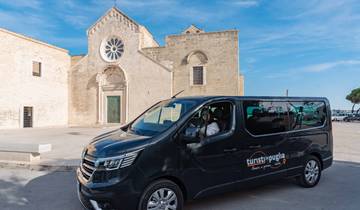
5 days
5-Day Puglia & Matera Small-Group Tour from Bari (Max 8)
- ✓ Comprehensive Matera tour
- ✓ Expert local guides included
- ✓ All accommodation arranged
- ✓ Transportation provided
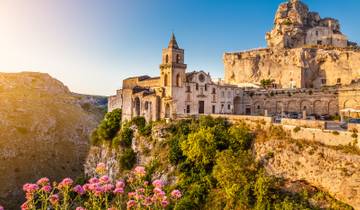
5 days
Matera & Apulia Private 5 Day Tour
- ✓ Comprehensive Matera tour
- ✓ Expert local guides included
- ✓ All accommodation arranged
- ✓ Transportation provided
7 days
7 Day Highlights of Puglia Tour Package
- ✓ Comprehensive Matera tour
- ✓ Expert local guides included
- ✓ All accommodation arranged
- ✓ Transportation provided

6 days
Beaches and Cities of Apulia: Relaxing with Children and without a Car
- ✓ Booking needs min. 2 travelers
Multi-day tour packages powered by TourRadar. Prices and availability subject to change.
Introduction: Discovering Matera’s Ancient Cave City 2026
Matera stands among the world’s most remarkable urban landscapes, where millennia of continuous human habitation carved directly into limestone cliffs created a vertical city of cave dwellings, underground chambers, and rock-hewn churches demonstrating extraordinary architectural ingenuity and cultural adaptation. The UNESCO World Heritage Sassi di Matera comprises two primary districts—Sasso Barisano and Sasso Caveoso—where approximately 3,000 cave structures cascade down ravine slopes above the Gravina torrent, forming dense networks of interconnected dwellings, cisterns, and communal spaces that housed vibrant communities until mid-20th century governmental relocations ended cave habitation patterns stretching back to Paleolithic times. This ancient settlement’s transformation from symbol of poverty and backwardness to celebrated cultural destination represents one of heritage conservation’s greatest success stories, recognized through Matera’s 2019 designation as European Capital of Culture validating decades of restoration converting abandoned caves into boutique hotels, restaurants, museums, and artistic spaces.
The 2026 visitor experiences profound contrasts between Matera’s humble origins and current sophisticated tourism infrastructure, as meticulously restored cave dwellings housing luxury accommodations coexist with preserved historical exhibits documenting the crushing poverty afflicting residents who shared single-room caves with livestock lacking running water, electricity, or sanitation well into the 1950s. This juxtaposition creates powerful educational opportunities when tours and self-guided exploration balance appreciation for architectural uniqueness with understanding of social conditions prompting Carlo Levi’s 1945 writings that shocked Italy and ultimately forced governmental intervention relocating 15,000 cave dwellers into modern housing. Contemporary Matera offers multiple access points for understanding this complex heritage, from reconstructed Casa Grotta cave houses preserving period furnishings and domestic arrangements, to rupestrian churches maintaining Byzantine frescoes painted by monks fleeing 8th-9th century iconoclastic persecutions, to panoramic viewpoints revealing the Sassi’s extraordinary three-dimensional urban fabric impossible to comprehend from street level.
Strategic planning for 2026 visits balances guided tours providing essential historical context and hidden site access against self-directed exploration enabling spontaneous discovery, flexible pacing, and photographic opportunities impossible within group schedule constraints. The Sassi’s compact geography concentrates major attractions within walkable distances though steep terrain, numerous staircases, and labyrinthine routing create navigational challenges for unprepared visitors lacking maps or offline navigation tools. Optimal approaches combine morning guided tours establishing orientation and historical frameworks with afternoon independent wandering applying learned context to personal discoveries, or reverse sequencing for travelers preferring exploratory freedom before structured interpretation. Weather considerations significantly affect experience quality, as Matera’s exposed limestone surfaces amplify summer heat creating exhausting midday conditions while winter rain renders stone pathways slippery and reduces visibility at key viewpoints, making spring and autumn optimal seasons balancing pleasant temperatures with manageable tourist crowds.
The rupestrian church network scattered throughout Sassi districts and surrounding Murgia Materana Park represents Matera’s greatest artistic treasures, where Byzantine-influenced frescoes depicting saints, biblical narratives, and theological symbolism survive in varying preservation states within dozens of cave sanctuaries carved by monastic communities between 8th and 13th centuries. Access policies vary dramatically by church, with some including street-level visibility allowing casual appreciation during Sassi walks, others requiring €3-5 entrance fees for interior viewing, and protected sites like the celebrated Crypt of Original Sin demanding advance guided tour bookings at fixed departure times due to fragile artwork requiring controlled visitation. This tiered access system rewards thorough pre-trip research identifying priority churches matching personal interests in religious art, architectural typology, or photographic potential, while understanding that comprehensive church visitation extends far beyond single-day timelines given their geographic distribution and varying accessibility requirements.
Matera’s transformation into sophisticated cultural destination created diverse accommodation options allowing overnight stays within restored cave structures, fundamentally altering visitor experiences compared to brief day-trip encounters. Cave hotels ranging from budget-friendly rooms at €60-100 nightly to luxury suites commanding €200-400+ provide authentic immersion in Sassi architecture while delivering modern comforts including climate control, private bathrooms, and WiFi connectivity, with evening and early morning hours offering atmospheric exploration when day-trippers depart and sunrise/sunset lighting creates dramatic photographic conditions. Multi-day stays enable deeper engagement through cooking classes in cave settings, extended Murgia Park hikes accessing remote rupestrian churches, day trips to nearby Altamura and Gravina, and leisurely meal pacing at traditional restaurants serving Basilicata specialties including pane di Matera bread, peperoni cruschi crispy peppers, and crapiata legume stews reflecting the region’s agricultural heritage.
Transportation access influences Matera visiting patterns significantly, as the city’s location in southern Basilicata region requires strategic connections via Bari (65 kilometers northeast) serving as primary gateway through its international airport and rail hub linking Rome, Naples, and other Italian cities. Direct Matera-Bari trains operated by Ferrovie Appulo Lucane require 1 hour 45 minutes on regional services, while Marozzi buses provide alternative 1 hour 15 minute connections particularly useful for early morning or late evening travel when train schedules gap. Rental cars offer maximum flexibility for combining Matera visits with Puglia touring including Alberobello trulli, Lecce baroque architecture, and coastal destinations, though Matera’s historic center restricts vehicle access requiring designated parking lots outside Sassi perimeters and accepting 10-15 minute walks to accommodation and attraction starting points.
Budget considerations for 2026 Matera experiences range dramatically based on tour selection, dining choices, and accommodation preferences, with comprehensive day visits achievable at €40-70 per person including group tour at €25-40, Casa Grotta entrance at €5, modest restaurant lunch at €15-25, and incidental costs for coffee, snacks, and additional attraction entries. Mid-range experiences incorporating private guides, quality dining, and selective rupestrian church visits reach €100-150 per person, while premium itineraries featuring luxury cave hotel stays, exclusive guides, gourmet meals, and comprehensive church access exceed €250-400 daily though delivering exceptional depth and comfort justifying higher investments for serious cultural travelers. The Sassi’s free-access nature allows extremely budget-conscious exploration minimizing costs to transportation, basic meals, and selective €5-15 attraction entries while still experiencing Matera’s essential character through self-guided walking, viewpoint photography, and atmospheric immersion.
Understanding Matera’s Sassi Districts 2026
Sasso Barisano occupies the northwestern slopes above Gravina ravine, presenting slightly more developed character compared to its southern counterpart through higher concentrations of boutique hotels, restaurants, and artisan workshops converted from historic cave structures. The district’s name references orientation toward Bari, reflecting traditional commercial connections with Puglia’s Adriatic capital, while architectural features including baroque church facades and 17th-18th century palazzo fronts demonstrate wealth accumulation periods when Matera enjoyed regional significance before 19th-20th century economic decline. Via Madonna delle Virtù serves as Sasso Barisano’s primary thoroughfare descending from Piano district’s upper streets, lined with cave entrances converted to galleries, ceramics studios, and café terraces offering Gravina panoramas, while parallel Via Fiorentini and Via d’Addozio provide quieter alternatives revealing residential cave adaptations and occasional glimpses into courtyard spaces maintaining traditional domestic organization.
The district’s rupestrian churches concentrate along Madonna delle Virtù corridor, with the double-church complex of Madonna delle Virtù and San Nicola dei Greci presenting accessible examples of cave sanctuary architecture and Byzantine fresco preservation meriting 30-45 minute visits. San Pietro Barisano emerges as Sasso Barisano’s largest rupestrian church, featuring baroque facade grafted onto cave interior containing three naves carved into living rock plus underground ossuary and crypt spaces accessible through separate guided tours revealing Matera’s death rituals and burial practices. These churches remain partially integrated into daily life rather than functioning purely as tourist attractions, with occasional religious services maintaining centuries-old worship patterns while tourism generates conservation funding supporting fresco stabilization and structural maintenance preventing collapse threatening fragile cave architecture.
Sasso Caveoso descends southern ravine slopes facing Murgia Park’s opposite cliffs, preserving more authentic cave dwelling character through lower restoration rates and stronger retention of historical urban fabric compared to Barisano’s boutique commercialization. The district’s name derives from cave features—caveoso literally meaning “cave-filled”—accurately describing the dense concentration of cave structures creating vertical neighborhoods where single street level supports multiple dwelling layers carved progressively deeper into cliff faces. Piazza San Pietro Caveoso anchors the district’s lower reaches, providing orientation point for visitors and spectacular perspectives across Gravina toward Murgia plateau’s opposing cliff faces honeycombed with additional cave churches and hermitages accessible via park hiking trails requiring dedicated half-day excursions.
Casa Grotta di Vico Solitario represents Sasso Caveoso’s essential attraction, presenting meticulously reconstructed 18th-century cave dwelling furnished with period pieces demonstrating how extended families numbering 10-12 members shared single-room caves alongside livestock, agricultural tools, and minimal domestic possessions. The €5 entrance fee (2026 rates) includes access to adjoining snow cellar demonstrating food preservation techniques, natural cave screening documentary about Matera’s history, and small rupestrian church of Sant’Agostino al Casalnuovo revealing 9th-11th century religious architecture and faded frescoes. Audio guides in multiple languages enhance visit value through detailed explanations of domestic arrangements, water collection systems, and social organization enabling millennia of cave habitation despite severe resource constraints and challenging living conditions that ultimately prompted governmental intervention.
The Madonna de Idris church perched prominently on Monterrone rock formation above Sasso Caveoso provides iconic photographic subjects recognizable from countless Matera images, accessible via steep staircases from Piazza San Pietro Caveoso rewarding climbers with interior Byzantine frescoes and superior vantage points surveying both Sassi districts. The church shares rock outcrop with San Giovanni in Monterrone, creating combined religious complex accessible through €3 entrance fee allowing 20-30 minute visits appreciating frescoed surfaces, architectural adaptations to irregular cave spaces, and panoramic terraces overlooking Gravina ravine. These elevated churches demonstrate strategic positioning serving both religious and defensive functions, with visibility from great distances announcing Christian presence while complex access routes provided security against potential attackers during Matera’s contested medieval period.
Civita district caps the ridgeline between Sasso Barisano and Sasso Caveoso, representing medieval Matera’s administrative and religious core where Cathedral dominates skyline from 13th-century Romanesque-Pugliese architectural traditions. The Cathedral’s elevated position provides superior orientation points for first-time visitors surveying both Sassi districts radiating downward, while interior spaces preserve artistic treasures including 16th-century stone presepe (nativity) and various paintings documenting Matera’s religious heritage. Piazza Vittorio Veneto forms Civita’s modern social center where Piano district’s 19th-20th century buildings meet Sassi historic zones, creating natural orientation and refreshment stops where cafés and restaurants cater to both tourists and local residents conducting daily business in contemporary Matera’s administrative center.
The three-dimensional urbanism characterizing both Sassi districts creates navigational challenges for visitors accustomed to conventional street patterns, as single pathways frequently serve multiple building levels through terraced arrangements where one structure’s roof forms another’s courtyard or street access. This vertical layering intensified over centuries as population growth forced ever-deeper cave excavation creating neighborhoods organized more by elevation than traditional street grids, with staircases, tunnels, and carved passages linking different levels in complex networks requiring local knowledge or detailed maps for efficient navigation. Contemporary street signs help orientation though many pathways maintain historical names while lacking obvious markers, making smartphone GPS or offline map downloads essential tools for independent exploration preventing frustration from repeated dead-ends and unintended backtracking consuming limited sightseeing time.
Group Walking Tours in Matera 2026
Standard group walking tours operate daily year-round covering Sassi Barisano and Sasso Caveoso core areas in 2-3 hour itineraries priced €25-40 per person in 2026, providing authorized guide expertise interpreting cave architecture, social history, and UNESCO significance while accessing selected interior spaces including typical cave house and rupestrian church strengthening visitor understanding beyond superficial aesthetic appreciation. Tour group sizes typically range 8-20 participants balancing economical pricing against manageable group dynamics, with English-language tours scheduled 2-4 times daily during peak April-October seasons while winter reduces frequency requiring advance schedule verification. Meeting points concentrate at prominent landmarks including Chiesa di San Francesco d’Assisi near Piazza San Francesco or Piazza Vittorio Veneto’s tourist information office, with tours departing punctually requiring 5-10 minute pre-departure arrival ensuring group formation and guide introduction before walking commences.
Itinerary structures follow established patterns beginning with Civita district orientation establishing historical context and UNESCO recognition significance, descending through Sasso Barisano’s Via Madonna delle Virtù corridor accessing rupestrian church interiors normally locked to independent visitors, transitioning via Cathedral area into Sasso Caveoso for Casa Grotta visit or equivalent cave dwelling demonstration, and concluding at Piazza San Pietro Caveoso viewpoint with opportunities for group photographs and final questions before disbanding. Guides emphasize social transformation narratives contrasting 1950s poverty and forced relocations with contemporary restoration success, film location identifications including The Passion of the Christ and James Bond’s No Time to Die scenes, and architectural innovations enabling cave habitation including sophisticated water collection cisterns and vertical ventilation systems maintaining livable interior conditions.
Specialized thematic tours targeting specific interests operate through select providers, including photography-focused experiences timing departures for optimal lighting conditions and positioning guides at superior viewpoints teaching composition techniques, food and culture tours incorporating tastings of pane di Matera bread at historic bakeries plus visits to artisan workshops producing traditional ceramics and textiles, and film location tours visiting specific Sassi sites featured in major productions explaining how Matera’s timeless appearance creates biblical and historical settings without requiring extensive set construction. These specialized experiences command €35-55 per person premiums reflecting smaller group sizes, extended durations, and inclusion of tastings or special access permissions, appealing to enthusiasts willing to invest beyond standard tours for deeper engagement with specific Matera dimensions.
Evening and sunset tours capitalize on Matera’s dramatic nocturnal transformation when strategic illumination highlights architectural features and creates atmospheric shadows enhancing the Sassi’s mysterious character. These 2-2.5 hour experiences departing late afternoon or early evening cost €30-45 per person, timing conclusions to capture golden hour lighting from Murgia viewpoints or within Sassi streets as darkness descends and artificial lighting activates. The reduced walking during evening tours accommodates visitors fatigued from daytime exploration while offering completely different aesthetic experiences transforming familiar daylight scenes into romantic nightscapes particularly appreciated by couples and photographers seeking memorable images beyond standard tourist documentation.
Booking platforms including GetYourGuide, Viator, and ToursByLocals aggregate multiple tour operators allowing comparison shopping across dates, languages, and itinerary variations while providing verified reviews, cancellation policies, and instant confirmation convenience. Direct booking through Matera tourist information offices and authorized guide associations occasionally offers modest savings eliminating platform commissions, though requires in-person or telephone coordination potentially challenging for international visitors with language barriers. Advance booking 3-7 days ahead secures preferred tour times particularly for English-language departures during peak seasons, while walk-up participation remains possible during quieter periods accepting whatever language and timing availability exists rather than guaranteeing optimal experiences.
Tour cancellation policies typically permit full refunds for cancellations 24-48 hours before scheduled departures, with later cancellations or no-shows forfeiting payment as guides and operators commit resources based on confirmed participant numbers. Weather-related cancellations prove rare given Matera tours operate year-round in various conditions, though severe rain or extreme heat might prompt rescheduling particularly for extended Murgia Park hiking components requiring safe footing and moderate temperatures. Participants should arrive prepared for significant walking including numerous stairs and uneven stone surfaces, carrying water bottles, wearing comfortable closed-toe shoes with good traction, and applying sun protection during warmer months when exposed limestone surfaces intensify heat and glare affecting stamina and photography comfort.
Private Guided Tours in Matera 2026
Private guides offer completely customized Matera experiences tailored to specific interests, physical capabilities, and scheduling preferences, charging €120-180 per group for 2-3 hour core Sassi coverage with rates accommodating 2-6 participants creating favorable per-person economics for couples and small friend/family groups. The substantial price premium over group tours delivers personalized attention allowing questions anytime without competing for guide interaction, flexible pacing enabling extended photography stops or rapid movement through less interesting sections, and spontaneous itinerary adjustments responding to discoveries, energy levels, or changing weather without group consensus requirements. Private guides typically possess deeper expertise than standard tour leaders, including advanced degrees in archaeology, art history, or architecture enabling sophisticated discussion of Byzantine fresco iconography, medieval construction techniques, or 20th-century urban planning controversies for intellectually engaged visitors seeking maximum educational value.
Booking private guides requires 1-2 weeks advance notice particularly during peak spring and autumn seasons when quality guides fill calendars rapidly, accomplished through ToursByLocals and Viator platforms managing logistics including secure payment, cancellation protection, and verified guide credentials, or direct contact with Matera guide associations and tourist information offices coordinating local professionals. Clearly communicating specific interests during booking—whether photography emphasis, film location focus, architectural detail, or culinary integration—enables guides to prepare specialized itineraries and secure access to normally closed sites, arrange artisan workshop visits, or coordinate with restaurants for optimal tasting experiences aligned with tour timing. Multi-day visitors benefit from splitting private guide services across different themes, such as initial Sassi orientation tour establishing foundation knowledge, followed by specialized Murgia Park church hiking or extended rupestrian sanctuary circuit impossible to accomplish efficiently without expert navigation and key access.
Language capabilities distinguish private guide quality significantly, as truly fluent English speakers command premium rates while guides with functional but limited English offer lower pricing trading communication precision for budget savings. Travelers with Italian language skills access broader guide pools including specialists lacking English certification but possessing exceptional local knowledge, archaeological expertise, or personal family histories in Sassi neighborhoods adding intimate perspectives unavailable through standard tour narratives. Request guide credentials and specializations during booking, seeking recognized authorization, positive recent reviews, and relevant educational backgrounds matching intended tour focus rather than accepting generic “local expert” descriptions that may overstate actual qualification levels.
Extended private tours running 4-6 hours or full days expand coverage beyond core Sassi to incorporate Murgia Materana Park hiking accessing remote rupestrian churches including the celebrated Crypt of Original Sin situated 9 kilometers south of Matera, requiring advance mandatory reservations and guided entry to view 8th-9th century frescoes nicknamed the “Sistine Chapel of rupestrian art.” These extended experiences cost €200-350 per group reflecting additional time commitments, transportation coordination to distant sites, and specialized knowledge requirements for church interpretation. Full-day private tours enable leisurely pacing with extended lunch breaks at traditional restaurants, multiple rupestrian church visits revealing stylistic evolution across centuries, and strategic positioning for sunset photography from optimal Murgia viewpoints impossible to locate independently without guide assistance.
Private guide combinations with other Matera services create comprehensive packages bundling accommodation, dining reservations, cooking classes, and artisan workshop visits into seamless multi-day experiences particularly appealing to travelers prioritizing cultural depth over independent flexibility. These curated packages cost €300-500+ daily per person though deliver exceptional value through exclusive access, insider connections, and stress-free logistics allowing complete immersion in Matera’s cultural offerings without navigational concerns or booking coordination consuming vacation time. Luxury-focused private tours incorporate cave hotel stays in premium properties, gourmet restaurant reservations at celebrated establishments, and private transportation eliminating all walking beyond essential site access, appealing to mobility-limited travelers or those preferring comfort over authentic but potentially challenging cave city navigation.
Self-Guided Walking Routes Through the Sassi 2026
The Classic Sassi Circuit provides comprehensive self-directed exploration requiring 3-4 hours covering both major districts with strategic viewpoints, church exteriors, and atmospheric neighborhood immersion without entrance fees beyond optional €5 Casa Grotta visit. Begin at Belvedere Piazza Vittorio Veneto surveying panoramic Sassi views establishing spatial orientation and photographic establishing shots, descend Via del Corso into Piano district’s commercial streets, transition into Sasso Barisano via Via Madonna delle Virtù passing artisan workshops and boutique cave hotels, continue downward to Cathedral for architectural appreciation and superior vantage points, descend further through Via Buozzi into Sasso Caveoso’s labyrinthine streets reaching Piazza San Pietro Caveoso at lowest accessible point, optionally climb to Madonna de Idris for elevated perspectives and church interiors, then ascend Via Bruno Buozzi back to Piazza Vittorio Veneto completing the circular route with renewed appreciation for vertical urbanism experienced through descending and climbing phases.
The Photography Route prioritizes optimal lighting and composition opportunities, beginning pre-dawn or at sunrise when eastern light illuminates Sasso Caveoso’s cliff faces viewed from Piazza Vittorio Veneto and Belvedere Luigi Guerricchio, descending quickly through Sasso Barisano to position at lower Sasso Caveoso viewpoints capturing morning shadows and textural details on cave facades, spending midday hours when overhead sun flattens lighting exploring shaded alleyways and interior attractions including Casa Grotta, repositioning mid-afternoon across Gravina ravine in Murgia Materana Park accessing suspended footbridge and various trails providing frontal Sassi perspectives during golden hour sunset when warm light transforms beige limestone into glowing amber surfaces. This route demands 5-6 hours accounting for patient composition work and strategic positioning requiring either overnight Matera accommodation or very early morning arrivals from external lodging, though delivering superior photographic results impossible to achieve during conventional midday visits when harsh lighting creates unflattering contrast and washed-out colors.
The Architecture and Church Route concentrates on rupestrian sanctuary appreciation and cave construction techniques, beginning at Sasso Barisano’s Madonna delle Virtù and San Nicola dei Greci double church complex for Byzantine fresco viewing and rock-cut architectural details, continuing to San Pietro Barisano examining facade-cave integration and underground crypt spaces, descending to Cathedral for Romanesque-Pugliese design study, entering Sasso Caveoso via Via Casalnuovo accessing Sant’Agostino al Casalnuovo church included with Casa Grotta ticket, examining Madonna de Idris and San Giovanni in Monterrone elevated complex, and concluding at San Pietro Caveoso appreciating baroque exterior grafted onto medieval cave structure. This route requires 4-5 hours allowing adequate time for interior contemplation and architectural photography, plus approximately €15-20 total entrance fees for churches charging admission beyond the free exterior appreciation possible throughout Sassi districts.
The Atmospheric Wandering Route abandons structured itineraries favoring intuitive exploration and serendipitous discovery, entering Sassi districts via any descent route and following visual interest through alleyways, staircases, and passages without predetermined destinations or time constraints. This approach rewards curiosity and patience, allowing extended pauses at appealing viewpoints, interactions with local residents and artisans, spontaneous café stops, and photographic documentation of architectural details, domestic scenes, and atmospheric moments impossible to predict or schedule. The wandering method works optimally for repeat visitors familiar with major landmarks or travelers prioritizing authentic immersion over comprehensive coverage, though risks inefficient routing visiting same areas multiple times while missing significant sites lacking obvious street-level visibility. Combining wandering with general awareness of district boundaries and Cathedral orientation provides sufficient structure preventing complete disorientation while maintaining exploratory freedom creating memorable personal discoveries beyond standard tourist experiences.
Evening walking routes transform Sassi character dramatically as darkness falls and strategic illumination creates theatrical atmospheric effects impossible during daylight hours. Recommended evening paths begin at Piazza Vittorio Veneto around sunset watching light fade over Sasso Barisano’s upper levels, descend through increasingly shadowed streets as artificial lighting activates creating dramatic contrasts between illuminated cave entrances and dark alleyway depths, reach Piazza San Pietro Caveoso when full darkness amplifies architectural feature lighting and canyon void mystery, then ascend slowly through residential neighborhoods observing domestic life through lit cave openings while returning to upper Piano district for dinner at restaurants maintaining late-evening service. Evening walks prove particularly romantic for couples and atmospheric for photography enthusiasts, though require good flashlights or headlamps for safe footing on unlit sections plus awareness that many shops and attractions close by 7:00-8:00 PM limiting evening access to primarily residential and restaurant areas.
Navigation tools significantly enhance self-guided walking experiences, with offline Google Maps downloads providing GPS positioning throughout Sassi districts despite cellular signal variability in deep alleyways and cave structures, while printed tourist office maps distributed free at information points offer backup orientation without battery dependency. Smartphone applications including Maps.me and Organic Maps provide detailed Sassi street layouts with points of interest marking major churches, viewpoints, and attractions, though user-contributed content quality varies requiring verification against official sources. Physical landmarks including Cathedral bell tower visible throughout both districts, Monterrone rock outcrop with Madonna de Idris, and Piazza Vittorio Veneto’s modern buildings provide reliable orientation references preventing disorientation during complex routing through interconnected cave neighborhoods lacking consistent signage and traditional street grid organization.
Rupestrian Churches and Sacred Sites 2026
Matera’s rupestrian church network encompasses over 150 documented cave sanctuaries carved into limestone across Sassi districts and surrounding Murgia Materana Park, representing one of Mediterranean region’s most significant concentrations of Byzantine and medieval rock-cut religious architecture. These churches originated primarily during 8th-11th centuries when Basilian monks fleeing iconoclastic persecutions in Byzantine Empire established hermitages and monastic communities throughout southern Italy, choosing Matera’s cave-rich landscape for defensive advantages, spiritual isolation, and established traditions of cave dwelling creating receptive environments for religious communities. Architectural forms vary dramatically from simple single-nave caves maintaining natural rock surfaces to elaborate multi-chamber complexes featuring carved columns, domed ceilings, and sophisticated fresco programs covering entire wall and ceiling surfaces with biblical narratives, saint portraits, and theological imagery executed in Byzantine artistic traditions.
Access policies create tiered visitor experiences ranging from always-visible exterior churches to locked sanctuaries requiring guided tours and advance reservations. Street-accessible churches including San Pietro Caveoso, Madonna de Idris, and Santa Lucia alle Malve permit independent visits during posted hours (typically 9:00 AM-7:00 PM April-October, reduced winter schedules) with €3-5 entrance fees supporting conservation work and interpretive materials. Mid-tier churches maintained by associations or private operators including Madonna delle Virtù complex and San Giovanni in Monterrone open through scheduled hours or upon request from nearby ticket offices/guides, while protected sites housing exceptionally fragile frescoes like the Crypt of Original Sin require mandatory guided tours departing fixed times (typically 9:30 AM, 11:00 AM, 12:30 PM, 3:30 PM, 5:00 PM) necessitating advance online booking days or weeks ahead during peak seasons.
The Madonna delle Virtù and San Nicola dei Greci double church complex presents accessible examples of rupestrian sanctuary architecture and Byzantine fresco preservation in Sasso Barisano’s Via Madonna delle Virtù. The interconnected caves demonstrate monastic organization with main worship space, secondary chapel, and adjoining cells suggesting resident religious community rather than simple parish church serving lay population. Frescoes surviving in fragmentary condition depict typical Byzantine iconographic programs including Christ Pantocrator, Virgin and Child, and various saints rendered in characteristic flat perspective and symbolic color palettes, though deterioration from centuries of neglect, environmental exposure, and unfortunately tourist touching significantly compromises original artistic quality. The €3-4 entrance fee provides self-guided access with limited interpretive signage, rewarding 30-45 minute visits for visitors interested in Byzantine art history or atmospheric religious spaces though lacking the exceptional fresco quality justifying more extensive time investments.
San Pietro Barisano emerges as Sasso Barisano’s largest and most architecturally complex rupestrian church, featuring baroque facade added to cave interior containing three naves carved into living rock plus extensive underground spaces including ossuary and crypt areas documenting Matera’s death rituals and burial practices. The church underwent significant 20th-century restoration revealing sophisticated cave construction techniques including carved columns supporting rock ceilings, ventilation shafts preventing moisture accumulation, and water drainage systems protecting interior spaces from seepage damage. Guided tours accessing underground sections beyond primary worship nave operate at scheduled times, while main church areas permit independent visits during daylight hours. The juxtaposition of baroque architectural language applied to fundamentally medieval cave structures creates fascinating hybrid character revealing Matera’s continuous adaptation and modernization of ancient spaces rather than preserving frozen-in-time museum environments.
The Crypt of Original Sin situated 9 kilometers south of Matera along SS7 highway toward Montescaglioso presents the region’s most celebrated rupestrian sanctuary, nicknamed the “Sistine Chapel of rupestrian art” for exceptional 8th-9th century fresco cycle covering entire cave interior with Benedictine monastic iconographic program. The frescoes depict Creation narratives, apostles, and various saints executed in remarkably preserved colors and sophisticated compositions demonstrating Lombard artistic influences blending with Byzantine traditions, creating uniquely important artistic document of early medieval religious painting in southern Italy. Mandatory guided tours departing fixed times require advance online booking through official website, with €10 admission fees supporting conservation work and interpretation programs. The 20-minute tour format allows sufficient viewing time while protecting fragile artwork from extended visitor exposure, though photography prohibition prevents personal documentation requiring reliance on memory and official publications for later reference.
Santa Maria de Idris and San Giovanni in Monterrone occupy Monterrone rock promontory above Sasso Caveoso, creating iconic photographic subject recognizable from countless Matera images while functioning as active worship spaces maintaining religious traditions alongside tourist visitation. The interconnected churches feature Byzantine and medieval frescoes in varying preservation states, architectural adaptations to irregular rock formation creating distinctive spatial character, and superior panoramic viewpoints surveying both Sassi districts and Gravina canyon. The €3 entrance fee allows self-guided visits during posted hours, with audio guides available in multiple languages enhancing understanding of iconographic programs and architectural history for visitors lacking specialized art history knowledge. The elevated position requires steep staircase climbs from Piazza San Pietro Caveoso though rewards physical effort through combined artistic, architectural, and scenic values justifying 30-45 minute visits for comprehensive appreciation.
Murgia Materana Park’s rupestrian churches scattered across ravine’s opposite cliff faces present more challenging access requiring half-day hiking excursions and often local guide coordination for key access, though rewarding adventurous visitors with dramatic canyon landscapes, remote sanctuaries maintaining authentic abandonment character, and superior photographic perspectives on Sassi from Murgia viewpoints. Notable churches including Santa Barbara, Madonna della Croce, and San Falcione occupy spectacular cliff positions visible from Sassi though accessible only via park trails requiring moderate hiking fitness and navigation skills or guide accompaniment. Park hiking routes range 2-6 hours depending on church objectives and pace, with sunrise and sunset timing delivering optimal photography lighting though requiring early departures or late returns potentially complicated by limited public transportation serving park access points.
Matera Day Trip Itineraries 2026
The Comprehensive Day Visit balances guided orientation with independent exploration, beginning with 9:30-10:00 AM arrival at Matera, immediate 2-hour group walking tour providing historical context and spatial orientation while accessing locked rupestrian churches and cave house interiors, 12:30-2:00 PM lunch at traditional Sasso restaurant sampling pane di Matera and regional specialties, 2:00-4:30 PM self-guided afternoon wandering applying morning’s learned context to personal discoveries including Casa Grotta visit, Cathedral appreciation, and photography at strategic viewpoints, concluding with 5:00 PM departure achieving thorough Sassi coverage within single-day timeframe typical for visitors based in Bari or Puglia beach destinations. This schedule requires disciplined time management and moderate physical stamina for extensive walking including numerous stairs, though delivers satisfying cultural experiences without overnight accommodation commitments.
The Photography-Focused Itinerary prioritizes visual documentation and optimal lighting conditions, requiring very early 6:00 AM arrival capturing sunrise from Piazza Vittorio Veneto and Murgia Park viewpoints when morning light illuminates Sasso Caveoso facades, 8:00-10:00 AM descents through shadowed alleys photographing architectural details and atmospheric scenes while streets remain relatively quiet before tourist crowds, 10:00 AM-12:00 PM interior attraction visits during midday when harsh exterior lighting becomes unflattering, 12:00-2:00 PM lunch and midday rest avoiding peak heat, 2:00-4:00 PM repositioning across Gravina to Murgia viewpoints for golden hour sunset photography capturing warm light transforming limestone surfaces, 5:30-7:00 PM evening street photography documenting illuminated Sassi and domestic life as artificial lighting activates. This aggressive schedule demands overnight accommodation facilitating early/late shooting sessions impossible for day-trippers, though produces superior photographic results justifying investment for serious photographers and Instagram content creators.
The Architecture and History Deep-Dive concentrates maximum educational value within limited timeframe, beginning with 9:00 AM private guide securing personalized instruction and flexible pacing, 9:00-11:30 AM comprehensive Sassi architectural tour emphasizing construction techniques, water systems, and urban planning evolution, 11:30 AM-12:30 PM Casa Grotta and Palombaro Lungo cistern visits understanding domestic life and engineering ingenuity, 12:30-2:00 PM lunch at cave restaurant experiencing Sassi adaptive reuse, 2:00-5:00 PM rupestrian church circuit covering Madonna delle Virtù, San Pietro Barisano, Madonna de Idris, and additional accessible sanctuaries appreciating Byzantine art and medieval spirituality, concluding with evening departure possessing thorough intellectual understanding of Matera’s cultural significance beyond superficial scenic appreciation. This itinerary suits academic travelers, architecture professionals, and history enthusiasts seeking maximum educational content rather than balanced leisure experiences.
The Relaxed Multi-Day Visit distributes activities across 2-3 days eliminating time pressure and enabling deeper cultural immersion through cave hotel accommodation. Day 1 features late morning arrival, hotel check-in, afternoon independent Sassi wandering establishing orientation and identifying points of interest, evening sunset positioning at Murgia viewpoints or Belvedere locations, followed by dinner at traditional restaurant. Day 2 incorporates morning guided tour providing historical framework, midday Palombaro Lungo and Casa Grotta visits, afternoon cooking class or artisan workshop participation experiencing Matera’s living culture, evening free time. Day 3 allows Murgia Park hiking accessing remote rupestrian churches, Crypt of Original Sin excursion for exceptional fresco viewing, or day trips to nearby Altamura, Gravina, or Alberobello depending on interests, with late afternoon departure. This leisurely pacing prevents exhaustion, accommodates spontaneous discoveries, and creates memorable experiences impossible during rushed single-day visits.
The Family-Friendly Itinerary adapts Matera exploration for children and parents balancing cultural education with engagement maintenance. Morning 9:30 AM tuk-tuk tour substitutes motorized sightseeing for intensive walking reducing child fatigue while covering major Sassi attractions and providing novelty appeal, 11:30 AM Casa Grotta visit offering concrete domestic life understanding children grasp more readily than abstract architecture appreciation, 12:30-2:00 PM lunch break with gelato incorporating rewards for good behavior, 2:00-3:30 PM simplified self-guided walk hitting highlights including Cathedral, Piazza San Pietro Caveoso viewpoints, and Madonna de Idris with game elements like scavenger hunt lists maintaining child attention, 4:00 PM departure before energy collapses into late-afternoon meltdowns. This condensed schedule acknowledges children’s limited attention spans and walking endurance while still delivering meaningful Matera experiences creating family memories and cultural exposure justifying southern Italy detours.
Walking Tour Practical Considerations 2026
Footwear selection dramatically affects Matera walking experiences, as limestone streets and staircases worn smooth by centuries of foot traffic become slippery when wet while uneven surfaces, steep grades, and numerous steps demand ankle support and cushioning preventing fatigue during 3-5 hour exploration sessions. Closed-toe walking shoes or hiking boots with aggressive tread patterns provide optimal traction and support, while athletic sneakers with good cushioning offer acceptable alternatives for moderate walking on primarily dry surfaces. Avoid sandals, high heels, new unworn shoes risking blisters, or purely fashion-oriented footwear lacking proper sole construction and arch support. Matera’s vertical terrain creates significantly more demanding conditions than typical European city walking tours conducting on flat boulevards, requiring footwear preparation matching actual physical demands rather than anticipated casual strolling.
Water and sun protection prove essential during warm-weather visits when exposed limestone surfaces reflect and intensify heat creating microclimate effects elevating temperatures 3-5°C above official meteorological readings. Carry 1-liter reusable water bottles refilling at public fountains throughout Sassi districts, apply SPF 30+ sunscreen before morning departures with midday reapplication, wear wide-brimmed hats or caps preventing direct sun exposure, and utilize sunglasses protecting eyes from intense glare off white stone surfaces. Summer July-August visits demand strategic timing concentrating intensive walking during early morning and late afternoon hours, while accepting reduced midday mobility when temperatures frequently exceed 35°C creating potentially dangerous exertion conditions particularly for elderly visitors and those with cardiovascular conditions.
Camera and photography equipment considerations balance image quality desires against carrying burdens during extended walking. Smartphones provide adequate photographic capabilities for casual documentation and social media posting while minimizing weight and complexity, though serious photographers achieve superior results using DSLR or mirrorless cameras with versatile zoom lenses covering wide-angle architectural shots and telephoto detail captures. Tripods enhance low-light photography during evening walks and enable long-exposure techniques though create carrying inconvenience during daytime exploration, potentially warranting separate evening-dedicated photography sessions rather than all-day transport. Backup batteries prove essential as GPS navigation and frequent photography rapidly drain smartphone power, while camera batteries benefit from spares given Matera’s limited charging opportunities during full-day walking programs.
Weather preparation requires layered clothing accommodating significant temperature variations between shaded canyon depths and sun-exposed upper districts, plus unpredictable seasonal precipitation during transitional spring and autumn periods. Lightweight packable rain jackets provide insurance against sudden showers without consuming excessive backpack space, while removable layers allow thermal regulation responding to changing conditions throughout multi-hour tours. Winter visits demand warm jackets, scarves, and gloves as temperatures drop to 5-10°C with occasional below-freezing nights, though Matera’s southern latitude and limestone thermal mass moderate extremes compared to northern Italian cities. Summer visits prioritize breathable fabrics and moisture-wicking materials managing perspiration during strenuous walking, accepting that some sweating proves inevitable during Sassi navigation regardless of clothing technology.
Physical fitness requirements for Matera exploration exceed typical city tourism demands, as the vertical terrain, numerous staircases, and 3-5 hour walking durations challenge sedentary visitors and those with mobility limitations. Assess realistic capabilities before committing to comprehensive walking itineraries, considering alternatives including tuk-tuk tours reducing walking demands, abbreviated routes concentrating on upper Sassi Barisano areas requiring less climbing, or splitting multi-day visits distributing physical exertion across several shorter sessions rather than single marathon days. Pre-trip conditioning through regular walking, stair climbing, and cardiovascular exercise improves Matera experiences significantly, though last-minute visitors cannot suddenly develop fitness requiring months of preparation making realistic expectations and strategic route selection essential for enjoyable rather than exhausting visits.
Language capabilities influence tour selection and independent exploration success, as English penetration among Matera service providers, guides, and residents remains moderate though improving with tourism growth. Group tours operating in English provide reliable access to historical interpretation for monolingual visitors, while Italian language skills unlock broader tour options, enhanced local interactions, and superior navigation assistance from residents when seeking directions or recommendations. Translation smartphone applications including Google Translate bridge communication gaps during restaurant ordering and basic transactions, though lack nuance for complex cultural discussions or detailed architectural explanations benefiting from fluent guide interpretation. Accept that comprehensive Matera appreciation requires some linguistic accommodation whether through English-speaking guide investment, Italian language effort, or comfortable uncertainty embracing mystery and visual experiences over complete intellectual understanding.
Budget Planning for Matera Tours 2026
Budget day visits incorporating group walking tour, Casa Grotta entrance, modest lunch, and incidental costs total €40-70 per person in 2026 through strategic economizing on dining and selective attraction entries. Group tour at €25-40 represents largest single expense providing essential orientation and historical context, Casa Grotta at €5 delivers critical domestic life understanding through reconstructed cave dwelling, simple restaurant lunch costs €12-20 for pasta and simple secondi at neighborhood trattorias away from tourist-heavy piazzas, coffee and gelato breaks add €5-8, while walking the free-access Sassi districts and appreciating exterior architecture eliminates additional entrance fees beyond selected priority interiors. This approach requires accepting group tour schedules rather than private guide flexibility, basic rather than gourmet dining experiences, and comprehensive rather than selective rupestrian church coverage focusing on accessible free or low-cost sanctuaries over premium sites requiring higher entrance fees or mandatory guided tours.
Mid-range experiences allocating €100-150 per person incorporate enhanced quality across tour selection, dining, and attraction access while maintaining cost-consciousness. Private guide share for 2-4 participants creates per-person costs of €30-60 delivering personalized attention and flexible pacing, quality trattoria lunch with wine reaches €25-35 sampling regional specialties in atmospheric cave restaurant settings, comprehensive rupestrian church circuit including Madonna de Idris, San Pietro Barisano, and multiple accessible sanctuaries adds €12-18 entrance fees, tuk-tuk tour alternative or addition costs €30-50 reducing walking demands, while incidental expenses for coffee, snacks, and souvenirs add €15-25. This budget level enables comfortable touring balancing cultural depth with reasonable expenditure, appealing to travelers seeking quality experiences without luxury-tier pricing.
Premium day experiences exceeding €200-250 per person incorporate private guides, gourmet dining, and comprehensive site access delivering exceptional depth and comfort. Private guide exclusive service at €120-180 divided among 2 participants costs €60-90 per person providing completely customized itineraries and expert interpretation, extended Crypt of Original Sin excursion adds €10 entrance plus €30-50 private transportation and guide coordination, upscale cave restaurant lunch costs €40-60 per person for innovative Basilicata cuisine and quality wine selections, additional rupestrian church visits and Murgia Park access add €20-30, while incidental purchases including artisan crafts and premium coffee/gelato experiences reach €25-40. These premium investments suit serious cultural travelers, photography professionals requiring guide assistance for optimal positioning, and comfort-prioritizing visitors willing to pay for convenience and excellence.
Multi-day budgets incorporating cave hotel accommodation transform cost structures dramatically, as €60-200+ nightly room rates plus multiple restaurant meals create €150-400 daily per-person expenses before considering tour and attraction costs. Budget cave hotels or apartments cost €60-100 nightly providing authentic Sassi immersion with basic amenities, mid-range boutique properties charge €120-180 combining character with modern comfort, while luxury cave hotels command €200-400+ delivering exceptional design, superior locations, and premium services. Multi-day stays enable amortizing some costs across extended visits while adding expenses impossible during single-day trips, including multiple restaurant meals, evening entertainment, cooking classes at €60-90 per person, and extended guided experiences requiring overnight accommodation facilitating early/late activities.
Money-saving strategies reducing Matera costs without sacrificing essential experiences include self-guided walking eliminating €25-40 group tour fees while accepting reduced historical context requiring pre-trip research and guidebook investment, picnic lunches assembled from bakeries and alimentari shops costing €8-12 per person versus €20-35 restaurant meals, strategic church selection prioritizing free exterior appreciation and limited €3-5 interior entries over comprehensive sanctuary circuit, and off-season November-March visits reducing accommodation costs 30-50% though accepting reduced hours and occasional attraction closures. Free activities delivering authentic Matera experiences include Belvedere viewpoint appreciation, Sassi district wandering, Cathedral exterior photography, Piazza Vittorio Veneto people-watching, and sunset positioning at public overlooks creating memorable visits costing only transportation, basic sustenance, and selective attraction entries totaling €20-40 daily for extremely budget-conscious travelers.
Best Times to Visit Matera 2026
Spring months April through June provide optimal Matera visiting conditions balancing pleasant temperatures averaging 15-25°C, moderate rainfall patterns, and manageable tourist crowds preceding peak summer influx. April sees fewer international visitors and occasional cool rainy periods requiring weather-flexible clothing though delivering excellent photography lighting and uncrowded church access, May offers consistently mild conditions and increasing but still-moderate visitor numbers creating balanced experiences, while June represents peak spring with warm temperatures, extended daylight hours, and lush vegetation though approaching summer crowd levels during final weeks. Spring wildflowers enhance Murgia Park hiking aesthetics while moderate temperatures facilitate comfortable all-day walking impossible during summer heat or winter cold, making April-May particularly appealing for photography enthusiasts and active hikers prioritizing extended outdoor time.
Summer July-August brings intense heat frequently exceeding 30-35°C creating challenging midday walking conditions on exposed limestone surfaces amplifying solar radiation and limiting comfortable exploration to early morning and late afternoon/evening hours. The seasonal influx of Italian domestic tourists and international visitors creates crowded conditions at major attractions requiring patience during Casa Grotta queues and rupestrian church entries, while advance tour bookings become essential securing preferred English-language departures and private guide availability. Summer advantages include extended operating hours at attractions and restaurants, reliable sunny weather enabling confident outdoor activity planning, and vibrant evening street life creating atmospheric dining and socializing opportunities though balanced against heat discomfort and crowd challenges reducing overall experience quality compared to shoulder seasons.
Autumn September-October delivers conditions rivaling spring for optimal visiting through warm but not oppressive temperatures averaging 18-28°C in September declining to 12-20°C by late October, decreasing rainfall compared to spring months, and dramatic tourist reduction after school year resumptions and summer holiday conclusions. September maintains summer-like warmth and operating hours with substantially reduced crowds, while October offers cooler temperatures ideal for intensive walking and photography, though some attractions begin reducing hours and smaller restaurants close for annual vacations. Harvest season activities in surrounding Basilicata countryside create opportunities for agritourism excursions combining Matera cultural visits with wine tastings and farm-to-table dining experiences, while autumn lighting conditions deliver warm tones enhancing limestone photography during shorter but more dramatic golden hour periods.
Winter November-March presents challenging conditions including temperatures averaging 5-15°C, occasional rainfall and rare snow events, and reduced attraction hours limiting visit flexibility though rewarding cold-tolerant travelers with minimal crowds, authentic local atmosphere, and substantially discounted accommodation rates. December-February see fewest visitors enabling uncrowded church appreciation and intimate cave restaurant dining, though many smaller attractions close entirely or operate severely reduced schedules requiring advance verification before visit planning. Winter fog occasionally settles in Gravina ravine creating atmospheric but visibility-limiting conditions affecting photography, while short daylight hours compress sightseeing windows into condensed midday periods. Budget advantages materialize through 40-60% accommodation rate reductions and easier last-minute booking flexibility though potentially offset by disappointing experiences arriving at unexpectedly closed attractions or limited restaurant options.
Weather variability requires flexible planning regardless of season, as Matera’s southern location experiences unpredictable precipitation patterns particularly during transitional spring and autumn when multi-day stable weather proves elusive. Pack layered clothing accommodating temperature variations between sunny exposed areas and shaded canyon depths plus sudden weather changes, carry compact rain gear even during generally dry periods, and maintain backup indoor activity plans including extended museum visits or cooking classes when downpours disrupt outdoor exploration. Check detailed 7-10 day weather forecasts before finalizing Matera visits allowing potential date adjustments, though accepting some meteorological uncertainty as inevitable aspect of European travel avoiding disappointment from unrealistic perfect-weather expectations.
Holiday periods including Easter week, Italian national holidays in late April and early May, August 15 Ferragosto, and Christmas-New Year create exceptional crowding and pricing spikes at peak times or attraction closures during major holidays when Italian families monopolize available accommodation and restaurant capacity. Easter brings elaborate religious processions and ceremonies creating cultural experiences though complicating routine sightseeing through street closures and capacity constraints, while August Ferragosto represents absolute peak tourism overwhelming Matera’s limited infrastructure creating frustrating rather than enjoyable experiences for visitors unprepared for Italian vacation culture. Christmas period sees many attractions closed December 24-26 and January 1, though creating atmospheric holiday decorations and special seasonal menus at participating restaurants for travelers comfortable with reduced attraction access.
Combining Matera with Other Destinations 2026
Puglia region destinations provide natural Matera extensions given proximity and shared cultural heritage, with Alberobello’s trulli cone-roofed houses situated 70 kilometers southeast creating UNESCO World Heritage pairing achievable through single-day excursions or multi-destination itineraries. The contrasting architectural traditions—Matera’s cave dwellings versus Alberobello’s surface structures—demonstrate diverse southern Italian adaptations to limestone landscapes, while both sites suffer tourist overcrowding during peak periods rewarding strategic timing and overnight stays enabling early morning and evening exploration when day-trippers depart. Lecce’s baroque splendor 150 kilometers southeast adds architectural diversity through elaborate 17th-18th century churches and palazzos, while Adriatic coast destinations including Polignano a Mare and Monopoli offer beach relaxation balancing intensive cultural sightseeing creating comprehensive Puglia-Basilicata experiences spanning 5-7 days.
Bari functions as primary gateway requiring transit through this Puglia capital for most Matera arrivals via train or bus, justifying 1-2 day stopovers exploring the old town’s medieval character, Basilica di San Nicola’s Norman-Romanesque architecture, and authentic seafood dining in atmospheric port restaurants. The Matera-Bari connection via Ferrovie Appulo Lucane train requires 1 hour 45 minutes on regional services departing 6-8 times daily, alternatively Marozzi buses complete 1 hour 15 minute journeys though with less frequent schedules requiring advance coordination. Bari’s international airport provides convenient access for travelers prioritizing Matera visits over broader Italian touring, with rental cars offering maximum flexibility for combining multiple Basilicata and Puglia destinations during single trips.
Altamura situated 20 kilometers northwest merits half-day excursions for Romanesque Cathedral appreciation and famous pane di Altamura bread production witnessing traditional baking methods maintaining centuries-old techniques. The town’s compact historic center explores comfortably within 2-3 hours including cathedral visit, bread bakery tours, and casual lunch sampling local specialties, accessible via regional bus services or rental car creating easy additions to Matera-based itineraries. Gravina in Puglia 15 kilometers north offers similar cave architecture on smaller scale plus dramatic ravine bridge featured in James Bond film creating quick excursions for visitors seeking Matera alternatives or additional cave city experiences, though lacking UNESCO recognition and equivalent cultural infrastructure justifying primary destination status.
Naples and Pompeii extend Matera visits into broader southern Italy cultural circuits, with 3-4 hour drives or train connections linking destinations for travelers allocating 7-10 days exploring Campania-Basilicata-Puglia. This ambitious routing combines Matera’s cave architecture with Pompeii’s Roman ruins, Naples’ pizza and archaeological treasures, and potentially Amalfi Coast scenic beauty creating comprehensive southern Italian experiences though demanding significant transportation time and logistical coordination. Multi-destination travelers benefit from rental cars providing routing flexibility and intermediate stop opportunities at lesser-known sites, while train-dependent visitors face limited direct connections requiring strategic Bari hub transits and advance schedule research coordinating arrival/departure timings.
Frequently Asked Questions About Matera Tours and Walking 2026
How physically demanding are Matera walking tours in 2026?
Matera tours involve significant physical demands including 2-4 hours continuous walking covering 4-6 kilometers with numerous steep staircases and uneven stone surfaces requiring moderate fitness levels, sturdy footwear, and realistic capability assessment before committing to comprehensive itineraries. The vertical terrain creates more strenuous conditions than flat European city tours, with elevation changes of 50-80 meters between upper Civita district and lower Sasso Caveoso areas generating cardiovascular exertion equivalent to climbing 15-20 story buildings distributed throughout tour duration. Seniors, mobility-limited visitors, and those with knee/hip issues should consider tuk-tuk motorized alternatives, abbreviated upper-district-only routes, or multi-day visits splitting physical demands across shorter sessions rather than single intensive days risking injury or exhaustion.
Are Matera tours available in English throughout 2026?
English-language group tours operate daily year-round with 2-4 scheduled departures during peak April-October seasons providing reliable access for monolingual English-speaking visitors, though winter months see reduced frequency sometimes limiting to single daily departure or requiring advance confirmation of English availability versus Italian-only tours. Private English-speaking guides remain bookable throughout 2026 though warrant 1-2 weeks advance notice during peak periods when quality guides fill calendars, while last-minute English guide requests during high season may face availability constraints forcing Italian guide acceptance or tour postponement. Major booking platforms including GetYourGuide and Viator clearly indicate tour languages enabling confident English tour selection, though verifying guide fluency levels through reviews helps distinguish truly proficient English speakers from functional but limited communicators affecting interpretation quality.
Can I visit Matera’s rupestrian churches without guided tours in 2026?
Approximately half of Matera’s accessible rupestrian churches permit independent visits during posted hours with €3-5 entrance fees including Santa Maria de Idris, San Pietro Barisano, and Santa Lucia alle Malve providing self-guided access though lacking detailed interpretive materials beyond basic audio guides, while protected churches including the Crypt of Original Sin require mandatory guided tours with advance reservations limiting spontaneous access. Free exterior appreciation of numerous churches visible from Sassi streets enables casual encounters without entrance fees though sacrificing interior fresco viewing and architectural detail understanding requiring paid access. Comprehensive church circuits combining independent accessible sites with selective guided tour participation for priority protected sanctuaries optimizes budget and flexibility while ensuring access to Matera’s most significant Byzantine and medieval artistic treasures justifying focused investment.
What should I bring on Matera walking tours in 2026?
Essential items include comfortable closed-toe walking shoes with good traction and ankle support, 1-liter reusable water bottle refilling at public fountains, sun protection comprising SPF 30+ sunscreen and wide-brimmed hat during warm months, lightweight packable rain jacket for unpredictable precipitation, camera or smartphone for photography, small backpack distributing weight comfortably, and modest cash reserves for entrance fees at individual attractions beyond included tour costs. Optional additions enhancing comfort include sunglasses reducing limestone glare, trekking poles assisting stability on steep descents particularly for older visitors, snacks maintaining energy during extended tours, portable battery pack charging smartphones depleted by GPS navigation and photography, and appropriate layered clothing accommodating temperature variations between sun exposure and shaded areas throughout multi-hour walking sessions.
Are Matera tours suitable for children in 2026?
Matera’s steep terrain, extensive walking demands, and primarily historical rather than interactive attractions create challenges for young children under 8-10 years old though older children with good attention spans and physical stamina enjoy cave exploration, dramatic scenery, and educational content when presented engagingly. Family-friendly modifications include tuk-tuk motorized tours reducing walking while maintaining sightseeing coverage, abbreviated 90-minute rather than 3-hour tour durations preventing attention exhaustion, strategic gelato and snack breaks maintaining energy and motivation, game elements like architectural scavenger hunts making historical content engaging, and focusing on tangible Casa Grotta domestic life reconstruction over abstract rupestrian church art appreciation. Parents should realistically assess children’s capabilities and interests before committing to Matera detours, as bored restless children transform potentially enriching cultural experiences into stressful obligations for entire families.
Can I take photographs inside Matera’s rupestrian churches in 2026?
Photography policies vary by church with some permitting non-flash photography throughout including Madonna de Idris and San Pietro Barisano, others allowing exterior but prohibiting interior photography protecting fragile frescoes from cumulative light damage, and the Crypt of Original Sin completely banning all photography preserving 8th-9th century artwork from any deterioration risk. Tour guides and church attendants clearly communicate photography restrictions at entry, with compliance essential respecting conservation requirements and cultural heritage protection even when enforcement appears lax or other visitors violate policies. Exterior architecture, street scenes, and panoramic viewpoints throughout Sassi districts permit unlimited photography without restrictions beyond basic courtesy avoiding intrusive equipment blocking pathways or privacy violations photographing residents without permission, creating abundant documentation opportunities balancing interior photography limitations.
How much time should I allocate for Matera in 2026?
Comprehensive single-day visits require 6-8 hours covering major Sassi districts, essential attractions including Casa Grotta and accessible rupestrian churches, lunch, and strategic photography, achievable for visitors based in Bari or Puglia beach destinations though demanding efficient time management and moderate physical exertion. Two-day visits enable leisurely pacing distributing walking demands, incorporating Murgia Park hiking and Crypt of Original Sin excursions, experiencing evening atmospheric transformation, and allowing spontaneous discoveries impossible during rushed single days, justifying overnight cave hotel stays creating authentic Sassi immersion. Three-plus days suit serious cultural travelers, photographers requiring multiple lighting conditions, or those combining Matera with nearby Altamura, Gravina, and Alberobello visits creating comprehensive Basilicata-Puglia cultural circuits though acknowledging Matera’s relatively concentrated attractions versus major cities offering weeks of exploration potential.
Are Matera tours wheelchair accessible in 2026?
Matera’s historic Sassi districts present severe accessibility challenges for wheelchair users given pervasive steep staircases, narrow alleyways, uneven stone surfaces, and fundamentally vertical urban organization lacking elevators or ramps, making comprehensive traditional tour participation impossible without significant limitations and assistance. Upper Piano district and Piazza Vittorio Veneto viewpoints provide some wheelchair accessibility enabling panoramic Sassi appreciation and limited exploration, while motorized tuk-tuk tours offer partial solutions though still involving accessibility barriers at specific attraction entries. Visitors with mobility limitations should contact tour operators directly discussing specific needs and realistic expectations, as Matera’s medieval cave city character fundamentally resists modern accessibility modifications that would compromise UNESCO heritage integrity requiring acceptance of viewing limitations or alternative destination selection for travelers requiring fully accessible experiences.
Do I need advance reservations for Casa Grotta in 2026?
Casa Grotta di Vico Solitario accepts walk-up visitors year-round without advance reservations, operating 9:00 AM-7:00 PM during peak season with reduced winter hours though rarely experiencing capacity constraints or significant queues even during busy spring and autumn weekends. The self-guided visit format using audio guides in multiple languages eliminates timed-entry requirements or guided tour scheduling, allowing flexible arrival times coordinating with broader Sassi exploration itineraries without reservation stress. Purchase €5 admission tickets at entry receiving audio guide access immediately, with average 30-45 minute visit durations enabling efficient afternoon scheduling after morning tours or before sunset photography sessions positioning at strategic Sassi viewpoints.
What are the best viewpoints for photographing Matera’s Sassi in 2026?
Belvedere Luigi Guerricchio and Piazza Vittorio Veneto provide classic frontal Sassi Caveoso perspectives from Civita district elevation ideal for sunrise and morning photography when eastern light illuminates cave facades, while Murgia Materana Park viewpoints across Gravina ravine deliver superior afternoon and sunset angles capturing warm light transforming limestone surfaces into glowing amber tones. Madonna de Idris terrace offers elevated Sasso Caveoso and canyon perspectives combining architectural detail with dramatic landscape context, Piazza San Pietro Caveoso provides street-level intimate views integrating viewer within Sassi fabric rather than distant observation, and various intermediate positions along Via Madonna delle Virtù and Via Bruno Buozzi create mid-elevation compositions balancing architectural detail against broader urban context. Optimal photography requires multiple viewpoint visits during different lighting conditions achieving comprehensive coverage impossible from single positions or time periods.