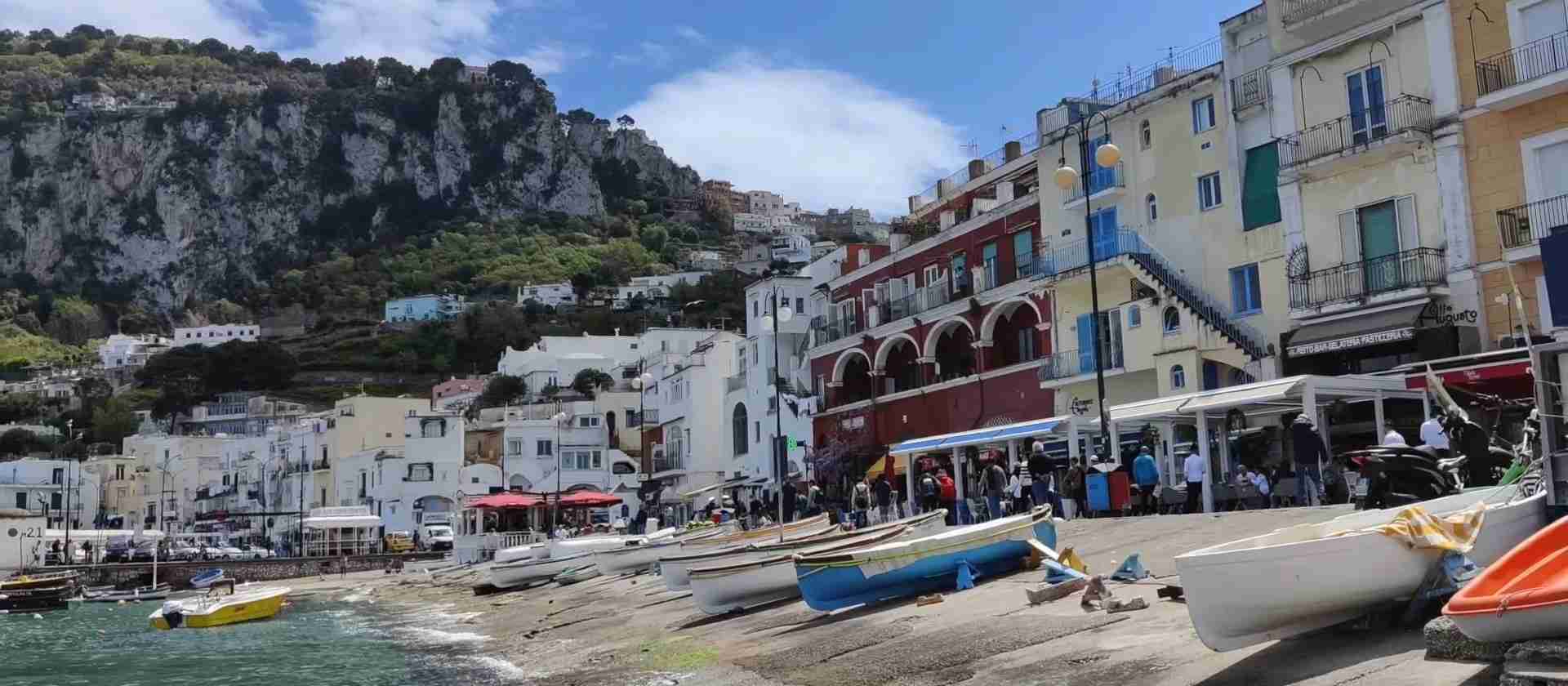
Visiting Capri & the Blue Grotto: Complete Guide
Capri rises from the Tyrrhenian Sea as a limestone masterpiece where Roman emperors built palaces, where the Blue Grotto’s ethereal light has captivated visitors for centuries, and where steep cliffs harbor hidden coves accessible only by sea. This guide provides comprehensive information for exploring the island’s legendary attractions, navigating its vertical geography, and experiencing the natural wonder that made this 10-square-kilometer island one of the Mediterranean’s most celebrated destinations.
Key Takeaways
- The Blue Grotto entrance fee is €18 per person, includes rowboat access through the cave’s meter-high opening, with visits limited to favorable sea conditions that close the grotto during rough weather or high tides
- Capri divides into two distinct towns at different elevations: Capri Town at 150 meters above sea level and Anacapri at 300 meters, connected by narrow winding roads requiring dedicated bus routes
- The funicular railway from Marina Grande to Capri Town operates continuously during peak hours, costs €2.40 per journey, and climbs 150 vertical meters in four minutes through terraced lemon groves
- Ferry services from Naples and Sorrento include a mandatory landing fee of €5 per person April through October or €2.50 November through March, with hydrofoils taking 45 minutes from Naples and 15 minutes from Sorrento
- Weather conditions determine Blue Grotto accessibility daily, with closures occurring when north winds create rough seas or when tidal conditions raise water levels above the cave entrance height threshold
- The island prohibits non-resident vehicles from Easter through early November, making public buses, the funicular, taxis, and walking the only transportation options during high season
People Also Ask About Visiting Capri and the Blue Grotto
What Makes the Blue Grotto Blue?
The Blue Grotto’s luminous azure glow results from sunlight entering through an underwater cavity below the cave’s narrow surface opening, filtering through seawater before reflecting off the white sandy bottom and illuminating the 60-meter-long chamber. The cave entrance measures only one meter high above water level, forcing visitors to lie flat in rowboats while guides pull the vessels through the opening using a chain mounted to the rock walls. Inside, the refracted and reflected sunlight creates an otherworldly blue illumination that appears to emanate from the water itself, with objects submerged in the sea taking on a silvery phosphorescent quality. The intensity of the blue light reaches its peak between noon and 2 PM when the sun’s angle optimizes the underwater light penetration, though the difference from morning visits remains minimal while queue lengths multiply substantially during midday hours.
How Long Does a Blue Grotto Visit Take?
The actual time inside the Blue Grotto lasts approximately five minutes, just enough for rowboat guides to navigate the 60-meter length of the cave while visitors observe the blue light phenomenon, but total visit duration depends on queue length and can extend to two hours during peak season. Visitors transfer from larger boats or from land access points to the small rowboats that fit a maximum of four passengers, with only five or six rowboats permitted to enter the cave simultaneously. The queue management system processes visitors continuously when conditions permit, but arriving before 9:30 AM or after 3 PM typically reduces wait times significantly compared to the midday rush when cruise ship passengers and tour groups concentrate at the entrance. The complete Blue Grotto experience from Marina Grande includes boat transfer time to the cave entrance, queue time, the five-minute interior visit, and return transfer, totaling approximately one hour under normal conditions but potentially reaching three hours during July and August peak periods.
Can You Visit Capri as a Day Trip?
Capri functions exceptionally well as a day trip from Naples, Sorrento, or the Amalfi Coast, with first ferries departing around 7 AM and last returns leaving around 7-8 PM in summer, providing 10-12 hours for island exploration. A well-planned day trip allows time for the Blue Grotto visit, exploration of either Capri Town or Anacapri, a boat tour around the island, and a meal at waterfront restaurants in Marina Piccola or the Piazzetta. The compressed timeframe requires strategic planning: arriving on early ferries before cruise ships dock at 10 AM, choosing between extensive Blue Grotto queuing or skipping it for other attractions, and accepting that comprehensive coverage of both main towns plus multiple attractions necessitates an overnight stay. Day trippers should prioritize their must-see attractions before arriving, understanding that attempting the Blue Grotto, Gardens of Augustus, Monte Solaro chairlift, Villa Jovis, and extensive shopping in one day creates rushed experiences. Most visitors find that dedicating a full day to Capri allows enough time for three to four major activities plus meals, with the compact island size making efficient use of limited hours feasible despite the vertical terrain requiring funicular and bus connections between zones.
What Is the Best Way to Reach the Blue Grotto?
Three distinct routes access the Blue Grotto, each offering different advantages: direct boat transfers from Marina Grande provide the most straightforward approach, land access via bus from Anacapri followed by descending stairs to the waterside entrance eliminates seasickness risks during queue waits, and full island boat tours include Blue Grotto stops but often skip the actual cave entry due to time constraints. The boat transfer option costs approximately €18-19 per person roundtrip from Marina Grande on shared boats operated by Motoscafisti Capri and Laser Capri companies, taking visitors directly to the cave entrance where they wait in floating queues before transferring to rowboats for the €18 grotto entrance fee. Land access requires taking a bus from Anacapri’s Piazza della Pace to the Blue Grotto stop, then descending stairs to the waterside entrance where visitors queue on solid ground rather than bobbing in boats, making this the preferred option for those prone to seasickness despite the additional walking required. Private boat tours ranging from €300 for 3-4 hours allow flexible scheduling and the ability to anchor near the grotto then signal rowboat guides for pickup, while full island tours marketed as including Blue Grotto stops frequently bypass the actual cave due to queue lengths, making them unsuitable for visitors prioritizing grotto entry over general sightseeing.
Extended multi-day tours – 5+ days
Featured Capri Multi-Day Tour Packages

3 days
Capri 3-Day Discovery Tour
- ✓ Comprehensive Capri experience
- ✓ Expert local guides included
- ✓ All accommodation included
- ✓ Transportation provided
5 days
Capri 5-Day Highlights Experience
- ✓ Comprehensive Capri experience
- ✓ Expert local guides included
- ✓ All accommodation included
- ✓ Transportation provided
7 days
Capri 7-Day Cultural Journey
- ✓ Comprehensive Capri experience
- ✓ Expert local guides included
- ✓ All accommodation included
- ✓ Transportation provided
10 days
Capri 10-Day Complete Adventure
- ✓ Comprehensive Capri experience
- ✓ Expert local guides included
- ✓ All accommodation included
- ✓ Transportation provided
Multi-day tour packages powered by TourRadar. Prices and availability subject to change.
Introduction
The Island of Capri occupies 10.4 square kilometers of limestone rock rising from the Gulf of Naples, positioned 5 kilometers from the Sorrentine Peninsula and 32 kilometers from Naples proper. Its dramatic topography features vertical limestone cliffs reaching 589 meters at Monte Solaro’s summit, terraced slopes supporting olive groves and vineyards, and a coastline punctuated by sea caves, hidden coves, and the iconic Faraglioni rock formations jutting from the azure Tyrrhenian waters. This Mediterranean island has attracted visitors for millennia, beginning with Greek colonists in the 8th century BC, achieving legendary status when Roman Emperor Tiberius built twelve villas across the island and governed the empire from Villa Jovis between 27-37 AD, and experiencing modern rediscovery when German painter August Kopisch publicized the Blue Grotto in 1826.
The island divides into two distinct municipalities: Capri Town perches at 150 meters elevation on the island’s eastern side, serving as the administrative and commercial center with the famous Piazzetta, luxury shopping along Via Camerelle, and proximity to the Gardens of Augustus and Villa Jovis ruins. Anacapri occupies the western slopes at 300 meters elevation, offering a quieter atmosphere, serving as the access point for Monte Solaro’s chairlift and the Blue Grotto, and maintaining a more traditional island character despite tourist influx. Marina Grande functions as the arrival port where all ferries and hydrofoils dock, positioned at sea level with funicular and bus connections ascending to both main towns, while Marina Piccola on the opposite coastline provides swimming access and restaurant facilities facing the Faraglioni rocks.
Capri’s geological formation as an extension of the Lattari Mountains creates the island’s characteristic vertical relief, with limestone composition facilitating extensive cave systems including the Blue Grotto (Grotta Azzurra), White Grotto (Grotta Bianca), and Green Grotto (Grotta Verde) carved by millennia of wave action. The Blue Grotto measures 60 meters in length and 25 meters in width, with a depth reaching 150 meters in sections, connected to the sea through a 2-meter-wide opening that sits only one meter above water level at normal tides. Ancient Romans used the cave as a swimming pool for Emperor Tiberius’s nearby villa, with submerged statues recovered from the cave floor demonstrating this historical usage, before the cave’s entrance partially collapsed during seismic activity and remained largely forgotten until the 19th-century rediscovery.
Understanding Capri’s geography proves essential for efficient navigation. The island’s compact size creates the illusion of easy accessibility, but vertical terrain means that locations appearing close on maps require dedicated transport due to steep elevation changes. Capri Town sits 150 vertical meters above Marina Grande, Anacapri rises another 150 meters above Capri Town, and reaching Monte Solaro’s summit requires gaining an additional 289 meters from Anacapri’s center. The island’s pedestrian-only town centers, narrow roads restricting vehicle size, and non-resident vehicle ban from Easter through early November create a transportation ecosystem relying exclusively on small buses, a single funicular line, taxis, and extensive walking on often-steep pathways.
Weather patterns significantly impact Blue Grotto accessibility and overall island experience. The cave closes when north winds create rough seas or when tidal conditions raise water levels above the entrance threshold, with closures occurring without advance notice based on daily morning assessments by boat operators who check conditions at 9 AM. Summer months (June-August) offer the highest probability of calm seas permitting grotto access but also bring intense crowds, with ferry passenger volumes exceeding 10,000 daily during peak August weeks. Shoulder seasons (April-May and September-October) provide optimal balance between favorable weather, moderate crowds, and grotto accessibility, while winter months (November-March) see frequent closures due to rough seas despite fewer visitors and lower accommodation costs.
Modern Capri functions primarily as a luxury tourism destination, with the island’s limited year-round population of approximately 14,000 residents serving an annual visitor count exceeding 2 million day-trippers plus hundreds of thousands of overnight guests. This creates pronounced seasonal patterns: from Easter through October, the island operates at capacity with all hotels, restaurants, and attractions fully functioning and extensive ferry schedules providing dozens of daily departures. The winter off-season sees many establishments close from November through March, with reduced ferry schedules, funicular maintenance closures, and significantly diminished tourist infrastructure. The resulting character differs dramatically between a summer visit amid bustling crowds and luxury shopping, versus a winter visit experiencing the island’s authentic quiet pace with limited facilities.
Getting to Capri Island
Ferry and hydrofoil services from multiple mainland ports provide the only public access to Capri, with Naples and Sorrento operating year-round connections while seasonal routes from Positano, Amalfi, and other Amalfi Coast towns run April through October. Naples serves as the primary departure point, offering over 20 daily departures during summer with hydrofoils completing the crossing in 45-50 minutes and conventional ferries requiring 60-80 minutes. Ferry tickets from Naples cost €19-25 per person one-way including the mandatory Capri landing fee of €5 during high season (April-October) or €2.50 during low season (November-March), required from all non-residents entering the island.
Multiple ferry companies operate the Naples-Capri route including SNAV, NLG (Navigazione Libera del Golfo), Caremar, and Alilauro, with departures from two distinct port facilities: Molo Beverello handles fast ferries and hydrofoils, while Calata Porta di Massa accommodates conventional ferries. The earliest Naples departure leaves around 5:30-6 AM while the latest return from Capri departs around 7:40 PM in winter or 10-11 PM during summer high season. The Alibus airport shuttle connects Naples Capodichino Airport directly to both ferry terminals, making one intermediate stop at Piazza Garibaldi near the main train station.
Sorrento provides the second major departure point with shorter crossing times of 15 minutes by hydrofoil or 25-35 minutes by ferry. Sorrento’s Marina Piccola port sits below the clifftop town center, accessible via pedestrian stairs descending from Piazza Tasso, an elevator from Villa Comunale park, or public buses. Ferry tickets from Sorrento to Capri cost €19-21.50 per person one-way including the landing fee, with approximately 10 daily crossings year-round increasing to 20+ departures during summer months. NLG, SNAV, Alilauro, and Laser Capri operate multiple daily services with first ferries around 7 AM and final returns leaving Capri around 7-8 PM.
Seasonal ferry routes from Amalfi Coast towns operate April through October, connecting Positano (30 minutes to Capri, €26-28 one-way), Amalfi (approximately 60 minutes, €26-28), and Salerno (just over 2 hours) to Marina Grande. These routes provide direct access for travelers based along the Amalfi Coast without backtracking to Naples or Sorrento, though schedules remain limited to 1-2 daily departures and face frequent cancellations when seas become rough.
Sea conditions significantly impact ferry operations, with rough weather forcing cancellations beginning with hydrofoils and progressing to fast ferries then conventional ferries if conditions deteriorate further. Winter months (November-March) experience the highest cancellation frequency. Passengers prone to seasickness should choose conventional ferries over hydrofoils when available, avoiding catamaran-style vessels entirely during rough seas as their double-hull design creates more intense motion than single-hulled boats. Ferry ticket prices include hand luggage, with larger bags subject to a €2-3 surcharge per piece. Children under 3 travel free without seat assignment, while children ages 3-12 receive discounted fares.
Getting Around Capri Island
Transportation on Capri relies on small buses, a funicular railway, taxis, and walking, with the island’s pedestrian-only town centers and non-resident vehicle restrictions from Easter through early November eliminating private car access for tourists during peak season. The funicular railway connects Marina Grande at sea level with Capri Town at 150 meters elevation in a four-minute journey, operating continuously during peak hours with departures every 10-15 minutes from early morning until approximately 10-11 PM. Funicular tickets cost €2.40 purchased at ticket offices near ferry terminals or directly at entrance turnstiles using tap-and-go contactless payment accepting credit and debit cards. Long queues form beginning around 10 AM when cruise ships arrive, but a priority lane serves hotel guests staying on the island who bypass standard queues by presenting accommodation confirmation.
The funicular closes entirely from January through Easter for annual maintenance, with replacement bus service operating during this period. Walking down from Capri Town to Marina Grande provides an alternative to the funicular for the descent, following a pedestrian path in approximately 15 minutes, though steep pathways with uneven steps make it manageable only for visitors without luggage. The uphill walk requires climbing 150 vertical meters and takes 20-30 minutes, representing a strenuous option unsuitable for travelers carrying luggage.
Public buses operate two main companies serving different routes: ATC buses for Capri Town routes and Staiano buses covering Anacapri routes, both accepting the standard €2.40 fare. Key routes include Marina Grande to Capri Town (15-20 minutes), Capri Town to Anacapri (15-20 minutes), Marina Grande to Anacapri direct (25-30 minutes), Anacapri to Blue Grotto (5 minutes), and Capri Town to Marina Piccola (20 minutes). Purchasing bus tickets from ticket offices costs €2.40, while buying directly from bus drivers costs €2.90. A day pass costs €7.20 providing unlimited bus rides plus two funicular journeys valid for 24 hours, making financial sense for travelers planning five or more journeys in a single day.
Capri’s buses accommodate only 30-40 passengers due to narrow road restrictions, creating capacity issues during peak hours when queues form at major stops. Buses often pass full stops without loading additional passengers during summer midday hours (11 AM-4 PM), particularly on the Capri Town-Anacapri route. Luggage restrictions limit passengers to one piece per person measuring 23cm x 30cm x 50cm maximum (carry-on size) weighing under 10kg, with larger bags requiring a supplementary €2.40 ticket or alternative transport via porter service or taxi.
Taxis operate with fixed rates rather than meters, offering an expensive but efficient alternative especially for groups of 3-4 passengers sharing costs. Open-top taxis accommodate up to 7 passengers, with pricing structured for 1-4 passengers with a €5 supplement for the 5th-7th passenger. Standard fixed fares include Marina Grande to Capri Town €17 (up to 4 passengers) or €20 (5-7 passengers), Marina Grande to Anacapri €25, Anacapri to Blue Grotto €25, and Marina Grande to Blue Grotto or Punta Carena lighthouse €40. Taxis wait at Marina Grande ferry docks, the Piazzetta in Capri Town, and Piazza della Pace in Anacapri.
Walking represents the primary method for navigating within Capri Town and Anacapri’s pedestrian centers, with both towns featuring flat commercial cores surrounded by steep hillside paths connecting to outlying attractions. The walk from Capri Town’s Piazzetta to the Gardens of Augustus takes 10-15 minutes on mostly flat terrain, while reaching Villa Jovis requires 30-40 minutes of steep uphill walking. Comfortable walking shoes prove essential given Capri’s basalt-paved streets and frequent elevation changes, with many pathways featuring irregular steps ill-suited for wheeled luggage.
Porter services handle luggage transport between Marina Grande and island accommodations, charging €10-15 per bag for delivery to Capri Town or Anacapri addresses. This service proves valuable for travelers arriving with luggage incompatible with bus restrictions, eliminating the need to navigate stairs, funicular transfers, and crowds while managing heavy bags.
Visiting the Blue Grotto (Grotta Azzurra)
The Blue Grotto entrance fee costs €18 per person, comprising €14 for the rowboat service providing access through the entrance and guidance through the interior cave, plus €4 divided between the municipalities of Capri and Anacapri and the Ministry of Cultural Assets. Payment must be made in cash at the floating ticket office positioned outside the cave entrance, with no advance booking possible since cave accessibility depends on daily sea and weather conditions determined each morning. Children under 6 enter free when accompanied by paying adults, though they still require space in the limited-capacity rowboats.
The Blue Grotto opens daily from approximately 9 AM to 5 PM when weather and tide conditions permit, with actual hours varying based on seasonal daylight and sea state assessments conducted each morning around 9 AM by boat captains who determine if safe entry remains possible. North winds create the most problematic conditions, generating swells that make passage through the low opening dangerous and triggering closures even when overall weather appears favorable. High tides raise water levels above the entrance threshold, eliminating the vertical clearance required for rowboat passage. Winter months (November-March) experience the highest closure frequency, with the cave sometimes remaining inaccessible for weeks during rough weather periods, while summer months (June-August) offer the highest probability of favorable conditions.
Checking cave status before committing to a Blue Grotto-focused day proves essential. The official Capri tourism website (capri.com) maintains a status page updated each morning indicating open or closed status, while the Motoscafisti Capri Facebook page provides real-time updates on closures and reopenings throughout the day.
Direct boat transfers from Marina Grande operate via Motoscafisti Capri and Laser Capri companies, both maintaining ticket offices and boarding facilities at Marina Grande’s Pier 0. Shared boat services cost approximately €18-19 per person for roundtrip transport to the cave entrance, with departures beginning around 9 AM and continuing until approximately 5 PM when conditions permit. These boats transport 12-15 passengers to the grotto entrance in roughly 10-15 minutes, where passengers wait in floating queues for available rowboats to ferry them through the entrance for the interior visit. Wait times range from 20 minutes during quiet morning hours to 2+ hours during peak midday periods in July-August.
Land access from Anacapri eliminates the floating queue disadvantage by allowing visitors to wait on solid ground. Buses depart Anacapri’s Piazza della Pace approximately every 15-20 minutes for the 5-minute journey to the Blue Grotto bus stop, costing €2.40 per person each way. From the bus stop, a stairway descends to the seaside entrance where visitors queue on steps and platforms rather than in boats, making this method preferable for those concerned about seasickness. A small concession stand operates during summer months near the stairs, selling drinks and snacks.
Private boat tours with Blue Grotto stops offer maximum flexibility for groups of up to 7 passengers, costing approximately €300 for 3-4 hour tours that include the full island circuit, swimming stops, and grotto access attempts. The private boat anchors at designated buoys near the cave entrance, allowing passengers to signal rowboat guides for pickup when ready to enter. However, the €18 per-person grotto entrance fee remains separate from private tour costs.
The five-minute interior cave visit follows a standardized pattern regardless of access method. Rowboat guides position passengers lying nearly flat against the boat bottom, pull the vessel through the meter-high entrance using wall-mounted chains, then navigate the 60-meter cave length while the blue light phenomenon surrounds the vessel. Guides often sing traditional Neapolitan songs during the visit, with the cave’s acoustics amplifying their voices. Objects submerged in the water appear silver-white rather than blue, creating a phosphorescent effect demonstrated by guides who submerge arms or objects into the water.
Timing a Blue Grotto visit involves balancing light intensity against queue length considerations. The strongest blue light intensity occurs between noon and 2 PM when the sun’s angle optimizes underwater light penetration, but this timing coincides with maximum queue lengths. Early morning visits (9-10 AM) offer shorter queues and nearly identical light intensity, making early arrival the optimal strategy. Late afternoon visits (3-5 PM) reduce queues as day-trippers depart, though sea conditions often deteriorate after 3 PM potentially triggering late-day closures.
Boat Tours Around Capri Island
Shared boat tours departing from Capri cost €18-19 per person for basic 2-hour circumnavigations that circle the island, pass key landmarks including the Faraglioni rocks and various grottos, and may include Blue Grotto stops if queue lengths permit. These budget-friendly options accommodate 12-15 passengers on covered motorboats, departing multiple times daily from Marina Grande. The tours typically do not include swimming stops or Blue Grotto entrance fees (€18 per person additional), with the Blue Grotto portion often skipped when queues extend beyond 30-45 minutes.
Private boat tours ranging from €300 for 3-4 hours to €500-800 for full-day experiences provide dedicated vessels, customizable itineraries, swimming opportunities, and flexible Blue Grotto visit timing. Traditional gozzo boats accommodate up to 7 passengers with larger vessels available for groups up to 12. The 3-hour private tour represents the minimum duration for a complete island circumnavigation including one swim stop and Blue Grotto visit attempt, while 4+ hour tours allow multiple swimming locations, lunch stops, and more relaxed pacing.
The complete island circuit covers approximately 16 kilometers and includes the Statue of the Scugnizzo, Tiberius’s Leap cliff, Coral Cave, White Cave (Grotta Bianca), Matermania Cove, Natural Arch, Villa Malaparte’s striking red modernist architecture, Faraglioni Rocks with passage through the central arch, Marina Piccola bay, Cave of the Sailors, Green Grotto (Grotta Verde), Cove of Ventroso, Punta Carena lighthouse, Cave of the Sail, Blue Grotto, and Cave of the Heart.
The Faraglioni rocks represent Capri’s most photographed landmarks: three limestone stacks reaching 100+ meters high standing offshore from Marina Piccola. The formations bear individual names – Stella for the nearest stack still connected to the island, Faraglione di Mezzo for the middle arch-bearing stack, and Faraglione di Fuori for the seaward stack hosting the endemic blue lizard species found nowhere else on earth. Boat tours routinely navigate through the Faraglione di Mezzo arch for passenger photographs.
Swimming stops on private tours typically occur at Cala Ventroso, Matermania Cove, or Marina Piccola bay, offering crystal-clear water in protected coves. The water temperature ranges from 18-20°C (64-68°F) in May-June to 24-26°C (75-79°F) in July-August, remaining swimmable from June through September. Snorkeling equipment often comes included with private tours.
Exploring Capri Town and the Piazzetta
Capri Town occupies the island’s eastern slopes at 150 meters elevation, centered on the Piazzetta (Piazza Umberto I), a compact square measuring approximately 15 meters across that functions as the island’s social and commercial heart. The square’s outdoor cafes charge premium prices with espresso costing €5-6 and cocktails reaching €15-18, but the Piazzetta’s role as Capri’s gathering point makes the expense a signature island experience. The baroque Church of Santo Stefano dominates one side of the square, its 17th-century facade and majolica-tiled floor representing the religious focal point for Capri Town, while the clock tower provides the square’s vertical landmark.
Via Camerelle represents Capri’s luxury shopping corridor, lined with international fashion houses including Prada, Gucci, Hermès, and locally-produced Capri sandal makers whose custom leather footwear has defined island style since the 1930s. Handmade Capri sandals cost €80-200 depending on leather quality and embellishment, with artisan workshops creating custom-fitted pairs within hours. Limoncello production represents another Capri specialty, with numerous shops selling the lemon liqueur in decorative bottles alongside lemon soaps, candies, and preserves.
The Gardens of Augustus (I Giardini di Augusto) provide terraced viewing platforms overlooking the Faraglioni rocks and Marina Piccola, accessible via a 10-15 minute walk from the Piazzetta. The formal gardens feature flowering plants arranged on multiple terrace levels, with the lower viewpoint offering direct perspective on the Faraglioni stacks and upper terraces providing panoramic views. Entry costs €2-3 per person, with the garden maintaining limited hours typically 9 AM-7 PM during summer.
From the Gardens of Augustus, the Via Krupp switchback road descends 100 vertical meters to Marina Piccola through dramatic hairpin turns cut into the cliff face. Built in the early 1900s by German industrialist Friedrich Alfred Krupp, the road’s engineering remains impressive despite its current closure to pedestrians due to rockfall danger.
Villa Jovis, the largest and best-preserved of Emperor Tiberius’s twelve Capri villas, sits 1.7 kilometers from the Piazzetta requiring a 30-40 minute uphill walk. The villa ruins sprawl across 7,000 square meters on the island’s eastern promontory at 300+ meters elevation, with remaining walls reaching 12 meters high. The complex functioned as Tiberius’s primary residence and imperial administrative center from 27-37 AD. Entry costs €3-4 per person, with the site open daily except Tuesdays during summer season.
The walk to Villa Jovis rewards effort with spectacular views across the Gulf of Naples to Ischia and the mainland, plus the historical significance of standing where a Roman emperor governed an empire. The Tiberius’s Leap (Salto di Tiberio) cliff drops 300 meters to the sea from a point near the villa, historically described as the location where Tiberius allegedly threw enemies to their deaths, though modern historians largely discount these accounts as posthumous character assassination.
Dining in Capri Town ranges from casual trattorias serving traditional island dishes to Michelin-starred establishments. Ravioli capresi (ravioli stuffed with caciotta cheese and marjoram), parmigiana di melanzane (eggplant parmesan), and insalata caprese (tomato, mozzarella, and basil salad that originated on the island) represent signature local dishes. Lunch in casual restaurants costs €20-35 per person including appetizer, main course, and beverage, while dinner at upscale establishments reaches €60-100+ per person before wine.
Exploring Anacapri and Monte Solaro
Anacapri occupies the island’s western elevations at 300 meters above sea level, maintaining a more residential character than Capri Town. Piazza della Pace serves as Anacapri’s central square where buses terminate and the chairlift to Monte Solaro begins. Villa San Michele represents Anacapri’s premier cultural attraction, the former home of Swedish physician Axel Munthe whose memoir “The Story of San Michele” became an international bestseller. Munthe purchased the site containing ancient Roman villa ruins in 1887, spending years constructing a residence incorporating archaeological fragments and gardens perched 300 meters above the sea. Entry costs €10-12 per person, with the villa open daily April-October and weekends during winter months.
The Church of San Michele houses a maiolica floor depicting the Garden of Eden’s expulsion scene, created in 1761 by Leonardo Chiaiese with over 25,000 individual hand-painted tiles. The octagonal church features baroque architecture with the floor occupying the central nave, best viewed from the elevated organ gallery. Entry costs €3 per person.
Monte Solaro’s 589-meter summit represents Capri’s highest point, accessed via chairlift from Piazza della Pace in a 12-minute journey climbing 289 vertical meters. The single-seat chairlift operates continuously from morning through early evening except during high winds, with one-way tickets costing €8 and roundtrip tickets €11 per person. The summit provides 360-degree views encompassing the entire island, the Bay of Naples, the Sorrentine Peninsula, the Amalfi Coast, and on clear days the Cilento coast extending southward. A small café operates at the summit.
Hiking down from Monte Solaro to Anacapri takes approximately one hour following a marked trail through Mediterranean scrubland, offering an alternative to the chairlift descent. The Phoenician Steps (Scala Fenicia) connect Anacapri to Marina Grande via 921 steep stone steps descending 300 vertical meters, historically serving as the primary access route before the modern road’s construction in 1877. Descending the steps requires 45-60 minutes depending on pace, while the ascent takes 60-90 minutes and represents a serious physical challenge.
Anacapri’s shopping district along Via Giuseppe Orlandi offers more accessible prices than Capri Town’s luxury boutiques, with local ceramic shops, linen clothiers, and wine merchants. Restaurants in Anacapri charge approximately 20-30% less than Capri Town equivalents for comparable dishes. The Punta Carena lighthouse occupies Capri’s southwestern tip, accessible via bus from Anacapri (15-20 minutes, €2.40 each way) or taxi (€25 fixed rate). The lighthouse area features a small rocky beach, swimming platforms, and a casual seafood restaurant.
Marina Piccola and the Faraglioni
Marina Piccola occupies Capri’s southern coast facing the Faraglioni rock formations, offering the island’s most accessible beach facilities. The area divides into two small bays – Marina di Pennauro to the west and Marina di Mulo to the east – separated by a rocky promontory, both containing pebble beaches, beach clubs with lounge chair rentals, and waterfront restaurants.
Beach club facilities dominate Marina Piccola’s shoreline, operating concession areas with organized rows of lounge chairs and umbrellas, changing facilities, showers, and restaurant-bar service. Daily lounge chair rental costs €20-30 per person during summer months. Free beach access exists only in small sections between beach club concessions, requiring arrival before 10 AM during peak season to claim space.
The water clarity and turquoise color at Marina Piccola match Capri’s reputation for pristine Mediterranean swimming, with rocky seabeds creating transparent visibility and vibrant blue-green hues. Water depth increases rapidly from the shoreline due to the steep coastal profile. Lo Scoglio delle Sirene, the central rocky promontory, features a small chapel dedicated to Saint Andrew and provides elevated viewpoints photographing the Faraglioni formations.
Four waterfront restaurants serve lunch and dinner at Marina Piccola, specializing in seafood with tables positioned on terraces overlooking the Faraglioni. Pricing remains high with lunch costing €35-50 per person for pasta or fish main courses, and dinner reaching €60-80 per person. Reservations prove advisable for lunch during peak season and essential for dinner.
Reaching Marina Piccola requires public buses from Capri Town (20 minutes, €2.40 each way) or taxis (€17 fixed rate), with service running at least every 15-20 minutes during daytime hours. The Faraglioni formation creates Marina Piccola’s signature backdrop, with three limestone stacks rising 100+ meters from the water approximately 100 meters offshore.
Practical Information for Visiting Capri
Accommodation on Capri ranges from budget guesthouses charging €80-120 per night during shoulder seasons to luxury 5-star hotels exceeding €400-800 per night. Advance booking proves essential for summer months (June-September) when hotels fill completely during peak weeks, while shoulder seasons (April-May, September-October) offer better availability and rates 30-40% below summer peaks. Winter visits (November-March) provide the lowest prices but accept limited restaurant and attraction availability.
Staying overnight provides advantages over day trips including experiencing the island after cruise ships depart (typically 5-6 PM), accessing hotel priority lanes that bypass funicular queues, exploring attractions during quiet early morning hours before 10 AM arrival of day-trippers, and appreciating the island’s evening atmosphere when the Piazzetta transforms from crowded retail zone to relaxed gathering space.
Language barriers remain minimal for English speakers, with tourism industry workers maintaining functional English proficiency. ATMs exist at Marina Grande near ferry terminals and in both Capri Town and Anacapri’s commercial centers. The Blue Grotto entrance fee requires cash payment with no card option. Medical facilities include a hospital in Capri Town and pharmacies in both main towns. Luggage management challenges result from steep terrain and basalt-paved streets incompatible with wheeled bags. Porter services transport luggage between Marina Grande and island accommodations for €10-15 per bag.
Tipping follows Italian norms with service charges typically included in restaurant bills, making additional tips optional. Mobile phone coverage and WiFi remain reliable across Capri. Safety concerns remain minimal with very low crime rates, though steep terrain creates fall hazards. Accessibility for mobility-impaired visitors presents challenges given Capri’s vertical terrain, though the funicular, some buses, and certain hotels accommodate wheelchairs.
When to Visit Capri
Summer months (June-August) deliver peak tourist season with daily ferry passenger counts exceeding 10,000 during July-August, creating intense crowds at the Blue Grotto, on buses, at the funicular, and throughout both main towns. Weather reliability peaks in summer with minimal rainfall and Blue Grotto closure frequencies dropping to lowest annual rates, though extreme heat (30-35°C / 86-95°F) creates discomfort during midday hours. Accommodation costs reach annual peaks with hotels charging maximum rates.
Shoulder seasons (April-May and September-October) provide optimal conditions balancing favorable weather, moderate crowds, reduced costs, and nearly full attraction availability. April and May offer spring temperatures (18-24°C / 64-75°F), flowering vegetation, and growing tourist infrastructure. September and October maintain warm water temperatures (22-24°C / 72-75°F) while thinning crowds, with hotels lowering rates 20-30% below August peaks.
Late spring (May) arguably provides the year’s finest conditions with moderate temperatures, spring wildflowers, increasing daylight hours, and tourist infrastructure fully operational without peak summer crowds. Early autumn (September) similarly offers excellent conditions with warmest annual water temperatures (24-25°C / 75-77°F), lingering summer warmth, and diminishing crowds.
Winter months (November-March) see Capri’s tourist infrastructure contract dramatically with many hotels, restaurants, and shops closing entirely during January-February. Ferry schedules reduce to minimal service with frequent weather cancellations. The funicular undergoes annual maintenance closing from January through Easter. Blue Grotto closures occur frequently during winter. Visitors accepting these limitations benefit from near-empty streets and deeply discounted hotel rates (40-60% below summer).
Day-trippers should prioritize early arrivals regardless of season, targeting first ferries around 7-8 AM to explore the island before cruise ships dock around 10 AM bringing thousands of additional visitors who concentrate in core areas until 4-5 PM departures.
Frequently Asked Questions
Is the Blue Grotto worth visiting despite the cost and queues?
The Blue Grotto merits visiting for most Capri visitors despite the combined €36-37 cost (€18 entrance plus €18-19 boat transfer from Marina Grande) and potential 1-2 hour queues during peak season, as the otherworldly blue light phenomenon creates a unique natural spectacle found nowhere else in the Mediterranean. The five-minute interior visit seems brief relative to overall time investment, yet the ethereal illumination and unusual entrance through the meter-high opening create memorable experiences justifying the effort for first-time Capri visitors. Minimizing queue times through strategic planning – arriving before 9:30 AM, using land access from Anacapri, or visiting during shoulder seasons – transforms the experience from frustrating wait to worthwhile natural wonder. Visitors with multiple Capri trips planned might skip the Blue Grotto initially to explore other attractions, returning for grotto visits during subsequent trips. Those with severe seasickness, extreme claustrophobia, or mobility limitations preventing rowboat transfers should honestly assess whether the experience suits their capabilities.
Can you swim at the Blue Grotto?
Swimming in the Blue Grotto remains strictly prohibited with enforcement by boat guides who maintain continuous visitor flow through the cave entrance, as the narrow opening, small interior space, and queue management system requiring constant rowboat cycling make swimming incompatible with visitor operations. Historical accounts describe Roman Emperor Tiberius using the grotto as a swimming pool before geological changes partially collapsed the entrance and raised water levels, with submerged statues recovered from the cave floor confirming this ancient usage. Swimming in the grotto hypothetically becomes possible after official visiting hours end (approximately 5 PM) when rowboat operations cease, though this requires private boat access, favorable sea conditions, and willingness to swim through the meter-high entrance without guide assistance. The practice operates in legal gray areas regarding trespassing on state-managed property and carries genuine safety risks. Travelers seeking swimming experiences with blue-lit water should consider the Green Grotto (Grotta Verde) or White Grotto (Grotta Bianca), both accessible via private boat tours and occasionally permitting swimming when sea conditions allow, though neither matches the Blue Grotto’s intense azure illumination.
How difficult is walking around Capri island?
Walking within Capri Town and Anacapri’s flat commercial centers requires minimal physical fitness beyond typical tourism stamina, but reaching most attractions, navigating between the two main towns, or accessing coastal areas involves substantial elevation changes on steep pathways with irregular steps unsuitable for visitors with mobility limitations. Capri Town to Villa Jovis requires 30-40 minutes of uphill walking gaining 150+ vertical meters on paths with uneven steps, while descending from Anacapri to Marina Grande via the Phoenician Steps involves 921 steep stone stairs dropping 300 vertical meters over 45-60 minutes. The Gardens of Augustus and Marina Piccola routes from Capri Town remain more moderate with 10-20 minute walks on mixed flat sections and steps, making them accessible for average fitness levels. Visitors should honestly assess their physical capabilities before committing to walking routes, utilizing buses, taxis, or the funicular when elevation changes exceed comfort levels. Appropriate footwear proves essential with closed-toe walking shoes or sturdy sandals required for uneven basalt paving and irregular steps, while flip-flops or high heels create genuine safety hazards. The island’s compact size creates misleading impressions that attractions sit close together, when vertical elevation changes mean that locations separated by 500 horizontal meters might require 100 vertical meters of climbing equivalent to ascending a 30-story building.
What should I wear to visit Capri?
Capri’s dress code balances resort-casual elegance with practical considerations for steep walking and Mediterranean sun exposure, with the island’s reputation as a stylish destination creating expectations for put-together appearances particularly in Capri Town’s luxury shopping district and upscale restaurants. Daytime attire should include comfortable walking shoes suitable for uneven surfaces and stairs, lightweight breathable clothing providing sun protection, hats and sunglasses for intense summer sun, and modest cover-ups over swimwear when away from beaches or boats. The Piazzetta cafes and Via Camerelle boutiques see visitors in smart-casual attire ranging from sundresses and linen shirts to designer resort wear, though beach attire, athletic wear, and overly casual clothing draw disapproving glances in these settings. Evening dining at upscale restaurants expects collared shirts for men and dresses or elegant separates for women, though casual trattorias accept neat day wear. Religious sites including churches require covered shoulders and knees regardless of temperature, making lightweight scarves or shawls useful for impromptu coverage. Visitors packing light for day trips should prioritize comfortable walking shoes, sun protection, one outfit suitable for upscale dining if planning nice meals, and swimwear if boat tours or beach visits enter the itinerary.
Do I need to book Blue Grotto tickets in advance?
Blue Grotto entrance tickets cannot be booked in advance as the cave operates like a museum with entry fees collected at a floating ticket office outside the entrance, with advance booking impossible since daily accessibility depends on unpredictable weather and tide conditions determined each morning by boat operators assessing sea state and entrance clearance. Visitors purchase the €18 entrance ticket in cash at the waterside ticket booth only after confirming the cave is open and accessible, with rowboat guides collecting payment before transporting visitors through the entrance for the interior visit. This system prevents advance payment for potentially inaccessible attractions, though it creates uncertainty for travelers building Capri itineraries around Blue Grotto visits that might get canceled without warning. Boat transfer tickets from Marina Grande to the grotto entrance can be purchased immediately before departure from Motoscafisti Capri or Laser Capri ticket offices for approximately €18-19 roundtrip, or visitors can book full boat tours including grotto stops through advance online reservations, though these tours often skip the actual cave entry due to queue lengths. The land access route via bus from Anacapri similarly requires no advance booking. The lack of reservation options makes Blue Grotto visits inherently flexible, allowing same-day decisions based on weather conditions and personal schedule adjustments, but also creating frustration for structured itinerary planners seeking guaranteed experiences.
Can you visit Capri in winter?
Winter visits to Capri (November-March) remain possible with reduced ferry schedules maintaining year-round service from Naples and Sorrento, though the experience differs dramatically from high season with many hotels, restaurants, and shops closing from January through Easter, the funicular undergoing maintenance closure requiring replacement bus service, and the Blue Grotto frequently inaccessible due to rough seas and north winds. The winter off-season creates a quiet island atmosphere with nearly empty streets, deeply discounted accommodation rates (40-60% below summer pricing), and authentic exposure to local life without tourism overlay, appealing to travelers accepting limited infrastructure for budget pricing and tranquil exploration. Practical challenges include frequent ferry cancellations during storms, cold weather (10-15°C / 50-59°F daytime temperatures) requiring warm clothing, shorter daylight hours limiting daily activity timeframes, and frustration at finding desired restaurants or shops closed. Villa Jovis, the Gardens of Augustus, and major churches typically maintain winter opening with reduced hours, while Villa San Michele closes entirely except weekends, and Monte Solaro chairlift suspends service during windy periods. Weather variability proves pronounced in winter with beautiful sunny days offering crystalline visibility alternating with storm systems generating rough seas for days. Winter suits repeat visitors who exhausted major attractions during previous summer trips and now seek budget exploration, photographers prioritizing off-season light and empty landscapes, and travelers valuing peaceful experiences over comprehensive tourist infrastructure.
Is Capri suitable for families with children?
Capri accommodates families with children though certain characteristics create challenges including steep terrain with irregular steps unsuitable for strollers, limited sandy beaches favoring rocky swimming areas and beach clubs over child-friendly wading spots, and high costs affecting family budgets when multiplying attraction entries and meals across multiple people. Families with older children capable of sustained walking and comfortable with bus transport, boat tours, and swimming in deeper water find Capri engaging with the Blue Grotto’s unique experience, Monte Solaro’s panoramic chairlift ride, boat tours passing dramatic coastal scenery, and the Faraglioni’s iconic formations creating memorable highlights. Families with young children face genuine difficulties navigating Capri’s vertical geography with strollers that must be folded on buses and the funicular, finding child-appropriate beaches since Marina Piccola’s pebble beaches and rapid depth increases challenge toddlers needing shallow wading areas, and managing extended outdoor time under intense summer sun with limited child-specific facilities. The island’s compact size benefits families by minimizing travel distances despite elevation changes, while accommodation in family rooms or apartments reduces costs, though overall expenses remain high. Ferry crossings generate seasickness risks for some children, making medication availability advisable, while the Blue Grotto’s tight entrance space and brief interior visit suit older children’s attention spans better than toddlers. Alternative Italian coastal destinations including the Amalfi Coast towns offer more child-friendly infrastructure, making Capri better suited as a day trip component within broader family itineraries rather than exclusive focus for trips with young children. Families with teenagers find Capri’s dramatic scenery, boat tours, and swimming opportunities engaging while maintaining adult interest through historical sites and refined dining.
How long should I spend in Capri?
The optimal Capri duration depends on travel pace preferences and priority balance between comprehensive exploration versus efficient mainland itinerary integration, with overnight stays ranging from one night providing essential experience depth beyond day trips, to three nights enabling complete island coverage including every major attraction and relaxed pacing. Day trips from Naples, Sorrento, or Amalfi Coast ports provide valid Capri introductions for travelers with limited time or budgets excluding overnight accommodation expenses, allowing Blue Grotto visits, brief town exploration, and boat tours within 10-12 hours. One overnight stay transforms the experience by enabling evening exploration after cruise ships depart, priority funicular access reducing queue frustrations, early morning visits to major attractions before 10 AM crowd arrival, and sufficient time for both Capri Town and Anacapri exploration plus selective attractions without rushing. Two nights provide comfortable pacing for comprehensive coverage including Villa Jovis, Gardens of Augustus, Villa San Michele, Monte Solaro, Blue Grotto, boat tours, beach time at Marina Piccola, quality dining experiences, and shopping without schedule pressure, making this duration ideal for first-time visitors seeking thorough island appreciation. Three nights suit travelers prioritizing relaxation over aggressive sightseeing, allowing repeat visits to favorite locations, extended beach sessions, multiple dining experiences exploring Capri’s restaurant scene, and genuine immersion in island pace rather than tourist checklist completion. Extended stays beyond three nights appeal primarily to travelers using Capri as a base for Gulf of Naples exploration or repeat visitors. The diminishing returns from extended single-location stays apply on Capri given its 10-square-kilometer size and concentrated attraction portfolio, making 2-3 nights the sweet spot balancing comprehensive experience depth against efficient time allocation.
What’s the difference between Capri and Anacapri?
Capri and Anacapri function as separate municipalities occupying different elevations and slopes of the island, with Capri Town positioned at 150 meters on eastern slopes facing the Bay of Naples and serving as the administrative, commercial, and social center with luxury shopping, the famous Piazzetta, proximity to Villa Jovis and Gardens of Augustus, and concentrated tourist infrastructure. Anacapri sits at 300 meters on western and northern slopes, maintaining more residential character with wider streets, lower tourist density outside peak day-trip hours, serving as the access point for Monte Solaro’s summit via chairlift and the Blue Grotto via bus connections, and offering more moderate pricing for accommodations, dining, and shopping compared to Capri Town’s luxury focus. The two towns connect via bus routes requiring 15-20 minutes transit on winding roads climbing 150 vertical meters, with no walking route suitable for tourists beyond the historical Phoenician Steps requiring strenuous 60-90 minute ascent. Capri Town attracts visitors seeking the island’s glamorous reputation with upscale shopping along Via Camerelle housing Gucci, Prada, and Hermès boutiques, people-watching at Piazzetta cafes where espresso costs €5-6, proximity to the Gardens of Augustus and Faraglioni viewpoints, and evening ambiance when the square transforms into aperitivo gathering space. Anacapri appeals to travelers valuing quieter atmosphere with authentic island residential areas, access to Monte Solaro’s 360-degree summit panorama, proximity to Villa San Michele’s Swedish physician residence turned museum, moderately priced restaurants and shops charging 20-30% less than Capri Town equivalents, and marginally cooler temperatures during summer heat. First-time visitors typically spend more time in Capri Town given its central role in the island’s identity and proximity to signature attractions, with Anacapri functioning as secondary destination for Monte Solaro access and Blue Grotto bus connections, while repeat visitors often discover Anacapri’s appeal through its relaxed character. Staying in Anacapri versus Capri Town affects daily logistics with Anacapri accommodations requiring bus connections to reach Marina Grande for departing ferries and Capri Town attractions, while offering proximity to Monte Solaro and Blue Grotto access points, versus Capri Town stays minimizing transport needs for core attractions but requiring buses for Anacapri visits.
Do you need a car on Capri?
Private vehicles provide zero benefit on Capri for tourists as the island prohibits non-resident vehicles from Easter through early November during peak season, the compact 10-square-kilometer size makes point-to-point distances minimal despite vertical terrain requiring dedicated transport, pedestrian-only town centers eliminate vehicle access to core attractions and dining areas, and limited parking availability creates logistical challenges even when non-resident vehicles receive permission during winter months. The island’s public transportation network including buses at €2.40 per journey, the funicular connecting Marina Grande to Capri Town, and fixed-rate taxis offering predetermined pricing for common routes provides comprehensive connectivity eliminating vehicle necessity, while the steep narrow roads unsuitable for typical tourist driving comfort and aggressive local driving styles create stress for unfamiliar drivers attempting to navigate routes better left to professional bus drivers and taxi operators accustomed to hairpin turns and tight spaces. Walking covers short distances within Capri Town and Anacapri’s flat centers where attractions, shopping, and dining concentrate in pedestrian zones inaccessible by any vehicle, while buses, taxis, and the funicular efficiently handle the vertical connections between Marina Grande, Capri Town, and Anacapri. Visitors arriving via ferry cannot bring vehicles during high season regardless, while those arriving during winter months when vehicle restrictions lift still find that minimal parking availability, narrow street access, pedestrian-priority town planning, and efficient public transport eliminate advantages that private vehicles provide on larger islands or mainland destinations. Scooter rentals provide the only motor vehicle option potentially useful for tourists, offering flexibility for Blue Grotto and Punta Carena access while accommodating two passengers, though the limited road network and pedestrian-exclusive core areas restrict scooter utility. The overwhelming majority of Capri visitors successfully navigate the entire island using only public buses, the funicular, walking, and occasional taxis, with this combination providing superior access to private vehicle alternatives given the island’s unique geography and deliberate anti-automobile development philosophy preserving pedestrian-friendly character in tourist zones.