Vienna Photography Guide: Capturing Imperial Grandeur
Key Takeaways
- Golden Hour Mastery: Vienna’s Baroque architecture transforms during sunrise (6:00-7:30 AM) and sunset (7:30-9:00 PM), creating dramatic shadows on imperial palaces and creating optimal conditions for architectural photography
- Symmetry and Geometry: Habsburg-era buildings feature perfect bilateral symmetry, requiring centered compositions and attention to vertical lines for professional-quality architectural shots
- Seasonal Color Variations: Spring cherry blossoms at Schönbrunn, summer golden light at Belvedere, autumn foliage at Stadtpark, and winter snow at Hofburg each create distinct photographic opportunities
- Technical Requirements: Wide-angle lenses (16-35mm) capture grand facades, while telephoto lenses (70-200mm) isolate ornamental details on buildings dating from 1200s-1900s
- Permission and Access: Interior photography requires permits at most imperial sites, while exterior shots from public spaces remain unrestricted with specific courtyard access hours varying by location
- Composition Techniques: Leading lines from cobblestone streets, reflections in fountain pools, and framing through archways enhance the grandeur of Vienna’s UNESCO World Heritage historic center
Understanding Vienna’s Photographic Appeal
Vienna stands as one of Europe’s most photogenic capitals, offering photographers an extraordinary combination of Baroque palaces, Gothic cathedrals, Art Nouveau architecture, and imperial parks spanning eight centuries of architectural evolution. The city’s designation as a UNESCO World Heritage Site recognizes the historic center’s exceptional preservation of Habsburg-era urban planning, creating a photographer’s paradise where every street corner presents carefully composed architectural tableaux.
The Austrian capital’s unique light quality stems from its position in the Vienna Basin, where continental climate patterns create crisp, clear atmospheric conditions ideal for architectural photography. Morning mist rising from the Danube River adds ethereal qualities to dawn shots, while the golden limestone facades of imperial buildings glow warm amber during sunset hours. Vienna’s relatively flat topography allows photographers to capture sweeping vistas from strategic elevated positions, while the compact historic center enables walking between premier photography locations within 20-30 minutes.
Photographers benefit from Vienna’s exceptional infrastructure, including unrestricted access to public spaces, well-maintained sidewalks for tripod positioning, and architectural lighting that illuminates key monuments until midnight. The city’s year-round appeal offers distinct seasonal photographic opportunities: spring cherry blossoms frame palace gardens, summer provides extended golden hour periods, autumn foliage adds warm tones to park compositions, and winter snow transforms the city into a monochromatic masterpiece reminiscent of imperial-era photographs.
Vienna’s architectural photography challenges include managing crowds at popular sites, navigating strict interior photography regulations at imperial palaces, and working within the constraints of protected historic districts where drone usage faces severe restrictions. Successful photographers master the balance between capturing Vienna’s grandeur while finding unique perspectives that transcend typical tourist imagery, requiring research into lesser-known viewpoints and strategic timing to avoid peak visitor periods.
People Also Ask About Vienna Photography
What makes Vienna ideal for architectural photography?
Vienna excels for architectural photography due to its exceptional preservation of Baroque, Gothic, Renaissance, and Art Nouveau buildings spanning 800 years of architectural history. The Habsburg dynasty’s imperial patronage created a unified architectural vision across the historic center, where buildings maintain consistent height limits, complementary color palettes, and harmonious decorative elements that create visually cohesive streetscapes.
The city’s architectural photography advantages include pristine building maintenance by strict preservation laws, strategic positioning of monuments along wide boulevards allowing unobstructed shots, and architectural lighting designed to enhance three-dimensional facades during evening hours. Vienna’s limestone and marble buildings reflect warm tones during golden hour, while ornamental elements including statues, balustrades, and decorative ironwork provide endless detail photography opportunities.
Specific technical advantages include the prevalence of symmetrical facades ideal for centered compositions, the abundance of archways and colonnades creating natural framing elements, and the integration of fountains and reflecting pools adding compositional interest. The historic center’s pedestrian zones eliminate traffic interference, while strategically positioned parks and squares provide distance for capturing entire building facades without perspective distortion.
Where can photographers find the best morning light in Vienna?
Schönbrunn Palace offers Vienna’s premier sunrise photography location, where east-facing facades catch first light illuminating the yellow ochre walls against dark morning shadows. Photographers position themselves in the formal gardens between 6:00-7:30 AM depending on season, capturing the palace’s 1,441-room facade as golden light progressively illuminates the Baroque architecture from right to left.
Belvedere Palace provides equally spectacular morning conditions, with the Upper Belvedere’s white facade glowing against blue morning skies while the formal gardens’ fountains create reflections in still morning air. The elevated position allows photographers to capture the palace with Vienna’s skyline backdrop, including St. Stephen’s Cathedral spire visible 2.5 kilometers distant.
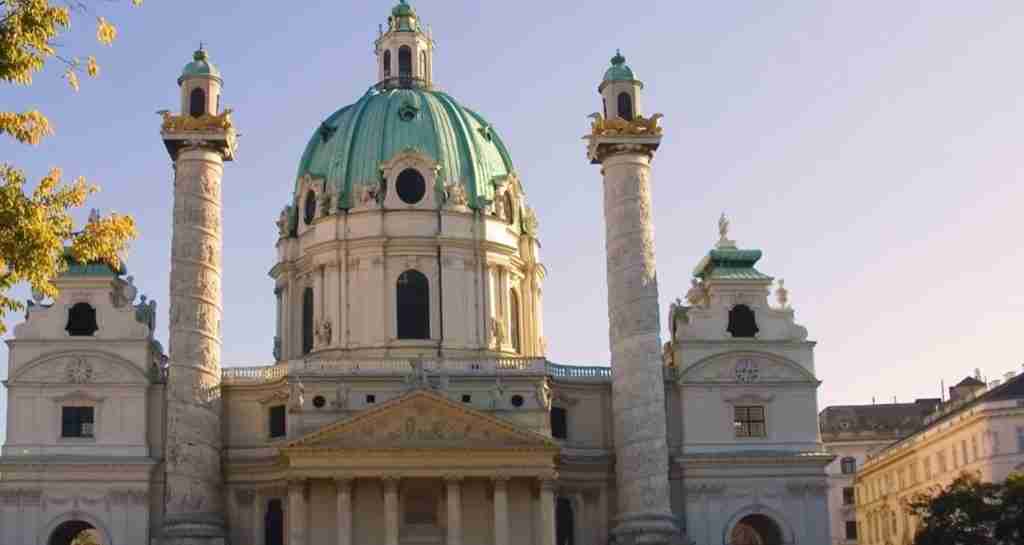
Karlskirche (St. Charles Church) becomes a morning photography masterpiece when the rising sun illuminates its green copper dome and twin columns, while the reflecting pool in Resselpark mirrors the entire structure. Morning mist occasionally rises from the pool, adding atmospheric layers to compositions between September and April when temperature differentials create ideal conditions.
The Ringstrasse’s eastern sections, particularly around Stadtpark and the Museum Quarter, receive beautiful morning side-lighting that accentuates architectural details on Art Nouveau and Neo-Renaissance buildings. Photographers capture dramatic shadows and three-dimensional relief on ornamental facades between 7:00-9:00 AM when low-angle light rakes across building surfaces.
What camera settings work best for Vienna’s architecture?
Aperture priority mode at f/8-f/11 ensures maximum sharpness across architectural facades while maintaining depth of field from foreground elements through distant building details. This aperture range provides the optical sweet spot for most lenses, reducing diffraction while ensuring corner-to-corner sharpness essential for architectural work where distortion and softness become immediately apparent in straight lines and fine decorative elements.
ISO settings remain at base ISO (typically 100 or 200) whenever possible to maximize dynamic range and minimize noise in shadow areas of high-contrast architectural scenes. Vienna’s bright limestone buildings create exposure challenges where highlights easily blow out while shadowed architectural details retain important ornamental information, requiring careful metering and often exposure bracketing for HDR processing in post-production.
Shutter speed requirements vary by lighting conditions and lens focal length, but architectural photography benefits from speeds fast enough to eliminate camera shake while allowing handheld shooting flexibility. The reciprocal rule (1/focal length minimum) applies, though Vienna’s detailed ornamentation often requires faster speeds—1/250 second minimum for handheld work at 50mm, faster for longer focal lengths capturing distant architectural elements.
Manual white balance proves essential for accurate color reproduction of Vienna’s warm-toned limestone facades, with custom kelvin values between 5200-5800K during golden hour capturing the amber glow without excessive orange saturation. The city’s architectural lighting uses various color temperatures, requiring adjustment between daylight exterior shots and tungsten-lit interior photography at imperial sites.
Can photographers use tripods at Vienna’s major monuments?
Public spaces around Vienna’s monuments allow tripod usage without permits or restrictions, including prime locations at Stephansplatz, Heldenplatz, and along the Ringstrasse boulevards. Photographers set up tripods on sidewalks and in pedestrian zones during all hours, though courteous positioning avoids blocking foot traffic during peak visitor periods between 10:00 AM and 4:00 PM.
Interior photography restrictions vary significantly by location and ownership. Schönbrunn Palace prohibits all photography inside state rooms regardless of equipment, while Belvedere Palace allows photography without flash or tripods in permanent collection galleries. The Kunsthistorisches Museum permits handheld photography of most artworks but prohibits tripods and monopods throughout exhibition spaces.
Church photography follows specific protocols where St. Stephen’s Cathedral allows exterior and interior photography from public areas without tripods during services, while private photography sessions requiring tripods and professional lighting need advance arrangement with cathedral administration. Smaller baroque churches maintain individual policies ranging from complete prohibition to unrestricted access, requiring on-site inquiry before setup.
Evening tripod work becomes particularly valuable for Vienna’s illuminated monuments, where long exposures between 2-30 seconds capture architectural details under floodlighting while smoothing pedestrian movement into ghostly trails. The city’s low crime rate and well-lit public spaces make night photography safe and productive, with police presence around major monuments providing security for photographers working with expensive equipment during late hours.
Extended multi-day tours – 5+ days
Featured Vienna Multi-Day Tour Packages
3 days
Vienna 3-Day Discovery Tour
- ✓ Comprehensive Vienna experience
- ✓ Expert local guides included
- ✓ All accommodation included
- ✓ Transportation provided
5 days
Vienna 5-Day Highlights Experience
- ✓ Comprehensive Vienna experience
- ✓ Expert local guides included
- ✓ All accommodation included
- ✓ Transportation provided
7 days
Vienna 7-Day Cultural Journey
- ✓ Comprehensive Vienna experience
- ✓ Expert local guides included
- ✓ All accommodation included
- ✓ Transportation provided
10 days
Vienna 10-Day Complete Adventure
- ✓ Comprehensive Vienna experience
- ✓ Expert local guides included
- ✓ All accommodation included
- ✓ Transportation provided
Multi-day tour packages powered by TourRadar. Prices and availability subject to change.
Essential Equipment for Vienna Photography
Wide-angle lenses between 16-35mm prove indispensable for Vienna’s architectural photography, capturing entire palace facades, cathedral interiors, and grand boulevards within single frames. The Habsburg dynasty’s architectural ambitions created structures of imposing scale where standard focal lengths fail to convey monumental proportions—Schönbrunn Palace’s 180-meter facade requires ultra-wide perspectives from achievable camera positions, while St. Stephen’s Cathedral’s soaring Gothic vaults demand extreme angles to capture full vertical dimensions.
Quality wide-angle zooms with minimal distortion correction capabilities serve photographers better than ultra-wide primes, providing composition flexibility while maintaining the rectilinear rendering essential for architectural work. Modern lens corrections in post-processing handle barrel distortion and vignetting, but superior lens optics reduce correction requirements and preserve maximum image quality in corners where architectural details concentrate.
Mid-range zoom lenses covering 24-70mm or 24-105mm provide versatile focal lengths for street photography, architectural details, and general documentation of Vienna’s urban fabric. These workhorse lenses capture the intimate scale of narrow medieval streets in the Inner City, isolate ornamental elements on building facades, and photograph Vienna’s famous coffee houses and market scenes where wider perspectives prove impractical.
Telephoto lenses between 70-200mm enable detail photography of sculptural elements, roofline ornamentation, and distant architectural features impossible to approach closely. Vienna’s buildings display extraordinary decorative richness in upper-story details—atlas figures supporting balconies, allegorical statuary crowning pediments, intricate ironwork balustrades—all requiring longer focal lengths to isolate and capture at image-filling scale. Telephoto compression also creates dramatic effects when photographing down Vienna’s long, straight boulevards, stacking architectural elements into powerful geometric compositions.
Tripod selection balances stability requirements for long-exposure night photography against the practical need for portability during full-day photography walks covering 5-8 kilometers through Vienna’s districts. Carbon fiber tripods provide optimal strength-to-weight ratios, while ball heads with independent pan locks facilitate precise architectural alignment where vertical and horizontal adjustments must maintain absolute independence for correcting perspective distortion.
Filters prove selectively useful in Vienna’s photography conditions. Polarizing filters deepen blue skies behind white palace facades and reduce reflections in windows revealing interior courtyards, though the filter’s 1-2 stop light loss requires corresponding exposure compensation. Neutral density filters enable long daytime exposures smoothing fountain water and creating ethereal cloud movement effects, though Vienna’s architecture benefits more from sharp detail than motion blur in most applications.
Remote shutter releases eliminate camera shake during tripod-mounted exposures, essential for Vienna’s evening architectural photography where exposures extend from 2-30 seconds under floodlighting. Cable releases or wireless triggers prevent the vibration introduced by pressing the shutter button, maintaining absolute sharpness in long exposures capturing intricate architectural details and decorative elements requiring maximum resolution.
Prime Photography Locations in Vienna’s Historic Center
St. Stephen’s Cathedral (Stephansdom) dominates Vienna’s skyline with its 136-meter Gothic south tower, creating the city’s most iconic photographic subject. Photographers capture the cathedral from Stephansplatz’s southwest corner during morning hours when sunlight illuminates the multi-colored tile roof displaying the Habsburg double-headed eagle in 230,000 glazed tiles. The intricate diamond-pattern roof requires elevated vantage points for proper perspective—the terrace at the nearby Haas Haus provides contemporary architectural framing, while the upper floors of surrounding buildings offer unobstructed overhead views.
The cathedral’s exterior ornamentation rewards detailed photography: the Romanesque Giant’s Door features 12th-century sculptures depicting biblical scenes, the Gothic Pilgrim’s Portal displays intricate stone tracery and weathered statuary, and the north tower’s Renaissance elements contrast with the predominantly Gothic structure. Photographers use 70-200mm lenses to isolate specific architectural features from ground level, while ultra-wide lenses capture the cathedral’s vertical thrust from positions directly at its base, creating dramatic perspective distortion emphasizing soaring height.
Interior photography requires sensitivity to religious services and visitor activity, with the best conditions occurring early morning (6:00-8:00 AM) when natural light streams through stained glass windows and fewer visitors allow clearer compositions. The nave’s Gothic vaulting, the intricate pulpit carved by Anton Pilgram, and the elaborate high altar provide rich subjects, though low light conditions demand high ISO settings (1600-6400) or tripod work during quiet periods when cathedral administration permits stationary photography.
Hofburg Imperial Palace spans 240,000 square meters across 18 wings representing 700 years of architectural evolution, creating diverse photographic opportunities from Gothic chapels to Neo-Renaissance state rooms. The Michaelerplatz entrance provides the classic Hofburg composition, where the green copper dome crowns a symmetrical Baroque facade punctuated by sculptural groups and ornamental windows. Morning side-light between 8:00-10:00 AM creates three-dimensional modeling on the facade’s relief elements, while the absence of direct sun prevents harsh shadows obscuring decorative details.
Heroes’ Square (Heldenplatz) offers wide-open perspectives for capturing the Hofburg’s monumental scale, with bronze equestrian statues providing foreground interest and the New Palace (Neue Burg) creating a stunning backdrop. Photographers position themselves centrally for symmetrical compositions or use the curved colonnade as a leading line drawing viewers into the architectural space. Winter snow transforms Heldenplatz into a minimalist study of baroque architecture against white ground cover, while autumn foliage from surrounding trees adds warm tones to the muted stone facades.
The Swiss Court (Schweizerhof) represents the Hofburg’s medieval core, where Renaissance-era modifications overlay 13th-century fortifications creating a layered architectural palimpsest. The confined courtyard space requires ultra-wide lenses (16-24mm) to capture complete elevations, while the gateway’s dark tunnel provides dramatic framing for shots looking outward toward illuminated facades. Photographers work the contrast between shadowed archways and sunlit courtyards, creating dramatic chiaroscuro effects reminiscent of baroque painting.
Schönbrunn Palace’s 1,441-room Baroque magnificence sprawls across Vienna’s western suburbs, offering photographers multiple vantage points for capturing different aspects of this UNESCO World Heritage masterpiece. The classic frontal view from the main courtyard positions the yellow ochre palace against formal gardens extending to the Gloriette monument on the hillside above. Morning light illuminates the palace facade while keeping the photographer’s position in shade, preventing lens flare and maintaining optimal contrast.
The Neptune Fountain provides mid-distance perspective where the sculptural group creates foreground interest while the palace facade serves as backdrop, allowing photographers to include human scale through surrounding visitors (transformed into motion blur with longer exposures) or to isolate the architecture in early morning hours. The fountain’s reflecting pool doubles compositional impact through mirror images, particularly effective during calm morning conditions before wind disturbs water surface.
Elevated viewpoints from the Gloriette terrace reverse the typical palace perspective, looking down across formal gardens toward the palace with Vienna’s urban skyline beyond. This 200-meter elevation gain requires a 15-20 minute uphill walk but rewards photographers with sweeping vistas impossible from ground level. Telephoto lenses compress the scene, stacking the Gloriette’s colonnades, the formal gardens’ geometric patterns, Schönbrunn Palace’s long facade, and distant city landmarks into layered compositions demonstrating Vienna’s urban planning on an imperial scale.
Seasonal variations at Schönbrunn create distinct photographic opportunities: spring cherry blossoms frame the palace in pink and white, summer provides lush green garden textures, autumn transforms the formal gardens with golden foliage, and winter snow creates dramatic contrast against yellow palace walls. Each season requires different approaches to exposure and composition, with summer’s high contrast demanding careful highlight protection while winter’s low contrast benefits from slight exposure compensation maintaining detail in both snow and architecture.
Belvedere Palace and Museum Photography
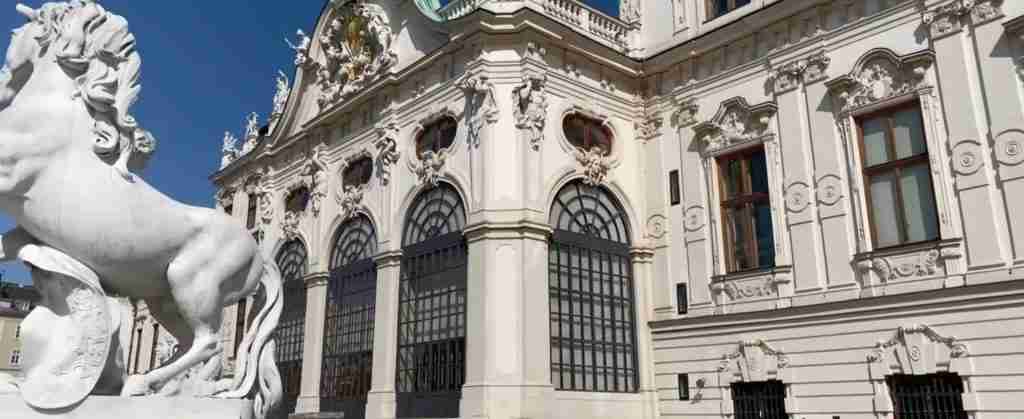
Upper Belvedere Palace represents Baroque architectural perfection, with Prince Eugene of Savoy’s summer residence commanding Vienna’s southeastern heights. The palace’s white facade and green copper roof create a color combination that photographs beautifully against blue skies, while the building’s perfect symmetry allows centered compositions emphasizing architectural balance. Photographers capture the palace from the lower gardens where water features create foreground interest and the geometric precision of formal landscaping leads the eye toward the palace’s central pavilion.
The cascading water gardens between Upper and Lower Belvedere provide multiple composition opportunities as photographers ascend the terraced landscape. Each terrace offers different perspectives on both palace buildings, with sculptural fountains, clipped hedges, and seasonal flower displays adding layers of visual interest. Spring tulip displays transform the gardens into colorful foregrounds framing white palace walls, while autumn provides golden foliage contrasting with evergreen hedges and stone architecture.
Sunset photography at Belvedere particularly rewards careful planning, as the west-facing palace facade glows warm amber while the eastern sky deepens through pastel gradients into twilight blue. Photographers position themselves in the lower gardens approximately 30 minutes before sunset, using the golden hour to capture the palace illuminated by direct sunlight, then transitioning to blue hour photography as architectural floodlighting activates and the building transforms from sunlit yellow to illuminated white against deepening sky.
Interior photography at the Belvedere Museum follows specific regulations permitting handheld photography without flash throughout permanent collection galleries. Gustav Klimt’s “The Kiss” attracts photographer crowds requiring patience for clear shots, though museum guards maintain visitor flow preventing extended tripod setups. The gallery’s natural lighting through large windows creates challenging exposure conditions where artwork illumination must balance against bright window light, often requiring exposure bracketing or HDR techniques capturing both painting detail and architectural context.
The palace’s ornate staterooms, including the Marble Hall with its elaborate ceiling frescoes and the Golden Cabinet with its mirrored walls, test photographers’ technical abilities in high-contrast, mixed-lighting environments. Natural window light, decorative chandeliers, and architectural floodlighting create color temperature variations requiring custom white balance settings or raw file flexibility in post-processing. Wide-angle lenses capture the rooms’ spatial grandeur, while compositional challenges include managing reflections in gilded surfaces and polished marble floors that can create distracting hotspots when improperly controlled.
Karlskirche and Baroque Splendor
St. Charles Church (Karlskirche) combines baroque architectural elements into a unique composition featuring a central dome flanked by two freestanding columns inspired by Trajan’s Column in Rome. The church’s position on Karlsplatz’s southern edge, with a large reflecting pool in Resselpark directly in front, creates Vienna’s premier architectural reflection photograph. Photographers arrive during calm morning conditions when water surface remains undisturbed by wind, doubling the church’s visual impact through perfect mirror symmetry.
The reflecting pool’s strategic positioning enables low-angle photography where the camera nearly touches water level, maximizing reflection size in the composition while including the actual church structure in the upper frame portion. Polarizing filters reduce water surface reflections selectively—rotating the filter allows photographers to choose between perfect mirror reflections or seeing beneath the water surface to fountain structure below, creating different compositional effects from the same vantage point.
Evening photography at Karlskirche benefits from sophisticated architectural lighting that illuminates the green copper dome, the twin columns’ relief sculptures, and the temple-front portico with separate lighting zones creating dimensional depth. The building transitions from warm sunset glow to cool architectural lighting as twilight progresses, with the optimal photography moment occurring during blue hour when ambient sky light balances artificial illumination—typically 20-40 minutes after sunset when sky color remains rich but darkness allows floodlighting to dominate.
Interior access to Karlskirche includes a panoramic elevator ascending into the dome’s interior, providing unique vantage points for photographing both the elaborate ceiling frescoes by Johann Michael Rottmayr and looking down into the church nave below. This elevated position enables architectural photography perspectives impossible in most churches, capturing the dome’s structural engineering and decorative program from within the architecture itself rather than from ground level. The elevator’s glass construction allows photography during ascent, creating dynamic compositions of architectural details passing the frame.
Detail photography of Karlskirche’s relief sculptures on the twin columns requires telephoto lenses isolating specific scenes from the carved narrative program depicting St. Charles Borromeo’s life. The columns’ 33-meter height places upper reliefs beyond clear visibility from ground level, where telephoto compression brings distant carved elements into sharp focus revealing sculptural quality often missed by casual observers. Side lighting during morning and late afternoon hours creates the shadow relief necessary to make carved details photograph clearly against stone backgrounds.
Art Nouveau and Secession Architecture
Otto Wagner’s Vienna Secession building epitomizes Art Nouveau architecture’s revolutionary departure from historical revival styles. The building’s distinctive golden dome composed of 3,000 gilt laurel leaves creates an iconic photographic subject, particularly striking against blue skies where the dome’s spherical form and intricate surface texture read clearly. Photographers position themselves across Friedrichstrasse for frontal compositions emphasizing the building’s symmetry, or use corner angles revealing both the golden dome and the building’s geometric white facades with their simplified decorative program.
The Secession building’s motto “To Every Age Its Art, To Art Its Freedom” inscribed above the entrance provides a powerful compositional element combining architecture and typography in ways that reinforce the building’s historical significance as the cradle of Viennese modernism. Detail photography isolates the gilt lettering against white walls, while wider compositions include the inscription as part of the overall architectural ensemble establishing the building’s revolutionary cultural mission.
Otto Wagner’s architectural legacy extends throughout Vienna with notable photography subjects including the Majolikahaus apartment building on Linke Wienzeile, where colorful ceramic tile facades feature floral Art Nouveau patterns. The building’s six-story elevation requires full-frame captures from across the Naschmarkt, while detail shots with telephoto lenses isolate individual ceramic panels revealing the complexity of Wagner’s decorative program. Morning light illuminates the building’s facade, making the colored tiles glow against shadowed doorways and window recesses.
The Stadtbahn Pavilions designed by Otto Wagner for Vienna’s metropolitan railway system represent Art Nouveau architecture at an intimate scale. The Karlsplatz pavilions feature elegant copper and marble construction with gold leaf details and floral motifs, creating gem-like architectural photography subjects. Their small scale allows photographers to capture complete structures within wide-angle frames, while the pavilions’ symmetrical design facilitates centered compositions emphasizing architectural balance and decorative refinement.
Adolf Loos’ controversial American Bar (Loos Bar) and Goldman & Salatsch Building demonstrate early modernist architecture’s stark aesthetic, creating fascinating contrasts when photographed alongside Vienna’s baroque heritage. The Goldman & Salatsch Building’s unadorned facade facing the Imperial Hofburg provoked such scandal in 1912 that Emperor Franz Joseph allegedly avoided using that palace entrance—this architectural tension creates powerful photographic narratives when images include both modernist simplicity and baroque ornamentation in single compositions, documenting Vienna’s architectural evolution through contrasting styles.
Ringstrasse and Boulevard Photography
The Ringstrasse’s 5.3-kilometer circular boulevard enclosing Vienna’s historic center represents 19th-century urban planning’s grandest achievement, creating photography opportunities along broad tree-lined avenues flanked by monumental Neo-Renaissance, Neo-Gothic, and Neo-Baroque buildings. The boulevard’s generous width enables photographers to capture entire building facades without severe perspective distortion, while the regular spacing of architectural monuments creates rhythm in photographs documenting Vienna’s imperial urban fabric.
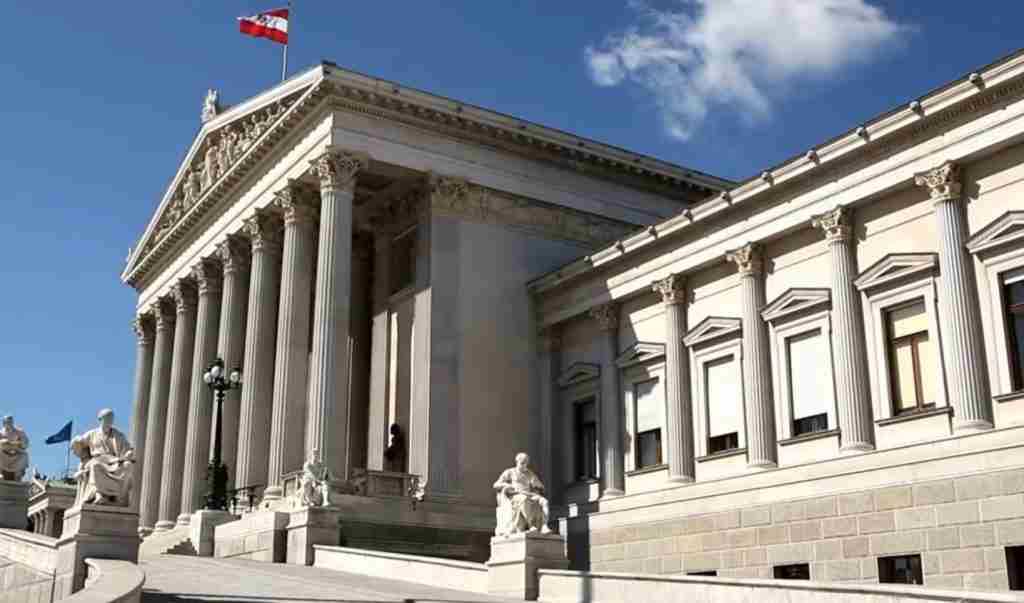
Parliament Building (Austrian Parliament) dominates Ringstrasse’s southwest section with its Greek Revival architecture featuring a 24-meter Pallas Athena fountain before the columned facade. Photographers capture the building from Dr.-Karl-Renner-Ring, positioning themselves centrally for symmetrical compositions or using oblique angles revealing the building’s colonnade depth and sculptural ornamentation. The fountain’s jets create dynamic elements when photographed with faster shutter speeds freezing water droplets, or smoothed into silky flows with longer exposures using neutral density filters.
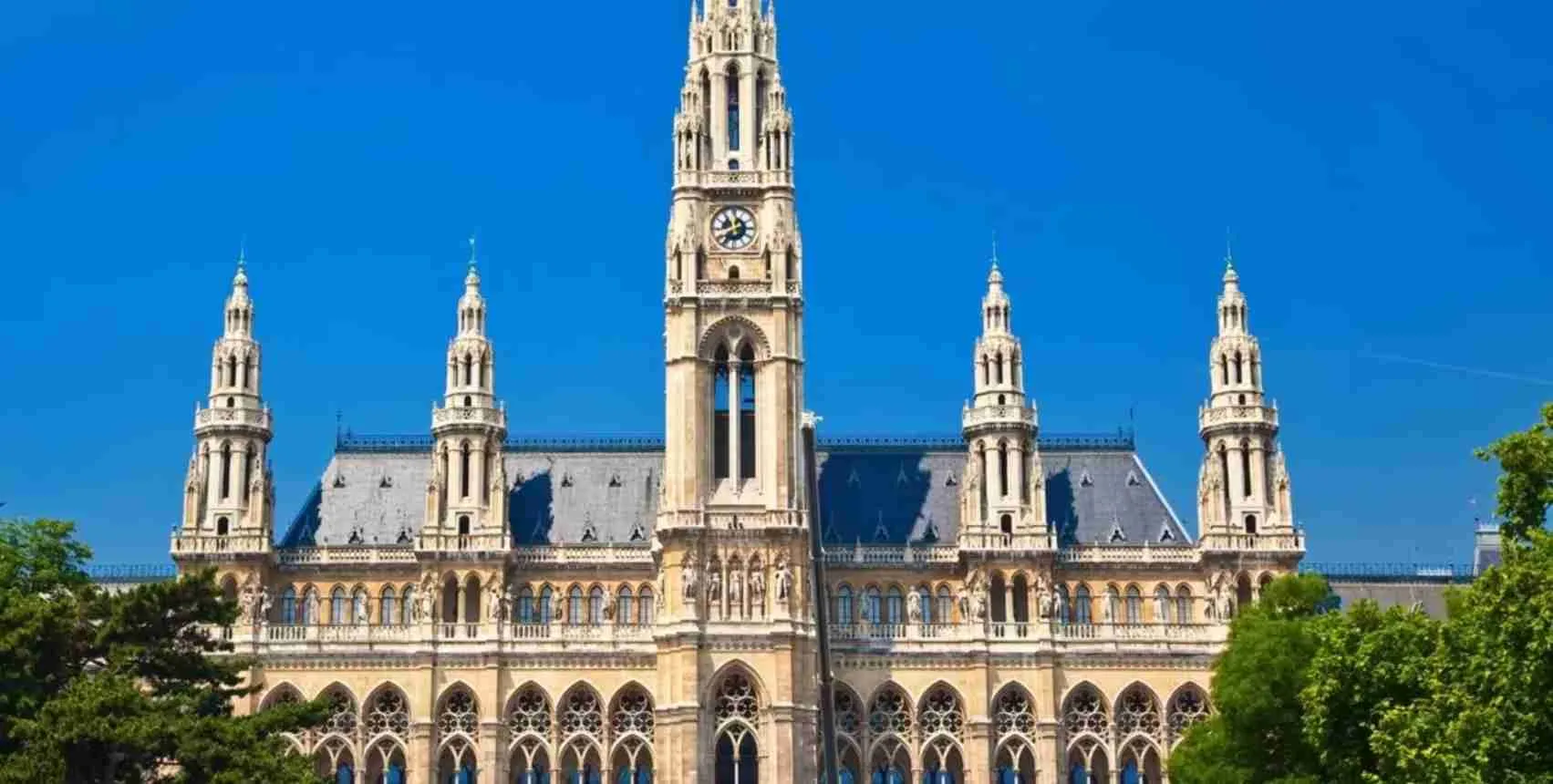
Burgtheater and Rathaus (City Hall) represent Neo-Baroque and Neo-Gothic architectural revival at monumental scale, their facing positions across Rathausplatz creating compositional opportunities including both buildings. The Rathaus’s central tower rises 98 meters, crowned with the Rathausmann statue, creating a distinctive skyline element photographing effectively against sunrise or sunset skies. Winter Christmas markets transform Rathausplatz into an illuminated wonderland, where architectural photography combines with event documentation capturing Vienna’s seasonal traditions against historic architectural backdrops.
Vienna State Opera (Wiener Staatsoper) anchors the Ringstrasse’s southeastern corner with Renaissance Revival architecture creating one of Vienna’s most photographed monuments. The building’s position at the Ring’s busiest intersection creates challenges for clear architectural photography, with constant traffic and pedestrian flow requiring patience for clean compositions. Evening photography benefits from the Opera’s dramatic floodlighting and the building’s role as a cultural landmark, where photographs can include elegantly dressed opera-goers on performance nights adding human interest to architectural documentation.
Natural History Museum and Art History Museum face each other across Maria-Theresien-Platz, their identical Neo-Renaissance palaces creating perfect architectural symmetry. Photographers position themselves in the plaza’s center, where the Maria Theresia Monument provides foreground interest for shots including both museum buildings. The museums’ octagonal copper domes patinated green contrast beautifully with limestone facades, while sculptural groups and decorative elements provide endless detail photography subjects requiring telephoto lenses to isolate from complex overall compositions.
Parks and Gardens Photography
Stadtpark’s 65,000 square meters along the Wien River create Vienna’s premier park photography location, combining formal landscaping, sculptural monuments, and natural elements in highly photogenic arrangements. The gilded Johann Strauss monument represents Vienna’s most photographed statue, its Art Nouveau styling and golden surface creating a striking subject against green foliage backgrounds. Photographers arrive early morning when low-angle sunlight illuminates the golden statue while background trees remain in shade, creating separation and depth through tonal contrast.
The Stadtpark’s curving pathways, ornamental bridges crossing the Wien River, and carefully composed landscape views demonstrate 19th-century park design principles creating numerous vantage points for photography. Cherry trees lining river banks explode in pink blossoms during April, creating spectacular spring photography with reflected blossoms in water and petals carpeting pathways. Autumn transforms the park into golden tones as deciduous trees change color, while winter snow creates graphic black-and-white compositions of bare branches against white ground cover.
Volksgarten (People’s Garden) adjacent to the Hofburg features formal rose gardens containing over 3,000 rose bushes of 200 varieties, creating spectacular photography opportunities during June-September blooming periods. The garden’s Temple of Theseus, a reduced-scale replica of the Theseion in Athens, provides architectural focus for garden compositions. Photographers use wide apertures (f/2.8-f/4) to isolate individual roses against softly blurred backgrounds, or stop down to f/11-f/16 for maximum depth of field capturing entire rose beds in sharp focus from foreground through distant Temple of Theseus.
Burggarten behind the Hofburg combines formal landscaping with naturalistic elements, featuring the Mozart Monument and palm house (Palmenhaus) as photographic subjects. The palm house’s elegant Art Nouveau glass and iron construction creates architectural photography opportunities distinct from Vienna’s palace and church subjects, while interior access to tropical plantings provides exotic contrast to exterior formal gardens. The gardens’ mature trees create dappled shade patterns during summer, requiring careful exposure management to prevent harsh sunlight creating extreme contrast between highlights and shadows.
Night Photography and Blue Hour Techniques
Vienna’s comprehensive architectural lighting program transforms the city after dark, with palaces, churches, and monuments illuminated until midnight creating exceptional night photography opportunities. The optimal photography period occurs during blue hour—the 20-40 minutes after sunset when ambient sky light remains rich enough to show detail while darkness allows architectural lighting to dominate exposure. Photographers meter carefully to balance artificial lights against deepening blue sky, typically requiring exposures between 1-8 seconds at f/8-f/11 and ISO 400-800.
St. Stephen’s Cathedral’s floodlighting emphasizes the Gothic cathedral’s vertical lines and ornamental details, while the multi-colored roof tiles remain visible under dedicated lighting. Photographers position tripods on Stephansplatz’s western side for frontal cathedral views, or use narrow streets approaching from the north and south for dramatic perspective compositions where surrounding buildings frame the illuminated cathedral. Long exposures smooth pedestrian movement into ghostly trails while maintaining sharp architectural detail, creating dynamic compositions showing Vienna’s monuments in active urban context rather than static documentation.
Schönbrunn Palace’s evening illumination creates a golden glow visible from the main courtyard, where night photography captures the palace’s scale and grandeur without daytime’s tourist crowds. The palace closes to visitors at 6:00 PM during winter months, allowing photographers undisturbed access to exterior viewpoints for long-exposure work. Star trails photography combines multiple exposures showing Earth’s rotation as circular patterns above the palace, though Vienna’s urban light pollution limits this technique’s effectiveness compared to rural locations—star trails appear as short arcs rather than dramatic circles without extended multi-hour exposures.
Karlskirche’s reflection photography reaches peak effectiveness during evening hours when architectural lighting creates mirror images in the Resselpark reflecting pool. Photographers set up tripods for 2-8 second exposures capturing perfect reflections during calm conditions, using mirror lock-up and remote shutter release to eliminate camera vibration. The combination of green copper dome, illuminated twin columns, and classical portico creates a complex lighting composition requiring careful exposure to prevent blown highlights in brightest areas while maintaining shadow detail in darker architectural elements.
Light painting techniques allow photographers to selectively illuminate architectural details during night photography, using LED flashlights or portable strobes to add fill light to shadowed areas while time exposures record both ambient lighting and photographer-added illumination. This advanced technique works particularly well in Vienna’s courtyards and narrow streets where architectural lighting creates dramatic main light while foreground elements remain too dark, allowing photographers to balance exposure between lit and unlit areas through controlled light painting during exposure.
Seasonal Photography Strategies
Spring photography in Vienna centers on cherry blossom season during late March through mid-April, when ornamental cherry trees throughout the city burst into spectacular pink and white blooms. Schönbrunn Palace gardens feature extensive cherry tree plantings creating frame-filling blossom compositions with yellow palace walls as backdrop. Photographers use wider apertures (f/2.8-f/5.6) to blur background architecture while emphasizing blossom detail, or stop down to f/11-f/16 for complete depth of field showing both blossoms and palace in sharp focus.
The brief bloom period—typically 7-12 days—requires photographers to monitor weather forecasts and bloom reports carefully, as rain or strong wind can strip trees of blossoms rapidly. Early morning photography captures blossoms with dew drops adding sparkle, while backlighting during morning and evening golden hours makes translucent petals glow. Close-up photography isolates individual blossoms or small clusters, using macro lenses or close-focusing telephoto lenses to reveal intricate petal structure and stamens while controlling depth of field through aperture selection.
Summer photography benefits from extended daylight hours with sunrise occurring around 5:00 AM and sunset after 8:30 PM, providing multiple golden hour opportunities for architectural photography. The warm season brings tourists in peak numbers, requiring earlier wake times for crowd-free compositions at major monuments. Heat shimmer during midday hours reduces air quality for distant photography, making early morning and evening sessions more productive for sharp, contrasty images. Summer’s lush green foliage provides rich color contrast against Vienna’s pale limestone buildings, though high sun angles create harsh shadows that can obscure architectural details.
Autumn transforms Vienna’s parks and tree-lined streets with golden and amber foliage providing warm color palettes contrasting beautifully with baroque architecture’s cool stone tones. October photography captures peak autumn color, with the Ringstrasse’s lime trees creating golden canopies above architectural monuments. Lower sun angles during autumn months create favorable lighting throughout the day, with golden hour occurring at convenient midmorning and late afternoon times rather than requiring very early or late sessions. Autumn’s crisp air enhances atmospheric clarity, enabling sharp long-distance photography of cityscape views from elevated positions.
Winter photography presents unique challenges and opportunities, with snow transforming Vienna into a monochromatic wonderland ideal for high-contrast black-and-white photography. Historic architecture gains dramatic sculptural quality under snow cover, with white ground reflecting light into shadowed building facades creating more even illumination. The winter solstice period around December 21 brings sunrise after 7:30 AM and sunset before 4:30 PM, compressing the photography day but providing low sun angles that create dimensional modeling on building facades throughout daylight hours. Christmas markets add colorful illumination and festive atmosphere to architectural photography during late November through December, though crowd management becomes more challenging at popular locations.
Advanced Composition Techniques
Symmetry composition leverages Vienna’s baroque and neoclassical architecture’s inherent bilateral balance, placing the camera on the central axis for perfectly centered frames where left and right sides mirror each other. Habsburg-era buildings designed according to classical proportions feature central pavilions flanked by symmetrical wings, creating natural compositions when photographed frontally. Precise alignment requires careful tripod positioning and level verification using either the camera’s built-in electronic level or a bubble level in the hot shoe, as even slight deviation from perfect horizontal creates uncomfortable visual tension in symmetrical compositions.
Leading lines technique utilizes Vienna’s cobblestone streets, colonnades, and formal garden pathways to draw viewer attention toward main architectural subjects. The eye naturally follows strong linear elements, making them powerful compositional tools. Photographers position themselves to align street edges, building facades, or garden hedges along diagonal lines that intersect at the primary subject, creating depth and directing focus toward intended architectural elements. Ultra-wide lenses exaggerate perspective, strengthening leading line effects as receding parallel lines appear to converge more dramatically.
Framing through foreground elements adds depth and context to architectural photographs by including archways, windows, or tree branches enclosing the main subject. Vienna’s numerous colonnades and porticos provide ready-made architectural frames, while strategically positioned trees create natural frames during seasons with foliage. This technique requires careful exposure management, as darker frames in foreground often contrast significantly with brighter subjects beyond—graduated neutral density filters or HDR blending addresses exposure challenges when dynamic range exceeds camera sensor capabilities.
Rule of thirds application places architectural elements along imaginary lines dividing the frame into nine equal rectangles, creating balanced yet dynamic compositions more interesting than centered subjects. Photographers position building corners, towers, or dominant architectural features at grid intersection points rather than frame centers, creating visual tension that engages viewers more actively than static centered compositions. Vienna’s elaborate architecture often features multiple competing elements, where rule of thirds helps photographers emphasize primary subjects while incorporating secondary architectural details in complementary positions.
Perspective control techniques manage converging verticals that occur when photographing tall buildings from ground level with the camera tilted upward. While tilt-shift lenses provide optical perspective control, most photographers rely on post-processing correction using software perspective adjustment tools. Shooting from elevated positions reduces perspective distortion by allowing more level camera angles, as does increasing subject distance and using longer focal lengths—trading wider field of view for reduced geometric distortion. Some compositions intentionally emphasize converging verticals for dramatic effect, particularly when photographing Gothic cathedrals where soaring height represents the primary architectural experience.
Weather and Atmospheric Conditions
Overcast conditions provide beautiful diffuse lighting for Vienna’s architecture, eliminating harsh shadows while maintaining good color saturation in building facades. Cloudy days suit architectural detail photography where even lighting reveals ornamental elements without extreme contrast between highlights and shadows. The soft quality light resembles giant softbox illumination, wrapping around three-dimensional architectural features and providing consistent exposure across entire building elevations. Photographers use slight underexposure compensation (-1/3 to -2/3 stop) to prevent gray skies appearing washed out, adding drama through darker tones while properly exposing building facades.
Dramatic storm conditions create moody, atmospheric architectural photography when dark clouds contrast with illuminated buildings. The period immediately before or after rain showers often produces spectacular lighting, with breaks in cloud cover allowing sunlight to spotlight buildings against dark sky backgrounds. Photographers monitor weather patterns carefully, positioning themselves at key locations when approaching storms create promising conditions. Lightning photography during summer thunderstorms requires careful safety considerations and specialized techniques including long exposures during lightning activity, multiple exposure blending, or lightning trigger devices that activate the shutter when detecting lightning flashes.
Fog and mist transform Vienna into atmospheric mystery, reducing visibility while creating dreamy, ethereal architectural photographs. Morning fog rising from the Danube River occasionally drifts into the city center, creating unusual conditions where familiar monuments appear ghostly and indefinite. Fog photography requires exposure compensation (+1 to +2 stops) preventing camera meters from underexposing fog as neutral gray rather than light tones. The reduced contrast and muted colors suit black-and-white conversion, where fog creates graphic compositions of architectural silhouettes emerging from white atmospheric haze.
Snow conditions demand exposure adjustment to prevent camera meters underexposing white snow as middle gray, typically requiring +1 to +2 stops compensation depending on snow coverage and lighting conditions. Fresh snow transforms architectural photography by simplifying compositions, eliminating distracting ground-level details while adding bright foreground reflecting light into building facades. Snow creates high dynamic range scenes where white ground cover and dark architectural details push sensor capabilities, often requiring exposure bracketing for HDR processing capturing full tonal range from brilliant snow highlights through shadowed architectural details.
Post-Processing for Architectural Photography
Perspective correction forms the foundation of architectural post-processing, addressing converging verticals and horizontal distortion introduced by wide-angle lenses and tilted camera angles. Adobe Lightroom’s Transform panel provides automatic perspective correction with guided, vertical, and level options, while manual adjustment sliders offer precise control over vertical and horizontal alignment. Aggressive correction sometimes creates stretched corners and distorted proportions, requiring judgment about acceptable geometric correction versus maintaining natural perspective that matches human visual experience.
Lens correction profiles address optical aberrations including barrel/pincushion distortion, vignetting, and chromatic aberration that occur in all lenses to varying degrees. Modern image editing software includes correction profiles for thousands of lens models, automatically removing optical flaws while preserving image quality. Wide-angle lenses exhibit more distortion requiring correction, while chromatic aberration appears as color fringing along high-contrast edges—particularly visible in architectural photography where buildings silhouette against bright skies. Enabling lens corrections should be standard practice for architectural work, though photographers occasionally choose to retain optical character for creative purposes.
Exposure and contrast adjustments optimize tonal distribution across architectural photographs, ensuring detail retention in both highlights and shadows while creating appropriate visual impact. Vienna’s high-contrast limestone buildings against blue skies often exceed camera sensor dynamic range, requiring careful exposure balancing through shadow recovery and highlight protection. Split toning adds subtle color casts to highlights and shadows independently, creating sophisticated color palettes that enhance architectural photographs beyond straight color representation—warm tones in highlights and cool tones in shadows create appealing separation between lit and shadowed architectural areas.
Clarity and structure adjustments enhance local contrast in architectural photographs, making ornamental details more prominent and building textures more pronounced. Moderate clarity increases (+10 to +30) bring out stone texture and decorative elements without creating unnatural halos, while structure adjustments specifically target edge definition. Excessive clarity/structure creates crunchy, over-processed appearances that compromise image quality—architectural photography benefits from subtle enhancement rather than aggressive processing that draws attention to technique rather than subject.
Color grading establishes overall color mood and palette harmony in architectural photographs. Vienna’s warm limestone buildings photograph naturally in yellow-orange color temperatures, which can be enhanced through selective color adjustments targeting specific hue ranges. Complementary color relationships between building facades and sky create visually pleasing combinations—warm buildings against cool blue skies, or autumn foliage colors contrasting with neutral stone architecture. Global color grading through color balance and HSL adjustments fine-tunes overall color relationships while targeted adjustments address specific elements like sky color, foliage tones, or building facade hues.
Sharpening represents the final processing step, adding perceptual sharpness through edge contrast enhancement. Architectural photography requires moderate to aggressive sharpening revealing fine ornamental details and building textures, applied globally through output sharpening and selectively through localized adjustments on specific architectural elements requiring emphasis. Proper sharpening workflow includes viewing at 100% magnification to assess actual sharpness rather than making judgments from fit-to-screen views where sharpening effects appear different at various magnifications. Output sharpening varies by intended use—screen display requires less aggressive sharpening than large prints where viewing distance and print surface texture influence final appearance.
Frequently Asked Questions About Vienna Photography
What time of year offers the best photography conditions in Vienna?
Late spring (April-May) and early autumn (September-October) provide optimal photography conditions combining pleasant weather, good light quality, moderate tourist crowds, and seasonal attractions like spring blossoms or autumn foliage. These shoulder seasons offer sunrise times convenient for photography (5:30-7:00 AM) and extended golden hours without summer’s extreme early/late timing. Winter months create unique snowy photography opportunities but demand cold tolerance and limited daylight working hours.
Do I need photography permits for Vienna’s major monuments?
Exterior photography from public spaces requires no permits at any Vienna monument, including St. Stephen’s Cathedral, Schönbrunn Palace, and Hofburg. Interior photography regulations vary by location—many churches prohibit all interior photography during services, museums allow handheld photography without flash, and imperial palaces maintain individual policies ranging from complete prohibition to restricted access. Commercial photography requiring models, lighting equipment, or obvious professional productions requires permits from property owners and potentially city authorities.
Can I photograph people in Vienna’s public spaces?
Austria maintains strict privacy laws regarding photography of individuals. Photographing crowds where individuals remain unidentifiable stays legal, but close-up photography making specific people recognizable requires consent for publication. Street photography practices acceptable in some countries face legal restrictions in Austria, where subjects can demand image deletion if recognizable without permission. Photographers focus on architectural subjects or ensure human elements remain small-scale, unidentifiable components within broader urban scenes rather than portrait-style individual subjects.
What’s the best focal length for Vienna’s architecture?
Wide-angle lenses between 16-35mm prove most versatile for Vienna’s monumental architecture, capturing complete building facades from achievable positions. A standard zoom covering 24-70mm provides flexibility for both architectural elevations and detail photography, while telephoto lenses 70-200mm enable isolation of ornamental elements and distant architectural features. Many photographers work with two bodies carrying wide zoom and telephoto zoom, avoiding lens changes while covering complete focal length range from 16-200mm.
How do I photograph Vienna’s architecture without tourists?
Early morning hours before 7:00 AM provide relatively crowd-free conditions at major monuments, particularly weekdays when tour groups arrive later. Winter months December-February see reduced visitor numbers creating clearer compositions, though shorter days and potential weather challenges create trade-offs. Long exposure photography during daytime uses neutral density filters creating 30-120 second exposures that smooth moving people into ghostly transparency or complete invisibility while maintaining sharp architecture—effective for pedestrian areas where continuous movement ensures no one remains stationary enough to register during extended exposures.
What camera settings work best for Vienna’s churches?
Church interior photography requires high ISO (1600-6400) for handheld work in low ambient lighting, or tripod use enabling base ISO with longer exposures when permitted. Aperture priority at f/4-f/5.6 provides adequate depth of field while maximizing light gathering, though f/8-f/11 ensures complete sharpness when using tripods. Spot or center-weighted metering prevents bright windows causing underexposure of darker interior elements. Many churches prohibit flash photography, making natural light work mandatory regardless of technical challenges from low light conditions.
Should I shoot RAW or JPEG for architectural photography?
RAW format provides maximum post-processing flexibility for architectural photography where exposure optimization, perspective correction, and color grading significantly impact final image quality. RAW files retain complete sensor data allowing substantial adjustment latitude in highlights and shadows beyond JPEG limitations. The larger file sizes and processing requirements create workflow impacts, but serious architectural photographers universally shoot RAW for professional work. JPEG serves casual documentation where in-camera processing produces acceptable results without post-processing requirements.
How can I create HDR architectural photographs?
HDR (High Dynamic Range) photography combines multiple exposures at different brightness levels capturing complete tonal range from darkest shadows through brightest highlights. Shoot bracketed exposures at -2, 0, and +2 stops using tripod for perfect alignment, then merge in Lightroom, Photoshop, or dedicated HDR software. Vienna’s high-contrast architecture—bright limestone facades against blue skies—benefits from HDR techniques, though natural-looking results require restraint avoiding overly saturated, tone-mapped appearances that characterize amateur HDR work. Modern single-exposure HDR processing extracts highlight and shadow detail from single RAW files when bracketing proves impractical.
What’s the best way to photograph Schönbrunn Palace?
The classic frontal view from the main courtyard positions photographers approximately 150 meters from the palace facade using 24-35mm focal lengths for complete elevation capture. Morning hours provide side-lighting emphasizing architectural relief, while late afternoon creates warm glow on yellow facades. The Neptune Fountain offers middle-distance perspective with sculptural foreground interest, requiring 35-50mm focal lengths. The Gloriette provides elevated views down across gardens toward the palace requiring 70-200mm telephoto compression stacking landscape elements. Spring and winter create optimal seasonal conditions avoiding summer’s harsh light and autumn’s shadow complications.
How do I handle exposure for Vienna’s white limestone buildings?
Vienna’s pale limestone architecture requires exposure compensation preventing camera meters from underexposing bright facades as neutral gray. Use +1/3 to +1 stop exposure compensation when buildings dominate the frame, monitoring histogram to ensure highlights don’t clip while facades retain appropriate brightness. Expose to the right technique places exposure near but not exceeding highlight clipping point, maximizing image data in RAW files for optimal post-processing flexibility. Bracketing exposures provides safety when lighting conditions create uncertainty about optimal exposure values, enabling HDR processing or best-exposure selection during editing.