Venice Hidden Gems: Architectural Treasures Beyond Tourist Routes
The hidden Venice rewards explorers willing to venture beyond prescribed tourist circuits with discoveries rivaling famous attractions in artistic quality while providing peaceful contemplation absent from crowded flagship sites
Key Takeaways
- Venice preserves over 150 churches beyond St. Mark’s Basilica, with gems like San Sebastiano (entirely decorated by Veronese) and San Francesco della Vigna (Palladio facade) housing masterworks rivaling major museums while welcoming fewer than 50 daily visitors
- The Scuole Grandi (great charitable brotherhoods) created some of Venice’s finest interiors through competitive artistic patronage, with Scuola San Giorgio degli Schiavoni preserving Carpaccio’s complete narrative cycle in an intimate setting unchanged since 1502
- Authentic residential neighborhoods in eastern Castello (San Pietro district) and northern Cannaregio (Fondamente della Misericordia) reveal Venetian daily life continuing traditional rhythms away from tourist congestion, preserving neighborhood markets, artisan workshops, and local gathering spaces
- Venice’s Jewish Ghetto, established in 1516 as Europe’s first enclosed Jewish quarter, preserves five synagogues representing different cultural traditions (German, Italian, Spanish-Portuguese, Levantine, Canton) within remarkably compact architecture rising seven stories due to space restrictions
- Lesser-known islands including San Giorgio Maggiore (Palladio’s masterwork church), San Francesco del Deserto (Franciscan monastery), and Giudecca (working-class neighborhood with Redentore church) offer architectural significance and peaceful exploration without mainland tourist pressures
- Venice’s architectural diversity spans Byzantine (7th-12th centuries), Veneto-Gothic (13th-15th centuries), Renaissance (15th-16th centuries), and Baroque (17th-18th centuries) periods, with hidden examples showing stylistic evolution better than famous landmarks through intimate scale and complete preservation
Introduction: Venice Beyond the Postcard
Venice’s mass tourism concentrates in remarkably small geographic areas—St. Mark’s Square, Rialto Bridge, and the Grand Canal corridor—leaving vast territories of equal architectural and artistic significance virtually undiscovered by mainstream visitors. The UNESCO World Heritage designation encompasses the entire historic center spanning 118 islands, recognizing a complete urban environment rather than isolated monuments. This comprehensive protection status reflects Venice’s unique character as a living medieval city where every campo, every church, and every residential building contributes to collective heritage value extending far beyond individual landmarks.
These gems include churches housing Tintoretto and Veronese masterworks in their original commissioned contexts, scuole (charitable brotherhood headquarters) preserving complete Renaissance interior decoration, neighborhood campi functioning as social centers unchanged for centuries, and architectural styles spanning eight hundred years of development. Understanding these lesser-known treasures requires recognizing Venice’s historical complexity as a republic lasting over a millennium (697-1797), creating layered cultural heritage from Byzantine origins through Renaissance flowering to baroque culmination.
People Also Ask About Venice Hidden Gems
What are Venice’s most underrated churches?
San Sebastiano contains Veronese’s most complete decorative scheme including ceiling, organ, altar, and sacristy paintings created over twenty years establishing unified artistic vision. Madonna dell’Orto in northern Cannaregio houses Tintoretto’s parish church with multiple masterworks including massive “Last Judgment” and “Making of the Golden Calf” flanking the apse. San Giovanni in Bragora preserves Cima da Conegliano’s baptism altarpiece and intimate Venetian Gothic interior. These churches welcome minimal visitors despite housing artworks equivalent in quality to Accademia Gallery holdings, providing contemplative viewing impossible in major tourist churches.
Where do Venetians actually live and socialize?
Campo Santa Margherita in Dorsoduro serves as university district gathering point with morning markets, student cafes, and evening aperitivo culture representing authentic contemporary Venetian life. Fondamente della Misericordia in northern Cannaregio functions as neighborhood center with local restaurants, artisan workshops, and resident social interaction. Via Garibaldi in eastern Castello preserves working-class character with produce shops, bakeries, and children playing in the wide street. Sant’Elena island at Venice’s eastern tip maintains residential atmosphere with parks, playgrounds, and limited tourist presence, showing Venice as functioning city rather than museum.
What significant Venetian art can you see without museum crowds?
Scuola San Giorgio degli Schiavoni preserves Carpaccio’s complete St. George and St. Jerome cycles (1502-1507) in the original intimate hall accommodating 15-20 viewers maximum. Scuola Grande dei Carmini houses Tiepolo ceiling masterpiece “The Virgin in Glory” with elaborate rococo decoration throughout. San Pantalon church displays Giovanni Antonio Fumiani’s ceiling painting covering the entire nave representing martyrdom of San Pantalon, forty years of work (1680-1720) creating one of Venice’s largest paintings. These locations provide viewing experiences impossible in major museums where crowds prevent extended contemplation and photography restrictions limit documentation.
Which architectural styles are best represented in Venice’s hidden buildings?
Veneto-Gothic architecture (13th-15th centuries) achieves finest expression in palaces along less-traveled canals including Ca’ Foscari (university building with elaborate facade) and Palazzo Contarini del Bovolo (famous for external spiral staircase). Byzantine influence persists in Santa Maria e Donato on Murano and San Giacomo dall’Orio’s ancient columns recycled from earlier structures. Renaissance rationalism appears in Palladio’s churches (San Francesco della Vigna, Il Redentore on Giudecca) and Sansovino’s library architecture. Baroque exuberance decorates Santa Maria della Salute and numerous scuola interiors. Hidden Venice showcases complete architectural evolution better than famous landmarks through lesser-known examples preserving original contexts and spatial relationships.
Extended multi-day tours – 5+ days
Featured Venice Multi-Day Tour Packages

3 days
Venice 3-Day Discovery Tour
- ✓ Comprehensive Venice experience
- ✓ Expert local guides included
- ✓ All accommodation included
- ✓ Transportation provided
5 days
Venice 5-Day Highlights Experience
- ✓ Comprehensive Venice experience
- ✓ Expert local guides included
- ✓ All accommodation included
- ✓ Transportation provided

7 days
Venice 7-Day Cultural Journey
- ✓ Comprehensive Venice experience
- ✓ Expert local guides included
- ✓ All accommodation included
- ✓ Transportation provided
10 days
Venice 10-Day Complete Adventure
- ✓ Comprehensive Venice experience
- ✓ Expert local guides included
- ✓ All accommodation included
- ✓ Transportation provided
Multi-day tour packages powered by TourRadar. Prices and availability subject to change.
Historic Scuole: Venice’s Secret Art Treasures
Understanding the Scuole System
Venice’s scuole grande (great schools) functioned as charitable confraternities organized by trade guilds, national origin communities, or religious devotion, serving social welfare, mutual aid, and devotional purposes from the 13th century onward. Six scuole grande achieved highest status through membership size and wealth, competing for prestige through architectural magnificence and artistic patronage. These institutions commissioned complete decorative programs from leading artists, creating some of Venice’s finest interiors designed specifically for their architectural spaces rather than later museum assembly. The scuole system reflected republican Venice’s social structure where merchant and artisan classes wielded significant cultural influence beyond noble patronage dominating other Italian cities.
Scuola Grande di San Rocco
The Scuola di San Rocco houses Tintoretto’s masterwork—56 paintings executed 1564-1588 covering walls and ceilings throughout the building. The upstairs Sala dell’Albergo contains “Crucifixion” (1565), considered Tintoretto’s greatest achievement with intense dramatic composition showing dozens of figures in complex spatial arrangement. The main upper hall displays Old Testament ceiling paintings and New Testament wall scenes creating complete biblical narrative. Tintoretto won the commission through subterfuge—presenting completed ceiling painting rather than requested sketches, making rejection impossible. The unified decorative scheme represents Renaissance narrative painting’s peak achievement, with Tintoretto’s characteristic dramatic lighting and dynamic composition throughout.
The building itself (designed by Scarpagnino, completed 1560) demonstrates Venetian Renaissance architecture with elaborate facade decoration and monumental staircase. Ground floor halls contain additional Tintoretto paintings from his later period (1583-1587) showing New Testament scenes with mature artistic development. The scuola continues functioning as charitable brotherhood, using entrance fees to maintain the building and support social services. Viewing requires 60-90 minutes for comprehensive appreciation of Tintoretto’s artistic vision and technical mastery across multiple rooms and ceiling surfaces.
Scuola di San Giorgio degli Schiavoni
This intimate scuola preserves Carpaccio’s complete narrative cycles depicting St. George, St. Jerome, and St. Tryphon (1502-1507) in their original commissioned location. The small ground-floor hall (approximately 10 by 15 meters) creates intimate viewing experience with paintings at eye level showing extraordinary detail. The St. George cycle includes the famous dragon-slaying scene with Renaissance Venice visible in the background architecture. St. Jerome scenes show the saint’s life including the legendary lion taming, painted with Carpaccio’s characteristic attention to costume, architectural detail, and narrative clarity.
The Dalmatian (Schiavoni) community established this scuola in 1451 serving sailors, merchants, and artisans from the eastern Adriatic coast. The building’s modest exterior in Castello’s quiet neighborhood belies its artistic significance. The paintings remain in their original positions and lighting conditions, unlike museum contexts where artworks lose spatial relationships and commissioned purposes. This authenticity makes the scuola essential for understanding Renaissance narrative painting in its intended viewing context. The hall accommodates maximum 15-20 viewers simultaneously, creating peaceful contemplation impossible in major museums.
Scuola Grande dei Carmini
The Carmelite scuola preserves elaborate 18th-century rococo interior decoration with Tiepolo ceiling masterpiece “The Virgin in Glory Appearing to the Blessed Simon Stock” (1739-1744). The main upper hall displays Tiepolo’s characteristic light palette, floating figures, and illusionistic architecture creating heavenly vision. Additional ceiling paintings and elaborate gilded decoration throughout demonstrate baroque artistic integration of painting, sculpture, and architecture. The scuola’s building (designed by Longhena, completed 1670s) shows mature Venetian baroque style with monumental staircase and well-proportioned halls.
The ground floor rooms contain additional 18th-century paintings and original furniture showing scuole functional arrangements for meetings, charity distribution, and religious ceremonies. This complete preservation allows understanding of how these institutions operated socially and culturally beyond artistic patronage. The scuola’s location in Dorsoduro near Campo Santa Margherita positions it within walking distance of Frari church and Scuola San Rocco, enabling thematic day exploring Venice’s charitable brotherhood heritage and artistic commissions.
Architectural Masterworks Beyond the Mainstream
San Sebastiano: Veronese’s Complete Vision
San Sebastiano church in Dorsoduro contains Veronese’s most comprehensive decorative program, with the artist painting ceiling, organ, choir, altar, and sacristy over twenty years (1555-1570s). The ceiling depicts scenes from Esther’s story with Veronese’s characteristic rich color palette, elaborate costumes, and architectural perspectives. The organ shutters show scenes from the Passion painted with dramatic intensity unusual in Veronese’s generally celebratory style. The main altar features “Madonna in Glory with Saints” demonstrating Veronese’s mature compositional mastery. Veronese chose burial in this church reflecting his personal attachment to the complete artistic environment he created.
The church architecture (rebuilt 1506-1548) demonstrates Venetian Renaissance style with single-nave plan and side chapels. The relatively modest exterior provides no indication of the artistic treasures inside, making the interior revelation more dramatic. Veronese’s paintings remain in their original commissioned positions and lighting, showing how Renaissance artists designed works for specific architectural contexts rather than generic display. The church welcomes minimal tourists despite housing one of Venice’s finest complete artistic environments, offering peaceful viewing impossible in major attractions.
Madonna dell’Orto: Tintoretto’s Parish Church
Madonna dell’Orto in northern Cannaregio served as Tintoretto’s parish church, where he painted multiple works including the massive “Last Judgment” and “Making of the Golden Calf” flanking the main altar. These enormous canvases (approximately 14 by 6 meters each) demonstrate Tintoretto’s dramatic composition and dynamic figure arrangements on monumental scale. The “Presentation of the Virgin” over the chapel entrance shows Tintoretto’s characteristic use of dramatic lighting and unusual viewpoints. Additional works throughout the church create gallery of the artist’s development from early career through mature mastery.
The church building dates to the 14th century with Gothic facade featuring elaborate brickwork and stone decoration. The bell tower leans noticeably due to foundation settling, adding picturesque quality to the complex. The church’s location in quiet residential neighborhood ensures peaceful visiting conditions with few tourists despite significant artistic holdings. Tintoretto’s burial chapel within the church completes the association between artist and building, showing Renaissance artistic integration with parish community life beyond noble patronage.
San Francesco della Vigna: Palladian Harmony
San Francesco della Vigna’s facade (designed by Palladio, 1562-1572) demonstrates Renaissance architectural theory applied to religious building, with classical proportions and temple-front design establishing harmonious relationships. The church interior (designed earlier by Sansovino) contains important artworks including Giovanni Bellini’s “Madonna and Child with Saints” altarpiece and Antonio da Negroponte’s Byzantine-influenced Madonna. The monastery complex includes peaceful cloisters and gardens rarely visited despite beautiful proportions and contemplative atmosphere.
The church’s location in eastern Castello away from tourist routes ensures quiet visiting conditions. The architectural significance lies in Palladio’s facade design representing his church architecture theories later fully developed at San Giorgio Maggiore and Il Redentore. The harmonious proportions and classical vocabulary demonstrate Renaissance humanism applied to religious architecture, contrasting with Gothic verticality and baroque exuberance. The church functions actively for Franciscan community, maintaining religious purpose alongside architectural and artistic significance.
San Zaccaria: Byzantine to Renaissance Transition
San Zaccaria church near St. Mark’s Square demonstrates architectural evolution from Byzantine origins through Gothic development to Renaissance facade (completed by Codussi, 1490s). The interior preserves layers of construction including early medieval crypt with ancient columns, Gothic nave with elaborate vaulting, and Renaissance side chapels with classical proportions. Giovanni Bellini’s “Sacra Conversazione” (1505) altarpiece represents the artist’s mature style with serene composition and luminous color. Additional artworks throughout the church include Tintoretto, Palma il Vecchio, and Van Dyck paintings.
The flooded crypt (small admission fee) provides atmospheric experience showing original church foundations and Byzantine-era columns. Spring tides bring water into the crypt creating reflective surfaces and otherworldly ambiance. The church’s historical significance extends beyond architecture and art—as Benedictine convent church, San Zaccaria served as burial place for early Venetian doges and maintained close relationships with the Republic’s government. This political-religious connection appears in the elaborate decoration and prestigious artistic commissions throughout centuries.
Venice’s Jewish Ghetto: Architectural Innovation Under Constraint
Historical Context and Urban Development
Venice established Europe’s first enclosed Jewish quarter in 1516, confining the community to an island in Cannaregio called Ghetto Nuovo (new foundry, from the Venetian term “geto” for slag). The decree restricted Jewish residence to this area with gates locked nightly, though allowing daytime movement for commerce. As population increased, the ghetto expanded to adjacent areas (Ghetto Vecchio in 1541, Ghetto Nuovissimo in 1633) while maintaining limited overall space. This constraint drove remarkable architectural innovation with buildings rising to seven stories (unprecedented in Venice) creating dramatic vertical proportions impossible elsewhere in the city’s building codes.
The ghetto preserved five synagogues (Scole) representing different cultural communities: German (Scola Grande Tedesca, 1528), Canton (Scola Canton, 1532), Italian (Scola Italiana, 1575), Levantine (Scola Levantina, 1538), and Spanish (Scola Spagnola, 1555). Each community maintained distinct liturgical traditions, languages, and cultural practices reflected in synagogue interior decoration despite external architectural constraints. The synagogues occupy upper floors of residential buildings with modest exterior indication, contrasting with their elaborate Baroque interiors featuring gilded decoration, carved wood, and imported textiles.
Synagogue Architecture and Decoration
The Scola Levantina (rebuilt by Longhena, 17th century) displays elaborate Baroque decoration with carved wood bimah (reading platform), gilded ceiling decoration, and women’s gallery with intricate screens. The orientation toward Jerusalem required careful positioning within existing building constraints, solved through ingenious architectural planning. The Scola Spagnola, also attributed to Longhena, features similarly elaborate decoration with monumental bimah dominating the central space. Both synagogues demonstrate how Jewish communities employed leading Venetian architects to create prestigious religious spaces despite ghetto restrictions.
The German Scola, oldest of the five, preserves simpler decoration reflecting 16th-century aesthetics and the founding community’s more modest resources. The oval women’s gallery and elaborate ark demonstrate Renaissance craftsmanship adapted to Jewish liturgical requirements. Synagogue visits require guided tours (operated by the Jewish Museum) explaining liturgical function, symbolic decoration, and architectural adaptations to constrained spaces. The tours provide essential context for understanding how five distinct Jewish communities maintained separate identities within tight geographic confines while contributing to Venice’s commercial and intellectual life.
Jewish Museum and Cultural Heritage
The Jewish Museum (Museo Ebraico) preserves religious objects, textiles, manuscripts, and documents showing Venice’s Jewish community history from medieval origins through Holocaust period to contemporary revival. The collection includes elaborate Torah covers, Hanukkah lamps, Passover plates, and ceremonial objects demonstrating artistic traditions blending Jewish symbolism with Venetian craftsmanship. Temporary exhibitions explore themes including Jewish-Christian relations, Venetian Jewish intellectual contributions, and Holocaust remembrance.
The ghetto area maintains active Jewish community presence with kosher bakeries, restaurants, and shops alongside Holocaust memorial and cultural programming. The walls show small memorial plaques (stumbling stones) commemorating Holocaust victims deported from the ghetto in 1943-1944. This living heritage distinguishes the Venice ghetto from purely historical preservation, showing continued cultural traditions despite drastically reduced community size from pre-war populations. Walking the ghetto’s narrow streets and tall buildings provides tangible experience of constraint and innovation characterizing Jewish Venice across five centuries.
Authentic Neighborhood Discovery
Eastern Castello: Working Venice
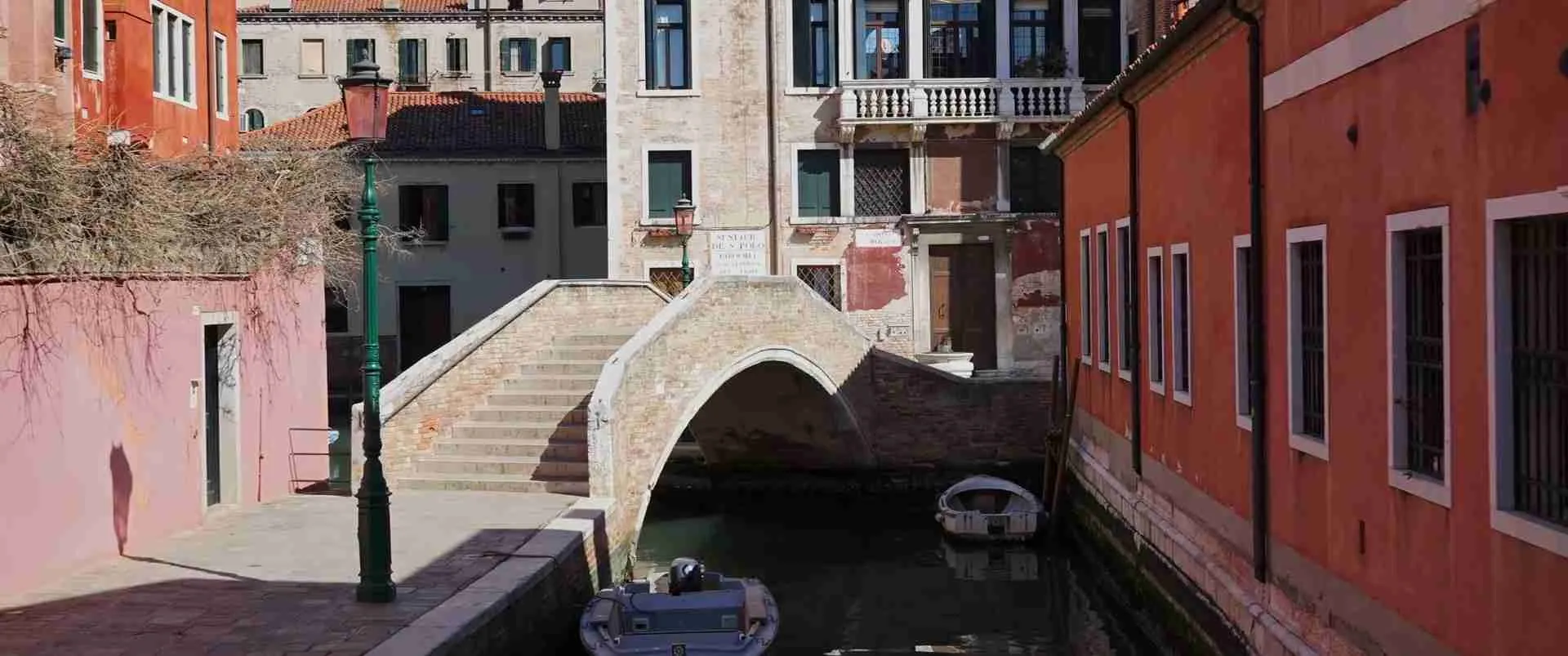
The San Pietro di Castello area preserves authentic working-class Venetian character remote from tourist industry influence. The former cathedral (until 1807 when St. Mark’s assumed the role) sits on isolated island connected by two bridges, showing simple Renaissance facade and Veneto-Gothic campanile leaning dramatically. The surrounding neighborhood maintains residential atmosphere with children playing, locals conversing in Venetian dialect, and traditional shops serving neighborhood needs rather than tourist demands. The wide fondamenta along the canal provides rare open space for relaxed walking and observation of authentic Venetian daily rhythms.
Via Garibaldi, Venice’s widest street (created by Napoleon filling a canal), functions as neighborhood commercial center with bakeries, produce shops, and cafes serving residents. Morning market stalls Monday-Saturday offer fresh produce, fish, and household goods with locals shopping and conversing in traditional patterns. The street’s width allows unusual Venice experience of walking without constant spatial compression characteristic of narrow calli elsewhere. Small trattorias along Via Garibaldi and surrounding streets serve authentic Venetian cuisine at moderate prices without tourist-focused menus or service.
Northern Cannaregio: Fondamente della Misericordia
Fondamente della Misericordia waterfront in northern Cannaregio functions as neighborhood gathering place with local restaurants, artisan workshops, and resident social life. The wide fondamenta along the canal provides open walking space and outdoor seating for cafes and restaurants. Evening hours (6:00-10:00 PM) bring neighborhood residents for aperitivo and dining, showing authentic contemporary Venetian culture beyond tourist industry. The area maintains working artisan presence including boat repair yards, carpentry workshops, and traditional crafts alongside modern small businesses.
The adjacent Campo dei Mori (Court of the Moors) preserves curious architectural details including embedded statues of three brothers (the Mastelli family from the Morea, Greece) who financed palazzo construction in the 12th century. Local legend associates the statues with various supernatural tales, though historical reality remains more prosaic. Tintoretto’s house stands nearby (marked by plaque) showing the artist’s choice to live in working neighborhood rather than prestigious areas, reflecting his parish church association at Madonna dell’Orto around the corner.
Dorsoduro University District: Campo Santa Margherita
Campo Santa Margherita in Dorsoduro functions as university district center with student energy animating Venice’s largest campo (approximately 100 by 60 meters). Morning markets Monday-Saturday offer produce, fish, and specialty items with traditional commercial activity continuing centuries-old patterns. Cafes surrounding the square serve students, professors, and residents from early morning through late evening, creating continuous social animation absent from tourist-focused areas. The campo hosts occasional cultural events, political gatherings, and neighborhood celebrations showing Venice’s continuing civic life beyond tourism economy.
The campo’s architecture demonstrates Venetian development with Gothic palaces, Renaissance churches, and later residential buildings creating layers of construction periods. The truncated campanile (bell tower shortened after collapse threat) adds distinctive character. Scuola Grande dei Carmini sits at the campo’s edge, providing artistic destination within neighborhood context. Small shops around the square include bookstores, artisan workshops, and food vendors serving neighborhood needs, maintaining economic diversity beyond tourism-focused retail dominating central areas.
Giudecca Island: Industrial Heritage and Residential Life
Giudecca island stretches along Venice’s southern edge, historically known for gardens, monasteries, and later industrial development including the Fortuny textile factory and shipbuilding facilities. The island maintains working-class residential character with fewer tourists despite proximity to central Venice (5-minute vaporetto crossing). Il Redentore church (Palladio, 1577-1592) demonstrates the architect’s mature religious design with harmonious classical proportions and temple-front facade. The church’s construction commemorated Venice’s deliverance from 1575-1577 plague, with annual Redentore festival (third Sunday in July) maintaining centuries-old tradition with bridge of boats temporarily connecting Giudecca to Dorsoduro.
Walking Giudecca’s waterfront (Fondamenta delle Zitelle to Fondamenta San Giacomo) provides continuous views across the lagoon toward central Venice, Dorsoduro, and San Marco without crowds or tourist infrastructure. The public housing projects (built 1980s-1990s) demonstrate contemporary Venetian attempts to maintain affordable resident housing within the historic center. Small local restaurants serve neighborhood residents with authentic cuisine and moderate prices, representing Venetian dining culture beyond tourist-oriented establishments. The island’s slower pace and residential atmosphere provide contrast to mainland intensity while remaining easily accessible via frequent vaporetto service.
Lesser-Known Islands: Architectural Gems
San Giorgio Maggiore: Palladio’s Masterwork
San Giorgio Maggiore island facing St. Mark’s Basin contains Palladio’s church (1566-1610) representing his mature religious architecture theories. The facade demonstrates classical proportions with temple-front design and harmonious geometric relationships. The interior achieves rare Renaissance ideal of unified space with perfect proportions, natural light, and integrated decoration. Tintoretto’s “Last Supper” and “Gathering of Manna” flank the main altar, painted specifically for these positions with dramatic compositions suited to the architectural context. The refectory (Cena room) houses Tintoretto’s massive “Wedding at Cana” (replica, original in Louvre) in its intended dining hall setting.
The campanile (bell tower, completed 1791 after collapse of original) provides spectacular panoramic views across Venice and the lagoon from observation platform. The elevator access makes the 60-meter height easily reached, offering superior photography angles compared to St. Mark’s Campanile with additional benefit of including St. Mark’s itself in views. The island’s Benedictine monastery (partially transformed into cultural foundation) maintains peaceful atmosphere with elegant cloisters, library, and gardens showing monastic architecture rarely accessible to visitors. The island receives fraction of visitors compared to mainland attractions despite equal architectural significance, providing contemplative visiting conditions.
San Francesco del Deserto: Monastic Tranquility
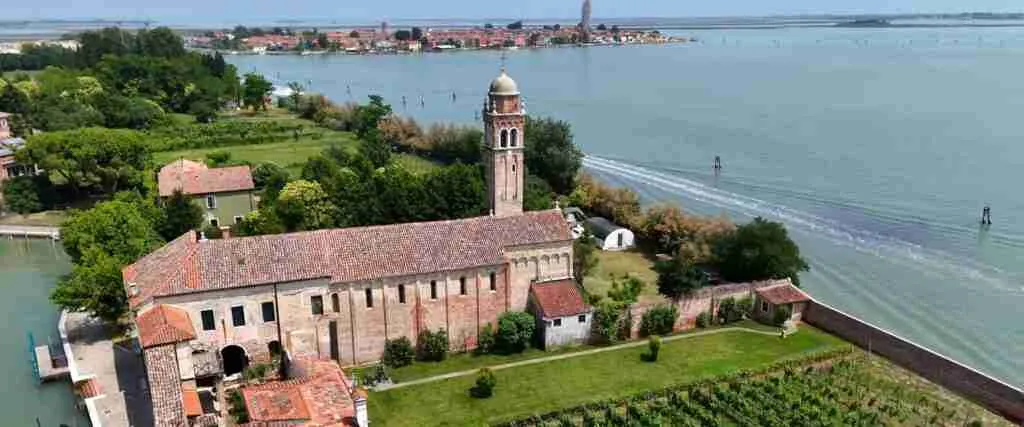
San Francesco del Deserto island houses Franciscan monastery established 1220, purportedly by Saint Francis himself returning from Holy Land crusade. The current monastery buildings date to 14th-15th centuries with later additions, preserving traditional monastic architecture around two cloisters with well, cypress trees, and peaceful gardens. Brother-guided tours (donation-based) explain monastic life, show the church with 15th-century frescoes and saints’ relics, and walk the gardens where monks grow vegetables following Franciscan simplicity traditions.
The island’s isolation (20 minutes by private boat from Burano, no public vaporetto service) ensures minimal visitation and preserved tranquility. The boat journey through shallow lagoon waters passes marshland and small islands showing the Venetian Lagoon’s natural character beyond Venice’s urban development. Visiting requires arranging transport from Burano with local water taxis or joining organized tours including monastery access. The spiritual atmosphere and architectural simplicity contrast dramatically with Venice’s artistic exuberance and tourist intensity, providing contemplative experience within the same UNESCO heritage territory.
Sant’Erasmo: Venice’s Garden Island
Sant’Erasmo stretches across 326 hectares as the lagoon’s largest island, preserving agricultural character supplying vegetables to Venice markets for centuries. The island’s specialty violet artichokes (carciofi violetti) carry protected designation reflecting unique local variety developed over generations. Cycling opportunities (bring bikes on vaporetto) and walking paths provide rare Venice-area experiences through rural landscape with views across open lagoon. The Maximilian Tower, 19th-century Austrian fortress, provides historical military context and panoramic views after recent restoration.
Sant’Erasmo maintains authentic lagoon community life with 700 permanent residents engaged in agriculture, fishing, and traditional crafts beyond tourism economy. Small trattorias serve ultra-local cuisine featuring vegetables harvested that morning and fish caught in adjacent lagoon waters. The island’s lack of major monuments or tourist infrastructure ensures peaceful exploration for visitors seeking authentic Venetian lagoon experience rather than concentrated cultural attractions. Vaporetto Line 13 from Fondamente Nove reaches Sant’Erasmo in 30 minutes with multiple stops along the island’s length, allowing strategic access to different areas.
Architectural Style Guide: Venice’s Hidden Evolution
Byzantine Foundations (7th-13th Centuries)
Venice’s Byzantine architectural heritage appears in foundations, column capitals, and decorative elements recycled in later construction, showing the city’s eastern cultural orientation through its first centuries. Santa Maria e Donato on Murano preserves complete Byzantine church structure (12th century) with apse mosaics, floor patterns, and architectural proportions demonstrating Constantinople influence. Torcello cathedral represents even earlier Byzantine achievement (9th-11th centuries) with complete mosaic programs showing artistic exchange between Venice and Byzantium. San Giacomo dall’Orio in Santa Croce incorporates ancient columns and Byzantine capitals in otherwise Gothic reconstruction, showing Venice’s practice of preserving and reusing architectural elements across rebuilding campaigns.
The Byzantine influence extends beyond specific buildings to Venice’s fundamental architectural character—the emphasis on surface decoration over structural expression, the use of precious materials (marble, gold, semi-precious stones), and the integration of Eastern and Western artistic traditions. This cultural synthesis created distinctive Venetian architecture differing from both Italian peninsula developments and pure Byzantine models. Hidden Venice preserves this synthesis in small churches and residential buildings where Byzantine elements persist in foundations, doorways, and decorative capitals centuries after original construction.
Veneto-Gothic Flowering (13th-15th Centuries)
Venetian Gothic style developed distinctive characteristics combining northern European pointed arches and elaborate decoration with Mediterranean lightness and color. The style appears throughout Venice in palaces, churches, and public buildings, with best-preserved examples in areas away from 19th-20th century restoration campaigns. Ca’ d’Oro on the Grand Canal represents Gothic palace architecture’s peak achievement, though restoration removed original polychrome decoration. Palazzo Contarini del Bovolo (Court of the Snail) features external spiral staircase (scala contarini del bovolo) showing Gothic decorative exuberance and unusual architectural solutions to vertical circulation.
Lesser-known Gothic buildings demonstrate the style’s characteristics more accessibly than famous examples. The Frari church preserves massive Gothic structure with pointed arches, rib vaulting, and elaborate facade decoration showing Franciscan architectural ambitions. Madonna dell’Orto displays typical Gothic brick construction with pointed arch windows and decorative brickwork patterns. Gothic wells throughout Venice’s campi show the style applied to utilitarian structures, with carved marble wellheads demonstrating even functional objects received artistic attention. The Gothic period established Venice’s distinctive architectural character combining structural innovation, elaborate decoration, and symbolic expression of republican power and merchant wealth.
Renaissance Rationalism (15th-16th Centuries)
Venice adopted Renaissance classical architecture later and more selectively than Florence or Rome, maintaining Gothic decorative traditions while incorporating classical proportions and vocabulary. Pietro Lombardo and his sons developed distinctive Venetian Renaissance style combining classical details with local traditions, visible in numerous churches including San Giobbe, Santa Maria dei Miracoli, and San Salvador. Mauro Codussi pioneered classical facade design in Venice with San Zaccaria and Santa Maria Formosa, introducing harmonious proportions and correct classical orders while maintaining Venetian polychrome marble decoration traditions.
Palladio brought full Renaissance architectural theory to Venice in his late career, designing San Francesco della Vigna facade, San Giorgio Maggiore, and Il Redentore according to strict proportional systems and classical temple-front models. These churches demonstrate rationalist architecture emphasizing geometric harmony, natural light, and unified space rather than Gothic vertical aspiration or Baroque dramatic effects. Sansovino’s Libreria Marciana on Piazzetta San Marco introduced Roman Renaissance style to Venice’s civic architecture, influencing subsequent palace and public building design. Hidden Renaissance buildings throughout Venice show these architectural developments in smaller scale and more intimate contexts than famous landmarks.
Baroque Exuberance (17th-18th Centuries)
Venetian Baroque architecture emphasized dramatic effects, elaborate decoration, and spatial innovation while maintaining distinctive local characteristics. Baldassare Longhena dominated 17th-century Venice with masterworks including Santa Maria della Salute (1631-1687), showcasing centralized plan, dramatic dome, and sculptural facade decoration. The church’s positioning at Grand Canal entrance created urban focal point demonstrating baroque interest in monumental scale and theatrical effect. Longhena also designed Ca’ Pesaro and Ca’ Rezzonico palaces, applying baroque principles to residential architecture with elaborate facades and monumental interiors.
Lesser-known baroque buildings demonstrate the style’s versatility and widespread application. Scuola Grande dei Carmini interior (decorated 1740s) shows mature baroque/rococo decoration with Tiepolo ceiling, gilded sculpture, and architectural integration. Santa Maria della Pieta (Vivaldi’s church, rebuilt 18th century) demonstrates late baroque religious architecture with oval plan and elaborate interior decoration designed for musical acoustics. Baroque wellheads, building facades, and interior decoration throughout Venice show the style’s dominance in the Republic’s final centuries, creating layers of renovation and decoration over earlier Gothic and Renaissance structures.
Practical Guidance for Hidden Venice Exploration
Strategic Routing and Time Allocation
Hidden Venice exploration benefits from geographic clustering—planning routes combining multiple discoveries within single neighborhoods rather than attempting coverage across the entire city. Castello eastern sections (Madonna dell’Orto, San Francesco della Vigna, San Pietro di Castello) cluster within 20-minute walking distance, allowing half-day themed exploration. Dorsoduro western area (San Sebastiano, Angelo Raffaele, San Nicolò dei Mendicoli) similarly groups discoveries for efficient routing. Cannaregio’s northern section (Jewish Ghetto, Madonna dell’Orto, Fondamente della Misericordia) provides another logical cluster.
Allocating time requires recognizing that hidden gems offer different experiences than major attractions—less crowding allows extended contemplation, but lack of interpretation requires either advance research or guidebook assistance. Churches generally allow 20-30 minutes for viewing including artworks and architecture, while scuole require 45-60 minutes for comprehensive appreciation of complex decorative programs. Neighborhood wandering resists timing constraints, with discovery following curiosity rather than scheduled programming. Balancing structured visits to specific monuments with unplanned neighborhood exploration creates optimal hidden Venice experience combining directed discovery with serendipitous encounter.
Opening Hours and Access Considerations
Lesser-known churches maintain irregular opening hours compared to major attractions, typically operating mornings (9:00 AM-12:00 PM) and late afternoons (3:00-6:00 PM) with midday closures. Sunday morning masses restrict tourist access until afternoon. The Chorus Pass (covering 16 Venice churches including many hidden gems) guarantees access during posted hours, while free-entry churches may close unexpectedly for private ceremonies or maintenance. Calling ahead or checking online schedules prevents frustration when planning routes dependent on specific church visits.
Scuole typically maintain more reliable hours with published schedules and advance booking options. Dress codes requiring covered shoulders and knees apply universally to churches but not scuole (secular institutions despite religious decoration). Photography restrictions vary widely—some churches prohibit all photography, others allow without flash, while scuole generally permit unrestricted photography. Respecting restrictions maintains access for future visitors and preserves artworks from flash damage. Bringing lightweight shawl or scarf enables instant adaptation to church dress requirements without planning entire outfit around modest coverage.
Guided Tours Versus Independent Exploration
Specialized walking tours focusing on hidden Venice, specific neighborhoods, or architectural themes provide expert interpretation enhancing appreciation of artistic and historical significance. Jewish Museum-operated ghetto tours offer essential context for understanding synagogue architecture, community history, and liturgical traditions impossible to grasp through independent visiting. Architecture-focused tours explain building evolution, construction techniques, and stylistic developments difficult for non-specialists to interpret. The investment in guided expertise (typically €25-40 per person for group tours, €150-200 for private tours) yields deeper understanding than independent exploration using guidebooks alone.
Independent exploration allows flexible timing, serendipitous discovery, and personal pace impossible with structured tours. Combining advance research through architectural guides, church art inventories, and neighborhood histories with on-site observation creates satisfying self-directed experience. Mobile apps providing church art identification, architectural style explanation, and historical context enhance independent exploration without guided tour investment. The optimal approach balances guided tours for complex sites (Jewish Ghetto, Scuola San Rocco) with independent exploration for neighborhood wandering and flexible church visiting.
Preservation Challenges and UNESCO Heritage Protection
Structural Maintenance in Marine Environment
Venice’s fundamental preservation challenge stems from construction on wooden pilings driven into lagoon sediment, creating unstable foundations exacerbated by rising water levels and subsidence. Hidden Venice buildings face identical structural challenges as famous landmarks but with fewer resources for maintenance. Churches depend on congregation donations and government grants insufficient for comprehensive restoration. Residential buildings rely on owner resources often inadequate for marine environment maintenance requiring specialized materials and techniques. The result shows visibly in crumbling facades, leaning walls, and water damage throughout less-visited areas.
The UNESCO World Heritage designation brings international attention but limited direct funding for preservation. Italian government programs focus primarily on major monuments, leaving countless minor churches and residential buildings in precarious condition. Private initiatives including Save Venice and Venice in Peril fund specific restoration projects, though needs far exceed available resources. Understanding these preservation challenges contextualizes why hidden Venice sometimes appears neglected compared to pristine tourist attractions—the economic reality of maintaining an entire medieval city built on water without modern construction techniques.
Tourism Impact and Sustainable Visiting
Venice’s tourism crisis (pre-pandemic visitation exceeding 30 million annually versus 50,000 resident population) concentrates overwhelmingly in small geographic areas, leaving hidden Venice relatively unaffected by overtourism impacts. This creates paradoxical situation where monument preservation depends on entry fees and donations generated by visitors, while too many visitors damage what they come to see. Lesser-visited churches and neighborhoods benefit from discovering their treasures but require visitor respect for active religious function and residential character. Photography should respect worshippers during services, conversation volumes should remain appropriate for sacred spaces, and neighborhood walking should avoid treating residential areas as stage sets.
Sustainable hidden Venice tourism involves timing visits to minimize disruption—weekday mornings for churches (after morning mass concludes), early evening for residential neighborhoods (when locals return from work), and off-season periods (November-March) when overall visitation pressure decreases. Supporting preservation through church donations, museum entry fees, and purchases from local artisans rather than imported souvenir shops directs tourism revenue toward heritage maintenance. Respecting closure days and hours, following dress codes without complaint, and engaging respectfully with local residents maintains access and goodwill essential for tourism compatible with living city functioning.
Frequently Asked Questions
How do you find Venice’s hidden churches?
Systematic exploration using the Chorus Church Pass (covering 16 lesser-known churches) provides starting framework for discovery. Architectural guidebooks including “Venice: An Architectural Guide” identify significant buildings with locations and historical context. Walking established neighborhood routes (Campo to Campo walking) reveals churches organically through urban exploration, as Venetian campi typically center on churches. Following yellow directional signs toward less-famous churches (marked on corner signs throughout Venice) leads to discoveries beyond main tourist circuits. Mobile apps including “Venice Church Guide” catalog locations, artworks, and opening hours enabling strategic planning.
Which neighborhoods show authentic Venetian life?
Eastern Castello beyond the Arsenal, northern Cannaregio along Fondamente della Misericordia, western Dorsoduro around Campo Santa Margherita, and Giudecca island maintain authentic residential character with neighborhood shops, local restaurants, and resident social life. These areas function primarily for residents rather than tourists, preserving Venetian dialect usage, traditional shopping patterns, and neighborhood social networks. Observing rather than interrupting local interactions, frequenting resident-serving businesses rather than tourist-oriented shops, and respecting residential quiet hours maintains authenticity while allowing visitor observation of continuing Venetian cultural traditions.
Can you visit Venice’s hidden gems year-round?
Major hidden attractions including scuole and larger churches operate year-round with consistent schedules, while smaller parish churches may close during winter months due to heating costs and reduced volunteer availability for monitoring visitors. Museum-administered buildings including Jewish Museum and associated synagogues maintain reliable year-round operations. Neighborhood exploration remains possible regardless of season, with winter offering advantages of minimal tourist presence and authentic local atmosphere. Acqua alta (flooding) primarily affects low-lying areas including St. Mark’s Square rather than hidden Venice locations at slightly higher elevations, though extreme tides can impact some eastern Castello areas.
Do hidden Venice locations require entrance fees?
Scuole typically charge €5-15 admission depending on building scale and decoration significance. Churches included in Chorus Pass cost €3 individually or €12 for annual pass covering 16 buildings. Free churches outnumber paid entries, though donation boxes suggest €1-2 contributions toward maintenance. Jewish Ghetto synagogue tours require guided access through Jewish Museum (€12 including museum entry). Most neighborhood exploration and street-level architectural appreciation costs nothing, making hidden Venice accessible regardless of budget. Strategic investment in Chorus Pass and selective paid entries balances access to major treasures with free exploration of countless minor gems.
How does hidden Venice architecture compare to famous landmarks?
Hidden Venice demonstrates identical architectural and artistic quality as major attractions, often in superior preservation due to reduced visitor traffic and environmental stress. Scale differs—hidden churches average 20-30 meters length versus St. Mark’s 76-meter length, creating intimate rather than overwhelming spatial experiences. Artistic holdings concentrate specific masters in depth rather than comprehensive survey collections—San Sebastiano shows Veronese specialization, Madonna dell’Orto displays Tintoretto concentration, creating focused opportunities for understanding individual artists impossible in general museums. The primary difference lies in crowding and commercialization rather than inherent significance or quality, making hidden gems often superior experiences for appreciating Renaissance art and architecture.
What architectural styles appear in hidden Venice?
Hidden Venice showcases complete architectural evolution from Byzantine (7th-12th centuries) through Veneto-Gothic (13th-15th centuries), Renaissance (15th-16th centuries), and Baroque (17th-18th centuries) periods. Byzantine examples include Murano’s Santa Maria e Donato and recycled columns throughout Venice. Gothic dominates in Madonna dell’Orto, Frari church, and countless palace facades. Renaissance appears in Palladio churches (San Francesco della Vigna, Il Redentore), Lombardo-designed churches, and Codussi facades. Baroque culminates in Longhena masterworks (Santa Maria della Salute, scuola interiors) and 18th-century rococo decoration. This complete stylistic range allows architectural history study better than focusing on individual famous buildings isolated from urban context.
Are guided tours necessary for appreciating hidden Venice?
Independent exploration with quality guidebooks and advance research provides satisfying experiences for architecturally literate visitors comfortable with self-directed discovery. However, specialized guided tours enhance understanding significantly through expert interpretation of artistic symbolism, architectural development, and historical context difficult to grasp without background knowledge. Jewish Ghetto tours prove essential for understanding synagogue architecture and community history unavailable through independent visiting. Architecture-focused tours explain construction techniques, stylistic development, and building evolution invisible to untrained observers. Balancing guided expertise for complex sites with independent exploration for flexible neighborhood discovery creates optimal approach.
How long does exploring hidden Venice require?
Comprehensive hidden Venice exploration could occupy weeks of daily visiting given 150+ churches, numerous scuole, multiple neighborhood districts, and various architectural periods represented. Realistic itineraries allocate 2-4 days for significant hidden gem sampling beyond mainstream attractions—one day per neighborhood cluster (Castello, Cannaregio, Dorsoduro) enables coverage of major hidden treasures with time for neighborhood atmosphere absorption. Visitors with specific interests (Renaissance art, baroque architecture, Jewish heritage) focus thematically rather than geographically, potentially requiring additional specialized time. Hidden Venice rewards extended stays allowing flexible exploration at contemplative pace rather than rushed coverage, with discoveries continuing across multiple visits.
What makes Venice’s hidden gems significant for UNESCO heritage?
Venice’s UNESCO World Heritage designation recognizes the entire historic center as interconnected cultural landscape rather than collection of individual monuments. Hidden gems demonstrate this comprehensive heritage through preserved neighborhood fabric, distributed artistic treasures, and continuing cultural traditions across the complete urban environment. The designation criteria emphasize Venice’s extraordinary artistic achievement, unique urban form adapted to lagoon environment, and ongoing cultural traditions spanning over a millennium. Hidden churches, scuole, neighborhoods, and islands contribute equally to this cultural landscape’s significance, making lesser-known discoveries essential for understanding UNESCO’s comprehensive heritage valuation beyond famous individual landmarks.
How does hidden Venice support living cultural traditions?
Hidden neighborhood areas preserve authentic Venetian life continuing traditional social patterns, economic activities, and cultural practices threatened by tourism monoculture in central areas. Artisan workshops (boat builders, furniture craftsmen, traditional glass workers, lace makers) maintain centuries-old techniques passed through apprenticeship systems. Local restaurants serve traditional Venetian cuisine to residents using regional ingredients and ancestral recipes. Neighborhood churches function actively for worship, community gatherings, and social services rather than merely museum preservation. This living heritage demonstrates cultural continuity UNESCO heritage designation aims to protect—not frozen museum city but functioning urban environment maintaining traditional practices while adapting to contemporary needs.