
Veliko Tarnovo Travel Guide 2026: Bulgaria’s Medieval Capital
Perched dramatically along steep hillsides above the winding Yantra River, Veliko Tarnovo stands as Bulgaria’s most captivating medieval city and former imperial capital. This 2026 guide provides comprehensive planning details for exploring the Tsarevets Fortress, artisan quarters, and monasteries that define this remarkable destination where ancient fortifications meet vibrant university-town energy.
Key Takeaways About Visiting Veliko Tarnovo in 2026
- Budget-Friendly Medieval Experience: Budget travelers spend $38-60 per person daily including hostel accommodation, traditional Bulgarian meals, and fortress admission, making Veliko Tarnovo one of Bulgaria’s most affordable historical destinations
- Mid-Range Comfort Costs $70-155 Daily: Mid-range visitors invest $70-155 per person daily (two sharing hotel) for comfortable hotel stays, restaurant dining, occasional taxis, and comprehensive attraction access including the spectacular Sound and Light Show
- Prime Visiting Season: April-May and September-October offer ideal weather (15-24°C), manageable crowds, and full operational hours at all attractions, while summer brings festivals but higher accommodation prices and peak-season tourism
- Compact Walkable Geography: The Old Town concentrates attractions within a 2-kilometer radius, eliminating frequent transport costs, with Tsarevets Fortress, Samovodska Charshiya artisan street, and medieval churches all accessible on foot from central accommodation
- Strategic Base for Day Trips: Veliko Tarnovo’s central Bulgarian location enables affordable day trips to Arbanasi village (15-25 BGN / $9-15 taxi), Preobrazhenski Monastery, and Dryanovo Monastery, with comprehensive regional exploration possible without changing accommodation
- Essential Advance Planning Required: Book accommodation 2-3 months ahead for April-October visits as quality budget and mid-range options fill quickly, particularly around university events, while last-minute booking severely limits choice in this university town with limited hotel inventory
People Also Ask About Veliko Tarnovo 2026
How Much Does Veliko Tarnovo Cost Per Day in 2026?
Budget travelers spend $38-60 per person daily including hostel dormitory accommodation ($10-15), traditional Bulgarian meals at local eateries ($3-5 breakfast, $7-10 lunch, $10-17 dinner), occasional public bus rides ($2-4), and one paid attraction daily ($6-9). Mid-range visitors invest $70-155 per person daily (two sharing hotel) covering comfortable hotel stays ($20-63 per person share of $40-125 rooms), restaurant meals with local wine, mixed walking and taxi transport, and comprehensive museum access including the Tsarevets Sound and Light Show. Luxury travelers budget $180-305 per person daily (two sharing boutique hotel) for premium accommodation ($63-110 per person share), fine dining experiences, private transfers, and guided tours. A week in Veliko Tarnovo costs approximately $265-420 budget, $490-1,085 mid-range, or $1,260-2,135 luxury per person.
What Are the Must-See Attractions in Veliko Tarnovo in 2026?
Tsarevets Fortress dominates as the essential attraction, costing 10-15 BGN ($6-9) for adults with reduced rates for students and seniors at 5 BGN ($3). The fortress complex demands 2-3 hours to explore royal palace ruins, the reconstructed Patriarchal Cathedral, and panoramic viewpoints over the medieval capital. The spectacular Tsarevets Sound and Light Show runs on select evenings (typically Friday-Saturday in season) at 20-40 BGN ($12-24) separate from general admission, combining laser projections, orchestral music, and church bells to narrate Bulgarian history. Samovodska Charshiya artisan street offers free exploration of traditional craft workshops, silversmith studios, and historic merchant houses, while the Archaeological Museum (6 BGN / $4), State Art Museum (4 BGN / $2), and Museum of the National Revival (6 BGN / $4) provide comprehensive historical context. The churches of Forty Holy Martyrs (free admission) and St. Peter and Paul (2 BGN / $1) preserve medieval frescoes in active worship spaces.
When Is the Best Time to Visit Veliko Tarnovo in 2026?
April-May and September-October represent optimal visiting windows, offering pleasant temperatures of 15-24°C (59-75°F), reduced tourist crowds compared to summer peaks, and full operational hours at all attractions. Spring brings blooming hillsides and comfortable hiking temperatures for surrounding trails, while autumn delivers harvest festivals, wine-tasting events, and golden hillside colors. Summer (June-August) brings warmest weather (20-30°C / 68-86°F), daily Sound and Light Shows, and peak festival programming including the July International Folklore Festival, but accommodation prices increase 30-50% and popular restaurants require reservations. Winter (December-February) drops below freezing with occasional snow, causing reduced museum hours and limited tourist services, though winter rates on accommodation fall 40-60% below summer pricing for budget-conscious travelers willing to accept seasonal closures. March and November serve as shoulder-season compromises with moderate weather, minimal crowds, and intermediate pricing.
How Do You Get to Veliko Tarnovo from Sofia or Varna in 2026?
From Sofia (220 kilometers west), hourly buses operate throughout the day via Union Ivkoni and Etap Group carriers, taking approximately 3.5 hours at fares of 18-25 BGN ($10-15) for standard service or 30-35 BGN ($17-20) for premium coaches with WiFi and refreshments. Book at central.etapbus.com or at Sofia’s Central Bus Station. From Varna (220 kilometers east), 4-5 daily buses run via similar carriers at comparable fares and journey times. Train service requires changing at Gorna Oryahovitsa station (7 kilometers from Veliko Tarnovo), adding complexity and limited departure times, making direct buses the preferred option. From Gorna Oryahovitsa station, bus line #10 connects to Veliko Tarnovo center at 3 BGN ($2) every 30-60 minutes, while taxis charge fixed 8-14 BGN ($5-8) for the 15-minute transfer. Private transfers from Sofia or Varna cost 150-250 BGN ($85-140) for sedan service or 200-350 BGN ($115-200) for minivan accommodating groups, offering door-to-door convenience for travelers with luggage or early/late arrival times when bus service is limited.
Extended multi-day tours – 5+ days
Featured Bulgaria Multi-Day Tour Packages
3 days
Bulgaria 3-Day Discovery Tour
- ✓ Comprehensive Bulgaria experience
- ✓ Expert local guides included
- ✓ All accommodation included
- ✓ Transportation provided

5 days
Bulgaria 5-Day Highlights Experience
- ✓ Comprehensive Bulgaria experience
- ✓ Expert local guides included
- ✓ All accommodation included
- ✓ Transportation provided

7 days
Bulgaria 7-Day Cultural Journey
- ✓ Comprehensive Bulgaria experience
- ✓ Expert local guides included
- ✓ All accommodation included
- ✓ Transportation provided

10 days
Bulgaria 10-Day Complete Adventure
- ✓ Comprehensive Bulgaria experience
- ✓ Expert local guides included
- ✓ All accommodation included
- ✓ Transportation provided
Multi-day tour packages powered by TourRadar. Prices and availability subject to change.
Introduction: Planning Your Veliko Tarnovo Adventure in 2026
Veliko Tarnovo commands attention as Bulgaria’s most visually dramatic city, where medieval fortresses crown steep limestone cliffs, historic houses cascade down impossibly steep hillsides, and the Yantra River coils in dramatic loops far below. As the capital of the Second Bulgarian Empire from 1185 to 1393, this city witnessed the height of Bulgarian medieval power, hosting tsars and patriarchs in the towering Tsarevets Fortress that still dominates the skyline. Unlike Bulgaria’s larger cities of Sofia and Plovdiv, Veliko Tarnovo preserved its compact medieval layout, creating an intimate urban landscape where Byzantine churches, National Revival mansions, and fortress walls concentrate within walking distance.
The modern city combines its rich historical legacy with energetic university-town vitality, as thousands of students attend Veliko Tarnovo University and create a vibrant café culture, nightlife scene, and affordable restaurant landscape. This dual character—solemn medieval monuments by day, lively student energy by evening—distinguishes Veliko Tarnovo from museum-piece historic towns. The city’s strategic location in central northern Bulgaria positions it ideally for day trips to Arbanasi’s monastery complex, the UNESCO-listed rock churches of Ivanovo, Dryanovo Monastery’s cave setting, and the Roman fortress ruins of Nicopolis ad Istrum.
Planning a 2026 visit requires understanding Veliko Tarnovo’s seasonal patterns. Summer brings peak tourism, daily Sound and Light Shows at Tsarevets, and full cultural programming, but also higher prices and crowded viewpoints. Spring and autumn shoulder seasons offer the best value-experience combination: comfortable temperatures, manageable crowds, lower accommodation costs, and full attraction access without summer’s premium pricing. Winter dramatically reduces tourist traffic and slashes accommodation prices but brings subfreezing temperatures and reduced museum hours.
This comprehensive 2026 guide addresses every practical planning dimension: detailed cost breakdowns by budget tier with specific accommodation, dining, and attraction pricing; neighborhood analysis identifying optimal staying locations; day-by-day itinerary templates for 3-day and 5-day visits; seasonal analysis of weather patterns, crowd levels, and pricing; comprehensive transportation guidance for arriving from major Bulgarian cities and navigating locally; attraction deep-dives with admission fees, opening hours, and strategic visiting advice; restaurant recommendations across all budget categories; and money-saving strategies that reduce costs without compromising the medieval Veliko Tarnovo experience. Whether arriving as a budget backpacker, mid-range comfort seeker, or luxury traveler, this guide provides the specific pricing data, booking strategies, and insider knowledge required to maximize your 2026 Veliko Tarnovo adventure.
Understanding Veliko Tarnovo’s Geography and Layout
Veliko Tarnovo’s dramatic topography shapes every aspect of visiting the city. The Yantra River executes a series of tight meanders through a deep limestone gorge, creating three distinct hilltop areas historically fortified for defense. Tsarevets Hill rises on the northern bend, crowned by the fortress complex that served as the royal and religious center of medieval Bulgaria. Trapezitsa Hill faces Tsarevets from across a narrow valley, holding aristocratic residences and churches during imperial times and now partially excavated archaeological sites. Sveta Gora Hill slopes more gently to the south, where most modern city development concentrates alongside historic neighborhoods.
This vertical geography divides the city into clearly defined districts. The Old Town (Staria Grad) occupies the steep southern slopes of Sveta Gora, characterized by cobblestone streets that climb at lung-punishing angles, National Revival houses with overhanging upper stories, artisan workshops concentrated along Samovodska Charshiya street, and small Orthodox churches wedged into narrow plots. General Gurko Street typifies Old Town architecture and atmosphere, a single-lane cobblestone thoroughfare lined with restored 19th-century houses featuring characteristic wooden balconies and painted facades. Walking the Old Town requires good fitness and comfortable shoes—some streets exceed 15% gradients with uneven stone pavement and limited handrails.
The New Town spreads across flatter terrain south and east of the Old Town core, housing modern commercial streets, the main shopping district centered on Nezavisimost Street, bus stations, supermarkets, and contemporary hotel developments. Visitors staying in New Town budget hotels face 10-20 minute uphill walks to reach Old Town attractions but benefit from easier terrain, modern amenities, and lower nightly rates. The district division matters practically: Old Town placement means atmospheric medieval surroundings and instant access to major sights at premium pricing; New Town location offers value accommodation and flat walking at the cost of daily climbs to reach fortress and churches.
Two pedestrian bridges span the Yantra River, connecting various city sections. The Trapezitsa Bridge (Trapezitsa Most) provides the most photographed cityscape view, looking upriver toward Tsarevets Fortress with the Patriarchal Cathedral’s distinctive green dome crowning the hilltop. Stambolov Bridge offers a secondary river crossing and access to hiking trails along the northern riverbank. These bridges become key navigation landmarks—locals give directions referencing “near Trapezitsa Bridge” or “below Stambolov Bridge” rather than street addresses.
Understanding this geography informs accommodation choices, daily route planning, and energy management. Visitors booking Old Town guesthouses enjoy atmospheric settings and proximity to attractions but must manage steep access paths and limited luggage portage. Those selecting New Town hotels trade medieval ambiance for flat approaches, easier taxi access, and modern facilities. Most first-time visitors underestimate how much daily climbing Veliko Tarnovo demands—the walk from Tsarevets Fortress to Samovodska Charshiya, though just 1.5 kilometers horizontally, involves 60 meters of elevation change across steep cobblestone lanes. Budget sufficient time for uphill walking and schedule rest breaks at strategic viewpoint cafés that double as recovery stops.
Accommodation Costs and Neighborhood Guide 2026
Veliko Tarnovo’s accommodation landscape divides clearly across budget tiers, with quality and value exceeding larger Bulgarian cities at every price point. The city’s limited hotel inventory—fewer than 40 hotels serve the tourist trade—means advance booking becomes essential during peak season (May-September), when desirable properties fill 6-8 weeks ahead. This section breaks down accommodation costs by budget category, identifies optimal neighborhoods for different traveler types, and provides booking strategy guidance for securing the best value in 2026.
Budget Accommodation in Veliko Tarnovo ($10-25 Per Night)
Hostel dormitory beds cost 18-28 BGN ($10-15) per night in Veliko Tarnovo’s well-established backpacker properties. Hostel Mostel Veliko Tarnovo, located in the Old Town near Samovodska Charshiya, operates Bulgaria’s most famous budget accommodation chain, offering 6-bed and 8-bed mixed dorms at 20-24 BGN ($12-14) with included breakfast buffet, communal kitchen, rooftop terrace with fortress views, and nightly social events. The Sydney Morning Herald named it “Eastern Europe’s finest hostel” for its combination of historic-building character, spotless facilities, and traveler community atmosphere. Book directly via hostelmostel.com for best rates, particularly for multi-night stays that reduce per-night costs further.
Rooster Hostel occupies a restored National Revival house at the heart of the Old Town, charging slightly higher rates (24-28 BGN / $14-16 per dorm bed) but delivering exceptional location directly on General Gurko Street with immediate access to restaurant concentration and 5-minute walks to Tsarevets. The property features just 24 beds across 4 dorms, creating intimate atmosphere rather than party hostel energy. Private rooms here cost 60-80 BGN ($35-45), serving solo travelers seeking upgrade comfort or couples on tight budgets.
Budget guesthouses operated by local families offer private rooms at 35-50 BGN ($20-28) per night, typically sharing bathroom facilities and featuring basic amenities without breakfast included. These family-run properties scatter through residential neighborhoods slightly removed from Old Town tourist concentration, requiring 10-15 minute walks to reach fortress and museums but providing authentic Bulgarian hospitality and home-cooked meal options. Guest houses rarely appear on international booking platforms—ask at the tourist information office on Mother Bulgaria Square or look for “Стаи под наем” (rooms for rent) signs displayed in windows.
Budget accommodation booking strategy for 2026: Reserve hostel beds 4-6 weeks ahead for summer visits, 2-3 weeks for shoulder season. Weekend availability in Veliko Tarnovo is tightest as Bulgarian domestic tourists from Sofia and Varna make quick getaway trips. Sunday-Thursday check-ins offer more last-minute availability and occasionally lower walk-in rates at family guesthouses willing to negotiate directly. Off-season (November-March), budget properties reduce rates 30-40% but some close entirely—verify winter operating schedules before booking December-February accommodation.
Mid-Range Hotels in Veliko Tarnovo ($40-125 Per Night)
Mid-range accommodation in Veliko Tarnovo delivers exceptional value compared to Western European equivalents, with well-appointed hotels featuring modern amenities, included breakfast, and prime locations at rates far below similar-standard properties in Prague, Dubrovnik, or Athens. Rooms in this category cost 70-220 BGN ($40-125) per night, translating to $20-63 per person for couples sharing.
The Grand Hotel Veliko Tarnovo represents the city’s established mid-range leader, a modernized Soviet-era property overlooking Tsarevets from elevated position near the Mother Bulgaria Monument. Rooms cost 140-200 BGN ($80-115) per night including generous breakfast buffet, spa access with fortress-view pool, and private parking. The property’s 170 rooms mean consistent availability even during peak-season weekends. Its position 500 meters uphill from Old Town core requires stamina for walking approaches but delivers panoramic views unavailable in valley-floor properties. Recent renovations upgraded bathrooms to contemporary standards and added air conditioning to all rooms, addressing previous guest complaints.
Hotel Tarnava occupies strategic position at the base of Tsarevets Fortress access path, eliminating the uphill climb that challenges guests at more distant hotels. Nightly rates run 110-160 BGN ($63-92) for standard doubles, 150-200 BGN ($85-115) for superior rooms with fortress views. The boutique property maintains just 15 rooms, creating intimate atmosphere and personalized service from multilingual staff who provide insider dining recommendations and arrange day-trip transportation. Book direct via the hotel website for breakfast inclusion and flexible cancellation terms.
Park Hotel RAYA Garden, located on the northern edge of town with extensive garden grounds, charges 150-170 BGN ($85-95) per night for comfortable rooms with modern bathrooms and air conditioning. The property trades Old Town proximity (15-20 minute walk) for peaceful setting, ample parking, and on-site restaurant serving traditional Bulgarian cuisine. Guest reviews consistently praise generous breakfast spreads featuring local specialties and helpful reception staff assisting with tour bookings. The long walk from main attractions makes RAYA Garden optimal for travelers with rental cars who prioritize parking convenience and quiet evenings over immediate fortress access.
Studio Stela offers alternative mid-range format—self-catering apartments rather than hotel rooms—at 90-140 BGN ($52-80) per night. Located in residential neighborhood 10 minutes from Old Town, the renovated apartments feature full kitchens enabling grocery-store savings on breakfast and picnic lunches, washing machines for longer stays, and separate living spaces providing more room than hotel equivalents at comparable prices. Apartments suit families with children, longer-stay visitors (week or more), and travelers who value cooking flexibility over daily hotel breakfast buffets.
Mid-range booking strategy: Rates in this category vary seasonally more than budget or luxury tiers. April-May and September-October shoulder seasons deliver 20-30% savings versus peak June-August pricing, with identical property quality and full attraction access. Book 6-10 weeks ahead for summer, 3-4 weeks for shoulder season. Many mid-range hotels offer direct-booking discounts (10-15% off) compared to third-party platform rates—check hotel websites before committing to Booking.com or Expedia prices. Multi-night stays (3+ nights) often unlock lower per-night rates negotiable through direct email contact.
Luxury Hotels and Boutique Properties ($125-220+ Per Night)
Luxury accommodation in Veliko Tarnovo concentrates in restored National Revival mansions and purpose-built boutique hotels rather than international chain properties. This category ranges from 225-400 BGN ($125-220+) per night, delivering $63-110+ per person for couples sharing rooms with period furnishings, premium bathrooms, concierge services, and exclusive locations in prime Old Town positions.
Bey House Royal Hotel occupies a meticulously restored 19th-century mansion in the Old Town, charging 380-440 BGN ($213-246) per night for suites featuring original wooden ceilings, antique furnishings, luxury bedding, and spa-quality bathrooms. The small property (just 6 rooms) provides highly personalized service, including pre-arrival grocery shopping for suite kitchenettes, customized tour arrangements with English-speaking drivers, and private dining experiences in the period courtyard. The location on a quiet Old Town lane delivers absolute tranquility while remaining 3 minutes walk from Samovodska Charshiya’s restaurant concentration.
Grand Hotel Yantra combines contemporary design with riverside position, commanding 240-320 BGN ($135-180) per night for river-view rooms in its modern building perched dramatically above the Yantra gorge. The property features rooftop terrace restaurant with panoramic Tsarevets views, wellness center offering traditional Bulgarian treatments, and 24-hour room service rare in Veliko Tarnovo’s modest hotel market. English-speaking concierge staff excel at arranging day-trip logistics, restaurant reservations, and private guided tours of fortress and monasteries. The modern aesthetic contrasts with Old Town’s traditional architecture but appeals to travelers prioritizing contemporary comfort and reliable amenities over period atmosphere.
Studio Hotel Stela Premium, an upscale version of the mid-range apartments, provides luxury self-catering in restored Old Town houses at 250-320 BGN ($140-180) per night. Two-bedroom apartments accommodate families or friend groups seeking shared-cost luxury, reducing per-person costs while maintaining premium finishes, modern appliances, and atmospheric historic settings. The kitchens enable flexibility for travelers with dietary restrictions or those wanting to sample Bulgarian ingredients from local markets without committing to full restaurant meals.
Luxury booking considerations: Properties in this tier rarely discount—rates remain relatively stable year-round as luxury travelers show less price sensitivity than budget or mid-range visitors. However, multi-night stays (3-5 nights) can unlock upgrades to better rooms or complimentary spa treatments when negotiated via direct email contact with hotel management. The limited luxury inventory (under 10 true luxury properties citywide) means booking 8-12 weeks ahead for summer becomes essential, particularly for specific high-demand dates like festival weekends or Bulgarian public holidays. Winter season sees some luxury properties close November-March—verify operating schedule before booking December-February dates.
Accommodation Neighborhood Analysis 2026
Location decisions significantly impact the Veliko Tarnovo experience and daily budget. Old Town accommodation delivers maximum atmosphere and attraction proximity but demands navigating steep cobblestone lanes with luggage. New Town properties offer easier access, parking availability, and lower rates but require 10-20 minute daily walks (often uphill) to reach fortress and museums.
Old Town advantages: Immediate access to Tsarevets Fortress (5-minute walk), Samovodska Charshiya artisan street outside your door, romantic National Revival architecture surrounding your hotel, walking access to all restaurants and cafés without taxi expense, and atmospheric evening ambiance with illuminated fortress views. Old Town disadvantages: Steep access paths challenging with heavy luggage, limited parking (most streets too narrow for cars), higher accommodation costs (15-30% premium over New Town equivalents), some noise from Old Town restaurant patios and bar terraces until midnight on weekends.
New Town advantages: Flat walking terrain, easy taxi and bus access, modern supermarkets nearby for self-catering savings, abundant parking at hotels with cars, quieter evening atmosphere, and 20-35% lower accommodation costs than Old Town at comparable quality levels. New Town disadvantages: Daily uphill walks to reach major attractions, less atmospheric surroundings (modern apartment blocks and commercial streets), evening isolation as most dining and social activity concentrates in Old Town, and no walking access to fortress or museums (15-20 minute trek each way).
Optimal location by traveler type: Budget backpackers prioritize Old Town hostels for social atmosphere and attraction proximity, accepting steeper prices to eliminate taxi costs. Mid-range couples split between Old Town boutique hotels (if valuing romance and atmosphere) and New Town comfort hotels (if prioritizing modern amenities and parking). Families with children favor New Town self-catering apartments for kitchen facilities and extra space, using taxis to shuttle to attractions. Luxury travelers concentrate in Old Town’s restored mansions for maximum historical immersion.
Daily Budget Breakdowns Veliko Tarnovo 2026
This section provides comprehensive per-person daily cost analysis across three budget tiers, with all costs calculated assuming two people sharing hotel accommodation. Each tier breaks down accommodation, meals, transportation, and attraction expenses into realistic ranges reflecting actual 2026 prices in Veliko Tarnovo. These calculations enable accurate trip budgeting and identify which tier aligns with your comfort expectations and spending capacity.
Budget Travel Costs 2026
Budget travelers visiting Veliko Tarnovo in 2026 spend $38-60 per person daily, making this one of Bulgaria’s most affordable destinations for backpackers and cost-conscious visitors. This budget tier achieves substantial savings through hostel dormitory accommodation, self-catered breakfasts, traditional Bulgarian lunch menus, walking as primary transportation, and selective attraction admission focused on free sites supplemented by 1-2 paid entries.
Accommodation costs dominate the budget tier at 18-28 BGN ($10-15) per dormitory bed in Hostel Mostel or Rooster Hostel, both including basic breakfast (bread, jam, tea/coffee). This per-person rate requires no division as hostel beds price individually. Travelers arriving as couples seeking private room budget options pay 60-80 BGN ($35-45) for basic private doubles in family-run guesthouses, translating to $18-23 per person when sharing.
Meal costs allow substantial savings through smart choices. Skip or self-cater breakfast using hostel kitchen facilities and supermarket ingredients for 5-8 BGN ($3-5)—bread, cheese, yogurt, and fruit from Lidl or Billa. Lunch at traditional eateries targeting locals rather than tourists costs 12-18 BGN ($7-10) for substantial portions of shopska salad, kebapche grilled meat, and bread. Dinner at mehana (traditional tavern) runs 18-30 BGN ($10-17) for full meal including appetizer, main course, and drink. Daily meal total: $20-32.
Transportation stays minimal as Veliko Tarnovo’s compact geography enables walking to all major attractions within Old Town core. Occasional public bus rides (when tired or hauling groceries) cost 3 BGN ($2) per trip. Budget 3-6 BGN ($2-4) daily for mixed walking and bus use. Taxi use breaks budget-tier discipline—a single 10-minute ride costs what three days of bus transport covers.
Attraction expenses vary by selective entrance strategy. Free sites include Samovodska Charshiya artisan street, Forty Holy Martyrs Church, Mother Bulgaria Monument viewpoint, riverside walking paths, and Old Town cobblestone street exploration. Budget one paid attraction daily—Tsarevets Fortress 10-15 BGN ($6-9), Archaeological Museum 6 BGN ($4), Art Museum 4 BGN ($2). Some attractions offer free admission last Thursday of each month, enabling total-zero attraction days for strategic planners. Daily attraction budget: $6-9.
Budget tier daily totals: Hostel accommodation $10-15 per person, meals $20-32, transportation $2-4, attractions $6-9. Total: $38-60 per person daily.
Weekly budget trip costs: $38 × 7 = $266 low-end, $60 × 7 = $420 high-end. A week in Veliko Tarnovo costs approximately $265-420 per person on strict budget discipline, excluding international transportation. This allows exploration of Tsarevets, museums, Arbanasi day trip, and comprehensive Old Town discovery while maintaining hostel backpacker lifestyle.
Mid-Range Travel Costs 2026
Mid-range travelers invest $70-155 per person daily (two sharing hotel) for comfortable accommodation, restaurant meals with local wine, mixed walking and taxi transportation, and comprehensive attraction access including premium experiences like the Tsarevets Sound and Light Show. This tier delivers substantial comfort upgrade from budget travel while maintaining approximately half the cost of luxury tourism.
Accommodation in comfortable 3-star hotels costs 70-220 BGN ($40-125) per room nightly, translating to $20-63 per person when two share. This category includes properties like Hotel Tarnava ($63-92 per night / $32-46 per person), Grand Hotel Veliko Tarnovo ($80-115 / $40-58 per person), and Park Hotel RAYA Garden ($85-95 / $43-48 per person). All provide private bathroom, air conditioning, included breakfast buffet, WiFi, and English-speaking reception. The breakfast inclusion eliminates morning meal costs, shifting daily food spending to lunch and dinner only.
Breakfast comes included in hotel rate, saving $8-12 compared to café breakfast costs. Lunch at sit-down restaurants featuring Bulgarian specialties costs 18-35 BGN ($10-20) for starter plus main course plus drink. Restaurants like Shtastliveca overlooking the Yantra River or traditional mehanas near Samovodska Charshiya deliver quality local cuisine in atmospheric settings at these prices. Dinner at nicer establishments costs 30-60 BGN ($17-34) for three courses with local wine. Restaurant patios with fortress views command the higher end of this range. Daily meal total: $27-54 (lunch and dinner only, breakfast included in hotel).
Transportation mixes walking with selective taxi use. Most days involve walking between Old Town attractions, but taxis eliminate exhausting uphill returns to New Town hotels or enable evening returns after dinner without navigating dark cobblestone streets. Budget 2-3 short taxi rides at 6-10 BGN ($4-6) each, plus occasional public bus. Daily transport: $6-12.
Attraction spending increases substantially from budget tier, reflecting comprehensive museum admission, paid guided tours, and premium experiences. Tsarevets Fortress 10-15 BGN ($6-9), Sound and Light Show 20-40 BGN ($12-24), multiple museums at 4-10 BGN ($2-6) each, Arbanasi village churches 10-15 BGN ($6-9), plus occasional guided walking tour 25-40 BGN ($15-24) shared cost. Daily attraction average: $12-17 covering mix of included-in-walk days and comprehensive-access days.
Mid-range tier daily totals: Hotel accommodation $20-63 per person (two sharing), meals $27-54 (lunch and dinner with breakfast included in hotel rate), transportation $6-12, attractions $12-17. Total: $70-155 per person daily (two sharing mid-range hotel).
Weekly mid-range trip costs: $70 × 7 = $490 low-end, $155 × 7 = $1,085 high-end. A week in Veliko Tarnovo costs approximately $490-1,085 per person when maintaining mid-range comfort throughout, allowing comfortable hotel stays, regular restaurant dining, comprehensive attraction access including Sound and Light Show, and occasional guided tours without budget stress. This range accommodates shoulder-season economy (April-May, September-October) on low end and peak-summer premium spending on high end.
Luxury Travel Costs 2026
Luxury travelers budget $180-305 per person daily (two sharing boutique hotel) for restored National Revival mansion accommodation, fine dining experiences, private transfers, guided tours, and comprehensive premium experiences eliminating all time-wasting queues and logistics concerns. This tier delivers maximum comfort and convenience while respecting Veliko Tarnovo’s intimate scale—the city lacks five-star international chains, so luxury manifests through boutique properties, private guides, and curated experiences rather than institutional luxury hotels.
Accommodation in boutique hotels and restored mansions costs 225-400 BGN ($125-220+) per night, translating to $63-110+ per person when two share premium suites. Properties like Bey House Royal Hotel ($213-246 per night / $107-123 per person) provide period furnishings, spa bathrooms, concierge service, and exclusive Old Town locations. Luxury properties include substantial breakfast spreads often featuring made-to-order preparations, local specialties, and champagne service unavailable in mid-range breakfast buffets.
Breakfast included in luxury room rates eliminates separate morning meal costs. Lunch at upscale restaurants costs 40-70 BGN ($23-40) for refined preparations of Bulgarian classics with premium ingredients and wine pairings. Dinner at the finest available establishments runs 70-120 BGN ($40-68) for multi-course tasting menus, premium Bulgarian wines, and memorable presentations. Some luxury hotels offer in-room private dining experiences for anniversary celebrations or intimate occasions. Daily meal total: $63-108 (lunch and dinner only, gourmet breakfast included in hotel rate).
Transportation shifts to private transfers and on-call taxis eliminating all walking between attractions. Private car with driver costs 150-200 BGN ($85-115) per day for full-day service, shared between passengers. This enables effortless movement between fortress, museums, viewpoints, and restaurants without navigating steep streets or scheduling concerns. For multiple-day stays, negotiate multi-day driver contracts at reduced per-day rates. Daily transport average: $17-29 per person covering mix of walking proximity days and full-service driver days.
Attraction costs in luxury tier emphasize private guided tours rather than independent museum visits. Private fortress tour with archaeological specialist costs 100-150 BGN ($57-85) for 2-hour exclusive access with behind-scenes areas and detailed historical narrative. Premium Sound and Light Show includes VIP seating with champagne service at premium over standard admission. Day trips to Arbanasi, Dryanovo Monastery, or Ivanovo churches with private guide and driver run 200-300 BGN ($115-170) per day. Daily attraction average: $23-40 covering mix of included museum admission days and comprehensive private tour days.
Luxury tier daily totals: Boutique hotel accommodation $63-110+ per person (two sharing suite), meals $63-108 (lunch and dinner with gourmet breakfast included in hotel), transportation $17-29, attractions and experiences $23-40. Total: $180-305 per person daily (two sharing luxury accommodation).
Weekly luxury trip costs: $180 × 7 = $1,260 low-end, $305 × 7 = $2,135 high-end. A week in Veliko Tarnovo maintaining luxury standards costs approximately $1,260-2,135 per person, delivering boutique accommodation in restored historic buildings, comprehensive fine dining, private guided tours, and effortless logistics throughout the stay. This represents Bulgaria’s exceptional luxury travel value—equivalent experiences in Dubrovnik, Prague, or Vienna would cost 2-3 times these amounts while delivering less personal service and historic authenticity.
Food and Dining Costs Veliko Tarnovo 2026
Veliko Tarnovo’s dining scene delivers authentic Bulgarian cuisine at prices substantially below Western European equivalents, with generous portions, local ingredients, and atmospheric settings enhancing value at every tier. This section breaks down meal costs across budget categories, identifies best-value restaurants by cuisine type, explains Bulgarian menu traditions that maximize dining value, and provides strategic guidance for minimizing food costs without sacrificing culinary experience. Traditional mehanas (taverns) concentrate along Samovodska Charshiya and General Gurko Street, while modern cafés and international restaurants cluster near the university campus and central pedestrian zones.
Budget Dining Options ($3-17 Per Meal)
Budget meals in Veliko Tarnovo cost 10-20 BGN ($6-12) at traditional eateries targeting local workers rather than tourists, with lunchtime “obedno menu” (daily set menu) delivering exceptional value. These fixed-price lunches, available weekdays 12:00-15:00 at most traditional restaurants, include soup, main course, side dish, and bread for 10-15 BGN ($6-9)—often less than ordering à la carte main course alone. Mehana Gurko on General Gurko Street serves reliable obedno menu at 12 BGN ($7) featuring rotating daily specials like grilled chicken with potatoes, stuffed peppers with yogurt, or moussaka with shopska salad.
Street food provides even cheaper options. Banitsa (flaky cheese pastry) from bakeries costs 2-4 BGN ($1-2) making filling on-the-go breakfast or mid-afternoon snack. Grilled kebapche (spiced meat cylinders) or kyufte (meatballs) served in fresh bread costs 5-8 BGN ($3-5) from grills near the central market or bus stations. Vendors operating from small windows and takeaway counters throughout Old Town sell mekitsi (fried dough) for 3-5 BGN ($2-3), served plain or with powdered sugar, jam, or white cheese.
Supermarket self-catering enables substantial savings for budget-conscious travelers, particularly those in hostel dormitories or apartments with kitchen access. Lidl and Billa supermarkets sell staple ingredients at prices well below restaurant costs: fresh bread 1-2 BGN ($0.60-1.20), local white cheese (sirene) 6-10 BGN ($4-6) per kilogram, tomatoes and cucumbers 3-5 BGN ($2-3) per kilogram, Bulgarian yogurt 3-4 BGN ($2) per 500ml, fresh fruit 4-8 BGN ($2-5) per kilogram depending on season. Assembling picnic lunch—bread, cheese, vegetables, fruit—costs 8-12 BGN ($5-7) and feeds two people, versus 20-30 BGN for equivalent restaurant lunch.
Budget dinner at informal restaurants costs 18-30 BGN ($10-17) for full meal with drink. Order traditional dishes delivering maximum value: kavarma (meat and vegetable stew) 12-18 BGN ($7-10), grilled mixed meat plate 15-22 BGN ($9-13), stuffed peppers or cabbage rolls 10-15 BGN ($6-9). Bulgarian beer (Kamenitza or Zagorka) costs 3-5 BGN ($2-3) per half-liter, local wine 8-15 BGN ($5-9) per half-liter carafe. Skip imported spirits and tourist-menu “specialties” that inflate bills unnecessarily.
Budget dining strategy: Maximize obedno menu lunches on weekdays, saving 30-40% versus dinner prices for identical dishes. Use supermarkets for breakfast ingredients and picnic lunches, directing restaurant budget toward evening meals in atmospheric Old Town mehanas. Avoid restaurants with English-only menus and tourist photos—these signal inflated pricing. Look for Bulgarian-language-primary menus with mostly local diners, indicating authentic pricing and quality. Ask locals (hostel staff, guesthouse hosts) for current favorite budget spots, as openings and closures change annually.
Mid-Range Restaurants ($10-34 Per Meal)
Mid-range dining in Veliko Tarnovo costs 18-35 BGN ($10-20) for lunch, 30-60 BGN ($17-34) for dinner, delivering refined preparations of Bulgarian classics in atmospheric settings with attentive service and English-language menus. This category includes Veliko Tarnovo’s best-regarded establishments where food quality, ingredient sourcing, and presentation exceed basic budget mehanas without reaching luxury pricing.
Shtastliveca Restaurant stands out for spectacular riverside terrace views overlooking the Yantra River and Tsarevets Fortress, with main courses ranging 18-35 BGN ($10-20) and appetizers 8-15 BGN ($5-9). The menu features modern interpretations of Bulgarian classics—kavarma with wild mushrooms, slow-braised lamb with rosemary, grilled trout from mountain streams. Reservations essential for terrace tables, particularly at sunset. Three-course meal with wine runs 45-70 BGN ($26-40) per person, positioning Shtastliveca at the upper range of mid-range category but delivering memorable experience justifying the premium.
Ego Pizza & Grill occupies another prime riverside location near Stambolov Bridge, offering both Bulgarian specialties and international dishes including wood-fired pizza. Main dishes cost 18-32 BGN ($10-18), with generous portions suitable for sharing between two diners with added appetizer. The outdoor terrace functions seasonally (April-October) with fortress illumination views after dark. Bulgarian wine selection emphasizes regional producers from nearby Lyaskovets and Suhindol wine regions at 20-40 BGN ($12-24) per bottle.
Han Hadji Nikoli occupies a restored 19th-century inn near the Archaeological Museum, maintaining traditional mehana atmosphere with stone walls, low ceilings, and rustic wooden furnishings. The menu emphasizes slow-cooked traditional dishes requiring advance preparation—duck with apples, lamb kleftiko in clay pot, village-style chicken. Main courses 22-38 BGN ($13-22), appetizers 10-18 BGN ($6-10). The establishment attracts both tourists and local families celebrating special occasions, indicating quality and fair pricing. Full dinner with wine averages 50-75 BGN ($29-43) per person.
Mid-range restaurants clustering along Samovodska Charshiya street offer medieval market atmosphere, with outdoor seating under grape arbors and views across the artisan workshops. These establishments maintain similar pricing (main courses 18-32 BGN / $10-18) while varying in specialty focus—some emphasize grilled meats, others traditional stews, several showcase vegetarian options drawing on Bulgaria’s Orthodox fasting traditions featuring bean dishes, stuffed vegetables, and mushroom preparations.
Wine and beverage costs at mid-range establishments: Local Bulgarian wines from Thracian Valley or Danube Plain cost 25-45 BGN ($15-26) per bottle, providing excellent quality-price ratio for European wine production. House wine by carafe (half-liter) runs 15-25 BGN ($9-15). Beer (Kamenitza, Zagorka, Shumensko) costs 4-6 BGN ($2-4) per half-liter. Bulgarian spirits—mastika, rakia, Bulgarian brandy—cost 5-10 BGN ($3-6) per 50ml serving. Coffee (espresso, cappuccino) 3-5 BGN ($2-3), herbal teas 4-6 BGN ($2-4).
Mid-range dining strategy: Make reservations for dinner at popular restaurants, particularly for outdoor terrace seating during summer season. Lunch at mid-range establishments costs 30-40% less than dinner for identical menu items—schedule main meal at midday, then lighter evening meal or appetizer-focused dinner to optimize budget. Share appetizers and side dishes between two diners rather than ordering full individual courses, as Bulgarian portions often exceed Western expectations. Request local wine recommendations from waitstaff rather than defaulting to expensive imports—Bulgarian wines increasingly win international awards while costing fraction of French or Italian equivalents.
Luxury and Fine Dining ($40-120 Per Meal)
Luxury dining in Veliko Tarnovo costs 70-120 BGN ($40-68) per person for multi-course tasting menus, premium ingredient preparations, extensive wine pairings, and exceptional service in exclusive settings. The city’s modest size limits truly high-end establishments compared to Sofia or Plovdiv, but several restaurants deliver memorable upscale experiences emphasizing seasonal Bulgarian ingredients, creative presentations, and atmospheric historic buildings.
Restaurants at luxury hotels—particularly Grand Hotel Yantra and Bey House Royal Hotel—operate fine dining rooms serving refined Bulgarian cuisine with international influences. These establishments emphasize local ingredient sourcing: wild mushrooms from nearby forests, freshwater fish from mountain streams, lamb from highland pastures, seasonal vegetables from market gardens. Tasting menus run 80-150 BGN ($46-85) per person before wine, with optional wine pairings adding 50-80 BGN ($29-46). The luxury hotel restaurant advantage includes guaranteed service quality, English-fluent staff, special dietary accommodation, and romantic private table arrangements unavailable in casual mehanas.
Private dining experiences represent Veliko Tarnovo’s ultimate culinary luxury. Several boutique hotels arrange chef’s table dinners in period courtyards or wine cellars, with custom menus based on guest preferences and seasonal availability. These intimate meals cost 150-250 BGN ($85-140) per person including wine pairings, with minimum two guests required. Advance notice (3-7 days) enables chef sourcing of specialty ingredients like wild boar, venison from managed forests, rare mushroom varieties, or organic heritage vegetables from small-scale producers.
Wine costs at luxury establishments reflect extensive cellars featuring premium Bulgarian production and imported selections. Bulgarian boutique wineries producing limited-run wines cost 60-150 BGN ($35-85) per bottle at restaurant markup. International wines (French, Italian, Spanish) start at 100 BGN ($57) and extend to several hundred leva for prestigious labels. Luxury dining strategy focuses on Bulgarian wine exploration—the country’s wine quality increasingly rivals established European regions while prices remain dramatically lower, making this the category where luxury diners find genuine value versus international alternatives.
Specialty Dining and Local Food Experiences
Beyond traditional restaurants, Veliko Tarnovo offers specialized food experiences that enhance culinary understanding while providing good value. Free walking food tours operate summer months, combining historical walking tour with stops at bakeries, sweet shops, dairy producers, and traditional food stalls. These 2.5-3 hour tours conclude at traditional restaurant for shared lunch at 35-50 BGN ($20-29) per person including guide, walking, tastings, and meal.
Cooking classes at family-run guesthouses teach Bulgarian dishes using traditional methods and recipes passed through generations. Half-day classes (4 hours) cost 60-100 BGN ($35-57) per person including ingredient costs, cooking instruction, and eating the prepared meal. Classes typically focus on banitsa (cheese pastry), moussaka, stuffed peppers, or traditional desserts. These experiences deliver better value than expensive restaurant meals while providing cultural education and replicable skills for cooking Bulgarian dishes at home.
The central market (pazar) operates mornings Tuesday, Thursday, and Saturday, where farmers from surrounding villages sell fresh produce, dairy products, honey, herbs, and homemade preserves at prices well below supermarket rates. Shopping at market enables picnic assembly or self-catering at fraction of restaurant costs while supporting local agriculture. Vendors often offer tastes of honey, cheese, or preserves before purchase, creating informal food-sampling experience.
Tsarevets Fortress Exploration Guide 2026
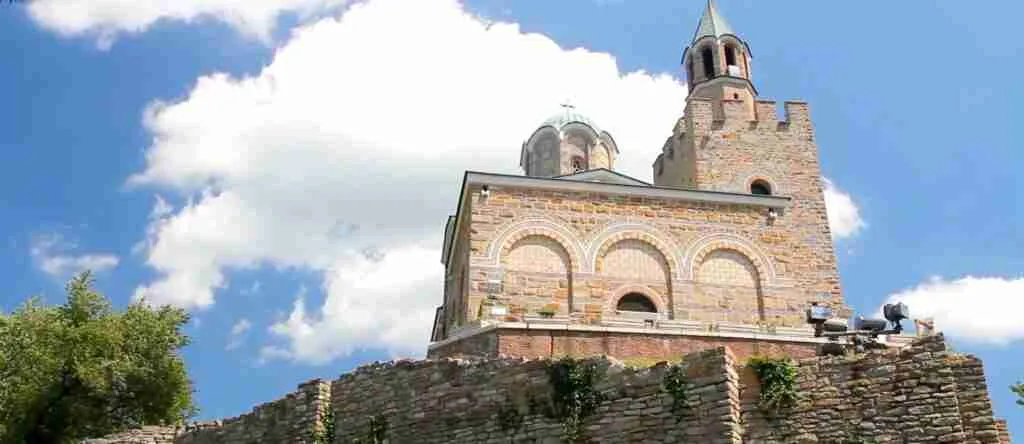
Tsarevets Fortress dominates Veliko Tarnovo’s skyline and serves as the city’s essential attraction, preserving the royal and religious center of medieval Bulgaria’s Second Empire. The fortified hilltop complex combines dramatic archaeological ruins, reconstructed church and palace structures, defensive walls with panoramic viewpoints, and the spectacular Sound and Light Show that narrates Bulgarian history through multimedia projection. Comprehensive fortress exploration requires 2-3 hours minimum, with optimal visiting strategy involving morning arrival for uncrowded access, midday departure to avoid peak tour-group congestion, and possible evening return for the Sound and Light Show.
Admission, Hours, and Basic Logistics 2026
Standard Tsarevets Fortress admission costs 10-15 BGN ($6-9) for adults, with reduced rates of 5 BGN ($3) for students, children, and seniors holding valid identification. Check the official Veliko Tarnovo tourism website for current rates as pricing may vary. The fortress opens daily 8:00-19:00 April-October, with reduced winter hours 9:00-17:00 November-March. Last admission occurs 45 minutes before closing time. No advance booking required for general admission—purchase tickets at the entrance gate booth immediately before ascending the access path.
The Tsarevets Sound and Light Show operates as separate ticketed event requiring distinct admission from general fortress entry. Shows run Friday and Saturday evenings during peak season (May-September), with occasional special performances on Bulgarian national holidays. Sound and Light Show tickets cost 20-40 BGN ($12-24) depending on seating location—hillside viewing areas on opposite bank cost less than fortress-interior VIP seating. Purchase Sound and Light Show tickets in advance during summer months as popular performances sell out; the tourist information office on Mother Bulgaria Square handles advance sales, or book through major hotels with concierge assistance.
The fortress demands moderate physical fitness as the access path climbs steeply from entrance gate to summit plateau, gaining 80 vertical meters across uneven stone paving. The main perimeter wall-walk involves additional climbing on medieval staircases with minimal guardrails—visitors with mobility limitations should skip the wall-walks while still accessing the central plateau’s Baldwin Tower, Patriarchal Cathedral, and palace excavations via gentler paths. Comfortable walking shoes with ankle support prove essential as the entire fortress surfaces are uneven stone, gravel, or exposed bedrock. No bathroom facilities exist within fortress walls—use toilets at entrance area before beginning exploration.
Recommended Visiting Route and Key Sites
Enter the fortress through the main gate (Asenova Gate) on the western approach, where ticket booths and information panels provide historical context and fortress maps. The initial path ascends steeply through the outer defensive walls, passing remains of medieval defensive towers and storage buildings. The first major structure reached is Baldwin Tower, named for Latin Emperor Baldwin I who was supposedly imprisoned here after his capture in 1205. The tower stands partially reconstructed, with interior wooden staircases enabling climb to upper levels offering first panoramic views across the city and Yantra River. Budget 15 minutes exploring Baldwin Tower interior and viewpoint platform.
From Baldwin Tower, continue east along the main path ascending to the fortress’s highest point where the Patriarchal Cathedral stands dramatically silhouetted against the sky. This building underwent full reconstruction in 1980s Soviet period, with controversial modern architectural interpretation of the original 13th-century cathedral. The interior features colorful modern frescoes depicting biblical scenes and Bulgarian historical events, created by contemporary Bulgarian artists rather than preserving medieval originals (which had been destroyed centuries earlier). Some visitors find the modern reconstruction and artwork disappointing compared to authentic medieval churches; others appreciate the bold artistic statement and the functioning bells that ring hourly. Budget 20 minutes exploring cathedral interior and surrounding terrace viewpoints.
The royal palace ruins extend south from the cathedral across the summit plateau, preserved as low stone walls outlining the original floor plan without reconstruction. Archaeological excavations uncovered the throne room, residential quarters, council chambers, and defensive towers that surrounded the medieval palace complex. Information panels throughout the ruins identify room functions and explain medieval palace life. The palace area delivers the fortress’s best photography opportunities, with the Patriarchal Cathedral framed against sky on one side and sweeping Yantra River views on the other. Budget 30 minutes exploring palace ruins and photographing from various angles.
The fortress perimeter walls offer the most dramatic but physically challenging exploration. Medieval staircases climb to walkway atop the defensive walls, providing continuous panorama around the entire hilltop perimeter but involving steep climbs, narrow passages, and minimal safety barriers. The southern wall section delivers the best views down to the Yantra River’s dramatic meanders far below, while the northern section overlooks the modern city spreading across opposite hillsides. Complete perimeter walk requires 45-60 minutes of moderate-to-strenuous exertion; visitors can sample individual wall sections without committing to full circuit.
Optimal visiting sequence: Enter 8:00-9:00 before tour groups arrive (fortress opens 8:00 in season). Explore Baldwin Tower first (15 minutes), ascend directly to Patriarchal Cathedral (20 minutes), photograph palace ruins during optimal morning light (30 minutes), then tackle perimeter walls (45-60 minutes) before midday tour-group waves arrive. Depart by 11:30-12:00, returning to Old Town for lunch and afternoon museum visits while fortress crowds peak. This strategy delivers uncrowded photography opportunities and pleasant exploration before heat and crowds diminish experience.
The Sound and Light Show Experience
Tsarevets Sound and Light Show represents Veliko Tarnovo’s most spectacular attraction, transforming the medieval fortress into an enormous stage for multimedia historical narrative. The 30-minute show combines laser projections onto the fortress walls and cathedral, orchestral soundtrack broadcast through massive speaker arrays, dramatic lighting effects, and coordinated bell-ringing from the Patriarchal Cathedral to tell Bulgaria’s story from ancient Thracian origins through medieval empire to modern independence. The visual impact proves genuinely impressive, particularly when the entire fortress facade illuminates in colored patterns synchronized to music and narration.
Two primary viewing options exist: fortress-interior VIP seating provides closest proximity to projections and premium sound quality at higher ticket cost (35-40 BGN / $20-24), while hillside viewing areas across the Yantra River offer wider perspective of the entire fortress as projection surface at lower cost (20-25 BGN / $12-15). Most visitors prefer the riverside viewpoints for better photographic opportunities and complete fortress-to-river composition, despite slightly diminished audio compared to interior positions.
The show schedule varies by season—summer months (June-August) typically offer Friday and Saturday performances starting at sunset (approximately 21:00-21:30 depending on month). Shoulder season (May, September) may reduce to Saturday-only shows. No performances occur November-March due to winter weather and limited tourist demand. Confirm current schedule at tourist information office or hotel concierge before planning evening around the show. Weather cancellations occur during heavy rain or high winds that endanger projection equipment.
Arriving 45-60 minutes before showtime secures optimal viewing positions at riverside areas, which become crowded 30 minutes before start. Bring light jacket or sweater as riverside positions are exposed to evening chill even in summer. Restaurants and cafés near the viewing areas operate until show conclusion—some visitors combine show attendance with dinner at riverside terrace establishments offering dual dining-and-show experiences. Several hotels along the Yantra have rooms with fortress views enabling private show watching from balconies, though distance reduces impact compared to dedicated viewing areas.
Museums and Cultural Attractions Veliko Tarnovo 2026
Beyond Tsarevets Fortress, Veliko Tarnovo concentrates exceptional museums and cultural sites within compact Old Town geography, enabling comprehensive cultural immersion without extensive transportation. The city’s museums reflect its historical importance as Bulgaria’s medieval capital, with collections emphasizing archaeology from Second Empire period, National Revival artistic production, and preservation of traditional crafts and architecture. This section details individual museum offerings, admission costs, optimal visiting sequences, and combination-ticket strategies that reduce overall cultural attraction expenses.
Archaeological Museum (Museum of Archaeology)
The Archaeological Museum occupies a former Turkish courthouse (konak) in the Old Town, housing comprehensive collection from prehistoric settlements through medieval imperial period. Admission costs 6 BGN ($4) for adults, 3 BGN for students and seniors. Hours: Tuesday-Sunday 9:00-18:00 April-October, 9:00-17:00 November-March; closed Mondays year-round. The museum merits 60-90 minute visit for thorough examination of all galleries.
The ground floor galleries cover prehistoric and Thracian periods, displaying stone tools, pottery, bronze weaponry, and burial goods from settlements predating the Roman conquest. The Roman provincial exhibit includes marble sculptures, mosaic fragments, and daily-life objects from nearby Nicopolis ad Istrum colony. The second floor concentrates on the Second Bulgarian Empire’s zenith when Veliko Tarnovo served as capital, with gold jewelry, royal coins, illuminated manuscripts, and weapons demonstrating the sophistication of 12th-14th century Bulgarian culture. The medieval collection justifies the museum visit alone, providing essential context for understanding Tsarevets Fortress ruins.
A highlight exhibit reconstructs medieval Veliko Tarnovo at its imperial peak, with detailed architectural model showing fortress palaces, churches, defensive systems, and civilian quarters before Ottoman conquest destruction. This model helps visitors visualize complete structures from the ruins encountered at Tsarevets. English-language labels explain major artifacts, though some displays retain Bulgarian-only descriptions.
Strategic visiting tip: Schedule the Archaeological Museum before visiting Tsarevets Fortress. The museum’s historical narrative and artifact context enriches fortress exploration by establishing the political importance, architectural sophistication, and daily life of medieval capital that the fortress exemplifies. Visiting fortress first then museum results in repetitive information with less impact.
Museum of the National Revival and Constituent Assembly
This museum documents Bulgaria’s National Revival period (late 18th-19th century) when Bulgarian cultural identity re-emerged under Ottoman rule, ultimately leading to 1878 independence. The museum occupies the historic building where Bulgaria’s first National Assembly convened in 1879 to adopt the Tarnovo Constitution. Admission costs 6 BGN ($4) adults, 3 BGN students/seniors. Hours: Tuesday-Sunday 9:00-18:00 summer, 9:00-17:00 winter; closed Mondays. Budget 45-60 minutes for comprehensive visit.
The ground floor galleries trace National Revival cultural developments—educational reforms, printing press establishment, religious architecture renewal, folk art traditions. The assembly chamber on upper floor preserves the original hall where the constitution was debated and adopted, with period furnishings and portraits of key political figures. The constitution itself remains displayed in protective case, representing foundational document of modern Bulgarian state.
The museum appeals particularly to visitors interested in nation-building narratives, constitutional history, and 19th-century Eastern European political movements. Those focused purely on medieval imperial period can skip this attraction in favor of more time at Archaeological Museum or Tsarevets.
Art Museum (Boris Denev State Art Gallery)
The Boris Denev State Art Gallery showcases Bulgarian fine art from 19th century through contemporary period, with particular emphasis on regional artists from Veliko Tarnovo and surrounding areas. Admission costs 4 BGN ($2) adults, 2 BGN students/seniors—the city’s most affordable museum entry. Hours: Tuesday-Sunday 10:00-18:00 summer, 10:00-17:00 winter; closed Mondays. Budget 30-45 minutes for full gallery circuit.
Boris Denev, the museum’s namesake, produced landscape paintings celebrating Bulgarian natural scenery and architectural heritage during the early-to-mid 20th century. His works dominate the permanent collection, with additional galleries featuring contemporaries working in similar nationalist-romantic style. The collection lacks major internationally-recognized artists but provides insight into Bulgarian artistic developments during National Revival and early independence periods.
The museum occupies a beautifully restored National Revival house with original interior woodwork and decorative elements, making the building architecture as interesting as the art collection for many visitors. The admission cost ($2) represents excellent value for 30 minutes in air-conditioned historic building examining competent regional art.
Sarafkina House (Ethnographic Complex)
Sarafkina House preserves a wealthy merchant family’s 19th-century residence, furnished with period textiles, woodwork, metalwork, and household goods demonstrating National Revival decorative arts and domestic life. The house functions as living museum of Bulgarian urban culture before industrialization. Admission costs 5 BGN ($3) adults, 3 BGN students/seniors. Hours: 9:00-18:00 daily summer, 9:00-17:00 winter. Budget 20-30 minutes for house tour.
The house interior showcases ornate painted wooden ceilings (typical of wealthy merchant houses), carved built-in furniture, copper cooking vessels, hand-woven textiles, and clothing representing various social classes. English-language information sheets available at entrance explain room functions and household practices. The compact house tour delivers concentrated insight into 19th-century Bulgarian domestic life that larger museums spread across multiple galleries.
Sarafkina House sits directly on Gurko Street in the Old Town’s most picturesque section, making it convenient stop during Gurko Street walk rather than destination requiring dedicated trip. Combine with neighboring coffee break at traditional café to create pleasant 45-minute cultural interlude during afternoon Old Town exploration.
Combined Museum Tickets and Free Admission Days
Veliko Tarnovo museums offer 2-day combined ticket covering Archaeological Museum, National Revival Museum, Art Gallery, and several smaller institutions at 10 BGN ($6)—representing 40% savings versus individual admissions totaling 16+ BGN. The combined ticket proves worthwhile for visitors planning comprehensive museum coverage across multiple days. Purchase at first museum visited; ticket remains valid for consecutive 48 hours from initial use.
Every last Thursday of the month, all municipal museums offer free admission, excluding only the privately-operated Tsarevgrad Tarnov Multimedia Wax Museum. Strategic visitors scheduling Veliko Tarnovo stays to include final-Thursday dates can eliminate museum costs entirely, directing budget savings toward additional restaurant meals, Tsarevets Sound and Light Show, or day-trip transportation. Check monthly calendars when booking accommodation—final-Thursday visits require 1-2 day schedule adjustment that delivers $10-15 per person savings through free museum admission.
Samovodska Charshiya and Traditional Crafts Quarter
Samovodska Charshiya street preserves Veliko Tarnovo’s historic artisan market, where craftspeople traditionally produced and sold metalwork, pottery, textiles, leather goods, and woodcarvings. The cobblestone thoroughfare maintains its 19th-century character with restored workshops, merchant houses converted to galleries and studios, and active crafts demonstration spaces. Unlike museum-piece preservation, Samovodska Charshiya functions as working artisan district where contemporary craftspeople continue traditional techniques while selling to both local residents and tourist visitors. The street deserves 60-90 minutes of unhurried exploration, with longer visits enabling craft demonstrations and gallery browsing.
Street Layout and Craft Specializations
Samovodska Charshiya extends approximately 400 meters along relatively flat terrain in the Old Town, making it accessible without the steep climbing required for Tsarevets Fortress or some Old Town neighborhoods. The street begins at small square featuring traditional fountain and shade trees, then continues through series of restored merchant houses now housing workshops and galleries. Stone paving, overhanging second stories, and traditional wooden awnings create atmospheric pedestrian environment free from vehicle traffic.
Individual workshops specialize in traditional crafts. Silversmith studios produce filigree jewelry, decorative plates, and religious objects using techniques unchanged for centuries. Potters throw traditional redware and glazed ceramics on manual wheels, with kilns visible through open workshop doors. Textile weavers operate traditional looms creating rugs, wall hangings, and clothing from handspun wool. Woodcarvers produce decorative panels, religious icons, and functional household items from local walnut and cherry woods. Leatherworkers craft bags, belts, sandals, and bookbindings using vegetable-tanned leather and traditional stitching methods.
Most workshops welcome visitors to observe work in progress without purchase obligation, though photography etiquette requires asking permission before shooting craftspeople at work. Many artisans speak limited English, but demonstration and gesture communication enables basic interaction about techniques, materials, and time requirements for complex pieces.
Shopping and Price Expectations
Samovodska Charshiya enables purchase of authentic Bulgarian handicrafts at prices substantially below Western boutique equivalents, though significantly higher than mass-produced tourist souvenirs sold elsewhere in city. Quality silver jewelry ranges 40-200 BGN ($23-115) depending on weight and intricacy. Ceramic pieces cost 20-80 BGN ($12-46) for decorative items, 30-150 BGN ($17-85) for functional pottery like large serving plates or storage vessels. Hand-woven textiles range 60-250 BGN ($35-140) for wall hangings and rugs. Leather bags cost 50-180 BGN ($29-103) depending on size and detailing. Carved wooden items range 25-150 BGN ($15-85).
These prices reflect genuine handcraft production using traditional techniques and quality materials—not assembly-line souvenirs. Bargaining is generally inappropriate as posted prices reflect fair compensation for skilled labor and materials. However, purchases of multiple items from single workshop can occasionally secure modest discount (10-15%) when asked politely.
Visitors seeking authentic Bulgarian craft to bring home should budget accordingly—genuine traditional products cost more than mass-market souvenirs but deliver far superior quality and authentic cultural value. The alternative souvenir shops near Tsarevets entrance sell machine-made items imported from China at lower prices but lacking any authentic Bulgarian craft heritage.
Cafés and Restaurants Along Samovodska Charshiya
The artisan street includes several traditional cafés and restaurants occupying ground floors of merchant houses or offering outdoor seating under grape arbors. These establishments serve Bulgarian cuisine in atmospheric settings with craft-shopping convenience—browse workshops, stop for lunch, continue browsing after meal. Restaurant prices on Samovodska Charshiya fall into mid-range category (main courses 18-35 BGN / $10-20) reflecting tourist-area location but delivering quality food and memorable settings that justify modest premium over budget eateries elsewhere.
Several cafés specialize in traditional Bulgarian coffee preparation and local pastries, providing pleasant rest stops during craft-quarter exploration. Coffee costs 3-5 BGN ($2-3), traditional sweets like baklava or tulumbi 4-8 BGN ($2-5). These breaks enable watching street activity—craftspeople moving materials, delivery carts navigating cobblestones, local shoppers examining textiles—while resting from walking.
Day Trips from Veliko Tarnovo 2026
Veliko Tarnovo’s central Bulgarian location and concentration of nearby historical sites enable excellent day-trip opportunities without changing accommodation. The surrounding region includes monastery complexes, cave churches, Roman ruins, traditional villages, and natural attractions all accessible within 30-90 minutes travel. This section details the most worthwhile day trips, provides transportation and admission costs, recommends optimal combinations for full-day excursions, and offers strategic guidance for maximizing day-trip value on limited budgets.
Arbanasi Village and Monastery Complex
Arbanasi occupies a plateau 4 kilometers northeast of Veliko Tarnovo, preserving a traditional Bulgarian village with stone houses, fortified churches, and active monasteries dating from 16th-18th centuries. The compact village warrants 2-3 hour exploration covering multiple church interiors with well-preserved frescoes, traditional architecture observation, and monastery visits. Arbanasi functions as easiest and most popular day trip from Veliko Tarnovo given proximity and exceptional historical/artistic interest.
Transportation costs vary by method. Public bus #10 operates from Veliko Tarnovo center to Arbanasi every 60-90 minutes during daylight hours at 3 BGN ($2) per person each direction. The bus route requires checking current schedule at Veliko Tarnovo bus station as service times change seasonally. Taxi from Veliko Tarnovo center to Arbanasi costs fixed 15-25 BGN ($9-15) one-way depending on negotiation, with return taxi easily arranged by phone or through village restaurants. Many visitors take morning bus to Arbanasi (saves money), explore village, lunch at traditional restaurant, then call taxi for return trip to Veliko Tarnovo (saves energy climbing from valley floor).
Private car rental or organized tours represent alternative transportation. Car rental costs 40-60 BGN ($23-35) per day for economy vehicle, enabling flexible timing and combination with other day-trip destinations beyond Arbanasi. Organized day tours combining Arbanasi with Preobrazhenski Monastery and other area sites cost 60-100 BGN ($35-57) per person including transportation, guide, and entrance fees—delivering value for travelers wanting expert narration and eliminated logistics.
Admission fees within Arbanasi: Nativity Church with its spectacular frescoes costs 10 BGN ($6), Konstantsaliev House museum 4 BGN ($2), Convent of the Dormition 5 BGN ($3). Combined entrance to multiple sites totals 20-30 BGN ($12-18) per person. Some churches maintain irregular hours or require advance arrangement—confirm opening schedule at Veliko Tarnovo tourist information office before traveling to avoid closed-door disappointment.
Strategic Arbanasi visit: Depart Veliko Tarnovo by 9:00 bus, arriving Arbanasi 9:30. Explore churches and monastery complex 9:30-12:30 during optimal morning light for fresco photography and before midday tour-group crowds. Lunch at traditional restaurant 12:30-14:00 enjoying village atmosphere. Afternoon choice: continue exploring village, return to Veliko Tarnovo for siesta/museum visits, or combine with nearby Preobrazhenski Monastery via taxi onward journey. Budget total costs: Bus transport 6 BGN ($4 round-trip per person), entrance fees 20-30 BGN ($12-18), lunch 25-40 BGN ($15-24), possible taxi return 15-25 BGN ($9-15 shared between passengers). Total per person: $40-61 for comprehensive Arbanasi day trip.
Preobrazhenski Monastery (Monastery of the Transfiguration)
Preobrazhenski Monastery sits 7 kilometers north of Veliko Tarnovo in forested hillside setting, preserving medieval monastery complex with important frescoes and active monastic community. The monastery originated in 14th century, underwent destruction during Ottoman period, then revival in 19th century creating the mix of medieval ruins and National Revival reconstructions visible today. The isolated forest location and functioning monastic presence create contemplative atmosphere contrasting with Veliko Tarnovo’s tourist energy.
Transportation requires taxi as no public bus serves the monastery. Fixed taxi fare from Veliko Tarnovo runs 20-30 BGN ($12-18) one-way, with drivers willing to wait 60-90 minutes for monastery exploration then return to city at 40-50 BGN ($23-29) total round-trip cost. Alternatively, combine Preobrazhenski with Arbanasi in single day trip—taxi from Veliko Tarnovo to Arbanasi (15 BGN / $9), bus return from Arbanasi to Veliko Tarnovo (3 BGN / $2), then separate afternoon taxi to Preobrazhenski (25 BGN / $15). This combination delivers both major sites in one day at modest additional cost versus visiting separately.
Monastery admission is free as functioning religious site, though donation box near entrance welcomes contributions supporting monastery upkeep and monastic community. Modest dress required—covered shoulders and knees for both genders, headscarves provided free at entrance for women lacking coverage. Photography permitted in courtyard areas but prohibited inside church during services. The small monastery museum charges 5 BGN ($3) admission, displaying religious artifacts, illuminated manuscripts, and historical items from monastery archives.
Optimal visit duration: 60-90 minutes covers monastery church frescoes, courtyard exploration, museum visit, and peaceful contemplation in forested grounds. The monastery operates bakery selling traditional bread, honey, and preserves at modest prices—budget 10-15 BGN ($6-9) for monastery-produced food products making excellent gifts or picnic additions. A small café near the parking area serves drinks and simple meals at 15-25 BGN ($9-15) per person.
Dryanovo Monastery and Bacho Kiro Cave
This combination day trip covers both historical monastery complex and spectacular cave system, located approximately 25 kilometers south of Veliko Tarnovo. Dryanovo Monastery occupies riverside gorge position, with caves in cliff faces behind the monastery buildings serving as refuge during Ottoman-period resistance movements. Bacho Kiro Cave extends several kilometers underground with stalactite/stalagmite formations and underground rivers accessible via guided tour.
Transportation requires either rental car (40-60 BGN / $23-35 daily) or organized tour (80-120 BGN / $46-69 per person including transport, guide, entrance fees). No practical public bus option exists given distance and infrequent rural service. Private taxi costs 100-150 BGN ($57-85) round-trip including 3-4 hour waiting time. The organized tour option delivers best value for travelers without car, as guide provides historical narrative and eliminates navigation challenges on rural roads.
Admission costs: Dryanovo Monastery free entry with voluntary donation; monastery museum 5 BGN ($3). Bacho Kiro Cave guided tour costs 10 BGN ($6) adults, 5 BGN students/seniors, with mandatory guide accompanying all visitors through illuminated sections of cave system. Cave tours operate hourly 9:00-17:00 summer, 10:00-16:00 winter, with 45-minute duration covering 700 meters of passages.
Full-day itinerary: Depart Veliko Tarnovo 9:00, arriving Dryanovo Monastery 9:45. Explore monastery complex and museum 9:45-11:30. Short drive to Bacho Kiro Cave (5 minutes), join 12:00 cave tour. Lunch at local restaurant near cave entrance 13:00-14:30. Return drive to Veliko Tarnovo arriving 15:30, leaving afternoon for rest or Old Town exploration. Total costs via organized tour: 80-120 BGN ($46-69) per person comprehensive. Via rental car: 40-60 BGN ($23-35) car rental, 20 BGN ($12) entrance fees, 30-50 BGN ($17-29) lunch, 80-100 BGN ($46-57) total per person for two sharing car.
Ivanovo Rock Churches (UNESCO World Heritage)
The Rock-Hewn Churches of Ivanovo represent medieval monastic complex carved into cliff faces overlooking Rusenski Lom River, recognized as UNESCO World Heritage Site for exceptional 14th-century frescoes preserving Tarnovo School artistic style. The isolated riverside location and UNESCO designation make Ivanovo essential for serious cultural travelers, though distance (22 kilometers from Veliko Tarnovo) and limited access challenge independent visitors.
Transportation options mirror Dryanovo: rental car (40-60 BGN / $23-35 daily), organized tour (70-100 BGN / $40-57 per person), or expensive private taxi (100-140 BGN / $57-80 round-trip with waiting time). The access road from highway to churches navigates narrow unpaved sections requiring careful driving—rental car users should inspect vehicles for damage before departing rental agency and document any existing scratches to avoid false damage claims upon return.
Admission to rock churches costs 10 BGN ($6) adults, 5 BGN students/seniors. Visiting is only possible with mandatory guide from site office—guides depart when sufficient visitors accumulate (minimum 3-4 people) rather than fixed schedule. Solo travelers or couples may wait 30-60 minutes for additional visitors enabling guide departure. The guided tour lasts 45 minutes covering three accessible churches with best-preserved frescoes, explaining artistic techniques and historical context. Photography permitted without flash.
The churches occupy cliff face 40 meters above river, accessed via modern metal staircases replacing original rope ladders used by medieval monks. The staircase climbing and cave-like church interiors present challenges for visitors with mobility limitations, claustrophobia, or fear of heights. Good physical fitness required for repeated stair climbing between separate church caves.
Strategic visiting: Combine Ivanovo with Russe city exploration for full-day itinerary. Morning departure from Veliko Tarnovo (8:00), arrive Ivanovo (9:00), complete guided tour by 10:30, continue to Russe (45 minutes drive) for lunch and afternoon sightseeing, return to Veliko Tarnovo by evening. This combination maximizes rental car value by visiting two significant sites in single day trip rather than separate journeys.
Transportation Within Veliko Tarnovo and Arrival Options 2026
Veliko Tarnovo’s compact urban core enables walking as primary transportation for most visitors, with the Old Town’s main attractions concentrating within 1.5-kilometer radius. However, the city’s dramatic hillside terrain complicates the walking experience—what appears as short horizontal distances on maps translates to lung-punishing climbs on steep cobblestone lanes. This section details all transportation options including walking strategies that minimize elevation gains, public bus system for occasions when tired legs demand respite, taxi services and pricing for uphill returns or day-trip logistics, and arrival transportation from Sofia, Varna, and regional airports.
Walking Strategies and Terrain Management
Walking dominates daily movement in Veliko Tarnovo Old Town, where narrow medieval streets prohibit vehicle access and parking impossibility makes cars liabilities rather than assets. The challenge lies not in horizontal distance but vertical change—the walk from Tsarevets Fortress to Samovodska Charshiya covers just 1.5 kilometers horizontally but involves 60 meters elevation change across grades often exceeding 10% on uneven cobblestone surfaces.
Footwear critically impacts walking comfort. Hiking boots or trail runners with ankle support and grippy soles prove ideal for Old Town cobblestones. Fashion sneakers with smooth soles become dangerously slippery on polished cobblestone worn smooth by centuries of foot traffic. Leather-soled dress shoes court injury on steep descents. Budget travelers tempted to skimp on footwear quality will regret it after first day’s blister-inducing misery.
Strategic route planning minimizes unnecessary climbing. Study the topographical layout: Tsarevets Fortress occupies highest elevation in tourist zone, Old Town residential areas occupy mid-slopes, riverside areas sit at valley floor. Plan daily routes that start at highest point (fortress or upper Old Town) then descend gradually throughout day, using taxis for evening uphill returns to accommodation rather than exhausting climbs after full sightseeing days. Visitors ignoring this elevation strategy waste energy on repeated climbing that could be eliminated through basic route planning.
Rest stops strategically positioned at viewpoint cafés serve dual purposes—recovery for tired legs and photographic opportunities of spectacular vistas. Budget 10-15 minutes every 2 hours of walking for café rest stops at 4-6 BGN ($2-4) per coffee or cold drink. These rest stops prevent exhaustion while creating pleasant pace that enhances rather than detracts from the walking experience.
Public Bus System Within Veliko Tarnovo
Local buses operate throughout Veliko Tarnovo on roughly 10 routes connecting Old Town, New Town, residential districts, train station, and peripheral destinations. Bus service proves most useful for reaching Gorna Oryahovitsa train station (route #10), accessing New Town accommodation from Old Town attractions, and transportation when weather or fatigue make walking unappealing. The bus system operates 7:00-21:00 daily with frequency varying from 20-minute intervals on major routes to 60-minute gaps on peripheral lines.
Bus tickets cost 3 BGN ($2) per ride, purchased directly from conductor aboard the bus—no advance ticket purchase required or possible. Tickets are single-ride only without transfers, so changing buses requires purchasing second ticket. The conductor walks through the bus shortly after departure collecting fares and issuing tickets; paying before boarding is not standard Bulgarian practice. Always carry small bills (5, 10, 20 BGN notes) as conductors may lack change for 50 or 100 BGN notes.
Key routes for tourists: Bus #10 connects Veliko Tarnovo center with Gorna Oryahovitsa train station (7 kilometers, 20 minutes journey time, buses every 30-60 minutes) serving travelers arriving or departing by train. Routes #20, #50, and #40 all stop near Tsarevets Fortress entrance, useful for morning fortress visits from New Town accommodation without starting day with uphill climb. Several routes serve the central Mother Bulgaria Square, functioning as the system’s primary transfer point.
Bus stops are marked with small signs displaying route numbers, but route maps and schedules remain posted inconsistently. The Moovit mobile app provides Veliko Tarnovo public transport directions and real-time bus tracking, eliminating confusion about which route serves specific destinations and when next bus arrives. Download Moovit before arriving in Bulgaria as cellular data proves necessary for real-time tracking features.
The bus system’s limited hours (last buses around 21:00) and infrequent evening service mean taxis become necessary for post-dinner returns to accommodation. Budget travelers can maximize bus value by using it for daytime travel (fortress visits, museum circuits, grocery shopping) while reserving taxi budget for evening necessity when buses no longer operate.
Taxi Services and Typical Fares 2026
Veliko Tarnovo taxis are uniformly yellow and operate on metered fares with regulated rates. The standardized pricing eliminates haggling stress common in some European destinations—legitimate licensed taxis all charge approximately same rates. Starting fee runs 1.00-1.50 BGN ($0.60-0.90), with per-kilometer rate of 0.80-1.20 BGN ($0.45-0.70) depending on time of day (nighttime rates slightly higher).
Common routes and typical costs: Bus/train station to city center 8-12 BGN ($5-7) for the 3-kilometer journey. City center to Tsarevets Fortress entrance 6-10 BGN ($4-6) depending on specific starting point and traffic. City center to Arbanasi village 15-25 BGN ($9-15) one-way for the 4-kilometer trip. Within Old Town for short distances (Gurko Street to Samovodska Charshiya) 5-10 BGN ($3-6), though walking this distance takes just 10 minutes.
Taxis can be hailed on streets by waving hand at passing cabs, though availability varies by location and time—Old Town areas near restaurants and hotels maintain better taxi presence than peripheral residential zones. Phone ordering proves more reliable: major taxi companies operate 24-hour dispatch at phone numbers posted at hotels and tourist information offices. English-speaking dispatchers handle most calls, though basic Bulgarian helps. Hotels and restaurants readily call taxis for guests, eliminating language barriers entirely.
Always insist on meter use rather than fixed prices negotiated before departure. Legitimate taxi drivers activate meters automatically without requiring request, but occasional unscrupulous operators targeting foreign tourists may suggest fixed fares that invariably exceed metered costs. If driver refuses meter use, exit vehicle and hail different cab. The regulated taxi market in Veliko Tarnovo means zero reason exists to accept non-metered rides.
Taxi costs remain extremely affordable by Western European standards—even premium scenario of daily taxi use (3-4 rides per day) totals just 30-40 BGN ($18-24) daily, a fraction of Venice water-taxi or Paris cab costs. Mid-range and luxury travelers can use taxis liberally without budget impact, while budget travelers strategically deploying taxis for uphill evening returns (10 BGN / $6 once daily) maintain affordable transportation costs.
Arrival Transportation from Major Bulgarian Cities
Veliko Tarnovo lacks commercial airport, with nearest scheduled flights landing at Sofia Airport (220 kilometers), Varna Airport (220 kilometers), or Bucharest Otopeni Airport Romania (160 kilometers). All visitor arrivals depend on ground transportation from these airports or major Bulgarian cities. This section details bus service from Sofia and Varna, train options via Gorna Oryahovitsa, and private transfer alternatives.
From Sofia to Veliko Tarnovo: Multiple bus companies operate approximately hourly service throughout the day on the 220-kilometer route requiring 3.5-4 hours journey time depending on traffic. Union Ivkoni and Etap Group run competing services at similar prices: 18-25 BGN ($10-15) for standard coaches, 30-35 BGN ($17-20) for premium service with WiFi, refreshments, and guaranteed seating. Book tickets online via central.etapbus.com or at Sofia Central Bus Station. Buses depart Sofia roughly 7:00-20:00 with peak-frequency midday. The bus arrives at Veliko Tarnovo’s Yug Bus Station (South Station), located 1 kilometer south of Old Town center—take city bus or taxi 8-12 BGN ($5-7) for final leg to accommodation.
Train service from Sofia requires changing at Gorna Oryahovitsa station, adding complexity and limited departure times. Several daily trains operate Sofia-Gorna Oryahovitsa route (5-6 hours, 12-20 BGN / $7-12 depending on class), arriving at station 7 kilometers from Veliko Tarnovo. Bus #10 connects station to city center (3 BGN / $2, 20 minutes, departures every 30-60 minutes), or taxis wait at station charging fixed 8-14 BGN ($5-8) for transfer. The train option delivers no time savings versus direct bus while adding transfer complexity—buses remain preferable for Sofia-Veliko Tarnovo travel.
From Varna to Veliko Tarnovo: Similar bus service operates 4-5 departures daily covering 220 kilometers in 3.5-4 hours at fares matching Sofia buses (18-25 BGN standard, 30-35 BGN premium). The Black Sea coastal route delivers pleasant scenery during summer travel. Check schedules at central.etapbus.com as Varna departure times vary seasonally. Arrival at Veliko Tarnovo Yug Bus Station requires same city bus or taxi transfer to final accommodation.
Private transfers from airports: Pre-arranged sedan service from Sofia Airport costs 150-250 BGN ($85-140) for the 3-hour journey, accommodating up to 3 passengers with luggage. Minivan service for 4-7 passengers runs 200-350 BGN ($115-200). These rates represent fixed pricing quoted in advance, with reputable transfer companies including Kiwitaxi and local Bulgarian operators. Private transfers deliver door-to-door convenience eliminating bus station confusion and final taxi leg, justifying premium cost for elderly travelers, families with children, or arrivals during late night hours when bus service is unavailable.
Sample Itineraries for Veliko Tarnovo 2026
This section provides detailed day-by-day itinerary templates for 3-day and 5-day Veliko Tarnovo visits, incorporating optimal attraction sequencing, meal planning, transportation strategies, and daily budget breakdowns. These templates serve as starting frameworks for trip planning, with sufficient flexibility for personal interest adjustments while maintaining realistic pacing that avoids exhausting over-scheduling.
Three-Day First-Time Visitor Itinerary
This condensed itinerary concentrates on Veliko Tarnovo’s essential attractions while allowing Arbanasi day trip, suitable for travelers with limited time who want comprehensive medieval capital experience without rushed superficial coverage.
Day 1: Arrival and Old Town Orientation
Morning: Arrive Veliko Tarnovo via bus from Sofia or Varna, check into accommodation. If arrival is early (before 11:00), store luggage at hotel and begin immediate exploration rather than waiting for check-in. Lunch at traditional mehana on Samovodska Charshiya, trying Bulgarian obedno menu special (12-15 BGN / $7-9).
Afternoon: Walk General Gurko Street appreciating National Revival architecture and photography opportunities. Visit Archaeological Museum (6 BGN / $4, 90 minutes) for essential historical context before tomorrow’s fortress visit. Explore Samovodska Charshiya artisan street observing craft demonstrations and browsing studios (60 minutes, free). Coffee break at traditional café (4 BGN / $2).
Evening: Dinner at mid-range restaurant with fortress views like Shtastliveca (45-70 BGN / $26-40 per person). Evening walk along Yantra River for illuminated fortress photography. Return to accommodation.
Day 1 Costs Per Person (Mid-Range): Accommodation $32-46, lunch $7-9, museum $4, coffee $2, dinner $26-40, local transport $3-6. Total: $74-107.
Day 2: Tsarevets Fortress and Museums
Morning: Early departure to Tsarevets Fortress (8:00 opening), arriving before tour-group crowds. Comprehensive fortress exploration including Baldwin Tower, Patriarchal Cathedral, palace ruins, and perimeter walls (2.5-3 hours, admission 10-15 BGN / $6-9). Return to Old Town for lunch at restaurant near fortress base (25-40 BGN / $15-24).
Afternoon: Visit Museum of National Revival and Constituent Assembly (6 BGN / $4, 60 minutes) and Boris Denev Art Gallery (4 BGN / $2, 45 minutes). Brief rest at hotel. Late afternoon walk to Mother Bulgaria Monument for sunset photography (free, 30 minutes).
Evening: Optional attendance at Tsarevets Sound and Light Show if performing (20-40 BGN / $12-24, runs Friday-Saturday in season). Dinner at mehana after show or at hotel restaurant if skipping show (35-55 BGN / $20-32). Early night to rest for tomorrow’s day trip.
Day 2 Costs Per Person (Mid-Range): Accommodation $32-46, fortress admission $6-9, lunch $15-24, museum admissions $6, coffee/drinks $4-6, Sound and Light Show $12-24 (if attending), dinner $20-32. Total: $95-147.
Day 3: Arbanasi Day Trip and Departure
Morning: Early bus #10 to Arbanasi village (3 BGN / $2, departing by 9:00). Explore Nativity Church with spectacular frescoes (10 BGN / $6), Konstantsaliev House museum (4 BGN / $2), and Convent of the Dormition (5 BGN / $3). Total Arbanasi exploration 2.5-3 hours.
Midday: Traditional lunch at Arbanasi restaurant (30-50 BGN / $17-29 per person). Brief post-lunch rest in village atmosphere.
Afternoon: Taxi return to Veliko Tarnovo (15-25 BGN / $9-15 split between passengers, or 3 BGN bus if energy permits). Final Old Town shopping at Samovodska Charshiya for authentic Bulgarian crafts. Collect luggage from hotel. Evening bus departure to Sofia/Varna or overnight stay for morning departure.
Day 3 Costs Per Person (Mid-Range): Transport to Arbanasi $2-15, admission fees $11, lunch $17-29, shopping $29-57 (variable), return transport $5-8. Total: $64-120 plus shopping.
Three-Day Trip Total Per Person (Mid-Range): $233-374 excluding international transportation and shopping, delivering comprehensive Veliko Tarnovo medieval experience with Arbanasi inclusion and mid-range comfort throughout.
Five-Day Comprehensive Cultural Immersion Itinerary
This extended itinerary adds depth through multiple day trips, all museums, relaxed pacing with rest afternoons, and comprehensive Bulgarian cultural experiences including cooking class and traditional entertainment.
Day 1: Arrival and Gentle Orientation (Same as 3-day itinerary Day 1)
Day 2: Tsarevets and Old Town Deep Dive (Similar to 3-day itinerary Day 2 but add Sarafkina House ethnographic museum and extend Old Town walking to cover all viewpoints and minor churches)
Day 3: Arbanasi and Preobrazhenski Monastery
Morning: Taxi to Arbanasi (15 BGN / $9), comprehensive village exploration including all churches and museums (3 hours, 20-30 BGN / $12-18 admission total). Lunch at traditional Arbanasi restaurant (35-55 BGN / $20-32).
Afternoon: Taxi continuation to Preobrazhenski Monastery (additional 15 BGN / $9 from Arbanasi), monastery exploration (90 minutes, donation-based admission), monastery shop purchases of bread and honey (10-15 BGN / $6-9). Return taxi to Veliko Tarnovo (20 BGN / $12). Evening free for rest or Sound and Light Show attendance.
Day 3 Costs: Transport $30, Arbanasi admissions $12-18, lunch $20-32, monastery purchases $6-9, dinner $20-32. Total: $88-121.
Day 4: Rest Day and Bulgarian Cooking Experience
Morning: Leisurely breakfast, morning free for shopping, independent Old Town wandering, or sleeping late after previous busy days. Mid-morning coffee at favored café with fortress views.
Midday: Bulgarian cooking class at family guesthouse (60-100 BGN / $35-57, 4 hours including lunch of prepared dishes). Learn banitsa preparation, traditional salads, Bulgarian desserts. The class combines cultural education with substantial meal, eliminating separate lunch cost.
Afternoon: Post-class rest at hotel. Late afternoon market visit purchasing fresh produce, local cheese, Bulgarian yogurt for self-catered breakfast or picnic (15-25 BGN / $9-15).
Evening: Light dinner at casual restaurant as cooking class provided substantial midday meal (20-35 BGN / $12-20).
Day 4 Costs: Cooking class $35-57 (includes lunch), market shopping $9-15, dinner $12-20. Total: $56-92.
Day 5: Dryanovo Monastery and Bacho Kiro Cave
Full-day organized tour to Dryanovo Monastery and Bacho Kiro Cave (80-120 BGN / $46-69 per person including transport, guide, entrance fees). Alternatively, rental car option for independent exploration (40-60 BGN / $23-35 car daily, 20 BGN / $12 entrance fees, 30-50 BGN / $17-29 lunch, totaling approximately $52-76 per person for two sharing car costs).
The tour departs 9:00, returning 16:00, leaving evening free for final Old Town dinner at special restaurant celebrating trip conclusion. Splurge dinner at finest available establishment (70-100 BGN / $40-57 per person) or return to favorite mehana discovered during week (35-55 BGN / $20-32).
Day 5 Costs: Tour $46-69 (or car rental alternative $52-76 for two people), dinner $20-57. Total: $66-126.
Five-Day Trip Total Per Person (Mid-Range): Approximately $535-857 excluding international transportation and shopping, delivering comprehensive Veliko Tarnovo cultural immersion with all major attractions, three significant day trips, traditional cooking experience, and varied dining from budget to fine dining.
Seasonal Planning Guide Veliko Tarnovo 2026
Visiting Veliko Tarnovo across different seasons delivers dramatically varied experiences in weather, crowd levels, pricing, and attraction availability. This section analyzes each season’s advantages and challenges, provides month-by-month guidance for 2026 planning, details festival and event timing, and offers strategic advice for maximizing value during each seasonal window. Understanding seasonal patterns enables informed booking decisions that align travel timing with personal priorities regarding weather, crowds, costs, and cultural programming.
Spring Season: April-May 2026
Spring represents optimal visiting window for most travelers, combining comfortable temperatures (15-22°C / 59-72°F), blooming hillside vegetation, manageable tourist crowds, and full attraction operations at shoulder-season pricing. April and May deliver 20-30% savings on accommodation versus summer peak rates while maintaining complete access to museums, restaurants, and cultural sites.
Weather patterns: April temperatures range 12-20°C (54-68°F) with occasional cool spells requiring light jacket or sweater for evening walks. May warms to 18-25°C (64-77°F), approaching summer comfort without oppressive heat. Spring rainfall occurs periodically—pack compact umbrella or light rain jacket. The Yantra River runs high with snowmelt from surrounding mountains, creating dramatic views though water remains too cold for swimming. Hillsides transform with wildflowers and fresh vegetation after winter dormancy.
Crowd levels remain moderate in April, increasing through May as European schools begin holiday breaks. Museum visits and fortress exploration proceed without queue delays. Popular restaurants accommodate walk-in diners except Saturday evenings when advance reservations help. Mid-range hotel availability remains good through April with booking 3-4 weeks ahead sufficient; May requires 5-6 weeks advance booking as demand increases.
Pricing advantages: Accommodation costs 20-30% below June-August peak rates. A mid-range hotel charging 180 BGN ($103) per night in July drops to 140 BGN ($80) in April. Budget hostels maintain relatively stable year-round rates (18-28 BGN / $10-15 per bed) but offer better availability during spring versus summer sellouts. Restaurant prices remain constant year-round, though some establishments offer weekday lunch specials available outside busy summer season.
Seasonal considerations: Some outdoor restaurant terraces remain closed early April, limiting atmospheric dining options until mid-month warming. The Sound and Light Show at Tsarevets begins operations in May (typically final two weekends of month) rather than running throughout April. Hiking trails in surrounding areas can be muddy from spring rains—waterproof footwear recommended. Overall, spring’s moderate crowds, pleasant weather, and value pricing make April-May the best-value-experience combination for Veliko Tarnovo visits.
Summer Season: June-August 2026
Summer brings peak tourism, highest prices, best weather, fullest cultural programming, and most crowded conditions. The season suits travelers prioritizing guaranteed good weather, daily Sound and Light Shows, complete restaurant terrace availability, and vibrant social atmosphere over budget concerns and solitude preferences.
Weather conditions: June temperatures reach 22-28°C (72-82°F), July-August climbs to 26-32°C (79-90°F) with occasional heat waves exceeding 35°C (95°F). Precipitation drops to minimal levels with days of brilliant sunshine dominating. The heat can challenge visitors climbing steep Old Town streets during midday hours—schedule outdoor exploration for morning and late afternoon, reserving 13:00-17:00 for indoor museums and hotel rest. Evening temperatures remain pleasant (18-22°C / 64-72°F) for outdoor dining and fortress illumination appreciation.
Crowd impacts: Tsarevets Fortress experiences peak visitation 10:00-14:00 with tour groups creating bottlenecks on narrow staircases and perimeter walls. Arrive 8:00 opening for uncrowded photography and exploration. Museums see increased visitor numbers but rarely develop queues due to modest group sizes. Restaurants along Samovodska Charshiya and General Gurko Street require reservations for dinner, particularly Friday-Saturday evenings and outdoor terrace seating. Mid-range hotels sell out 6-8 weeks ahead for July-August dates—early booking essential.
Pricing peaks: Accommodation rates increase 30-50% above shoulder-season levels. A mid-range hotel costing 140 BGN ($80) per night in April jumps to 180-200 BGN ($103-115) in July. Budget hostels maintain similar rates year-round but availability becomes scarce without advance booking. Luxury properties show smallest seasonal variation, maintaining relatively stable rates but demanding early reservations for summer availability.
Cultural programming: The Tsarevets Sound and Light Show operates Friday-Saturday evenings throughout June-August, weather permitting. July brings International Folklore Festival featuring traditional dance, music, and costume performances from Bulgarian regions and international groups. The festival typically occurs mid-to-late July over 3-5 day period. Traditional music performances, craft demonstrations, and special exhibitions populate the summer calendar across multiple venues.
Summer advantages justify higher costs for many travelers: guaranteed excellent weather for photography and outdoor exploration, complete restaurant terrace availability for atmospheric dining, daily Sound and Light Show access, extended museum hours, active university-town energy as international students attend summer programs, and comprehensive tour operator offerings including specialized day trips unavailable off-season. Accept higher accommodation costs and crowds as tradeoff for peak-season vibrancy.
Autumn Season: September-October 2026
Autumn rivals spring as optimal visiting window, delivering summer weather benefits without peak-season crowds and prices. September particularly represents sweet spot of warm temperatures, harvest-season cultural events, and shoulder-season value. October brings cooler weather and autumn colors enhancing hillside photography.
Weather patterns: September maintains summer warmth (20-26°C / 68-79°F) with comfortable conditions persisting through mid-month before gradual cooling. October temperatures range 14-20°C (57-68°F), requiring light layers for morning and evening but pleasant midday warmth. Autumn brings stable weather with extended sunny periods and relatively dry conditions. The surrounding hillsides transform with autumn foliage creating golden and amber landscapes framing fortress photographs.
Crowd reduction: September sees diminished tourism versus peak summer, though first half of month maintains moderate visitor levels from extended European vacations. October drops further as school terms commence. Museums return to relaxed visitation, restaurants accommodate walk-in diners, fortress exploration proceeds without tour-group interference. Mid-range hotel booking 3-4 weeks ahead proves sufficient for September, 2-3 weeks for October.
Pricing advantages: Accommodation costs drop 20-30% below summer peaks by late September, with October seeing additional reductions as properties compete for diminished demand. The same mid-range hotel charging 180 BGN ($103) in July falls to 140-160 BGN ($80-92) in September, 130-150 BGN ($75-85) in October. Restaurant prices maintain year-round stability. Some tour operators offer autumn discounts on day-trip packages as group sizes decrease.
Seasonal highlights: September brings grape harvest season with wine tastings at nearby Lyaskovets wineries and harvest festivals in surrounding villages. Traditional mehanas feature seasonal dishes incorporating autumn vegetables, mushrooms, and game meats. The Sound and Light Show continues through September (typically first three weekends) before concluding for winter. October delivers optimal photography conditions as clear autumn air, lower sun angles, and golden hillside colors combine with reduced haze for exceptional landscape imagery.
Autumn considerations: Late October sees reduced museum hours as institutions transition to winter schedules—verify specific attraction hours before visiting. Some outdoor restaurant terraces close by late October as evening temperatures drop below comfortable dining levels. The tourism infrastructure remains fully operational through October but anticipate winter schedule transitions after November 1. Overall, autumn delivers exceptional value-experience combination rivaling or exceeding spring advantages.
Winter Season: November-March 2026
Winter transforms Veliko Tarnovo into quiet, affordable, atmospheric destination suited for travelers prioritizing solitude, dramatic weather photography, and maximum budget economy over comfortable temperatures and complete tourism infrastructure. The season demands flexibility regarding attraction hours and winter-closure awareness but rewards hardy visitors with empty fortress walls, rock-bottom accommodation rates, and authentic local-life observation minus tourist veneer.
Weather challenges: November transitions to winter with temperatures 8-14°C (46-57°F) and increasing rainfall. December-February brings subfreezing temperatures typically -2 to 8°C (28-46°F) with occasional colder spells dropping to -10°C (-14°F). Snow falls periodically, transforming fortress and Old Town into fairy-tale winter landscapes but creating slippery cobblestone conditions requiring waterproof boots with aggressive tread. January represents coldest, darkest month. March begins spring transition with gradually warming temperatures and melting snow.
Reduced services: Several luxury boutique hotels close November-March, reducing accommodation inventory. The Sound and Light Show does not operate during winter months. Some restaurants reduce hours or close entirely January-February during slowest tourist period. Museum hours contract to 9:00-17:00 versus extended summer schedules. Day-trip tour operators suspend service or operate on-request only rather than scheduled departures. However, major attractions—Tsarevets Fortress, Archaeological Museum, main mehanas—maintain operations throughout winter for steady trickle of visitors.
Dramatic price reductions: Accommodation costs plummet 40-60% below summer peaks. Mid-range hotels charging 180 BGN ($103) in July fall to 90-120 BGN ($52-69) in January—exceptional value for travelers tolerating cold weather. Budget hostels maintain modest year-round rates but offer improved availability and occasional multi-night discounts for extended stays. Restaurant prices remain stable, though some establishments offer weekday specials attracting local diners during slow winter season.
Winter advantages: Empty fortress enables solitary exploration and unobstructed photography impossible during crowded summer months. Snow-covered fortress against dramatic winter skies creates powerful imagery for photography-focused travelers. Museums receive so few visitors that staff often provide impromptu personal tours and extended conversations about exhibits. Traditional mehanas shift from tourist to local clientele, creating authentic Bulgarian social atmosphere and opportunities for cultural immersion. The combination of dramatic winter scenery, empty attractions, and rock-bottom prices appeals to adventurous budget travelers and photography enthusiasts willing to endure cold temperatures.
Winter strategy: Verify specific museum hours and restaurant operating schedules before visiting as information posted online may reflect summer schedules. Pack comprehensive cold-weather gear including waterproof winter boots, warm layers, gloves, and hat—Bulgarian winter cold is genuine. Book accommodation with heating verification, as some budget properties provide inadequate warmth for subfreezing temperatures. Consider winter visit primarily for dramatic photography, maximum budget economy, or authentic local-life experience rather than comprehensive tourist infrastructure expecting summer-season convenience.
Money-Saving Strategies Veliko Tarnovo 2026
Veliko Tarnovo already ranks among Bulgaria’s most affordable destinations, yet strategic planning enables additional savings without compromising essential experiences. This section details proven money-saving techniques across accommodation, dining, transportation, and attractions that collectively reduce trip costs 25-40% versus default tourist behaviors while maintaining quality medieval capital experience.
Accommodation Savings Strategies
Book directly with hotels rather than third-party platforms when possible. Many Veliko Tarnovo properties offer 10-15% discounts for direct bookings made via phone or email, particularly for multi-night stays (3+ nights). The owner-operated nature of most properties enables negotiation flexibility unavailable with international chains. Send polite inquiry emails requesting “best available rate for direct booking” along with travel dates—properties often match or beat Booking.com prices while eliminating platform commission they must pay.
Target shoulder seasons (April-May, September-October) delivering 20-30% accommodation savings versus summer peaks while maintaining pleasant weather and full attraction access. The mid-range hotel costing $103 per night in July drops to $80 in April—$23 nightly savings multiplied by 5 nights equals $115 saved on single line item. Multiply this across all cost categories and shoulder-season visits deliver hundreds of dollars savings for week-long stays.
Consider New Town accommodation over Old Town for 20-35% lower nightly rates at equivalent quality levels. Accept 10-20 minute daily walks (or occasional 6-10 BGN / $4-6 taxis) in exchange for substantial accommodation savings. For couples sharing room, New Town hotel at $70 per night versus Old Town equivalent at $95 saves $25 nightly, $125 over 5-night stay—sufficient for day-trip tour or multiple restaurant dinners.
Private room options in family guesthouses cost less than hotels while providing authentic cultural exchange opportunities. These unlicensed accommodations rarely appear on booking platforms—inquire at tourist information office or look for “Стаи под наем” (rooms for rent) window signs. Expect 35-50 BGN ($20-28) per private room versus 70-120 BGN ($40-69) at comparable-quality hotels, though bathroom sharing and absent breakfast buffets represent tradeoffs for the savings.
Dining Cost Reductions
Maximize weekday obedno menus for substantial lunch savings. These fixed-price meals at 10-15 BGN ($6-9) include soup, main course, side, and bread—easily 30-40% below à la carte ordering of equivalent dishes. Make lunch the main meal of day, then lighter evening meal or appetizer-focused dinner to optimize daily food budget. This strategy requires discipline as atmospheric evening settings tempt heavy dinner spending, but swapping meal emphasis from dinner to lunch maintains same caloric intake at reduced cost.
Self-cater breakfast using supermarket ingredients rather than café breakfasts or hotel upgrades. Lidl and Billa sell bread (1-2 BGN / $0.60-1.20), cheese (10 BGN / $6 per kilogram serves multiple breakfasts), Bulgarian yogurt (3-4 BGN / $2 for 500ml), fresh fruit (4-8 BGN / $2-5), and instant coffee (10 BGN / $6 for jar lasting entire week). Total investment of 30-40 BGN ($18-24) covers breakfast for two people for week, versus 8-12 BGN ($5-7) per person per day at cafés—saving $35-50 weekly for couple.
Share dishes between two diners rather than ordering individual full meals. Bulgarian portions significantly exceed Western European restaurant servings, with single main course often sufficient for two people when supplemented with shared appetizer and side dishes. This approach enables menu diversity (trying multiple dishes) while reducing total meal cost by 30-40%. Waitstaff readily accommodate shared-dish requests—simply ask for extra plate.
Seek restaurants where locals eat rather than tourist-targeted establishments. Walk two blocks from main tourist thoroughfares to find traditional mehanas serving identical Bulgarian dishes at 20-30% lower prices than restaurants on Samovodska Charshiya or overlooking fortress. The food quality often exceeds tourist restaurants as these establishments depend on repeat local business demanding consistency and value. Bulgarian-language-primary menus and absence of English-menu photos signal authentic local pricing.
Transportation Savings
Walk whenever physically possible rather than defaulting to taxis for convenience. The compact Old Town geography enables walking between all major attractions in 10-20 minutes—distances genuinely walkable despite steep terrain. Reserve taxi budget for specific scenarios: uphill returns after full sightseeing days, evening returns after dinner when fatigued, transport with heavy shopping or luggage. Eliminating unnecessary taxi rides saves 20-30 BGN ($12-18) daily that accumulates to $60-90 over 5-day stay.
Use public buses for longer distances within Veliko Tarnovo at 3 BGN ($2) per ride versus 8-15 BGN ($5-9) taxi fares. The bus from train station to city center saves 5-11 BGN ($3-7) compared to taxi, bus to Arbanasi saves 12-22 BGN ($7-13) compared to taxi. For travelers making multiple such journeys, bus commitment saves $15-30 weekly per person. The tradeoff involves longer journey times and less door-to-door convenience, but the budget impact is substantial.
Combine day trips strategically rather than visiting destinations separately. A rental car costs 40-60 BGN ($23-35) daily whether visiting one site or three—Arbanasi plus Preobrazhenski Monastery plus Ivanovo churches in single day maximizes car-rental value versus three separate day trips totaling 120-180 BGN ($69-103). Similarly, organized tours combining multiple sites deliver better per-site value than individual-destination tours.
Attraction and Activity Savings
Purchase combined museum ticket (10 BGN / $6) covering Archaeological Museum, National Revival Museum, Art Gallery, and minor museums—a 40% savings versus individual admissions totaling 16+ BGN. The ticket remains valid 48 consecutive hours from first use, enabling spread across two days without rushed museum marathons.
Visit museums on final Thursday of each month when municipal museums offer free admission—total savings of $10-15 per person for comprehensive museum coverage. This requires scheduling Veliko Tarnovo stay to include final-Thursday date, often achieved through 1-2 day itinerary adjustment during trip planning phase. The savings fund restaurant upgrade or day-trip tour.
Exploit free attractions rather than assuming all worthwhile sites require admission. Samovodska Charshiya artisan street, Forty Holy Martyrs Church, General Gurko Street architecture walk, Mother Bulgaria Monument viewpoint, riverside walking paths, and Old Town cobblestone exploration deliver substantial cultural experience at zero cost. Combine free attractions with 1-2 paid sites daily rather than purchasing admission to every possible museum regardless of genuine interest.
Skip the Sound and Light Show if budget is extremely tight—watching illuminated fortress from free riverside viewpoints delivers 70% of visual experience at zero cost versus $12-24 ticket price. The multimedia narrative and interior-perspective projections justify admission for most visitors, but ultra-budget travelers can redirect that $50-100 (for couple attending multiple performances) toward additional day trip or restaurant meals.
Overall Budget Strategy
The combined implementation of these strategies reduces Veliko Tarnovo trip costs 25-40% versus default tourist spending patterns. A couple applying all recommendations—shoulder-season timing ($200 accommodation savings), direct booking discounts ($60 savings), self-catered breakfasts ($50 savings), obedno lunch emphasis ($80 savings), strategic walking ($75 transport savings), combined museum ticket ($12 savings), shared dishes ($60 dining savings)—saves approximately $540 over 5-day mid-range trip without eliminating any essential experiences or reducing to budget-backpacker lifestyle. These savings fund business-class return flights, additional week elsewhere in Bulgaria, or upgrade from mid-range to luxury accommodation while maintaining original budget total.
Practical Information and Travel Tips 2026
Beyond the major planning categories of accommodation, dining, and attractions, successful Veliko Tarnovo visits depend on understanding practical details ranging from currency and payment methods to communication, safety considerations, and local customs. This section addresses essential practical topics enabling smooth daily operations during your medieval capital exploration.
Currency, Money, and Payment Methods
Bulgaria uses the Bulgarian Lev (BGN) as official currency, with coins in 1, 2, 5, 10, 20, 50 stotinki (cents) plus 1 and 2 lev denominations, and banknotes in 2, 5, 10, 20, 50, 100 lev. Exchange rates fluctuate but typically hover around 1.80-2.00 BGN per US Dollar and 1.95 BGN per Euro (pegged rate). Bulgaria has not adopted the Euro despite EU membership—expect lev-only transactions in Veliko Tarnovo.
ATMs are widely available throughout Veliko Tarnovo center, particularly around Mother Bulgaria Square and along main commercial streets. Withdrawal limits typically range 400-800 BGN ($220-440) per transaction depending on machine and card issuer. International cards (Visa, Mastercard, Maestro) work reliably at Bulgarian ATMs. Check your home bank’s foreign transaction fees—many charge 1-3% conversion fees plus fixed withdrawal charges ($2-5 per transaction). Some international-focused banks like Charles Schwab or online banks reimburse ATM fees, making them preferred for extended travel.
Credit cards see moderate acceptance in Veliko Tarnovo. Mid-range to luxury hotels, larger restaurants, and museum gift shops accept cards, but many traditional mehanas, craft workshops, small guesthouses, and market vendors operate cash-only. Budget minimum 40-60% of daily spending in cash, with remaining portion chargeable to cards. Contactless payment has limited penetration—expect chip-and-PIN requirement for most card transactions.
Currency exchange offices cluster near tourist areas but deliver poor rates compared to ATM withdrawals. Avoid airport exchange booths offering particularly unfavorable rates. The optimal money strategy: Withdraw lev from ATMs as needed rather than exchanging large amounts upfront, minimizing excess currency at trip end while maintaining sufficient cash for daily small purchases. Never exchange money with individuals offering “better rates” on streets—these are scams guaranteed to shortchange you through sleight-of-hand counting or counterfeit notes.
Language and Communication
Bulgarian is the official language, written in Cyrillic alphabet rather than Latin script. This creates navigation challenges as street signs, restaurant menus, and shop windows use Cyrillic exclusively. Learning to sound out Cyrillic letters enables basic sign reading, though comprehension requires Bulgarian knowledge. Tourist areas feature some English-language signage, but the penetration remains modest compared to Western European destinations.
English proficiency varies by generation and sector. Younger Bulgarians (under 35) especially those in tourism sector possess conversational English enabling hotel check-ins, restaurant orders, and basic directions. Older Bulgarians rarely speak English, having learned Russian during communist era rather than Western languages. Museum staff typically include English speakers for tourist assistance. Rural areas and local restaurants serving primarily Bulgarian clientele may lack English entirely.
Essential Bulgarian phrases enhance experience and demonstrate cultural respect: Zdraveite (formal hello), Dobar den (good day), Blagodarya (thank you), Molya (please/you’re welcome), Izvinete (excuse me), Kolko struva (how much does it cost), Smetkata molya (the check please). Bulgarians appreciate attempts at their language even if pronunciation is imperfect, and basic courtesy phrases open doors literally and figuratively.
The unique Bulgarian head-gesture system confuses many visitors: Bulgarians shake head side-to-side for “yes” and nod up-and-down for “no”—opposite of Western conventions. This takes conscious adjustment to avoid misunderstanding simple yes/no exchanges. Some younger Bulgarians in tourist sector adopt Western head gestures to avoid confusion, but traditional pattern remains widespread among locals.
Mobile phone coverage is excellent throughout Veliko Tarnovo and surrounding areas on all major Bulgarian networks. European travelers benefit from EU roaming regulations eliminating charges for mobile use anywhere in EU (including Bulgaria). Non-European visitors should either activate international roaming plans through home carriers (often expensive) or purchase local Bulgarian SIM cards from A1, Vivacom, or Telenor carriers. Tourist-friendly prepaid data SIM cards cost 15-25 BGN ($9-15) for 5-10GB data valid 30 days—sufficient for navigation, translation apps, and light internet use during week-long visit.
Safety and Security Considerations
Veliko Tarnovo ranks as very safe destination by European standards, with violent crime virtually nonexistent against tourists and petty theft relatively uncommon. The city’s modest size, strong community bonds, and limited tourist anonymity create protective environment where unusual behavior attracts attention. However, standard urban precautions apply as they would in any destination.
Petty theft concerns concentrate in obvious locations: crowded tourist areas (Tsarevets entrance during peak hours), bus stations during arrival/departure chaos, restaurants where bags hang on chair backs, and Old Town evening walking routes where darkness and narrow lanes create opportunity. Secure valuables in hotel safes or locked luggage rather than carrying passports, excess cash, or expensive jewelry during daily sightseeing. Use bags that close securely and wear them crossbody style rather than dangling open on one shoulder.
The Old Town’s steep cobblestone streets present greater injury risk than crime risk. Smooth-worn cobblestones become genuinely slippery when wet, and uneven surfaces catch unwary feet. Wear appropriate footwear with grippy soles and ankle support. Watch footing rather than focusing exclusively on fortress views while walking steep lanes. Handrails exist inconsistently—don’t depend on their presence for balance on steep sections.
Street lighting in Old Town varies from adequate on main thoroughfares to minimal on secondary lanes. Carry small flashlight or use phone light when walking narrow side streets after dark. Solo travelers, particularly women, should stick to main illuminated streets for evening walking rather than exploring unlit alleyways. That said, Veliko Tarnovo experiences minimal harassment or threatening behavior toward solo travelers of any gender—the concern is more about navigating safely in darkness than avoiding criminal threats.
Scams targeting tourists are less prevalent than in major European capitals but do exist. Restaurant overcharging represents the most common issue—always review bills carefully before payment, as “accidental” addition of unrequested items or inflated quantities occasionally occurs at tourist-focused establishments. The practice of adding service charge varies—some restaurants include it automatically, others leave it optional. Check bill before adding voluntary tip to avoid double-tipping. Taxi meter manipulation is rare given regulated fixed rates, but insisting on meter use rather than negotiated fixed price remains standard protective practice.
Emergency numbers: 112 serves as unified emergency number reaching police, ambulance, and fire services with English-speaking operators. For non-emergency police matters, dial 166. For medical emergencies requiring hospital visit, Veliko Tarnovo’s main hospital (Multiprofile Hospital for Active Treatment) operates 24-hour emergency department with trauma and urgent care capabilities. Pharmacies (аптека / apteka) are widely distributed for minor medical needs, with staff often speaking basic English and able to recommend over-counter treatments for common ailments.
Internet and WiFi Access
WiFi availability is excellent throughout Veliko Tarnovo in accommodation, restaurants, cafés, and many public spaces. Hotels from budget to luxury include free WiFi as standard amenity—connection quality varies by property age and infrastructure investment. Most restaurants and cafés offer complimentary WiFi to customers, with password typically posted at counter or provided by staff upon request. The Archaeological Museum and some other cultural institutions provide visitor WiFi.
Public WiFi hotspots operate in central Mother Bulgaria Square and some other gathering spaces, though security-conscious travelers should avoid sensitive transactions (banking, email with personal information) on public networks. Use mobile data or VPN-protected connections for anything requiring security.
Mobile data through local SIM provides reliable alternative to WiFi hunting. Bulgarian mobile networks offer impressive 4G coverage throughout urban areas and major roadways, with 5G deployment expanding in cities. Prepaid data SIM cards deliver excellent value for travelers spending week or longer in Bulgaria, enabling Google Maps navigation, translation apps, and general internet use without WiFi dependence.
Local Customs and Cultural Etiquette
Bulgarians value directness combined with formal politeness—greet with formal “Zdraveite” rather than informal “Zdrasti” when meeting strangers or service staff. Use surnames with appropriate titles (Gospodin for men, Gospozha for married women, Gospodicha for unmarried women) in business or formal contexts. Casual “hi/hello” and first-name basis require established friendly relationship rather than default starting position.
Tipping practices follow moderate European standards. Restaurant service deserves 10% gratuity for good service, rounding up bill to convenient number. For exceptional service or expensive meals, 15% shows appreciation. Budget casual eateries expect smaller tips—rounding 37 BGN bill to 40 BGN suffices. Taxi drivers receive small tips, typically rounding up fare or adding 1-2 BGN. Hotel staff (porters, housekeeping) appreciate tips though the practice is less established than Western Europe—2-5 BGN per service represents generous gesture.
Smoking remains socially acceptable in Bulgaria with higher rates than Western Europe. Many outdoor restaurant terraces permit smoking, and some bars maintain smoking sections despite EU regulations theoretically banning indoor tobacco use. Non-smokers should verify whether restaurant seating is non-smoking before settling in.
Dress codes are casual-smart for most situations. Old Town walking, museum visits, and daytime sightseeing require nothing more formal than clean casual clothing. Evening restaurant dining at mid-range establishments welcomes neat casual attire rather than demanding formal dress. Church visits require modest clothing—covered shoulders and knees for both genders, though enforcement varies by individual church. Very conservative Orthodox churches may provide shawls or wraps for women with uncovered shoulders.
Frequently Asked Questions About Veliko Tarnovo Travel 2026
Is Veliko Tarnovo Worth Visiting in 2026?
Veliko Tarnovo absolutely merits inclusion in any comprehensive Bulgaria itinerary, ranking alongside Sofia and Plovdiv as the country’s three essential cultural destinations. The medieval fortress complex, National Revival architecture, and dramatic riverside setting create visual and historical impact unmatched elsewhere in Bulgaria. The city’s affordability compared to Western European medieval towns (Bruges, Rothenburg, Tallinn) delivers similar historical atmosphere at fraction of cost. For travelers interested in medieval history, Orthodox church art, traditional Bulgarian culture, or dramatic landscape photography, Veliko Tarnovo represents essential rather than optional stop. Budget 3-5 days minimum to cover fortress, museums, Old Town exploration, and day trips comprehensively without rushed pacing.
How Many Days Should I Spend in Veliko Tarnovo?
Three days minimum covers essential attractions: Tsarevets Fortress with Sound and Light Show, Archaeological and National Revival museums, Samovodska Charshiya artisan street, and Arbanasi day trip. Five days enables comprehensive cultural immersion adding Preobrazhenski Monastery, Dryanovo Monastery and cave, relaxed Old Town exploration, traditional cooking class, and sufficient rest time between active sightseeing days. Two days suffices only as quick stop between other Bulgarian destinations, allowing fortress, one museum, and abbreviated Old Town walk but missing substantial content. Extended stays (week or longer) suit travelers using Veliko Tarnovo as base for regional exploration including Ruse, Ivanovo rock churches, Lyaskovets wineries, and hiking surrounding nature areas.
What’s the Best Way to Get to Veliko Tarnovo from Sofia?
Direct bus service represents the optimal transportation choice from Sofia to Veliko Tarnovo, with Union Ivkoni and Etap Group operating approximately hourly departures throughout the day. The 3.5-hour journey costs 18-25 BGN ($10-15) standard service or 30-35 BGN ($17-20) premium, arriving directly at Veliko Tarnovo Yug Bus Station requiring just short city bus or taxi to final accommodation. Book tickets at central.etapbus.com or Sofia Central Bus Station. Train service requires changing at Gorna Oryahovitsa and adds complexity without time savings, making buses strongly preferred. Private transfers (150-250 BGN / $85-140) deliver door-to-door convenience for travelers with early/late timing, heavy luggage, or group travel splitting costs.
Can I Visit Veliko Tarnovo as a Day Trip from Bucharest?
While geographically possible (160 kilometers / 2.5 hours drive), day-tripping from Bucharest to Veliko Tarnovo is not recommended as it allows insufficient time to appreciate the city’s attractions. The round-trip driving (5 hours total) plus fortress exploration, museum visits, and Old Town walking requires minimum 10-12 hours making extremely long day trip. Additionally, the international border crossing (Bulgaria is EU member but outside Schengen, Romania is EU member also outside Schengen) adds 30-60 minutes delays each direction for passport control. Instead, overnight in Veliko Tarnovo to experience Sound and Light Show, multiple museums, and relaxed medieval atmosphere rather than rushed day-trip sampling. If time is absolutely limited, Bucharest to Veliko Tarnovo overnight trip (arrive afternoon Day 1, explore Day 2, depart afternoon Day 3) represents minimum viable approach.
Is Veliko Tarnovo Safe for Solo Travelers?
Veliko Tarnovo is very safe for solo travelers of any gender, with minimal harassment, low crime rates, and welcoming local population. Solo women report comfortable experiences walking Old Town streets, dining alone at restaurants, and staying in mixed-dormitory hostels without safety concerns exceeding normal urban precautions. The city’s modest size, limited late-night party scene, and family-tourism focus create environment lacking the aggressive attention some European destinations direct at solo travelers. Standard safety practices apply: avoid unlit side streets late at night, secure valuables in hotel safes, remain aware of surroundings in crowded tourist areas, and trust instincts if situations feel uncomfortable. Solo travelers easily connect with other visitors at hostel common spaces, free walking tours, and popular restaurants, reducing isolation for those seeking social interaction.
Do I Need a Rental Car for Veliko Tarnovo?
A rental car is unnecessary for Veliko Tarnovo city exploration as the Old Town’s pedestrian character and steep narrow streets make walking superior to driving. However, rental cars enable valuable flexibility for day trips to Arbanasi, Preobrazhenski Monastery, Dryanovo, Ivanovo rock churches, and other regional sites at lower cost and greater schedule control than organized tours. The decision depends on day-trip priorities: travelers planning 2+ day trips benefit from rental car ($23-35 daily) enabling combined destinations in single day versus multiple separate tour costs ($40-69 per tour). Those limiting day trips to just Arbanasi manage fine with public bus and taxis. Factor in parking availability at your specific Veliko Tarnovo accommodation—New Town hotels typically offer parking, Old Town properties rarely do.
What Should I Pack for Veliko Tarnovo Visit?
Essential items include: comfortable walking shoes with ankle support and grippy soles for cobblestone streets, daypack for carrying water/camera/purchases during walking tours, light rain jacket or compact umbrella for spring/autumn visits, modest clothing for church visits (covered shoulders and knees), layers for adapting to temperature changes during day, portable power bank for phone charging during long sightseeing days, small flashlight or phone light for navigating dark Old Town lanes at night, sunscreen and sunglasses for summer visits, and reusable water bottle refillable at accommodation. Consider bringing Turkish-style toilet paper as some older establishments and public facilities provide tissue paper rather than standard rolls. Skip formal attire unless planning luxury fine-dining experiences—Veliko Tarnovo maintains casual-smart standard even at upscale establishments.
Are There Any Day Trips Worth Taking from Veliko Tarnovo?
Four day trips merit serious consideration from Veliko Tarnovo: Arbanasi village (4 kilometers) with well-preserved National Revival houses and spectacular church frescoes accessible via public bus or taxi at minimal cost; Preobrazhenski Monastery (7 kilometers) offering peaceful forest setting and medieval monastery complex; Dryanovo Monastery and Bacho Kiro Cave (25 kilometers) combining historical monastery with impressive underground cave system; and Ivanovo Rock Churches UNESCO World Heritage Site (22 kilometers) preserving exceptional 14th-century cliff-face monasteries with Tarnovo School frescoes. Each represents different day-trip type—Arbanasi for architecture and art, Preobrazhenski for contemplative monastery experience, Dryanovo for nature and history combination, Ivanovo for UNESCO-level cultural significance. All four destinations together require 4-5 days, or select 1-2 aligned with personal interests for 3-day visit.
What’s the Local Food I Absolutely Must Try in Veliko Tarnovo?
Essential Bulgarian dishes to experience in Veliko Tarnovo include: shopska salad (chopped tomatoes, cucumbers, onions, peppers topped with grated white cheese), banitsa (flaky pastry with cheese or meat filling, often eaten for breakfast), kavarma (slow-cooked meat and vegetable stew in clay pot), kebapche (grilled spiced meat cylinders), moussaka (layered potato, meat, and egg dish distinct from Greek version), tarator (cold yogurt-cucumber soup perfect for summer), and Bulgarian white cheese (sirene) appearing in numerous dishes. Pair meals with Bulgarian wine from Thracian Valley or Danube Plain regions, or try traditional rakia (fruit brandy) and shopska salad at mehana to begin authentic meal. Don’t skip Bulgarian yogurt—the country claims yogurt’s origins and the local product’s thickness and flavor exceed Western supermarket equivalents.
When Is the Tsarevets Sound and Light Show and Is It Worth Attending?
The Tsarevets Sound and Light Show operates Friday and Saturday evenings during peak season (May-September), typically beginning at sunset approximately 21:00-21:30 depending on month. The 30-minute multimedia presentation combines laser projections, orchestral music, and cathedral bells narrating Bulgarian history. Tickets cost 20-40 BGN ($12-24) depending on seating location—riverside viewing areas cost less than fortress-interior positions. The show merits attendance for most visitors as it delivers spectacular visual experience impossible to recreate through static fortress exploration, with the entire fortified hill transforming into enormous projection surface. Weather cancellations occur during rain or high winds. The show’s Friday-Saturday-only schedule requires planning Veliko Tarnovo visits to include weekend dates, or accepting possible missed experience when scheduling conflicts exist. Budget travelers can watch from free public viewpoints losing some audio quality and projection clarity but capturing overall visual impact at zero cost.