
Plovdiv Roman Theater: Ancient Amphitheater Complete Visitor Guide
The Plovdiv Roman Theater stands as one of the world’s best-preserved ancient Roman theaters, a 2,000-year-old architectural marvel built into the hillside of Bulgaria’s oldest city. Rediscovered dramatically in 1972 after centuries buried beneath the earth, this magnificent structure continues to host performances today, bridging ancient grandeur with modern cultural life in a setting of exceptional beauty and historical significance.
Key Takeaways About Plovdiv Roman Theater
- Ancient Engineering Marvel: Built in the 1st century AD during the 90s under Titus Flavius Cotis, the theater features 28 concentric rows of marble seats in a semi-circular design spanning 82 meters in diameter, originally accommodating 6,000 spectators with exceptional acoustics that still function perfectly today.
- Dramatic Rediscovery: Hidden beneath 4.5 meters of earth for over 1,500 years, the theater was uncovered in 1972 after a landslide, leading to one of Bulgaria’s most celebrated archaeological excavations and restoration projects using authentic anastylosis techniques with original architectural elements.
- Living Monument: Beyond its role as a historical site, the theater functions as an active performance venue hosting opera, classical concerts, theatrical productions, and international festivals throughout the summer season from May through October, offering visitors the chance to experience events exactly as ancient audiences did.
- Accessible Location: Situated in Plovdiv’s Old Town between Taksim Tepe and Dzhambaz Tepe hills, the theater offers spectacular views southward across the ancient city toward the Rhodope Mountains, with admission costing 5 BGN ($3) or free viewing available from several lookout points along Ul Hemus street.
- Multi-Purpose Roman Venue: The theater served not merely as an entertainment venue but as the political and cultural heart of ancient Philippopolis, hosting theatrical performances, gladiatorial contests, meetings of the Thracian Provincial Assembly, and gatherings of the Union of Thracian Cities throughout its 300-year active period.
- Architectural Preservation Excellence: The meticulous restoration preserved original marble inscriptions indicating seating assignments by municipal district, Byzantine Greek inscriptions on walls and steles, protective structures suggesting animal fights, and the three-story stage building featuring Ionic and Corinthian columns that exemplify Roman theatrical architecture at its finest.
People Also Ask About Plovdiv Roman Theater
When was Plovdiv Roman Theater built and how old is it?
The Plovdiv Roman Theater was constructed in the 90s of the 1st century AD, making it approximately 1,930 years old. Recent archaeological evidence, specifically an inscription discovered on a monumental statue pedestal, reveals that construction occurred under the rulership of Titus Flavius Cotis, heir of a Thracian Royal Dynasty who served as high priest of the Thracian province and representative of the Metropolitan Court of Justice. While earlier sources attributed construction to the reign of Emperor Trajan, the inscription provides more precise dating to this specific decade within Trajan’s rule.
How was the theater discovered after being buried for centuries?
The theater was rediscovered in 1972 following a landslide that exposed the upper tiers of the structure, revealing what had been hidden beneath layers of earth for over 1,500 years. Archaeological excavations conducted between 1968 and 1979 removed approximately 4.5 meters of accumulated soil and debris that had buried the monument since the late 4th century, when damage from fire or earthquake combined with invasions by Attila the Hun led to its abandonment. The restoration that followed is considered one of Bulgaria’s greatest achievements in archaeological conservation, utilizing the anastylosis method to reassemble original architectural elements while clearly distinguishing new materials from ancient ones.
Can visitors attend performances at the theater today?
The theater functions as an active performance venue hosting opera productions, classical concerts, theatrical performances, and cultural festivals throughout the summer season from May through October. The restored structure accommodates modern audiences while maintaining its ancient character, offering a unique opportunity to experience live performances in the same setting that entertained Roman citizens nearly 2,000 years ago. Tickets for performances are available through multiple outlets in Plovdiv, including the Ticket Center at Stefan Stambolov Square, the Tourist Information Center on Rayko Daskalov Street, and the theater’s own ticket office on Tsar Ivaylo Street, as well as online through the Eventim network.
What makes Plovdiv Roman Theater architecturally significant?
The theater represents exceptional Roman engineering adapted to local topography, built into the natural saddle between two hills with seats oriented southward to capture optimal lighting and provide spectacular views. Its semi-circular cavea with 28 concentric marble rows divided into two tiers by a horizontal aisle demonstrates sophisticated understanding of acoustics and sightlines, while the three-story stage building featuring Ionic and Corinthian columns exemplifies the architectural grandeur typical of major Roman provincial theaters. The preservation of original elements including marble seat inscriptions designating municipal districts, Byzantine Greek wall inscriptions, protective structures suggesting gladiatorial use, and decorative statuary provides invaluable evidence of Roman theatrical architecture and social organization.
Extended multi-day tours – 5+ days
Featured Plovdiv Multi-Day Tour Packages
3 days
Plovdiv 3-Day Discovery Tour
- ✓ Comprehensive Plovdiv experience
- ✓ Expert local guides included
- ✓ All accommodation included
- ✓ Transportation provided
5 days
Plovdiv 5-Day Highlights Experience
- ✓ Comprehensive Plovdiv experience
- ✓ Expert local guides included
- ✓ All accommodation included
- ✓ Transportation provided

7 days
Plovdiv 7-Day Cultural Journey
- ✓ Comprehensive Plovdiv experience
- ✓ Expert local guides included
- ✓ All accommodation included
- ✓ Transportation provided
10 days
Plovdiv 10-Day Complete Adventure
- ✓ Comprehensive Plovdiv experience
- ✓ Expert local guides included
- ✓ All accommodation included
- ✓ Transportation provided
Multi-day tour packages powered by TourRadar. Prices and availability subject to change.
Introduction: Bulgaria’s Greatest Surviving Roman Theater
In the heart of Plovdiv’s ancient Old Town, carved into the southern slope between two hills overlooking the city and distant mountains, stands one of antiquity’s most remarkable survivors. The Plovdiv Roman Theater, known in ancient times as the Theatrum Trimontense, represents not merely an archaeological treasure but a living bridge between past and present, where the echoes of Roman oratory, Greek tragedy, and gladiatorial combat blend with contemporary opera and classical music in a setting of extraordinary historical resonance.
Built during the 1st century AD when Philippopolis flourished as one of the Roman Empire’s most important provincial cities in Thracia, this theater served as the cultural, political, and social nucleus of urban life for three centuries. Here, citizens gathered not only for entertainment but for the weightiest affairs of state, as the theater doubled as the meeting place for the Thracian Provincial Assembly and the Union of Thracian Cities. Gladiatorial contests thrilled audiences in the orchestra, while theatrical performances drew upon the rich traditions of both Greek and Roman drama, performed on a stage decorated with statuary and architectural splendor that proclaimed Philippopolis’s status as a jewel of the Eastern Empire.
The theater’s survival through two millennia owes much to catastrophe and obscurity. Damaged in the late 4th century by fire or earthquake and further devastated during invasions, the structure was gradually buried beneath accumulating earth and debris, disappearing so completely from memory that medieval and Ottoman Plovdiv developed above it without awareness of the monument below. This accidental preservation protected the theater from the destruction and stone-robbing that befell countless Roman structures across Europe, leaving the cavea, stage building, and decorative elements largely intact beneath their earthen blanket.
The dramatic rediscovery in 1972, when a landslide exposed the upper tiers, sparked one of Bulgaria’s most ambitious archaeological undertakings. Excavations that continued through 1979 revealed the theater’s exceptional state of preservation, with 28 rows of marble seating, inscribed dedication stones, protective barriers, and substantial portions of the three-story stage building surviving in remarkable condition. The meticulous restoration that followed, executed according to rigorous conservation principles using the anastylosis method, has earned recognition as a masterwork of archaeological preservation, carefully distinguishing original elements from necessary reconstructions while restoring the theater to functional use.
Today, the Plovdiv Roman Theater serves dual roles that would have been familiar to its ancient builders: as a monument to civic pride and cultural achievement, and as an active venue where the performing arts continue to flourish. Summer evenings see audiences ascending the ancient marble steps to attend opera under the stars, classical concerts that leverage the theater’s famous acoustics, and theatrical productions that recall the structure’s original purpose. This continuity of function across two thousand years makes the Plovdiv theater unique among surviving Roman theaters worldwide, a place where history lives not as museum display but as ongoing cultural practice.
Historical Context: Philippopolis and Roman Thracia
Understanding the Plovdiv Roman Theater requires situating it within the broader context of Philippopolis, one of the Roman Empire’s most strategically significant and culturally vibrant provincial cities. The settlement that Romans knew as Philippopolis traced its origins to Neolithic times, evolving through Thracian and Macedonian phases before Roman conquest integrated it into the expanding empire. By the 1st century AD, when the theater rose between the hills, Philippopolis had achieved status as the capital of the Roman province of Thracia, a position that brought both administrative importance and the cultural amenities befitting a provincial capital.
The city’s location in the Maritsa River valley, between the Balkan and Rhodope mountain ranges, provided natural defensive advantages while situating Philippopolis at the crossroads of major trade routes connecting the Aegean coast with the Danubian frontier and the eastern provinces. This commercial significance translated into prosperity, and prosperity funded the monumental building programs that transformed Philippopolis into one of the Eastern Empire’s showcase cities. Alongside the theater, the city boasted a massive stadium capable of seating 30,000 spectators, an odeon serving as council chamber and smaller performance venue, an extensive forum complex, temples, bathhouses, and defensive walls that enclosed the expanding urban area.
The theater’s construction in the 90s of the 1st century AD occurred during a period of relative peace and prosperity under Emperor Trajan, whose reign saw extensive building activity across the empire. The inscription identifying Titus Flavius Cotis as the overseer of construction reveals the complex cultural dynamics of Roman Thracia, where hereditary Thracian nobility had been integrated into the Roman administrative hierarchy. As heir to a Thracian Royal Dynasty who held the prestigious position of high priest of the Thracian province, Cotis embodied the synthesis of indigenous and Roman elements that characterized Philippopolis’s cultural identity.
This cultural blending manifests in the theater’s architectural vocabulary, which combines Roman engineering and planning principles with design elements reflecting Hellenistic theatrical traditions. The numerous inscriptions in Byzantine Greek rather than Latin attest to the linguistic preferences of Philippopolis’s educated classes, who maintained Greek as the language of culture and administration even under Roman rule. This Hellenization policy, officially encouraged by Roman authorities in the Eastern provinces, meant that performances in the theater would have been predominantly in Greek, drawing on the classical dramatic repertoire of Athens and the Hellenistic kingdoms as well as newer Roman works translated or adapted for Greek-speaking audiences.
Construction and Original Design: Roman Engineering Excellence
The Plovdiv Roman Theater stands as a textbook example of Roman theatrical architecture adapted to local topography with exceptional skill. Rather than constructing a free-standing structure requiring massive foundation work, the theater’s builders took advantage of the natural hillside setting, carving into the slope between Taksim Tepe and Dzhambaz Tepe hills to create a stable foundation for the cavea while minimizing construction costs and maximizing structural integrity. This site selection, typical of Hellenistic theaters but less common in the Roman West, demonstrates the persistence of Greek architectural traditions in the Eastern Empire.
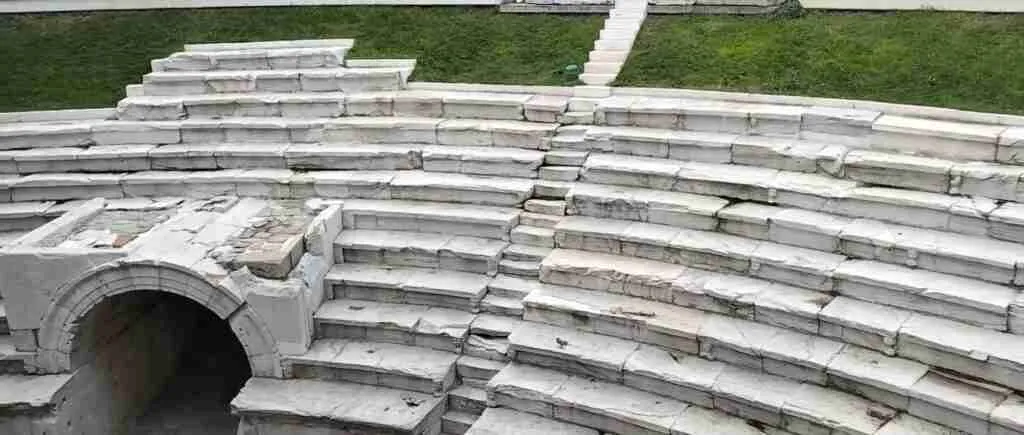
The theater’s semicircular plan measures 82 meters in outer diameter, with the orchestra (the circular performance space at the base of the seating area) spanning 26.64 meters. The cavea consists of 28 concentric rows of marble seats arranged in two distinct tiers, with a horizontal walkway called a diazoma dividing the upper and lower sections. This division served both practical and social functions: the lower tier provided superior sightlines and acoustics for elite spectators, while the upper tier accommodated the general public. Narrow radial stairways divide the seating into wedge-shaped sections called kerkides, facilitating movement and providing clear demarcation of seating areas assigned to different municipal districts.
The marble seats themselves bear inscriptions identifying the municipal districts whose citizens had assigned seating rights, a system that maintained social order while ensuring efficient use of space. These inscriptions, along with honorary dedications for magistrates, city council members, friends of the emperor, and other dignitaries, transform the seating into a three-dimensional map of Philippopolis’s social hierarchy. The discovery of protective barriers in front of the first row suggests that the theater occasionally hosted gladiatorial combat and wild animal fights, events that required safeguards to prevent dangerous beasts from reaching the audience.
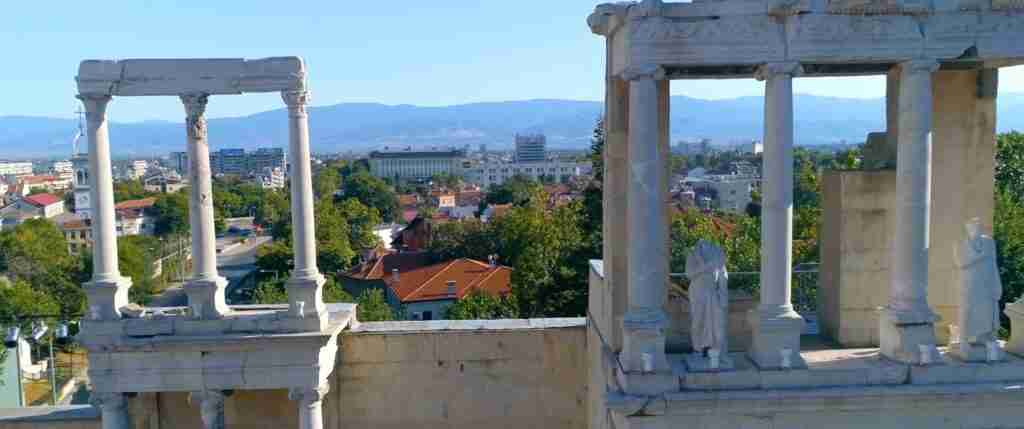
The stage building, or scaenae frons, rose three stories behind the orchestra, creating an architectural backdrop of exceptional grandeur. The first story featured columns in the Roman Ionic order, the second story employed the Roman-Corinthian order, and the third story provided additional height and visual impact. This multi-story facade served as both scenic backdrop and acoustic reflector, enhancing the theater’s famous sound quality by directing performers’ voices toward the audience. Between the columns stood statues of gods, emperors, and local benefactors, while the walls displayed painted decoration and marble revetment panels that added color and opulence to the architectural framework.
The theater’s acoustic design demonstrates sophisticated understanding of sound propagation. The semicircular shape focuses sound from the stage toward the audience, while the rising rows ensure that upper-tier spectators receive sound with minimal loss. The hard marble surfaces reflect rather than absorb sound, and the surrounding hillsides block external noise while containing the theater’s acoustics within the performance space. Modern acoustical tests confirm that an actor speaking in a normal voice from the stage remains clearly audible in the uppermost rows, a testament to Roman engineering prowess that continues to serve performers and audiences today.
Theater Functions: Performance, Politics, and Public Life
The Plovdiv Roman Theater served multiple functions that made it central to Philippopolis’s public life. While modern visitors naturally think of theaters primarily as entertainment venues, Roman theaters functioned as multi-purpose civic spaces where the boundary between cultural performance and political activity remained fluid. The Plovdiv theater exemplifies this versatility, hosting theatrical productions, musical performances, public assemblies, gladiatorial contests, and religious ceremonies throughout its active centuries.
Theatrical performances drew on the rich traditions of Greek drama, which remained dominant in the Eastern Empire even as Latin literature and Roman dramatic forms gained ground in the West. The theater would have hosted tragedies by Aeschylus, Sophocles, and Euripides, comedies by Aristophanes and Menander, and newer works by Roman playwrights either in Latin or Greek translation. These performances occurred during religious festivals honoring various gods, with theatrical competitions adding civic prestige while serving religious purposes. The quality of Philippopolis’s dramatic productions would have reflected the city’s cultural ambitions and attracted performers and spectators from across the region.
Musical performances occupied an equally important place in the theater’s program. Ancient theater encompassed musical elements that modern audiences might classify separately, including choral performances, instrumental concerts, and recitations accompanied by musical instruments. The theater’s exceptional acoustics made it ideal for these performances, which ranged from traditional Greek modes to the hybrid musical styles that developed as Roman and Eastern traditions merged in provincial centers like Philippopolis.
The theater’s role as meeting place for the Thracian Provincial Assembly and the Union of Thracian Cities elevated it beyond entertainment venue to political forum. These assemblies, which gathered representatives from cities across the province, conducted official business that required large meeting spaces with good acoustics and sufficient seating for delegates and observers. The theater’s capacity and acoustic properties made it ideal for such gatherings, while its architectural grandeur provided an appropriately impressive setting for proceedings that determined provincial policy and represented Thracian interests to Roman authorities.
Gladiatorial combat added a characteristically Roman element to the theater’s programming. The protective barriers discovered in front of the first row indicate that the orchestra occasionally hosted fights between gladiators or contests involving wild animals, spectacles that Romans across the empire regarded as essential entertainment. While purpose-built amphitheaters provided more suitable venues for such events, theaters frequently accommodated gladiatorial games in cities that lacked dedicated facilities or when special occasions warranted spectacular public displays.
Architectural Features and Surviving Elements
The Plovdiv Roman Theater’s remarkable preservation allows visitors to appreciate architectural details and decorative elements that disappeared from most ancient theaters centuries ago. Walking through the structure reveals the sophisticated design thinking and craftsmanship that Roman builders brought to even provincial constructions, elevating utilitarian requirements into artistic statements of civic pride and imperial grandeur.
The marble seating represents one of the theater’s most impressive surviving elements. Each of the 28 rows consists of carefully cut and fitted marble blocks, shaped to provide comfortable seating while maximizing capacity. The lower tier seats bear inscriptions in Byzantine Greek identifying the municipal districts whose residents had assigned places, creating a permanent record of Philippopolis’s administrative divisions. These inscriptions transform the seating area into a historical document, preserving information about the city’s organization that no other source records in such detail.
Honorary inscriptions add another layer of historical information. Specific seats were reserved for magistrates, members of the city council, provincial officials, friends of the emperor, and other dignitaries, with inscribed dedications marking these privileged locations. Some inscriptions commemorate benefactors who funded theater renovations or provided endowments for performances, recording their generosity for posterity while securing them the honor of having their names permanently associated with the building. These dedications reveal the complex web of civic patronage that sustained public buildings and cultural activities in Roman cities.
The three-story stage building, though partially reconstructed, preserves substantial original elements that demonstrate the structure’s former splendor. The first story’s Ionic columns, with their characteristic scroll-like capitals, frame three symmetrical gates that provided formal entrances to the orchestra. The second story’s Corinthian columns, distinguished by elaborate capitals decorated with acanthus leaves, created a more ornate architectural register above the simpler Ionic order. This progression from simpler to more complex orders as one’s eye moves upward follows established Roman architectural principles while creating visual interest and hierarchical sophistication.
Fragments of decorative statuary scattered throughout the site testify to the theater’s original embellishment. Roman theaters typically displayed statues of gods, emperors, and local worthies in niches within the stage building facade, creating a visual program that celebrated divine protection, imperial authority, and civic achievement. The Plovdiv theater’s statuary would have included representations of Dionysus (the Greek god of theater), Apollo (patron of music and poetry), the reigning emperor and his family, and prominent local citizens whose benefactions merited public recognition.
The orchestra floor, where most dramatic action occurred, retains its original marble paving in many areas. This smooth surface provided a stable platform for performers while reflecting sound upward toward the audience. The orchestra’s horseshoe shape, slightly more than a perfect semicircle, represents a compromise between Greek theatrical tradition (which favored full circles or nearly so) and Roman preferences for more compact, strictly semicircular designs that improved sightlines from the seats.
Underground passages beneath the stage area reveal the infrastructure that supported complex theatrical productions. These vaulted corridors allowed performers and stage machinery to move unseen beneath the orchestra and stage, emerging through trapdoors for dramatic entrances and special effects. The passages also provided secure storage for costumes, props, and equipment, while their construction demonstrates the advanced engineering knowledge Roman builders applied even to hidden structural elements.
Discovery and Archaeological Excavation History
The theater’s rediscovery ranks among the most dramatic moments in Bulgarian archaeological history. For more than 1,500 years, the structure lay completely hidden beneath accumulated earth and debris, its location forgotten so thoroughly that Ottoman Plovdiv developed without any awareness of the monument below. The landslide that exposed the theater in 1972 occurred during a period of construction work in the Old Town, when destabilized slopes shifted suddenly, removing layers of soil and revealing marble rows that stunned observers who had no idea such a structure existed beneath their city.
The archaeological response mobilized Bulgaria’s leading conservation specialists and launched an excavation campaign that continued through 1979. The project required removing approximately 4.5 meters of accumulated earth covering the upper tiers, then carefully excavating downward through centuries of deposits to expose the orchestra and lower seating areas. This gradual process allowed archaeologists to document stratigraphic layers that recorded the theater’s history from abandonment through burial, revealing how the structure filled with debris over centuries as erosion, building collapse, and deliberate dumping gradually entombed the monument.
The excavation revealed not only the theater itself but also evidence of its final years of use and the circumstances of its abandonment. Charcoal and burnt material in certain areas suggested fire damage, while earthquake-displaced architectural elements indicated seismic activity. Historical sources recording invasions by various groups during the late 4th and early 5th centuries provided context for understanding how a functioning theater could be abandoned so completely. The combined effects of natural disasters, warfare, and declining urban population led to the theater’s disuse, after which it became a convenient quarry for building materials before eventually being buried beneath the expanding city.
Archaeological finds within the accumulated deposits included pottery fragments, coins, inscriptions, architectural fragments, and traces of medieval and Ottoman occupation. These artifacts documented how the theater’s ruins served various functions after abandonment, from shelter for squatters to source of building stone to burial ground. The stratigraphic record preserved in the fill layers provided valuable information about Plovdiv’s development during periods for which other archaeological and documentary evidence remains scarce.
Restoration and Conservation Philosophy
The restoration of the Plovdiv Roman Theater achieved international recognition as a masterwork of archaeological conservation, demonstrating how ancient monuments can be returned to functional use while maintaining scholarly rigor and preservation ethics. The project followed the anastylosis method, a conservation approach that prioritizes reassembling original architectural elements in their authentic positions while clearly distinguishing ancient material from modern additions. This philosophy ensures that restored structures remain honest about what survives from antiquity versus what represents modern reconstruction, allowing visitors to appreciate both the monument’s original grandeur and the limitations of our knowledge.
The restoration team faced numerous challenges in deciding which elements could be safely restored and how much reconstruction would serve the structure’s preservation versus compromising its authenticity. Every original architectural element discovered during excavation was documented, catalogued, and analyzed to determine its original position within the building. When sufficient evidence existed to place a stone, column, or decorative element with confidence, it was returned to position using traditional materials and techniques. When uncertainty existed, conservation principles required leaving the element in storage rather than forcing a potentially incorrect reconstruction.
New materials used to supplement damaged or missing original elements were deliberately chosen to remain visually distinct while maintaining structural compatibility with ancient construction. This allows informed visitors to distinguish at a glance between original Roman work and modern additions, preserving the theater as a historical document rather than creating a deceptive replica that obscures the gaps in our knowledge. The new stonework matches the ancient material in dimension and structural properties but differs sufficiently in color and finish to signal its modern origin.
Structural reinforcement presented particular challenges, as the goal of returning the theater to active use as a performance venue required ensuring that the restored structure could safely accommodate audiences. Modern engineering analysis identified areas requiring additional support to meet current safety standards, leading to discreet structural interventions that strengthen the building without compromising its historical character. Hidden steel reinforcements, concrete foundations where ancient ones had deteriorated beyond repair, and drainage systems to prevent water damage represent the kind of invisible infrastructure necessary to preserve ancient buildings for continued use.
The restoration’s success earned the project recognition as one of Bulgaria’s greatest conservation achievements, setting standards that influenced subsequent work on ancient monuments throughout the country. The theater demonstrates that active use and historical preservation need not conflict when restoration proceeds according to rigorous principles that respect the monument’s authenticity while adapting it sensitively to contemporary requirements.
The Theater in Modern Cultural Life
The restored Plovdiv Roman Theater functions as one of Bulgaria’s premier cultural venues, hosting performances that attract audiences from across Europe and beyond. The summer performance season, running from May through October, presents a diverse program including opera productions, classical concerts, theatrical performances, ballet, jazz festivals, and contemporary music events. This programming diversity mirrors the theater’s ancient function as a multi-purpose venue while adapting to modern cultural expectations and tourism demands.
Opera performances represent the theater’s most prestigious offerings, with productions that leverage the natural grandeur of the ancient setting to create experiences unavailable in conventional opera houses. Performing under the stars in a 2,000-year-old theater adds layers of meaning and atmosphere that enhance works ranging from classical Greek subjects to Verdi and Puccini. The theater’s exceptional acoustics, designed for unamplified ancient performances, adapt remarkably well to operatic voices, allowing singers to project to the uppermost rows without electronic assistance.
Classical concerts featuring orchestras, chamber ensembles, and solo performers occur regularly throughout the season. The theater’s acoustic properties, which Romans engineered to carry spoken dialogue clearly to all seats, prove equally effective for musical performance. The natural resonance of the semicircular cavea and the sound-reflecting properties of the marble surfaces create an acoustic environment that many musicians consider superior to purpose-built concert halls, combining clarity with warmth in ways that modern architectural acoustics struggle to replicate.
Theatrical productions, the theater’s original purpose, continue to occupy an important place in the programming. Both ancient Greek dramas and contemporary works appear in the season lineup, with the ancient plays acquiring particular resonance when performed in a setting closely resembling their original theatrical context. Productions of Sophocles or Euripides in the Plovdiv theater provide audiences with experiences approaching historical authenticity, allowing modern viewers to appreciate how the physical theater shaped dramatic conventions and audience experience in ways that proscenium stages and modern theaters cannot replicate.
International festivals add cosmopolitan dimension to the theater’s programming, attracting performers and companies from across Europe and beyond. These festivals, covering genres from classical music to jazz to world music, position the theater within global cultural networks while showcasing Plovdiv’s artistic heritage. The combination of ancient setting and contemporary programming creates unique festival experiences that distinguish Plovdiv from competing cultural destinations.
The theater’s capacity for modern performances varies with production requirements and safety regulations, typically accommodating between 3,000 and 5,000 spectators depending on staging needs. This flexibility allows productions to adapt the space while maintaining the essential experience of attending performance in an ancient theater, with audiences ascending the marble tiers exactly as Roman spectators did two millennia ago.
Visitor Experience: Touring the Theater
Visiting the Plovdiv Roman Theater provides opportunities for both historical exploration and appreciation of the monument’s continuing cultural vitality. The site welcomes visitors throughout the year, with access arrangements depending on whether performances are scheduled and on seasonal considerations affecting tourism infrastructure. Understanding how to make the most of a visit enhances appreciation for both the archaeological significance and the living cultural traditions the theater embodies.
Admission to the theater costs 5 BGN (approximately $3), providing access to the seating areas, orchestra, and parts of the stage building. This modest fee reflects Bulgaria’s commitment to making cultural heritage accessible while generating funds for ongoing maintenance and conservation. The ticket includes the freedom to explore at your own pace, ascending to the upper tiers for panoramic views or descending to the orchestra to appreciate the stage building’s architectural details from a performer’s perspective.
Free viewing opportunities exist from several lookout points along Ul Hemus street, which runs above the theater’s eastern side. These vantage points allow photography and appreciation of the theater’s setting without entering the structure itself, though they obviously provide less intimate engagement with the architectural details and inscriptions that reward closer inspection. The free viewpoints serve particularly well for visitors with mobility limitations who cannot navigate the steep, irregular steps within the theater, or for those seeking quick orientation before deciding whether to pay for full access.
The most rewarding visit strategy involves ascending to the uppermost tier to appreciate the theater’s semicircular plan, the sweep of marble rows, and the spectacular views southward across Plovdiv toward the Rhodope Mountains. From this elevated perspective, the theater’s integration with the natural topography becomes clear, as does its commanding position overlooking the ancient city. The view also reveals how medieval and Ottoman Plovdiv developed around and eventually over the buried theater, with later buildings now removed to restore the monument’s original setting.
Descending through the seating areas allows close examination of the inscribed marble blocks that identify seating sections and honor various dignitaries. Taking time to study these inscriptions, even if you cannot read Byzantine Greek, provides tangible connection to the theater’s social functions and the individuals who occupied these seats during performances nearly two thousand years ago. The inscriptions transform abstract historical knowledge into human-scale encounters with specific people, places, and occasions that the ancient theater hosted.
The orchestra and stage building reward extended attention. Standing on the orchestra floor where actors performed provides visceral understanding of the theater’s scale and acoustics. Speaking in a normal voice from this position while a companion listens from the upper tiers demonstrates the acoustic engineering that allows even subtle vocal nuances to carry throughout the space. Examining the stage building’s architectural details—the Ionic and Corinthian columns, the three symmetrical gates, the niches that once held statuary—reveals the structure’s former decorative richness while allowing appreciation of the skilled restoration work that returned these elements to view.
Photography opportunities abound throughout the site. The morning light falling across the eastern side of the theater creates dramatic shadows that emphasize the architectural details, while afternoon sun illuminates the stage building. The contrast between ancient marble and the surrounding Old Town creates compelling compositions, particularly when modern Plovdiv’s rooftops and church domes appear in the background. Performance evenings provide exceptional photographic subjects, with the theater illuminated for evening events creating atmospheric images that capture the monument’s continuing cultural vitality.
Location and Accessing the Theater
The Plovdiv Roman Theater occupies a prominent position in the city’s Old Town, built into the southern slope between Taksim Tepe and Dzhambaz Tepe hills. This location places it within easy walking distance of other major attractions in the historic center while providing the elevated setting that contributes to both its architectural drama and its preservation of distant views. Understanding the theater’s location within Plovdiv’s geography helps visitors plan efficient touring routes that combine multiple Old Town attractions.
The main entrance to the theater lies on Tsar Ivaylo Street, accessed via steep, cobblestoned lanes that characterize Plovdiv’s hillside Old Town. Visitors approaching from the modern city center climb through the historic district, passing Ottoman-era houses, Bulgarian National Revival architecture, and medieval churches that line the ascending streets. This approach provides context for understanding how the theater relates to Plovdiv’s layered history, with each architectural period represented in the buildings surrounding the ancient monument.
Public transportation serves the Old Town adequately, though the final approach to the theater requires walking on steep, sometimes irregular paving. Bus routes connect the modern center with the Old Town, with stops along Tsar Boris III Obedinitel Boulevard providing starting points for the walking ascent. The climb, while steep in places, rarely exceeds 15-20 minutes from the nearest bus stops, and the route passes sufficient architectural and cultural attractions to make the ascent itself part of the visitor experience rather than merely a functional approach.
Taxis and rideshare services provide more direct access, though vehicle restrictions in much of the Old Town mean even motorized transport requires final approach on foot. Discussing the destination with drivers ensures they understand which entrance to use, as several routes approach the Old Town from different directions. The compact nature of Plovdiv’s historic center means that taxi rides from hotels in the modern city typically take under 15 minutes, making this a practical option for visitors with mobility concerns or those wishing to conserve energy for exploring the theater itself.
The theater forms a natural centerpiece for Old Town explorations, with other major attractions within easy walking distance. The Ethnographic Museum, housed in a spectacular National Revival mansion, lies minutes away. The Cathedral of the Assumption, Roman Stadium remnants beneath the main pedestrian street, Ottoman mosques and bathhouses, and numerous house-museums cluster within the historic district, allowing visitors to structure full-day or half-day itineraries that combine multiple sites efficiently.
Planning Your Visit: Practical Information
Optimal timing for visiting the Plovdiv Roman Theater depends on whether you prioritize crowd-free exploration of the archaeological site or attending performance events that showcase the theater’s continued cultural function. These different goals suggest different visiting strategies, each offering distinct advantages and experiences.
For visitors focused primarily on the historical and architectural aspects, weekday mornings during spring and autumn provide ideal conditions. The site remains relatively uncrowded, lighting conditions favor photography, and comfortable temperatures make the steep climbs and extended exploration pleasant. Summer mornings work well if you arrive early, before midday heat makes the exposed marble seating uncomfortable. Winter visits offer solitude and dramatic light, though prepare for cold conditions on the windswept hillside and reduced hours at some Old Town attractions.
Attending performance events requires different planning, as performances occur primarily during the summer season from May through October. Ticket information and schedules appear on official Plovdiv cultural websites and through Eventim, the main ticketing platform. Tickets are also available from physical locations including the Ticket Center at Stefan Stambolov Square, the Tourist Information Center on Rayko Daskalov Street, and the theater’s own ticket office. Purchasing in advance for popular performances prevents disappointment, as major opera productions and festival concerts often sell out.
Evening performances transform the visitor experience completely. Attending opera, concerts, or theater in the ancient setting, with the stage illuminated against the night sky and the marble tiers filled with modern audiences experiencing art as Romans did centuries ago, provides irreplaceable cultural memories. The evening atmosphere, cooler temperatures, and dramatic lighting create conditions quite different from daytime archaeological tourism, making the theater reveal different aspects of its character and significance.
Footwear deserves particular attention when planning your visit. The marble steps within the theater are worn smooth by two millennia of use and modern tourist traffic, becoming slippery when wet. Steep, irregular steps require secure footing, making athletic shoes or sturdy walking shoes essential. The cobblestoned Old Town approaches demand similar footwear considerations, as stylish but impractical shoes create genuine safety hazards on Plovdiv’s historic paving.
The theater lacks the accessibility infrastructure common in modern buildings, as the ancient structure cannot be retrofitted without compromising its historical integrity. Visitors with significant mobility limitations face real challenges navigating the steep steps within the theater, though the free lookout points along Ul Hemus provide alternative viewing options that require minimal walking. Old Town approaches involve steep inclines and uneven surfaces that similarly challenge visitors with walking difficulties, though the compact geography means taxis can reduce walking distances substantially.
Weather considerations affect outdoor performance attendance significantly. Evening temperatures in Plovdiv during summer performance season remain comfortable, typically in the 15-20°C range, but bringing layers ensures comfort as temperatures drop after sunset. Rain can cancel or disrupt outdoor performances, and the ancient theater offers no covered seating. Checking weather forecasts before attending performances and having contingency plans for inclement weather protects your investment in tickets and travel.
Photography Guide: Capturing the Ancient Theater
The Plovdiv Roman Theater offers exceptional photographic opportunities combining architectural grandeur, historical atmosphere, and dramatic setting. Understanding how light interacts with the marble structure throughout the day helps photographers plan optimal shooting times and positions for capturing compelling images that convey the theater’s scale, detail, and cultural significance.
Morning light between 8 and 11 AM provides the most dramatic illumination for photographing the stage building and western side of the theater. Sun rising in the east casts long shadows across the marble rows, emphasizing the texture of the stone and the relief of architectural details. The three-story stage building receives direct illumination that brings out the Ionic and Corinthian column capitals, while shadows define the depth of the three symmetrical gates. This lighting particularly suits architectural documentation and detail photography that emphasizes the structure’s engineering and craftsmanship.
Afternoon light from 3 PM onward illuminates the eastern seating areas and orchestra, creating opportunities for wide-angle compositions that capture the full sweep of the cavea. The sun angle at this time produces warmer color tones in the marble, enhancing the golden quality that ancient stone acquires through centuries of weathering. Shadows become less dramatic than morning hours but longer than midday, providing sufficient modeling to reveal architectural form without the harsh contrast of oblique light.
The uppermost tier provides the classic overview perspective, capturing the semicircular plan and allowing composition that includes both the theater’s architectural elements and the surrounding cityscape. From this elevation, wide-angle lenses encompass the full structure while placing it within its urban context, showing how the ancient theater relates to modern Plovdiv and the distant Rhodope Mountains. This vantage point works throughout the day, though morning and late afternoon offer more interesting light than flat midday sun.
Detail photography rewards careful exploration of the theater’s inscribed elements and architectural ornaments. The marble seat inscriptions identifying municipal districts require close approach with medium focal lengths, using available light to bring out the carved letter forms without creating excessive contrast that obscures the shallow relief. Photographing these inscriptions benefits from overcast conditions or shade, which provide even illumination without the harsh shadows that direct sun casts on weathered stone.
The stage building’s architectural details demand different photographic approaches depending on specific features. The Ionic and Corinthian capitals reward telephoto compression that emphasizes their decorative complexity, while the three gates suit wider perspectives that show their relationship to the overall facade. The columns themselves photograph well from low angles that emphasize their height and mass, using the sky as clean background that isolates the architectural forms.
Evening and night photography during performances creates entirely different opportunities. The theater illuminated for events, with artificial lighting emphasizing the stage building and selective illumination of the seating areas, produces atmospheric images impossible to capture during daylight hours. Long exposures can capture the theater filled with audiences, creating light trails from moving spectators or freezing performers on the illuminated stage. These performance photographs require different technical approaches than architectural documentation, with higher ISOs and wider apertures compensating for reduced light while accepting the artistic possibilities of motion blur and selective focus.
Compositional considerations include the challenge of balancing the theater’s grand scale with effective visual storytelling. Pure architectural documentation benefits from including clear scale references—visitors ascending steps, performers on the stage during rehearsals—that help viewers comprehend the structure’s dimensions. Including foreground elements such as individual marble seats or column bases creates depth in two-dimensional images while leading the eye into the composition. The surrounding Old Town, visible from upper tiers, provides context that situates the theater within Plovdiv’s layered history rather than isolating it as an abstract monument.
Combining the Theater with Other Old Town Attractions
The Roman Theater forms the centerpiece of Plovdiv’s Old Town heritage district, where millennia of architectural and cultural accumulation create one of Europe’s richest urban historical landscapes. Strategic touring that combines the theater with complementary attractions maximizes both efficiency and understanding, as the various monuments illuminate different aspects of Plovdiv’s development from Thracian settlement through Roman grandeur, Byzantine continuity, Ottoman transformation, and Bulgarian National Revival.
The Ethnographic Museum, housed in the spectacular Kuyumdzhioglu House, lies within minutes’ walk from the theater. This National Revival mansion demonstrates the architectural and decorative achievements of 19th-century Bulgarian culture, with painted interiors, carved wooden ceilings, and extensive collections documenting traditional crafts, costumes, and domestic life. Visiting the Ethnographic Museum after the Roman Theater provides dramatic historical contrast, juxtaposing the public monumentality of Roman imperial architecture with the intimate domesticity of Bulgarian Revival culture.
The Roman Stadium remnants beneath Plovdiv’s main pedestrian street complete the picture of ancient Philippopolis’s public entertainment infrastructure. This massive structure, approximately 250 meters long and capable of seating 30,000 spectators, hosted chariot races and athletic competitions in the tradition of Greek and Roman games. The preserved northern curved section, partially restored and visible beneath transparent panels in the modern paving, demonstrates the engineering ambition that characterized Roman provincial cities. Understanding that Philippopolis possessed both a 6,000-seat theater and a 30,000-seat stadium reveals the scale of public entertainment in the ancient city.
The Cathedral of the Assumption, Plovdiv’s principal Orthodox church, exemplifies the architectural synthesis that characterizes Bulgarian religious buildings. The cathedral combines Byzantine spatial planning with Bulgarian Revival decorative programs, creating interiors rich with frescoes, icons, and ecclesiastical art. The contrast between ancient Roman classicism at the theater and 19th-century Orthodox ecclesiasticism at the cathedral demonstrates the cultural transformations that successive periods brought to Plovdiv.
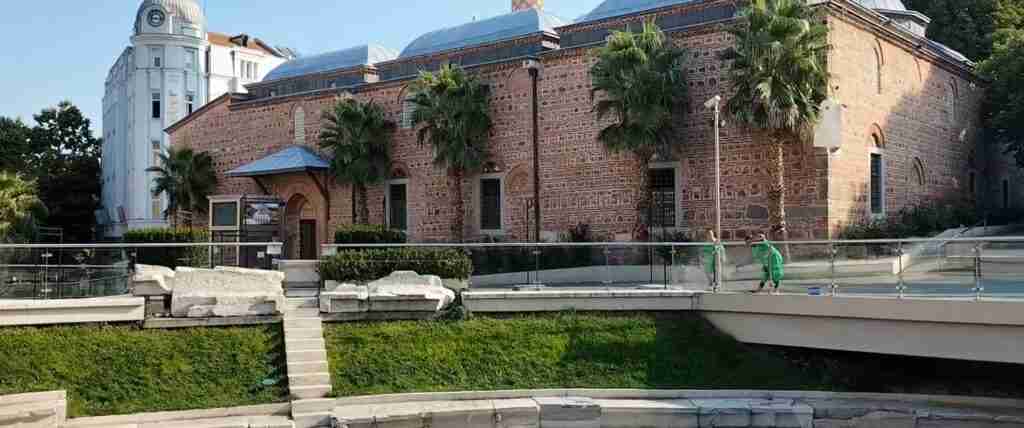
Ottoman heritage appears throughout the Old Town in the form of mosques, bathhouses, and domestic architecture that document the five centuries when Plovdiv served as an important provincial center in the Ottoman Empire. The Dzhumaya Mosque, prominently located in the modern city center adjacent to Roman Stadium remnants, exemplifies the architectural dialogue between Ottoman builders and the Roman ruins they encountered. Turkish bathhouses scattered through the Old Town demonstrate sophisticated hydraulic engineering and the sophisticated bathing culture that characterized Ottoman urban life.
House-museums dedicated to prominent figures from Plovdiv’s Bulgarian National Revival provide glimpses into 19th-century intellectual and artistic life. These carefully preserved mansions, with their distinctive architectural character and period furnishing, document the cultural flowering that accompanied Bulgarian national awakening under Ottoman rule. Each house-museum focuses on different aspects of Revival culture—literature, visual arts, education, commerce—creating a comprehensive portrait of this crucial period in Bulgarian history.
The Nebet Tepe archaeological complex, occupying the highest of Plovdiv’s hills, preserves fortification walls and settlement remains spanning from Thracian times through the medieval period. This elevated position provides commanding views across the city and surrounding landscape while offering direct engagement with the earliest phases of Plovdiv’s history. The contrast between Nebet Tepe’s military architecture and the theater’s cultural functions reveals the different priorities that shaped ancient urban development.
Historical Significance in the Context of Roman Theater Architecture
The Plovdiv Roman Theater occupies an important position in the broader history of Roman theatrical architecture, exemplifying the synthesis of Hellenistic and Roman traditions that characterized theater construction in the Greek-speaking Eastern provinces. Understanding how Plovdiv’s theater relates to other surviving Roman theaters across the empire illuminates both its distinctive features and its place within established architectural conventions that Roman builders adapted to local conditions throughout their vast territories.
Roman theaters evolved from Greek precedents but introduced significant modifications that reflected different cultural priorities and engineering capabilities. Greek theaters, built into hillsides and featuring circular or nearly circular orchestras surrounded by more than semicircular seating, served the specific requirements of classical Greek drama with its prominent chorus occupying the orchestra. Roman theaters adopted semicircular plans, raised stages for actors, and elaborate multi-story stage buildings that reflected dramatic forms emphasizing individual performers over choral elements. The Plovdiv theater demonstrates this hybrid character, maintaining some Hellenistic features while incorporating distinctively Roman innovations.
The theater’s semicircular plan and multi-story scaenae frons align with Roman architectural conventions established in the 1st century AD, when standardized theater designs spread across the empire from Britain to Syria. However, the use of natural hillside setting rather than free-standing construction on level ground reflects Hellenistic precedents that remained influential in the East. This adaptation to topography served both practical and aesthetic purposes: reducing construction costs while creating intimate integration with landscape that Greek tradition valued highly.
Preservation of Byzantine Greek inscriptions rather than Latin texts reveals the linguistic and cultural priorities of Eastern provincial cities, where Greek maintained status as the language of culture and administration despite Roman political control. This stands in marked contrast to Western Roman theaters, where Latin inscriptions predominate even in areas with strong pre-Roman cultural traditions. The Plovdiv inscriptions demonstrate the Roman administration’s pragmatic acceptance of Hellenization in the East, recognizing that Greek civilization provided cultural prestige that enhanced rather than threatened Roman authority.
The theater’s capacity of 6,000 spectators places it in the mid-range of Roman theater sizes. Some provincial theaters accommodated far fewer spectators, reflecting smaller urban populations or more limited ambitions, while major theaters in Rome itself and in wealthy Eastern cities like Aspendos or Ephesus exceeded 10,000 seats. The Plovdiv capacity suggests a prosperous city with cultural ambitions appropriate to its status as provincial capital, substantial enough to warrant impressive public buildings but not competing with the greatest metropolises of the empire.
Evidence of gladiatorial use, indicated by protective barriers in front of the first row, reflects the Roman practice of adapting theaters for multiple entertainment forms when purpose-built amphitheaters were unavailable. While true amphitheaters with their elliptical plans provided ideal venues for gladiatorial combat and wild animal fights, many provincial cities made do with theaters that could serve multiple functions. This versatility characterized Roman pragmatism, allowing communities to maximize returns on substantial building investments by accommodating diverse entertainment forms in single structures.
The Theater’s Role in Plovdiv’s UNESCO Candidacy
The Roman Theater features prominently in ongoing efforts to secure UNESCO World Heritage designation for Plovdiv’s ancient and historic center. As the most spectacular and best-preserved Roman monument in the city, the theater exemplifies the outstanding universal value that UNESCO World Heritage status requires, demonstrating exceptional architectural achievement, continuity of cultural traditions, and successful conservation that serves contemporary cultural needs while respecting historical integrity.
UNESCO criteria for World Heritage designation emphasize monuments that represent masterpieces of human creative genius, exhibit important interchange of human values, bear exceptional testimony to cultural traditions, and represent significant stages in human history. The Plovdiv theater qualifies under multiple criteria: as a masterwork of Roman theatrical architecture, as evidence of cultural synthesis between Roman and Hellenistic traditions, as testimony to the sophisticated public culture of Roman provincial cities, and as a monument to conservation excellence that demonstrates how ancient structures can serve modern communities without compromising historical authenticity.
The theater’s continued use as a performance venue particularly strengthens the UNESCO candidacy by demonstrating living cultural traditions rather than static preservation of dead monuments. UNESCO increasingly values sites that maintain authentic cultural functions in addition to architectural preservation, recognizing that buildings serving their intended purposes embody cultural heritage more completely than structures converted to museums or left as empty ruins. The Plovdiv theater’s summer performance season connects ancient and modern audiences through identical experiences of theatrical performance, creating continuity across two millennia that few monuments worldwide can match.
The conservation approach adopted during the theater’s restoration aligns with UNESCO standards for intervention in historic monuments. The anastylosis method, which reassembles original elements while clearly distinguishing ancient material from modern reconstruction, respects the monument’s authenticity while making it accessible and comprehensible to visitors. This balance between preservation and presentation represents best practices in heritage conservation that UNESCO designation rewards and promotes as models for similar projects worldwide.
Plovdiv’s candidacy benefits from the theater’s integration within a broader historical landscape that includes Roman, Byzantine, Ottoman, and Bulgarian Revival monuments clustered in the Old Town. UNESCO typically values sites that demonstrate multiple historical periods and cultural layers rather than isolated monuments from single periods. The theater, while individually significant, gains additional importance as the centerpiece of this layered urban heritage, anchoring a narrative of continuous habitation and cultural development spanning six millennia.
Cultural Events and Performance Calendar
The Plovdiv Roman Theater’s annual performance calendar transforms the ancient monument from archaeological site to living cultural venue, hosting events that range from traditional opera and classical music to contemporary performances and international festivals. This programming demonstrates how historical monuments can serve modern communities while maintaining the cultural functions for which they were originally built, creating continuity between ancient and contemporary audiences that few heritage sites worldwide achieve.
The performance season officially runs from May through October, taking advantage of Bulgaria’s warm, dry summers while avoiding winter weather that would make outdoor performances uncomfortable and potentially damage the ancient marble through freeze-thaw cycles. This seasonal pattern mirrors the ancient theater’s original use, as Roman theatrical festivals similarly concentrated during favorable weather when traveling performers could tour provincial cities and outdoor venues remained pleasant for audiences.
Opera productions anchor the summer season, with performances that leverage the theater’s natural acoustics and dramatic setting to create experiences unavailable in conventional opera houses. Productions range from classics of the Italian repertoire—Verdi, Puccini, Rossini—to works based on ancient subjects that acquire particular resonance in the Roman setting. The absence of roof and walls, potential disadvantages in modern theaters, become assets that enhance the outdoor performance experience, allowing voices to project naturally while star-filled skies replace conventional stage lighting with celestial backdrop.
Classical concerts featuring international orchestras, chamber ensembles, and solo performers occur regularly throughout the season. The theater’s acoustic properties, originally designed for unamplified theatrical performance, prove remarkably effective for classical music, creating natural resonance that electronic amplification and modern concert hall architecture struggle to replicate. Musicians frequently comment on the exceptional quality of the theater’s sound, noting how the semicircular cavea focuses and blends instrumental voices while the marble surfaces reflect sound without the deadening absorption of modern upholstered seating.
Jazz festivals and contemporary music events expand the programming beyond classical offerings, attracting younger audiences and demonstrating the theater’s versatility across musical genres. These events maintain the Roman tradition of theater as public gathering space for diverse cultural expression, adapting ancient architecture to modern artistic forms in ways that honor both historical heritage and contemporary creativity. The visual contrast between ancient marble and modern lighting, amplification, and stage design creates aesthetic tension that enhances rather than contradicts the performance experience.
Bulgarian folklore performances celebrate national musical traditions in a setting that connects contemporary culture with historical roots. These events, featuring traditional instruments, costumes, and dance forms preserved through generations of Bulgarian cultural practice, create direct links between the theater’s ancient function as venue for local cultural expression and its modern role in sustaining living traditions. For Bulgarian audiences, folklore performances in the Roman theater affirm cultural continuity spanning from Thracian roots through Roman and Byzantine periods to contemporary national identity.
Conservation Challenges and Ongoing Preservation
Maintaining the Plovdiv Roman Theater as both archaeological monument and active performance venue presents ongoing conservation challenges that require balancing competing demands of historical preservation, public access, and functional use. Understanding these challenges illuminates the complexity of heritage management and the constant vigilance necessary to protect irreplaceable monuments while allowing them to serve contemporary cultural needs.
The primary conservation concern involves managing wear on ancient marble surfaces subjected to regular foot traffic from both visitors and performance audiences. The marble steps, already worn smooth by two millennia of use, erode microscopically with each footfall, a process accelerated by modern tourist volumes far exceeding ancient attendance patterns. Conservation specialists monitor wear rates through periodic surveying that tracks changes in surface profiles, allowing interventions before damage becomes irreversible. Strategic placement of walking surfaces and barriers directs traffic away from the most vulnerable areas while maintaining access to key viewing positions.
Weather exposure creates constant erosion threats that ancient maintenance systems no longer mitigate. Roman theaters employed regular cleaning, repair, and protective treatments that prevented minor damage from accumulating into structural threats. Modern conservation programs attempt to replicate these protective regimes while adapting ancient techniques to contemporary preservation standards. Monitoring systems track moisture infiltration, freeze-thaw damage, biological growth, and pollution effects, allowing targeted interventions that prevent small problems from developing into major conservation crises.
Performance activities introduce specific risks that archaeological sites without active use never face. Stage construction, lighting installation, sound equipment, and large crowds all threaten the ancient structure through physical impact, vibration, and concentrated loading on architectural elements designed for different usage patterns. Conservation protocols specify exactly how performance infrastructure can be installed without damaging original fabric, limiting attachment points to specific locations and prohibiting installations that would require drilling into ancient stone or applying adhesives that might stain marble surfaces.
Structural stability monitoring employs modern engineering analysis to ensure that restored elements and ancient fabric together maintain adequate safety margins for public use. Periodic structural assessments track settlement, crack propagation, and stress accumulation in both ancient and reconstructed architectural elements, identifying potential failures before they occur. This vigilance protects both irreplaceable heritage and the audiences whose attendance generates revenue supporting conservation work while fulfilling the theater’s cultural mission.
Balancing authenticity with safety requirements creates ongoing tensions between conservation ideals and practical necessity. Modern safety codes require elements like railings, lighting, and emergency egress routes that ancient theaters naturally lacked, forcing compromises between historical accuracy and visitor protection. Conservation philosophy seeks the least intrusive solutions that meet safety requirements without compromising the monument’s historical character, though perfect balance remains elusive and subject to ongoing negotiation between heritage professionals, safety officials, and public expectations.
Educational Value and Archaeological Research Potential
The Plovdiv Roman Theater serves important educational functions beyond its roles as tourist attraction and performance venue, providing tangible engagement with Roman architectural principles, theatrical traditions, and urban life that abstract scholarly knowledge cannot replicate. The monument functions as outdoor classroom where students, scholars, and interested visitors gain direct understanding of how ancient theaters operated and how Roman society used public architecture to express cultural values and facilitate social cohesion.
Archaeological research continues to extract new information from the theater despite decades of study since its rediscovery. Modern analytical techniques applied to materials, inscriptions, and architectural elements reveal construction sequences, repair campaigns, and usage patterns that earlier investigations missed or could not detect with older methodologies. Ground-penetrating radar and other non-invasive survey techniques identify subsurface features that may represent storage areas, water management systems, or structural foundations that excavation has not yet exposed, suggesting that significant discoveries remain possible even at this thoroughly studied site.
The theater’s inscriptions represent a rich epigraphic archive that continues to yield historical information as scholars refine translations and interpretations. The Byzantine Greek texts on walls and seats record social hierarchies, administrative divisions, civic benefaction patterns, and religious dedications that flesh out documentary sources about Roman Philippopolis. Each inscription represents a window into specific historical moments and individuals, transforming the theater from general illustration of Roman culture into specific documentation of how particular people at particular times understood their relationships to the city, the empire, and the divine.
Comparative studies situating the Plovdiv theater within the broader corpus of Roman theatrical architecture continue to refine understanding of regional variations, chronological development, and the transfer of architectural knowledge across the empire. As new Roman theaters are discovered or existing ones receive modern study, the Plovdiv example provides crucial comparative data that helps scholars identify standard features versus local innovations, trace the influence of particular architectural workshops, and map the diffusion of building techniques and design conventions across provinces.
Frequently Asked Questions About Plovdiv Roman Theater
How long does a typical visit to the Plovdiv Roman Theater take?
Most visitors spend 30 to 60 minutes exploring the theater, sufficient time to ascend to the upper tiers for panoramic views, descend through the seating areas examining inscriptions and architectural details, explore the orchestra and stage building, and capture photographs from various vantages. More thorough visits lasting 90 minutes to 2 hours allow deeper engagement with the inscriptions, extended photography sessions, and quiet contemplation of the historical significance. Visitors attending evening performances should allocate additional time for finding seats, which can take 20-30 minutes given the steep steps and crowds during popular events.
Is the theater wheelchair accessible or suitable for visitors with mobility challenges?
The ancient theater lacks wheelchair accessibility, as the steep marble steps cannot be retrofitted with ramps or elevators without destroying historical integrity. Visitors with significant mobility limitations face genuine challenges navigating the structure, though several free lookout points along Ul Hemus street provide excellent views without requiring entry to the theater itself. These vantage points allow photography and appreciation of the theater’s setting with minimal walking on relatively level surfaces. For visitors who can manage some stairs but have difficulties with extended climbing, the lower seating tiers provide good experience of the theater without requiring ascent to the uppermost rows.
Can visitors attend performances in the theater, and how are tickets purchased?
The theater hosts regular performances during the summer season from May through October, with tickets available through multiple channels. Physical ticket offices operate at three locations: the Ticket Center in front of Plovdiv Municipality on Stefan Stambolov Square, the Tourist Information Center at Rayko Daskalov Street adjacent to the Roman Stadium, and the theater’s own ticket office on Tsar Ivaylo Street. Online purchases through the Eventim network allow advance booking with seat selection, essential for popular opera productions and festival concerts that often sell out. Ticket prices vary with event type and seating location, ranging from budget-friendly admission for local performances to premium pricing for international productions and renowned performers.
What other Roman monuments can be visited in Plovdiv?
Plovdiv preserves an exceptional concentration of Roman monuments beyond the theater. The Roman Stadium, located beneath the main pedestrian street, originally measured 250 meters long and seated 30,000 spectators for chariot races and athletic competitions, with the restored northern curved section visible through transparent panels in the modern paving. The Roman Forum complex near the central post office reveals the administrative and commercial heart of ancient Philippopolis. The Odeon, discovered near General Gurko Street, served as the city council meeting place and smaller performance venue. The Small Basilica displays intricate floor mosaics from the early Christian period. The Eastern Gate preserves monumental entrance architecture from the fortification system. Together these monuments create a comprehensive picture of Roman urban life unmatched anywhere in the Balkans.
What should visitors wear when exploring the theater?
Sturdy, comfortable walking shoes with good traction are essential, as the marble steps become slippery when worn smooth or wet, and the steep, irregular surfaces require secure footing. Athletic shoes or hiking boots provide ideal support for navigating the theater and the cobblestoned Old Town approaches. Layers of clothing adapt to changing conditions, as exposed hillside positions can be windy and cooler than the sheltered modern city, while summer sun on white marble becomes quite hot without shade. Wide-brimmed hats and sunscreen protect against sun exposure during extended visits, particularly important during midday summer hours when the marble reflects intense heat and light.
How does Plovdiv Roman Theater compare to other surviving Roman theaters?
The Plovdiv theater ranks among the best-preserved Roman theaters worldwide, comparable in condition to famous examples at Orange in France, Aspendos in Turkey, and Jerash in Jordan. The exceptional preservation of the stage building distinguishes Plovdiv from many other theaters where only the cavea survives intact, while the theater’s continued use as performance venue mirrors practices at Orange and Aspendos where ancient acoustics still serve modern audiences. The 6,000-seat capacity positions Plovdiv in the middle range of Roman theater sizes, larger than most provincial theaters but smaller than the grandest metropolitan examples. The Byzantine Greek inscriptions and evidence of the Thracian Provincial Assembly meetings add layers of historical significance beyond purely architectural considerations.
When is the best time of year to visit the Plovdiv Roman Theater?
Spring months from April through May and autumn months from September through October provide ideal visiting conditions with comfortable temperatures, manageable crowds, and excellent light for photography. Summer months from June through August offer the advantage of the active performance season but bring heat, larger tourist crowds, and intense midday sun that makes extended exploration of the exposed marble tiers uncomfortable. Winter visits provide solitude and dramatic lighting but face cold, sometimes wet conditions on the windswept hillside. For visitors prioritizing historical exploration, spring and autumn optimize weather, light, and crowd factors, while those hoping to attend performances must visit during the summer season despite the accompanying heat and crowds.
Are there guided tours available for the theater?
Multiple guided tour options serve the Plovdiv Roman Theater, ranging from dedicated theater tours to comprehensive Old Town walking tours that include the theater alongside other monuments. Private guides can be arranged through the Tourist Information Centers, offering personalized attention and flexible pacing. Group walking tours departing regularly from central meeting points provide economical options with fixed itineraries covering major Old Town attractions. Audio guide tours allow self-paced exploration with recorded commentary in multiple languages, available for rental at the theater entrance or as smartphone apps. For visitors seeking deeper historical and archaeological context, specialized archaeological tours led by professionals with advanced training provide expert interpretation unavailable from general tourism guides.
What restaurants or cafes are located near the theater?
The Old Town surrounding the theater contains numerous restaurants, cafes, and mehanas (traditional Bulgarian taverns) offering dining options that range from casual snacks to formal meals. Several establishments feature outdoor terraces with views toward the theater, creating atmospheric dining experiences enhanced by the ancient monument’s presence. Traditional Bulgarian cuisine, Ottoman-influenced dishes, and international offerings all appear on local menus. The narrow streets ascending toward the theater pass multiple cafes ideal for coffee breaks during Old Town exploration, while the area immediately adjacent to the theater entrance includes food vendors and cafes serving quick meals for visitors on tight schedules. Evening dining in the Old Town before or after theater performances forms part of the complete cultural experience that Plovdiv offers.
How does the theater fit within a broader Plovdiv itinerary?
The Roman Theater naturally anchors Old Town explorations that can range from half-day visits covering major monuments to multi-day immersions in Plovdiv’s layered cultural heritage. A typical half-day itinerary combines the theater with the Ethnographic Museum, Roman Stadium remnants, Cathedral of the Assumption, and several Ottoman monuments, all accessible within the compact historic district. Full-day itineraries add house-museums, the Nebet Tepe archaeological complex, and extended exploration of the Old Town’s architectural and artistic riches. Multi-day visits allow attendance at evening performances, day trips to nearby Thracian sites and monasteries, and deeper engagement with Plovdiv’s museums and galleries. The theater’s central location and the density of surrounding attractions make efficient touring straightforward while offering flexibility to adapt itineraries to specific interests and available time.