Varanasi Ganga Aarti Guide: Sacred Evening Ceremony
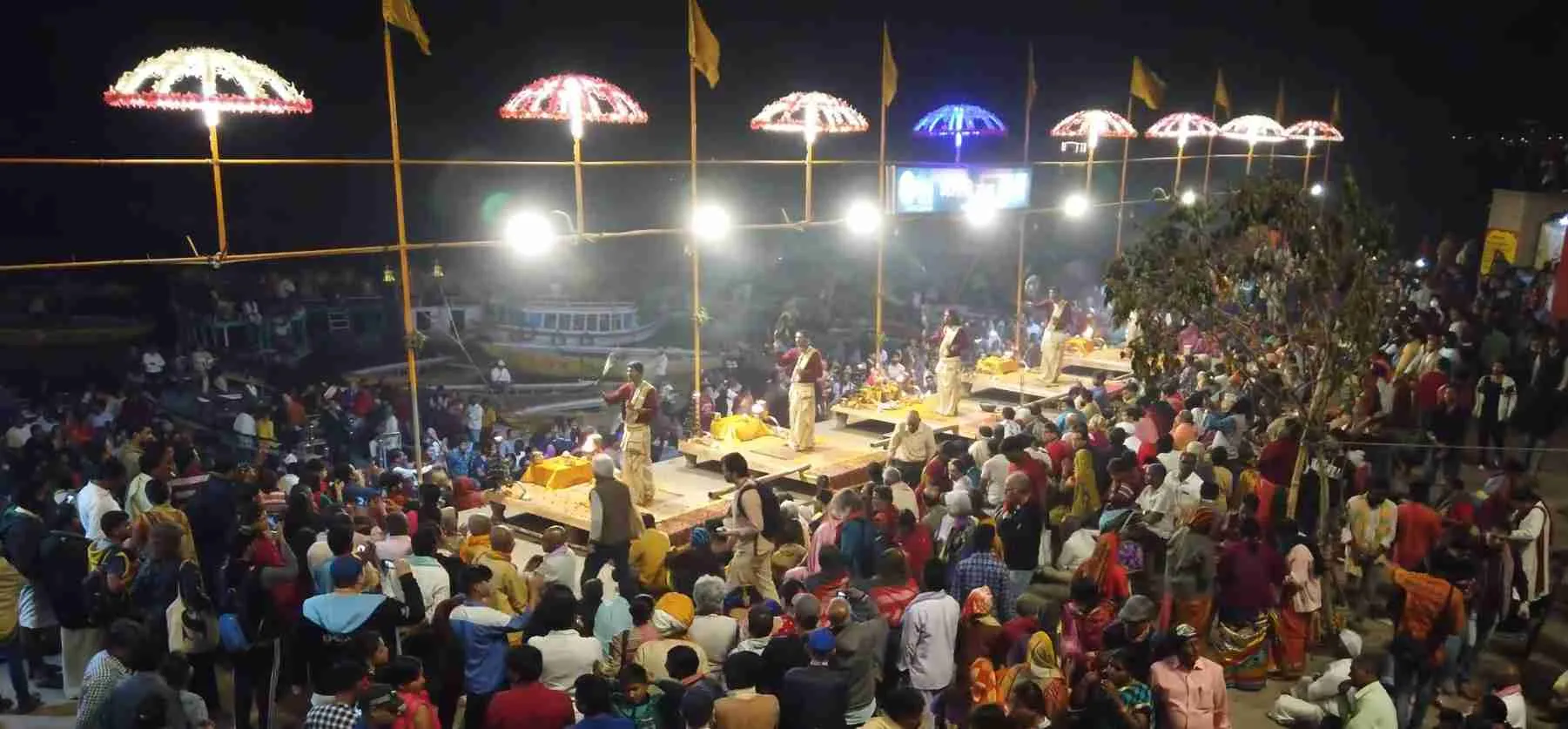
The Ganga Aarti ceremony represents one of Hinduism’s most visually stunning and spiritually profound rituals, performed nightly along the sacred Ganges River at Varanasi’s Dashashwamedh Ghat with devotion unchanged across centuries. Seven young priests conduct synchronized worship using massive brass lamps, conch shells, bells, and incense while thousands of devotees and visitors gather on stone steps and boats witnessing this ancient offering to the river goddess Ganga that captures Varanasi’s essence as India’s spiritual capital.
Key Takeaways
- Spiritual Significance: Daily worship ceremony honoring Ganges as divine mother goddess, offering gratitude for life-sustaining waters while seeking blessings and purification through ritual observance
- Ceremony Structure: Seven priests perform synchronized five-stage ritual lasting 45 minutes featuring progressive offerings from incense and flowers to multi-tiered flame lamps in rhythmic patterns
- Viewing Locations: Experience from crowded ghat steps for immersive proximity, elevated platforms for clear sightlines, or river boats for panoramic perspective each offering distinct advantages
- Cultural Context: Current format established 1991 modernizing ancient practices while maintaining Vedic foundations, blending traditional devotion with accessibility for contemporary audiences
- Photography Opportunities: Low-light capabilities essential for capturing flame movement, priest choreography, crowd devotion, and architectural backdrop without flash which disturbs ceremony atmosphere
- Multiple Locations: Dashashwamedh hosts grand evening spectacle while Assi Ghat offers intimate morning alternative and smaller ghats conduct quieter versions maintaining traditional focus
People Also Ask About Varanasi Ganga Aarti
What is the spiritual meaning of Ganga Aarti?
Ganga Aarti represents devotional offering (aarti) to the Ganges River personified as goddess Ganga in Hindu theology. The ritual expresses gratitude for the river’s life-sustaining properties – providing water for drinking, agriculture, and ritual bathing while carrying away impurities both physical and spiritual according to Hindu belief. Flames symbolize illumination dispelling darkness and ignorance, while conch shells produce sacred sound believed to purify atmosphere and invoke divine presence. Worshippers participate through silent prayer, chanting mantras, or floating small oil lamps (diyas) downstream as personal offerings. The ceremony reinforces cosmic order (dharma) through regular performance maintaining spiritual harmony between human, natural, and divine realms central to Hindu worldview.
How did the Ganga Aarti ceremony develop historically?
Ancient Vedic texts reference river worship and fire rituals forming foundation for contemporary practice, but current synchronized ceremony format originated relatively recently. Local priests began coordinated aarti performances at Dashashwamedh Ghat in 1991, building on centuries of individual worship practices at various ghats. The Gangotri Seva Samiti organization standardized procedures, selected young Brahmin priests, designed unified choreography, and established daily schedule making previously informal devotions into structured spectacle. This modernization balanced traditional religious content with presentation accessible to diverse audiences including foreign visitors unfamiliar with Hindu practices. Earlier documentation shows individual priests or small groups performing simpler aarti ceremonies without today’s elaborate coordination and theatrical elements, though underlying spiritual intentions remained consistent across centuries.
What are the five stages of the aarti ceremony?
The ritual follows prescribed sequence rooted in Vedic worship protocols. First stage involves offering incense (dhoop) producing fragrant smoke believed to purify air and attract divine attention. Second stage presents flowers (pushpa) symbolizing beauty and natural devotion. Third stage incorporates water sprinkled through hand gestures representing cleansing and life’s essential element. Fourth stage features large brass lamps with multiple wicks producing flames moved in circular patterns – the ceremony’s most visually dramatic component. Fifth stage concludes with yak-tail whisks (chamar) and conch shell blowing marking ceremonial completion. Each stage accompanies specific Vedic mantras chanted by priests while bells ring, creating multisensory experience engaging sight, sound, and smell. The sequence mirrors traditional puja (worship) structure performed in temples and homes across India but amplified for public riverfront setting.
Why do people float diyas on the Ganges?
Small leaf boats holding oil lamps and flowers (diyas or deepak) represent individual prayer offerings carried by sacred waters to divine realm. Practitioners light diyas after aarti ceremony, make silent wishes or prayers, and release boats into current watching flames drift downstream. This personal act parallels communal ceremony, enabling individual participation in collective worship. Theological significance involves karma (action-consequence principle) and devotional surrender – releasing diya symbolizes releasing attachments, negative karma, or problems to divine care. Practical purpose includes memorial offerings for deceased relatives, whose souls benefit from Ganges contact according to Hindu belief. The visual effect of hundreds of floating flames creates poetic atmosphere reinforcing spiritual experience while demonstrating faith’s material expression through simple ritual accessible to all regardless of knowledge, caste, or wealth.
Extended multi-day tours – 5+ days
Featured Varanasi Multi-Day Tour Packages

3 days
Varanasi 3-Day Discovery Tour
- ✓ Comprehensive Varanasi experience
- ✓ Expert local guides included
- ✓ All accommodation included
- ✓ Transportation provided

5 days
Varanasi 5-Day Highlights Experience
- ✓ Comprehensive Varanasi experience
- ✓ Expert local guides included
- ✓ All accommodation included
- ✓ Transportation provided

7 days
Varanasi 7-Day Cultural Journey
- ✓ Comprehensive Varanasi experience
- ✓ Expert local guides included
- ✓ All accommodation included
- ✓ Transportation provided

10 days
Varanasi 10-Day Complete Adventure
- ✓ Comprehensive Varanasi experience
- ✓ Expert local guides included
- ✓ All accommodation included
- ✓ Transportation provided
Multi-day tour packages powered by TourRadar. Prices and availability subject to change.
Introduction: Understanding the Ganga Aarti Tradition
Fire worship (agni puja) and river veneration constitute fundamental elements of Hindu religious practice dating to Vedic period over 3,000 years ago. The Ganges River holds unique status among India’s sacred waterways as goddess incarnate rather than merely divine creation. According to Hindu mythology, the celestial river Ganga descended from heaven through Shiva’s hair to earth, preventing destructive force of falling waters from devastating the world. This divine origin story establishes Ganges as purifier, sustainer, and path to liberation (moksha) from endless rebirth cycle.
Varanasi’s association with Ganges worship traces to city’s legendary founding by Shiva himself. Ancient texts describe Lord Shiva establishing residence here making Varanasi his earthly abode. Dying in Varanasi and receiving cremation along the Ganges supposedly guarantees moksha regardless of karma accumulated during lifetime – belief drawing millions of elderly pilgrims hoping to spend final days in the holy city. The 84 ghats (stone steps descending to river) facilitate bathing, cremation, and worship serving as interface between earthly and divine realms.
River worship at Varanasi evolved over centuries from individual devotions to organized community rituals. Historical records describe priests performing morning and evening aartis at various ghats serving local populations and visiting pilgrims. These earlier ceremonies varied in scale and format without standardized choreography or timing. The contemporary synchronized Ganga Aarti emerged from desire to create signature religious experience showcasing Varanasi’s spiritual heritage while accommodating growing tourist interest in authentic Hindu practices.
Understanding aarti requires grasping Hindu concepts of darshan (auspicious viewing of divine), puja (worship ritual), and bhakti (devotional path). The ceremony doesn’t constitute prayer in Western sense of requesting divine intervention but rather expressing gratitude, demonstrating devotion, and maintaining cosmic order through prescribed ritual actions. Participants derive spiritual benefit from witnessing and being present during sacred performance even without understanding Sanskrit verses or theological complexities. The sensory experience – visual spectacle of flames, auditory impact of bells and chants, atmospheric quality of incense, and collective energy of thousands gathered in shared purpose – creates transformative moment transcending language and cultural barriers.
The Ceremony: Structure and Symbolism
Ritual Components and Their Meanings
Seven young Brahmin priests (pandits) conduct the ceremony representing the seven sacred sages (Sapta Rishis) who offered original worship to Mother Ganga according to Vedic tradition. These priests undergo training in Sanskrit mantras, Vedic chanting techniques, and precise choreographic movements ensuring ceremony’s proper execution. They wear coordinated attire – dhoti (traditional wrapped cloth), kurta (loose shirt), and stole or drape in colors varying by season (white, saffron, pink, gold, or red) symbolizing purity and dedication.
The ceremonial stage consists of seven smaller platforms arranged along ghat edge where priests stand facing the river. Central platform holds decorated image or murti of goddess Ganga adorned with garlands and flowers establishing focal point for worship. Before ceremony begins, priests prepare ritual implements including incense holders, flower baskets, water vessels, and most prominently, massive multi-tiered brass lamps (approximately 2-3 feet tall) containing numerous small oil lamps arranged in circular patterns.
Each offering stage carries specific symbolic weight. Incense (dhoop) purifies environment while pleasing divine sense of smell, representing offerings’ aesthetic dimension. Flowers (pushpa) demonstrate nature’s beauty offered to divinity along with devotee’s love expressed through beautiful things. Water (jal) acknowledges river’s life-giving properties while enacting ritual cleansing of space and participants. The flame offering (deepa) constitutes ceremony’s centerpiece – fire representing knowledge, transformation, and divine light dispelling ignorance’s darkness. Priests rotate heavy multi-lamp structures in elaborate patterns requiring strength, coordination, and practice to maintain synchronized movement across seven simultaneous performances.
Accompanying sounds create equally important sensory layer. Conch shells (shankh) blown at ceremony’s beginning announce ritual commencement while producing vibrations considered spiritually purifying. Throughout ceremony, multiple bells of varying sizes ring constantly creating complex soundscape. Sanskrit mantras chanted by priests derive from Vedic texts thousands of years old, praising Ganga’s divine qualities, requesting blessings, and maintaining proper ritual formulation ensuring worship’s efficacy. Participants may join chanting if familiar with verses though silent observation equally acceptable and common.
The Five-Stage Sequence
Ceremony begins shortly after sunset when priests emerge from behind preparation area carrying implements. After brief organizational moment, conch shells sound marking formal commencement. First stage features incense offering where priests hold smoking dhoop holders making circular motions while chanting opening mantras. The fragrant smoke billows across ghat and river creating atmospheric haze catching sunset’s remaining light.
Second stage transitions to flower offering. Priests hold flower baskets or garlands making gestures toward river as if presenting beauty to goddess. Traditional offerings include marigolds, roses, and other flowers considered sacred in Hindu practice. Some variations incorporate flower petals scattered directly into water during this stage. Third stage involves water ritual with priests sprinkling water from sacred Ganges using hand gestures and small vessels, symbolically offering river to itself in circular logic characteristic of Hindu theological concepts.
Fourth stage brings the spectacular flame offering dominating most photographs and memories. Priests lift massive brass lamp structures, each containing numerous small oil lamps whose collective flames create brilliant illumination. In synchronized choreography, all seven priests move lamps through identical patterns – circular rotations, vertical movements, figure-eight traces – creating mesmerizing visual display reflected in river waters. This stage extends longest among the five, approximately 20-25 minutes, with flame patterns becoming increasingly complex as ceremony progresses.
Fifth and final stage employs yak-tail whisks (chamar) waved over the goddess image and toward assembly in blessing gesture. Priests blow conch shells again signaling ceremonial conclusion. The gathering often continues chanting and singing devotional songs (bhajans) for additional 10-15 minutes creating gradual transition from ceremony’s peak intensity to regular evening activity. Priests circulate among front-row attendees offering ceremonial implements for brief holding allowing direct participation in blessing exchange.
Seasonal and Festival Variations
While core ceremony structure remains consistent year-round, seasonal timing variations accommodate changing sunset hours. Summer performance begins approximately 7:00 PM when daylight extends later into evening. Winter start time shifts to 6:00 PM as sunset arrives earlier. These adjustments maintain ceremony’s traditional association with dusk transition (sandhya) considered particularly auspicious for worship in Hindu timekeeping.
Major Hindu festivals amplify the ceremony significantly. Dev Deepavali (November, 15 days after Diwali) transforms all 84 ghats into illuminated tableau with millions of earthen lamps supplementing regular aarti ceremony. Extended performances, additional priests, special mantras, and massive crowds create once-yearly spectacle attracting national and international attention. Kartik Purnima full moon coinciding with Dev Deepavali adds astronomical significance – full moon’s reflection on Ganges combined with lamp flames produces extraordinary visual effect.
Mahashivaratri (February-March) similarly expands aarti as part of all-night Shiva worship throughout Varanasi. Multiple ceremonies occur at various ghats rather than concentration at Dashashwamedh. Ganga Dussehra (May-June) celebrates river’s mythological descent to earth with special prayers and extended ritual sequences. During monsoon flooding (July-September), ceremony occasionally relocates from waterfront when river level rises excessively, performing on elevated ghat sections or nearby buildings while maintaining schedule and devotional intensity.
Experiencing the Ceremony
Viewing Perspectives
Ghat steps provide traditional viewing location placing observers among devotees on stone surfaces sloping toward water. Arriving 60-90 minutes before ceremony start secures better positions though crowd density increases constantly until performance begins. Front row proximity enables detailed observation of priests’ movements, lamp flames’ glow, and ritual implements’ details. However, this positioning requires standing or sitting on stone steps (bring cushion if comfortable seating important), enduring crowd pressure from behind, and accepting obstructed views when those ahead stand during climactic moments. The immersive atmosphere compensates for physical discomfort – surrounded by chanting devotees, incense smoke drifting overhead, and collective devotional energy creates powerful sensory and emotional experience.
Elevated platforms behind ceremonial stages offer reserved seating areas managed by tour operators or ghat authorities. These positions provide unobstructed views of priests’ choreography and comprehensive perspective of ceremony’s synchronized nature visible when watching all seven performers simultaneously. Seating ranges from simple benches to cushioned chairs depending on platform category and pricing. Drawbacks include separation from crowd’s intimate atmosphere and distance from ritual’s immediate sensory impact – incense aroma less noticeable, chant volume diminished, flame heat absent. Photography benefits from elevated angle enabling better composition without crowd interference.
Boat viewing positions observers on river facing ghats from water perspective. This vantage reveals ceremony within broader ghat context – architectural backdrop of temples and palaces, crowd extending hundreds of meters along riverfront, and multiple simultaneous activities creating Varanasi’s characteristic visual density. Boats offer comfort advantages over ghat steps (sitting in boat bottom rather than stone), photographic opportunities capturing reflection patterns in water, and escape route from crowd crush post-ceremony when thousands simultaneously depart narrow lanes. Sound quality diminishes with distance – mantras become murmur, bell clarity fades, and conversation among boat passengers potentially disturbs contemplative atmosphere. Best boat positions anchor directly opposite ceremonial platforms 30-50 meters offshore where proximity maintains engagement while water separation provides compositional perspective.
Arrival and Duration Considerations
Ceremony timing remains relatively fixed with slight seasonal variations. Summer (April-October) performance begins approximately 7:00 PM aligning with later sunset. Winter (November-March) start advances to 6:00 PM following earlier darkness. The ritual itself consumes 40-45 minutes from opening conch blast to final whisks and closing chants. Post-ceremony activities including priest blessings, individual lamp offerings, and devotional singing extend total duration to 60-75 minutes for those remaining through conclusion.
Crowd assembly begins 90-120 minutes before start as vendors, devotees, and tourists claim positions. Front-row ghat seating fills 60-75 minutes beforehand. Arriving 45-60 minutes early typically secures middle-section positioning adequate for ceremony viewing though not optimal for photography or complete ritual engagement. Last-minute arrivals (15-30 minutes before) squeeze into back rows or standing areas with partially obstructed views but still accessing ceremony’s essential elements and atmosphere.
Monsoon season (July-September) introduces uncertainty when heavy rainfall floods ghats or disrupts boat operations. Ceremony relocates to elevated ghat sections or nearby courtyards maintaining schedule despite weather challenges. Checking with hotel staff or ghat locals day-of confirms current location if monsoon conditions prevail. Extreme weather occasionally cancels ceremony entirely though this occurs rarely – priests demonstrate remarkable dedication performing through light rain, extreme heat, or winter cold maintaining unbroken daily tradition.
Participation Protocols
No formal requirements restrict ceremony attendance – all visitors welcome regardless of religion, nationality, or knowledge level. However, cultural sensitivity and practical etiquette enhance experience for self and surrounding community. Modest dress covering shoulders and knees respects religious setting and local norms. Removing shoes before stepping on ghat stones follows Hindu temple protocols though enforcement varies and many visitors retain footwear given lack of secure storage and dirty stone surfaces. Women experiencing menstruation traditionally avoid temple entry though this restriction doesn’t formally apply to open-air ghat ceremonies and individual comfort should guide participation decisions.
Photography permitted but flash usage discouraged as disruptive to ceremony atmosphere and potentially disrespectful to devotional context. Modern cameras and smartphones handle low-light conditions adequately without flash. Video recording acceptable though prolonged phone/camera screen viewing diminishes personal experience – balance documentation with present-moment engagement. Tripods and large equipment bags create obstacles in crowded settings and may face restrictions depending on security concerns or recent incidents.
Conversation during ceremony should minimize volume respecting those engaged in prayer or meditation. Questions or explanations can occur quietly without disturbing neighbors. Phones silenced or muted prevent disruptive ringtones. Leaving before conclusion acceptable if schedules require though navigating exit through dense crowds proves challenging – staying until natural dispersal begins eases departure logistics.
Personal offerings like floating diyas purchased from riverside vendors after ceremony provide optional participation method. Small leaf boats cost minimal amount (typically donated to vendor rather than fixed price) and vendors provide lighting assistance. Making wish or prayer while releasing diya follows informal personal format without prescribed language. This simple act connects individual intention with collective worship creating meaningful memory regardless of religious background or belief system.
Cultural and Historical Context
Ganges in Hindu Theology
Hindu scripture personifies major rivers as goddesses with Ganga holding paramount position. The Puranas (ancient texts) narrate origin story where celestial river flowed only in heaven until King Bhagiratha’s intense penance convinced Ganga to descend earth-ward, enabling his ancestors’ souls salvation through sacred waters. Ganga agreed but warned of destructive force from heaven-to-earth fall. Lord Shiva intervened catching descending waters in his matted hair, releasing controlled flow that became earthly Ganges River. This mythology establishes Shiva-Ganga connection fundamental to Varanasi theology where Shiva’s primary temple overlooks the river he brought to humanity.
Water from Ganges (Ganga jal) holds unique status in Hindu practice beyond ordinary river water. Stored in homes for blessing newborns, used in daily prayers, offered to dying relatives for final sip ensuring peaceful death, and carried nationwide for religious ceremonies despite India’s size and Ganges’ regional geography. The belief in purifying properties extends beyond metaphorical spiritual cleansing to literal washing away of sins accumulated through improper actions, thoughts, or births. This theological framework explains why millions bathe in visibly polluted waters seeking spiritual benefit superseding physical hygiene concerns – faith in divine properties overrides material pollution reality.
River goddess worship predates Hindu systematization, rooted in ancient animistic traditions recognizing nature’s divinity. Early agricultural societies dependent on river flooding for crop irrigation naturally developed reverence for water sources. Over centuries, Vedic religion incorporated and formalized these practices into theological framework giving philosophical depth to practical gratitude. Ganges became not just life-sustaining water source but cosmic mother, divine mercy personified, and liberation pathway – layers of meaning accumulated across millennia creating contemporary complex religious significance.
Varanasi’s Role in Hindu Cosmology
Among India’s thousands of sacred sites, Varanasi occupies supreme position as Shiva’s earthly home. According to tradition, Shiva chose this location for permanent residence making city’s very ground sacred independent of temples or rituals performed there. This divine occupation explains why death in Varanasi supposedly guarantees moksha (liberation from rebirth cycle) – Shiva personally whispers sacred mantra in dying person’s ear ensuring soul’s release from karmic bondage. Consequently, elderly Hindus arrive hoping to die here, and families transport deceased bodies from considerable distances for Varanasi cremation at Manikarnika or Harishchandra Ghats.
City’s ancient name Kashi (meaning “luminous” or “shining”) references spiritual light illuminating consciousness for those dwelling here. Alternative name Banaras derives from city’s position between Varuna and Assi rivers (tributaries joining Ganges at city boundaries) – Varanasi contracting Varuna-Assi. These multiple names reflect layered identity: Kashi emphasizing spiritual essence, Banaras representing cultural heritage, Varanasi signifying administrative present.
Archaeological evidence confirms continuous habitation spanning 3,000-5,000 years making Varanasi among world’s oldest living cities. This temporal depth creates palimpsest landscape where contemporary activity overlays medieval Muslim architecture, which overlies ancient Hindu temples, which sit atop pre-Vedic settlement traces. Walking Varanasi’s lanes means traversing not just distance but centuries of accumulated human devotion, architectural expression, and cultural evolution. The Ganga Aarti ceremony participates in this continuity – modern format innovating upon ancient foundations while maintaining essential theological purposes unchanging across millennia.
Development of Contemporary Format
Before 1991, aarti ceremonies occurred informally at various ghats with individual priests or small groups performing worship without standardized choreography. These earlier versions served primarily local devotees and regional pilgrims, operating as genuine religious practice rather than organized spectacle. Tourist interest remained peripheral except among travelers specifically seeking Hindu religious experiences.
The Gangotri Seva Samiti (organization dedicated to Ganges worship) conceived coordinated ceremony emphasizing visual impact and synchronized performance while maintaining theological authenticity. Seven young Brahmin priests trained in Vedic chanting received instruction in choreographed movements, unified timing, and theatrical presentation techniques. Daily schedule established at fixed post-sunset time replaced informal varying practice. Standardized attire, identical implements, and rehearsed sequences transformed individual devotions into collective ritual performance.
This development sparked debate within Hindu community regarding authenticity versus commercialization. Critics argued theatrical elements compromised genuine devotion, transforming sacred ritual into tourist entertainment. Supporters countered that accessibility served dharma (religious duty) by exposing broader audiences to Hindu practices, potentially inspiring spiritual inquiry among previously uninterested observers. The ceremony’s continued performance decades later with massive popularity suggests compromise achieved – maintaining religious substance while acknowledging contemporary audience expectations for organized, comprehensible presentation.
Current ceremony incorporates traditional elements unchanged for centuries alongside modern innovations. Vedic mantras remain identical to ancient texts, offering sequence follows prescribed puja protocols, and theological purpose continues expressing Ganges worship. However, coordinated multi-priest choreography, fixed scheduling, designated viewing areas, and tour operator involvement represent contemporary adaptations. This hybrid nature characterizes much Hindu practice in modern India – preserving ancient wisdom while adapting transmission methods for changed social contexts.
Photography and Videography
Technical Considerations
Low-light conditions present primary technical challenge requiring camera settings and equipment appropriate for evening riverfront environment. Ceremony begins at dusk when natural light fades rapidly, relying primarily on flame illumination from brass lamps producing warm orange-yellow tones contrasting cool blue twilight sky. This dynamic range challenges exposure decisions – bright flames risk overexposure while surrounding crowd and architecture fall to deep shadow if exposing for highlights.
Camera settings balancing these factors include high ISO (1600-6400 on modern sensors), wide aperture (f/1.4-f/2.8 if lens permits), and shutter speed minimally fast enough preventing motion blur from priest movements and flame flickering (1/100-1/250 second). Tripods stabilize camera enabling longer exposures for scenes emphasizing architecture or crowd context rather than freezing ritual action. However, crowded conditions often prohibit tripod usage requiring elevated ISO and stabilized hand-holding technique.
Lenses offering flexibility include 24-70mm zoom covering wide crowd scenes and tighter priest details, 70-200mm for compression effects isolating subjects against blurred backgrounds, and prime lenses (35mm, 50mm, 85mm) offering superior low-light performance through wider maximum apertures. Smartphone cameras suffice for casual documentation though limitations become apparent in low light – excessive noise, inability to freeze motion clearly, and limited dynamic range requiring careful composition avoiding extreme brightness contrasts.
Flash photography technically possible but culturally inappropriate, disturbing devotional atmosphere and potentially offending participants. The intrusive artificial light destroys ambiance while adding little aesthetic value – ceremony’s beauty lies partly in natural flame glow and twilight transitions that flash obliterates. Modern cameras handle available light adequately making flash unnecessary for competent photography while demonstrating respect for religious context.
Compositional Approaches
Wide establishing shots capture ceremony within ghat context showing architectural backdrop, crowd density, and river setting establishing comprehensive scene documentation. Position elevated if possible or shoot from boat achieving perspective impossible at ground level. Timing these shots during twilight balances sky detail with ceremony illumination before darkness reduces background to blackness.
Medium shots focus on priests’ synchronized movements showing multiple performers simultaneously demonstrating choreographed coordination. Frame all seven priests if positioning allows, or select 3-4 for compositional balance. Horizontal orientation accommodates linear arrangement though vertical framing isolates individual priests showing detail impossible in wide compositions. Shoot during flame offering stage when visual drama peaks with large brass lamps creating bright foreground interest.
Close portraits of individual priests capture facial expression, flame reflections in eyes, and ritual intensity. Longer lenses (85-200mm) enable tight framing from distance respecting ceremonial space rather than intruding into performance area. Watch for moment priests lift heavy lamps showing physical effort alongside spiritual dedication. Catch flame light illuminating faces from below creating dramatic shadows and golden skin tones characteristic of this lighting quality.
Detail shots emphasize ritual implements – brass lamp designs with their multiple tiers and decorative elements, incense smoke patterns catching light, flower garland colors and textures, and water droplets during ritual sprinkling. Macro or telephoto capability enables isolating these elements without approaching too closely. Shoot details before or after main ceremony when access easier and light conditions more controllable.
Crowd and atmosphere photography documents human dimension showing devotee faces, raised hands in prayer, floating diyas, and collective participation. Backlighting from ceremony flames can silhouette crowd members against bright background emphasizing ritual’s central importance. Wide angles include both priests and assembled mass conveying event’s scale and communal nature.
Ethical Photography Guidelines
Respect religious context by prioritizing ceremony observation over photograph acquisition – experience first, document second. Arriving position yourself for viewing before considering photographic angles. Avoid blocking others’ views with raised cameras or shifting positions constantly chasing better shots. Be present in moment rather than viewing entire ceremony through viewfinder missing direct sensory experience.
Never photograph cremation ceremonies at nearby ghats (Manikarnika, Harishchandra) – this represents deeply private family moment where photography constitutes serious disrespect. Signs posted at cremation ghats explicitly prohibit photography though enforcement varies. Cultural sensitivity and human decency should guide behavior regardless of rule enforcement.
Request permission before photographing individuals in close portraits, particularly priests, sadhus (holy men), or devotees in moments of intense prayer or emotion. Many appreciate respectful request and consent to photography, some request small donation (₹20-100 typically) which represents fair exchange for their image. Others prefer privacy which should be honored without argument or attempting surreptitious shooting.
Share photographs thoughtfully considering context and potential misrepresentation. Hindu religious practices often misunderstood by global audiences – captions explaining significance and context help prevent photographs reinforcing stereotypes or exoticizing spiritual traditions. Commercial use of images depicting identifiable individuals raises ethical questions requiring careful consideration of consent, compensation, and representation dignity.
Alternative Aarti Experiences
Assi Ghat Morning Ceremony
Located at Varanasi’s southern ghat boundary where Assi River joins Ganges, this location hosts morning aarti ceremony (5:00-5:45 AM) combining worship with cultural program called Subah-e-Banaras (Varanasi Morning). The format differs significantly from Dashashwamedh’s evening spectacle – smaller scale with single priest or small group conducting ritual, yoga session for participants, classical music performance on traditional instruments, and relaxed atmosphere emphasizing spiritual practice over theatrical presentation.
Crowd size remains manageable compared to Dashashwamedh’s thousands – typically 50-200 attendees depending on season and day of week. This intimacy enables closer observation of ritual details and personal interaction with performing priest. The morning timing attracts different demographic – serious practitioners, spiritual seekers, local residents beginning daily routine, and visitors willing to rise before dawn for authentic experience. Sunrise over Ganges following ceremony provides spectacular natural display worth early wake-up investment.
Assi area generally offers calmer Varanasi experience with numerous cafés, bookstores, and guesthouses catering to extended-stay visitors, students, and cultural tourists. Morning aarti becomes natural part of neighborhood rhythm rather than isolated tourist event. Combining sunrise boat ride, morning aarti participation, and breakfast at riverside café creates quintessential Varanasi morning impossible to replicate during crowded evening schedules elsewhere.
Other Ghat Ceremonies
Rajendra Prasad Ghat (immediately adjacent to Dashashwamedh) sometimes hosts smaller aarti ceremonies particularly during festival periods when Dashashwamedh overflow requires additional venues. The proximity means similar atmosphere and architectural context with significantly reduced crowds. Photography enthusiasts prefer this location for clearer shooting angles without Dashashwamedh’s shoulder-to-shoulder density.
Smaller ghats including Kedar, Panchganga, and Shivala occasionally conduct informal aartis maintained by local priests serving neighborhood communities rather than tourist audiences. These ceremonies lack synchronized choreography and theatrical elements but offer glimpse into genuine local devotional practice unchanged by commercial tourism pressures. Finding these requires exploring beyond main tourist zone, asking locally, or simply walking ghat circuit during evening hours observing where ritual activities concentrate.
During monsoon flooding when water level rises substantially, some ghats become inaccessible forcing ceremonies to relocate temporarily. Priests maintain daily practice despite environmental challenges, performing in nearby temples, elevated ghat sections, or building courtyards. This flexibility demonstrates devotion’s priority over location convenience while revealing religion’s practical adaptation to natural cycles.
Beyond the Ceremony
Related Spiritual Practices
Morning bathing ritual (snana) represents daily practice for thousands of Varanasi residents and pilgrims who descend to ghats before dawn immersing in Ganges waters. This purification precedes temple visits, household prayers, or simply day’s beginning. Observing this practice from sunrise boat ride reveals Hinduism’s living nature – not merely ancient tradition preserved artificially but continuing daily life component for contemporary believers.
Cremation ceremonies at Manikarnika and Harishchandra Ghats operate continuously with bodies arriving from across India for sacred fire (Agni) disposal at Varanasi. Hindu theology considers cremation essential for soul’s release, and Varanasi cremation carries particular significance due to city’s association with moksha. Watching cremation pyres burn while priests perform last rites and families complete final duties confronts mortality directly in manner Western cultures typically avoid. This exposure can prove transformative though photography and intrusive observation remain strictly inappropriate respecting grief’s privacy.
Puja ceremonies at numerous temples throughout old city occur throughout day following Hindu festival calendar and daily worship schedules. Kashi Vishwanath Temple (Shiva’s primary shrine) draws largest crowds but Annapurna Temple, Durga Temple, Sankat Mochan Hanuman Temple, and countless neighborhood shrines host regular worship accessible to visitors. Understanding puja protocols – shoe removal, modest dress, appropriate conduct – enables participation in these complementary religious experiences contextualizing Ganga Aarti within broader Hindu practice framework.
Educational Resources
Several organizations offer deeper understanding of Hindu philosophy, Sanskrit texts, and Varanasi’s spiritual heritage through courses, lectures, and guided discussions. Sampurnanand Sanskrit University provides formal education in traditional subjects while occasionally hosting public lectures. Banaras Hindu University maintains cultural programs and museum collections documenting regional history and religious practices. International Yoga Foundation and similar centers teach meditation, yoga philosophy, and Vedic concepts connecting physical practices with spiritual frameworks.
Private scholars and retired professors occasionally accept students for informal tutoring in Sanskrit, Hindi, classical music, or philosophical systems. These connections develop through extended Varanasi stays and local network building rather than pre-arranged booking, requiring flexible schedule and genuine interest beyond casual tourism. The knowledge transmission occurring through such informal channels often surpasses structured programs in depth and personalization though requiring patience finding appropriate teachers.
Reading materials available at English-language bookstores near Assi Ghat include translations of Hindu scriptures (Bhagavad Gita, Upanishads, Ramayana), academic studies of Hindu practice, and Varanasi-specific histories. Investing time in background reading before visiting transforms ceremony from exotic spectacle to comprehensible spiritual practice with accessible intellectual framework.
Frequently Asked Questions
What language are the aarti mantras?
Priests chant Sanskrit verses derived from Vedic texts thousands of years old. Sanskrit represents Hinduism’s liturgical language analogous to Latin in Catholic tradition – preserved for religious purposes though not spoken conversationally by contemporary Indians except scholars and priests. The mantras praise Ganga’s divine qualities, invoke blessings upon participants, and maintain ritual protocols ensuring worship’s proper execution according to scriptural prescriptions. Most Indian attendees understand occasional words through Sanskrit’s influence on modern Hindi but don’t comprehend full verses without specialized study. Foreign visitors can appreciate chanting’s rhythmic and sonic qualities without translation, though understanding basic meanings deepens appreciation. Some tour guides provide general explanations though word-by-word translation during ceremony proves impractical and unnecessary for experiential benefit.
Can anyone participate in the ceremony?
The ceremony welcomes all observers regardless of religion, nationality, gender, or knowledge level with no formal requirements restricting attendance. Hindu tradition generally embraces spiritual seeking from any background, and Ganga Aarti exemplifies this inclusive approach particularly given tourism’s economic importance to contemporary Varanasi. Respectful presence suffices – observing quietly, dressing modestly, minimizing disruptive behavior. Direct participation possibilities include purchasing and releasing floating diyas after ceremony, joining crowd chanting if comfortable with Hindu prayers, or receiving ceremonial blessings when priests circulate post-ceremony. However, performing ritual elements reserved for trained priests requires appropriate background and authorization – casual visitors observe rather than conduct ceremony. This observational role doesn’t diminish spiritual benefit according to Hindu darshan concept where witnessing divine ritual imparts blessing independent of active performance. Respectful presence and open receptivity to experience enable meaningful participation transcending religious boundaries.
What makes Dashashwamedh Ghat special for aarti?
The ghat’s name derives from Hindu mythology where Lord Brahma performed Dashashwamedh Yajna (sacrifice of ten horses) to welcome Shiva to earth. This legendary association establishes sacred significance though historical accuracy remains uncertain given oral tradition’s timeline and mythology’s symbolic rather than literal nature. Archaeological evidence confirms continuous worship activity at this location for centuries with medieval period reconstruction creating current ghat architecture. The central location between Varanasi’s upstream and downstream ghat zones, proximity to Kashi Vishwanath Temple (walking distance through narrow lanes), and broad stone platform accommodating large gatherings combine making this ghat practical choice for major ceremony staging. Wide steps allow thousands of viewers while maintaining clear performance space. The Gangotri Seva Samiti selected this ghat for synchronized aarti debut 1991 establishing tradition that continues strengthening through decades of consistent performance. Current fame derives largely from this ceremony’s popularity creating self-reinforcing cycle where designation as “main aarti location” attracts crowds confirming its importance.
Why do they use fire in Hindu worship?
Fire (Agni) occupies central position in Hindu theology as divine element serving multiple sacred functions. The Vedas personify Agni as messenger between human and divine realms – offerings placed in fire literally carried to gods through rising smoke and heat. Fire represents transformation converting solid offerings to ethereal smoke analogous to soul’s transformation from earthly material to spiritual liberation. The element symbolizes knowledge and illumination dispelling ignorance’s darkness through light both literal and metaphorical. Fire’s purity purifies anything it touches making it appropriate for worship contexts where establishing sacred space and destroying spiritual impurities proves essential. Aarti specifically employs fire as visible offering demonstrating devotion through bright flames observable to both human and divine witnesses. The circling motion of lamps traces sacred geometry (circles representing infinity, completeness) while flame movement captures wind element adding multidimensional quality to ritual. Hindu households maintain daily fire rituals (agnihotra) predating elaborate temple ceremonies, and cremation requires fire disposal demonstrating element’s presence across Hindu practice from birth ceremonies to death rites to daily worship like Ganga Aarti.
How has tourism affected the ceremony?
Tourism transformed Ganga Aarti from local religious practice into major attraction drawing international audiences. This shift generated mixed effects. Positively, increased interest preserved traditional knowledge by creating economic incentive maintaining priesthood training, Sanskrit chanting transmission, and ritual expertise that might otherwise decline as modern India’s priorities shift. Tourism revenue supports ghat maintenance, priest salaries, and religious infrastructure requiring substantial funding. International exposure raises Hindu practice’s global profile, fostering cross-cultural understanding and spiritual dialogue. Negatively, commercial pressures encourage theatrical elements potentially compromising devotional authenticity. Crowd sizes reached levels diminishing intimate religious experience for serious practitioners who must compete with casual tourists for viewing access. Photography obsession means many attendees experience ceremony through camera screens rather than direct presence. Economic motivations introduce aggressive boat touts, unofficial guides, and vendor harassment disrupting spiritual atmosphere. Ghat commercialization with shops, restaurants, and hotels catering to tourist preferences alters neighborhood character from purely residential and religious to mixed-use entertainment zone. The ceremony itself maintains religious substance but context changed significantly from pre-tourism era when primarily local devotees attended without contemporary crowds, cameras, and commercial infrastructure. Whether this represents acceptable evolution or problematic corruption generates ongoing debate within Hindu community and tourism studies circles.
Are there similar ceremonies elsewhere in India?
River aarti ceremonies occur at numerous locations along Ganges and other sacred rivers throughout India. Haridwar in Uttarakhand (where Ganges exits Himalayas to plains) hosts nightly aarti at Har Ki Pauri ghat featuring synchronized priest performances similar to Varanasi’s ceremony. Rishikesh further upstream conducts multiple ghat aartis with smaller scale but beautiful mountain backdrop settings. These northern locations attract domestic pilgrims and yoga tourists creating different demographic mix than Varanasi. Allahabad’s Sangam (confluence of Ganges, Yamuna, Saraswati rivers) sees ceremonial worship particularly during Kumbh Mela festival period though daily aarti practice less formalized than Varanasi. Smaller scale river worship occurs at countless ghats along Ganges route from Himalayas to Bay of Bengal with local variations reflecting regional customs while maintaining core fire-and-water ritual elements. Other sacred rivers including Narmada, Godavari, and Kaveri host similar though less famous aarti ceremonies in western and southern India. Beyond riverfront settings, major temples throughout India conduct evening aarti ceremonies using comparable ritual structure adapted to temple rather than open-air contexts. Varanasi’s Ganga Aarti achieved particular fame due to scale, synchronized choreography, tourist infrastructure, and cultural documentation but represents specific iteration of widespread Hindu worship practice rather than unique phenomenon.
What happens during monsoon season?
Monsoon rains (July-September) bring Ganges water level rises of 4-6 meters potentially flooding lower ghat steps where ceremony normally occurs. When flooding reaches performance platforms, priests relocate ceremony to elevated ghat sections, nearby building courtyards, or covered temple spaces maintaining daily schedule despite environmental challenges. The performance area becomes more cramped and viewing angles less optimal, but ceremony proceeds demonstrating devotional commitment superseding physical convenience. Heavy rain during ceremony creates atmospheric experience with steam rising from hot lamps, umbrellas sprouting among crowd, and priests performing seemingly undeterred by elements. Some visitors appreciate monsoon aarti’s dramatic quality and reduced tourist crowds (many avoid rainy season) while others find discomfort and logistical complications outweigh atmospheric benefits. Boat viewing becomes impossible during extreme weather when river current too strong or visibility too poor for safe navigation. Hotels and local contacts day-of confirm current ceremony location and conditions if planning attendance during monsoon uncertainty. Despite challenges, priests maintain remarkable consistency with only extreme flooding or dangerous weather causing occasional cancellations across decades of daily performance.
How do priests prepare for the ceremony?
Selected priests undergo training in Sanskrit mantra pronunciation, Vedic chanting techniques, choreographic movements, and ritual protocols before joining aarti performance roster. This preparation occurs through traditional guru-shishya (teacher-student) transmission where experienced priests mentor newcomers, correcting pronunciation, demonstrating proper movements, and explaining theological significance behind ritual elements. Physical conditioning proves necessary given heavy brass lamps’ weight (approximately 15-20 kilograms) requiring strength to lift and rotate repeatedly for 20+ minutes without visible strain. Priests practice synchronized timing ensuring all seven performers move identically creating visual coordination essential to ceremony’s impact. Before each evening’s performance, priests conduct personal purification including bathing, changing into ceremonial attire, and preparatory prayers establishing appropriate spiritual state for conducting worship. They verify implements’ condition, arrange platforms, and coordinate timing with organizational staff managing crowds and logistics. Daily performance requires dedication maintaining quality and focus despite physical demands and repetitive nature. Senior priests oversee rotation ensuring consistent standards as younger practitioners graduate from training to full participation. This systematic preparation distinguishes formalized contemporary aarti from earlier informal practices while maintaining religious authenticity through proper ritual knowledge transmission.
What should I do after watching the ceremony?
Immediate post-ceremony period offers several meaningful activities. Purchase small leaf boats with oil lamps (diyas) from riverside vendors, light flames, make personal wishes or prayers, and release into river watching currents carry offerings downstream. This simple act provides direct participation opportunity requiring no religious knowledge while creating personal ritual moment. Browse vendors selling religious items, handicrafts, and souvenirs though quality varies dramatically – better purchases often found during daylight hours when selection broader and lighting enables quality assessment. Walk ghat circuit observing evening activities as temples conduct their own worship ceremonies, sadhus gather at fire pits, and local families conclude daily riverside routines. The post-aarti energy creates special atmosphere worth experiencing beyond ceremony itself. Alternatively, many visitors retreat to rooftop restaurants enjoying dinner while processing experience, discussing significance with companions, or simply absorbing atmosphere quietly. Returning to accommodations immediately also valid choice particularly if crowds feel overwhelming or physical fatigue sets in from standing during ceremony. Next morning considers sunrise boat ride showing completely different Varanasi character – peaceful rather than crowded, natural rather than theatrical, contemplative rather than celebratory. This dawn-to-dusk rhythm reveals city’s full complexity beyond single ceremony.
Is there any etiquette for floating diyas?
Floating diya ritual follows informal personal format without strict prescribed protocols. Purchase leaf boats from vendors positioned along ghats after ceremony – prices typically ₹20-50 depending on size and decoration though often given freely with donation requested rather than fixed charge. Vendors provide lighting assistance using established flame or lighter. Stand at ghat edge (exercise caution on wet stones), hold boat carefully avoiding premature flame extinguishing, make silent wish or prayer according to personal belief system, and gently release into current rather than throwing forcefully which might sink boat immediately. Watch briefly as currents carry diya downstream – some tradition suggests successful journey indicates favorable outcome for prayer though most participants simply enjoy visual beauty without superstitious interpretation. No specific words required – silent intention suffices whether religious prayer, personal aspiration, or memorial thought for deceased. The offering can honor Hindu deities, recognize other religious figures, express gratitude generally, or simply participate in cultural practice without specific spiritual content. Sincerity matters more than theological correctness according to Hindu devotional tradition emphasizing heart’s intention over ritual precision. Photography popular during this activity though considerate positioning avoids blocking others’ access or obstructing their ritual moments. Environmental concern emerging regarding thousands of daily leaf boats contributing river pollution, though traditional materials decompose naturally unlike plastic alternatives unfortunately gaining market share.