Valletta 3-Day Itinerary 2026: First-Time Visitor Guide
Valletta rewards careful planning with experiences that stretch far beyond its compact 0.8-square-kilometer peninsula. Europe’s smallest capital city packs UNESCO-recognized Baroque architecture, Caravaggio masterpieces, fortified bastions overlooking two harbors, and a living urban fabric where Maltese families still occupy centuries-old townhouses. This three-day itinerary balances Valletta’s iconic landmarks with quieter side streets, museum discoveries, harbor perspectives, and strategic day trips that contextualize the city within Malta’s broader cultural landscape, maximizing what first-time visitors can realistically accomplish while maintaining a sustainable pace that allows genuine engagement rather than superficial checklist tourism.
Key Takeaways: Valletta 3-Day Itinerary 2026
- Budget Planning 2026: Mid-range travelers spend €155-215 per person daily assuming two sharing hotel accommodation. Budget travelers need €70-90 per person daily with hostel or budget hotel stays, while luxury visitors invest €330-470 per person daily for boutique hotels and premium dining experiences.
- Optimal Arrival Strategy: Arrive Saturday or Sunday to experience Valletta at its most local before Monday’s cruise ship crowds. The 7-day Explore Card at €25 provides unlimited bus travel from airport arrival through your three days plus strategic day trips, eliminating per-journey costs that accumulate quickly on single €2-2.50 tickets.
- St. John’s Co-Cathedral Priority: Reserve tickets cost €15 for adults in 2026, with reduced rates at €12 for seniors and students. Arrive when doors open at 9:00 AM Monday through Saturday to photograph the marble floor tombstones in natural light before tour groups arrive, dedicating 90-120 minutes to properly absorb Caravaggio’s “Beheading of Saint John the Baptist” and the cathedral’s overwhelming Baroque interior.
- Day Trip Enhancement: Malta’s compact geography makes Mdina, Rabat’s catacombs, and Dingli Cliffs accessible within single day trips using public buses. The Three Cities boat crossing from Valletta provides harbor perspectives impossible to grasp from land, contextualizing Valletta’s strategic position that made it the Mediterranean’s most fortified stronghold.
- Weather-Responsive Planning 2026: May through October delivers consistent sunshine with temperatures ranging 23-32°C, ideal for harbor walks and rooftop dining. November through April sees occasional rain and cooler temperatures of 12-18°C, requiring flexible daily schedules that prioritize indoor museums during weather disruptions while keeping outdoor bastions for clear afternoon light.
- Accommodation Location Strategy: Stay within Valletta’s walls for maximum walking access to all major sites within 15 minutes. Alternatively, Sliema offers more accommodation options at lower prices with frequent ferry service that reaches Valletta’s waterfront in 10 minutes for €2-3, providing harbor views unavailable from land-locked city center hotels.
People Also Ask About Valletta 3-Day Itinerary 2026
How much does a 3-day Valletta trip cost in 2026?
Mid-range travelers spend €155-215 per person daily, totaling €465-645 for three days assuming two people sharing hotel accommodation. This includes mid-range hotels at €120-160 per room nightly divided by two, meals ranging €48-65 daily per person, transport using the €25 weekly Explore Card, and attraction entries plus tours averaging €35-55 daily. Budget travelers need €70-90 per person daily or €210-270 total for three days using budget hotels or hostels, eating at casual restaurants, and prioritizing free attractions. Luxury travelers invest €330-470 per person daily or €990-1,410 for three days with boutique hotels, fine dining, private tours, and premium experiences.
What should I do on my first day in Valletta 2026?
Start your first morning at St. John’s Co-Cathedral when doors open at 9:00 AM, spending 90-120 minutes with Caravaggio’s masterpieces and the marble floor tombstones before tour groups arrive. Walk Republic Street’s limestone facades to Upper Barrakka Gardens by 11:30 AM to watch the noon cannon salute overlooking Grand Harbour, then explore the Grand Master’s Palace State Rooms featuring Baroque ceiling paintings and Knights of Malta artifacts. After lunch at a traditional Maltese restaurant, walk the Valletta Waterfront’s 250-meter warehouse arcade, cross to the Three Cities via water taxi for harbor views, then return for sunset from Lower Barrakka Gardens with views toward Fort St. Angelo and Vittoriosa’s fortified peninsula.
Can I visit Malta’s other attractions from Valletta in 3 days?
Malta’s compact size makes strategic day trips feasible within a three-day Valletta itinerary. Bus routes 51, 52, and 53 reach Mdina’s fortified hilltop capital in 45-60 minutes from Valletta, allowing morning exploration of the silent city plus afternoon visits to Rabat’s Roman catacombs and Dingli Cliffs’ coastal views before returning by evening. The Gozo Highspeed ferry from Valletta’s Lascaris Wharf reaches Mġarr Harbour in 45 minutes, enabling full-day Gozo exploration including Victoria Citadel, Dwejra’s coastal formations, and Xlendi Bay swimming. Alternatively, buses to Marsaxlokk’s fishing village, Blue Grotto’s coastal caves, and Ħaġar Qim’s prehistoric temples all depart from Valletta terminus with journey times under one hour.
Is Valletta walkable or do I need transportation in 2026?
Valletta’s 1.2-kilometer length and 600-meter width make the entire UNESCO city walkable in under 30 minutes end-to-end, with all major attractions reachable within 15 minutes from any accommodation inside the fortifications. The city’s steep topography includes staircases connecting upper and lower streets, manageable for most visitors but challenging with heavy luggage or mobility limitations. Transportation becomes essential for day trips outside Valletta, where the €25 seven-day Explore Card provides unlimited access to Malta’s comprehensive bus network connecting Mdina, the Three Cities, Sliema, St. Julian’s, and airport transfers. The free Barrakka Lift connects Lower Barrakka Gardens with the Valletta Waterfront, eliminating steep staircase climbs when accessing harbor-level attractions and ferry terminals.
Extended multi-day tours – 5+ days
Featured Malta Multi-Day Tour Packages
3 days
Malta 3-Day Discovery Tour
- ✓ Comprehensive Malta experience
- ✓ Expert local guides included
- ✓ All accommodation included
- ✓ Transportation provided
5 days
Malta 5-Day Highlights Experience
- ✓ Comprehensive Malta experience
- ✓ Expert local guides included
- ✓ All accommodation included
- ✓ Transportation provided
7 days
Malta 7-Day Cultural Journey
- ✓ Comprehensive Malta experience
- ✓ Expert local guides included
- ✓ All accommodation included
- ✓ Transportation provided
10 days
Malta 10-Day Complete Adventure
- ✓ Comprehensive Malta experience
- ✓ Expert local guides included
- ✓ All accommodation included
- ✓ Transportation provided
Multi-day tour packages powered by TourRadar. Prices and availability subject to change.
Introduction: Planning Your First Valletta Experience in 2026
Valletta operates simultaneously as living city and open-air museum, where 6,000 residents occupy Baroque townhouses alongside visitors photographing the same limestone facades the Knights of St. John constructed after the Great Siege of 1565. This fundamental duality shapes intelligent itinerary planning—certain streets transform into tourist thoroughfares during cruise ship hours while quieter lanes maintain residential rhythms unchanged for decades. The city’s grid layout, imposed by military engineer Francesco Laparelli and executed by Girolamo Cassar, creates deceptively simple navigation where parallel streets descend from the upper bastions to both Grand Harbour and Marsamxett Harbour sides, yet discovering Valletta’s layers requires deliberate exploration beyond Republic Street’s obvious path.
Three days provides sufficient time to experience Valletta’s essential attractions without exhausting the medieval-to-present narrative compressed into its fortified peninsula. First-time visitors often underestimate the city’s density—St. John’s Co-Cathedral alone warrants two hours for proper engagement with Caravaggio’s work and the marble floor’s 400 Knights’ tombstones, while the Grand Master’s Palace State Rooms, National Museum of Archaeology, and Casa Rocca Piccola each demand similar attention spans. Strategic itinerary design integrates these intensive cultural experiences with harbor walks offering Mediterranean perspectives, neighborhood wandering that reveals residential Valletta beyond tourist zones, and timed day trips to Mdina’s silent hilltop capital or the Three Cities’ fortified peninsulas that contextualize Valletta’s military history.
Valletta’s 2026 tourism infrastructure balances accessibility with preservation challenges. The city remains walkable end-to-end in 30 minutes, yet steep topography creates stamina demands that afternoon rest periods acknowledge. Accommodation within Valletta’s walls maximizes morning and evening hours when natural light transforms limestone facades and cruise crowds dissolve, though limited options and premium pricing drive many visitors to Sliema’s hotels across the harbor with frequent ferry connections. Transportation planning hinges on the €25 seven-day Explore Card providing unlimited bus access from airport arrival through strategic day trips, eliminating per-journey costs that accumulate quickly on Malta’s €2-2.50 single tickets covering minimal distances.
This itinerary structures three days around several core principles: morning priority for indoor attractions before Mediterranean heat and tour groups intensify, afternoon harbor perspectives when natural light illuminates fortifications from optimal angles, flexible timing that accommodates Valletta’s actual pace rather than checklist urgency, and strategic day trip integration that expands understanding beyond the capital’s boundaries. Daily plans assume mid-range energy levels with afternoon breaks, walking stamina for 8-12 kilometers spread across morning and evening periods, and genuine engagement with fewer sites rather than superficial exposure to exhaustive lists. Budget guidance reflects 2026 pricing across three tiers, acknowledging that Valletta accommodates backpackers eating pastizzi from bakery windows and luxury travelers booking boutique palazzos with equal hospitality, provided each understands the city’s actual costs versus imagined Mediterranean bargains.
Essential Valletta 2026 Pre-Arrival Planning
Booking Accommodation: Location and Timing Strategy
Accommodation location fundamentally shapes Valletta itinerary execution. Staying within the fortified city eliminates morning commutes and enables spontaneous evening returns to Upper Barrakka Gardens for sunset or late-night walks through illuminated Republic Street after dinner. Valletta’s limited accommodation stock concentrates in converted townhouses and boutique hotels, with mid-range options ranging €120-160 per room nightly and luxury boutique palazzos reaching €300-400 per room. Budget travelers find fewer choices, with the handful of guesthouses and small hotels charging €70-90 per room, often lacking elevator access in multi-story buildings predating modern construction standards.
Sliema presents alternative accommodation strategy with greater hotel density, more competitive pricing, and sea-view rooms overlooking Valletta’s fortifications from across Marsamxett Harbour. Mid-range Sliema hotels range €100-140 per room with better breakfast spreads and rooftop pools absent from Valletta’s space-constrained properties, while budget options drop to €60-80 per room in converted apartments. The trade-off involves ferry dependence—Valletta Ferry Service connects Sliema to Valletta Waterfront in 10 minutes for €2-3, running from 6:45 AM with last departures around 11:00 PM, adequate for most tourist schedules but constraining late-night Valletta dining or early cathedral photography sessions.
Booking timing affects pricing significantly in Malta’s seasonal market. Summer months from June through September see Valletta hotels at peak rates with limited last-minute availability as European families and Mediterranean cruise passengers maximize warm-weather travel. Booking three to four months ahead secures better rates and preferred properties, particularly important for the handful of characterful townhouse conversions with Maltese tile floors and traditional enclosed balconies that evoke period atmosphere impossible in modern construction. Winter months from November through March offer substantially lower rates, sometimes dropping 30-40% below summer pricing, with immediate availability even days before arrival, though weather unpredictability requires flexible daily planning when rain disrupts outdoor site visits.
Understanding Valletta’s 2026 Transportation System
Malta Public Transport operates comprehensive bus service connecting Valletta to every significant destination on the main island, with the capital’s bus terminus just outside City Gate serving as the radial hub for virtually all routes. Single journey tickets cost €2 in winter months from October through mid-June and €2.50 in summer from mid-June through mid-October, valid for two hours with free transfers. These per-journey costs accumulate quickly across three days of exploration—four daily trips total €8-10 daily or €24-30 across three days, making the €25 seven-day Explore Card economically superior while eliminating per-ride payment logistics. The Explore Card provides unlimited travel on all day routes, night routes, and special services, purchased at Malta International Airport’s arrivals hall or Valletta bus terminus, valid from first use through seven consecutive days.
Valletta Ferry Service operates passenger boats connecting the capital with Sliema and the Three Cities, providing harbor perspectives impossible from land-based transport while bypassing road congestion that slows buses around Grand Harbour. The Sliema-Valletta route runs every 30-60 minutes from 6:45 AM to around 11:00 PM, crossing in 10 minutes for approximately €2-3 per journey. The Three Cities ferry departs from the same Valletta Waterfront terminal, reaching Vittoriosa’s waterfront in 15 minutes, operating similar hours with slightly less frequency. Holders of personalized tallinja cards enjoy free ferry access, though tourists using seven-day Explore Cards pay cash per crossing, manageable given the three or four ferry trips most itineraries require.
The Barrakka Lift connects Upper Barrakka Gardens with the Valletta Waterfront 60 meters below, eliminating the steep staircase descent when accessing harbor-level attractions, ferry terminals, or the Three Cities water taxi departure point. Operating from early morning through evening hours, the lift costs approximately €1 for descent or €1.50 for ascent, with free access for personalized tallinja cardholders. Walking the alternative Lascaris Bastion stairs provides exercise and intermediate photo opportunities overlooking Grand Harbour, taking 10-15 minutes depending on pace, feasible for visitors without mobility limitations but exhausting in afternoon Mediterranean heat or after full days of urban exploration.
St. John’s Co-Cathedral Ticketing and Timing 2026
St. John’s Co-Cathedral represents Valletta’s single unmissable cultural experience, warranting advance planning for optimal visit conditions. General admission tickets cost €15 for adults in 2026, including handheld audio guides in multiple languages, with reduced rates of €12 for seniors and students upon presentation of valid identification. Children under 12 enter free when accompanied by adults. Tickets purchased through the official St. John’s Co-Cathedral Foundation website guarantee specific entry times, recommended during cruise ship peak season from May through October when walk-up queues extend 30-60 minutes in late morning through early afternoon hours.
The cathedral opens Monday through Saturday from 9:00 AM to 4:45 PM with last admission at 4:00 PM, closing Sundays for religious services. Arriving at 9:00 AM opening provides advantages that intensify across the morning—natural light illuminates the marble floor tombstones without artificial glare, photography proceeds without human obstacles blocking sight lines, and the overwhelming Baroque interior reveals itself gradually rather than through immediate sensory bombardment accompanied by tour group narration. Early visitors spend 90-120 minutes examining Caravaggio’s “Beheading of Saint John the Baptist” in the oratory, studying individual chapel decorations, and absorbing the gilded vault’s painted ceiling without rush.
Dress code enforcement continues strictly—shoulders and knees must be covered, with stiletto heels prohibited to protect marble floor integrity. Visitors in inappropriate attire receive wraps at the entrance or purchase paper slippers if narrow heels risk floor damage. Photography without flash is permitted, though professional equipment including tripods and video recording requires special permission unavailable to general visitors. The museum section currently undergoes extension and refurbishment, with reopening dates subject to change, so current tickets provide cathedral access only without the historical tapestries and Knights of Malta artifacts previously displayed in museum galleries.
Budget Planning Across Three Tiers 2026
Budget travelers executing three-day Valletta itineraries need €70-90 per person daily assuming two people sharing budget accommodation, totaling €210-270 for three days excluding international flights. This tier requires discipline around meal choices and strategic attraction prioritization, but delivers genuine Valletta experiences without quality compromise. Accommodation in budget hotels or guesthouses at €70-90 per room divides to €35-45 per person nightly. Meals focus on bakery breakfasts featuring pastizzi Maltese savory pastries at €3-4, midday ftira sandwiches from traditional shops at €6-8, and dinner at casual restaurants serving pasta or traditional plates at €12-15, totaling €21-27 daily for three satisfying meals. The €25 seven-day Explore Card provides unlimited transport for under €4 daily when amortized across the week. Attraction costs average €8-12 daily mixing free sites like Upper Barrakka Gardens and Valletta Waterfront walks with St. John’s Co-Cathedral’s €15 entry and one additional museum or paid experience.
Mid-range travelers spend €155-215 per person daily for comfortable three-day experiences, totaling €465-645 assuming two sharing hotel accommodation. This tier accesses Valletta’s quality restaurants, enters all major attractions without budget anxiety, and occasionally splurges on harbor cruises or guided tours enhancing understanding beyond self-guided exploration. Accommodation in mid-range hotels at €120-160 per room divides to €60-80 per person nightly, securing reliably comfortable rooms with breakfast often included. Meals range €48-65 daily combining sit-down breakfasts at €8-10, leisurely lunches at traditional restaurants at €15-20, and dinner at quality establishments serving fresh seafood or Maltese specialties at €25-35. Transport includes the €25 Explore Card supplemented by occasional taxis eliminating bus waits after dinner or during midday heat, totaling €10-12 daily. Attraction costs average €35-55 daily including St. John’s Co-Cathedral, Grand Master’s Palace, Casa Rocca Piccola, Malta Experience multimedia show, and perhaps a Three Cities guided walking tour or harbor cruise.
Luxury travelers invest €330-470 per person daily assuming two sharing boutique accommodation, totaling €990-1,410 for three days of elevated Valletta experiences. This tier unlocks the city’s most atmospheric townhouse hotels, finest restaurants, and private experiences impossible at lower budget levels. Accommodation in luxury boutique hotels at €300-400 per room divides to €150-200 per person nightly, securing historically significant palazzos with period details, rooftop terraces, and personalized service. Meals range €90-125 daily including elaborate buffet breakfasts at €15-20, refined lunches at harbor-view restaurants at €25-35, and dinner at Valletta’s top establishments where multi-course meals with wine reach €50-70 per person. Transport relies primarily on taxis at €20-30 daily, plus private transfers for day trips at €10-15 daily. Attraction costs average €60-100 daily including premium experiences like private palace tours, art gallery entry, sunset harbor cruises, wine tasting experiences, and perhaps a private guide contextualizing Valletta’s Renaissance urban planning principles.
Day 1: Baroque Valletta and Grand Harbour Perspectives 2026
Morning: St. John’s Co-Cathedral and Knights’ Legacy (9:00 AM – 12:00 PM)
Arrive at St. John’s Co-Cathedral on Republic Street by 9:00 AM when doors open, positioning yourself among the first visitors entering this overwhelming Baroque masterpiece. The initial impression deliberately contrasts the cathedral’s austere limestone exterior with an interior so densely decorated that walls, ceiling, and floor compete for visual attention across 400 years of Knights of Malta patronage. Begin in the oratory where Caravaggio’s massive “Beheading of Saint John the Baptist” occupies an entire wall—painted during the artist’s 15-month Malta residence in 1608, this remains the only work Caravaggio signed, with his signature appearing in the Baptist’s spilled blood. Study the composition’s dramatic chiaroscuro, the psychological tension between executioner and victim, and the architectural setting suggesting prison courtyards where such violence unfolded outside public view.
Return to the main nave to properly absorb the marble floor’s 400 tombstones marking Knights’ burial sites, each inlaid with colored marble heraldry depicting family coats of arms, military achievements, and symbolic imagery ranging from hourglasses representing mortality to crossed swords indicating military orders. Morning natural light streaming through high windows illuminates these floor compositions better than afternoon’s artificial lighting, revealing details like skeletal figures and Latin epitaphs warning visitors of death’s inevitability. The audio guide’s 20 numbered stops provide essential context for individual chapels dedicated to different langue or national subdivisions of the Knights’ order—each langue funded its chapel’s decoration, creating competitive artistic patronage that drove ever-more elaborate gilded carving, painted ceilings, and sculptural altarpieces.
Dedicate 30 minutes to Mattia Preti’s barrel vault ceiling frescoes depicting scenes from John the Baptist’s life painted between 1661 and 1666. Preti’s illusionistic architecture extends the vault’s apparent height through painted columns and arches framing narrative panels, a Baroque technique creating spatial ambiguity between actual structure and artistic illusion. The cathedral’s collection includes a second Caravaggio, “Saint Jerome Writing,” displayed in the museum section currently closed for refurbishment. Exit through the side entrance onto Republic Street by 11:00 AM, having absorbed Valletta’s most culturally significant interior in two hours of concentrated attention that genuine engagement requires.
Late Morning: Republic Street to Upper Barrakka Gardens (11:00 AM – 1:00 PM)
Walk Republic Street’s limestone-paved length from St. John’s toward Upper Barrakka Gardens, observing how Valletta’s grid imposes regularity on uneven topography through stepped side streets descending toward both harbors. Republic Street functions as the city’s primary commercial artery where jewelry shops display Maltese filigree silverwork, bookstores stock historical texts about the Knights’ era, and cafes occupy ground-floor spaces beneath residential upper stories maintaining the mixed-use urbanism that sustains Valletta as living city rather than museum piece. Pass Palazzo Parisio, now housing Malta’s Ministry for Foreign Affairs, noting the ornate limestone balconies that characterize Valletta’s architectural language—these enclosed gallarija balconies provided shaded outdoor space while maintaining privacy through wooden screens that Mediterranean climate made essential for residential comfort before air conditioning.
Arrive at Upper Barrakka Gardens by 11:45 AM to secure position for the noon cannon salute, a tradition continued from the Knights’ era when the daily gun signaled time to ships in Grand Harbour lacking reliable chronometers. The saluting battery fires precisely at noon from the bastion level below the gardens, producing smoke clouds that drift across the harbor while the cannon’s report echoes off Valletta’s fortifications and the Three Cities across the water. Upper Barrakka Gardens occupy the highest point in Valletta at 75 meters above sea level, with shaded arcades providing panoramic views across Grand Harbour toward Fort St. Angelo commanding Vittoriosa’s peninsular tip, the smaller Fort St. Michael on Senglea’s promontory, and the container port facilities that replaced the naval dockyards once servicing Mediterranean fleets.
Descend via the Barrakka Lift or Lascaris Bastion stairs to the Valletta Waterfront by 12:30 PM, the atmospheric 250-meter arcade of converted 18th-century warehouses now containing restaurants and shops. The waterfront’s pavement-level changes mark tide variations in Grand Harbour’s enclosed waters, while mooring bollards remain from centuries of galley and sailing ship arrivals. This harbor-level perspective contextualizes the defensive advantages that made Valletta Europe’s most formidable fortress city—attacking forces faced crossfire from multiple bastions while Valletta’s elevated position enabled defenders to rain artillery down on any ship or army approaching across Grand Harbour’s waters.
Afternoon: Grand Master’s Palace and Valletta Core (2:00 PM – 5:00 PM)
After lunch at a harbor-view restaurant along the waterfront or a traditional Maltese establishment on a quiet side street, walk to the Grand Master’s Palace on Palace Square by 2:00 PM for afternoon admission. The palace serves dual functions as Malta’s Presidential headquarters and public museum, with the State Rooms opening to visitors while administrative wings remain off-limits. Entry costs approximately €10-12 for adults with audio guide included. Begin in the Tapestry Chamber where Gobelins tapestries depicting African and Caribbean scenes hang from walls, commissioned by Grand Master Ramon Perellos in the early 18th century and representing the Knights’ global trade connections that brought exotic imagery to this Mediterranean island.
The Palace Armoury occupies ground-floor halls with one of Europe’s finest collections of 16th to 18th-century armor and weaponry, displaying Knights’ ceremonial suits alongside functional battle armor, Ottoman weapons captured during the Great Siege, and firearms technology evolution from matchlock through flintlock mechanisms. Each suit’s heraldry identifies individual Knights or Grand Masters, connecting specific historical figures to the physical equipment they wore during Malta’s defense against repeated Ottoman attacks. The Hall of St. Michael and St. George features elaborate Baroque painted ceilings and gilded decorative elements typical of Knights’ era interior design, where competitive patronage drove Grand Masters to commission ever-more impressive artistic programs asserting their legacy within the order’s institutional memory.
Exit the palace by 4:00 PM to walk Valletta’s side streets beyond Republic Street’s tourist concentration. Head toward the Manoel Theatre, a working 18th-century opera house that remains one of Europe’s oldest continuously operating theaters, where guided tours reveal Baroque auditorium design with box seating preserving class hierarchies from when Knights and Maltese nobility attended performances in segregated viewing areas. Walk toward St. Paul’s Anglican Cathedral, a 19th-century addition to Valletta’s religious architecture serving British colonial administration after Malta became a British protectorate in 1800, its spire providing vertical contrast to the horizontal emphasis of Knights’ era Baroque churches. Conclude Day 1 at Lower Barrakka Gardens by 5:00 PM, positioning for sunset perspectives across Grand Harbour as late afternoon light illuminates Fort St. Angelo’s limestone fortifications and the Three Cities’ peninsular urbanism opposite Valletta’s walls.
Evening: Three Cities Crossing and Dinner (6:00 PM – 9:30 PM)
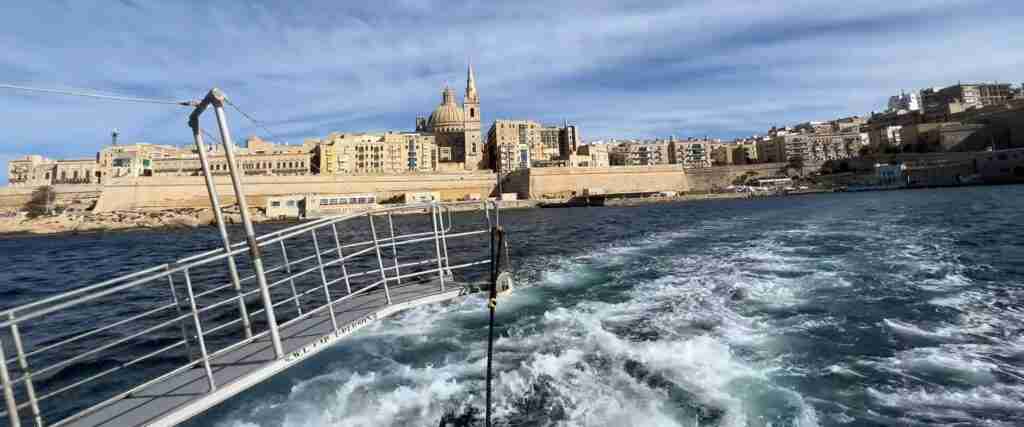
Board a Three Cities ferry from the Valletta Waterfront terminal around 6:00 PM, crossing Grand Harbour to Vittoriosa’s waterfront in 15 minutes while watching Valletta’s fortifications recede and Fort St. Angelo grow larger ahead. The water taxi approach reveals harbor perspectives impossible from land, particularly how Valletta’s bastions layer to create defensive depth and how the Three Cities’ peninsular geography provided naval base functionality for galley fleets requiring sheltered moorage with strategic harbor control. Disembark at Vittoriosa’s waterfront where traditional Maltese fishing boats called luzzu paint colorful contrast against limestone buildings, their distinctive eye motifs on bows continuing Phoenician maritime traditions across 2,500 years of Mediterranean seafaring culture.
Walk Vittoriosa’s narrow streets for 90 minutes of unhurried exploration, noting the even greater residential character compared to Valletta’s tourist-focused center. Vittoriosa predates Valletta by three centuries, serving as the Knights’ initial Malta headquarters from 1530 until Valletta’s construction after the Great Siege provided larger, more defensible space. The Inquisitor’s Palace now operates as a museum of Malta’s religious tribunal history, while Fort St. Angelo crowns the peninsula’s tip with military fortifications dating to medieval times and expanded through Knights’ era construction campaigns. Vittoriosa’s streets maintain working-class character with laundry hung from upper-story windows, neighborhood bars where older Maltese men socialize over local beer, and family-run restaurants serving traditional rabbit stew and seafood pasta at prices below Valletta’s tourist-inflated establishments.
Dine at one of Vittoriosa’s harbor-view restaurants by 7:30 PM, selecting fresh fish or traditional Maltese plates while watching twilight descend over Grand Harbour and Valletta’s illuminated fortifications begin glowing across the water. Return via ferry to Valletta Waterfront around 9:00 PM, arriving at your accommodation by 9:30 PM after a full day balancing intensive cultural sites with harbor perspectives and quieter neighborhood exploration that contextualizes Valletta within Malta’s broader urban heritage. Daily costs for Day 1 include St. John’s Co-Cathedral admission €15, Grand Master’s Palace entry €10-12, two ferry crossings €6-8, meals totaling €35-50 depending on restaurant selections, and incidental coffee or gelato purchases adding €5-8, totaling approximately €75-95 per person beyond accommodation and transport card already purchased.
Day 2: Valletta Museums and Mdina Day Trip 2026
Morning: National Museum of Archaeology and Casa Rocca Piccola (9:00 AM – 12:30 PM)
Begin Day 2 at the National Museum of Archaeology on Republic Street, opening at 9:00 AM with adult admission approximately €5-7. Malta’s archaeological wealth spans 7,000 years from Neolithic temple complexes through Phoenician, Roman, and Arab periods, with the museum’s collection providing essential context for understanding Malta’s position as Mediterranean cultural crossroads where successive civilizations left archaeological layers. The Neolithic galleries display artifacts from Ħaġar Qim and Mnajdra temple complexes including the famous “Sleeping Lady” terracotta figure from the Ħal Saflieni Hypogeum, a reclining goddess form representing Malta’s prehistoric religious iconography. These temples predate Stonehenge and the Egyptian pyramids, with carbon dating confirming construction periods between 3600 and 2500 BCE, making them among humanity’s oldest freestanding stone structures.
The Phoenician and Carthaginian galleries trace Malta’s integration into Mediterranean trade networks from 800 BCE onward, with ceramic fragments, jewelry, and burial goods revealing economic connections spanning from North Africa to Sicily and the wider Punic world. Roman period artifacts include marble sculptures, mosaic fragments, and amphorae that transported wine, olive oil, and grain through Malta’s ports serving as supply stations for Rome’s African grain fleet. Arab period exhibits remain sparse given Malta’s Muslim era lasted only 220 years from 870 to 1091 CE, yet linguistic evidence persists in Maltese language Semitic roots that distinguish it as Europe’s only Semitic vernacular. Allocate 90 minutes for thorough museum exploration, exiting by 10:30 AM.
Walk to Casa Rocca Piccola on Republic Street, one of Valletta’s few privately inhabited palaces opening select rooms to public tours. Entry costs approximately €10-12 for guided 45-minute tours departing throughout the morning. The de Piro family maintains residence in private wings while sharing their ancestors’ accumulated art, furniture, silverware, and personal effects documenting Maltese aristocratic life from Knights’ era through British colonial period to independent modern Malta. Tours reveal family connections to Malta’s governance, military service records spanning multiple generations, and domestic spaces preserved with period furnishings creating atmospheric contrast to museums’ clinical display strategies. The bomb shelter beneath the palace, excavated during World War II when Valletta endured intensive German and Italian bombing that earned Malta the George Cross for collective wartime heroism, remains intact with bunks and provisions illustrating three years of sustained aerial bombardment that reduced much of Valletta to rubble necessitating extensive postwar reconstruction.
Midday: Mdina Day Trip Departure and Silent City Exploration (12:30 PM – 6:00 PM)
Return to Valletta bus terminus by 12:30 PM to board bus route 51, 52, or 53 toward Mdina, Malta’s medieval capital occupying a hilltop 12 kilometers inland from Valletta. Journey time ranges 45-60 minutes depending on route and traffic conditions, with buses departing every 15-30 minutes throughout midday hours. Mdina represents the opposite urban model from Valletta’s planned Renaissance grid—a walled hilltop settlement with organic medieval street layouts, limited vehicular access maintaining pedestrian dominance, and population density one-tenth of Valletta’s despite similar fortified area. The contrast illuminates how Knights’ choice to build Valletta as purpose-designed fortress capital represented revolutionary urban planning compared to Malta’s traditional settlement patterns.
Enter Mdina through the main gate by 1:30 PM, immediately experiencing the silence that earned the city its “Silent City” nickname. Vehicular traffic barely penetrates Mdina’s narrow streets, while tourism remains relatively light compared to Valletta’s cruise ship crowds, and the current population of approximately 250 permanent residents creates near-total quiet after day visitors depart around 6:00 PM. Walk the bastions circling Mdina’s perimeter, offering panoramic views across Malta’s central plains toward Valletta’s distant peninsula, with St. Paul’s Cathedral dome marking Mdina’s highest point visible from most of the island. These views contextualize Malta’s compact geography—the entire main island measures only 27 kilometers long and 14.5 kilometers wide, small enough that Mdina’s elevated position provides literal oversight across much of the territory the Knights governed from this hilltop before relocating to coastal Valletta.
Visit St. Paul’s Cathedral, Mdina’s Baroque centerpiece rebuilt after earthquake damage in 1693, with entry costing approximately €5-7 for adults. The cathedral’s interior features Lorenzo Gafa’s architectural design combining Baroque theatrical effects with restrained elegance distinguishing it from St. John’s Co-Cathedral’s overwhelming gilded excess. The marble floor depicts scenes from Saint Paul’s shipwreck on Malta in 60 CE, the founding event of Maltese Christianity that transformed the island from pagan worship to Christian territory within the apostle’s brief sojourn following his shipwreck voyage toward Rome. Adjacent to the cathedral, the Cathedral Museum displays ecclesiastical silver, vestments, illuminated manuscripts, and Albrecht Dürer woodcuts gifted by Grand Masters documenting the Knights’ artistic patronage extending beyond military functions to cultural preservation.
Afternoon: Rabat Roman Sites and Dingli Cliffs Extension (3:00 PM – 6:00 PM)
Walk from Mdina’s Greek Gate into adjacent Rabat, historically the same settlement as Mdina until Knights’ era fortification separated the hilltop citadel from its suburban extension. Rabat contains Malta’s most significant Roman archaeological sites, accessible within 20-minute walking distance from Mdina’s walls. St. Paul’s Catacombs operate as an underground burial complex carved into limestone bedrock during Roman and early Christian periods, with entry costing approximately €5-7 for adults. Guided tours descend into the cool subterranean passages where burial niches line corridors, communal chambers called agape tables provided space for funeral feasts, and Christian symbolism including chi-rho monograms identifies believers among the thousands of individuals interred here across four centuries of continuous use.
St. Agatha’s Catacombs nearby provide similar underground burial architecture with better-preserved frescoes dating from Byzantine through medieval periods, though these remain less visited than St. Paul’s Catacombs despite comparable historical significance. Both sites offer atmospheric experiences of Malta’s early Christian communities practicing their faith in hidden spaces during periods when religious persecution made public worship dangerous. The catacombs’ extent—several kilometers of tunnels honeycombing the rock beneath Rabat—reveals population density supporting major underground burial infrastructure impossible without sustained settlement spanning centuries.
For visitors with energy remaining, board bus route 52 from Rabat toward Dingli Cliffs, Malta’s highest point at 253 meters above sea level on the island’s southwestern coast. Journey time from Rabat to Dingli village runs 20-25 minutes, with buses continuing to Dingli Cliffs viewpoint adding 10 more minutes. The cliffs provide dramatic coastal perspectives rare on Malta’s predominantly low-lying shoreline, with the small Filfla island visible offshore and the Mediterranean extending to the southern horizon where Africa lies 290 kilometers distant. Late afternoon light around 5:00-5:30 PM illuminates the cliff faces and surrounding agricultural terraces where traditional Maltese farmers still cultivate vegetables and raise livestock in stone-walled fields unchanged across generations. Return buses to Valletta depart from Dingli through evening hours, reaching the capital by 7:00-7:30 PM for dinner within Valletta’s walls or along the waterfront.
Evening: Valletta Neighborhood Dining and Night Photography (7:30 PM – 10:00 PM)
After returning from Mdina and Rabat’s full-day exploration, refresh at your accommodation before venturing to one of Valletta’s neighborhood restaurants away from Republic Street’s tourist concentration. Side streets like Old Theatre Street, Strait Street (historically Valletta’s red-light district now gentrified into dining quarter), and areas near St. Ursula Street contain family-run establishments serving traditional Maltese cuisine at prices 20-30% below harbor-view tourist restaurants. Order rabbit stew if available—fenkata represents Malta’s unofficial national dish, with rabbit meat braised in wine, garlic, and tomatoes until falling off the bone, typically served with roasted potatoes and crusty bread for soaking up braising liquid.
Alternative seafood options include lampuki fish pie during autumn when dolphinfish migrate past Malta’s coasts, octopus stew with capers and olives reflecting Mediterranean culinary traditions, and swordfish steaks grilled with local herbs. Maltese wine industry produces respectable local vintages from indigenous grape varieties like Girgentina and Ġellewża, with wineries clustered in southern Malta’s warmer microclimates. Order half-carafes to sample local production rather than defaulting to imported Italian or French wines marking up restaurant bills unnecessarily. Dinner costs range €25-35 per person for appetizer, main, dessert, and local wine at quality restaurants, or €35-50 at higher-end establishments with creative menus incorporating Maltese ingredients through modern techniques.
After dinner around 9:00 PM, walk Valletta’s illuminated streets for night photography when floodlights dramatically spotlight limestone facades and the absence of daytime crowds enables unobstructed architectural photography. Upper Barrakka Gardens remains open until late evening, providing illuminated views across Grand Harbour where Fort St. Angelo’s floodlit fortifications glow across the dark water. Republic Street’s shops close by 7:00-8:00 PM, leaving the central street surprisingly quiet for evening strolls past doorways revealing glimpses of residential life behind street-level commercial uses. Return to accommodation by 10:00 PM after two full days of intensive cultural immersion balanced with harbor perspectives and day trip explorations beyond Valletta’s fortifications.
Day 3: Eastern Malta and Strategic Departure Planning 2026
Morning: Malta Experience and Waterfront Heritage Walk (9:00 AM – 12:00 PM)
Begin your final Valletta morning at the Malta Experience, an audio-visual presentation chronicling Malta’s 7,000-year history from prehistoric temples through Knights’ era to World War II bombing and modern European Union membership. The 45-minute show operates from a purpose-built theater near the Mediterranean Conference Centre, with screenings throughout the morning starting at 9:00 AM. Tickets cost approximately €10-12 for adults with reduced rates for children and seniors. While purists dismiss multimedia shows as tourist entertainment, the Malta Experience provides valuable chronological context for disparate historical periods encountered across museum visits, particularly useful for first-time visitors lacking background knowledge to connect Neolithic temples, Phoenician trade networks, Roman administration, Knights’ military campaigns, and British colonial governance into coherent narrative.
The presentation emphasizes Malta’s strategic position controlling Mediterranean sea lanes connecting Europe, Africa, and Asia, explaining why successive civilizations fought to control this small archipelago despite limited natural resources or agricultural productivity. The Knights’ 268-year presence from 1530 to 1798 represents just one chapter in much longer settlement history, yet their architectural legacy and fortification systems define Malta’s current UNESCO World Heritage status and tourism appeal. World War II coverage documents the three-year siege from 1940 to 1943 when Axis powers targeted Malta relentlessly, attempting to eliminate the island as British naval base threatening supply lines to North Africa. Malta suffered more bombing per square kilometer than London during the Blitz, earning the entire population the George Cross for collective civilian heroism under sustained attack.
Exit the Malta Experience by 10:00 AM to walk the Valletta Waterfront’s full length, examining the warehouse buildings converted to restaurants and shops while studying engineering details of 18th-century dockyard construction. The waterfront served Knights’ galley fleet maintenance requirements, with shipyards occupying spaces now filled by cruise terminal facilities and commercial developments. Historical plaques identify specific buildings’ original functions and construction dates, while interpretive panels explain Grand Harbour’s evolution from natural harbor to fortified naval base to modern cruise destination. Walk past the Siege Bell War Memorial, erected in 1992 to commemorate Malta’s World War II sacrifice, then ascend via Barrakka Lift or stairs to Upper Barrakka Gardens by 11:00 AM for final harbor views from Valletta’s highest terrace.
Late Morning: Fort St. Elmo and National War Museum (11:30 AM – 2:00 PM)
Walk from Upper Barrakka Gardens along Mediterranean Street toward Fort St. Elmo occupying Valletta’s peninsular tip between Grand Harbour and Marsamxett Harbour. Entry to the fort and National War Museum costs approximately €10-12 for adults, with the complex opening daily except for occasional state functions. Fort St. Elmo represents Valletta’s first completed fortification, constructed immediately after the 1565 Great Siege on the site where a smaller fort fell to Ottoman forces after month-long resistance that bought time for Knights’ main forces to strengthen defenses around Vittoriosa. The current star-shaped fortification dates to post-siege reconstruction when military engineers implemented lessons learned during Ottoman attacks.
The National War Museum occupies fort buildings with collections documenting Malta’s military history from Knights’ era through British colonial period to World War II. Exhibits include the Gloster Gladiator biplane “Faith,” one of three aircraft defending Malta during early war years before Spitfire reinforcements arrived, and George Cross award presented to Malta by King George VI in 1942, recognizing collective civilian sacrifice during sustained bombing. World War II galleries display bomb damage photographs showing Valletta reduced to rubble, ration cards documenting food shortages during the siege years, and personal accounts from survivors describing daily life under constant aerial threat when death could arrive randomly from sky without warning.
Fort ramparts provide unobstructed views along both harbor sides, with Valletta’s urban grid visible spreading across the peninsula behind you while ferry traffic crosses Grand Harbour below and container ships queue for port berths beyond the breakwaters. On Marsamxett Harbour side, Manoel Island and Sliema’s coastal development stretch along the northern shore, while Valletta’s systematic bastions reveal defensive engineering principles converting a bare rocky peninsula into Europe’s most fortified city within the Knights’ 15-year construction timeline from 1566 to 1581. Allocate 90-120 minutes for thorough fort exploration, exiting by 1:30 PM for lunch before afternoon departure activities.
Afternoon: Final Shopping and Three Cities Extension Alternative (2:00 PM – 6:00 PM)
Afternoon programming depends on departure timing and remaining energy after two intensive days. Visitors with evening flights or next-day departures can dedicate afternoon hours to shopping and final site visits within Valletta’s center. Republic Street and side streets contain shops selling Maltese silver filigree jewelry, handblown Mdina glass from the island’s traditional glass factory, local honey from Gozo’s thyme-covered hillsides, and Maltese lace maintaining traditions dating to Knights’ era when convents produced ecclesiastical textiles. Avoid tourist shops selling mass-produced Chinese imports masquerading as Maltese crafts—authentic items carry higher prices reflecting skilled handwork but provide genuine souvenirs rather than generic Mediterranean kitsch available anywhere.
Alternatively, visitors with morning departures on Day 4 can undertake a Three Cities extended walking tour exploring Vittoriosa, Senglea, and Cospicua in greater depth than Day 1’s brief evening crossing. Ferry from Valletta Waterfront reaches Vittoriosa by 2:15 PM, allowing three hours of exploration before return ferries around 5:30-6:00 PM. Walk Vittoriosa’s full waterfront past restored galley warehouses and Knights’ era auberges, climb to Fort St. Angelo’s ramparts for reciprocal views across Grand Harbour to Valletta, then cross the land bridge to Senglea’s similarly residential streets and garden-topped bastion known as Il-Gardjola providing iconic photo angles of Valletta’s fortifications across the harbor.
Cospicua remains the Three Cities’ most residential peninsula with least tourism development, its working-class neighborhoods maintaining authentic character absent from gentrified Vittoriosa. The parish church of the Immaculate Conception dominates Cospicua’s skyline with a distinctive dome visible from Valletta, while narrow streets wind between townhouses showing centuries of adaptive reuse and war damage repairs. Local bars serve Cisk lager to neighborhood regulars, family-run pastizzeriji sell fresh pastries from ovens unchanged in decades, and elderly residents socialize on doorsteps maintaining community bonds weakening in more tourist-dominated zones. The Three Cities collectively reveal Malta’s layered urban heritage where Knights’ military architecture overlays medieval street patterns that preceded organized fortress construction.
Evening: Final Dinner and Valletta Reflections (6:30 PM – 9:30 PM)
Reserve your final evening for a quality dinner celebrating three days of Valletta exploration and Malta discovery. Republic Street and Strait Street contain the capital’s finest restaurants where Maltese chefs incorporate local ingredients and traditional recipes through contemporary plating techniques and international flavor influences. Consider restaurants with rooftop terraces or Upper Barrakka Gardens views where sunset illuminates Grand Harbour as fishing boats return from daily catches and ferry traffic crosses between Valletta and the Three Cities opposite. Prices for upscale dining range €40-60 per person before wine, justified by ingredient quality and atmospheric settings impossible to replicate outside Valletta’s fortified peninsula.
Order rabbit if you haven’t already, or select fresh fish grilled simply with lemon and herbs allowing ingredient quality to dominate over complex preparations. Maltese appetizers include ġbejna cheeselets made from goat or sheep milk, bigilla broad bean paste served with crackers, and stuffat tal-qarnit octopus stew reflecting North African spice influences. Desserts typically include kannoli borrowed from Sicilian traditions, or qagħaq tal-għasel honey rings filled with treacle and aniseed representing pure Maltese confectionery heritage. Accompany dinner with Maltese wine from Victoria Heights or Marsovin wineries, or local Kinnie soft drink combining bitter orange and aromatic herbs in Malta’s unique non-alcoholic beverage existing nowhere else globally.
After dinner, walk Republic Street one final time observing how evening transforms the daytime tourist thoroughfare into local social space where Maltese families stroll after dinner, teenagers congregate near City Gate’s modern entrance portal, and couples walk hand-in-hand past the same limestone facades Knights of Malta once patrolled. Stop at Upper Barrakka Gardens if open, allowing Grand Harbour’s illuminated perspectives to provide closing meditation on three days exploring Europe’s smallest capital and its outsized historical significance. Return to accommodation by 9:30 PM, preparing for departure while reflecting on how Valletta compresses centuries of Mediterranean history into walkable urban fabric maintaining relevance as living city rather than preserved museum displaying past glories disconnected from present realities.
Accommodation Guide: Where to Stay for Valletta Access 2026
Inside Valletta’s Walls: Maximum Historic Immersion
Accommodation within Valletta’s fortifications provides unmatched access to morning light on limestone facades, evening street life after day visitors depart, and spontaneous schedule adjustments impossible when commuting from external bases. Valletta’s limited accommodation stock concentrates in converted townhouses where original architectural details including Maltese tiles, exposed limestone, traditional enclosed balconies, and courtyard configurations create atmospheric overnight experiences complementing historical site visits. Mid-range options at €120-160 per room typically occupy three or four-story townhouses lacking elevators, manageable for most visitors but challenging with heavy luggage or mobility limitations. Rooms range from compact to spacious, with variation reflecting original building layouts resisting standardization attempts.
Budget accommodation within Valletta remains scarce, with the handful of guesthouses and small hotels charging €70-90 per room offering basic comfort in historically significant buildings. These properties often occupy upper stories of mixed-use buildings where street-level commercial uses generate noise through thin floors and walls, while lack of air conditioning in older structures makes summer stays uncomfortable when Mediterranean heat penetrates limestone facades. However, budget properties enable visitors to wake inside Valletta’s fortifications, exit their building onto Renaissance grid streets, and reach St. John’s Co-Cathedral within five-minute walks—conveniences justifying basic accommodation standards for travelers prioritizing location over room comfort.
Luxury boutique hotels at €300-400 per room occupy Valletta’s finest townhouses where professional restoration preserved period details while installing modern infrastructure including climate control, contemporary bathrooms, and often rooftop terraces or small pools impossible in more compact conversions. Properties like Casa Ellul, Iniala Valletta, and Domus Zamittello represent Valletta’s top tier, combining architectural preservation with five-star service levels, morning newspapers, concierge desk arranging private tours or restaurant reservations, and breakfast spreads incorporating fresh pastries from neighborhood bakeries. These hotels appeal to travelers seeking historic atmosphere without period discomfort, delivering Instagram-worthy interiors in buildings where Knights’ era residents once lived.
Sliema: Accommodation Density and Harbor Views
Sliema presents alternative accommodation strategy with substantially greater hotel density providing more competitive pricing and typically larger rooms than Valletta’s space-constrained townhouses. Mid-range Sliema hotels at €100-140 per room occupy modern buildings with reliable infrastructure including elevators, air conditioning, rooftop pools overlooking Marsamxett Harbour, and breakfast rooms serving buffet spreads. Sea-view rooms command premium rates but deliver exceptional perspectives across the harbor toward Valletta’s illuminated fortifications, particularly dramatic at sunset when limestone bastions glow in late afternoon light. Interior rooms cost 20-30% less, acceptable trade-off given you’ll spend daylight hours exploring rather than appreciating room views.
Budget Sliema accommodation at €60-80 per room concentrates in converted apartments and smaller hotels slightly inland from the waterfront promenade. These properties provide more space than equivalent-priced Valletta options, often including kitchenettes enabling self-catering meal preparation that drastically reduces daily food costs for budget-conscious travelers willing to shop at Sliema’s supermarkets and cook simple breakfasts and dinners in-room. The trade-off involves ferry dependence—Valletta Ferry Service connects Sliema to Valletta Waterfront in 10 minutes for €2-3 per crossing, adequate for most schedules but constraining late-night dining in Valletta or early morning cathedral photography sessions before ferry service begins at 6:45 AM.
Luxury Sliema hotels at €250-350 per room occupy prime waterfront positions with full resort amenities including spa facilities, multiple restaurants, fitness centers, and concierge services arranging yacht charters or private island tours. Properties like 1926 Le Soleil and AX The Palace deliver resort experiences impossible within Valletta’s dense urban fabric, appealing to travelers seeking relaxation balanced with cultural touring rather than total historic immersion. The Sliema waterfront promenade provides evening strolls with gelato shops, cafes, and harbor-view benches where locals and visitors socialize while watching ferry traffic and pleasure boats crossing between Malta’s coastal settlements.
Transportation Within and Beyond Valletta 2026
Malta Public Transport Bus Network
Malta Public Transport operates comprehensive bus service radiating from Valletta’s terminus just outside City Gate, with routes covering virtually every settlement on Malta and Gozo. The seven-day Explore Card at €25 provides unlimited travel on all day routes, night routes, and special services, purchased at Malta International Airport arrivals hall, Valletta bus terminus, or Buġibba terminal. Card validity begins from first use, covering seven consecutive days adequate for three-day Valletta stays plus strategic day trips and airport transfers. The Explore Card eliminates per-journey costs that accumulate rapidly on €2-2.50 single tickets—four daily bus trips total €8-10 daily or €24-30 across three days, making the unlimited card economically superior beyond ticket purchase convenience.
Bus routes follow hub-and-spoke patterns with Valletta serving as central junction, meaning journeys between non-Valletta destinations often require transfers through the capital. Route 51, 52, and 53 connect Valletta with Mdina and Rabat, departing every 15-30 minutes with 45-60 minute journey times. Routes to popular beach areas like Golden Bay, Għajn Tuffieħa, and Paradise Bay operate from Valletta with frequencies varying seasonally—summer sees increased service while winter routes drop to hourly departures outside peak commuter hours. Night buses prefixed N run Friday and Saturday nights connecting Valletta with St. Julian’s and Paceville nightlife districts, charging flat €3 fares included in seven-day Explore Card coverage.
Bus punctuality remains variable despite official schedules posted at stops and available via Malta Public Transport’s mobile app. Traffic congestion particularly around Grand Harbour approaches delays buses during morning and evening peak hours, while driver shift changes occasionally create 10-15 minute service gaps. Budget extra time for bus-dependent schedules, particularly when catching flights—the X-series express buses connect Valletta with Malta International Airport in 30-40 minutes under normal conditions, but traffic backups can extend journey times to 60+ minutes during peak periods. Alternative airport connections include private taxis at €20-25 flat rates or eCabs ride-sharing at slightly lower costs, justified when luggage or tight schedules make bus uncertainty unacceptable.
Ferry Services and Harbor Crossings
Valletta Ferry Service operates passenger boats connecting the capital with Sliema and the Three Cities, providing quick harbor crossings that bypass road congestion while delivering maritime perspectives unavailable from land transport. The Sliema-Valletta route departs from Valletta Waterfront and Sliema Strand terminals every 30-60 minutes from 6:45 AM through approximately 11:00 PM, crossing in 10 minutes for €2-3 per journey. These ferries save substantial time compared to buses circumnavigating Grand Harbour via road bridges, particularly valuable when staying in Sliema but dining in Valletta or accessing early-morning attractions before ferry crowds intensify.
The Three Cities ferry departs from the same Valletta Waterfront terminal, reaching Vittoriosa’s waterfront in 15 minutes with similar operating hours but slightly reduced frequency. This crossing transforms from pure transportation to sightseeing experience, particularly at sunset when light illuminates Fort St. Angelo’s fortifications and Valletta’s bastions glow across Grand Harbour. Stand on deck rather than sitting in enclosed cabin, positioning for unobstructed photography as the boat approaches Vittoriosa and Fort St. Angelo looms progressively larger. Return crossings provide opposite perspectives with Valletta receding across the harbor, its grid street pattern visible climbing from waterfront to upper bastions.
The Gozo Highspeed fast ferry operates between Valletta’s Lascaris Wharf and Mġarr Harbour in Gozo, crossing in 45 minutes compared to the 90+ minutes required for bus to Ċirkewwa ferry terminal then conventional Gozo Channel ferry to Mġarr. Tickets cost approximately €15-20 for return adult fares, justified by time savings and direct Valletta departure eliminating northern Malta bus journey. The fast ferry enables day trips to Gozo’s Victoria Citadel, Dwejra coastal formations, and Azure Window replacement attraction sites within single days while returning to Valletta accommodation by evening. Departures run throughout the day during tourist season, with advance online booking recommended for guaranteed seats during July and August when Malta tourism peaks.
Taxis and Ride-Sharing Options
Traditional white taxis operate from stands at City Gate, cruise terminal, and major tourist locations, charging metered fares starting around €10-12 for short trips within Valletta vicinity and climbing for longer journeys to airport, Mdina, or beach areas. Taxis quote flat rates for common routes like Valletta to Malta International Airport at €20-25, avoiding meter uncertainty but requiring agreement on price before starting journey. White taxi drivers speak English adequately for basic communication, though language barriers occasionally complicate specific destination instructions for obscure locations lacking clear landmarks.
Ride-sharing apps Bolt and eCabs provide smartphone-based alternatives with lower average costs than metered taxis, transparent upfront pricing, and GPS navigation eliminating miscommunication about destinations. Download both apps before arrival, register with payment information, and test basic functionality with short trips before relying on apps for critical airport transfers or time-sensitive connections. Surge pricing during peak evening hours or after large cruise ship departures can push ride-share costs above traditional taxi rates, warranting price comparisons before confirming bookings. Both services operate reliably throughout Malta’s main island with driver availability rarely exceeding five-minute waits except in remote areas or very early morning hours.
Food and Dining: Valletta’s Culinary Landscape 2026
Traditional Maltese Cuisine and Budget Dining
Valletta’s traditional food culture centers on simple preparations emphasizing ingredient quality over complex techniques, with Italian and North African influences visible in dishes like rabbit stew, octopus braised with wine and capers, and stuffed vegetables called soppa tal-armla. Budget dining options cluster around neighborhood bakeries selling ftira sandwiches on traditional Maltese bread at €3.50-5.50, filled with tuna, capers, olives, tomatoes, and local cheese. These bakeries occupy side streets away from Republic Street’s tourist concentration, identifiable by early morning queues of neighborhood residents buying fresh bread and traditional pastizzi savory pastries filled with ricotta or mushy peas, costing under €1 each and providing filling breakfasts or midday snacks.
Casual restaurants serving Maltese home cooking charge €10-15 for main courses including rabbit stew, braised beef rolls called braġjoli, or baked pasta dishes. Nanna’s Ravioli at Cafe Jubilee represents classic budget-friendly dining at approximately €10 for the signature dish, while Is-Serkin Crystal Palace in Rabat earned reputation for Malta’s finest pastizzi despite location outside Valletta requiring day trip planning. These establishments maintain local character with Maltese families dining alongside tourists, creating authentic atmosphere absent from consciously designed “traditional” restaurants catering specifically to foreign visitors seeking manufactured authenticity.
Pizza and pasta restaurants throughout Valletta serve standard Italian fare at €8-16 for mains depending on toppings and preparations. While not uniquely Maltese, these establishments provide reliable fallback options when traditional rabbit stew proves too adventurous or evening dining requires quick meals before early-morning departure preparations. Avoid obvious tourist traps along Republic Street advertising multilingual menus and photo displays—walk one block off the main thoroughfare to discover family-run establishments where locals actually eat, recognizable by Maltese language menus, limited English spoken by servers, and prices 20-30% below waterfront restaurants capitalizing on harbor views.
Mid-Range and Contemporary Maltese Dining
Mid-range restaurants elevate traditional Maltese ingredients through refined presentations and international technique influences, charging €20-35 for main courses at establishments lining Strait Street’s former red-light district now gentrified into respectable dining quarter. Legligin Wine Bar serves Maltese wine flights paired with small plates incorporating local cheeses, sun-dried tomatoes, and Maltese sausage, while La Mere represents creative contemporary cooking applying French technique to Mediterranean ingredients. These restaurants appeal to travelers seeking local flavor without the rustic simplicity of home-cooking establishments, delivering Instagram-worthy plating and knowledgeable servers explaining dish preparations and suggesting wine pairings.
Harbor-view restaurants along Valletta Waterfront command premium pricing at €25-40 for mains, justified by sunset perspectives across Grand Harbour toward the Three Cities’ fortifications. Waterbiscuit occupies a converted warehouse space with outdoor seating directly over the water, serving fresh fish, seafood platters, and pasta dishes alongside Maltese and international wines. Similar establishments line the waterfront arcade, creating competitive dining district where quality varies despite similar pricing—read recent reviews before committing to specific restaurants, as tourist-focused operations occasionally substitute frozen ingredients and reheated preparations for the fresh seafood menus promise.
Valletta’s food scene increasingly incorporates international cuisines beyond traditional Maltese and Italian influences, with Japanese, Thai, and modern European restaurants opening in recent years. These establishments serve travelers seeking familiar flavors after several days of Mediterranean food saturation, though quality and authenticity vary wildly given Malta’s limited access to specialty ingredients and trained chefs in non-Mediterranean cuisines. Prices range €25-40 for mains, comparable to harbor-view Maltese restaurants, making these options justifiable primarily when Mediterranean food fatigue outweighs cost considerations.
Fine Dining and Special Occasion Restaurants
Valletta’s top restaurants deliver creative tasting menus incorporating Maltese ingredients through contemporary techniques, charging €50-80 per person for multi-course experiences before wine pairings that add €30-50. Under Grain represents Valletta’s most acclaimed fine dining, occupying a historic grain warehouse space with minimalist modern interior contrasting deliberately with the building’s rough stone architecture. The tasting menu progresses through creative preparations where Maltese fish, rabbit, and vegetables receive treatments drawing from French, Japanese, and molecular gastronomy influences, creating distinctly contemporary dining experiences that honor ingredients without replicating traditional preparations.
Rooftop restaurants at luxury hotels like Casa Ellul and Iniala Valletta serve refined meals with Upper Barrakka Gardens perspectives across Grand Harbour, combining elevated food with exceptional views justifying €60-90 per person price points before wine. These establishments cater primarily to hotel guests and special occasion diners celebrating anniversaries or milestones with memorable meals, creating intimate atmospheres with limited seating and advance reservations essential during peak summer months. Dress codes lean smart casual with collared shirts for men and equivalent formality for women, though Valletta’s relatively relaxed Mediterranean standards accept resort wear inappropriate at comparable European capital fine dining venues.
Shopping and Souvenirs: Authentic Maltese Products 2026
Traditional Maltese Silver Filigree and Jewelry
Maltese silver filigree represents the island’s most distinctive artisan tradition, with jewelry shops along Republic Street and Merchants Street displaying necklaces, earrings, bracelets, and brooches featuring delicate wireWork patterns inherited from medieval goldsmiths serving Knights of Malta. Authentic filigree involves hand-twisting fine silver wires into intricate patterns soldered onto base forms, creating lacy openwork designs impossible to achieve through mass production. Quality pieces range €80-300 depending on complexity and silver content, with hallmarked sterling silver carrying Malta’s official assay marks certifying precious metal content and local manufacture.
Distinguishing authentic handmade filigree from machine-produced imports requires examining construction details—genuine filigree shows slight irregularities in wire twisting and solder joins where human hands worked metal, while mass-produced pieces display perfect uniformity impossible in handwork. Reputable jewelers include Mark Micallef on Republic Street and Joseph Fenech near St. John’s Co-Cathedral, both maintaining workshops producing custom pieces alongside ready-made inventory. These establishments welcome questions about techniques and demonstrate production methods to serious buyers, contrasting sharply with tourist shops discouraging close inspection of suspiciously cheap “Maltese silver” likely imported from Asian manufacturers.
Mdina Glass and Artisan Products
Mdina Glass operates Malta’s traditional glass factory producing handblown decorative pieces incorporating swirled color patterns unique to the island’s glassmaking heritage. The factory showroom in Ta’ Qali, midway between Valletta and Mdina, demonstrates glassblowing techniques and sells vases, paperweights, bowls, and decorative objects ranging €20-200 depending on size and complexity. While not strictly Valletta shopping, Mdina Glass products appear in select Valletta boutiques at premium prices reflecting retail markup over factory direct sales, making Ta’ Qali factory visits worthwhile for serious collectors seeking specific pieces at best prices.
Maltese lace continues traditional patterns dating to Knights’ era when convents produced ecclesiastical textiles and household linens, though contemporary production represents small fraction of historical output given labor-intensive techniques and limited artisan population. Authentic handmade lace commands high prices reflecting months of work embedded in single tablecloths or doilies, with quality pieces costing €150-500 at specialized shops. Mass-produced machine lace fills tourist shops at €20-40, acceptable souvenirs for casual buyers but representing entirely different product from true handwork. Gozo maintains stronger lace-making tradition than Malta, making Gozo day trips opportunities for visiting artisan workshops selling directly to buyers rather than through Valletta retail intermediaries.
Food Products and Edible Souvenirs
Maltese honey produced from thyme-covered hillsides throughout Malta and Gozo carries distinct flavor profiles varying by region and flower sources, with quality jars costing €8-15 for 250-gram containers. Local shops along Republic Street stock various producers’ offerings, enabling taste comparisons before purchasing larger quantities. Honey’s non-liquid status makes it airplane-friendly for check luggage, avoiding liquid restrictions that complicate olive oil purchases despite Malta’s Mediterranean olive cultivation. Maltese honey pairs excellently with local ġbejna cheeselets, creating traditional flavor combinations enjoyed for breakfast or dessert.
Bigilla broad bean paste, sold in glass jars at supermarkets and specialty shops, represents authentic Maltese flavor impossible to find outside the archipelago. The spread combines puréed broad beans with garlic, olive oil, and herbs, serving as appetizer spread on crackers or bread. Prices range €4-7 for standard jars, lightweight and stable for airplane transport. Similar regional products include sun-dried tomatoes in olive oil, capers preserved in salt, and local spice blends incorporating Mediterranean herbs. These items enable recreating Maltese flavors at home while occupying minimal luggage space, contrasting favorably with bulky ceramic or glassware souvenirs requiring careful packing to prevent breakage.
Weather and Best Time to Visit Valletta 2026
Peak Season: May Through October
Valletta’s peak tourism season extends from May through October when Mediterranean climate delivers consistent sunshine with minimal rainfall and temperatures ranging 23-32°C depending on month and daily conditions. May and June provide ideal visiting weather with warm but not excessive temperatures around 23-27°C, lower humidity than peak summer, and fewer crowds than July-August when European family vacations concentrate. These shoulder months enable comfortable all-day walking without afternoon heat that forces mid-summer visitors indoors between 1:00-4:00 PM when limestone facades radiate stored thermal energy and direct sun exposure becomes exhausting.
July and August represent absolute peak season with highest temperatures reaching 30-32°C, maximum tourist density as cruise ships discharge thousands of daily visitors, and premium accommodation pricing reflecting demand pressure. These months suit travelers prioritizing beach time over cultural touring, as harbor swimming spots and nearby beaches like Golden Bay provide relief from urban heat. Valletta’s cultural attractions become oppressively crowded in peak summer, with St. John’s Co-Cathedral admitting visitors in controlled batches to prevent overcrowding damage to delicate floor tombstones and gilded decorative elements. Morning and evening hours provide tolerable conditions for urban exploration, while midday periods better serve beach visits or air-conditioned museum time.
September and October mark autumn transition with temperatures moderating to 25-28°C while sea temperatures remain warm enough for comfortable swimming. These months offer peak season weather without peak crowds or pricing, as European families return to school schedules and cruise ship traffic decreases. Valletta’s cultural calendar intensifies in autumn with Notte Bianca cultural night in October transforming the city into late-night festival with museums, galleries, and historical buildings opening doors until midnight for special programming, live music, and theatrical performances celebrating Maltese artistic heritage.
Off-Season: November Through April
Valletta’s off-season from November through April delivers cooler temperatures ranging 12-18°C with increased rainfall probability and occasional strong winds sweeping across the Mediterranean from North Africa or southern Europe. These months suit cultural tourists prioritizing museum visits, architectural appreciation, and urban walking over beach time, as reduced crowds enable leisurely cathedral visits without tour group pressure and accommodation prices drop 30-40% below summer peaks. Budget travelers gain particular advantage in off-season when hotel negotiation power increases and restaurant lunch specials become more generous.
Winter weather requires flexible daily planning acknowledging rainfall possibility—Mediterranean winter sees frequent short showers rather than sustained all-day rain, with morning rain clearing by afternoon or vice versa. Pack layers including light jacket or sweater for cool evenings and air-conditioned indoor spaces, plus waterproof shoes or umbrella for unexpected showers. Limestone paving becomes slippery when wet, requiring careful footing on Valletta’s sloped streets and staircase connections between upper and lower levels. On positive side, winter’s lower sun angles create dramatic light conditions for photography, particularly during golden hour when slanted rays illuminate limestone facades with warm tones impossible during summer’s overhead sun.
December through February represent absolute low season with coldest temperatures and most unpredictable weather, offset by near-empty streets enabling photography without human obstacles and genuine immersion in residential Valletta where locals reclaim neighborhoods from summer tourist dominance. Christmas and New Year periods see brief tourist upticks as Europeans escape northern winter for Malta’s milder Mediterranean climate, but crowds remain fraction of summer peaks. Easter week in March or April depending on liturgical calendar intensifies religious observances with elaborate Good Friday processions through Valletta’s streets, where parish communities carry life-size statues depicting Passion scenes accompanied by brass bands and candle-lit nighttime ceremonies continuing centuries-old traditions.
Practical Valletta Information for 2026 Visitors
Language and Communication
Malta operates bilingually with Maltese serving as national language and English maintaining official status from 164 years of British rule ending with 1964 independence. English proficiency throughout tourism sector eliminates language barriers for American, British, and other English-speaking visitors—hotel staff, restaurant servers, museum guides, and shop owners conduct business entirely in English without communication difficulty. Maltese language, despite its Semitic roots related to Arabic, incorporates substantial Italian and English vocabulary from centuries of external influence, creating unique linguistic hybrid existing nowhere else globally.
Reading Maltese place names and street signs initially confuses English speakers given unusual letter combinations and diacritical marks indicating pronunciation, but major streets use English translations and locals happily provide directions using English terminology. Learning basic Maltese phrases—”bonġu” for good morning, “grazzi” for thank you, “jekk jogħġbok” for please—demonstrates respect for local culture, though Maltese people typically respond in English recognizing tourist status and facilitating smoother communication. Bus announcements alternate between Maltese and English, with destination signs displaying English names alongside Maltese equivalents on most routes serving tourist areas.
Currency and Payment Methods
Malta adopted the euro in 2008, eliminating previous Maltese lira and simplifying currency for European visitors while requiring Americans, British, and other non-euro travelers to exchange currency or use ATMs dispensing euros. Major credit cards including Visa and Mastercard work at hotels, restaurants, larger shops, and museums, though small family-run establishments and neighborhood bakeries often operate cash-only requiring euro availability for daily transactions. ATMs appear throughout Valletta with concentration near City Gate and Republic Street’s commercial district, dispensing euros at prevailing exchange rates plus whatever foreign transaction fees your home bank charges.
Contactless payment via credit card or smartphone apps works reliably at most establishments accepting cards, with tap-to-pay limits around €50 eliminating PIN entry for smaller purchases. Bus tickets can be purchased via contactless card tap directly on vehicle readers, though the seven-day Explore Card still requires cash purchase at sales offices. Restaurants expect tips around 10% for table service, though tipping remains less rigidly enforced than American standards with locals often rounding bills rather than calculating exact percentages. Taxi drivers appreciate small tips for helpful service or luggage assistance, while hotel porters receive €1-2 per bag for room delivery.
Safety and Security Considerations
Valletta maintains exceptionally low violent crime rates with tourist-targeted offenses limited primarily to pickpocketing in crowded areas during peak cruise ship hours. Exercise standard urban precautions including securing valuables in hotel safes, maintaining awareness of surroundings in tourist-dense zones, and avoiding isolated areas late at night, though Valletta’s small size and limited nightlife means few genuinely isolated areas exist within the fortified city. Police presence remains visible around major attractions and along Republic Street, with officers approachable for directions or assistance speaking functional English adequate for basic communication.
Traffic poses greater hazard than crime, particularly for pedestrians unaccustomed to Malta’s British-inherited left-side driving and narrow streets where vehicles and pedestrians compete for limited space. Cross streets carefully at designated crosswalks, making eye contact with drivers before stepping into traffic flow. Valletta’s steep topography creates trip hazards where limestone paving meets staircase connections, particularly dangerous when wet from rain or early morning cleaning. Solo female travelers report minimal harassment beyond occasional catcalling, with Valletta’s conservative Catholic culture generally respecting women’s safety though standard precautions about accepting drinks from strangers or sharing taxi rides with unknown individuals still apply.
Health and Medical Services
Valletta’s compact size means medical facilities concentrate in larger urban areas outside the fortified city, with Mater Dei Hospital serving as Malta’s main public hospital located in Msida approximately four kilometers from Valletta. Private clinics operate throughout Malta providing faster service for non-emergency situations, with typical consultation fees €40-80 for doctor visits without insurance coverage. European Union residents should carry European Health Insurance Cards enabling access to Malta’s public healthcare system at reduced or no cost, while non-EU visitors require travel insurance covering potential medical expenses in Malta or ability to pay directly for services rendered.
Pharmacies marked with green crosses appear along Republic Street and surrounding areas, selling over-the-counter medications for common ailments including pain relief, digestive issues, and minor skin conditions. Prescription medications require doctor authorization, with some drugs available over-counter in Malta that require prescriptions in other jurisdictions and vice versa. Tap water throughout Malta meets European Union safety standards and poses no health risk, though many locals and visitors prefer bottled water for taste preferences given Malta’s dependence on desalination plants producing technically safe but minerally water compared to natural spring sources.
Day Trip Options Beyond Valletta 2026
Mdina and Rabat: Medieval Capital and Roman Heritage
Mdina represents Malta’s fortified medieval capital occupying a hilltop 12 kilometers inland from Valletta, accessible via bus routes 51, 52, and 53 departing every 15-30 minutes with 45-60 minute journey times. The Silent City’s organic medieval street layouts contrast dramatically with Valletta’s imposed Renaissance grid, while current population of approximately 250 permanent residents creates near-total quiet after day visitors depart around 6:00 PM. Mdina’s bastions encircling the fortified hilltop provide panoramic views across Malta’s central plains toward Valletta’s distant peninsula, contextualizing the island’s compact geography where 27-kilometer length and 14.5-kilometer width make the entire territory visible from elevated vantage points.
St. Paul’s Cathedral anchors Mdina’s Baroque architectural heritage with Lorenzo Gafa’s 1693 design combining theatrical effects with restrained elegance distinguishing it from St. John’s Co-Cathedral’s overwhelming decoration. Entry costs approximately €5-7 for adults including the adjacent Cathedral Museum displaying ecclesiastical silver, vestments, and Albrecht Dürer woodcuts. Mdina’s surrounding settlement of Rabat contains Malta’s most significant Roman archaeological sites including St. Paul’s Catacombs and St. Agatha’s Catacombs, underground burial complexes with entry fees around €5-7 per site providing cool subterranean experiences of Malta’s early Christian communities. Full-day itineraries combining Mdina cathedral visits, Rabat catacombs, and perhaps Dingli Cliffs coastal perspectives require 6-8 hours including bus travel time, feasible as Day 2 afternoon extension in this three-day itinerary.
The Three Cities: Vittoriosa, Senglea, and Cospicua
The Three Cities occupy fortified peninsulas opposite Valletta across Grand Harbour, accessible via 15-minute ferry from Valletta Waterfront or longer bus journey circumnavigating the harbor via road bridges. Vittoriosa served as the Knights’ initial Malta headquarters from 1530 until Valletta’s construction provided larger, more defensible space after the 1565 Great Siege. Fort St. Angelo commands Vittoriosa’s peninsular tip with military fortifications dating to medieval times and continuously expanded through Knights’ era, now operating as museum documenting Malta’s defensive architecture evolution. The Inquisitor’s Palace reveals darker aspects of Knights’ era religious authority through exhibits documenting Malta’s religious tribunal history and the Inquisition’s methods of enforcing Catholic orthodoxy.
Senglea and Cospicua maintain more residential character with limited tourism development compared to partially gentrified Vittoriosa, their working-class neighborhoods preserving authentic urban fabric where Maltese families occupy townhouses adapted across generations. Senglea’s garden-topped bastion known as Il-Gardjola provides iconic photo angles of Valletta’s fortifications across Grand Harbour, while Cospicua’s parish church of the Immaculate Conception dominates the peninsula’s skyline with distinctive dome visible from Valletta. Full-day Three Cities exploration covering all three peninsulas requires 5-6 hours including ferry crossings and walking between settlements, feasible as Day 3 afternoon extension for visitors with evening departures or next-day flights.
Gozo Island: Rural Malta and Azure Coast
Gozo represents Malta’s rural counterpart, the archipelago’s second-largest island maintaining agricultural character and slower pace compared to Malta’s urban development. Gozo Highspeed ferry departs from Valletta’s Lascaris Wharf, reaching Mġarr Harbour in 45 minutes for approximately €15-20 return adult fares. Victoria’s Citadel occupies Gozo’s highest hilltop with fortified acropolis providing island-wide views and museums documenting Gozo’s distinct identity within Maltese culture. Dwejra’s coastal formations include the Inland Sea, a collapsed cave creating lagoon connected to Mediterranean through natural tunnel, and the Blue Hole dive site popular with scuba divers exploring underwater rock formations.
Full-day Gozo itineraries combining Victoria Citadel exploration, Dwejra coastal visits, and perhaps Xlendi Bay swimming or Ramla Bay beach time require 8-10 hours including ferry crossings and bus connections within Gozo, making these trips challenging within three-day Valletta itineraries unless sacrificing Valletta attractions or accepting very long days starting pre-dawn and returning after dark. Gozo’s attractions warrant overnight stays for travelers seeking thorough island exploration, though ambitious day-trippers can experience Gozo’s highlights within single long days accepting superficial exposure over comprehensive discovery. Gozo bus routes operate less frequently than Malta’s urban services, requiring careful schedule coordination to avoid multi-hour waits at remote stops when missed connections disrupt planned itineraries.
Frequently Asked Questions: Valletta 3-Day Itinerary 2026
How many days do you need in Valletta?
Three days provides sufficient time to experience Valletta’s essential cultural attractions including St. John’s Co-Cathedral, Grand Master’s Palace, and National Museum of Archaeology, while incorporating harbor perspectives via ferry crossings, Upper and Lower Barrakka Gardens visits, and neighborhood wandering revealing residential character beyond tourist zones. Strategic day trips to Mdina’s medieval capital or the Three Cities’ fortified peninsulas expand understanding beyond Valletta’s boundaries, contextualizing the capital within Malta’s broader historical narrative. Visitors prioritizing intensive museum engagement or architectural study could productively spend four or five days without exhausting worthwhile Valletta content, while travelers seeking surface-level exposure to major sites can cover highlights in two days by eliminating day trips and afternoon rest periods.
What is the best way to get around Valletta?
Walking dominates Valletta transportation given the city’s compact 1.2-kilometer length and 600-meter width making all major attractions reachable within 15 minutes from any accommodation inside the fortifications. Valletta’s steep topography creates stamina demands that afternoon rest periods acknowledge, particularly in summer heat when limestone facades radiate stored thermal energy. The €25 seven-day Explore Card provides unlimited bus access for day trips beyond Valletta to Mdina, the Three Cities, and airport transfers, while ferry services connect Valletta with Sliema and the Three Cities via quick harbor crossings that bypass road congestion. The free Barrakka Lift eliminates steep staircase climbs between Upper Barrakka Gardens and the Valletta Waterfront 60 meters below, operating throughout daytime and evening hours.
Is 2 nights in Valletta enough?
Two nights enable adequate coverage of Valletta’s core attractions for travelers accepting rushed schedules without afternoon breaks or extended day trips. A compressed itinerary prioritizes St. John’s Co-Cathedral and Grand Master’s Palace on Day 1, adds National Museum of Archaeology and Fort St. Elmo on Day 2, incorporates harbor ferry crossings for Three Cities perspectives, and concludes with departure preparations on Day 3. This schedule eliminates Mdina day trips, limits restaurant leisure to quick meals rather than multi-hour dining experiences, and reduces neighborhood wandering discovering residential Valletta beyond tourist zones. Three nights provide buffer time absorbing Valletta’s atmosphere, accommodating weather-related schedule adjustments, and exploring at sustainable pace recognizing that cultural tourism benefits from reflection time rather than exhaustive site accumulation.
What are the must-see attractions in Valletta?
St. John’s Co-Cathedral represents Valletta’s unmissable cultural experience, housing Caravaggio’s “Beheading of Saint John the Baptist” and overwhelming Baroque interior with marble floor tombstones marking 400 Knights’ burial sites. Upper Barrakka Gardens provides panoramic Grand Harbour views with the noon cannon salute continuing Knights’ era timekeeping tradition, while the Grand Master’s Palace State Rooms display Baroque ceiling paintings, tapestries, and the Palace Armoury’s armor collection. Fort St. Elmo and the National War Museum document Malta’s military history from Knights’ defensive campaigns through World War II bombing that earned the entire population the George Cross. The Valletta Waterfront’s converted warehouse arcade enables harbor-level perspectives complementing elevated bastion viewpoints, while Casa Rocca Piccola provides rare access to privately inhabited palace interiors revealing aristocratic domestic life across generations.
Can you walk everywhere in Valletta?
Valletta’s fortified peninsula measures only 1.2 kilometers long and 600 meters wide at maximum dimensions, making the entire UNESCO city walkable in under 30 minutes end-to-end with all major attractions reachable within 15-minute walks from any accommodation inside the walls. The city’s steep topography includes numerous staircases connecting upper and lower streets, creating approximately 60 meters elevation change from inland bastions to harbor-level waterfront. These slopes prove manageable for visitors without mobility limitations but become exhausting in afternoon Mediterranean heat or after full days of urban exploration. The Barrakka Lift provides alternative to steep staircase climbs between Upper Barrakka Gardens and Valletta Waterfront, while strategic rest periods with coffee or gelato breaks prevent exhaustion accumulation across multi-hour walking tours.
What is the best month to visit Valletta?
May and September represent optimal Valletta visiting months combining pleasant temperatures around 23-27°C with lower tourist density than peak summer and minimal rainfall risk. These shoulder season months enable comfortable all-day walking without excessive heat forcing afternoon indoor retreats, while accommodation and restaurant pricing remains moderate between winter lows and July-August peaks. October extends favorable conditions into autumn with warm sea temperatures maintaining swimming viability at harbor spots and nearby beaches. Travelers prioritizing cultural attractions over beach time should consider November through April when cooler temperatures of 12-18°C suit museum visits and urban walking, accommodation prices drop 30-40%, and near-empty streets enable genuine immersion in residential Valletta, accepting occasional rain requiring flexible daily schedules.
How much spending money do I need for Malta per day?
Budget travelers executing Valletta itineraries need €70-90 per person daily assuming two sharing budget accommodation, with €210-270 total covering three days excluding international flights. This tier requires discipline around meal choices featuring bakery breakfasts, midday sandwiches, and casual dinner restaurants, plus strategic attraction prioritization mixing free sites with selected paid entries. Mid-range travelers spend €155-215 per person daily or €465-645 for three days, accessing quality restaurants, entering all major attractions without budget constraints, and occasionally splurging on harbor cruises or guided tours. Luxury travelers invest €330-470 per person daily or €990-1,410 for three days, unlocking boutique accommodation, finest restaurants, and private experiences including palace tours, sunset cruises, and wine tastings.
What should I pack for Valletta in 2026?
Comfortable walking shoes with good arch support prove essential given Valletta’s limestone paving, steep slopes, and 8-12 kilometers daily walking distances. Pack modest clothing covering shoulders and knees for St. John’s Co-Cathedral and other church visits enforcing dress codes, plus light layers for air-conditioned indoor spaces contrasting with Mediterranean outdoor heat. Summer visitors from May through October need sun protection including hat, sunglasses, and high-SPF sunscreen, while lightweight breathable fabrics handle heat better than heavy cotton or synthetic blends. Winter visitors from November through April require light jacket or sweater for cool evenings and occasional rain, plus waterproof shoes or compact umbrella for unexpected showers. Small daypack carries water bottles essential for all-day touring, camera equipment, purchased souvenirs, and layers adjusted as indoor-outdoor temperature transitions occur throughout daily itineraries.
Are there beaches in Valletta?
Valletta’s fortified peninsula lacks traditional sandy beaches given its rocky coastline and urban density, though small swimming areas exist along the bastions where locals dive from rocks into Grand Harbour and Marsamxett Harbour waters during summer months. These swimming spots suit adventurous visitors comfortable with rock entry rather than sandy beach access, lacking amenities like changing facilities or lifeguard supervision. Malta’s primary beaches concentrate outside Valletta on the island’s northern and eastern coasts, with Golden Bay, Għajn Tuffieħa, Mellieħa Bay, and St. Peter’s Pool accessible via bus from Valletta terminus in 45-90 minutes depending on destination. Visitors prioritizing beach time alongside cultural touring should consider accommodation in coastal areas like Sliema, St. Julian’s, or Buġibba offering immediate beach access while maintaining bus or ferry connections to Valletta’s attractions.
What time does Valletta get busy with cruise passengers?
Cruise ships dock at Valletta’s deep-water terminals beginning early morning around 7:00-8:00 AM, discharging passengers who flood into the city between 9:00 AM and 10:00 AM creating peak tourist density lasting until 4:00 PM when passengers return to ships for evening departures. St. John’s Co-Cathedral experiences maximum crowding from 10:00 AM through 2:00 PM when tour groups concentrate their itineraries, while Republic Street transforms into shoulder-to-shoulder pedestrian traffic requiring patience and assertive navigation. Visitors staying overnight in Valletta gain competitive advantage by arriving at attractions when doors open at 9:00 AM, completing major site visits before cruise crowds intensify, then using midday hours for lunch, rest, or quieter neighborhood exploration away from tourist concentration zones. Evening hours after 5:00 PM see Valletta population revert to predominantly local character as day visitors depart and residents reclaim their city for evening socializing and dining.