Uyuni Mirror Effect 2026: Best Time to See the Reflections
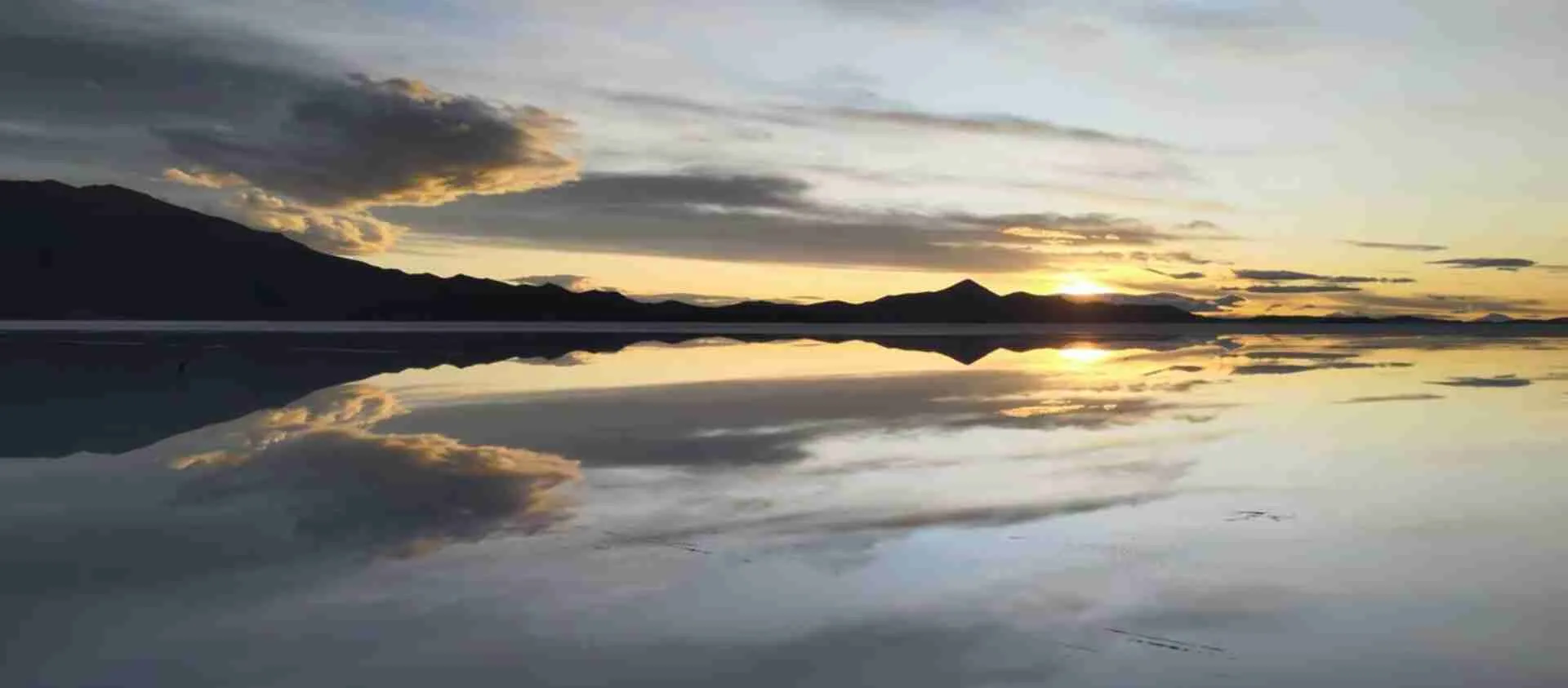
This comprehensive 2026 guide explains everything you need to know about experiencing the Uyuni mirror effect: when to visit, what conditions to seek, how to photograph the reflections, and how to plan your trip around this extraordinary phenomenon. Understanding the science and seasonality behind the mirror effect dramatically improves your odds of witnessing one of travel’s most coveted experiences.
Key Takeaways for Seeing the Mirror Effect in 2026
- The mirror effect occurs December through April when rain creates a thin water layer over the salt, with peak conditions in January through early March
- Perfect reflections require specific conditions: recent rain, no wind, and thin water (2-20cm deep)—not guaranteed even during wet season
- February offers the highest probability of mirror conditions but also the greatest risk of tour cancellations due to flooding
- Tours cost the same during wet and dry seasons ($150-280 USD for three days), but may be rerouted or canceled if flooding is severe
- Sunrise and sunset provide the most dramatic mirror photography—book tours specifically requesting these time slots
- The mirror effect transforms Salar de Uyuni into a 10,582 square kilometer reflection of the sky, erasing the horizon entirely
Introduction to the Uyuni Mirror Effect 2026
The Salar de Uyuni mirror effect ranks among Earth’s most extraordinary natural phenomena—a moment when sky and earth merge into a single infinite reflection. During Bolivia’s rainy season, precipitation fills the salt flat’s surface with a thin layer of water, typically just centimeters deep, transforming 10,582 square kilometers of white salt into the world’s largest natural mirror. For photographers, adventurers, and dreamers planning their 2026 visit, experiencing this phenomenon requires understanding the precise conditions that create it and timing your trip to maximize your chances of witnessing nature’s most surreal optical illusion.
When conditions align perfectly, the boundary between ground and sky disappears completely. People appear to walk on clouds, vehicles seem to float through the atmosphere, and the concept of horizon becomes meaningless. These images have circulated globally, inspiring countless travelers to make the journey to remote southwestern Bolivia. Yet the mirror effect isn’t guaranteed—it requires specific combinations of rainfall, water depth, and calm conditions that occur unpredictably throughout the wet season.
People Also Ask About the Uyuni Mirror Effect 2026
When is the best time to see the Uyuni mirror effect in 2026?
The best time for mirror conditions is January through early March 2026, when Bolivia’s rainy season produces the most consistent precipitation. February offers the highest probability of mirror conditions, though also the greatest risk of flooding that can cancel tours. December and April provide lower but still reasonable chances with more stable travel conditions. The effect can occur anytime during the wet season (December-April) but requires recent rain and calm weather to create perfect reflections.
Is the Uyuni mirror effect guaranteed during wet season 2026?
No, the mirror effect is never guaranteed. While wet season provides the necessary conditions, perfect reflections require: recent rainfall (within 1-3 days), appropriate water depth (2-20cm—too deep or too shallow ruins the effect), and calm weather (wind creates ripples that destroy reflections). Some wet season visitors see stunning mirrors; others experience cloudy skies without rain or flooded conditions without reflections. Visit for at least 3-5 days to maximize your chances.
Can I see the mirror effect during dry season in 2026?
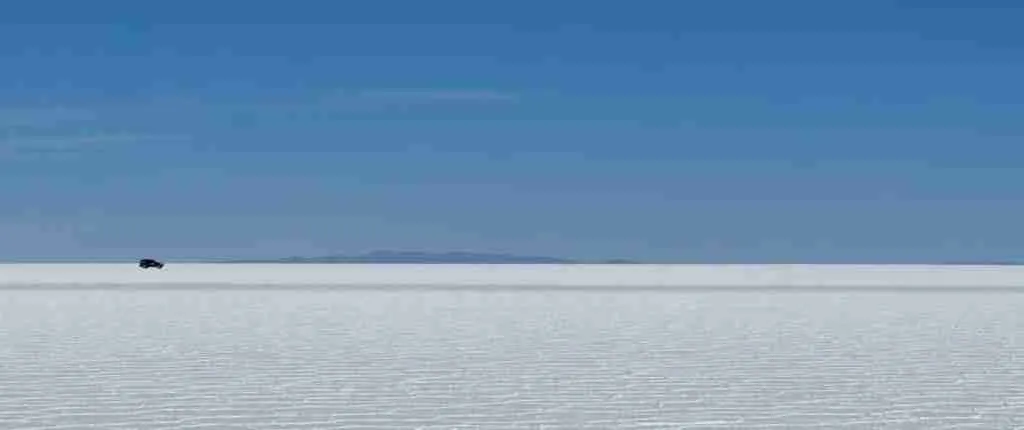
The mirror effect is extremely rare during dry season (May-November). Occasional unseasonal rain creates brief opportunities, but most dry season visitors see the classic white salt patterns without reflections. If the mirror effect is your priority, plan your visit during wet season. Dry season offers its own spectacular experience—geometric hexagonal patterns, clear skies, and excellent forced perspective photography—but reflection photography requires wet season timing.
How do I photograph the mirror effect at Uyuni in 2026?
Successful mirror photography requires: polarizing filter (remove it to capture reflections, use it to cut glare on partial reflections), low angle shooting (get close to water surface for most dramatic reflections), golden hour timing (sunrise and sunset create the most colorful reflections), and patience (wait for completely calm moments between wind gusts). Bring waterproof boots or be prepared to wade barefoot. Wide-angle lenses capture the infinite expanse; telephoto lenses compress layers of clouds and reflections.
Extended multi-day tours – 5+ days
Featured Bolivian Altiplano Multi-Day Tour Packages

3 days
Bolivian Altiplano 3-Day Discovery Tour
- ✓ Comprehensive Bolivian Altiplano experience
- ✓ Expert local guides included
- ✓ All accommodation included
- ✓ Transportation provided

5 days
Bolivian Altiplano 5-Day Highlights Experience
- ✓ Comprehensive Bolivian Altiplano experience
- ✓ Expert local guides included
- ✓ All accommodation included
- ✓ Transportation provided

7 days
Bolivian Altiplano 7-Day Cultural Journey
- ✓ Comprehensive Bolivian Altiplano experience
- ✓ Expert local guides included
- ✓ All accommodation included
- ✓ Transportation provided
10 days
Bolivian Altiplano 10-Day Complete Adventure
- ✓ Comprehensive Bolivian Altiplano experience
- ✓ Expert local guides included
- ✓ All accommodation included
- ✓ Transportation provided
Multi-day tour packages powered by TourRadar. Prices and availability subject to change.
Understanding the Mirror Effect Science 2026
How the Mirror Effect Forms in 2026
The Salar de Uyuni mirror effect results from a precise combination of geological and meteorological factors. The salt flat sits in a basin with no drainage outlet—water that falls onto the 10,582 square kilometer surface has nowhere to go except evaporation. Bolivia’s wet season brings periodic rainfall that accumulates on the salt’s surface, creating a shallow lake.
The mirror effect requires water depth between approximately 2 and 20 centimeters. Water shallower than 2cm evaporates too quickly or concentrates in low spots rather than covering the surface uniformly. Water deeper than 20cm begins to ripple even in slight wind, degrading reflections and making vehicle travel dangerous or impossible.
The salt flat’s remarkable flatness—the entire 10,582 square kilometers varies by less than one meter in elevation—allows thin water layers to spread uniformly. This geological peculiarity, combined with the salt crust’s reflective properties beneath clear water, creates mirror conditions impossible anywhere else on Earth at this scale.
Conditions Required for Perfect Reflections 2026
Perfect mirror conditions require four elements aligning simultaneously:
Recent Rainfall: Water needs to arrive 1-3 days before your visit. Too recent (same day heavy rain) creates cloudy skies that ruin reflections. Too distant (4+ days without rain) allows water to evaporate or drain into low areas. Moderate overnight rain followed by clear morning skies creates ideal conditions.
Appropriate Water Depth: The sweet spot lies between 2-15cm of water covering the salt surface uniformly. Guides know specific areas where water collects at optimal depths—tours navigate to these zones when conditions permit.
Calm Weather: Wind destroys reflections by creating ripples. Even light breezes disrupt the mirror surface. Dawn and dusk typically offer the calmest conditions—wind dies down overnight and picks up as the day warms. Early morning visits maximize reflection chances.
Clear or Partially Cloudy Skies: Overcast skies create dull reflections. Dramatic cloud formations produce the most spectacular photographs—puffy cumulus clouds reflecting in the salt create images of walking among clouds. Storm systems approaching or departing often provide the most dramatic skies.
Why Reflections Aren’t Guaranteed 2026
Even during peak wet season, multiple factors prevent guaranteed mirror experiences. Rainfall patterns vary annually—some wet seasons bring concentrated downpours that flood access routes, while others deliver insufficient precipitation. Climate variability means February 2026 conditions may differ significantly from previous years.
Daily weather fluctuates unpredictably. Morning fog can obscure sunrise mirrors; afternoon storms can cancel planned visits; persistent wind can last for days. Tour operators monitor conditions constantly but cannot predict beyond 1-2 days reliably.
Tourist influx during prime mirror season creates logistical challenges. Popular mirror zones see dozens of vehicles daily, and timing visits for optimal conditions requires flexibility that fixed tour schedules may not accommodate.
Month-by-Month Mirror Conditions 2026
December 2026: Wet Season Begins
December marks the transition from dry to wet season, with rainfall increasing throughout the month. Early December often remains dry, while late December brings more consistent precipitation. Mirror conditions are possible but not yet at peak probability.
Advantages: Lower tourism numbers than January-February, more stable travel conditions, tours rarely canceled, pleasant temperatures (5-16°C day, -2 to 3°C night).
Disadvantages: Mirror conditions inconsistent, some weeks may have no significant rainfall, reflections smaller and less extensive than peak season.
Mirror Probability: 40-50% chance of seeing some mirror conditions during a 3-4 day visit. Perfect extensive mirrors less common.
Recommendation: Good option for travelers wanting to hedge bets—reasonable mirror chances with more reliable travel conditions and lower crowds.
January 2026: Building Intensity
January intensifies wet season conditions. Rainfall becomes more frequent and substantial, creating regular mirror opportunities. Tourism increases significantly as word spreads of good conditions.
Advantages: Strong mirror probability, water levels reaching optimal depths, dramatic storm systems creating spectacular cloud reflections, warmer temperatures.
Disadvantages: Some flooding may affect tour routes, increased tourism, occasional tour rerouting due to water levels, afternoon thunderstorms common.
Mirror Probability: 60-70% chance of experiencing good mirror conditions during a 3-4 day visit. Extended visits (5+ days) approach 80% probability.
Recommendation: Excellent choice balancing high mirror probability with manageable travel conditions. Book tours with flexible operators.
February 2026: Peak Mirror Season
February represents peak wet season and offers the highest probability of mirror conditions. Rainfall is most consistent, water levels optimal across larger areas, and reflections potentially extensive. However, this is also the month most likely to experience tour disruptions due to excessive flooding.
Advantages: Highest mirror probability, largest reflection areas, most dramatic skies, warmest overnight temperatures (0-5°C).
Disadvantages: Highest tour cancellation risk, flooding can strand vehicles, some operators reduce services, access to certain areas impossible, accommodations may be affected.
Mirror Probability: 75-85% chance of experiencing mirror conditions during a 3-4 day visit. However, 15-25% chance of tour cancellation or major rerouting.
Recommendation: Best for photographers and mirror-focused visitors willing to accept disruption risk. Build extra days into your itinerary for weather flexibility.
March 2026: Late Wet Season
March sees wet season waning, though significant rainfall continues into mid-month. Late March transitions toward drier conditions. Mirror opportunities remain good through mid-March before declining.
Advantages: Strong early-month mirror conditions, decreasing flood risk, tourism declining, good balance of probability and reliability.
Disadvantages: Late March increasingly dry, reflection areas shrinking, some accumulated water becomes muddy rather than clear.
Mirror Probability: 50-65% early March, declining to 30-40% by late March.
Recommendation: Early March offers excellent conditions similar to January. Late March better for travelers prioritizing reliability over mirror guarantees.
April 2026: Transition Month
April marks the end of wet season with decreasing rainfall and increasingly dry conditions. Mirror opportunities become scarce by mid-April, though occasional late rains can create brief windows.
Advantages: Stable travel conditions, lowest prices, minimal crowds, occasional surprise mirror conditions.
Disadvantages: Low mirror probability, water evaporating quickly, most visitors see dry salt patterns.
Mirror Probability: 20-30% early April, declining to 5-10% by late April.
Recommendation: Not recommended for mirror-focused visitors. Better for budget travelers accepting dry-season landscapes with small mirror hopes.
Planning Your Mirror Effect Trip 2026
Tour Options for Mirror Photography 2026
Standard three-day tours from Uyuni cost $150-280 USD per person regardless of season (check operators for current rates as pricing may vary). These tours include salt flat time but follow fixed itineraries that may not optimize for mirror conditions. For serious mirror photography, consider these alternatives:
Photography-Focused Tours: Several operators offer tours specifically designed for mirror photography. These tours ($250-400 USD) feature flexible timing, extended salt flat visits during optimal light, and guides experienced in locating the best reflection zones. Companies like Red Planet and Salty Desert Adventures accommodate photography requests.
Private Tours: Private 4×4 rentals with driver cost $400-600 USD per day and offer maximum flexibility. You control timing, locations, and duration—essential for serious photographers wanting to catch precise conditions. Private tours can wait for wind to die down or return multiple times as conditions change.
Day Trips for Mirror Hunting: Rather than committing to multi-day tours, base yourself in Uyuni and book day trips when conditions look favorable. Sunrise tours ($35-45 USD) and sunset tours ($35-45 USD) target optimal light. This approach allows daily assessment of conditions and multiple attempts.
Accommodation Strategies for 2026
Strategic accommodation positioning improves mirror access:
Salt Hotels: Staying at salt hotels (Luna Salada, Palacio de Sal) positions you at the salt flat’s edge. Early morning departure for sunrise doesn’t require the 1-hour drive from Uyuni town. Salt hotel stays cost $100-280 USD per night and allow multiple attempts at sunrise and sunset mirrors without daily transit.
Uyuni Town: Budget travelers can base in Uyuni ($20-80 USD per night) and book daily tours as conditions warrant. This approach costs less but requires earlier wake-ups and longer transit times. Budget hotels near the bus terminal provide easy tour connections.
Extended Stays: Plan at least 3-4 nights in the area during wet season. Weather can change dramatically between days—having flexibility to wait for optimal conditions dramatically improves mirror success rates. Five nights provides excellent probability of at least one outstanding mirror day.
Booking Strategies for Mirror Season 2026
Mirror season (December-February) sees increased demand. Book accommodations 2-4 weeks in advance, especially for salt hotels which have limited capacity. Tour reservations can often wait until arrival when you can assess conditions, though popular photographers’ tours fill quickly.
Communicate your mirror priorities to tour operators. Request guides who understand mirror hunting, flexible itineraries that can adjust to conditions, and early morning starts for calm water. Operators experienced with photographers command premium prices but deliver better results.
Consider booking flexible tickets for flights and buses. If conditions are poor upon arrival, having flexibility to extend your stay improves overall success probability. Fixed itineraries reduce chances of experiencing optimal conditions.
Photography Guide for the Mirror Effect 2026
Essential Camera Settings 2026
Mirror photography presents unique technical challenges requiring specific approaches:
Aperture: Use f/8-f/16 for maximum sharpness across the infinite depth of field. The combination of real subjects and their reflections demands sharpness throughout the frame. Wider apertures can work for isolating subjects but sacrifice reflection clarity.
ISO: Keep ISO low (100-400) for maximum image quality. High-altitude light is typically abundant even near sunrise/sunset. The reflective surface bounces significant light—underexposure is more common than low-light challenges.
Shutter Speed: Use fast shutter speeds (1/250+) if any wind is present—even slight ripples blur reflections during longer exposures. For perfectly calm conditions, experiment with longer exposures that blur moving clouds while maintaining sharp reflections.
White Balance: Golden hour creates warm tones; adjust white balance to enhance or neutralize as preferred. Cloudy conditions often render the water surface slightly blue—correction may be needed for accurate colors.
Exposure Compensation: The bright reflective surface often fools camera meters. Bracket exposures (-1, 0, +1 EV) to ensure proper exposure. Review histograms on location—the bright salt/water can cause highlight clipping.
Lens Selection for 2026
Wide-Angle (16-35mm): Essential for capturing the mirror’s vast scale. Ultra-wide lenses (14-20mm) emphasize the infinite horizon effect—sky above and reflection below filling the frame completely. Wide angles are the primary lens for most mirror photography.
Standard (24-70mm): Versatile for compositions balancing subjects with reflections. The 35-50mm range provides natural perspective for human subjects standing in the mirror. Excellent for portraits with reflection context.
Telephoto (70-200mm): Compresses layers of clouds and reflections into dense, abstract compositions. Telephoto shots of distant subjects floating in the mirror create surreal isolated images. Often overlooked but produces unique results.
Filter Usage for 2026
Polarizing Filter: Counter-intuitive guidance—remove polarizing filters for most mirror photography. Polarizers reduce reflections, which is exactly the opposite of what you want. Use polarizers only when shooting partial reflections where you want to see through water to salt below, or to manage specific glare spots.
Graduated ND Filter: Useful when sky is significantly brighter than its reflection. A 2-3 stop graduated neutral density filter balances exposure between bright sky and darker reflected foreground. Most useful during midday when contrast is extreme.
UV Filter: High-altitude UV is intense and can create haze. UV filters reduce atmospheric haze and protect lenses from salt spray—winds can blow salt particles that damage lens coatings.
Composition Techniques 2026
Horizon Placement: The classic mirror composition places the horizon exactly at frame center, creating symmetry between sky and reflection. Experiment with higher/lower horizons—more sky creates airiness, more reflection emphasizes the surreal ground-sky merge.
Subject Positioning: Place human subjects at the horizon line for the “walking on clouds” effect. Subjects in the foreground with reflections create depth. Distant tiny figures emphasize the landscape’s scale. Experiment with multiple subject positions.
Silhouettes: Backlit subjects against bright sky and reflection create striking silhouettes. Position yourself low and shoot toward the sun (during golden hour) for dramatic silhouette reflections.
Cloud Reflections: Dramatic cloud formations are more important than clear skies. Cumulus clouds reflecting perfectly create the most striking images. Wait for interesting cloud patterns to drift into position.
Best Times for Mirror Photography 2026
Sunrise (6:00-7:30 AM): Prime time for mirror photography. Overnight calm typically provides the stillest water. Warm light creates colorful reflections. Book sunrise-specific tours starting at 4:30-5:00 AM from Uyuni.
Golden Hour Sunset (5:30-7:00 PM): Second-best window with warm light and often calmer evening conditions. Sunset colors reflecting in the mirror create spectacular imagery. Afternoon wind may persist into early evening—patience required.
Midday: Harsh light and increased wind make midday generally poor for mirror photography. However, perfectly calm midday conditions with puffy white clouds can produce excellent results—bright white clouds against blue sky reflecting below.
Night: Full moon nights create unique opportunities for starry sky reflections in the mirror. Requires perfectly calm conditions, long exposures (30 seconds+), and moonlight bright enough to illuminate the scene. Specialized tours for night photography cost $60-100 USD.
What to Expect During Mirror Season 2026
Weather Patterns in 2026
Wet season weather follows general patterns useful for planning:
Morning: Typically clearest conditions. Overnight calm creates still water; any overnight rain has settled. Clouds often begin building by late morning as the sun heats the land.
Afternoon: Thunderstorms develop most days from 1:00-5:00 PM. Cumulus clouds build dramatically, often producing lightning and heavy rain. These storms can be localized—one area floods while another stays dry.
Evening: Storms dissipate after sunset. Skies clear, winds die down, and conditions improve for photography. Post-storm evenings often feature the most dramatic colors.
Night: Clear, cold, calm. Temperatures drop to 0-5°C. Morning dewpoint can create brief fog over the water surface—usually burns off within an hour of sunrise.
Tour Modifications During Wet Season 2026
Wet season tours may differ from dry season itineraries:
Route Changes: Standard routes may flood, forcing alternative paths. Some lagoons and stops become inaccessible. Flexible operators adapt; rigid itineraries cause problems.
Salt Flat Access: Vehicles cannot safely enter deeply flooded areas. Tours access edges and shallower zones when centers are flooded. This can limit the infinite-horizon effect—edges show distant mountains.
Timing Shifts: Experienced guides adjust departure times based on conditions. If morning looks cloudy, they may suggest afternoon departure. Flexibility from tourists enables better experiences.
Cancellations: Extreme flooding cancels tours entirely. February sees the highest cancellation rates—sometimes lasting several days during major storms. Refund policies vary; confirm before booking.
Physical Considerations for 2026
Mirror season visits require specific preparations:
Footwear: You will wade in salt water. Bring waterproof boots or be prepared to go barefoot. Water temperature is cold (10-15°C); extended wading becomes uncomfortable. Neoprene socks help for extended photo sessions.
Salt Exposure: Salt water irritates cuts and damages cameras. Bring plastic bags or waterproof cases for equipment. Rinse any equipment splashed with salt water promptly—salt crystals damage electronics and optics.
Sun Protection: UV radiation intensifies when reflecting off both salt and water. Sunburn risk doubles compared to dry season. Apply high-SPF sunscreen hourly during extended mirror sessions.
Wet Conditions: Rain can arrive quickly. Waterproof jacket protects you and your camera bag. Quick-dry clothing is preferable to cotton, which stays wet and cold.
Sample Mirror-Focused Itineraries 2026
Three-Day Mirror Photography Intensive 2026
Day 1: Arrival and Sunset Attempt
Morning flight from La Paz arrives Uyuni 8:20 AM ($90-130 USD). Transfer to Hotel Jardines de Uyuni ($65 USD). Rest and prepare equipment. Assess conditions—if afternoon looks promising, book 2:30 PM sunset tour ($40 USD). Drive to salt flats for evening mirror attempt. Dinner at Lithium Club ($18 USD).
Flight $110 USD, hotel $65 USD, sunset tour $40 USD, dinner $18 USD. Total day cost: $233 USD per person.
Day 2: Full Day Mirror Hunting
4:30 AM pickup for sunrise tour ($45 USD). Spend morning on salt flats during calmest conditions. Return Uyuni 11:00 AM for breakfast and rest. Assess afternoon conditions—if favorable, book afternoon return ($35 USD) or rest for tomorrow’s sunrise. Explore Train Cemetery during golden hour if no mirror conditions. Dinner in town ($15 USD).
Sunrise tour $45 USD, optional afternoon tour $35 USD, meals $25 USD. Total day cost: $70-105 USD per person (excluding accommodation $65 USD).
Day 3: Final Attempt and Departure
If previous days unsuccessful, book final sunrise attempt ($45 USD). Return Uyuni by 11:00 AM. Pack and prepare for departure. Lunch ($12 USD). Afternoon flight to La Paz ($110 USD) or bus connection to next destination.
Sunrise tour $45 USD, lunch $12 USD, flight $110 USD. Total day cost: $167 USD per person.
Three-Day Total: $535-570 USD per person (variable based on tour choices)
Five-Day Comprehensive Mirror Experience 2026
Day 1: Arrival and Acclimatization
Overnight bus from La Paz arrives Uyuni 6:30 AM ($22 USD, paid previous day). Check into Hotel Jumari ($45 USD). Rest and hydrate for altitude acclimatization. Evening walk to scout conditions. Dinner at local restaurant ($10 USD).
Breakfast $8 USD, dinner $10 USD. Total day cost: $18 USD per person (excluding accommodation $45 USD).
Day 2: First Mirror Attempt
Book tour based on morning assessment. If conditions look excellent, sunrise tour ($45 USD). If cloudy morning but clearing afternoon, sunset tour ($40 USD). Spend non-tour time exploring Uyuni, resting, or visiting Train Cemetery independently (free). Meals in town ($25 USD).
Tour $40-45 USD, meals $25 USD. Total day cost: $65-70 USD per person (excluding accommodation $45 USD).
Days 3-4: Three-Day Tour with Salt Hotel
Mid-range three-day tour including salt hotel ($260 USD). Extended salt flat time on day 3 morning and day 5 afternoon. All meals and accommodation included. Park entrance $22 USD additional.
Tour $260 USD, park entrance $22 USD. Total two-day cost: $282 USD per person.
Day 5: Return and Departure
Tour returns to Uyuni 6:00 PM. Quick dinner ($12 USD). Evening bus to Potosí or La Paz ($18-25 USD), or overnight in Uyuni for morning flight.
Dinner $12 USD, bus $20 USD. Total day cost: $32 USD per person.
Five-Day Total: $487-492 USD per person (flexible budget approach)
Backup Plans When Mirror Conditions Fail 2026
Alternative Salt Flat Experiences 2026
Even without perfect mirror conditions, Salar de Uyuni offers extraordinary experiences:
Partial Reflections: Thin water or rippled surfaces still create interesting reflections—just not the perfect symmetry of ideal conditions. These partial reflections can produce moody, atmospheric images distinct from the classic mirror shots.
Wet Salt Patterns: After rain evaporates, intricate crystalline patterns form on the salt surface. These geometric designs provide excellent macro and detail photography opportunities unavailable during either dry season or deep flooding.
Stormy Drama: Approaching storms create dramatic skies over the white expanse. Lightning over the salt flats, rain curtains on distant horizons, and breaking cloud formations offer spectacular landscape photography even without reflections.
Night Photography: Clear nights after rainy days offer exceptional star photography. The salt flat’s reflective surface bounces subtle light, while the lack of light pollution reveals the Milky Way in stunning clarity.
Alternative Activities Near Uyuni 2026
If extended bad weather prevents salt flat access:
Pulacayo Mining Town: This ghost town 25km from Uyuni preserves Bolivia’s mining heritage. Tours ($20-30 USD) explore abandoned processing plants and the train that Butch Cassidy allegedly robbed.
Uyuni Town Exploration: The train cemetery on Uyuni’s outskirts provides excellent photography regardless of weather. The town’s mining-era architecture and local market offer cultural experiences.
Potosí Day Trip: The colonial mining city of Potosí lies 4 hours from Uyuni. Day trips ($50-80 USD) explore the Cerro Rico mines and UNESCO-listed historic center—an excellent wet-weather alternative.
Practical Tips for Mirror Season 2026
What to Pack for Mirror Photography 2026
Beyond standard Uyuni packing lists, mirror-specific items include:
Waterproof Gear: Knee-high rubber boots or waterproof hiking boots for wading. Waterproof camera bag or rain cover. Ziplock bags for extra lens/battery protection. Quick-dry towels for wiping splashes.
Photography Equipment: Wide-angle lens (essential), tripod (for long exposures and stable compositions), remote shutter release, extra batteries (cold drains them), and multiple memory cards. Lens cleaning supplies for salt spray removal.
Comfort Items: Neoprene socks for cold water wading, folding chair or stool for low-angle shooting, hand warmers for early morning sessions, and snacks/water for extended photo sessions.
Communication with Tour Operators 2026
Clear communication improves mirror success:
Express Priorities: Tell operators mirror photography is your main goal. Request guides who understand optimal mirror zones, flexible timing, and patience for perfect conditions.
Timing Requests: Specifically request sunrise starts (4:30-5:00 AM from Uyuni) or sunset timing. Standard tours may depart later, missing prime calm water conditions.
Flexibility Discussion: Ask about their approach when conditions aren’t optimal. Good operators adjust plans; rigid operators follow schedules regardless of conditions.
Weather Updates: Ask operators about forecast and recent conditions before booking each tour. Local knowledge often exceeds weather app predictions in this remote area.
Frequently Asked Questions About the Uyuni Mirror Effect 2026
What creates the mirror effect at Salar de Uyuni in 2026?
The mirror effect occurs when rain creates a thin layer of water (2-20cm) over the salt flat’s surface. The extremely flat terrain allows water to spread uniformly, and the salt beneath provides a reflective base. Calm conditions allow the water surface to become perfectly still, creating mirror-like reflections of the sky. These conditions combine only during the wet season (December-April).
How deep is the water during mirror conditions in 2026?
Optimal mirror conditions occur with water depths between 2-20 centimeters. Shallower water evaporates quickly or doesn’t cover uniformly. Deeper water begins to ripple even in light wind and prevents vehicle access. Guides navigate to areas with ideal depths—these zones shift daily based on rainfall and evaporation patterns.
Can I walk on the water during the mirror effect in 2026?
Yes, water is typically ankle to calf deep during optimal mirror conditions. You can walk, pose for photographs, and create the classic “walking on clouds” images. Bring waterproof boots or be prepared to go barefoot—water temperature is cold (10-15°C). The salt crust beneath is firm and safe for walking.
What happens if it rains during my visit in 2026?
Rain during your visit isn’t necessarily bad—it creates the water layer needed for mirrors. Heavy rain during tour hours can be uncomfortable and reduce visibility, but rain overnight or in early morning followed by clearing skies often creates optimal conditions. Afternoon storms are common; morning tours typically offer better weather.
Are vehicles safe on flooded salt flats in 2026?
Experienced tour operators navigate flooded areas safely, but significant risks exist. Deep flooding can strand vehicles, and hidden soft spots trap wheels. Reputable operators know safe routes and water depth limits. Extreme flooding leads to tour cancellations rather than dangerous attempts. Budget operators may take greater risks—choose established companies.
What if I only have one day for the mirror effect in 2026?
One day provides limited opportunity, but maximize chances with: sunrise tour (calmest conditions), assessment of current conditions before booking, and flexibility to shift to sunset tour if morning looks poor. Combining sunrise and sunset tours on the same day costs $75-85 USD and doubles your chances. Accept that one-day visits are high-risk for perfect conditions.
Do I need a polarizing filter for mirror photography in 2026?
Counterintuitively, remove polarizing filters for most mirror photography—polarizers reduce reflections, which is the opposite of your goal. Use polarizers only when shooting partial reflections where you want to see through water to salt patterns below. For classic mirror shots, leave the polarizer off.
What’s the best camera for mirror photography in 2026?
Any camera capable of manual settings works for mirror photography. Wide-angle capability is most important—ultrawide (14-20mm) or wide-angle (24-35mm) lenses capture the mirror’s vast scale. Modern smartphones produce excellent results for social media; serious photographers benefit from interchangeable lens cameras with full manual control.
How cold is it during wet season at Uyuni in 2026?
Wet season is warmer than dry season but still cold by most standards. Daytime temperatures reach 10-18°C in sunshine; nights drop to 0-5°C. Early morning photography sessions are cold—expect 3-8°C at sunrise. Wading in cold water (10-15°C) adds chill. Layered clothing essential.
Can I see the mirror effect from Isla Incahuasi in 2026?
When flooding is extensive, Isla Incahuasi becomes surrounded by mirror conditions, creating spectacular views from its summit. However, deep flooding can prevent vehicle access to the island entirely. When accessible during mirror conditions, climbing the island provides unique elevated perspectives of the infinite reflection below.